


1288 Résultats
Classification:
livres
livres
Actions:
Prix:
$47.95
(disponible en magasin)
Résumé:
"Vitruvius’s De architectura" is the only major work on architecture to survive from classical antiquity, and until the eighteenth century it was the text to which all other architectural treatises referred. While European classicists have focused on the factual truth of the text itself, English-speaking architects and architectural theorists have viewed it as a timeless(...)
$47.95
(disponible en magasin)
Résumé:
"Vitruvius’s De architectura" is the only major work on architecture to survive from classical antiquity, and until the eighteenth century it was the text to which all other architectural treatises referred. While European classicists have focused on the factual truth of the text itself, English-speaking architects and architectural theorists have viewed it as a timeless(...)
Sujet:
Théorie de l’architecture
Théorie de l’architecture
Publication:
octobre 2002, Cambridge, Mass.
octobre 2002, Cambridge, Mass.
Titre:
Vitruvius: Writing the body of architecture
Actions:
Prix:
$47.95
(disponible en magasin)
Résumé:
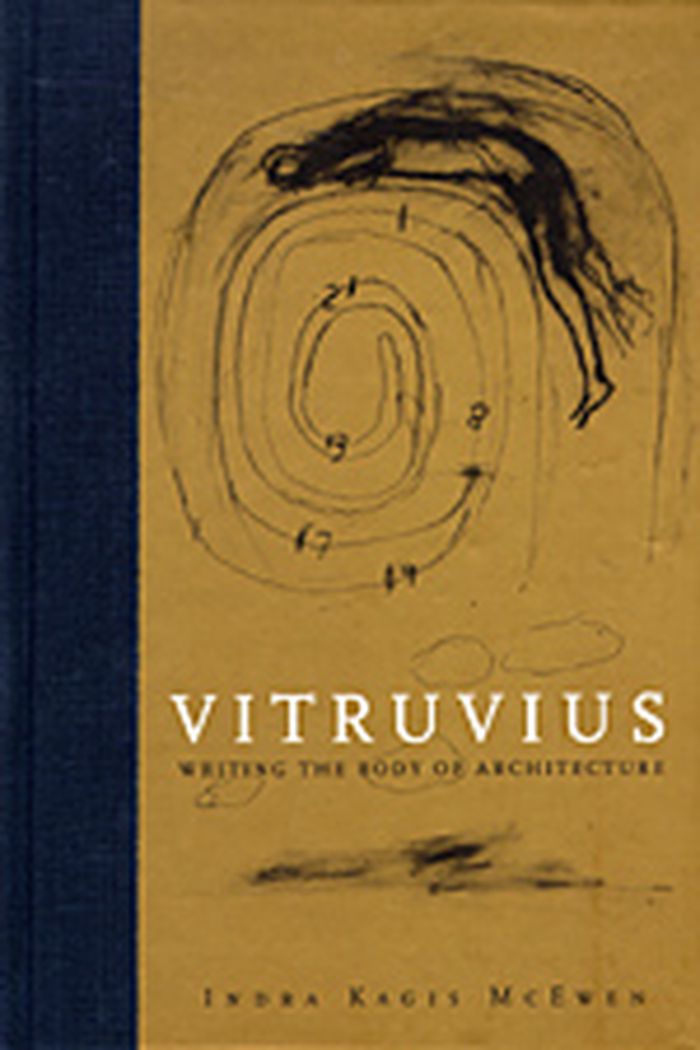
"Vitruvius’s De architectura" is the only major work on architecture to survive from classical antiquity, and until the eighteenth century it was the text to which all other architectural treatises referred. While European classicists have focused on the factual truth of the text itself, English-speaking architects and architectural theorists have viewed it as a timeless source of valuable metaphors. Departing from both perspectives, Indra Kagis McEwen examines the work’s meaning and significance in its own time. Vitruvius dedicated De architectura to his patron Augustus Caesar, the first Roman emperor, whose rise to power inspired its composition near the end of the first century B.C. McEwen argues that the imperial project of world dominion shaped Vitruvius’s purpose in writing what he calls "the whole body of architecture." Specifically, Vitruvius’s aim was to present his discipline as the means for making the emperor’s body congruent with the imagined body of the world he would rule.
Vitruvius: Writing the body of architecture
Actions:
Prix:
$47.95
(disponible en magasin)
Résumé:
"Vitruvius’s De architectura" is the only major work on architecture to survive from classical antiquity, and until the eighteenth century it was the text to which all other architectural treatises referred. While European classicists have focused on the factual truth of the text itself, English-speaking architects and architectural theorists have viewed it as a timeless source of valuable metaphors. Departing from both perspectives, Indra Kagis McEwen examines the work’s meaning and significance in its own time. Vitruvius dedicated De architectura to his patron Augustus Caesar, the first Roman emperor, whose rise to power inspired its composition near the end of the first century B.C. McEwen argues that the imperial project of world dominion shaped Vitruvius’s purpose in writing what he calls "the whole body of architecture." Specifically, Vitruvius’s aim was to present his discipline as the means for making the emperor’s body congruent with the imagined body of the world he would rule.
Classification:
livres
livres
Publication:
octobre 2002, Cambridge, Mass.
octobre 2002, Cambridge, Mass.
Sujet:
Théorie de l’architecture
Théorie de l’architecture
Classification:
livres
livres
Titre:
The bedroom
The bedroom
Actions:
Prix:
$39.95
(disponible sur commande)
Résumé:
The winner of France's prestigious Prix Femina Essai (2009), this book explores the many dimensions of the room in which we spend so much of our lives—the bedroom. Eminent cultural historian Michelle Perrot traces the evolution of the bedroom from the time of the ancient Greeks and Romans to today, examining its myriad forms and functions, from royal king's chamber to(...)
$39.95
(disponible sur commande)
Résumé:
The winner of France's prestigious Prix Femina Essai (2009), this book explores the many dimensions of the room in which we spend so much of our lives—the bedroom. Eminent cultural historian Michelle Perrot traces the evolution of the bedroom from the time of the ancient Greeks and Romans to today, examining its myriad forms and functions, from royal king's chamber to(...)
Titre:
The bedroom
Actions:
Prix:
$39.95
(disponible sur commande)
Résumé:
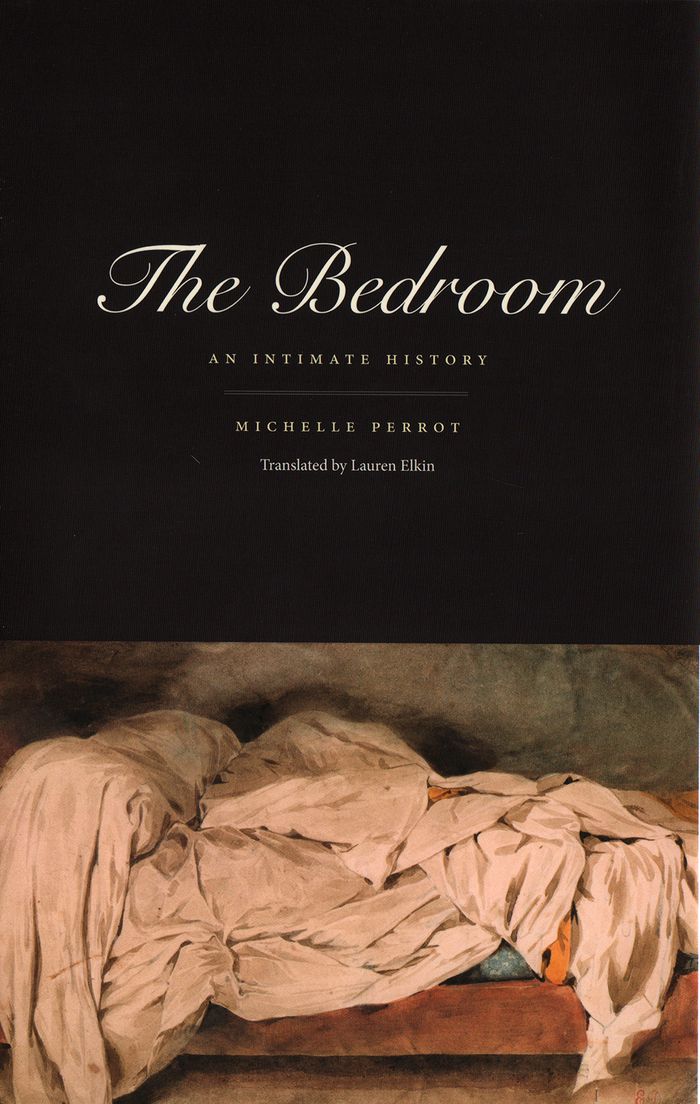
The winner of France's prestigious Prix Femina Essai (2009), this book explores the many dimensions of the room in which we spend so much of our lives—the bedroom. Eminent cultural historian Michelle Perrot traces the evolution of the bedroom from the time of the ancient Greeks and Romans to today, examining its myriad forms and functions, from royal king's chamber to child's sleeping quarters to lovers' trysting place to monk's cell. The history of women, so eager for a room of their own, and that of prisons, where the principal cause of suffering is the lack of privacy, is interwoven with a reflection on secrecy, walls, the night and its mysteries.Drawing from a wide range of sources, including architectural and design treatises, private journals, novels, memoirs, and correspondences, Perrot's book follows the many roads that lead to the bedroom—birth, sex, illness, death—in its endeavor to expose the most intimate, nocturnal side of human history.
The bedroom
Actions:
Prix:
$39.95
(disponible sur commande)
Résumé:
The winner of France's prestigious Prix Femina Essai (2009), this book explores the many dimensions of the room in which we spend so much of our lives—the bedroom. Eminent cultural historian Michelle Perrot traces the evolution of the bedroom from the time of the ancient Greeks and Romans to today, examining its myriad forms and functions, from royal king's chamber to child's sleeping quarters to lovers' trysting place to monk's cell. The history of women, so eager for a room of their own, and that of prisons, where the principal cause of suffering is the lack of privacy, is interwoven with a reflection on secrecy, walls, the night and its mysteries.Drawing from a wide range of sources, including architectural and design treatises, private journals, novels, memoirs, and correspondences, Perrot's book follows the many roads that lead to the bedroom—birth, sex, illness, death—in its endeavor to expose the most intimate, nocturnal side of human history.
Classification:
livres
livres
Publication:
août 2018
août 2018
Sujet:
Théorie de l’architecture
Théorie de l’architecture
Classification:
livres
livres
Prix:
$82.50
(disponible sur commande)
Résumé:
Writing from inside the discipline of architecture, rather than from the more common extrapolations from the history of painting and philosophy, Alberto Pérez-Gómez and Louise Pelletier focus on the implications of the tool of perspective (and the hegemony of(...)
$82.50
(disponible sur commande)
Résumé:
Writing from inside the discipline of architecture, rather than from the more common extrapolations from the history of painting and philosophy, Alberto Pérez-Gómez and Louise Pelletier focus on the implications of the tool of perspective (and the hegemony of(...)
Sujet:
Théorie de l’architecture
Théorie de l’architecture
Publication:
novembre 1997, Cambridge, Mass.
novembre 1997, Cambridge, Mass.
Titre:
Architectural representation and the perspective hinge
Actions:
Prix:
$82.50
(disponible sur commande)
Résumé:
Writing from inside the discipline of architecture, rather than from the more common extrapolations from the history of painting and philosophy, Alberto Pérez-Gómez and Louise Pelletier focus on the implications of the tool of perspective (and the hegemony of vision) for architectural representation. Their primary thesis is that tools of representation have a direct influence on the conceptual development of projects and generation of forms, and that there are alternatives to the reductive working methods of most contemporary practice. The book examines textual evidence across a broad historical period, concentrating on the relationship between drawing and architectural space in the period from the seventh century to the twentieth century. The book discusses such issues as optical correction and the nature of architectural drawing in selected treatises, revealing the complexity and potential contradiction inherent in any linear history of representation. The authors' ultimate aim is to probe the possibilities of the constructed world as a poetic translation, rather than prosaic transcription, of its representations.
Architectural representation and the perspective hinge
Actions:
Prix:
$82.50
(disponible sur commande)
Résumé:
Writing from inside the discipline of architecture, rather than from the more common extrapolations from the history of painting and philosophy, Alberto Pérez-Gómez and Louise Pelletier focus on the implications of the tool of perspective (and the hegemony of vision) for architectural representation. Their primary thesis is that tools of representation have a direct influence on the conceptual development of projects and generation of forms, and that there are alternatives to the reductive working methods of most contemporary practice. The book examines textual evidence across a broad historical period, concentrating on the relationship between drawing and architectural space in the period from the seventh century to the twentieth century. The book discusses such issues as optical correction and the nature of architectural drawing in selected treatises, revealing the complexity and potential contradiction inherent in any linear history of representation. The authors' ultimate aim is to probe the possibilities of the constructed world as a poetic translation, rather than prosaic transcription, of its representations.
Classification:
livres
livres
Publication:
novembre 1997, Cambridge, Mass.
novembre 1997, Cambridge, Mass.
Sujet:
Théorie de l’architecture
Théorie de l’architecture
Classification:
livres
livres
Titre:
"All Men are Builders" : Architectural Structures in the Victorian Novel / by Joann D. Griffith.
"All Men are Builders" : Architectural Structures in the Victorian Novel / by Joann D. Griffith.
Actions:
Exemplaires:
Description:
vi, 232 pages ; 22 cm
Description:
vi, 232 pages ; 22 cm
Auteur:
Sujet:
Publication:
[Ann Arbor, Mich.] : ProQuest LLC, 2015.
[Ann Arbor, Mich.] : ProQuest LLC, 2015.
Titre:
"All Men are Builders" : Architectural Structures in the Victorian Novel / by Joann D. Griffith.
Actions:
Exemplaires:
Description:
vi, 232 pages ; 22 cm
"All Men are Builders" : Architectural Structures in the Victorian Novel / by Joann D. Griffith.
Actions:
Exemplaires:
Description:
vi, 232 pages ; 22 cm
Classification:
livres
livres
Publication:
[Ann Arbor, Mich.] : ProQuest LLC, 2015.
[Ann Arbor, Mich.] : ProQuest LLC, 2015.
Auteur:
Sujet:
Classification:
livres
livres
Prix:
$67.95
(disponible sur commande)
Résumé:
Writing from inside the discipline of architecture, rather than from the more common extrapolations from the history of painting and philosophy, Alberto Pérez-Gómez and Louise Pelletier focus on the implications of the tool of perspective (and the hegemony of(...)
$67.95
(disponible sur commande)
Résumé:
Writing from inside the discipline of architecture, rather than from the more common extrapolations from the history of painting and philosophy, Alberto Pérez-Gómez and Louise Pelletier focus on the implications of the tool of perspective (and the hegemony of(...)
Sujet:
Théorie de l’architecture
Théorie de l’architecture
Publication:
octobre 2000, Cambridge, Mass.
octobre 2000, Cambridge, Mass.
Titre:
Architectural representation and the perspective hinge
Actions:
Prix:
$67.95
(disponible sur commande)
Résumé:
Writing from inside the discipline of architecture, rather than from the more common extrapolations from the history of painting and philosophy, Alberto Pérez-Gómez and Louise Pelletier focus on the implications of the tool of perspective (and the hegemony of vision) for architectural representation. Their primary thesis is that tools of representation have a direct influence on the conceptual development of projects and generation of forms, and that there are alternatives to the reductive working methods of most contemporary practice. The book examines textual evidence across a broad historical period, concentrating on the relationship between drawing and architectural space in the period from the seventh century to the twentieth century. The book discusses such issues as optical correction and the nature of architectural drawing in selected treatises, revealing the complexity and potential contradiction inherent in any linear history of representation. The authors' ultimate aim is to probe the possibilities of the constructed world as a poetic translation, rather than prosaic transcription, of its representations. First published in cloth in 1997.
Architectural representation and the perspective hinge
Actions:
Prix:
$67.95
(disponible sur commande)
Résumé:
Writing from inside the discipline of architecture, rather than from the more common extrapolations from the history of painting and philosophy, Alberto Pérez-Gómez and Louise Pelletier focus on the implications of the tool of perspective (and the hegemony of vision) for architectural representation. Their primary thesis is that tools of representation have a direct influence on the conceptual development of projects and generation of forms, and that there are alternatives to the reductive working methods of most contemporary practice. The book examines textual evidence across a broad historical period, concentrating on the relationship between drawing and architectural space in the period from the seventh century to the twentieth century. The book discusses such issues as optical correction and the nature of architectural drawing in selected treatises, revealing the complexity and potential contradiction inherent in any linear history of representation. The authors' ultimate aim is to probe the possibilities of the constructed world as a poetic translation, rather than prosaic transcription, of its representations. First published in cloth in 1997.
Classification:
livres
livres
Publication:
octobre 2000, Cambridge, Mass.
octobre 2000, Cambridge, Mass.
Sujet:
Théorie de l’architecture
Théorie de l’architecture
Classification:
livres
livres

Titre:
Climatic Architecture
Climatic Architecture
Actions:
Prix:
$88.00
(disponible sur commande)
Résumé:
Architecture and urbanism were traditionally based on climate and health, as we can read in the treatises of Vitruvius, Palladio or Alberti, where exposure to wind and sun, variations in temperature and humidity influenced the forms of cities and buildings. These fundamental causes of urban planning and buildings were ignored in the second half of the 20th century thanks(...)
$88.00
(disponible sur commande)
Résumé:
Architecture and urbanism were traditionally based on climate and health, as we can read in the treatises of Vitruvius, Palladio or Alberti, where exposure to wind and sun, variations in temperature and humidity influenced the forms of cities and buildings. These fundamental causes of urban planning and buildings were ignored in the second half of the 20th century thanks(...)
Titre:
Climatic Architecture
Actions:
Prix:
$88.00
(disponible sur commande)
Résumé:
Architecture and urbanism were traditionally based on climate and health, as we can read in the treatises of Vitruvius, Palladio or Alberti, where exposure to wind and sun, variations in temperature and humidity influenced the forms of cities and buildings. These fundamental causes of urban planning and buildings were ignored in the second half of the 20th century thanks to the enormous use of fossil energy by heating and air conditioning systems, pumps and refrigerators, that today cause the greenhouse effect and global warming. The fight against climate change forces architects and urban designers to take seriously the climatic issue in order to base their design on its the local climatic context and energy resources. Faced with the climatic challenge of the 21st century, we propose to reset our discipline on its intrinsic atmospheric qualities, where air, light, heat or humidity are recognized are real materials of building, convection, thermal conduction, evaporation, emissivity, or effusivity are becoming design tools for composing architecture and cities, and through materialism dialectic, are able to revolutionize esthetic and social values.
Climatic Architecture
Actions:
Prix:
$88.00
(disponible sur commande)
Résumé:
Architecture and urbanism were traditionally based on climate and health, as we can read in the treatises of Vitruvius, Palladio or Alberti, where exposure to wind and sun, variations in temperature and humidity influenced the forms of cities and buildings. These fundamental causes of urban planning and buildings were ignored in the second half of the 20th century thanks to the enormous use of fossil energy by heating and air conditioning systems, pumps and refrigerators, that today cause the greenhouse effect and global warming. The fight against climate change forces architects and urban designers to take seriously the climatic issue in order to base their design on its the local climatic context and energy resources. Faced with the climatic challenge of the 21st century, we propose to reset our discipline on its intrinsic atmospheric qualities, where air, light, heat or humidity are recognized are real materials of building, convection, thermal conduction, evaporation, emissivity, or effusivity are becoming design tools for composing architecture and cities, and through materialism dialectic, are able to revolutionize esthetic and social values.
Classification:
livres
livres
Publication:
novembre 2023
novembre 2023
Sujet:
Architecture, monographies
Architecture, monographies
Classification:
livres
livres
Actions:
Exemplaires:
Description:
191 pages, 102 leaves of plates : illustrations, plans, diagrams ; 29 cm
Description:
191 pages, 102 leaves of plates : illustrations, plans, diagrams ; 29 cm
Auteur:
Sujet:
Publication:
Boston : Published by John P. Jewett and Company ; Cleveland, Ohio : Jewett, Proctor, and Worthington, MDCCCLII [1852]
Boston : Published by John P. Jewett and Company ; Cleveland, Ohio : Jewett, Proctor, and Worthington, MDCCCLII [1852]
Titre:
Shaw's Civil architecture : being a complete theoretical and practical system of building, containing the fundamental principles of the art, and illustrated by eighty-two copperplate engravings / by Edward Shaw, architect.
Actions:
Exemplaires:
Description:
191 pages, 102 leaves of plates : illustrations, plans, diagrams ; 29 cm
Shaw's Civil architecture : being a complete theoretical and practical system of building, containing the fundamental principles of the art, and illustrated by eighty-two copperplate engravings / by Edward Shaw, architect.
Actions:
Exemplaires:
Description:
191 pages, 102 leaves of plates : illustrations, plans, diagrams ; 29 cm
Classification:
livres
livres
Publication:
Boston : Published by John P. Jewett and Company ; Cleveland, Ohio : Jewett, Proctor, and Worthington, MDCCCLII [1852]
Boston : Published by John P. Jewett and Company ; Cleveland, Ohio : Jewett, Proctor, and Worthington, MDCCCLII [1852]
Auteur:
Sujet:
Classification:
livres
livres
Exemplaires:
Description:
xii, 278 pages : illustrations (some color), maps ; 29 cm
Description:
xii, 278 pages : illustrations (some color), maps ; 29 cm
Auteur:
Sujet:
Publication:
New Haven : Yale University Press, ©1998.
New Haven : Yale University Press, ©1998.
Titre:
On Alberti and the Art of Building / Robert Tavernor.
Actions:
Exemplaires:
Description:
xii, 278 pages : illustrations (some color), maps ; 29 cm
On Alberti and the Art of Building / Robert Tavernor.
Actions:
Exemplaires:
Description:
xii, 278 pages : illustrations (some color), maps ; 29 cm
Classification:
livres
livres
Publication:
New Haven : Yale University Press, ©1998.
New Haven : Yale University Press, ©1998.
Auteur:
Sujet:
Classification:
livres
livres
Actions:
Prix:
$19.95
(disponible en magasin)
Résumé:
Written by a mathematician, a poet and a mathematician-poet, this 1969 guide to the ancient Japanese game of Go was not only the first such guide to be published in France (and thereby introduced the centuries-old game of strategy into that country) but something of a subtle Oulipian guidebook to writing strategies and tactics. Translated for the first time, this(...)
$19.95
(disponible en magasin)
Résumé:
Written by a mathematician, a poet and a mathematician-poet, this 1969 guide to the ancient Japanese game of Go was not only the first such guide to be published in France (and thereby introduced the centuries-old game of strategy into that country) but something of a subtle Oulipian guidebook to writing strategies and tactics. Translated for the first time, this(...)
Titre:
A short treatise inviting the reader to discover the subtle art of Go
Actions:
Prix:
$19.95
(disponible en magasin)
Résumé:
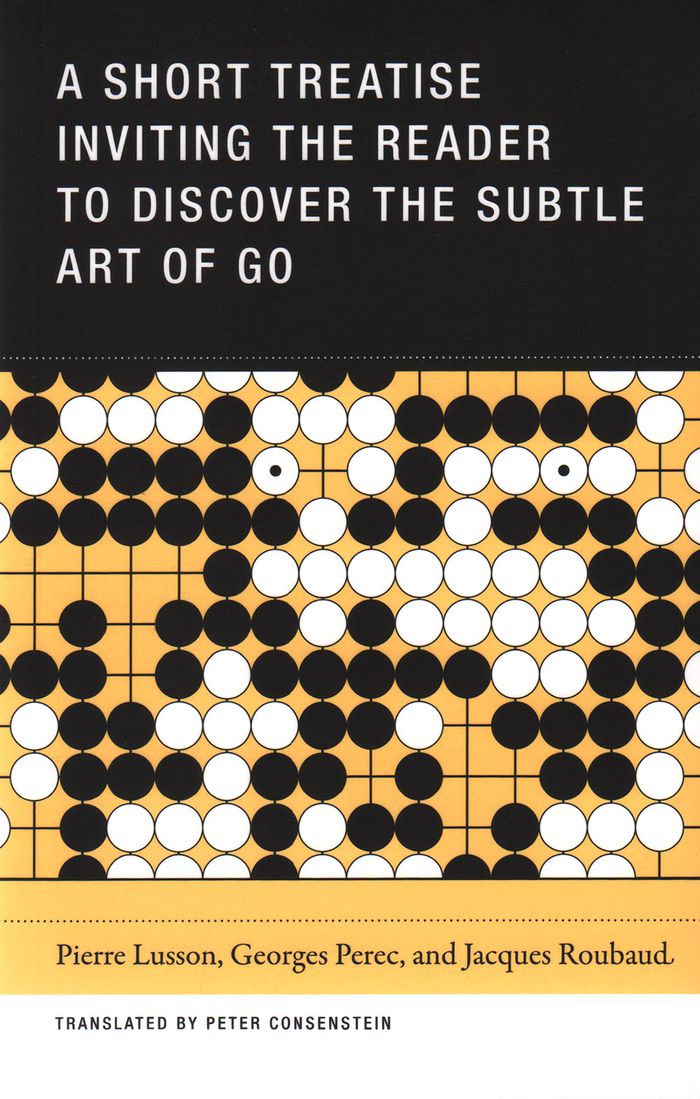
Written by a mathematician, a poet and a mathematician-poet, this 1969 guide to the ancient Japanese game of Go was not only the first such guide to be published in France (and thereby introduced the centuries-old game of strategy into that country) but something of a subtle Oulipian guidebook to writing strategies and tactics. Translated for the first time, this treatise outlines the history of Go, the rules for playing it, some central tactics and strategies for playing it and overcoming the threats posed by an opponent, general information and trivia, and a glossary that ranges from Atari (check) to Yose (the end of a match).
A short treatise inviting the reader to discover the subtle art of Go
Actions:
Prix:
$19.95
(disponible en magasin)
Résumé:
Written by a mathematician, a poet and a mathematician-poet, this 1969 guide to the ancient Japanese game of Go was not only the first such guide to be published in France (and thereby introduced the centuries-old game of strategy into that country) but something of a subtle Oulipian guidebook to writing strategies and tactics. Translated for the first time, this treatise outlines the history of Go, the rules for playing it, some central tactics and strategies for playing it and overcoming the threats posed by an opponent, general information and trivia, and a glossary that ranges from Atari (check) to Yose (the end of a match).
Classification:
livres
livres
Publication:
août 2019
août 2019
Sujet:
Littérature et poésie
Littérature et poésie
Classification:
livres
livres
Actions:
Exemplaires:
Description:
104 unnumbered pages : colour illustrations ; 29 cm.
Description:
104 unnumbered pages : colour illustrations ; 29 cm.
Auteur:
Sujet:
Publication:
Melbourne, Australia : Published by Perimeter Editions, 2021., The Netherlands : Printed by Wilco Art Books., ©2021.
Melbourne, Australia : Published by Perimeter Editions, 2021., The Netherlands : Printed by Wilco Art Books., ©2021.
Titre:
Roosevelt Station / David Rothenberg.
Actions:
Exemplaires:
Description:
104 unnumbered pages : colour illustrations ; 29 cm.
Roosevelt Station / David Rothenberg.
Actions:
Exemplaires:
Description:
104 unnumbered pages : colour illustrations ; 29 cm.
Classification:
livres
livres
Publication:
Melbourne, Australia : Published by Perimeter Editions, 2021., The Netherlands : Printed by Wilco Art Books., ©2021.
Melbourne, Australia : Published by Perimeter Editions, 2021., The Netherlands : Printed by Wilco Art Books., ©2021.
Auteur:
Sujet:


