


1663 Résultats
Classification:
livres
livres
Prix:
$41.00
(disponible en magasin)
Résumé:
In "Climate propagandas", Jonas Staal reveals the propaganda narratives—and the divergent realities they evoke—that shape the climate crisis in the public imaginary. It is often said that the climate crisis is a planetary one, but the devastating impact of climate crisis is distributed unequally and its related ideological positions are as vast as they are irreconcilable.(...)
$41.00
(disponible en magasin)
Résumé:
In "Climate propagandas", Jonas Staal reveals the propaganda narratives—and the divergent realities they evoke—that shape the climate crisis in the public imaginary. It is often said that the climate crisis is a planetary one, but the devastating impact of climate crisis is distributed unequally and its related ideological positions are as vast as they are irreconcilable.(...)
Titre:
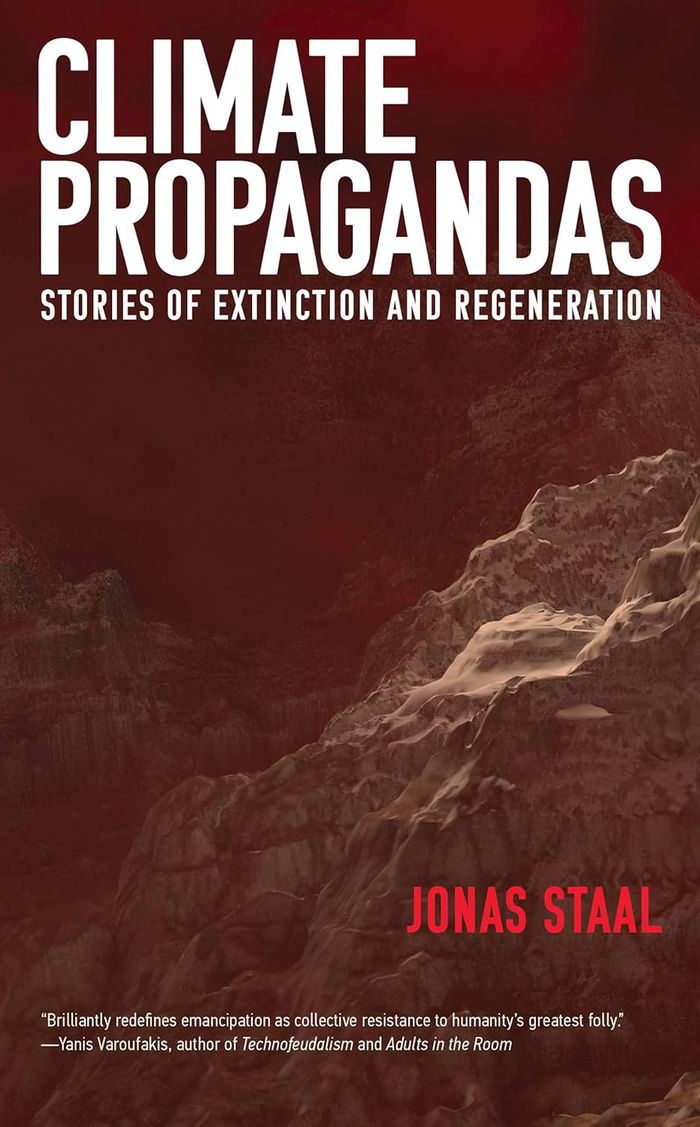
Climate propagandas: Stories of extinction and regeneration
Actions:
Prix:
$41.00
(disponible en magasin)
Résumé:
In "Climate propagandas", Jonas Staal reveals the propaganda narratives—and the divergent realities they evoke—that shape the climate crisis in the public imaginary. It is often said that the climate crisis is a planetary one, but the devastating impact of climate crisis is distributed unequally and its related ideological positions are as vast as they are irreconcilable. A liberal might argue the crisis is the result of individual consumer behavior, whereas a libertarian sees an opportunity for geoengineering markets. A conspiracist might not believe the climate is at risk, whereas an ecofascist sees a chance to double down on the argument about who has the superior racial right to survive extinction.
Climate propagandas: Stories of extinction and regeneration
Actions:
Prix:
$41.00
(disponible en magasin)
Résumé:
In "Climate propagandas", Jonas Staal reveals the propaganda narratives—and the divergent realities they evoke—that shape the climate crisis in the public imaginary. It is often said that the climate crisis is a planetary one, but the devastating impact of climate crisis is distributed unequally and its related ideological positions are as vast as they are irreconcilable. A liberal might argue the crisis is the result of individual consumer behavior, whereas a libertarian sees an opportunity for geoengineering markets. A conspiracist might not believe the climate is at risk, whereas an ecofascist sees a chance to double down on the argument about who has the superior racial right to survive extinction.
Classification:
livres
livres
Publication:
septembre 2024
septembre 2024
Classification:
livres
livres
Actions:
Exemplaires:
Description:
xi, 623 pages : illustrations ; 25 cm
Description:
xi, 623 pages : illustrations ; 25 cm
Auteur:
Sujet:
Publication:
Ithaca, N.Y. : Cornell University Press, 1992.
Ithaca, N.Y. : Cornell University Press, 1992.
Titre:
The park and the people : a history of Central Park / Roy Rosenzweig, Elizabeth Blackmar.
Actions:
Exemplaires:
Description:
xi, 623 pages : illustrations ; 25 cm
The park and the people : a history of Central Park / Roy Rosenzweig, Elizabeth Blackmar.
Actions:
Exemplaires:
Description:
xi, 623 pages : illustrations ; 25 cm
Classification:
livres
livres
Publication:
Ithaca, N.Y. : Cornell University Press, 1992.
Ithaca, N.Y. : Cornell University Press, 1992.
Auteur:
Sujet:
Classification:
livres
livres
Actions:
Exemplaires:
Description:
271 pages : illustrations (some color) ; 28 cm
Description:
271 pages : illustrations (some color) ; 28 cm
Auteur:
Sujet:
Publication:
Princeton, NJ : Princeton University Art Museum, [2014], New Haven : Distributed by Yale University Press, ©2014
Princeton, NJ : Princeton University Art Museum, [2014], New Haven : Distributed by Yale University Press, ©2014
Titre:
The city lost & found : capturing New York, Chicago, and Los Angeles, 1960-1980 / Katherine A. Bussard, Alison Fisher, Greg Foster-Rice ; with contributions by Ken D. Allan [and seventeen others].
Actions:
Exemplaires:
Description:
271 pages : illustrations (some color) ; 28 cm
The city lost & found : capturing New York, Chicago, and Los Angeles, 1960-1980 / Katherine A. Bussard, Alison Fisher, Greg Foster-Rice ; with contributions by Ken D. Allan [and seventeen others].
Actions:
Exemplaires:
Description:
271 pages : illustrations (some color) ; 28 cm
Classification:
livres
livres
Publication:
Princeton, NJ : Princeton University Art Museum, [2014], New Haven : Distributed by Yale University Press, ©2014
Princeton, NJ : Princeton University Art Museum, [2014], New Haven : Distributed by Yale University Press, ©2014
Auteur:
Sujet:
Classification:
livres
livres
Actions:
Exemplaires:
Description:
xix, 309 pages ; 25 cm.
Description:
xix, 309 pages ; 25 cm.
Auteur:
Sujet:
Publication:
Abingdon, Oxon ; New York, NY : Routledge, 2018., ©2018
Abingdon, Oxon ; New York, NY : Routledge, 2018., ©2018
Titre:
Architecture and feminisms : ecologies, economies, technologies / edited by Hélène Frichot, Catharina Gabrielsson and Helen Runting.
Actions:
Exemplaires:
Description:
xix, 309 pages ; 25 cm.
Architecture and feminisms : ecologies, economies, technologies / edited by Hélène Frichot, Catharina Gabrielsson and Helen Runting.
Actions:
Exemplaires:
Description:
xix, 309 pages ; 25 cm.
Classification:
livres
livres
Publication:
Abingdon, Oxon ; New York, NY : Routledge, 2018., ©2018
Abingdon, Oxon ; New York, NY : Routledge, 2018., ©2018
Auteur:
Sujet:
Classification:
livres
livres
Actions:
Exemplaires:
Description:
xiii, 604 pages : illustrations ; 27 cm
Description:
xiii, 604 pages : illustrations ; 27 cm
Auteur:
Sujet:
Publication:
New Haven : Yale University Press, 2009.
New Haven : Yale University Press, 2009.
Titre:
Futurism : an anthology / edited by Lawrence Rainey, Christine Poggi, and Laura Wittman.
Actions:
Exemplaires:
Description:
xiii, 604 pages : illustrations ; 27 cm
Futurism : an anthology / edited by Lawrence Rainey, Christine Poggi, and Laura Wittman.
Actions:
Exemplaires:
Description:
xiii, 604 pages : illustrations ; 27 cm
Classification:
livres
livres
Publication:
New Haven : Yale University Press, 2009.
New Haven : Yale University Press, 2009.
Auteur:
Sujet:
Classification:
livres
livres
Actions:
Prix:
$25.95
(disponible en magasin)
Résumé:
''The politics of debt'' brings together philosophers, political scientists, and economists and sets them the task of reflecting on the political role played by debt. Focusing on the aftermath of the 2008 economic crisis, particularly in the United States and Europe, the book is split into groups. It contains six essays and five interviews that aim to fully comprehend the(...)
$25.95
(disponible en magasin)
Résumé:
''The politics of debt'' brings together philosophers, political scientists, and economists and sets them the task of reflecting on the political role played by debt. Focusing on the aftermath of the 2008 economic crisis, particularly in the United States and Europe, the book is split into groups. It contains six essays and five interviews that aim to fully comprehend the(...)
Sujet:
Théorie/ philosophie
Théorie/ philosophie
Publication:
février 2020
février 2020
Titre:
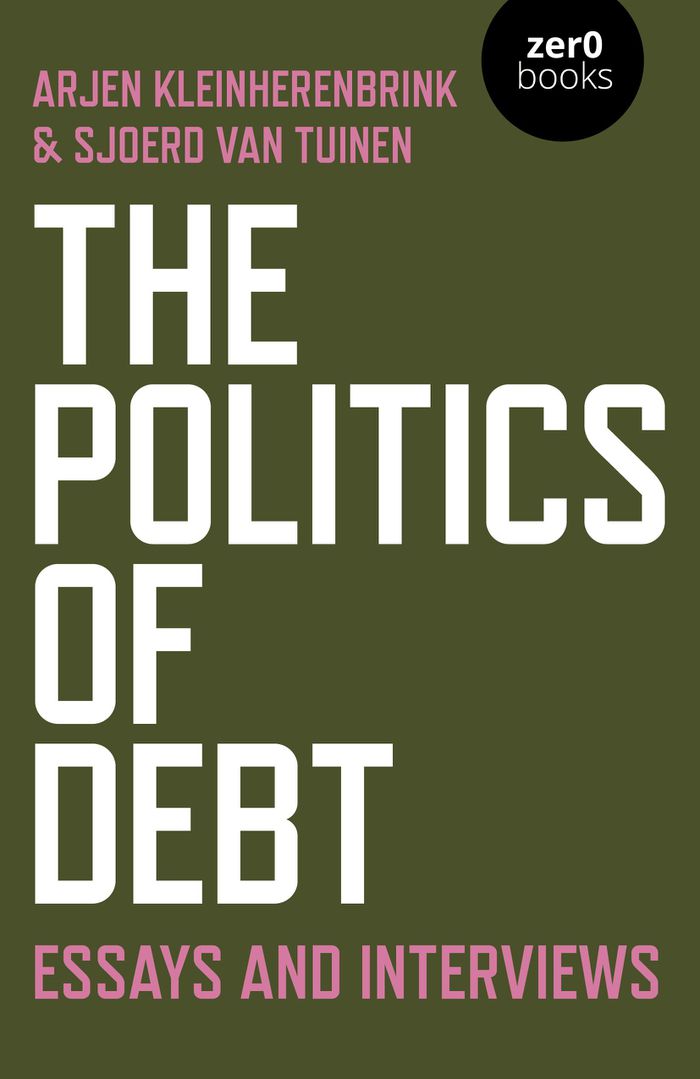
The politics of debt: Essays and interviews
Actions:
Prix:
$25.95
(disponible en magasin)
Résumé:
''The politics of debt'' brings together philosophers, political scientists, and economists and sets them the task of reflecting on the political role played by debt. Focusing on the aftermath of the 2008 economic crisis, particularly in the United States and Europe, the book is split into groups. It contains six essays and five interviews that aim to fully comprehend the political consequences of the economic crisis and specifically of debt.
The politics of debt: Essays and interviews
Actions:
Prix:
$25.95
(disponible en magasin)
Résumé:
''The politics of debt'' brings together philosophers, political scientists, and economists and sets them the task of reflecting on the political role played by debt. Focusing on the aftermath of the 2008 economic crisis, particularly in the United States and Europe, the book is split into groups. It contains six essays and five interviews that aim to fully comprehend the political consequences of the economic crisis and specifically of debt.
Classification:
livres
livres
Publication:
février 2020
février 2020
Sujet:
Théorie/ philosophie
Théorie/ philosophie
Classification:
livres
livres
Prix:
$30.95
(disponible en magasin)
Résumé:
For too long, representations of climate action in the mainstream media have been white-washed, green-washed and diluted to be made compatible with capitalism. In ''It’s Not That Radical'', Loach addresses head-on the issues at the root of the climate crisis. As Loach shows, we are living in an economic system which pursues profit above all else; harmful, oppressive(...)
$30.95
(disponible en magasin)
Résumé:
For too long, representations of climate action in the mainstream media have been white-washed, green-washed and diluted to be made compatible with capitalism. In ''It’s Not That Radical'', Loach addresses head-on the issues at the root of the climate crisis. As Loach shows, we are living in an economic system which pursues profit above all else; harmful, oppressive(...)
Titre:
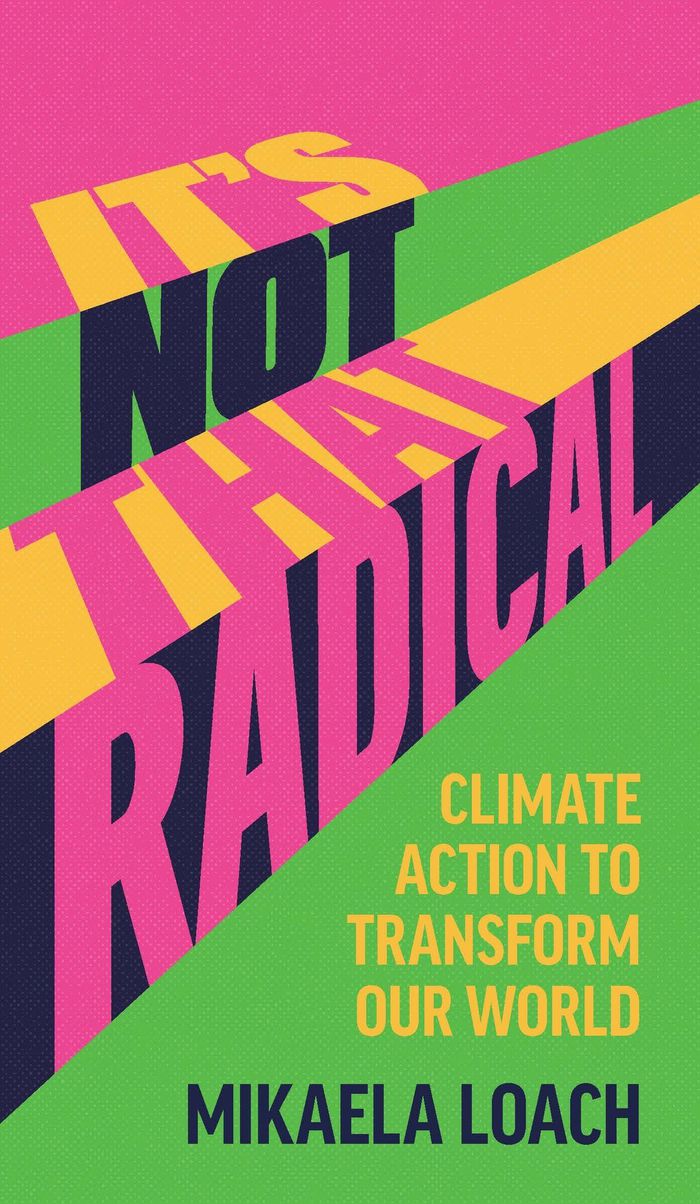
It's not that radical: Climate action to transform our world
Actions:
Prix:
$30.95
(disponible en magasin)
Résumé:
For too long, representations of climate action in the mainstream media have been white-washed, green-washed and diluted to be made compatible with capitalism. In ''It’s Not That Radical'', Loach addresses head-on the issues at the root of the climate crisis. As Loach shows, we are living in an economic system which pursues profit above all else; harmful, oppressive systems that heavily contribute to the climate crisis, and environmental consequences that have been toned down to the masses. Tackling the climate crisis requires us to visit the roots of poverty, capitalist exploitation, police brutality, and legal injustice. Climate justice offers the real possibility of huge leaps towards racial equality and collective liberation as it aims to dismantle the very foundations of these issues.
It's not that radical: Climate action to transform our world
Actions:
Prix:
$30.95
(disponible en magasin)
Résumé:
For too long, representations of climate action in the mainstream media have been white-washed, green-washed and diluted to be made compatible with capitalism. In ''It’s Not That Radical'', Loach addresses head-on the issues at the root of the climate crisis. As Loach shows, we are living in an economic system which pursues profit above all else; harmful, oppressive systems that heavily contribute to the climate crisis, and environmental consequences that have been toned down to the masses. Tackling the climate crisis requires us to visit the roots of poverty, capitalist exploitation, police brutality, and legal injustice. Climate justice offers the real possibility of huge leaps towards racial equality and collective liberation as it aims to dismantle the very foundations of these issues.
Classification:
livres
livres
Publication:
juin 2025
juin 2025
Classification:
livres
livres
Actions:
Prix:
$25.95
(disponible sur commande)
Résumé:
A cutting exploration of how cities drive climate change while being on the frontlines of the coming climate crisis.
$25.95
(disponible sur commande)
Résumé:
A cutting exploration of how cities drive climate change while being on the frontlines of the coming climate crisis.
Titre:
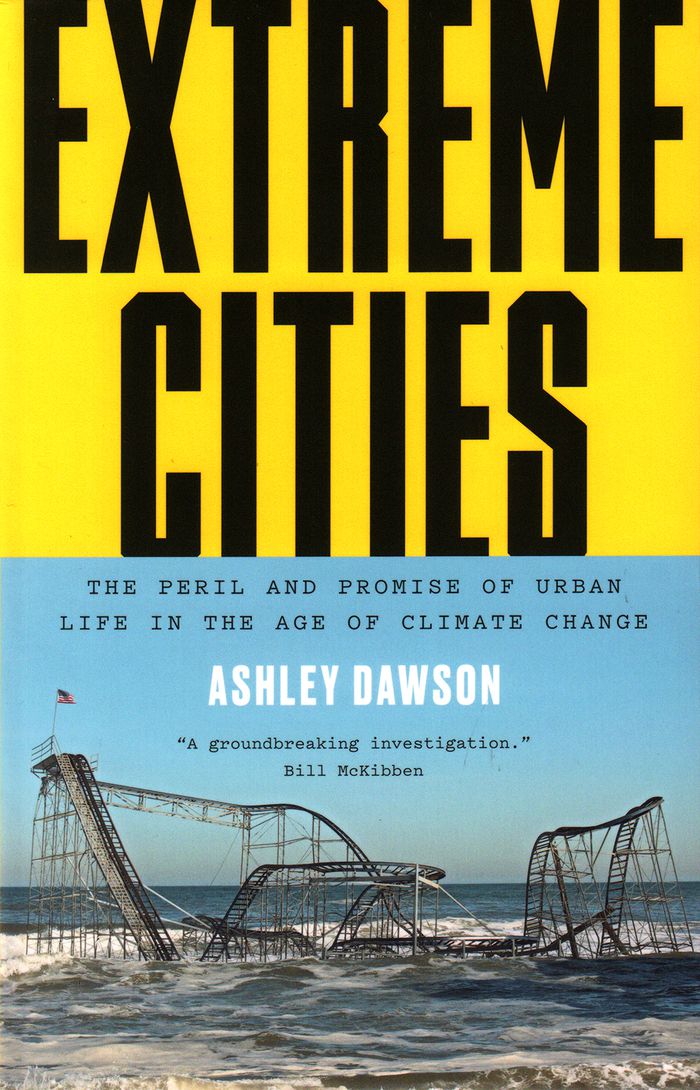
Extreme cities: the peril and promise of urban life in the age of climate change
Actions:
Prix:
$25.95
(disponible sur commande)
Résumé:
A cutting exploration of how cities drive climate change while being on the frontlines of the coming climate crisis.
Extreme cities: the peril and promise of urban life in the age of climate change
Actions:
Prix:
$25.95
(disponible sur commande)
Résumé:
A cutting exploration of how cities drive climate change while being on the frontlines of the coming climate crisis.
Classification:
livres
livres
Publication:
janvier 2019
janvier 2019
Classification:
livres
livres
Actions:
Prix:
$49.95
(disponible en magasin)
Résumé:
Intense attention has been paid to Detroit as a site of urban crisis. This crisis, however, has not only yielded the massive devaluation of real estate that has so often been noted; it has also yielded an explosive production of seemingly valueless urban property that has facilitated the imagination and practice of alternative urbanisms. The first sustained study of(...)
$49.95
(disponible en magasin)
Résumé:
Intense attention has been paid to Detroit as a site of urban crisis. This crisis, however, has not only yielded the massive devaluation of real estate that has so often been noted; it has also yielded an explosive production of seemingly valueless urban property that has facilitated the imagination and practice of alternative urbanisms. The first sustained study of(...)
Titre:
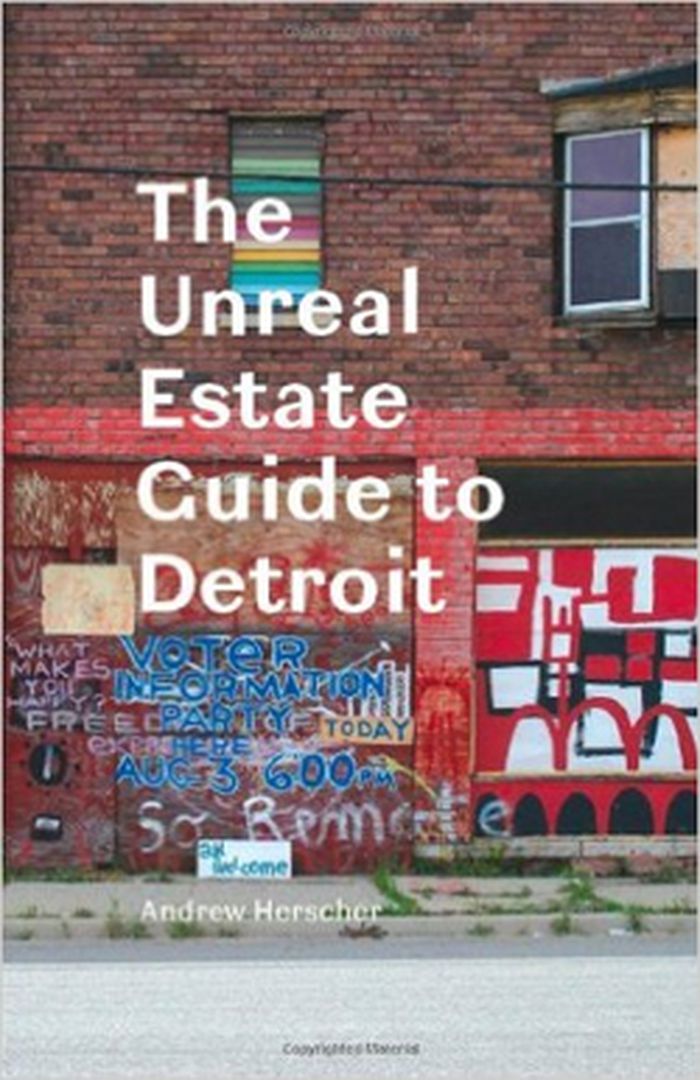
The unreal estate guide to Detroit
Actions:
Prix:
$49.95
(disponible en magasin)
Résumé:
Intense attention has been paid to Detroit as a site of urban crisis. This crisis, however, has not only yielded the massive devaluation of real estate that has so often been noted; it has also yielded an explosive production of seemingly valueless urban property that has facilitated the imagination and practice of alternative urbanisms. The first sustained study of Detroit’s alternative urban cultures, The Unreal Estate Guide to Detroit initiates a new focus on Detroit as a site not only of urban crisis but also of urban possibility. The guide documents art and curatorial practices, community and guerilla gardens, urban farming and forestry, cultural platforms, living archives, evangelical missions, temporary public spaces, intentional communities, furtive monuments, outsider architecture, and other work made possible by the ready availability of urban space in Detroit. The guide poses these spaces as “unreal estate”: urban territory that has slipped through the free- market economy and entered other regimes of value, other contexts of meaning, and other systems of use. The appropriation of this territory in Detroit, the Guide suggests, offers new perspectives on what a city is and can be, especially in a time of urban crisis.
The unreal estate guide to Detroit
Actions:
Prix:
$49.95
(disponible en magasin)
Résumé:
Intense attention has been paid to Detroit as a site of urban crisis. This crisis, however, has not only yielded the massive devaluation of real estate that has so often been noted; it has also yielded an explosive production of seemingly valueless urban property that has facilitated the imagination and practice of alternative urbanisms. The first sustained study of Detroit’s alternative urban cultures, The Unreal Estate Guide to Detroit initiates a new focus on Detroit as a site not only of urban crisis but also of urban possibility. The guide documents art and curatorial practices, community and guerilla gardens, urban farming and forestry, cultural platforms, living archives, evangelical missions, temporary public spaces, intentional communities, furtive monuments, outsider architecture, and other work made possible by the ready availability of urban space in Detroit. The guide poses these spaces as “unreal estate”: urban territory that has slipped through the free- market economy and entered other regimes of value, other contexts of meaning, and other systems of use. The appropriation of this territory in Detroit, the Guide suggests, offers new perspectives on what a city is and can be, especially in a time of urban crisis.
Classification:
livres
livres
Publication:
décembre 2012
décembre 2012
Sujet:
Théorie de l’urbanisme
Théorie de l’urbanisme
Classification:
livres
livres
Titre:
Who owns the water?
Who owns the water?
Actions:
Prix:
$60.00
(disponible sur commande)
Résumé:
Industrialization and population growth have brought about a global water crisis. Nature can no longer compensate the exploitation of our freshwater and our oceans. One billion people have no reliable access to clean drinking water; two billion live in precarious hygienic conditions. Famine, poverty, epidemics, and infant mortality are closely linked with the water(...)
$60.00
(disponible sur commande)
Résumé:
Industrialization and population growth have brought about a global water crisis. Nature can no longer compensate the exploitation of our freshwater and our oceans. One billion people have no reliable access to clean drinking water; two billion live in precarious hygienic conditions. Famine, poverty, epidemics, and infant mortality are closely linked with the water(...)
Titre:
Who owns the water?
Actions:
Prix:
$60.00
(disponible sur commande)
Résumé:
Industrialization and population growth have brought about a global water crisis. Nature can no longer compensate the exploitation of our freshwater and our oceans. One billion people have no reliable access to clean drinking water; two billion live in precarious hygienic conditions. Famine, poverty, epidemics, and infant mortality are closely linked with the water crisis. Social, ecological, political, and economic conflicts obstruct efforts to resolve the global water crisis. Water is an instrument of power. The key question reads: Is water a commodity or is free access to water an inalienable human right? By approaching water from a phenomenological perspective, Who owns the Water? seeks to persuade the reader that an element that is constantly flowing and changing defies all claims to own it, be they political or economic, and is instead the responsibility of the entire international community.
Who owns the water?
Actions:
Prix:
$60.00
(disponible sur commande)
Résumé:
Industrialization and population growth have brought about a global water crisis. Nature can no longer compensate the exploitation of our freshwater and our oceans. One billion people have no reliable access to clean drinking water; two billion live in precarious hygienic conditions. Famine, poverty, epidemics, and infant mortality are closely linked with the water crisis. Social, ecological, political, and economic conflicts obstruct efforts to resolve the global water crisis. Water is an instrument of power. The key question reads: Is water a commodity or is free access to water an inalienable human right? By approaching water from a phenomenological perspective, Who owns the Water? seeks to persuade the reader that an element that is constantly flowing and changing defies all claims to own it, be they political or economic, and is instead the responsibility of the entire international community.
Classification:
livres
livres
Publication:
mai 2006
mai 2006
Sujet:
Architecture écologique
Architecture écologique


