


1559 Résultats
Classification:
livres
livres
Actions:
Exemplaires:
Description:
128 pages : illustrations (some color) ; 26 x 29 cm
Description:
128 pages : illustrations (some color) ; 26 x 29 cm
Auteur:
- Barnes, Martin, 1971-,
- Malcolm Daniel Mark Haworth-Booth Martin Barnes,
- Turner, Benjamin Brecknell, 1815-1894,,
- Haworth-Booth, Mark,,
- Daniel, Malcolm R.,
Sujet:
- Turner, Benjamin Brecknell, 1815-1894.,
- Turner, Benjamin Brecknell 1815-1894,
- Turner, Benjamin Brecknell.,
- Landscape photography England History 19th century.,
- Photographers Great Britain Biography.,
- Photographie de paysages Angleterre Histoire 19e siècle.,
- Photographes Grande-Bretagne Biographies.,
- Landscape photography,
- Photographers,
- Architekturfotografie,
- Bildband,
- Ausstellung,
- Fotografi.,
- Fotografer.,
- England Pictorial works.,
- Angleterre Ouvrages illustrés.,
- England,
- Great Britain,
- Großbritannien,
- Geschichte 1852-1860,
- Ausstellung London 2001.,
- Paper (fibre product) boards (binding components),
- Biographies,
- History,
- Illustrated works,
- Ausstellungskatalog 2001 London.,
- Biografie.,
- Photography, Artistic.
Publication:
London : V & A Publications, [2001]
London : V & A Publications, [2001]
Titre:
Benjamin Brecknell Turner : rural England through a Victorian lens / Martin Barnes ; introduction by Malcolm Daniel ; biography by Mark Haworth-Booth.
Actions:
Exemplaires:
Description:
128 pages : illustrations (some color) ; 26 x 29 cm
Benjamin Brecknell Turner : rural England through a Victorian lens / Martin Barnes ; introduction by Malcolm Daniel ; biography by Mark Haworth-Booth.
Actions:
Exemplaires:
Description:
128 pages : illustrations (some color) ; 26 x 29 cm
Classification:
livres
livres
Publication:
London : V & A Publications, [2001]
London : V & A Publications, [2001]
Auteur:
- Barnes, Martin, 1971-,
- Malcolm Daniel Mark Haworth-Booth Martin Barnes,
- Turner, Benjamin Brecknell, 1815-1894,,
- Haworth-Booth, Mark,,
- Daniel, Malcolm R.,
Sujet:
- Turner, Benjamin Brecknell, 1815-1894.,
- Turner, Benjamin Brecknell 1815-1894,
- Turner, Benjamin Brecknell.,
- Landscape photography England History 19th century.,
- Photographers Great Britain Biography.,
- Photographie de paysages Angleterre Histoire 19e siècle.,
- Photographes Grande-Bretagne Biographies.,
- Landscape photography,
- Photographers,
- Architekturfotografie,
- Bildband,
- Ausstellung,
- Fotografi.,
- Fotografer.,
- England Pictorial works.,
- Angleterre Ouvrages illustrés.,
- England,
- Great Britain,
- Großbritannien,
- Geschichte 1852-1860,
- Ausstellung London 2001.,
- Paper (fibre product) boards (binding components),
- Biographies,
- History,
- Illustrated works,
- Ausstellungskatalog 2001 London.,
- Biografie.,
- Photography, Artistic.
Classification:
livres
livres
Prix:
$100.00
(disponible sur commande)
Résumé:
The official Biennale catalogue — a global overview of architecture of the last one hundred years. The emphasis of the 2014 Biennale is on architectural history. Each country is asked to narrate its history over the last one hundred years in relation to the idea of modernity. Has national identity been sacrificed on the altar of modernity? This is the issue that the(...)
$100.00
(disponible sur commande)
Résumé:
The official Biennale catalogue — a global overview of architecture of the last one hundred years. The emphasis of the 2014 Biennale is on architectural history. Each country is asked to narrate its history over the last one hundred years in relation to the idea of modernity. Has national identity been sacrificed on the altar of modernity? This is the issue that the(...)
Titre:
Fundamentals catalogue : 14. Mostra Internazionale di Architettura
Actions:
Prix:
$100.00
(disponible sur commande)
Résumé:
The official Biennale catalogue — a global overview of architecture of the last one hundred years. The emphasis of the 2014 Biennale is on architectural history. Each country is asked to narrate its history over the last one hundred years in relation to the idea of modernity. Has national identity been sacrificed on the altar of modernity? This is the issue that the Biennale is called on to address.
Fundamentals catalogue : 14. Mostra Internazionale di Architettura
Actions:
Prix:
$100.00
(disponible sur commande)
Résumé:
The official Biennale catalogue — a global overview of architecture of the last one hundred years. The emphasis of the 2014 Biennale is on architectural history. Each country is asked to narrate its history over the last one hundred years in relation to the idea of modernity. Has national identity been sacrificed on the altar of modernity? This is the issue that the Biennale is called on to address.
Classification:
livres
livres
Publication:
août 2014
août 2014
Sujet:
Architecture contemporaine
Architecture contemporaine
Classification:
livres
livres
Exemplaires:
Description:
216 pages : illustrations (chiefly color), facsimiles, plan, portraits ; 30 cm.
Description:
216 pages : illustrations (chiefly color), facsimiles, plan, portraits ; 30 cm.
Auteur:
- Jean Blanchaert -- Constance Rubini -- Michele de Lucchi, mars 2019 -- Martine Bedin, mars 2019 -- Barbara Radice -- Andrea Branzi, mars 2019 -- George Sowden, mai 2019 -- Photographies réalisées par Laurent Gueneau.,
- Rubini, Constance,,
- Musée des arts décoratifs et du design (Bordeaux, Nouvelle-Aquitaine, France),,
- Memphis.,
- Memphis. English.
Sujet:
- Bedin, Martine 1957-,
- Branzi, Andrea 1938-,
- De Lucchi, Michele 1951-,
- Radice, Barbara 1943-,
- Sottsass, Ettore 1917-2007,
- Sowden, George J. 1942-,
- Memphis (Group) Exhibitions.,
- Memphis (Group),
- Memphis Mailand,
- Product design History 20th century Exhibitions.,
- Product design Italy History Exhibitions.,
- Design Italy History 20th century Exhibitions.,
- Conception de produit Histoire 20e siècle Expositions.,
- Conception de produit Italie Histoire Expositions.,
- Design Italie Histoire 20e siècle Expositions.,
- Design,
- Product design,
- Industriedesign,
- Möbel,
- Italy,
- Exhibition catalogs,
- History
Publication:
[Paris] : Editions Norma, [2019], ©2019
[Paris] : Editions Norma, [2019], ©2019
Titre:
Memphis : plastic field / edited by Contance Rubini.
Actions:
Exemplaires:
Description:
216 pages : illustrations (chiefly color), facsimiles, plan, portraits ; 30 cm.
Memphis : plastic field / edited by Contance Rubini.
Actions:
Exemplaires:
Description:
216 pages : illustrations (chiefly color), facsimiles, plan, portraits ; 30 cm.
Classification:
livres
livres
Publication:
[Paris] : Editions Norma, [2019], ©2019
[Paris] : Editions Norma, [2019], ©2019
Auteur:
- Jean Blanchaert -- Constance Rubini -- Michele de Lucchi, mars 2019 -- Martine Bedin, mars 2019 -- Barbara Radice -- Andrea Branzi, mars 2019 -- George Sowden, mai 2019 -- Photographies réalisées par Laurent Gueneau.,
- Rubini, Constance,,
- Musée des arts décoratifs et du design (Bordeaux, Nouvelle-Aquitaine, France),,
- Memphis.,
- Memphis. English.
Sujet:
- Bedin, Martine 1957-,
- Branzi, Andrea 1938-,
- De Lucchi, Michele 1951-,
- Radice, Barbara 1943-,
- Sottsass, Ettore 1917-2007,
- Sowden, George J. 1942-,
- Memphis (Group) Exhibitions.,
- Memphis (Group),
- Memphis Mailand,
- Product design History 20th century Exhibitions.,
- Product design Italy History Exhibitions.,
- Design Italy History 20th century Exhibitions.,
- Conception de produit Histoire 20e siècle Expositions.,
- Conception de produit Italie Histoire Expositions.,
- Design Italie Histoire 20e siècle Expositions.,
- Design,
- Product design,
- Industriedesign,
- Möbel,
- Italy,
- Exhibition catalogs,
- History
Classification:
livres
livres
Actions:
Prix:
$34.95
(disponible sur commande)
Résumé:
For the first time, the speculative in architecture becomes a topic of critical research. It is investigated not as idealistic but as strategic acting within endless modernity. This modernity implies that speculation, as strategic acting, is not only applied to economic but also to political and aesthetic values. Values become mobile, valuations become a play with highs(...)
$34.95
(disponible sur commande)
Résumé:
For the first time, the speculative in architecture becomes a topic of critical research. It is investigated not as idealistic but as strategic acting within endless modernity. This modernity implies that speculation, as strategic acting, is not only applied to economic but also to political and aesthetic values. Values become mobile, valuations become a play with highs(...)
Titre:
How architecture learned to speculate
Actions:
Prix:
$34.95
(disponible sur commande)
Résumé:
For the first time, the speculative in architecture becomes a topic of critical research. It is investigated not as idealistic but as strategic acting within endless modernity. This modernity implies that speculation, as strategic acting, is not only applied to economic but also to political and aesthetic values. Values become mobile, valuations become a play with highs and lows, authors (architects) become winners or losers, and culture becomes fashion. Includes projects by NL Architects, MVRDV, Aristide Antonas, FAT, Ralf Schreiber, Pascual Sisto, Ant Farm, Caspar Stracke, OMA, JODI, Kevin Bauman and others.
How architecture learned to speculate
Actions:
Prix:
$34.95
(disponible sur commande)
Résumé:
For the first time, the speculative in architecture becomes a topic of critical research. It is investigated not as idealistic but as strategic acting within endless modernity. This modernity implies that speculation, as strategic acting, is not only applied to economic but also to political and aesthetic values. Values become mobile, valuations become a play with highs and lows, authors (architects) become winners or losers, and culture becomes fashion. Includes projects by NL Architects, MVRDV, Aristide Antonas, FAT, Ralf Schreiber, Pascual Sisto, Ant Farm, Caspar Stracke, OMA, JODI, Kevin Bauman and others.
Classification:
livres
livres
Publication:
décembre 2010
décembre 2010
Sujet:
Architecture contemporaine
Architecture contemporaine
Classification:
livres
livres
Actions:
Prix:
$68.95
(disponible sur commande)
Résumé:
From 52 propositions the book explores glocal urbanity as a new modernity derived from the Axial Age. It proposes to understand the city also as a socio-technological process.
$68.95
(disponible sur commande)
Résumé:
From 52 propositions the book explores glocal urbanity as a new modernity derived from the Axial Age. It proposes to understand the city also as a socio-technological process.
Titre:
Disruptive urbanism, glocal urbanity
Actions:
Prix:
$68.95
(disponible sur commande)
Résumé:
From 52 propositions the book explores glocal urbanity as a new modernity derived from the Axial Age. It proposes to understand the city also as a socio-technological process.
Disruptive urbanism, glocal urbanity
Actions:
Prix:
$68.95
(disponible sur commande)
Résumé:
From 52 propositions the book explores glocal urbanity as a new modernity derived from the Axial Age. It proposes to understand the city also as a socio-technological process.
Classification:
livres
livres
Publication:
janvier 2021
janvier 2021
Sujet:
Théorie de l’urbanisme
Théorie de l’urbanisme
Classification:
livres
livres
Titre:
Arquitetura + arte + cidade : um debate internacional / organização, Roberto Segre [and others].
Arquitetura + arte + cidade : um debate internacional / organização, Roberto Segre [and others].
Actions:
Exemplaires:
Description:
402 pages : illustrations ; 23 cm
Description:
402 pages : illustrations ; 23 cm
Auteur:
- Seminário DOCOMOMO Brasil (8th : 2009 : Rio de Janeiro, Brazil),
- Roberto Segre e Marlice Azevedo -- Maria da Silveira Lobo Luis Fernández-Galiano -- Maristella Casciatto -- Ana Tostões -- Louise Noelle -- Alberto Petrina -- Barry Bergdoll -- Revistas underground da arquitetura radical / Beatriz Colomina -- Jean-François Lejeune -- Mario Schejetnan Anat Falbel -- Carlos Fernando de Souza Leão Andrade -- Carlos Eduardo Comas -- Cêç̧a Guimaraes e Sylvia Couto -- Eduardo Rossetti -- Fernanda Fernandes -- Fernando Diniz Moreira -- Helio Herbst -- Jeanice de Freitas Magina e Fernando Fernandes de Mello -- João Masao Kamita -- José Barki -- José Tavares Correia de Lira -- Luisa Videsotti -- Luiz Felipe Machado Coelho de Souza -- Maria Beatriz Camargo Cappello -- Maria Cristina Cabral -- Marisol Rodríguez Sosa e Roberto Segre -- Nivaldo Vieira de Andrade Junior, Maria Rosa de Carvalho e Raquel Neimann da Cunha Freire Sylvia Ficher -- Phillip Paneral -- Carlos Henrique Magalhães de Lima -- Danilo Matoso Macedo -- Helcio Silva e José Manuel Sánchez.,
- Segre, Roberto, 1934-2013.,
- DO.CO,MO.MO-Brasil.
Sujet:
- Modern movement (Architecture) Brazil Congresses.,
- Architecture Brazil History 21st century Congresses.,
- City planning Brazil History 21st century Congresses.,
- Mouvement moderne (Architecture) Brésil Congrès.,
- Architecture Brésil Histoire 21e siècle Congrès.,
- Architecture,
- City planning,
- Modern movement (Architecture),
- Brazil,
- Conference papers and proceedings,
- History
Publication:
Rio de Janeiro : Viana & Mosley Editora : ProUrb, DO. Co. MO. MO-Brasil, 2010.
Rio de Janeiro : Viana & Mosley Editora : ProUrb, DO. Co. MO. MO-Brasil, 2010.
Titre:
Arquitetura + arte + cidade : um debate internacional / organização, Roberto Segre [and others].
Actions:
Exemplaires:
Description:
402 pages : illustrations ; 23 cm
Arquitetura + arte + cidade : um debate internacional / organização, Roberto Segre [and others].
Actions:
Exemplaires:
Description:
402 pages : illustrations ; 23 cm
Classification:
livres
livres
Publication:
Rio de Janeiro : Viana & Mosley Editora : ProUrb, DO. Co. MO. MO-Brasil, 2010.
Rio de Janeiro : Viana & Mosley Editora : ProUrb, DO. Co. MO. MO-Brasil, 2010.
Auteur:
- Seminário DOCOMOMO Brasil (8th : 2009 : Rio de Janeiro, Brazil),
- Roberto Segre e Marlice Azevedo -- Maria da Silveira Lobo Luis Fernández-Galiano -- Maristella Casciatto -- Ana Tostões -- Louise Noelle -- Alberto Petrina -- Barry Bergdoll -- Revistas underground da arquitetura radical / Beatriz Colomina -- Jean-François Lejeune -- Mario Schejetnan Anat Falbel -- Carlos Fernando de Souza Leão Andrade -- Carlos Eduardo Comas -- Cêç̧a Guimaraes e Sylvia Couto -- Eduardo Rossetti -- Fernanda Fernandes -- Fernando Diniz Moreira -- Helio Herbst -- Jeanice de Freitas Magina e Fernando Fernandes de Mello -- João Masao Kamita -- José Barki -- José Tavares Correia de Lira -- Luisa Videsotti -- Luiz Felipe Machado Coelho de Souza -- Maria Beatriz Camargo Cappello -- Maria Cristina Cabral -- Marisol Rodríguez Sosa e Roberto Segre -- Nivaldo Vieira de Andrade Junior, Maria Rosa de Carvalho e Raquel Neimann da Cunha Freire Sylvia Ficher -- Phillip Paneral -- Carlos Henrique Magalhães de Lima -- Danilo Matoso Macedo -- Helcio Silva e José Manuel Sánchez.,
- Segre, Roberto, 1934-2013.,
- DO.CO,MO.MO-Brasil.
Sujet:
- Modern movement (Architecture) Brazil Congresses.,
- Architecture Brazil History 21st century Congresses.,
- City planning Brazil History 21st century Congresses.,
- Mouvement moderne (Architecture) Brésil Congrès.,
- Architecture Brésil Histoire 21e siècle Congrès.,
- Architecture,
- City planning,
- Modern movement (Architecture),
- Brazil,
- Conference papers and proceedings,
- History
Classification:
livres
livres
Prix:
$37.50
(disponible sur commande)
Résumé:
Beginning from the rise of modern history in the eighteenth century, this book examines how changing ideas in the discipline of history itself has affected architecture from the beginning of modernity up to the present day.
$37.50
(disponible sur commande)
Résumé:
Beginning from the rise of modern history in the eighteenth century, this book examines how changing ideas in the discipline of history itself has affected architecture from the beginning of modernity up to the present day.
Titre:
Architecture re-assembled : the use (and abuse) of history
Actions:
Prix:
$37.50
(disponible sur commande)
Résumé:
Beginning from the rise of modern history in the eighteenth century, this book examines how changing ideas in the discipline of history itself has affected architecture from the beginning of modernity up to the present day.
Architecture re-assembled : the use (and abuse) of history
Actions:
Prix:
$37.50
(disponible sur commande)
Résumé:
Beginning from the rise of modern history in the eighteenth century, this book examines how changing ideas in the discipline of history itself has affected architecture from the beginning of modernity up to the present day.
Classification:
livres
livres
Publication:
avril 2013
avril 2013
Sujet:
Théorie de l’architecture
Théorie de l’architecture
Classification:
livres
livres
Prix:
$36.95
(disponible en magasin)
Résumé:
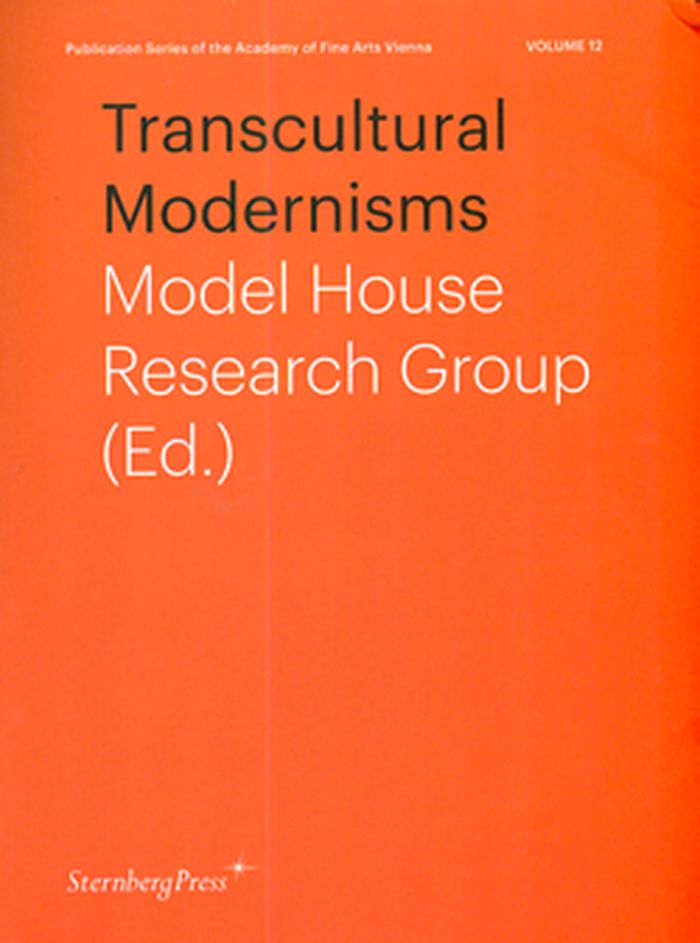
Based on the findings of an interdisciplinary research project, Transcultural Modernisms maps out the network of encounters, transnational influences, and local appropriations of an architectural modernity manifested in various ways in housing projects in India, Israel, Morocco, and China.
$36.95
(disponible en magasin)
Résumé:
Based on the findings of an interdisciplinary research project, Transcultural Modernisms maps out the network of encounters, transnational influences, and local appropriations of an architectural modernity manifested in various ways in housing projects in India, Israel, Morocco, and China.
Titre:
Transcultural modernisms: model house research group (Ed.)
Actions:
Prix:
$36.95
(disponible en magasin)
Résumé:
Based on the findings of an interdisciplinary research project, Transcultural Modernisms maps out the network of encounters, transnational influences, and local appropriations of an architectural modernity manifested in various ways in housing projects in India, Israel, Morocco, and China.
Transcultural modernisms: model house research group (Ed.)
Actions:
Prix:
$36.95
(disponible en magasin)
Résumé:
Based on the findings of an interdisciplinary research project, Transcultural Modernisms maps out the network of encounters, transnational influences, and local appropriations of an architectural modernity manifested in various ways in housing projects in India, Israel, Morocco, and China.
Classification:
livres
livres
Publication:
décembre 2013
décembre 2013
Sujet:
Modernisme
Modernisme
Classification:
livres
livres
Titre:
Life is not useful
Life is not useful
Actions:
Prix:
$17.95
(disponible en magasin)
Résumé:
Indigenous leader and activist Ailton Krenak reminds us that we must awaken from the comatose senselessness we have been immersed in since the beginning of the modern colonial project, where order, progress, development, consumerism, and capitalism have taken over our entire existence, leaving us only very partially alive, and, in fact, almost dead. To awaken from the(...)
$17.95
(disponible en magasin)
Résumé:
Indigenous leader and activist Ailton Krenak reminds us that we must awaken from the comatose senselessness we have been immersed in since the beginning of the modern colonial project, where order, progress, development, consumerism, and capitalism have taken over our entire existence, leaving us only very partially alive, and, in fact, almost dead. To awaken from the(...)
Titre:
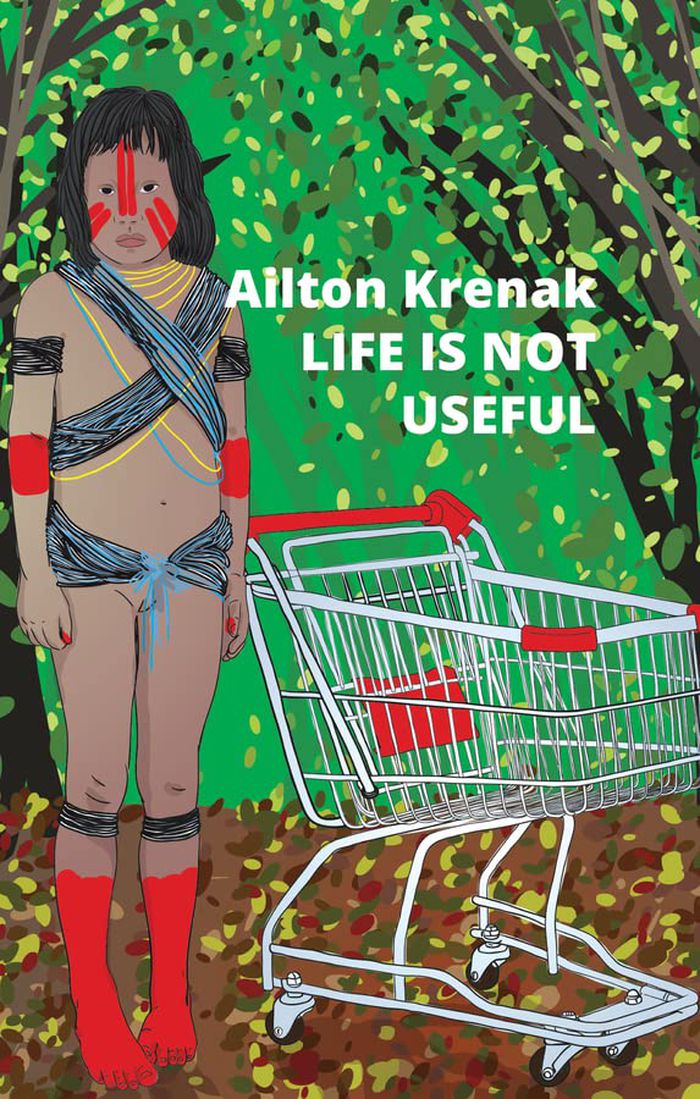
Life is not useful
Actions:
Prix:
$17.95
(disponible en magasin)
Résumé:
Indigenous leader and activist Ailton Krenak reminds us that we must awaken from the comatose senselessness we have been immersed in since the beginning of the modern colonial project, where order, progress, development, consumerism, and capitalism have taken over our entire existence, leaving us only very partially alive, and, in fact, almost dead. To awaken from the coma of modernity is, for Krenak, to awaken to the possibility of becoming attuned to “the cosmic sense of life.” He points out that the COVID-19 pandemic affects all so-called “human” lives and that the time is ripe for us all to reflect on and undo the exclusivity and distinction that have characterized the concept of humanity throughout Western modernity.
Life is not useful
Actions:
Prix:
$17.95
(disponible en magasin)
Résumé:
Indigenous leader and activist Ailton Krenak reminds us that we must awaken from the comatose senselessness we have been immersed in since the beginning of the modern colonial project, where order, progress, development, consumerism, and capitalism have taken over our entire existence, leaving us only very partially alive, and, in fact, almost dead. To awaken from the coma of modernity is, for Krenak, to awaken to the possibility of becoming attuned to “the cosmic sense of life.” He points out that the COVID-19 pandemic affects all so-called “human” lives and that the time is ripe for us all to reflect on and undo the exclusivity and distinction that have characterized the concept of humanity throughout Western modernity.
Classification:
livres
livres
Publication:
mai 2023
mai 2023
Sujet:
Social
Social
Classification:
livres
livres
Actions:
Exemplaires:
Description:
xviii, 402 pages : illustrations (some color) ; 26 cm
Description:
xviii, 402 pages : illustrations (some color) ; 26 cm
Auteur:
Sujet:
- Eames, Charles.,
- Eames, Ray.,
- Eames, Charles 1907-1978,
- Eames, Ray 1912-1988,
- Design United States History 20th century.,
- Eames furniture.,
- Design États-Unis Histoire 20e siècle.,
- Meubles Eames.,
- Design.,
- Architektur,
- Möbel,
- Industridesign.,
- Art and Design.,
- United States.,
- USA,
- Förenta staterna.,
- Eames, Charles [e] Eames, Ray Raccolte di saggi,
- History.
Publication:
New Haven ; London : Yale University Press, [2015], ©2015
New Haven ; London : Yale University Press, [2015], ©2015
Titre:
An Eames anthology : articles, film scripts, interviews, letters, notes, speeches / by Charles and Ray Eames ; edited by Daniel Ostroff.
Actions:
Exemplaires:
Description:
xviii, 402 pages : illustrations (some color) ; 26 cm
An Eames anthology : articles, film scripts, interviews, letters, notes, speeches / by Charles and Ray Eames ; edited by Daniel Ostroff.
Actions:
Exemplaires:
Description:
xviii, 402 pages : illustrations (some color) ; 26 cm
Classification:
livres
livres
Publication:
New Haven ; London : Yale University Press, [2015], ©2015
New Haven ; London : Yale University Press, [2015], ©2015
Auteur:
Sujet:
- Eames, Charles.,
- Eames, Ray.,
- Eames, Charles 1907-1978,
- Eames, Ray 1912-1988,
- Design United States History 20th century.,
- Eames furniture.,
- Design États-Unis Histoire 20e siècle.,
- Meubles Eames.,
- Design.,
- Architektur,
- Möbel,
- Industridesign.,
- Art and Design.,
- United States.,
- USA,
- Förenta staterna.,
- Eames, Charles [e] Eames, Ray Raccolte di saggi,
- History.


