


135 Résultats
Classification:
livres
livres
Actions:
Prix:
$52.95
(disponible sur commande)
Résumé:
The German-American architect Dirk Lohan began to record his conversations with his grandfather Ludwig Mies van der Rohe in the summer of 1969. The tapes, recorded during the final weeks of Mies's life, captured some of the architect's very last words. They were sent to the Museum of Modern Art in New York after his death, though they went missing under unknown(...)
$52.95
(disponible sur commande)
Résumé:
The German-American architect Dirk Lohan began to record his conversations with his grandfather Ludwig Mies van der Rohe in the summer of 1969. The tapes, recorded during the final weeks of Mies's life, captured some of the architect's very last words. They were sent to the Museum of Modern Art in New York after his death, though they went missing under unknown(...)
Titre:
The lost, last words of Mies van der Rohe: the Lohan tapes from 1969
Actions:
Prix:
$52.95
(disponible sur commande)
Résumé:
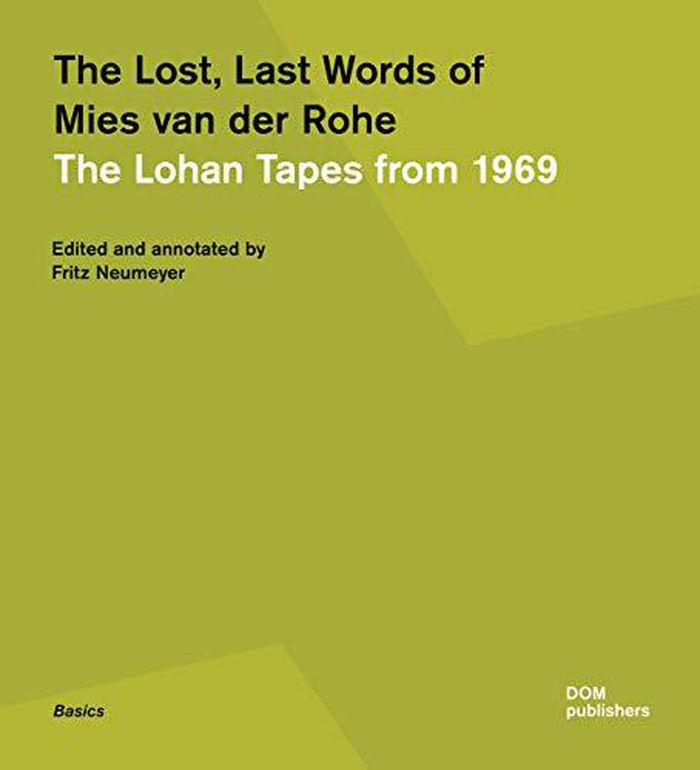
The German-American architect Dirk Lohan began to record his conversations with his grandfather Ludwig Mies van der Rohe in the summer of 1969. The tapes, recorded during the final weeks of Mies's life, captured some of the architect's very last words. They were sent to the Museum of Modern Art in New York after his death, though they went missing under unknown circumstances. Only an incomplete typescript remains as a testimony to the conversations. ''The lost, last words of Mies van der Rohe'' presents this text in its entirety for the very first time. The conversations relayed in the typescript reveal the famously reticent Mies speaking about his own life with a level of detail, precision, and candour found nowhere else. They shed new light on Mies's character – not only as a serious, philosophical man but also as a human being alive to the humorous aspects of life. This book features a foreword by Dirk Lohan and an introductory essay by Fritz Neumeyer, the world's foremost scholar on Mies. Neumeyer's commentary and analysis provide keen insights into how Mies developed his architectural thinking during his early career, on his way to becoming the most important modern architects of the twentieth century.
The lost, last words of Mies van der Rohe: the Lohan tapes from 1969
Actions:
Prix:
$52.95
(disponible sur commande)
Résumé:
The German-American architect Dirk Lohan began to record his conversations with his grandfather Ludwig Mies van der Rohe in the summer of 1969. The tapes, recorded during the final weeks of Mies's life, captured some of the architect's very last words. They were sent to the Museum of Modern Art in New York after his death, though they went missing under unknown circumstances. Only an incomplete typescript remains as a testimony to the conversations. ''The lost, last words of Mies van der Rohe'' presents this text in its entirety for the very first time. The conversations relayed in the typescript reveal the famously reticent Mies speaking about his own life with a level of detail, precision, and candour found nowhere else. They shed new light on Mies's character – not only as a serious, philosophical man but also as a human being alive to the humorous aspects of life. This book features a foreword by Dirk Lohan and an introductory essay by Fritz Neumeyer, the world's foremost scholar on Mies. Neumeyer's commentary and analysis provide keen insights into how Mies developed his architectural thinking during his early career, on his way to becoming the most important modern architects of the twentieth century.
Classification:
livres
livres
Publication:
décembre 2020
décembre 2020
Sujet:
Architecture, monographies
Architecture, monographies
Classification:
livres
livres
Actions:
Prix:
$83.95
(disponible sur commande)
Résumé:
The town of Schlins in Vorarlberg has long been a Mecca for all those with an interest in clay construction. On the steep southern slope, the clay builder Martin Rauch worked together with Zurich architect Roger Boltshauser to erect his new artist’s residence. From its foundation all the way to its fl at roof, it is made entirely of excavated soil from the site on which(...)
$83.95
(disponible sur commande)
Résumé:
The town of Schlins in Vorarlberg has long been a Mecca for all those with an interest in clay construction. On the steep southern slope, the clay builder Martin Rauch worked together with Zurich architect Roger Boltshauser to erect his new artist’s residence. From its foundation all the way to its fl at roof, it is made entirely of excavated soil from the site on which(...)
Titre:
Haus Rauch / The Rauch House : a model of avanced clay architecture
Actions:
Prix:
$83.95
(disponible sur commande)
Résumé:
The town of Schlins in Vorarlberg has long been a Mecca for all those with an interest in clay construction. On the steep southern slope, the clay builder Martin Rauch worked together with Zurich architect Roger Boltshauser to erect his new artist’s residence. From its foundation all the way to its fl at roof, it is made entirely of excavated soil from the site on which it is built: the floors and arched ceilings, the plasterwork on ceiling and walls, the washstands, tiles, and stairs – all are made from the single material clay in its various forms. The house is a show house as well as the document of a unique collaboration. At the same time, it is a striking example of how, with the structural and design limitations of this «soft» and massive building technique, a spatially and tectonically adequate design can be achieved – and how an archaic building technique can be used in a contemporary manner. With today’s renewed focus on energetic and ecological consequences, clay construction, with its special ecological, organic, and aesthetic qualities, is again becoming a subject of widespread interest. The structure presented in this book has received national and international awards and represents a milestone in the field.
Haus Rauch / The Rauch House : a model of avanced clay architecture
Actions:
Prix:
$83.95
(disponible sur commande)
Résumé:
The town of Schlins in Vorarlberg has long been a Mecca for all those with an interest in clay construction. On the steep southern slope, the clay builder Martin Rauch worked together with Zurich architect Roger Boltshauser to erect his new artist’s residence. From its foundation all the way to its fl at roof, it is made entirely of excavated soil from the site on which it is built: the floors and arched ceilings, the plasterwork on ceiling and walls, the washstands, tiles, and stairs – all are made from the single material clay in its various forms. The house is a show house as well as the document of a unique collaboration. At the same time, it is a striking example of how, with the structural and design limitations of this «soft» and massive building technique, a spatially and tectonically adequate design can be achieved – and how an archaic building technique can be used in a contemporary manner. With today’s renewed focus on energetic and ecological consequences, clay construction, with its special ecological, organic, and aesthetic qualities, is again becoming a subject of widespread interest. The structure presented in this book has received national and international awards and represents a milestone in the field.
Classification:
livres
livres
Publication:
décembre 2010
décembre 2010
Sujet:
Architecture, monographies
Architecture, monographies
Classification:
livres
livres
Actions:
Prix:
$30.00
(disponible en magasin)
Résumé:
The Joan Miró Foundation opened in 1975, becoming Barcelona's first public institution to focus entirely on contemporary art. The architect Josep Lluís Sert designed the Foundation's building with clean, airy white shapes of curves and corners and multiple skylights, creating a decidedly Mediterranean-flavored complex arranged around a central patio, with expansive roof(...)
$30.00
(disponible en magasin)
Résumé:
The Joan Miró Foundation opened in 1975, becoming Barcelona's first public institution to focus entirely on contemporary art. The architect Josep Lluís Sert designed the Foundation's building with clean, airy white shapes of curves and corners and multiple skylights, creating a decidedly Mediterranean-flavored complex arranged around a central patio, with expansive roof(...)
Titre:
Josep Lluis Sert: Joan Miro foundation
Actions:
Prix:
$30.00
(disponible en magasin)
Résumé:
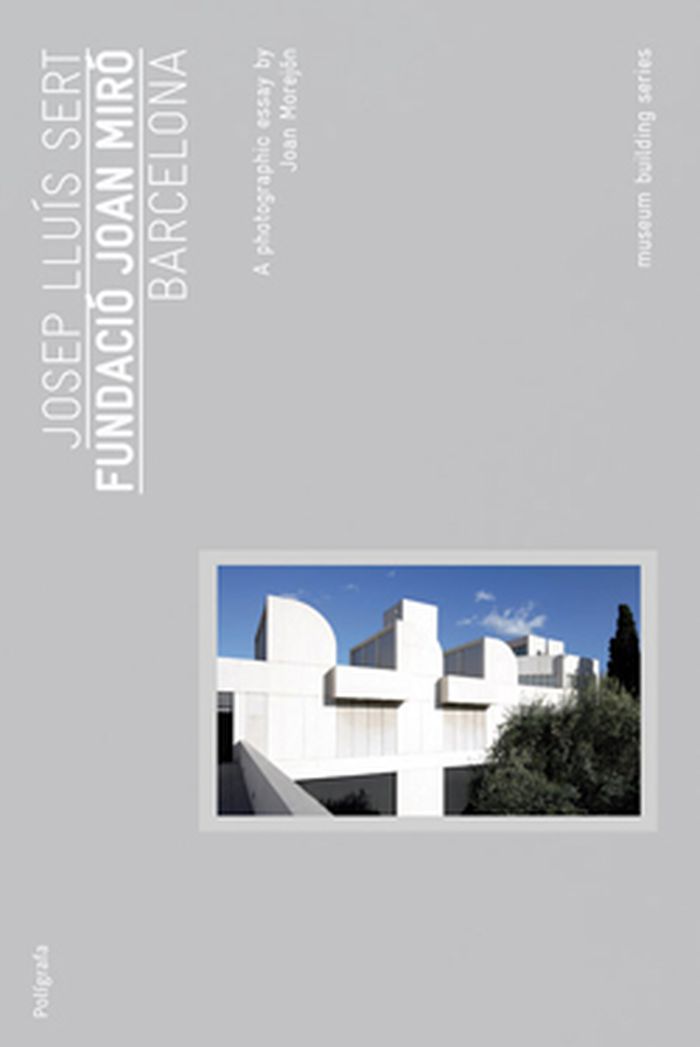
The Joan Miró Foundation opened in 1975, becoming Barcelona's first public institution to focus entirely on contemporary art. The architect Josep Lluís Sert designed the Foundation's building with clean, airy white shapes of curves and corners and multiple skylights, creating a decidedly Mediterranean-flavored complex arranged around a central patio, with expansive roof terraces above. (Two subsequent expansions to the building were designed by Jaume Freixa, a pupil and longtime colleague of Sert's.) After the first major retrospective of Miró's work occurred in Barcelona in 1968, the artist decided to set up a building to make his work and the work of other contemporary artists permanently accessible to the public. To design the foundation's home, he tapped his old friend Sert, a pioneer in the introduction of modern architecture in Catalonia, who had first met Miró in 1932 and worked with him on the Spanish (Republican) Pavilion at the Paris World Fair in 1937. This volume, one of a series of monographs on new museum architecture, provides a careful look at the design of one of Europe's premier art institutions, and includes an interview with the architects responsible for the recent expansions.
Josep Lluis Sert: Joan Miro foundation
Actions:
Prix:
$30.00
(disponible en magasin)
Résumé:
The Joan Miró Foundation opened in 1975, becoming Barcelona's first public institution to focus entirely on contemporary art. The architect Josep Lluís Sert designed the Foundation's building with clean, airy white shapes of curves and corners and multiple skylights, creating a decidedly Mediterranean-flavored complex arranged around a central patio, with expansive roof terraces above. (Two subsequent expansions to the building were designed by Jaume Freixa, a pupil and longtime colleague of Sert's.) After the first major retrospective of Miró's work occurred in Barcelona in 1968, the artist decided to set up a building to make his work and the work of other contemporary artists permanently accessible to the public. To design the foundation's home, he tapped his old friend Sert, a pioneer in the introduction of modern architecture in Catalonia, who had first met Miró in 1932 and worked with him on the Spanish (Republican) Pavilion at the Paris World Fair in 1937. This volume, one of a series of monographs on new museum architecture, provides a careful look at the design of one of Europe's premier art institutions, and includes an interview with the architects responsible for the recent expansions.
Classification:
livres
livres
Publication:
septembre 2010
septembre 2010
Classification:
périodiques
périodiques
Titre:
ARCH+ : Release architecture
ARCH+ : Release architecture
Actions:
Prix:
$39.95
(disponible en magasin)
Résumé:
An architecture biennale can be more than a place to simply represent and celebrate the status quo in architectural production. Exhibitions are increasingly becoming a place for researching and producing an experimental and critical architectural practice: a place not for the presentation of finished products, but for the production of content. This calls into question(...)
$39.95
(disponible en magasin)
Résumé:
An architecture biennale can be more than a place to simply represent and celebrate the status quo in architectural production. Exhibitions are increasingly becoming a place for researching and producing an experimental and critical architectural practice: a place not for the presentation of finished products, but for the production of content. This calls into question(...)
Titre:
ARCH+ : Release architecture
Actions:
Prix:
$39.95
(disponible en magasin)
Résumé:
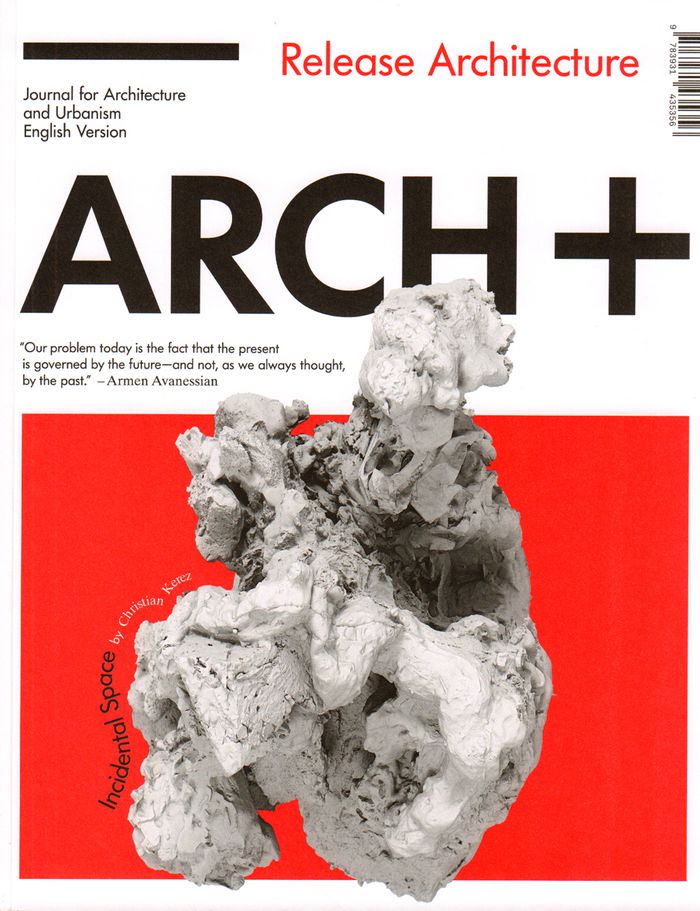
An architecture biennale can be more than a place to simply represent and celebrate the status quo in architectural production. Exhibitions are increasingly becoming a place for researching and producing an experimental and critical architectural practice: a place not for the presentation of finished products, but for the production of content. This calls into question the supposed boundary between architecture and exhibition. Inquiry becomes a form of display. Christian Kerez’s Incidental Space, exhibited in the Swiss Pavilion at the 2016 Architecture Biennale in Venice, attempts to inquire into the outer limits of what can be achieved in architecture today—in terms of both technical feasibility and the limits of our own imagination. How can you use the medium of architecture to contemplate an architectural space that is entirely abstract and as complex as possible? How could this kind of imaginary space even be visualized, and how could it be produced? Conceived in close collaboration with Sandra Oehy, the curator of the Swiss Pavilion, and Christian Kerez, the Swiss Pavilion architect, this issue of ARCH+ delves into the questions posed by Kerez’s “speculative space.” Contributors like Philip Ursprung, Mario Carpo, Armen Avanessian, and Timothy Morton consider how the object stands in relation to the subject in a world where the capacity for technological and digital reproduction increasingly renders the distinction between depiction and reality moot. Where is the space for architectural autonomy in this? How can we “Release Architecture”? A report from architecture’s speculative front.
ARCH+ : Release architecture
Actions:
Prix:
$39.95
(disponible en magasin)
Résumé:
An architecture biennale can be more than a place to simply represent and celebrate the status quo in architectural production. Exhibitions are increasingly becoming a place for researching and producing an experimental and critical architectural practice: a place not for the presentation of finished products, but for the production of content. This calls into question the supposed boundary between architecture and exhibition. Inquiry becomes a form of display. Christian Kerez’s Incidental Space, exhibited in the Swiss Pavilion at the 2016 Architecture Biennale in Venice, attempts to inquire into the outer limits of what can be achieved in architecture today—in terms of both technical feasibility and the limits of our own imagination. How can you use the medium of architecture to contemplate an architectural space that is entirely abstract and as complex as possible? How could this kind of imaginary space even be visualized, and how could it be produced? Conceived in close collaboration with Sandra Oehy, the curator of the Swiss Pavilion, and Christian Kerez, the Swiss Pavilion architect, this issue of ARCH+ delves into the questions posed by Kerez’s “speculative space.” Contributors like Philip Ursprung, Mario Carpo, Armen Avanessian, and Timothy Morton consider how the object stands in relation to the subject in a world where the capacity for technological and digital reproduction increasingly renders the distinction between depiction and reality moot. Where is the space for architectural autonomy in this? How can we “Release Architecture”? A report from architecture’s speculative front.
Classification:
périodiques
périodiques
Publication:
mai 2016
mai 2016
Sujet:
Revues
Revues
Classification:
livres
livres
Prix:
$33.95
(disponible sur commande)
Résumé:
A manifesto for the Open City: vibrant, disordered, adaptable. In 1970 Richard Sennett published the ground breaking ''The uses of disorder,'' that the ideal of a planned and ordered city was flawed, likely to produce a fragile, restrictive urban environment. Fifty years later, Sennett returns to these still fertile ideas and alongside campaigner and architect, Pablo(...)
$33.95
(disponible sur commande)
Résumé:
A manifesto for the Open City: vibrant, disordered, adaptable. In 1970 Richard Sennett published the ground breaking ''The uses of disorder,'' that the ideal of a planned and ordered city was flawed, likely to produce a fragile, restrictive urban environment. Fifty years later, Sennett returns to these still fertile ideas and alongside campaigner and architect, Pablo(...)
Titre:
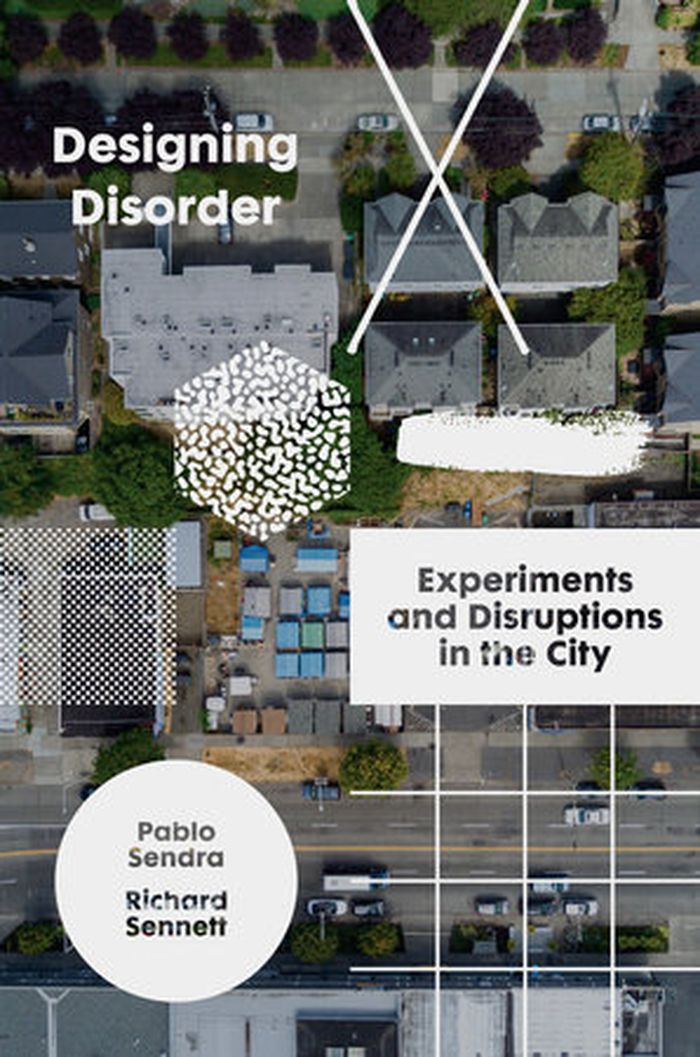
Designing disorder: experiments and disruptions in the city
Actions:
Prix:
$33.95
(disponible sur commande)
Résumé:
A manifesto for the Open City: vibrant, disordered, adaptable. In 1970 Richard Sennett published the ground breaking ''The uses of disorder,'' that the ideal of a planned and ordered city was flawed, likely to produce a fragile, restrictive urban environment. Fifty years later, Sennett returns to these still fertile ideas and alongside campaigner and architect, Pablo Sendra, sets out an agenda for the design and ethics of the Open City. The public spaces of our cities are under siege from planners, privatisation and increased surveillance. Our streets are becoming ever more lifeless and ordered. What is to be done? Can disorder be designed? Is it possible to maintain the public realm as a flexible space that adapts over time? In this provocative essay Sendra and Sennett propose a reorganisation of how we think and plan the social life of our cities. What the authors call 'Infrastructures of disorder' combine architecture, politics, urban planning and activism in order to develop places that nurture rather than stifle, bring together rather than divide up, remain open to change rather than closed off. The book proves that ideas of disorder are still some of the most radical and transformative in debates on 21st century cities.
Designing disorder: experiments and disruptions in the city
Actions:
Prix:
$33.95
(disponible sur commande)
Résumé:
A manifesto for the Open City: vibrant, disordered, adaptable. In 1970 Richard Sennett published the ground breaking ''The uses of disorder,'' that the ideal of a planned and ordered city was flawed, likely to produce a fragile, restrictive urban environment. Fifty years later, Sennett returns to these still fertile ideas and alongside campaigner and architect, Pablo Sendra, sets out an agenda for the design and ethics of the Open City. The public spaces of our cities are under siege from planners, privatisation and increased surveillance. Our streets are becoming ever more lifeless and ordered. What is to be done? Can disorder be designed? Is it possible to maintain the public realm as a flexible space that adapts over time? In this provocative essay Sendra and Sennett propose a reorganisation of how we think and plan the social life of our cities. What the authors call 'Infrastructures of disorder' combine architecture, politics, urban planning and activism in order to develop places that nurture rather than stifle, bring together rather than divide up, remain open to change rather than closed off. The book proves that ideas of disorder are still some of the most radical and transformative in debates on 21st century cities.
Classification:
livres
livres
Publication:
avril 2020
avril 2020
Sujet:
Théorie de l’urbanisme
Théorie de l’urbanisme


