


12622 Résultats
Niveau de description archivistique:
Projet
Projet
Numéro de référence:
AP056.S1.1988.PR09
Description:
This project series documents renovations and additions to the Art Gallery of Ontario in Toronto from 1988-1993. The office identified the project number as 18703. This project, known as Phase 3, built upon two other major expansion projects to the art gallery, Phase I and Phase II, that were completed by the architecture firm Parkin Architects Planners in the 1970s. Phase 3 was the winning entry for a limited competition won by KPMB, with Thomas Payne as partner-in-charge, in joint venture with the firm of Barton Myers Inc. This project consisted of 100,000 square feet of additions to the building including a prints and drawings study centre, a reference library and administrative offices in the southwest corner and new vaulted galleries, a tower and pyramidal arrival hall along Dundas Street. The Dundas Street elevation was transformed by these additions and brick facades were added. A new double height sculpture atrium, connected to the Victorian Grange mansion, was also added. This project also included 190,000 square feet of renovations to the existing building including changes to galleries, circulation, vaults, staff areas, the restaurant, bookstore and volunteer shop. The goal of these changes was to create a more coherent design between old and new parts of the building and to reinforce the role of art galleries in contemporary life by increasing the scale of the building and creating new spaces for interaction and participation. This project won the Canadian Architect Award of Excellence in 1988. The project is recorded through drawings, photographic materials and accompanying notes dating from 1986-1992. The drawings include site plans and surveys, sketches, plans, elevations, sections, perspectives, details, studies, axonometric drawings, furnishing and structural drawings and some presentation drawings.
AP056.S1.1988.PR09
Description:
This project series documents renovations and additions to the Art Gallery of Ontario in Toronto from 1988-1993. The office identified the project number as 18703. This project, known as Phase 3, built upon two other major expansion projects to the art gallery, Phase I and Phase II, that were completed by the architecture firm Parkin Architects Planners in the 1970s. Phase 3 was the winning entry for a limited competition won by KPMB, with Thomas Payne as partner-in-charge, in joint venture with the firm of Barton Myers Inc. This project consisted of 100,000 square feet of additions to the building including a prints and drawings study centre, a reference library and administrative offices in the southwest corner and new vaulted galleries, a tower and pyramidal arrival hall along Dundas Street. The Dundas Street elevation was transformed by these additions and brick facades were added. A new double height sculpture atrium, connected to the Victorian Grange mansion, was also added. This project also included 190,000 square feet of renovations to the existing building including changes to galleries, circulation, vaults, staff areas, the restaurant, bookstore and volunteer shop. The goal of these changes was to create a more coherent design between old and new parts of the building and to reinforce the role of art galleries in contemporary life by increasing the scale of the building and creating new spaces for interaction and participation. This project won the Canadian Architect Award of Excellence in 1988. The project is recorded through drawings, photographic materials and accompanying notes dating from 1986-1992. The drawings include site plans and surveys, sketches, plans, elevations, sections, perspectives, details, studies, axonometric drawings, furnishing and structural drawings and some presentation drawings.
Personnes et institutions:
Date:
1986-1992
1986-1992
Titre:
Art Gallery of Ontario, Phase 3, Toronto (1988-1993)
Actions:
AP056.S1.1988.PR09
Description:
This project series documents renovations and additions to the Art Gallery of Ontario in Toronto from 1988-1993. The office identified the project number as 18703. This project, known as Phase 3, built upon two other major expansion projects to the art gallery, Phase I and Phase II, that were completed by the architecture firm Parkin Architects Planners in the 1970s. Phase 3 was the winning entry for a limited competition won by KPMB, with Thomas Payne as partner-in-charge, in joint venture with the firm of Barton Myers Inc. This project consisted of 100,000 square feet of additions to the building including a prints and drawings study centre, a reference library and administrative offices in the southwest corner and new vaulted galleries, a tower and pyramidal arrival hall along Dundas Street. The Dundas Street elevation was transformed by these additions and brick facades were added. A new double height sculpture atrium, connected to the Victorian Grange mansion, was also added. This project also included 190,000 square feet of renovations to the existing building including changes to galleries, circulation, vaults, staff areas, the restaurant, bookstore and volunteer shop. The goal of these changes was to create a more coherent design between old and new parts of the building and to reinforce the role of art galleries in contemporary life by increasing the scale of the building and creating new spaces for interaction and participation. This project won the Canadian Architect Award of Excellence in 1988. The project is recorded through drawings, photographic materials and accompanying notes dating from 1986-1992. The drawings include site plans and surveys, sketches, plans, elevations, sections, perspectives, details, studies, axonometric drawings, furnishing and structural drawings and some presentation drawings.
Art Gallery of Ontario, Phase 3, Toronto (1988-1993)
Actions:
AP056.S1.1988.PR09
Description:
This project series documents renovations and additions to the Art Gallery of Ontario in Toronto from 1988-1993. The office identified the project number as 18703. This project, known as Phase 3, built upon two other major expansion projects to the art gallery, Phase I and Phase II, that were completed by the architecture firm Parkin Architects Planners in the 1970s. Phase 3 was the winning entry for a limited competition won by KPMB, with Thomas Payne as partner-in-charge, in joint venture with the firm of Barton Myers Inc. This project consisted of 100,000 square feet of additions to the building including a prints and drawings study centre, a reference library and administrative offices in the southwest corner and new vaulted galleries, a tower and pyramidal arrival hall along Dundas Street. The Dundas Street elevation was transformed by these additions and brick facades were added. A new double height sculpture atrium, connected to the Victorian Grange mansion, was also added. This project also included 190,000 square feet of renovations to the existing building including changes to galleries, circulation, vaults, staff areas, the restaurant, bookstore and volunteer shop. The goal of these changes was to create a more coherent design between old and new parts of the building and to reinforce the role of art galleries in contemporary life by increasing the scale of the building and creating new spaces for interaction and participation. This project won the Canadian Architect Award of Excellence in 1988. The project is recorded through drawings, photographic materials and accompanying notes dating from 1986-1992. The drawings include site plans and surveys, sketches, plans, elevations, sections, perspectives, details, studies, axonometric drawings, furnishing and structural drawings and some presentation drawings.
Niveau de description archivistique:
Project
Project
Date:
1986-1992
1986-1992
Personnes et institutions:
Niveau de description archivistique:
Projet
Projet
Titre:
Two Tree Island
Two Tree Island
Numéro de référence:
AP144.S2.D84
Description:
File documents an unexecuted project for Two Tree Island, the last uninhabited island in the Thames Estuary, in Essex, England. Cedric Price collaborated with Yorke Rosenberg Mardall Architects (YMR) on the project for client David Keddie, to develop a 178-hectare site on the island which encompassed both existing and reclaimed land, some of which was reserved under a trust for nature conservation. Early proposals showed residential areas, commercial, as well as, industrial zones, and facilities for recreation and leisure activities, including a marina. The final design proposed a much smaller residential area and harbour and included larger conservation and marshland areas in response to local concerns. The project was rejected and a portion of Two Tree Island was leased to the Nature Conservancy (NERC). An Appeal and Public Enquiry lodged by the client was subsequently indefinitely postponed. The architects produced several versions of a consultant's report, created a 'logbook' for the project, and published a brochure and promotional material for a public meeting. Existing conditions and reference material in the file includes maps of the area showing locations for a photo survey; Port of Authority of London plans showing water depths at various locations; a drawing of Marine Island, Essex; and a collage of photos of the area mounted on a board. Sketches by Cedric Price show development plans for the island and explore alternate "open" and "closed" configurations for the basin. Sketch sections show established maximum flood heights on the proposed schemes (see sketches in Works II, p. 86). A series of schematic drawings by YMR develop preliminary schemes exploring alternate layouts in relation to the primary basin configuration. A perspective drawing shows a view of the site from the main road to the island. Design development drawings include both original drawings and reprographic copies and include bird's-eye view perspective sketches; diagrams showing "domestic development" and projected "typical patterning"; and diagrammatic plans/charts showing existing and reclaimed areas, compatibility of activities, and degrees of accessibility (see typical diagram in Works II, p. 87). Other design development drawings include standard plans, sections and elevations, as well as site plans, land-use plans for the marina, plans showing alternate layouts for the marina dock, plans showing Thames tidal defences, site sections, and breakwater profiles. Working drawings for the marina by consulting engineers Sir Frederick Snow and Partners include survey plans, detailed sections illustrating the reinforcement and stabilization of the marine bed, and task sequencing diagrams and charts. Publication and presentation material includes photographs of rendered perspectives, over 18 watercolour renderings of Two Tree Island by Cedric Price, and a mock-up for a 13-page brochure or report summarizing the project. Many drawings are also included in the textual records, which also include Cedric Price's diary on the project. Some material in this file was published in 'Cedric Price-Works II' (London: Architectural Press, 1984), 72, 86-87. Material in this file was produced between 1963 and 1989, but predominantly between 1971 and 1974. Cedric Price's office lists the following firms as the main consultants for this project: Felix J. Samuely & Partners and Sir Frederick Snow & Partners, Consulting Engineers; Baker Wilkins & Smith, Quantity Surveyors; Prof. Peter Cowan, Director, Joint Unit for Planning Research; Prof. Peter Willmott, Director Institute of Community Studies; Prof. G. P. Wibberley, Professor of Countryside Planning, University of London; M. A. B. Boddington, Rural Planning Services. One drawing in DR1995:0255:011-021 is attributed to Costain Civil Engineering Ltd. File contains cartographic materials, conceptual drawings, design development drawings, presentation drawings, consultant drawings, model, and textual records.
AP144.S2.D84
Description:
File documents an unexecuted project for Two Tree Island, the last uninhabited island in the Thames Estuary, in Essex, England. Cedric Price collaborated with Yorke Rosenberg Mardall Architects (YMR) on the project for client David Keddie, to develop a 178-hectare site on the island which encompassed both existing and reclaimed land, some of which was reserved under a trust for nature conservation. Early proposals showed residential areas, commercial, as well as, industrial zones, and facilities for recreation and leisure activities, including a marina. The final design proposed a much smaller residential area and harbour and included larger conservation and marshland areas in response to local concerns. The project was rejected and a portion of Two Tree Island was leased to the Nature Conservancy (NERC). An Appeal and Public Enquiry lodged by the client was subsequently indefinitely postponed. The architects produced several versions of a consultant's report, created a 'logbook' for the project, and published a brochure and promotional material for a public meeting. Existing conditions and reference material in the file includes maps of the area showing locations for a photo survey; Port of Authority of London plans showing water depths at various locations; a drawing of Marine Island, Essex; and a collage of photos of the area mounted on a board. Sketches by Cedric Price show development plans for the island and explore alternate "open" and "closed" configurations for the basin. Sketch sections show established maximum flood heights on the proposed schemes (see sketches in Works II, p. 86). A series of schematic drawings by YMR develop preliminary schemes exploring alternate layouts in relation to the primary basin configuration. A perspective drawing shows a view of the site from the main road to the island. Design development drawings include both original drawings and reprographic copies and include bird's-eye view perspective sketches; diagrams showing "domestic development" and projected "typical patterning"; and diagrammatic plans/charts showing existing and reclaimed areas, compatibility of activities, and degrees of accessibility (see typical diagram in Works II, p. 87). Other design development drawings include standard plans, sections and elevations, as well as site plans, land-use plans for the marina, plans showing alternate layouts for the marina dock, plans showing Thames tidal defences, site sections, and breakwater profiles. Working drawings for the marina by consulting engineers Sir Frederick Snow and Partners include survey plans, detailed sections illustrating the reinforcement and stabilization of the marine bed, and task sequencing diagrams and charts. Publication and presentation material includes photographs of rendered perspectives, over 18 watercolour renderings of Two Tree Island by Cedric Price, and a mock-up for a 13-page brochure or report summarizing the project. Many drawings are also included in the textual records, which also include Cedric Price's diary on the project. Some material in this file was published in 'Cedric Price-Works II' (London: Architectural Press, 1984), 72, 86-87. Material in this file was produced between 1963 and 1989, but predominantly between 1971 and 1974. Cedric Price's office lists the following firms as the main consultants for this project: Felix J. Samuely & Partners and Sir Frederick Snow & Partners, Consulting Engineers; Baker Wilkins & Smith, Quantity Surveyors; Prof. Peter Cowan, Director, Joint Unit for Planning Research; Prof. Peter Willmott, Director Institute of Community Studies; Prof. G. P. Wibberley, Professor of Countryside Planning, University of London; M. A. B. Boddington, Rural Planning Services. One drawing in DR1995:0255:011-021 is attributed to Costain Civil Engineering Ltd. File contains cartographic materials, conceptual drawings, design development drawings, presentation drawings, consultant drawings, model, and textual records.
Personnes et institutions:
Date:
1963-1989, predominant 1971-1974
1963-1989, predominant 1971-1974
Titre:
Two Tree Island
Actions:
AP144.S2.D84
Description:
File documents an unexecuted project for Two Tree Island, the last uninhabited island in the Thames Estuary, in Essex, England. Cedric Price collaborated with Yorke Rosenberg Mardall Architects (YMR) on the project for client David Keddie, to develop a 178-hectare site on the island which encompassed both existing and reclaimed land, some of which was reserved under a trust for nature conservation. Early proposals showed residential areas, commercial, as well as, industrial zones, and facilities for recreation and leisure activities, including a marina. The final design proposed a much smaller residential area and harbour and included larger conservation and marshland areas in response to local concerns. The project was rejected and a portion of Two Tree Island was leased to the Nature Conservancy (NERC). An Appeal and Public Enquiry lodged by the client was subsequently indefinitely postponed. The architects produced several versions of a consultant's report, created a 'logbook' for the project, and published a brochure and promotional material for a public meeting. Existing conditions and reference material in the file includes maps of the area showing locations for a photo survey; Port of Authority of London plans showing water depths at various locations; a drawing of Marine Island, Essex; and a collage of photos of the area mounted on a board. Sketches by Cedric Price show development plans for the island and explore alternate "open" and "closed" configurations for the basin. Sketch sections show established maximum flood heights on the proposed schemes (see sketches in Works II, p. 86). A series of schematic drawings by YMR develop preliminary schemes exploring alternate layouts in relation to the primary basin configuration. A perspective drawing shows a view of the site from the main road to the island. Design development drawings include both original drawings and reprographic copies and include bird's-eye view perspective sketches; diagrams showing "domestic development" and projected "typical patterning"; and diagrammatic plans/charts showing existing and reclaimed areas, compatibility of activities, and degrees of accessibility (see typical diagram in Works II, p. 87). Other design development drawings include standard plans, sections and elevations, as well as site plans, land-use plans for the marina, plans showing alternate layouts for the marina dock, plans showing Thames tidal defences, site sections, and breakwater profiles. Working drawings for the marina by consulting engineers Sir Frederick Snow and Partners include survey plans, detailed sections illustrating the reinforcement and stabilization of the marine bed, and task sequencing diagrams and charts. Publication and presentation material includes photographs of rendered perspectives, over 18 watercolour renderings of Two Tree Island by Cedric Price, and a mock-up for a 13-page brochure or report summarizing the project. Many drawings are also included in the textual records, which also include Cedric Price's diary on the project. Some material in this file was published in 'Cedric Price-Works II' (London: Architectural Press, 1984), 72, 86-87. Material in this file was produced between 1963 and 1989, but predominantly between 1971 and 1974. Cedric Price's office lists the following firms as the main consultants for this project: Felix J. Samuely & Partners and Sir Frederick Snow & Partners, Consulting Engineers; Baker Wilkins & Smith, Quantity Surveyors; Prof. Peter Cowan, Director, Joint Unit for Planning Research; Prof. Peter Willmott, Director Institute of Community Studies; Prof. G. P. Wibberley, Professor of Countryside Planning, University of London; M. A. B. Boddington, Rural Planning Services. One drawing in DR1995:0255:011-021 is attributed to Costain Civil Engineering Ltd. File contains cartographic materials, conceptual drawings, design development drawings, presentation drawings, consultant drawings, model, and textual records.
Two Tree Island
Actions:
AP144.S2.D84
Description:
File documents an unexecuted project for Two Tree Island, the last uninhabited island in the Thames Estuary, in Essex, England. Cedric Price collaborated with Yorke Rosenberg Mardall Architects (YMR) on the project for client David Keddie, to develop a 178-hectare site on the island which encompassed both existing and reclaimed land, some of which was reserved under a trust for nature conservation. Early proposals showed residential areas, commercial, as well as, industrial zones, and facilities for recreation and leisure activities, including a marina. The final design proposed a much smaller residential area and harbour and included larger conservation and marshland areas in response to local concerns. The project was rejected and a portion of Two Tree Island was leased to the Nature Conservancy (NERC). An Appeal and Public Enquiry lodged by the client was subsequently indefinitely postponed. The architects produced several versions of a consultant's report, created a 'logbook' for the project, and published a brochure and promotional material for a public meeting. Existing conditions and reference material in the file includes maps of the area showing locations for a photo survey; Port of Authority of London plans showing water depths at various locations; a drawing of Marine Island, Essex; and a collage of photos of the area mounted on a board. Sketches by Cedric Price show development plans for the island and explore alternate "open" and "closed" configurations for the basin. Sketch sections show established maximum flood heights on the proposed schemes (see sketches in Works II, p. 86). A series of schematic drawings by YMR develop preliminary schemes exploring alternate layouts in relation to the primary basin configuration. A perspective drawing shows a view of the site from the main road to the island. Design development drawings include both original drawings and reprographic copies and include bird's-eye view perspective sketches; diagrams showing "domestic development" and projected "typical patterning"; and diagrammatic plans/charts showing existing and reclaimed areas, compatibility of activities, and degrees of accessibility (see typical diagram in Works II, p. 87). Other design development drawings include standard plans, sections and elevations, as well as site plans, land-use plans for the marina, plans showing alternate layouts for the marina dock, plans showing Thames tidal defences, site sections, and breakwater profiles. Working drawings for the marina by consulting engineers Sir Frederick Snow and Partners include survey plans, detailed sections illustrating the reinforcement and stabilization of the marine bed, and task sequencing diagrams and charts. Publication and presentation material includes photographs of rendered perspectives, over 18 watercolour renderings of Two Tree Island by Cedric Price, and a mock-up for a 13-page brochure or report summarizing the project. Many drawings are also included in the textual records, which also include Cedric Price's diary on the project. Some material in this file was published in 'Cedric Price-Works II' (London: Architectural Press, 1984), 72, 86-87. Material in this file was produced between 1963 and 1989, but predominantly between 1971 and 1974. Cedric Price's office lists the following firms as the main consultants for this project: Felix J. Samuely & Partners and Sir Frederick Snow & Partners, Consulting Engineers; Baker Wilkins & Smith, Quantity Surveyors; Prof. Peter Cowan, Director, Joint Unit for Planning Research; Prof. Peter Willmott, Director Institute of Community Studies; Prof. G. P. Wibberley, Professor of Countryside Planning, University of London; M. A. B. Boddington, Rural Planning Services. One drawing in DR1995:0255:011-021 is attributed to Costain Civil Engineering Ltd. File contains cartographic materials, conceptual drawings, design development drawings, presentation drawings, consultant drawings, model, and textual records.
Niveau de description archivistique:
File 84
File 84
Date:
1963-1989, predominant 1971-1974
1963-1989, predominant 1971-1974
Personnes et institutions:
Niveau de description archivistique:
Projet
Projet
Numéro de référence:
CI005.S1.1931.PR1
Description:
Oud's international reputation was cemented due in part to his work on the Weissenhofsiedlung, in Stuttgart, as well as to the praise of contemporary American art historian, Henry-Russell Hitchcock. Oud was commissioned in 1931 to design a private home for the mother of Oud's American friend, Philip Johnson, although the project was never realized due to the client's financial struggles in the economic Depression. Oud submitted drawings and a model of the design for Mrs H.H. Johnson's home to the Museum of Modern Art's 1932 "Modern Architecture – International Exhibition." Although Oud was generally praised for his exhibition entries, especially photographs of Hoek van Holland, he received little positive attention with his model submission of the House of Mrs H.H. Johnson. Oud began design for the house late in 1931 and designed a large villa with an open, spacious living room and dining room, strategic garden views, and a detached sunroom with a retractable roof (Taverne et al. 2001, 320). Project series includes photographs of the model of House for Mrs H.H. Johnson, as well as drawings of plans for the house.
CI005.S1.1931.PR1
Description:
Oud's international reputation was cemented due in part to his work on the Weissenhofsiedlung, in Stuttgart, as well as to the praise of contemporary American art historian, Henry-Russell Hitchcock. Oud was commissioned in 1931 to design a private home for the mother of Oud's American friend, Philip Johnson, although the project was never realized due to the client's financial struggles in the economic Depression. Oud submitted drawings and a model of the design for Mrs H.H. Johnson's home to the Museum of Modern Art's 1932 "Modern Architecture – International Exhibition." Although Oud was generally praised for his exhibition entries, especially photographs of Hoek van Holland, he received little positive attention with his model submission of the House of Mrs H.H. Johnson. Oud began design for the house late in 1931 and designed a large villa with an open, spacious living room and dining room, strategic garden views, and a detached sunroom with a retractable roof (Taverne et al. 2001, 320). Project series includes photographs of the model of House for Mrs H.H. Johnson, as well as drawings of plans for the house.
Personnes et institutions:
Date:
1931
1931
Titre:
House for Mrs H. H. Johnson, Pinehurst, North Carolina (1931)
Actions:
CI005.S1.1931.PR1
Description:
Oud's international reputation was cemented due in part to his work on the Weissenhofsiedlung, in Stuttgart, as well as to the praise of contemporary American art historian, Henry-Russell Hitchcock. Oud was commissioned in 1931 to design a private home for the mother of Oud's American friend, Philip Johnson, although the project was never realized due to the client's financial struggles in the economic Depression. Oud submitted drawings and a model of the design for Mrs H.H. Johnson's home to the Museum of Modern Art's 1932 "Modern Architecture – International Exhibition." Although Oud was generally praised for his exhibition entries, especially photographs of Hoek van Holland, he received little positive attention with his model submission of the House of Mrs H.H. Johnson. Oud began design for the house late in 1931 and designed a large villa with an open, spacious living room and dining room, strategic garden views, and a detached sunroom with a retractable roof (Taverne et al. 2001, 320). Project series includes photographs of the model of House for Mrs H.H. Johnson, as well as drawings of plans for the house.
House for Mrs H. H. Johnson, Pinehurst, North Carolina (1931)
Actions:
CI005.S1.1931.PR1
Description:
Oud's international reputation was cemented due in part to his work on the Weissenhofsiedlung, in Stuttgart, as well as to the praise of contemporary American art historian, Henry-Russell Hitchcock. Oud was commissioned in 1931 to design a private home for the mother of Oud's American friend, Philip Johnson, although the project was never realized due to the client's financial struggles in the economic Depression. Oud submitted drawings and a model of the design for Mrs H.H. Johnson's home to the Museum of Modern Art's 1932 "Modern Architecture – International Exhibition." Although Oud was generally praised for his exhibition entries, especially photographs of Hoek van Holland, he received little positive attention with his model submission of the House of Mrs H.H. Johnson. Oud began design for the house late in 1931 and designed a large villa with an open, spacious living room and dining room, strategic garden views, and a detached sunroom with a retractable roof (Taverne et al. 2001, 320). Project series includes photographs of the model of House for Mrs H.H. Johnson, as well as drawings of plans for the house.
Niveau de description archivistique:
project
project
Date:
1931
1931
Personnes et institutions:
Classification:
expositions
expositions
Titre:
Vie dans l'éponge
Vie dans l'éponge
Actions:
Description:
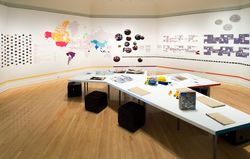
Simmons Hall est une résidence universitaire primée, conçue par l’architecte Steven Holl, sur le campus du Massachusetts Institute of Technology (MIT) à Cambridge. Inspiré d’une éponge de mer et de son concept de porosité, l’immeuble se distingue autant par sa structure audacieuse que par son objectif de favoriser l’interaction sociale. Vie dans l’éponge est une étude(...)
Simmons Hall est une résidence universitaire primée, conçue par l’architecte Steven Holl, sur le campus du Massachusetts Institute of Technology (MIT) à Cambridge. Inspiré d’une éponge de mer et de son concept de porosité, l’immeuble se distingue autant par sa structure audacieuse que par son objectif de favoriser l’interaction sociale. Vie dans l’éponge est une étude(...)
Localisation:
Salle octogonale
Salle octogonale
Date:
10 août 2006 au 19 novembre 2006
10 août 2006 au 19 novembre 2006
Titre:
Vie dans l'éponge
Actions:
Description:
Simmons Hall est une résidence universitaire primée, conçue par l’architecte Steven Holl, sur le campus du Massachusetts Institute of Technology (MIT) à Cambridge. Inspiré d’une éponge de mer et de son concept de porosité, l’immeuble se distingue autant par sa structure audacieuse que par son objectif de favoriser l’interaction sociale. Vie dans l’éponge est une étude(...)
Vie dans l'éponge
Actions:
Description:
Simmons Hall est une résidence universitaire primée, conçue par l’architecte Steven Holl, sur le campus du Massachusetts Institute of Technology (MIT) à Cambridge. Inspiré d’une éponge de mer et de son concept de porosité, l’immeuble se distingue autant par sa structure audacieuse que par son objectif de favoriser l’interaction sociale. Vie dans l’éponge est une étude(...)
Classification:
expositions
expositions
Date:
10 août 2006 au
19 novembre 2006
10 août 2006 au
19 novembre 2006
Localisation:
Salle octogonale
Salle octogonale
Classification:
expositions
expositions
Actions:
Description:
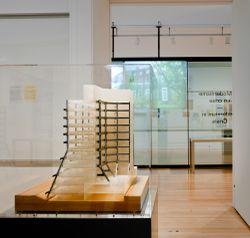
Les influences radicalement divergentes qui ont marqué l’architecte James Frazer Stirling rendent impossibles la caractérisation de son œuvre, qualifiée par d’autres comme étant moderniste d’avant-guerre, néoclassique, rationaliste, brutaliste, postmoderniste. Mais la continuité de sa pensée émerge de l’impressionnante quantité et diversité de documents conservés dans les(...)
Les influences radicalement divergentes qui ont marqué l’architecte James Frazer Stirling rendent impossibles la caractérisation de son œuvre, qualifiée par d’autres comme étant moderniste d’avant-guerre, néoclassique, rationaliste, brutaliste, postmoderniste. Mais la continuité de sa pensée émerge de l’impressionnante quantité et diversité de documents conservés dans les(...)
Localisation:
Salles principales
Salles principales
Date:
16 mai 2012 au 14 octobre 2012
16 mai 2012 au 14 octobre 2012
Titre:
Notes d’archives : James Frazer Stirling
Actions:
Description:
Les influences radicalement divergentes qui ont marqué l’architecte James Frazer Stirling rendent impossibles la caractérisation de son œuvre, qualifiée par d’autres comme étant moderniste d’avant-guerre, néoclassique, rationaliste, brutaliste, postmoderniste. Mais la continuité de sa pensée émerge de l’impressionnante quantité et diversité de documents conservés dans les(...)
Notes d’archives : James Frazer Stirling
Actions:
Description:
Les influences radicalement divergentes qui ont marqué l’architecte James Frazer Stirling rendent impossibles la caractérisation de son œuvre, qualifiée par d’autres comme étant moderniste d’avant-guerre, néoclassique, rationaliste, brutaliste, postmoderniste. Mais la continuité de sa pensée émerge de l’impressionnante quantité et diversité de documents conservés dans les(...)
Classification:
expositions
expositions
Date:
16 mai 2012 au
14 octobre 2012
16 mai 2012 au
14 octobre 2012
Localisation:
Salles principales
Salles principales
Classification:
dessins
dessins
Actions:
Numéro de référence:
DR1988:0353
Description:
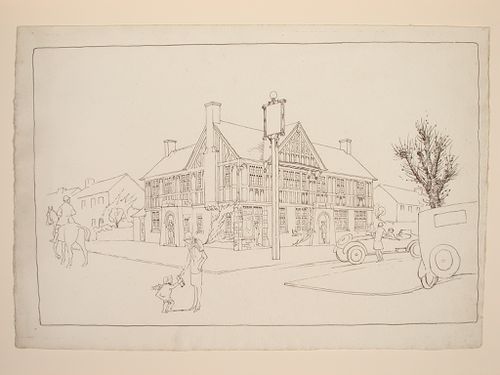
- This reprographic copy shows a three-storey Tudor Revival building viewed from the street corner. The number of entrances, along with the post for a sign (which is blank) suggest that this building is an inn, or possibly a clubhouse. - The style of many of these drawings and reprographic copies by Henry Hyams (DR1988:0332 - DR1988:0414) suggests that they were possibly for periodical illustrations. Hyams contributed articles to the periodicals 'The Builder' and 'The Architect'. Two objects in the CCA collections can be linked to the article "Music in Stone" published prior to 1926 in 'The Architect'; a reprographic copy (DR1988:0357) and a drawing (DR1988:0364) (Who's Who in Architecture, 161).
DR1988:0353
Description:
- This reprographic copy shows a three-storey Tudor Revival building viewed from the street corner. The number of entrances, along with the post for a sign (which is blank) suggest that this building is an inn, or possibly a clubhouse. - The style of many of these drawings and reprographic copies by Henry Hyams (DR1988:0332 - DR1988:0414) suggests that they were possibly for periodical illustrations. Hyams contributed articles to the periodicals 'The Builder' and 'The Architect'. Two objects in the CCA collections can be linked to the article "Music in Stone" published prior to 1926 in 'The Architect'; a reprographic copy (DR1988:0357) and a drawing (DR1988:0364) (Who's Who in Architecture, 161).
Personnes et institutions:
Sujet:
architecture
architecture
Date:
1920s or 1930s
1920s or 1930s
Titre:
Perspectival view showing a Tudor Revival building, probably an inn or a clubhouse
Actions:
DR1988:0353
Description:
- This reprographic copy shows a three-storey Tudor Revival building viewed from the street corner. The number of entrances, along with the post for a sign (which is blank) suggest that this building is an inn, or possibly a clubhouse. - The style of many of these drawings and reprographic copies by Henry Hyams (DR1988:0332 - DR1988:0414) suggests that they were possibly for periodical illustrations. Hyams contributed articles to the periodicals 'The Builder' and 'The Architect'. Two objects in the CCA collections can be linked to the article "Music in Stone" published prior to 1926 in 'The Architect'; a reprographic copy (DR1988:0357) and a drawing (DR1988:0364) (Who's Who in Architecture, 161).
Perspectival view showing a Tudor Revival building, probably an inn or a clubhouse
Actions:
DR1988:0353
Description:
- This reprographic copy shows a three-storey Tudor Revival building viewed from the street corner. The number of entrances, along with the post for a sign (which is blank) suggest that this building is an inn, or possibly a clubhouse. - The style of many of these drawings and reprographic copies by Henry Hyams (DR1988:0332 - DR1988:0414) suggests that they were possibly for periodical illustrations. Hyams contributed articles to the periodicals 'The Builder' and 'The Architect'. Two objects in the CCA collections can be linked to the article "Music in Stone" published prior to 1926 in 'The Architect'; a reprographic copy (DR1988:0357) and a drawing (DR1988:0364) (Who's Who in Architecture, 161).
Classification:
dessins
dessins
Date:
1920s or 1930s
1920s or 1930s
Personnes et institutions:
Sujet:
architecture
architecture
Niveau de description archivistique:
Projet
Projet
Numéro de référence:
AP148.S1.1970.PR01
Description:
The project series documents Poli and Roberto Gherardi's work for their thesis project submitted to Professor Savioli at the University of Florence School of Architecture in 1970. Poli notes that he became an official member of Superstudio after he wrote the thesis. Some works are signed Alessandro Poli-Superstudio. The project features a competition design and proposal for an urban park in Modena, Italy. The project has been published as "Park Dedicated to the Restistance" (Lang and Menking, 2003, 170-171). This title also appears on materials in this series. Reference is made to Poli's earlier project, Piper, in some of the documentation. The project was published in the magazine AD (n.6) in June, 1971. Project contains drawings, sketches, photomontages, project documentation and the thesis text itself. Source cited: Peter Lang and William Menking, Superstudio: Life Without Objects, Milan: Skira Editore, 2003.
AP148.S1.1970.PR01
Description:
The project series documents Poli and Roberto Gherardi's work for their thesis project submitted to Professor Savioli at the University of Florence School of Architecture in 1970. Poli notes that he became an official member of Superstudio after he wrote the thesis. Some works are signed Alessandro Poli-Superstudio. The project features a competition design and proposal for an urban park in Modena, Italy. The project has been published as "Park Dedicated to the Restistance" (Lang and Menking, 2003, 170-171). This title also appears on materials in this series. Reference is made to Poli's earlier project, Piper, in some of the documentation. The project was published in the magazine AD (n.6) in June, 1971. Project contains drawings, sketches, photomontages, project documentation and the thesis text itself. Source cited: Peter Lang and William Menking, Superstudio: Life Without Objects, Milan: Skira Editore, 2003.
Personnes et institutions:
Date:
1969-1970
1969-1970
Titre:
Urban park competition, Modena, Italy (1970)
Actions:
AP148.S1.1970.PR01
Description:
The project series documents Poli and Roberto Gherardi's work for their thesis project submitted to Professor Savioli at the University of Florence School of Architecture in 1970. Poli notes that he became an official member of Superstudio after he wrote the thesis. Some works are signed Alessandro Poli-Superstudio. The project features a competition design and proposal for an urban park in Modena, Italy. The project has been published as "Park Dedicated to the Restistance" (Lang and Menking, 2003, 170-171). This title also appears on materials in this series. Reference is made to Poli's earlier project, Piper, in some of the documentation. The project was published in the magazine AD (n.6) in June, 1971. Project contains drawings, sketches, photomontages, project documentation and the thesis text itself. Source cited: Peter Lang and William Menking, Superstudio: Life Without Objects, Milan: Skira Editore, 2003.
Urban park competition, Modena, Italy (1970)
Actions:
AP148.S1.1970.PR01
Description:
The project series documents Poli and Roberto Gherardi's work for their thesis project submitted to Professor Savioli at the University of Florence School of Architecture in 1970. Poli notes that he became an official member of Superstudio after he wrote the thesis. Some works are signed Alessandro Poli-Superstudio. The project features a competition design and proposal for an urban park in Modena, Italy. The project has been published as "Park Dedicated to the Restistance" (Lang and Menking, 2003, 170-171). This title also appears on materials in this series. Reference is made to Poli's earlier project, Piper, in some of the documentation. The project was published in the magazine AD (n.6) in June, 1971. Project contains drawings, sketches, photomontages, project documentation and the thesis text itself. Source cited: Peter Lang and William Menking, Superstudio: Life Without Objects, Milan: Skira Editore, 2003.
Niveau de description archivistique:
Project
Project
Date:
1969-1970
1969-1970
Personnes et institutions:
Niveau de description archivistique:
Projet
Projet
Numéro de référence:
AP018.S1.1982.PR07
Description:
This project series documents the design and construction of the Hamilton Trade Centre and Arena in Hamilton, Ontario from 1982-1985. The office identified the project number as 8207. The project consisted of a 60,000 square foot exhibition hall and arena, which had a capacity of 18,000. Opening in November 1985, the building was designed to host sports events (primarily hockey) and concerts. The project was reported to have cost $42 million. Along with Parkin Partnership as the architecture firm, John C. Parkin’s engineering company Parkin Engineers Ltd. worked as structural engineers on the project. The building, commissioned by the city of Hamilton, was officially called Copps Coliseum after the former Hamilton mayor, Victor Copps, who pushed for its creation throughout his career. In 2014, the name was changed to FirstOntario Centre. The project is recorded through reprographic copies of construction drawings, research, construction and presentation photographs, and textual records dating from 1982-1987. The textual records show design research, client correspondence, contractor work, specifications, publicity, and financial records. Any original drawings for this project are arranged within the textual records.
AP018.S1.1982.PR07
Description:
This project series documents the design and construction of the Hamilton Trade Centre and Arena in Hamilton, Ontario from 1982-1985. The office identified the project number as 8207. The project consisted of a 60,000 square foot exhibition hall and arena, which had a capacity of 18,000. Opening in November 1985, the building was designed to host sports events (primarily hockey) and concerts. The project was reported to have cost $42 million. Along with Parkin Partnership as the architecture firm, John C. Parkin’s engineering company Parkin Engineers Ltd. worked as structural engineers on the project. The building, commissioned by the city of Hamilton, was officially called Copps Coliseum after the former Hamilton mayor, Victor Copps, who pushed for its creation throughout his career. In 2014, the name was changed to FirstOntario Centre. The project is recorded through reprographic copies of construction drawings, research, construction and presentation photographs, and textual records dating from 1982-1987. The textual records show design research, client correspondence, contractor work, specifications, publicity, and financial records. Any original drawings for this project are arranged within the textual records.
Personnes et institutions:
Date:
1982-1987
1982-1987
Titre:
Hamilton Trade Centre and Arena, Hamilton, Ontario (1982-1985)
Actions:
AP018.S1.1982.PR07
Description:
This project series documents the design and construction of the Hamilton Trade Centre and Arena in Hamilton, Ontario from 1982-1985. The office identified the project number as 8207. The project consisted of a 60,000 square foot exhibition hall and arena, which had a capacity of 18,000. Opening in November 1985, the building was designed to host sports events (primarily hockey) and concerts. The project was reported to have cost $42 million. Along with Parkin Partnership as the architecture firm, John C. Parkin’s engineering company Parkin Engineers Ltd. worked as structural engineers on the project. The building, commissioned by the city of Hamilton, was officially called Copps Coliseum after the former Hamilton mayor, Victor Copps, who pushed for its creation throughout his career. In 2014, the name was changed to FirstOntario Centre. The project is recorded through reprographic copies of construction drawings, research, construction and presentation photographs, and textual records dating from 1982-1987. The textual records show design research, client correspondence, contractor work, specifications, publicity, and financial records. Any original drawings for this project are arranged within the textual records.
Hamilton Trade Centre and Arena, Hamilton, Ontario (1982-1985)
Actions:
AP018.S1.1982.PR07
Description:
This project series documents the design and construction of the Hamilton Trade Centre and Arena in Hamilton, Ontario from 1982-1985. The office identified the project number as 8207. The project consisted of a 60,000 square foot exhibition hall and arena, which had a capacity of 18,000. Opening in November 1985, the building was designed to host sports events (primarily hockey) and concerts. The project was reported to have cost $42 million. Along with Parkin Partnership as the architecture firm, John C. Parkin’s engineering company Parkin Engineers Ltd. worked as structural engineers on the project. The building, commissioned by the city of Hamilton, was officially called Copps Coliseum after the former Hamilton mayor, Victor Copps, who pushed for its creation throughout his career. In 2014, the name was changed to FirstOntario Centre. The project is recorded through reprographic copies of construction drawings, research, construction and presentation photographs, and textual records dating from 1982-1987. The textual records show design research, client correspondence, contractor work, specifications, publicity, and financial records. Any original drawings for this project are arranged within the textual records.
Niveau de description archivistique:
Project
Project
Date:
1982-1987
1982-1987
Personnes et institutions:
Niveau de description archivistique:
Projet
Projet
Numéro de référence:
AP018.S1.1962.PR02
Description:
This project series documents the Bata Limited office building in Toronto from 1962-1965. The office identified the project number as 6243. This project consisted of a three-storey office building for the shoe company, Bata Limited, located at the corners of Eglington Avenue and Don Mills Road. The building consisted of a basement with mechanical equipment and storage, a first floor with waiting room, cafeteria, kitchen and conference rooms, and second and third floors with general office space. This pavilion style building had 27 tree-like columns lining the outside that the top two storeys rested upon. The interior had similar columns to carry the design inside the building. This project was celebrated as an iconic example of modern architecture in Canada. It has since been demolished. The project is recorded through construction drawings, which are mostly reprographic copies, dating from 1963-1964.
AP018.S1.1962.PR02
Description:
This project series documents the Bata Limited office building in Toronto from 1962-1965. The office identified the project number as 6243. This project consisted of a three-storey office building for the shoe company, Bata Limited, located at the corners of Eglington Avenue and Don Mills Road. The building consisted of a basement with mechanical equipment and storage, a first floor with waiting room, cafeteria, kitchen and conference rooms, and second and third floors with general office space. This pavilion style building had 27 tree-like columns lining the outside that the top two storeys rested upon. The interior had similar columns to carry the design inside the building. This project was celebrated as an iconic example of modern architecture in Canada. It has since been demolished. The project is recorded through construction drawings, which are mostly reprographic copies, dating from 1963-1964.
Personnes et institutions:
Date:
1963-1964
1963-1964
Titre:
Bata Limited Office Building, Don Mills, Ontario (1962-1965)
Actions:
AP018.S1.1962.PR02
Description:
This project series documents the Bata Limited office building in Toronto from 1962-1965. The office identified the project number as 6243. This project consisted of a three-storey office building for the shoe company, Bata Limited, located at the corners of Eglington Avenue and Don Mills Road. The building consisted of a basement with mechanical equipment and storage, a first floor with waiting room, cafeteria, kitchen and conference rooms, and second and third floors with general office space. This pavilion style building had 27 tree-like columns lining the outside that the top two storeys rested upon. The interior had similar columns to carry the design inside the building. This project was celebrated as an iconic example of modern architecture in Canada. It has since been demolished. The project is recorded through construction drawings, which are mostly reprographic copies, dating from 1963-1964.
Bata Limited Office Building, Don Mills, Ontario (1962-1965)
Actions:
AP018.S1.1962.PR02
Description:
This project series documents the Bata Limited office building in Toronto from 1962-1965. The office identified the project number as 6243. This project consisted of a three-storey office building for the shoe company, Bata Limited, located at the corners of Eglington Avenue and Don Mills Road. The building consisted of a basement with mechanical equipment and storage, a first floor with waiting room, cafeteria, kitchen and conference rooms, and second and third floors with general office space. This pavilion style building had 27 tree-like columns lining the outside that the top two storeys rested upon. The interior had similar columns to carry the design inside the building. This project was celebrated as an iconic example of modern architecture in Canada. It has since been demolished. The project is recorded through construction drawings, which are mostly reprographic copies, dating from 1963-1964.
Niveau de description archivistique:
Project
Project
Date:
1963-1964
1963-1964
Personnes et institutions:
Niveau de description archivistique:
Projet
Projet
Titre:
Tumbleweeds Catcher (1972)
Tumbleweeds Catcher (1972)
Numéro de référence:
AP207.S1.1972.PR03
Description:
The project series documents "Tumbleweeds Catcher", an installation by Pettena and a group of his students from the University of Utah, in Salt Lake City, in 1972. The installation consisted of a tower-scaffold built on a vacant lot near the city centre and covered with mesh so it could capture the tumbleweeds blown by the wind. Through this installation Pettena's intention was to "highlight the 'work of the land', the tumbleweeds moved by the wind and intercepted by the mesh of the tower, 'naturalize' it, contaminate it, thereby embodying the revenge of nature over urbanized space." [1] A second edition was later presented at the Utah Museum of Contemporary Art in Salt Lake City in 2013. The project series contains photographs of the installation in 1972 and 2013, and drawings and sketches of the tower. Source: [1] Marco Scotini, editor. Non-conscious architecture: Gianni Pettena, Sternberg Press, 2018, 235 pages. p. 162.
AP207.S1.1972.PR03
Description:
The project series documents "Tumbleweeds Catcher", an installation by Pettena and a group of his students from the University of Utah, in Salt Lake City, in 1972. The installation consisted of a tower-scaffold built on a vacant lot near the city centre and covered with mesh so it could capture the tumbleweeds blown by the wind. Through this installation Pettena's intention was to "highlight the 'work of the land', the tumbleweeds moved by the wind and intercepted by the mesh of the tower, 'naturalize' it, contaminate it, thereby embodying the revenge of nature over urbanized space." [1] A second edition was later presented at the Utah Museum of Contemporary Art in Salt Lake City in 2013. The project series contains photographs of the installation in 1972 and 2013, and drawings and sketches of the tower. Source: [1] Marco Scotini, editor. Non-conscious architecture: Gianni Pettena, Sternberg Press, 2018, 235 pages. p. 162.
Personnes et institutions:
Date:
circa 1972-2017
circa 1972-2017
Titre:
Tumbleweeds Catcher (1972)
Actions:
AP207.S1.1972.PR03
Description:
The project series documents "Tumbleweeds Catcher", an installation by Pettena and a group of his students from the University of Utah, in Salt Lake City, in 1972. The installation consisted of a tower-scaffold built on a vacant lot near the city centre and covered with mesh so it could capture the tumbleweeds blown by the wind. Through this installation Pettena's intention was to "highlight the 'work of the land', the tumbleweeds moved by the wind and intercepted by the mesh of the tower, 'naturalize' it, contaminate it, thereby embodying the revenge of nature over urbanized space." [1] A second edition was later presented at the Utah Museum of Contemporary Art in Salt Lake City in 2013. The project series contains photographs of the installation in 1972 and 2013, and drawings and sketches of the tower. Source: [1] Marco Scotini, editor. Non-conscious architecture: Gianni Pettena, Sternberg Press, 2018, 235 pages. p. 162.
Tumbleweeds Catcher (1972)
Actions:
AP207.S1.1972.PR03
Description:
The project series documents "Tumbleweeds Catcher", an installation by Pettena and a group of his students from the University of Utah, in Salt Lake City, in 1972. The installation consisted of a tower-scaffold built on a vacant lot near the city centre and covered with mesh so it could capture the tumbleweeds blown by the wind. Through this installation Pettena's intention was to "highlight the 'work of the land', the tumbleweeds moved by the wind and intercepted by the mesh of the tower, 'naturalize' it, contaminate it, thereby embodying the revenge of nature over urbanized space." [1] A second edition was later presented at the Utah Museum of Contemporary Art in Salt Lake City in 2013. The project series contains photographs of the installation in 1972 and 2013, and drawings and sketches of the tower. Source: [1] Marco Scotini, editor. Non-conscious architecture: Gianni Pettena, Sternberg Press, 2018, 235 pages. p. 162.
Niveau de description archivistique:
Project
Project
Date:
circa 1972-2017
circa 1972-2017
Personnes et institutions:


