


14909 Résultats
Niveau de description archivistique:
Projet
Projet
Titre:
Carbon Tower (2001)
Carbon Tower (2001)
Numéro de référence:
AP174.S1.2001.D1
Description:
This project file documents an unbuilt design by Testa & Weiser for Carbon Tower (2001), a forty-storey building made almost entirely of carbon fibre. The project was developed in parallel with scripting software designed while Peter Testa and Devyn Weiser co-directed the Emergent Design Group at MIT. "The tower consists of an interdependent set of parts: floor plates hang from a diagrid structure of bundled fibres reinforced by two double-helix covered ramps, which are run in and out of the structure and are themselves made of strands woven at a finer scale. A thin composite skin—glass would be too heavy—wraps the tower’s parts together. A collaboration with Arup in 2002 allowed Testa & Weiser to simplify the scheme even further, by moving all core elements, from elevators to structural supports, to the tower’s perimeter. To take full advantage of the flexibility and energy efficiency of composite materials, Testa & Weiser also imagined that the carbon fibre structures would be formed on site through a process called pultrusion."[1] The file contains a large number of digital files documenting the conceptual and design development of the project; consultation with Arup Consulting Engineers, New York; research on composite materials; fabrication of 3D printed physical models by 3D Systems and Windform; and exhibition of the project at several museums and galleries, including the Museum of Contemporary Art, Los Angeles and the Cooper-Hewitt Smithsonian Design Museum, New York. Also contained in the file are 56 paper drawings (including some sketches done on top of printed computer-aided designs) and two 3D printed physical models produced by 3D Systems. Sources: [1] Canadian Centre for Architecture. Archaeology of the Digital 12: Testa & Weiser, Carbon Tower, ed. Greg Lynn (2015), ISBN 978-1-927071-25-0.
AP174.S1.2001.D1
Description:
This project file documents an unbuilt design by Testa & Weiser for Carbon Tower (2001), a forty-storey building made almost entirely of carbon fibre. The project was developed in parallel with scripting software designed while Peter Testa and Devyn Weiser co-directed the Emergent Design Group at MIT. "The tower consists of an interdependent set of parts: floor plates hang from a diagrid structure of bundled fibres reinforced by two double-helix covered ramps, which are run in and out of the structure and are themselves made of strands woven at a finer scale. A thin composite skin—glass would be too heavy—wraps the tower’s parts together. A collaboration with Arup in 2002 allowed Testa & Weiser to simplify the scheme even further, by moving all core elements, from elevators to structural supports, to the tower’s perimeter. To take full advantage of the flexibility and energy efficiency of composite materials, Testa & Weiser also imagined that the carbon fibre structures would be formed on site through a process called pultrusion."[1] The file contains a large number of digital files documenting the conceptual and design development of the project; consultation with Arup Consulting Engineers, New York; research on composite materials; fabrication of 3D printed physical models by 3D Systems and Windform; and exhibition of the project at several museums and galleries, including the Museum of Contemporary Art, Los Angeles and the Cooper-Hewitt Smithsonian Design Museum, New York. Also contained in the file are 56 paper drawings (including some sketches done on top of printed computer-aided designs) and two 3D printed physical models produced by 3D Systems. Sources: [1] Canadian Centre for Architecture. Archaeology of the Digital 12: Testa & Weiser, Carbon Tower, ed. Greg Lynn (2015), ISBN 978-1-927071-25-0.
Personnes et institutions:
Date:
2002-2014
2002-2014
Titre:
Carbon Tower (2001)
Actions:
AP174.S1.2001.D1
Description:
This project file documents an unbuilt design by Testa & Weiser for Carbon Tower (2001), a forty-storey building made almost entirely of carbon fibre. The project was developed in parallel with scripting software designed while Peter Testa and Devyn Weiser co-directed the Emergent Design Group at MIT. "The tower consists of an interdependent set of parts: floor plates hang from a diagrid structure of bundled fibres reinforced by two double-helix covered ramps, which are run in and out of the structure and are themselves made of strands woven at a finer scale. A thin composite skin—glass would be too heavy—wraps the tower’s parts together. A collaboration with Arup in 2002 allowed Testa & Weiser to simplify the scheme even further, by moving all core elements, from elevators to structural supports, to the tower’s perimeter. To take full advantage of the flexibility and energy efficiency of composite materials, Testa & Weiser also imagined that the carbon fibre structures would be formed on site through a process called pultrusion."[1] The file contains a large number of digital files documenting the conceptual and design development of the project; consultation with Arup Consulting Engineers, New York; research on composite materials; fabrication of 3D printed physical models by 3D Systems and Windform; and exhibition of the project at several museums and galleries, including the Museum of Contemporary Art, Los Angeles and the Cooper-Hewitt Smithsonian Design Museum, New York. Also contained in the file are 56 paper drawings (including some sketches done on top of printed computer-aided designs) and two 3D printed physical models produced by 3D Systems. Sources: [1] Canadian Centre for Architecture. Archaeology of the Digital 12: Testa & Weiser, Carbon Tower, ed. Greg Lynn (2015), ISBN 978-1-927071-25-0.
Carbon Tower (2001)
Actions:
AP174.S1.2001.D1
Description:
This project file documents an unbuilt design by Testa & Weiser for Carbon Tower (2001), a forty-storey building made almost entirely of carbon fibre. The project was developed in parallel with scripting software designed while Peter Testa and Devyn Weiser co-directed the Emergent Design Group at MIT. "The tower consists of an interdependent set of parts: floor plates hang from a diagrid structure of bundled fibres reinforced by two double-helix covered ramps, which are run in and out of the structure and are themselves made of strands woven at a finer scale. A thin composite skin—glass would be too heavy—wraps the tower’s parts together. A collaboration with Arup in 2002 allowed Testa & Weiser to simplify the scheme even further, by moving all core elements, from elevators to structural supports, to the tower’s perimeter. To take full advantage of the flexibility and energy efficiency of composite materials, Testa & Weiser also imagined that the carbon fibre structures would be formed on site through a process called pultrusion."[1] The file contains a large number of digital files documenting the conceptual and design development of the project; consultation with Arup Consulting Engineers, New York; research on composite materials; fabrication of 3D printed physical models by 3D Systems and Windform; and exhibition of the project at several museums and galleries, including the Museum of Contemporary Art, Los Angeles and the Cooper-Hewitt Smithsonian Design Museum, New York. Also contained in the file are 56 paper drawings (including some sketches done on top of printed computer-aided designs) and two 3D printed physical models produced by 3D Systems. Sources: [1] Canadian Centre for Architecture. Archaeology of the Digital 12: Testa & Weiser, Carbon Tower, ed. Greg Lynn (2015), ISBN 978-1-927071-25-0.
Niveau de description archivistique:
Project
Project
Date:
2002-2014
2002-2014
Personnes et institutions:
Niveau de description archivistique:
Projet
Projet
Numéro de référence:
AP178.S1.1988.PR03
Description:
This project series documents the Centro Galego de Arte Contemporânea in Santiago de Compostela, Spain. While the records were held in the office’s archives this project was assigned the number 54/80. The office assigned the date 1988 for this project. This project was commissioned by the Xunta de Galicia for the autonomous community of Galicia in Spain. The building was located near the Galego Pobo Museum and the Convento de Santo Domingo de Bonaval. The museum was approximately 75,000 square feet and divided into two L-shaped structures. The building had four floors and included exhibition halls, a terrace, a cafeteria, administrative spaces, an auditorium, and a library. The exterior was principally made of granite panels. The exhibition spaces were very bright, principally due to the natural light that came from multiple openings in the building as well as the white walls. The floors of the public spaces and exhibition rooms were made of Greek marble. Siza also transformed the Convento de Santo Domingo de Bonaval garden into a public park. The park was understood as an extension of the museum. Documenting this project are sketches, studies, preliminary drawings, plans and working drawings. Textual materials include project documentation and correspondence. Photographic materials document the models, project site and built project.
AP178.S1.1988.PR03
Description:
This project series documents the Centro Galego de Arte Contemporânea in Santiago de Compostela, Spain. While the records were held in the office’s archives this project was assigned the number 54/80. The office assigned the date 1988 for this project. This project was commissioned by the Xunta de Galicia for the autonomous community of Galicia in Spain. The building was located near the Galego Pobo Museum and the Convento de Santo Domingo de Bonaval. The museum was approximately 75,000 square feet and divided into two L-shaped structures. The building had four floors and included exhibition halls, a terrace, a cafeteria, administrative spaces, an auditorium, and a library. The exterior was principally made of granite panels. The exhibition spaces were very bright, principally due to the natural light that came from multiple openings in the building as well as the white walls. The floors of the public spaces and exhibition rooms were made of Greek marble. Siza also transformed the Convento de Santo Domingo de Bonaval garden into a public park. The park was understood as an extension of the museum. Documenting this project are sketches, studies, preliminary drawings, plans and working drawings. Textual materials include project documentation and correspondence. Photographic materials document the models, project site and built project.
Personnes et institutions:
Date:
1988-1995
1988-1995
Titre:
Centro Galego de Arte Contemporânea [Galician Centre of Contemporary Art], Santiago de Compostela, Spain, 1988-1993
Actions:
AP178.S1.1988.PR03
Description:
This project series documents the Centro Galego de Arte Contemporânea in Santiago de Compostela, Spain. While the records were held in the office’s archives this project was assigned the number 54/80. The office assigned the date 1988 for this project. This project was commissioned by the Xunta de Galicia for the autonomous community of Galicia in Spain. The building was located near the Galego Pobo Museum and the Convento de Santo Domingo de Bonaval. The museum was approximately 75,000 square feet and divided into two L-shaped structures. The building had four floors and included exhibition halls, a terrace, a cafeteria, administrative spaces, an auditorium, and a library. The exterior was principally made of granite panels. The exhibition spaces were very bright, principally due to the natural light that came from multiple openings in the building as well as the white walls. The floors of the public spaces and exhibition rooms were made of Greek marble. Siza also transformed the Convento de Santo Domingo de Bonaval garden into a public park. The park was understood as an extension of the museum. Documenting this project are sketches, studies, preliminary drawings, plans and working drawings. Textual materials include project documentation and correspondence. Photographic materials document the models, project site and built project.
Centro Galego de Arte Contemporânea [Galician Centre of Contemporary Art], Santiago de Compostela, Spain, 1988-1993
Actions:
AP178.S1.1988.PR03
Description:
This project series documents the Centro Galego de Arte Contemporânea in Santiago de Compostela, Spain. While the records were held in the office’s archives this project was assigned the number 54/80. The office assigned the date 1988 for this project. This project was commissioned by the Xunta de Galicia for the autonomous community of Galicia in Spain. The building was located near the Galego Pobo Museum and the Convento de Santo Domingo de Bonaval. The museum was approximately 75,000 square feet and divided into two L-shaped structures. The building had four floors and included exhibition halls, a terrace, a cafeteria, administrative spaces, an auditorium, and a library. The exterior was principally made of granite panels. The exhibition spaces were very bright, principally due to the natural light that came from multiple openings in the building as well as the white walls. The floors of the public spaces and exhibition rooms were made of Greek marble. Siza also transformed the Convento de Santo Domingo de Bonaval garden into a public park. The park was understood as an extension of the museum. Documenting this project are sketches, studies, preliminary drawings, plans and working drawings. Textual materials include project documentation and correspondence. Photographic materials document the models, project site and built project.
Niveau de description archivistique:
Project
Project
Date:
1988-1995
1988-1995
Personnes et institutions:
Classification:
expositions
expositions
Actions:
Description:
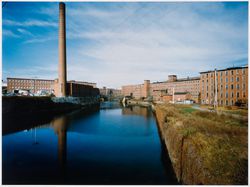
Pendant trois ans, Serge Hambourg a pris plus de 400 photographies de manufactures historiques de la Nouvelle-Angleterre commandées par le CCA. Ces formes architecturales, représentées dans leur environnement, mettent en valeur la beauté austère des intérieurs et des extérieurs. Les photos tracent l’évolution de ce type de bâtiment. Ces images montrent des structures de(...)
Pendant trois ans, Serge Hambourg a pris plus de 400 photographies de manufactures historiques de la Nouvelle-Angleterre commandées par le CCA. Ces formes architecturales, représentées dans leur environnement, mettent en valeur la beauté austère des intérieurs et des extérieurs. Les photos tracent l’évolution de ce type de bâtiment. Ces images montrent des structures de(...)
Localisation:
Antichambre de la salle octogonale
Antichambre de la salle octogonale
Date:
6 décembre 1989 au 11 février 1990
6 décembre 1989 au 11 février 1990
Titre:
Manufactures de la Nouvelle-Angleterre : photographies de Serge Hambourg
Actions:
Description:
Pendant trois ans, Serge Hambourg a pris plus de 400 photographies de manufactures historiques de la Nouvelle-Angleterre commandées par le CCA. Ces formes architecturales, représentées dans leur environnement, mettent en valeur la beauté austère des intérieurs et des extérieurs. Les photos tracent l’évolution de ce type de bâtiment. Ces images montrent des structures de(...)
Manufactures de la Nouvelle-Angleterre : photographies de Serge Hambourg
Actions:
Description:
Pendant trois ans, Serge Hambourg a pris plus de 400 photographies de manufactures historiques de la Nouvelle-Angleterre commandées par le CCA. Ces formes architecturales, représentées dans leur environnement, mettent en valeur la beauté austère des intérieurs et des extérieurs. Les photos tracent l’évolution de ce type de bâtiment. Ces images montrent des structures de(...)
Classification:
expositions
expositions
Date:
6 décembre 1989 au
11 février 1990
6 décembre 1989 au
11 février 1990
Localisation:
Antichambre de la salle octogonale
Antichambre de la salle octogonale
Niveau de description archivistique:
Projet
Projet
Numéro de référence:
AP173.S1.2009.D3
Description:
Series documents Lars Spuybroek's project Supermarke_DOCK in Amsterdam, Netherlands, a design development for a design museum for Premsela.org. Material in this series was produced around 2009. The series contains a presentation booklets. This project may also include digital design material, which has yet to be processed and which will available for consultation in 2017.
AP173.S1.2009.D3
Description:
Series documents Lars Spuybroek's project Supermarke_DOCK in Amsterdam, Netherlands, a design development for a design museum for Premsela.org. Material in this series was produced around 2009. The series contains a presentation booklets. This project may also include digital design material, which has yet to be processed and which will available for consultation in 2017.
Personnes et institutions:
Date:
ca. 2009
ca. 2009
Titre:
Supermarker_DOCK, Amsterdam, Netherlands (2009)
Actions:
AP173.S1.2009.D3
Description:
Series documents Lars Spuybroek's project Supermarke_DOCK in Amsterdam, Netherlands, a design development for a design museum for Premsela.org. Material in this series was produced around 2009. The series contains a presentation booklets. This project may also include digital design material, which has yet to be processed and which will available for consultation in 2017.
Supermarker_DOCK, Amsterdam, Netherlands (2009)
Actions:
AP173.S1.2009.D3
Description:
Series documents Lars Spuybroek's project Supermarke_DOCK in Amsterdam, Netherlands, a design development for a design museum for Premsela.org. Material in this series was produced around 2009. The series contains a presentation booklets. This project may also include digital design material, which has yet to be processed and which will available for consultation in 2017.
Niveau de description archivistique:
Project
Project
Date:
ca. 2009
ca. 2009
Personnes et institutions:
Niveau de description archivistique:
Projet
Projet
Titre:
Auditorium, Claverton Bath
Auditorium, Claverton Bath
Numéro de référence:
AP144.S2.D41
Description:
File documents an unexecuted project for a domed auditorium at Claverton in Bath, England, for the American Museum in Britain. Adapted from Buckmister Fuller's design for the Radome it was to serve as a multipurpose auditorium and exhibition space. The 250-seat auditorium was enclosed by a double dome construction which could be raised and lowered by hydraulic jacks. Design development sketches and perspective studies show various layouts for seating, and diagrams contain directions for erecting the stage and positioning the dome. A section shows the major components: the dome, both lowered and raised; the location of the hydraulic jacks, screens, and baffles; and the seating layout. Two interior perspectives show the dome both raised and lowered. Material in this file was produced between 1962 and 1964. Some perspective diagrams in the file are attributed to M. Haxworth. File contains design development drawings, photographic materials, and textual records.
AP144.S2.D41
Description:
File documents an unexecuted project for a domed auditorium at Claverton in Bath, England, for the American Museum in Britain. Adapted from Buckmister Fuller's design for the Radome it was to serve as a multipurpose auditorium and exhibition space. The 250-seat auditorium was enclosed by a double dome construction which could be raised and lowered by hydraulic jacks. Design development sketches and perspective studies show various layouts for seating, and diagrams contain directions for erecting the stage and positioning the dome. A section shows the major components: the dome, both lowered and raised; the location of the hydraulic jacks, screens, and baffles; and the seating layout. Two interior perspectives show the dome both raised and lowered. Material in this file was produced between 1962 and 1964. Some perspective diagrams in the file are attributed to M. Haxworth. File contains design development drawings, photographic materials, and textual records.
Personnes et institutions:
Date:
1962-1964
1962-1964
Titre:
Auditorium, Claverton Bath
Actions:
AP144.S2.D41
Description:
File documents an unexecuted project for a domed auditorium at Claverton in Bath, England, for the American Museum in Britain. Adapted from Buckmister Fuller's design for the Radome it was to serve as a multipurpose auditorium and exhibition space. The 250-seat auditorium was enclosed by a double dome construction which could be raised and lowered by hydraulic jacks. Design development sketches and perspective studies show various layouts for seating, and diagrams contain directions for erecting the stage and positioning the dome. A section shows the major components: the dome, both lowered and raised; the location of the hydraulic jacks, screens, and baffles; and the seating layout. Two interior perspectives show the dome both raised and lowered. Material in this file was produced between 1962 and 1964. Some perspective diagrams in the file are attributed to M. Haxworth. File contains design development drawings, photographic materials, and textual records.
Auditorium, Claverton Bath
Actions:
AP144.S2.D41
Description:
File documents an unexecuted project for a domed auditorium at Claverton in Bath, England, for the American Museum in Britain. Adapted from Buckmister Fuller's design for the Radome it was to serve as a multipurpose auditorium and exhibition space. The 250-seat auditorium was enclosed by a double dome construction which could be raised and lowered by hydraulic jacks. Design development sketches and perspective studies show various layouts for seating, and diagrams contain directions for erecting the stage and positioning the dome. A section shows the major components: the dome, both lowered and raised; the location of the hydraulic jacks, screens, and baffles; and the seating layout. Two interior perspectives show the dome both raised and lowered. Material in this file was produced between 1962 and 1964. Some perspective diagrams in the file are attributed to M. Haxworth. File contains design development drawings, photographic materials, and textual records.
Niveau de description archivistique:
File 41
File 41
Date:
1962-1964
1962-1964
Personnes et institutions:
Niveau de description archivistique:
Projet
Projet
Titre:
Diamond Houses
Diamond Houses
Numéro de référence:
AP145.S2.D15
Description:
File documents projects for several houses and a museum. Material in this file was produced between 1963 and 1967, reprographic copies of some conceptual drawings and presentation drawings were created between 1963 and 1985. File contains conceptual drawings, design development drawings, presentation drawings, presentation panels, photographic materials, and presentation models.
AP145.S2.D15
Description:
File documents projects for several houses and a museum. Material in this file was produced between 1963 and 1967, reprographic copies of some conceptual drawings and presentation drawings were created between 1963 and 1985. File contains conceptual drawings, design development drawings, presentation drawings, presentation panels, photographic materials, and presentation models.
Personnes et institutions:
Date:
[1963-1985, predominant 1963-1967]
[1963-1985, predominant 1963-1967]
Titre:
Diamond Houses
Actions:
AP145.S2.D15
Description:
File documents projects for several houses and a museum. Material in this file was produced between 1963 and 1967, reprographic copies of some conceptual drawings and presentation drawings were created between 1963 and 1985. File contains conceptual drawings, design development drawings, presentation drawings, presentation panels, photographic materials, and presentation models.
Diamond Houses
Actions:
AP145.S2.D15
Description:
File documents projects for several houses and a museum. Material in this file was produced between 1963 and 1967, reprographic copies of some conceptual drawings and presentation drawings were created between 1963 and 1985. File contains conceptual drawings, design development drawings, presentation drawings, presentation panels, photographic materials, and presentation models.
Niveau de description archivistique:
File 15
File 15
Date:
[1963-1985, predominant 1963-1967]
[1963-1985, predominant 1963-1967]
Personnes et institutions:
Classification:
dessins, documents textuels
dessins, documents textuels
Numéro de référence:
DR2006:0146
Description:
InIVA Exhibition (2001) (Institute of International Visual Arts, London) Material sent to exh.: Leaflet 'CP: The Home' AA exh (1982); CP AA exh. (1979); Non-plan exh.; original drawings; Liverpool Maritime Museum (1963); Glasgow City Planning Exh (1964); Sheffield Fest (1965); The Enhancement of York (196?); National Turner Exhibit (1975); Central Glasgow/Clyde Renewal (1973); Museums; 148 Aviary CP; 102 Inter-action Centre; South Bank (montage)
DR2006:0146
Description:
InIVA Exhibition (2001) (Institute of International Visual Arts, London) Material sent to exh.: Leaflet 'CP: The Home' AA exh (1982); CP AA exh. (1979); Non-plan exh.; original drawings; Liverpool Maritime Museum (1963); Glasgow City Planning Exh (1964); Sheffield Fest (1965); The Enhancement of York (196?); National Turner Exhibit (1975); Central Glasgow/Clyde Renewal (1973); Museums; 148 Aviary CP; 102 Inter-action Centre; South Bank (montage)
Personnes et institutions:
Date:
1968-2002
1968-2002
Titre:
Exhibition material
Actions:
DR2006:0146
Description:
InIVA Exhibition (2001) (Institute of International Visual Arts, London) Material sent to exh.: Leaflet 'CP: The Home' AA exh (1982); CP AA exh. (1979); Non-plan exh.; original drawings; Liverpool Maritime Museum (1963); Glasgow City Planning Exh (1964); Sheffield Fest (1965); The Enhancement of York (196?); National Turner Exhibit (1975); Central Glasgow/Clyde Renewal (1973); Museums; 148 Aviary CP; 102 Inter-action Centre; South Bank (montage)
Exhibition material
Actions:
DR2006:0146
Description:
InIVA Exhibition (2001) (Institute of International Visual Arts, London) Material sent to exh.: Leaflet 'CP: The Home' AA exh (1982); CP AA exh. (1979); Non-plan exh.; original drawings; Liverpool Maritime Museum (1963); Glasgow City Planning Exh (1964); Sheffield Fest (1965); The Enhancement of York (196?); National Turner Exhibit (1975); Central Glasgow/Clyde Renewal (1973); Museums; 148 Aviary CP; 102 Inter-action Centre; South Bank (montage)
Classification:
dessins, documents textuels
dessins, documents textuels
Date:
1968-2002
1968-2002
Personnes et institutions:
Classification:
documents textuels
documents textuels
Numéro de référence:
PHCON2002:0016:007:047:002
Description:
Letter includes a Deed of Gift and Official Gift Reciept for "Unititled, 1977/78" by Gordon Matta-Clark, given from Anne Alpert and Jane Crawford to the Museum of Contemporary Art, Chicago, Illinois.
PHCON2002:0016:007:047:002
Description:
Letter includes a Deed of Gift and Official Gift Reciept for "Unititled, 1977/78" by Gordon Matta-Clark, given from Anne Alpert and Jane Crawford to the Museum of Contemporary Art, Chicago, Illinois.
Personnes et institutions:
Date:
12 June 1986
12 June 1986
Titre:
Letter from I. Michael Danoff to Anne Alpert
Actions:
PHCON2002:0016:007:047:002
Description:
Letter includes a Deed of Gift and Official Gift Reciept for "Unititled, 1977/78" by Gordon Matta-Clark, given from Anne Alpert and Jane Crawford to the Museum of Contemporary Art, Chicago, Illinois.
Letter from I. Michael Danoff to Anne Alpert
Actions:
PHCON2002:0016:007:047:002
Description:
Letter includes a Deed of Gift and Official Gift Reciept for "Unititled, 1977/78" by Gordon Matta-Clark, given from Anne Alpert and Jane Crawford to the Museum of Contemporary Art, Chicago, Illinois.
Classification:
documents textuels
documents textuels
Date:
12 June 1986
12 June 1986
Personnes et institutions:
Niveau de description archivistique:
Projet
Projet
Numéro de référence:
AP178.S1.1988.PR01
Description:
This project series documents the Centro Cultural de la Defensa in Madrid, Spain. While the records were held in the office’s archives this project was assigned the number 50/80. The office assigned the date 1988 to this project. An architectural competition was held for the construction of a cultural center and museum for the Ministry of Defense. Seven architects were invited for the first phase of the competition. Four architects, including Fancisco Javier Sainz de Oiza, Lluis Clotet Ballus, Juan Navarro Baldeweg, and Álvaro Siza were selected for the second and final phase. The L-shaped building proposed by Siza included a museum, library, archives, research center, auditoriums, restaurants and bookstores. Siza won the competition but the building was not realized. Documenting this project are sketches, presentation drawings and photographs of model. Textual materials include project documentation, correspondence and articles on the competition.
AP178.S1.1988.PR01
Description:
This project series documents the Centro Cultural de la Defensa in Madrid, Spain. While the records were held in the office’s archives this project was assigned the number 50/80. The office assigned the date 1988 to this project. An architectural competition was held for the construction of a cultural center and museum for the Ministry of Defense. Seven architects were invited for the first phase of the competition. Four architects, including Fancisco Javier Sainz de Oiza, Lluis Clotet Ballus, Juan Navarro Baldeweg, and Álvaro Siza were selected for the second and final phase. The L-shaped building proposed by Siza included a museum, library, archives, research center, auditoriums, restaurants and bookstores. Siza won the competition but the building was not realized. Documenting this project are sketches, presentation drawings and photographs of model. Textual materials include project documentation, correspondence and articles on the competition.
Personnes et institutions:
Date:
1988-1990
1988-1990
Titre:
Centro Cultural de la Defensa - 1º Fase - 2º Fase [La Defensa Cultural Centre, first and second phases], Madrid, Spain (1988)
Actions:
AP178.S1.1988.PR01
Description:
This project series documents the Centro Cultural de la Defensa in Madrid, Spain. While the records were held in the office’s archives this project was assigned the number 50/80. The office assigned the date 1988 to this project. An architectural competition was held for the construction of a cultural center and museum for the Ministry of Defense. Seven architects were invited for the first phase of the competition. Four architects, including Fancisco Javier Sainz de Oiza, Lluis Clotet Ballus, Juan Navarro Baldeweg, and Álvaro Siza were selected for the second and final phase. The L-shaped building proposed by Siza included a museum, library, archives, research center, auditoriums, restaurants and bookstores. Siza won the competition but the building was not realized. Documenting this project are sketches, presentation drawings and photographs of model. Textual materials include project documentation, correspondence and articles on the competition.
Centro Cultural de la Defensa - 1º Fase - 2º Fase [La Defensa Cultural Centre, first and second phases], Madrid, Spain (1988)
Actions:
AP178.S1.1988.PR01
Description:
This project series documents the Centro Cultural de la Defensa in Madrid, Spain. While the records were held in the office’s archives this project was assigned the number 50/80. The office assigned the date 1988 to this project. An architectural competition was held for the construction of a cultural center and museum for the Ministry of Defense. Seven architects were invited for the first phase of the competition. Four architects, including Fancisco Javier Sainz de Oiza, Lluis Clotet Ballus, Juan Navarro Baldeweg, and Álvaro Siza were selected for the second and final phase. The L-shaped building proposed by Siza included a museum, library, archives, research center, auditoriums, restaurants and bookstores. Siza won the competition but the building was not realized. Documenting this project are sketches, presentation drawings and photographs of model. Textual materials include project documentation, correspondence and articles on the competition.
Niveau de description archivistique:
Project
Project
Date:
1988-1990
1988-1990
Personnes et institutions:
Niveau de description archivistique:
Sous-série
Sous-série
Titre:
Alternatives in Retrospect
Alternatives in Retrospect
Numéro de référence:
CP138.S9.SS3.D4
Description:
File consists of a videocassette of interviews with Richard Nonas and Tina Girouard and excerpts of the Gordon Matta-Clark "Open House" (1972) film that were included in "Alternatives in Retrospect," a 1981 film produced by Jacki Apple made for the exhibition of the same name at The New Museum of Contemporary Art, New York City, New York. File contains a videocassette.
CP138.S9.SS3.D4
Description:
File consists of a videocassette of interviews with Richard Nonas and Tina Girouard and excerpts of the Gordon Matta-Clark "Open House" (1972) film that were included in "Alternatives in Retrospect," a 1981 film produced by Jacki Apple made for the exhibition of the same name at The New Museum of Contemporary Art, New York City, New York. File contains a videocassette.
Personnes et institutions:
Date:
1981
1981
Titre:
Alternatives in Retrospect
Actions:
CP138.S9.SS3.D4
Description:
File consists of a videocassette of interviews with Richard Nonas and Tina Girouard and excerpts of the Gordon Matta-Clark "Open House" (1972) film that were included in "Alternatives in Retrospect," a 1981 film produced by Jacki Apple made for the exhibition of the same name at The New Museum of Contemporary Art, New York City, New York. File contains a videocassette.
Alternatives in Retrospect
Actions:
CP138.S9.SS3.D4
Description:
File consists of a videocassette of interviews with Richard Nonas and Tina Girouard and excerpts of the Gordon Matta-Clark "Open House" (1972) film that were included in "Alternatives in Retrospect," a 1981 film produced by Jacki Apple made for the exhibition of the same name at The New Museum of Contemporary Art, New York City, New York. File contains a videocassette.
Niveau de description archivistique:
File 4
File 4
Date:
1981
1981
Personnes et institutions:


