


4975 Résultats
Classification:
dessins
dessins
Numéro de référence:
DR2012:0012:069:001
Description:
Portfolio containing architectural conceptual drawings and studies of elevations, notes, printouts of drawings from Melvin Charney's time as a student, or early professional career. Includes a reprographic copy of a study of C.N.E.J., completed under the supervision of architects Guillaume Gillet and Claude Charpentier of Paris, and a blueprint and two reprographic copies of sections and detail drawings for the residence of Mr. and Mrs. Zion (Miller Avenue, Montreal, Quebec) under the supervision of M. W. Roth, of Montreal.
DR2012:0012:069:001
Description:
Portfolio containing architectural conceptual drawings and studies of elevations, notes, printouts of drawings from Melvin Charney's time as a student, or early professional career. Includes a reprographic copy of a study of C.N.E.J., completed under the supervision of architects Guillaume Gillet and Claude Charpentier of Paris, and a blueprint and two reprographic copies of sections and detail drawings for the residence of Mr. and Mrs. Zion (Miller Avenue, Montreal, Quebec) under the supervision of M. W. Roth, of Montreal.
Personnes et institutions:
Date:
1956, 1962-1963
1956, 1962-1963
Titre:
Portfolio of Melvin Charney's early professional work
Actions:
DR2012:0012:069:001
Description:
Portfolio containing architectural conceptual drawings and studies of elevations, notes, printouts of drawings from Melvin Charney's time as a student, or early professional career. Includes a reprographic copy of a study of C.N.E.J., completed under the supervision of architects Guillaume Gillet and Claude Charpentier of Paris, and a blueprint and two reprographic copies of sections and detail drawings for the residence of Mr. and Mrs. Zion (Miller Avenue, Montreal, Quebec) under the supervision of M. W. Roth, of Montreal.
Portfolio of Melvin Charney's early professional work
Actions:
DR2012:0012:069:001
Description:
Portfolio containing architectural conceptual drawings and studies of elevations, notes, printouts of drawings from Melvin Charney's time as a student, or early professional career. Includes a reprographic copy of a study of C.N.E.J., completed under the supervision of architects Guillaume Gillet and Claude Charpentier of Paris, and a blueprint and two reprographic copies of sections and detail drawings for the residence of Mr. and Mrs. Zion (Miller Avenue, Montreal, Quebec) under the supervision of M. W. Roth, of Montreal.
Classification:
dessins
dessins
Date:
1956, 1962-1963
1956, 1962-1963
Personnes et institutions:
Niveau de description archivistique:
Sous-série
Sous-série
Numéro de référence:
AP022.S3.SS3
Description:
Sub-series documents public relations, marketing activities and collaborations of the offices of Erickson / Massey and Arthur Erickson Architects in Vancouver, British columbia, and Toronto, Ontario. The material was intended for media and press releases, publications, photographs and information requests, presentations, publicity and marketing brochures, and includes project descriptions, photographs and slides, magazine articles and clippings, publication drawings, galley proofs for books and a Life Magazine article on the Graham House, correspondence, and printing plates for a publicity brochure. Sub-series also documents Erickson / Massey and Arthur Erickson Architects collaboration with Francisco Imported Furniture Ltd the company of Francisco Leopoldo Kripacz (b. 8 April, 1942 - d. 3 August, 2000). Kripacz was born in Caracas, Venezuela, educated in Europe, the United States, and studied design in Vancouver and New York. He also went to the University of British Columbia for a Bachelor of Commerce degree in 1964. He became a resident Canadian in 1961, and a Canadian citizen in 1973. In 1964 he founded an interior design and furniture import business in Vancouver with Arthur Erickson, and opened a showroom in Montreal (550 Sherbrooke St. West), in 1965. Kripacz designed the exhibition unit in Habitat 67 (by architect Moshe Safdie) for the 1967 World Exposition in Montreal, and created interiors for a private clientel as well as for many of Arthur Erickson's buildings. The latter included the Helmut Eppich House and Erickson's own residence in Vancouver, the Hilborn Residence in Ontario, the Prime Minister's office and resdence in Ottawa, the UBC Faculty Club, the Macmillan Blodel Bulding, Vancouver, the Bank of Canada Headquarters in Ottawa, the Student Union Building at Queen's University, Kingston, the Provincial Law Courts in Robson Square, Vancouver, Roy Thomson Hall and the Tech Mining offices in Toronto, the Canadian Chancery in Washington, D.C., amongst others. Material related to Francisco Imported Furniture Ltd Sub-series also contains professional correspondence with Arthur Erickson Architect, financial documents of Francisco Imported Furniture Ltd, furniture design proposals, photographs and personal correspondance files of Francisco Kripacz.
AP022.S3.SS3
Description:
Sub-series documents public relations, marketing activities and collaborations of the offices of Erickson / Massey and Arthur Erickson Architects in Vancouver, British columbia, and Toronto, Ontario. The material was intended for media and press releases, publications, photographs and information requests, presentations, publicity and marketing brochures, and includes project descriptions, photographs and slides, magazine articles and clippings, publication drawings, galley proofs for books and a Life Magazine article on the Graham House, correspondence, and printing plates for a publicity brochure. Sub-series also documents Erickson / Massey and Arthur Erickson Architects collaboration with Francisco Imported Furniture Ltd the company of Francisco Leopoldo Kripacz (b. 8 April, 1942 - d. 3 August, 2000). Kripacz was born in Caracas, Venezuela, educated in Europe, the United States, and studied design in Vancouver and New York. He also went to the University of British Columbia for a Bachelor of Commerce degree in 1964. He became a resident Canadian in 1961, and a Canadian citizen in 1973. In 1964 he founded an interior design and furniture import business in Vancouver with Arthur Erickson, and opened a showroom in Montreal (550 Sherbrooke St. West), in 1965. Kripacz designed the exhibition unit in Habitat 67 (by architect Moshe Safdie) for the 1967 World Exposition in Montreal, and created interiors for a private clientel as well as for many of Arthur Erickson's buildings. The latter included the Helmut Eppich House and Erickson's own residence in Vancouver, the Hilborn Residence in Ontario, the Prime Minister's office and resdence in Ottawa, the UBC Faculty Club, the Macmillan Blodel Bulding, Vancouver, the Bank of Canada Headquarters in Ottawa, the Student Union Building at Queen's University, Kingston, the Provincial Law Courts in Robson Square, Vancouver, Roy Thomson Hall and the Tech Mining offices in Toronto, the Canadian Chancery in Washington, D.C., amongst others. Material related to Francisco Imported Furniture Ltd Sub-series also contains professional correspondence with Arthur Erickson Architect, financial documents of Francisco Imported Furniture Ltd, furniture design proposals, photographs and personal correspondance files of Francisco Kripacz.
Personnes et institutions:
Date:
1967-1988
1967-1988
Titre:
Public relations, marketing and collaborations
Actions:
AP022.S3.SS3
Description:
Sub-series documents public relations, marketing activities and collaborations of the offices of Erickson / Massey and Arthur Erickson Architects in Vancouver, British columbia, and Toronto, Ontario. The material was intended for media and press releases, publications, photographs and information requests, presentations, publicity and marketing brochures, and includes project descriptions, photographs and slides, magazine articles and clippings, publication drawings, galley proofs for books and a Life Magazine article on the Graham House, correspondence, and printing plates for a publicity brochure. Sub-series also documents Erickson / Massey and Arthur Erickson Architects collaboration with Francisco Imported Furniture Ltd the company of Francisco Leopoldo Kripacz (b. 8 April, 1942 - d. 3 August, 2000). Kripacz was born in Caracas, Venezuela, educated in Europe, the United States, and studied design in Vancouver and New York. He also went to the University of British Columbia for a Bachelor of Commerce degree in 1964. He became a resident Canadian in 1961, and a Canadian citizen in 1973. In 1964 he founded an interior design and furniture import business in Vancouver with Arthur Erickson, and opened a showroom in Montreal (550 Sherbrooke St. West), in 1965. Kripacz designed the exhibition unit in Habitat 67 (by architect Moshe Safdie) for the 1967 World Exposition in Montreal, and created interiors for a private clientel as well as for many of Arthur Erickson's buildings. The latter included the Helmut Eppich House and Erickson's own residence in Vancouver, the Hilborn Residence in Ontario, the Prime Minister's office and resdence in Ottawa, the UBC Faculty Club, the Macmillan Blodel Bulding, Vancouver, the Bank of Canada Headquarters in Ottawa, the Student Union Building at Queen's University, Kingston, the Provincial Law Courts in Robson Square, Vancouver, Roy Thomson Hall and the Tech Mining offices in Toronto, the Canadian Chancery in Washington, D.C., amongst others. Material related to Francisco Imported Furniture Ltd Sub-series also contains professional correspondence with Arthur Erickson Architect, financial documents of Francisco Imported Furniture Ltd, furniture design proposals, photographs and personal correspondance files of Francisco Kripacz.
Public relations, marketing and collaborations
Actions:
AP022.S3.SS3
Description:
Sub-series documents public relations, marketing activities and collaborations of the offices of Erickson / Massey and Arthur Erickson Architects in Vancouver, British columbia, and Toronto, Ontario. The material was intended for media and press releases, publications, photographs and information requests, presentations, publicity and marketing brochures, and includes project descriptions, photographs and slides, magazine articles and clippings, publication drawings, galley proofs for books and a Life Magazine article on the Graham House, correspondence, and printing plates for a publicity brochure. Sub-series also documents Erickson / Massey and Arthur Erickson Architects collaboration with Francisco Imported Furniture Ltd the company of Francisco Leopoldo Kripacz (b. 8 April, 1942 - d. 3 August, 2000). Kripacz was born in Caracas, Venezuela, educated in Europe, the United States, and studied design in Vancouver and New York. He also went to the University of British Columbia for a Bachelor of Commerce degree in 1964. He became a resident Canadian in 1961, and a Canadian citizen in 1973. In 1964 he founded an interior design and furniture import business in Vancouver with Arthur Erickson, and opened a showroom in Montreal (550 Sherbrooke St. West), in 1965. Kripacz designed the exhibition unit in Habitat 67 (by architect Moshe Safdie) for the 1967 World Exposition in Montreal, and created interiors for a private clientel as well as for many of Arthur Erickson's buildings. The latter included the Helmut Eppich House and Erickson's own residence in Vancouver, the Hilborn Residence in Ontario, the Prime Minister's office and resdence in Ottawa, the UBC Faculty Club, the Macmillan Blodel Bulding, Vancouver, the Bank of Canada Headquarters in Ottawa, the Student Union Building at Queen's University, Kingston, the Provincial Law Courts in Robson Square, Vancouver, Roy Thomson Hall and the Tech Mining offices in Toronto, the Canadian Chancery in Washington, D.C., amongst others. Material related to Francisco Imported Furniture Ltd Sub-series also contains professional correspondence with Arthur Erickson Architect, financial documents of Francisco Imported Furniture Ltd, furniture design proposals, photographs and personal correspondance files of Francisco Kripacz.
Niveau de description archivistique:
sub-series
sub-series
Date:
1967-1988
1967-1988
Personnes et institutions:
Niveau de description archivistique:
Série(s)
Série(s)
Titre:
Personal Papers
Personal Papers
Numéro de référence:
AP032.S1
Description:
This series contains chronologically-arranged papers, photographs and drawings concerning Goldsmith's life from about the time of his enrollment at the Armour Institute in Chicago, to the mid-1950s when he returned from Europe to America to join Skidmore, Owings & Merrill. These documents are records of Goldsmith's early influences, and his education and training as an architect at the Armour Institute (later the Illinois Institute of Technology) and at the University of Rome. The papers also concern his service as an structural engineer in the U.S. armed forces, work in the office of Mies van der Rohe, and travels in Europe in the early 1950's all of which could be also considered as part of his education. The documents in this series are interesting for the quantity of Goldsmith's student sketches and research notes, including lectures by and observations on Mies van der Rohe and Pier Luigi Nervi. Moreover, correspondence, notes and photographs reveal a variety of other important influences on the young Goldsmith, such as a pilgrimage to visit Frank Lloyd Wright at Taliesan East, and letters to Buckminister Fuller. Of particular interest are the papers concerning Mies van der Rohe as teacher, mentor and friend to Goldsmith. The fonds contains various documents from office files, including Goldsmith's notations on projects like the Farnsworth House, and collections of period photographs and blueprints of Mies' buildings and furniture designs. Related documentation on Mies exists in various files throughout the fonds, especially in the Mies van der Rohe Centennial Project located in Series 3: Professional Activities - Teaching. The last section in this series, Papers and Correspondence, which consists of personal and business papers dating from the late 1950's to the mid-1990's. This material includes the Goldsmith-Ferris Portfolio, a collection of 150 mounted photographs (possibly for an exhibition) that presents mostly Goldsmith's collaborative work with architect James Ferris, from the experimental projects in reinforced concrete in Rome to the Kitt Peak Solar Telescope of 1962. Also included are documents concerning Mies van der Rohe's Mansion House Square scheme as revived by architect Peter Carter (1982-84).
AP032.S1
Description:
This series contains chronologically-arranged papers, photographs and drawings concerning Goldsmith's life from about the time of his enrollment at the Armour Institute in Chicago, to the mid-1950s when he returned from Europe to America to join Skidmore, Owings & Merrill. These documents are records of Goldsmith's early influences, and his education and training as an architect at the Armour Institute (later the Illinois Institute of Technology) and at the University of Rome. The papers also concern his service as an structural engineer in the U.S. armed forces, work in the office of Mies van der Rohe, and travels in Europe in the early 1950's all of which could be also considered as part of his education. The documents in this series are interesting for the quantity of Goldsmith's student sketches and research notes, including lectures by and observations on Mies van der Rohe and Pier Luigi Nervi. Moreover, correspondence, notes and photographs reveal a variety of other important influences on the young Goldsmith, such as a pilgrimage to visit Frank Lloyd Wright at Taliesan East, and letters to Buckminister Fuller. Of particular interest are the papers concerning Mies van der Rohe as teacher, mentor and friend to Goldsmith. The fonds contains various documents from office files, including Goldsmith's notations on projects like the Farnsworth House, and collections of period photographs and blueprints of Mies' buildings and furniture designs. Related documentation on Mies exists in various files throughout the fonds, especially in the Mies van der Rohe Centennial Project located in Series 3: Professional Activities - Teaching. The last section in this series, Papers and Correspondence, which consists of personal and business papers dating from the late 1950's to the mid-1990's. This material includes the Goldsmith-Ferris Portfolio, a collection of 150 mounted photographs (possibly for an exhibition) that presents mostly Goldsmith's collaborative work with architect James Ferris, from the experimental projects in reinforced concrete in Rome to the Kitt Peak Solar Telescope of 1962. Also included are documents concerning Mies van der Rohe's Mansion House Square scheme as revived by architect Peter Carter (1982-84).
Personnes et institutions:
Date:
1931-1995
1931-1995
Titre:
Personal Papers
Actions:
AP032.S1
Description:
This series contains chronologically-arranged papers, photographs and drawings concerning Goldsmith's life from about the time of his enrollment at the Armour Institute in Chicago, to the mid-1950s when he returned from Europe to America to join Skidmore, Owings & Merrill. These documents are records of Goldsmith's early influences, and his education and training as an architect at the Armour Institute (later the Illinois Institute of Technology) and at the University of Rome. The papers also concern his service as an structural engineer in the U.S. armed forces, work in the office of Mies van der Rohe, and travels in Europe in the early 1950's all of which could be also considered as part of his education. The documents in this series are interesting for the quantity of Goldsmith's student sketches and research notes, including lectures by and observations on Mies van der Rohe and Pier Luigi Nervi. Moreover, correspondence, notes and photographs reveal a variety of other important influences on the young Goldsmith, such as a pilgrimage to visit Frank Lloyd Wright at Taliesan East, and letters to Buckminister Fuller. Of particular interest are the papers concerning Mies van der Rohe as teacher, mentor and friend to Goldsmith. The fonds contains various documents from office files, including Goldsmith's notations on projects like the Farnsworth House, and collections of period photographs and blueprints of Mies' buildings and furniture designs. Related documentation on Mies exists in various files throughout the fonds, especially in the Mies van der Rohe Centennial Project located in Series 3: Professional Activities - Teaching. The last section in this series, Papers and Correspondence, which consists of personal and business papers dating from the late 1950's to the mid-1990's. This material includes the Goldsmith-Ferris Portfolio, a collection of 150 mounted photographs (possibly for an exhibition) that presents mostly Goldsmith's collaborative work with architect James Ferris, from the experimental projects in reinforced concrete in Rome to the Kitt Peak Solar Telescope of 1962. Also included are documents concerning Mies van der Rohe's Mansion House Square scheme as revived by architect Peter Carter (1982-84).
Personal Papers
Actions:
AP032.S1
Description:
This series contains chronologically-arranged papers, photographs and drawings concerning Goldsmith's life from about the time of his enrollment at the Armour Institute in Chicago, to the mid-1950s when he returned from Europe to America to join Skidmore, Owings & Merrill. These documents are records of Goldsmith's early influences, and his education and training as an architect at the Armour Institute (later the Illinois Institute of Technology) and at the University of Rome. The papers also concern his service as an structural engineer in the U.S. armed forces, work in the office of Mies van der Rohe, and travels in Europe in the early 1950's all of which could be also considered as part of his education. The documents in this series are interesting for the quantity of Goldsmith's student sketches and research notes, including lectures by and observations on Mies van der Rohe and Pier Luigi Nervi. Moreover, correspondence, notes and photographs reveal a variety of other important influences on the young Goldsmith, such as a pilgrimage to visit Frank Lloyd Wright at Taliesan East, and letters to Buckminister Fuller. Of particular interest are the papers concerning Mies van der Rohe as teacher, mentor and friend to Goldsmith. The fonds contains various documents from office files, including Goldsmith's notations on projects like the Farnsworth House, and collections of period photographs and blueprints of Mies' buildings and furniture designs. Related documentation on Mies exists in various files throughout the fonds, especially in the Mies van der Rohe Centennial Project located in Series 3: Professional Activities - Teaching. The last section in this series, Papers and Correspondence, which consists of personal and business papers dating from the late 1950's to the mid-1990's. This material includes the Goldsmith-Ferris Portfolio, a collection of 150 mounted photographs (possibly for an exhibition) that presents mostly Goldsmith's collaborative work with architect James Ferris, from the experimental projects in reinforced concrete in Rome to the Kitt Peak Solar Telescope of 1962. Also included are documents concerning Mies van der Rohe's Mansion House Square scheme as revived by architect Peter Carter (1982-84).
Niveau de description archivistique:
Series 1
Series 1
Date:
1931-1995
1931-1995
Personnes et institutions:
Niveau de description archivistique:
Sous-série
Sous-série
Titre:
Education
Education
Numéro de référence:
CI001.S1.D1
Description:
Hubert Rohault de Fleury studied under Jean-Nicolas-Louis Durand at the École polytechnique and with Julien-David Leroy at the École des beaux-arts. The confluence of their respective pedagogies is evident in albums DR1974:0002:012:001-049 and DR1974:0002:013:001-008 where Durand's` "rationalized" methodology of design is applied to Leroy's vocabulary of antiquity(1). Hubert's two albums of student drawings for the École des Beaux-Arts (DR1974:0002:012:001-049 and DR1974:0002:013:001-008) are complimentary. The former contains competition drawings and programmes for the monthly competitions (Concours d'emulation) as well as drawing, prints, and programmes for the 1800 (2e), 1801, and 1802 (1er) Grand Prix competitions, each of which trace the entire process from "Concours d'essai" and "esquisse", up to and including, studies for final renderings. The latter album contains large-scale final renderings for the 1800, 1801, and possibly the 1798 Grand prix competitions. As in Durand's "mecanisme de la composition", Hubert proceeds from the simple to the complex, often utilizing the graph paper or hand drawn grid particular to Durand's design methodology (codified in his book 'Precis des Lecons' 1802). This process is readily apparent in both Hubert's "Concours d'emulation" drawings, and, more completely, in the drawings for the Grand Prix competitions. The studies for Hubert's winning 1802 Grand Prix entry for a'Foire' indicate that he isolated and studied different building types before combining them into the unified complex evident in his final renderings. The original final renderings of the Grand Prix winners were kept by the École des beaux-arts. Album DR1974:0002:012:001-049 contains only the prints of the final renderings. The success of Hubert in the Grand Prix competitions is not surprising. His large wash final renderings for the 1800 and 1801 competitions (DR1974:0002:013:001-008) indicate that the neo-classical simplicity then favoured by the judges at the École des beaux-arts dovetailed with the notions of economy implicit in Durand's functionalist approach to design. (1) Barry Bergdoll, "Hubert Rohault de Fleury: Architectural Education", 'CCA Research Report', n.d.
CI001.S1.D1
Description:
Hubert Rohault de Fleury studied under Jean-Nicolas-Louis Durand at the École polytechnique and with Julien-David Leroy at the École des beaux-arts. The confluence of their respective pedagogies is evident in albums DR1974:0002:012:001-049 and DR1974:0002:013:001-008 where Durand's` "rationalized" methodology of design is applied to Leroy's vocabulary of antiquity(1). Hubert's two albums of student drawings for the École des Beaux-Arts (DR1974:0002:012:001-049 and DR1974:0002:013:001-008) are complimentary. The former contains competition drawings and programmes for the monthly competitions (Concours d'emulation) as well as drawing, prints, and programmes for the 1800 (2e), 1801, and 1802 (1er) Grand Prix competitions, each of which trace the entire process from "Concours d'essai" and "esquisse", up to and including, studies for final renderings. The latter album contains large-scale final renderings for the 1800, 1801, and possibly the 1798 Grand prix competitions. As in Durand's "mecanisme de la composition", Hubert proceeds from the simple to the complex, often utilizing the graph paper or hand drawn grid particular to Durand's design methodology (codified in his book 'Precis des Lecons' 1802). This process is readily apparent in both Hubert's "Concours d'emulation" drawings, and, more completely, in the drawings for the Grand Prix competitions. The studies for Hubert's winning 1802 Grand Prix entry for a'Foire' indicate that he isolated and studied different building types before combining them into the unified complex evident in his final renderings. The original final renderings of the Grand Prix winners were kept by the École des beaux-arts. Album DR1974:0002:012:001-049 contains only the prints of the final renderings. The success of Hubert in the Grand Prix competitions is not surprising. His large wash final renderings for the 1800 and 1801 competitions (DR1974:0002:013:001-008) indicate that the neo-classical simplicity then favoured by the judges at the École des beaux-arts dovetailed with the notions of economy implicit in Durand's functionalist approach to design. (1) Barry Bergdoll, "Hubert Rohault de Fleury: Architectural Education", 'CCA Research Report', n.d.
Personnes et institutions:
Date:
1800-1807
1800-1807
Titre:
Education
CI001.S1.D1
Description:
Hubert Rohault de Fleury studied under Jean-Nicolas-Louis Durand at the École polytechnique and with Julien-David Leroy at the École des beaux-arts. The confluence of their respective pedagogies is evident in albums DR1974:0002:012:001-049 and DR1974:0002:013:001-008 where Durand's` "rationalized" methodology of design is applied to Leroy's vocabulary of antiquity(1). Hubert's two albums of student drawings for the École des Beaux-Arts (DR1974:0002:012:001-049 and DR1974:0002:013:001-008) are complimentary. The former contains competition drawings and programmes for the monthly competitions (Concours d'emulation) as well as drawing, prints, and programmes for the 1800 (2e), 1801, and 1802 (1er) Grand Prix competitions, each of which trace the entire process from "Concours d'essai" and "esquisse", up to and including, studies for final renderings. The latter album contains large-scale final renderings for the 1800, 1801, and possibly the 1798 Grand prix competitions. As in Durand's "mecanisme de la composition", Hubert proceeds from the simple to the complex, often utilizing the graph paper or hand drawn grid particular to Durand's design methodology (codified in his book 'Precis des Lecons' 1802). This process is readily apparent in both Hubert's "Concours d'emulation" drawings, and, more completely, in the drawings for the Grand Prix competitions. The studies for Hubert's winning 1802 Grand Prix entry for a'Foire' indicate that he isolated and studied different building types before combining them into the unified complex evident in his final renderings. The original final renderings of the Grand Prix winners were kept by the École des beaux-arts. Album DR1974:0002:012:001-049 contains only the prints of the final renderings. The success of Hubert in the Grand Prix competitions is not surprising. His large wash final renderings for the 1800 and 1801 competitions (DR1974:0002:013:001-008) indicate that the neo-classical simplicity then favoured by the judges at the École des beaux-arts dovetailed with the notions of economy implicit in Durand's functionalist approach to design. (1) Barry Bergdoll, "Hubert Rohault de Fleury: Architectural Education", 'CCA Research Report', n.d.
Education
CI001.S1.D1
Description:
Hubert Rohault de Fleury studied under Jean-Nicolas-Louis Durand at the École polytechnique and with Julien-David Leroy at the École des beaux-arts. The confluence of their respective pedagogies is evident in albums DR1974:0002:012:001-049 and DR1974:0002:013:001-008 where Durand's` "rationalized" methodology of design is applied to Leroy's vocabulary of antiquity(1). Hubert's two albums of student drawings for the École des Beaux-Arts (DR1974:0002:012:001-049 and DR1974:0002:013:001-008) are complimentary. The former contains competition drawings and programmes for the monthly competitions (Concours d'emulation) as well as drawing, prints, and programmes for the 1800 (2e), 1801, and 1802 (1er) Grand Prix competitions, each of which trace the entire process from "Concours d'essai" and "esquisse", up to and including, studies for final renderings. The latter album contains large-scale final renderings for the 1800, 1801, and possibly the 1798 Grand prix competitions. As in Durand's "mecanisme de la composition", Hubert proceeds from the simple to the complex, often utilizing the graph paper or hand drawn grid particular to Durand's design methodology (codified in his book 'Precis des Lecons' 1802). This process is readily apparent in both Hubert's "Concours d'emulation" drawings, and, more completely, in the drawings for the Grand Prix competitions. The studies for Hubert's winning 1802 Grand Prix entry for a'Foire' indicate that he isolated and studied different building types before combining them into the unified complex evident in his final renderings. The original final renderings of the Grand Prix winners were kept by the École des beaux-arts. Album DR1974:0002:012:001-049 contains only the prints of the final renderings. The success of Hubert in the Grand Prix competitions is not surprising. His large wash final renderings for the 1800 and 1801 competitions (DR1974:0002:013:001-008) indicate that the neo-classical simplicity then favoured by the judges at the École des beaux-arts dovetailed with the notions of economy implicit in Durand's functionalist approach to design. (1) Barry Bergdoll, "Hubert Rohault de Fleury: Architectural Education", 'CCA Research Report', n.d.
Niveau de description archivistique:
File 1
File 1
Date:
1800-1807
1800-1807
Personnes et institutions:
Classification:
événements
événements
Actions:
Description:
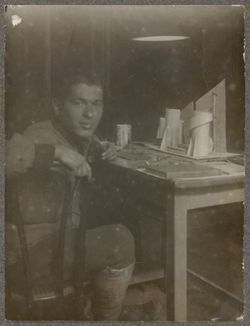
La chercheure en résidence Aglaya Glebova présente sa recherche : Les Vkhutemas, ateliers supérieurs d’art et de technique, étaient financés par l’état afin de préparer une nouvelle génération d’artistes et d’architectes révolutionnaires à bâtir une modernité proprement soviétique. Dissoute par suite de pression politique en 1930, l’école n’a jamais disposé d’un(...)
La chercheure en résidence Aglaya Glebova présente sa recherche : Les Vkhutemas, ateliers supérieurs d’art et de technique, étaient financés par l’état afin de préparer une nouvelle génération d’artistes et d’architectes révolutionnaires à bâtir une modernité proprement soviétique. Dissoute par suite de pression politique en 1930, l’école n’a jamais disposé d’un(...)
Localisation:
Maison Shaughnessy
Maison Shaughnessy
Date:
29 juin 2017, 18h
29 juin 2017, 18h
Titre:
Séminaire de chercheur en résidence : Aglaya Glebova
Actions:
Description:
La chercheure en résidence Aglaya Glebova présente sa recherche : Les Vkhutemas, ateliers supérieurs d’art et de technique, étaient financés par l’état afin de préparer une nouvelle génération d’artistes et d’architectes révolutionnaires à bâtir une modernité proprement soviétique. Dissoute par suite de pression politique en 1930, l’école n’a jamais disposé d’un(...)
Séminaire de chercheur en résidence : Aglaya Glebova
Actions:
Description:
La chercheure en résidence Aglaya Glebova présente sa recherche : Les Vkhutemas, ateliers supérieurs d’art et de technique, étaient financés par l’état afin de préparer une nouvelle génération d’artistes et d’architectes révolutionnaires à bâtir une modernité proprement soviétique. Dissoute par suite de pression politique en 1930, l’école n’a jamais disposé d’un(...)
Classification:
événements
événements
Date:
29 juin 2017
18h
29 juin 2017
18h
Localisation:
Maison Shaughnessy
Maison Shaughnessy
Classification:
archives
Niveau de description archivistique:
Fonds
archives
Niveau de description archivistique:
Fonds
Titre:
Fonds Peter Carter
Fonds Peter Carter
Numéro de référence:
AP047
Résumé:
The Peter Carter fonds, 1943-1996, documents the professional career of architect Peter Carter. The largest portion of the archive corresponds to projects Carter completed as principal of the office, Peter Carter Architect (1974-96). Materials in this fonds consist of 7263 drawings (including reprographic copies), 2007 photographic materials, approximately 65 panels, 3 l.m. of textual records, 26 models, 1 enclosing unit, 1 carpet sample, 1 graphic design layout for stationery letterhead, 1 brown oak sample, 1 window sample, 1 sign, 1 carioca stone, 1 travertine block and 1 grey carpet tile.
AP047
Résumé:
The Peter Carter fonds, 1943-1996, documents the professional career of architect Peter Carter. The largest portion of the archive corresponds to projects Carter completed as principal of the office, Peter Carter Architect (1974-96). Materials in this fonds consist of 7263 drawings (including reprographic copies), 2007 photographic materials, approximately 65 panels, 3 l.m. of textual records, 26 models, 1 enclosing unit, 1 carpet sample, 1 graphic design layout for stationery letterhead, 1 brown oak sample, 1 window sample, 1 sign, 1 carioca stone, 1 travertine block and 1 grey carpet tile.
Personnes et institutions:
Date:
1943-1996
1943-1996
Titre:
Fonds Peter Carter
Actions:
AP047
Résumé:
The Peter Carter fonds, 1943-1996, documents the professional career of architect Peter Carter. The largest portion of the archive corresponds to projects Carter completed as principal of the office, Peter Carter Architect (1974-96). Materials in this fonds consist of 7263 drawings (including reprographic copies), 2007 photographic materials, approximately 65 panels, 3 l.m. of textual records, 26 models, 1 enclosing unit, 1 carpet sample, 1 graphic design layout for stationery letterhead, 1 brown oak sample, 1 window sample, 1 sign, 1 carioca stone, 1 travertine block and 1 grey carpet tile.
Fonds Peter Carter
Actions:
AP047
Résumé:
The Peter Carter fonds, 1943-1996, documents the professional career of architect Peter Carter. The largest portion of the archive corresponds to projects Carter completed as principal of the office, Peter Carter Architect (1974-96). Materials in this fonds consist of 7263 drawings (including reprographic copies), 2007 photographic materials, approximately 65 panels, 3 l.m. of textual records, 26 models, 1 enclosing unit, 1 carpet sample, 1 graphic design layout for stationery letterhead, 1 brown oak sample, 1 window sample, 1 sign, 1 carioca stone, 1 travertine block and 1 grey carpet tile.
Classification:
archives
Niveau de description archivistique:
Fonds
archives
Niveau de description archivistique:
Fonds
Date:
1943-1996
1943-1996
Personnes et institutions:
Classification:
documents textuels
documents textuels
Numéro de référence:
AP140.S2.SS1.D23.P21
Description:
Caricature of the Leicester University Engineering Building as a ship, drawn by a student for a menu cover for the first annual dinner of the Engineering Society; also includes clippings, photocopies of photographs, a postcard of a painting by Ben Johnson, and a caricature of James Stirling with an umbrella in the History Faculty Building, University of Cambridge (AP140.S2.SS1.D26.P29). The textual records are dated "between 1963 and 1994" based on the completion date of the project, 1963, and on the latest date inscribed on one of the objects, 1994.
AP140.S2.SS1.D23.P21
Description:
Caricature of the Leicester University Engineering Building as a ship, drawn by a student for a menu cover for the first annual dinner of the Engineering Society; also includes clippings, photocopies of photographs, a postcard of a painting by Ben Johnson, and a caricature of James Stirling with an umbrella in the History Faculty Building, University of Cambridge (AP140.S2.SS1.D26.P29). The textual records are dated "between 1963 and 1994" based on the completion date of the project, 1963, and on the latest date inscribed on one of the objects, 1994.
Personnes et institutions:
Date:
1963-1994
1963-1994
Titre:
Caricature of the Leicester University Engineering Building and James Stirling and clippings
Actions:
AP140.S2.SS1.D23.P21
Description:
Caricature of the Leicester University Engineering Building as a ship, drawn by a student for a menu cover for the first annual dinner of the Engineering Society; also includes clippings, photocopies of photographs, a postcard of a painting by Ben Johnson, and a caricature of James Stirling with an umbrella in the History Faculty Building, University of Cambridge (AP140.S2.SS1.D26.P29). The textual records are dated "between 1963 and 1994" based on the completion date of the project, 1963, and on the latest date inscribed on one of the objects, 1994.
Caricature of the Leicester University Engineering Building and James Stirling and clippings
Actions:
AP140.S2.SS1.D23.P21
Description:
Caricature of the Leicester University Engineering Building as a ship, drawn by a student for a menu cover for the first annual dinner of the Engineering Society; also includes clippings, photocopies of photographs, a postcard of a painting by Ben Johnson, and a caricature of James Stirling with an umbrella in the History Faculty Building, University of Cambridge (AP140.S2.SS1.D26.P29). The textual records are dated "between 1963 and 1994" based on the completion date of the project, 1963, and on the latest date inscribed on one of the objects, 1994.
Classification:
documents textuels
documents textuels
Date:
1963-1994
1963-1994
Personnes et institutions:
Classification:
documents textuels
documents textuels
Numéro de référence:
ARCH260020
Description:
Erickson/Massey project proposals labelled 'Permanent Files': Carleton University School of Architecture, BC Building, Dillworth Estates development plan, Edmonton South-East Development, South East Vancouver Elementary School, British Columbia proposal for Expo 70 Osaka Japan, Fisherman's Quay False Creek, Glenwood Park, Institute for the Future physical development plan, Shannon Mews, Royal Columbian Hospital, University of Lethbridge Development Plan and Project One, University of Victoria development and married student housing, Simon Fraser University (reprinted article from Architectural Record, London, 1968)
ARCH260020
Description:
Erickson/Massey project proposals labelled 'Permanent Files': Carleton University School of Architecture, BC Building, Dillworth Estates development plan, Edmonton South-East Development, South East Vancouver Elementary School, British Columbia proposal for Expo 70 Osaka Japan, Fisherman's Quay False Creek, Glenwood Park, Institute for the Future physical development plan, Shannon Mews, Royal Columbian Hospital, University of Lethbridge Development Plan and Project One, University of Victoria development and married student housing, Simon Fraser University (reprinted article from Architectural Record, London, 1968)
Personnes et institutions:
Date:
1968-1969
1968-1969
Titre:
Permanent files for various projects
Actions:
ARCH260020
Description:
Erickson/Massey project proposals labelled 'Permanent Files': Carleton University School of Architecture, BC Building, Dillworth Estates development plan, Edmonton South-East Development, South East Vancouver Elementary School, British Columbia proposal for Expo 70 Osaka Japan, Fisherman's Quay False Creek, Glenwood Park, Institute for the Future physical development plan, Shannon Mews, Royal Columbian Hospital, University of Lethbridge Development Plan and Project One, University of Victoria development and married student housing, Simon Fraser University (reprinted article from Architectural Record, London, 1968)
Permanent files for various projects
Actions:
ARCH260020
Description:
Erickson/Massey project proposals labelled 'Permanent Files': Carleton University School of Architecture, BC Building, Dillworth Estates development plan, Edmonton South-East Development, South East Vancouver Elementary School, British Columbia proposal for Expo 70 Osaka Japan, Fisherman's Quay False Creek, Glenwood Park, Institute for the Future physical development plan, Shannon Mews, Royal Columbian Hospital, University of Lethbridge Development Plan and Project One, University of Victoria development and married student housing, Simon Fraser University (reprinted article from Architectural Record, London, 1968)
Classification:
documents textuels
documents textuels
Date:
1968-1969
1968-1969
Personnes et institutions:
Classification:
archives
Niveau de description archivistique:
Fonds
archives
Niveau de description archivistique:
Fonds
Titre:
John C. Parkin fonds
John C. Parkin fonds
Numéro de référence:
AP018
Résumé:
The John C. Parkin fonds documents the professional career of Toronto-based architect John C. Parkin (1922-1988) at his firms John B. Parkin Associates and Parkin Architects Planners. Most materials in this fonds record 347 architectural projects covering the years 1947-1987. John C. Parkin’s professional involvement in the arts and architecture, his firms’ activities, and his professional achievements are also recorded.
AP018
Résumé:
The John C. Parkin fonds documents the professional career of Toronto-based architect John C. Parkin (1922-1988) at his firms John B. Parkin Associates and Parkin Architects Planners. Most materials in this fonds record 347 architectural projects covering the years 1947-1987. John C. Parkin’s professional involvement in the arts and architecture, his firms’ activities, and his professional achievements are also recorded.
Personnes et institutions:
Date:
1929-1987
1929-1987
Titre:
John C. Parkin fonds
Actions:
AP018
Résumé:
The John C. Parkin fonds documents the professional career of Toronto-based architect John C. Parkin (1922-1988) at his firms John B. Parkin Associates and Parkin Architects Planners. Most materials in this fonds record 347 architectural projects covering the years 1947-1987. John C. Parkin’s professional involvement in the arts and architecture, his firms’ activities, and his professional achievements are also recorded.
John C. Parkin fonds
Actions:
AP018
Résumé:
The John C. Parkin fonds documents the professional career of Toronto-based architect John C. Parkin (1922-1988) at his firms John B. Parkin Associates and Parkin Architects Planners. Most materials in this fonds record 347 architectural projects covering the years 1947-1987. John C. Parkin’s professional involvement in the arts and architecture, his firms’ activities, and his professional achievements are also recorded.
Classification:
archives
Niveau de description archivistique:
Fonds
archives
Niveau de description archivistique:
Fonds
Date:
1929-1987
1929-1987
Personnes et institutions:
Classification:
archives
Niveau de description archivistique:
Fonds
archives
Niveau de description archivistique:
Fonds
Titre:
Lionel March fonds
Lionel March fonds
Numéro de référence:
AP208
Résumé:
The Lionel March fonds, circa 1957-2017, documents the work and activities of architect and professor Lionel March. The records within this fonds illustrate March’s architectural career, representing five professional and personal building projects, including the 1964 Whitehall plan; as well as his academic career in research and teaching, spanning England and North America, most notably March’s work with the Centre for Land Use and Built Form Studies (now the Martin Centre) and his research at UCLA. The fonds is largely composed of books from March’s library, textual records, slides and photographs, and drawings.
AP208
Résumé:
The Lionel March fonds, circa 1957-2017, documents the work and activities of architect and professor Lionel March. The records within this fonds illustrate March’s architectural career, representing five professional and personal building projects, including the 1964 Whitehall plan; as well as his academic career in research and teaching, spanning England and North America, most notably March’s work with the Centre for Land Use and Built Form Studies (now the Martin Centre) and his research at UCLA. The fonds is largely composed of books from March’s library, textual records, slides and photographs, and drawings.
Personnes et institutions:
Date:
circa 1957-2017
circa 1957-2017
Titre:
Lionel March fonds
Actions:
AP208
Résumé:
The Lionel March fonds, circa 1957-2017, documents the work and activities of architect and professor Lionel March. The records within this fonds illustrate March’s architectural career, representing five professional and personal building projects, including the 1964 Whitehall plan; as well as his academic career in research and teaching, spanning England and North America, most notably March’s work with the Centre for Land Use and Built Form Studies (now the Martin Centre) and his research at UCLA. The fonds is largely composed of books from March’s library, textual records, slides and photographs, and drawings.
Lionel March fonds
Actions:
AP208
Résumé:
The Lionel March fonds, circa 1957-2017, documents the work and activities of architect and professor Lionel March. The records within this fonds illustrate March’s architectural career, representing five professional and personal building projects, including the 1964 Whitehall plan; as well as his academic career in research and teaching, spanning England and North America, most notably March’s work with the Centre for Land Use and Built Form Studies (now the Martin Centre) and his research at UCLA. The fonds is largely composed of books from March’s library, textual records, slides and photographs, and drawings.
Classification:
archives
Niveau de description archivistique:
Fonds
archives
Niveau de description archivistique:
Fonds
Date:
circa 1957-2017
circa 1957-2017
Personnes et institutions:


