


1360 Résultats
Classification:
livres
livres
Actions:
Prix:
$104.00
(disponible sur commande)
Résumé:
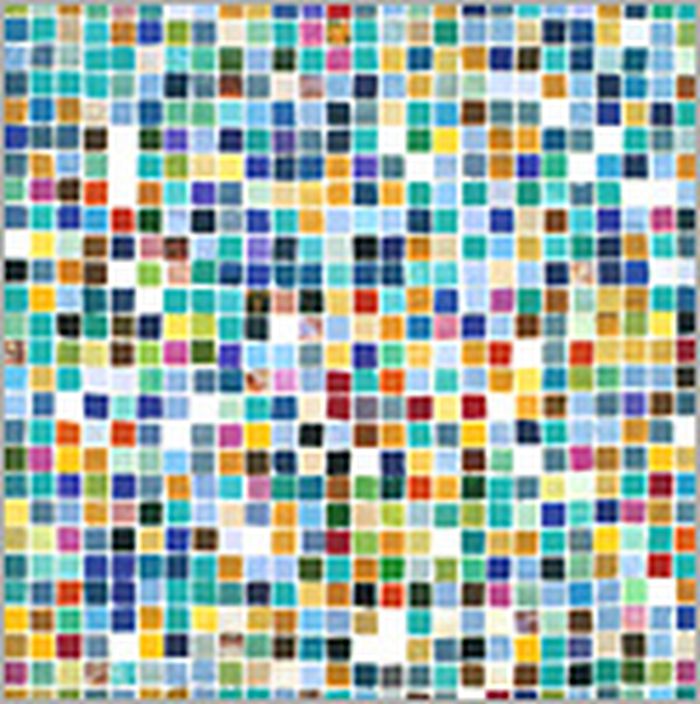
Take as a starting point the cover of this book; Anthony Hernandez’s wonderful photograph of square, colourful ceramic tiles could be almost anything you might imagine it to be. A Mondrian-like painting, a random pattern, a city grid, or perhaps the work of an anonymous tile setter, brightening up the facade of a government building in South Central Los Angeles. With the(...)
$104.00
(disponible sur commande)
Résumé:
Take as a starting point the cover of this book; Anthony Hernandez’s wonderful photograph of square, colourful ceramic tiles could be almost anything you might imagine it to be. A Mondrian-like painting, a random pattern, a city grid, or perhaps the work of an anonymous tile setter, brightening up the facade of a government building in South Central Los Angeles. With the(...)
Titre:
Anthony Hernandez : waiting for Los Angeles
Actions:
Prix:
$104.00
(disponible sur commande)
Résumé:
Take as a starting point the cover of this book; Anthony Hernandez’s wonderful photograph of square, colourful ceramic tiles could be almost anything you might imagine it to be. A Mondrian-like painting, a random pattern, a city grid, or perhaps the work of an anonymous tile setter, brightening up the facade of a government building in South Central Los Angeles. With the passage of time, these vibrant squares have been lost beneath a coat of anti-graffiti paint. Anthony Hernandez is a photographer for whom waiting has long been a theme, with his bus stop pictures in the late 1970s, and his fishing photographs in the 1980s. Hernandez’s vision is both abstract and documentary, and there is a pattern to his work in every sense of that word – whether he is focusing on an empty waiting room, a phone hanging in a booth, or random scribbles etched on a sheet of glass. Hernandez skillfully draws attention to the simple geometric beauty that can be found in even the most utilitarian fence, wall, or window. There is not a soul in sight, but there is a strong sense that someone has been here, and there is enough to grip the attention until, perhaps, they return. With an essay by photographer, writer and critic Allan Sekula.
Anthony Hernandez : waiting for Los Angeles
Actions:
Prix:
$104.00
(disponible sur commande)
Résumé:
Take as a starting point the cover of this book; Anthony Hernandez’s wonderful photograph of square, colourful ceramic tiles could be almost anything you might imagine it to be. A Mondrian-like painting, a random pattern, a city grid, or perhaps the work of an anonymous tile setter, brightening up the facade of a government building in South Central Los Angeles. With the passage of time, these vibrant squares have been lost beneath a coat of anti-graffiti paint. Anthony Hernandez is a photographer for whom waiting has long been a theme, with his bus stop pictures in the late 1970s, and his fishing photographs in the 1980s. Hernandez’s vision is both abstract and documentary, and there is a pattern to his work in every sense of that word – whether he is focusing on an empty waiting room, a phone hanging in a booth, or random scribbles etched on a sheet of glass. Hernandez skillfully draws attention to the simple geometric beauty that can be found in even the most utilitarian fence, wall, or window. There is not a soul in sight, but there is a strong sense that someone has been here, and there is enough to grip the attention until, perhaps, they return. With an essay by photographer, writer and critic Allan Sekula.
Classification:
livres
livres
Publication:
décembre 2002, Tucson
décembre 2002, Tucson
Sujet:
Monographies photo
Monographies photo
Classification:
livres
livres
Actions:
Prix:
$25.95
(disponible sur commande)
Résumé:
Today's urban riverfronts are changing. The decline of river commerce and riverside industry has made riverfront land once used for warehouses, factories, and loading docks available for open space, parks, housing, and nonindustrial uses. Urban rivers, which once functioned as open sewers for cities, are now seen as part of larger watershed ecosystems. Rivertown examines(...)
$25.95
(disponible sur commande)
Résumé:
Today's urban riverfronts are changing. The decline of river commerce and riverside industry has made riverfront land once used for warehouses, factories, and loading docks available for open space, parks, housing, and nonindustrial uses. Urban rivers, which once functioned as open sewers for cities, are now seen as part of larger watershed ecosystems. Rivertown examines(...)
Titre:
Rivertown : Rethinking urban rivers
Actions:
Prix:
$25.95
(disponible sur commande)
Résumé:
Today's urban riverfronts are changing. The decline of river commerce and riverside industry has made riverfront land once used for warehouses, factories, and loading docks available for open space, parks, housing, and nonindustrial uses. Urban rivers, which once functioned as open sewers for cities, are now seen as part of larger watershed ecosystems. Rivertown examines urban river restoration efforts across the United States, presenting case studies from Los Angeles; Washington, D.C.; Portland, Oregon; Chicago; Salt Lake City; and San Jose. It also analyzes the roles of the federal government (in particular, the U.S. Army Corps of Engineers) and citizen activism in urban river politics. A postscript places New Orleans's experience with Hurricane Katrina in the broader context of the national riverside land-use debate. Each case study in Rivertown considers the critical questions of who makes decisions about our urban rivers, who pays to implement these decisions, and who ultimately benefits or suffers from these decisions. In Los Angeles, for example, local nonprofit and academic research groups played crucial roles, whereas Chicago relied on a series of engineering interventions. In each case, authors evaluate the ecological issues and consider urban river restoration projects in relation to other urban economic and environmental initiatives in the region. Rivertown is a valuable resource for urban planners and citizen groups as well as for scholars.
Rivertown : Rethinking urban rivers
Actions:
Prix:
$25.95
(disponible sur commande)
Résumé:
Today's urban riverfronts are changing. The decline of river commerce and riverside industry has made riverfront land once used for warehouses, factories, and loading docks available for open space, parks, housing, and nonindustrial uses. Urban rivers, which once functioned as open sewers for cities, are now seen as part of larger watershed ecosystems. Rivertown examines urban river restoration efforts across the United States, presenting case studies from Los Angeles; Washington, D.C.; Portland, Oregon; Chicago; Salt Lake City; and San Jose. It also analyzes the roles of the federal government (in particular, the U.S. Army Corps of Engineers) and citizen activism in urban river politics. A postscript places New Orleans's experience with Hurricane Katrina in the broader context of the national riverside land-use debate. Each case study in Rivertown considers the critical questions of who makes decisions about our urban rivers, who pays to implement these decisions, and who ultimately benefits or suffers from these decisions. In Los Angeles, for example, local nonprofit and academic research groups played crucial roles, whereas Chicago relied on a series of engineering interventions. In each case, authors evaluate the ecological issues and consider urban river restoration projects in relation to other urban economic and environmental initiatives in the region. Rivertown is a valuable resource for urban planners and citizen groups as well as for scholars.
Classification:
livres
livres
Publication:
septembre 2007, Cambridge, London
septembre 2007, Cambridge, London
Sujet:
Théorie du paysage
Théorie du paysage
Classification:
livres
livres
Titre:
The care manifesto
The care manifesto
Actions:
Prix:
$19.95
(disponible sur commande)
Résumé:
''The care manifesto'' puts care at the heart of the debates of our current crisis: from intimate care--childcare, healthcare, elder care--to care for the natural world. We live in a world where carelessness reigns, but it does not have to be this way. ''The care manifesto'' puts forth a vision for a truly caring world. The authors want to reimagine the role of care(...)
$19.95
(disponible sur commande)
Résumé:
''The care manifesto'' puts care at the heart of the debates of our current crisis: from intimate care--childcare, healthcare, elder care--to care for the natural world. We live in a world where carelessness reigns, but it does not have to be this way. ''The care manifesto'' puts forth a vision for a truly caring world. The authors want to reimagine the role of care(...)
Titre:
The care manifesto
Actions:
Prix:
$19.95
(disponible sur commande)
Résumé:
''The care manifesto'' puts care at the heart of the debates of our current crisis: from intimate care--childcare, healthcare, elder care--to care for the natural world. We live in a world where carelessness reigns, but it does not have to be this way. ''The care manifesto'' puts forth a vision for a truly caring world. The authors want to reimagine the role of care in our everyday lives, making it the organising principle in every dimension and at every scale of life. We are all dependent on each other, and only by nurturing these interdependencies can we cultivate a world in which each and every one of us can not only live but thrive. ''The care manifesto'' demands that we must put care at the heart of the state and the economy. A caring government must promote collective joy, not the satisfaction of individual desire. This means the transformation of how we organise work through co-operatives, localism and nationalisation. It proposes the expansion of our understanding of kinship for a more 'promiscuous care'. It calls for caring places through the reclamation of public space, to make a more convivial city. It sets out an agenda for the environment, most urgent of all, putting care at the centre of our relationship to the natural world.
The care manifesto
Actions:
Prix:
$19.95
(disponible sur commande)
Résumé:
''The care manifesto'' puts care at the heart of the debates of our current crisis: from intimate care--childcare, healthcare, elder care--to care for the natural world. We live in a world where carelessness reigns, but it does not have to be this way. ''The care manifesto'' puts forth a vision for a truly caring world. The authors want to reimagine the role of care in our everyday lives, making it the organising principle in every dimension and at every scale of life. We are all dependent on each other, and only by nurturing these interdependencies can we cultivate a world in which each and every one of us can not only live but thrive. ''The care manifesto'' demands that we must put care at the heart of the state and the economy. A caring government must promote collective joy, not the satisfaction of individual desire. This means the transformation of how we organise work through co-operatives, localism and nationalisation. It proposes the expansion of our understanding of kinship for a more 'promiscuous care'. It calls for caring places through the reclamation of public space, to make a more convivial city. It sets out an agenda for the environment, most urgent of all, putting care at the centre of our relationship to the natural world.
Classification:
livres
livres
Publication:
septembre 2020
septembre 2020
Sujet:
Social
Social
Classification:
livres
livres
Prix:
$85.00
(disponible sur commande)
Résumé:
How can housing better meet people’s diverse and changing needs? Moving away from the focus on capsule architecture that dominates so many studies of Japan’s Metabolist architects, ''Digesting Metabolism'' investigates the impact on Japanese housing of Le Corbusier’s idea of 'artificial land,' perhaps architecture’s most famous concept that the fewest number of people(...)
$85.00
(disponible sur commande)
Résumé:
How can housing better meet people’s diverse and changing needs? Moving away from the focus on capsule architecture that dominates so many studies of Japan’s Metabolist architects, ''Digesting Metabolism'' investigates the impact on Japanese housing of Le Corbusier’s idea of 'artificial land,' perhaps architecture’s most famous concept that the fewest number of people(...)
Titre:
Digesting Metabolism: Artificial land in Japan 1954-2202
Actions:
Prix:
$85.00
(disponible sur commande)
Résumé:
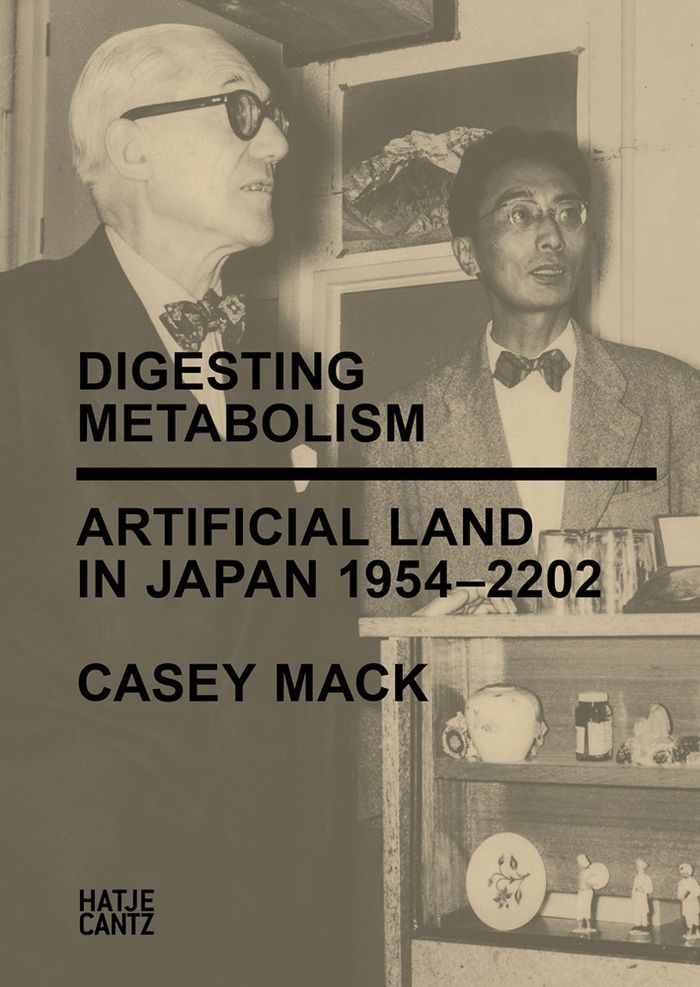
How can housing better meet people’s diverse and changing needs? Moving away from the focus on capsule architecture that dominates so many studies of Japan’s Metabolist architects, ''Digesting Metabolism'' investigates the impact on Japanese housing of Le Corbusier’s idea of 'artificial land,' perhaps architecture’s most famous concept that the fewest number of people have heard of. Long buried by the term 'megastructure' that it inspired, artificial land joins the individual and collective, envisioning housing as stacked platforms of plots for building freestanding homes of all variety. This book explores in detail 11 Japanese projects that translate this dream of durability combined with flexibility into built reality, illuminating its appeal for a nation whose existing land—from both earthquakes and cost—is highly unstable. First introduced to Japan in 1954 by Le Corbusier’s protégé, Takamasa Yosizaka, artificial land is essential to the Metabolists who debuted in Tokyo in 1960, with it sparking their desire to add ''a time factor into city planning.'' Yet artificial land has had a hold on Japan’s metabolic imagination well beyond the ‘60s, promising domestic satisfaction and environmental resilience from the postwar period to today’s government policies. ''Digesting Metabolism'' uncovers this unique Japanese history and its possible future, finding examples of infrastructure, adaptation and dweller control that challenge commodified models of housing around the world.
Digesting Metabolism: Artificial land in Japan 1954-2202
Actions:
Prix:
$85.00
(disponible sur commande)
Résumé:
How can housing better meet people’s diverse and changing needs? Moving away from the focus on capsule architecture that dominates so many studies of Japan’s Metabolist architects, ''Digesting Metabolism'' investigates the impact on Japanese housing of Le Corbusier’s idea of 'artificial land,' perhaps architecture’s most famous concept that the fewest number of people have heard of. Long buried by the term 'megastructure' that it inspired, artificial land joins the individual and collective, envisioning housing as stacked platforms of plots for building freestanding homes of all variety. This book explores in detail 11 Japanese projects that translate this dream of durability combined with flexibility into built reality, illuminating its appeal for a nation whose existing land—from both earthquakes and cost—is highly unstable. First introduced to Japan in 1954 by Le Corbusier’s protégé, Takamasa Yosizaka, artificial land is essential to the Metabolists who debuted in Tokyo in 1960, with it sparking their desire to add ''a time factor into city planning.'' Yet artificial land has had a hold on Japan’s metabolic imagination well beyond the ‘60s, promising domestic satisfaction and environmental resilience from the postwar period to today’s government policies. ''Digesting Metabolism'' uncovers this unique Japanese history and its possible future, finding examples of infrastructure, adaptation and dweller control that challenge commodified models of housing around the world.
Classification:
livres
livres
Publication:
novembre 2022
novembre 2022
Sujet:
Modernisme
Modernisme
Classification:
archives
archives
Actions:
Exemplaires:
Description:
143,342 digital files (517.39 GB), 24.24 linear meters of textual records, 17,086 photographic materials, 1125 drawings, 195 ephemera, 59 périodiques, 50 audio cassettes,...
Description:
143,342 digital files (517.39 GB), 24.24 linear meters of textual records, 17,086 photographic materials, 1125 drawings, 195 ephemera, 59 périodiques, 50 audio cassettes,...
Auteur:
Sujet:
Titre:
Jean-Louis Cohen fonds, 1968-2023
Actions:
Exemplaires:
Description:
143,342 digital files (517.39 GB), 24.24 linear meters of textual records, 17,086 photographic materials, 1125 drawings, 195 ephemera, 59 périodiques, 50 audio cassettes,...
Jean-Louis Cohen fonds, 1968-2023
Actions:
Exemplaires:
Description:
143,342 digital files (517.39 GB), 24.24 linear meters of textual records, 17,086 photographic materials, 1125 drawings, 195 ephemera, 59 périodiques, 50 audio cassettes,...
Classification:
archives
archives
Auteur:
Sujet:
Classification:
livres
livres
Actions:
Exemplaires:
Description:
278 pages : illustrations (chiefly color), plans ; 29 cm
Description:
278 pages : illustrations (chiefly color), plans ; 29 cm
Auteur:
Sujet:
Publication:
Zurich : Park Books, [2022], ©2022
Zurich : Park Books, [2022], ©2022
Titre:
Atelier Deshaus : 2001-2020 / foreword by Yung Ho Chang ; essays by Li Xiangning, Li Shiqiao ; editor, Li Xiangning ; [texts, Li Xiangning, Li Shiqiao, Liu Yichun, Chen Yifeng].
Actions:
Exemplaires:
Description:
278 pages : illustrations (chiefly color), plans ; 29 cm
Atelier Deshaus : 2001-2020 / foreword by Yung Ho Chang ; essays by Li Xiangning, Li Shiqiao ; editor, Li Xiangning ; [texts, Li Xiangning, Li Shiqiao, Liu Yichun, Chen Yifeng].
Actions:
Exemplaires:
Description:
278 pages : illustrations (chiefly color), plans ; 29 cm
Classification:
livres
livres
Publication:
Zurich : Park Books, [2022], ©2022
Zurich : Park Books, [2022], ©2022
Auteur:
Sujet:
Classification:
livres
livres
Actions:
Prix:
$35.95
(disponible sur commande)
Résumé:
A leading activist museum director explains why museums are at the center of a political storm and how they can be reimagined. In an age of protest, cultural institutions have come under fire. Protestors have mobilized against sources of museum funding, as happened at the Metropolitan Museum, and against board appointments, forcing tear gas manufacturer Warren Kanders to(...)
$35.95
(disponible sur commande)
Résumé:
A leading activist museum director explains why museums are at the center of a political storm and how they can be reimagined. In an age of protest, cultural institutions have come under fire. Protestors have mobilized against sources of museum funding, as happened at the Metropolitan Museum, and against board appointments, forcing tear gas manufacturer Warren Kanders to(...)
Titre:
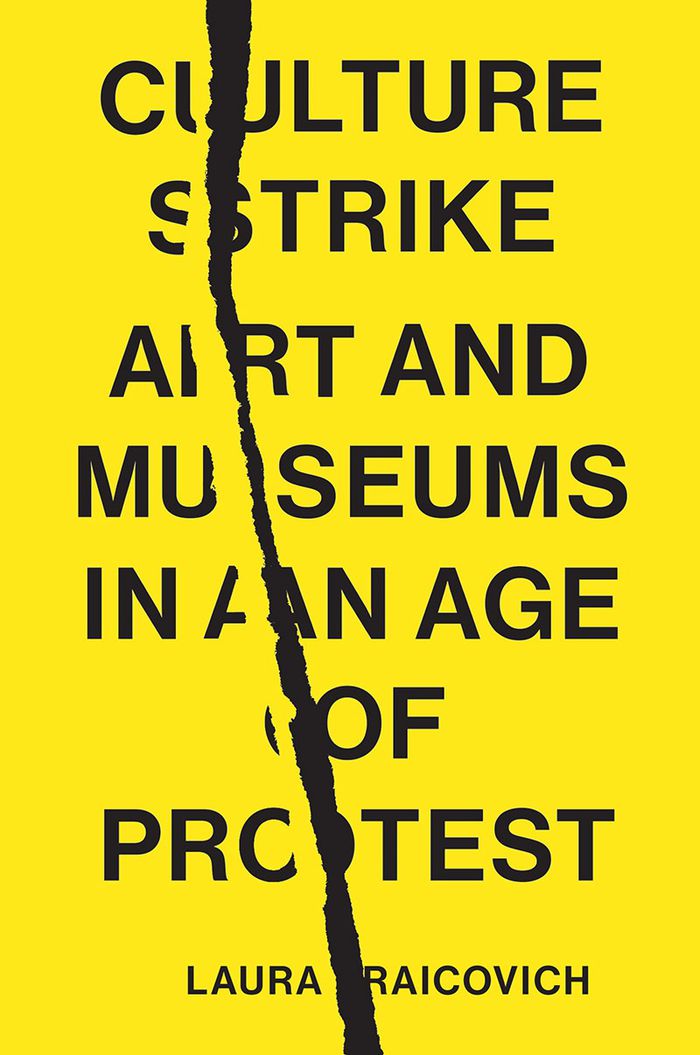
Culture strike: art and museums in an age of protest
Actions:
Prix:
$35.95
(disponible sur commande)
Résumé:
A leading activist museum director explains why museums are at the center of a political storm and how they can be reimagined. In an age of protest, cultural institutions have come under fire. Protestors have mobilized against sources of museum funding, as happened at the Metropolitan Museum, and against board appointments, forcing tear gas manufacturer Warren Kanders to resign at the Whitney. That is to say nothing of demonstrations against exhibitions and artworks. Protests have roiled institutions across the world, from the Abu Dhabi Guggenheim to the Akron Art Museum. A popular expectation has grown that galleries and museums should work for social change. As Director of the Queens Museum, Laura Raicovich helped turn that New York muni- cipal institution into a public commons for art and activism, organizing high-powered exhibitions that doubled as political protests. Then in January 2018, she resigned, after a dispute with the Queens Museum board and city officials. This public controversy followed the museum’s responses to Donald Trump’s election, including her objections to the Israeli government using the museum for an event featuring Vice President Mike Pence. In this lucid and accessible book, Raicovich examines some of the key museum flashpoints and provides historical context for the current controversies. She shows how art museums arose as colonial institutions bearing an ideology of neutrality that masks their role in upholding conservative, capitalist values. And she suggests ways museums can be reinvented to serve better, public ends.
Culture strike: art and museums in an age of protest
Actions:
Prix:
$35.95
(disponible sur commande)
Résumé:
A leading activist museum director explains why museums are at the center of a political storm and how they can be reimagined. In an age of protest, cultural institutions have come under fire. Protestors have mobilized against sources of museum funding, as happened at the Metropolitan Museum, and against board appointments, forcing tear gas manufacturer Warren Kanders to resign at the Whitney. That is to say nothing of demonstrations against exhibitions and artworks. Protests have roiled institutions across the world, from the Abu Dhabi Guggenheim to the Akron Art Museum. A popular expectation has grown that galleries and museums should work for social change. As Director of the Queens Museum, Laura Raicovich helped turn that New York muni- cipal institution into a public commons for art and activism, organizing high-powered exhibitions that doubled as political protests. Then in January 2018, she resigned, after a dispute with the Queens Museum board and city officials. This public controversy followed the museum’s responses to Donald Trump’s election, including her objections to the Israeli government using the museum for an event featuring Vice President Mike Pence. In this lucid and accessible book, Raicovich examines some of the key museum flashpoints and provides historical context for the current controversies. She shows how art museums arose as colonial institutions bearing an ideology of neutrality that masks their role in upholding conservative, capitalist values. And she suggests ways museums can be reinvented to serve better, public ends.
Classification:
livres
livres
Publication:
juin 2021
juin 2021
Sujet:
Muséologie
Muséologie
Classification:
livres
livres
Actions:
Exemplaires:
Description:
xviii, 489 pages : illustrations ; 26 cm.
Description:
xviii, 489 pages : illustrations ; 26 cm.
Auteur:
Sujet:
Publication:
Baltimore : Johns Hopkins University Press, ©1996.
Baltimore : Johns Hopkins University Press, ©1996.
Titre:
The National Road / edited by Karl Raitz ; project director and director of photography, George F. Thompson ; cartography by Gyula Pauer.
Actions:
Exemplaires:
Description:
xviii, 489 pages : illustrations ; 26 cm.
The National Road / edited by Karl Raitz ; project director and director of photography, George F. Thompson ; cartography by Gyula Pauer.
Actions:
Exemplaires:
Description:
xviii, 489 pages : illustrations ; 26 cm.
Classification:
livres
livres
Publication:
Baltimore : Johns Hopkins University Press, ©1996.
Baltimore : Johns Hopkins University Press, ©1996.
Auteur:
Sujet:
Classification:
livres
livres

Actions:
Prix:
$20.00
(disponible en magasin)
Résumé:
Almost ten years ago, Canary architectural practice AmP with its founders Felipe Artengo Rufino and José Pastrana (and their former partner Fernando Menis / Today: Menis Arquitectos) received acclaim far beyond their own country of Spain with their government building for the Canary Islands. A decisive factor for the international success of the team, which can be(...)
$20.00
(disponible en magasin)
Résumé:
Almost ten years ago, Canary architectural practice AmP with its founders Felipe Artengo Rufino and José Pastrana (and their former partner Fernando Menis / Today: Menis Arquitectos) received acclaim far beyond their own country of Spain with their government building for the Canary Islands. A decisive factor for the international success of the team, which can be(...)
Titre:
Amp - the mark of the volcano : artengo + pastrana
Actions:
Prix:
$20.00
(disponible en magasin)
Résumé:
Almost ten years ago, Canary architectural practice AmP with its founders Felipe Artengo Rufino and José Pastrana (and their former partner Fernando Menis / Today: Menis Arquitectos) received acclaim far beyond their own country of Spain with their government building for the Canary Islands. A decisive factor for the international success of the team, which can be considered neither minimalist nor traditionalist, was the congenial mixture of four elements: their expressionist creative impulse, their deep roots in their home environment, the Canary Islands, their sculptural approach to architecture and the creative use of concrete as design element in combination with local materials. These vital aspects of their architecture also characterize the latest works of AmP, which are always the result of exact observations of space and locality. The Aedes exhibition’s focus is on the athletics stadium in Tenerife which was completed this year. Fitted like a giant earth and stone embankment into the suburban context, it represents at the same time a master piece of modern high-tech architecture. The two residential towers in Añaza, 2007, which have already gained landmark character and are an example of an offbeat approach to council housing in Spain, appear like giant concrete sculptures with their slightly bent shape and their odd-sized windows irregularly dispersed throughout the façade. Other projects are the court house in Santa Cruz, 2007 (competition entry), the extension building Cabildo, 2007 and a school in Orotawa, 2005. The competition entry for the harbour area in Los Cristianos, 2007, illustrates the sensitive approach of Felipe Artengo Rufino und José Pastrana within the urban context, achieving a user- friendly transformation of this area where the city meets the sea, for residents as well as for tourist. A fundamental principle of AmP would be to understand a place as a sediment of geological and climatic forces, of industrial, agrarian and urban residue, permeated by sociological and cultural components. Closeness to their environment and the means at their disposal enable Felipe Artengo Rufino and José Pastrana to do research in situ and thus create a clearly defined architecture. The scenic variety of the islands, in which light plays an essential role, has a strong influence on their design process. The effects of time on their work are vital to AmP. The aging process of their favourite materials concrete, stone and timber fosters a continuous natural change which accentuates the power of architecture and makes the formal and structural aspects become even more evident in the course of time.
Amp - the mark of the volcano : artengo + pastrana
Actions:
Prix:
$20.00
(disponible en magasin)
Résumé:
Almost ten years ago, Canary architectural practice AmP with its founders Felipe Artengo Rufino and José Pastrana (and their former partner Fernando Menis / Today: Menis Arquitectos) received acclaim far beyond their own country of Spain with their government building for the Canary Islands. A decisive factor for the international success of the team, which can be considered neither minimalist nor traditionalist, was the congenial mixture of four elements: their expressionist creative impulse, their deep roots in their home environment, the Canary Islands, their sculptural approach to architecture and the creative use of concrete as design element in combination with local materials. These vital aspects of their architecture also characterize the latest works of AmP, which are always the result of exact observations of space and locality. The Aedes exhibition’s focus is on the athletics stadium in Tenerife which was completed this year. Fitted like a giant earth and stone embankment into the suburban context, it represents at the same time a master piece of modern high-tech architecture. The two residential towers in Añaza, 2007, which have already gained landmark character and are an example of an offbeat approach to council housing in Spain, appear like giant concrete sculptures with their slightly bent shape and their odd-sized windows irregularly dispersed throughout the façade. Other projects are the court house in Santa Cruz, 2007 (competition entry), the extension building Cabildo, 2007 and a school in Orotawa, 2005. The competition entry for the harbour area in Los Cristianos, 2007, illustrates the sensitive approach of Felipe Artengo Rufino und José Pastrana within the urban context, achieving a user- friendly transformation of this area where the city meets the sea, for residents as well as for tourist. A fundamental principle of AmP would be to understand a place as a sediment of geological and climatic forces, of industrial, agrarian and urban residue, permeated by sociological and cultural components. Closeness to their environment and the means at their disposal enable Felipe Artengo Rufino and José Pastrana to do research in situ and thus create a clearly defined architecture. The scenic variety of the islands, in which light plays an essential role, has a strong influence on their design process. The effects of time on their work are vital to AmP. The aging process of their favourite materials concrete, stone and timber fosters a continuous natural change which accentuates the power of architecture and makes the formal and structural aspects become even more evident in the course of time.
Classification:
livres
livres
Publication:
juillet 2007, Berlin
juillet 2007, Berlin
Sujet:
petits formats
petits formats
Classification:
périodiques
périodiques
Actions:
Prix:
$71.50
(disponible sur commande)
Résumé:
A ‘Pacific’ century, an Asian century or a Chinese century? On the threshold between the 20th and the 21st century, the transit from the Atlantic to the Pacific is forecasted by all; the move from America to Asia is noticed by many; and the replacement of the United States by China is feared by some: the awakening of the dragon provokes both wonder and distrust. After the(...)
$71.50
(disponible sur commande)
Résumé:
A ‘Pacific’ century, an Asian century or a Chinese century? On the threshold between the 20th and the 21st century, the transit from the Atlantic to the Pacific is forecasted by all; the move from America to Asia is noticed by many; and the replacement of the United States by China is feared by some: the awakening of the dragon provokes both wonder and distrust. After the(...)
Titre:
AV Monografias / Monographs 109-110 (2004) : China boom, growth unlimited
Actions:
Prix:
$71.50
(disponible sur commande)
Résumé:
A ‘Pacific’ century, an Asian century or a Chinese century? On the threshold between the 20th and the 21st century, the transit from the Atlantic to the Pacific is forecasted by all; the move from America to Asia is noticed by many; and the replacement of the United States by China is feared by some: the awakening of the dragon provokes both wonder and distrust. After the reforms of Deng Xiaoping in 1978, in the last 25 years China has grown at a rate of 9 percent; in this period, its GNP has tripled, and the percentage of population living in cities has doubled, exceeding 40%. Fueled by exports, and backed by the postotalitarian protectionism of a single-party government, the stunning growth of China has not yet created global companies – the Sony or Hyundai that led the Japanese or Korean booms – but its large oil firms (PetroChina, Sinopec, CNOOC) try to find in several continents the energy needed by the world’s second importer; its technological companies (from Lenovo, that has purchased a division of IBM, to Huawei, that has created in Shenzhen a Silicon Valley-style campus, Doric Disney designs included) make up for scarce innovation with low labor costs; and its new breed of fancy millionaires, who build chateaux or buy French cosmetic brands, spearhead a large consumerist middle class, supplying a strong domestic demand that adds to the thrust of foreign markets. China’s unequal growth does not appear to be a large risk: the differences in income are similar to those of the US, and the contrast between the wealthy coast and the rural inland – where most upheavals have started, from Boxers to communists – is blurred as the development of Shanghai extends upriver along the Yangtze corridor, and as Hong Kong’s dynamism expands in concentric waves over the superregion of Guangdong, from that Pearl River Delta known as ‘the factory of the world’. More dangerous seem to be the weakness of the financial system, the persistence of administrative corruption and the scarcity of energy resources, the supply of which is being secured by heavy investments on the military, something that upsets its neighbors – Japan and Taiwan most of all, but also Korea and another awakening giant, India –, its competitors, and even the US, that urges its European allies to maintain the arms ban on China. On top of all this, in a country that has reached 1,300 million inhabitants in 2005, is the demographic scenario created by the single child policy and the accelerated ageing of the population, with an increasing number of 4+2+1 families, where now there are four grandparents and two parents satisfying the needs of a little emperor, but where in just 30 years a single adult will have to take care of six retirees. This huge economic and social transformation has expressed itself via an unprecedented urban explosion, shaped by titanic public works – large dams and suspended bridges, elevated highways and submarine tunnels – and with the foreseeable devastating impact on the environment and cultural heritage. The building frenzy that has attracted so many foreign architects to China – initially for technically complex or symbolically significant works, like some of the skyscrapers of Shanghai or the olympic projects in Beijing, but now more often for urban plans or conventional commercial developments – receives, according to The Economist, the added boost of a real-estate bubble that feeds on hot money placing its bets on the yuan’s revaluation. This process has turned some districts of Shanghai such as Pudong or Puxi into the most sought-after office areas in the world, and has caused in cities like Beijing an increasing decay of its architectural legacy, which barely respects World Heritage sites (The Great Wall, the Forbidden City, the Summer Palace, the Ming Imperial Tombs and the Temple of Heaven), besieged already by a unanimous tide of trivial constructions.
AV Monografias / Monographs 109-110 (2004) : China boom, growth unlimited
Actions:
Prix:
$71.50
(disponible sur commande)
Résumé:
A ‘Pacific’ century, an Asian century or a Chinese century? On the threshold between the 20th and the 21st century, the transit from the Atlantic to the Pacific is forecasted by all; the move from America to Asia is noticed by many; and the replacement of the United States by China is feared by some: the awakening of the dragon provokes both wonder and distrust. After the reforms of Deng Xiaoping in 1978, in the last 25 years China has grown at a rate of 9 percent; in this period, its GNP has tripled, and the percentage of population living in cities has doubled, exceeding 40%. Fueled by exports, and backed by the postotalitarian protectionism of a single-party government, the stunning growth of China has not yet created global companies – the Sony or Hyundai that led the Japanese or Korean booms – but its large oil firms (PetroChina, Sinopec, CNOOC) try to find in several continents the energy needed by the world’s second importer; its technological companies (from Lenovo, that has purchased a division of IBM, to Huawei, that has created in Shenzhen a Silicon Valley-style campus, Doric Disney designs included) make up for scarce innovation with low labor costs; and its new breed of fancy millionaires, who build chateaux or buy French cosmetic brands, spearhead a large consumerist middle class, supplying a strong domestic demand that adds to the thrust of foreign markets. China’s unequal growth does not appear to be a large risk: the differences in income are similar to those of the US, and the contrast between the wealthy coast and the rural inland – where most upheavals have started, from Boxers to communists – is blurred as the development of Shanghai extends upriver along the Yangtze corridor, and as Hong Kong’s dynamism expands in concentric waves over the superregion of Guangdong, from that Pearl River Delta known as ‘the factory of the world’. More dangerous seem to be the weakness of the financial system, the persistence of administrative corruption and the scarcity of energy resources, the supply of which is being secured by heavy investments on the military, something that upsets its neighbors – Japan and Taiwan most of all, but also Korea and another awakening giant, India –, its competitors, and even the US, that urges its European allies to maintain the arms ban on China. On top of all this, in a country that has reached 1,300 million inhabitants in 2005, is the demographic scenario created by the single child policy and the accelerated ageing of the population, with an increasing number of 4+2+1 families, where now there are four grandparents and two parents satisfying the needs of a little emperor, but where in just 30 years a single adult will have to take care of six retirees. This huge economic and social transformation has expressed itself via an unprecedented urban explosion, shaped by titanic public works – large dams and suspended bridges, elevated highways and submarine tunnels – and with the foreseeable devastating impact on the environment and cultural heritage. The building frenzy that has attracted so many foreign architects to China – initially for technically complex or symbolically significant works, like some of the skyscrapers of Shanghai or the olympic projects in Beijing, but now more often for urban plans or conventional commercial developments – receives, according to The Economist, the added boost of a real-estate bubble that feeds on hot money placing its bets on the yuan’s revaluation. This process has turned some districts of Shanghai such as Pudong or Puxi into the most sought-after office areas in the world, and has caused in cities like Beijing an increasing decay of its architectural legacy, which barely respects World Heritage sites (The Great Wall, the Forbidden City, the Summer Palace, the Ming Imperial Tombs and the Temple of Heaven), besieged already by a unanimous tide of trivial constructions.
Classification:
périodiques
périodiques
Publication:
août 2005, Madrid
août 2005, Madrid
Sujet:
Revues
Revues


