


1390 Résultats
Classification:
livres
livres
Actions:
Prix:
$39.50
(disponible sur commande)
Résumé:
Magnificent Buildings, Splendid Gardens returns to print some of the most important works of David Coffin, a leading authority on Renaissance architecture who, as one of the first scholars to apply the tools of art history to the study of gardens, became a founder of the discipline of garden and landscape studies. These essays span the wide range of Coffin's work, from(...)
$39.50
(disponible sur commande)
Résumé:
Magnificent Buildings, Splendid Gardens returns to print some of the most important works of David Coffin, a leading authority on Renaissance architecture who, as one of the first scholars to apply the tools of art history to the study of gardens, became a founder of the discipline of garden and landscape studies. These essays span the wide range of Coffin's work, from(...)
Titre:
Magnificent buildings, splendid gardens
Actions:
Prix:
$39.50
(disponible sur commande)
Résumé:
Magnificent Buildings, Splendid Gardens returns to print some of the most important works of David Coffin, a leading authority on Renaissance architecture who, as one of the first scholars to apply the tools of art history to the study of gardens, became a founder of the discipline of garden and landscape studies. These essays span the wide range of Coffin's work, from Italian Renaissance architecture, garden design, sculpture, and drawings to English gardens and landscape designers of the seventeenth to early nineteenth centuries. Coffin's approaches are as varied as his subject matter. Some of these essays present the results of his archival research, including his discovery of crucial documents on the Emilian architect Giovan Battista Aleotti and the only documentary evidence identifying Vignola as the architect of the Villa Lante at Bagnaia. Other essays take a much broader cultural view, investigating, for example, the phenomenon of public access to private Renaissance gardens, elucidating the evolving meaning of images of the goddess Venus in English gardens, and identifying the significance of the decorative programs of monuments as diverse as the Villa Belvedere in Rome and the eighteenth-century gardens at Rousham in Oxfordshire. The book also includes a commentary on each essay, written by one of Coffin's former students; a full analytical index; and a complete bibliography of Coffin's work.
Magnificent buildings, splendid gardens
Actions:
Prix:
$39.50
(disponible sur commande)
Résumé:
Magnificent Buildings, Splendid Gardens returns to print some of the most important works of David Coffin, a leading authority on Renaissance architecture who, as one of the first scholars to apply the tools of art history to the study of gardens, became a founder of the discipline of garden and landscape studies. These essays span the wide range of Coffin's work, from Italian Renaissance architecture, garden design, sculpture, and drawings to English gardens and landscape designers of the seventeenth to early nineteenth centuries. Coffin's approaches are as varied as his subject matter. Some of these essays present the results of his archival research, including his discovery of crucial documents on the Emilian architect Giovan Battista Aleotti and the only documentary evidence identifying Vignola as the architect of the Villa Lante at Bagnaia. Other essays take a much broader cultural view, investigating, for example, the phenomenon of public access to private Renaissance gardens, elucidating the evolving meaning of images of the goddess Venus in English gardens, and identifying the significance of the decorative programs of monuments as diverse as the Villa Belvedere in Rome and the eighteenth-century gardens at Rousham in Oxfordshire. The book also includes a commentary on each essay, written by one of Coffin's former students; a full analytical index; and a complete bibliography of Coffin's work.
Classification:
livres
livres
Publication:
mars 2008, New Haven
mars 2008, New Haven
Sujet:
Jardins
Jardins
Classification:
livres
livres
Actions:
Prix:
$66.00
(disponible sur commande)
Résumé:
This illustrated collection of essays brings together some of art historian Linda Nochlin’s most important writings on modernism and modernity from across her six-decade career. Before the publication of her seminal essay on feminism in art, “Why Have There Been No Great Women Artists?,” she had already firmly established herself as a major practitioner of a politically(...)
$66.00
(disponible sur commande)
Résumé:
This illustrated collection of essays brings together some of art historian Linda Nochlin’s most important writings on modernism and modernity from across her six-decade career. Before the publication of her seminal essay on feminism in art, “Why Have There Been No Great Women Artists?,” she had already firmly established herself as a major practitioner of a politically(...)
Titre:
Making it modern: Essays on the art of the now
Actions:
Prix:
$66.00
(disponible sur commande)
Résumé:
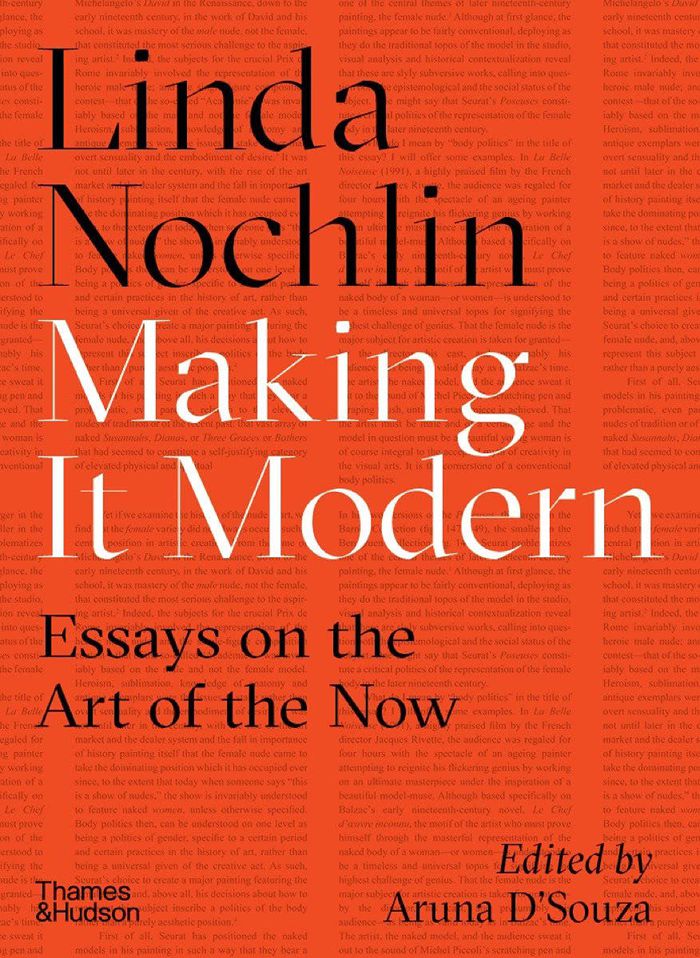
This illustrated collection of essays brings together some of art historian Linda Nochlin’s most important writings on modernism and modernity from across her six-decade career. Before the publication of her seminal essay on feminism in art, “Why Have There Been No Great Women Artists?,” she had already firmly established herself as a major practitioner of a politically sophisticated and class-conscious social art history. Nochlin was part of an important cohort of scholars writing on modernity, determined to rethink the narratives of the subject under the pressure of contemporary events such as student uprisings, the women’s liberation movement, and the Vietnam War, with the help of politically engaged literary criticism that was emerging at the same time. Nochlin embraced Charles Baudelaire’s conviction that modernity is meant to be of one’s time- and that the role of an art historian was to understand the art of the past not only in its own historical context but according to the urgencies of the contemporary world. From academic debates about the nude in the eighteenth century to the work of Robert Gober in the twenty-first, whatever she turned her analytic eye to was conceived as the art of the now. Including seven previously unpublished pieces, this collection highlights the breadth and diversity of Nochlin’s output across the decades, including discussions on colonialism, fashion, and sex.
Making it modern: Essays on the art of the now
Actions:
Prix:
$66.00
(disponible sur commande)
Résumé:
This illustrated collection of essays brings together some of art historian Linda Nochlin’s most important writings on modernism and modernity from across her six-decade career. Before the publication of her seminal essay on feminism in art, “Why Have There Been No Great Women Artists?,” she had already firmly established herself as a major practitioner of a politically sophisticated and class-conscious social art history. Nochlin was part of an important cohort of scholars writing on modernity, determined to rethink the narratives of the subject under the pressure of contemporary events such as student uprisings, the women’s liberation movement, and the Vietnam War, with the help of politically engaged literary criticism that was emerging at the same time. Nochlin embraced Charles Baudelaire’s conviction that modernity is meant to be of one’s time- and that the role of an art historian was to understand the art of the past not only in its own historical context but according to the urgencies of the contemporary world. From academic debates about the nude in the eighteenth century to the work of Robert Gober in the twenty-first, whatever she turned her analytic eye to was conceived as the art of the now. Including seven previously unpublished pieces, this collection highlights the breadth and diversity of Nochlin’s output across the decades, including discussions on colonialism, fashion, and sex.
Classification:
livres
livres
Publication:
mars 2022
mars 2022
Sujet:
Théorie de l’art
Théorie de l’art
Classification:
livres
livres
Prix:
$54.00
(disponible sur commande)
Résumé:
We tend to think of architecture as a practice in permanence, but what if we looked instead for an architecture of transience? In "Things that move," Tim Anstey does just that: rather than assuming that architecture is, at a certain level, stationary, he considers how architecture moves subjects (referring to its emotive potential in the experience it creates); how it(...)
$54.00
(disponible sur commande)
Résumé:
We tend to think of architecture as a practice in permanence, but what if we looked instead for an architecture of transience? In "Things that move," Tim Anstey does just that: rather than assuming that architecture is, at a certain level, stationary, he considers how architecture moves subjects (referring to its emotive potential in the experience it creates); how it(...)
Titre:
Things that move: A hinterland in architectural history
Actions:
Prix:
$54.00
(disponible sur commande)
Résumé:
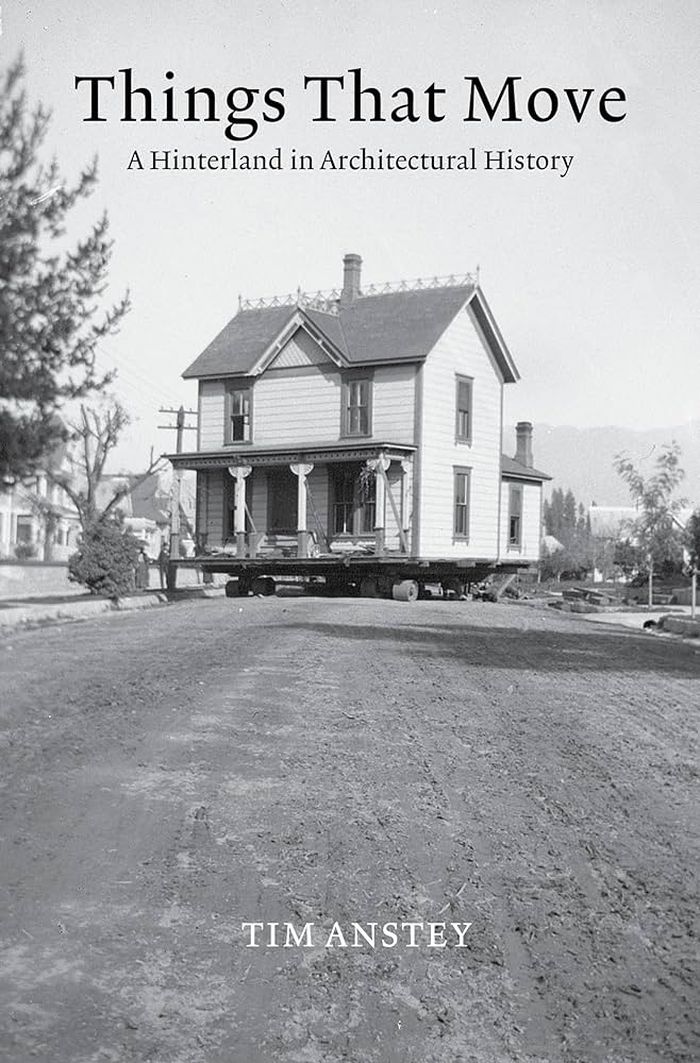
We tend to think of architecture as a practice in permanence, but what if we looked instead for an architecture of transience? In "Things that move," Tim Anstey does just that: rather than assuming that architecture is, at a certain level, stationary, he considers how architecture moves subjects (referring to its emotive potential in the experience it creates); how it moves objects (referring to how it choreographs bodies in motion); and how it is itself moved (referring to the mixture of materials, laws, affordances, and images that introduce movement into any architectural condition). The first of the book's three sections, "Cargoes," highlights the mobile peripheries of architectural history through the eighteenth and nineteenth centuries. It asks what kinds of knowledge can be included in a discussion of architecture, noting the connections between discourses of the lithe and the technical, on the one hand, and those associated with the production of monumental, static compositions on the other. The second section, “Dispatches,” reinterprets early architectural theory by examining the Renaissance ideal of decorum, the nature of the architectural work, and the ways in which architects are constituted as authors. The last part of the book, “Vehicles,” considers building in terms of literal and metaphorical movement, using two cases from the twentieth century that investigate the relationship between architecture and cultural memory. Using a broadly forensic approach to connect details in otherwise disparate cases, "Things that move" is a breathtakingly capacious architectural account that will change the way readers understand buildings, their becoming, and their significance.
Things that move: A hinterland in architectural history
Actions:
Prix:
$54.00
(disponible sur commande)
Résumé:
We tend to think of architecture as a practice in permanence, but what if we looked instead for an architecture of transience? In "Things that move," Tim Anstey does just that: rather than assuming that architecture is, at a certain level, stationary, he considers how architecture moves subjects (referring to its emotive potential in the experience it creates); how it moves objects (referring to how it choreographs bodies in motion); and how it is itself moved (referring to the mixture of materials, laws, affordances, and images that introduce movement into any architectural condition). The first of the book's three sections, "Cargoes," highlights the mobile peripheries of architectural history through the eighteenth and nineteenth centuries. It asks what kinds of knowledge can be included in a discussion of architecture, noting the connections between discourses of the lithe and the technical, on the one hand, and those associated with the production of monumental, static compositions on the other. The second section, “Dispatches,” reinterprets early architectural theory by examining the Renaissance ideal of decorum, the nature of the architectural work, and the ways in which architects are constituted as authors. The last part of the book, “Vehicles,” considers building in terms of literal and metaphorical movement, using two cases from the twentieth century that investigate the relationship between architecture and cultural memory. Using a broadly forensic approach to connect details in otherwise disparate cases, "Things that move" is a breathtakingly capacious architectural account that will change the way readers understand buildings, their becoming, and their significance.
Classification:
livres
livres
Publication:
avril 2024
avril 2024
Sujet:
Théorie de l’architecture
Théorie de l’architecture
Classification:
livres
livres
Titre:
The gothic
The gothic
Actions:
Prix:
$23.95
(disponible sur commande)
Résumé:
This collection of writings examines the pervasive and influential role of "the Gothic" in contemporary visual culture. The contemporary Gothic in art is informed as much by the stock themes of the eighteenth- and nineteenth-century Gothic novel as it is by more recent permutations of the Gothic in horror film theory, Lacanian psychoanalysis, and Goth subcultures. This(...)
$23.95
(disponible sur commande)
Résumé:
This collection of writings examines the pervasive and influential role of "the Gothic" in contemporary visual culture. The contemporary Gothic in art is informed as much by the stock themes of the eighteenth- and nineteenth-century Gothic novel as it is by more recent permutations of the Gothic in horror film theory, Lacanian psychoanalysis, and Goth subcultures. This(...)
Sujet:
Théorie de l’art
Théorie de l’art
Publication:
octobre 2007, Whitechapel London Cambridge
octobre 2007, Whitechapel London Cambridge
Titre:
The gothic
Actions:
Prix:
$23.95
(disponible sur commande)
Résumé:
This collection of writings examines the pervasive and influential role of "the Gothic" in contemporary visual culture. The contemporary Gothic in art is informed as much by the stock themes of the eighteenth- and nineteenth-century Gothic novel as it is by more recent permutations of the Gothic in horror film theory, Lacanian psychoanalysis, and Goth subcultures. This reader from London's Whitechapel Gallery brings together artists as different as Matthew Barney, Gregor Schneider, Louise Bourgeois, and Douglas Gordon; its intent is not to use "the Gothic" to group together dissimilar artists but rather to shed light on a particular understanding of their practice. Anthony Vidler looks at ideas of the uncanny to explore Rachel Whiteread's House, and Jeff Wall uses the motif of vampirism to analyze fellow artist Dan Graham's Kammerspell; Hal Foster considers Robert Gober's recent work--laden with Christian symbolism, criticism of America as a nexus of power, and fragmented bodies--as an updated American Gothic, and Kobena Mercer examines the Gothic's depiction of the Other in relation to Michael Jackson's pop video Thriller. Texts by artists including Mike Kelley, Damien Hirst, Tacita Dean, Jonathan Meese, and Catherine Sullivan are complemented by extracts from Walpole's genre-establishing gothic novel The Castle of Otranto, William Gibson, Bret Easton Ellis, and Stephen King, among others, and theoretical writings by such key thinkers as Carol Clover, Beatriz Colomina, Julia Kristeva, Eve Kosofsky Sedgwick, Marina Warner, and Slavoj Zizek. The Gothic provides the first comprehensive overview of the uses of Gothic in contemporary visual culture.
The gothic
Actions:
Prix:
$23.95
(disponible sur commande)
Résumé:
This collection of writings examines the pervasive and influential role of "the Gothic" in contemporary visual culture. The contemporary Gothic in art is informed as much by the stock themes of the eighteenth- and nineteenth-century Gothic novel as it is by more recent permutations of the Gothic in horror film theory, Lacanian psychoanalysis, and Goth subcultures. This reader from London's Whitechapel Gallery brings together artists as different as Matthew Barney, Gregor Schneider, Louise Bourgeois, and Douglas Gordon; its intent is not to use "the Gothic" to group together dissimilar artists but rather to shed light on a particular understanding of their practice. Anthony Vidler looks at ideas of the uncanny to explore Rachel Whiteread's House, and Jeff Wall uses the motif of vampirism to analyze fellow artist Dan Graham's Kammerspell; Hal Foster considers Robert Gober's recent work--laden with Christian symbolism, criticism of America as a nexus of power, and fragmented bodies--as an updated American Gothic, and Kobena Mercer examines the Gothic's depiction of the Other in relation to Michael Jackson's pop video Thriller. Texts by artists including Mike Kelley, Damien Hirst, Tacita Dean, Jonathan Meese, and Catherine Sullivan are complemented by extracts from Walpole's genre-establishing gothic novel The Castle of Otranto, William Gibson, Bret Easton Ellis, and Stephen King, among others, and theoretical writings by such key thinkers as Carol Clover, Beatriz Colomina, Julia Kristeva, Eve Kosofsky Sedgwick, Marina Warner, and Slavoj Zizek. The Gothic provides the first comprehensive overview of the uses of Gothic in contemporary visual culture.
Classification:
livres
livres
Publication:
octobre 2007, Whitechapel London Cambridge
octobre 2007, Whitechapel London Cambridge
Sujet:
Théorie de l’art
Théorie de l’art
Classification:
livres
livres

Prix:
$62.00
(disponible sur commande)
Résumé:
Kara Walker is among the most complex and prolific American artists of her generation. Over the past decade, she has gained international recognition for her room-sized tableaux, which depict historical narratives haunted by sexuality, violence and subjugation and are made using the paradoxically genteel eighteenth-century art of cut-paper silhouettes. Set in the(...)
$62.00
(disponible sur commande)
Résumé:
Kara Walker is among the most complex and prolific American artists of her generation. Over the past decade, she has gained international recognition for her room-sized tableaux, which depict historical narratives haunted by sexuality, violence and subjugation and are made using the paradoxically genteel eighteenth-century art of cut-paper silhouettes. Set in the(...)
Titre:
Kara Walker : my complement, my enevy, my oppressor, my love
Actions:
Prix:
$62.00
(disponible sur commande)
Résumé:
Kara Walker is among the most complex and prolific American artists of her generation. Over the past decade, she has gained international recognition for her room-sized tableaux, which depict historical narratives haunted by sexuality, violence and subjugation and are made using the paradoxically genteel eighteenth-century art of cut-paper silhouettes. Set in the antebellum American South, Walker's compositions play off of stereotypes to portray, often grotesquely, life on the plantation, where masters, mistresses and slave men, women and children enact a subverted version of the past in an attempt to reconfigure their status and representation. Over the years, the artist has used drawing, painting, colored-light projections, writing, shadow puppetry, and, most recently, film animation to narrate her tales of romance, sadism, oppression and liberation. Her scenarios thwart conventional readings of a cohesive national history and expose the collective, and ongoing, psychological injury caused by the tragic legacy of slavery. Deploying an acidic sense of humor, Walker examines the dialectics of pleasure and danger, guilt and fulfillment, desire and fear, race and class. This landmark publication, which is sure to win international design awards, accompanies Walker's first major American museum survey. It features critical essays by Philippe Vergne, Sander L. Gilman, Thomas McEvilley, Robert Storr and Kevin Young, as well as an illustrated lexicon of recurring themes and motifs in the artist's most influential installations by Yasmil Raymond, more than 200 full-color images, an extensive exhibition history and bibliography, and a 36-page insert by the artist.
Kara Walker : my complement, my enevy, my oppressor, my love
Actions:
Prix:
$62.00
(disponible sur commande)
Résumé:
Kara Walker is among the most complex and prolific American artists of her generation. Over the past decade, she has gained international recognition for her room-sized tableaux, which depict historical narratives haunted by sexuality, violence and subjugation and are made using the paradoxically genteel eighteenth-century art of cut-paper silhouettes. Set in the antebellum American South, Walker's compositions play off of stereotypes to portray, often grotesquely, life on the plantation, where masters, mistresses and slave men, women and children enact a subverted version of the past in an attempt to reconfigure their status and representation. Over the years, the artist has used drawing, painting, colored-light projections, writing, shadow puppetry, and, most recently, film animation to narrate her tales of romance, sadism, oppression and liberation. Her scenarios thwart conventional readings of a cohesive national history and expose the collective, and ongoing, psychological injury caused by the tragic legacy of slavery. Deploying an acidic sense of humor, Walker examines the dialectics of pleasure and danger, guilt and fulfillment, desire and fear, race and class. This landmark publication, which is sure to win international design awards, accompanies Walker's first major American museum survey. It features critical essays by Philippe Vergne, Sander L. Gilman, Thomas McEvilley, Robert Storr and Kevin Young, as well as an illustrated lexicon of recurring themes and motifs in the artist's most influential installations by Yasmil Raymond, more than 200 full-color images, an extensive exhibition history and bibliography, and a 36-page insert by the artist.
Classification:
livres
livres
Publication:
mars 2007, Minneapolis
mars 2007, Minneapolis
Classification:
livres
livres

Actions:
Prix:
$80.50
(disponible sur commande)
Résumé:
Brought up in Sweden by Scottish parents, trained in France, a regular visitor to China and India, Sir William Chambers (1726-1796) was by far the most internationally minded British architect of his time. Settling in London in 1755, Chambers became a favorite of King George III and went on to hold the highest official architectural offices and to build public and private(...)
$80.50
(disponible sur commande)
Résumé:
Brought up in Sweden by Scottish parents, trained in France, a regular visitor to China and India, Sir William Chambers (1726-1796) was by far the most internationally minded British architect of his time. Settling in London in 1755, Chambers became a favorite of King George III and went on to hold the highest official architectural offices and to build public and private(...)
Sujet:
livres soldés
livres soldés
Publication:
octobre 1996, New Haven, London
octobre 1996, New Haven, London
Titre:
Sir William Chambers : architect to George III
Actions:
Prix:
$80.50
(disponible sur commande)
Résumé:
Brought up in Sweden by Scottish parents, trained in France, a regular visitor to China and India, Sir William Chambers (1726-1796) was by far the most internationally minded British architect of his time. Settling in London in 1755, Chambers became a favorite of King George III and went on to hold the highest official architectural offices and to build public and private commissions throughout the British Isles. Because of his eclectic neo-Palladian style, seminal Treatise on Civil Architecture (1759), and longterm influence through his numerous pupils, Chambers was regarded as one of the two greatest architects of late eighteenth-century Britain, sharing the honor with the more prolific Robert Adam. In this wide-ranging book, leading scholars of the period present current research on Chambers' Scandinavian and French connections; his Italian studies and projects; his relationship with British royalty; his commissioned buildings, interiors, and gardens; his furniture and metalwork designs; and his Treatise. Chambers designed and commanded works at Buckingham House, Kew, Richmond, and Windsor Castle, and was commissioned in 1774 to design the public offices at Somerset House in London. Charged with creating "an object of national splendour as well as convenience," Chambers met the challenge with a building equal to the best of those created by the French architects with whom he had trained. Selecting the highest quality materials, ornamentation, and painted decoration for Somerset House, Chambers' building showcased the best in British craftsmanship. This book was the catalogue for a William Chambers exhibition mounted in fall 1996 by the Courtauld Institute Galleries at Somerset House, their new home.
Sir William Chambers : architect to George III
Actions:
Prix:
$80.50
(disponible sur commande)
Résumé:
Brought up in Sweden by Scottish parents, trained in France, a regular visitor to China and India, Sir William Chambers (1726-1796) was by far the most internationally minded British architect of his time. Settling in London in 1755, Chambers became a favorite of King George III and went on to hold the highest official architectural offices and to build public and private commissions throughout the British Isles. Because of his eclectic neo-Palladian style, seminal Treatise on Civil Architecture (1759), and longterm influence through his numerous pupils, Chambers was regarded as one of the two greatest architects of late eighteenth-century Britain, sharing the honor with the more prolific Robert Adam. In this wide-ranging book, leading scholars of the period present current research on Chambers' Scandinavian and French connections; his Italian studies and projects; his relationship with British royalty; his commissioned buildings, interiors, and gardens; his furniture and metalwork designs; and his Treatise. Chambers designed and commanded works at Buckingham House, Kew, Richmond, and Windsor Castle, and was commissioned in 1774 to design the public offices at Somerset House in London. Charged with creating "an object of national splendour as well as convenience," Chambers met the challenge with a building equal to the best of those created by the French architects with whom he had trained. Selecting the highest quality materials, ornamentation, and painted decoration for Somerset House, Chambers' building showcased the best in British craftsmanship. This book was the catalogue for a William Chambers exhibition mounted in fall 1996 by the Courtauld Institute Galleries at Somerset House, their new home.
Classification:
livres
livres
Publication:
octobre 1996, New Haven, London
octobre 1996, New Haven, London
Sujet:
livres soldés
livres soldés
Classification:
livres
livres
Actions:
Prix:
$39.95
(disponible sur commande)
Résumé:
For generations, our remote ancestors have been cast as primitive and childlike--either free and equal innocents, or thuggish and warlike. Civilization, we are told, could only be achieved by sacrificing those original freedoms, or alternatively, by taming our baser instincts. Graeber and Wengrow show how such theories first emerged in the eighteenth century as a(...)
$39.95
(disponible sur commande)
Résumé:
For generations, our remote ancestors have been cast as primitive and childlike--either free and equal innocents, or thuggish and warlike. Civilization, we are told, could only be achieved by sacrificing those original freedoms, or alternatively, by taming our baser instincts. Graeber and Wengrow show how such theories first emerged in the eighteenth century as a(...)
Titre:
The dawn of everything: a new history of humanity
Actions:
Prix:
$39.95
(disponible sur commande)
Résumé:
For generations, our remote ancestors have been cast as primitive and childlike--either free and equal innocents, or thuggish and warlike. Civilization, we are told, could only be achieved by sacrificing those original freedoms, or alternatively, by taming our baser instincts. Graeber and Wengrow show how such theories first emerged in the eighteenth century as a conservative reaction to powerful critiques of European society posed by Indigenous observers and intellectuals. Revisiting this encounter has startling implications for how we make sense of human history today, including the origins of farming, property, cities, democracy, slavery, and civilization itself. Drawing on path-breaking research in archaeology and anthropology, the authors show how history becomes a far more interesting place once we learn to throw off our conceptual shackles and perceive what's really there. If humans did not spend 95% of their evolutionary past in tiny bands of hunter-gatherers, what were they doing all that time? If agriculture, and cities, did not mean a plunge into hierarchy and domination, then what kinds of social and economic organization did they lead to? What was really happening during the periods that we usually describe as the emergence of "the state"? The answers are often unexpected, and suggest that the course of human history may be less set in stone, and more full of playful, hopeful possibilities, than we tend to assume. ''The dawn of everything'' fundamentally transforms our understanding of the human past and offers a path toward imagining new forms of freedom, new ways of organizing society. This is a monumental book of formidable intellectual range, animated by curiosity, moral vision, and a faith in the power of direct action.
The dawn of everything: a new history of humanity
Actions:
Prix:
$39.95
(disponible sur commande)
Résumé:
For generations, our remote ancestors have been cast as primitive and childlike--either free and equal innocents, or thuggish and warlike. Civilization, we are told, could only be achieved by sacrificing those original freedoms, or alternatively, by taming our baser instincts. Graeber and Wengrow show how such theories first emerged in the eighteenth century as a conservative reaction to powerful critiques of European society posed by Indigenous observers and intellectuals. Revisiting this encounter has startling implications for how we make sense of human history today, including the origins of farming, property, cities, democracy, slavery, and civilization itself. Drawing on path-breaking research in archaeology and anthropology, the authors show how history becomes a far more interesting place once we learn to throw off our conceptual shackles and perceive what's really there. If humans did not spend 95% of their evolutionary past in tiny bands of hunter-gatherers, what were they doing all that time? If agriculture, and cities, did not mean a plunge into hierarchy and domination, then what kinds of social and economic organization did they lead to? What was really happening during the periods that we usually describe as the emergence of "the state"? The answers are often unexpected, and suggest that the course of human history may be less set in stone, and more full of playful, hopeful possibilities, than we tend to assume. ''The dawn of everything'' fundamentally transforms our understanding of the human past and offers a path toward imagining new forms of freedom, new ways of organizing society. This is a monumental book of formidable intellectual range, animated by curiosity, moral vision, and a faith in the power of direct action.
Classification:
livres
livres
Publication:
octobre 2021
octobre 2021
Sujet:
Social
Social
Classification:
livres
livres
Titre:
Sprawl : a compact history
Sprawl : a compact history
Actions:
Prix:
$34.50
(disponible sur commande)
Résumé:
As anyone who has flown into Los Angeles at dusk or Houston at midday knows, urban areas today defy traditional notions of what a city is. Our old definitions of urban, suburban, and rural fail to capture the complexity of these vast regions with their superhighways, subdivisions, industrial areas, office parks, and resort areas pushing far out into the countryside.(...)
$34.50
(disponible sur commande)
Résumé:
As anyone who has flown into Los Angeles at dusk or Houston at midday knows, urban areas today defy traditional notions of what a city is. Our old definitions of urban, suburban, and rural fail to capture the complexity of these vast regions with their superhighways, subdivisions, industrial areas, office parks, and resort areas pushing far out into the countryside.(...)
Titre:
Sprawl : a compact history
Actions:
Prix:
$34.50
(disponible sur commande)
Résumé:
As anyone who has flown into Los Angeles at dusk or Houston at midday knows, urban areas today defy traditional notions of what a city is. Our old definitions of urban, suburban, and rural fail to capture the complexity of these vast regions with their superhighways, subdivisions, industrial areas, office parks, and resort areas pushing far out into the countryside. Detractors call it sprawl and assert that it is economically inefficient, socially inequitable, environmentally irresponsible, and aesthetically ugly. Robert Bruegmann calls it a logical consequence of economic growth and the democratization of society, with benefits that urban planners have failed to recognize. In his history of the expanded city, Bruegmann overturns every assumption we have about sprawl. Taking a long view of urban development, he demonstrates that sprawl is neither recent nor particularly American but as old as cities themselves, just as characteristic of ancient Rome and eighteenth-century Paris as it is of Atlanta or Los Angeles. Nor is sprawl the disaster claimed by many contemporary observers. Although sprawl, like any settlement pattern, has undoubtedly produced problems that must be addressed, it has also provided millions of people with the kinds of mobility, privacy, and choice that were once the exclusive prerogatives of the rich and powerful. The first major book to strip urban sprawl of its pejorative connotations, Sprawl offers a completely new vision of the city and its growth. Bruegmann leads readers to the powerful conclusion that ''in its immense complexity and constant change, the city-whether dense and concentrated at its core, looser and more sprawling in suburbia, or in the vast tracts of exurban penumbra that extend dozens, even hundreds, of miles-is the grandest and most marvelous work of mankind.''
Sprawl : a compact history
Actions:
Prix:
$34.50
(disponible sur commande)
Résumé:
As anyone who has flown into Los Angeles at dusk or Houston at midday knows, urban areas today defy traditional notions of what a city is. Our old definitions of urban, suburban, and rural fail to capture the complexity of these vast regions with their superhighways, subdivisions, industrial areas, office parks, and resort areas pushing far out into the countryside. Detractors call it sprawl and assert that it is economically inefficient, socially inequitable, environmentally irresponsible, and aesthetically ugly. Robert Bruegmann calls it a logical consequence of economic growth and the democratization of society, with benefits that urban planners have failed to recognize. In his history of the expanded city, Bruegmann overturns every assumption we have about sprawl. Taking a long view of urban development, he demonstrates that sprawl is neither recent nor particularly American but as old as cities themselves, just as characteristic of ancient Rome and eighteenth-century Paris as it is of Atlanta or Los Angeles. Nor is sprawl the disaster claimed by many contemporary observers. Although sprawl, like any settlement pattern, has undoubtedly produced problems that must be addressed, it has also provided millions of people with the kinds of mobility, privacy, and choice that were once the exclusive prerogatives of the rich and powerful. The first major book to strip urban sprawl of its pejorative connotations, Sprawl offers a completely new vision of the city and its growth. Bruegmann leads readers to the powerful conclusion that ''in its immense complexity and constant change, the city-whether dense and concentrated at its core, looser and more sprawling in suburbia, or in the vast tracts of exurban penumbra that extend dozens, even hundreds, of miles-is the grandest and most marvelous work of mankind.''
Classification:
livres
livres
Publication:
octobre 2005, Chicago, London
octobre 2005, Chicago, London
Sujet:
Théorie de l’urbanisme
Théorie de l’urbanisme
Classification:
livres
livres
Actions:
Prix:
$31.25
(disponible sur commande)
Résumé:
"Sowing Empire" identifies the cultivation and landscaping of colonies as one of the primary ways imperial nations justified their empires. Planting and transplanting, seeding and reshaping - the landscaping practices that emerged in the eighteenth century - are inextricable from the contested terrain of empire within which they operated. From the plantations of the(...)
$31.25
(disponible sur commande)
Résumé:
"Sowing Empire" identifies the cultivation and landscaping of colonies as one of the primary ways imperial nations justified their empires. Planting and transplanting, seeding and reshaping - the landscaping practices that emerged in the eighteenth century - are inextricable from the contested terrain of empire within which they operated. From the plantations of the(...)
Titre:
Sowing empire : landscape and colonization
Actions:
Prix:
$31.25
(disponible sur commande)
Résumé:
"Sowing Empire" identifies the cultivation and landscaping of colonies as one of the primary ways imperial nations justified their empires. Planting and transplanting, seeding and reshaping - the landscaping practices that emerged in the eighteenth century - are inextricable from the contested terrain of empire within which they operated. From the plantations of the “nabobs” to the island gardens of narrative fiction, from William Beckford’s estate at Fonthill to Marie Antoinette’s ornamented farm, "Sowing Empire" considers imperial relandscaping - its patriarchal organization, heterosexual reproduction, and slavery - and how it contributed to the construction of imperial power. At the same time, the book shows how these picturesque landscapes and sugar plantations contained within them the seeds of resistance - how, for instance, slave gardens and the Afro-Caribbean practice of Vodou threatened authority and created new possibilities for once again transforming the landscape. In an ambitious work of wide-ranging literary, visual, and historical allusion, Jill H. Casid examines how landscaping functioned in an imperial mode that defined and remade the “heartlands” of nations as well as the contact zones and colonial peripheries in the West and East Indies. Revealing the colonial landscape as far more than an agricultural system - as a means of regulating national, sexual, and gender identities - Casid also traces how the circulation of plants and hybridity influenced agriculture and landscaping on European soil and how colonial contacts materially shaped what we take as “European.” Utilizing a wide range of both visual and written sources - maps, literature, and travel writing - this book is interdisciplinary in its methodology and in its scope. Sowing Empire explores how postcolonial and queer studies can alter art history and visual studies and, in turn, what close attention to the visual may offer to both postcolonial theorizing and historically and materially based colonial cultural studies.
Sowing empire : landscape and colonization
Actions:
Prix:
$31.25
(disponible sur commande)
Résumé:
"Sowing Empire" identifies the cultivation and landscaping of colonies as one of the primary ways imperial nations justified their empires. Planting and transplanting, seeding and reshaping - the landscaping practices that emerged in the eighteenth century - are inextricable from the contested terrain of empire within which they operated. From the plantations of the “nabobs” to the island gardens of narrative fiction, from William Beckford’s estate at Fonthill to Marie Antoinette’s ornamented farm, "Sowing Empire" considers imperial relandscaping - its patriarchal organization, heterosexual reproduction, and slavery - and how it contributed to the construction of imperial power. At the same time, the book shows how these picturesque landscapes and sugar plantations contained within them the seeds of resistance - how, for instance, slave gardens and the Afro-Caribbean practice of Vodou threatened authority and created new possibilities for once again transforming the landscape. In an ambitious work of wide-ranging literary, visual, and historical allusion, Jill H. Casid examines how landscaping functioned in an imperial mode that defined and remade the “heartlands” of nations as well as the contact zones and colonial peripheries in the West and East Indies. Revealing the colonial landscape as far more than an agricultural system - as a means of regulating national, sexual, and gender identities - Casid also traces how the circulation of plants and hybridity influenced agriculture and landscaping on European soil and how colonial contacts materially shaped what we take as “European.” Utilizing a wide range of both visual and written sources - maps, literature, and travel writing - this book is interdisciplinary in its methodology and in its scope. Sowing Empire explores how postcolonial and queer studies can alter art history and visual studies and, in turn, what close attention to the visual may offer to both postcolonial theorizing and historically and materially based colonial cultural studies.
Classification:
livres
livres
Publication:
janvier 2005, Minneapolis
janvier 2005, Minneapolis
Sujet:
Théorie du paysage
Théorie du paysage
Classification:
livres
livres
Titre:
The afterlife of gardens
The afterlife of gardens
Actions:
Prix:
$62.50
(disponible sur commande)
Résumé:
Most historical and critical discussions of gardens focus on their design. What happens after the completion of the design, however, is largely ignored, which neglects a much larger part of the site's interest and potential. For gardens, John Dixon Hunt contends, are experienced, often by a succession of visitors at different times and often from different cultures; this(...)
$62.50
(disponible sur commande)
Résumé:
Most historical and critical discussions of gardens focus on their design. What happens after the completion of the design, however, is largely ignored, which neglects a much larger part of the site's interest and potential. For gardens, John Dixon Hunt contends, are experienced, often by a succession of visitors at different times and often from different cultures; this(...)
Titre:
The afterlife of gardens
Actions:
Prix:
$62.50
(disponible sur commande)
Résumé:
Most historical and critical discussions of gardens focus on their design. What happens after the completion of the design, however, is largely ignored, which neglects a much larger part of the site's interest and potential. For gardens, John Dixon Hunt contends, are experienced, often by a succession of visitors at different times and often from different cultures; this experience, though determined by the original design and its subsequent modifications, also augments the site's potentialities, and this "afterlife" of gardens comes to enhance the original moment of creation. One way of exploring the experience of designed landscapes is to adapt literary reception theory to the study of gardens. Hunt argues that such an approach via the reception or experience of gardens enlarges how we should understand their significance and meanings. It is generally assumed that the experience of gardens became a prime ingredient of late eighteenth-century landscapes -- picturesque literature especially highlighted how visitors responded to their surroundings, reading inscriptions and recognizing the significance of carefully placed architectural items or fabriqués. But there is considerable evidence for a much earlier interest in how experience came to constitute an essential aspect of a site beyond the intentions of the original designer or patron. Among other early examples, Hunt examines the book “Hypnerotomachia Polifili” (1499) to show how its protagonist is shown exploring and negotiating a series of strange and baffling landscapes. Through other inquiries -- particularly into the role of movement in such different situations as Versailles, and Chiswick or along modern highways – “The Afterlife of Gardens” provides a fresh approach to the study of designed landscapes that goes beyond their production and into how they exist and are understood by their users. In this ambitious new book the author shows how the complete history of a garden must extend beyond the moment of its design and the aims of the designer to record its subsequent reception. He raises questions about the preservation of historical sites, and provides lessons for the contemporary designer, who may perhaps be more attentive to the life of a work after its design and implementation. This book will interest all who have a professional interest in gardens, as well as the wide general audience for gardens and landscapes of past and present.
The afterlife of gardens
Actions:
Prix:
$62.50
(disponible sur commande)
Résumé:
Most historical and critical discussions of gardens focus on their design. What happens after the completion of the design, however, is largely ignored, which neglects a much larger part of the site's interest and potential. For gardens, John Dixon Hunt contends, are experienced, often by a succession of visitors at different times and often from different cultures; this experience, though determined by the original design and its subsequent modifications, also augments the site's potentialities, and this "afterlife" of gardens comes to enhance the original moment of creation. One way of exploring the experience of designed landscapes is to adapt literary reception theory to the study of gardens. Hunt argues that such an approach via the reception or experience of gardens enlarges how we should understand their significance and meanings. It is generally assumed that the experience of gardens became a prime ingredient of late eighteenth-century landscapes -- picturesque literature especially highlighted how visitors responded to their surroundings, reading inscriptions and recognizing the significance of carefully placed architectural items or fabriqués. But there is considerable evidence for a much earlier interest in how experience came to constitute an essential aspect of a site beyond the intentions of the original designer or patron. Among other early examples, Hunt examines the book “Hypnerotomachia Polifili” (1499) to show how its protagonist is shown exploring and negotiating a series of strange and baffling landscapes. Through other inquiries -- particularly into the role of movement in such different situations as Versailles, and Chiswick or along modern highways – “The Afterlife of Gardens” provides a fresh approach to the study of designed landscapes that goes beyond their production and into how they exist and are understood by their users. In this ambitious new book the author shows how the complete history of a garden must extend beyond the moment of its design and the aims of the designer to record its subsequent reception. He raises questions about the preservation of historical sites, and provides lessons for the contemporary designer, who may perhaps be more attentive to the life of a work after its design and implementation. This book will interest all who have a professional interest in gardens, as well as the wide general audience for gardens and landscapes of past and present.
Classification:
livres
livres
Publication:
janvier 1900, Philadelphia
janvier 1900, Philadelphia
Sujet:
Théorie du paysage
Théorie du paysage


