


5804 Résultats
Classification:
archives
Niveau de description archivistique:
Fonds
archives
Niveau de description archivistique:
Fonds
Titre:
Fonds Álvaro Siza
Fonds Álvaro Siza
Numéro de référence:
AP178
Description:
The Álvaro Siza fonds documents the architectural work of Portuguese architect Álvaro Siza. Records in this fonds document Siza’s projects from 1958-2012, including built and unbuilt designs. A collaborative project was established between the Canadian Centre for Architecture (CCA), Fundação de Serralves, and Fundação Calouste Gulbenkian to allow for international research and access to the archive. The archive is shared by the three institutions with each institution holding different projects while collaborating on the descriptive work and increasing the visibility of the archive. The holdings at both the Fundação de Serralves and Fundação Calouste Gulbenkian focus on Siza’s Portuguese projects, while the portion of the archive held by the CCA mainly includes Siza’s projects abroad. All three institutions are committed to describing the archive and making it accessible for scholarly research. The processing of the Siza archive held by the CCA has been divided into four phases to allow for access to parts of the archive while still in process. For the first, second, and third phases, the processing archivist has described the projects from the fifties, sixties, and seventies, as well as projects for the IBA competition in Berlin, urban renewal projects in The Hague from the eighties, urban plans, museums, and individual houses between 1980 and 2000. The processing archivist has also described approximately 203 sketchbooks. Many of these sketchbooks include sketches related to architectural projects which were processed. The complete list of projects processed by the CCA to date can be found in series AP178.S1. The bulk of the Álvaro Siza fonds is arranged in Series AP178.S1, which contains documentation for over 200 of Siza’s architectural projects. Records in this archive are predominantly from 1970 to 2000. Series AP178.S1 mainly contains conceptual, design development, presentation, and working drawings. Also included are photographic materials, models, born digital records, and textual documentation, which include correspondence, project proposals, and notes. The architect’s creative process is captured in 282 sketchbooks arranged in Series AP178.S2. In all there are approximately 60 000 drawings, 3000 folders of textual documentation, 9.46 linear meters of photographs and negatives, 6,545 slides, 250 CD-ROMS, 101 floppy disks, and 371 models that document the architectural activities of Siza and his office. Among the drawings are sketches by Siza on various items, such as napkins, receipts, envelopes, or on the back of working drawings. The fonds contains several types of architectural projects including residential buildings, museums, universities, urban plans, offices, and city restorations. Of particular significance are the sketchbooks, comprised of sketches for architectural projects, Siza’s travels, people, and animals as well as notes and draft letters. The sketchbooks are organized in chronological order, starting in the late 1970’s to the beginning of the 2000’s. Locations, notes, and dates have also been identified on the front of each sketchbook along with the sketchbook number. The sketchbooks provide a unique perspective of Siza’s use of drawing as part of his work process.
AP178
Description:
The Álvaro Siza fonds documents the architectural work of Portuguese architect Álvaro Siza. Records in this fonds document Siza’s projects from 1958-2012, including built and unbuilt designs. A collaborative project was established between the Canadian Centre for Architecture (CCA), Fundação de Serralves, and Fundação Calouste Gulbenkian to allow for international research and access to the archive. The archive is shared by the three institutions with each institution holding different projects while collaborating on the descriptive work and increasing the visibility of the archive. The holdings at both the Fundação de Serralves and Fundação Calouste Gulbenkian focus on Siza’s Portuguese projects, while the portion of the archive held by the CCA mainly includes Siza’s projects abroad. All three institutions are committed to describing the archive and making it accessible for scholarly research. The processing of the Siza archive held by the CCA has been divided into four phases to allow for access to parts of the archive while still in process. For the first, second, and third phases, the processing archivist has described the projects from the fifties, sixties, and seventies, as well as projects for the IBA competition in Berlin, urban renewal projects in The Hague from the eighties, urban plans, museums, and individual houses between 1980 and 2000. The processing archivist has also described approximately 203 sketchbooks. Many of these sketchbooks include sketches related to architectural projects which were processed. The complete list of projects processed by the CCA to date can be found in series AP178.S1. The bulk of the Álvaro Siza fonds is arranged in Series AP178.S1, which contains documentation for over 200 of Siza’s architectural projects. Records in this archive are predominantly from 1970 to 2000. Series AP178.S1 mainly contains conceptual, design development, presentation, and working drawings. Also included are photographic materials, models, born digital records, and textual documentation, which include correspondence, project proposals, and notes. The architect’s creative process is captured in 282 sketchbooks arranged in Series AP178.S2. In all there are approximately 60 000 drawings, 3000 folders of textual documentation, 9.46 linear meters of photographs and negatives, 6,545 slides, 250 CD-ROMS, 101 floppy disks, and 371 models that document the architectural activities of Siza and his office. Among the drawings are sketches by Siza on various items, such as napkins, receipts, envelopes, or on the back of working drawings. The fonds contains several types of architectural projects including residential buildings, museums, universities, urban plans, offices, and city restorations. Of particular significance are the sketchbooks, comprised of sketches for architectural projects, Siza’s travels, people, and animals as well as notes and draft letters. The sketchbooks are organized in chronological order, starting in the late 1970’s to the beginning of the 2000’s. Locations, notes, and dates have also been identified on the front of each sketchbook along with the sketchbook number. The sketchbooks provide a unique perspective of Siza’s use of drawing as part of his work process.
Personnes et institutions:
Date:
1958-2002
1958-2002
Titre:
Fonds Álvaro Siza
Actions:
AP178
Description:
The Álvaro Siza fonds documents the architectural work of Portuguese architect Álvaro Siza. Records in this fonds document Siza’s projects from 1958-2012, including built and unbuilt designs. A collaborative project was established between the Canadian Centre for Architecture (CCA), Fundação de Serralves, and Fundação Calouste Gulbenkian to allow for international research and access to the archive. The archive is shared by the three institutions with each institution holding different projects while collaborating on the descriptive work and increasing the visibility of the archive. The holdings at both the Fundação de Serralves and Fundação Calouste Gulbenkian focus on Siza’s Portuguese projects, while the portion of the archive held by the CCA mainly includes Siza’s projects abroad. All three institutions are committed to describing the archive and making it accessible for scholarly research. The processing of the Siza archive held by the CCA has been divided into four phases to allow for access to parts of the archive while still in process. For the first, second, and third phases, the processing archivist has described the projects from the fifties, sixties, and seventies, as well as projects for the IBA competition in Berlin, urban renewal projects in The Hague from the eighties, urban plans, museums, and individual houses between 1980 and 2000. The processing archivist has also described approximately 203 sketchbooks. Many of these sketchbooks include sketches related to architectural projects which were processed. The complete list of projects processed by the CCA to date can be found in series AP178.S1. The bulk of the Álvaro Siza fonds is arranged in Series AP178.S1, which contains documentation for over 200 of Siza’s architectural projects. Records in this archive are predominantly from 1970 to 2000. Series AP178.S1 mainly contains conceptual, design development, presentation, and working drawings. Also included are photographic materials, models, born digital records, and textual documentation, which include correspondence, project proposals, and notes. The architect’s creative process is captured in 282 sketchbooks arranged in Series AP178.S2. In all there are approximately 60 000 drawings, 3000 folders of textual documentation, 9.46 linear meters of photographs and negatives, 6,545 slides, 250 CD-ROMS, 101 floppy disks, and 371 models that document the architectural activities of Siza and his office. Among the drawings are sketches by Siza on various items, such as napkins, receipts, envelopes, or on the back of working drawings. The fonds contains several types of architectural projects including residential buildings, museums, universities, urban plans, offices, and city restorations. Of particular significance are the sketchbooks, comprised of sketches for architectural projects, Siza’s travels, people, and animals as well as notes and draft letters. The sketchbooks are organized in chronological order, starting in the late 1970’s to the beginning of the 2000’s. Locations, notes, and dates have also been identified on the front of each sketchbook along with the sketchbook number. The sketchbooks provide a unique perspective of Siza’s use of drawing as part of his work process.
Fonds Álvaro Siza
Actions:
AP178
Description:
The Álvaro Siza fonds documents the architectural work of Portuguese architect Álvaro Siza. Records in this fonds document Siza’s projects from 1958-2012, including built and unbuilt designs. A collaborative project was established between the Canadian Centre for Architecture (CCA), Fundação de Serralves, and Fundação Calouste Gulbenkian to allow for international research and access to the archive. The archive is shared by the three institutions with each institution holding different projects while collaborating on the descriptive work and increasing the visibility of the archive. The holdings at both the Fundação de Serralves and Fundação Calouste Gulbenkian focus on Siza’s Portuguese projects, while the portion of the archive held by the CCA mainly includes Siza’s projects abroad. All three institutions are committed to describing the archive and making it accessible for scholarly research. The processing of the Siza archive held by the CCA has been divided into four phases to allow for access to parts of the archive while still in process. For the first, second, and third phases, the processing archivist has described the projects from the fifties, sixties, and seventies, as well as projects for the IBA competition in Berlin, urban renewal projects in The Hague from the eighties, urban plans, museums, and individual houses between 1980 and 2000. The processing archivist has also described approximately 203 sketchbooks. Many of these sketchbooks include sketches related to architectural projects which were processed. The complete list of projects processed by the CCA to date can be found in series AP178.S1. The bulk of the Álvaro Siza fonds is arranged in Series AP178.S1, which contains documentation for over 200 of Siza’s architectural projects. Records in this archive are predominantly from 1970 to 2000. Series AP178.S1 mainly contains conceptual, design development, presentation, and working drawings. Also included are photographic materials, models, born digital records, and textual documentation, which include correspondence, project proposals, and notes. The architect’s creative process is captured in 282 sketchbooks arranged in Series AP178.S2. In all there are approximately 60 000 drawings, 3000 folders of textual documentation, 9.46 linear meters of photographs and negatives, 6,545 slides, 250 CD-ROMS, 101 floppy disks, and 371 models that document the architectural activities of Siza and his office. Among the drawings are sketches by Siza on various items, such as napkins, receipts, envelopes, or on the back of working drawings. The fonds contains several types of architectural projects including residential buildings, museums, universities, urban plans, offices, and city restorations. Of particular significance are the sketchbooks, comprised of sketches for architectural projects, Siza’s travels, people, and animals as well as notes and draft letters. The sketchbooks are organized in chronological order, starting in the late 1970’s to the beginning of the 2000’s. Locations, notes, and dates have also been identified on the front of each sketchbook along with the sketchbook number. The sketchbooks provide a unique perspective of Siza’s use of drawing as part of his work process.
Classification:
archives
Niveau de description archivistique:
Fonds
archives
Niveau de description archivistique:
Fonds
Date:
1958-2002
1958-2002
Personnes et institutions:
Classification:
expositions
expositions
Description:
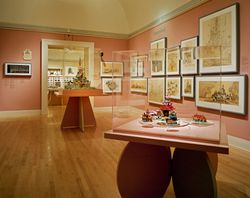
Disneyland, avec ses colonies en Floride, au Japon et en France, est un symbole clé de la culture américaine. Très célébré, Disneyland a également été attaqué en tant qu’incarnation suprême de la société de consommation, de la simulation et du pastiche, de la confusion entre la réalité et les images des médias de masse. L’architecture du réconfort : Les parcs thématiques(...)
Disneyland, avec ses colonies en Floride, au Japon et en France, est un symbole clé de la culture américaine. Très célébré, Disneyland a également été attaqué en tant qu’incarnation suprême de la société de consommation, de la simulation et du pastiche, de la confusion entre la réalité et les images des médias de masse. L’architecture du réconfort : Les parcs thématiques(...)
Localisation:
Salles principales
Salles principales
Date:
17 juin 1997 au 28 septembre 1997
17 juin 1997 au 28 septembre 1997
Titre:
L'architecture du réconfort : les parcs thématiques de Disney
Actions:
Description:
Disneyland, avec ses colonies en Floride, au Japon et en France, est un symbole clé de la culture américaine. Très célébré, Disneyland a également été attaqué en tant qu’incarnation suprême de la société de consommation, de la simulation et du pastiche, de la confusion entre la réalité et les images des médias de masse. L’architecture du réconfort : Les parcs thématiques(...)
L'architecture du réconfort : les parcs thématiques de Disney
Actions:
Description:
Disneyland, avec ses colonies en Floride, au Japon et en France, est un symbole clé de la culture américaine. Très célébré, Disneyland a également été attaqué en tant qu’incarnation suprême de la société de consommation, de la simulation et du pastiche, de la confusion entre la réalité et les images des médias de masse. L’architecture du réconfort : Les parcs thématiques(...)
Classification:
expositions
expositions
Date:
17 juin 1997 au
28 septembre 1997
17 juin 1997 au
28 septembre 1997
Localisation:
Salles principales
Salles principales
Numéro de référence:
ARCH241198
Description:
Includes timecode logsheet in Japanese.
ARCH241198
Description:
Includes timecode logsheet in Japanese.
Personnes et institutions:
Date:
1992-06-09
1992-06-09
Titre:
Video recording of a speech by Bin Kimura at Anywhere Conference and Journal
Actions:
ARCH241198
Description:
Includes timecode logsheet in Japanese.
Video recording of a speech by Bin Kimura at Anywhere Conference and Journal
Actions:
ARCH241198
Description:
Includes timecode logsheet in Japanese.
Date:
1992-06-09
1992-06-09
Personnes et institutions:
Numéro de référence:
ARCH241199
Description:
Includes timecode logsheet in Japanese.
ARCH241199
Description:
Includes timecode logsheet in Japanese.
Personnes et institutions:
Date:
1992-06-09
1992-06-09
Titre:
Video recording of a speech by Jacques Derrida at Anywhere Conference and Journal
Actions:
ARCH241199
Description:
Includes timecode logsheet in Japanese.
Video recording of a speech by Jacques Derrida at Anywhere Conference and Journal
Actions:
ARCH241199
Description:
Includes timecode logsheet in Japanese.
Date:
1992-06-09
1992-06-09
Personnes et institutions:
Quantité:
19 file
19 file
Numéro de référence:
DR1999:0365
Description:
videocassettes include: - 2/18/86 - Texas A + M University "Arrows, Eros and More Errors" - 12/1/88 - P.E. Higgins Renovation - June 1988 - Philip Johnson at OSU - 8/17/89 - P.E./students/faculty/staff DAAP building - August 1989 - "Banyoles al Costat de Barcelona" in English - November 16th, 1989 - Wexner Symposium - OSU - Fall 1989 - All School Lecture Series Rice University, Texas - 7/19/90 - Greater Columbus Convention Center Promo video - 3/1/90 - DAAP students/faculty/staff meeting - March 1990 - lecture University of Tennessee - July 1st - 4th 1990 - Tokyo, Koizumi - 11/1/91 - P.E./Columbia - 3/25/91 - Columbia University lecture - 4/15/92 - Pacific Design Center, Westweek 1992 "Venice Biennale" - 8/19/92 & 11/4/92 - T.V. news monitoring service - August 1992 - Nunotani on Japan T.V. - June 24th, 1993 - Philip Johnson on Charlie Rose - October 25th, 1993 - DAAP - preground breaking lecture -Peter Eisenman, Penn State April 7, 1994
DR1999:0365
Description:
videocassettes include: - 2/18/86 - Texas A + M University "Arrows, Eros and More Errors" - 12/1/88 - P.E. Higgins Renovation - June 1988 - Philip Johnson at OSU - 8/17/89 - P.E./students/faculty/staff DAAP building - August 1989 - "Banyoles al Costat de Barcelona" in English - November 16th, 1989 - Wexner Symposium - OSU - Fall 1989 - All School Lecture Series Rice University, Texas - 7/19/90 - Greater Columbus Convention Center Promo video - 3/1/90 - DAAP students/faculty/staff meeting - March 1990 - lecture University of Tennessee - July 1st - 4th 1990 - Tokyo, Koizumi - 11/1/91 - P.E./Columbia - 3/25/91 - Columbia University lecture - 4/15/92 - Pacific Design Center, Westweek 1992 "Venice Biennale" - 8/19/92 & 11/4/92 - T.V. news monitoring service - August 1992 - Nunotani on Japan T.V. - June 24th, 1993 - Philip Johnson on Charlie Rose - October 25th, 1993 - DAAP - preground breaking lecture -Peter Eisenman, Penn State April 7, 1994
Personnes et institutions:
Titre:
Lectures for Wexner Center, Columbus, Ohio and Banyoles Olympic Hotel, Banyoles, Spain
Actions:
DR1999:0365
Description:
videocassettes include: - 2/18/86 - Texas A + M University "Arrows, Eros and More Errors" - 12/1/88 - P.E. Higgins Renovation - June 1988 - Philip Johnson at OSU - 8/17/89 - P.E./students/faculty/staff DAAP building - August 1989 - "Banyoles al Costat de Barcelona" in English - November 16th, 1989 - Wexner Symposium - OSU - Fall 1989 - All School Lecture Series Rice University, Texas - 7/19/90 - Greater Columbus Convention Center Promo video - 3/1/90 - DAAP students/faculty/staff meeting - March 1990 - lecture University of Tennessee - July 1st - 4th 1990 - Tokyo, Koizumi - 11/1/91 - P.E./Columbia - 3/25/91 - Columbia University lecture - 4/15/92 - Pacific Design Center, Westweek 1992 "Venice Biennale" - 8/19/92 & 11/4/92 - T.V. news monitoring service - August 1992 - Nunotani on Japan T.V. - June 24th, 1993 - Philip Johnson on Charlie Rose - October 25th, 1993 - DAAP - preground breaking lecture -Peter Eisenman, Penn State April 7, 1994
Lectures for Wexner Center, Columbus, Ohio and Banyoles Olympic Hotel, Banyoles, Spain
Actions:
DR1999:0365
Description:
videocassettes include: - 2/18/86 - Texas A + M University "Arrows, Eros and More Errors" - 12/1/88 - P.E. Higgins Renovation - June 1988 - Philip Johnson at OSU - 8/17/89 - P.E./students/faculty/staff DAAP building - August 1989 - "Banyoles al Costat de Barcelona" in English - November 16th, 1989 - Wexner Symposium - OSU - Fall 1989 - All School Lecture Series Rice University, Texas - 7/19/90 - Greater Columbus Convention Center Promo video - 3/1/90 - DAAP students/faculty/staff meeting - March 1990 - lecture University of Tennessee - July 1st - 4th 1990 - Tokyo, Koizumi - 11/1/91 - P.E./Columbia - 3/25/91 - Columbia University lecture - 4/15/92 - Pacific Design Center, Westweek 1992 "Venice Biennale" - 8/19/92 & 11/4/92 - T.V. news monitoring service - August 1992 - Nunotani on Japan T.V. - June 24th, 1993 - Philip Johnson on Charlie Rose - October 25th, 1993 - DAAP - preground breaking lecture -Peter Eisenman, Penn State April 7, 1994
Quantité:
19 file
19 file
Personnes et institutions:
Classification:
documents textuels
Quantité:
7 file
documents textuels
Quantité:
7 file
Numéro de référence:
ARCH241243
Description:
Introduction, CCD (Cynthia Davidson) A Guide to Anywhere Japanese Transcriptions Japanese questions and letters Anywhere Letters Presentation and Discussion Transcripts (3 files)
ARCH241243
Description:
Introduction, CCD (Cynthia Davidson) A Guide to Anywhere Japanese Transcriptions Japanese questions and letters Anywhere Letters Presentation and Discussion Transcripts (3 files)
Personnes et institutions:
Date:
1992
1992
Titre:
A Guide to Anywhere
Actions:
ARCH241243
Description:
Introduction, CCD (Cynthia Davidson) A Guide to Anywhere Japanese Transcriptions Japanese questions and letters Anywhere Letters Presentation and Discussion Transcripts (3 files)
A Guide to Anywhere
Actions:
ARCH241243
Description:
Introduction, CCD (Cynthia Davidson) A Guide to Anywhere Japanese Transcriptions Japanese questions and letters Anywhere Letters Presentation and Discussion Transcripts (3 files)
Classification:
documents textuels
Quantité:
7 file
documents textuels
Quantité:
7 file
Date:
1992
1992
Personnes et institutions:
Classification:
documents textuels
documents textuels
Numéro de référence:
AP197.S3.010
Description:
The box is comprised of correspondence for the year 2001. The box documents Frampton’s career as Ware professor at the Graduate School of Architecture, Planning and Preservation, Columbia University and his related professional activities. Correspondence in this box includes: offers of teaching positions; requests to write articles, reviews, books and recommendation letters; invitations to teach, present, or attend at lectures/symposiums/conferences; and requests to serve on juries. Throughout this period, Frampton corresponded with various universities, architects, professors, publishers, and editors of various publications such as: Yale University; Université de Montréal; Patkau Architects; Tadao Ando; Manuel de Sola-Morales; the Royal Institute of British Architects; ArquitecturaViva; Maki and Associates; and Kisho Kurakawa. Included in this box is correspondence with Oscar Niemeyer and Alvaro Siza in relation to the Michael Blackwood production on both these architects; correspondence about the Aga Khan Award; correspondence about writing an introduction essay to the publication Tadao Ando Light & Water; and correspondence about Frampton’s trip and itinerary to Japan and to meet with Tadao Ando.
AP197.S3.010
Description:
The box is comprised of correspondence for the year 2001. The box documents Frampton’s career as Ware professor at the Graduate School of Architecture, Planning and Preservation, Columbia University and his related professional activities. Correspondence in this box includes: offers of teaching positions; requests to write articles, reviews, books and recommendation letters; invitations to teach, present, or attend at lectures/symposiums/conferences; and requests to serve on juries. Throughout this period, Frampton corresponded with various universities, architects, professors, publishers, and editors of various publications such as: Yale University; Université de Montréal; Patkau Architects; Tadao Ando; Manuel de Sola-Morales; the Royal Institute of British Architects; ArquitecturaViva; Maki and Associates; and Kisho Kurakawa. Included in this box is correspondence with Oscar Niemeyer and Alvaro Siza in relation to the Michael Blackwood production on both these architects; correspondence about the Aga Khan Award; correspondence about writing an introduction essay to the publication Tadao Ando Light & Water; and correspondence about Frampton’s trip and itinerary to Japan and to meet with Tadao Ando.
Personnes et institutions:
Date:
2001
2001
Titre:
Personal and professional correspondence from 2001
Actions:
AP197.S3.010
Description:
The box is comprised of correspondence for the year 2001. The box documents Frampton’s career as Ware professor at the Graduate School of Architecture, Planning and Preservation, Columbia University and his related professional activities. Correspondence in this box includes: offers of teaching positions; requests to write articles, reviews, books and recommendation letters; invitations to teach, present, or attend at lectures/symposiums/conferences; and requests to serve on juries. Throughout this period, Frampton corresponded with various universities, architects, professors, publishers, and editors of various publications such as: Yale University; Université de Montréal; Patkau Architects; Tadao Ando; Manuel de Sola-Morales; the Royal Institute of British Architects; ArquitecturaViva; Maki and Associates; and Kisho Kurakawa. Included in this box is correspondence with Oscar Niemeyer and Alvaro Siza in relation to the Michael Blackwood production on both these architects; correspondence about the Aga Khan Award; correspondence about writing an introduction essay to the publication Tadao Ando Light & Water; and correspondence about Frampton’s trip and itinerary to Japan and to meet with Tadao Ando.
Personal and professional correspondence from 2001
Actions:
AP197.S3.010
Description:
The box is comprised of correspondence for the year 2001. The box documents Frampton’s career as Ware professor at the Graduate School of Architecture, Planning and Preservation, Columbia University and his related professional activities. Correspondence in this box includes: offers of teaching positions; requests to write articles, reviews, books and recommendation letters; invitations to teach, present, or attend at lectures/symposiums/conferences; and requests to serve on juries. Throughout this period, Frampton corresponded with various universities, architects, professors, publishers, and editors of various publications such as: Yale University; Université de Montréal; Patkau Architects; Tadao Ando; Manuel de Sola-Morales; the Royal Institute of British Architects; ArquitecturaViva; Maki and Associates; and Kisho Kurakawa. Included in this box is correspondence with Oscar Niemeyer and Alvaro Siza in relation to the Michael Blackwood production on both these architects; correspondence about the Aga Khan Award; correspondence about writing an introduction essay to the publication Tadao Ando Light & Water; and correspondence about Frampton’s trip and itinerary to Japan and to meet with Tadao Ando.
Classification:
documents textuels
documents textuels
Date:
2001
2001
Personnes et institutions:
Niveau de description archivistique:
Projet
Projet
Titre:
Weavers' Studio
Weavers' Studio
Numéro de référence:
AP182.S1.2013.D2
Description:
File documents a project for a live-work complex in Dehradun, Uttarakhand, India. Commissioned by Chiaki Maki, a Japanese textile weaver who spends a portion of each year in northern India, this complex in the Himalayan foothills provides working space for a studio of twenty-five weavers from all over the country. It is conceived as a cyclical, self-sufficient farm system that integrates all aspects of the weaving process, from cultivating indigo and henna for dye to gathering silk from cocoons and spinning wool. The site had been previously cultivated, and the design works with the landscape's existing pathways, terraces, and mango groves. Nearly all construction materials--including the brick, limestone, and phosphorescent river stones used in the foundation and to treat the brick walls--come from within a two-kilometre radius of the studio. The five-sided building occupying the centre of the site is the workshop itself, which frames a courtyard for gatherings (of weavers, children, etc.). A gallery in the complex displays the weavers' work, while the linear buildings accommodate motorcycle parking, a guest house, and residences for Maki and her partner as well as the site caretaker and his family. File contains artefacts and realia, models, photographs, drawings, site reports, and a video recording.
AP182.S1.2013.D2
Description:
File documents a project for a live-work complex in Dehradun, Uttarakhand, India. Commissioned by Chiaki Maki, a Japanese textile weaver who spends a portion of each year in northern India, this complex in the Himalayan foothills provides working space for a studio of twenty-five weavers from all over the country. It is conceived as a cyclical, self-sufficient farm system that integrates all aspects of the weaving process, from cultivating indigo and henna for dye to gathering silk from cocoons and spinning wool. The site had been previously cultivated, and the design works with the landscape's existing pathways, terraces, and mango groves. Nearly all construction materials--including the brick, limestone, and phosphorescent river stones used in the foundation and to treat the brick walls--come from within a two-kilometre radius of the studio. The five-sided building occupying the centre of the site is the workshop itself, which frames a courtyard for gatherings (of weavers, children, etc.). A gallery in the complex displays the weavers' work, while the linear buildings accommodate motorcycle parking, a guest house, and residences for Maki and her partner as well as the site caretaker and his family. File contains artefacts and realia, models, photographs, drawings, site reports, and a video recording.
Personnes et institutions:
Date:
2012-2015
2012-2015
Titre:
Weavers' Studio
Actions:
AP182.S1.2013.D2
Description:
File documents a project for a live-work complex in Dehradun, Uttarakhand, India. Commissioned by Chiaki Maki, a Japanese textile weaver who spends a portion of each year in northern India, this complex in the Himalayan foothills provides working space for a studio of twenty-five weavers from all over the country. It is conceived as a cyclical, self-sufficient farm system that integrates all aspects of the weaving process, from cultivating indigo and henna for dye to gathering silk from cocoons and spinning wool. The site had been previously cultivated, and the design works with the landscape's existing pathways, terraces, and mango groves. Nearly all construction materials--including the brick, limestone, and phosphorescent river stones used in the foundation and to treat the brick walls--come from within a two-kilometre radius of the studio. The five-sided building occupying the centre of the site is the workshop itself, which frames a courtyard for gatherings (of weavers, children, etc.). A gallery in the complex displays the weavers' work, while the linear buildings accommodate motorcycle parking, a guest house, and residences for Maki and her partner as well as the site caretaker and his family. File contains artefacts and realia, models, photographs, drawings, site reports, and a video recording.
Weavers' Studio
Actions:
AP182.S1.2013.D2
Description:
File documents a project for a live-work complex in Dehradun, Uttarakhand, India. Commissioned by Chiaki Maki, a Japanese textile weaver who spends a portion of each year in northern India, this complex in the Himalayan foothills provides working space for a studio of twenty-five weavers from all over the country. It is conceived as a cyclical, self-sufficient farm system that integrates all aspects of the weaving process, from cultivating indigo and henna for dye to gathering silk from cocoons and spinning wool. The site had been previously cultivated, and the design works with the landscape's existing pathways, terraces, and mango groves. Nearly all construction materials--including the brick, limestone, and phosphorescent river stones used in the foundation and to treat the brick walls--come from within a two-kilometre radius of the studio. The five-sided building occupying the centre of the site is the workshop itself, which frames a courtyard for gatherings (of weavers, children, etc.). A gallery in the complex displays the weavers' work, while the linear buildings accommodate motorcycle parking, a guest house, and residences for Maki and her partner as well as the site caretaker and his family. File contains artefacts and realia, models, photographs, drawings, site reports, and a video recording.
Niveau de description archivistique:
Project
Project
Date:
2012-2015
2012-2015
Personnes et institutions:
Classification:
archives
Niveau de description archivistique:
Fonds
archives
Niveau de description archivistique:
Fonds
Titre:
Fonds Anyone Corporation
Fonds Anyone Corporation
Numéro de référence:
AP116
Résumé:
The Anyone Corporation fonds is composed primarily of textual and photographic records which document the activities of the Anyone Corporation over the course of its planned ten year life span from 1990 to 2001. The non-profit, New York City based organization, was founded by Peter Eisenman, Cynthia Davidson, Arata Isozaki, and Ignasi de Solà-Morales Rubio in order to stimulate a fruitful dialogue between architecture and general culture at the dawn of the new millennium. To this end, ANY (acronym for Architecture New York) organised ten international conferences and numerous public seminars, as well as publishing conference journals, a series of architecture related books, and ANY, a theory driven bi-monthly magazine.
AP116
Résumé:
The Anyone Corporation fonds is composed primarily of textual and photographic records which document the activities of the Anyone Corporation over the course of its planned ten year life span from 1990 to 2001. The non-profit, New York City based organization, was founded by Peter Eisenman, Cynthia Davidson, Arata Isozaki, and Ignasi de Solà-Morales Rubio in order to stimulate a fruitful dialogue between architecture and general culture at the dawn of the new millennium. To this end, ANY (acronym for Architecture New York) organised ten international conferences and numerous public seminars, as well as publishing conference journals, a series of architecture related books, and ANY, a theory driven bi-monthly magazine.
Personnes et institutions:
Date:
1990-2001
1990-2001
Titre:
Fonds Anyone Corporation
Actions:
AP116
Résumé:
The Anyone Corporation fonds is composed primarily of textual and photographic records which document the activities of the Anyone Corporation over the course of its planned ten year life span from 1990 to 2001. The non-profit, New York City based organization, was founded by Peter Eisenman, Cynthia Davidson, Arata Isozaki, and Ignasi de Solà-Morales Rubio in order to stimulate a fruitful dialogue between architecture and general culture at the dawn of the new millennium. To this end, ANY (acronym for Architecture New York) organised ten international conferences and numerous public seminars, as well as publishing conference journals, a series of architecture related books, and ANY, a theory driven bi-monthly magazine.
Fonds Anyone Corporation
Actions:
AP116
Résumé:
The Anyone Corporation fonds is composed primarily of textual and photographic records which document the activities of the Anyone Corporation over the course of its planned ten year life span from 1990 to 2001. The non-profit, New York City based organization, was founded by Peter Eisenman, Cynthia Davidson, Arata Isozaki, and Ignasi de Solà-Morales Rubio in order to stimulate a fruitful dialogue between architecture and general culture at the dawn of the new millennium. To this end, ANY (acronym for Architecture New York) organised ten international conferences and numerous public seminars, as well as publishing conference journals, a series of architecture related books, and ANY, a theory driven bi-monthly magazine.
Classification:
archives
Niveau de description archivistique:
Fonds
archives
Niveau de description archivistique:
Fonds
Date:
1990-2001
1990-2001
Personnes et institutions:
Classification:
événements
événements
Description:
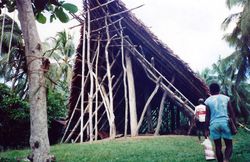
David Howes, professeur d’anthropologie et directeur du Centre for Sensory Studies de l’université Concordia, aborde de façon sensorielle l’étude d’une série d’intérieurs qu’il a observés au cours de ses recherches anthropologiques et archivistiques. Elles vont de la maison des hommes dans la région du fleuve Sepik en Papouasie-Nouvelle-Guinée à lintérieur exclusivement(...)
David Howes, professeur d’anthropologie et directeur du Centre for Sensory Studies de l’université Concordia, aborde de façon sensorielle l’étude d’une série d’intérieurs qu’il a observés au cours de ses recherches anthropologiques et archivistiques. Elles vont de la maison des hommes dans la région du fleuve Sepik en Papouasie-Nouvelle-Guinée à lintérieur exclusivement(...)
Localisation:
Maison Shaughnessy
Maison Shaughnessy
Date:
26 février 2015 , 18h
26 février 2015 , 18h
Titre:
L’intérieur sensoriel
Actions:
Description:
David Howes, professeur d’anthropologie et directeur du Centre for Sensory Studies de l’université Concordia, aborde de façon sensorielle l’étude d’une série d’intérieurs qu’il a observés au cours de ses recherches anthropologiques et archivistiques. Elles vont de la maison des hommes dans la région du fleuve Sepik en Papouasie-Nouvelle-Guinée à lintérieur exclusivement(...)
L’intérieur sensoriel
Actions:
Description:
David Howes, professeur d’anthropologie et directeur du Centre for Sensory Studies de l’université Concordia, aborde de façon sensorielle l’étude d’une série d’intérieurs qu’il a observés au cours de ses recherches anthropologiques et archivistiques. Elles vont de la maison des hommes dans la région du fleuve Sepik en Papouasie-Nouvelle-Guinée à lintérieur exclusivement(...)
Classification:
événements
événements
Date:
26 février 2015
18h
26 février 2015
18h
Localisation:
Maison Shaughnessy
Maison Shaughnessy


