


12611 Résultats
Classification:
événements
événements
Description:
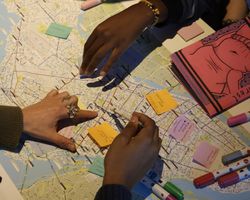
Joignez-vous à nous pour le lancement de Révéler la ville, un projet collectif de zines réalisé par les participant·es du Collectif des jeunes du CCA. Au cours du dernier mois, les participant·es âgés de 15 à 18 ans ont pris part à des ateliers de recherche, de rédaction et d’édition dirigés par l’équipe des programmes publics, avec la collaboration de l’équipe des(...)
Joignez-vous à nous pour le lancement de Révéler la ville, un projet collectif de zines réalisé par les participant·es du Collectif des jeunes du CCA. Au cours du dernier mois, les participant·es âgés de 15 à 18 ans ont pris part à des ateliers de recherche, de rédaction et d’édition dirigés par l’équipe des programmes publics, avec la collaboration de l’équipe des(...)
Date:
27 novembre 2025, 17h30 à 18h30
27 novembre 2025, 17h30 à 18h30
Titre:
Lancement de zine : Révéler la ville / Collectif des jeunes du CCA
Actions:
Description:
Joignez-vous à nous pour le lancement de Révéler la ville, un projet collectif de zines réalisé par les participant·es du Collectif des jeunes du CCA. Au cours du dernier mois, les participant·es âgés de 15 à 18 ans ont pris part à des ateliers de recherche, de rédaction et d’édition dirigés par l’équipe des programmes publics, avec la collaboration de l’équipe des(...)
Lancement de zine : Révéler la ville / Collectif des jeunes du CCA
Actions:
Description:
Joignez-vous à nous pour le lancement de Révéler la ville, un projet collectif de zines réalisé par les participant·es du Collectif des jeunes du CCA. Au cours du dernier mois, les participant·es âgés de 15 à 18 ans ont pris part à des ateliers de recherche, de rédaction et d’édition dirigés par l’équipe des programmes publics, avec la collaboration de l’équipe des(...)
Classification:
événements
événements
Date:
27 novembre 2025
17h30 à 18h30
27 novembre 2025
17h30 à 18h30
Classification:
photographies
photographies
Actions:
Numéro de référence:
PH1980:0048.02:012
Description:
- Suzanne K. Williamson indicates that this photograph shows the western walls and a tower as well as structures "M" and "N" of the Crusader Castle in Marqab, Ottoman Empire (now Syria) (Oct. 1986). Further research should include verification of this information and identification of the source(s) from which it was obtained. The cardinal point indicated in the title, also provided by Williamson, is presumed to be correct.
PH1980:0048.02:012
Description:
- Suzanne K. Williamson indicates that this photograph shows the western walls and a tower as well as structures "M" and "N" of the Crusader Castle in Marqab, Ottoman Empire (now Syria) (Oct. 1986). Further research should include verification of this information and identification of the source(s) from which it was obtained. The cardinal point indicated in the title, also provided by Williamson, is presumed to be correct.
Personnes et institutions:
Sujet:
architecture, militaire
architecture, militaire
Date:
1859-1860
1859-1860
Titre:
View of the ruins of the Crusader Castle showing the western walls, Marqab, Ottoman Empire (now in Syria)
Actions:
PH1980:0048.02:012
Description:
- Suzanne K. Williamson indicates that this photograph shows the western walls and a tower as well as structures "M" and "N" of the Crusader Castle in Marqab, Ottoman Empire (now Syria) (Oct. 1986). Further research should include verification of this information and identification of the source(s) from which it was obtained. The cardinal point indicated in the title, also provided by Williamson, is presumed to be correct.
View of the ruins of the Crusader Castle showing the western walls, Marqab, Ottoman Empire (now in Syria)
Actions:
PH1980:0048.02:012
Description:
- Suzanne K. Williamson indicates that this photograph shows the western walls and a tower as well as structures "M" and "N" of the Crusader Castle in Marqab, Ottoman Empire (now Syria) (Oct. 1986). Further research should include verification of this information and identification of the source(s) from which it was obtained. The cardinal point indicated in the title, also provided by Williamson, is presumed to be correct.
Classification:
photographies
photographies
Date:
1859-1860
1859-1860
Personnes et institutions:
Sujet:
architecture, militaire
architecture, militaire
Niveau de description archivistique:
Sous-série
Sous-série
Numéro de référence:
AP207.S2.SS12
Description:
The sub-series documents the exhibition "Giardini Parchi Paesaggi. L’avventura delle idee in Toscana dall’Ottocento a oggi", curated by Pettena and presented at the Uffizi Gallery in Florence, in 1998. The exhibition focuses on landscape architecture and its historical development by using the example of Tuscany from the 19th century to present day. "This set out to illustrate a historical course of development that also entailed the consideration and reevaluation [sic] of the landscape that results from human activity [...] and extended as far as an analysis and presentation of the most modern theme parks of sculpture and environmental art." [1] The sub-series contains research material, such as photocopies of articles and books on landscape architecture, and reference photographs. The sub-series also contains texts for the publication and correspondence related to the planning of the exhibition. Source: [1] Gianni Pettena website, https://www.giannipettena.it/english/exhibitions/settings/ (last accessed 29 January 2020).
AP207.S2.SS12
Description:
The sub-series documents the exhibition "Giardini Parchi Paesaggi. L’avventura delle idee in Toscana dall’Ottocento a oggi", curated by Pettena and presented at the Uffizi Gallery in Florence, in 1998. The exhibition focuses on landscape architecture and its historical development by using the example of Tuscany from the 19th century to present day. "This set out to illustrate a historical course of development that also entailed the consideration and reevaluation [sic] of the landscape that results from human activity [...] and extended as far as an analysis and presentation of the most modern theme parks of sculpture and environmental art." [1] The sub-series contains research material, such as photocopies of articles and books on landscape architecture, and reference photographs. The sub-series also contains texts for the publication and correspondence related to the planning of the exhibition. Source: [1] Gianni Pettena website, https://www.giannipettena.it/english/exhibitions/settings/ (last accessed 29 January 2020).
Personnes et institutions:
Date:
circa 1998
circa 1998
Titre:
Giardini Parchi Paesaggi. L’avventura delle idee in Toscana dall’Ottocento a oggi (1998)
Actions:
AP207.S2.SS12
Description:
The sub-series documents the exhibition "Giardini Parchi Paesaggi. L’avventura delle idee in Toscana dall’Ottocento a oggi", curated by Pettena and presented at the Uffizi Gallery in Florence, in 1998. The exhibition focuses on landscape architecture and its historical development by using the example of Tuscany from the 19th century to present day. "This set out to illustrate a historical course of development that also entailed the consideration and reevaluation [sic] of the landscape that results from human activity [...] and extended as far as an analysis and presentation of the most modern theme parks of sculpture and environmental art." [1] The sub-series contains research material, such as photocopies of articles and books on landscape architecture, and reference photographs. The sub-series also contains texts for the publication and correspondence related to the planning of the exhibition. Source: [1] Gianni Pettena website, https://www.giannipettena.it/english/exhibitions/settings/ (last accessed 29 January 2020).
Giardini Parchi Paesaggi. L’avventura delle idee in Toscana dall’Ottocento a oggi (1998)
Actions:
AP207.S2.SS12
Description:
The sub-series documents the exhibition "Giardini Parchi Paesaggi. L’avventura delle idee in Toscana dall’Ottocento a oggi", curated by Pettena and presented at the Uffizi Gallery in Florence, in 1998. The exhibition focuses on landscape architecture and its historical development by using the example of Tuscany from the 19th century to present day. "This set out to illustrate a historical course of development that also entailed the consideration and reevaluation [sic] of the landscape that results from human activity [...] and extended as far as an analysis and presentation of the most modern theme parks of sculpture and environmental art." [1] The sub-series contains research material, such as photocopies of articles and books on landscape architecture, and reference photographs. The sub-series also contains texts for the publication and correspondence related to the planning of the exhibition. Source: [1] Gianni Pettena website, https://www.giannipettena.it/english/exhibitions/settings/ (last accessed 29 January 2020).
Niveau de description archivistique:
Subseries
Subseries
Date:
circa 1998
circa 1998
Personnes et institutions:
Niveau de description archivistique:
Projet
Projet
Numéro de référence:
AP018.S1.1974.PR25
Description:
This project series documents the design and construction of the Royal Ottawa Regional Rehabilitation Centre in Ottawa, Ontario from 1974-1981. The office identified the project number as 7432. The Ottawa Heath Sciences Complex, a vast hospital network encompassing institutions across the city, hired Parkin Architects Planners in 1971 to design and construct University of Ottawa buildings within the network. These campus buildings were located in the Alta Vista neighbourhood and referred to as the Health Sciences Centre. This project consists of one building in that complex, the Royal Ottawa Regional Rehabilitation Centre. The distinction between these names should be noted when viewing the materials. The two-storey rehabilitation centre was constructed directly beside the Ottawa Health Sciences Building, another hospital in the network built by Parkin (see project series AP018.S1.1974.PR01 in this fonds). The proposal conceived a 145,000 square foot hospital with 77 in-patient beds. The design included space for patient accommodation, teaching, research, administrative activities, patient care and treatment, and a concession area. Patients at the hospital would range from those with severe brain injuries, to amputees, to those with rheumatic diseases. The building was carefully designed to accommodate the specialized needs of the patients. The hospital design also included a swimming pool, sports areas, and spaces for other leisure activities thought to aid in the rehabilitation process. The project is recorded through construction photographs, drawings, and textual materials dating from 1971-1983. The textual records include correspondence, specifications, schedules, contract data, conference reports and minutes, inspection reports, predesign notes, consultancy records, financial documents, change orders, supplementary instructions, research, and deficiency lists. The majority of these textual records deal with the hospital's construction, rather than design. Most drawings are reprographic copies of detail drawings and can be found within the textual records. Box AP018.S1.1974.PR25.002 contains an index to the textual records, which was created by the office.
AP018.S1.1974.PR25
Description:
This project series documents the design and construction of the Royal Ottawa Regional Rehabilitation Centre in Ottawa, Ontario from 1974-1981. The office identified the project number as 7432. The Ottawa Heath Sciences Complex, a vast hospital network encompassing institutions across the city, hired Parkin Architects Planners in 1971 to design and construct University of Ottawa buildings within the network. These campus buildings were located in the Alta Vista neighbourhood and referred to as the Health Sciences Centre. This project consists of one building in that complex, the Royal Ottawa Regional Rehabilitation Centre. The distinction between these names should be noted when viewing the materials. The two-storey rehabilitation centre was constructed directly beside the Ottawa Health Sciences Building, another hospital in the network built by Parkin (see project series AP018.S1.1974.PR01 in this fonds). The proposal conceived a 145,000 square foot hospital with 77 in-patient beds. The design included space for patient accommodation, teaching, research, administrative activities, patient care and treatment, and a concession area. Patients at the hospital would range from those with severe brain injuries, to amputees, to those with rheumatic diseases. The building was carefully designed to accommodate the specialized needs of the patients. The hospital design also included a swimming pool, sports areas, and spaces for other leisure activities thought to aid in the rehabilitation process. The project is recorded through construction photographs, drawings, and textual materials dating from 1971-1983. The textual records include correspondence, specifications, schedules, contract data, conference reports and minutes, inspection reports, predesign notes, consultancy records, financial documents, change orders, supplementary instructions, research, and deficiency lists. The majority of these textual records deal with the hospital's construction, rather than design. Most drawings are reprographic copies of detail drawings and can be found within the textual records. Box AP018.S1.1974.PR25.002 contains an index to the textual records, which was created by the office.
Personnes et institutions:
Date:
1971-1983
1971-1983
Titre:
Royal Ottawa Regional Rehabilitation Centre, Ottawa Health Sciences Centre, Ottawa, Ontario (1974)
Actions:
AP018.S1.1974.PR25
Description:
This project series documents the design and construction of the Royal Ottawa Regional Rehabilitation Centre in Ottawa, Ontario from 1974-1981. The office identified the project number as 7432. The Ottawa Heath Sciences Complex, a vast hospital network encompassing institutions across the city, hired Parkin Architects Planners in 1971 to design and construct University of Ottawa buildings within the network. These campus buildings were located in the Alta Vista neighbourhood and referred to as the Health Sciences Centre. This project consists of one building in that complex, the Royal Ottawa Regional Rehabilitation Centre. The distinction between these names should be noted when viewing the materials. The two-storey rehabilitation centre was constructed directly beside the Ottawa Health Sciences Building, another hospital in the network built by Parkin (see project series AP018.S1.1974.PR01 in this fonds). The proposal conceived a 145,000 square foot hospital with 77 in-patient beds. The design included space for patient accommodation, teaching, research, administrative activities, patient care and treatment, and a concession area. Patients at the hospital would range from those with severe brain injuries, to amputees, to those with rheumatic diseases. The building was carefully designed to accommodate the specialized needs of the patients. The hospital design also included a swimming pool, sports areas, and spaces for other leisure activities thought to aid in the rehabilitation process. The project is recorded through construction photographs, drawings, and textual materials dating from 1971-1983. The textual records include correspondence, specifications, schedules, contract data, conference reports and minutes, inspection reports, predesign notes, consultancy records, financial documents, change orders, supplementary instructions, research, and deficiency lists. The majority of these textual records deal with the hospital's construction, rather than design. Most drawings are reprographic copies of detail drawings and can be found within the textual records. Box AP018.S1.1974.PR25.002 contains an index to the textual records, which was created by the office.
Royal Ottawa Regional Rehabilitation Centre, Ottawa Health Sciences Centre, Ottawa, Ontario (1974)
Actions:
AP018.S1.1974.PR25
Description:
This project series documents the design and construction of the Royal Ottawa Regional Rehabilitation Centre in Ottawa, Ontario from 1974-1981. The office identified the project number as 7432. The Ottawa Heath Sciences Complex, a vast hospital network encompassing institutions across the city, hired Parkin Architects Planners in 1971 to design and construct University of Ottawa buildings within the network. These campus buildings were located in the Alta Vista neighbourhood and referred to as the Health Sciences Centre. This project consists of one building in that complex, the Royal Ottawa Regional Rehabilitation Centre. The distinction between these names should be noted when viewing the materials. The two-storey rehabilitation centre was constructed directly beside the Ottawa Health Sciences Building, another hospital in the network built by Parkin (see project series AP018.S1.1974.PR01 in this fonds). The proposal conceived a 145,000 square foot hospital with 77 in-patient beds. The design included space for patient accommodation, teaching, research, administrative activities, patient care and treatment, and a concession area. Patients at the hospital would range from those with severe brain injuries, to amputees, to those with rheumatic diseases. The building was carefully designed to accommodate the specialized needs of the patients. The hospital design also included a swimming pool, sports areas, and spaces for other leisure activities thought to aid in the rehabilitation process. The project is recorded through construction photographs, drawings, and textual materials dating from 1971-1983. The textual records include correspondence, specifications, schedules, contract data, conference reports and minutes, inspection reports, predesign notes, consultancy records, financial documents, change orders, supplementary instructions, research, and deficiency lists. The majority of these textual records deal with the hospital's construction, rather than design. Most drawings are reprographic copies of detail drawings and can be found within the textual records. Box AP018.S1.1974.PR25.002 contains an index to the textual records, which was created by the office.
Niveau de description archivistique:
Project
Project
Date:
1971-1983
1971-1983
Personnes et institutions:
Classification:
documents textuels
Quantité:
16 file
documents textuels
Quantité:
16 file
Titre:
Fund Raising
Fund Raising
Numéro de référence:
ARCH241941
Description:
Fund Raising Guggenheim Fund Raising Efforts / Any New York State Council of the Arts AJ / Letter / [Charles] Gwathmey Shimizu [Corporation] Contract Shimizu Correspondence Any - Graham Foundation Graham Foundation - Anyplace Grant Foundation Research Advanta - Any - Braun [National Endowment for the Arts] NEA Grant [Illinois Institute of Technology] IIT Grants (Any 24) Any - Academic Supporters Grant Literature 97-98 Finances Computer and Fax Info; Other equipment
ARCH241941
Description:
Fund Raising Guggenheim Fund Raising Efforts / Any New York State Council of the Arts AJ / Letter / [Charles] Gwathmey Shimizu [Corporation] Contract Shimizu Correspondence Any - Graham Foundation Graham Foundation - Anyplace Grant Foundation Research Advanta - Any - Braun [National Endowment for the Arts] NEA Grant [Illinois Institute of Technology] IIT Grants (Any 24) Any - Academic Supporters Grant Literature 97-98 Finances Computer and Fax Info; Other equipment
Personnes et institutions:
Date:
1991-2000
1991-2000
Titre:
Fund Raising
Actions:
ARCH241941
Description:
Fund Raising Guggenheim Fund Raising Efforts / Any New York State Council of the Arts AJ / Letter / [Charles] Gwathmey Shimizu [Corporation] Contract Shimizu Correspondence Any - Graham Foundation Graham Foundation - Anyplace Grant Foundation Research Advanta - Any - Braun [National Endowment for the Arts] NEA Grant [Illinois Institute of Technology] IIT Grants (Any 24) Any - Academic Supporters Grant Literature 97-98 Finances Computer and Fax Info; Other equipment
Fund Raising
Actions:
ARCH241941
Description:
Fund Raising Guggenheim Fund Raising Efforts / Any New York State Council of the Arts AJ / Letter / [Charles] Gwathmey Shimizu [Corporation] Contract Shimizu Correspondence Any - Graham Foundation Graham Foundation - Anyplace Grant Foundation Research Advanta - Any - Braun [National Endowment for the Arts] NEA Grant [Illinois Institute of Technology] IIT Grants (Any 24) Any - Academic Supporters Grant Literature 97-98 Finances Computer and Fax Info; Other equipment
Classification:
documents textuels
Quantité:
16 file
documents textuels
Quantité:
16 file
Date:
1991-2000
1991-2000
Personnes et institutions:
Niveau de description archivistique:
Projet
Projet
Numéro de référence:
AP207.S1.1992.PR01
Description:
The project series documents Pettena's preliminary study and proposal for the restoration and conversion of the Forte Inglese, a Napoleonic era fortification in Portoferraio, Italy. Pettena worked on this project in 1992. The restauration and conversion project for the fort was not realized because of changes in the local government. The proposal consisted of converting the fort into an exhibition space, an auditorium and a public garden "by simply adding spaces that utilized volumes created underground or at the rear: thus the respect of the preexisting context was assured, from the viewpoint of history as well as landscape." [1] The project series contains a preliminary study report by Pettena, sketches, site plans, floor plans, elevations, and sections for Pettena's proposal, reference photographs, research material, such as photocopies of publications on the fort and reference plans for the historic building. Source: [1] Gianni Pettena website, https://www.giannipettena.it/italiano/opere-1/arch-study-for-the-restoration-1992/ (last accessed 21 January 2020).
AP207.S1.1992.PR01
Description:
The project series documents Pettena's preliminary study and proposal for the restoration and conversion of the Forte Inglese, a Napoleonic era fortification in Portoferraio, Italy. Pettena worked on this project in 1992. The restauration and conversion project for the fort was not realized because of changes in the local government. The proposal consisted of converting the fort into an exhibition space, an auditorium and a public garden "by simply adding spaces that utilized volumes created underground or at the rear: thus the respect of the preexisting context was assured, from the viewpoint of history as well as landscape." [1] The project series contains a preliminary study report by Pettena, sketches, site plans, floor plans, elevations, and sections for Pettena's proposal, reference photographs, research material, such as photocopies of publications on the fort and reference plans for the historic building. Source: [1] Gianni Pettena website, https://www.giannipettena.it/italiano/opere-1/arch-study-for-the-restoration-1992/ (last accessed 21 January 2020).
Personnes et institutions:
Date:
1992-2015
1992-2015
Titre:
Studio Per Il Restauro E La Riconversione Del Forte Inglese [Study for the Restoration and Conversion of the Fort Inglese], Portoferraio, Italy (1992)
Actions:
AP207.S1.1992.PR01
Description:
The project series documents Pettena's preliminary study and proposal for the restoration and conversion of the Forte Inglese, a Napoleonic era fortification in Portoferraio, Italy. Pettena worked on this project in 1992. The restauration and conversion project for the fort was not realized because of changes in the local government. The proposal consisted of converting the fort into an exhibition space, an auditorium and a public garden "by simply adding spaces that utilized volumes created underground or at the rear: thus the respect of the preexisting context was assured, from the viewpoint of history as well as landscape." [1] The project series contains a preliminary study report by Pettena, sketches, site plans, floor plans, elevations, and sections for Pettena's proposal, reference photographs, research material, such as photocopies of publications on the fort and reference plans for the historic building. Source: [1] Gianni Pettena website, https://www.giannipettena.it/italiano/opere-1/arch-study-for-the-restoration-1992/ (last accessed 21 January 2020).
Studio Per Il Restauro E La Riconversione Del Forte Inglese [Study for the Restoration and Conversion of the Fort Inglese], Portoferraio, Italy (1992)
Actions:
AP207.S1.1992.PR01
Description:
The project series documents Pettena's preliminary study and proposal for the restoration and conversion of the Forte Inglese, a Napoleonic era fortification in Portoferraio, Italy. Pettena worked on this project in 1992. The restauration and conversion project for the fort was not realized because of changes in the local government. The proposal consisted of converting the fort into an exhibition space, an auditorium and a public garden "by simply adding spaces that utilized volumes created underground or at the rear: thus the respect of the preexisting context was assured, from the viewpoint of history as well as landscape." [1] The project series contains a preliminary study report by Pettena, sketches, site plans, floor plans, elevations, and sections for Pettena's proposal, reference photographs, research material, such as photocopies of publications on the fort and reference plans for the historic building. Source: [1] Gianni Pettena website, https://www.giannipettena.it/italiano/opere-1/arch-study-for-the-restoration-1992/ (last accessed 21 January 2020).
Niveau de description archivistique:
Project
Project
Date:
1992-2015
1992-2015
Personnes et institutions:
Niveau de description archivistique:
Projet
Projet
Numéro de référence:
AP075.S1.1957.PR02
Description:
This project series documents Cornelia Hahn Oberlander's playground project for University Hill Elementary School on Chancellor Boulevard, in University Endowment Lands, Vancouver, British Columbia. Oberlander worked on this project in 1957. She developed her concept for the school play area with a participatory method, asking the children to draw the plants they would like to have included in the landscaping. It consisted in a paved area right at the back of the school, tennis courts to be used for wheeltoys and movable equipment for play, and large lawn area for free play with quiet area to sit. The lawn area includes a play space with logs, rocks, climbing trees and a loghouse situated at the southwest corner of the playground. The project series contains landscape sketches, design development drawings, landscape plan for the proposal playground, and a presentation panel. The project is also documented through textual records, such as correspondence, research material and press clipping on the school.
AP075.S1.1957.PR02
Description:
This project series documents Cornelia Hahn Oberlander's playground project for University Hill Elementary School on Chancellor Boulevard, in University Endowment Lands, Vancouver, British Columbia. Oberlander worked on this project in 1957. She developed her concept for the school play area with a participatory method, asking the children to draw the plants they would like to have included in the landscaping. It consisted in a paved area right at the back of the school, tennis courts to be used for wheeltoys and movable equipment for play, and large lawn area for free play with quiet area to sit. The lawn area includes a play space with logs, rocks, climbing trees and a loghouse situated at the southwest corner of the playground. The project series contains landscape sketches, design development drawings, landscape plan for the proposal playground, and a presentation panel. The project is also documented through textual records, such as correspondence, research material and press clipping on the school.
Personnes et institutions:
Date:
1957
1957
Titre:
University Hill Elementary School, Vancouver, British Columbia (1957)
Actions:
AP075.S1.1957.PR02
Description:
This project series documents Cornelia Hahn Oberlander's playground project for University Hill Elementary School on Chancellor Boulevard, in University Endowment Lands, Vancouver, British Columbia. Oberlander worked on this project in 1957. She developed her concept for the school play area with a participatory method, asking the children to draw the plants they would like to have included in the landscaping. It consisted in a paved area right at the back of the school, tennis courts to be used for wheeltoys and movable equipment for play, and large lawn area for free play with quiet area to sit. The lawn area includes a play space with logs, rocks, climbing trees and a loghouse situated at the southwest corner of the playground. The project series contains landscape sketches, design development drawings, landscape plan for the proposal playground, and a presentation panel. The project is also documented through textual records, such as correspondence, research material and press clipping on the school.
University Hill Elementary School, Vancouver, British Columbia (1957)
Actions:
AP075.S1.1957.PR02
Description:
This project series documents Cornelia Hahn Oberlander's playground project for University Hill Elementary School on Chancellor Boulevard, in University Endowment Lands, Vancouver, British Columbia. Oberlander worked on this project in 1957. She developed her concept for the school play area with a participatory method, asking the children to draw the plants they would like to have included in the landscaping. It consisted in a paved area right at the back of the school, tennis courts to be used for wheeltoys and movable equipment for play, and large lawn area for free play with quiet area to sit. The lawn area includes a play space with logs, rocks, climbing trees and a loghouse situated at the southwest corner of the playground. The project series contains landscape sketches, design development drawings, landscape plan for the proposal playground, and a presentation panel. The project is also documented through textual records, such as correspondence, research material and press clipping on the school.
Niveau de description archivistique:
Project
Project
Date:
1957
1957
Personnes et institutions:
Classification:
documents textuels
documents textuels
Numéro de référence:
AP075.S3.SS2.151
Description:
This box contains professional and correspondence, organized in chronological order, from 2002-2008. This correspondence contains chiefly letters related to participation to publishing in landscape architecture publications, correspondence related to nominations and awards received by Oberlander, requests to serve on juries, correspondence with schools of architecture and landscape architects associations, about membership or attendance to events. It also comprises correspondence related to research and involvement in sustainable development.
AP075.S3.SS2.151
Description:
This box contains professional and correspondence, organized in chronological order, from 2002-2008. This correspondence contains chiefly letters related to participation to publishing in landscape architecture publications, correspondence related to nominations and awards received by Oberlander, requests to serve on juries, correspondence with schools of architecture and landscape architects associations, about membership or attendance to events. It also comprises correspondence related to research and involvement in sustainable development.
Personnes et institutions:
Date:
2001-2008
2001-2008
Titre:
Professional correspondence from 2002-2008
Actions:
AP075.S3.SS2.151
Description:
This box contains professional and correspondence, organized in chronological order, from 2002-2008. This correspondence contains chiefly letters related to participation to publishing in landscape architecture publications, correspondence related to nominations and awards received by Oberlander, requests to serve on juries, correspondence with schools of architecture and landscape architects associations, about membership or attendance to events. It also comprises correspondence related to research and involvement in sustainable development.
Professional correspondence from 2002-2008
Actions:
AP075.S3.SS2.151
Description:
This box contains professional and correspondence, organized in chronological order, from 2002-2008. This correspondence contains chiefly letters related to participation to publishing in landscape architecture publications, correspondence related to nominations and awards received by Oberlander, requests to serve on juries, correspondence with schools of architecture and landscape architects associations, about membership or attendance to events. It also comprises correspondence related to research and involvement in sustainable development.
Classification:
documents textuels
documents textuels
Date:
2001-2008
2001-2008
Personnes et institutions:
Classification:
événements
événements
Actions:
Description:
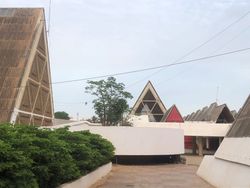
Ce séminaire proposé par Oulimata Gueye sintéresse aux projets qui vont se développer au milieu du 20e siècle et qui vont utiliser le continent africain comme laboratoire de recherches et d’innovations architecturales et urbanistiques. Il met aussi en lumière les initiatives locales qui vont avoir pour ambition une reprise en main par les Africain·es de leur vision de(...)
Ce séminaire proposé par Oulimata Gueye sintéresse aux projets qui vont se développer au milieu du 20e siècle et qui vont utiliser le continent africain comme laboratoire de recherches et d’innovations architecturales et urbanistiques. Il met aussi en lumière les initiatives locales qui vont avoir pour ambition une reprise en main par les Africain·es de leur vision de(...)
Date:
27 juillet 2023, 18h à 19h30
27 juillet 2023, 18h à 19h30
Titre:
UFA, Université des Futurs Africains 2. Cela importe, les histoires que nous utilisons pour raconter d’autres futurs
Actions:
Description:
Ce séminaire proposé par Oulimata Gueye sintéresse aux projets qui vont se développer au milieu du 20e siècle et qui vont utiliser le continent africain comme laboratoire de recherches et d’innovations architecturales et urbanistiques. Il met aussi en lumière les initiatives locales qui vont avoir pour ambition une reprise en main par les Africain·es de leur vision de(...)
UFA, Université des Futurs Africains 2. Cela importe, les histoires que nous utilisons pour raconter d’autres futurs
Actions:
Description:
Ce séminaire proposé par Oulimata Gueye sintéresse aux projets qui vont se développer au milieu du 20e siècle et qui vont utiliser le continent africain comme laboratoire de recherches et d’innovations architecturales et urbanistiques. Il met aussi en lumière les initiatives locales qui vont avoir pour ambition une reprise en main par les Africain·es de leur vision de(...)
Classification:
événements
événements
Date:
27 juillet 2023
18h à 19h30
27 juillet 2023
18h à 19h30
Niveau de description archivistique:
Projet
Projet
Numéro de référence:
AP174.S1.2006.D2
Description:
This project file documents unbuilt designs by Testa & Weiser for Strand Tower (2006), a continuation of the Carbon Tower research project. Various iterations of Strand Tower are woven out of carbon fibre according to a pattern algorithmically generated by the Weaver software. “The complexity of the final design is produced by arraying a basic fiber bundle of 114 strands; stacked 70 times for a total of approximately 8,000 strands.”[1] The file contains a large number of digital files which document the conceptual and design development of the project, fabrication of 3D printed physical models, and exhibition of the project at several museums and galleries, including the Museum of Contemporary Art, Los Angeles. The file also includes six physical models produced by the 3D printing firm 3D Systems. Sources: [1] "Strand Tower project and credit text" (AP174.S1.2006.D2.007). Testa & Weiser records, Centre Canadien d’Architecture/Canadian Centre for Architecture.
AP174.S1.2006.D2
Description:
This project file documents unbuilt designs by Testa & Weiser for Strand Tower (2006), a continuation of the Carbon Tower research project. Various iterations of Strand Tower are woven out of carbon fibre according to a pattern algorithmically generated by the Weaver software. “The complexity of the final design is produced by arraying a basic fiber bundle of 114 strands; stacked 70 times for a total of approximately 8,000 strands.”[1] The file contains a large number of digital files which document the conceptual and design development of the project, fabrication of 3D printed physical models, and exhibition of the project at several museums and galleries, including the Museum of Contemporary Art, Los Angeles. The file also includes six physical models produced by the 3D printing firm 3D Systems. Sources: [1] "Strand Tower project and credit text" (AP174.S1.2006.D2.007). Testa & Weiser records, Centre Canadien d’Architecture/Canadian Centre for Architecture.
Personnes et institutions:
Date:
2006-2014
2006-2014
Titre:
Strand Tower (2006)
Actions:
AP174.S1.2006.D2
Description:
This project file documents unbuilt designs by Testa & Weiser for Strand Tower (2006), a continuation of the Carbon Tower research project. Various iterations of Strand Tower are woven out of carbon fibre according to a pattern algorithmically generated by the Weaver software. “The complexity of the final design is produced by arraying a basic fiber bundle of 114 strands; stacked 70 times for a total of approximately 8,000 strands.”[1] The file contains a large number of digital files which document the conceptual and design development of the project, fabrication of 3D printed physical models, and exhibition of the project at several museums and galleries, including the Museum of Contemporary Art, Los Angeles. The file also includes six physical models produced by the 3D printing firm 3D Systems. Sources: [1] "Strand Tower project and credit text" (AP174.S1.2006.D2.007). Testa & Weiser records, Centre Canadien d’Architecture/Canadian Centre for Architecture.
Strand Tower (2006)
Actions:
AP174.S1.2006.D2
Description:
This project file documents unbuilt designs by Testa & Weiser for Strand Tower (2006), a continuation of the Carbon Tower research project. Various iterations of Strand Tower are woven out of carbon fibre according to a pattern algorithmically generated by the Weaver software. “The complexity of the final design is produced by arraying a basic fiber bundle of 114 strands; stacked 70 times for a total of approximately 8,000 strands.”[1] The file contains a large number of digital files which document the conceptual and design development of the project, fabrication of 3D printed physical models, and exhibition of the project at several museums and galleries, including the Museum of Contemporary Art, Los Angeles. The file also includes six physical models produced by the 3D printing firm 3D Systems. Sources: [1] "Strand Tower project and credit text" (AP174.S1.2006.D2.007). Testa & Weiser records, Centre Canadien d’Architecture/Canadian Centre for Architecture.
Niveau de description archivistique:
Project
Project
Date:
2006-2014
2006-2014
Personnes et institutions:


