


144 Résultats
Classification:
livres
livres

Titre:
Dafydd Jones: Screen time
Dafydd Jones: Screen time
Actions:
Prix:
$26.95
(disponible sur commande)
Résumé:
Dafydd Jones is recognized as one of the world's leading social photographers, which over the years has given him unique access to an extraordinary range of social events - from exclusive parties, to the races, to fashion shows, film festivals and debutantes balls• His keen eye, and an instinct for the absurd, has allowed him to capture the behaviour of people who are(...)
$26.95
(disponible sur commande)
Résumé:
Dafydd Jones is recognized as one of the world's leading social photographers, which over the years has given him unique access to an extraordinary range of social events - from exclusive parties, to the races, to fashion shows, film festivals and debutantes balls• His keen eye, and an instinct for the absurd, has allowed him to capture the behaviour of people who are(...)
Titre:
Dafydd Jones: Screen time
Actions:
Prix:
$26.95
(disponible sur commande)
Résumé:
Dafydd Jones is recognized as one of the world's leading social photographers, which over the years has given him unique access to an extraordinary range of social events - from exclusive parties, to the races, to fashion shows, film festivals and debutantes balls• His keen eye, and an instinct for the absurd, has allowed him to capture the behaviour of people who are either unaware of or indifferent to the camera. ''Screen time'' explores a variety of social situations, from the mundane to the exalted, and features celebrities, actors, models and even the occasional princess - all glued to their phonesAlmost everyone uses a smartphone, and most of us are addicted. In this book, photographer Dafydd Jones shows us just how pervasive our screen addiction has become. In almost every social situation, he shows how the smartphone has killed conversation and changed the way we look at the world. ''In the eighties and nineties,'' says Jones, ''when I photographed young people at parties or balls, I'd find them chatting each other up, or smooching in corners. Now I see them sneaking looks on their iPhones, checking on their Instagram feeds, or whatever it is they're hooked on. They hardly talk to each other, or make eye contact at all. And it's not just a generational thing - it afflicts the oldies too. Who knows what impact it's having in the bedroom. It's probably a race to see what will wipe out humanity first - global climate change or screen-induced sexual indifference.''
Dafydd Jones: Screen time
Actions:
Prix:
$26.95
(disponible sur commande)
Résumé:
Dafydd Jones is recognized as one of the world's leading social photographers, which over the years has given him unique access to an extraordinary range of social events - from exclusive parties, to the races, to fashion shows, film festivals and debutantes balls• His keen eye, and an instinct for the absurd, has allowed him to capture the behaviour of people who are either unaware of or indifferent to the camera. ''Screen time'' explores a variety of social situations, from the mundane to the exalted, and features celebrities, actors, models and even the occasional princess - all glued to their phonesAlmost everyone uses a smartphone, and most of us are addicted. In this book, photographer Dafydd Jones shows us just how pervasive our screen addiction has become. In almost every social situation, he shows how the smartphone has killed conversation and changed the way we look at the world. ''In the eighties and nineties,'' says Jones, ''when I photographed young people at parties or balls, I'd find them chatting each other up, or smooching in corners. Now I see them sneaking looks on their iPhones, checking on their Instagram feeds, or whatever it is they're hooked on. They hardly talk to each other, or make eye contact at all. And it's not just a generational thing - it afflicts the oldies too. Who knows what impact it's having in the bedroom. It's probably a race to see what will wipe out humanity first - global climate change or screen-induced sexual indifference.''
Classification:
livres
livres
Publication:
octobre 2019
octobre 2019
Sujet:
Monographies photo
Monographies photo
Classification:
livres
livres
Titre:
Phyllis Ma: Special nothing
Phyllis Ma: Special nothing
Actions:
Prix:
$65.00
(disponible sur commande)
Résumé:
In a supermarket in Berlin, wandering through aisle after aisle of processed meats, the artist Phyllis Ma conceived of Special Nothing, a collection of travel photos that take the form of still lifes. To Ma, ''special nothings'' are those everyday objects that, on the right day, or in the right moment, are sources of pure delight: a very hairy flower; a block of head(...)
$65.00
(disponible sur commande)
Résumé:
In a supermarket in Berlin, wandering through aisle after aisle of processed meats, the artist Phyllis Ma conceived of Special Nothing, a collection of travel photos that take the form of still lifes. To Ma, ''special nothings'' are those everyday objects that, on the right day, or in the right moment, are sources of pure delight: a very hairy flower; a block of head(...)
Titre:
Phyllis Ma: Special nothing
Actions:
Prix:
$65.00
(disponible sur commande)
Résumé:
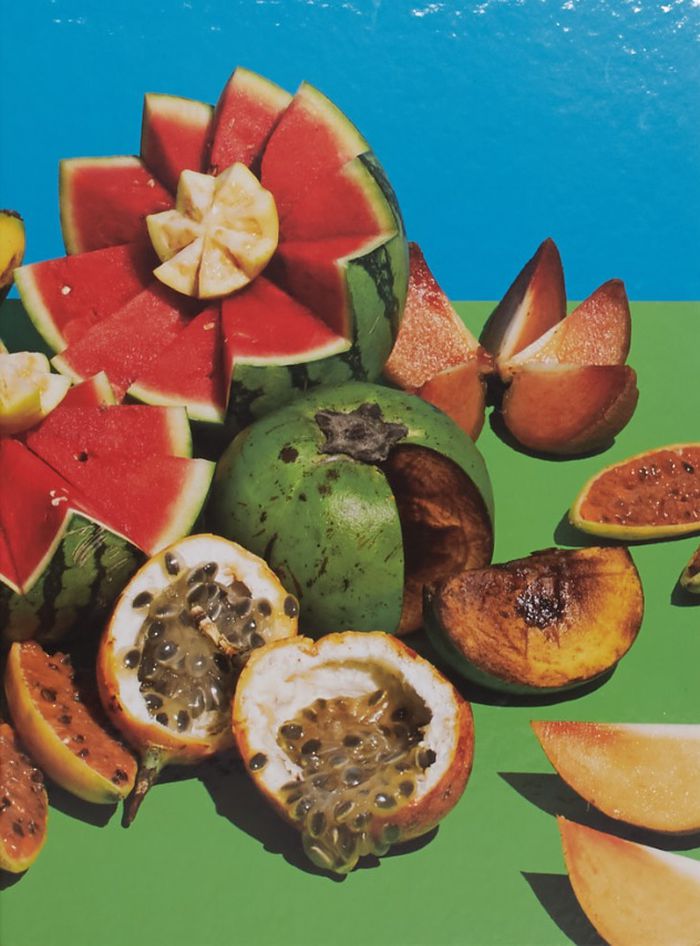
In a supermarket in Berlin, wandering through aisle after aisle of processed meats, the artist Phyllis Ma conceived of Special Nothing, a collection of travel photos that take the form of still lifes. To Ma, ''special nothings'' are those everyday objects that, on the right day, or in the right moment, are sources of pure delight: a very hairy flower; a block of head cheese the size and shape of an iPhone; a gherkin that looks especially perverse. If you pay attention, you can find these special nothings in your home or on your block, but we tend to be more attuned to them when we’re in an unfamiliar place. In a new country, the most mundane sights and tasks are often fascinating, difficult, and strange: doing laundry, boarding a bus, buying groceries. But it’s in supermarkets, with their promise of familiarity — the same bright overhead lighting, neat aisles, and row of checkout counters can be found the world over — where things become most uncanny. In today’s global economy, you can visit a supermarket in any major city and find many of the same goods and brands that you would in your hometown. And yet everything isn’t the same. Refrigeration practices differ, labels confuse. You are seduced by a product’s packaging, want to buy it badly, but then realize you’re not even sure what type of food it is. This feeling of wonderment is at the heart of Ma’s fantastical aesthetic. Created in Berlin, London, Tokyo, Mexico City and New York, ''Special nothing'' is a unique travel diary, a distillation of those moments when the commonplace and the strange coalesce, turn into something magical, surreal.
Phyllis Ma: Special nothing
Actions:
Prix:
$65.00
(disponible sur commande)
Résumé:
In a supermarket in Berlin, wandering through aisle after aisle of processed meats, the artist Phyllis Ma conceived of Special Nothing, a collection of travel photos that take the form of still lifes. To Ma, ''special nothings'' are those everyday objects that, on the right day, or in the right moment, are sources of pure delight: a very hairy flower; a block of head cheese the size and shape of an iPhone; a gherkin that looks especially perverse. If you pay attention, you can find these special nothings in your home or on your block, but we tend to be more attuned to them when we’re in an unfamiliar place. In a new country, the most mundane sights and tasks are often fascinating, difficult, and strange: doing laundry, boarding a bus, buying groceries. But it’s in supermarkets, with their promise of familiarity — the same bright overhead lighting, neat aisles, and row of checkout counters can be found the world over — where things become most uncanny. In today’s global economy, you can visit a supermarket in any major city and find many of the same goods and brands that you would in your hometown. And yet everything isn’t the same. Refrigeration practices differ, labels confuse. You are seduced by a product’s packaging, want to buy it badly, but then realize you’re not even sure what type of food it is. This feeling of wonderment is at the heart of Ma’s fantastical aesthetic. Created in Berlin, London, Tokyo, Mexico City and New York, ''Special nothing'' is a unique travel diary, a distillation of those moments when the commonplace and the strange coalesce, turn into something magical, surreal.
Classification:
livres
livres
Publication:
octobre 2020
octobre 2020
Sujet:
Monographies photo
Monographies photo
Classification:
livres
livres
Actions:
Prix:
$28.50
(disponible sur commande)
Résumé:
"Downtown America" was once the vibrant urban center romanticized in the Petula Clark song-a place where the lights were brighter, where people went to spend their money and forget their worries. But in the second half of the twentieth century, "downtown" became a shadow of its former self, succumbing to economic competition and commercial decline. And the death of Main(...)
$28.50
(disponible sur commande)
Résumé:
"Downtown America" was once the vibrant urban center romanticized in the Petula Clark song-a place where the lights were brighter, where people went to spend their money and forget their worries. But in the second half of the twentieth century, "downtown" became a shadow of its former self, succumbing to economic competition and commercial decline. And the death of Main(...)
Titre:
Downtown America : a history of the place and the people who made it
Actions:
Prix:
$28.50
(disponible sur commande)
Résumé:
"Downtown America" was once the vibrant urban center romanticized in the Petula Clark song-a place where the lights were brighter, where people went to spend their money and forget their worries. But in the second half of the twentieth century, "downtown" became a shadow of its former self, succumbing to economic competition and commercial decline. And the death of Main Streets across the country came to be seen as sadly inexorable, like the passing of an aged loved one. "Downtown America" cuts beneath the archetypal story of downtown's rise and fall and offers a new story of urban development in the United States. Moving beyond conventional narratives, Alison Isenberg shows that downtown's trajectory was not dictated by inevitable free market forces or natural life-and-death cycles. Instead, it was the product of human actors-the contested creation of retailers, developers, government leaders, architects, and planners, as well as political activists, consumers, civic clubs, real estate appraisers, even postcard artists. Throughout the twentieth century, conflicts over downtown's mundane conditions-what it should look like and who should walk its streets-pointed to fundamental disagreements over American values. Isenberg reveals how the innovative efforts of these participants infused Main Street with its resonant symbolism, while still accounting for pervasive uncertainty and fears of decline. Readers of this work will find anything but a story of inevitability. Even some of the downtown's darkest moments-the Great Depression's collapse in land values, the rioting and looting of the 1960s, or abandonment and vacancy during the 1970s-illuminate how core cultural values have animated and intertwined with economic investment to reinvent the physical form and social experiences of urban commerce. "Downtown America"-its empty stores, revitalized marketplaces, and romanticized past-will never look quite the same again.
Downtown America : a history of the place and the people who made it
Actions:
Prix:
$28.50
(disponible sur commande)
Résumé:
"Downtown America" was once the vibrant urban center romanticized in the Petula Clark song-a place where the lights were brighter, where people went to spend their money and forget their worries. But in the second half of the twentieth century, "downtown" became a shadow of its former self, succumbing to economic competition and commercial decline. And the death of Main Streets across the country came to be seen as sadly inexorable, like the passing of an aged loved one. "Downtown America" cuts beneath the archetypal story of downtown's rise and fall and offers a new story of urban development in the United States. Moving beyond conventional narratives, Alison Isenberg shows that downtown's trajectory was not dictated by inevitable free market forces or natural life-and-death cycles. Instead, it was the product of human actors-the contested creation of retailers, developers, government leaders, architects, and planners, as well as political activists, consumers, civic clubs, real estate appraisers, even postcard artists. Throughout the twentieth century, conflicts over downtown's mundane conditions-what it should look like and who should walk its streets-pointed to fundamental disagreements over American values. Isenberg reveals how the innovative efforts of these participants infused Main Street with its resonant symbolism, while still accounting for pervasive uncertainty and fears of decline. Readers of this work will find anything but a story of inevitability. Even some of the downtown's darkest moments-the Great Depression's collapse in land values, the rioting and looting of the 1960s, or abandonment and vacancy during the 1970s-illuminate how core cultural values have animated and intertwined with economic investment to reinvent the physical form and social experiences of urban commerce. "Downtown America"-its empty stores, revitalized marketplaces, and romanticized past-will never look quite the same again.
Classification:
livres
livres
Publication:
janvier 1900, Chicago, London
janvier 1900, Chicago, London
Sujet:
Théorie de l’urbanisme
Théorie de l’urbanisme
Classification:
livres
livres
Titre:
Abelardo Morell
Abelardo Morell
Actions:
Prix:
$29.95
(disponible sur commande)
Résumé:
Born in Havana, Abelardo Morell emigrated to the United States in 1962, where he took his first photography course after winning a scholarship to Bowdoin College - a small liberal arts college in Maine. There, Morell experimented with a variety of photographic techniques to create surreal effects that reflected his feelings of alienation as a Cuban living abroad. He(...)
$29.95
(disponible sur commande)
Résumé:
Born in Havana, Abelardo Morell emigrated to the United States in 1962, where he took his first photography course after winning a scholarship to Bowdoin College - a small liberal arts college in Maine. There, Morell experimented with a variety of photographic techniques to create surreal effects that reflected his feelings of alienation as a Cuban living abroad. He(...)
Titre:
Abelardo Morell
Actions:
Prix:
$29.95
(disponible sur commande)
Résumé:
Born in Havana, Abelardo Morell emigrated to the United States in 1962, where he took his first photography course after winning a scholarship to Bowdoin College - a small liberal arts college in Maine. There, Morell experimented with a variety of photographic techniques to create surreal effects that reflected his feelings of alienation as a Cuban living abroad. He proceeded to complete the graduate programme at Yale University, where he worked within the framework of Robert Frank and Garry Winogrand’s tradition of black-and-white street photography. In 1983, he began teaching at the Massachusetts College of Art in Boston, where he remains a professor. In 1986, Morell began a family and his fascination with his son engaged a new interest in this domestic environment as a subject. Morell began exploring the world from a child’s perspective – approaching mundane household objects in a new way that challenges the viewer’s perception of reality and how we see it. Morell transforms everyday objects by distorting angles and using extreme close-ups, and by exploiting perspectives that confuse and jar with our expectations. For instance, viewed from below a stack of toys blocks tower over the viewer; and a close-up of liquid pouring from a jar seems ominous and dramatic rather than an everyday occurrence. Similarly, Morell continued to transform the familiar into the surprising in his series of photographs of books, maps, American money and, more recently, a series that illustrates a new edition of Lewis Carroll’s Alice’s Adventures in Wonderland. This preoccupation with reality and illusion is most clearly realised in Morell’s series of camera obscura images. He takes an ordinary room and tapes black plastic over the windows, leaving only a 3/8" hole for the light. After setting up a large-format camera in the room and pointing it at the opposite wall, Morell leaves - a single exposure takes 8 hours. In the resulting images a scene of Brooklyn floats upside-down along the walls of his son’s bedroom; global landmarks like the Uffizi and the Eiffel Tower are projected across hotel rooms. In this, Morell’s best known and most ambitious series, the distinction between the outside and the domestic world is merged and his preoccupation with the mechanics of human vision and the principles of photography is illuminated.
Abelardo Morell
Actions:
Prix:
$29.95
(disponible sur commande)
Résumé:
Born in Havana, Abelardo Morell emigrated to the United States in 1962, where he took his first photography course after winning a scholarship to Bowdoin College - a small liberal arts college in Maine. There, Morell experimented with a variety of photographic techniques to create surreal effects that reflected his feelings of alienation as a Cuban living abroad. He proceeded to complete the graduate programme at Yale University, where he worked within the framework of Robert Frank and Garry Winogrand’s tradition of black-and-white street photography. In 1983, he began teaching at the Massachusetts College of Art in Boston, where he remains a professor. In 1986, Morell began a family and his fascination with his son engaged a new interest in this domestic environment as a subject. Morell began exploring the world from a child’s perspective – approaching mundane household objects in a new way that challenges the viewer’s perception of reality and how we see it. Morell transforms everyday objects by distorting angles and using extreme close-ups, and by exploiting perspectives that confuse and jar with our expectations. For instance, viewed from below a stack of toys blocks tower over the viewer; and a close-up of liquid pouring from a jar seems ominous and dramatic rather than an everyday occurrence. Similarly, Morell continued to transform the familiar into the surprising in his series of photographs of books, maps, American money and, more recently, a series that illustrates a new edition of Lewis Carroll’s Alice’s Adventures in Wonderland. This preoccupation with reality and illusion is most clearly realised in Morell’s series of camera obscura images. He takes an ordinary room and tapes black plastic over the windows, leaving only a 3/8" hole for the light. After setting up a large-format camera in the room and pointing it at the opposite wall, Morell leaves - a single exposure takes 8 hours. In the resulting images a scene of Brooklyn floats upside-down along the walls of his son’s bedroom; global landmarks like the Uffizi and the Eiffel Tower are projected across hotel rooms. In this, Morell’s best known and most ambitious series, the distinction between the outside and the domestic world is merged and his preoccupation with the mechanics of human vision and the principles of photography is illuminated.
Classification:
livres
livres
Publication:
septembre 2005, London, New York
septembre 2005, London, New York
Sujet:
Monographies photo
Monographies photo


