


1411 Résultats
Classification:
livres
livres
Titre:
The arts of the Mamluks in Egypt and Syria : evolution and impact / Doris Behrens-Abouseif (ed.).
The arts of the Mamluks in Egypt and Syria : evolution and impact / Doris Behrens-Abouseif (ed.).
Actions:
Exemplaires:
Description:
351 pages : illustrations (chiefly color), maps ; 25 cm.
Description:
351 pages : illustrations (chiefly color), maps ; 25 cm.
Auteur:
- Doris Behrens-Abouseif -- Nasser Rabbat -- Carine Juvin -- Rachel Ward -- Roland-Pierre Gayraud -- Rosalind A. Wade Haddon -- Jon Thompson -- Ellen Kenney -- Bernard O'Kane -- Julien Loiseau -- Mamdouh Mohamed Sakr -- Julia Gonnella -- J. M. Rogers -- Zeren Tanindi -- Mehmed Baha Tanman -- Doris Behrens-Abouseif.,
- Behrens-Abouseif, Doris.,
- University of London. School of Oriental and African Studies.
Sujet:
- Art, Mameluke Egypt.,
- Art, Mameluke Syria.,
- Architecture, Mameluke Egypt.,
- Architecture, Mameluke Syria.,
- Islamic art Egypt.,
- Islamic art Syria.,
- Architecture mamelouk.,
- Architecture mamelouk Syrie.,
- Art islamique Égypte.,
- Art islamique Syrie.,
- Architecture, Mameluke.,
- Art, Mameluke.,
- Islamic art.,
- Egypt History 1250-1517.,
- Syria History 1260-1516.,
- Égypte Histoire 1250-1517.,
- Syrie Histoire 1260-1516.,
- Egypt.,
- Syria.,
- History.
Publication:
Goettingen : V & R unipress : Bonn University Press, ©2012.
Goettingen : V & R unipress : Bonn University Press, ©2012.
Titre:
The arts of the Mamluks in Egypt and Syria : evolution and impact / Doris Behrens-Abouseif (ed.).
Actions:
Exemplaires:
Description:
351 pages : illustrations (chiefly color), maps ; 25 cm.
The arts of the Mamluks in Egypt and Syria : evolution and impact / Doris Behrens-Abouseif (ed.).
Actions:
Exemplaires:
Description:
351 pages : illustrations (chiefly color), maps ; 25 cm.
Classification:
livres
livres
Publication:
Goettingen : V & R unipress : Bonn University Press, ©2012.
Goettingen : V & R unipress : Bonn University Press, ©2012.
Auteur:
- Doris Behrens-Abouseif -- Nasser Rabbat -- Carine Juvin -- Rachel Ward -- Roland-Pierre Gayraud -- Rosalind A. Wade Haddon -- Jon Thompson -- Ellen Kenney -- Bernard O'Kane -- Julien Loiseau -- Mamdouh Mohamed Sakr -- Julia Gonnella -- J. M. Rogers -- Zeren Tanindi -- Mehmed Baha Tanman -- Doris Behrens-Abouseif.,
- Behrens-Abouseif, Doris.,
- University of London. School of Oriental and African Studies.
Sujet:
- Art, Mameluke Egypt.,
- Art, Mameluke Syria.,
- Architecture, Mameluke Egypt.,
- Architecture, Mameluke Syria.,
- Islamic art Egypt.,
- Islamic art Syria.,
- Architecture mamelouk.,
- Architecture mamelouk Syrie.,
- Art islamique Égypte.,
- Art islamique Syrie.,
- Architecture, Mameluke.,
- Art, Mameluke.,
- Islamic art.,
- Egypt History 1250-1517.,
- Syria History 1260-1516.,
- Égypte Histoire 1250-1517.,
- Syrie Histoire 1260-1516.,
- Egypt.,
- Syria.,
- History.
Classification:
livres
livres
Actions:
Exemplaires:
Description:
xv, 274 pages : illustrations ; 24 cm
Description:
xv, 274 pages : illustrations ; 24 cm
Auteur:
Sujet:
- Interior decoration Asian influences.,
- Interior decoration Psychological aspects.,
- Orientalism in art.,
- Décoration intérieure Aspect psychologique.,
- Orientalisme dans l'art.,
- ARCHITECTURE History General.,
- ARCHITECTURE Interior Design General.,
- ARCHITECTURE Criticism.,
- DESIGN History & Criticism.,
- Inredning psykologiska aspekter.,
- Asiatiska influenser.,
- Orientalism i konsten.,
- 1700-2015
Publication:
London : Bloomsbury, 2015.
London : Bloomsbury, 2015.
Titre:
Oriental interiors : design, identity, space / edited by John Potvin.
Actions:
Exemplaires:
Description:
xv, 274 pages : illustrations ; 24 cm
Oriental interiors : design, identity, space / edited by John Potvin.
Actions:
Exemplaires:
Description:
xv, 274 pages : illustrations ; 24 cm
Classification:
livres
livres
Publication:
London : Bloomsbury, 2015.
London : Bloomsbury, 2015.
Auteur:
Sujet:
- Interior decoration Asian influences.,
- Interior decoration Psychological aspects.,
- Orientalism in art.,
- Décoration intérieure Aspect psychologique.,
- Orientalisme dans l'art.,
- ARCHITECTURE History General.,
- ARCHITECTURE Interior Design General.,
- ARCHITECTURE Criticism.,
- DESIGN History & Criticism.,
- Inredning psykologiska aspekter.,
- Asiatiska influenser.,
- Orientalism i konsten.,
- 1700-2015
Classification:
livres
livres
Actions:
Prix:
$82.50
(disponible sur commande)
Résumé:
Room 4.1.3, an Australian landscape architecture firm, is renowned for producing some of the world's most finely tuned design work, striking a balance between theory and praxis, design and planning. The firm's projects engage visitors in a way that few public spaces have before. Founded in the 1990s by Richard Weller and Vladimir Sitta, Room 4.1.3 has received awards in(...)
$82.50
(disponible sur commande)
Résumé:
Room 4.1.3, an Australian landscape architecture firm, is renowned for producing some of the world's most finely tuned design work, striking a balance between theory and praxis, design and planning. The firm's projects engage visitors in a way that few public spaces have before. Founded in the 1990s by Richard Weller and Vladimir Sitta, Room 4.1.3 has received awards in(...)
Titre:
Room 4.1.3 : innovations in landscape architecture
Actions:
Prix:
$82.50
(disponible sur commande)
Résumé:
Room 4.1.3, an Australian landscape architecture firm, is renowned for producing some of the world's most finely tuned design work, striking a balance between theory and praxis, design and planning. The firm's projects engage visitors in a way that few public spaces have before. Founded in the 1990s by Richard Weller and Vladimir Sitta, Room 4.1.3 has received awards in more than forty open design competitions and is currently at work on a new city in Singapore, "fusion-polis." Adopting a new proscriptive approach, the designs exhibit a strong theoretical base that extends into cultural studies, art, geography, anthropology, and psychology. For example, the controversial Garden of Australian Dreams at the National Museum of Australia in Canberra is a veritable playground of meanings, invoking events of such varying cultural significance as the birth of Australia as a nation and the work of Jackson Pollock. This lavishly illustrated volume features many other award-winning Room 4.1.3 designs, including Namesti Miru in Prague, Potsdamer Platz in Berlin, and Gallipoli Peace Park in Turkey. Internationally renowned scholars and critics provide essays that contextualize each project and ultimately argue for the primacy and efficacy of poetic and subversive imagination in the formation of our environment. The works collected here, both built and unbuilt, will introduce Room 4.1.3's iconic style to an ever-widening audience in North America and open up an international discourse on new meanings of landscape architecture.
Room 4.1.3 : innovations in landscape architecture
Actions:
Prix:
$82.50
(disponible sur commande)
Résumé:
Room 4.1.3, an Australian landscape architecture firm, is renowned for producing some of the world's most finely tuned design work, striking a balance between theory and praxis, design and planning. The firm's projects engage visitors in a way that few public spaces have before. Founded in the 1990s by Richard Weller and Vladimir Sitta, Room 4.1.3 has received awards in more than forty open design competitions and is currently at work on a new city in Singapore, "fusion-polis." Adopting a new proscriptive approach, the designs exhibit a strong theoretical base that extends into cultural studies, art, geography, anthropology, and psychology. For example, the controversial Garden of Australian Dreams at the National Museum of Australia in Canberra is a veritable playground of meanings, invoking events of such varying cultural significance as the birth of Australia as a nation and the work of Jackson Pollock. This lavishly illustrated volume features many other award-winning Room 4.1.3 designs, including Namesti Miru in Prague, Potsdamer Platz in Berlin, and Gallipoli Peace Park in Turkey. Internationally renowned scholars and critics provide essays that contextualize each project and ultimately argue for the primacy and efficacy of poetic and subversive imagination in the formation of our environment. The works collected here, both built and unbuilt, will introduce Room 4.1.3's iconic style to an ever-widening audience in North America and open up an international discourse on new meanings of landscape architecture.
Classification:
livres
livres
Publication:
janvier 2005, Philadelphia
janvier 2005, Philadelphia
Sujet:
Jardins
Jardins
Classification:
livres
livres
Description:
1 online resource
Auteur:
- Sonia Leimer -- Michael Zinganel -- Emiliya Karaboeva -- Michael Zinganel, Michael Hieslmair, and Emiliya Karaboeva -- Michael Hieslmair -- Michael Zinganel and Michael Hieslmair -- Michael Zinganel, Michael Hieslmair, and Tarmo Pikner -- Tarmo Pikner -- Michael Zinganel -- Katarzyna Osiecka and Tatjana Vukosavljević -- Juan Moreno -- Michael Zinganel -- Johanna Kandl --,
- Blakeney, Peter,,
- Blimlinger, Eva,,
- Braidt, Andrea B.,,
- Cahm, Claire,,
- Denton, Jill,,
- Haagensen, Michael,,
- Hieslmair, Michael,,
- Kandl, Johanna,,
- Karaboeva, Emiliya,,
- Leimer, Sonia,,
- Merriman, Peter,,
- Moreno, Juan,,
- Osiecka, Katarzyna,,
- Pikner, Tarmo,,
- Riegler, Karin,,
- Schöffler, Christine,,
- Sharp, Tim,,
- Vukosavljević, Tatjana,,
- Weißenböck, Iris,,
- Zinganel, Michael,,
- Library Stack,,
- Surface (Frankfurt am Main/Berlin),,
- Library Stack.
Sujet:
- Architectural criticism.,
- Border security.,
- Capital movements.,
- Geopolitics.,
- Globalization.,
- Territory, National.,
- Critique d'architecture.,
- Sécurité frontalière.,
- Mouvements de capitaux.,
- Géopolitique.,
- Mondialisation.,
- Territoire national.,
- architectural criticism.,
- geopolitics.,
- globalism.,
- Culture and globalization,
- Discursive works.,
- Criticism, interpretation, etc.,
- Collections,
- Anthologies.
Publication:
[Place of publication not identified] : Academy of Fine Arts Vienna, 2019., [Place of publication not identified] : Sternberg Press, 2019.
[Place of publication not identified] : Academy of Fine Arts Vienna, 2019., [Place of publication not identified] : Sternberg Press, 2019.
Titre:
Stop and Go : Nodes of Transformation and Transition.
Actions:
Description:
1 online resource
Stop and Go : Nodes of Transformation and Transition.
Actions:
Description:
1 online resource
Classification:
livres
livres
Publication:
[Place of publication not identified] : Academy of Fine Arts Vienna, 2019., [Place of publication not identified] : Sternberg Press, 2019.
[Place of publication not identified] : Academy of Fine Arts Vienna, 2019., [Place of publication not identified] : Sternberg Press, 2019.
Auteur:
- Sonia Leimer -- Michael Zinganel -- Emiliya Karaboeva -- Michael Zinganel, Michael Hieslmair, and Emiliya Karaboeva -- Michael Hieslmair -- Michael Zinganel and Michael Hieslmair -- Michael Zinganel, Michael Hieslmair, and Tarmo Pikner -- Tarmo Pikner -- Michael Zinganel -- Katarzyna Osiecka and Tatjana Vukosavljević -- Juan Moreno -- Michael Zinganel -- Johanna Kandl --,
- Blakeney, Peter,,
- Blimlinger, Eva,,
- Braidt, Andrea B.,,
- Cahm, Claire,,
- Denton, Jill,,
- Haagensen, Michael,,
- Hieslmair, Michael,,
- Kandl, Johanna,,
- Karaboeva, Emiliya,,
- Leimer, Sonia,,
- Merriman, Peter,,
- Moreno, Juan,,
- Osiecka, Katarzyna,,
- Pikner, Tarmo,,
- Riegler, Karin,,
- Schöffler, Christine,,
- Sharp, Tim,,
- Vukosavljević, Tatjana,,
- Weißenböck, Iris,,
- Zinganel, Michael,,
- Library Stack,,
- Surface (Frankfurt am Main/Berlin),,
- Library Stack.
Sujet:
- Architectural criticism.,
- Border security.,
- Capital movements.,
- Geopolitics.,
- Globalization.,
- Territory, National.,
- Critique d'architecture.,
- Sécurité frontalière.,
- Mouvements de capitaux.,
- Géopolitique.,
- Mondialisation.,
- Territoire national.,
- architectural criticism.,
- geopolitics.,
- globalism.,
- Culture and globalization,
- Discursive works.,
- Criticism, interpretation, etc.,
- Collections,
- Anthologies.
Classification:
livres
livres
Actions:
Prix:
$75.00
(disponible sur commande)
Résumé:
This large-format monograph is the first to chronicle exclusively Shigeru Ban’s explorations in "paper architecture." Informed by a thorough and early interest in sustainable forms, his innovative practice pioneered the use of paper as a structural element in buildings. This book features permanent and temporary structures, ranging from one-off museums and exhibition(...)
$75.00
(disponible sur commande)
Résumé:
This large-format monograph is the first to chronicle exclusively Shigeru Ban’s explorations in "paper architecture." Informed by a thorough and early interest in sustainable forms, his innovative practice pioneered the use of paper as a structural element in buildings. This book features permanent and temporary structures, ranging from one-off museums and exhibition(...)
Titre:
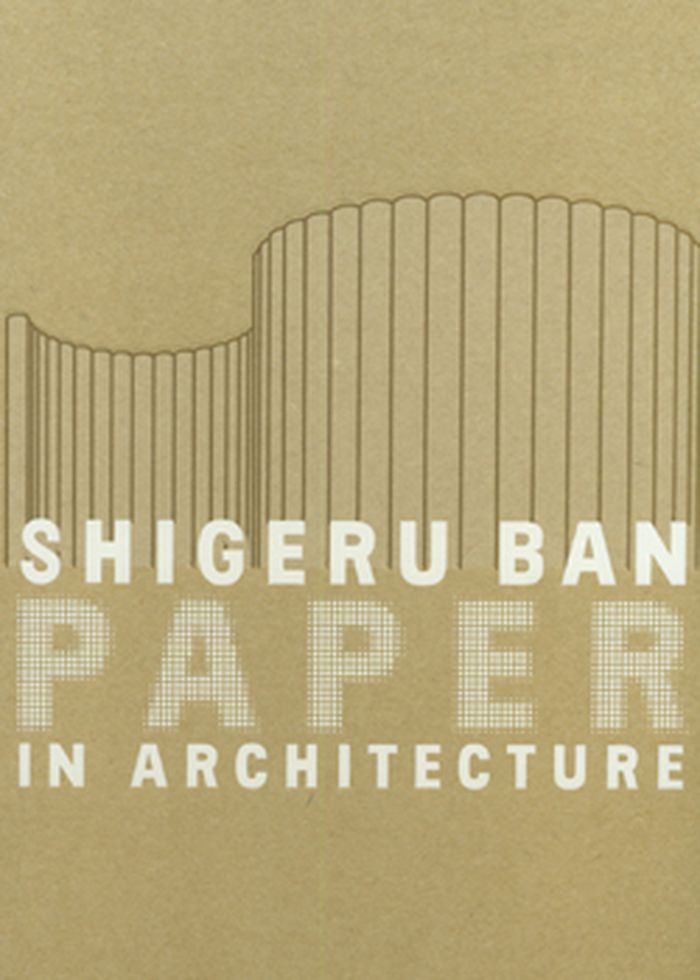
Shigeru Ban: paper in architecture
Actions:
Prix:
$75.00
(disponible sur commande)
Résumé:
This large-format monograph is the first to chronicle exclusively Shigeru Ban’s explorations in "paper architecture." Informed by a thorough and early interest in sustainable forms, his innovative practice pioneered the use of paper as a structural element in buildings. This book features permanent and temporary structures, ranging from one-off museums and exhibition spaces to emergency structures for communities displaced by natural and man-made catastrophes. The forty projects featured in the book showcase the variety of possible applications for paper and its derivative forms (cardboard, fiber-based composites). As flexible as it is adaptable, when used in tandem with other locally sourced building materials or post-industrial surplus (maritime shipping containers), Ban’s singular use of paper knowingly references paper’s traditional uses in vernacular Japanese buildings, and advances modern construction technology, reducing its environmental impact. A number of prominent works from the last decade are featured, including the Nomadic Museums built in New York, Los Angeles, and Tokyo, his work for the Centre Pompidou in Paris and Metz, the Papertainer Museum in Seoul, his pavilions for design and luxury brands like Louis Vuitton and Artek, as well as a number of landmark residences in Japan, Europe, and North America. Of particular focus will be Ban’s humanitarian work. Documented in a book for the first time are all the relief projects his studio has undertaken in the last two decades for the U.N. High Commission on Refugees. These include housing for tsunami victims in Sri Lanka and earthquake victims in Turkey and Japan, and emergency shelter for war-ravaged communities in Rwanda and the Congo.
Shigeru Ban: paper in architecture
Actions:
Prix:
$75.00
(disponible sur commande)
Résumé:
This large-format monograph is the first to chronicle exclusively Shigeru Ban’s explorations in "paper architecture." Informed by a thorough and early interest in sustainable forms, his innovative practice pioneered the use of paper as a structural element in buildings. This book features permanent and temporary structures, ranging from one-off museums and exhibition spaces to emergency structures for communities displaced by natural and man-made catastrophes. The forty projects featured in the book showcase the variety of possible applications for paper and its derivative forms (cardboard, fiber-based composites). As flexible as it is adaptable, when used in tandem with other locally sourced building materials or post-industrial surplus (maritime shipping containers), Ban’s singular use of paper knowingly references paper’s traditional uses in vernacular Japanese buildings, and advances modern construction technology, reducing its environmental impact. A number of prominent works from the last decade are featured, including the Nomadic Museums built in New York, Los Angeles, and Tokyo, his work for the Centre Pompidou in Paris and Metz, the Papertainer Museum in Seoul, his pavilions for design and luxury brands like Louis Vuitton and Artek, as well as a number of landmark residences in Japan, Europe, and North America. Of particular focus will be Ban’s humanitarian work. Documented in a book for the first time are all the relief projects his studio has undertaken in the last two decades for the U.N. High Commission on Refugees. These include housing for tsunami victims in Sri Lanka and earthquake victims in Turkey and Japan, and emergency shelter for war-ravaged communities in Rwanda and the Congo.
Classification:
livres
livres
Publication:
octobre 2009
octobre 2009
Sujet:
Architecture, monographies
Architecture, monographies
Classification:
livres
livres
Titre:
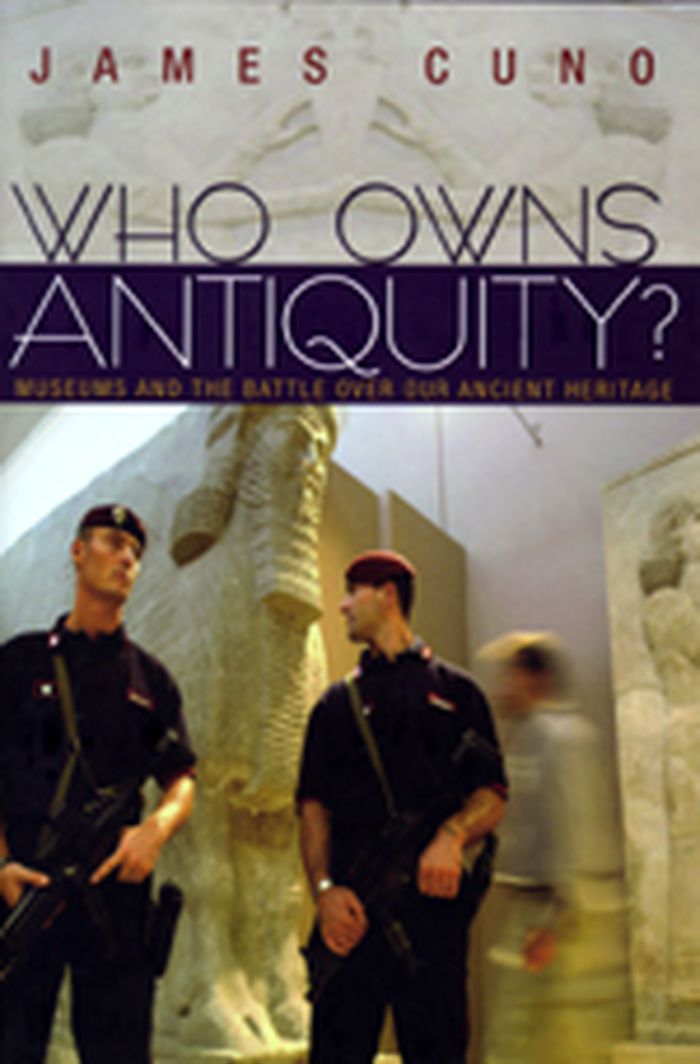
Who owns antiquity?
Who owns antiquity?
Actions:
Prix:
$24.95
(disponible sur commande)
Résumé:
Whether antiquities should be returned to the countries where they were found is one of the most urgent and controversial issues in the art world today, and it has pitted museums, private collectors, and dealers against source countries, archaeologists, and academics. Maintaining that the acquisition of undocumented antiquities by museums encourages the looting of(...)
$24.95
(disponible sur commande)
Résumé:
Whether antiquities should be returned to the countries where they were found is one of the most urgent and controversial issues in the art world today, and it has pitted museums, private collectors, and dealers against source countries, archaeologists, and academics. Maintaining that the acquisition of undocumented antiquities by museums encourages the looting of(...)
Titre:
Who owns antiquity?
Actions:
Prix:
$24.95
(disponible sur commande)
Résumé:
Whether antiquities should be returned to the countries where they were found is one of the most urgent and controversial issues in the art world today, and it has pitted museums, private collectors, and dealers against source countries, archaeologists, and academics. Maintaining that the acquisition of undocumented antiquities by museums encourages the looting of archaeological sites, countries such as Italy, Greece, Egypt, Turkey, and China have claimed ancient artifacts as state property, called for their return from museums around the world, and passed laws against their future export. But in Who Owns Antiquity?, one of the world's leading museum directors vigorously challenges this nationalistic position, arguing that it is damaging and often disingenuous. "Antiquities," James Cuno argues, "are the cultural property of all humankind," "evidence of the world's ancient past and not that of a particular modern nation. They comprise antiquity, and antiquity knows no borders." Cuno argues that nationalistic retention and reclamation policies impede common access to this common heritage and encourage a dubious and dangerous politicization of antiquities--and of culture itself. Antiquities need to be protected from looting but also from nationalistic identity politics. To do this, Cuno calls for measures to broaden rather than restrict international access to antiquities. He advocates restoration of the system under which source countries would share newly discovered artifacts in exchange for archaeological help, and he argues that museums should again be allowed reasonable ways to acquire undocumented antiquities. The first extended defense of the side of museums in the struggle over antiquities, Who Owns Antiquity? is sure to be as important as it is controversial.
Who owns antiquity?
Actions:
Prix:
$24.95
(disponible sur commande)
Résumé:
Whether antiquities should be returned to the countries where they were found is one of the most urgent and controversial issues in the art world today, and it has pitted museums, private collectors, and dealers against source countries, archaeologists, and academics. Maintaining that the acquisition of undocumented antiquities by museums encourages the looting of archaeological sites, countries such as Italy, Greece, Egypt, Turkey, and China have claimed ancient artifacts as state property, called for their return from museums around the world, and passed laws against their future export. But in Who Owns Antiquity?, one of the world's leading museum directors vigorously challenges this nationalistic position, arguing that it is damaging and often disingenuous. "Antiquities," James Cuno argues, "are the cultural property of all humankind," "evidence of the world's ancient past and not that of a particular modern nation. They comprise antiquity, and antiquity knows no borders." Cuno argues that nationalistic retention and reclamation policies impede common access to this common heritage and encourage a dubious and dangerous politicization of antiquities--and of culture itself. Antiquities need to be protected from looting but also from nationalistic identity politics. To do this, Cuno calls for measures to broaden rather than restrict international access to antiquities. He advocates restoration of the system under which source countries would share newly discovered artifacts in exchange for archaeological help, and he argues that museums should again be allowed reasonable ways to acquire undocumented antiquities. The first extended defense of the side of museums in the struggle over antiquities, Who Owns Antiquity? is sure to be as important as it is controversial.
Classification:
livres
livres
Publication:
mai 2008, Princeton, Oxford
mai 2008, Princeton, Oxford
Sujet:
Muséologie
Muséologie
Classification:
livres
livres

Actions:
Prix:
$77.95
(disponible sur commande)
Résumé:
In 1911, Le Corbusier (1887–1965), then twenty-four and still going by the name of Charles-Edouard Jeanneret, embarked on a grand tour of Eastern Europe, Turkey, and the Balkans with his friend, August Klipstein (1885–1951), an art history scholar. Together, the two visited Prague, Vienna, Budapest, Bulgaria and Serbia, Constantinople, Mount Athos, and Athens, as well as(...)
$77.95
(disponible sur commande)
Résumé:
In 1911, Le Corbusier (1887–1965), then twenty-four and still going by the name of Charles-Edouard Jeanneret, embarked on a grand tour of Eastern Europe, Turkey, and the Balkans with his friend, August Klipstein (1885–1951), an art history scholar. Together, the two visited Prague, Vienna, Budapest, Bulgaria and Serbia, Constantinople, Mount Athos, and Athens, as well as(...)
Titre:
Klip and Corb on the road: the dual diaries of August Klipstein and Le Corbusier, 1911
Actions:
Prix:
$77.95
(disponible sur commande)
Résumé:
In 1911, Le Corbusier (1887–1965), then twenty-four and still going by the name of Charles-Edouard Jeanneret, embarked on a grand tour of Eastern Europe, Turkey, and the Balkans with his friend, August Klipstein (1885–1951), an art history scholar. Together, the two visited Prague, Vienna, Budapest, Bulgaria and Serbia, Constantinople, Mount Athos, and Athens, as well as Rome and Pompeii. Both young men kept detailed notebooks throughout their journey with drawings, sketches, and photographs created en route. While Le Corbusier’s notebooks were published in 1966 as “Journey to the East” and went on to attain wide renown, Klipstein’s records of their travels have remained relatively unknown. In “Klip and Corb on the Road”, Ivan Žaknic´ brings the notebooks together for the first time to explore the fruitful creative symbiosis of this friendship and offer a new perspective on this seemingly well-known undertaking. The two men sometimes address the same events or subjects—a seasick passage, the bustle of a Turkish bazaar—and even copy one another’s work. But while Klipstein’s reflections tend to focus on research for his thesis, Jeanneret’s impressions evince a more romantic mindset inspired by his immediate surroundings. The book includes copious previously unpublished material, including the complete text of Klipstein’s diary, as well as that of the correspondence between Jeanneret and Klipstein. Reintroducing readers to Klipstein, who went on to a career as a prominent art dealer, it also offers insight into a key influence in the artistic development of Le Corbusier in his formative years. The book also includes an essay by British architectural historian Tim Benton.
Klip and Corb on the road: the dual diaries of August Klipstein and Le Corbusier, 1911
Actions:
Prix:
$77.95
(disponible sur commande)
Résumé:
In 1911, Le Corbusier (1887–1965), then twenty-four and still going by the name of Charles-Edouard Jeanneret, embarked on a grand tour of Eastern Europe, Turkey, and the Balkans with his friend, August Klipstein (1885–1951), an art history scholar. Together, the two visited Prague, Vienna, Budapest, Bulgaria and Serbia, Constantinople, Mount Athos, and Athens, as well as Rome and Pompeii. Both young men kept detailed notebooks throughout their journey with drawings, sketches, and photographs created en route. While Le Corbusier’s notebooks were published in 1966 as “Journey to the East” and went on to attain wide renown, Klipstein’s records of their travels have remained relatively unknown. In “Klip and Corb on the Road”, Ivan Žaknic´ brings the notebooks together for the first time to explore the fruitful creative symbiosis of this friendship and offer a new perspective on this seemingly well-known undertaking. The two men sometimes address the same events or subjects—a seasick passage, the bustle of a Turkish bazaar—and even copy one another’s work. But while Klipstein’s reflections tend to focus on research for his thesis, Jeanneret’s impressions evince a more romantic mindset inspired by his immediate surroundings. The book includes copious previously unpublished material, including the complete text of Klipstein’s diary, as well as that of the correspondence between Jeanneret and Klipstein. Reintroducing readers to Klipstein, who went on to a career as a prominent art dealer, it also offers insight into a key influence in the artistic development of Le Corbusier in his formative years. The book also includes an essay by British architectural historian Tim Benton.
Classification:
livres
livres
Publication:
janvier 2020
janvier 2020
Sujet:
Architecture, monographies
Architecture, monographies
Classification:
livres
livres
Actions:
Exemplaires:
Description:
xvi, 335 pages : illustrations (some color) ; 32 cm
Description:
xvi, 335 pages : illustrations (some color) ; 32 cm
Auteur:
- Boehm, Barbara Drake,,
- Holcomb, Melanie,,
- Metropolitan Museum of Art (New York, N.Y.),
Sujet:
- Jerusalem, ...,
- Art, Medieval Jerusalem Exhibitions.,
- Cultural pluralism Jerusalem Exhibitions.,
- East and West Exhibitions.,
- Art médiéval Jérusalem Expositions.,
- Diversité culturelle Jérusalem Expositions.,
- Antiquities,
- Art, Medieval,
- Civilization,
- Cultural pluralism,
- East and West,
- Kultur,
- Architektur,
- Jerusalem,
- Kunst,
- Christliche Kunst,
- Islamische Kunst,
- Jüdische Kunst,
- Art médiéval Jérusalem Catalogues d'exposition.,
- Art and Design.,
- Jerusalem Antiquities Exhibitions.,
- Jerusalem Civilization Exhibitions.,
- Jérusalem Antiquités Expositions.,
- Middle East Jerusalem,
- Jérusalem Antiquités Catalogues d'exposition.,
- Jérusalem.,
- Exhibition catalogues.,
- exhibition catalogs.,
- Exhibition catalogs,
- Catalogues d'exposition.
Publication:
New York : The Metropolitan Museum of Art, [2016], New Haven : Distributed by Yale University Press
New York : The Metropolitan Museum of Art, [2016], New Haven : Distributed by Yale University Press
Titre:
Jerusalem, 1000-1400 : every people under heaven / edited by Barbara Drake Boehm and Melanie Holcomb.
Actions:
Exemplaires:
Description:
xvi, 335 pages : illustrations (some color) ; 32 cm
Jerusalem, 1000-1400 : every people under heaven / edited by Barbara Drake Boehm and Melanie Holcomb.
Actions:
Exemplaires:
Description:
xvi, 335 pages : illustrations (some color) ; 32 cm
Classification:
livres
livres
Publication:
New York : The Metropolitan Museum of Art, [2016], New Haven : Distributed by Yale University Press
New York : The Metropolitan Museum of Art, [2016], New Haven : Distributed by Yale University Press
Auteur:
- Boehm, Barbara Drake,,
- Holcomb, Melanie,,
- Metropolitan Museum of Art (New York, N.Y.),
Sujet:
- Jerusalem, ...,
- Art, Medieval Jerusalem Exhibitions.,
- Cultural pluralism Jerusalem Exhibitions.,
- East and West Exhibitions.,
- Art médiéval Jérusalem Expositions.,
- Diversité culturelle Jérusalem Expositions.,
- Antiquities,
- Art, Medieval,
- Civilization,
- Cultural pluralism,
- East and West,
- Kultur,
- Architektur,
- Jerusalem,
- Kunst,
- Christliche Kunst,
- Islamische Kunst,
- Jüdische Kunst,
- Art médiéval Jérusalem Catalogues d'exposition.,
- Art and Design.,
- Jerusalem Antiquities Exhibitions.,
- Jerusalem Civilization Exhibitions.,
- Jérusalem Antiquités Expositions.,
- Middle East Jerusalem,
- Jérusalem Antiquités Catalogues d'exposition.,
- Jérusalem.,
- Exhibition catalogues.,
- exhibition catalogs.,
- Exhibition catalogs,
- Catalogues d'exposition.
Classification:
livres
livres
Actions:
Exemplaires:
Description:
202 pages : illustrations (some color) ; 29 cm
Description:
202 pages : illustrations (some color) ; 29 cm
Auteur:
Sujet:
- Kitsch United States.,
- Popular culture United States.,
- Kitsch États-Unis.,
- Culture populaire États-Unis.,
- Kitsch.,
- Popular culture.,
- United States.
Publication:
New York : Universe Books, 1975.
New York : Universe Books, 1975.
Titre:
Star-spangled kitsch : an astounding and tastelessly illustrated exploration of the bawdy, gaudy, shoddy mass-art culture in this grand land of ours / Curtis F. Brown.
Actions:
Exemplaires:
Description:
202 pages : illustrations (some color) ; 29 cm
Star-spangled kitsch : an astounding and tastelessly illustrated exploration of the bawdy, gaudy, shoddy mass-art culture in this grand land of ours / Curtis F. Brown.
Actions:
Exemplaires:
Description:
202 pages : illustrations (some color) ; 29 cm
Classification:
livres
livres
Publication:
New York : Universe Books, 1975.
New York : Universe Books, 1975.
Auteur:
Sujet:
- Kitsch United States.,
- Popular culture United States.,
- Kitsch États-Unis.,
- Culture populaire États-Unis.,
- Kitsch.,
- Popular culture.,
- United States.
Classification:
livres
livres
Actions:
Exemplaires:
Description:
236 pages : chiefly color illustrations ; 37 cm
Description:
236 pages : chiefly color illustrations ; 37 cm
Auteur:
Sujet:
- Manners and customs,
- Soviet Union Pictorial works.,
- Soviet Union Social life and customs 1970-1991 Pictorial works.,
- Unión Soviética Obras ilustradas.,
- Unión Soviética Vida social y costumbres 1970-1991 Obras ilustradas.,
- URSS Ouvrages illustrés.,
- URSS Mœurs et coutumes 1970-1991 Ouvrages illustrés.,
- Soviet Union,
- Soviet Union Social life and customs.,
- Soviet Union Description and travel.,
- illustrated books.,
- Illustrated works,
- Ouvrages illustrés.
Publication:
New York : Collins Publishers in association with I. Shapiro, 1987.
New York : Collins Publishers in association with I. Shapiro, 1987.
Titre:
A day in the life of the Soviet Union / photographed by 100 of the world's leading photojournalists on one day, May 15, 1987 ; project directors, Rick Smolan and David Cohen.
Actions:
Exemplaires:
Description:
236 pages : chiefly color illustrations ; 37 cm
A day in the life of the Soviet Union / photographed by 100 of the world's leading photojournalists on one day, May 15, 1987 ; project directors, Rick Smolan and David Cohen.
Actions:
Exemplaires:
Description:
236 pages : chiefly color illustrations ; 37 cm
Classification:
livres
livres
Publication:
New York : Collins Publishers in association with I. Shapiro, 1987.
New York : Collins Publishers in association with I. Shapiro, 1987.
Auteur:
Sujet:
- Manners and customs,
- Soviet Union Pictorial works.,
- Soviet Union Social life and customs 1970-1991 Pictorial works.,
- Unión Soviética Obras ilustradas.,
- Unión Soviética Vida social y costumbres 1970-1991 Obras ilustradas.,
- URSS Ouvrages illustrés.,
- URSS Mœurs et coutumes 1970-1991 Ouvrages illustrés.,
- Soviet Union,
- Soviet Union Social life and customs.,
- Soviet Union Description and travel.,
- illustrated books.,
- Illustrated works,
- Ouvrages illustrés.


