


1405 Résultats
Classification:
livres
livres
Titre:
Villa d'Este in Tivoli
Villa d'Este in Tivoli
Actions:
Prix:
$68.95
(disponible sur commande)
Résumé:
The Villa d'Este is a 16th-century villa in Tivoli, near Rome, internationally renowned for its terraced hillside Italian Renaissance garden containing an outstanding array of fountains, nymphaea, grottoes, water features and atmospheric sound effects. Named a UNESCO World Heritage Site in 2001, the garden is widely considered to be one of the finest examples of Italian(...)
$68.95
(disponible sur commande)
Résumé:
The Villa d'Este is a 16th-century villa in Tivoli, near Rome, internationally renowned for its terraced hillside Italian Renaissance garden containing an outstanding array of fountains, nymphaea, grottoes, water features and atmospheric sound effects. Named a UNESCO World Heritage Site in 2001, the garden is widely considered to be one of the finest examples of Italian(...)
Titre:
Villa d'Este in Tivoli
Actions:
Prix:
$68.95
(disponible sur commande)
Résumé:
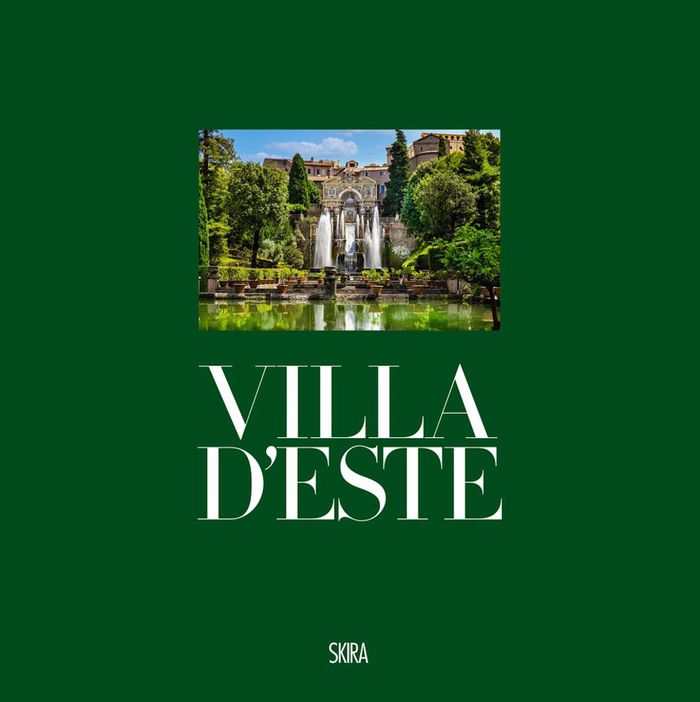
The Villa d'Este is a 16th-century villa in Tivoli, near Rome, internationally renowned for its terraced hillside Italian Renaissance garden containing an outstanding array of fountains, nymphaea, grottoes, water features and atmospheric sound effects. Named a UNESCO World Heritage Site in 2001, the garden is widely considered to be one of the finest examples of Italian Renaissance gardens in Europe. Villa d’Este was first conceived of in 1550 by the governor of Tivoli, Cardinal Ippolito II d’Este, who had long envisioned a garden built on the slopes of the valley known as Valle Gaudente. But it was only after 1560 that the villa’s architectural and iconological blueprint was defined by painter-archaeologist-architect Pirro Ligorio and executed by court architect Alberto Galvani. When Ippolito d’Este died in 1572, the project was nearly complete.
Villa d'Este in Tivoli
Actions:
Prix:
$68.95
(disponible sur commande)
Résumé:
The Villa d'Este is a 16th-century villa in Tivoli, near Rome, internationally renowned for its terraced hillside Italian Renaissance garden containing an outstanding array of fountains, nymphaea, grottoes, water features and atmospheric sound effects. Named a UNESCO World Heritage Site in 2001, the garden is widely considered to be one of the finest examples of Italian Renaissance gardens in Europe. Villa d’Este was first conceived of in 1550 by the governor of Tivoli, Cardinal Ippolito II d’Este, who had long envisioned a garden built on the slopes of the valley known as Valle Gaudente. But it was only after 1560 that the villa’s architectural and iconological blueprint was defined by painter-archaeologist-architect Pirro Ligorio and executed by court architect Alberto Galvani. When Ippolito d’Este died in 1572, the project was nearly complete.
Classification:
livres
livres
Publication:
octobre 2022
octobre 2022
Sujet:
Jardins
Jardins
Classification:
livres
livres
Prix:
$72.00
(disponible sur commande)
Résumé:
The spread of Renaissance culture in England coincided with the birth of the profession of architecture, whose practitioners soon became superior to simple builders in social standing and perceived intellectual prowess. This book, which focuses in particular on the scientist, mathematician, and architect Sir Christopher Wren, explores the extent to which this new(...)
$72.00
(disponible sur commande)
Résumé:
The spread of Renaissance culture in England coincided with the birth of the profession of architecture, whose practitioners soon became superior to simple builders in social standing and perceived intellectual prowess. This book, which focuses in particular on the scientist, mathematician, and architect Sir Christopher Wren, explores the extent to which this new(...)
Titre:
Compass & rule : architecture as mathematical practice in England
Actions:
Prix:
$72.00
(disponible sur commande)
Résumé:
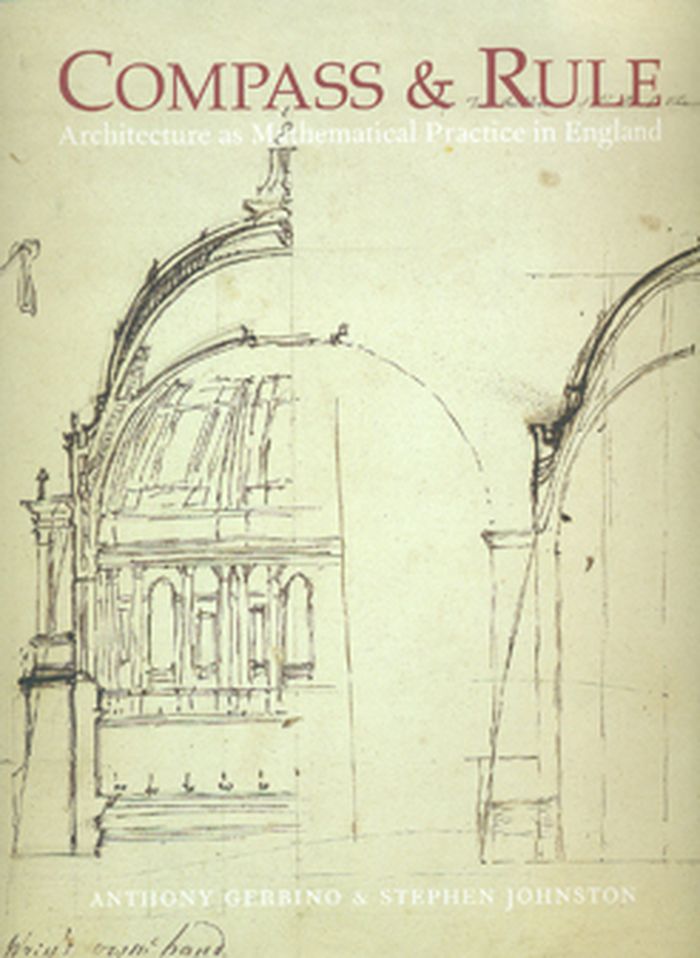
The spread of Renaissance culture in England coincided with the birth of the profession of architecture, whose practitioners soon became superior to simple builders in social standing and perceived intellectual prowess. This book, which focuses in particular on the scientist, mathematician, and architect Sir Christopher Wren, explores the extent to which this new professional identity was based on expertise in the mathematical arts and sciences. Featuring drawings, instruments, paintings, and other examples of the material culture of English architecture, the book discusses the role of mathematics in architectural design and building technology. It begins with architectural drawing in the 16th century, moves to large-scale technical drawing under Henry VIII, considers Inigo Jones and his royal buildings and Christopher Wren and the dome of St. Paul’s, and concludes with the architectural education of George III. Interweaving text and visual image, the book investigates the boundaries between art and science in architecture—the most artistic of the sciences and the most scientific of the arts.
Compass & rule : architecture as mathematical practice in England
Actions:
Prix:
$72.00
(disponible sur commande)
Résumé:
The spread of Renaissance culture in England coincided with the birth of the profession of architecture, whose practitioners soon became superior to simple builders in social standing and perceived intellectual prowess. This book, which focuses in particular on the scientist, mathematician, and architect Sir Christopher Wren, explores the extent to which this new professional identity was based on expertise in the mathematical arts and sciences. Featuring drawings, instruments, paintings, and other examples of the material culture of English architecture, the book discusses the role of mathematics in architectural design and building technology. It begins with architectural drawing in the 16th century, moves to large-scale technical drawing under Henry VIII, considers Inigo Jones and his royal buildings and Christopher Wren and the dome of St. Paul’s, and concludes with the architectural education of George III. Interweaving text and visual image, the book investigates the boundaries between art and science in architecture—the most artistic of the sciences and the most scientific of the arts.
Classification:
livres
livres
Publication:
mai 2009
mai 2009
Sujet:
Dessin d’architecture
Dessin d’architecture
Classification:
livres
livres
Prix:
$54.95
(disponible en magasin)
Résumé:
What use can we make today of a prints collection dating between the 16th and 19th century housed in a library storage room? What does it tell us of the periods in which it was created, preserved and reorganised? How can this information relate to the contemporary? Can an artist re-enact shared scenarios emphasising what of the old persists in the present? This(...)
$54.95
(disponible en magasin)
Résumé:
What use can we make today of a prints collection dating between the 16th and 19th century housed in a library storage room? What does it tell us of the periods in which it was created, preserved and reorganised? How can this information relate to the contemporary? Can an artist re-enact shared scenarios emphasising what of the old persists in the present? This(...)
Titre:
Present archives: Reflections from a collection of prints
Actions:
Prix:
$54.95
(disponible en magasin)
Résumé:
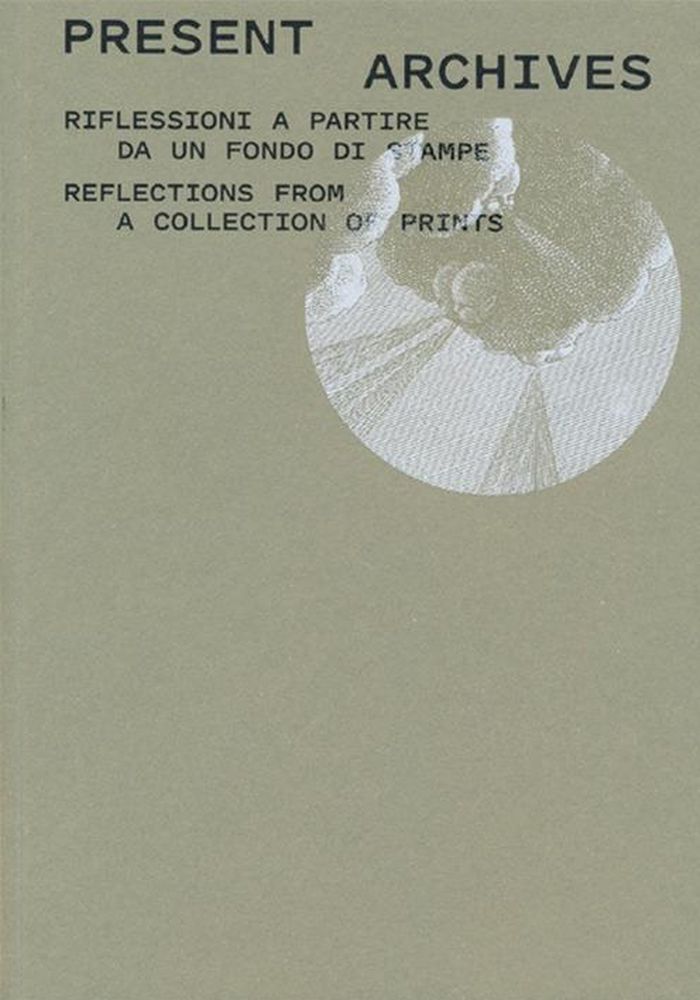
What use can we make today of a prints collection dating between the 16th and 19th century housed in a library storage room? What does it tell us of the periods in which it was created, preserved and reorganised? How can this information relate to the contemporary? Can an artist re-enact shared scenarios emphasising what of the old persists in the present? This publication collects three years' work within present_continuous, a project aimed at enhancing a collection of prints housed at the Biblioteca Nazionale Universitaria in Turin. A still rather unexplored point of excellence in the institution’s holdings, which was organised in albums in the 1860s by the eclectic Piedmontese collector and connoisseur Giovanni Volpato. The project includes a cataloguing campaign, a symposium whose purpose was to renew the contemporary perception of the archive and in an international call was opened in order to select two artists – Alessandra Messali and Ryts Monet (Enrico De Napoli) – for a residency program dedicated to creating new perspectives, right from the collection of print, trying to voicing the social and cultural issues of our time.
Present archives: Reflections from a collection of prints
Actions:
Prix:
$54.95
(disponible en magasin)
Résumé:
What use can we make today of a prints collection dating between the 16th and 19th century housed in a library storage room? What does it tell us of the periods in which it was created, preserved and reorganised? How can this information relate to the contemporary? Can an artist re-enact shared scenarios emphasising what of the old persists in the present? This publication collects three years' work within present_continuous, a project aimed at enhancing a collection of prints housed at the Biblioteca Nazionale Universitaria in Turin. A still rather unexplored point of excellence in the institution’s holdings, which was organised in albums in the 1860s by the eclectic Piedmontese collector and connoisseur Giovanni Volpato. The project includes a cataloguing campaign, a symposium whose purpose was to renew the contemporary perception of the archive and in an international call was opened in order to select two artists – Alessandra Messali and Ryts Monet (Enrico De Napoli) – for a residency program dedicated to creating new perspectives, right from the collection of print, trying to voicing the social and cultural issues of our time.
Classification:
livres
livres
Publication:
octobre 2019
octobre 2019
Classification:
livres
livres
Prix:
$39.95
(disponible sur commande)
Résumé:
As Art Director for Muji since 2002, Japanese graphic designer Kenya Hara (born 1958) and his aesthetic of pared-back, beautifully functional objects has taken the world by (quiet) storm. With “Kenya Hara: Designing Japan”, the designer presents his vision of how his industry can contribute to the future of his country: a future founded on Hara’s unique philosophy of(...)
$39.95
(disponible sur commande)
Résumé:
As Art Director for Muji since 2002, Japanese graphic designer Kenya Hara (born 1958) and his aesthetic of pared-back, beautifully functional objects has taken the world by (quiet) storm. With “Kenya Hara: Designing Japan”, the designer presents his vision of how his industry can contribute to the future of his country: a future founded on Hara’s unique philosophy of(...)
Titre:
Kenya Hara, designing Japan: a future built on aesthetics
Actions:
Prix:
$39.95
(disponible sur commande)
Résumé:
As Art Director for Muji since 2002, Japanese graphic designer Kenya Hara (born 1958) and his aesthetic of pared-back, beautifully functional objects has taken the world by (quiet) storm. With “Kenya Hara: Designing Japan”, the designer presents his vision of how his industry can contribute to the future of his country: a future founded on Hara’s unique philosophy of beauty as well as crowd-sourced wisdom from around the world. The book spans history, from the beginnings of professional Japanese design in the 16th century to the impact of the 2011 Tohoku earthquake. But Hara's real focus is on the future. A master collaborator, meticulous organizer and globally conscious innovator, Hara draws on more than three decades of work in design and exhibition curating, as well his professional interactions with creators from many fields. “Designing Japan” offers a foundation course on the essence of Japanese aesthetics, while maintaining a practical approach to Japan’s circumstances and future possibilities. Hara reveals the methods by which designers in Japan work with government and industry, and considers how design can propose solutions for this island nation as its population ages, other nations take over manufacturing and technology develops. Illustrations and examples recognize successful problem-solving through design, proving that design is a living, changing industry that remains relevant not in spite of, but as a partner to, advancing technology.
Kenya Hara, designing Japan: a future built on aesthetics
Actions:
Prix:
$39.95
(disponible sur commande)
Résumé:
As Art Director for Muji since 2002, Japanese graphic designer Kenya Hara (born 1958) and his aesthetic of pared-back, beautifully functional objects has taken the world by (quiet) storm. With “Kenya Hara: Designing Japan”, the designer presents his vision of how his industry can contribute to the future of his country: a future founded on Hara’s unique philosophy of beauty as well as crowd-sourced wisdom from around the world. The book spans history, from the beginnings of professional Japanese design in the 16th century to the impact of the 2011 Tohoku earthquake. But Hara's real focus is on the future. A master collaborator, meticulous organizer and globally conscious innovator, Hara draws on more than three decades of work in design and exhibition curating, as well his professional interactions with creators from many fields. “Designing Japan” offers a foundation course on the essence of Japanese aesthetics, while maintaining a practical approach to Japan’s circumstances and future possibilities. Hara reveals the methods by which designers in Japan work with government and industry, and considers how design can propose solutions for this island nation as its population ages, other nations take over manufacturing and technology develops. Illustrations and examples recognize successful problem-solving through design, proving that design is a living, changing industry that remains relevant not in spite of, but as a partner to, advancing technology.
Classification:
livres
livres
Publication:
octobre 2019
octobre 2019
Classification:
audio
audio
Actions:
Description:
1 online resource.
Auteur:
Sujet:
Publication:
[Place of publication not identified] : Lateral Addition, 2018.
[Place of publication not identified] : Lateral Addition, 2018.
Classification:
audio
audio
Publication:
[Place of publication not identified] : Lateral Addition, 2018.
[Place of publication not identified] : Lateral Addition, 2018.
Auteur:
Sujet:


