


44145 Résultats
Niveau de description archivistique:
Projet
Projet
Numéro de référence:
AP018.S1.1979.PR11
Description:
This project series documents long-term planning for airports in Trinidad and Tobago from 1979-1993. The office identified the project number as 7911. This project consisted of the planning of two airports, one in Piarco and the other in Crown Point, financed by the Government of Canada acting as agents for the Government of Trinidad and Tobago. This work was undertaken as a consortium with other Canadian firms who worked together on airport planning projects around the world. The firms consisted of Parkin Architects Planners as the architects, the Montreal Engineering Company Limited, Peat, Marwick and Partners, and IBI Group. At Crown Point, a new 3,300 square metre terminal building was proposed for domestic and some international traffic, as well as a new control tower. The passenger terminal could accommodate 350 enplaning and 350 deplaning passengers. This first phase was said to accommodate growth until 1993. At Piarco, a new 26,000 square foot passenger terminal was proposed, which was said to accommodate about 2/3 of traffic in 1993. This location also proposed a 200 room hotel be built in the future. This project is recorded through textual records dating from 1977-1981 which consist of correspondence between consortium members, billings, the joint venture agreement and financial analysis report.
AP018.S1.1979.PR11
Description:
This project series documents long-term planning for airports in Trinidad and Tobago from 1979-1993. The office identified the project number as 7911. This project consisted of the planning of two airports, one in Piarco and the other in Crown Point, financed by the Government of Canada acting as agents for the Government of Trinidad and Tobago. This work was undertaken as a consortium with other Canadian firms who worked together on airport planning projects around the world. The firms consisted of Parkin Architects Planners as the architects, the Montreal Engineering Company Limited, Peat, Marwick and Partners, and IBI Group. At Crown Point, a new 3,300 square metre terminal building was proposed for domestic and some international traffic, as well as a new control tower. The passenger terminal could accommodate 350 enplaning and 350 deplaning passengers. This first phase was said to accommodate growth until 1993. At Piarco, a new 26,000 square foot passenger terminal was proposed, which was said to accommodate about 2/3 of traffic in 1993. This location also proposed a 200 room hotel be built in the future. This project is recorded through textual records dating from 1977-1981 which consist of correspondence between consortium members, billings, the joint venture agreement and financial analysis report.
Personnes et institutions:
Date:
1977-1981
1977-1981
Titre:
Trinidad and Tobago Airports (1979-1981)
Actions:
AP018.S1.1979.PR11
Description:
This project series documents long-term planning for airports in Trinidad and Tobago from 1979-1993. The office identified the project number as 7911. This project consisted of the planning of two airports, one in Piarco and the other in Crown Point, financed by the Government of Canada acting as agents for the Government of Trinidad and Tobago. This work was undertaken as a consortium with other Canadian firms who worked together on airport planning projects around the world. The firms consisted of Parkin Architects Planners as the architects, the Montreal Engineering Company Limited, Peat, Marwick and Partners, and IBI Group. At Crown Point, a new 3,300 square metre terminal building was proposed for domestic and some international traffic, as well as a new control tower. The passenger terminal could accommodate 350 enplaning and 350 deplaning passengers. This first phase was said to accommodate growth until 1993. At Piarco, a new 26,000 square foot passenger terminal was proposed, which was said to accommodate about 2/3 of traffic in 1993. This location also proposed a 200 room hotel be built in the future. This project is recorded through textual records dating from 1977-1981 which consist of correspondence between consortium members, billings, the joint venture agreement and financial analysis report.
Trinidad and Tobago Airports (1979-1981)
Actions:
AP018.S1.1979.PR11
Description:
This project series documents long-term planning for airports in Trinidad and Tobago from 1979-1993. The office identified the project number as 7911. This project consisted of the planning of two airports, one in Piarco and the other in Crown Point, financed by the Government of Canada acting as agents for the Government of Trinidad and Tobago. This work was undertaken as a consortium with other Canadian firms who worked together on airport planning projects around the world. The firms consisted of Parkin Architects Planners as the architects, the Montreal Engineering Company Limited, Peat, Marwick and Partners, and IBI Group. At Crown Point, a new 3,300 square metre terminal building was proposed for domestic and some international traffic, as well as a new control tower. The passenger terminal could accommodate 350 enplaning and 350 deplaning passengers. This first phase was said to accommodate growth until 1993. At Piarco, a new 26,000 square foot passenger terminal was proposed, which was said to accommodate about 2/3 of traffic in 1993. This location also proposed a 200 room hotel be built in the future. This project is recorded through textual records dating from 1977-1981 which consist of correspondence between consortium members, billings, the joint venture agreement and financial analysis report.
Niveau de description archivistique:
Project
Project
Date:
1977-1981
1977-1981
Personnes et institutions:
Niveau de description archivistique:
Projet
Projet
Numéro de référence:
AP075.S1.1986.PR08
Description:
Project series documents Cornelia Hahn Oberlander's landscape project for the Russell Residence in Lake Bay, near in Tacoma, Washington, United States. Oberlander worked on this project in 1986-1989 with architect Arthur Erickson. The project consisted in building a new house and garden on the 300 acres family farm, located on a promotery overlooking Puget Sound. The landscape design included the planting of rhododendrons nestled into the woodland along one side of the looped drive leading to a parking area, and an herbs and vegetables garden next to the house, near the dining room. Oberlander created a meadow area at the centre of the loop entrance drive with spring bulbs and summer wildflowers providing interest at all seasons. The project was completed in 1989. The project series contains sketches, design development drawings, including plans of the herbs and vegetables gardens, planting plans and schematic landscape plans, and working drawings, including planting plans, site plans and grading plans. The project is also documented through Oberlander's concept notes, research material, landscape specifications, correspondence with client and architects, and financial documents. The project series also comprises photographs of Cornelia Hahn Oberlander and other visiting the site, and photographs of the construction of the residence and landspace work.
AP075.S1.1986.PR08
Description:
Project series documents Cornelia Hahn Oberlander's landscape project for the Russell Residence in Lake Bay, near in Tacoma, Washington, United States. Oberlander worked on this project in 1986-1989 with architect Arthur Erickson. The project consisted in building a new house and garden on the 300 acres family farm, located on a promotery overlooking Puget Sound. The landscape design included the planting of rhododendrons nestled into the woodland along one side of the looped drive leading to a parking area, and an herbs and vegetables garden next to the house, near the dining room. Oberlander created a meadow area at the centre of the loop entrance drive with spring bulbs and summer wildflowers providing interest at all seasons. The project was completed in 1989. The project series contains sketches, design development drawings, including plans of the herbs and vegetables gardens, planting plans and schematic landscape plans, and working drawings, including planting plans, site plans and grading plans. The project is also documented through Oberlander's concept notes, research material, landscape specifications, correspondence with client and architects, and financial documents. The project series also comprises photographs of Cornelia Hahn Oberlander and other visiting the site, and photographs of the construction of the residence and landspace work.
Personnes et institutions:
Date:
1985-1998
1985-1998
Titre:
Russell Residence, Tacoma, Washington (1986)
Actions:
AP075.S1.1986.PR08
Description:
Project series documents Cornelia Hahn Oberlander's landscape project for the Russell Residence in Lake Bay, near in Tacoma, Washington, United States. Oberlander worked on this project in 1986-1989 with architect Arthur Erickson. The project consisted in building a new house and garden on the 300 acres family farm, located on a promotery overlooking Puget Sound. The landscape design included the planting of rhododendrons nestled into the woodland along one side of the looped drive leading to a parking area, and an herbs and vegetables garden next to the house, near the dining room. Oberlander created a meadow area at the centre of the loop entrance drive with spring bulbs and summer wildflowers providing interest at all seasons. The project was completed in 1989. The project series contains sketches, design development drawings, including plans of the herbs and vegetables gardens, planting plans and schematic landscape plans, and working drawings, including planting plans, site plans and grading plans. The project is also documented through Oberlander's concept notes, research material, landscape specifications, correspondence with client and architects, and financial documents. The project series also comprises photographs of Cornelia Hahn Oberlander and other visiting the site, and photographs of the construction of the residence and landspace work.
Russell Residence, Tacoma, Washington (1986)
Actions:
AP075.S1.1986.PR08
Description:
Project series documents Cornelia Hahn Oberlander's landscape project for the Russell Residence in Lake Bay, near in Tacoma, Washington, United States. Oberlander worked on this project in 1986-1989 with architect Arthur Erickson. The project consisted in building a new house and garden on the 300 acres family farm, located on a promotery overlooking Puget Sound. The landscape design included the planting of rhododendrons nestled into the woodland along one side of the looped drive leading to a parking area, and an herbs and vegetables garden next to the house, near the dining room. Oberlander created a meadow area at the centre of the loop entrance drive with spring bulbs and summer wildflowers providing interest at all seasons. The project was completed in 1989. The project series contains sketches, design development drawings, including plans of the herbs and vegetables gardens, planting plans and schematic landscape plans, and working drawings, including planting plans, site plans and grading plans. The project is also documented through Oberlander's concept notes, research material, landscape specifications, correspondence with client and architects, and financial documents. The project series also comprises photographs of Cornelia Hahn Oberlander and other visiting the site, and photographs of the construction of the residence and landspace work.
Niveau de description archivistique:
Project
Project
Date:
1985-1998
1985-1998
Personnes et institutions:
Niveau de description archivistique:
Projet
Projet
Numéro de référence:
AP075.S1.1989.PR01
Description:
Project series documents Cornelia Hahn Oberlander's landscape project for the Environmental Science Building and Walter Ward Garden on West Bank Drive at Trent University, in Peterborough, Ontario. Oberlander worked on this project in 1989 with Richard Henriquez Architect and Laszlo Nemeth Associates who won the design competition for the new campus building. The project consists in an environmental garden with native plants and grasses and a landscaped roof linked to the ground level by a ramp covered in earth. The ramp and the green roof were design not for human but to give a refuge to ground hogs displaced by the construction of the building. The Environmental Science Building opened in 1991 while the garden was officially opened in 1992. The project series contains site plans, sketches, design developement drawings, including planting plans, landscape sections and details, working drawings, presentation drawings, including perspective drawings, and presentation panels. The project series also comprises working drawings of the building used as reference by Oberlander. The project is also documents through photographs of the construction of the building and the site work, concept notes by Oberlander, correspondence with clients, architects and consultants, specifications, including landscape specifications, plants selection documents, financial documents, reseach materials, and clippings of articles on the project.
AP075.S1.1989.PR01
Description:
Project series documents Cornelia Hahn Oberlander's landscape project for the Environmental Science Building and Walter Ward Garden on West Bank Drive at Trent University, in Peterborough, Ontario. Oberlander worked on this project in 1989 with Richard Henriquez Architect and Laszlo Nemeth Associates who won the design competition for the new campus building. The project consists in an environmental garden with native plants and grasses and a landscaped roof linked to the ground level by a ramp covered in earth. The ramp and the green roof were design not for human but to give a refuge to ground hogs displaced by the construction of the building. The Environmental Science Building opened in 1991 while the garden was officially opened in 1992. The project series contains site plans, sketches, design developement drawings, including planting plans, landscape sections and details, working drawings, presentation drawings, including perspective drawings, and presentation panels. The project series also comprises working drawings of the building used as reference by Oberlander. The project is also documents through photographs of the construction of the building and the site work, concept notes by Oberlander, correspondence with clients, architects and consultants, specifications, including landscape specifications, plants selection documents, financial documents, reseach materials, and clippings of articles on the project.
Personnes et institutions:
Date:
1989-1993
1989-1993
Titre:
Environmental Science Building and Walter Ward Garden, Trent University, Peterborough, Ontario (1989)
Actions:
AP075.S1.1989.PR01
Description:
Project series documents Cornelia Hahn Oberlander's landscape project for the Environmental Science Building and Walter Ward Garden on West Bank Drive at Trent University, in Peterborough, Ontario. Oberlander worked on this project in 1989 with Richard Henriquez Architect and Laszlo Nemeth Associates who won the design competition for the new campus building. The project consists in an environmental garden with native plants and grasses and a landscaped roof linked to the ground level by a ramp covered in earth. The ramp and the green roof were design not for human but to give a refuge to ground hogs displaced by the construction of the building. The Environmental Science Building opened in 1991 while the garden was officially opened in 1992. The project series contains site plans, sketches, design developement drawings, including planting plans, landscape sections and details, working drawings, presentation drawings, including perspective drawings, and presentation panels. The project series also comprises working drawings of the building used as reference by Oberlander. The project is also documents through photographs of the construction of the building and the site work, concept notes by Oberlander, correspondence with clients, architects and consultants, specifications, including landscape specifications, plants selection documents, financial documents, reseach materials, and clippings of articles on the project.
Environmental Science Building and Walter Ward Garden, Trent University, Peterborough, Ontario (1989)
Actions:
AP075.S1.1989.PR01
Description:
Project series documents Cornelia Hahn Oberlander's landscape project for the Environmental Science Building and Walter Ward Garden on West Bank Drive at Trent University, in Peterborough, Ontario. Oberlander worked on this project in 1989 with Richard Henriquez Architect and Laszlo Nemeth Associates who won the design competition for the new campus building. The project consists in an environmental garden with native plants and grasses and a landscaped roof linked to the ground level by a ramp covered in earth. The ramp and the green roof were design not for human but to give a refuge to ground hogs displaced by the construction of the building. The Environmental Science Building opened in 1991 while the garden was officially opened in 1992. The project series contains site plans, sketches, design developement drawings, including planting plans, landscape sections and details, working drawings, presentation drawings, including perspective drawings, and presentation panels. The project series also comprises working drawings of the building used as reference by Oberlander. The project is also documents through photographs of the construction of the building and the site work, concept notes by Oberlander, correspondence with clients, architects and consultants, specifications, including landscape specifications, plants selection documents, financial documents, reseach materials, and clippings of articles on the project.
Niveau de description archivistique:
Project
Project
Date:
1989-1993
1989-1993
Personnes et institutions:
Niveau de description archivistique:
Projet
Projet
Numéro de référence:
AP018.S1.1972.PR10
Description:
This project series documents the Life Sciences Complex at Memorial University (MUN) in St. John’s, Newfoundland in 1972. The office identified the project number as 7211. In 1971, Parkin Architects Planners began work on the Health Sciences Complex located on MUN's north campus. This was a large teaching hospital that also contained the university's medical school. During the conception of the Health Sciences Complex, the Life Sciences Complex was proposed as a future expansion to the hospital. It would include MUN's life sciences department and additional hospital spaces related to those practices, such as pyscology. It is not clear from the materials in this project series whether Parkin Architects Planners proceeded with construction of the Life Sciences Complex. The project is recorded through a meeting report dating from 1972.
AP018.S1.1972.PR10
Description:
This project series documents the Life Sciences Complex at Memorial University (MUN) in St. John’s, Newfoundland in 1972. The office identified the project number as 7211. In 1971, Parkin Architects Planners began work on the Health Sciences Complex located on MUN's north campus. This was a large teaching hospital that also contained the university's medical school. During the conception of the Health Sciences Complex, the Life Sciences Complex was proposed as a future expansion to the hospital. It would include MUN's life sciences department and additional hospital spaces related to those practices, such as pyscology. It is not clear from the materials in this project series whether Parkin Architects Planners proceeded with construction of the Life Sciences Complex. The project is recorded through a meeting report dating from 1972.
Personnes et institutions:
Date:
1972
1972
Titre:
Memorial University of Newfoundland, Life Sciences Complex, St. Johns, Newfoundland (1972)
Actions:
AP018.S1.1972.PR10
Description:
This project series documents the Life Sciences Complex at Memorial University (MUN) in St. John’s, Newfoundland in 1972. The office identified the project number as 7211. In 1971, Parkin Architects Planners began work on the Health Sciences Complex located on MUN's north campus. This was a large teaching hospital that also contained the university's medical school. During the conception of the Health Sciences Complex, the Life Sciences Complex was proposed as a future expansion to the hospital. It would include MUN's life sciences department and additional hospital spaces related to those practices, such as pyscology. It is not clear from the materials in this project series whether Parkin Architects Planners proceeded with construction of the Life Sciences Complex. The project is recorded through a meeting report dating from 1972.
Memorial University of Newfoundland, Life Sciences Complex, St. Johns, Newfoundland (1972)
Actions:
AP018.S1.1972.PR10
Description:
This project series documents the Life Sciences Complex at Memorial University (MUN) in St. John’s, Newfoundland in 1972. The office identified the project number as 7211. In 1971, Parkin Architects Planners began work on the Health Sciences Complex located on MUN's north campus. This was a large teaching hospital that also contained the university's medical school. During the conception of the Health Sciences Complex, the Life Sciences Complex was proposed as a future expansion to the hospital. It would include MUN's life sciences department and additional hospital spaces related to those practices, such as pyscology. It is not clear from the materials in this project series whether Parkin Architects Planners proceeded with construction of the Life Sciences Complex. The project is recorded through a meeting report dating from 1972.
Niveau de description archivistique:
Project
Project
Date:
1972
1972
Personnes et institutions:
Niveau de description archivistique:
Projet
Projet
Numéro de référence:
AP075.S1.2006.PR01
Description:
Project series documents Cornelia Hahn Oberlander's landscape project for the restauration of the Evergreen Building, a ten-story office tower on West Pender Street, in Vancouver, British Columbia. The building was previously known as the Laxton Building. The project consisted in renovations work to the building, design by architect Arthur Erickson in the 1980. Oberlander herself worked with Erickson at the time. After helping to save the building from demolition in the early 2000s, Oberlander worked as a landscape consultant for Omicron Architecture Engineering Construction Co. in 2006-2007. She was consulted for the restoration of the landscaping at the street level and the replanting of the planted balconies she had created while working with Erickson. As the building facade consisted in a stepped facade with an alternance of zigzag floor plates and straight floor plates, Oberlander chose cascading plants for the zigzag floors and upright planting for the straight floors. "Since the plants were brought to the structure's edges, the geometries of the building were dramatically amplified." [1] The Evergreen Building received a heritage status in the mid-2000s. This project series contains only materials related to the 2006-2007 renovations project. The project series comprises sketches, design development drawings, including site plans, plantings plans and landscape elevations, and buildings plans used as reference. The project series is also documented through corrsepondence, including correspondence with architects and contractors, specifications, plant lists, digital files of a presentation on the existing site condition, financial material, and research material for the project. Source: [1] Herrington, Susan. Cornelia Hahn Oberlander: Making the Modern Landscape, University of Virginia Press, 2014, 304 pages, p. 139.
AP075.S1.2006.PR01
Description:
Project series documents Cornelia Hahn Oberlander's landscape project for the restauration of the Evergreen Building, a ten-story office tower on West Pender Street, in Vancouver, British Columbia. The building was previously known as the Laxton Building. The project consisted in renovations work to the building, design by architect Arthur Erickson in the 1980. Oberlander herself worked with Erickson at the time. After helping to save the building from demolition in the early 2000s, Oberlander worked as a landscape consultant for Omicron Architecture Engineering Construction Co. in 2006-2007. She was consulted for the restoration of the landscaping at the street level and the replanting of the planted balconies she had created while working with Erickson. As the building facade consisted in a stepped facade with an alternance of zigzag floor plates and straight floor plates, Oberlander chose cascading plants for the zigzag floors and upright planting for the straight floors. "Since the plants were brought to the structure's edges, the geometries of the building were dramatically amplified." [1] The Evergreen Building received a heritage status in the mid-2000s. This project series contains only materials related to the 2006-2007 renovations project. The project series comprises sketches, design development drawings, including site plans, plantings plans and landscape elevations, and buildings plans used as reference. The project series is also documented through corrsepondence, including correspondence with architects and contractors, specifications, plant lists, digital files of a presentation on the existing site condition, financial material, and research material for the project. Source: [1] Herrington, Susan. Cornelia Hahn Oberlander: Making the Modern Landscape, University of Virginia Press, 2014, 304 pages, p. 139.
Personnes et institutions:
Date:
2006-2007
2006-2007
Titre:
Evergreen Building restoration, Vancouver, British Columbia (2006)
Actions:
AP075.S1.2006.PR01
Description:
Project series documents Cornelia Hahn Oberlander's landscape project for the restauration of the Evergreen Building, a ten-story office tower on West Pender Street, in Vancouver, British Columbia. The building was previously known as the Laxton Building. The project consisted in renovations work to the building, design by architect Arthur Erickson in the 1980. Oberlander herself worked with Erickson at the time. After helping to save the building from demolition in the early 2000s, Oberlander worked as a landscape consultant for Omicron Architecture Engineering Construction Co. in 2006-2007. She was consulted for the restoration of the landscaping at the street level and the replanting of the planted balconies she had created while working with Erickson. As the building facade consisted in a stepped facade with an alternance of zigzag floor plates and straight floor plates, Oberlander chose cascading plants for the zigzag floors and upright planting for the straight floors. "Since the plants were brought to the structure's edges, the geometries of the building were dramatically amplified." [1] The Evergreen Building received a heritage status in the mid-2000s. This project series contains only materials related to the 2006-2007 renovations project. The project series comprises sketches, design development drawings, including site plans, plantings plans and landscape elevations, and buildings plans used as reference. The project series is also documented through corrsepondence, including correspondence with architects and contractors, specifications, plant lists, digital files of a presentation on the existing site condition, financial material, and research material for the project. Source: [1] Herrington, Susan. Cornelia Hahn Oberlander: Making the Modern Landscape, University of Virginia Press, 2014, 304 pages, p. 139.
Evergreen Building restoration, Vancouver, British Columbia (2006)
Actions:
AP075.S1.2006.PR01
Description:
Project series documents Cornelia Hahn Oberlander's landscape project for the restauration of the Evergreen Building, a ten-story office tower on West Pender Street, in Vancouver, British Columbia. The building was previously known as the Laxton Building. The project consisted in renovations work to the building, design by architect Arthur Erickson in the 1980. Oberlander herself worked with Erickson at the time. After helping to save the building from demolition in the early 2000s, Oberlander worked as a landscape consultant for Omicron Architecture Engineering Construction Co. in 2006-2007. She was consulted for the restoration of the landscaping at the street level and the replanting of the planted balconies she had created while working with Erickson. As the building facade consisted in a stepped facade with an alternance of zigzag floor plates and straight floor plates, Oberlander chose cascading plants for the zigzag floors and upright planting for the straight floors. "Since the plants were brought to the structure's edges, the geometries of the building were dramatically amplified." [1] The Evergreen Building received a heritage status in the mid-2000s. This project series contains only materials related to the 2006-2007 renovations project. The project series comprises sketches, design development drawings, including site plans, plantings plans and landscape elevations, and buildings plans used as reference. The project series is also documented through corrsepondence, including correspondence with architects and contractors, specifications, plant lists, digital files of a presentation on the existing site condition, financial material, and research material for the project. Source: [1] Herrington, Susan. Cornelia Hahn Oberlander: Making the Modern Landscape, University of Virginia Press, 2014, 304 pages, p. 139.
Niveau de description archivistique:
Project
Project
Date:
2006-2007
2006-2007
Personnes et institutions:
Niveau de description archivistique:
Projet
Projet
Numéro de référence:
AP207.S1.2002.PR01
Description:
The project series documents a series of performances entitled "Il Mestiere Dell'Architetto". The first edition was performed by Pettena in Maiano, near Florence in 2002. It consisted of a series of images of Pettena rock climbing that represents the work of the architect "and the role of those who work in the discipline, what is represented here is the need to make choices and at the same time the difficulty of doing so, of taking routes that, while they may appear impassable, are actually the very essence of the artist’s thought and language [...]." [1] Another version was performed in 2004 at the Ex-Meccanotessile complex, in Florence, 2004, and consisted of a series of photographs of a man climbing the interior roof structure of the building. Unlike the 2002 edition of this performance, "not even nature offers its support to those who, despite moving with caution, often find themselves in a situation of impasse." [2] A final version of the performance was created in 2012 by Pettena. The digitally created installation consisted of a gradually fading shape of a climber drawn in leaves that slowly disperse. In this installation, compared to the two previous ones, the architect "seems to find here a solution and ultimate freedom through the final choice of ‘giving in’ to the prevalence of natural environment." [3] The project series contains a sketch and photographs of the 2002 performance, photographs of the 2004 performance, and a drawing for the 2012 performance. Source: [1] Gianni Pettena website, https://www.giannipettena.it/italiano/opere-1/perf-the-craft-2002/ (last accessed 22 January 2020). [2] Gianni Pettena website, https://www.giannipettena.it/italiano/opere-1/perf-the-craft-ii-2004/ (last accessed 22 January 2020). [3] Gianni Pettena website, https://www.giannipettena.it/italiano/opere-1/nat-the-craft-of-the-architect-3-2012/ (last accessed 27 January 2020).
AP207.S1.2002.PR01
Description:
The project series documents a series of performances entitled "Il Mestiere Dell'Architetto". The first edition was performed by Pettena in Maiano, near Florence in 2002. It consisted of a series of images of Pettena rock climbing that represents the work of the architect "and the role of those who work in the discipline, what is represented here is the need to make choices and at the same time the difficulty of doing so, of taking routes that, while they may appear impassable, are actually the very essence of the artist’s thought and language [...]." [1] Another version was performed in 2004 at the Ex-Meccanotessile complex, in Florence, 2004, and consisted of a series of photographs of a man climbing the interior roof structure of the building. Unlike the 2002 edition of this performance, "not even nature offers its support to those who, despite moving with caution, often find themselves in a situation of impasse." [2] A final version of the performance was created in 2012 by Pettena. The digitally created installation consisted of a gradually fading shape of a climber drawn in leaves that slowly disperse. In this installation, compared to the two previous ones, the architect "seems to find here a solution and ultimate freedom through the final choice of ‘giving in’ to the prevalence of natural environment." [3] The project series contains a sketch and photographs of the 2002 performance, photographs of the 2004 performance, and a drawing for the 2012 performance. Source: [1] Gianni Pettena website, https://www.giannipettena.it/italiano/opere-1/perf-the-craft-2002/ (last accessed 22 January 2020). [2] Gianni Pettena website, https://www.giannipettena.it/italiano/opere-1/perf-the-craft-ii-2004/ (last accessed 22 January 2020). [3] Gianni Pettena website, https://www.giannipettena.it/italiano/opere-1/nat-the-craft-of-the-architect-3-2012/ (last accessed 27 January 2020).
Personnes et institutions:
Date:
2002-2015
2002-2015
Titre:
Il Mestiere Dell'Architetto [The Craft of the Architect] (2002)
Actions:
AP207.S1.2002.PR01
Description:
The project series documents a series of performances entitled "Il Mestiere Dell'Architetto". The first edition was performed by Pettena in Maiano, near Florence in 2002. It consisted of a series of images of Pettena rock climbing that represents the work of the architect "and the role of those who work in the discipline, what is represented here is the need to make choices and at the same time the difficulty of doing so, of taking routes that, while they may appear impassable, are actually the very essence of the artist’s thought and language [...]." [1] Another version was performed in 2004 at the Ex-Meccanotessile complex, in Florence, 2004, and consisted of a series of photographs of a man climbing the interior roof structure of the building. Unlike the 2002 edition of this performance, "not even nature offers its support to those who, despite moving with caution, often find themselves in a situation of impasse." [2] A final version of the performance was created in 2012 by Pettena. The digitally created installation consisted of a gradually fading shape of a climber drawn in leaves that slowly disperse. In this installation, compared to the two previous ones, the architect "seems to find here a solution and ultimate freedom through the final choice of ‘giving in’ to the prevalence of natural environment." [3] The project series contains a sketch and photographs of the 2002 performance, photographs of the 2004 performance, and a drawing for the 2012 performance. Source: [1] Gianni Pettena website, https://www.giannipettena.it/italiano/opere-1/perf-the-craft-2002/ (last accessed 22 January 2020). [2] Gianni Pettena website, https://www.giannipettena.it/italiano/opere-1/perf-the-craft-ii-2004/ (last accessed 22 January 2020). [3] Gianni Pettena website, https://www.giannipettena.it/italiano/opere-1/nat-the-craft-of-the-architect-3-2012/ (last accessed 27 January 2020).
Il Mestiere Dell'Architetto [The Craft of the Architect] (2002)
Actions:
AP207.S1.2002.PR01
Description:
The project series documents a series of performances entitled "Il Mestiere Dell'Architetto". The first edition was performed by Pettena in Maiano, near Florence in 2002. It consisted of a series of images of Pettena rock climbing that represents the work of the architect "and the role of those who work in the discipline, what is represented here is the need to make choices and at the same time the difficulty of doing so, of taking routes that, while they may appear impassable, are actually the very essence of the artist’s thought and language [...]." [1] Another version was performed in 2004 at the Ex-Meccanotessile complex, in Florence, 2004, and consisted of a series of photographs of a man climbing the interior roof structure of the building. Unlike the 2002 edition of this performance, "not even nature offers its support to those who, despite moving with caution, often find themselves in a situation of impasse." [2] A final version of the performance was created in 2012 by Pettena. The digitally created installation consisted of a gradually fading shape of a climber drawn in leaves that slowly disperse. In this installation, compared to the two previous ones, the architect "seems to find here a solution and ultimate freedom through the final choice of ‘giving in’ to the prevalence of natural environment." [3] The project series contains a sketch and photographs of the 2002 performance, photographs of the 2004 performance, and a drawing for the 2012 performance. Source: [1] Gianni Pettena website, https://www.giannipettena.it/italiano/opere-1/perf-the-craft-2002/ (last accessed 22 January 2020). [2] Gianni Pettena website, https://www.giannipettena.it/italiano/opere-1/perf-the-craft-ii-2004/ (last accessed 22 January 2020). [3] Gianni Pettena website, https://www.giannipettena.it/italiano/opere-1/nat-the-craft-of-the-architect-3-2012/ (last accessed 27 January 2020).
Niveau de description archivistique:
Project
Project
Date:
2002-2015
2002-2015
Personnes et institutions:
Classification:
cartes, documents textuels, photographies
cartes, documents textuels, photographies
Numéro de référence:
CD035.S1.1979.PR01.031
Description:
Also contains maps and photographs Ouagadougou, and photocopies of articles written by Coen Beeker on Ouagadougou, including the article "Au Revoir Tunis, Ouaga, Port Sudan, Addis Ababa" on his projects in Tunisia, Ethiopia, Burkina Faso and Sudan. Reports and photographic material include work of the Brigade Topographique Burkinabé, a private agency that had been commissioned to distribute the stones that were used to mark a plot for the spatial redesign of the Wagadogo and Nossin districts, later also in Tampouy.
CD035.S1.1979.PR01.031
Description:
Also contains maps and photographs Ouagadougou, and photocopies of articles written by Coen Beeker on Ouagadougou, including the article "Au Revoir Tunis, Ouaga, Port Sudan, Addis Ababa" on his projects in Tunisia, Ethiopia, Burkina Faso and Sudan. Reports and photographic material include work of the Brigade Topographique Burkinabé, a private agency that had been commissioned to distribute the stones that were used to mark a plot for the spatial redesign of the Wagadogo and Nossin districts, later also in Tampouy.
Personnes et institutions:
Date:
1980-2006
1980-2006
Titre:
Reports, maps and photographs of the Ouagadougou suburbs restructuring project, Burkina Faso
Actions:
CD035.S1.1979.PR01.031
Description:
Also contains maps and photographs Ouagadougou, and photocopies of articles written by Coen Beeker on Ouagadougou, including the article "Au Revoir Tunis, Ouaga, Port Sudan, Addis Ababa" on his projects in Tunisia, Ethiopia, Burkina Faso and Sudan. Reports and photographic material include work of the Brigade Topographique Burkinabé, a private agency that had been commissioned to distribute the stones that were used to mark a plot for the spatial redesign of the Wagadogo and Nossin districts, later also in Tampouy.
Reports, maps and photographs of the Ouagadougou suburbs restructuring project, Burkina Faso
Actions:
CD035.S1.1979.PR01.031
Description:
Also contains maps and photographs Ouagadougou, and photocopies of articles written by Coen Beeker on Ouagadougou, including the article "Au Revoir Tunis, Ouaga, Port Sudan, Addis Ababa" on his projects in Tunisia, Ethiopia, Burkina Faso and Sudan. Reports and photographic material include work of the Brigade Topographique Burkinabé, a private agency that had been commissioned to distribute the stones that were used to mark a plot for the spatial redesign of the Wagadogo and Nossin districts, later also in Tampouy.
Classification:
cartes, documents textuels, photographies
cartes, documents textuels, photographies
Date:
1980-2006
1980-2006
Personnes et institutions:
Niveau de description archivistique:
Projet
Projet
Numéro de référence:
AP148.S1.1968.PR03
Description:
The project series consists of design work for an unidentified furniture design competition. Material in this project series was originally housed in a folder marked "Concorso Mobili anno 1968", and Poli mentions in his inventory that the project was in collaboration with Roberto Gherardi. The material in this series consists of drawings of a wide clock cabinet, each identified with the note "Motto autunno" (autumn theme). A similar theme is echoed in the caption of one of the photomontages: "Un mobile per tutte le stagioni" (furniture for all seasons). The photomontages feature this cabinet and other elements, such as a table, with photographic portraits of women and children. In his inventory, Poli notes that the photographs are of presentation panels, which were not received with the fonds. A number of items in this series are signed by Poli.
AP148.S1.1968.PR03
Description:
The project series consists of design work for an unidentified furniture design competition. Material in this project series was originally housed in a folder marked "Concorso Mobili anno 1968", and Poli mentions in his inventory that the project was in collaboration with Roberto Gherardi. The material in this series consists of drawings of a wide clock cabinet, each identified with the note "Motto autunno" (autumn theme). A similar theme is echoed in the caption of one of the photomontages: "Un mobile per tutte le stagioni" (furniture for all seasons). The photomontages feature this cabinet and other elements, such as a table, with photographic portraits of women and children. In his inventory, Poli notes that the photographs are of presentation panels, which were not received with the fonds. A number of items in this series are signed by Poli.
Personnes et institutions:
Date:
1968-1970
1968-1970
Titre:
Furniture design competition (1968)
Actions:
AP148.S1.1968.PR03
Description:
The project series consists of design work for an unidentified furniture design competition. Material in this project series was originally housed in a folder marked "Concorso Mobili anno 1968", and Poli mentions in his inventory that the project was in collaboration with Roberto Gherardi. The material in this series consists of drawings of a wide clock cabinet, each identified with the note "Motto autunno" (autumn theme). A similar theme is echoed in the caption of one of the photomontages: "Un mobile per tutte le stagioni" (furniture for all seasons). The photomontages feature this cabinet and other elements, such as a table, with photographic portraits of women and children. In his inventory, Poli notes that the photographs are of presentation panels, which were not received with the fonds. A number of items in this series are signed by Poli.
Furniture design competition (1968)
Actions:
AP148.S1.1968.PR03
Description:
The project series consists of design work for an unidentified furniture design competition. Material in this project series was originally housed in a folder marked "Concorso Mobili anno 1968", and Poli mentions in his inventory that the project was in collaboration with Roberto Gherardi. The material in this series consists of drawings of a wide clock cabinet, each identified with the note "Motto autunno" (autumn theme). A similar theme is echoed in the caption of one of the photomontages: "Un mobile per tutte le stagioni" (furniture for all seasons). The photomontages feature this cabinet and other elements, such as a table, with photographic portraits of women and children. In his inventory, Poli notes that the photographs are of presentation panels, which were not received with the fonds. A number of items in this series are signed by Poli.
Niveau de description archivistique:
Project
Project
Date:
1968-1970
1968-1970
Personnes et institutions:
Niveau de description archivistique:
Série(s)
Série(s)
Numéro de référence:
AP144.S2
Description:
Series documents Cedric Price's projects from his early work in the late 1950s to work dating from the time he founded his own practice in 1960 until 2000. Material includes numerous competition entries, planning and building projects, transportation-related projects, exhibitions, conceptual projects, furniture and interior designs, and monuments, follies, and decorations. Some projects also reflect his teaching, research, lecture and publication activities. Price also worked on several competition juries (see projects Musique, Elephant). Many of Cedric Price's projects in the series are unexecuted. Significant unrealized projects from the 1960s and 1970s include Fun Palace (1961-1974), Potteries Thinkbelt (1963-1967), Oxford Corner House (1965-1966), and Generator (1976-1980). Significant built projects from the same period include the New Aviary (1960-1966), his first major realized project (with Lord Snowdon and Frank Newby), and Inter-Action Centre (1971-1979). Other realized projects include an office building (BTDB Computer, 1968-1973) and restaurant (Blackpool Project, 1971-1975). Planning projects from the 1960s and 1970s include Potteries Thinkbelt, Detroit Think Grid (1969-1971) and Rice University's design charette, Atom (1967). In the 1980s and 1990s, Cedric Price worked on several building proposals including greenhouses (Serre, Serre (2)), museums, galleries, and pavilions (Trafalgar, Pertpavs, Snake), a railway station (Strate (2)), a cultural centre (Tiff), houses (Perthut, Castel), a bus station (Walsall), an aviary (CP Aviary) and office buildings (Domain, Berlin). Planning projects from the same time include parks and cultural complexes, (Parc, South Bank), urban areas, (Strate, Stratton, IFPRI, Haven, Mills), university campuses (Frankfurt, Unibad, Bedford), and rural areas (Stark, Arkage). Transportation-related projects include railways (Strate, Control, Rink), roadways (Stratton) and pedestrian links (Magnet, Halmag, South Bank). Only a few of his projects from that period were executed and those include the renovation projects Congress and SAS 29; a mobile market stall design for Westminster City Council (Westal) for which prototypes were built; a coffee cup design (Crowbar); and building conversion projects Gatard and Juke. Exhibition projects in the series include some devoted to Cedric Price's works (AA Exhibition, Aedes, AFX, Afella), some designed by him (Strike, Food for the Future, Topolski/Waterloo, Ashmole, Mean, AFX), as well as projects designed for exhibition (Citlin, Castel). The series also contains self-financed research and client-less projects, which form a significant part of Cedric Price's practice. Undertaken in anticipation of future clients or new planning needs, they include research into air structures and lightweight enclosures as well as integrated construction and transportation solutions (Trucksafe Air Portable Dock Ahoy), and housing research. South Bank, Magnet, and Duck Land represent a few of the client-less projects. The material in this series documents Cedric Price's work in the United Kingdom, in particular England (the Greater London area, and other areas) and Scotland, Germany, France, Austria, Australia, Japan, the United Arab Emirates, and the United States and other locations such as Canada, Nigeria, and Norway. Major clients include J. Lyons & Co. (Oxford Corner House), David Keddie (Two Tree Island, Southend Roof), Howard Gilman (Generator), British Railways (Strate and Strate (2), and others), the McAlpine family , particularly Alistair McAlpine, and their company Sir Robert McAlpine & Sons Ltd. (McAppy, Perthut, Trafalgar, Pertpavs, Ashmole, Perth, Obeliq, McVance); Établissement Public du Parc de la Villette (Parc, Serre, Serre (2), Musique) and the Canadian Centre for Architecture (IFPRI, Mean). He collaborated with several architects and engineers during the course of his career, his closest association being with engineer Frank Newby and quantity surveyor Douglas Smith. Some of his other collaborators include engineer Max Fordham (Strate (2), Tiff, Berlin), engineering firms Scott Wilson Kirkpatrick and Partners (Stratton, Rink, Control), and Sir Frederick Snow & Partners (South Bank), cybernetician Gordon Pask (Kawasaki/Japnet), architectural firm YRM/Yorke Rosenberg Mardall (Unibad), and architect Richard Rogers (Marman). He also collaborated with members of Archigram on the Trondheim Competition, (1972-1974), and with John and Julia Frazer who provided the computer modelling for Generator. David Price, Cedric Price's brother was the model maker for several projects. The series contains conceptual drawings, design development drawings, reference drawings and maps, presentation drawings (particularly for competitions), and working drawings. A significant amount of textual records are included, especially for projects involving a large amount of research or publicity (Air Structures, Lightweight Enclosures, South Bank, CP Aviary, Stratton), for executed projects, and for the larger unrealized projects like Fun Palace and Generator. Also includes photographic materials of project sites and models. Some models included in the series are made from durable materials (wood, metal, plastic), while others are in-office constructions made out of paper, cardboard and Fome-Cor (TM). Of particular note are the 11 models for Magnet, and a full-size prototype of a market stall for Westal. Series also contains publication layouts, including material for the "Cedric Price Supplement", 'Architectural Design' vols. 40- 42 (1970-1972). Changes in office practice are noted around 1971, evident in the Blackpool Project and later, including the adoption of the metric system, and the creation of working and detail drawings on A4 size paper and filed with textual records (e.g. approximately 300 such drawings are included in the textual records for Blackpool Project). At the same time fewer preamble drawings that relate to site sensing, progress and life-cycle graphs and tables are created for the projects (a common feature from the 1960s), although project progress tables are still used. Of particular interest is material in the Early Work and Miscellaneous Records file (AP144.S2.D1) that relates to office work methods and programmes.
AP144.S2
Description:
Series documents Cedric Price's projects from his early work in the late 1950s to work dating from the time he founded his own practice in 1960 until 2000. Material includes numerous competition entries, planning and building projects, transportation-related projects, exhibitions, conceptual projects, furniture and interior designs, and monuments, follies, and decorations. Some projects also reflect his teaching, research, lecture and publication activities. Price also worked on several competition juries (see projects Musique, Elephant). Many of Cedric Price's projects in the series are unexecuted. Significant unrealized projects from the 1960s and 1970s include Fun Palace (1961-1974), Potteries Thinkbelt (1963-1967), Oxford Corner House (1965-1966), and Generator (1976-1980). Significant built projects from the same period include the New Aviary (1960-1966), his first major realized project (with Lord Snowdon and Frank Newby), and Inter-Action Centre (1971-1979). Other realized projects include an office building (BTDB Computer, 1968-1973) and restaurant (Blackpool Project, 1971-1975). Planning projects from the 1960s and 1970s include Potteries Thinkbelt, Detroit Think Grid (1969-1971) and Rice University's design charette, Atom (1967). In the 1980s and 1990s, Cedric Price worked on several building proposals including greenhouses (Serre, Serre (2)), museums, galleries, and pavilions (Trafalgar, Pertpavs, Snake), a railway station (Strate (2)), a cultural centre (Tiff), houses (Perthut, Castel), a bus station (Walsall), an aviary (CP Aviary) and office buildings (Domain, Berlin). Planning projects from the same time include parks and cultural complexes, (Parc, South Bank), urban areas, (Strate, Stratton, IFPRI, Haven, Mills), university campuses (Frankfurt, Unibad, Bedford), and rural areas (Stark, Arkage). Transportation-related projects include railways (Strate, Control, Rink), roadways (Stratton) and pedestrian links (Magnet, Halmag, South Bank). Only a few of his projects from that period were executed and those include the renovation projects Congress and SAS 29; a mobile market stall design for Westminster City Council (Westal) for which prototypes were built; a coffee cup design (Crowbar); and building conversion projects Gatard and Juke. Exhibition projects in the series include some devoted to Cedric Price's works (AA Exhibition, Aedes, AFX, Afella), some designed by him (Strike, Food for the Future, Topolski/Waterloo, Ashmole, Mean, AFX), as well as projects designed for exhibition (Citlin, Castel). The series also contains self-financed research and client-less projects, which form a significant part of Cedric Price's practice. Undertaken in anticipation of future clients or new planning needs, they include research into air structures and lightweight enclosures as well as integrated construction and transportation solutions (Trucksafe Air Portable Dock Ahoy), and housing research. South Bank, Magnet, and Duck Land represent a few of the client-less projects. The material in this series documents Cedric Price's work in the United Kingdom, in particular England (the Greater London area, and other areas) and Scotland, Germany, France, Austria, Australia, Japan, the United Arab Emirates, and the United States and other locations such as Canada, Nigeria, and Norway. Major clients include J. Lyons & Co. (Oxford Corner House), David Keddie (Two Tree Island, Southend Roof), Howard Gilman (Generator), British Railways (Strate and Strate (2), and others), the McAlpine family , particularly Alistair McAlpine, and their company Sir Robert McAlpine & Sons Ltd. (McAppy, Perthut, Trafalgar, Pertpavs, Ashmole, Perth, Obeliq, McVance); Établissement Public du Parc de la Villette (Parc, Serre, Serre (2), Musique) and the Canadian Centre for Architecture (IFPRI, Mean). He collaborated with several architects and engineers during the course of his career, his closest association being with engineer Frank Newby and quantity surveyor Douglas Smith. Some of his other collaborators include engineer Max Fordham (Strate (2), Tiff, Berlin), engineering firms Scott Wilson Kirkpatrick and Partners (Stratton, Rink, Control), and Sir Frederick Snow & Partners (South Bank), cybernetician Gordon Pask (Kawasaki/Japnet), architectural firm YRM/Yorke Rosenberg Mardall (Unibad), and architect Richard Rogers (Marman). He also collaborated with members of Archigram on the Trondheim Competition, (1972-1974), and with John and Julia Frazer who provided the computer modelling for Generator. David Price, Cedric Price's brother was the model maker for several projects. The series contains conceptual drawings, design development drawings, reference drawings and maps, presentation drawings (particularly for competitions), and working drawings. A significant amount of textual records are included, especially for projects involving a large amount of research or publicity (Air Structures, Lightweight Enclosures, South Bank, CP Aviary, Stratton), for executed projects, and for the larger unrealized projects like Fun Palace and Generator. Also includes photographic materials of project sites and models. Some models included in the series are made from durable materials (wood, metal, plastic), while others are in-office constructions made out of paper, cardboard and Fome-Cor (TM). Of particular note are the 11 models for Magnet, and a full-size prototype of a market stall for Westal. Series also contains publication layouts, including material for the "Cedric Price Supplement", 'Architectural Design' vols. 40- 42 (1970-1972). Changes in office practice are noted around 1971, evident in the Blackpool Project and later, including the adoption of the metric system, and the creation of working and detail drawings on A4 size paper and filed with textual records (e.g. approximately 300 such drawings are included in the textual records for Blackpool Project). At the same time fewer preamble drawings that relate to site sensing, progress and life-cycle graphs and tables are created for the projects (a common feature from the 1960s), although project progress tables are still used. Of particular interest is material in the Early Work and Miscellaneous Records file (AP144.S2.D1) that relates to office work methods and programmes.
Personnes et institutions:
Date:
1903-2003, predominant 1960-2000
1903-2003, predominant 1960-2000
Titre:
Projects
Actions:
AP144.S2
Description:
Series documents Cedric Price's projects from his early work in the late 1950s to work dating from the time he founded his own practice in 1960 until 2000. Material includes numerous competition entries, planning and building projects, transportation-related projects, exhibitions, conceptual projects, furniture and interior designs, and monuments, follies, and decorations. Some projects also reflect his teaching, research, lecture and publication activities. Price also worked on several competition juries (see projects Musique, Elephant). Many of Cedric Price's projects in the series are unexecuted. Significant unrealized projects from the 1960s and 1970s include Fun Palace (1961-1974), Potteries Thinkbelt (1963-1967), Oxford Corner House (1965-1966), and Generator (1976-1980). Significant built projects from the same period include the New Aviary (1960-1966), his first major realized project (with Lord Snowdon and Frank Newby), and Inter-Action Centre (1971-1979). Other realized projects include an office building (BTDB Computer, 1968-1973) and restaurant (Blackpool Project, 1971-1975). Planning projects from the 1960s and 1970s include Potteries Thinkbelt, Detroit Think Grid (1969-1971) and Rice University's design charette, Atom (1967). In the 1980s and 1990s, Cedric Price worked on several building proposals including greenhouses (Serre, Serre (2)), museums, galleries, and pavilions (Trafalgar, Pertpavs, Snake), a railway station (Strate (2)), a cultural centre (Tiff), houses (Perthut, Castel), a bus station (Walsall), an aviary (CP Aviary) and office buildings (Domain, Berlin). Planning projects from the same time include parks and cultural complexes, (Parc, South Bank), urban areas, (Strate, Stratton, IFPRI, Haven, Mills), university campuses (Frankfurt, Unibad, Bedford), and rural areas (Stark, Arkage). Transportation-related projects include railways (Strate, Control, Rink), roadways (Stratton) and pedestrian links (Magnet, Halmag, South Bank). Only a few of his projects from that period were executed and those include the renovation projects Congress and SAS 29; a mobile market stall design for Westminster City Council (Westal) for which prototypes were built; a coffee cup design (Crowbar); and building conversion projects Gatard and Juke. Exhibition projects in the series include some devoted to Cedric Price's works (AA Exhibition, Aedes, AFX, Afella), some designed by him (Strike, Food for the Future, Topolski/Waterloo, Ashmole, Mean, AFX), as well as projects designed for exhibition (Citlin, Castel). The series also contains self-financed research and client-less projects, which form a significant part of Cedric Price's practice. Undertaken in anticipation of future clients or new planning needs, they include research into air structures and lightweight enclosures as well as integrated construction and transportation solutions (Trucksafe Air Portable Dock Ahoy), and housing research. South Bank, Magnet, and Duck Land represent a few of the client-less projects. The material in this series documents Cedric Price's work in the United Kingdom, in particular England (the Greater London area, and other areas) and Scotland, Germany, France, Austria, Australia, Japan, the United Arab Emirates, and the United States and other locations such as Canada, Nigeria, and Norway. Major clients include J. Lyons & Co. (Oxford Corner House), David Keddie (Two Tree Island, Southend Roof), Howard Gilman (Generator), British Railways (Strate and Strate (2), and others), the McAlpine family , particularly Alistair McAlpine, and their company Sir Robert McAlpine & Sons Ltd. (McAppy, Perthut, Trafalgar, Pertpavs, Ashmole, Perth, Obeliq, McVance); Établissement Public du Parc de la Villette (Parc, Serre, Serre (2), Musique) and the Canadian Centre for Architecture (IFPRI, Mean). He collaborated with several architects and engineers during the course of his career, his closest association being with engineer Frank Newby and quantity surveyor Douglas Smith. Some of his other collaborators include engineer Max Fordham (Strate (2), Tiff, Berlin), engineering firms Scott Wilson Kirkpatrick and Partners (Stratton, Rink, Control), and Sir Frederick Snow & Partners (South Bank), cybernetician Gordon Pask (Kawasaki/Japnet), architectural firm YRM/Yorke Rosenberg Mardall (Unibad), and architect Richard Rogers (Marman). He also collaborated with members of Archigram on the Trondheim Competition, (1972-1974), and with John and Julia Frazer who provided the computer modelling for Generator. David Price, Cedric Price's brother was the model maker for several projects. The series contains conceptual drawings, design development drawings, reference drawings and maps, presentation drawings (particularly for competitions), and working drawings. A significant amount of textual records are included, especially for projects involving a large amount of research or publicity (Air Structures, Lightweight Enclosures, South Bank, CP Aviary, Stratton), for executed projects, and for the larger unrealized projects like Fun Palace and Generator. Also includes photographic materials of project sites and models. Some models included in the series are made from durable materials (wood, metal, plastic), while others are in-office constructions made out of paper, cardboard and Fome-Cor (TM). Of particular note are the 11 models for Magnet, and a full-size prototype of a market stall for Westal. Series also contains publication layouts, including material for the "Cedric Price Supplement", 'Architectural Design' vols. 40- 42 (1970-1972). Changes in office practice are noted around 1971, evident in the Blackpool Project and later, including the adoption of the metric system, and the creation of working and detail drawings on A4 size paper and filed with textual records (e.g. approximately 300 such drawings are included in the textual records for Blackpool Project). At the same time fewer preamble drawings that relate to site sensing, progress and life-cycle graphs and tables are created for the projects (a common feature from the 1960s), although project progress tables are still used. Of particular interest is material in the Early Work and Miscellaneous Records file (AP144.S2.D1) that relates to office work methods and programmes.
Projects
Actions:
AP144.S2
Description:
Series documents Cedric Price's projects from his early work in the late 1950s to work dating from the time he founded his own practice in 1960 until 2000. Material includes numerous competition entries, planning and building projects, transportation-related projects, exhibitions, conceptual projects, furniture and interior designs, and monuments, follies, and decorations. Some projects also reflect his teaching, research, lecture and publication activities. Price also worked on several competition juries (see projects Musique, Elephant). Many of Cedric Price's projects in the series are unexecuted. Significant unrealized projects from the 1960s and 1970s include Fun Palace (1961-1974), Potteries Thinkbelt (1963-1967), Oxford Corner House (1965-1966), and Generator (1976-1980). Significant built projects from the same period include the New Aviary (1960-1966), his first major realized project (with Lord Snowdon and Frank Newby), and Inter-Action Centre (1971-1979). Other realized projects include an office building (BTDB Computer, 1968-1973) and restaurant (Blackpool Project, 1971-1975). Planning projects from the 1960s and 1970s include Potteries Thinkbelt, Detroit Think Grid (1969-1971) and Rice University's design charette, Atom (1967). In the 1980s and 1990s, Cedric Price worked on several building proposals including greenhouses (Serre, Serre (2)), museums, galleries, and pavilions (Trafalgar, Pertpavs, Snake), a railway station (Strate (2)), a cultural centre (Tiff), houses (Perthut, Castel), a bus station (Walsall), an aviary (CP Aviary) and office buildings (Domain, Berlin). Planning projects from the same time include parks and cultural complexes, (Parc, South Bank), urban areas, (Strate, Stratton, IFPRI, Haven, Mills), university campuses (Frankfurt, Unibad, Bedford), and rural areas (Stark, Arkage). Transportation-related projects include railways (Strate, Control, Rink), roadways (Stratton) and pedestrian links (Magnet, Halmag, South Bank). Only a few of his projects from that period were executed and those include the renovation projects Congress and SAS 29; a mobile market stall design for Westminster City Council (Westal) for which prototypes were built; a coffee cup design (Crowbar); and building conversion projects Gatard and Juke. Exhibition projects in the series include some devoted to Cedric Price's works (AA Exhibition, Aedes, AFX, Afella), some designed by him (Strike, Food for the Future, Topolski/Waterloo, Ashmole, Mean, AFX), as well as projects designed for exhibition (Citlin, Castel). The series also contains self-financed research and client-less projects, which form a significant part of Cedric Price's practice. Undertaken in anticipation of future clients or new planning needs, they include research into air structures and lightweight enclosures as well as integrated construction and transportation solutions (Trucksafe Air Portable Dock Ahoy), and housing research. South Bank, Magnet, and Duck Land represent a few of the client-less projects. The material in this series documents Cedric Price's work in the United Kingdom, in particular England (the Greater London area, and other areas) and Scotland, Germany, France, Austria, Australia, Japan, the United Arab Emirates, and the United States and other locations such as Canada, Nigeria, and Norway. Major clients include J. Lyons & Co. (Oxford Corner House), David Keddie (Two Tree Island, Southend Roof), Howard Gilman (Generator), British Railways (Strate and Strate (2), and others), the McAlpine family , particularly Alistair McAlpine, and their company Sir Robert McAlpine & Sons Ltd. (McAppy, Perthut, Trafalgar, Pertpavs, Ashmole, Perth, Obeliq, McVance); Établissement Public du Parc de la Villette (Parc, Serre, Serre (2), Musique) and the Canadian Centre for Architecture (IFPRI, Mean). He collaborated with several architects and engineers during the course of his career, his closest association being with engineer Frank Newby and quantity surveyor Douglas Smith. Some of his other collaborators include engineer Max Fordham (Strate (2), Tiff, Berlin), engineering firms Scott Wilson Kirkpatrick and Partners (Stratton, Rink, Control), and Sir Frederick Snow & Partners (South Bank), cybernetician Gordon Pask (Kawasaki/Japnet), architectural firm YRM/Yorke Rosenberg Mardall (Unibad), and architect Richard Rogers (Marman). He also collaborated with members of Archigram on the Trondheim Competition, (1972-1974), and with John and Julia Frazer who provided the computer modelling for Generator. David Price, Cedric Price's brother was the model maker for several projects. The series contains conceptual drawings, design development drawings, reference drawings and maps, presentation drawings (particularly for competitions), and working drawings. A significant amount of textual records are included, especially for projects involving a large amount of research or publicity (Air Structures, Lightweight Enclosures, South Bank, CP Aviary, Stratton), for executed projects, and for the larger unrealized projects like Fun Palace and Generator. Also includes photographic materials of project sites and models. Some models included in the series are made from durable materials (wood, metal, plastic), while others are in-office constructions made out of paper, cardboard and Fome-Cor (TM). Of particular note are the 11 models for Magnet, and a full-size prototype of a market stall for Westal. Series also contains publication layouts, including material for the "Cedric Price Supplement", 'Architectural Design' vols. 40- 42 (1970-1972). Changes in office practice are noted around 1971, evident in the Blackpool Project and later, including the adoption of the metric system, and the creation of working and detail drawings on A4 size paper and filed with textual records (e.g. approximately 300 such drawings are included in the textual records for Blackpool Project). At the same time fewer preamble drawings that relate to site sensing, progress and life-cycle graphs and tables are created for the projects (a common feature from the 1960s), although project progress tables are still used. Of particular interest is material in the Early Work and Miscellaneous Records file (AP144.S2.D1) that relates to office work methods and programmes.
Niveau de description archivistique:
Series
Series
Date:
1903-2003, predominant 1960-2000
1903-2003, predominant 1960-2000
Personnes et institutions:
Classification:
photographies
photographies
Numéro de référence:
ARCH256259
Description:
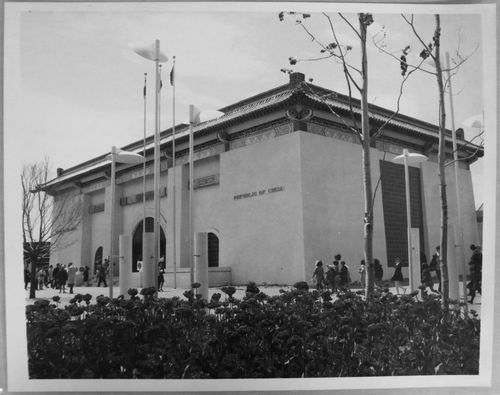
"Le Pavillon de la République de Chine à l'Expo 67 ...... Le Pavillon de la République de Chine exprime on ne peut mieux le sourire et la grâce de l'Orient. L'architecture traditionnelle du bâtiment renferme des éléments d'expositions qui veulent illustrer le rôle de ce pays sur la Terre des Hommes. / Republic of China Pavilion at Expo 67 ..... The two-stories Chinese pavilion on Ile Sainte-Hélène features the traditional architecture of that country. A display of world famous Chinese handicraft work is a special attraction."--Description.
ARCH256259
Description:
"Le Pavillon de la République de Chine à l'Expo 67 ...... Le Pavillon de la République de Chine exprime on ne peut mieux le sourire et la grâce de l'Orient. L'architecture traditionnelle du bâtiment renferme des éléments d'expositions qui veulent illustrer le rôle de ce pays sur la Terre des Hommes. / Republic of China Pavilion at Expo 67 ..... The two-stories Chinese pavilion on Ile Sainte-Hélène features the traditional architecture of that country. A display of world famous Chinese handicraft work is a special attraction."--Description.
Personnes et institutions:
Date:
1967
1967
Titre:
View of the Chinese Pavilion, Expo 67, Montréal, Québec
Actions:
ARCH256259
Description:
"Le Pavillon de la République de Chine à l'Expo 67 ...... Le Pavillon de la République de Chine exprime on ne peut mieux le sourire et la grâce de l'Orient. L'architecture traditionnelle du bâtiment renferme des éléments d'expositions qui veulent illustrer le rôle de ce pays sur la Terre des Hommes. / Republic of China Pavilion at Expo 67 ..... The two-stories Chinese pavilion on Ile Sainte-Hélène features the traditional architecture of that country. A display of world famous Chinese handicraft work is a special attraction."--Description.
View of the Chinese Pavilion, Expo 67, Montréal, Québec
Actions:
ARCH256259
Description:
"Le Pavillon de la République de Chine à l'Expo 67 ...... Le Pavillon de la République de Chine exprime on ne peut mieux le sourire et la grâce de l'Orient. L'architecture traditionnelle du bâtiment renferme des éléments d'expositions qui veulent illustrer le rôle de ce pays sur la Terre des Hommes. / Republic of China Pavilion at Expo 67 ..... The two-stories Chinese pavilion on Ile Sainte-Hélène features the traditional architecture of that country. A display of world famous Chinese handicraft work is a special attraction."--Description.
Classification:
photographies
photographies
Date:
1967
1967
Personnes et institutions:


