


1520 Résultats
Classification:
livres
livres
Actions:
Prix:
$38.95
(disponible sur commande)
Résumé:
A tale of diversity within our damaged landscapes, The Mushroom at the End of the World follows one of the strangest commodity chains of our times to explore the unexpected corners of capitalism. Here, we witness the varied and peculiar worlds of matsutake commerce: the worlds of Japanese gourmets, capitalist traders, Hmong jungle fighters, industrial forests, Yi Chinese(...)
$38.95
(disponible sur commande)
Résumé:
A tale of diversity within our damaged landscapes, The Mushroom at the End of the World follows one of the strangest commodity chains of our times to explore the unexpected corners of capitalism. Here, we witness the varied and peculiar worlds of matsutake commerce: the worlds of Japanese gourmets, capitalist traders, Hmong jungle fighters, industrial forests, Yi Chinese(...)
Publication:
octobre 2015
octobre 2015
Titre:
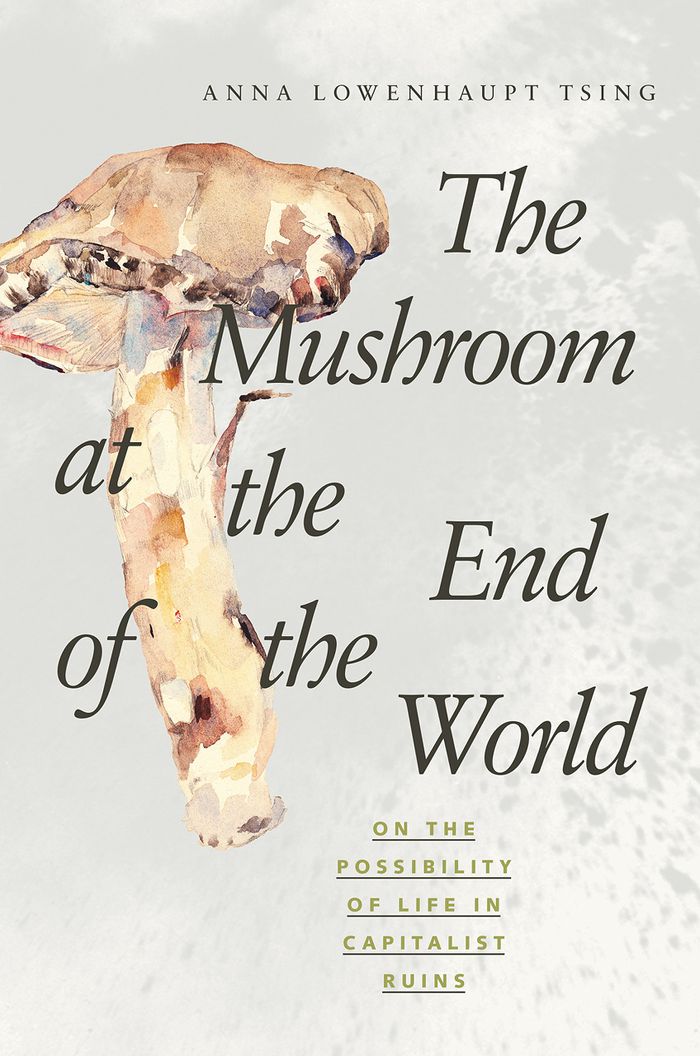
The mushroom at the end of the world: on the possibility of life in capitalist ruins
Actions:
Prix:
$38.95
(disponible sur commande)
Résumé:
A tale of diversity within our damaged landscapes, The Mushroom at the End of the World follows one of the strangest commodity chains of our times to explore the unexpected corners of capitalism. Here, we witness the varied and peculiar worlds of matsutake commerce: the worlds of Japanese gourmets, capitalist traders, Hmong jungle fighters, industrial forests, Yi Chinese goat herders, Finnish nature guides, and more. These companions also lead us into fungal ecologies and forest histories to better understand the promise of cohabitation in a time of massive human destruction. By investigating one of the world’s most sought-after fungi, The Mushroom at the End of the World presents an original examination into the relation between capitalist destruction and collaborative survival within multispecies landscapes, the prerequisite for continuing life on earth.
The mushroom at the end of the world: on the possibility of life in capitalist ruins
Actions:
Prix:
$38.95
(disponible sur commande)
Résumé:
A tale of diversity within our damaged landscapes, The Mushroom at the End of the World follows one of the strangest commodity chains of our times to explore the unexpected corners of capitalism. Here, we witness the varied and peculiar worlds of matsutake commerce: the worlds of Japanese gourmets, capitalist traders, Hmong jungle fighters, industrial forests, Yi Chinese goat herders, Finnish nature guides, and more. These companions also lead us into fungal ecologies and forest histories to better understand the promise of cohabitation in a time of massive human destruction. By investigating one of the world’s most sought-after fungi, The Mushroom at the End of the World presents an original examination into the relation between capitalist destruction and collaborative survival within multispecies landscapes, the prerequisite for continuing life on earth.
Classification:
livres
livres
Publication:
octobre 2015
octobre 2015
Classification:
livres
livres
Prix:
$46.95
(disponible sur commande)
Résumé:
The space we live in, reduced to a minimum, has been fascinating us for generations - the writer Thoreau lived in a self-built hut in the forest from 1845 - 1847. In 1952, Le Corbusier built a hut at the Côte d'Azur for himself and his wife. Inspired by this, Urs Peter Flückiger, together with his students, built an ecologically and economically sustainable cabin in the(...)
$46.95
(disponible sur commande)
Résumé:
The space we live in, reduced to a minimum, has been fascinating us for generations - the writer Thoreau lived in a self-built hut in the forest from 1845 - 1847. In 1952, Le Corbusier built a hut at the Côte d'Azur for himself and his wife. Inspired by this, Urs Peter Flückiger, together with his students, built an ecologically and economically sustainable cabin in the(...)
Titre:
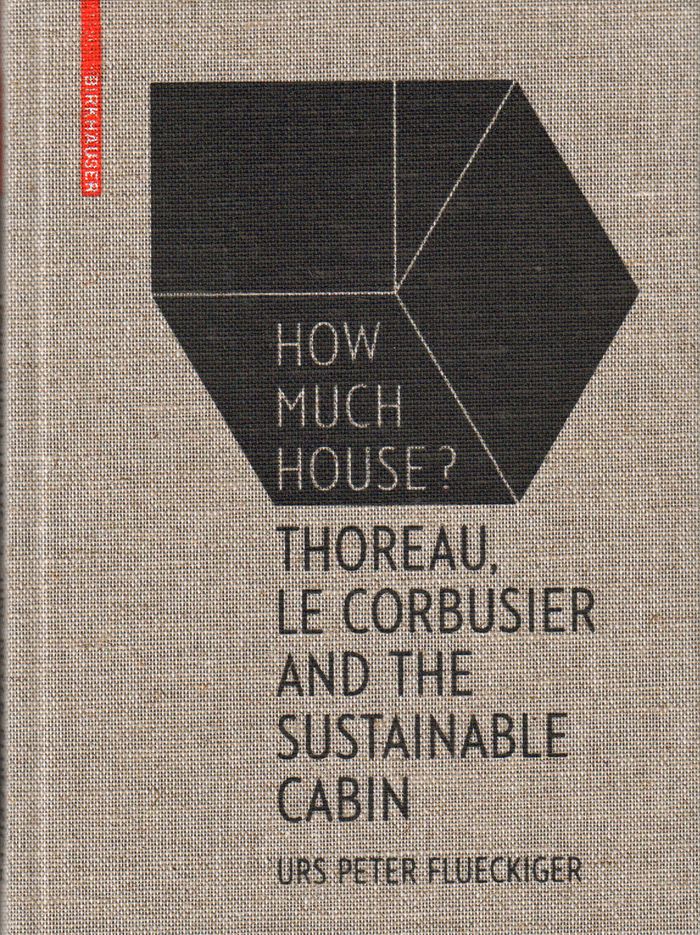
How much house: Thoreau, Le Corbusier and the sustainable cabin
Actions:
Prix:
$46.95
(disponible sur commande)
Résumé:
The space we live in, reduced to a minimum, has been fascinating us for generations - the writer Thoreau lived in a self-built hut in the forest from 1845 - 1847. In 1952, Le Corbusier built a hut at the Côte d'Azur for himself and his wife. Inspired by this, Urs Peter Flückiger, together with his students, built an ecologically and economically sustainable cabin in the Texan prairie. All three projects share the idea of minimal space and its relationship with the surrounding nature. In text, drawings, and photographs, this book analyses the three projects and shows parallels and similarities. Inspired by Tolstoy s story How Much Land Does A Man Need? , the author asks: How much house does a man need?, thereby providing a pointed contribution to the current discussion on the requirement for housing.
How much house: Thoreau, Le Corbusier and the sustainable cabin
Actions:
Prix:
$46.95
(disponible sur commande)
Résumé:
The space we live in, reduced to a minimum, has been fascinating us for generations - the writer Thoreau lived in a self-built hut in the forest from 1845 - 1847. In 1952, Le Corbusier built a hut at the Côte d'Azur for himself and his wife. Inspired by this, Urs Peter Flückiger, together with his students, built an ecologically and economically sustainable cabin in the Texan prairie. All three projects share the idea of minimal space and its relationship with the surrounding nature. In text, drawings, and photographs, this book analyses the three projects and shows parallels and similarities. Inspired by Tolstoy s story How Much Land Does A Man Need? , the author asks: How much house does a man need?, thereby providing a pointed contribution to the current discussion on the requirement for housing.
Classification:
livres
livres
Publication:
novembre 2016
novembre 2016
Sujet:
Architecture résidentielle
Architecture résidentielle
Classification:
livres
livres
Prix:
$70.00
(disponible en magasin)
Résumé:
Since 1997, architect and installation artist Markus Heinsdorff has focused much of his work on the potential and possibilities afforded by bamboo. This volume shows how that interest played out in his design for the Sino-German pavilion at Expo 2010 in Shanghai. The pavilion, the only binational building at the Expo, employs an innovative two-story bamboo membrane(...)
$70.00
(disponible en magasin)
Résumé:
Since 1997, architect and installation artist Markus Heinsdorff has focused much of his work on the potential and possibilities afforded by bamboo. This volume shows how that interest played out in his design for the Sino-German pavilion at Expo 2010 in Shanghai. The pavilion, the only binational building at the Expo, employs an innovative two-story bamboo membrane(...)
Titre:
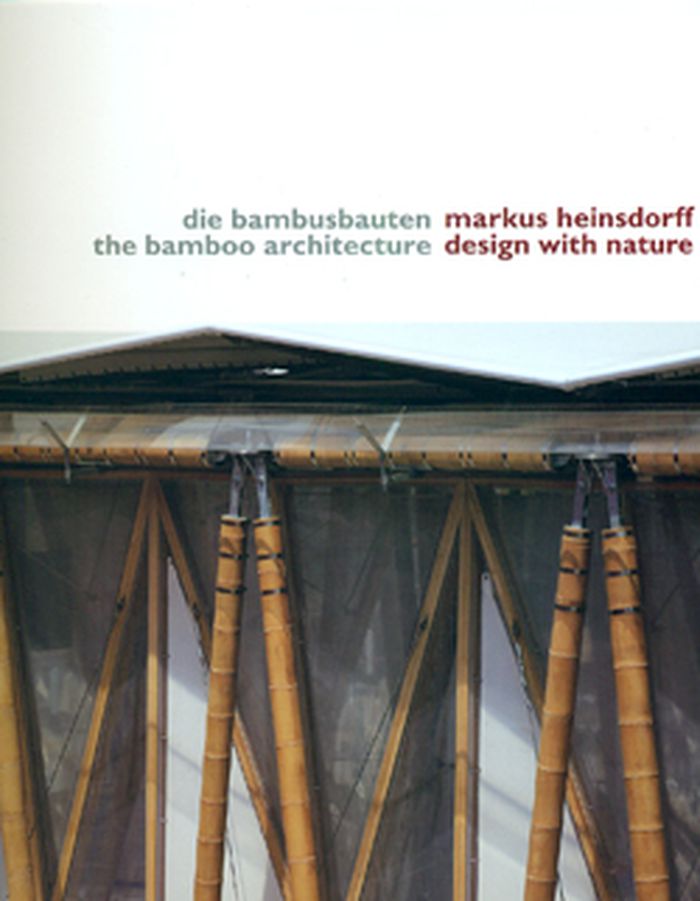
Markus Heinsdorff, design with nature: the bamboo architecture
Actions:
Prix:
$70.00
(disponible en magasin)
Résumé:
Since 1997, architect and installation artist Markus Heinsdorff has focused much of his work on the potential and possibilities afforded by bamboo. This volume shows how that interest played out in his design for the Sino-German pavilion at Expo 2010 in Shanghai. The pavilion, the only binational building at the Expo, employs an innovative two-story bamboo membrane structure, while the rest of the building is composed almost entirely of bamboo canes and laminates. This highly illustrated volume documents the planning and creation of the building, as well as the environmentalist ideology underlying its design. In addition, the book features a chapter that addresses some of Heinsdorff’s other projects, including an airship built in Bali, a treehouse in the canopy of a primeval forest, and a perpetually regrowing bamboo dome.
Markus Heinsdorff, design with nature: the bamboo architecture
Actions:
Prix:
$70.00
(disponible en magasin)
Résumé:
Since 1997, architect and installation artist Markus Heinsdorff has focused much of his work on the potential and possibilities afforded by bamboo. This volume shows how that interest played out in his design for the Sino-German pavilion at Expo 2010 in Shanghai. The pavilion, the only binational building at the Expo, employs an innovative two-story bamboo membrane structure, while the rest of the building is composed almost entirely of bamboo canes and laminates. This highly illustrated volume documents the planning and creation of the building, as well as the environmentalist ideology underlying its design. In addition, the book features a chapter that addresses some of Heinsdorff’s other projects, including an airship built in Bali, a treehouse in the canopy of a primeval forest, and a perpetually regrowing bamboo dome.
Classification:
livres
livres
Publication:
mars 2011
mars 2011
Sujet:
Architecture, monographies
Architecture, monographies
Classification:
livres
livres
Titre:
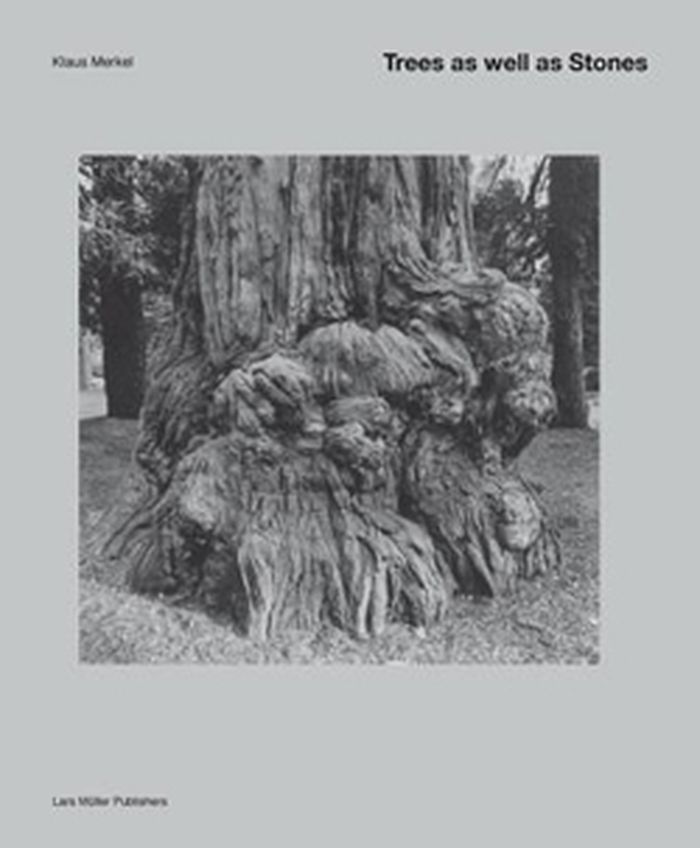
Trees like stones
Trees like stones
Actions:
Prix:
$70.00
(disponible sur commande)
Résumé:
Klaus Merkel has been photographing stones, rocky landscapes and trees for over thirty years, which he pairs up in double pictures. He portrays the astounding harmony between the animate and the inanimate, between natural and designed manifestations. Fascinating affinities become visible when he shows the limestone blocks of the Great Pyramid of Giza alongside basalt(...)
$70.00
(disponible sur commande)
Résumé:
Klaus Merkel has been photographing stones, rocky landscapes and trees for over thirty years, which he pairs up in double pictures. He portrays the astounding harmony between the animate and the inanimate, between natural and designed manifestations. Fascinating affinities become visible when he shows the limestone blocks of the Great Pyramid of Giza alongside basalt(...)
Titre:
Trees like stones
Actions:
Prix:
$70.00
(disponible sur commande)
Résumé:
Klaus Merkel has been photographing stones, rocky landscapes and trees for over thirty years, which he pairs up in double pictures. He portrays the astounding harmony between the animate and the inanimate, between natural and designed manifestations. Fascinating affinities become visible when he shows the limestone blocks of the Great Pyramid of Giza alongside basalt cliffs in Northern Ireland, and the cultivated lime-tree walkway of a castle grounds next to the nave of a cathedral. As the forest of figures and pinnacles of Milan Cathedral is placed next to the sandstone columns of Bryce Canyon, fascinating connections between natural form and art emerge. The book thus invites the reader to examine and compare the multiple similarities of the surfaces' structures of natural as well as artificial objects.
Trees like stones
Actions:
Prix:
$70.00
(disponible sur commande)
Résumé:
Klaus Merkel has been photographing stones, rocky landscapes and trees for over thirty years, which he pairs up in double pictures. He portrays the astounding harmony between the animate and the inanimate, between natural and designed manifestations. Fascinating affinities become visible when he shows the limestone blocks of the Great Pyramid of Giza alongside basalt cliffs in Northern Ireland, and the cultivated lime-tree walkway of a castle grounds next to the nave of a cathedral. As the forest of figures and pinnacles of Milan Cathedral is placed next to the sandstone columns of Bryce Canyon, fascinating connections between natural form and art emerge. The book thus invites the reader to examine and compare the multiple similarities of the surfaces' structures of natural as well as artificial objects.
Classification:
livres
livres
Publication:
novembre 2011
novembre 2011
Sujet:
Monographies photo
Monographies photo
Classification:
périodiques
périodiques
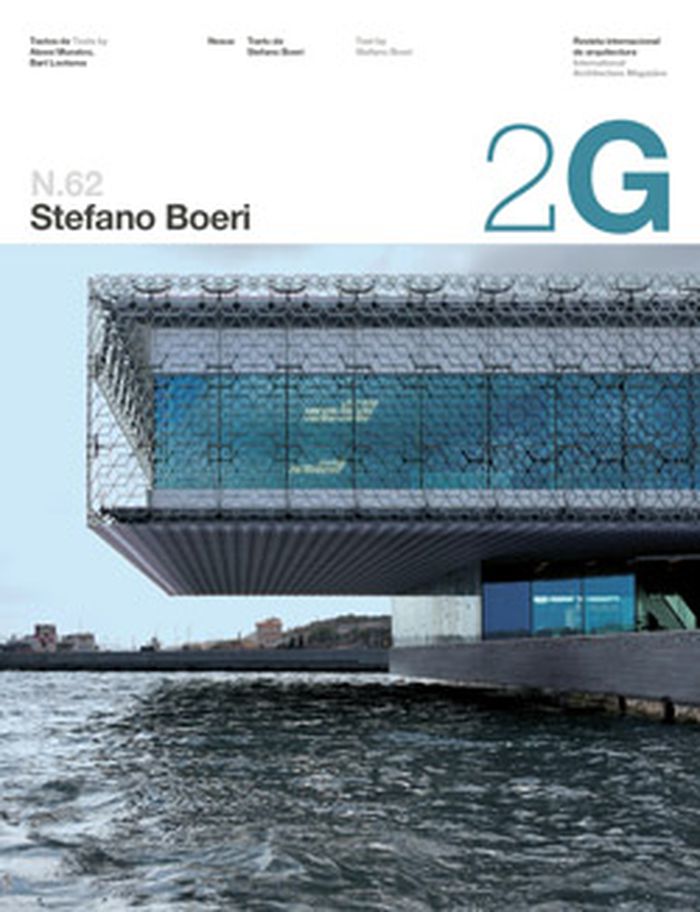
Titre:
2G n.62: Stefano Boeri
2G n.62: Stefano Boeri
Actions:
Prix:
$59.95
(disponible sur commande)
Résumé:
Stefano Boeri is one of the few practices of international renown that has managed to overcome the difficulties intrinsic to the situation Italy presents for architecture studios and to make of these a virtue. His career as an architect has gone hand in hand with a commitment to teaching, criticism, publishing, politics and cultural agitation, and the projects he has(...)
$59.95
(disponible sur commande)
Résumé:
Stefano Boeri is one of the few practices of international renown that has managed to overcome the difficulties intrinsic to the situation Italy presents for architecture studios and to make of these a virtue. His career as an architect has gone hand in hand with a commitment to teaching, criticism, publishing, politics and cultural agitation, and the projects he has(...)
Titre:
2G n.62: Stefano Boeri
Actions:
Prix:
$59.95
(disponible sur commande)
Résumé:
Stefano Boeri is one of the few practices of international renown that has managed to overcome the difficulties intrinsic to the situation Italy presents for architecture studios and to make of these a virtue. His career as an architect has gone hand in hand with a commitment to teaching, criticism, publishing, politics and cultural agitation, and the projects he has tackled in these fields are numerous. To this we might add an abundant oeuvre unusually productive in terms of Italian parameters including public and private buildings, extending from apartment blocks and offices, a shopping mall and a small art centre in Milan, to more paradigmatic works like the remodelling of La Maddalena Arsenal (Sardinia), the apartment towers of the Vertical Forest in Milan and the Centre Régional de la Méditerranée in Marseille.
2G n.62: Stefano Boeri
Actions:
Prix:
$59.95
(disponible sur commande)
Résumé:
Stefano Boeri is one of the few practices of international renown that has managed to overcome the difficulties intrinsic to the situation Italy presents for architecture studios and to make of these a virtue. His career as an architect has gone hand in hand with a commitment to teaching, criticism, publishing, politics and cultural agitation, and the projects he has tackled in these fields are numerous. To this we might add an abundant oeuvre unusually productive in terms of Italian parameters including public and private buildings, extending from apartment blocks and offices, a shopping mall and a small art centre in Milan, to more paradigmatic works like the remodelling of La Maddalena Arsenal (Sardinia), the apartment towers of the Vertical Forest in Milan and the Centre Régional de la Méditerranée in Marseille.
Classification:
périodiques
périodiques
Publication:
juillet 2012
juillet 2012
Sujet:
Revues
Revues
Classification:
livres
livres
Actions:
Prix:
$26.50
(disponible sur commande)
Résumé:
Matsutake is the most valuable mushroom in the world — and a weed that grows in human-disturbed forests across the Northern Hemisphere. Anna Lowenhaupt Tsing’s account of these sought-after fungi offers insights into areas far beyond just mushrooms and addresses a crucial question: What manages to live in the ruins we have made? 'The Mushroom at the End of the World'(...)
$26.50
(disponible sur commande)
Résumé:
Matsutake is the most valuable mushroom in the world — and a weed that grows in human-disturbed forests across the Northern Hemisphere. Anna Lowenhaupt Tsing’s account of these sought-after fungi offers insights into areas far beyond just mushrooms and addresses a crucial question: What manages to live in the ruins we have made? 'The Mushroom at the End of the World'(...)
Publication:
juin 2021
juin 2021
Titre:
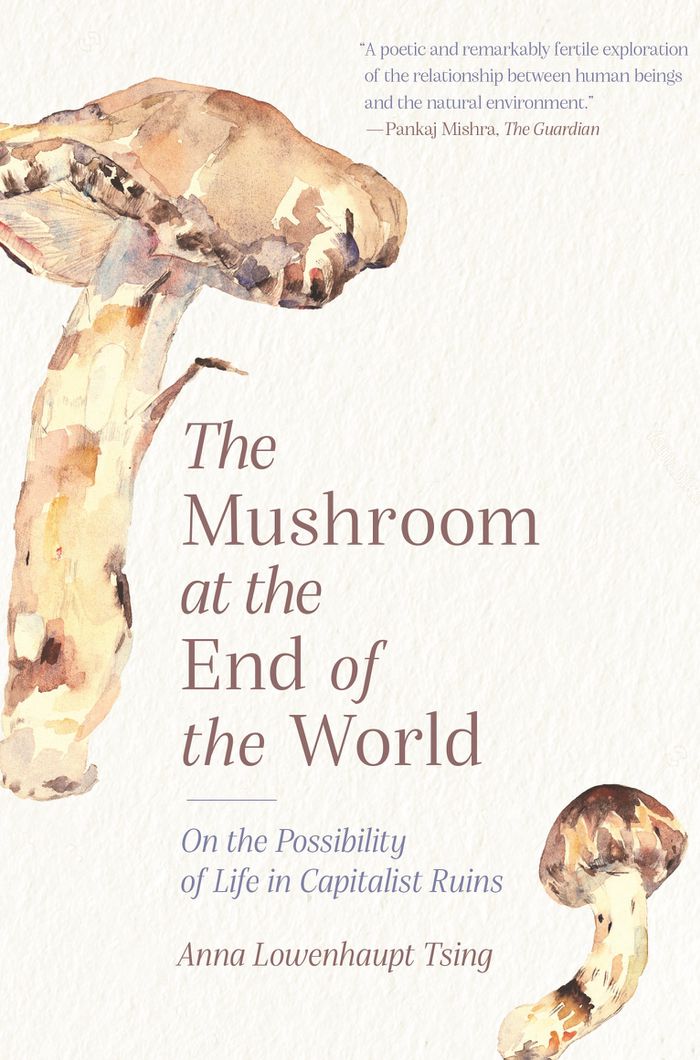
The mushroom at the end of the world, second edition
Actions:
Prix:
$26.50
(disponible sur commande)
Résumé:
Matsutake is the most valuable mushroom in the world — and a weed that grows in human-disturbed forests across the Northern Hemisphere. Anna Lowenhaupt Tsing’s account of these sought-after fungi offers insights into areas far beyond just mushrooms and addresses a crucial question: What manages to live in the ruins we have made? 'The Mushroom at the End of the World' explores the unexpected corners of matsutake commerce, where we encounter Japanese gourmets, capitalist traders, Hmong jungle fighters, Finnish nature guides, and more. These companions lead us into fungal ecologies and forest histories to better understand the promise of cohabitation in a time of massive human devastation. The book delves into the relationship between capitalist destruction and collaborative survival within multispecies landscapes, the prerequisite for continuing life on earth.
The mushroom at the end of the world, second edition
Actions:
Prix:
$26.50
(disponible sur commande)
Résumé:
Matsutake is the most valuable mushroom in the world — and a weed that grows in human-disturbed forests across the Northern Hemisphere. Anna Lowenhaupt Tsing’s account of these sought-after fungi offers insights into areas far beyond just mushrooms and addresses a crucial question: What manages to live in the ruins we have made? 'The Mushroom at the End of the World' explores the unexpected corners of matsutake commerce, where we encounter Japanese gourmets, capitalist traders, Hmong jungle fighters, Finnish nature guides, and more. These companions lead us into fungal ecologies and forest histories to better understand the promise of cohabitation in a time of massive human devastation. The book delves into the relationship between capitalist destruction and collaborative survival within multispecies landscapes, the prerequisite for continuing life on earth.
Classification:
livres
livres
Publication:
juin 2021
juin 2021
Classification:
livres
livres
Titre:
Trees in the city / by Ira Bruce Nadel, Cornelia Hahn Oberlander ; Lesley R. Bohm, illustrator.
Trees in the city / by Ira Bruce Nadel, Cornelia Hahn Oberlander ; Lesley R. Bohm, illustrator.
Actions:
Exemplaires:
Description:
vii, 94 pages : illustrations ; 24 cm.
Description:
vii, 94 pages : illustrations ; 24 cm.
Auteur:
Sujet:
Publication:
New York : Pergamon Press, ©1977.
New York : Pergamon Press, ©1977.
Titre:
Trees in the city / by Ira Bruce Nadel, Cornelia Hahn Oberlander ; Lesley R. Bohm, illustrator.
Actions:
Exemplaires:
Description:
vii, 94 pages : illustrations ; 24 cm.
Trees in the city / by Ira Bruce Nadel, Cornelia Hahn Oberlander ; Lesley R. Bohm, illustrator.
Actions:
Exemplaires:
Description:
vii, 94 pages : illustrations ; 24 cm.
Classification:
livres
livres
Publication:
New York : Pergamon Press, ©1977.
New York : Pergamon Press, ©1977.
Auteur:
Sujet:
Classification:
livres
livres
Actions:
Exemplaires:
Description:
255 pages : chiefly color illustrations ; 26 cm
Description:
255 pages : chiefly color illustrations ; 26 cm
Auteur:
Sujet:
Publication:
New York : Princeton Architectural Press, 2008.
New York : Princeton Architectural Press, 2008.
Titre:
Leisurama now : the beach house for everyone (1964- ) / Paul Sahre.
Actions:
Exemplaires:
Description:
255 pages : chiefly color illustrations ; 26 cm
Leisurama now : the beach house for everyone (1964- ) / Paul Sahre.
Actions:
Exemplaires:
Description:
255 pages : chiefly color illustrations ; 26 cm
Classification:
livres
livres
Publication:
New York : Princeton Architectural Press, 2008.
New York : Princeton Architectural Press, 2008.
Auteur:
Sujet:
Classification:
livres
livres
Actions:
Exemplaires:
Description:
xxxi, 592 pages : illustrations, maps ; 24 cm
Description:
xxxi, 592 pages : illustrations, maps ; 24 cm
Auteur:
Sujet:
Publication:
New York : McGraw-Hill, ©1995.
New York : McGraw-Hill, ©1995.
Titre:
Classic readings in urban planning : an introduction / edited by Jay M. Stein.
Actions:
Exemplaires:
Description:
xxxi, 592 pages : illustrations, maps ; 24 cm
Classic readings in urban planning : an introduction / edited by Jay M. Stein.
Actions:
Exemplaires:
Description:
xxxi, 592 pages : illustrations, maps ; 24 cm
Classification:
livres
livres
Publication:
New York : McGraw-Hill, ©1995.
New York : McGraw-Hill, ©1995.
Auteur:
Sujet:
Classification:
livres
livres
Actions:
Exemplaires:
Description:
xvi, 960 pages : illustrations, maps ; 25 cm
Description:
xvi, 960 pages : illustrations, maps ; 25 cm
Auteur:
Sujet:
Publication:
New York, NY : HarperCollins, ©1995.
New York, NY : HarperCollins, ©1995.
Titre:
Thy will be done : the conquest of the Amazon : Nelson Rockefeller and Evangelism in the age of oil / Gerard Colby with Charlotte Dennett.
Actions:
Exemplaires:
Description:
xvi, 960 pages : illustrations, maps ; 25 cm
Thy will be done : the conquest of the Amazon : Nelson Rockefeller and Evangelism in the age of oil / Gerard Colby with Charlotte Dennett.
Actions:
Exemplaires:
Description:
xvi, 960 pages : illustrations, maps ; 25 cm
Classification:
livres
livres
Publication:
New York, NY : HarperCollins, ©1995.
New York, NY : HarperCollins, ©1995.
Auteur:
Sujet:


