


1614 Résultats
Classification:
livres
livres
Titre:
Manuel Gallego
Manuel Gallego
Actions:
Prix:
$78.95
(disponible sur commande)
Résumé:
Manuel Gallego (born 1936), a disciple of the most important Spanish architect of the post-war period, Alejandro de la Sota, is perhaps the best exponent of radical architecture in Spain today. His rational buildings - a series of broken primary forms (...)
$78.95
(disponible sur commande)
Résumé:
Manuel Gallego (born 1936), a disciple of the most important Spanish architect of the post-war period, Alejandro de la Sota, is perhaps the best exponent of radical architecture in Spain today. His rational buildings - a series of broken primary forms (...)
Sujet:
Architecture, monographies
Architecture, monographies
Publication:
octobre 1998, Basel
octobre 1998, Basel
Titre:
Manuel Gallego
Actions:
Prix:
$78.95
(disponible sur commande)
Résumé:
Manuel Gallego (born 1936), a disciple of the most important Spanish architect of the post-war period, Alejandro de la Sota, is perhaps the best exponent of radical architecture in Spain today. His rational buildings - a series of broken primary forms grounded in the particulars of the place, where the spaces created open up to the outside and the walls act as the connecting elements between architecture and nature - stand out for their striking sculptural expression. The radical nature of his architecture is solidly rooted in the vernacular, giving rise to innovative designs in which the use of local materials (stone, wood, glass, metal) and the handling of light create an intimate dialogue between the man-made and the surrounding environment. This monograph on the Spanish architect Manuel Gallego, who received the Spanish Architecture Award is 1997, is the first on one of the most important representatives of modern Spanish architecture.
Manuel Gallego
Actions:
Prix:
$78.95
(disponible sur commande)
Résumé:
Manuel Gallego (born 1936), a disciple of the most important Spanish architect of the post-war period, Alejandro de la Sota, is perhaps the best exponent of radical architecture in Spain today. His rational buildings - a series of broken primary forms grounded in the particulars of the place, where the spaces created open up to the outside and the walls act as the connecting elements between architecture and nature - stand out for their striking sculptural expression. The radical nature of his architecture is solidly rooted in the vernacular, giving rise to innovative designs in which the use of local materials (stone, wood, glass, metal) and the handling of light create an intimate dialogue between the man-made and the surrounding environment. This monograph on the Spanish architect Manuel Gallego, who received the Spanish Architecture Award is 1997, is the first on one of the most important representatives of modern Spanish architecture.
Classification:
livres
livres
Publication:
octobre 1998, Basel
octobre 1998, Basel
Sujet:
Architecture, monographies
Architecture, monographies
Classification:
livres
livres
Actions:
Prix:
$46.95
(disponible sur commande)
Résumé:
L’Université de Picardie Jules-Verne est à la tête d’un patrimoine bâti d’une grande variété, réparti dans six villes de l’ancienne région Picardie et dans cinq pôles de la ville d’Amiens. Installée en 1969 à limite sud-ouest de cette dernière, elle s’est ensuite recentrée puis déployée grâce à ses instituts, avant de trouver dans la Citadelle un ancrage doublement(...)
$46.95
(disponible sur commande)
Résumé:
L’Université de Picardie Jules-Verne est à la tête d’un patrimoine bâti d’une grande variété, réparti dans six villes de l’ancienne région Picardie et dans cinq pôles de la ville d’Amiens. Installée en 1969 à limite sud-ouest de cette dernière, elle s’est ensuite recentrée puis déployée grâce à ses instituts, avant de trouver dans la Citadelle un ancrage doublement(...)
Titre:
L'Université construit la ville
Actions:
Prix:
$46.95
(disponible sur commande)
Résumé:
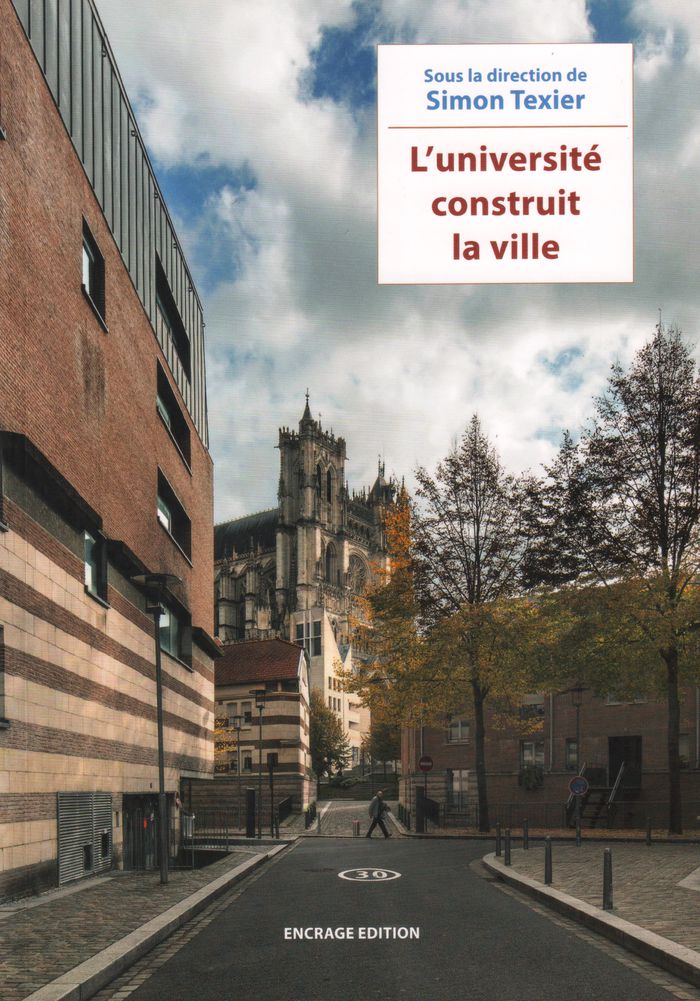
L’Université de Picardie Jules-Verne est à la tête d’un patrimoine bâti d’une grande variété, réparti dans six villes de l’ancienne région Picardie et dans cinq pôles de la ville d’Amiens. Installée en 1969 à limite sud-ouest de cette dernière, elle s’est ensuite recentrée puis déployée grâce à ses instituts, avant de trouver dans la Citadelle un ancrage doublement symbolique : patrimonial, d’une part, avec l’inscription d’un ensemble ultramoderne au sein d’un monument historique parmi les plus marquants de la ville ; territorial d’autre part, avec l’amorce d’un dialogue entre l’université et les quartiers nord. Durant cinquante ans, l’université a ainsi raconté l’histoire d’une ville et de son territoire, dont elle a mis en évidence les choix stratégiques et les mutations. Elle a pour cela fait appel à certains des plus grands noms de l’architecture européenne, notamment Renzo Piano, Francesco Venezia, Henri Gaudin et Bruno Gaudin.
L'Université construit la ville
Actions:
Prix:
$46.95
(disponible sur commande)
Résumé:
L’Université de Picardie Jules-Verne est à la tête d’un patrimoine bâti d’une grande variété, réparti dans six villes de l’ancienne région Picardie et dans cinq pôles de la ville d’Amiens. Installée en 1969 à limite sud-ouest de cette dernière, elle s’est ensuite recentrée puis déployée grâce à ses instituts, avant de trouver dans la Citadelle un ancrage doublement symbolique : patrimonial, d’une part, avec l’inscription d’un ensemble ultramoderne au sein d’un monument historique parmi les plus marquants de la ville ; territorial d’autre part, avec l’amorce d’un dialogue entre l’université et les quartiers nord. Durant cinquante ans, l’université a ainsi raconté l’histoire d’une ville et de son territoire, dont elle a mis en évidence les choix stratégiques et les mutations. Elle a pour cela fait appel à certains des plus grands noms de l’architecture européenne, notamment Renzo Piano, Francesco Venezia, Henri Gaudin et Bruno Gaudin.
Classification:
livres
livres
Publication:
juin 2023
juin 2023
Classification:
livres
livres
Prix:
$28.00
(disponible sur commande)
Résumé:
Addressing the histories and speculating on the futures of radical design and art education, "Decolonising design education" looks at the role that different institutional modes play in these endeavors. Developed in a dialogue among Regina Bittner, Katja Klaus and Philipp Sack (Bauhaus Dessau Foundation) and JJ Adibrata and farid rakun (Gudskul), the publication features(...)
$28.00
(disponible sur commande)
Résumé:
Addressing the histories and speculating on the futures of radical design and art education, "Decolonising design education" looks at the role that different institutional modes play in these endeavors. Developed in a dialogue among Regina Bittner, Katja Klaus and Philipp Sack (Bauhaus Dessau Foundation) and JJ Adibrata and farid rakun (Gudskul), the publication features(...)
Titre:
Decolonising design education: Schools of departure no.1
Actions:
Prix:
$28.00
(disponible sur commande)
Résumé:
Addressing the histories and speculating on the futures of radical design and art education, "Decolonising design education" looks at the role that different institutional modes play in these endeavors. Developed in a dialogue among Regina Bittner, Katja Klaus and Philipp Sack (Bauhaus Dessau Foundation) and JJ Adibrata and farid rakun (Gudskul), the publication features a selection of historical case studies, conversations and in-depth reports about education practices in formerly colonized regions, shared by 10 art and design collectives. The publication is part of the Schools of Departure series, jointly published with a digital atlas mapping experiments in art and design education beyond the Bauhaus. By studying these phenomena as manifestations of "traveling concepts," which keep a wide variety of educational approaches in a process of constant exchange and motion, the publication explores routes of appropriation that move between different geographies, times and cultures.
Decolonising design education: Schools of departure no.1
Actions:
Prix:
$28.00
(disponible sur commande)
Résumé:
Addressing the histories and speculating on the futures of radical design and art education, "Decolonising design education" looks at the role that different institutional modes play in these endeavors. Developed in a dialogue among Regina Bittner, Katja Klaus and Philipp Sack (Bauhaus Dessau Foundation) and JJ Adibrata and farid rakun (Gudskul), the publication features a selection of historical case studies, conversations and in-depth reports about education practices in formerly colonized regions, shared by 10 art and design collectives. The publication is part of the Schools of Departure series, jointly published with a digital atlas mapping experiments in art and design education beyond the Bauhaus. By studying these phenomena as manifestations of "traveling concepts," which keep a wide variety of educational approaches in a process of constant exchange and motion, the publication explores routes of appropriation that move between different geographies, times and cultures.
Classification:
livres
livres
Publication:
mars 2024
mars 2024
Sujet:
Théorie du design
Théorie du design
Classification:
livres
livres
Actions:
Prix:
$76.95
(disponible en magasin)
Résumé:
Carlos Bunga: Inhabit the Contradiction is an extensive monograph devoted to the work of Carlos Bunga, published in conjunction with his eponymous exhibition presented at CAM – Gulbenkian. The book contains notes by the exhibition curator and catalogue editor, Rui Mateus Amaral, who introduces readers to the exhibition project, providing an in-depth account of its genesis(...)
$76.95
(disponible en magasin)
Résumé:
Carlos Bunga: Inhabit the Contradiction is an extensive monograph devoted to the work of Carlos Bunga, published in conjunction with his eponymous exhibition presented at CAM – Gulbenkian. The book contains notes by the exhibition curator and catalogue editor, Rui Mateus Amaral, who introduces readers to the exhibition project, providing an in-depth account of its genesis(...)
Titre:
Carlos Bunga: Inhabit the contradiction
Actions:
Prix:
$76.95
(disponible en magasin)
Résumé:
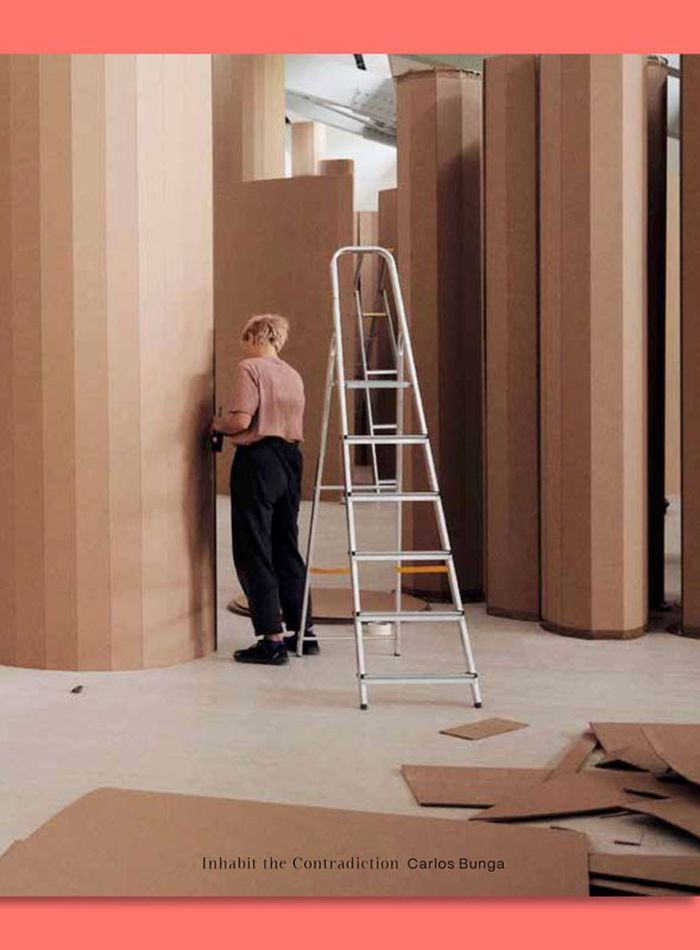
Carlos Bunga: Inhabit the Contradiction is an extensive monograph devoted to the work of Carlos Bunga, published in conjunction with his eponymous exhibition presented at CAM – Gulbenkian. The book contains notes by the exhibition curator and catalogue editor, Rui Mateus Amaral, who introduces readers to the exhibition project, providing an in-depth account of its genesis and development, focusing on the dialogue between Bunga's work and selected pieces from the CAM collection. The notes describe both Bunga's new and existing works, as well as their configuration within the space, with the intention of opening up multiple points of access to the exhibition, leaving room for individual interpretation. Designed by as ilhas studio, the catalogue also contains new essays by various authors written especially for the occasion—Rina Carvajal, Roland Groenenboom, Omar Kholeif, November Paynter, and Catarina Rosendo—each offering an in-depth look at salient aspects of the artist's multifaceted practice.
Carlos Bunga: Inhabit the contradiction
Actions:
Prix:
$76.95
(disponible en magasin)
Résumé:
Carlos Bunga: Inhabit the Contradiction is an extensive monograph devoted to the work of Carlos Bunga, published in conjunction with his eponymous exhibition presented at CAM – Gulbenkian. The book contains notes by the exhibition curator and catalogue editor, Rui Mateus Amaral, who introduces readers to the exhibition project, providing an in-depth account of its genesis and development, focusing on the dialogue between Bunga's work and selected pieces from the CAM collection. The notes describe both Bunga's new and existing works, as well as their configuration within the space, with the intention of opening up multiple points of access to the exhibition, leaving room for individual interpretation. Designed by as ilhas studio, the catalogue also contains new essays by various authors written especially for the occasion—Rina Carvajal, Roland Groenenboom, Omar Kholeif, November Paynter, and Catarina Rosendo—each offering an in-depth look at salient aspects of the artist's multifaceted practice.
Classification:
livres
livres
Publication:
janvier 2026
janvier 2026
Classification:
livres
livres
Actions:
Prix:
$83.00
(disponible sur commande)
Résumé:
Inventions humaines, les villes constituent des miroirs du changement. Les espaces urbains sont au cœur des processus de globalisation, de transformation technologique et de recomposition économique et sociales des territoires. La qualité de leurs cadres de vie, l'organisation des mobilités et l'agencement de leurs formes, les incidences environnementales de leurs(...)
$83.00
(disponible sur commande)
Résumé:
Inventions humaines, les villes constituent des miroirs du changement. Les espaces urbains sont au cœur des processus de globalisation, de transformation technologique et de recomposition économique et sociales des territoires. La qualité de leurs cadres de vie, l'organisation des mobilités et l'agencement de leurs formes, les incidences environnementales de leurs(...)
Sujet:
Théorie de l’urbanisme
Théorie de l’urbanisme
Publication:
janvier 2005, Lausanne
janvier 2005, Lausanne
Titre:
Enjeux du développement urbain durable : transformations urbaines, gestion des ressources et gouvernance
Actions:
Prix:
$83.00
(disponible sur commande)
Résumé:
Inventions humaines, les villes constituent des miroirs du changement. Les espaces urbains sont au cœur des processus de globalisation, de transformation technologique et de recomposition économique et sociales des territoires. La qualité de leurs cadres de vie, l'organisation des mobilités et l'agencement de leurs formes, les incidences environnementales de leurs métabolismes, mais aussi leur gouvernance, constituent des enjeux d'une brûlante actualité. Cette publication collective, élaborée dans le cadre lémanique du Programme interuniversitaire Sciences, Vie, Société, a pour objectif d'analyser les problématiques et les enjeux relatifs aux transformations des espaces urbains à l'aide du concept de développement durable. Elle montre de quelle façon cette notion permet de renouveler le questionnement sur les formes, les structures et les dynamiques urbaines. L'éco-urbanisme pose de manière centrale les questions du dialogue entre les acteurs de la ville et de leur participation à la conception et à la mise en œuvre du projet urbain.
Enjeux du développement urbain durable : transformations urbaines, gestion des ressources et gouvernance
Actions:
Prix:
$83.00
(disponible sur commande)
Résumé:
Inventions humaines, les villes constituent des miroirs du changement. Les espaces urbains sont au cœur des processus de globalisation, de transformation technologique et de recomposition économique et sociales des territoires. La qualité de leurs cadres de vie, l'organisation des mobilités et l'agencement de leurs formes, les incidences environnementales de leurs métabolismes, mais aussi leur gouvernance, constituent des enjeux d'une brûlante actualité. Cette publication collective, élaborée dans le cadre lémanique du Programme interuniversitaire Sciences, Vie, Société, a pour objectif d'analyser les problématiques et les enjeux relatifs aux transformations des espaces urbains à l'aide du concept de développement durable. Elle montre de quelle façon cette notion permet de renouveler le questionnement sur les formes, les structures et les dynamiques urbaines. L'éco-urbanisme pose de manière centrale les questions du dialogue entre les acteurs de la ville et de leur participation à la conception et à la mise en œuvre du projet urbain.
Classification:
livres
livres
Publication:
janvier 2005, Lausanne
janvier 2005, Lausanne
Sujet:
Théorie de l’urbanisme
Théorie de l’urbanisme
Classification:
livres
livres
Prix:
$32.00
(disponible sur commande)
Résumé:
The Earth has entered a new epoch: the Anthropocene. What we are facing is not only an environmental crisis, but a geological revolution of human origin. In two centuries, our planet has tipped into a state unknown for millions of years. How did we get to this point? Refuting the convenient view of a “human species” that upset the Earth system, unaware of what it was(...)
$32.00
(disponible sur commande)
Résumé:
The Earth has entered a new epoch: the Anthropocene. What we are facing is not only an environmental crisis, but a geological revolution of human origin. In two centuries, our planet has tipped into a state unknown for millions of years. How did we get to this point? Refuting the convenient view of a “human species” that upset the Earth system, unaware of what it was(...)
Sujet:
Architecture écologique
Architecture écologique
Publication:
mars 2016
mars 2016
Titre:
The Shock of the Anthropocene: The Earth, History and Us
Actions:
Prix:
$32.00
(disponible sur commande)
Résumé:
The Earth has entered a new epoch: the Anthropocene. What we are facing is not only an environmental crisis, but a geological revolution of human origin. In two centuries, our planet has tipped into a state unknown for millions of years. How did we get to this point? Refuting the convenient view of a “human species” that upset the Earth system, unaware of what it was doing, this book proposes the first critical history of the Anthropocene, shaking up many accepted ideas: about our supposedly recent “environmental awareness,” about previous challenges to industrialism, about the manufacture of ignorance and consumerism, about so-called energy transitions, as well as about the role of the military in environmental destruction. In a dialogue between science and history, The Shock of the Anthropocene dissects a new theoretical buzzword and explores paths for living and acting politically in this rapidly developing geological epoch.
The Shock of the Anthropocene: The Earth, History and Us
Actions:
Prix:
$32.00
(disponible sur commande)
Résumé:
The Earth has entered a new epoch: the Anthropocene. What we are facing is not only an environmental crisis, but a geological revolution of human origin. In two centuries, our planet has tipped into a state unknown for millions of years. How did we get to this point? Refuting the convenient view of a “human species” that upset the Earth system, unaware of what it was doing, this book proposes the first critical history of the Anthropocene, shaking up many accepted ideas: about our supposedly recent “environmental awareness,” about previous challenges to industrialism, about the manufacture of ignorance and consumerism, about so-called energy transitions, as well as about the role of the military in environmental destruction. In a dialogue between science and history, The Shock of the Anthropocene dissects a new theoretical buzzword and explores paths for living and acting politically in this rapidly developing geological epoch.
Classification:
livres
livres
Publication:
mars 2016
mars 2016
Sujet:
Architecture écologique
Architecture écologique
Classification:
livres
livres

Actions:
Prix:
$34.95
(disponible en magasin)
Résumé:
Accompanied by a selection of some of David Goldblatt’s (1930–2018) lesser-known photographs, this distilled dialogue is drawn directly from the recordings of a roving conversation with the photographer conducted three months before his death in June 2018. Goldblatt was born in Randfontein—a mining town on the Witwatersrand gold reef—in 1930, the grandson of(...)
$34.95
(disponible en magasin)
Résumé:
Accompanied by a selection of some of David Goldblatt’s (1930–2018) lesser-known photographs, this distilled dialogue is drawn directly from the recordings of a roving conversation with the photographer conducted three months before his death in June 2018. Goldblatt was born in Randfontein—a mining town on the Witwatersrand gold reef—in 1930, the grandson of(...)
Titre:
David Goldblatt: the last interview
Actions:
Prix:
$34.95
(disponible en magasin)
Résumé:
Accompanied by a selection of some of David Goldblatt’s (1930–2018) lesser-known photographs, this distilled dialogue is drawn directly from the recordings of a roving conversation with the photographer conducted three months before his death in June 2018. Goldblatt was born in Randfontein—a mining town on the Witwatersrand gold reef—in 1930, the grandson of Lithuanian-Jewish migrants who settled in South Africa after escaping persecution in Europe. After the death of his father in 1962, Goldblatt sold the family clothing business to become a full-time photographer. In this candid conversation with writer Alexandra Dodd, Goldblatt shares his views about land and landscape, the dangerous lure of repetition in portrait photography, Johannesburg, the solipsism of life as a photographer, staying sharp, his visceral intolerance of censorship, his abiding interest in structures and his observation of instances of dominion under democracy, among other key themes.
David Goldblatt: the last interview
Actions:
Prix:
$34.95
(disponible en magasin)
Résumé:
Accompanied by a selection of some of David Goldblatt’s (1930–2018) lesser-known photographs, this distilled dialogue is drawn directly from the recordings of a roving conversation with the photographer conducted three months before his death in June 2018. Goldblatt was born in Randfontein—a mining town on the Witwatersrand gold reef—in 1930, the grandson of Lithuanian-Jewish migrants who settled in South Africa after escaping persecution in Europe. After the death of his father in 1962, Goldblatt sold the family clothing business to become a full-time photographer. In this candid conversation with writer Alexandra Dodd, Goldblatt shares his views about land and landscape, the dangerous lure of repetition in portrait photography, Johannesburg, the solipsism of life as a photographer, staying sharp, his visceral intolerance of censorship, his abiding interest in structures and his observation of instances of dominion under democracy, among other key themes.
Classification:
livres
livres
Publication:
novembre 2019
novembre 2019
Sujet:
Théorie de la photographie
Théorie de la photographie
Classification:
livres
livres
Actions:
Prix:
$88.00
(disponible sur commande)
Résumé:
South Asia holds a unique place among the many regions of the world where modern architecture was understood as both a tool for social progress and a global lingua franca in the second half of the 20th century. Following the end of British rule in 1947-48, architects in the newly formed nations of India, Pakistan, Bangladesh (East Pakistan until 1971) and Ceylon (now Sri(...)
$88.00
(disponible sur commande)
Résumé:
South Asia holds a unique place among the many regions of the world where modern architecture was understood as both a tool for social progress and a global lingua franca in the second half of the 20th century. Following the end of British rule in 1947-48, architects in the newly formed nations of India, Pakistan, Bangladesh (East Pakistan until 1971) and Ceylon (now Sri(...)
Titre:
The project of independence: Architectures of decolonization in South Asia, 1947-1985
Actions:
Prix:
$88.00
(disponible sur commande)
Résumé:
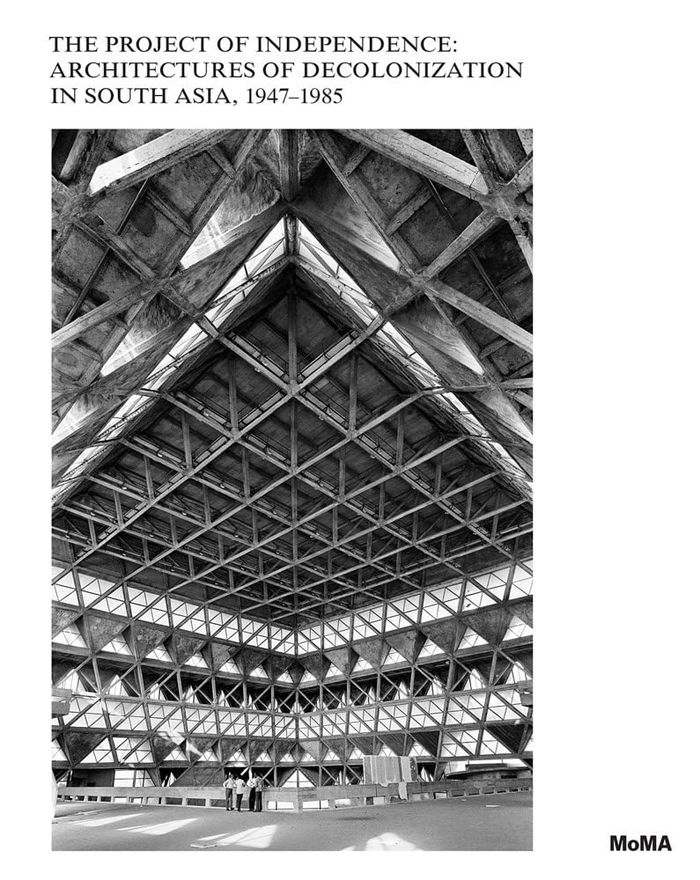
South Asia holds a unique place among the many regions of the world where modern architecture was understood as both a tool for social progress and a global lingua franca in the second half of the 20th century. Following the end of British rule in 1947-48, architects in the newly formed nations of India, Pakistan, Bangladesh (East Pakistan until 1971) and Ceylon (now Sri Lanka) proposed a novel understanding of modernity, disrupting the colonial hierarchy of center and periphery by challenging modernism's universalist claims. Architecture offered multiple ways to break with the colonial past. Through the establishment of institutions that embodied the societal aspirations of the period, and the creation of new cities and spaces for political representation, South Asian architects produced a distinct body of work in dialogue with global developments while advancing the theory and practice of low-cost, climatically and socially responsive design.
The project of independence: Architectures of decolonization in South Asia, 1947-1985
Actions:
Prix:
$88.00
(disponible sur commande)
Résumé:
South Asia holds a unique place among the many regions of the world where modern architecture was understood as both a tool for social progress and a global lingua franca in the second half of the 20th century. Following the end of British rule in 1947-48, architects in the newly formed nations of India, Pakistan, Bangladesh (East Pakistan until 1971) and Ceylon (now Sri Lanka) proposed a novel understanding of modernity, disrupting the colonial hierarchy of center and periphery by challenging modernism's universalist claims. Architecture offered multiple ways to break with the colonial past. Through the establishment of institutions that embodied the societal aspirations of the period, and the creation of new cities and spaces for political representation, South Asian architects produced a distinct body of work in dialogue with global developments while advancing the theory and practice of low-cost, climatically and socially responsive design.
Classification:
livres
livres
Publication:
mars 2022
mars 2022
Sujet:
Modernisme
Modernisme
Classification:
livres
livres
Prix:
$48.00
(disponible sur commande)
Résumé:
This book documents the materiality and spaces of the Garden House by Baracco+Wright Architects through photographs by Rory Gardiner. The imagery and thoughts reflect on the dialogue of building, life and systems conceived in an ongoing project of environmental repair. This holiday house is conceived as just a little more than a tent: a deck and raised platform are(...)
$48.00
(disponible sur commande)
Résumé:
This book documents the materiality and spaces of the Garden House by Baracco+Wright Architects through photographs by Rory Gardiner. The imagery and thoughts reflect on the dialogue of building, life and systems conceived in an ongoing project of environmental repair. This holiday house is conceived as just a little more than a tent: a deck and raised platform are(...)
Titre:
Buildings and living things: Barocco + Wright Garden House
Actions:
Prix:
$48.00
(disponible sur commande)
Résumé:
This book documents the materiality and spaces of the Garden House by Baracco+Wright Architects through photographs by Rory Gardiner. The imagery and thoughts reflect on the dialogue of building, life and systems conceived in an ongoing project of environmental repair. This holiday house is conceived as just a little more than a tent: a deck and raised platform are covered by a transparent "shed"; the interior perimeter "veranda" is garden space; the soil and natural ground line are maintained and carried through; a low lying site with terrestrial orchids and lillies, flood waters seasonally move through the site unimpeded; similarly the indigenous vegetation has begun to grow inside. B+W believe in a wide role for architectural thinking beyond the individual building. All projects are approached with a particular and equal attention to the parts and the whole, to individual project conditions and to the discourse of Architecture.
Buildings and living things: Barocco + Wright Garden House
Actions:
Prix:
$48.00
(disponible sur commande)
Résumé:
This book documents the materiality and spaces of the Garden House by Baracco+Wright Architects through photographs by Rory Gardiner. The imagery and thoughts reflect on the dialogue of building, life and systems conceived in an ongoing project of environmental repair. This holiday house is conceived as just a little more than a tent: a deck and raised platform are covered by a transparent "shed"; the interior perimeter "veranda" is garden space; the soil and natural ground line are maintained and carried through; a low lying site with terrestrial orchids and lillies, flood waters seasonally move through the site unimpeded; similarly the indigenous vegetation has begun to grow inside. B+W believe in a wide role for architectural thinking beyond the individual building. All projects are approached with a particular and equal attention to the parts and the whole, to individual project conditions and to the discourse of Architecture.
Classification:
livres
livres
Publication:
décembre 2022
décembre 2022
Sujet:
Architecture, monographies
Architecture, monographies
Classification:
livres
livres
Actions:
Prix:
$69.00
(disponible sur commande)
Résumé:
The most ''African'' of the Brazilian villages in the south of Bahia bears a Swiss name. Helvécia was founded 200 years ago by Swiss and German colonists, and the coffee grown on its vast estates produced great wealth for them. This would not have been possible without exploitation: in the mid-19th century, for every 200 white colonists, there were 2,000 slaves of African(...)
$69.00
(disponible sur commande)
Résumé:
The most ''African'' of the Brazilian villages in the south of Bahia bears a Swiss name. Helvécia was founded 200 years ago by Swiss and German colonists, and the coffee grown on its vast estates produced great wealth for them. This would not have been possible without exploitation: in the mid-19th century, for every 200 white colonists, there were 2,000 slaves of African(...)
Publication:
janvier 2023
janvier 2023
Titre:
Helvécia: A Swiss colonial history in Brazil
Actions:
Prix:
$69.00
(disponible sur commande)
Résumé:
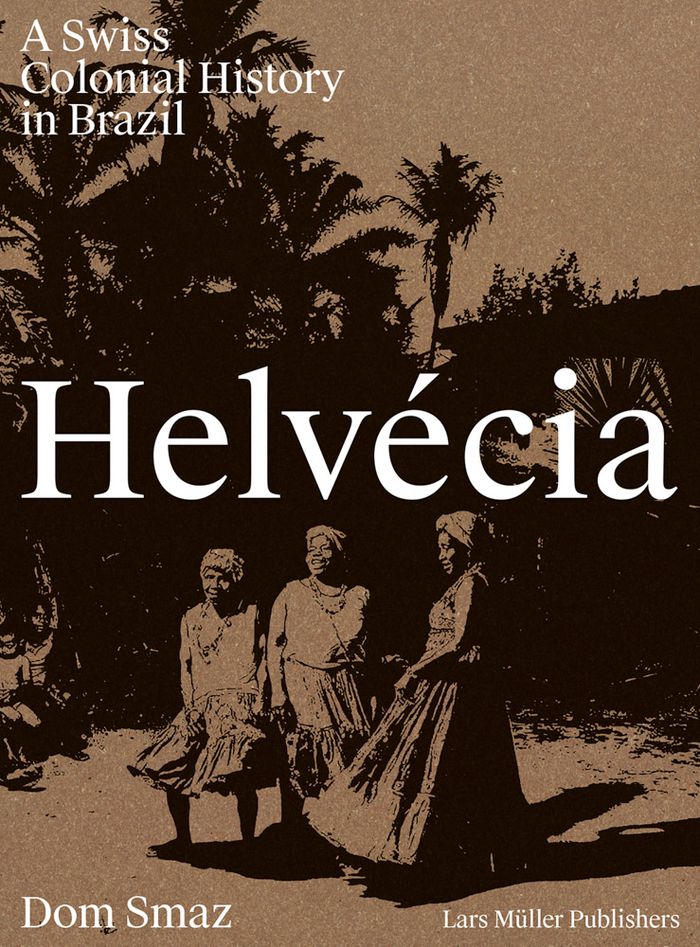
The most ''African'' of the Brazilian villages in the south of Bahia bears a Swiss name. Helvécia was founded 200 years ago by Swiss and German colonists, and the coffee grown on its vast estates produced great wealth for them. This would not have been possible without exploitation: in the mid-19th century, for every 200 white colonists, there were 2,000 slaves of African origin. Black people still make up the majority of the population today; many do not know the origins of their community. With great sensitivity and in dialogue with the inhabitants, Swiss photographer Dom Smaz goes in search of traces of the past, capturing the lives of the local people. Smaz’s pictures and text contributions by Shalini Randeria, among others, allow a new look at history and the origins of Switzerland’s wealth, revealing global histories of interconnectedness and power relations of the past that continue into the present.
Helvécia: A Swiss colonial history in Brazil
Actions:
Prix:
$69.00
(disponible sur commande)
Résumé:
The most ''African'' of the Brazilian villages in the south of Bahia bears a Swiss name. Helvécia was founded 200 years ago by Swiss and German colonists, and the coffee grown on its vast estates produced great wealth for them. This would not have been possible without exploitation: in the mid-19th century, for every 200 white colonists, there were 2,000 slaves of African origin. Black people still make up the majority of the population today; many do not know the origins of their community. With great sensitivity and in dialogue with the inhabitants, Swiss photographer Dom Smaz goes in search of traces of the past, capturing the lives of the local people. Smaz’s pictures and text contributions by Shalini Randeria, among others, allow a new look at history and the origins of Switzerland’s wealth, revealing global histories of interconnectedness and power relations of the past that continue into the present.
Classification:
livres
livres
Publication:
janvier 2023
janvier 2023


