


4204 Résultats
Classification:
documents textuels
documents textuels
Numéro de référence:
ARCH256703
Description:
general office files from Erickson/Massey office - tender/contract stage procedures, office furniture, office machines, planters, management contracts, newspaper clippings, Mid-Canada development fund, miscellaneous correspondence, construction consultants, conveyors, drape track valance, ecology newsletter, Dharam Kohli/ Erickson Massey agreement, E/M procedures - interiors, invitations, Architecture Canada Magazine, Architectural Institute of B.C. booklet, Art for Architecture, Artists, Building system information clearinghouse, consultants, school construction systems, S.E.F. school, topographics, universities, research material, project management, Erickson/Massey project status summaries, real estate, reference material, Erickson/Massey Vancouver correspondence.
ARCH256703
Description:
general office files from Erickson/Massey office - tender/contract stage procedures, office furniture, office machines, planters, management contracts, newspaper clippings, Mid-Canada development fund, miscellaneous correspondence, construction consultants, conveyors, drape track valance, ecology newsletter, Dharam Kohli/ Erickson Massey agreement, E/M procedures - interiors, invitations, Architecture Canada Magazine, Architectural Institute of B.C. booklet, Art for Architecture, Artists, Building system information clearinghouse, consultants, school construction systems, S.E.F. school, topographics, universities, research material, project management, Erickson/Massey project status summaries, real estate, reference material, Erickson/Massey Vancouver correspondence.
Personnes et institutions:
Date:
1967, 1970-1972, 1975
1967, 1970-1972, 1975
Titre:
General office files from Erickson/Massey office - tender/contract stage procedures
Actions:
ARCH256703
Description:
general office files from Erickson/Massey office - tender/contract stage procedures, office furniture, office machines, planters, management contracts, newspaper clippings, Mid-Canada development fund, miscellaneous correspondence, construction consultants, conveyors, drape track valance, ecology newsletter, Dharam Kohli/ Erickson Massey agreement, E/M procedures - interiors, invitations, Architecture Canada Magazine, Architectural Institute of B.C. booklet, Art for Architecture, Artists, Building system information clearinghouse, consultants, school construction systems, S.E.F. school, topographics, universities, research material, project management, Erickson/Massey project status summaries, real estate, reference material, Erickson/Massey Vancouver correspondence.
General office files from Erickson/Massey office - tender/contract stage procedures
Actions:
ARCH256703
Description:
general office files from Erickson/Massey office - tender/contract stage procedures, office furniture, office machines, planters, management contracts, newspaper clippings, Mid-Canada development fund, miscellaneous correspondence, construction consultants, conveyors, drape track valance, ecology newsletter, Dharam Kohli/ Erickson Massey agreement, E/M procedures - interiors, invitations, Architecture Canada Magazine, Architectural Institute of B.C. booklet, Art for Architecture, Artists, Building system information clearinghouse, consultants, school construction systems, S.E.F. school, topographics, universities, research material, project management, Erickson/Massey project status summaries, real estate, reference material, Erickson/Massey Vancouver correspondence.
Classification:
documents textuels
documents textuels
Date:
1967, 1970-1972, 1975
1967, 1970-1972, 1975
Personnes et institutions:
Classification:
photographies
Quantité:
183 photograph(s)
photographies
Quantité:
183 photograph(s)
Actions:
Numéro de référence:
PH1987:0633-0815
Description:
- This group of 183 photographs documents the study trip of September 1932 to the Soviet Union organized by André Bloc, editor of L'Architecture d'aujourd'hui (PH1987:0633-PH1987:0815). There are 162 views of buildings, 20 portraits, and one photograph of a perspective drawing for the House of Political Prisoners of Tsarism in Kharkov, Soviet Union (now Ukraine) (PH1987:0700). - There are 77 views of buildings in Kharkov, Zaporozhe and Kiev [?], Soviet Union (now Ukraine). The 32 views of buildings in Kharkov include: 14 views of Dzerzhinskaya Square showing the Department of Industry and Planning (Gosprom) buildings and/or the House of Planning Organizations buildings; six views of the Head Post Office; six views of workers' housing and the club-cafeteria of the Kharkov Tractor Plant (KhTZ) Settlement; four views of the Automated Telephone Station (ATS); and one view each of Revolution Theatre and industrial housing. Also included is one photograph of a perspective drawing for the House of Political Prisoners of Tsarism. -- The 44 views of buildings in Zaporozhe include: 28 views of the Dnieper Hydroelectric Power Station, one an interior view; one view of the Dneprostroi Head Office building; 12 views of communal housing, two showing the cafeteria; two views of an apartment house, and one view of a store entrance. -- There is one view of an entrance to a Dinamo Stadium, possibly in Kiev. - There are 55 views of buildings in Moscow and Leningrad (now Saint Petersburg), Soviet Union (now Russia). The 49 views of buildings in Moscow include: 20 views of the All-Union Electro-Technical Association administration building; 10 views of the VTsIK residential complex, including two views of the clubhouse; five views of the Narkomfin (People's Commissariat for Finance) Apartment Building; three views of Dinamo Stadium; two views of the Zuev Club (club for communal services workers); and one view each of Udarnik Cinema, Mechanized Canteen no. 1, a square with the Kremlin in the background, and the Hotel Octobre. There are also five views of communal housing in Moscow. -- The six views of buildings in Leningrad, Soviet Union (now Saint Petersburg, Russia) include four views of the Vyborgskaya Mechanized Canteen, one view of an apartment house, and one view of a park [?] entrance with the Admiralty in the background. - There are six views of buildings in Poland including: four views of the Central Institute of Physical Education in Warsaw, Poland and two views of an unidentified building. - There are 23 views of buildings whose location has not been determined including: 14 views of apartment houses, one of which is possibly a medical clinic; three views of communal services [?] building, two of which may be apartment houses; two views of a multifunctional building showing stores and apartments; and one view each of a Modernist house, a kiosk and church, an office or government office building, and an unidentified building. Also included is a view of a landscape showing a lake with mountains in the background. - There are 20 portraits of study tour partipants including 10 portraits taken in the train, four group portraits taken on a train stop in Hannover, Germany, two group portraits taken after a meeting of the Society for Foreign Cultural Relations (VOKS), and group portraits of study tour members in the Building Museum, Leningrad (now Saint Petersburg), at dinner in Warsaw, Poland, and in a garden pavilion. There is one portrait of Professor Einhorn delivering a lecture on Kharkov urbanisation in Kharkov.
PH1987:0633-0815
Description:
- This group of 183 photographs documents the study trip of September 1932 to the Soviet Union organized by André Bloc, editor of L'Architecture d'aujourd'hui (PH1987:0633-PH1987:0815). There are 162 views of buildings, 20 portraits, and one photograph of a perspective drawing for the House of Political Prisoners of Tsarism in Kharkov, Soviet Union (now Ukraine) (PH1987:0700). - There are 77 views of buildings in Kharkov, Zaporozhe and Kiev [?], Soviet Union (now Ukraine). The 32 views of buildings in Kharkov include: 14 views of Dzerzhinskaya Square showing the Department of Industry and Planning (Gosprom) buildings and/or the House of Planning Organizations buildings; six views of the Head Post Office; six views of workers' housing and the club-cafeteria of the Kharkov Tractor Plant (KhTZ) Settlement; four views of the Automated Telephone Station (ATS); and one view each of Revolution Theatre and industrial housing. Also included is one photograph of a perspective drawing for the House of Political Prisoners of Tsarism. -- The 44 views of buildings in Zaporozhe include: 28 views of the Dnieper Hydroelectric Power Station, one an interior view; one view of the Dneprostroi Head Office building; 12 views of communal housing, two showing the cafeteria; two views of an apartment house, and one view of a store entrance. -- There is one view of an entrance to a Dinamo Stadium, possibly in Kiev. - There are 55 views of buildings in Moscow and Leningrad (now Saint Petersburg), Soviet Union (now Russia). The 49 views of buildings in Moscow include: 20 views of the All-Union Electro-Technical Association administration building; 10 views of the VTsIK residential complex, including two views of the clubhouse; five views of the Narkomfin (People's Commissariat for Finance) Apartment Building; three views of Dinamo Stadium; two views of the Zuev Club (club for communal services workers); and one view each of Udarnik Cinema, Mechanized Canteen no. 1, a square with the Kremlin in the background, and the Hotel Octobre. There are also five views of communal housing in Moscow. -- The six views of buildings in Leningrad, Soviet Union (now Saint Petersburg, Russia) include four views of the Vyborgskaya Mechanized Canteen, one view of an apartment house, and one view of a park [?] entrance with the Admiralty in the background. - There are six views of buildings in Poland including: four views of the Central Institute of Physical Education in Warsaw, Poland and two views of an unidentified building. - There are 23 views of buildings whose location has not been determined including: 14 views of apartment houses, one of which is possibly a medical clinic; three views of communal services [?] building, two of which may be apartment houses; two views of a multifunctional building showing stores and apartments; and one view each of a Modernist house, a kiosk and church, an office or government office building, and an unidentified building. Also included is a view of a landscape showing a lake with mountains in the background. - There are 20 portraits of study tour partipants including 10 portraits taken in the train, four group portraits taken on a train stop in Hannover, Germany, two group portraits taken after a meeting of the Society for Foreign Cultural Relations (VOKS), and group portraits of study tour members in the Building Museum, Leningrad (now Saint Petersburg), at dinner in Warsaw, Poland, and in a garden pavilion. There is one portrait of Professor Einhorn delivering a lecture on Kharkov urbanisation in Kharkov.
Personnes et institutions:
Sujet:
architecture, ingénierie, portrait, urbanisme
architecture, ingénierie, portrait, urbanisme
Date:
September 1932
September 1932
Titre:
Photographs of buildings and urban development taken during the Study Tour of September 1932 organized by André Bloc of L'Architecture d'aujourd'hui magazine, Soviet Union (now in Russia and Ukraine)
Actions:
PH1987:0633-0815
Description:
- This group of 183 photographs documents the study trip of September 1932 to the Soviet Union organized by André Bloc, editor of L'Architecture d'aujourd'hui (PH1987:0633-PH1987:0815). There are 162 views of buildings, 20 portraits, and one photograph of a perspective drawing for the House of Political Prisoners of Tsarism in Kharkov, Soviet Union (now Ukraine) (PH1987:0700). - There are 77 views of buildings in Kharkov, Zaporozhe and Kiev [?], Soviet Union (now Ukraine). The 32 views of buildings in Kharkov include: 14 views of Dzerzhinskaya Square showing the Department of Industry and Planning (Gosprom) buildings and/or the House of Planning Organizations buildings; six views of the Head Post Office; six views of workers' housing and the club-cafeteria of the Kharkov Tractor Plant (KhTZ) Settlement; four views of the Automated Telephone Station (ATS); and one view each of Revolution Theatre and industrial housing. Also included is one photograph of a perspective drawing for the House of Political Prisoners of Tsarism. -- The 44 views of buildings in Zaporozhe include: 28 views of the Dnieper Hydroelectric Power Station, one an interior view; one view of the Dneprostroi Head Office building; 12 views of communal housing, two showing the cafeteria; two views of an apartment house, and one view of a store entrance. -- There is one view of an entrance to a Dinamo Stadium, possibly in Kiev. - There are 55 views of buildings in Moscow and Leningrad (now Saint Petersburg), Soviet Union (now Russia). The 49 views of buildings in Moscow include: 20 views of the All-Union Electro-Technical Association administration building; 10 views of the VTsIK residential complex, including two views of the clubhouse; five views of the Narkomfin (People's Commissariat for Finance) Apartment Building; three views of Dinamo Stadium; two views of the Zuev Club (club for communal services workers); and one view each of Udarnik Cinema, Mechanized Canteen no. 1, a square with the Kremlin in the background, and the Hotel Octobre. There are also five views of communal housing in Moscow. -- The six views of buildings in Leningrad, Soviet Union (now Saint Petersburg, Russia) include four views of the Vyborgskaya Mechanized Canteen, one view of an apartment house, and one view of a park [?] entrance with the Admiralty in the background. - There are six views of buildings in Poland including: four views of the Central Institute of Physical Education in Warsaw, Poland and two views of an unidentified building. - There are 23 views of buildings whose location has not been determined including: 14 views of apartment houses, one of which is possibly a medical clinic; three views of communal services [?] building, two of which may be apartment houses; two views of a multifunctional building showing stores and apartments; and one view each of a Modernist house, a kiosk and church, an office or government office building, and an unidentified building. Also included is a view of a landscape showing a lake with mountains in the background. - There are 20 portraits of study tour partipants including 10 portraits taken in the train, four group portraits taken on a train stop in Hannover, Germany, two group portraits taken after a meeting of the Society for Foreign Cultural Relations (VOKS), and group portraits of study tour members in the Building Museum, Leningrad (now Saint Petersburg), at dinner in Warsaw, Poland, and in a garden pavilion. There is one portrait of Professor Einhorn delivering a lecture on Kharkov urbanisation in Kharkov.
Photographs of buildings and urban development taken during the Study Tour of September 1932 organized by André Bloc of L'Architecture d'aujourd'hui magazine, Soviet Union (now in Russia and Ukraine)
Actions:
PH1987:0633-0815
Description:
- This group of 183 photographs documents the study trip of September 1932 to the Soviet Union organized by André Bloc, editor of L'Architecture d'aujourd'hui (PH1987:0633-PH1987:0815). There are 162 views of buildings, 20 portraits, and one photograph of a perspective drawing for the House of Political Prisoners of Tsarism in Kharkov, Soviet Union (now Ukraine) (PH1987:0700). - There are 77 views of buildings in Kharkov, Zaporozhe and Kiev [?], Soviet Union (now Ukraine). The 32 views of buildings in Kharkov include: 14 views of Dzerzhinskaya Square showing the Department of Industry and Planning (Gosprom) buildings and/or the House of Planning Organizations buildings; six views of the Head Post Office; six views of workers' housing and the club-cafeteria of the Kharkov Tractor Plant (KhTZ) Settlement; four views of the Automated Telephone Station (ATS); and one view each of Revolution Theatre and industrial housing. Also included is one photograph of a perspective drawing for the House of Political Prisoners of Tsarism. -- The 44 views of buildings in Zaporozhe include: 28 views of the Dnieper Hydroelectric Power Station, one an interior view; one view of the Dneprostroi Head Office building; 12 views of communal housing, two showing the cafeteria; two views of an apartment house, and one view of a store entrance. -- There is one view of an entrance to a Dinamo Stadium, possibly in Kiev. - There are 55 views of buildings in Moscow and Leningrad (now Saint Petersburg), Soviet Union (now Russia). The 49 views of buildings in Moscow include: 20 views of the All-Union Electro-Technical Association administration building; 10 views of the VTsIK residential complex, including two views of the clubhouse; five views of the Narkomfin (People's Commissariat for Finance) Apartment Building; three views of Dinamo Stadium; two views of the Zuev Club (club for communal services workers); and one view each of Udarnik Cinema, Mechanized Canteen no. 1, a square with the Kremlin in the background, and the Hotel Octobre. There are also five views of communal housing in Moscow. -- The six views of buildings in Leningrad, Soviet Union (now Saint Petersburg, Russia) include four views of the Vyborgskaya Mechanized Canteen, one view of an apartment house, and one view of a park [?] entrance with the Admiralty in the background. - There are six views of buildings in Poland including: four views of the Central Institute of Physical Education in Warsaw, Poland and two views of an unidentified building. - There are 23 views of buildings whose location has not been determined including: 14 views of apartment houses, one of which is possibly a medical clinic; three views of communal services [?] building, two of which may be apartment houses; two views of a multifunctional building showing stores and apartments; and one view each of a Modernist house, a kiosk and church, an office or government office building, and an unidentified building. Also included is a view of a landscape showing a lake with mountains in the background. - There are 20 portraits of study tour partipants including 10 portraits taken in the train, four group portraits taken on a train stop in Hannover, Germany, two group portraits taken after a meeting of the Society for Foreign Cultural Relations (VOKS), and group portraits of study tour members in the Building Museum, Leningrad (now Saint Petersburg), at dinner in Warsaw, Poland, and in a garden pavilion. There is one portrait of Professor Einhorn delivering a lecture on Kharkov urbanisation in Kharkov.
Classification:
photographies
Quantité:
183 photograph(s)
photographies
Quantité:
183 photograph(s)
Date:
September 1932
September 1932
Personnes et institutions:
Sujet:
architecture, ingénierie, portrait, urbanisme
architecture, ingénierie, portrait, urbanisme
Classification:
dessins
dessins
Actions:
Numéro de référence:
DR1985:0415
Description:
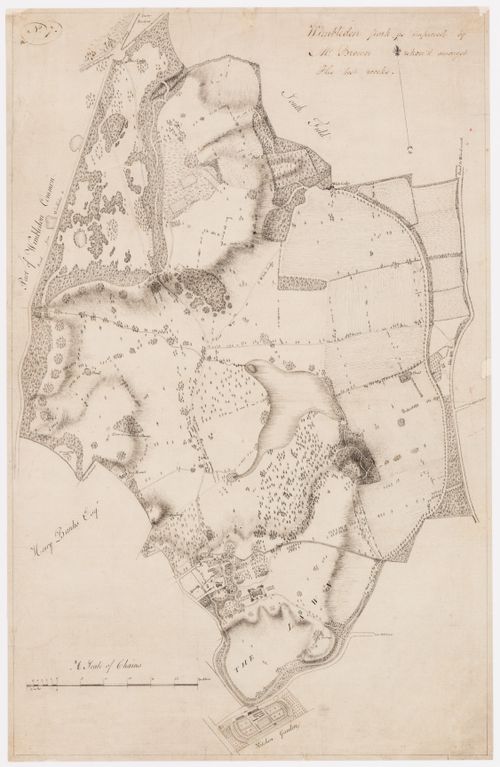
- DR1985:0415 presents a cartographic survey of Wimbledon Park as "improved" in the second half of the eighteenth century. Covering some 1,200 acres, the park as shown in this plan contains all the elements of Capability Brown's mature landscape style: expanses of grass traversed by meandering paths, irregular plantings of trees placed singly and in clumps, and winding streams dammed to create a large, irregular lake near the centre of the property and several small ponds about the periphery. The main house (built 1732-33 for Sarah, the Duchess of Marlborough), its outbuildings, and the village church are shown at the southern end of the park, as is a kitchen garden dating from an earlier period. Roads, lanes, and neighbouring properties are neatly labelled in the draughtsman's hand, and the fall of the land has been indicated in shade lines.
DR1985:0415
Description:
- DR1985:0415 presents a cartographic survey of Wimbledon Park as "improved" in the second half of the eighteenth century. Covering some 1,200 acres, the park as shown in this plan contains all the elements of Capability Brown's mature landscape style: expanses of grass traversed by meandering paths, irregular plantings of trees placed singly and in clumps, and winding streams dammed to create a large, irregular lake near the centre of the property and several small ponds about the periphery. The main house (built 1732-33 for Sarah, the Duchess of Marlborough), its outbuildings, and the village church are shown at the southern end of the park, as is a kitchen garden dating from an earlier period. Roads, lanes, and neighbouring properties are neatly labelled in the draughtsman's hand, and the fall of the land has been indicated in shade lines.
Personnes et institutions:
Sujet:
architecture de paysage, topographique
architecture de paysage, topographique
Date:
between 1765 and 1785
between 1765 and 1785
Titre:
A survey plan of Wimbledon Park as designed for Lord Spencer by Capability Brown
Actions:
DR1985:0415
Description:
- DR1985:0415 presents a cartographic survey of Wimbledon Park as "improved" in the second half of the eighteenth century. Covering some 1,200 acres, the park as shown in this plan contains all the elements of Capability Brown's mature landscape style: expanses of grass traversed by meandering paths, irregular plantings of trees placed singly and in clumps, and winding streams dammed to create a large, irregular lake near the centre of the property and several small ponds about the periphery. The main house (built 1732-33 for Sarah, the Duchess of Marlborough), its outbuildings, and the village church are shown at the southern end of the park, as is a kitchen garden dating from an earlier period. Roads, lanes, and neighbouring properties are neatly labelled in the draughtsman's hand, and the fall of the land has been indicated in shade lines.
A survey plan of Wimbledon Park as designed for Lord Spencer by Capability Brown
Actions:
DR1985:0415
Description:
- DR1985:0415 presents a cartographic survey of Wimbledon Park as "improved" in the second half of the eighteenth century. Covering some 1,200 acres, the park as shown in this plan contains all the elements of Capability Brown's mature landscape style: expanses of grass traversed by meandering paths, irregular plantings of trees placed singly and in clumps, and winding streams dammed to create a large, irregular lake near the centre of the property and several small ponds about the periphery. The main house (built 1732-33 for Sarah, the Duchess of Marlborough), its outbuildings, and the village church are shown at the southern end of the park, as is a kitchen garden dating from an earlier period. Roads, lanes, and neighbouring properties are neatly labelled in the draughtsman's hand, and the fall of the land has been indicated in shade lines.
Classification:
dessins
dessins
Date:
between 1765 and 1785
between 1765 and 1785
Personnes et institutions:
Sujet:
architecture de paysage, topographique
architecture de paysage, topographique
Classification:
photographies
Quantité:
73 photograph(s)
photographies
Quantité:
73 photograph(s)
Actions:
Numéro de référence:
PH1989:0012:001-073
Description:
- This group of photographs shows 38 views of buildings, 31 photographs of drawings and two photographs of models for buildings in the Soviet Union by Konstantin Melnikov, Ivan Leonidov, the Vesnin family and 25 other architects (PH1989:0012:001-073). Also included are a booklet for an exhibition of works by Melnikov (PH1989:0012:024) and a photograph of an exhibition poster for the 1925 Paris Exhibition of the Decorative Arts (PH1989:0012:023). The buildings represented include government buildings, clubs, residential buildings, and various other types of buildings including an exhibition pavilion, a bus garage, mechanized canteens, a school, and a stadium. There are also photographs of three drawings related to town planning. Four of the government buildings by Leonidov are documented by photographs of competition drawings. - The work of Konstantin Melnikov is represented by seven projects which were all constructed. Photographs of three clubs in Moscow include three photographs and one photograph of a drawing for the Rusakov Club, two photographs of the Burevestnik Factory Club, and a photograph of the Kauchuk Club (club for rubber industry workers). There are eight photographs of the Melnikov residence in Moscow, two of which show the house under construction. Documents related to exhibitions include three photographs, two photographs of drawings and a photograph of a poster for the Soviet Pavilion at the 1925 Paris Exhibition of the Decorative Arts, and a booklet for Melnikov's 1965 exhibition of architectural works, drawings and paintings in Moscow. There are two photographs of the Bakhmet'evski Bus Garage in Moscow. - The work of Ivan Leonidov is represented by one project for stairs for a government building (executed) and photographs of drawings for four architectural competitions for government buildings (all unexecuted), and one unexecuted project for housing. Documents for the five projects for government buildings include four photographs of the stairs to the Ordzhonikidze Sanatorium for the People's Commissariat for Heavy Industry (Narkomtyazhprom) in Kislovodsk; three photographs of drawings for a government office building competition in Alma-Ata; three photographs of drawings for the Film Studio competition (Moscow); three photographs of drawings for the Tsentrosoyuz (Centrosoiuz) Building competition (Moscow); and a photograph of a drawing for the Narkomtiazhprom Building (Building of Heavy Industry) competition (Moscow). There is also a photograph of a drawing for Kliuchiki Housing in Nizhnii Tagil (unexecuted). - The work of Aleksandr, Viktor, and Leonid Vesnin is represented by three unexecuted projects for government buildings in Moscow and one project for a club in Moscow (executed). Documents for the three projects for government buildings in Moscow include: three photographs of drawings for the Central Telegraph Office; a photograph of a drawing for the Palace of Labor; and a photograph of a drawing for the Leningrad Pravda Building. There are five photographs of the ZIL Palace of Culture (club for the Likhachev Automobile Plant workers) in Moscow. - The work of the 25 other architects includes government buildings, clubs, residential buildings, mechanized canteens, an experimental design for a school, a stadium, and photographs of drawings for town planning. Documents for the two government buildings (executed) include: five photographs of the Department of Industry and Planning (Gosprom) buildings in Kharkov, Soviet Union (now Ukraine), and a photograph of a drawing for the First Building of Lensovet (Leningrad Union) in Leningrad (now Saint Petersburg). The two clubs in Moscow are documented by one photograph of the Kozhevnikov (Tanner's) Union Club (unexecuted) and one of the Zuev Club (executed). The two residential buildings are documented by one photograph of the Narkomfin (People's Commissariat for Finance) Apartment Building in Moscow (executed) and one photograph of a drawing for the Airman's Planit (unexecuted). Documents for various other projects include: five photographs of drawings for three mechanized canteens in Leningrad (now Saint Petersburg), including the Vasileostrovskaya Mechanized canteen, Vyborgskaya Mechanized Canteen, and Volodarskaya Mechanized Canteen (all executed); three photographs of drawings for an experimental design for a single-storey school (unexecuted); one photograph of a Dinamo Stadium [?] in Moscow; two photographs of models, one for an "architecton" (Moscow) and one for a housing project with integral collective services in Moscow (both unexecuted). There are also two photographs of site plans for industrial housing and related services for the coal mining town of Bogoslovsk (executed ?) and one for the same subject in Mashinostroiteli [?] (executed ?).
PH1989:0012:001-073
Description:
- This group of photographs shows 38 views of buildings, 31 photographs of drawings and two photographs of models for buildings in the Soviet Union by Konstantin Melnikov, Ivan Leonidov, the Vesnin family and 25 other architects (PH1989:0012:001-073). Also included are a booklet for an exhibition of works by Melnikov (PH1989:0012:024) and a photograph of an exhibition poster for the 1925 Paris Exhibition of the Decorative Arts (PH1989:0012:023). The buildings represented include government buildings, clubs, residential buildings, and various other types of buildings including an exhibition pavilion, a bus garage, mechanized canteens, a school, and a stadium. There are also photographs of three drawings related to town planning. Four of the government buildings by Leonidov are documented by photographs of competition drawings. - The work of Konstantin Melnikov is represented by seven projects which were all constructed. Photographs of three clubs in Moscow include three photographs and one photograph of a drawing for the Rusakov Club, two photographs of the Burevestnik Factory Club, and a photograph of the Kauchuk Club (club for rubber industry workers). There are eight photographs of the Melnikov residence in Moscow, two of which show the house under construction. Documents related to exhibitions include three photographs, two photographs of drawings and a photograph of a poster for the Soviet Pavilion at the 1925 Paris Exhibition of the Decorative Arts, and a booklet for Melnikov's 1965 exhibition of architectural works, drawings and paintings in Moscow. There are two photographs of the Bakhmet'evski Bus Garage in Moscow. - The work of Ivan Leonidov is represented by one project for stairs for a government building (executed) and photographs of drawings for four architectural competitions for government buildings (all unexecuted), and one unexecuted project for housing. Documents for the five projects for government buildings include four photographs of the stairs to the Ordzhonikidze Sanatorium for the People's Commissariat for Heavy Industry (Narkomtyazhprom) in Kislovodsk; three photographs of drawings for a government office building competition in Alma-Ata; three photographs of drawings for the Film Studio competition (Moscow); three photographs of drawings for the Tsentrosoyuz (Centrosoiuz) Building competition (Moscow); and a photograph of a drawing for the Narkomtiazhprom Building (Building of Heavy Industry) competition (Moscow). There is also a photograph of a drawing for Kliuchiki Housing in Nizhnii Tagil (unexecuted). - The work of Aleksandr, Viktor, and Leonid Vesnin is represented by three unexecuted projects for government buildings in Moscow and one project for a club in Moscow (executed). Documents for the three projects for government buildings in Moscow include: three photographs of drawings for the Central Telegraph Office; a photograph of a drawing for the Palace of Labor; and a photograph of a drawing for the Leningrad Pravda Building. There are five photographs of the ZIL Palace of Culture (club for the Likhachev Automobile Plant workers) in Moscow. - The work of the 25 other architects includes government buildings, clubs, residential buildings, mechanized canteens, an experimental design for a school, a stadium, and photographs of drawings for town planning. Documents for the two government buildings (executed) include: five photographs of the Department of Industry and Planning (Gosprom) buildings in Kharkov, Soviet Union (now Ukraine), and a photograph of a drawing for the First Building of Lensovet (Leningrad Union) in Leningrad (now Saint Petersburg). The two clubs in Moscow are documented by one photograph of the Kozhevnikov (Tanner's) Union Club (unexecuted) and one of the Zuev Club (executed). The two residential buildings are documented by one photograph of the Narkomfin (People's Commissariat for Finance) Apartment Building in Moscow (executed) and one photograph of a drawing for the Airman's Planit (unexecuted). Documents for various other projects include: five photographs of drawings for three mechanized canteens in Leningrad (now Saint Petersburg), including the Vasileostrovskaya Mechanized canteen, Vyborgskaya Mechanized Canteen, and Volodarskaya Mechanized Canteen (all executed); three photographs of drawings for an experimental design for a single-storey school (unexecuted); one photograph of a Dinamo Stadium [?] in Moscow; two photographs of models, one for an "architecton" (Moscow) and one for a housing project with integral collective services in Moscow (both unexecuted). There are also two photographs of site plans for industrial housing and related services for the coal mining town of Bogoslovsk (executed ?) and one for the same subject in Mashinostroiteli [?] (executed ?).
Personnes et institutions:
Sujet:
architecture, portrait
architecture, portrait
Date:
1920-1965 or later
1920-1965 or later
Titre:
Photographs of drawings, models and buildings designed by Melnikov, Leonidov, the Vesnin family and other architects, Paris, France and the Soviet Union (now in Kazakhstan, Russia, and Ukraine)
Actions:
PH1989:0012:001-073
Description:
- This group of photographs shows 38 views of buildings, 31 photographs of drawings and two photographs of models for buildings in the Soviet Union by Konstantin Melnikov, Ivan Leonidov, the Vesnin family and 25 other architects (PH1989:0012:001-073). Also included are a booklet for an exhibition of works by Melnikov (PH1989:0012:024) and a photograph of an exhibition poster for the 1925 Paris Exhibition of the Decorative Arts (PH1989:0012:023). The buildings represented include government buildings, clubs, residential buildings, and various other types of buildings including an exhibition pavilion, a bus garage, mechanized canteens, a school, and a stadium. There are also photographs of three drawings related to town planning. Four of the government buildings by Leonidov are documented by photographs of competition drawings. - The work of Konstantin Melnikov is represented by seven projects which were all constructed. Photographs of three clubs in Moscow include three photographs and one photograph of a drawing for the Rusakov Club, two photographs of the Burevestnik Factory Club, and a photograph of the Kauchuk Club (club for rubber industry workers). There are eight photographs of the Melnikov residence in Moscow, two of which show the house under construction. Documents related to exhibitions include three photographs, two photographs of drawings and a photograph of a poster for the Soviet Pavilion at the 1925 Paris Exhibition of the Decorative Arts, and a booklet for Melnikov's 1965 exhibition of architectural works, drawings and paintings in Moscow. There are two photographs of the Bakhmet'evski Bus Garage in Moscow. - The work of Ivan Leonidov is represented by one project for stairs for a government building (executed) and photographs of drawings for four architectural competitions for government buildings (all unexecuted), and one unexecuted project for housing. Documents for the five projects for government buildings include four photographs of the stairs to the Ordzhonikidze Sanatorium for the People's Commissariat for Heavy Industry (Narkomtyazhprom) in Kislovodsk; three photographs of drawings for a government office building competition in Alma-Ata; three photographs of drawings for the Film Studio competition (Moscow); three photographs of drawings for the Tsentrosoyuz (Centrosoiuz) Building competition (Moscow); and a photograph of a drawing for the Narkomtiazhprom Building (Building of Heavy Industry) competition (Moscow). There is also a photograph of a drawing for Kliuchiki Housing in Nizhnii Tagil (unexecuted). - The work of Aleksandr, Viktor, and Leonid Vesnin is represented by three unexecuted projects for government buildings in Moscow and one project for a club in Moscow (executed). Documents for the three projects for government buildings in Moscow include: three photographs of drawings for the Central Telegraph Office; a photograph of a drawing for the Palace of Labor; and a photograph of a drawing for the Leningrad Pravda Building. There are five photographs of the ZIL Palace of Culture (club for the Likhachev Automobile Plant workers) in Moscow. - The work of the 25 other architects includes government buildings, clubs, residential buildings, mechanized canteens, an experimental design for a school, a stadium, and photographs of drawings for town planning. Documents for the two government buildings (executed) include: five photographs of the Department of Industry and Planning (Gosprom) buildings in Kharkov, Soviet Union (now Ukraine), and a photograph of a drawing for the First Building of Lensovet (Leningrad Union) in Leningrad (now Saint Petersburg). The two clubs in Moscow are documented by one photograph of the Kozhevnikov (Tanner's) Union Club (unexecuted) and one of the Zuev Club (executed). The two residential buildings are documented by one photograph of the Narkomfin (People's Commissariat for Finance) Apartment Building in Moscow (executed) and one photograph of a drawing for the Airman's Planit (unexecuted). Documents for various other projects include: five photographs of drawings for three mechanized canteens in Leningrad (now Saint Petersburg), including the Vasileostrovskaya Mechanized canteen, Vyborgskaya Mechanized Canteen, and Volodarskaya Mechanized Canteen (all executed); three photographs of drawings for an experimental design for a single-storey school (unexecuted); one photograph of a Dinamo Stadium [?] in Moscow; two photographs of models, one for an "architecton" (Moscow) and one for a housing project with integral collective services in Moscow (both unexecuted). There are also two photographs of site plans for industrial housing and related services for the coal mining town of Bogoslovsk (executed ?) and one for the same subject in Mashinostroiteli [?] (executed ?).
Photographs of drawings, models and buildings designed by Melnikov, Leonidov, the Vesnin family and other architects, Paris, France and the Soviet Union (now in Kazakhstan, Russia, and Ukraine)
Actions:
PH1989:0012:001-073
Description:
- This group of photographs shows 38 views of buildings, 31 photographs of drawings and two photographs of models for buildings in the Soviet Union by Konstantin Melnikov, Ivan Leonidov, the Vesnin family and 25 other architects (PH1989:0012:001-073). Also included are a booklet for an exhibition of works by Melnikov (PH1989:0012:024) and a photograph of an exhibition poster for the 1925 Paris Exhibition of the Decorative Arts (PH1989:0012:023). The buildings represented include government buildings, clubs, residential buildings, and various other types of buildings including an exhibition pavilion, a bus garage, mechanized canteens, a school, and a stadium. There are also photographs of three drawings related to town planning. Four of the government buildings by Leonidov are documented by photographs of competition drawings. - The work of Konstantin Melnikov is represented by seven projects which were all constructed. Photographs of three clubs in Moscow include three photographs and one photograph of a drawing for the Rusakov Club, two photographs of the Burevestnik Factory Club, and a photograph of the Kauchuk Club (club for rubber industry workers). There are eight photographs of the Melnikov residence in Moscow, two of which show the house under construction. Documents related to exhibitions include three photographs, two photographs of drawings and a photograph of a poster for the Soviet Pavilion at the 1925 Paris Exhibition of the Decorative Arts, and a booklet for Melnikov's 1965 exhibition of architectural works, drawings and paintings in Moscow. There are two photographs of the Bakhmet'evski Bus Garage in Moscow. - The work of Ivan Leonidov is represented by one project for stairs for a government building (executed) and photographs of drawings for four architectural competitions for government buildings (all unexecuted), and one unexecuted project for housing. Documents for the five projects for government buildings include four photographs of the stairs to the Ordzhonikidze Sanatorium for the People's Commissariat for Heavy Industry (Narkomtyazhprom) in Kislovodsk; three photographs of drawings for a government office building competition in Alma-Ata; three photographs of drawings for the Film Studio competition (Moscow); three photographs of drawings for the Tsentrosoyuz (Centrosoiuz) Building competition (Moscow); and a photograph of a drawing for the Narkomtiazhprom Building (Building of Heavy Industry) competition (Moscow). There is also a photograph of a drawing for Kliuchiki Housing in Nizhnii Tagil (unexecuted). - The work of Aleksandr, Viktor, and Leonid Vesnin is represented by three unexecuted projects for government buildings in Moscow and one project for a club in Moscow (executed). Documents for the three projects for government buildings in Moscow include: three photographs of drawings for the Central Telegraph Office; a photograph of a drawing for the Palace of Labor; and a photograph of a drawing for the Leningrad Pravda Building. There are five photographs of the ZIL Palace of Culture (club for the Likhachev Automobile Plant workers) in Moscow. - The work of the 25 other architects includes government buildings, clubs, residential buildings, mechanized canteens, an experimental design for a school, a stadium, and photographs of drawings for town planning. Documents for the two government buildings (executed) include: five photographs of the Department of Industry and Planning (Gosprom) buildings in Kharkov, Soviet Union (now Ukraine), and a photograph of a drawing for the First Building of Lensovet (Leningrad Union) in Leningrad (now Saint Petersburg). The two clubs in Moscow are documented by one photograph of the Kozhevnikov (Tanner's) Union Club (unexecuted) and one of the Zuev Club (executed). The two residential buildings are documented by one photograph of the Narkomfin (People's Commissariat for Finance) Apartment Building in Moscow (executed) and one photograph of a drawing for the Airman's Planit (unexecuted). Documents for various other projects include: five photographs of drawings for three mechanized canteens in Leningrad (now Saint Petersburg), including the Vasileostrovskaya Mechanized canteen, Vyborgskaya Mechanized Canteen, and Volodarskaya Mechanized Canteen (all executed); three photographs of drawings for an experimental design for a single-storey school (unexecuted); one photograph of a Dinamo Stadium [?] in Moscow; two photographs of models, one for an "architecton" (Moscow) and one for a housing project with integral collective services in Moscow (both unexecuted). There are also two photographs of site plans for industrial housing and related services for the coal mining town of Bogoslovsk (executed ?) and one for the same subject in Mashinostroiteli [?] (executed ?).
Classification:
photographies
Quantité:
73 photograph(s)
photographies
Quantité:
73 photograph(s)
Date:
1920-1965 or later
1920-1965 or later
Personnes et institutions:
Sujet:
architecture, portrait
architecture, portrait
Classification:
dessins
dessins
Actions:
Numéro de référence:
DR1985:0416
Description:
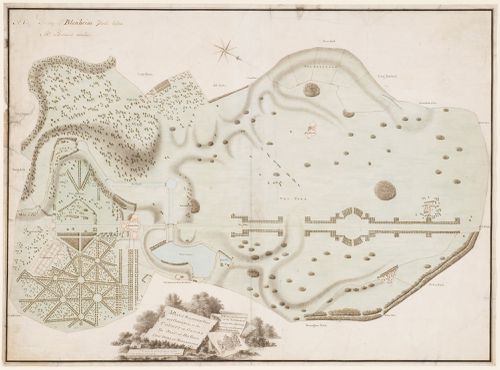
- DR1985:0416 records, in the form of a measured survey, the state of Blenheim Park in 1763, i.e., immediately before the modifications made by Capability Brown. According to this survey, the components and the layout of the park at that date corresponded closely to the original design (1705-16) published in `Vitruvius Britannicus III' (1725), pls. 72-73: the Grand Bridge, the kitchen garden, the tree-lined rides, the Grand Avenue, and the park plantations appear pretty much as their designers intended. However, DR1985:0416 also indicates that the military or state garden at the rear of the palace, with its great parterre and bastioned walls, was already more than half destroyed, and that a lake and a canal system comprised of three arms then existed at the front and to the south-east side of the palace. These important features, the histories of which are poorly documented, were entirely suppressed in the course of Brown's alterations.
DR1985:0416
Description:
- DR1985:0416 records, in the form of a measured survey, the state of Blenheim Park in 1763, i.e., immediately before the modifications made by Capability Brown. According to this survey, the components and the layout of the park at that date corresponded closely to the original design (1705-16) published in `Vitruvius Britannicus III' (1725), pls. 72-73: the Grand Bridge, the kitchen garden, the tree-lined rides, the Grand Avenue, and the park plantations appear pretty much as their designers intended. However, DR1985:0416 also indicates that the military or state garden at the rear of the palace, with its great parterre and bastioned walls, was already more than half destroyed, and that a lake and a canal system comprised of three arms then existed at the front and to the south-east side of the palace. These important features, the histories of which are poorly documented, were entirely suppressed in the course of Brown's alterations.
Personnes et institutions:
Sujet:
architecture de paysage, topographique
architecture de paysage, topographique
Date:
1763
1763
Titre:
A survey plan of Blenheim Park
Actions:
DR1985:0416
Description:
- DR1985:0416 records, in the form of a measured survey, the state of Blenheim Park in 1763, i.e., immediately before the modifications made by Capability Brown. According to this survey, the components and the layout of the park at that date corresponded closely to the original design (1705-16) published in `Vitruvius Britannicus III' (1725), pls. 72-73: the Grand Bridge, the kitchen garden, the tree-lined rides, the Grand Avenue, and the park plantations appear pretty much as their designers intended. However, DR1985:0416 also indicates that the military or state garden at the rear of the palace, with its great parterre and bastioned walls, was already more than half destroyed, and that a lake and a canal system comprised of three arms then existed at the front and to the south-east side of the palace. These important features, the histories of which are poorly documented, were entirely suppressed in the course of Brown's alterations.
A survey plan of Blenheim Park
Actions:
DR1985:0416
Description:
- DR1985:0416 records, in the form of a measured survey, the state of Blenheim Park in 1763, i.e., immediately before the modifications made by Capability Brown. According to this survey, the components and the layout of the park at that date corresponded closely to the original design (1705-16) published in `Vitruvius Britannicus III' (1725), pls. 72-73: the Grand Bridge, the kitchen garden, the tree-lined rides, the Grand Avenue, and the park plantations appear pretty much as their designers intended. However, DR1985:0416 also indicates that the military or state garden at the rear of the palace, with its great parterre and bastioned walls, was already more than half destroyed, and that a lake and a canal system comprised of three arms then existed at the front and to the south-east side of the palace. These important features, the histories of which are poorly documented, were entirely suppressed in the course of Brown's alterations.
Classification:
dessins
dessins
Date:
1763
1763
Personnes et institutions:
Sujet:
architecture de paysage, topographique
architecture de paysage, topographique
Classification:
dessins, documents textuels
dessins, documents textuels
Actions:
Numéro de référence:
DR1974:0002:025:001-059
Description:
- This album contains drawings of the Domaine de La Vallée and for extensive renovations proposed by Hubert Rohault de Fleury to the house and its outbuildings, including the demolition of some portions the existing structures. The drawings vary from rough sketches to line drawings, some coloured with wash. Nine site plans for the estate depict the proposed placement of buildings, the layout of roads, and the landscaping. The original house and outbuildings are documented in five rough sketches with dimensioning, possibly measured drawings executed on site, (DR1974:0002:025:039 - DR1974:0002:025:043) and several more finished plans and elevations (DR1974:0002:025:021 R/V, DR1974:0002:025:025, and DR1974:0002:025:031). These five rough sketches include a number of thumbnail sketches, possibly preliminary ideas for the renovation. The renovation proposals for the house and outbuildings include plans, exterior and interior elevations, an axonometric sketch as well as more complete designs for a portico and a porch. Also included are Rohault de Fleury's designs for new outbuildings and other structures: a bridge, possibly with several alternate designs, a levee planted with trees, a granary, a stable, a combined stable and cowshed, a sheepfold, two schemes for a garden temple and two gates. Many of the inscriptions and written documents are illegible, but they apparently relate to construction methods, building materials, proposed alterations to existing structures, and cost calculations. There are several drawings for unidentified buildings in the album having no apparent link to the Domaine de La Vallée structures.
DR1974:0002:025:001-059
Description:
- This album contains drawings of the Domaine de La Vallée and for extensive renovations proposed by Hubert Rohault de Fleury to the house and its outbuildings, including the demolition of some portions the existing structures. The drawings vary from rough sketches to line drawings, some coloured with wash. Nine site plans for the estate depict the proposed placement of buildings, the layout of roads, and the landscaping. The original house and outbuildings are documented in five rough sketches with dimensioning, possibly measured drawings executed on site, (DR1974:0002:025:039 - DR1974:0002:025:043) and several more finished plans and elevations (DR1974:0002:025:021 R/V, DR1974:0002:025:025, and DR1974:0002:025:031). These five rough sketches include a number of thumbnail sketches, possibly preliminary ideas for the renovation. The renovation proposals for the house and outbuildings include plans, exterior and interior elevations, an axonometric sketch as well as more complete designs for a portico and a porch. Also included are Rohault de Fleury's designs for new outbuildings and other structures: a bridge, possibly with several alternate designs, a levee planted with trees, a granary, a stable, a combined stable and cowshed, a sheepfold, two schemes for a garden temple and two gates. Many of the inscriptions and written documents are illegible, but they apparently relate to construction methods, building materials, proposed alterations to existing structures, and cost calculations. There are several drawings for unidentified buildings in the album having no apparent link to the Domaine de La Vallée structures.
Personnes et institutions:
Sujet:
architecture, architecture de paysage, design d'intérieur, ingénierie
architecture, architecture de paysage, design d'intérieur, ingénierie
Date:
ca. 1815
ca. 1815
Titre:
Album of drawings for proposed renovations to the house and outbuildings, Domaine de La Vallée, Loir-et-Cher, France
Actions:
DR1974:0002:025:001-059
Description:
- This album contains drawings of the Domaine de La Vallée and for extensive renovations proposed by Hubert Rohault de Fleury to the house and its outbuildings, including the demolition of some portions the existing structures. The drawings vary from rough sketches to line drawings, some coloured with wash. Nine site plans for the estate depict the proposed placement of buildings, the layout of roads, and the landscaping. The original house and outbuildings are documented in five rough sketches with dimensioning, possibly measured drawings executed on site, (DR1974:0002:025:039 - DR1974:0002:025:043) and several more finished plans and elevations (DR1974:0002:025:021 R/V, DR1974:0002:025:025, and DR1974:0002:025:031). These five rough sketches include a number of thumbnail sketches, possibly preliminary ideas for the renovation. The renovation proposals for the house and outbuildings include plans, exterior and interior elevations, an axonometric sketch as well as more complete designs for a portico and a porch. Also included are Rohault de Fleury's designs for new outbuildings and other structures: a bridge, possibly with several alternate designs, a levee planted with trees, a granary, a stable, a combined stable and cowshed, a sheepfold, two schemes for a garden temple and two gates. Many of the inscriptions and written documents are illegible, but they apparently relate to construction methods, building materials, proposed alterations to existing structures, and cost calculations. There are several drawings for unidentified buildings in the album having no apparent link to the Domaine de La Vallée structures.
Album of drawings for proposed renovations to the house and outbuildings, Domaine de La Vallée, Loir-et-Cher, France
Actions:
DR1974:0002:025:001-059
Description:
- This album contains drawings of the Domaine de La Vallée and for extensive renovations proposed by Hubert Rohault de Fleury to the house and its outbuildings, including the demolition of some portions the existing structures. The drawings vary from rough sketches to line drawings, some coloured with wash. Nine site plans for the estate depict the proposed placement of buildings, the layout of roads, and the landscaping. The original house and outbuildings are documented in five rough sketches with dimensioning, possibly measured drawings executed on site, (DR1974:0002:025:039 - DR1974:0002:025:043) and several more finished plans and elevations (DR1974:0002:025:021 R/V, DR1974:0002:025:025, and DR1974:0002:025:031). These five rough sketches include a number of thumbnail sketches, possibly preliminary ideas for the renovation. The renovation proposals for the house and outbuildings include plans, exterior and interior elevations, an axonometric sketch as well as more complete designs for a portico and a porch. Also included are Rohault de Fleury's designs for new outbuildings and other structures: a bridge, possibly with several alternate designs, a levee planted with trees, a granary, a stable, a combined stable and cowshed, a sheepfold, two schemes for a garden temple and two gates. Many of the inscriptions and written documents are illegible, but they apparently relate to construction methods, building materials, proposed alterations to existing structures, and cost calculations. There are several drawings for unidentified buildings in the album having no apparent link to the Domaine de La Vallée structures.
Classification:
dessins, documents textuels
dessins, documents textuels
Date:
ca. 1815
ca. 1815
Personnes et institutions:
Sujet:
architecture, architecture de paysage, design d'intérieur, ingénierie
architecture, architecture de paysage, design d'intérieur, ingénierie
Niveau de description archivistique:
Projet
Projet
Titre:
Generator
Generator
Numéro de référence:
AP144.S2.D100
Description:
File documents Generator, an unexecuted project for the Gilman Paper Company, at the White Oak Plantation, in Yulee, Florida. After an initial investigation Cedric Price proposed a complex that could accommodate company activities, cultural events, and artist residencies and would provide "a menu of items for individual and group demands of space, control, containment and delight. A place to work, create, think, and stare." ('Architectural Review', Jan. 1980, 16). The design called for timber-framed structures with variable infill panels and cladding, along with screens, to be placed on a grid of concrete pads by cranes with the help of computers in response to users' needs. Conceptual, schematic and design development drawings show grid placement, site layout, landscaping, designs for cubes and components, proposed activities, axonometric views, and design notes with sketches. Development sketches, site plans, and charts include site analysis examining future growth, activity charts, shadow study plans, and axonometric details. Drawings of the structures include: plans, elevations, details, and perspective views for cubes, screens, and cladding; shadow studies for cube variations; and axonometric views of cube arrangements. Other drawings include: site plans and sections; landscaping and parking layouts; plans for circulation patterns; drawings for boardwalks; and electrical and drainage plans. Charts study design validity, activities, networks, project feasibility, component life-cycle, and cube and component placement/construction sequencing. Computer generated printouts by John Frazer, et al show perspective views of cubes from various viewpoints. Two sets of annotated reprographic copies show details for a typical cube and the foundation. Presentation and publication materials include: photographs and reprographic copies of design models; coloured reprographic copies of computer parts and facilities; a coloured air-brushed rendering of cubes and screens by "Jeremie '77"; two perspective renderings; and reprographic copies made from published material. Some material in this file was published in 'Building Design', 23 February 1979; 'Building Design', 9 November 1979; 'Architectural Review' (January 1980), 16-17; 'L'Architecture d'Aujourd'hui', December 1980; 'Techniques et Architecture', December 1980; 'Design', January 1981; 'New Scientist', 19 March 1981; 'Schemes: Cedric Price' (ex. cat.; London: Waddington Galleries, 1981); 'Cedric Price-Works II' (London: Architectural Press, 1984), 90, 92-97. Material in this file was produced between 1959 and 1995, but predominantly between 1976 and 1980. Main consultants for Generator in the United Kingdom include Felix J. Samuely & Partners, consulting engineers; Baker, Wilkins and Smith, quantity surveyors; John Frazer, computer modelling and systems; Sandy Brown Associates, acoustic consultants. Main consultants in the United States include Marvin Boutwell; Law Engineering Testing Company as consulting engineers; and WTCA; Robertson Ward Jr., as architects. Computer printouts in group DR1995:0280:538-552 in Generator (AP144.S2.D100) are attributed to John and Julia Frazer, Art and Design Research, Ulster Polytechnic and the Department of Architecture, Liverpool Polytechnic. Some material in group DR1995:0280:567-576 is attributed to Felix J. Samuely & Partners. File contains conceptual drawings, design, development drawings, presentation drawings, photographic materials, boxes, an artefact, models, and textual records.
AP144.S2.D100
Description:
File documents Generator, an unexecuted project for the Gilman Paper Company, at the White Oak Plantation, in Yulee, Florida. After an initial investigation Cedric Price proposed a complex that could accommodate company activities, cultural events, and artist residencies and would provide "a menu of items for individual and group demands of space, control, containment and delight. A place to work, create, think, and stare." ('Architectural Review', Jan. 1980, 16). The design called for timber-framed structures with variable infill panels and cladding, along with screens, to be placed on a grid of concrete pads by cranes with the help of computers in response to users' needs. Conceptual, schematic and design development drawings show grid placement, site layout, landscaping, designs for cubes and components, proposed activities, axonometric views, and design notes with sketches. Development sketches, site plans, and charts include site analysis examining future growth, activity charts, shadow study plans, and axonometric details. Drawings of the structures include: plans, elevations, details, and perspective views for cubes, screens, and cladding; shadow studies for cube variations; and axonometric views of cube arrangements. Other drawings include: site plans and sections; landscaping and parking layouts; plans for circulation patterns; drawings for boardwalks; and electrical and drainage plans. Charts study design validity, activities, networks, project feasibility, component life-cycle, and cube and component placement/construction sequencing. Computer generated printouts by John Frazer, et al show perspective views of cubes from various viewpoints. Two sets of annotated reprographic copies show details for a typical cube and the foundation. Presentation and publication materials include: photographs and reprographic copies of design models; coloured reprographic copies of computer parts and facilities; a coloured air-brushed rendering of cubes and screens by "Jeremie '77"; two perspective renderings; and reprographic copies made from published material. Some material in this file was published in 'Building Design', 23 February 1979; 'Building Design', 9 November 1979; 'Architectural Review' (January 1980), 16-17; 'L'Architecture d'Aujourd'hui', December 1980; 'Techniques et Architecture', December 1980; 'Design', January 1981; 'New Scientist', 19 March 1981; 'Schemes: Cedric Price' (ex. cat.; London: Waddington Galleries, 1981); 'Cedric Price-Works II' (London: Architectural Press, 1984), 90, 92-97. Material in this file was produced between 1959 and 1995, but predominantly between 1976 and 1980. Main consultants for Generator in the United Kingdom include Felix J. Samuely & Partners, consulting engineers; Baker, Wilkins and Smith, quantity surveyors; John Frazer, computer modelling and systems; Sandy Brown Associates, acoustic consultants. Main consultants in the United States include Marvin Boutwell; Law Engineering Testing Company as consulting engineers; and WTCA; Robertson Ward Jr., as architects. Computer printouts in group DR1995:0280:538-552 in Generator (AP144.S2.D100) are attributed to John and Julia Frazer, Art and Design Research, Ulster Polytechnic and the Department of Architecture, Liverpool Polytechnic. Some material in group DR1995:0280:567-576 is attributed to Felix J. Samuely & Partners. File contains conceptual drawings, design, development drawings, presentation drawings, photographic materials, boxes, an artefact, models, and textual records.
Personnes et institutions:
Date:
1959-1995, predominant 1976-1980
1959-1995, predominant 1976-1980
Titre:
Generator
Actions:
AP144.S2.D100
Description:
File documents Generator, an unexecuted project for the Gilman Paper Company, at the White Oak Plantation, in Yulee, Florida. After an initial investigation Cedric Price proposed a complex that could accommodate company activities, cultural events, and artist residencies and would provide "a menu of items for individual and group demands of space, control, containment and delight. A place to work, create, think, and stare." ('Architectural Review', Jan. 1980, 16). The design called for timber-framed structures with variable infill panels and cladding, along with screens, to be placed on a grid of concrete pads by cranes with the help of computers in response to users' needs. Conceptual, schematic and design development drawings show grid placement, site layout, landscaping, designs for cubes and components, proposed activities, axonometric views, and design notes with sketches. Development sketches, site plans, and charts include site analysis examining future growth, activity charts, shadow study plans, and axonometric details. Drawings of the structures include: plans, elevations, details, and perspective views for cubes, screens, and cladding; shadow studies for cube variations; and axonometric views of cube arrangements. Other drawings include: site plans and sections; landscaping and parking layouts; plans for circulation patterns; drawings for boardwalks; and electrical and drainage plans. Charts study design validity, activities, networks, project feasibility, component life-cycle, and cube and component placement/construction sequencing. Computer generated printouts by John Frazer, et al show perspective views of cubes from various viewpoints. Two sets of annotated reprographic copies show details for a typical cube and the foundation. Presentation and publication materials include: photographs and reprographic copies of design models; coloured reprographic copies of computer parts and facilities; a coloured air-brushed rendering of cubes and screens by "Jeremie '77"; two perspective renderings; and reprographic copies made from published material. Some material in this file was published in 'Building Design', 23 February 1979; 'Building Design', 9 November 1979; 'Architectural Review' (January 1980), 16-17; 'L'Architecture d'Aujourd'hui', December 1980; 'Techniques et Architecture', December 1980; 'Design', January 1981; 'New Scientist', 19 March 1981; 'Schemes: Cedric Price' (ex. cat.; London: Waddington Galleries, 1981); 'Cedric Price-Works II' (London: Architectural Press, 1984), 90, 92-97. Material in this file was produced between 1959 and 1995, but predominantly between 1976 and 1980. Main consultants for Generator in the United Kingdom include Felix J. Samuely & Partners, consulting engineers; Baker, Wilkins and Smith, quantity surveyors; John Frazer, computer modelling and systems; Sandy Brown Associates, acoustic consultants. Main consultants in the United States include Marvin Boutwell; Law Engineering Testing Company as consulting engineers; and WTCA; Robertson Ward Jr., as architects. Computer printouts in group DR1995:0280:538-552 in Generator (AP144.S2.D100) are attributed to John and Julia Frazer, Art and Design Research, Ulster Polytechnic and the Department of Architecture, Liverpool Polytechnic. Some material in group DR1995:0280:567-576 is attributed to Felix J. Samuely & Partners. File contains conceptual drawings, design, development drawings, presentation drawings, photographic materials, boxes, an artefact, models, and textual records.
Generator
Actions:
AP144.S2.D100
Description:
File documents Generator, an unexecuted project for the Gilman Paper Company, at the White Oak Plantation, in Yulee, Florida. After an initial investigation Cedric Price proposed a complex that could accommodate company activities, cultural events, and artist residencies and would provide "a menu of items for individual and group demands of space, control, containment and delight. A place to work, create, think, and stare." ('Architectural Review', Jan. 1980, 16). The design called for timber-framed structures with variable infill panels and cladding, along with screens, to be placed on a grid of concrete pads by cranes with the help of computers in response to users' needs. Conceptual, schematic and design development drawings show grid placement, site layout, landscaping, designs for cubes and components, proposed activities, axonometric views, and design notes with sketches. Development sketches, site plans, and charts include site analysis examining future growth, activity charts, shadow study plans, and axonometric details. Drawings of the structures include: plans, elevations, details, and perspective views for cubes, screens, and cladding; shadow studies for cube variations; and axonometric views of cube arrangements. Other drawings include: site plans and sections; landscaping and parking layouts; plans for circulation patterns; drawings for boardwalks; and electrical and drainage plans. Charts study design validity, activities, networks, project feasibility, component life-cycle, and cube and component placement/construction sequencing. Computer generated printouts by John Frazer, et al show perspective views of cubes from various viewpoints. Two sets of annotated reprographic copies show details for a typical cube and the foundation. Presentation and publication materials include: photographs and reprographic copies of design models; coloured reprographic copies of computer parts and facilities; a coloured air-brushed rendering of cubes and screens by "Jeremie '77"; two perspective renderings; and reprographic copies made from published material. Some material in this file was published in 'Building Design', 23 February 1979; 'Building Design', 9 November 1979; 'Architectural Review' (January 1980), 16-17; 'L'Architecture d'Aujourd'hui', December 1980; 'Techniques et Architecture', December 1980; 'Design', January 1981; 'New Scientist', 19 March 1981; 'Schemes: Cedric Price' (ex. cat.; London: Waddington Galleries, 1981); 'Cedric Price-Works II' (London: Architectural Press, 1984), 90, 92-97. Material in this file was produced between 1959 and 1995, but predominantly between 1976 and 1980. Main consultants for Generator in the United Kingdom include Felix J. Samuely & Partners, consulting engineers; Baker, Wilkins and Smith, quantity surveyors; John Frazer, computer modelling and systems; Sandy Brown Associates, acoustic consultants. Main consultants in the United States include Marvin Boutwell; Law Engineering Testing Company as consulting engineers; and WTCA; Robertson Ward Jr., as architects. Computer printouts in group DR1995:0280:538-552 in Generator (AP144.S2.D100) are attributed to John and Julia Frazer, Art and Design Research, Ulster Polytechnic and the Department of Architecture, Liverpool Polytechnic. Some material in group DR1995:0280:567-576 is attributed to Felix J. Samuely & Partners. File contains conceptual drawings, design, development drawings, presentation drawings, photographic materials, boxes, an artefact, models, and textual records.
Niveau de description archivistique:
File 100
File 100
Date:
1959-1995, predominant 1976-1980
1959-1995, predominant 1976-1980
Personnes et institutions:
Classification:
périodiques
périodiques
Titre:
The plant cell.
The plant cell.
Actions:
Auteur:
Sujet:
Publication:
Rockville, MD : American Society of Plant Physiologists, 1989-
Rockville, MD : American Society of Plant Physiologists, 1989-
Classification:
périodiques
périodiques
Publication:
Rockville, MD : American Society of Plant Physiologists, 1989-
Rockville, MD : American Society of Plant Physiologists, 1989-
Auteur:
Sujet:
Classification:
périodiques
périodiques
Titre:
Plant and soil.
Plant and soil.
Actions:
Auteur:
Sujet:
Publication:
[Dordrecht] : Kluwer Academic Publishers, ‡3 <2010-> : ‡a Dordrecht : ‡b Springer
[Dordrecht] : Kluwer Academic Publishers, ‡3 <2010-> : ‡a Dordrecht : ‡b Springer
Classification:
périodiques
périodiques
Publication:
[Dordrecht] : Kluwer Academic Publishers, ‡3 <2010-> : ‡a Dordrecht : ‡b Springer
[Dordrecht] : Kluwer Academic Publishers, ‡3 <2010-> : ‡a Dordrecht : ‡b Springer
Auteur:
Sujet:
Classification:
périodiques
périodiques
Titre:
Plant ecology.
Plant ecology.
Actions:
Description:
1 online resource
Sujet:
Publication:
Dordrecht : Kluwer Academic Publishers, ©1997-, [Dordrecht] : Springer
Dordrecht : Kluwer Academic Publishers, ©1997-, [Dordrecht] : Springer
Classification:
périodiques
périodiques
Publication:
Dordrecht : Kluwer Academic Publishers, ©1997-, [Dordrecht] : Springer
Dordrecht : Kluwer Academic Publishers, ©1997-, [Dordrecht] : Springer
Sujet:


