


44145 Résultats
Classification:
archives
Niveau de description archivistique:
Fonds
archives
Niveau de description archivistique:
Fonds
Titre:
Fonds André Blouin
Fonds André Blouin
Numéro de référence:
AP038
Résumé:
The André Blouin fonds, 1933-1996, documents the professional career of architect André Blouin. Materials in this fonds consist of the following: approximately 4821 drawings (including reprographic copies), 4006 photographic materials, 52 l.m. of textual records, 127 panels and 4 reels of 16 mm film.
AP038
Résumé:
The André Blouin fonds, 1933-1996, documents the professional career of architect André Blouin. Materials in this fonds consist of the following: approximately 4821 drawings (including reprographic copies), 4006 photographic materials, 52 l.m. of textual records, 127 panels and 4 reels of 16 mm film.
Personnes et institutions:
Date:
1933-1996
1933-1996
Titre:
Fonds André Blouin
Actions:
AP038
Résumé:
The André Blouin fonds, 1933-1996, documents the professional career of architect André Blouin. Materials in this fonds consist of the following: approximately 4821 drawings (including reprographic copies), 4006 photographic materials, 52 l.m. of textual records, 127 panels and 4 reels of 16 mm film.
Fonds André Blouin
Actions:
AP038
Résumé:
The André Blouin fonds, 1933-1996, documents the professional career of architect André Blouin. Materials in this fonds consist of the following: approximately 4821 drawings (including reprographic copies), 4006 photographic materials, 52 l.m. of textual records, 127 panels and 4 reels of 16 mm film.
Classification:
archives
Niveau de description archivistique:
Fonds
archives
Niveau de description archivistique:
Fonds
Date:
1933-1996
1933-1996
Personnes et institutions:
Niveau de description archivistique:
Projet
Projet
Numéro de référence:
AP075.S1.1997.PR02
Description:
Project series documents Cornelia Hahn Oberlander's landscape project for the Waterfall Building on West 2nd Avenue, near the entrance of Granville Island, in Vancouver, British Columbia. Oberlander worked on this project in 1998-2001 with architect Arthur Erickson and architectural firm Nick Milkovich Architects, who designed the building. The building consists in five separated structures to accomodate studios spaces as well as split-level residences. It also included a courtyard and roof gardens on all five building structures for which Oberlander was responsible of the design. The courtyard, formed by in the roof of the underground parking space, consists "a simple tapestry of pavers, ground cover, trees and a small reflecting basin [...]." [1] The roofs garden included planting of white roses at the edge of the building and ornemental grass. The rooftops serve as communal patio for the residents and was accesible to the public. The project was completed in 2001. The Waterfall Building was the last project Oberlander realized in collaboration with Arthur Erickson. The project series includes sketches, design development drawings, including planting plans for the courtyard and the rooftops, working drawings, such as landscape plans for the courtyard and planting plans. The drawings in this series also includes drawings of the building used as reference. The project is also documented through research material for the project, specifications, plant lists, correspondence, including correspondence with architects and client, meeting notes, reports, financial document, a promotional poster on the project, and photographs of the landscaping work and plant selection. Source: [1] Herrington, Susan. Cornelia Hahn Oberlander: Making the Modern Landscape, University of Virginia Press, 2014, 304 pages. p. 142.
AP075.S1.1997.PR02
Description:
Project series documents Cornelia Hahn Oberlander's landscape project for the Waterfall Building on West 2nd Avenue, near the entrance of Granville Island, in Vancouver, British Columbia. Oberlander worked on this project in 1998-2001 with architect Arthur Erickson and architectural firm Nick Milkovich Architects, who designed the building. The building consists in five separated structures to accomodate studios spaces as well as split-level residences. It also included a courtyard and roof gardens on all five building structures for which Oberlander was responsible of the design. The courtyard, formed by in the roof of the underground parking space, consists "a simple tapestry of pavers, ground cover, trees and a small reflecting basin [...]." [1] The roofs garden included planting of white roses at the edge of the building and ornemental grass. The rooftops serve as communal patio for the residents and was accesible to the public. The project was completed in 2001. The Waterfall Building was the last project Oberlander realized in collaboration with Arthur Erickson. The project series includes sketches, design development drawings, including planting plans for the courtyard and the rooftops, working drawings, such as landscape plans for the courtyard and planting plans. The drawings in this series also includes drawings of the building used as reference. The project is also documented through research material for the project, specifications, plant lists, correspondence, including correspondence with architects and client, meeting notes, reports, financial document, a promotional poster on the project, and photographs of the landscaping work and plant selection. Source: [1] Herrington, Susan. Cornelia Hahn Oberlander: Making the Modern Landscape, University of Virginia Press, 2014, 304 pages. p. 142.
Personnes et institutions:
Date:
1997-2001
1997-2001
Titre:
The Waterfall Building, Vancouver, British Columbia (1997)
Actions:
AP075.S1.1997.PR02
Description:
Project series documents Cornelia Hahn Oberlander's landscape project for the Waterfall Building on West 2nd Avenue, near the entrance of Granville Island, in Vancouver, British Columbia. Oberlander worked on this project in 1998-2001 with architect Arthur Erickson and architectural firm Nick Milkovich Architects, who designed the building. The building consists in five separated structures to accomodate studios spaces as well as split-level residences. It also included a courtyard and roof gardens on all five building structures for which Oberlander was responsible of the design. The courtyard, formed by in the roof of the underground parking space, consists "a simple tapestry of pavers, ground cover, trees and a small reflecting basin [...]." [1] The roofs garden included planting of white roses at the edge of the building and ornemental grass. The rooftops serve as communal patio for the residents and was accesible to the public. The project was completed in 2001. The Waterfall Building was the last project Oberlander realized in collaboration with Arthur Erickson. The project series includes sketches, design development drawings, including planting plans for the courtyard and the rooftops, working drawings, such as landscape plans for the courtyard and planting plans. The drawings in this series also includes drawings of the building used as reference. The project is also documented through research material for the project, specifications, plant lists, correspondence, including correspondence with architects and client, meeting notes, reports, financial document, a promotional poster on the project, and photographs of the landscaping work and plant selection. Source: [1] Herrington, Susan. Cornelia Hahn Oberlander: Making the Modern Landscape, University of Virginia Press, 2014, 304 pages. p. 142.
The Waterfall Building, Vancouver, British Columbia (1997)
Actions:
AP075.S1.1997.PR02
Description:
Project series documents Cornelia Hahn Oberlander's landscape project for the Waterfall Building on West 2nd Avenue, near the entrance of Granville Island, in Vancouver, British Columbia. Oberlander worked on this project in 1998-2001 with architect Arthur Erickson and architectural firm Nick Milkovich Architects, who designed the building. The building consists in five separated structures to accomodate studios spaces as well as split-level residences. It also included a courtyard and roof gardens on all five building structures for which Oberlander was responsible of the design. The courtyard, formed by in the roof of the underground parking space, consists "a simple tapestry of pavers, ground cover, trees and a small reflecting basin [...]." [1] The roofs garden included planting of white roses at the edge of the building and ornemental grass. The rooftops serve as communal patio for the residents and was accesible to the public. The project was completed in 2001. The Waterfall Building was the last project Oberlander realized in collaboration with Arthur Erickson. The project series includes sketches, design development drawings, including planting plans for the courtyard and the rooftops, working drawings, such as landscape plans for the courtyard and planting plans. The drawings in this series also includes drawings of the building used as reference. The project is also documented through research material for the project, specifications, plant lists, correspondence, including correspondence with architects and client, meeting notes, reports, financial document, a promotional poster on the project, and photographs of the landscaping work and plant selection. Source: [1] Herrington, Susan. Cornelia Hahn Oberlander: Making the Modern Landscape, University of Virginia Press, 2014, 304 pages. p. 142.
Niveau de description archivistique:
Project
Project
Date:
1997-2001
1997-2001
Personnes et institutions:
Niveau de description archivistique:
Projet
Projet
Numéro de référence:
AP140.S2.SS1.D70
Description:
File documents an unexecuted project for the Abando Passenger Interchange, in Bilbao, Spain. The office of James Stirling, Michael Wilford and Associates was appointed in 1985 to design the Passenger Interchange, including a dance and music school. The building programme was revised and enlarged in 1991 and design work began in 1992. This second project was developed after the death of James Stirling in 1992 by the firm of Michael Wilford and Partners. Material in this file was produced between 1974 and 2000. File contains reference drawings, presentation drawings and a large number of design development and working drawings. Photographic materials include views of the site by photographers Millar and Harris, aerial views of existing railway stations by photographers FOAT S.L., and views of models by photographer Chris Edgcombe, John Donat Photography and by Kandor Modelmakers. Textual records include photographs, a study model and model parts. Drawings, photographic materials and textual records also relate to several Abando Passenger Interchange exhibitions. File also contains a presentation model.
AP140.S2.SS1.D70
Description:
File documents an unexecuted project for the Abando Passenger Interchange, in Bilbao, Spain. The office of James Stirling, Michael Wilford and Associates was appointed in 1985 to design the Passenger Interchange, including a dance and music school. The building programme was revised and enlarged in 1991 and design work began in 1992. This second project was developed after the death of James Stirling in 1992 by the firm of Michael Wilford and Partners. Material in this file was produced between 1974 and 2000. File contains reference drawings, presentation drawings and a large number of design development and working drawings. Photographic materials include views of the site by photographers Millar and Harris, aerial views of existing railway stations by photographers FOAT S.L., and views of models by photographer Chris Edgcombe, John Donat Photography and by Kandor Modelmakers. Textual records include photographs, a study model and model parts. Drawings, photographic materials and textual records also relate to several Abando Passenger Interchange exhibitions. File also contains a presentation model.
Personnes et institutions:
Date:
1974-1999
1974-1999
Titre:
Abando Passenger Interchange, Bilbao, Spain
Actions:
AP140.S2.SS1.D70
Description:
File documents an unexecuted project for the Abando Passenger Interchange, in Bilbao, Spain. The office of James Stirling, Michael Wilford and Associates was appointed in 1985 to design the Passenger Interchange, including a dance and music school. The building programme was revised and enlarged in 1991 and design work began in 1992. This second project was developed after the death of James Stirling in 1992 by the firm of Michael Wilford and Partners. Material in this file was produced between 1974 and 2000. File contains reference drawings, presentation drawings and a large number of design development and working drawings. Photographic materials include views of the site by photographers Millar and Harris, aerial views of existing railway stations by photographers FOAT S.L., and views of models by photographer Chris Edgcombe, John Donat Photography and by Kandor Modelmakers. Textual records include photographs, a study model and model parts. Drawings, photographic materials and textual records also relate to several Abando Passenger Interchange exhibitions. File also contains a presentation model.
Abando Passenger Interchange, Bilbao, Spain
Actions:
AP140.S2.SS1.D70
Description:
File documents an unexecuted project for the Abando Passenger Interchange, in Bilbao, Spain. The office of James Stirling, Michael Wilford and Associates was appointed in 1985 to design the Passenger Interchange, including a dance and music school. The building programme was revised and enlarged in 1991 and design work began in 1992. This second project was developed after the death of James Stirling in 1992 by the firm of Michael Wilford and Partners. Material in this file was produced between 1974 and 2000. File contains reference drawings, presentation drawings and a large number of design development and working drawings. Photographic materials include views of the site by photographers Millar and Harris, aerial views of existing railway stations by photographers FOAT S.L., and views of models by photographer Chris Edgcombe, John Donat Photography and by Kandor Modelmakers. Textual records include photographs, a study model and model parts. Drawings, photographic materials and textual records also relate to several Abando Passenger Interchange exhibitions. File also contains a presentation model.
Niveau de description archivistique:
File 70
File 70
Date:
1974-1999
1974-1999
Personnes et institutions:
Niveau de description archivistique:
Sous-série
Sous-série
Numéro de référence:
AP197.S1.SS6
Description:
This subseries documents Kenneth Frampton’s writing of “Studies in Tectonic Culture: The Poetics of Construction in Nineteenth and Twentieth Century Architecture” (1995) as well as his other writings related to tectonics such as course materials for the “Studies in Tectonic Culture” seminar at the Graduate School of Architecture, Planning and Preservation (GSAPP) and some research materials on tectonics. Kenneth Frampton's research interest in tectonics began with four lectures he gave at Rice University in Texas in the 1980s. The lectures focused on the work of Louis Kahn, Mies van der Rohe, Auguste Perret, and Jørn Urzon. This research interest later became a book and teaching project in the early 1990s. Textual documentation in this subseries consists of contracts, book reviews, abstracts, correspondence, drafts for various chapters, notes, selected photographic materials for the publication and various articles on tectonics (written by others). Course outlines, course readers, lecture slides, student papers, and midterm exams from the Studies in Tectonic Culture seminar at GSAPP are also included in this subseries.
AP197.S1.SS6
Description:
This subseries documents Kenneth Frampton’s writing of “Studies in Tectonic Culture: The Poetics of Construction in Nineteenth and Twentieth Century Architecture” (1995) as well as his other writings related to tectonics such as course materials for the “Studies in Tectonic Culture” seminar at the Graduate School of Architecture, Planning and Preservation (GSAPP) and some research materials on tectonics. Kenneth Frampton's research interest in tectonics began with four lectures he gave at Rice University in Texas in the 1980s. The lectures focused on the work of Louis Kahn, Mies van der Rohe, Auguste Perret, and Jørn Urzon. This research interest later became a book and teaching project in the early 1990s. Textual documentation in this subseries consists of contracts, book reviews, abstracts, correspondence, drafts for various chapters, notes, selected photographic materials for the publication and various articles on tectonics (written by others). Course outlines, course readers, lecture slides, student papers, and midterm exams from the Studies in Tectonic Culture seminar at GSAPP are also included in this subseries.
Personnes et institutions:
Date:
1965- 2009
1965- 2009
Titre:
Studies in tectonic culture (1984-2018)
Actions:
AP197.S1.SS6
Description:
This subseries documents Kenneth Frampton’s writing of “Studies in Tectonic Culture: The Poetics of Construction in Nineteenth and Twentieth Century Architecture” (1995) as well as his other writings related to tectonics such as course materials for the “Studies in Tectonic Culture” seminar at the Graduate School of Architecture, Planning and Preservation (GSAPP) and some research materials on tectonics. Kenneth Frampton's research interest in tectonics began with four lectures he gave at Rice University in Texas in the 1980s. The lectures focused on the work of Louis Kahn, Mies van der Rohe, Auguste Perret, and Jørn Urzon. This research interest later became a book and teaching project in the early 1990s. Textual documentation in this subseries consists of contracts, book reviews, abstracts, correspondence, drafts for various chapters, notes, selected photographic materials for the publication and various articles on tectonics (written by others). Course outlines, course readers, lecture slides, student papers, and midterm exams from the Studies in Tectonic Culture seminar at GSAPP are also included in this subseries.
Studies in tectonic culture (1984-2018)
Actions:
AP197.S1.SS6
Description:
This subseries documents Kenneth Frampton’s writing of “Studies in Tectonic Culture: The Poetics of Construction in Nineteenth and Twentieth Century Architecture” (1995) as well as his other writings related to tectonics such as course materials for the “Studies in Tectonic Culture” seminar at the Graduate School of Architecture, Planning and Preservation (GSAPP) and some research materials on tectonics. Kenneth Frampton's research interest in tectonics began with four lectures he gave at Rice University in Texas in the 1980s. The lectures focused on the work of Louis Kahn, Mies van der Rohe, Auguste Perret, and Jørn Urzon. This research interest later became a book and teaching project in the early 1990s. Textual documentation in this subseries consists of contracts, book reviews, abstracts, correspondence, drafts for various chapters, notes, selected photographic materials for the publication and various articles on tectonics (written by others). Course outlines, course readers, lecture slides, student papers, and midterm exams from the Studies in Tectonic Culture seminar at GSAPP are also included in this subseries.
Niveau de description archivistique:
Subseries
Subseries
Date:
1965- 2009
1965- 2009
Personnes et institutions:
Niveau de description archivistique:
Série(s)
Série(s)
Numéro de référence:
AP177.S2
Description:
This series contains additional CAD and 3D modeling work made by David Ruy for RUR Architecture in order to achieve the design of architectural elements of the Kansai-kan National Diet Library competition. Files are identified as parts or elements of the building such as “upper slab”, “pig” (term used for the theater), “topo[graphical] lines”, “spiral” (a part of the store), “diagram”, “catwalks”, “ramps”, etc. File names are similar to the ones found in AP177.S1, which could indicate that the files represent different versions of the digital drawings. Under the directory FINAL PLANS, file names suggest digital drawings presenting more substantial parts of the building such as “conference level”, “plan”, and “hanging volume”. Files were created using form*Z and Alias and were saved in FMZ, DXF and OBJ formats. Series also includes, in the “scans” directory, digitized images, in JPEG format, of manual drawings of the upper and lower slab with topographical lines, the spiral and the placing of support points.
AP177.S2
Description:
This series contains additional CAD and 3D modeling work made by David Ruy for RUR Architecture in order to achieve the design of architectural elements of the Kansai-kan National Diet Library competition. Files are identified as parts or elements of the building such as “upper slab”, “pig” (term used for the theater), “topo[graphical] lines”, “spiral” (a part of the store), “diagram”, “catwalks”, “ramps”, etc. File names are similar to the ones found in AP177.S1, which could indicate that the files represent different versions of the digital drawings. Under the directory FINAL PLANS, file names suggest digital drawings presenting more substantial parts of the building such as “conference level”, “plan”, and “hanging volume”. Files were created using form*Z and Alias and were saved in FMZ, DXF and OBJ formats. Series also includes, in the “scans” directory, digitized images, in JPEG format, of manual drawings of the upper and lower slab with topographical lines, the spiral and the placing of support points.
Personnes et institutions:
Date:
1996-2015
1996-2015
Titre:
David Ruy digital working files
Actions:
AP177.S2
Description:
This series contains additional CAD and 3D modeling work made by David Ruy for RUR Architecture in order to achieve the design of architectural elements of the Kansai-kan National Diet Library competition. Files are identified as parts or elements of the building such as “upper slab”, “pig” (term used for the theater), “topo[graphical] lines”, “spiral” (a part of the store), “diagram”, “catwalks”, “ramps”, etc. File names are similar to the ones found in AP177.S1, which could indicate that the files represent different versions of the digital drawings. Under the directory FINAL PLANS, file names suggest digital drawings presenting more substantial parts of the building such as “conference level”, “plan”, and “hanging volume”. Files were created using form*Z and Alias and were saved in FMZ, DXF and OBJ formats. Series also includes, in the “scans” directory, digitized images, in JPEG format, of manual drawings of the upper and lower slab with topographical lines, the spiral and the placing of support points.
David Ruy digital working files
Actions:
AP177.S2
Description:
This series contains additional CAD and 3D modeling work made by David Ruy for RUR Architecture in order to achieve the design of architectural elements of the Kansai-kan National Diet Library competition. Files are identified as parts or elements of the building such as “upper slab”, “pig” (term used for the theater), “topo[graphical] lines”, “spiral” (a part of the store), “diagram”, “catwalks”, “ramps”, etc. File names are similar to the ones found in AP177.S1, which could indicate that the files represent different versions of the digital drawings. Under the directory FINAL PLANS, file names suggest digital drawings presenting more substantial parts of the building such as “conference level”, “plan”, and “hanging volume”. Files were created using form*Z and Alias and were saved in FMZ, DXF and OBJ formats. Series also includes, in the “scans” directory, digitized images, in JPEG format, of manual drawings of the upper and lower slab with topographical lines, the spiral and the placing of support points.
Niveau de description archivistique:
Series
Series
Date:
1996-2015
1996-2015
Personnes et institutions:
Niveau de description archivistique:
Projet
Projet
Numéro de référence:
AP178.S1.2000.PR10
Description:
This project series document the Biblioteca da Câmara Municipal de Viana do Castelo in Viana do Castelo, Portugal. While the records were held in the office’s archives this project was assigned the number 11/00. The office assigned the dates 2000-2008 to this project. The project site is located between the Alameda 5 de Outubro and the Lima river. The library was part of the waterfront development plan, directed by Fernando Távora. The development plan included a multiuse pavilion designed by Eduardo Souto de Moura, two office buildings, and an auditorium designed by Tàvora. The architects, with the help of José Bernardo Tavora and Adalberto Dias chose together location. The orthogonal two-story library respects the recommendations of the Portuguese Institute of Book and Libraries (IPLB). This project was realized and won the National Contemporary Architecture Award. Documenting this project are sketches, studies, plans, working drawings, technical drawings, and details. Textual material includes correspondence and project documentation. Photographic material documents construction work and models.
AP178.S1.2000.PR10
Description:
This project series document the Biblioteca da Câmara Municipal de Viana do Castelo in Viana do Castelo, Portugal. While the records were held in the office’s archives this project was assigned the number 11/00. The office assigned the dates 2000-2008 to this project. The project site is located between the Alameda 5 de Outubro and the Lima river. The library was part of the waterfront development plan, directed by Fernando Távora. The development plan included a multiuse pavilion designed by Eduardo Souto de Moura, two office buildings, and an auditorium designed by Tàvora. The architects, with the help of José Bernardo Tavora and Adalberto Dias chose together location. The orthogonal two-story library respects the recommendations of the Portuguese Institute of Book and Libraries (IPLB). This project was realized and won the National Contemporary Architecture Award. Documenting this project are sketches, studies, plans, working drawings, technical drawings, and details. Textual material includes correspondence and project documentation. Photographic material documents construction work and models.
Personnes et institutions:
Date:
2000-2008
2000-2008
Titre:
Biblioteca da Câmara Municipal de Viana do Castelo [Viana do Castelo Public Library], Viana do Castelo, Portugal (2000-2008)
Actions:
AP178.S1.2000.PR10
Description:
This project series document the Biblioteca da Câmara Municipal de Viana do Castelo in Viana do Castelo, Portugal. While the records were held in the office’s archives this project was assigned the number 11/00. The office assigned the dates 2000-2008 to this project. The project site is located between the Alameda 5 de Outubro and the Lima river. The library was part of the waterfront development plan, directed by Fernando Távora. The development plan included a multiuse pavilion designed by Eduardo Souto de Moura, two office buildings, and an auditorium designed by Tàvora. The architects, with the help of José Bernardo Tavora and Adalberto Dias chose together location. The orthogonal two-story library respects the recommendations of the Portuguese Institute of Book and Libraries (IPLB). This project was realized and won the National Contemporary Architecture Award. Documenting this project are sketches, studies, plans, working drawings, technical drawings, and details. Textual material includes correspondence and project documentation. Photographic material documents construction work and models.
Biblioteca da Câmara Municipal de Viana do Castelo [Viana do Castelo Public Library], Viana do Castelo, Portugal (2000-2008)
Actions:
AP178.S1.2000.PR10
Description:
This project series document the Biblioteca da Câmara Municipal de Viana do Castelo in Viana do Castelo, Portugal. While the records were held in the office’s archives this project was assigned the number 11/00. The office assigned the dates 2000-2008 to this project. The project site is located between the Alameda 5 de Outubro and the Lima river. The library was part of the waterfront development plan, directed by Fernando Távora. The development plan included a multiuse pavilion designed by Eduardo Souto de Moura, two office buildings, and an auditorium designed by Tàvora. The architects, with the help of José Bernardo Tavora and Adalberto Dias chose together location. The orthogonal two-story library respects the recommendations of the Portuguese Institute of Book and Libraries (IPLB). This project was realized and won the National Contemporary Architecture Award. Documenting this project are sketches, studies, plans, working drawings, technical drawings, and details. Textual material includes correspondence and project documentation. Photographic material documents construction work and models.
Niveau de description archivistique:
Project
Project
Date:
2000-2008
2000-2008
Personnes et institutions:
Niveau de description archivistique:
Projet
Projet
Numéro de référence:
AP178.S1.2003.PR02
Description:
This project series documents the Recupero del Palazzo Donnaregina / Museu de Arte Contemporâneo in Napoli, Italy. While the records were held in the office’s archives this project was assigned the number 55/00. The office assigned the date 2003 for this project. The Palazzo Donnaregina was built during the 19th century and served multiple functions during his history, including a bank and a school of administration. In 2001, the building was abandoned after a flood. In 2005, the Campania Regional Government bought the building and leased it to the Fondazione Donnaregina per le arti contemporane. Àlvaro Siza and the Studio DAZ-Dumontet Antonini Zaske were selected to renovate and repurpose the builsing into a contemporary art museum. The museum included exhibition halls, a library, a bookshop, and a mediatheque. The project was realized. Documenting this project are sketches, studies, design development drawings, plans, and details. Textual material includes project documentation, catalogs from suppliers, and correspondence. Photographic material documents Siza's visits, project site, and construction work.
AP178.S1.2003.PR02
Description:
This project series documents the Recupero del Palazzo Donnaregina / Museu de Arte Contemporâneo in Napoli, Italy. While the records were held in the office’s archives this project was assigned the number 55/00. The office assigned the date 2003 for this project. The Palazzo Donnaregina was built during the 19th century and served multiple functions during his history, including a bank and a school of administration. In 2001, the building was abandoned after a flood. In 2005, the Campania Regional Government bought the building and leased it to the Fondazione Donnaregina per le arti contemporane. Àlvaro Siza and the Studio DAZ-Dumontet Antonini Zaske were selected to renovate and repurpose the builsing into a contemporary art museum. The museum included exhibition halls, a library, a bookshop, and a mediatheque. The project was realized. Documenting this project are sketches, studies, design development drawings, plans, and details. Textual material includes project documentation, catalogs from suppliers, and correspondence. Photographic material documents Siza's visits, project site, and construction work.
Personnes et institutions:
Date:
2003-2006
2003-2006
Titre:
Recupero del Palazzo Donnaregina, Museu de Arte Contem. [Restoration of the Palazzo Donnaregina, Museum of contemporary Art], Naples, Italy (2003)
Actions:
AP178.S1.2003.PR02
Description:
This project series documents the Recupero del Palazzo Donnaregina / Museu de Arte Contemporâneo in Napoli, Italy. While the records were held in the office’s archives this project was assigned the number 55/00. The office assigned the date 2003 for this project. The Palazzo Donnaregina was built during the 19th century and served multiple functions during his history, including a bank and a school of administration. In 2001, the building was abandoned after a flood. In 2005, the Campania Regional Government bought the building and leased it to the Fondazione Donnaregina per le arti contemporane. Àlvaro Siza and the Studio DAZ-Dumontet Antonini Zaske were selected to renovate and repurpose the builsing into a contemporary art museum. The museum included exhibition halls, a library, a bookshop, and a mediatheque. The project was realized. Documenting this project are sketches, studies, design development drawings, plans, and details. Textual material includes project documentation, catalogs from suppliers, and correspondence. Photographic material documents Siza's visits, project site, and construction work.
Recupero del Palazzo Donnaregina, Museu de Arte Contem. [Restoration of the Palazzo Donnaregina, Museum of contemporary Art], Naples, Italy (2003)
Actions:
AP178.S1.2003.PR02
Description:
This project series documents the Recupero del Palazzo Donnaregina / Museu de Arte Contemporâneo in Napoli, Italy. While the records were held in the office’s archives this project was assigned the number 55/00. The office assigned the date 2003 for this project. The Palazzo Donnaregina was built during the 19th century and served multiple functions during his history, including a bank and a school of administration. In 2001, the building was abandoned after a flood. In 2005, the Campania Regional Government bought the building and leased it to the Fondazione Donnaregina per le arti contemporane. Àlvaro Siza and the Studio DAZ-Dumontet Antonini Zaske were selected to renovate and repurpose the builsing into a contemporary art museum. The museum included exhibition halls, a library, a bookshop, and a mediatheque. The project was realized. Documenting this project are sketches, studies, design development drawings, plans, and details. Textual material includes project documentation, catalogs from suppliers, and correspondence. Photographic material documents Siza's visits, project site, and construction work.
Niveau de description archivistique:
Project
Project
Date:
2003-2006
2003-2006
Personnes et institutions:
Niveau de description archivistique:
Projet
Projet
Numéro de référence:
AP018.S1.1970.PR07
Description:
This project series documents the existing Art Gallery of Ontario (AGO) buildings in Toronto around 1970. The office identified the project number as 70056. This project consisted of creating drawings of the two existing AGO buildings, before the start of construction on the AGO expansion. Beginning in 1969, Parkin’s firm was hired as the head architects for the AGO’s massive expansion program that would span more than a decade. This is one project relating to the expansion of the art gallery. The work for AGO projects was divided into 4 physical areas of the art gallery (A, B, C and D) and the drawings for this project reflect this division. It should be noted that while AGO project contracts were originally given to John B. Parkin Associates, John C. Parkin continued the project under his new firm, Parkin Architects Planners, after parting ways with partner John B. Parkin in 1971. The project is recorded through reprographic copies of area D drawings dating from around 1970.
AP018.S1.1970.PR07
Description:
This project series documents the existing Art Gallery of Ontario (AGO) buildings in Toronto around 1970. The office identified the project number as 70056. This project consisted of creating drawings of the two existing AGO buildings, before the start of construction on the AGO expansion. Beginning in 1969, Parkin’s firm was hired as the head architects for the AGO’s massive expansion program that would span more than a decade. This is one project relating to the expansion of the art gallery. The work for AGO projects was divided into 4 physical areas of the art gallery (A, B, C and D) and the drawings for this project reflect this division. It should be noted that while AGO project contracts were originally given to John B. Parkin Associates, John C. Parkin continued the project under his new firm, Parkin Architects Planners, after parting ways with partner John B. Parkin in 1971. The project is recorded through reprographic copies of area D drawings dating from around 1970.
Personnes et institutions:
Date:
circa 1970
circa 1970
Titre:
Art Gallery of Ontario, Existing Building, Toronto (1970)
Actions:
AP018.S1.1970.PR07
Description:
This project series documents the existing Art Gallery of Ontario (AGO) buildings in Toronto around 1970. The office identified the project number as 70056. This project consisted of creating drawings of the two existing AGO buildings, before the start of construction on the AGO expansion. Beginning in 1969, Parkin’s firm was hired as the head architects for the AGO’s massive expansion program that would span more than a decade. This is one project relating to the expansion of the art gallery. The work for AGO projects was divided into 4 physical areas of the art gallery (A, B, C and D) and the drawings for this project reflect this division. It should be noted that while AGO project contracts were originally given to John B. Parkin Associates, John C. Parkin continued the project under his new firm, Parkin Architects Planners, after parting ways with partner John B. Parkin in 1971. The project is recorded through reprographic copies of area D drawings dating from around 1970.
Art Gallery of Ontario, Existing Building, Toronto (1970)
Actions:
AP018.S1.1970.PR07
Description:
This project series documents the existing Art Gallery of Ontario (AGO) buildings in Toronto around 1970. The office identified the project number as 70056. This project consisted of creating drawings of the two existing AGO buildings, before the start of construction on the AGO expansion. Beginning in 1969, Parkin’s firm was hired as the head architects for the AGO’s massive expansion program that would span more than a decade. This is one project relating to the expansion of the art gallery. The work for AGO projects was divided into 4 physical areas of the art gallery (A, B, C and D) and the drawings for this project reflect this division. It should be noted that while AGO project contracts were originally given to John B. Parkin Associates, John C. Parkin continued the project under his new firm, Parkin Architects Planners, after parting ways with partner John B. Parkin in 1971. The project is recorded through reprographic copies of area D drawings dating from around 1970.
Niveau de description archivistique:
Project
Project
Date:
circa 1970
circa 1970
Personnes et institutions:
Niveau de description archivistique:
Projet
Projet
Numéro de référence:
AP056.S1.1990.PR04
Description:
This project series documents a competition entry for the Canada Life Assurance building in Toronto in 1990. The office identified the project number as 9007. This project consisted of a proposal to renovate the existing Canada Life Assurance headquarters located in the historic Beaux-Arts style building on the corner of Queen and University Streets. This work would also include the construction of a new, 15 storey mixed-use development with approximately 1,000,000 square feet of commercial office space, retail space and a hotel. The design goal was to create an urban campus while extending the corporate headquarters. This proposal was done in joint-venture with Bregman & Hamann and was headed by Marianne McKenna and Bruce Kuwabara. This was not the winning entry for the competition and the project was eventually realized by Shore Tilbe Henshall Irwin. The project is recorded through drawings, a presentation painting and a model dating from 1988-1990. The drawings are mostly originals and consist of sketches, plans, elevations, perspectives and axonometric drawings.
AP056.S1.1990.PR04
Description:
This project series documents a competition entry for the Canada Life Assurance building in Toronto in 1990. The office identified the project number as 9007. This project consisted of a proposal to renovate the existing Canada Life Assurance headquarters located in the historic Beaux-Arts style building on the corner of Queen and University Streets. This work would also include the construction of a new, 15 storey mixed-use development with approximately 1,000,000 square feet of commercial office space, retail space and a hotel. The design goal was to create an urban campus while extending the corporate headquarters. This proposal was done in joint-venture with Bregman & Hamann and was headed by Marianne McKenna and Bruce Kuwabara. This was not the winning entry for the competition and the project was eventually realized by Shore Tilbe Henshall Irwin. The project is recorded through drawings, a presentation painting and a model dating from 1988-1990. The drawings are mostly originals and consist of sketches, plans, elevations, perspectives and axonometric drawings.
Personnes et institutions:
Date:
1988-1990
1988-1990
Titre:
Canada Life Assurance Building Competition, Toronto (1990)
Actions:
AP056.S1.1990.PR04
Description:
This project series documents a competition entry for the Canada Life Assurance building in Toronto in 1990. The office identified the project number as 9007. This project consisted of a proposal to renovate the existing Canada Life Assurance headquarters located in the historic Beaux-Arts style building on the corner of Queen and University Streets. This work would also include the construction of a new, 15 storey mixed-use development with approximately 1,000,000 square feet of commercial office space, retail space and a hotel. The design goal was to create an urban campus while extending the corporate headquarters. This proposal was done in joint-venture with Bregman & Hamann and was headed by Marianne McKenna and Bruce Kuwabara. This was not the winning entry for the competition and the project was eventually realized by Shore Tilbe Henshall Irwin. The project is recorded through drawings, a presentation painting and a model dating from 1988-1990. The drawings are mostly originals and consist of sketches, plans, elevations, perspectives and axonometric drawings.
Canada Life Assurance Building Competition, Toronto (1990)
Actions:
AP056.S1.1990.PR04
Description:
This project series documents a competition entry for the Canada Life Assurance building in Toronto in 1990. The office identified the project number as 9007. This project consisted of a proposal to renovate the existing Canada Life Assurance headquarters located in the historic Beaux-Arts style building on the corner of Queen and University Streets. This work would also include the construction of a new, 15 storey mixed-use development with approximately 1,000,000 square feet of commercial office space, retail space and a hotel. The design goal was to create an urban campus while extending the corporate headquarters. This proposal was done in joint-venture with Bregman & Hamann and was headed by Marianne McKenna and Bruce Kuwabara. This was not the winning entry for the competition and the project was eventually realized by Shore Tilbe Henshall Irwin. The project is recorded through drawings, a presentation painting and a model dating from 1988-1990. The drawings are mostly originals and consist of sketches, plans, elevations, perspectives and axonometric drawings.
Niveau de description archivistique:
Project
Project
Date:
1988-1990
1988-1990
Personnes et institutions:
Classification:
photographies
photographies
Actions:
Numéro de référence:
PH2018:0005:022
Description:
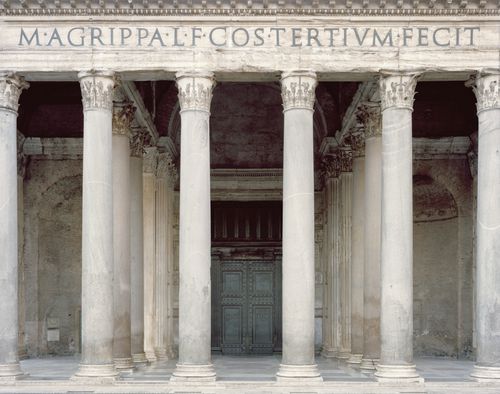
Photograph by Stefano Graziani of the following work: Pantheon, Rome Questioning Pictures is a 36 photograph project commissioned by Fondazione Prada, Milan. Artist Stefano Graziani investigates archival and conservation systems in a number of museums. Through photographing museum objects, Graziani, focusing on the relationship between photographs, the museum objects and the power structures at play within institutions. The museums include the Canadian Centre for Architecture (CCA) in Montréal, Canada; Sir John Soane’s Museum in London, UK; the Kunstmuseum Basel, Switzerland; Museum Insel Hombroich in Neuss, Germany; the Museo di Castelvecchio in Verona, Italy; and the Plaster Cast Gallery at Museo Canova in Possagno, Italy.
PH2018:0005:022
Description:
Photograph by Stefano Graziani of the following work: Pantheon, Rome Questioning Pictures is a 36 photograph project commissioned by Fondazione Prada, Milan. Artist Stefano Graziani investigates archival and conservation systems in a number of museums. Through photographing museum objects, Graziani, focusing on the relationship between photographs, the museum objects and the power structures at play within institutions. The museums include the Canadian Centre for Architecture (CCA) in Montréal, Canada; Sir John Soane’s Museum in London, UK; the Kunstmuseum Basel, Switzerland; Museum Insel Hombroich in Neuss, Germany; the Museo di Castelvecchio in Verona, Italy; and the Plaster Cast Gallery at Museo Canova in Possagno, Italy.
Personnes et institutions:
Date:
2016
2016
Titre:
Questioning Pictures: Photograph of Pantheon, detail of facade, Rome
Actions:
PH2018:0005:022
Description:
Photograph by Stefano Graziani of the following work: Pantheon, Rome Questioning Pictures is a 36 photograph project commissioned by Fondazione Prada, Milan. Artist Stefano Graziani investigates archival and conservation systems in a number of museums. Through photographing museum objects, Graziani, focusing on the relationship between photographs, the museum objects and the power structures at play within institutions. The museums include the Canadian Centre for Architecture (CCA) in Montréal, Canada; Sir John Soane’s Museum in London, UK; the Kunstmuseum Basel, Switzerland; Museum Insel Hombroich in Neuss, Germany; the Museo di Castelvecchio in Verona, Italy; and the Plaster Cast Gallery at Museo Canova in Possagno, Italy.
Questioning Pictures: Photograph of Pantheon, detail of facade, Rome
Actions:
PH2018:0005:022
Description:
Photograph by Stefano Graziani of the following work: Pantheon, Rome Questioning Pictures is a 36 photograph project commissioned by Fondazione Prada, Milan. Artist Stefano Graziani investigates archival and conservation systems in a number of museums. Through photographing museum objects, Graziani, focusing on the relationship between photographs, the museum objects and the power structures at play within institutions. The museums include the Canadian Centre for Architecture (CCA) in Montréal, Canada; Sir John Soane’s Museum in London, UK; the Kunstmuseum Basel, Switzerland; Museum Insel Hombroich in Neuss, Germany; the Museo di Castelvecchio in Verona, Italy; and the Plaster Cast Gallery at Museo Canova in Possagno, Italy.
Classification:
photographies
photographies
Date:
2016
2016
Personnes et institutions:


