


26977 Résultats
Niveau de description archivistique:
Série(s)
Série(s)
Numéro de référence:
AP115.S1
Description:
Cette série porte sur le travail de documentation photographique de Robert Duchesnay d'un des exemples construit du Dymaxion Dwelling Machine, à Wichita, Kansas, aux États-Unis. Le Dymaxion Dwelling Machine, concept conçu par Buckminster Fuller et considéré comme le précurseur du dôme géodésique, visait a créer un mode d'habitation donnant un maximun d'espace pour un minimum de coût et de matériaux. L'exemple du Wichita House est conçu par Fuller en 1945-1946. "L'apparence de cette machine à habiter ressemble quelque peu à une soucoupe volante. Avec sa peau externe en aluminium et ses fenêtres en plexiglass, elle offre un surface élégante et profilée, tout en renferman un espace au sol de 1100 pieds carrées." [1] Le Dymaxion Dwelling Machine est abandonné en 1970, pour être finalement acquise en 1990 par le Henry Ford Museum à Detroit, au Michigan. La structure est démantelé la même année avec l'aide d'un ancien collaborateur de Buckminster Fuller, Jay Baldwin. Le Dymaxion Dwelling Machine est toujours visible au Ford Museum. La série contient des photographies de la Wichita House avant et durant le démantèlement, brochures et feuillets du Wichita Art Museum présentant l'exposition de Robert Duchesnay sur le bâtiment, correspondance reçue par Duchesnay sur son projet de documentation des dômes géodésiques de Buckminster Fuller, et coupures de presse sur le Dymaxion Dwelling Machine et le démantèlement de la Wichita House. [1] Robert Duchesnay, "Dymaxion Dwelling Machine", 2022, https://robertduchesnay.com/fr/dymaxion-fr/ (page consultée 27 février 2023).
AP115.S1
Description:
Cette série porte sur le travail de documentation photographique de Robert Duchesnay d'un des exemples construit du Dymaxion Dwelling Machine, à Wichita, Kansas, aux États-Unis. Le Dymaxion Dwelling Machine, concept conçu par Buckminster Fuller et considéré comme le précurseur du dôme géodésique, visait a créer un mode d'habitation donnant un maximun d'espace pour un minimum de coût et de matériaux. L'exemple du Wichita House est conçu par Fuller en 1945-1946. "L'apparence de cette machine à habiter ressemble quelque peu à une soucoupe volante. Avec sa peau externe en aluminium et ses fenêtres en plexiglass, elle offre un surface élégante et profilée, tout en renferman un espace au sol de 1100 pieds carrées." [1] Le Dymaxion Dwelling Machine est abandonné en 1970, pour être finalement acquise en 1990 par le Henry Ford Museum à Detroit, au Michigan. La structure est démantelé la même année avec l'aide d'un ancien collaborateur de Buckminster Fuller, Jay Baldwin. Le Dymaxion Dwelling Machine est toujours visible au Ford Museum. La série contient des photographies de la Wichita House avant et durant le démantèlement, brochures et feuillets du Wichita Art Museum présentant l'exposition de Robert Duchesnay sur le bâtiment, correspondance reçue par Duchesnay sur son projet de documentation des dômes géodésiques de Buckminster Fuller, et coupures de presse sur le Dymaxion Dwelling Machine et le démantèlement de la Wichita House. [1] Robert Duchesnay, "Dymaxion Dwelling Machine", 2022, https://robertduchesnay.com/fr/dymaxion-fr/ (page consultée 27 février 2023).
Personnes et institutions:
Date:
1990-1992
1990-1992
Titre:
Dymaxion Dwelling Machine, Wichita, Kansas
Actions:
AP115.S1
Description:
Cette série porte sur le travail de documentation photographique de Robert Duchesnay d'un des exemples construit du Dymaxion Dwelling Machine, à Wichita, Kansas, aux États-Unis. Le Dymaxion Dwelling Machine, concept conçu par Buckminster Fuller et considéré comme le précurseur du dôme géodésique, visait a créer un mode d'habitation donnant un maximun d'espace pour un minimum de coût et de matériaux. L'exemple du Wichita House est conçu par Fuller en 1945-1946. "L'apparence de cette machine à habiter ressemble quelque peu à une soucoupe volante. Avec sa peau externe en aluminium et ses fenêtres en plexiglass, elle offre un surface élégante et profilée, tout en renferman un espace au sol de 1100 pieds carrées." [1] Le Dymaxion Dwelling Machine est abandonné en 1970, pour être finalement acquise en 1990 par le Henry Ford Museum à Detroit, au Michigan. La structure est démantelé la même année avec l'aide d'un ancien collaborateur de Buckminster Fuller, Jay Baldwin. Le Dymaxion Dwelling Machine est toujours visible au Ford Museum. La série contient des photographies de la Wichita House avant et durant le démantèlement, brochures et feuillets du Wichita Art Museum présentant l'exposition de Robert Duchesnay sur le bâtiment, correspondance reçue par Duchesnay sur son projet de documentation des dômes géodésiques de Buckminster Fuller, et coupures de presse sur le Dymaxion Dwelling Machine et le démantèlement de la Wichita House. [1] Robert Duchesnay, "Dymaxion Dwelling Machine", 2022, https://robertduchesnay.com/fr/dymaxion-fr/ (page consultée 27 février 2023).
Dymaxion Dwelling Machine, Wichita, Kansas
Actions:
AP115.S1
Description:
Cette série porte sur le travail de documentation photographique de Robert Duchesnay d'un des exemples construit du Dymaxion Dwelling Machine, à Wichita, Kansas, aux États-Unis. Le Dymaxion Dwelling Machine, concept conçu par Buckminster Fuller et considéré comme le précurseur du dôme géodésique, visait a créer un mode d'habitation donnant un maximun d'espace pour un minimum de coût et de matériaux. L'exemple du Wichita House est conçu par Fuller en 1945-1946. "L'apparence de cette machine à habiter ressemble quelque peu à une soucoupe volante. Avec sa peau externe en aluminium et ses fenêtres en plexiglass, elle offre un surface élégante et profilée, tout en renferman un espace au sol de 1100 pieds carrées." [1] Le Dymaxion Dwelling Machine est abandonné en 1970, pour être finalement acquise en 1990 par le Henry Ford Museum à Detroit, au Michigan. La structure est démantelé la même année avec l'aide d'un ancien collaborateur de Buckminster Fuller, Jay Baldwin. Le Dymaxion Dwelling Machine est toujours visible au Ford Museum. La série contient des photographies de la Wichita House avant et durant le démantèlement, brochures et feuillets du Wichita Art Museum présentant l'exposition de Robert Duchesnay sur le bâtiment, correspondance reçue par Duchesnay sur son projet de documentation des dômes géodésiques de Buckminster Fuller, et coupures de presse sur le Dymaxion Dwelling Machine et le démantèlement de la Wichita House. [1] Robert Duchesnay, "Dymaxion Dwelling Machine", 2022, https://robertduchesnay.com/fr/dymaxion-fr/ (page consultée 27 février 2023).
Niveau de description archivistique:
Série
Série
Date:
1990-1992
1990-1992
Personnes et institutions:
Classification:
dessins, documents textuels, photographies
dessins, documents textuels, photographies
Numéro de référence:
DR2004:0170
Description:
loose textual records and files containing questionnaires and responses, report including slides, correspondence, minutes of meetings, graphs, notes and sketches on 1971 Las Vegas Air Structures conference, draft specifications, brochures, LEU draft proposals for a Draft for Development for Air Supported Structures, regulations, standards, reports including technical drawings, publications, promotional material, LEU questionnaires, material on the 1974 Las Vegas 'International Conference: Practical Applications for Air-Supported Structures', and a file containing material relating to LEU including correspondence, clippings, notes on meetings, office memoranda, distribution list, publications and brochures, with annotations on creating microfiches, reports, and possibly unrelated lecture notes
DR2004:0170
Description:
loose textual records and files containing questionnaires and responses, report including slides, correspondence, minutes of meetings, graphs, notes and sketches on 1971 Las Vegas Air Structures conference, draft specifications, brochures, LEU draft proposals for a Draft for Development for Air Supported Structures, regulations, standards, reports including technical drawings, publications, promotional material, LEU questionnaires, material on the 1974 Las Vegas 'International Conference: Practical Applications for Air-Supported Structures', and a file containing material relating to LEU including correspondence, clippings, notes on meetings, office memoranda, distribution list, publications and brochures, with annotations on creating microfiches, reports, and possibly unrelated lecture notes
Personnes et institutions:
Titre:
Loose textual records and files containing questionnaires and responses
Actions:
DR2004:0170
Description:
loose textual records and files containing questionnaires and responses, report including slides, correspondence, minutes of meetings, graphs, notes and sketches on 1971 Las Vegas Air Structures conference, draft specifications, brochures, LEU draft proposals for a Draft for Development for Air Supported Structures, regulations, standards, reports including technical drawings, publications, promotional material, LEU questionnaires, material on the 1974 Las Vegas 'International Conference: Practical Applications for Air-Supported Structures', and a file containing material relating to LEU including correspondence, clippings, notes on meetings, office memoranda, distribution list, publications and brochures, with annotations on creating microfiches, reports, and possibly unrelated lecture notes
Loose textual records and files containing questionnaires and responses
Actions:
DR2004:0170
Description:
loose textual records and files containing questionnaires and responses, report including slides, correspondence, minutes of meetings, graphs, notes and sketches on 1971 Las Vegas Air Structures conference, draft specifications, brochures, LEU draft proposals for a Draft for Development for Air Supported Structures, regulations, standards, reports including technical drawings, publications, promotional material, LEU questionnaires, material on the 1974 Las Vegas 'International Conference: Practical Applications for Air-Supported Structures', and a file containing material relating to LEU including correspondence, clippings, notes on meetings, office memoranda, distribution list, publications and brochures, with annotations on creating microfiches, reports, and possibly unrelated lecture notes
Classification:
dessins, documents textuels, photographies
dessins, documents textuels, photographies
Personnes et institutions:
Classification:
dessins
Quantité:
69 drawing(s)
dessins
Quantité:
69 drawing(s)
Numéro de référence:
ARCH262407
Description:
(6) Carpet pattern sketches (7) Elevation studies of glass wall @ St-Antoine and St-Urbain (12) Perspective studies of north south corridors Level 33 000 (13) Stone pattern and dimension studies for stone pattern on St-Antoine + (1) page of notes (2) Fire stair elevation studies along rue Viger (13) studies for ventilation box on roof at level 33 000 + (2) photocopies ( 3) overlays -A0 print - roof elevation study of corner of de Bleury and St-Antoine 1:400 (2) overlays- elevation study of base of Rogers and King building (11) overlays- elevation studies at kitchen area wrt to structure
ARCH262407
Description:
(6) Carpet pattern sketches (7) Elevation studies of glass wall @ St-Antoine and St-Urbain (12) Perspective studies of north south corridors Level 33 000 (13) Stone pattern and dimension studies for stone pattern on St-Antoine + (1) page of notes (2) Fire stair elevation studies along rue Viger (13) studies for ventilation box on roof at level 33 000 + (2) photocopies ( 3) overlays -A0 print - roof elevation study of corner of de Bleury and St-Antoine 1:400 (2) overlays- elevation study of base of Rogers and King building (11) overlays- elevation studies at kitchen area wrt to structure
Personnes et institutions:
Titre:
Miscellaneous drawings
Actions:
ARCH262407
Description:
(6) Carpet pattern sketches (7) Elevation studies of glass wall @ St-Antoine and St-Urbain (12) Perspective studies of north south corridors Level 33 000 (13) Stone pattern and dimension studies for stone pattern on St-Antoine + (1) page of notes (2) Fire stair elevation studies along rue Viger (13) studies for ventilation box on roof at level 33 000 + (2) photocopies ( 3) overlays -A0 print - roof elevation study of corner of de Bleury and St-Antoine 1:400 (2) overlays- elevation study of base of Rogers and King building (11) overlays- elevation studies at kitchen area wrt to structure
Miscellaneous drawings
Actions:
ARCH262407
Description:
(6) Carpet pattern sketches (7) Elevation studies of glass wall @ St-Antoine and St-Urbain (12) Perspective studies of north south corridors Level 33 000 (13) Stone pattern and dimension studies for stone pattern on St-Antoine + (1) page of notes (2) Fire stair elevation studies along rue Viger (13) studies for ventilation box on roof at level 33 000 + (2) photocopies ( 3) overlays -A0 print - roof elevation study of corner of de Bleury and St-Antoine 1:400 (2) overlays- elevation study of base of Rogers and King building (11) overlays- elevation studies at kitchen area wrt to structure
Classification:
dessins
Quantité:
69 drawing(s)
dessins
Quantité:
69 drawing(s)
Personnes et institutions:
Niveau de description archivistique:
Sous-série
Sous-série
Titre:
Opera Houses
Opera Houses
Numéro de référence:
CI001.S2.D3
Description:
Charles Rohault de Fleury's sustained involvement with the design of opera houses began with his appointment in 1846 as official architect of the existing Salle Le Pelletier, home to the *Paris Opera, and continued until an open competition was called in 1860 (Charles Garnier won this competition). During this period Rohault de Fleury submitted numerous proposals to replace theprovisional Salle Le Pelletier with a structure more appropriate to the grandeur and importance of France's national opera company. The CCA collection contains four projects related to his work for the Paris opera: two early projects (1846 and 1847) and one later one (1859) for a newopera house, and a portfolio of lithographs and drawings related to alterations and repairs to Salle Le Pelletier (1850-1854). The collection also includes Charles' earliest theatre project, a comprehensive plan for an opera house and surrounding infrastructure for the Theatre Royal Italien opera company (1838-1840), and an album containing drawings and prints of antique and contemporary theatres (1839-1854?). Charles' first project was for the Theatre Royal Italien opera company whose previous home, the Salle Favart, had burned down on the night of January 14 1838. The CCA collection contains an album of presentation drawings for a new theatre located on rue de la Paix with boutiques in the adjacent 'passages' (DR1974:0002:019:001-023). A second album consists of site plans including proposed 'maisons à loyers' (apartment buildings) and documents relating to the cost estimates and rental income for the entire project (DR1974:0002:036:001-016). The architectural style and interior arrangement of the theatre is heavily indebted to Francois Debret's Salle Le Pelletier. Charles' originality lies more in his conception of the social and economic role of the theatre in relation and integration, to its surrounding urban fabric. An explanation of the entire Theatre Royal Italien project, and Charles' role as architect in it, is found in two proposal letters (located in the Avery Library, Columbia University, NY) written by the entrepreneur Eugene Lecomte to the Minister of the Interior, Comte Duchatel, on May 15 and October 31 1839 (1). Charles' album of drawings at the CCA for the theatre and some of the cost and rental estimates are probably presentation copies directly related to the first letter, and most likely submitted to the Minister of the Interior. Charles' project was never executed, and the Italian opera company eventualy found a permanent home in the existing Salle Ventadour (1841). However, the inclusive nature of the Théâtre Royal Italien proposal, with its stress on urban development and contextuality, continued to play a seminal role in his later Paris Opera projects. Upon replacing Francois Debret as architect of Salle Le Pelletier in 1846, Charles proposed nine possible locations (site plans) for a new opera house for the Paris Opera (*Academie Royale de Musique) and, in the following year (1847) prepared a portfolio of drawings for the actual structure with an accompanying seven-page manuscript describing the project. Although executed in successive years, the site plans and 1847 drawings are conceptually related. Both components were undertaken in response to offical interest in a public competition that was never implemented (2)(3). The CCA has two sets of the nine site plans proposed in 1846 (DR1974:0002:036:001-016), one containing transfer lithographed site plans with a written analysis and cost estimate for each of the proposed locations, and the other with only the site plans (similar sets are located in the 'Archives Nationales' in France). They indicate that Charles, (heavily influenced by his Théâtre Royal Italien project) preferred the Rue de la Paix location (siteplan #3) for the new opera house. Although site plan number six, Boulevard des Capucines, was not favoured at this date, it is highly prophetic as it was the location officially chosen in 1860 for the new opera house. Apparently unique to the CCA collection is the 1847 manuscript and portfolio of drawings for the proposed opera house (DR1974:0002:036:001-016). The manuscript is both an indepth review of the requirements for a national opera house and a guide to his portfolio of drawings. Charles' conception and design continued to be strongly influenced by Debret's Salle Lepelletier, as well as his own Théâtre Italien project, and various antique and contemporary opera houses and theatres. Many of the French and Italian sources mentioned in the manuscript are collected in an album (DR1974:0002:010:001-048) as references for his own designs (4). As official architect of Salle Le pelletier, Charles was also responsible for repairs, restorations, and alterations to the existing structure. The drawings and transfer lithographs in the CCA collection (DR1974:0002:036:001-016) are primarily dated 1854, and relate to documented repair and restoration projects undertaken during this period (5)(6). The CCA collection has the presentation drawings and lithographs for the later 1859 project (DR1974:0002:027:001-027) for the Paris opera (*Theatre Imperiale de l'opera) that were sent to Achille Fould, the Minister of State. This project is probably a counterpart to a similiar one that he submitted to the Prefect of the Seine, Baron Haussmann, in the same year (7). Site plans show the opera house on an irregular polygonal site facing Boulevard des Capucines. The placement of the 'maisons à loyers' on the rear of the site reflects Charles' continued emphasis on integrating his opera projects into the surrounding urban context. In 1859, it appeared that Charles was favoured to build the new opera house. But late in the following year, a public competition was called in which Charles Garnier emerged as the victor. Although Charles did not build the final structure, his numerous projects, as exemplified in the CCA collection, were of prime importance in determining the location, configuration, and plan of the Place de l'Opera (8). * The 'Paris Opera' was France's national opera, and thus its name changed numerous times throughout its history according to altering perceptions of its role in French culture and/or changes in political regimes. For reasons of clarity, the national opera will be referred to as the Paris Opera. The names indicated in brackets with a star refer to the proper name of the opera company at the date of the project. (1) Eugene Le Comte, "Projet de Salle rue de la Paix, pour le Théâtre Royal Italien: Lettres à Monsieur le Ministre de l'Intérieur, en date des 15 mai et 31octobre 1839" (Paris: P. Dupont, 1839). (2) Christopher Curtis Mead, "Charles Garnier's Paris Opera and the Renaissance of Classicism in Nineteenth century French Architecture", 3 vols. (PhD thesis; Philadelphia: University of Pennsylvania, 1986), p. 234 and p. 956, fn. 30. (3) Monika Steinhauser, "Die Architektur des Pariser Oper" (Munich: Prestel Verlag, 1969), p. 45, fns. 143 and 144. (4) Barry Bergdoll, "Charles Rohault de Fleury: Part Three: Theatres and the Opera house", 'CCA Research Report', n.d., p. 3. (5) Larousse XIXth Century, s.v. "Rohault de Fleury, Charles". (6) Mead, p. 238. (7) Oeuvres de C. Rohault de Fleury, architecte" (Paris: Librarie centrale d'architecture, 1884).. (8) Macmillan, s.v. "Rohault de Fleury Familly".
CI001.S2.D3
Description:
Charles Rohault de Fleury's sustained involvement with the design of opera houses began with his appointment in 1846 as official architect of the existing Salle Le Pelletier, home to the *Paris Opera, and continued until an open competition was called in 1860 (Charles Garnier won this competition). During this period Rohault de Fleury submitted numerous proposals to replace theprovisional Salle Le Pelletier with a structure more appropriate to the grandeur and importance of France's national opera company. The CCA collection contains four projects related to his work for the Paris opera: two early projects (1846 and 1847) and one later one (1859) for a newopera house, and a portfolio of lithographs and drawings related to alterations and repairs to Salle Le Pelletier (1850-1854). The collection also includes Charles' earliest theatre project, a comprehensive plan for an opera house and surrounding infrastructure for the Theatre Royal Italien opera company (1838-1840), and an album containing drawings and prints of antique and contemporary theatres (1839-1854?). Charles' first project was for the Theatre Royal Italien opera company whose previous home, the Salle Favart, had burned down on the night of January 14 1838. The CCA collection contains an album of presentation drawings for a new theatre located on rue de la Paix with boutiques in the adjacent 'passages' (DR1974:0002:019:001-023). A second album consists of site plans including proposed 'maisons à loyers' (apartment buildings) and documents relating to the cost estimates and rental income for the entire project (DR1974:0002:036:001-016). The architectural style and interior arrangement of the theatre is heavily indebted to Francois Debret's Salle Le Pelletier. Charles' originality lies more in his conception of the social and economic role of the theatre in relation and integration, to its surrounding urban fabric. An explanation of the entire Theatre Royal Italien project, and Charles' role as architect in it, is found in two proposal letters (located in the Avery Library, Columbia University, NY) written by the entrepreneur Eugene Lecomte to the Minister of the Interior, Comte Duchatel, on May 15 and October 31 1839 (1). Charles' album of drawings at the CCA for the theatre and some of the cost and rental estimates are probably presentation copies directly related to the first letter, and most likely submitted to the Minister of the Interior. Charles' project was never executed, and the Italian opera company eventualy found a permanent home in the existing Salle Ventadour (1841). However, the inclusive nature of the Théâtre Royal Italien proposal, with its stress on urban development and contextuality, continued to play a seminal role in his later Paris Opera projects. Upon replacing Francois Debret as architect of Salle Le Pelletier in 1846, Charles proposed nine possible locations (site plans) for a new opera house for the Paris Opera (*Academie Royale de Musique) and, in the following year (1847) prepared a portfolio of drawings for the actual structure with an accompanying seven-page manuscript describing the project. Although executed in successive years, the site plans and 1847 drawings are conceptually related. Both components were undertaken in response to offical interest in a public competition that was never implemented (2)(3). The CCA has two sets of the nine site plans proposed in 1846 (DR1974:0002:036:001-016), one containing transfer lithographed site plans with a written analysis and cost estimate for each of the proposed locations, and the other with only the site plans (similar sets are located in the 'Archives Nationales' in France). They indicate that Charles, (heavily influenced by his Théâtre Royal Italien project) preferred the Rue de la Paix location (siteplan #3) for the new opera house. Although site plan number six, Boulevard des Capucines, was not favoured at this date, it is highly prophetic as it was the location officially chosen in 1860 for the new opera house. Apparently unique to the CCA collection is the 1847 manuscript and portfolio of drawings for the proposed opera house (DR1974:0002:036:001-016). The manuscript is both an indepth review of the requirements for a national opera house and a guide to his portfolio of drawings. Charles' conception and design continued to be strongly influenced by Debret's Salle Lepelletier, as well as his own Théâtre Italien project, and various antique and contemporary opera houses and theatres. Many of the French and Italian sources mentioned in the manuscript are collected in an album (DR1974:0002:010:001-048) as references for his own designs (4). As official architect of Salle Le pelletier, Charles was also responsible for repairs, restorations, and alterations to the existing structure. The drawings and transfer lithographs in the CCA collection (DR1974:0002:036:001-016) are primarily dated 1854, and relate to documented repair and restoration projects undertaken during this period (5)(6). The CCA collection has the presentation drawings and lithographs for the later 1859 project (DR1974:0002:027:001-027) for the Paris opera (*Theatre Imperiale de l'opera) that were sent to Achille Fould, the Minister of State. This project is probably a counterpart to a similiar one that he submitted to the Prefect of the Seine, Baron Haussmann, in the same year (7). Site plans show the opera house on an irregular polygonal site facing Boulevard des Capucines. The placement of the 'maisons à loyers' on the rear of the site reflects Charles' continued emphasis on integrating his opera projects into the surrounding urban context. In 1859, it appeared that Charles was favoured to build the new opera house. But late in the following year, a public competition was called in which Charles Garnier emerged as the victor. Although Charles did not build the final structure, his numerous projects, as exemplified in the CCA collection, were of prime importance in determining the location, configuration, and plan of the Place de l'Opera (8). * The 'Paris Opera' was France's national opera, and thus its name changed numerous times throughout its history according to altering perceptions of its role in French culture and/or changes in political regimes. For reasons of clarity, the national opera will be referred to as the Paris Opera. The names indicated in brackets with a star refer to the proper name of the opera company at the date of the project. (1) Eugene Le Comte, "Projet de Salle rue de la Paix, pour le Théâtre Royal Italien: Lettres à Monsieur le Ministre de l'Intérieur, en date des 15 mai et 31octobre 1839" (Paris: P. Dupont, 1839). (2) Christopher Curtis Mead, "Charles Garnier's Paris Opera and the Renaissance of Classicism in Nineteenth century French Architecture", 3 vols. (PhD thesis; Philadelphia: University of Pennsylvania, 1986), p. 234 and p. 956, fn. 30. (3) Monika Steinhauser, "Die Architektur des Pariser Oper" (Munich: Prestel Verlag, 1969), p. 45, fns. 143 and 144. (4) Barry Bergdoll, "Charles Rohault de Fleury: Part Three: Theatres and the Opera house", 'CCA Research Report', n.d., p. 3. (5) Larousse XIXth Century, s.v. "Rohault de Fleury, Charles". (6) Mead, p. 238. (7) Oeuvres de C. Rohault de Fleury, architecte" (Paris: Librarie centrale d'architecture, 1884).. (8) Macmillan, s.v. "Rohault de Fleury Familly".
Personnes et institutions:
Date:
1717-1868
1717-1868
Titre:
Opera Houses
CI001.S2.D3
Description:
Charles Rohault de Fleury's sustained involvement with the design of opera houses began with his appointment in 1846 as official architect of the existing Salle Le Pelletier, home to the *Paris Opera, and continued until an open competition was called in 1860 (Charles Garnier won this competition). During this period Rohault de Fleury submitted numerous proposals to replace theprovisional Salle Le Pelletier with a structure more appropriate to the grandeur and importance of France's national opera company. The CCA collection contains four projects related to his work for the Paris opera: two early projects (1846 and 1847) and one later one (1859) for a newopera house, and a portfolio of lithographs and drawings related to alterations and repairs to Salle Le Pelletier (1850-1854). The collection also includes Charles' earliest theatre project, a comprehensive plan for an opera house and surrounding infrastructure for the Theatre Royal Italien opera company (1838-1840), and an album containing drawings and prints of antique and contemporary theatres (1839-1854?). Charles' first project was for the Theatre Royal Italien opera company whose previous home, the Salle Favart, had burned down on the night of January 14 1838. The CCA collection contains an album of presentation drawings for a new theatre located on rue de la Paix with boutiques in the adjacent 'passages' (DR1974:0002:019:001-023). A second album consists of site plans including proposed 'maisons à loyers' (apartment buildings) and documents relating to the cost estimates and rental income for the entire project (DR1974:0002:036:001-016). The architectural style and interior arrangement of the theatre is heavily indebted to Francois Debret's Salle Le Pelletier. Charles' originality lies more in his conception of the social and economic role of the theatre in relation and integration, to its surrounding urban fabric. An explanation of the entire Theatre Royal Italien project, and Charles' role as architect in it, is found in two proposal letters (located in the Avery Library, Columbia University, NY) written by the entrepreneur Eugene Lecomte to the Minister of the Interior, Comte Duchatel, on May 15 and October 31 1839 (1). Charles' album of drawings at the CCA for the theatre and some of the cost and rental estimates are probably presentation copies directly related to the first letter, and most likely submitted to the Minister of the Interior. Charles' project was never executed, and the Italian opera company eventualy found a permanent home in the existing Salle Ventadour (1841). However, the inclusive nature of the Théâtre Royal Italien proposal, with its stress on urban development and contextuality, continued to play a seminal role in his later Paris Opera projects. Upon replacing Francois Debret as architect of Salle Le Pelletier in 1846, Charles proposed nine possible locations (site plans) for a new opera house for the Paris Opera (*Academie Royale de Musique) and, in the following year (1847) prepared a portfolio of drawings for the actual structure with an accompanying seven-page manuscript describing the project. Although executed in successive years, the site plans and 1847 drawings are conceptually related. Both components were undertaken in response to offical interest in a public competition that was never implemented (2)(3). The CCA has two sets of the nine site plans proposed in 1846 (DR1974:0002:036:001-016), one containing transfer lithographed site plans with a written analysis and cost estimate for each of the proposed locations, and the other with only the site plans (similar sets are located in the 'Archives Nationales' in France). They indicate that Charles, (heavily influenced by his Théâtre Royal Italien project) preferred the Rue de la Paix location (siteplan #3) for the new opera house. Although site plan number six, Boulevard des Capucines, was not favoured at this date, it is highly prophetic as it was the location officially chosen in 1860 for the new opera house. Apparently unique to the CCA collection is the 1847 manuscript and portfolio of drawings for the proposed opera house (DR1974:0002:036:001-016). The manuscript is both an indepth review of the requirements for a national opera house and a guide to his portfolio of drawings. Charles' conception and design continued to be strongly influenced by Debret's Salle Lepelletier, as well as his own Théâtre Italien project, and various antique and contemporary opera houses and theatres. Many of the French and Italian sources mentioned in the manuscript are collected in an album (DR1974:0002:010:001-048) as references for his own designs (4). As official architect of Salle Le pelletier, Charles was also responsible for repairs, restorations, and alterations to the existing structure. The drawings and transfer lithographs in the CCA collection (DR1974:0002:036:001-016) are primarily dated 1854, and relate to documented repair and restoration projects undertaken during this period (5)(6). The CCA collection has the presentation drawings and lithographs for the later 1859 project (DR1974:0002:027:001-027) for the Paris opera (*Theatre Imperiale de l'opera) that were sent to Achille Fould, the Minister of State. This project is probably a counterpart to a similiar one that he submitted to the Prefect of the Seine, Baron Haussmann, in the same year (7). Site plans show the opera house on an irregular polygonal site facing Boulevard des Capucines. The placement of the 'maisons à loyers' on the rear of the site reflects Charles' continued emphasis on integrating his opera projects into the surrounding urban context. In 1859, it appeared that Charles was favoured to build the new opera house. But late in the following year, a public competition was called in which Charles Garnier emerged as the victor. Although Charles did not build the final structure, his numerous projects, as exemplified in the CCA collection, were of prime importance in determining the location, configuration, and plan of the Place de l'Opera (8). * The 'Paris Opera' was France's national opera, and thus its name changed numerous times throughout its history according to altering perceptions of its role in French culture and/or changes in political regimes. For reasons of clarity, the national opera will be referred to as the Paris Opera. The names indicated in brackets with a star refer to the proper name of the opera company at the date of the project. (1) Eugene Le Comte, "Projet de Salle rue de la Paix, pour le Théâtre Royal Italien: Lettres à Monsieur le Ministre de l'Intérieur, en date des 15 mai et 31octobre 1839" (Paris: P. Dupont, 1839). (2) Christopher Curtis Mead, "Charles Garnier's Paris Opera and the Renaissance of Classicism in Nineteenth century French Architecture", 3 vols. (PhD thesis; Philadelphia: University of Pennsylvania, 1986), p. 234 and p. 956, fn. 30. (3) Monika Steinhauser, "Die Architektur des Pariser Oper" (Munich: Prestel Verlag, 1969), p. 45, fns. 143 and 144. (4) Barry Bergdoll, "Charles Rohault de Fleury: Part Three: Theatres and the Opera house", 'CCA Research Report', n.d., p. 3. (5) Larousse XIXth Century, s.v. "Rohault de Fleury, Charles". (6) Mead, p. 238. (7) Oeuvres de C. Rohault de Fleury, architecte" (Paris: Librarie centrale d'architecture, 1884).. (8) Macmillan, s.v. "Rohault de Fleury Familly".
Opera Houses
CI001.S2.D3
Description:
Charles Rohault de Fleury's sustained involvement with the design of opera houses began with his appointment in 1846 as official architect of the existing Salle Le Pelletier, home to the *Paris Opera, and continued until an open competition was called in 1860 (Charles Garnier won this competition). During this period Rohault de Fleury submitted numerous proposals to replace theprovisional Salle Le Pelletier with a structure more appropriate to the grandeur and importance of France's national opera company. The CCA collection contains four projects related to his work for the Paris opera: two early projects (1846 and 1847) and one later one (1859) for a newopera house, and a portfolio of lithographs and drawings related to alterations and repairs to Salle Le Pelletier (1850-1854). The collection also includes Charles' earliest theatre project, a comprehensive plan for an opera house and surrounding infrastructure for the Theatre Royal Italien opera company (1838-1840), and an album containing drawings and prints of antique and contemporary theatres (1839-1854?). Charles' first project was for the Theatre Royal Italien opera company whose previous home, the Salle Favart, had burned down on the night of January 14 1838. The CCA collection contains an album of presentation drawings for a new theatre located on rue de la Paix with boutiques in the adjacent 'passages' (DR1974:0002:019:001-023). A second album consists of site plans including proposed 'maisons à loyers' (apartment buildings) and documents relating to the cost estimates and rental income for the entire project (DR1974:0002:036:001-016). The architectural style and interior arrangement of the theatre is heavily indebted to Francois Debret's Salle Le Pelletier. Charles' originality lies more in his conception of the social and economic role of the theatre in relation and integration, to its surrounding urban fabric. An explanation of the entire Theatre Royal Italien project, and Charles' role as architect in it, is found in two proposal letters (located in the Avery Library, Columbia University, NY) written by the entrepreneur Eugene Lecomte to the Minister of the Interior, Comte Duchatel, on May 15 and October 31 1839 (1). Charles' album of drawings at the CCA for the theatre and some of the cost and rental estimates are probably presentation copies directly related to the first letter, and most likely submitted to the Minister of the Interior. Charles' project was never executed, and the Italian opera company eventualy found a permanent home in the existing Salle Ventadour (1841). However, the inclusive nature of the Théâtre Royal Italien proposal, with its stress on urban development and contextuality, continued to play a seminal role in his later Paris Opera projects. Upon replacing Francois Debret as architect of Salle Le Pelletier in 1846, Charles proposed nine possible locations (site plans) for a new opera house for the Paris Opera (*Academie Royale de Musique) and, in the following year (1847) prepared a portfolio of drawings for the actual structure with an accompanying seven-page manuscript describing the project. Although executed in successive years, the site plans and 1847 drawings are conceptually related. Both components were undertaken in response to offical interest in a public competition that was never implemented (2)(3). The CCA has two sets of the nine site plans proposed in 1846 (DR1974:0002:036:001-016), one containing transfer lithographed site plans with a written analysis and cost estimate for each of the proposed locations, and the other with only the site plans (similar sets are located in the 'Archives Nationales' in France). They indicate that Charles, (heavily influenced by his Théâtre Royal Italien project) preferred the Rue de la Paix location (siteplan #3) for the new opera house. Although site plan number six, Boulevard des Capucines, was not favoured at this date, it is highly prophetic as it was the location officially chosen in 1860 for the new opera house. Apparently unique to the CCA collection is the 1847 manuscript and portfolio of drawings for the proposed opera house (DR1974:0002:036:001-016). The manuscript is both an indepth review of the requirements for a national opera house and a guide to his portfolio of drawings. Charles' conception and design continued to be strongly influenced by Debret's Salle Lepelletier, as well as his own Théâtre Italien project, and various antique and contemporary opera houses and theatres. Many of the French and Italian sources mentioned in the manuscript are collected in an album (DR1974:0002:010:001-048) as references for his own designs (4). As official architect of Salle Le pelletier, Charles was also responsible for repairs, restorations, and alterations to the existing structure. The drawings and transfer lithographs in the CCA collection (DR1974:0002:036:001-016) are primarily dated 1854, and relate to documented repair and restoration projects undertaken during this period (5)(6). The CCA collection has the presentation drawings and lithographs for the later 1859 project (DR1974:0002:027:001-027) for the Paris opera (*Theatre Imperiale de l'opera) that were sent to Achille Fould, the Minister of State. This project is probably a counterpart to a similiar one that he submitted to the Prefect of the Seine, Baron Haussmann, in the same year (7). Site plans show the opera house on an irregular polygonal site facing Boulevard des Capucines. The placement of the 'maisons à loyers' on the rear of the site reflects Charles' continued emphasis on integrating his opera projects into the surrounding urban context. In 1859, it appeared that Charles was favoured to build the new opera house. But late in the following year, a public competition was called in which Charles Garnier emerged as the victor. Although Charles did not build the final structure, his numerous projects, as exemplified in the CCA collection, were of prime importance in determining the location, configuration, and plan of the Place de l'Opera (8). * The 'Paris Opera' was France's national opera, and thus its name changed numerous times throughout its history according to altering perceptions of its role in French culture and/or changes in political regimes. For reasons of clarity, the national opera will be referred to as the Paris Opera. The names indicated in brackets with a star refer to the proper name of the opera company at the date of the project. (1) Eugene Le Comte, "Projet de Salle rue de la Paix, pour le Théâtre Royal Italien: Lettres à Monsieur le Ministre de l'Intérieur, en date des 15 mai et 31octobre 1839" (Paris: P. Dupont, 1839). (2) Christopher Curtis Mead, "Charles Garnier's Paris Opera and the Renaissance of Classicism in Nineteenth century French Architecture", 3 vols. (PhD thesis; Philadelphia: University of Pennsylvania, 1986), p. 234 and p. 956, fn. 30. (3) Monika Steinhauser, "Die Architektur des Pariser Oper" (Munich: Prestel Verlag, 1969), p. 45, fns. 143 and 144. (4) Barry Bergdoll, "Charles Rohault de Fleury: Part Three: Theatres and the Opera house", 'CCA Research Report', n.d., p. 3. (5) Larousse XIXth Century, s.v. "Rohault de Fleury, Charles". (6) Mead, p. 238. (7) Oeuvres de C. Rohault de Fleury, architecte" (Paris: Librarie centrale d'architecture, 1884).. (8) Macmillan, s.v. "Rohault de Fleury Familly".
Niveau de description archivistique:
File 3
File 3
Date:
1717-1868
1717-1868
Personnes et institutions:
Classification:
documents textuels
documents textuels
Numéro de référence:
ARCH153450
Description:
Financial report, April 12, 1982 2-page handwritten notes from PDE describing the director's job Resignation and notes on job description from Hamid Nouri to PDE, Feb. 19, 1982 2 Documents relative to a grant application to the NEH for Open Plan, 22 July 1981 Agenda of Meeting of April 7, 1982. IAUS Brochure, 1979 Memos to PDE Transcripts of meetings held on 4/14 & 4/18 about fund raising problems Correspondence about current projects (building project, catalogues, grants…) Minutes of the special meeting of the Board of Trustees of March 25, 1982 Proposed salary structure for the IAUS Staff, April 12, 1982
ARCH153450
Description:
Financial report, April 12, 1982 2-page handwritten notes from PDE describing the director's job Resignation and notes on job description from Hamid Nouri to PDE, Feb. 19, 1982 2 Documents relative to a grant application to the NEH for Open Plan, 22 July 1981 Agenda of Meeting of April 7, 1982. IAUS Brochure, 1979 Memos to PDE Transcripts of meetings held on 4/14 & 4/18 about fund raising problems Correspondence about current projects (building project, catalogues, grants…) Minutes of the special meeting of the Board of Trustees of March 25, 1982 Proposed salary structure for the IAUS Staff, April 12, 1982
Personnes et institutions:
Date:
1979-1982
1979-1982
Titre:
P. Eisenman, Trustees Meeting, Feb. 22, 1982
Actions:
ARCH153450
Description:
Financial report, April 12, 1982 2-page handwritten notes from PDE describing the director's job Resignation and notes on job description from Hamid Nouri to PDE, Feb. 19, 1982 2 Documents relative to a grant application to the NEH for Open Plan, 22 July 1981 Agenda of Meeting of April 7, 1982. IAUS Brochure, 1979 Memos to PDE Transcripts of meetings held on 4/14 & 4/18 about fund raising problems Correspondence about current projects (building project, catalogues, grants…) Minutes of the special meeting of the Board of Trustees of March 25, 1982 Proposed salary structure for the IAUS Staff, April 12, 1982
P. Eisenman, Trustees Meeting, Feb. 22, 1982
Actions:
ARCH153450
Description:
Financial report, April 12, 1982 2-page handwritten notes from PDE describing the director's job Resignation and notes on job description from Hamid Nouri to PDE, Feb. 19, 1982 2 Documents relative to a grant application to the NEH for Open Plan, 22 July 1981 Agenda of Meeting of April 7, 1982. IAUS Brochure, 1979 Memos to PDE Transcripts of meetings held on 4/14 & 4/18 about fund raising problems Correspondence about current projects (building project, catalogues, grants…) Minutes of the special meeting of the Board of Trustees of March 25, 1982 Proposed salary structure for the IAUS Staff, April 12, 1982
Classification:
documents textuels
documents textuels
Date:
1979-1982
1979-1982
Personnes et institutions:
Classification:
documents textuels
Quantité:
3 File
documents textuels
Quantité:
3 File
Numéro de référence:
ARCH39250
Description:
specifications for mechanical and electrical work draughted for the addition to Trenton Exchange Building, 1956; 3 diazotypes for column schedule, 1st and 2nd floor structures; engineering brief
ARCH39250
Description:
specifications for mechanical and electrical work draughted for the addition to Trenton Exchange Building, 1956; 3 diazotypes for column schedule, 1st and 2nd floor structures; engineering brief
Personnes et institutions:
Date:
1956
1956
Titre:
Specifications for mechanical and electrical work draughted for the addition to Trenton Exchange Building
Actions:
ARCH39250
Description:
specifications for mechanical and electrical work draughted for the addition to Trenton Exchange Building, 1956; 3 diazotypes for column schedule, 1st and 2nd floor structures; engineering brief
Specifications for mechanical and electrical work draughted for the addition to Trenton Exchange Building
Actions:
ARCH39250
Description:
specifications for mechanical and electrical work draughted for the addition to Trenton Exchange Building, 1956; 3 diazotypes for column schedule, 1st and 2nd floor structures; engineering brief
Classification:
documents textuels
Quantité:
3 File
documents textuels
Quantité:
3 File
Date:
1956
1956
Personnes et institutions:
Classification:
événements
événements
Titre:
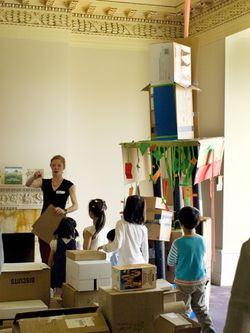
Maisons de carton
Maisons de carton
Actions:
Description:
Les familles étudient le potentiel créatif d’un matériau recyclé en bâtissant en carton des maisons et des constructions imaginaires. Inspirée par l’exposition 1973 : Désolé, plus d’essence (2007), Maisons de carton propose des façons novatrices de construire qui ont un impact réduit sur l’environnement.
Les familles étudient le potentiel créatif d’un matériau recyclé en bâtissant en carton des maisons et des constructions imaginaires. Inspirée par l’exposition 1973 : Désolé, plus d’essence (2007), Maisons de carton propose des façons novatrices de construire qui ont un impact réduit sur l’environnement.
Date:
27 avril 2008
27 avril 2008
Titre:
Maisons de carton
Actions:
Description:
Les familles étudient le potentiel créatif d’un matériau recyclé en bâtissant en carton des maisons et des constructions imaginaires. Inspirée par l’exposition 1973 : Désolé, plus d’essence (2007), Maisons de carton propose des façons novatrices de construire qui ont un impact réduit sur l’environnement.
Maisons de carton
Actions:
Description:
Les familles étudient le potentiel créatif d’un matériau recyclé en bâtissant en carton des maisons et des constructions imaginaires. Inspirée par l’exposition 1973 : Désolé, plus d’essence (2007), Maisons de carton propose des façons novatrices de construire qui ont un impact réduit sur l’environnement.
Classification:
événements
événements
Date:
27 avril 2008
27 avril 2008
Niveau de description archivistique:
Projet
Projet
Titre:
Miragaia, Porto
Miragaia, Porto
Numéro de référence:
CD034.S1.1975.PR01
Description:
This project series contains reproductions of drawings and panels displayed in the exhibit to document the neighbourhood Miragaia, in Porto Portugal. The exhibit text explained that: ... although the Miragaia project was never built, its seminal and programmatic character contributed significantly to the development of the SAAL Process. The project architect Fernando Távora first worked on the Barredo Neighbourhood ― a very poor area in the Porto's historic centre ― as an architect and teacher at the city's School of Fine Arts, and the Miragaia project built on this research, demonstrating a knowledge of and sensitivity to both the physical terrain and the social landscape of Porto, presenting a nuanced view of life in an urban space. Despite the strengths of the plan, the city council's policy on Porto's historic centre subsequently did not include Távora's project for Miragaia. Nonetheless, in the seriousness of its design and the depth of knowledge that it displayed, the project was a significant attempt to recover and rationalize Miragaia's vacant riverside zone. The highly developed nature of the proposal, its level of surgical precision, and Fernando Távora's thoughtful notes reveal a great deal about SAAL, its structure, its relationship with residents, and the overall model for urban intervention. (The SAAL Process, Housing in Portugal 1974–76) Fernando Távora worked for SAAL/North with Antónia Nolo, Bernardo Ferrão, Gil Carneiro, Joaquim Jordão, Jorge Barros, Manuel Campos, Pedro Paredes and the residents' association Miragaia, that was founded on March 30th, 1976. The project was for 900 dwellings, but none were built. The operation began in June 1975. This project series contains reproductions of design development drawings, presentation panels, site plans and a study of a logo. The original drawings and panels were produced from 1975 to 1977 and were reproduced in 2015 for the exhibit.
CD034.S1.1975.PR01
Description:
This project series contains reproductions of drawings and panels displayed in the exhibit to document the neighbourhood Miragaia, in Porto Portugal. The exhibit text explained that: ... although the Miragaia project was never built, its seminal and programmatic character contributed significantly to the development of the SAAL Process. The project architect Fernando Távora first worked on the Barredo Neighbourhood ― a very poor area in the Porto's historic centre ― as an architect and teacher at the city's School of Fine Arts, and the Miragaia project built on this research, demonstrating a knowledge of and sensitivity to both the physical terrain and the social landscape of Porto, presenting a nuanced view of life in an urban space. Despite the strengths of the plan, the city council's policy on Porto's historic centre subsequently did not include Távora's project for Miragaia. Nonetheless, in the seriousness of its design and the depth of knowledge that it displayed, the project was a significant attempt to recover and rationalize Miragaia's vacant riverside zone. The highly developed nature of the proposal, its level of surgical precision, and Fernando Távora's thoughtful notes reveal a great deal about SAAL, its structure, its relationship with residents, and the overall model for urban intervention. (The SAAL Process, Housing in Portugal 1974–76) Fernando Távora worked for SAAL/North with Antónia Nolo, Bernardo Ferrão, Gil Carneiro, Joaquim Jordão, Jorge Barros, Manuel Campos, Pedro Paredes and the residents' association Miragaia, that was founded on March 30th, 1976. The project was for 900 dwellings, but none were built. The operation began in June 1975. This project series contains reproductions of design development drawings, presentation panels, site plans and a study of a logo. The original drawings and panels were produced from 1975 to 1977 and were reproduced in 2015 for the exhibit.
Personnes et institutions:
Date:
1975-1977
1975-1977
Titre:
Miragaia, Porto
Actions:
CD034.S1.1975.PR01
Description:
This project series contains reproductions of drawings and panels displayed in the exhibit to document the neighbourhood Miragaia, in Porto Portugal. The exhibit text explained that: ... although the Miragaia project was never built, its seminal and programmatic character contributed significantly to the development of the SAAL Process. The project architect Fernando Távora first worked on the Barredo Neighbourhood ― a very poor area in the Porto's historic centre ― as an architect and teacher at the city's School of Fine Arts, and the Miragaia project built on this research, demonstrating a knowledge of and sensitivity to both the physical terrain and the social landscape of Porto, presenting a nuanced view of life in an urban space. Despite the strengths of the plan, the city council's policy on Porto's historic centre subsequently did not include Távora's project for Miragaia. Nonetheless, in the seriousness of its design and the depth of knowledge that it displayed, the project was a significant attempt to recover and rationalize Miragaia's vacant riverside zone. The highly developed nature of the proposal, its level of surgical precision, and Fernando Távora's thoughtful notes reveal a great deal about SAAL, its structure, its relationship with residents, and the overall model for urban intervention. (The SAAL Process, Housing in Portugal 1974–76) Fernando Távora worked for SAAL/North with Antónia Nolo, Bernardo Ferrão, Gil Carneiro, Joaquim Jordão, Jorge Barros, Manuel Campos, Pedro Paredes and the residents' association Miragaia, that was founded on March 30th, 1976. The project was for 900 dwellings, but none were built. The operation began in June 1975. This project series contains reproductions of design development drawings, presentation panels, site plans and a study of a logo. The original drawings and panels were produced from 1975 to 1977 and were reproduced in 2015 for the exhibit.
Miragaia, Porto
Actions:
CD034.S1.1975.PR01
Description:
This project series contains reproductions of drawings and panels displayed in the exhibit to document the neighbourhood Miragaia, in Porto Portugal. The exhibit text explained that: ... although the Miragaia project was never built, its seminal and programmatic character contributed significantly to the development of the SAAL Process. The project architect Fernando Távora first worked on the Barredo Neighbourhood ― a very poor area in the Porto's historic centre ― as an architect and teacher at the city's School of Fine Arts, and the Miragaia project built on this research, demonstrating a knowledge of and sensitivity to both the physical terrain and the social landscape of Porto, presenting a nuanced view of life in an urban space. Despite the strengths of the plan, the city council's policy on Porto's historic centre subsequently did not include Távora's project for Miragaia. Nonetheless, in the seriousness of its design and the depth of knowledge that it displayed, the project was a significant attempt to recover and rationalize Miragaia's vacant riverside zone. The highly developed nature of the proposal, its level of surgical precision, and Fernando Távora's thoughtful notes reveal a great deal about SAAL, its structure, its relationship with residents, and the overall model for urban intervention. (The SAAL Process, Housing in Portugal 1974–76) Fernando Távora worked for SAAL/North with Antónia Nolo, Bernardo Ferrão, Gil Carneiro, Joaquim Jordão, Jorge Barros, Manuel Campos, Pedro Paredes and the residents' association Miragaia, that was founded on March 30th, 1976. The project was for 900 dwellings, but none were built. The operation began in June 1975. This project series contains reproductions of design development drawings, presentation panels, site plans and a study of a logo. The original drawings and panels were produced from 1975 to 1977 and were reproduced in 2015 for the exhibit.
Niveau de description archivistique:
Project
Project
Date:
1975-1977
1975-1977
Personnes et institutions:
Niveau de description archivistique:
Projet
Projet
Numéro de référence:
AP207.S1.2002.PR01
Description:
The project series documents a series of performances entitled "Il Mestiere Dell'Architetto". The first edition was performed by Pettena in Maiano, near Florence in 2002. It consisted of a series of images of Pettena rock climbing that represents the work of the architect "and the role of those who work in the discipline, what is represented here is the need to make choices and at the same time the difficulty of doing so, of taking routes that, while they may appear impassable, are actually the very essence of the artist’s thought and language [...]." [1] Another version was performed in 2004 at the Ex-Meccanotessile complex, in Florence, 2004, and consisted of a series of photographs of a man climbing the interior roof structure of the building. Unlike the 2002 edition of this performance, "not even nature offers its support to those who, despite moving with caution, often find themselves in a situation of impasse." [2] A final version of the performance was created in 2012 by Pettena. The digitally created installation consisted of a gradually fading shape of a climber drawn in leaves that slowly disperse. In this installation, compared to the two previous ones, the architect "seems to find here a solution and ultimate freedom through the final choice of ‘giving in’ to the prevalence of natural environment." [3] The project series contains a sketch and photographs of the 2002 performance, photographs of the 2004 performance, and a drawing for the 2012 performance. Source: [1] Gianni Pettena website, https://www.giannipettena.it/italiano/opere-1/perf-the-craft-2002/ (last accessed 22 January 2020). [2] Gianni Pettena website, https://www.giannipettena.it/italiano/opere-1/perf-the-craft-ii-2004/ (last accessed 22 January 2020). [3] Gianni Pettena website, https://www.giannipettena.it/italiano/opere-1/nat-the-craft-of-the-architect-3-2012/ (last accessed 27 January 2020).
AP207.S1.2002.PR01
Description:
The project series documents a series of performances entitled "Il Mestiere Dell'Architetto". The first edition was performed by Pettena in Maiano, near Florence in 2002. It consisted of a series of images of Pettena rock climbing that represents the work of the architect "and the role of those who work in the discipline, what is represented here is the need to make choices and at the same time the difficulty of doing so, of taking routes that, while they may appear impassable, are actually the very essence of the artist’s thought and language [...]." [1] Another version was performed in 2004 at the Ex-Meccanotessile complex, in Florence, 2004, and consisted of a series of photographs of a man climbing the interior roof structure of the building. Unlike the 2002 edition of this performance, "not even nature offers its support to those who, despite moving with caution, often find themselves in a situation of impasse." [2] A final version of the performance was created in 2012 by Pettena. The digitally created installation consisted of a gradually fading shape of a climber drawn in leaves that slowly disperse. In this installation, compared to the two previous ones, the architect "seems to find here a solution and ultimate freedom through the final choice of ‘giving in’ to the prevalence of natural environment." [3] The project series contains a sketch and photographs of the 2002 performance, photographs of the 2004 performance, and a drawing for the 2012 performance. Source: [1] Gianni Pettena website, https://www.giannipettena.it/italiano/opere-1/perf-the-craft-2002/ (last accessed 22 January 2020). [2] Gianni Pettena website, https://www.giannipettena.it/italiano/opere-1/perf-the-craft-ii-2004/ (last accessed 22 January 2020). [3] Gianni Pettena website, https://www.giannipettena.it/italiano/opere-1/nat-the-craft-of-the-architect-3-2012/ (last accessed 27 January 2020).
Personnes et institutions:
Date:
2002-2015
2002-2015
Titre:
Il Mestiere Dell'Architetto [The Craft of the Architect] (2002)
Actions:
AP207.S1.2002.PR01
Description:
The project series documents a series of performances entitled "Il Mestiere Dell'Architetto". The first edition was performed by Pettena in Maiano, near Florence in 2002. It consisted of a series of images of Pettena rock climbing that represents the work of the architect "and the role of those who work in the discipline, what is represented here is the need to make choices and at the same time the difficulty of doing so, of taking routes that, while they may appear impassable, are actually the very essence of the artist’s thought and language [...]." [1] Another version was performed in 2004 at the Ex-Meccanotessile complex, in Florence, 2004, and consisted of a series of photographs of a man climbing the interior roof structure of the building. Unlike the 2002 edition of this performance, "not even nature offers its support to those who, despite moving with caution, often find themselves in a situation of impasse." [2] A final version of the performance was created in 2012 by Pettena. The digitally created installation consisted of a gradually fading shape of a climber drawn in leaves that slowly disperse. In this installation, compared to the two previous ones, the architect "seems to find here a solution and ultimate freedom through the final choice of ‘giving in’ to the prevalence of natural environment." [3] The project series contains a sketch and photographs of the 2002 performance, photographs of the 2004 performance, and a drawing for the 2012 performance. Source: [1] Gianni Pettena website, https://www.giannipettena.it/italiano/opere-1/perf-the-craft-2002/ (last accessed 22 January 2020). [2] Gianni Pettena website, https://www.giannipettena.it/italiano/opere-1/perf-the-craft-ii-2004/ (last accessed 22 January 2020). [3] Gianni Pettena website, https://www.giannipettena.it/italiano/opere-1/nat-the-craft-of-the-architect-3-2012/ (last accessed 27 January 2020).
Il Mestiere Dell'Architetto [The Craft of the Architect] (2002)
Actions:
AP207.S1.2002.PR01
Description:
The project series documents a series of performances entitled "Il Mestiere Dell'Architetto". The first edition was performed by Pettena in Maiano, near Florence in 2002. It consisted of a series of images of Pettena rock climbing that represents the work of the architect "and the role of those who work in the discipline, what is represented here is the need to make choices and at the same time the difficulty of doing so, of taking routes that, while they may appear impassable, are actually the very essence of the artist’s thought and language [...]." [1] Another version was performed in 2004 at the Ex-Meccanotessile complex, in Florence, 2004, and consisted of a series of photographs of a man climbing the interior roof structure of the building. Unlike the 2002 edition of this performance, "not even nature offers its support to those who, despite moving with caution, often find themselves in a situation of impasse." [2] A final version of the performance was created in 2012 by Pettena. The digitally created installation consisted of a gradually fading shape of a climber drawn in leaves that slowly disperse. In this installation, compared to the two previous ones, the architect "seems to find here a solution and ultimate freedom through the final choice of ‘giving in’ to the prevalence of natural environment." [3] The project series contains a sketch and photographs of the 2002 performance, photographs of the 2004 performance, and a drawing for the 2012 performance. Source: [1] Gianni Pettena website, https://www.giannipettena.it/italiano/opere-1/perf-the-craft-2002/ (last accessed 22 January 2020). [2] Gianni Pettena website, https://www.giannipettena.it/italiano/opere-1/perf-the-craft-ii-2004/ (last accessed 22 January 2020). [3] Gianni Pettena website, https://www.giannipettena.it/italiano/opere-1/nat-the-craft-of-the-architect-3-2012/ (last accessed 27 January 2020).
Niveau de description archivistique:
Project
Project
Date:
2002-2015
2002-2015
Personnes et institutions:
Niveau de description archivistique:
Projet
Projet
Numéro de référence:
AP056.S1.1989.PR02
Description:
This project series documents interior design for Main Street of Hasbro Headquarters in Pawtucket, Rhode Island from 1989-1991. The office identified the project number as 8902. This project consisted of the interiors of the company's headquarters for an area of the building known as Main Street. This was the first in a series of projects that the firm would complete for the headquarters. The 300,000 square foot building was predominantly one-storey and located on the block between Saratoga, Grand, London and Newport Avenues. The three projects were known as Main Street, Phase 2A and Phase 2B. Phase 1 was completed in 1986 by Barton Myers Associates with Shirley Blumberg as partner-in-charge. These subsequent projects by KPMB were also headed by Shirley Blumberg and continued the initial style she had established in Phase 1. These projects saw the conversion of a historic brick and masonry mill into the company's new offices. The office structure was inspired by the layout of a Greek town, with a main street running through it. Main Street was a wide corridor which spanned the length of the building, acting as a central artery for activity. The corridor was flooded with natural light from the original saw tooth skylights on the ceiling and lantern-like offices lined the sides. Small rooms were positioned in the corridor, including the main conference room with a large curved wall, a reception area and two smaller conference rooms. Maple screens, translucent glass and steel were the prominent materials used for Main Street. The project is recorded through drawings dating from 1987-1988. These are mostly original drawings and include sketches, plans, sections, elevations, perspectives, details, and furniture drawings. Many of the plans focus on the design of the executive bathroom.
AP056.S1.1989.PR02
Description:
This project series documents interior design for Main Street of Hasbro Headquarters in Pawtucket, Rhode Island from 1989-1991. The office identified the project number as 8902. This project consisted of the interiors of the company's headquarters for an area of the building known as Main Street. This was the first in a series of projects that the firm would complete for the headquarters. The 300,000 square foot building was predominantly one-storey and located on the block between Saratoga, Grand, London and Newport Avenues. The three projects were known as Main Street, Phase 2A and Phase 2B. Phase 1 was completed in 1986 by Barton Myers Associates with Shirley Blumberg as partner-in-charge. These subsequent projects by KPMB were also headed by Shirley Blumberg and continued the initial style she had established in Phase 1. These projects saw the conversion of a historic brick and masonry mill into the company's new offices. The office structure was inspired by the layout of a Greek town, with a main street running through it. Main Street was a wide corridor which spanned the length of the building, acting as a central artery for activity. The corridor was flooded with natural light from the original saw tooth skylights on the ceiling and lantern-like offices lined the sides. Small rooms were positioned in the corridor, including the main conference room with a large curved wall, a reception area and two smaller conference rooms. Maple screens, translucent glass and steel were the prominent materials used for Main Street. The project is recorded through drawings dating from 1987-1988. These are mostly original drawings and include sketches, plans, sections, elevations, perspectives, details, and furniture drawings. Many of the plans focus on the design of the executive bathroom.
Personnes et institutions:
Date:
1989-1992
1989-1992
Titre:
Hasbro Headquarters Main Street, Pawtucket, Rhode Island (1989-1991)
Actions:
AP056.S1.1989.PR02
Description:
This project series documents interior design for Main Street of Hasbro Headquarters in Pawtucket, Rhode Island from 1989-1991. The office identified the project number as 8902. This project consisted of the interiors of the company's headquarters for an area of the building known as Main Street. This was the first in a series of projects that the firm would complete for the headquarters. The 300,000 square foot building was predominantly one-storey and located on the block between Saratoga, Grand, London and Newport Avenues. The three projects were known as Main Street, Phase 2A and Phase 2B. Phase 1 was completed in 1986 by Barton Myers Associates with Shirley Blumberg as partner-in-charge. These subsequent projects by KPMB were also headed by Shirley Blumberg and continued the initial style she had established in Phase 1. These projects saw the conversion of a historic brick and masonry mill into the company's new offices. The office structure was inspired by the layout of a Greek town, with a main street running through it. Main Street was a wide corridor which spanned the length of the building, acting as a central artery for activity. The corridor was flooded with natural light from the original saw tooth skylights on the ceiling and lantern-like offices lined the sides. Small rooms were positioned in the corridor, including the main conference room with a large curved wall, a reception area and two smaller conference rooms. Maple screens, translucent glass and steel were the prominent materials used for Main Street. The project is recorded through drawings dating from 1987-1988. These are mostly original drawings and include sketches, plans, sections, elevations, perspectives, details, and furniture drawings. Many of the plans focus on the design of the executive bathroom.
Hasbro Headquarters Main Street, Pawtucket, Rhode Island (1989-1991)
Actions:
AP056.S1.1989.PR02
Description:
This project series documents interior design for Main Street of Hasbro Headquarters in Pawtucket, Rhode Island from 1989-1991. The office identified the project number as 8902. This project consisted of the interiors of the company's headquarters for an area of the building known as Main Street. This was the first in a series of projects that the firm would complete for the headquarters. The 300,000 square foot building was predominantly one-storey and located on the block between Saratoga, Grand, London and Newport Avenues. The three projects were known as Main Street, Phase 2A and Phase 2B. Phase 1 was completed in 1986 by Barton Myers Associates with Shirley Blumberg as partner-in-charge. These subsequent projects by KPMB were also headed by Shirley Blumberg and continued the initial style she had established in Phase 1. These projects saw the conversion of a historic brick and masonry mill into the company's new offices. The office structure was inspired by the layout of a Greek town, with a main street running through it. Main Street was a wide corridor which spanned the length of the building, acting as a central artery for activity. The corridor was flooded with natural light from the original saw tooth skylights on the ceiling and lantern-like offices lined the sides. Small rooms were positioned in the corridor, including the main conference room with a large curved wall, a reception area and two smaller conference rooms. Maple screens, translucent glass and steel were the prominent materials used for Main Street. The project is recorded through drawings dating from 1987-1988. These are mostly original drawings and include sketches, plans, sections, elevations, perspectives, details, and furniture drawings. Many of the plans focus on the design of the executive bathroom.
Niveau de description archivistique:
Project
Project
Date:
1989-1992
1989-1992
Personnes et institutions:


