


1559 Résultats
Classification:
livres
livres
Actions:
Prix:
$30.00
(disponible sur commande)
Résumé:
Parks are importantly fertile places to talk about land. Whether its big national parks, provincial campgrounds, isolated conservation areas, destination parks, or humble urban patches of grass, we tend to speak of parks as unqualified goods. People think of parks as public or common land, and it is a common belief that parks are the best uses of land and are good for(...)
$30.00
(disponible sur commande)
Résumé:
Parks are importantly fertile places to talk about land. Whether its big national parks, provincial campgrounds, isolated conservation areas, destination parks, or humble urban patches of grass, we tend to speak of parks as unqualified goods. People think of parks as public or common land, and it is a common belief that parks are the best uses of land and are good for(...)
Titre:
On this patch of grass: city parks and the politics of occupied land
Actions:
Prix:
$30.00
(disponible sur commande)
Résumé:
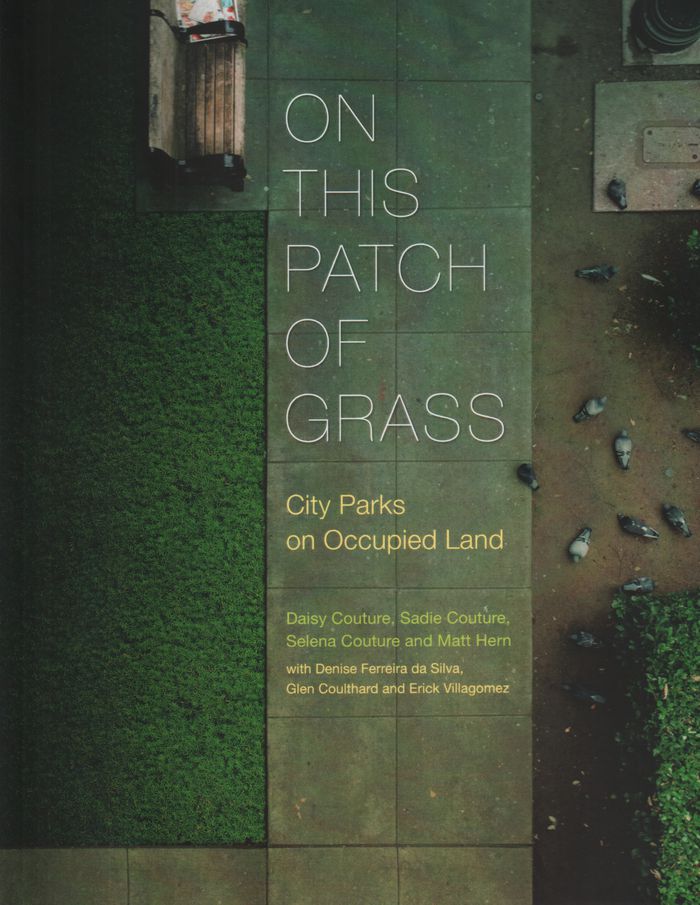
Parks are importantly fertile places to talk about land. Whether its big national parks, provincial campgrounds, isolated conservation areas, destination parks, or humble urban patches of grass, we tend to speak of parks as unqualified goods. People think of parks as public or common land, and it is a common belief that parks are the best uses of land and are good for everyone. But no park is innocent. Parks are lionized as "natural oases," and urban parks as "pure nature" in the midst of the city -- but that's absurd. Parks are as "natural" as the roads or buildings around them, and just as political. Every park in North America is performing modernity and settler colonialism everyday. Furthermore, parks are not private property, but while they are called ''public'', they are highly regulated spaces that normatively demand and closely control behaviours. Parks are a certain kind of property, and thus creations of law, and they are subject to all kinds of presumptions about what parks are for, and what kinds of people should be doing what kinds of things in them. Parks- as they are currently constituted- are colonial enterprises.
On this patch of grass: city parks and the politics of occupied land
Actions:
Prix:
$30.00
(disponible sur commande)
Résumé:
Parks are importantly fertile places to talk about land. Whether its big national parks, provincial campgrounds, isolated conservation areas, destination parks, or humble urban patches of grass, we tend to speak of parks as unqualified goods. People think of parks as public or common land, and it is a common belief that parks are the best uses of land and are good for everyone. But no park is innocent. Parks are lionized as "natural oases," and urban parks as "pure nature" in the midst of the city -- but that's absurd. Parks are as "natural" as the roads or buildings around them, and just as political. Every park in North America is performing modernity and settler colonialism everyday. Furthermore, parks are not private property, but while they are called ''public'', they are highly regulated spaces that normatively demand and closely control behaviours. Parks are a certain kind of property, and thus creations of law, and they are subject to all kinds of presumptions about what parks are for, and what kinds of people should be doing what kinds of things in them. Parks- as they are currently constituted- are colonial enterprises.
Classification:
livres
livres
Publication:
novembre 2018
novembre 2018
Sujet:
Théorie du paysage
Théorie du paysage
Classification:
livres
livres
Actions:
Prix:
$30.00
(disponible sur commande)
Résumé:
Michiel Schwarz and Joost Elffers declare the dawn of a new cultural era, as we transition from modernity to sustainity - towards a world that is more connected, more localist, more digital and more sustainable. As the authors of this manifesto argue, "sustainism marks a shift not only in thinking and doing but in collective perception - of how we live, do business, feed(...)
$30.00
(disponible sur commande)
Résumé:
Michiel Schwarz and Joost Elffers declare the dawn of a new cultural era, as we transition from modernity to sustainity - towards a world that is more connected, more localist, more digital and more sustainable. As the authors of this manifesto argue, "sustainism marks a shift not only in thinking and doing but in collective perception - of how we live, do business, feed(...)
Titre:
Sustainism is the new modernism : a cultural manifesto for the sustainist era
Actions:
Prix:
$30.00
(disponible sur commande)
Résumé:
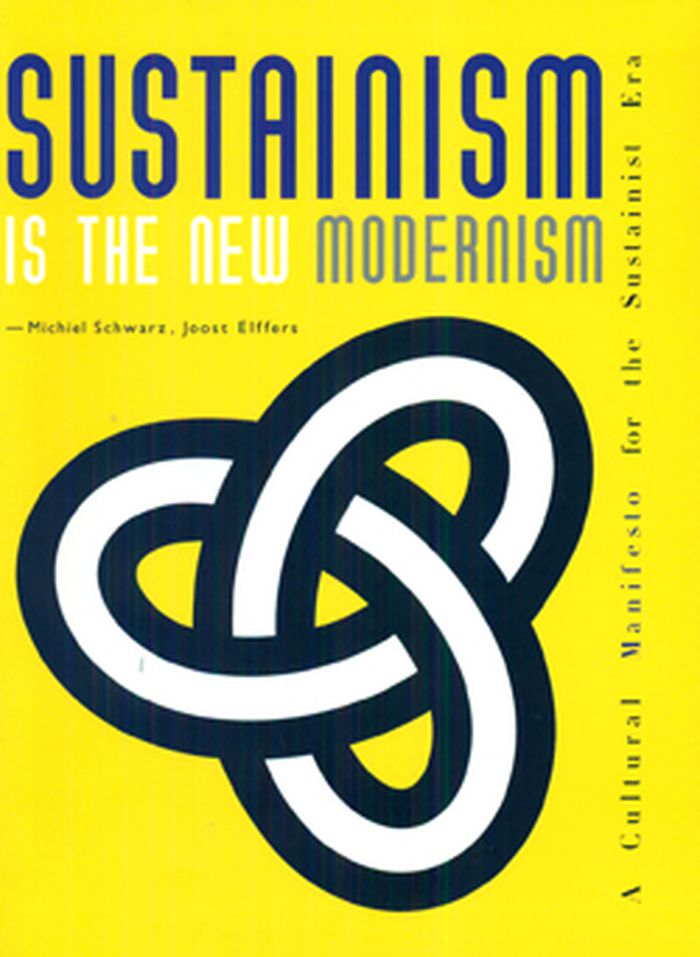
Michiel Schwarz and Joost Elffers declare the dawn of a new cultural era, as we transition from modernity to sustainity - towards a world that is more connected, more localist, more digital and more sustainable. As the authors of this manifesto argue, "sustainism marks a shift not only in thinking and doing but in collective perception - of how we live, do business, feed ourselves, design, travel and communicate, as much as how we deal with nature." In the twentieth century, whether we knew it or not, our world was shaped by modernist values, from the design of our cities to our homes, technologies and our conceptions of progress. Sustainism recasts our relationship to all of these things, binding ecological issues to a larger picture of our world. Through a series of graphically dynamic aphorisms, quotes and symbols designed for worldwide use by businesses, individuals and institutions, to signal support for sustainism, Michiel Schwarz and Joost Elffers show how the movement is already reshaping global culture, technology, food and media. With this concise manifesto, they launch the term sustainism into the public consciousness. The sustainist era has begun.
Sustainism is the new modernism : a cultural manifesto for the sustainist era
Actions:
Prix:
$30.00
(disponible sur commande)
Résumé:
Michiel Schwarz and Joost Elffers declare the dawn of a new cultural era, as we transition from modernity to sustainity - towards a world that is more connected, more localist, more digital and more sustainable. As the authors of this manifesto argue, "sustainism marks a shift not only in thinking and doing but in collective perception - of how we live, do business, feed ourselves, design, travel and communicate, as much as how we deal with nature." In the twentieth century, whether we knew it or not, our world was shaped by modernist values, from the design of our cities to our homes, technologies and our conceptions of progress. Sustainism recasts our relationship to all of these things, binding ecological issues to a larger picture of our world. Through a series of graphically dynamic aphorisms, quotes and symbols designed for worldwide use by businesses, individuals and institutions, to signal support for sustainism, Michiel Schwarz and Joost Elffers show how the movement is already reshaping global culture, technology, food and media. With this concise manifesto, they launch the term sustainism into the public consciousness. The sustainist era has begun.
Classification:
livres
livres
Publication:
août 2010
août 2010
Sujet:
Architecture écologique
Architecture écologique
Classification:
livres
livres
Prix:
$88.00
(disponible en magasin)
Résumé:
Architectones, a monumental undertaking of seven exhibitions installed across three continents over a two year period, unites Veilhan's diverse interests in modernity, its histories of technology, and its cult of genius figures. Collectively titled after Kazimir Malevich's volumetric-spatial models, the art and architectural works partake in the revolutionary idealism of(...)
$88.00
(disponible en magasin)
Résumé:
Architectones, a monumental undertaking of seven exhibitions installed across three continents over a two year period, unites Veilhan's diverse interests in modernity, its histories of technology, and its cult of genius figures. Collectively titled after Kazimir Malevich's volumetric-spatial models, the art and architectural works partake in the revolutionary idealism of(...)
Titre:
Xavier Veilhan: Architectones, art in the living environment
Actions:
Prix:
$88.00
(disponible en magasin)
Résumé:
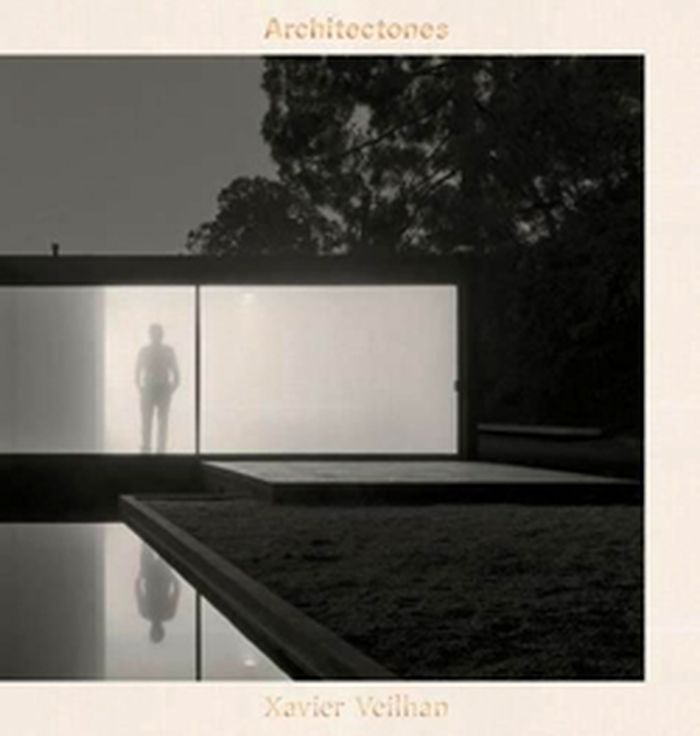
Architectones, a monumental undertaking of seven exhibitions installed across three continents over a two year period, unites Veilhan's diverse interests in modernity, its histories of technology, and its cult of genius figures. Collectively titled after Kazimir Malevich's volumetric-spatial models, the art and architectural works partake in the revolutionary idealism of a period in which it was possible to imagine transforming society from the ground up by way of a new form of building. Between 2012 and 2014, Veilhan used music, light, and sculpture to activate Richard Neutra's VDL Research House in Silver Lake, Pierre Koenig's Case Study House No. 21 in the Hollywood Hills, and buildings designed by Le Corbusier and Mies Van Der Rohe, among others. The histories and legacies of the architects themselves played a prominent role in these installations, with figural sculptures and die-cut silhouettes of the looming personalities of the architects populating his installations. Architectones: Art in the Living Environment tells both a story of present and past, archiving exhibition photography as well as anecdotal and historical documents of many of the greatest domestic and private spaces of modern architecture.
Xavier Veilhan: Architectones, art in the living environment
Actions:
Prix:
$88.00
(disponible en magasin)
Résumé:
Architectones, a monumental undertaking of seven exhibitions installed across three continents over a two year period, unites Veilhan's diverse interests in modernity, its histories of technology, and its cult of genius figures. Collectively titled after Kazimir Malevich's volumetric-spatial models, the art and architectural works partake in the revolutionary idealism of a period in which it was possible to imagine transforming society from the ground up by way of a new form of building. Between 2012 and 2014, Veilhan used music, light, and sculpture to activate Richard Neutra's VDL Research House in Silver Lake, Pierre Koenig's Case Study House No. 21 in the Hollywood Hills, and buildings designed by Le Corbusier and Mies Van Der Rohe, among others. The histories and legacies of the architects themselves played a prominent role in these installations, with figural sculptures and die-cut silhouettes of the looming personalities of the architects populating his installations. Architectones: Art in the Living Environment tells both a story of present and past, archiving exhibition photography as well as anecdotal and historical documents of many of the greatest domestic and private spaces of modern architecture.
Classification:
livres
livres
Publication:
juillet 2015
juillet 2015
Classification:
livres
livres
Actions:
Prix:
$39.95
(disponible en magasin)
Résumé:
In "The Zone," Justinien Tribillon takes the reader on a tour of an eponymous Parisian hinterland. The site of dreams and nightmares, from Van Gogh’s paintings to the cinematic violence of La Haine, the Zone, so often misunderstood, is the key to understanding today’s Paris, and even France itself. Originally the site of defensive walls, alongside which mushroomed(...)
$39.95
(disponible en magasin)
Résumé:
In "The Zone," Justinien Tribillon takes the reader on a tour of an eponymous Parisian hinterland. The site of dreams and nightmares, from Van Gogh’s paintings to the cinematic violence of La Haine, the Zone, so often misunderstood, is the key to understanding today’s Paris, and even France itself. Originally the site of defensive walls, alongside which mushroomed(...)
Titre:
The zone: An alternative history of Paris
Actions:
Prix:
$39.95
(disponible en magasin)
Résumé:
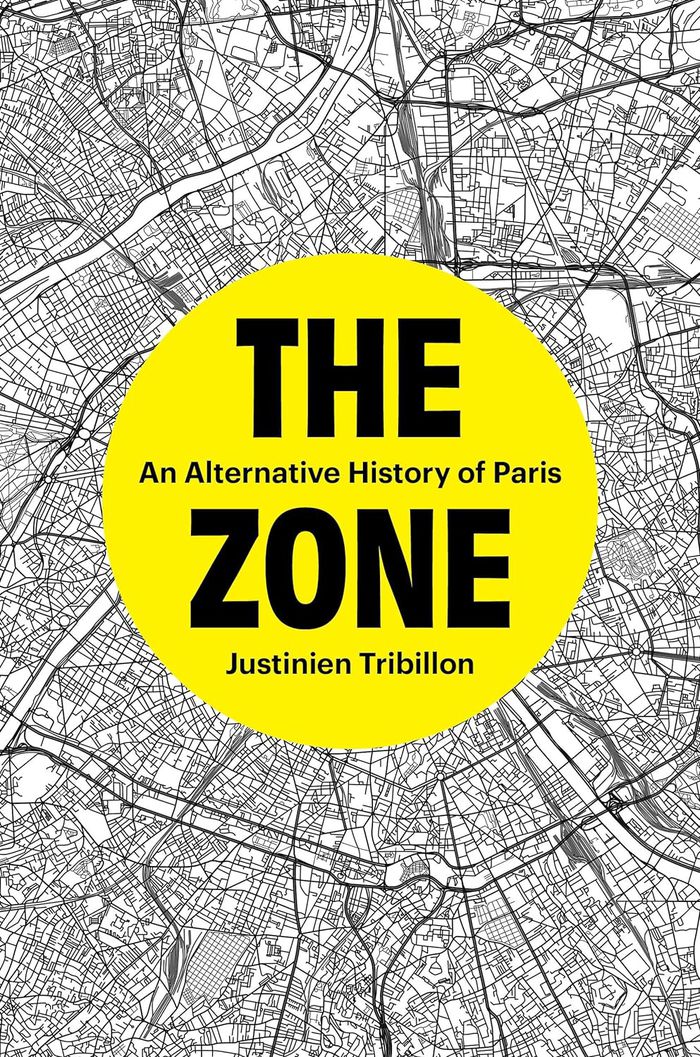
In "The Zone," Justinien Tribillon takes the reader on a tour of an eponymous Parisian hinterland. The site of dreams and nightmares, from Van Gogh’s paintings to the cinematic violence of La Haine, the Zone, so often misunderstood, is the key to understanding today’s Paris, and even France itself. Originally the site of defensive walls, alongside which mushroomed makeshift housing, allotments, and dancehalls in the nineteenth century, the Zone has performed many functions and been a place of contention for two centuries. Dismantled in the 1920s, the fortifications were first replaced with gardens, stadia and homes. After the war came the Boulevard Périphérique, a ring road promising seamless travel in a futuristic car-centric Paris. With the ring road came new dreams of modernity in reinvented suburbs: new towns, high-rise architecture and social housing built at record speed. Yesterday’s Paris made way for tomorrow’s banlieue. But the metropolitan dream was never realised. The Zone became a symbol of division: between inner and outer cities; between the bourgeois centre and the working-class immigrant outskirts; between ‘us’ and ‘them’. The Zone, both a physical space and a powerful myth, came to crystallise the social, spatial and ethno-racial differences between Paris and the banlieue.
The zone: An alternative history of Paris
Actions:
Prix:
$39.95
(disponible en magasin)
Résumé:
In "The Zone," Justinien Tribillon takes the reader on a tour of an eponymous Parisian hinterland. The site of dreams and nightmares, from Van Gogh’s paintings to the cinematic violence of La Haine, the Zone, so often misunderstood, is the key to understanding today’s Paris, and even France itself. Originally the site of defensive walls, alongside which mushroomed makeshift housing, allotments, and dancehalls in the nineteenth century, the Zone has performed many functions and been a place of contention for two centuries. Dismantled in the 1920s, the fortifications were first replaced with gardens, stadia and homes. After the war came the Boulevard Périphérique, a ring road promising seamless travel in a futuristic car-centric Paris. With the ring road came new dreams of modernity in reinvented suburbs: new towns, high-rise architecture and social housing built at record speed. Yesterday’s Paris made way for tomorrow’s banlieue. But the metropolitan dream was never realised. The Zone became a symbol of division: between inner and outer cities; between the bourgeois centre and the working-class immigrant outskirts; between ‘us’ and ‘them’. The Zone, both a physical space and a powerful myth, came to crystallise the social, spatial and ethno-racial differences between Paris and the banlieue.
Classification:
livres
livres
Publication:
juillet 2024
juillet 2024
Sujet:
Théorie de l’urbanisme
Théorie de l’urbanisme
Classification:
livres
livres
Prix:
$18.95
(disponible sur commande)
Résumé:
The fictitious hero of this 1984 installation is a lonely dreamer who develops an impossible project: to fly alone in cosmic space. But this dream is also an individual appropriation of a collective Soviet project and the official Soviet propaganda connected to it. Having built a makeshift slingshot, the hero apparently flies through the ceiling of his shabby room and(...)
$18.95
(disponible sur commande)
Résumé:
The fictitious hero of this 1984 installation is a lonely dreamer who develops an impossible project: to fly alone in cosmic space. But this dream is also an individual appropriation of a collective Soviet project and the official Soviet propaganda connected to it. Having built a makeshift slingshot, the hero apparently flies through the ceiling of his shabby room and(...)
Titre:
Ilka Kabakov: the man who flew into space from his apartment
Actions:
Prix:
$18.95
(disponible sur commande)
Résumé:
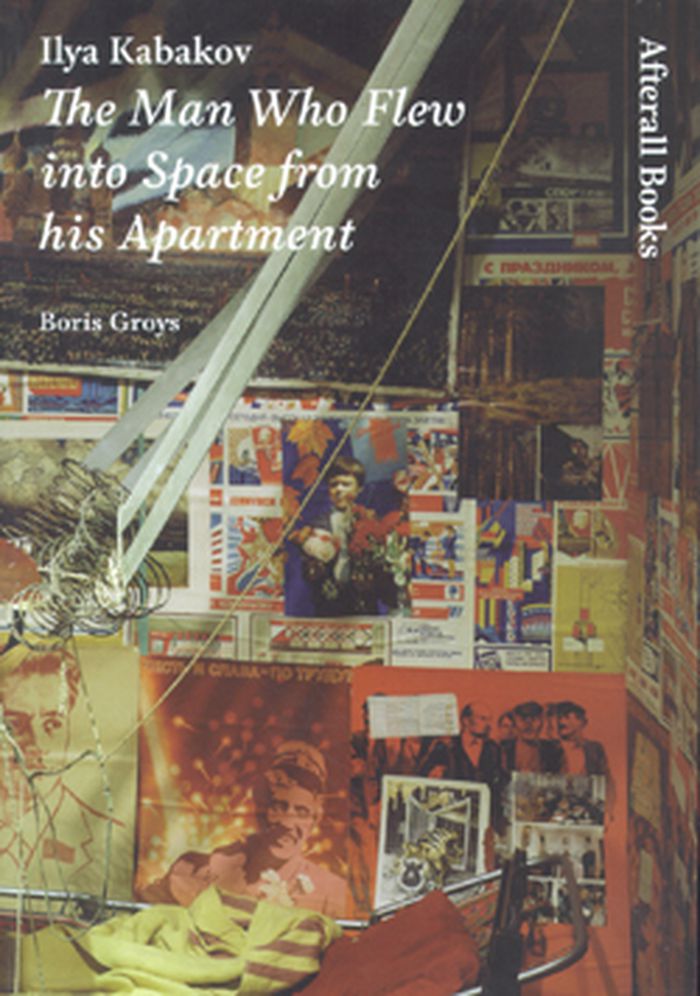
The fictitious hero of this 1984 installation is a lonely dreamer who develops an impossible project: to fly alone in cosmic space. But this dream is also an individual appropriation of a collective Soviet project and the official Soviet propaganda connected to it. Having built a makeshift slingshot, the hero apparently flies through the ceiling of his shabby room and vanishes into space. The miserable room and the primitive slingshot suggest the reality behind the Soviet utopia, in which where cosmic vision and the political project of the Communist revolution are seen as indissoluble. The Man who Flew into Space from His Apartment also raises questions of authorship in modernity. All of Kabakov's work is made in the name of other, fictitious artists. This reveals a hidden rule of the modern art system: only an artist who doesn't want to be an artist or who doesn't even know that he is an artist is a real artist—just as only an artwork that does not look like an artwork is a real artwork. The installation is a narrative, the documentation of a fictitious event. Boris Groys is Professor of Philosophy and Art Theory at the Academy for Design in Karlsruhe, Germany, and Global Professor at New York University.
Ilka Kabakov: the man who flew into space from his apartment
Actions:
Prix:
$18.95
(disponible sur commande)
Résumé:
The fictitious hero of this 1984 installation is a lonely dreamer who develops an impossible project: to fly alone in cosmic space. But this dream is also an individual appropriation of a collective Soviet project and the official Soviet propaganda connected to it. Having built a makeshift slingshot, the hero apparently flies through the ceiling of his shabby room and vanishes into space. The miserable room and the primitive slingshot suggest the reality behind the Soviet utopia, in which where cosmic vision and the political project of the Communist revolution are seen as indissoluble. The Man who Flew into Space from His Apartment also raises questions of authorship in modernity. All of Kabakov's work is made in the name of other, fictitious artists. This reveals a hidden rule of the modern art system: only an artist who doesn't want to be an artist or who doesn't even know that he is an artist is a real artist—just as only an artwork that does not look like an artwork is a real artwork. The installation is a narrative, the documentation of a fictitious event. Boris Groys is Professor of Philosophy and Art Theory at the Academy for Design in Karlsruhe, Germany, and Global Professor at New York University.
Classification:
livres
livres
Publication:
mai 2006, London
mai 2006, London
Sujet:
Théorie de l’art
Théorie de l’art
Classification:
périodiques
périodiques
Titre:
Cabinet 21 : electricity
Cabinet 21 : electricity
Actions:
Prix:
$12.00
(disponible sur commande)
Résumé:
Electricity manifests itself in every facet of our lives--from the tiny shock received by touching a doorknob to the explosive power of a lightning strike, from the modest Hoover dustbuster to the industrial grandeur of the Hoover Dam. As a force that has given human beings seemingly unlimited power over nature and refashioned our understanding of day and night, and as a(...)
$12.00
(disponible sur commande)
Résumé:
Electricity manifests itself in every facet of our lives--from the tiny shock received by touching a doorknob to the explosive power of a lightning strike, from the modest Hoover dustbuster to the industrial grandeur of the Hoover Dam. As a force that has given human beings seemingly unlimited power over nature and refashioned our understanding of day and night, and as a(...)
Titre:
Cabinet 21 : electricity
Actions:
Prix:
$12.00
(disponible sur commande)
Résumé:
Electricity manifests itself in every facet of our lives--from the tiny shock received by touching a doorknob to the explosive power of a lightning strike, from the modest Hoover dustbuster to the industrial grandeur of the Hoover Dam. As a force that has given human beings seemingly unlimited power over nature and refashioned our understanding of day and night, and as a metaphor for the social currents flowing among individuals and communities, electricity has been our invisible yet ubiquitous ally in the creation of a contemporary "technological sublime." Cabinet No. 21 includes an interview with Sharon Beder on electricity and modernity in America; Margaret Wertheim on Lichtenberg figures, frozen lightning captured in acrylic blocks; Michael Sanchez on Francisco Salva's shocking proposal for an eighteenth-century human telegraphy system; an interview with Marcello Pera on how a frog triggered a decisive scientific debate between Enlightenment "electricians" Galvani and Volta; an essay on Benjamin Franklin's promotion of Ebenezer Kinnersley's electrified "magical picture"; and a firsthand account by a survivor of multiple lightning strikes. Also Tom Vanderbilt on Stasi scent samples; an interview with Sam Chwat, the foremost accent elimination coach in the United States; and artist projects by Andrea Geyer and Rachel Watson.
Cabinet 21 : electricity
Actions:
Prix:
$12.00
(disponible sur commande)
Résumé:
Electricity manifests itself in every facet of our lives--from the tiny shock received by touching a doorknob to the explosive power of a lightning strike, from the modest Hoover dustbuster to the industrial grandeur of the Hoover Dam. As a force that has given human beings seemingly unlimited power over nature and refashioned our understanding of day and night, and as a metaphor for the social currents flowing among individuals and communities, electricity has been our invisible yet ubiquitous ally in the creation of a contemporary "technological sublime." Cabinet No. 21 includes an interview with Sharon Beder on electricity and modernity in America; Margaret Wertheim on Lichtenberg figures, frozen lightning captured in acrylic blocks; Michael Sanchez on Francisco Salva's shocking proposal for an eighteenth-century human telegraphy system; an interview with Marcello Pera on how a frog triggered a decisive scientific debate between Enlightenment "electricians" Galvani and Volta; an essay on Benjamin Franklin's promotion of Ebenezer Kinnersley's electrified "magical picture"; and a firsthand account by a survivor of multiple lightning strikes. Also Tom Vanderbilt on Stasi scent samples; an interview with Sam Chwat, the foremost accent elimination coach in the United States; and artist projects by Andrea Geyer and Rachel Watson.
Classification:
périodiques
périodiques
Publication:
avril 2006, New York
avril 2006, New York
Sujet:
Revues
Revues
Classification:
livres
livres
Titre:
Logic of the collection
Logic of the collection
Actions:
Prix:
$39.00
(disponible sur commande)
Résumé:
In modernity, the museum was the institution that made art accessible to the broader public. An artwork was collected if it was considered beautiful, passionate, engaged, or critical—and primarily if it was deemed historically relevant. But today, with the total availability and saturation of images, the museum has lost its privileged status as the exclusive place for the(...)
$39.00
(disponible sur commande)
Résumé:
In modernity, the museum was the institution that made art accessible to the broader public. An artwork was collected if it was considered beautiful, passionate, engaged, or critical—and primarily if it was deemed historically relevant. But today, with the total availability and saturation of images, the museum has lost its privileged status as the exclusive place for the(...)
Titre:
Logic of the collection
Actions:
Prix:
$39.00
(disponible sur commande)
Résumé:
In modernity, the museum was the institution that made art accessible to the broader public. An artwork was collected if it was considered beautiful, passionate, engaged, or critical—and primarily if it was deemed historically relevant. But today, with the total availability and saturation of images, the museum has lost its privileged status as the exclusive place for the display of art. In our age of digital media, how does a particular artwork get selected for a museum collection? Which symbolic criteria must this artwork satisfy for it to obtain value? And in what ways does the institution of the museum remain relevant? 'Logic of the Collection' is framed by Boris Groys’s original and provocative proposition: an artwork is considered historically relevant if it fits the logic of the museum collection. In these critical essays, the philosopher and theorist of art and media analyzes the relationship between the logic of the collection and various modern ideologies. He reflects on the explosion of art production and distribution through the ascendency of digital media as well as the ways in which the accumulated artworks will be collected and preserved in the future, as the potential limits of public and private collections are reached.
Logic of the collection
Actions:
Prix:
$39.00
(disponible sur commande)
Résumé:
In modernity, the museum was the institution that made art accessible to the broader public. An artwork was collected if it was considered beautiful, passionate, engaged, or critical—and primarily if it was deemed historically relevant. But today, with the total availability and saturation of images, the museum has lost its privileged status as the exclusive place for the display of art. In our age of digital media, how does a particular artwork get selected for a museum collection? Which symbolic criteria must this artwork satisfy for it to obtain value? And in what ways does the institution of the museum remain relevant? 'Logic of the Collection' is framed by Boris Groys’s original and provocative proposition: an artwork is considered historically relevant if it fits the logic of the museum collection. In these critical essays, the philosopher and theorist of art and media analyzes the relationship between the logic of the collection and various modern ideologies. He reflects on the explosion of art production and distribution through the ascendency of digital media as well as the ways in which the accumulated artworks will be collected and preserved in the future, as the potential limits of public and private collections are reached.
Classification:
livres
livres
Publication:
août 2021
août 2021
Sujet:
Muséologie
Muséologie
Classification:
livres
livres
Prix:
$67.95
(disponible sur commande)
Résumé:
In the mid-nineteenth century, Napoleon III and his prefect, Georges-Eugène Haussmann, adapted Paris to the requirements of industrial capitalism, endowing the old city with elegant boulevards, an enhanced water supply, modern sewers, and public greenery. Esther da Costa Meyer provides a major reassessment of this ambitious project, which resulted in widespread(...)
$67.95
(disponible sur commande)
Résumé:
In the mid-nineteenth century, Napoleon III and his prefect, Georges-Eugène Haussmann, adapted Paris to the requirements of industrial capitalism, endowing the old city with elegant boulevards, an enhanced water supply, modern sewers, and public greenery. Esther da Costa Meyer provides a major reassessment of this ambitious project, which resulted in widespread(...)
Titre:
Dividing Paris: Urban renewal and social inequality 1852-1870
Actions:
Prix:
$67.95
(disponible sur commande)
Résumé:
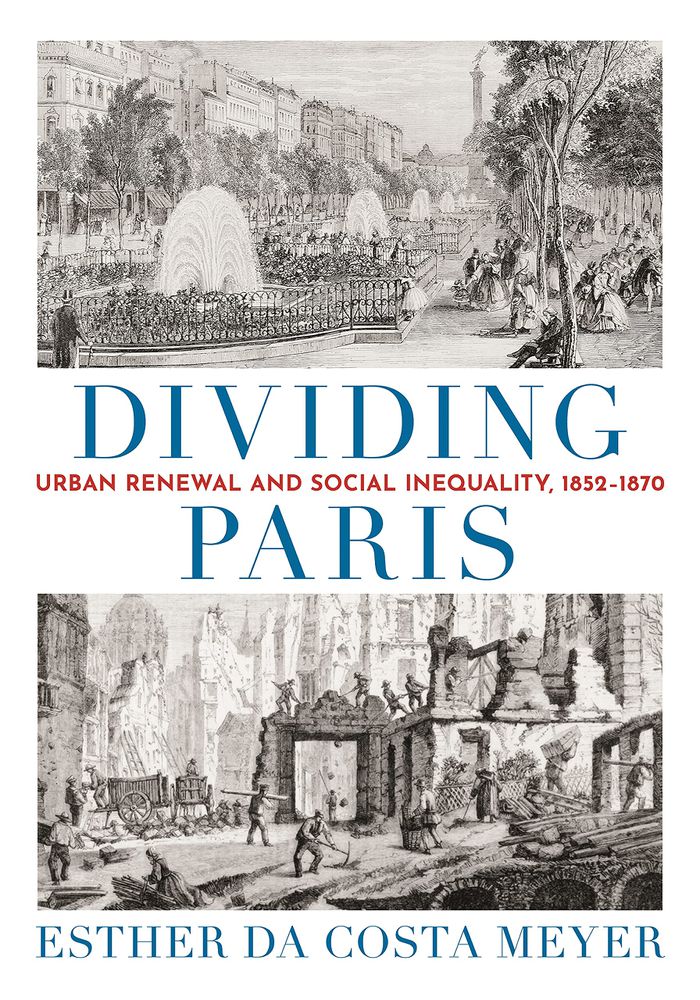
In the mid-nineteenth century, Napoleon III and his prefect, Georges-Eugène Haussmann, adapted Paris to the requirements of industrial capitalism, endowing the old city with elegant boulevards, an enhanced water supply, modern sewers, and public greenery. Esther da Costa Meyer provides a major reassessment of this ambitious project, which resulted in widespread destruction in the historic center, displacing thousands of poor residents and polarizing the urban fabric. Drawing on newspapers, memoirs, and other archival materials, da Costa Meyer explores how people from different social strata?both women and men?experienced the urban reforms implemented by the Second Empire. As hundreds of tenements were destroyed to make way for upscale apartment buildings, thousands of impoverished residents were forced to the periphery, which lacked the services enjoyed by wealthier parts of the city. Challenging the idea of Paris as the capital of modernity, da Costa Meyer shows how the city was the hub of a sprawling colonial empire extending from the Caribbean to Asia, and exposes the underlying violence that enriched it at the expense of overseas territories. This book brings to light the contributions of those who actually built and maintained the impressive infrastructure of Paris, and reveals the consequences of colonial practices for the city's cultural, economic, and political life.
Dividing Paris: Urban renewal and social inequality 1852-1870
Actions:
Prix:
$67.95
(disponible sur commande)
Résumé:
In the mid-nineteenth century, Napoleon III and his prefect, Georges-Eugène Haussmann, adapted Paris to the requirements of industrial capitalism, endowing the old city with elegant boulevards, an enhanced water supply, modern sewers, and public greenery. Esther da Costa Meyer provides a major reassessment of this ambitious project, which resulted in widespread destruction in the historic center, displacing thousands of poor residents and polarizing the urban fabric. Drawing on newspapers, memoirs, and other archival materials, da Costa Meyer explores how people from different social strata?both women and men?experienced the urban reforms implemented by the Second Empire. As hundreds of tenements were destroyed to make way for upscale apartment buildings, thousands of impoverished residents were forced to the periphery, which lacked the services enjoyed by wealthier parts of the city. Challenging the idea of Paris as the capital of modernity, da Costa Meyer shows how the city was the hub of a sprawling colonial empire extending from the Caribbean to Asia, and exposes the underlying violence that enriched it at the expense of overseas territories. This book brings to light the contributions of those who actually built and maintained the impressive infrastructure of Paris, and reveals the consequences of colonial practices for the city's cultural, economic, and political life.
Classification:
livres
livres
Publication:
février 2022
février 2022
Sujet:
Théorie de l’urbanisme
Théorie de l’urbanisme
Classification:
livres
livres
Prix:
$35.95
(disponible sur commande)
Résumé:
Economic growth isn’t working, and it cannot be made to work. Offering a counter-history of how economic growth emerged in the context of colonialism, fossil-fueled industrialization, and capitalist modernity, ''The future is degrowth'' argues that the ideology of growth conceals the rising inequalities and ecological destructions associated with capitalism, and points to(...)
$35.95
(disponible sur commande)
Résumé:
Economic growth isn’t working, and it cannot be made to work. Offering a counter-history of how economic growth emerged in the context of colonialism, fossil-fueled industrialization, and capitalist modernity, ''The future is degrowth'' argues that the ideology of growth conceals the rising inequalities and ecological destructions associated with capitalism, and points to(...)
Titre:
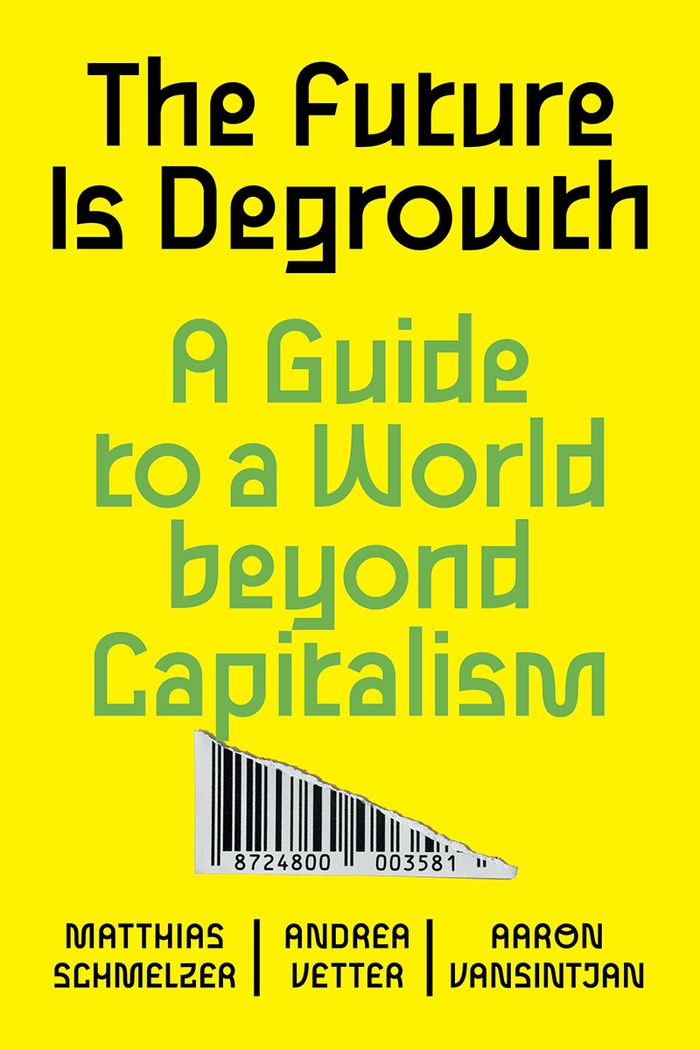
The future is degrowth: A guide to a world beyond capitalism
Actions:
Prix:
$35.95
(disponible sur commande)
Résumé:
Economic growth isn’t working, and it cannot be made to work. Offering a counter-history of how economic growth emerged in the context of colonialism, fossil-fueled industrialization, and capitalist modernity, ''The future is degrowth'' argues that the ideology of growth conceals the rising inequalities and ecological destructions associated with capitalism, and points to desirable alternatives to it. Not only in society at large, but also on the left, we are held captive by the hegemony of growth. Even proposals for emancipatory Green New Deals or postcapitalism base their utopian hopes on the development of productive forces, on redistributing the fruits of economic growth and technological progress. Yet growing evidence shows that continued economic growth cannot be made compatible with sustaining life and is not necessary for a good life for all. This book provides a vision for postcapitalism beyond growth. Building on a vibrant field of research, it discusses the political economy and the politics of a non-growing economy. It charts a path forward through policies that democratise the economy, ''now-topias'' that create free spaces for experimentation, and counter-hegemonic movements that make it possible to break with the logic of growth. Degrowth perspectives offer a way to step off the treadmill of an alienating, expansionist, and hierarchical system.
The future is degrowth: A guide to a world beyond capitalism
Actions:
Prix:
$35.95
(disponible sur commande)
Résumé:
Economic growth isn’t working, and it cannot be made to work. Offering a counter-history of how economic growth emerged in the context of colonialism, fossil-fueled industrialization, and capitalist modernity, ''The future is degrowth'' argues that the ideology of growth conceals the rising inequalities and ecological destructions associated with capitalism, and points to desirable alternatives to it. Not only in society at large, but also on the left, we are held captive by the hegemony of growth. Even proposals for emancipatory Green New Deals or postcapitalism base their utopian hopes on the development of productive forces, on redistributing the fruits of economic growth and technological progress. Yet growing evidence shows that continued economic growth cannot be made compatible with sustaining life and is not necessary for a good life for all. This book provides a vision for postcapitalism beyond growth. Building on a vibrant field of research, it discusses the political economy and the politics of a non-growing economy. It charts a path forward through policies that democratise the economy, ''now-topias'' that create free spaces for experimentation, and counter-hegemonic movements that make it possible to break with the logic of growth. Degrowth perspectives offer a way to step off the treadmill of an alienating, expansionist, and hierarchical system.
Classification:
livres
livres
Publication:
juin 2022
juin 2022
Sujet:
Social
Social
Classification:
livres
livres
Actions:
Prix:
$31.95
(disponible sur commande)
Résumé:
On the premise that words have the power to make worlds, each essay in this book follows a word as it travels around the globe and across time. Scholars from five disciplines address thirteen societies to highlight the social and political life of words in Asia, Europe, and the Middle East, from the mid-nineteenth century to the present. The approach is consciously(...)
$31.95
(disponible sur commande)
Résumé:
On the premise that words have the power to make worlds, each essay in this book follows a word as it travels around the globe and across time. Scholars from five disciplines address thirteen societies to highlight the social and political life of words in Asia, Europe, and the Middle East, from the mid-nineteenth century to the present. The approach is consciously(...)
Sujet:
Théorie de l’architecture
Théorie de l’architecture
Publication:
décembre 2009
décembre 2009
Titre:
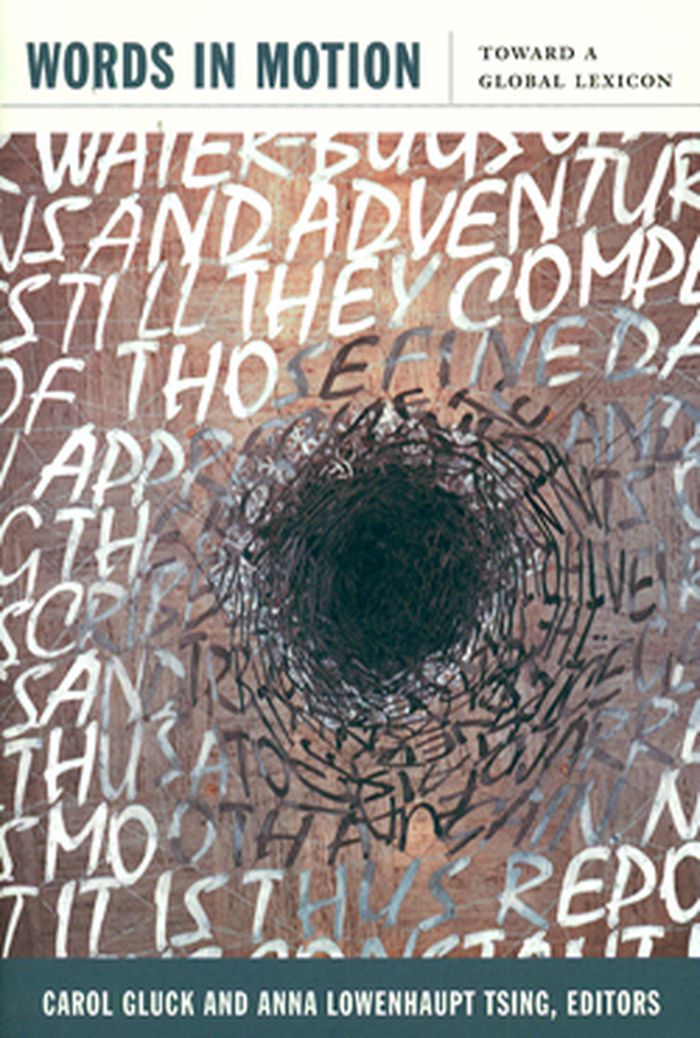
Words in motion: toward a global lexicon
Actions:
Prix:
$31.95
(disponible sur commande)
Résumé:
On the premise that words have the power to make worlds, each essay in this book follows a word as it travels around the globe and across time. Scholars from five disciplines address thirteen societies to highlight the social and political life of words in Asia, Europe, and the Middle East, from the mid-nineteenth century to the present. The approach is consciously experimental, in that rigorously tracking a specific word in specific settings frequently leads in unexpected directions and alters conventional depictions of global modernity. Such words as security in Brazil, responsibility in Japan, community in Thailand, and hijb in France changed the societies in which they moved even as they were changed by them. Some words threatened to launch wars, as injury did in imperial Britain's relations with China in the nineteenth century. Others, such as secularism, worked in silence to agitate for political change in twentieth-century Morocco. Words imposed or imported from outside could be transformed by those who wielded them to oppose the very powers that introduced them, as happened in Turkey, Indonesia, and the Philippines. Taken together, this selection of fourteen words reveals commonality as well as distinctiveness in modern societies, making the world look different from the interdisciplinary and transnational perspective of "words in motion."
Words in motion: toward a global lexicon
Actions:
Prix:
$31.95
(disponible sur commande)
Résumé:
On the premise that words have the power to make worlds, each essay in this book follows a word as it travels around the globe and across time. Scholars from five disciplines address thirteen societies to highlight the social and political life of words in Asia, Europe, and the Middle East, from the mid-nineteenth century to the present. The approach is consciously experimental, in that rigorously tracking a specific word in specific settings frequently leads in unexpected directions and alters conventional depictions of global modernity. Such words as security in Brazil, responsibility in Japan, community in Thailand, and hijb in France changed the societies in which they moved even as they were changed by them. Some words threatened to launch wars, as injury did in imperial Britain's relations with China in the nineteenth century. Others, such as secularism, worked in silence to agitate for political change in twentieth-century Morocco. Words imposed or imported from outside could be transformed by those who wielded them to oppose the very powers that introduced them, as happened in Turkey, Indonesia, and the Philippines. Taken together, this selection of fourteen words reveals commonality as well as distinctiveness in modern societies, making the world look different from the interdisciplinary and transnational perspective of "words in motion."
Classification:
livres
livres
Publication:
décembre 2009
décembre 2009
Sujet:
Théorie de l’architecture
Théorie de l’architecture


