


1664 Résultats
Classification:
livres
livres
Prix:
$21.00
(disponible en magasin)
Résumé:
Global cities (and their designs in particular) have rested on the paradigm of market-driven development, and have been interpreted as strategic spaces of neoliberal restructuring. Whilst they are now hit by the crisis of this ideology, the situation also offers the opportunity and necessity to imagine another, more social city. Yet designers continue to hold back(...)
$21.00
(disponible en magasin)
Résumé:
Global cities (and their designs in particular) have rested on the paradigm of market-driven development, and have been interpreted as strategic spaces of neoliberal restructuring. Whilst they are now hit by the crisis of this ideology, the situation also offers the opportunity and necessity to imagine another, more social city. Yet designers continue to hold back(...)
Publication:
novembre 2013
novembre 2013
Titre:
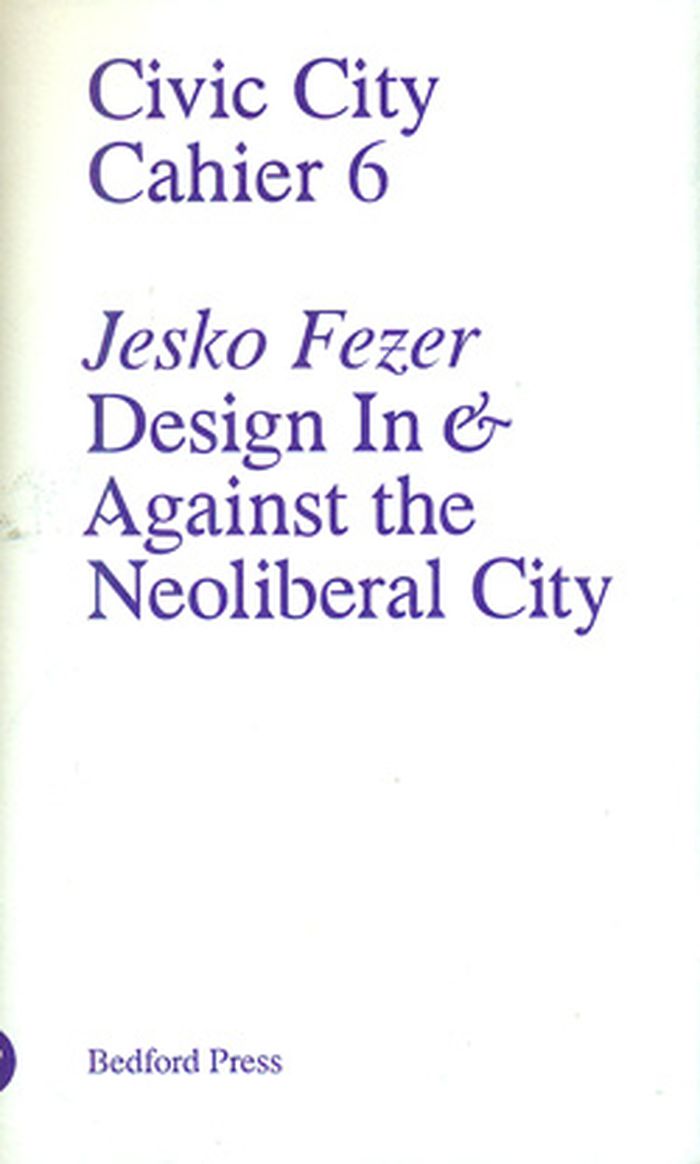
Civic city cahier 6: design in & against the neoliberal city
Actions:
Prix:
$21.00
(disponible en magasin)
Résumé:
Global cities (and their designs in particular) have rested on the paradigm of market-driven development, and have been interpreted as strategic spaces of neoliberal restructuring. Whilst they are now hit by the crisis of this ideology, the situation also offers the opportunity and necessity to imagine another, more social city. Yet designers continue to hold back criticism and proposals. It is, however, time to redefine the role of design for a social city and take action. What is the role of design in the production of urban space? Is it merely an element in the commodified colonisation of social spaces? Or are design and the visual and physical representations of urban issues themselves the key means by which a Civic City may be created from the ideological ruins of existing urban spaces? Jesko Fezer argues for a project of accommodating conflicts by design.
Civic city cahier 6: design in & against the neoliberal city
Actions:
Prix:
$21.00
(disponible en magasin)
Résumé:
Global cities (and their designs in particular) have rested on the paradigm of market-driven development, and have been interpreted as strategic spaces of neoliberal restructuring. Whilst they are now hit by the crisis of this ideology, the situation also offers the opportunity and necessity to imagine another, more social city. Yet designers continue to hold back criticism and proposals. It is, however, time to redefine the role of design for a social city and take action. What is the role of design in the production of urban space? Is it merely an element in the commodified colonisation of social spaces? Or are design and the visual and physical representations of urban issues themselves the key means by which a Civic City may be created from the ideological ruins of existing urban spaces? Jesko Fezer argues for a project of accommodating conflicts by design.
Classification:
livres
livres
Publication:
novembre 2013
novembre 2013
Classification:
livres
livres
Prix:
$35.00
(disponible sur commande)
Résumé:
In the late 1960s the world was faced with impending disaster: the height of the Cold War, the end of oil and the decline of great cities throughout the world. Out of this crisis came a new generation that hoped to build a better future, influenced by visions of geodesic domes, walking cities and a meaningful connection with nature. In this brilliant work of cultural(...)
$35.00
(disponible sur commande)
Résumé:
In the late 1960s the world was faced with impending disaster: the height of the Cold War, the end of oil and the decline of great cities throughout the world. Out of this crisis came a new generation that hoped to build a better future, influenced by visions of geodesic domes, walking cities and a meaningful connection with nature. In this brilliant work of cultural(...)
Publication:
octobre 2015
octobre 2015
Titre:
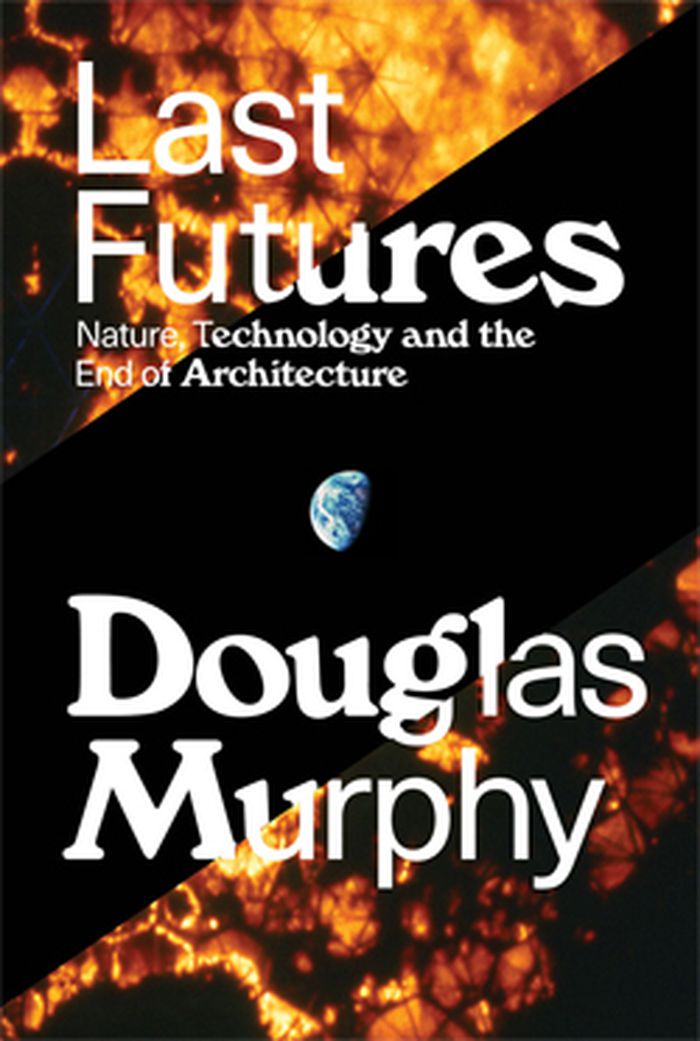
Last futures : nature, technology and the end of architecture
Actions:
Prix:
$35.00
(disponible sur commande)
Résumé:
In the late 1960s the world was faced with impending disaster: the height of the Cold War, the end of oil and the decline of great cities throughout the world. Out of this crisis came a new generation that hoped to build a better future, influenced by visions of geodesic domes, walking cities and a meaningful connection with nature. In this brilliant work of cultural history, architect Douglas Murphy traces the lost archeology of the present day through the works of thinkers and designers such as Buckminster Fuller, the ecological pioneer Stewart Brand, the Archigram architects who envisioned the Plug-In City in the ’60s, as well as co-operatives in Vienna, communes in the Californian desert and protesters on the streets of Paris. In this mind-bending account of the last avant-garde, we see not just the source of our current problems but also some powerful alternative futures.
Last futures : nature, technology and the end of architecture
Actions:
Prix:
$35.00
(disponible sur commande)
Résumé:
In the late 1960s the world was faced with impending disaster: the height of the Cold War, the end of oil and the decline of great cities throughout the world. Out of this crisis came a new generation that hoped to build a better future, influenced by visions of geodesic domes, walking cities and a meaningful connection with nature. In this brilliant work of cultural history, architect Douglas Murphy traces the lost archeology of the present day through the works of thinkers and designers such as Buckminster Fuller, the ecological pioneer Stewart Brand, the Archigram architects who envisioned the Plug-In City in the ’60s, as well as co-operatives in Vienna, communes in the Californian desert and protesters on the streets of Paris. In this mind-bending account of the last avant-garde, we see not just the source of our current problems but also some powerful alternative futures.
Classification:
livres
livres
Publication:
octobre 2015
octobre 2015
Classification:
livres
livres
Prix:
$39.95
(disponible sur commande)
Résumé:
In this book, Mario Carpo reviews the long history of the computational mode of production, showing how the merger of robotic automation and artificial intelligence will stop and reverse the modernist quest for scale. Today's technologies already allow us to use nonstandard building materials as found, or as made, and assemble them in as many nonstandard, intelligent,(...)
$39.95
(disponible sur commande)
Résumé:
In this book, Mario Carpo reviews the long history of the computational mode of production, showing how the merger of robotic automation and artificial intelligence will stop and reverse the modernist quest for scale. Today's technologies already allow us to use nonstandard building materials as found, or as made, and assemble them in as many nonstandard, intelligent,(...)
Titre:
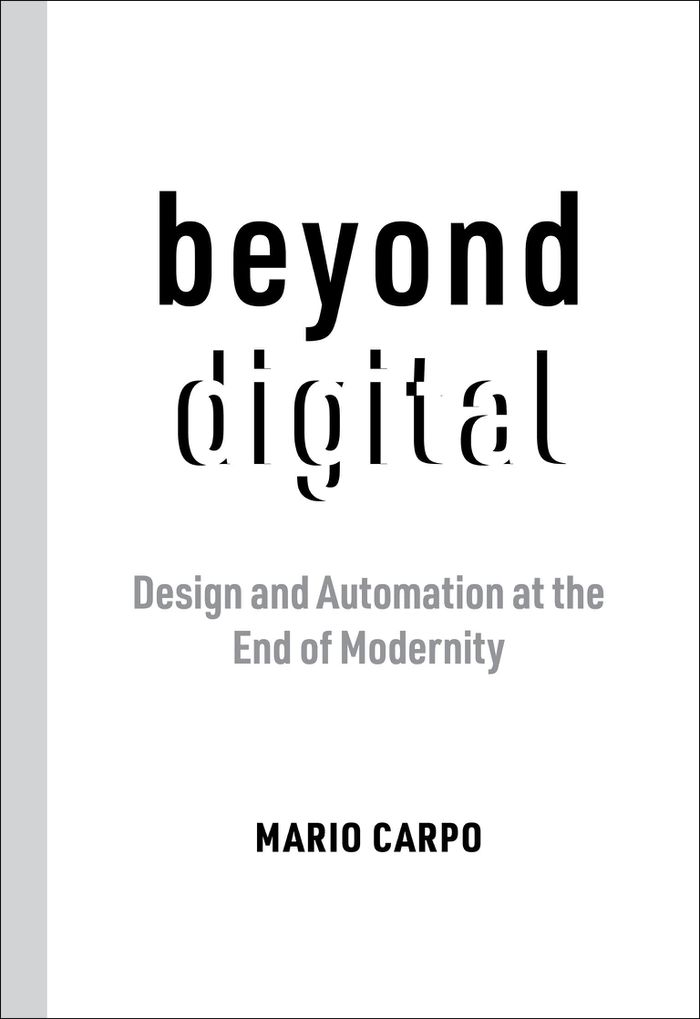
Beyond digital: Design and automation at the end of modernity
Actions:
Prix:
$39.95
(disponible sur commande)
Résumé:
In this book, Mario Carpo reviews the long history of the computational mode of production, showing how the merger of robotic automation and artificial intelligence will stop and reverse the modernist quest for scale. Today's technologies already allow us to use nonstandard building materials as found, or as made, and assemble them in as many nonstandard, intelligent, adaptive ways as needed: the microfactories of our imminent future will be automated artisan shops.The post-industrial logic of computational manufacturing has been known and theorized for some time. By tracing its theoretical and technical sources, and reviewing the design theories that accompanied its rise, Carpo shows how the computational project is now being recast by the urgency of the climate crisis and by the global pandemic, which has tragically proven its viability. Looking at the work of a new generation of designers, technologists, and producers, this volume offers a new modern agenda for our post-industrial future.
Beyond digital: Design and automation at the end of modernity
Actions:
Prix:
$39.95
(disponible sur commande)
Résumé:
In this book, Mario Carpo reviews the long history of the computational mode of production, showing how the merger of robotic automation and artificial intelligence will stop and reverse the modernist quest for scale. Today's technologies already allow us to use nonstandard building materials as found, or as made, and assemble them in as many nonstandard, intelligent, adaptive ways as needed: the microfactories of our imminent future will be automated artisan shops.The post-industrial logic of computational manufacturing has been known and theorized for some time. By tracing its theoretical and technical sources, and reviewing the design theories that accompanied its rise, Carpo shows how the computational project is now being recast by the urgency of the climate crisis and by the global pandemic, which has tragically proven its viability. Looking at the work of a new generation of designers, technologists, and producers, this volume offers a new modern agenda for our post-industrial future.
Classification:
livres
livres
Publication:
avril 2023
avril 2023
Sujet:
Théorie de l’architecture
Théorie de l’architecture
Classification:
livres
livres

Actions:
Prix:
$38.99
(disponible sur commande)
Résumé:
In her first book, ''How to do nothing,'' Jenny Odell wrote about the importance of disconnecting from the ''attention economy'' to spend time in quiet contemplation. But what if you don’t have time to spend? In order to answer this seemingly simple question, Odell took a deep dive into the fundamental structure of our society and found that the clock we live by was(...)
$38.99
(disponible sur commande)
Résumé:
In her first book, ''How to do nothing,'' Jenny Odell wrote about the importance of disconnecting from the ''attention economy'' to spend time in quiet contemplation. But what if you don’t have time to spend? In order to answer this seemingly simple question, Odell took a deep dive into the fundamental structure of our society and found that the clock we live by was(...)
Titre:
Saving time: discovering a life beyond the clock
Actions:
Prix:
$38.99
(disponible sur commande)
Résumé:
In her first book, ''How to do nothing,'' Jenny Odell wrote about the importance of disconnecting from the ''attention economy'' to spend time in quiet contemplation. But what if you don’t have time to spend? In order to answer this seemingly simple question, Odell took a deep dive into the fundamental structure of our society and found that the clock we live by was built for profit, not people. This is why our lives, even in leisure, have come to seem like a series of moments to be bought, sold, and processed ever more efficiently. Odell shows us how our painful relationship to time is inextricably connected not only to persisting social inequities but to the climate crisis, existential dread, and a lethal fatalism. This book offers us different ways to experience time—inspired by pre-industrial cultures, ecological cues, and geological timescales—that can bring within reach a more humane, responsive way of living.
Saving time: discovering a life beyond the clock
Actions:
Prix:
$38.99
(disponible sur commande)
Résumé:
In her first book, ''How to do nothing,'' Jenny Odell wrote about the importance of disconnecting from the ''attention economy'' to spend time in quiet contemplation. But what if you don’t have time to spend? In order to answer this seemingly simple question, Odell took a deep dive into the fundamental structure of our society and found that the clock we live by was built for profit, not people. This is why our lives, even in leisure, have come to seem like a series of moments to be bought, sold, and processed ever more efficiently. Odell shows us how our painful relationship to time is inextricably connected not only to persisting social inequities but to the climate crisis, existential dread, and a lethal fatalism. This book offers us different ways to experience time—inspired by pre-industrial cultures, ecological cues, and geological timescales—that can bring within reach a more humane, responsive way of living.
Classification:
livres
livres
Publication:
mars 2023
mars 2023
Sujet:
Social
Social
Classification:
livres
livres
Actions:
Prix:
$45.95
(disponible en magasin)
Résumé:
From "Magic and myth-work to care and repair" is a two-part book bringing together fourteen essays broadly concerned with the "fiction of the self" and with practices and explorations beyond that fiction. Each part of the book approaches this theme from a different angle. The first part, entitled "On magic and myth-work," deals with practices of transformation and with(...)
$45.95
(disponible en magasin)
Résumé:
From "Magic and myth-work to care and repair" is a two-part book bringing together fourteen essays broadly concerned with the "fiction of the self" and with practices and explorations beyond that fiction. Each part of the book approaches this theme from a different angle. The first part, entitled "On magic and myth-work," deals with practices of transformation and with(...)
Titre:
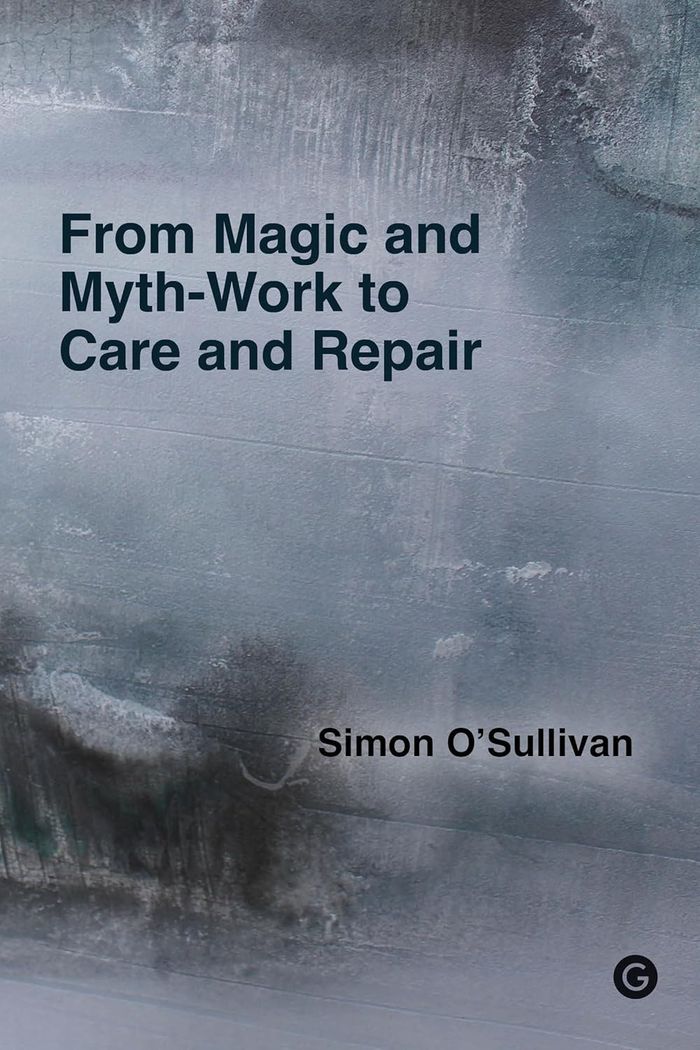
From magic and myth-work to care and repair
Actions:
Prix:
$45.95
(disponible en magasin)
Résumé:
From "Magic and myth-work to care and repair" is a two-part book bringing together fourteen essays broadly concerned with the "fiction of the self" and with practices and explorations beyond that fiction. Each part of the book approaches this theme from a different angle. The first part, entitled "On magic and myth-work," deals with practices of transformation and with contemporary myth-making in relation to landscape, performance, and writing. The second part, “On Care and Repair,” gathers together essays that are more personal, but that also look to various technologies (or devices) of self-care alongside ideas of collaboration and the collective. Crucial throughout this exploration are questions of agency and self-narration, but also how these connect to larger issues around historical trauma, neoliberalism, and ecological crisis. The essays reference many other texts and fellow travellers, and also draw on the author's own experiences (and teaching) within various art and theory worlds, as well as with performance, magical practices, gaming, and Buddhism.
From magic and myth-work to care and repair
Actions:
Prix:
$45.95
(disponible en magasin)
Résumé:
From "Magic and myth-work to care and repair" is a two-part book bringing together fourteen essays broadly concerned with the "fiction of the self" and with practices and explorations beyond that fiction. Each part of the book approaches this theme from a different angle. The first part, entitled "On magic and myth-work," deals with practices of transformation and with contemporary myth-making in relation to landscape, performance, and writing. The second part, “On Care and Repair,” gathers together essays that are more personal, but that also look to various technologies (or devices) of self-care alongside ideas of collaboration and the collective. Crucial throughout this exploration are questions of agency and self-narration, but also how these connect to larger issues around historical trauma, neoliberalism, and ecological crisis. The essays reference many other texts and fellow travellers, and also draw on the author's own experiences (and teaching) within various art and theory worlds, as well as with performance, magical practices, gaming, and Buddhism.
Classification:
livres
livres
Publication:
septembre 2024
septembre 2024
Sujet:
Théorie de l’art
Théorie de l’art
Classification:
livres
livres
Titre:
Dark age ahead
Dark age ahead
Actions:
Prix:
$21.00
(disponible sur commande)
Résumé:
In "Dark Age Ahead", Jane Jacobs identifies five pillars of our culture that we depend on but which are in serious decline: community and family; higher education; the effective practice of science; taxation and government; and self-policing by learned professions. The decay of these pillars, Jacobs contends, is behind such ills as environmental crisis, racism and the(...)
$21.00
(disponible sur commande)
Résumé:
In "Dark Age Ahead", Jane Jacobs identifies five pillars of our culture that we depend on but which are in serious decline: community and family; higher education; the effective practice of science; taxation and government; and self-policing by learned professions. The decay of these pillars, Jacobs contends, is behind such ills as environmental crisis, racism and the(...)
Titre:
Dark age ahead
Actions:
Prix:
$21.00
(disponible sur commande)
Résumé:
In "Dark Age Ahead", Jane Jacobs identifies five pillars of our culture that we depend on but which are in serious decline: community and family; higher education; the effective practice of science; taxation and government; and self-policing by learned professions. The decay of these pillars, Jacobs contends, is behind such ills as environmental crisis, racism and the growing gulf between rich and poor; their continued degradation could lead us into a new Dark Age, a period of cultural collapse in which all that keeps a society alive and vibrant is forgotten. But this is a hopeful book as well as a warning. Jacobs draws on her vast frame of reference -- from fifteenth-century Chinese shipbuilding to zoning regulations in Brampton, Ontario -- and in highly readable, invigorating prose offers proposals that could arrest the cycles of decay and turn them into beneficent ones. Wise, worldly, full of real-life examples and accessible concepts, this book is an essential read for perilous times.
Dark age ahead
Actions:
Prix:
$21.00
(disponible sur commande)
Résumé:
In "Dark Age Ahead", Jane Jacobs identifies five pillars of our culture that we depend on but which are in serious decline: community and family; higher education; the effective practice of science; taxation and government; and self-policing by learned professions. The decay of these pillars, Jacobs contends, is behind such ills as environmental crisis, racism and the growing gulf between rich and poor; their continued degradation could lead us into a new Dark Age, a period of cultural collapse in which all that keeps a society alive and vibrant is forgotten. But this is a hopeful book as well as a warning. Jacobs draws on her vast frame of reference -- from fifteenth-century Chinese shipbuilding to zoning regulations in Brampton, Ontario -- and in highly readable, invigorating prose offers proposals that could arrest the cycles of decay and turn them into beneficent ones. Wise, worldly, full of real-life examples and accessible concepts, this book is an essential read for perilous times.
Classification:
livres
livres
Publication:
mai 2005, Toronto
mai 2005, Toronto
Sujet:
Théorie de l’urbanisme
Théorie de l’urbanisme
Classification:
livres
livres
Titre:
Well, what is photography?
Well, what is photography?
Actions:
Prix:
$13.95
(disponible en magasin)
Résumé:
In this accessible and eloquent book-length essay, Urs Stahel, writer, curator and co-founder of Fotomuseum Winterthur, muses on the very nature of photography. The introduction outlines the unique tension defining photography--that it shows a segment of the world and simultaneously expresses a subject's particular view of this world. This tension is the source of the(...)
$13.95
(disponible en magasin)
Résumé:
In this accessible and eloquent book-length essay, Urs Stahel, writer, curator and co-founder of Fotomuseum Winterthur, muses on the very nature of photography. The introduction outlines the unique tension defining photography--that it shows a segment of the world and simultaneously expresses a subject's particular view of this world. This tension is the source of the(...)
Titre:
Well, what is photography?
Actions:
Prix:
$13.95
(disponible en magasin)
Résumé:
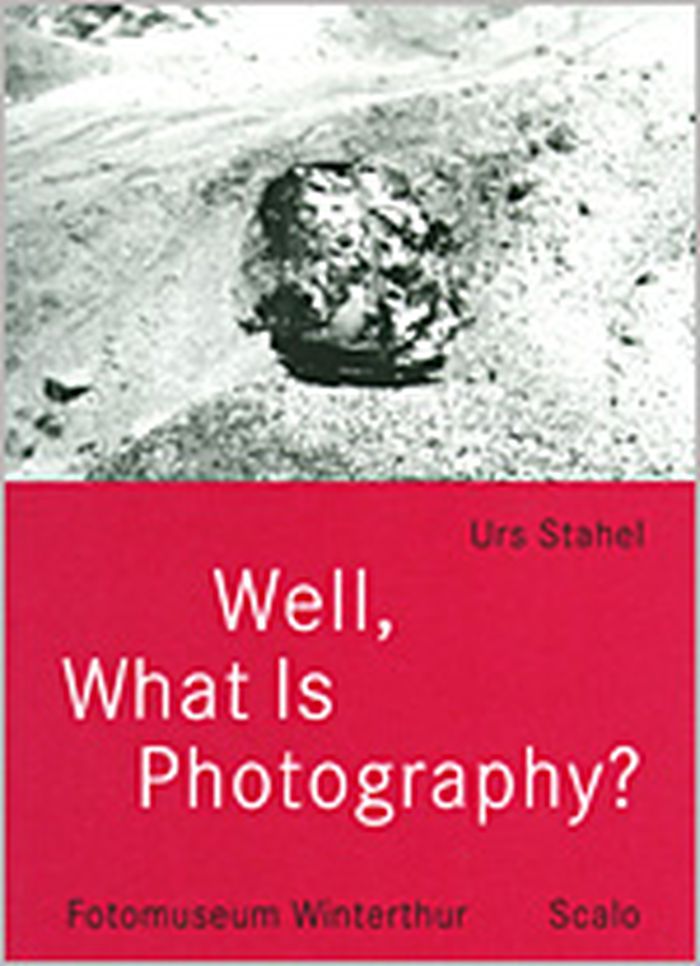
In this accessible and eloquent book-length essay, Urs Stahel, writer, curator and co-founder of Fotomuseum Winterthur, muses on the very nature of photography. The introduction outlines the unique tension defining photography--that it shows a segment of the world and simultaneously expresses a subject's particular view of this world. This tension is the source of the medium's unique creative potential and its complex relation to truth. Stahel provides a philosophical perspective on these issues by placing them in an epistemological, social, and historical context. Chapters on industrial photography, staged and conceptual photography, and the current crisis of photojournalism provide a panoramic overview of the possibilities and challenges of photography in all of its variety, from the casual snapshot to art and commercial photography. This profound and readable essay, one of the few daring enough to address the nature of photography, is destined to become a standard work, a must read for anyone interested in thinking about photography.
Well, what is photography?
Actions:
Prix:
$13.95
(disponible en magasin)
Résumé:
In this accessible and eloquent book-length essay, Urs Stahel, writer, curator and co-founder of Fotomuseum Winterthur, muses on the very nature of photography. The introduction outlines the unique tension defining photography--that it shows a segment of the world and simultaneously expresses a subject's particular view of this world. This tension is the source of the medium's unique creative potential and its complex relation to truth. Stahel provides a philosophical perspective on these issues by placing them in an epistemological, social, and historical context. Chapters on industrial photography, staged and conceptual photography, and the current crisis of photojournalism provide a panoramic overview of the possibilities and challenges of photography in all of its variety, from the casual snapshot to art and commercial photography. This profound and readable essay, one of the few daring enough to address the nature of photography, is destined to become a standard work, a must read for anyone interested in thinking about photography.
Classification:
livres
livres
Publication:
mars 2004, Winterthur
mars 2004, Winterthur
Sujet:
Théorie de la photographie
Théorie de la photographie
Classification:
livres
livres
Titre:
The postconceptual condition
The postconceptual condition
Actions:
Prix:
$39.99
(disponible sur commande)
Résumé:
If, as Walter Benjamin claimed, "it is the function of artistic form […] to make historical content into a philosophical truth” then it is the function of criticism to recover and to complete that truth. Contemporary art makes this work more difficult than ever. Today’s art is a point of condensation for a vast array of social and historical forces, economic and political(...)
$39.99
(disponible sur commande)
Résumé:
If, as Walter Benjamin claimed, "it is the function of artistic form […] to make historical content into a philosophical truth” then it is the function of criticism to recover and to complete that truth. Contemporary art makes this work more difficult than ever. Today’s art is a point of condensation for a vast array of social and historical forces, economic and political(...)
Titre:
The postconceptual condition
Actions:
Prix:
$39.99
(disponible sur commande)
Résumé:
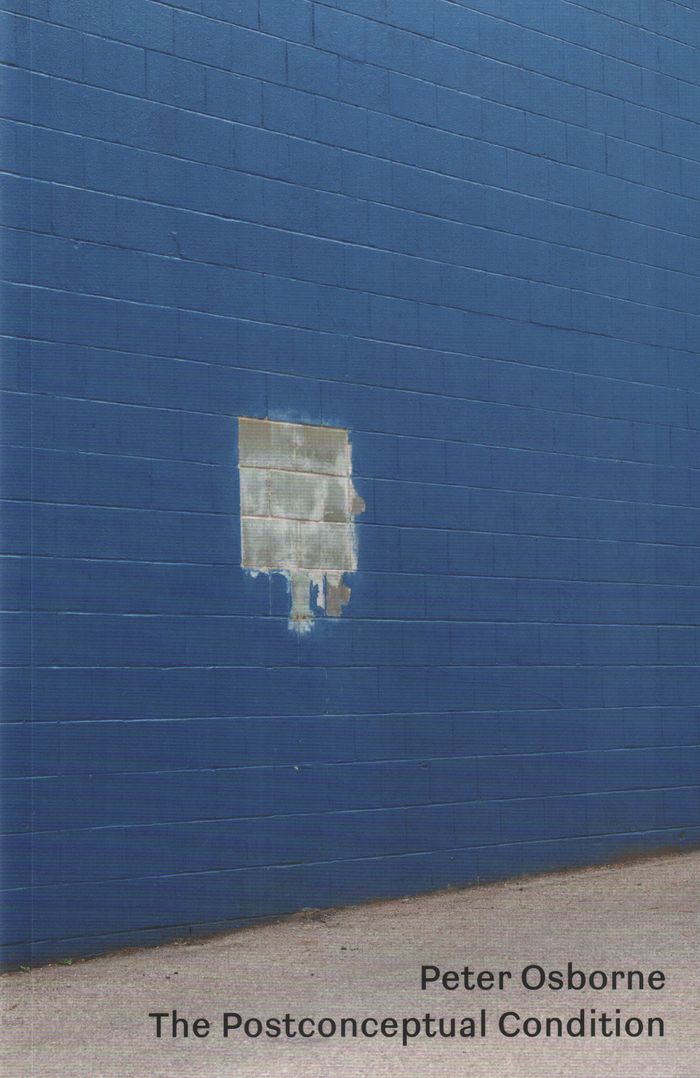
If, as Walter Benjamin claimed, "it is the function of artistic form […] to make historical content into a philosophical truth” then it is the function of criticism to recover and to complete that truth. Contemporary art makes this work more difficult than ever. Today’s art is a point of condensation for a vast array of social and historical forces, economic and political forms, and technologies of image production. Contemporary art, Osborne maintains, expresses this condition through its distinctively postconceptual form. These essays—extending the scope and arguments of Osborne’s Anywhere or Not At All: Philosophy of Contemporary Art—move from a philosophical consideration of the changing temporal conditions of capitalist modernity, via problems of formalism, the politics of art and the changing shape of art institutions, to interpretation and analysis of particular works by Akram Zaatari, Xavier Le Roy and Ilya Kabakov, and the postconceptual situation of a crisis-ridden New Music.
The postconceptual condition
Actions:
Prix:
$39.99
(disponible sur commande)
Résumé:
If, as Walter Benjamin claimed, "it is the function of artistic form […] to make historical content into a philosophical truth” then it is the function of criticism to recover and to complete that truth. Contemporary art makes this work more difficult than ever. Today’s art is a point of condensation for a vast array of social and historical forces, economic and political forms, and technologies of image production. Contemporary art, Osborne maintains, expresses this condition through its distinctively postconceptual form. These essays—extending the scope and arguments of Osborne’s Anywhere or Not At All: Philosophy of Contemporary Art—move from a philosophical consideration of the changing temporal conditions of capitalist modernity, via problems of formalism, the politics of art and the changing shape of art institutions, to interpretation and analysis of particular works by Akram Zaatari, Xavier Le Roy and Ilya Kabakov, and the postconceptual situation of a crisis-ridden New Music.
Classification:
livres
livres
Publication:
janvier 2018
janvier 2018
Sujet:
Théorie de l’art
Théorie de l’art
Classification:
livres
livres
Actions:
Prix:
$34.95
(disponible en magasin)
Résumé:
Studies of the radical environmental politics of the 1960s have tended to downplay the extent to which much of that countercultural intellectual and social ferment continued into the 1970s and 1980s. Canadian Countercultures and the Environment adds to our knowledge of this understudied period. This collection contributes a sustained analysis of the beginning of major(...)
$34.95
(disponible en magasin)
Résumé:
Studies of the radical environmental politics of the 1960s have tended to downplay the extent to which much of that countercultural intellectual and social ferment continued into the 1970s and 1980s. Canadian Countercultures and the Environment adds to our knowledge of this understudied period. This collection contributes a sustained analysis of the beginning of major(...)
Titre:
Canadian countercultures and the environment
Actions:
Prix:
$34.95
(disponible en magasin)
Résumé:
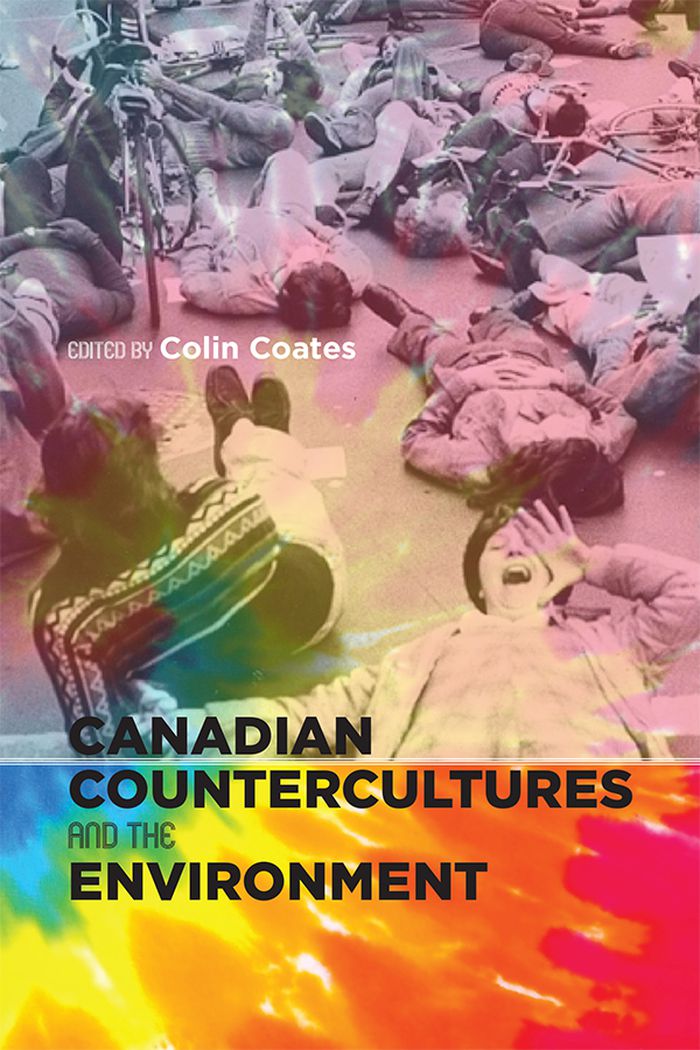
Studies of the radical environmental politics of the 1960s have tended to downplay the extent to which much of that countercultural intellectual and social ferment continued into the 1970s and 1980s. Canadian Countercultures and the Environment adds to our knowledge of this understudied period. This collection contributes a sustained analysis of the beginning of major environmental debates in this era and examines a range of issues related to broad environmental concerns, topics which emerged as key concerns in the context of Cold War military investments and experiments, the oil crisis of the 1970s, debates over gendered roles, and the increasing attention to urban pollution and pesticide use. No other publication dealing with this period covers the wide range of environmental topics (among others, activism, midwifery, organic farming, recycling, urban cycling, and communal living) or geographic locales, from Yukon to Atlantic Canada. Together, they demonstrate how this period influenced and informed environmental action and issues in ways that have had a long-term impact on Canadian society.
Canadian countercultures and the environment
Actions:
Prix:
$34.95
(disponible en magasin)
Résumé:
Studies of the radical environmental politics of the 1960s have tended to downplay the extent to which much of that countercultural intellectual and social ferment continued into the 1970s and 1980s. Canadian Countercultures and the Environment adds to our knowledge of this understudied period. This collection contributes a sustained analysis of the beginning of major environmental debates in this era and examines a range of issues related to broad environmental concerns, topics which emerged as key concerns in the context of Cold War military investments and experiments, the oil crisis of the 1970s, debates over gendered roles, and the increasing attention to urban pollution and pesticide use. No other publication dealing with this period covers the wide range of environmental topics (among others, activism, midwifery, organic farming, recycling, urban cycling, and communal living) or geographic locales, from Yukon to Atlantic Canada. Together, they demonstrate how this period influenced and informed environmental action and issues in ways that have had a long-term impact on Canadian society.
Classification:
livres
livres
Publication:
mars 2016
mars 2016
Sujet:
Architecture du Canada
Architecture du Canada
Classification:
livres
livres
Titre:
Incoming
Incoming
Actions:
Prix:
$72.95
(disponible en magasin)
Résumé:
At a moment when the world is facing the world’s largest refugee and migration crisis since the Second World War, Incoming by Irish artist and Deutsche Börse Photography Prize winner Richard Mosse deals with the major humanitarian and political plight of our time, the displacement of millions due to war, persecution and climate change. With illuminating texts by Mosse and(...)
$72.95
(disponible en magasin)
Résumé:
At a moment when the world is facing the world’s largest refugee and migration crisis since the Second World War, Incoming by Irish artist and Deutsche Börse Photography Prize winner Richard Mosse deals with the major humanitarian and political plight of our time, the displacement of millions due to war, persecution and climate change. With illuminating texts by Mosse and(...)
Titre:
Incoming
Actions:
Prix:
$72.95
(disponible en magasin)
Résumé:
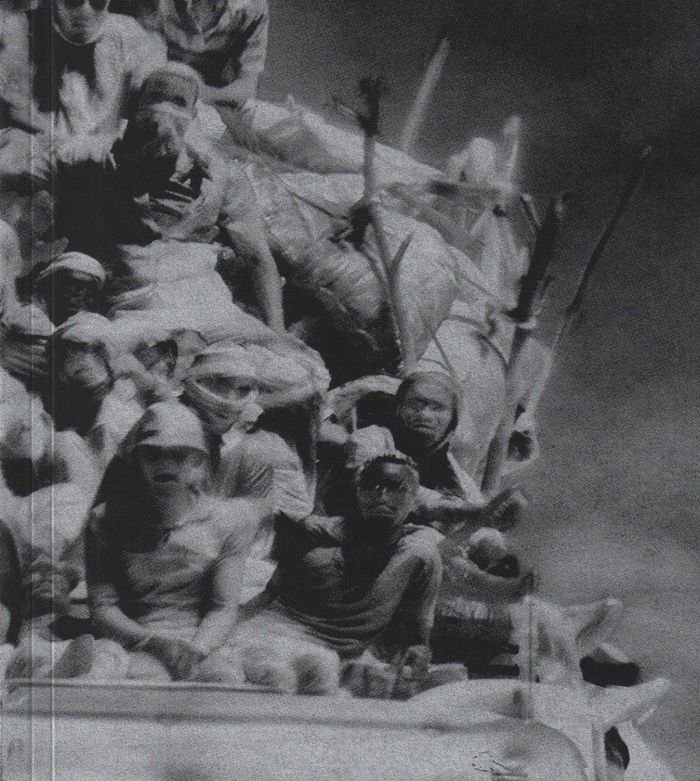
At a moment when the world is facing the world’s largest refugee and migration crisis since the Second World War, Incoming by Irish artist and Deutsche Börse Photography Prize winner Richard Mosse deals with the major humanitarian and political plight of our time, the displacement of millions due to war, persecution and climate change. With illuminating texts by Mosse and the philosopher Giorgio Agamben, the 576-page book combines film stills from the artist’s latest video work made in collaboration with electronic composer Ben Frost and cinematographer Trevor Tweeten – a haunting and searing multi-channel film installation, accompanied by a visceral soundtrack. Journeys made by refugees and migrants across the Middle East, North Africa, and Europe are captured with a new weapons-grade surveillance technology that can detect the human body from 30.3km. Blind to skin colour, this camera technology registers only the contours of relative heat difference within a given scene, foregrounding the fragile human body’s struggle for survival in hostile environments.
Incoming
Actions:
Prix:
$72.95
(disponible en magasin)
Résumé:
At a moment when the world is facing the world’s largest refugee and migration crisis since the Second World War, Incoming by Irish artist and Deutsche Börse Photography Prize winner Richard Mosse deals with the major humanitarian and political plight of our time, the displacement of millions due to war, persecution and climate change. With illuminating texts by Mosse and the philosopher Giorgio Agamben, the 576-page book combines film stills from the artist’s latest video work made in collaboration with electronic composer Ben Frost and cinematographer Trevor Tweeten – a haunting and searing multi-channel film installation, accompanied by a visceral soundtrack. Journeys made by refugees and migrants across the Middle East, North Africa, and Europe are captured with a new weapons-grade surveillance technology that can detect the human body from 30.3km. Blind to skin colour, this camera technology registers only the contours of relative heat difference within a given scene, foregrounding the fragile human body’s struggle for survival in hostile environments.
Classification:
livres
livres
Publication:
février 2017
février 2017
Sujet:
Monographies photo
Monographies photo


