


33566 Résultats
Classification:
dessins
dessins
Actions:
Numéro de référence:
DR1996:0004
Description:
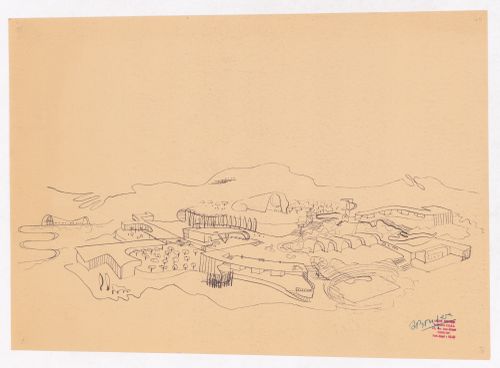
- Two groups of four pastel drawings were originally produced in connection with the Village Polychrome project. The architect André Bruyère had retained one group, while the other was given to the patron and client, Francisco de Assis Chateaubriand Bandeira de Melo, who then donated it to the Sao Paolo Museum of Modern Art. Bruyère subsequently gave one of the four drawings in his group to a friend. The three remaining drawings from Bruyère's group are in the CCA Prints and Drawings collection (DR1996:0001 - DR1996:0003) ("Projet de Village Polychrome, Biot, France").
DR1996:0004
Description:
- Two groups of four pastel drawings were originally produced in connection with the Village Polychrome project. The architect André Bruyère had retained one group, while the other was given to the patron and client, Francisco de Assis Chateaubriand Bandeira de Melo, who then donated it to the Sao Paolo Museum of Modern Art. Bruyère subsequently gave one of the four drawings in his group to a friend. The three remaining drawings from Bruyère's group are in the CCA Prints and Drawings collection (DR1996:0001 - DR1996:0003) ("Projet de Village Polychrome, Biot, France").
Personnes et institutions:
Sujet:
architecture, urbanisme
architecture, urbanisme
Date:
1952-1953
1952-1953
Titre:
Bird's-eye perspective for Village Polychrome, near Biot, France
Actions:
DR1996:0004
Description:
- Two groups of four pastel drawings were originally produced in connection with the Village Polychrome project. The architect André Bruyère had retained one group, while the other was given to the patron and client, Francisco de Assis Chateaubriand Bandeira de Melo, who then donated it to the Sao Paolo Museum of Modern Art. Bruyère subsequently gave one of the four drawings in his group to a friend. The three remaining drawings from Bruyère's group are in the CCA Prints and Drawings collection (DR1996:0001 - DR1996:0003) ("Projet de Village Polychrome, Biot, France").
Bird's-eye perspective for Village Polychrome, near Biot, France
Actions:
DR1996:0004
Description:
- Two groups of four pastel drawings were originally produced in connection with the Village Polychrome project. The architect André Bruyère had retained one group, while the other was given to the patron and client, Francisco de Assis Chateaubriand Bandeira de Melo, who then donated it to the Sao Paolo Museum of Modern Art. Bruyère subsequently gave one of the four drawings in his group to a friend. The three remaining drawings from Bruyère's group are in the CCA Prints and Drawings collection (DR1996:0001 - DR1996:0003) ("Projet de Village Polychrome, Biot, France").
Classification:
dessins
dessins
Date:
1952-1953
1952-1953
Personnes et institutions:
Sujet:
architecture, urbanisme
architecture, urbanisme
Classification:
dessins
dessins
Actions:
Numéro de référence:
DR1996:0005
Description:
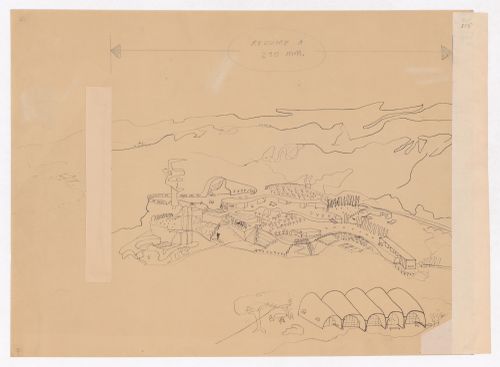
- Two groups of four pastel drawings were originally produced in connection with the Village Polychrome project. The architect André Bruyère had retained one group, while the other was given to the patron and client, Francisco de Assis Chateaubriand Bandeira de Melo, who then donated it to the Sao Paolo Museum of Modern Art. Bruyère subsequently gave one of the four drawings in his group to a friend. The three remaining drawings from Bruyère's group are in the CCA Prints and Drawings collection (DR1996:0001 - DR1996:0003) ("Projet de Village Polychrome, Biot, France").
DR1996:0005
Description:
- Two groups of four pastel drawings were originally produced in connection with the Village Polychrome project. The architect André Bruyère had retained one group, while the other was given to the patron and client, Francisco de Assis Chateaubriand Bandeira de Melo, who then donated it to the Sao Paolo Museum of Modern Art. Bruyère subsequently gave one of the four drawings in his group to a friend. The three remaining drawings from Bruyère's group are in the CCA Prints and Drawings collection (DR1996:0001 - DR1996:0003) ("Projet de Village Polychrome, Biot, France").
Personnes et institutions:
Sujet:
architecture, urbanisme
architecture, urbanisme
Date:
1952-1953
1952-1953
Titre:
Bird's-eye perspective for Village Polychrome, near Biot, France
Actions:
DR1996:0005
Description:
- Two groups of four pastel drawings were originally produced in connection with the Village Polychrome project. The architect André Bruyère had retained one group, while the other was given to the patron and client, Francisco de Assis Chateaubriand Bandeira de Melo, who then donated it to the Sao Paolo Museum of Modern Art. Bruyère subsequently gave one of the four drawings in his group to a friend. The three remaining drawings from Bruyère's group are in the CCA Prints and Drawings collection (DR1996:0001 - DR1996:0003) ("Projet de Village Polychrome, Biot, France").
Bird's-eye perspective for Village Polychrome, near Biot, France
Actions:
DR1996:0005
Description:
- Two groups of four pastel drawings were originally produced in connection with the Village Polychrome project. The architect André Bruyère had retained one group, while the other was given to the patron and client, Francisco de Assis Chateaubriand Bandeira de Melo, who then donated it to the Sao Paolo Museum of Modern Art. Bruyère subsequently gave one of the four drawings in his group to a friend. The three remaining drawings from Bruyère's group are in the CCA Prints and Drawings collection (DR1996:0001 - DR1996:0003) ("Projet de Village Polychrome, Biot, France").
Classification:
dessins
dessins
Date:
1952-1953
1952-1953
Personnes et institutions:
Sujet:
architecture, urbanisme
architecture, urbanisme
Classification:
dessins
dessins
Numéro de référence:
DR1996:0006
Description:
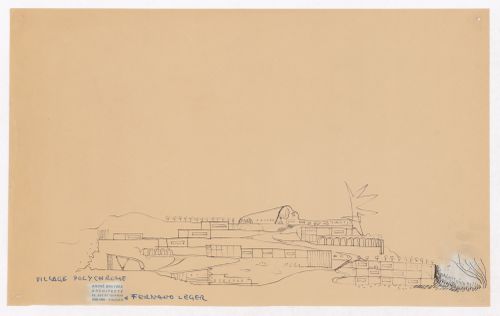
- Two groups of four pastel drawings were originally produced in connection with the Village Polychrome project. The architect André Bruyère had retained one group, while the other was given to the patron and client, Francisco de Assis Chateaubriand Bandeira de Melo, who then donated it to the Sao Paolo Museum of Modern Art. Bruyère subsequently gave one of the four drawings in his group to a friend. The three remaining drawings from Bruyère's group are in the CCA Prints and Drawings collection (DR1996:0001 - DR1996:0003) ("Projet de Village Polychrome, Biot, France").
DR1996:0006
Description:
- Two groups of four pastel drawings were originally produced in connection with the Village Polychrome project. The architect André Bruyère had retained one group, while the other was given to the patron and client, Francisco de Assis Chateaubriand Bandeira de Melo, who then donated it to the Sao Paolo Museum of Modern Art. Bruyère subsequently gave one of the four drawings in his group to a friend. The three remaining drawings from Bruyère's group are in the CCA Prints and Drawings collection (DR1996:0001 - DR1996:0003) ("Projet de Village Polychrome, Biot, France").
Personnes et institutions:
Sujet:
architecture, urbanisme
architecture, urbanisme
Date:
1952-1953
1952-1953
Titre:
Site elevation for Village Polychrome, near Biot, France
Actions:
DR1996:0006
Description:
- Two groups of four pastel drawings were originally produced in connection with the Village Polychrome project. The architect André Bruyère had retained one group, while the other was given to the patron and client, Francisco de Assis Chateaubriand Bandeira de Melo, who then donated it to the Sao Paolo Museum of Modern Art. Bruyère subsequently gave one of the four drawings in his group to a friend. The three remaining drawings from Bruyère's group are in the CCA Prints and Drawings collection (DR1996:0001 - DR1996:0003) ("Projet de Village Polychrome, Biot, France").
Site elevation for Village Polychrome, near Biot, France
Actions:
DR1996:0006
Description:
- Two groups of four pastel drawings were originally produced in connection with the Village Polychrome project. The architect André Bruyère had retained one group, while the other was given to the patron and client, Francisco de Assis Chateaubriand Bandeira de Melo, who then donated it to the Sao Paolo Museum of Modern Art. Bruyère subsequently gave one of the four drawings in his group to a friend. The three remaining drawings from Bruyère's group are in the CCA Prints and Drawings collection (DR1996:0001 - DR1996:0003) ("Projet de Village Polychrome, Biot, France").
Classification:
dessins
dessins
Date:
1952-1953
1952-1953
Personnes et institutions:
Sujet:
architecture, urbanisme
architecture, urbanisme
Classification:
dessins
dessins
Numéro de référence:
DR1996:0007
Description:
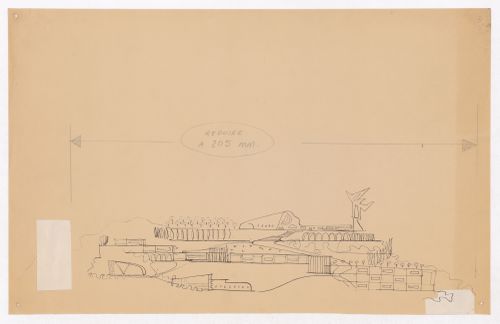
- Two groups of four pastel drawings were originally produced in connection with the Village Polychrome project. The architect André Bruyère had retained one group, while the other was given to the patron and client, Francisco de Assis Chateaubriand Bandeira de Melo, who then donated it to the Sao Paolo Museum of Modern Art. Bruyère subsequently gave one of the four drawings in his group to a friend. The three remaining drawings from Bruyère's group are in the CCA Prints and Drawings collection (DR1996:0001 - DR1996:0003) ("Projet de Village Polychrome, Biot, France").
DR1996:0007
Description:
- Two groups of four pastel drawings were originally produced in connection with the Village Polychrome project. The architect André Bruyère had retained one group, while the other was given to the patron and client, Francisco de Assis Chateaubriand Bandeira de Melo, who then donated it to the Sao Paolo Museum of Modern Art. Bruyère subsequently gave one of the four drawings in his group to a friend. The three remaining drawings from Bruyère's group are in the CCA Prints and Drawings collection (DR1996:0001 - DR1996:0003) ("Projet de Village Polychrome, Biot, France").
Personnes et institutions:
Sujet:
architecture, urbanisme
architecture, urbanisme
Date:
1952-1953
1952-1953
Titre:
Site elevation for Village Polychrome, near Biot, France
Actions:
DR1996:0007
Description:
- Two groups of four pastel drawings were originally produced in connection with the Village Polychrome project. The architect André Bruyère had retained one group, while the other was given to the patron and client, Francisco de Assis Chateaubriand Bandeira de Melo, who then donated it to the Sao Paolo Museum of Modern Art. Bruyère subsequently gave one of the four drawings in his group to a friend. The three remaining drawings from Bruyère's group are in the CCA Prints and Drawings collection (DR1996:0001 - DR1996:0003) ("Projet de Village Polychrome, Biot, France").
Site elevation for Village Polychrome, near Biot, France
Actions:
DR1996:0007
Description:
- Two groups of four pastel drawings were originally produced in connection with the Village Polychrome project. The architect André Bruyère had retained one group, while the other was given to the patron and client, Francisco de Assis Chateaubriand Bandeira de Melo, who then donated it to the Sao Paolo Museum of Modern Art. Bruyère subsequently gave one of the four drawings in his group to a friend. The three remaining drawings from Bruyère's group are in the CCA Prints and Drawings collection (DR1996:0001 - DR1996:0003) ("Projet de Village Polychrome, Biot, France").
Classification:
dessins
dessins
Date:
1952-1953
1952-1953
Personnes et institutions:
Sujet:
architecture, urbanisme
architecture, urbanisme
Classification:
dessins
dessins
Actions:
Numéro de référence:
DR1996:0008
Description:
- Two groups of four pastel drawings were originally produced in connection with the Village Polychrome project. The architect André Bruyère had retained one group, while the other was given to the patron and client, Francisco de Assis Chateaubriand Bandeira de Melo, who then donated it to the Sao Paolo Museum of Modern Art. Bruyère subsequently gave one of the four drawings in his group to a friend. The three remaining drawings from Bruyère's group are in the CCA Prints and Drawings collection (DR1996:0001 - DR1996:0003) ("Projet de Village Polychrome, Biot, France").
DR1996:0008
Description:
- Two groups of four pastel drawings were originally produced in connection with the Village Polychrome project. The architect André Bruyère had retained one group, while the other was given to the patron and client, Francisco de Assis Chateaubriand Bandeira de Melo, who then donated it to the Sao Paolo Museum of Modern Art. Bruyère subsequently gave one of the four drawings in his group to a friend. The three remaining drawings from Bruyère's group are in the CCA Prints and Drawings collection (DR1996:0001 - DR1996:0003) ("Projet de Village Polychrome, Biot, France").
Personnes et institutions:
Sujet:
architecture
architecture
Date:
1952-1953
1952-1953
Titre:
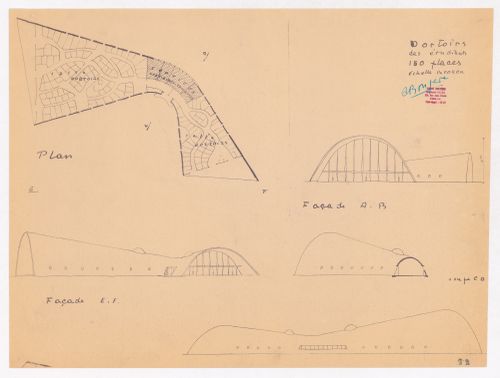
Plan, elevations and a section for the dormitory, Village Polychrome, near Biot, France
Actions:
DR1996:0008
Description:
- Two groups of four pastel drawings were originally produced in connection with the Village Polychrome project. The architect André Bruyère had retained one group, while the other was given to the patron and client, Francisco de Assis Chateaubriand Bandeira de Melo, who then donated it to the Sao Paolo Museum of Modern Art. Bruyère subsequently gave one of the four drawings in his group to a friend. The three remaining drawings from Bruyère's group are in the CCA Prints and Drawings collection (DR1996:0001 - DR1996:0003) ("Projet de Village Polychrome, Biot, France").
Plan, elevations and a section for the dormitory, Village Polychrome, near Biot, France
Actions:
DR1996:0008
Description:
- Two groups of four pastel drawings were originally produced in connection with the Village Polychrome project. The architect André Bruyère had retained one group, while the other was given to the patron and client, Francisco de Assis Chateaubriand Bandeira de Melo, who then donated it to the Sao Paolo Museum of Modern Art. Bruyère subsequently gave one of the four drawings in his group to a friend. The three remaining drawings from Bruyère's group are in the CCA Prints and Drawings collection (DR1996:0001 - DR1996:0003) ("Projet de Village Polychrome, Biot, France").
Classification:
dessins
dessins
Date:
1952-1953
1952-1953
Personnes et institutions:
Sujet:
architecture
architecture
Classification:
dessins
dessins
Actions:
Numéro de référence:
DR1996:0009
Description:
- Two groups of four pastel drawings were originally produced in connection with the Village Polychrome project. The architect André Bruyère had retained one group, while the other was given to the patron and client, Francisco de Assis Chateaubriand Bandeira de Melo, who then donated it to the Sao Paolo Museum of Modern Art. Bruyère subsequently gave one of the four drawings in his group to a friend. The three remaining drawings from Bruyère's group are in the CCA Prints and Drawings collection (DR1996:0001 - DR1996:0003) ("Projet de Village Polychrome, Biot, France").
DR1996:0009
Description:
- Two groups of four pastel drawings were originally produced in connection with the Village Polychrome project. The architect André Bruyère had retained one group, while the other was given to the patron and client, Francisco de Assis Chateaubriand Bandeira de Melo, who then donated it to the Sao Paolo Museum of Modern Art. Bruyère subsequently gave one of the four drawings in his group to a friend. The three remaining drawings from Bruyère's group are in the CCA Prints and Drawings collection (DR1996:0001 - DR1996:0003) ("Projet de Village Polychrome, Biot, France").
Personnes et institutions:
Sujet:
architecture
architecture
Date:
1952-1953
1952-1953
Titre:
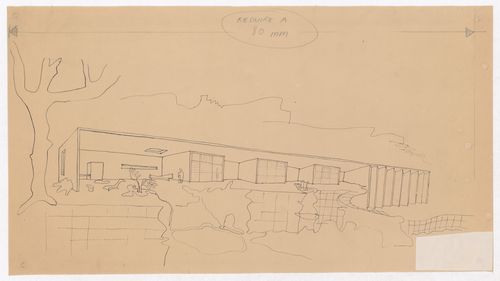
Perspective for a villa with three workshops, Village Polychrome, near Biot, France
Actions:
DR1996:0009
Description:
- Two groups of four pastel drawings were originally produced in connection with the Village Polychrome project. The architect André Bruyère had retained one group, while the other was given to the patron and client, Francisco de Assis Chateaubriand Bandeira de Melo, who then donated it to the Sao Paolo Museum of Modern Art. Bruyère subsequently gave one of the four drawings in his group to a friend. The three remaining drawings from Bruyère's group are in the CCA Prints and Drawings collection (DR1996:0001 - DR1996:0003) ("Projet de Village Polychrome, Biot, France").
Perspective for a villa with three workshops, Village Polychrome, near Biot, France
Actions:
DR1996:0009
Description:
- Two groups of four pastel drawings were originally produced in connection with the Village Polychrome project. The architect André Bruyère had retained one group, while the other was given to the patron and client, Francisco de Assis Chateaubriand Bandeira de Melo, who then donated it to the Sao Paolo Museum of Modern Art. Bruyère subsequently gave one of the four drawings in his group to a friend. The three remaining drawings from Bruyère's group are in the CCA Prints and Drawings collection (DR1996:0001 - DR1996:0003) ("Projet de Village Polychrome, Biot, France").
Classification:
dessins
dessins
Date:
1952-1953
1952-1953
Personnes et institutions:
Sujet:
architecture
architecture
Classification:
dessins
dessins
Actions:
Numéro de référence:
DR1996:0010
Description:
- Two groups of four pastel drawings were originally produced in connection with the Village Polychrome project. The architect André Bruyère had retained one group, while the other was given to the patron and client, Francisco de Assis Chateaubriand Bandeira de Melo, who then donated it to the Sao Paolo Museum of Modern Art. Bruyère subsequently gave one of the four drawings in his group to a friend. The three remaining drawings from Bruyère's group are in the CCA Prints and Drawings collection (DR1996:0001 - DR1996:0003) ("Projet de Village Polychrome, Biot, France").
DR1996:0010
Description:
- Two groups of four pastel drawings were originally produced in connection with the Village Polychrome project. The architect André Bruyère had retained one group, while the other was given to the patron and client, Francisco de Assis Chateaubriand Bandeira de Melo, who then donated it to the Sao Paolo Museum of Modern Art. Bruyère subsequently gave one of the four drawings in his group to a friend. The three remaining drawings from Bruyère's group are in the CCA Prints and Drawings collection (DR1996:0001 - DR1996:0003) ("Projet de Village Polychrome, Biot, France").
Personnes et institutions:
Sujet:
architecture
architecture
Date:
1952-1953
1952-1953
Titre:
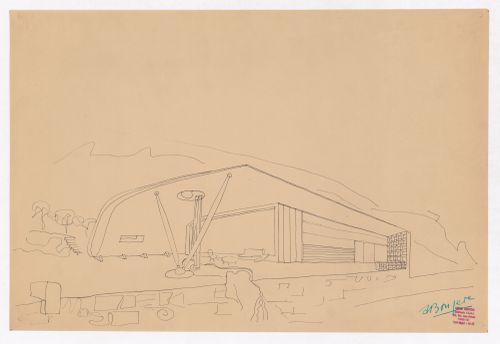
Perspective for a guest villa showing the terrace and the principal and lateral façades, Village Polychrome, near Biot, France
Actions:
DR1996:0010
Description:
- Two groups of four pastel drawings were originally produced in connection with the Village Polychrome project. The architect André Bruyère had retained one group, while the other was given to the patron and client, Francisco de Assis Chateaubriand Bandeira de Melo, who then donated it to the Sao Paolo Museum of Modern Art. Bruyère subsequently gave one of the four drawings in his group to a friend. The three remaining drawings from Bruyère's group are in the CCA Prints and Drawings collection (DR1996:0001 - DR1996:0003) ("Projet de Village Polychrome, Biot, France").
Perspective for a guest villa showing the terrace and the principal and lateral façades, Village Polychrome, near Biot, France
Actions:
DR1996:0010
Description:
- Two groups of four pastel drawings were originally produced in connection with the Village Polychrome project. The architect André Bruyère had retained one group, while the other was given to the patron and client, Francisco de Assis Chateaubriand Bandeira de Melo, who then donated it to the Sao Paolo Museum of Modern Art. Bruyère subsequently gave one of the four drawings in his group to a friend. The three remaining drawings from Bruyère's group are in the CCA Prints and Drawings collection (DR1996:0001 - DR1996:0003) ("Projet de Village Polychrome, Biot, France").
Classification:
dessins
dessins
Date:
1952-1953
1952-1953
Personnes et institutions:
Sujet:
architecture
architecture
Classification:
dessins
dessins
Numéro de référence:
DR1996:0012
Description:
- Two groups of four pastel drawings were originally produced in connection with the Village Polychrome project. The architect André Bruyère had retained one group, while the other was given to the patron and client, Francisco de Assis Chateaubriand Bandeira de Melo, who then donated it to the Sao Paolo Museum of Modern Art. Bruyère subsequently gave one of the four drawings in his group to a friend. The three remaining drawings from Bruyère's group are in the CCA Prints and Drawings collection (DR1996:0001 - DR1996:0003) ("Projet de Village Polychrome, Biot, France").
DR1996:0012
Description:
- Two groups of four pastel drawings were originally produced in connection with the Village Polychrome project. The architect André Bruyère had retained one group, while the other was given to the patron and client, Francisco de Assis Chateaubriand Bandeira de Melo, who then donated it to the Sao Paolo Museum of Modern Art. Bruyère subsequently gave one of the four drawings in his group to a friend. The three remaining drawings from Bruyère's group are in the CCA Prints and Drawings collection (DR1996:0001 - DR1996:0003) ("Projet de Village Polychrome, Biot, France").
Personnes et institutions:
Sujet:
architecture
architecture
Date:
May 1953
May 1953
Titre:
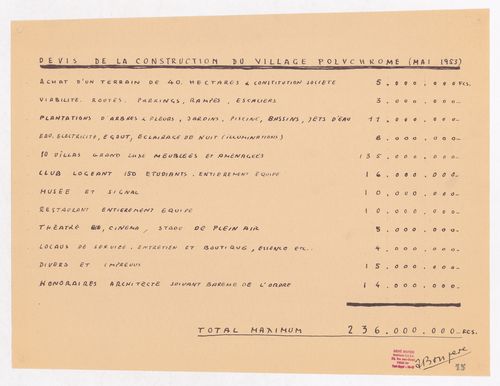
Specifications for Village Polychrome, near Biot, France
Actions:
DR1996:0012
Description:
- Two groups of four pastel drawings were originally produced in connection with the Village Polychrome project. The architect André Bruyère had retained one group, while the other was given to the patron and client, Francisco de Assis Chateaubriand Bandeira de Melo, who then donated it to the Sao Paolo Museum of Modern Art. Bruyère subsequently gave one of the four drawings in his group to a friend. The three remaining drawings from Bruyère's group are in the CCA Prints and Drawings collection (DR1996:0001 - DR1996:0003) ("Projet de Village Polychrome, Biot, France").
Specifications for Village Polychrome, near Biot, France
Actions:
DR1996:0012
Description:
- Two groups of four pastel drawings were originally produced in connection with the Village Polychrome project. The architect André Bruyère had retained one group, while the other was given to the patron and client, Francisco de Assis Chateaubriand Bandeira de Melo, who then donated it to the Sao Paolo Museum of Modern Art. Bruyère subsequently gave one of the four drawings in his group to a friend. The three remaining drawings from Bruyère's group are in the CCA Prints and Drawings collection (DR1996:0001 - DR1996:0003) ("Projet de Village Polychrome, Biot, France").
Classification:
dessins
dessins
Date:
May 1953
May 1953
Personnes et institutions:
Sujet:
architecture
architecture
Niveau de description archivistique:
Série(s)
Série(s)
Numéro de référence:
AP162.S2
Description:
Series documents the contribution of architect Paul Goesch to the correspondence circle of Die gläserne Kette. Goesch participated using the pseudonym Tancred. Born in Schwerin, Germany in 1985, Goesch studied architecture at the Technische Hochschule at Berlin-Charlottenburg. After his studies, he worked as a civil servant in Kulm and started producing his first drawings and watercolours between 1914 and 1916. He joined the Novembergruppe, an exhibiting group of painters, sculptors, architects and musicians that later merged with the Arbeitsrat für Kunst group led by Bruno Taut. He collaborated with Bruno Taut on the coloured-architecture program in Magdeburg, Germany in 1921, but was later hospitalized for mental illness, first in Göttingen, then in the Teupitz Hospital near Berlin in 1933 or 1934. In 1940, he was taken by the SS to Hartheim Euthanasia Centre where he was murdered on 6 September the same year. (Source: Ian Boyd Whyte, Bruno Taut and the Architecture of Activism. Cambridge: Cambridge University Press, 1982) The series comprises a letter of Paul Goesch to the Die gläserne Kette circle, as well as portraits, including a carte-de-visite, and a diploma.
AP162.S2
Description:
Series documents the contribution of architect Paul Goesch to the correspondence circle of Die gläserne Kette. Goesch participated using the pseudonym Tancred. Born in Schwerin, Germany in 1985, Goesch studied architecture at the Technische Hochschule at Berlin-Charlottenburg. After his studies, he worked as a civil servant in Kulm and started producing his first drawings and watercolours between 1914 and 1916. He joined the Novembergruppe, an exhibiting group of painters, sculptors, architects and musicians that later merged with the Arbeitsrat für Kunst group led by Bruno Taut. He collaborated with Bruno Taut on the coloured-architecture program in Magdeburg, Germany in 1921, but was later hospitalized for mental illness, first in Göttingen, then in the Teupitz Hospital near Berlin in 1933 or 1934. In 1940, he was taken by the SS to Hartheim Euthanasia Centre where he was murdered on 6 September the same year. (Source: Ian Boyd Whyte, Bruno Taut and the Architecture of Activism. Cambridge: Cambridge University Press, 1982) The series comprises a letter of Paul Goesch to the Die gläserne Kette circle, as well as portraits, including a carte-de-visite, and a diploma.
Personnes et institutions:
Date:
1890-1911
1890-1911
Titre:
Paul Goesch
Actions:
AP162.S2
Description:
Series documents the contribution of architect Paul Goesch to the correspondence circle of Die gläserne Kette. Goesch participated using the pseudonym Tancred. Born in Schwerin, Germany in 1985, Goesch studied architecture at the Technische Hochschule at Berlin-Charlottenburg. After his studies, he worked as a civil servant in Kulm and started producing his first drawings and watercolours between 1914 and 1916. He joined the Novembergruppe, an exhibiting group of painters, sculptors, architects and musicians that later merged with the Arbeitsrat für Kunst group led by Bruno Taut. He collaborated with Bruno Taut on the coloured-architecture program in Magdeburg, Germany in 1921, but was later hospitalized for mental illness, first in Göttingen, then in the Teupitz Hospital near Berlin in 1933 or 1934. In 1940, he was taken by the SS to Hartheim Euthanasia Centre where he was murdered on 6 September the same year. (Source: Ian Boyd Whyte, Bruno Taut and the Architecture of Activism. Cambridge: Cambridge University Press, 1982) The series comprises a letter of Paul Goesch to the Die gläserne Kette circle, as well as portraits, including a carte-de-visite, and a diploma.
Paul Goesch
Actions:
AP162.S2
Description:
Series documents the contribution of architect Paul Goesch to the correspondence circle of Die gläserne Kette. Goesch participated using the pseudonym Tancred. Born in Schwerin, Germany in 1985, Goesch studied architecture at the Technische Hochschule at Berlin-Charlottenburg. After his studies, he worked as a civil servant in Kulm and started producing his first drawings and watercolours between 1914 and 1916. He joined the Novembergruppe, an exhibiting group of painters, sculptors, architects and musicians that later merged with the Arbeitsrat für Kunst group led by Bruno Taut. He collaborated with Bruno Taut on the coloured-architecture program in Magdeburg, Germany in 1921, but was later hospitalized for mental illness, first in Göttingen, then in the Teupitz Hospital near Berlin in 1933 or 1934. In 1940, he was taken by the SS to Hartheim Euthanasia Centre where he was murdered on 6 September the same year. (Source: Ian Boyd Whyte, Bruno Taut and the Architecture of Activism. Cambridge: Cambridge University Press, 1982) The series comprises a letter of Paul Goesch to the Die gläserne Kette circle, as well as portraits, including a carte-de-visite, and a diploma.
Niveau de description archivistique:
series
series
Date:
1890-1911
1890-1911
Personnes et institutions:
Niveau de description archivistique:
Série(s)
Série(s)
Numéro de référence:
AP162.S5
Description:
Series documents the contribution of architect Carl Krayl to the correspondence circle of Die gläserne Kette, with Krayl writing under the pseudonym Anfang. Born in 1890 in Weinsberg, Germany, Krayl worked on building sites between 1906 to 1909 in preparation for the architectural studies he would undertake from 1910 to 1912 at the Kunstgewerbeschule and the Polytechnikum at Stuttgart. He was employed as a military architect during the First World War and was stationed at Ingolstatd. After the war, Krayl joinded the Arbeitsrat für Kunst lead by Bruno Taut. Between 1919 to 1921 he contributed to "Frühlich", a magazine published by Taut which featured works by some members of Die Gläserne Kette. Krayl joined Bruno Taut in the city architecture department at Magdeburg. From 1923, he worked independently and executed private and public architectural projects. During the Nazi regime he worked as a draftsman for the German State Railway from 1938 to 1946. He died in 1946 in Werder an der Havel, Germany. (Source: Ian Boyd Whyte, Bruno Taut and the Architecture of Activism. Cambridge: Cambridge University Press, 1982) The series comprises part of Carl Krayl's correspondence to the Die gläserne Kette circle, along with related drawings and photographs.
AP162.S5
Description:
Series documents the contribution of architect Carl Krayl to the correspondence circle of Die gläserne Kette, with Krayl writing under the pseudonym Anfang. Born in 1890 in Weinsberg, Germany, Krayl worked on building sites between 1906 to 1909 in preparation for the architectural studies he would undertake from 1910 to 1912 at the Kunstgewerbeschule and the Polytechnikum at Stuttgart. He was employed as a military architect during the First World War and was stationed at Ingolstatd. After the war, Krayl joinded the Arbeitsrat für Kunst lead by Bruno Taut. Between 1919 to 1921 he contributed to "Frühlich", a magazine published by Taut which featured works by some members of Die Gläserne Kette. Krayl joined Bruno Taut in the city architecture department at Magdeburg. From 1923, he worked independently and executed private and public architectural projects. During the Nazi regime he worked as a draftsman for the German State Railway from 1938 to 1946. He died in 1946 in Werder an der Havel, Germany. (Source: Ian Boyd Whyte, Bruno Taut and the Architecture of Activism. Cambridge: Cambridge University Press, 1982) The series comprises part of Carl Krayl's correspondence to the Die gläserne Kette circle, along with related drawings and photographs.
Personnes et institutions:
Date:
1918-1945
1918-1945
Titre:
Carl Krayl
Actions:
AP162.S5
Description:
Series documents the contribution of architect Carl Krayl to the correspondence circle of Die gläserne Kette, with Krayl writing under the pseudonym Anfang. Born in 1890 in Weinsberg, Germany, Krayl worked on building sites between 1906 to 1909 in preparation for the architectural studies he would undertake from 1910 to 1912 at the Kunstgewerbeschule and the Polytechnikum at Stuttgart. He was employed as a military architect during the First World War and was stationed at Ingolstatd. After the war, Krayl joinded the Arbeitsrat für Kunst lead by Bruno Taut. Between 1919 to 1921 he contributed to "Frühlich", a magazine published by Taut which featured works by some members of Die Gläserne Kette. Krayl joined Bruno Taut in the city architecture department at Magdeburg. From 1923, he worked independently and executed private and public architectural projects. During the Nazi regime he worked as a draftsman for the German State Railway from 1938 to 1946. He died in 1946 in Werder an der Havel, Germany. (Source: Ian Boyd Whyte, Bruno Taut and the Architecture of Activism. Cambridge: Cambridge University Press, 1982) The series comprises part of Carl Krayl's correspondence to the Die gläserne Kette circle, along with related drawings and photographs.
Carl Krayl
Actions:
AP162.S5
Description:
Series documents the contribution of architect Carl Krayl to the correspondence circle of Die gläserne Kette, with Krayl writing under the pseudonym Anfang. Born in 1890 in Weinsberg, Germany, Krayl worked on building sites between 1906 to 1909 in preparation for the architectural studies he would undertake from 1910 to 1912 at the Kunstgewerbeschule and the Polytechnikum at Stuttgart. He was employed as a military architect during the First World War and was stationed at Ingolstatd. After the war, Krayl joinded the Arbeitsrat für Kunst lead by Bruno Taut. Between 1919 to 1921 he contributed to "Frühlich", a magazine published by Taut which featured works by some members of Die Gläserne Kette. Krayl joined Bruno Taut in the city architecture department at Magdeburg. From 1923, he worked independently and executed private and public architectural projects. During the Nazi regime he worked as a draftsman for the German State Railway from 1938 to 1946. He died in 1946 in Werder an der Havel, Germany. (Source: Ian Boyd Whyte, Bruno Taut and the Architecture of Activism. Cambridge: Cambridge University Press, 1982) The series comprises part of Carl Krayl's correspondence to the Die gläserne Kette circle, along with related drawings and photographs.
Niveau de description archivistique:
series
series
Date:
1918-1945
1918-1945
Personnes et institutions:


