


1608 Résultats
Classification:
livres
livres
Actions:
Prix:
$80.00
(disponible en magasin)
Résumé:
Founded by Fredric Benesch and Katarina Lundeberg in 2009, Stockholm-based firm In Praise of Shadows Architecture engages in a wide range of projects of varied scales and typologies. This first monograph on their work features some forty buildings and projects from the years 2009 to 2024. The selection includes small boathouses and garden pavilions, private homes, and(...)
$80.00
(disponible en magasin)
Résumé:
Founded by Fredric Benesch and Katarina Lundeberg in 2009, Stockholm-based firm In Praise of Shadows Architecture engages in a wide range of projects of varied scales and typologies. This first monograph on their work features some forty buildings and projects from the years 2009 to 2024. The selection includes small boathouses and garden pavilions, private homes, and(...)
Sujet:
Architecture, monographies
Architecture, monographies
Publication:
février 2025
février 2025
Titre:
In Praise of Shadows Architecture: A line of thought
Actions:
Prix:
$80.00
(disponible en magasin)
Résumé:
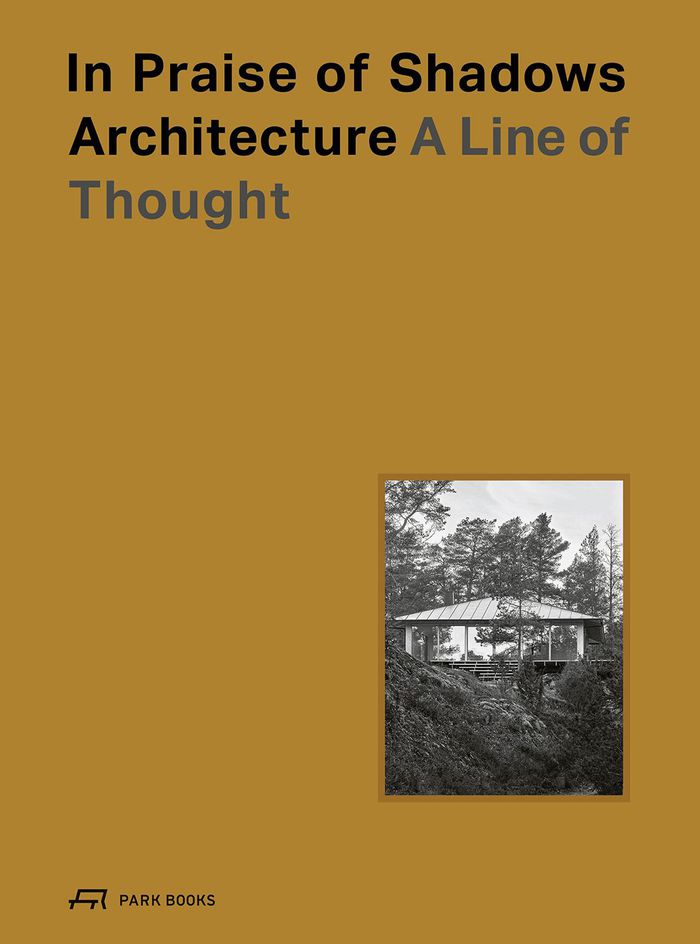
Founded by Fredric Benesch and Katarina Lundeberg in 2009, Stockholm-based firm In Praise of Shadows Architecture engages in a wide range of projects of varied scales and typologies. This first monograph on their work features some forty buildings and projects from the years 2009 to 2024. The selection includes small boathouses and garden pavilions, private homes, and housing developments, as well as retail spaces, schools, and library buildings. The ideas and designs of In Praise of Shadows Architecture are remarkable, revealed in buildings that share an elegant signature that manifests itself in the choice and shaping of materials and a focus on the spatial experience. Many of them are timber constructions, as sustainability is a core part of their philosophy, as well as a special interest in Swedish modernist heritage and the famous architectural culture of the Swiss canton of Grisons.
In Praise of Shadows Architecture: A line of thought
Actions:
Prix:
$80.00
(disponible en magasin)
Résumé:
Founded by Fredric Benesch and Katarina Lundeberg in 2009, Stockholm-based firm In Praise of Shadows Architecture engages in a wide range of projects of varied scales and typologies. This first monograph on their work features some forty buildings and projects from the years 2009 to 2024. The selection includes small boathouses and garden pavilions, private homes, and housing developments, as well as retail spaces, schools, and library buildings. The ideas and designs of In Praise of Shadows Architecture are remarkable, revealed in buildings that share an elegant signature that manifests itself in the choice and shaping of materials and a focus on the spatial experience. Many of them are timber constructions, as sustainability is a core part of their philosophy, as well as a special interest in Swedish modernist heritage and the famous architectural culture of the Swiss canton of Grisons.
Classification:
livres
livres
Publication:
février 2025
février 2025
Sujet:
Architecture, monographies
Architecture, monographies
Classification:
livres
livres
Titre:
Qiu Yangzi: Rotation
Qiu Yangzi: Rotation
Actions:
Prix:
$80.00
(disponible sur commande)
Résumé:
''Rotation'' is an ongoing photographic series exploring how urban development reshapes our relationship with space—public, personal, and imagined. It invites viewers to reconsider orientation, perspective, and the fragility of boundaries between the built environment and the body. Referencing the disorientation of outer space—where gravity dissolves the idea of ‘up’(...)
$80.00
(disponible sur commande)
Résumé:
''Rotation'' is an ongoing photographic series exploring how urban development reshapes our relationship with space—public, personal, and imagined. It invites viewers to reconsider orientation, perspective, and the fragility of boundaries between the built environment and the body. Referencing the disorientation of outer space—where gravity dissolves the idea of ‘up’(...)
Titre:
Qiu Yangzi: Rotation
Actions:
Prix:
$80.00
(disponible sur commande)
Résumé:
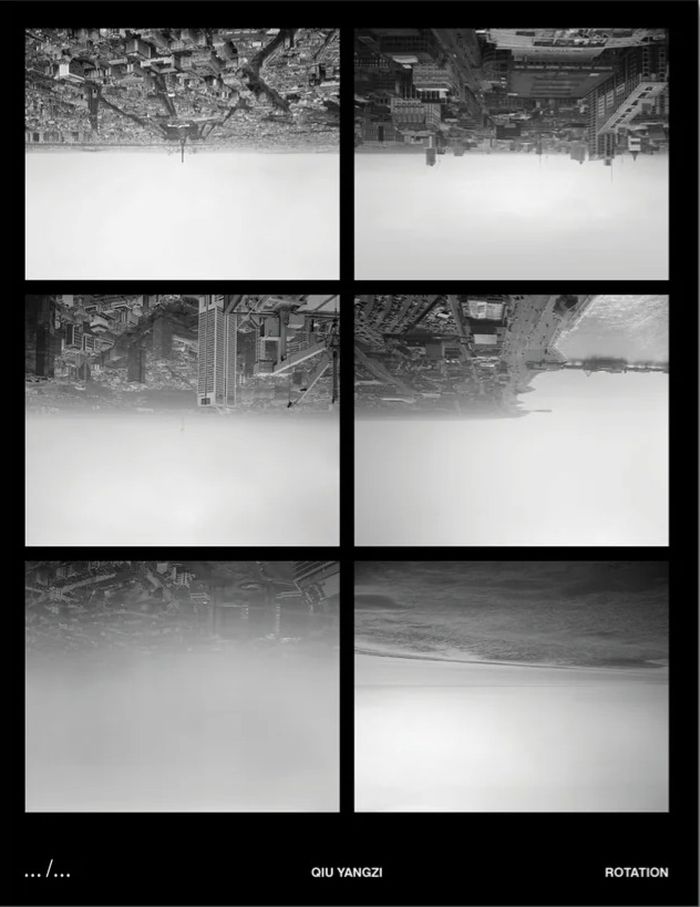
''Rotation'' is an ongoing photographic series exploring how urban development reshapes our relationship with space—public, personal, and imagined. It invites viewers to reconsider orientation, perspective, and the fragility of boundaries between the built environment and the body. Referencing the disorientation of outer space—where gravity dissolves the idea of ‘up’ and ‘down’—the series plays with visual perspective and suspension. Many images are shot through glass, integrating reflections that allude to invisible connections between people and places. This use of light and surface evokes a sense of weightlessness and fluid identity. Since 2021, Rotation has evolved through collaborations with over 20 organizations across cities such as London, Berlin, Stockholm, and Warsaw. With more than 70 works created so far, the project continues to map spatial perception through image-making—blurring lines between architecture, motion, and memory.
Qiu Yangzi: Rotation
Actions:
Prix:
$80.00
(disponible sur commande)
Résumé:
''Rotation'' is an ongoing photographic series exploring how urban development reshapes our relationship with space—public, personal, and imagined. It invites viewers to reconsider orientation, perspective, and the fragility of boundaries between the built environment and the body. Referencing the disorientation of outer space—where gravity dissolves the idea of ‘up’ and ‘down’—the series plays with visual perspective and suspension. Many images are shot through glass, integrating reflections that allude to invisible connections between people and places. This use of light and surface evokes a sense of weightlessness and fluid identity. Since 2021, Rotation has evolved through collaborations with over 20 organizations across cities such as London, Berlin, Stockholm, and Warsaw. With more than 70 works created so far, the project continues to map spatial perception through image-making—blurring lines between architecture, motion, and memory.
Classification:
livres
livres
Publication:
janvier 2026
janvier 2026
Sujet:
Monographies photo
Monographies photo
Classification:
livres
livres
Actions:
Prix:
$25.95
(disponible sur commande)
Résumé:
What is an object? This question was addressed by Graham Harman, the originator of object-oriented philosophy and a central figure of speculative realism, in a lecture at Moderna Museet in Stockholm. Providing a thorough exposition of the object from an ontological standpoint, and putting forward a concept of the object beyond reductionism, Harman declares an approach(...)
$25.95
(disponible sur commande)
Résumé:
What is an object? This question was addressed by Graham Harman, the originator of object-oriented philosophy and a central figure of speculative realism, in a lecture at Moderna Museet in Stockholm. Providing a thorough exposition of the object from an ontological standpoint, and putting forward a concept of the object beyond reductionism, Harman declares an approach(...)
Titre:
Artful objects: Graham Harman on art and the business of speculative realism
Actions:
Prix:
$25.95
(disponible sur commande)
Résumé:
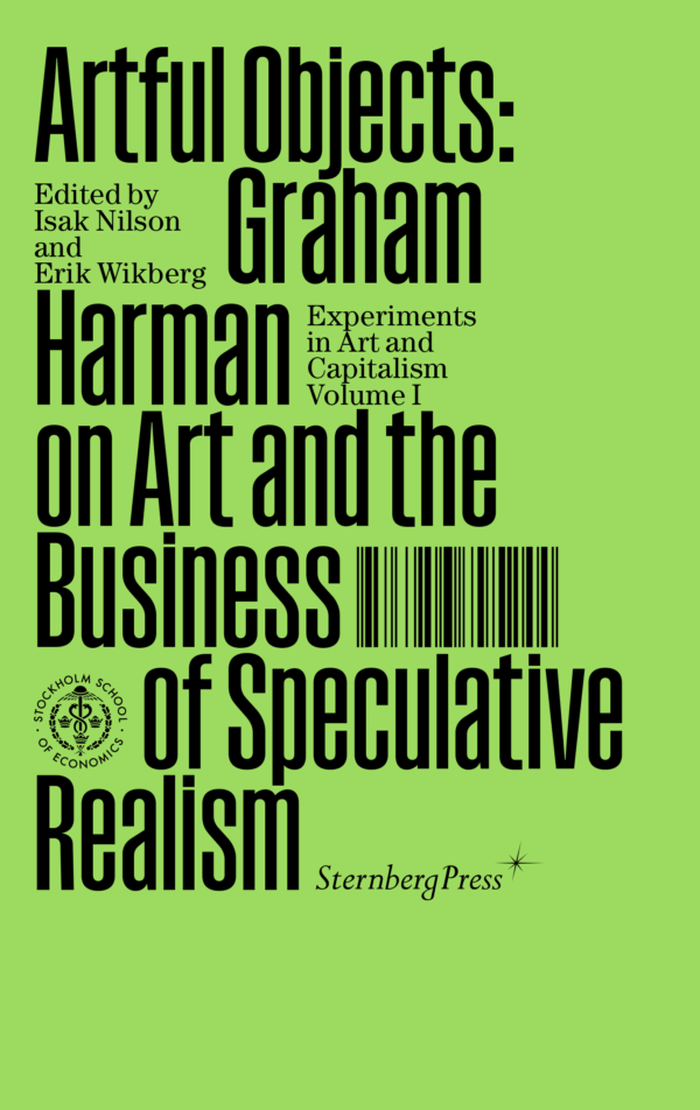
What is an object? This question was addressed by Graham Harman, the originator of object-oriented philosophy and a central figure of speculative realism, in a lecture at Moderna Museet in Stockholm. Providing a thorough exposition of the object from an ontological standpoint, and putting forward a concept of the object beyond reductionism, Harman declares an approach that brings together philosophy and the arts where an object is not reducible to its components or effects and must instead be approached obliquely or indirectly. The lecture was held on the occasion of "Sculpture after Sculpture," an exhibition of work by Katharina Fritsch, Jeff Koons, and Charles Ray. In the exhibition hall with the show’s thirteen sculptures, thirteen questions about the object were posed to Graham Harman by interlocutors from the worlds of art, business studies, and philosophy.
Artful objects: Graham Harman on art and the business of speculative realism
Actions:
Prix:
$25.95
(disponible sur commande)
Résumé:
What is an object? This question was addressed by Graham Harman, the originator of object-oriented philosophy and a central figure of speculative realism, in a lecture at Moderna Museet in Stockholm. Providing a thorough exposition of the object from an ontological standpoint, and putting forward a concept of the object beyond reductionism, Harman declares an approach that brings together philosophy and the arts where an object is not reducible to its components or effects and must instead be approached obliquely or indirectly. The lecture was held on the occasion of "Sculpture after Sculpture," an exhibition of work by Katharina Fritsch, Jeff Koons, and Charles Ray. In the exhibition hall with the show’s thirteen sculptures, thirteen questions about the object were posed to Graham Harman by interlocutors from the worlds of art, business studies, and philosophy.
Classification:
livres
livres
Publication:
octobre 2021
octobre 2021
Sujet:
Théorie de l’art
Théorie de l’art
Classification:
périodiques
périodiques
Actions:
Prix:
$24.95
(disponible sur commande)
Résumé:
Programmatic alchemy recipes. This is the character that could sum up all the production of BIG (Bjarke Ingels Group), a young studio which has already become a reference in the shrewd use of factors that affect contemporary architecture. Starting his career in OMA and PLOT, in 2005 Ingels decided to found his own practice in Copenhagen and its production has only(...)
$24.95
(disponible sur commande)
Résumé:
Programmatic alchemy recipes. This is the character that could sum up all the production of BIG (Bjarke Ingels Group), a young studio which has already become a reference in the shrewd use of factors that affect contemporary architecture. Starting his career in OMA and PLOT, in 2005 Ingels decided to found his own practice in Copenhagen and its production has only(...)
Titre:
AV proyectos 043 : dossier BIG
Actions:
Prix:
$24.95
(disponible sur commande)
Résumé:
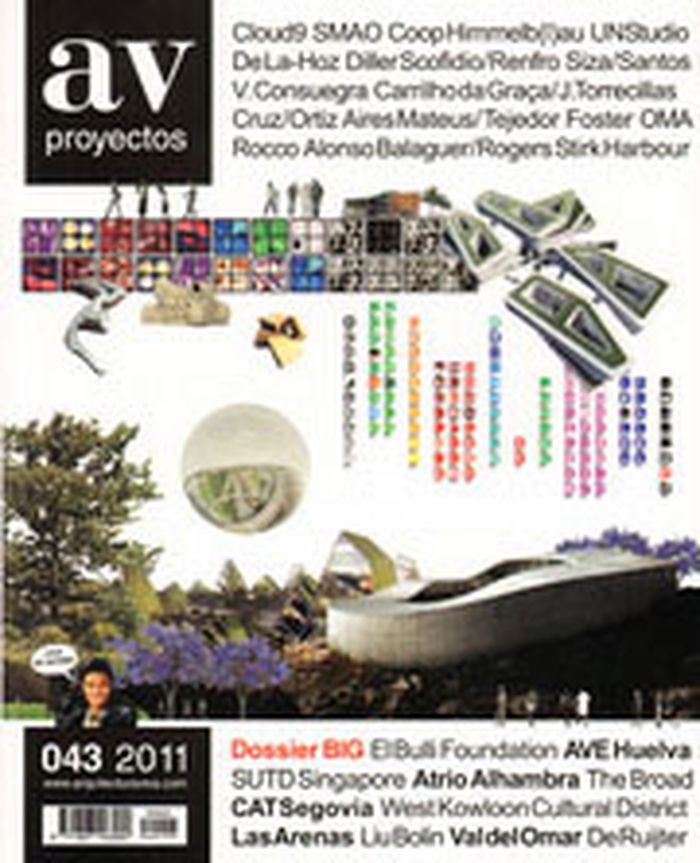
Programmatic alchemy recipes. This is the character that could sum up all the production of BIG (Bjarke Ingels Group), a young studio which has already become a reference in the shrewd use of factors that affect contemporary architecture. Starting his career in OMA and PLOT, in 2005 Ingels decided to found his own practice in Copenhagen and its production has only experienced increases ever since. Projects include the Greenland National Park in Nuuk, the Vilhelmsro Primary School in Asminderoed, the Danish Maritime Museum in Copenhagen, a Waste Treatment Plant in Copenhagen, Residences in Hualien, the Stockholm Sphere Master Plan, Loop City in Copenhagen. Also projects by Cloud 9 for the El Bulli Foundation in Gerona, SUMA Arquitectura with a Library and Multipurpose Center on Fuerteventura, Rafael de La-Hoz with a High-Speed Train Station in Huelva and more.
AV proyectos 043 : dossier BIG
Actions:
Prix:
$24.95
(disponible sur commande)
Résumé:
Programmatic alchemy recipes. This is the character that could sum up all the production of BIG (Bjarke Ingels Group), a young studio which has already become a reference in the shrewd use of factors that affect contemporary architecture. Starting his career in OMA and PLOT, in 2005 Ingels decided to found his own practice in Copenhagen and its production has only experienced increases ever since. Projects include the Greenland National Park in Nuuk, the Vilhelmsro Primary School in Asminderoed, the Danish Maritime Museum in Copenhagen, a Waste Treatment Plant in Copenhagen, Residences in Hualien, the Stockholm Sphere Master Plan, Loop City in Copenhagen. Also projects by Cloud 9 for the El Bulli Foundation in Gerona, SUMA Arquitectura with a Library and Multipurpose Center on Fuerteventura, Rafael de La-Hoz with a High-Speed Train Station in Huelva and more.
Classification:
périodiques
périodiques
Publication:
juillet 2011
juillet 2011
Sujet:
Revues
Revues
Classification:
livres
livres
Actions:
Prix:
$24.95
(disponible sur commande)
Résumé:
By many art history accounts, the art of the twentieth century was decided by Pablo Picasso and Marcel Duchamp. In these versions, Picasso stands for prolific production, a fierce expressionism, endless research of the picture plane and a sense of voracious creativity; whereas Duchamp stands for cerebral brilliance, rejection of optical pleasure and a subtle but(...)
$24.95
(disponible sur commande)
Résumé:
By many art history accounts, the art of the twentieth century was decided by Pablo Picasso and Marcel Duchamp. In these versions, Picasso stands for prolific production, a fierce expressionism, endless research of the picture plane and a sense of voracious creativity; whereas Duchamp stands for cerebral brilliance, rejection of optical pleasure and a subtle but(...)
Titre:
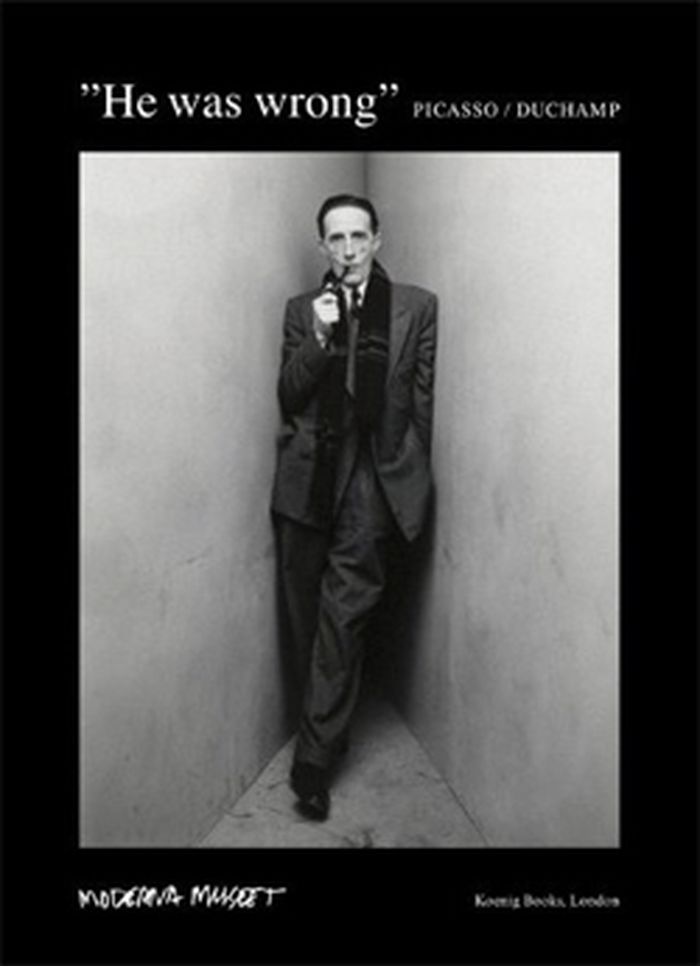
Duchamp & Picasso: He Was Wrong
Actions:
Prix:
$24.95
(disponible sur commande)
Résumé:
By many art history accounts, the art of the twentieth century was decided by Pablo Picasso and Marcel Duchamp. In these versions, Picasso stands for prolific production, a fierce expressionism, endless research of the picture plane and a sense of voracious creativity; whereas Duchamp stands for cerebral brilliance, rejection of optical pleasure and a subtle but all-pervasive conceptual sabotage and irony. (Of course, they shared as many traits, including an appetite for provocation and the recognition of eros as a fundamental, animating life principle.) So who was right? This volume, published for a show at the Moderna Museet in Stockholm, argues for both sides of the coin, looking at various aspects of both oeuvres, including Picasso’s fascination with the Minotaur and Duchamp’s Rrose Selavy alter ego. The book is appropriately divided in two halves separated by a reverse binding.
Duchamp & Picasso: He Was Wrong
Actions:
Prix:
$24.95
(disponible sur commande)
Résumé:
By many art history accounts, the art of the twentieth century was decided by Pablo Picasso and Marcel Duchamp. In these versions, Picasso stands for prolific production, a fierce expressionism, endless research of the picture plane and a sense of voracious creativity; whereas Duchamp stands for cerebral brilliance, rejection of optical pleasure and a subtle but all-pervasive conceptual sabotage and irony. (Of course, they shared as many traits, including an appetite for provocation and the recognition of eros as a fundamental, animating life principle.) So who was right? This volume, published for a show at the Moderna Museet in Stockholm, argues for both sides of the coin, looking at various aspects of both oeuvres, including Picasso’s fascination with the Minotaur and Duchamp’s Rrose Selavy alter ego. The book is appropriately divided in two halves separated by a reverse binding.
Classification:
livres
livres
Publication:
janvier 2013
janvier 2013
Sujet:
Théorie de l’art
Théorie de l’art
Classification:
livres
livres
Actions:
Prix:
$39.00
(disponible sur commande)
Résumé:
A l'heure où le design et la qualité de vie sont souvent associés, être une " ville de design " offre à la fois un puissant levier de communication et un positionnement porteur de croissance économique. Mais qu'est-ce qu'une ville de design ? Et comment le devient-on ? Si Anvers, Glasgow, Lisbonne, Montréal, Saint-Etienne, Stockholm et Times Square New York ont réussi à(...)
$39.00
(disponible sur commande)
Résumé:
A l'heure où le design et la qualité de vie sont souvent associés, être une " ville de design " offre à la fois un puissant levier de communication et un positionnement porteur de croissance économique. Mais qu'est-ce qu'une ville de design ? Et comment le devient-on ? Si Anvers, Glasgow, Lisbonne, Montréal, Saint-Etienne, Stockholm et Times Square New York ont réussi à(...)
Titre:
Nouvelles villes de design / new design cities
Actions:
Prix:
$39.00
(disponible sur commande)
Résumé:
A l'heure où le design et la qualité de vie sont souvent associés, être une " ville de design " offre à la fois un puissant levier de communication et un positionnement porteur de croissance économique. Mais qu'est-ce qu'une ville de design ? Et comment le devient-on ? Si Anvers, Glasgow, Lisbonne, Montréal, Saint-Etienne, Stockholm et Times Square New York ont réussi à se positionner comme " nouvelles villes de design ", c'est qu'elles ont élaboré et mis en place des politiques et programmes favorisant la qualité en design sur leur territoire. Construit autour d'études de cas, cet ouvrage analyse les actions et événements à l'origine de l'émergence de ces sept villes en tant que ville de design. Appuyé sur les réflexions de François Barré, Saskia Sassen et John Thackara, il réunit également les points de vue d'élus, de designers réputés, ou appartenant à la relève, et de citoyens engagés.
Nouvelles villes de design / new design cities
Actions:
Prix:
$39.00
(disponible sur commande)
Résumé:
A l'heure où le design et la qualité de vie sont souvent associés, être une " ville de design " offre à la fois un puissant levier de communication et un positionnement porteur de croissance économique. Mais qu'est-ce qu'une ville de design ? Et comment le devient-on ? Si Anvers, Glasgow, Lisbonne, Montréal, Saint-Etienne, Stockholm et Times Square New York ont réussi à se positionner comme " nouvelles villes de design ", c'est qu'elles ont élaboré et mis en place des politiques et programmes favorisant la qualité en design sur leur territoire. Construit autour d'études de cas, cet ouvrage analyse les actions et événements à l'origine de l'émergence de ces sept villes en tant que ville de design. Appuyé sur les réflexions de François Barré, Saskia Sassen et John Thackara, il réunit également les points de vue d'élus, de designers réputés, ou appartenant à la relève, et de citoyens engagés.
Classification:
livres
livres
Publication:
octobre 2005, Montréal
octobre 2005, Montréal
Sujet:
Architecture de Montréal
Architecture de Montréal
Classification:
livres
livres
Prix:
$46.95
(disponible sur commande)
Résumé:
Gert Wingårdh is one of Sweden’s leading architects. His clever and imaginative spatial creations are remarkable in economic as well as ecological and sociological terms. The focus of his designs is always on the needs of the future users. This monograph analyzes the principal aspects of his work in seminal essays by renowned architecture critics and uses text and(...)
$46.95
(disponible sur commande)
Résumé:
Gert Wingårdh is one of Sweden’s leading architects. His clever and imaginative spatial creations are remarkable in economic as well as ecological and sociological terms. The focus of his designs is always on the needs of the future users. This monograph analyzes the principal aspects of his work in seminal essays by renowned architecture critics and uses text and(...)
Sujet:
Architecture, monographies
Architecture, monographies
Publication:
mars 2008, Basel, Boston, Berlin
mars 2008, Basel, Boston, Berlin
Titre:
Gert Wingardh : thirty years of architecture through four decades
Actions:
Prix:
$46.95
(disponible sur commande)
Résumé:
Gert Wingårdh is one of Sweden’s leading architects. His clever and imaginative spatial creations are remarkable in economic as well as ecological and sociological terms. The focus of his designs is always on the needs of the future users. This monograph analyzes the principal aspects of his work in seminal essays by renowned architecture critics and uses text and images to document all the important buildings of his thirty-year career. Editor Mikael Nanfeldt is curator of the Röhss Museum of Design and Applied Arts in Göteborg, the opening venue for a large exhibition of Wingårdh’s work that then moves on to the Swedish Museum of Architecture in Stockholm before going on to tour internationally. Wingårdh’s most remarkable projects include prizewinning laboratory buildings in Sweden and the United States, the Swedish embassies in Berlin and Washington, numerous villas, and the recently opened visitor center Waren in Deutschland (Products in Germany).
Gert Wingardh : thirty years of architecture through four decades
Actions:
Prix:
$46.95
(disponible sur commande)
Résumé:
Gert Wingårdh is one of Sweden’s leading architects. His clever and imaginative spatial creations are remarkable in economic as well as ecological and sociological terms. The focus of his designs is always on the needs of the future users. This monograph analyzes the principal aspects of his work in seminal essays by renowned architecture critics and uses text and images to document all the important buildings of his thirty-year career. Editor Mikael Nanfeldt is curator of the Röhss Museum of Design and Applied Arts in Göteborg, the opening venue for a large exhibition of Wingårdh’s work that then moves on to the Swedish Museum of Architecture in Stockholm before going on to tour internationally. Wingårdh’s most remarkable projects include prizewinning laboratory buildings in Sweden and the United States, the Swedish embassies in Berlin and Washington, numerous villas, and the recently opened visitor center Waren in Deutschland (Products in Germany).
Classification:
livres
livres
Publication:
mars 2008, Basel, Boston, Berlin
mars 2008, Basel, Boston, Berlin
Sujet:
Architecture, monographies
Architecture, monographies
Classification:
livres
livres
Actions:
Prix:
$75.00
(disponible en magasin)
Résumé:
The history of climate change and the history of architecture are connected in many ways. Through a multilayered chronology, "It’s About Time" showcases historical and contemporary building projects such as solar houses, autonomous structures and earth buildings, alongside more than 45 key moments in environmental justice history: among them the first Earth Day, the(...)
$75.00
(disponible en magasin)
Résumé:
The history of climate change and the history of architecture are connected in many ways. Through a multilayered chronology, "It’s About Time" showcases historical and contemporary building projects such as solar houses, autonomous structures and earth buildings, alongside more than 45 key moments in environmental justice history: among them the first Earth Day, the(...)
Titre:
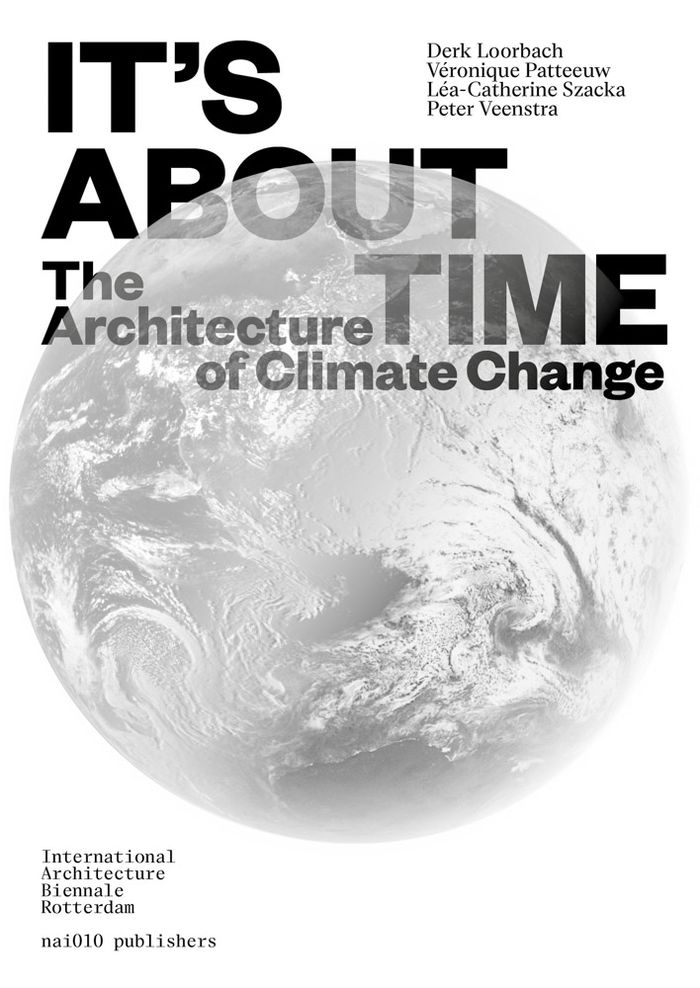
It's about time: The architecture of climate change
Actions:
Prix:
$75.00
(disponible en magasin)
Résumé:
The history of climate change and the history of architecture are connected in many ways. Through a multilayered chronology, "It’s About Time" showcases historical and contemporary building projects such as solar houses, autonomous structures and earth buildings, alongside more than 45 key moments in environmental justice history: among them the first Earth Day, the United Nations conference in Stockholm, the Chernobyl disaster, the Paris Climate Agreements and the European Green Deal. It explores architectural experimentation in the past, depicts the present moment of transition and offers hopeful glimpses of the future. Serving as both a reference and a source of inspiration, this publication is intended for architects, educators, students, scientists or anyone looking to play their part in shaping a more sustainable world. It emphasizes that while the time for change has now arrived, the field of architecture can play a key role in the transitions ahead.
It's about time: The architecture of climate change
Actions:
Prix:
$75.00
(disponible en magasin)
Résumé:
The history of climate change and the history of architecture are connected in many ways. Through a multilayered chronology, "It’s About Time" showcases historical and contemporary building projects such as solar houses, autonomous structures and earth buildings, alongside more than 45 key moments in environmental justice history: among them the first Earth Day, the United Nations conference in Stockholm, the Chernobyl disaster, the Paris Climate Agreements and the European Green Deal. It explores architectural experimentation in the past, depicts the present moment of transition and offers hopeful glimpses of the future. Serving as both a reference and a source of inspiration, this publication is intended for architects, educators, students, scientists or anyone looking to play their part in shaping a more sustainable world. It emphasizes that while the time for change has now arrived, the field of architecture can play a key role in the transitions ahead.
Classification:
livres
livres
Publication:
février 2025
février 2025
Sujet:
Biennale
Biennale
Classification:
livres
livres
Prix:
$49.95
(disponible sur commande)
Résumé:
The construction industry is keen to give nature a bigger role in area development, but the road from ambition to realization and management is a challenging one. This book identifies key challenges encountered during the various phases of the planning process and highlights possible solutions drawn from practice. In ''Nature-inclusive Urban Development'' the authors(...)
$49.95
(disponible sur commande)
Résumé:
The construction industry is keen to give nature a bigger role in area development, but the road from ambition to realization and management is a challenging one. This book identifies key challenges encountered during the various phases of the planning process and highlights possible solutions drawn from practice. In ''Nature-inclusive Urban Development'' the authors(...)
Titre:
Nature-inclusive urban development: From experiments to governance
Actions:
Prix:
$49.95
(disponible sur commande)
Résumé:
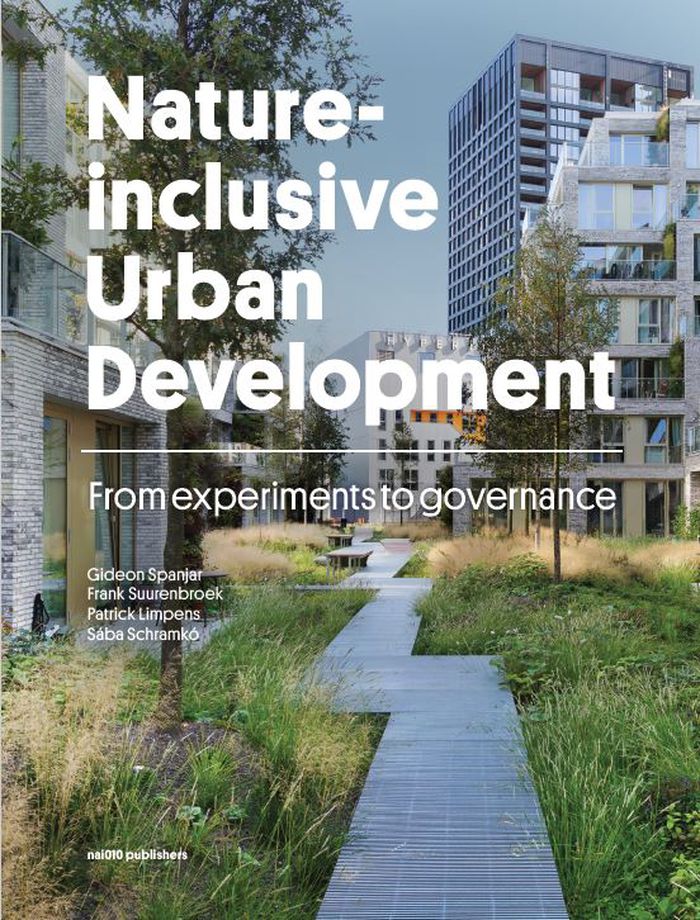
The construction industry is keen to give nature a bigger role in area development, but the road from ambition to realization and management is a challenging one. This book identifies key challenges encountered during the various phases of the planning process and highlights possible solutions drawn from practice. In ''Nature-inclusive Urban Development'' the authors look back to the very first European eco-districts from the final decade of the twentieth century and examine what the concept has delivered for residents and nature. They also assess the effectiveness of several pioneering international points systems in Amsterdam, Berlin, London, Malmö, Stockholm, and The Hague, among other cities. The book explores the operation and benefits of these points systems, and provides valuable solutions gleaned from interviews with practitioners in key positions. As such, nature-inclusive urban development offers practical pathways for overcoming governance challenges and fostering innovation for making cities biodiverse.
Nature-inclusive urban development: From experiments to governance
Actions:
Prix:
$49.95
(disponible sur commande)
Résumé:
The construction industry is keen to give nature a bigger role in area development, but the road from ambition to realization and management is a challenging one. This book identifies key challenges encountered during the various phases of the planning process and highlights possible solutions drawn from practice. In ''Nature-inclusive Urban Development'' the authors look back to the very first European eco-districts from the final decade of the twentieth century and examine what the concept has delivered for residents and nature. They also assess the effectiveness of several pioneering international points systems in Amsterdam, Berlin, London, Malmö, Stockholm, and The Hague, among other cities. The book explores the operation and benefits of these points systems, and provides valuable solutions gleaned from interviews with practitioners in key positions. As such, nature-inclusive urban development offers practical pathways for overcoming governance challenges and fostering innovation for making cities biodiverse.
Classification:
livres
livres
Publication:
avril 2025
avril 2025
Sujet:
Théorie de l’urbanisme
Théorie de l’urbanisme
Classification:
livres
livres
Actions:
Prix:
$26.95
(disponible sur commande)
Résumé:
Cet ouvrage exauce le voeu de Le Corbusier (1887-1965) de voir éditées les six conférences qu'il prononça à Rio de Janeiro en août 1936. Après celles qu'il donna à Buenos Aires en 1929, ce livre est le deuxième recueil de conférences de l'architecte. Et, comme ce fut le cas à Alger, Moscou, Bruxelles, Athènes, Paris, Stockholm, Rome, Buenos Aires, São Paulo ou Montevideo,(...)
$26.95
(disponible sur commande)
Résumé:
Cet ouvrage exauce le voeu de Le Corbusier (1887-1965) de voir éditées les six conférences qu'il prononça à Rio de Janeiro en août 1936. Après celles qu'il donna à Buenos Aires en 1929, ce livre est le deuxième recueil de conférences de l'architecte. Et, comme ce fut le cas à Alger, Moscou, Bruxelles, Athènes, Paris, Stockholm, Rome, Buenos Aires, São Paulo ou Montevideo,(...)
Titre:
Conférences de Rio : Le Corbusier au Brésil - 1936
Actions:
Prix:
$26.95
(disponible sur commande)
Résumé:
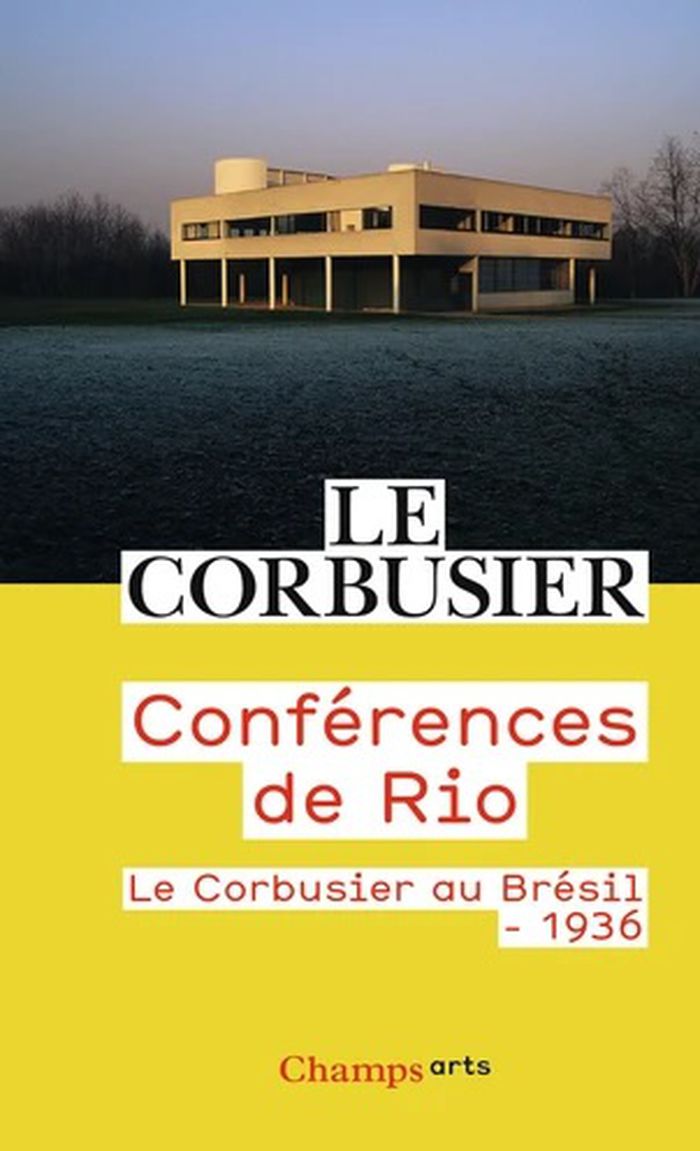
Cet ouvrage exauce le voeu de Le Corbusier (1887-1965) de voir éditées les six conférences qu'il prononça à Rio de Janeiro en août 1936. Après celles qu'il donna à Buenos Aires en 1929, ce livre est le deuxième recueil de conférences de l'architecte. Et, comme ce fut le cas à Alger, Moscou, Bruxelles, Athènes, Paris, Stockholm, Rome, Buenos Aires, São Paulo ou Montevideo, ces propos jouèrent un rôle central dans la propagation de ses idées sur l'architecture et l'urbanisme. L'importance de ce recueil tient au fait qu'il permet de mesurer le chemin parcouru par Le Corbusier entre 1929 et 1936. A travers les propos transcrits, la reproduction des dessins et des projections, on peut non seulement suivre la manière dont Le Corbusier transmettait son message, mais aussi reconstituer le temps et le rythme des conférences : les commentaires qu'il improvisait en restituent l'ambiance et les moments d'intensité.
Conférences de Rio : Le Corbusier au Brésil - 1936
Actions:
Prix:
$26.95
(disponible sur commande)
Résumé:
Cet ouvrage exauce le voeu de Le Corbusier (1887-1965) de voir éditées les six conférences qu'il prononça à Rio de Janeiro en août 1936. Après celles qu'il donna à Buenos Aires en 1929, ce livre est le deuxième recueil de conférences de l'architecte. Et, comme ce fut le cas à Alger, Moscou, Bruxelles, Athènes, Paris, Stockholm, Rome, Buenos Aires, São Paulo ou Montevideo, ces propos jouèrent un rôle central dans la propagation de ses idées sur l'architecture et l'urbanisme. L'importance de ce recueil tient au fait qu'il permet de mesurer le chemin parcouru par Le Corbusier entre 1929 et 1936. A travers les propos transcrits, la reproduction des dessins et des projections, on peut non seulement suivre la manière dont Le Corbusier transmettait son message, mais aussi reconstituer le temps et le rythme des conférences : les commentaires qu'il improvisait en restituent l'ambiance et les moments d'intensité.
Classification:
livres
livres
Publication:
septembre 2021
septembre 2021
Sujet:
Architecture, monographies
Architecture, monographies


