


1699 Résultats
Classification:
livres
livres

Titre:
The future of public space
The future of public space
Actions:
Prix:
$25.50
(disponible sur commande)
Résumé:
In this publication Rachel Monroe challenges American preconceptions of the wild, wide-open West by addressing issues of surveillance; the series’ first fictional piece, by China Miéville, covers an under-examined area of public space under the guise of detective fiction; a study of public art by Ben Davis sheds light on the myths and stigmas that have accrued to public(...)
$25.50
(disponible sur commande)
Résumé:
In this publication Rachel Monroe challenges American preconceptions of the wild, wide-open West by addressing issues of surveillance; the series’ first fictional piece, by China Miéville, covers an under-examined area of public space under the guise of detective fiction; a study of public art by Ben Davis sheds light on the myths and stigmas that have accrued to public(...)
Titre:
The future of public space
Actions:
Prix:
$25.50
(disponible sur commande)
Résumé:
In this publication Rachel Monroe challenges American preconceptions of the wild, wide-open West by addressing issues of surveillance; the series’ first fictional piece, by China Miéville, covers an under-examined area of public space under the guise of detective fiction; a study of public art by Ben Davis sheds light on the myths and stigmas that have accrued to public art, also asking what it can become; Christopher DeWolf shares a sensory navigation trip through a directionless Hong Kong; Michelle Nijhuis writes on the shifting ecologies of national parks; Sarah Fecht explores architecture and social life beyond Earth; while Jaron Lanier meditates on the idea of public space online, linking the prevailing, free-for-all model of the internet with a characteristically American yearning for freedom and repudiation of rules and structure. Also included are examples of public art works by Lawrence Weiner.
The future of public space
Actions:
Prix:
$25.50
(disponible sur commande)
Résumé:
In this publication Rachel Monroe challenges American preconceptions of the wild, wide-open West by addressing issues of surveillance; the series’ first fictional piece, by China Miéville, covers an under-examined area of public space under the guise of detective fiction; a study of public art by Ben Davis sheds light on the myths and stigmas that have accrued to public art, also asking what it can become; Christopher DeWolf shares a sensory navigation trip through a directionless Hong Kong; Michelle Nijhuis writes on the shifting ecologies of national parks; Sarah Fecht explores architecture and social life beyond Earth; while Jaron Lanier meditates on the idea of public space online, linking the prevailing, free-for-all model of the internet with a characteristically American yearning for freedom and repudiation of rules and structure. Also included are examples of public art works by Lawrence Weiner.
Classification:
livres
livres
Publication:
février 2018
février 2018
Sujet:
Théorie de l’architecture
Théorie de l’architecture
Classification:
livres
livres
Actions:
Exemplaires:
Description:
viii, 204 pages ; 19 cm
Description:
viii, 204 pages ; 19 cm
Auteur:
Sujet:
Publication:
Toronto, Ontario, Canada : Between the Lines, 2019., ©2019
Toronto, Ontario, Canada : Between the Lines, 2019., ©2019
Titre:
Feminist city : a field guide / Leslie Kern.
Actions:
Exemplaires:
Description:
viii, 204 pages ; 19 cm
Feminist city : a field guide / Leslie Kern.
Actions:
Exemplaires:
Description:
viii, 204 pages ; 19 cm
Classification:
livres
livres
Publication:
Toronto, Ontario, Canada : Between the Lines, 2019., ©2019
Toronto, Ontario, Canada : Between the Lines, 2019., ©2019
Auteur:
Sujet:
Classification:
livres
livres
Actions:
Prix:
$34.95
(disponible sur commande)
Résumé:
What is truth in the postmodern age? The artistic generation of the twentieth century has grown up immersed in the delirious imagination of postmodern thought, which insists upon the ultimate uncertainty of meaning and that there is no self-evident truth. In Praise of Nonsense explores the possibilities and parameters of a postmodern imagination freed from the(...)
$34.95
(disponible sur commande)
Résumé:
What is truth in the postmodern age? The artistic generation of the twentieth century has grown up immersed in the delirious imagination of postmodern thought, which insists upon the ultimate uncertainty of meaning and that there is no self-evident truth. In Praise of Nonsense explores the possibilities and parameters of a postmodern imagination freed from the(...)
Titre:
In praise of nonesense : aesthetics, uncertainty, and postmodern identity
Actions:
Prix:
$34.95
(disponible sur commande)
Résumé:
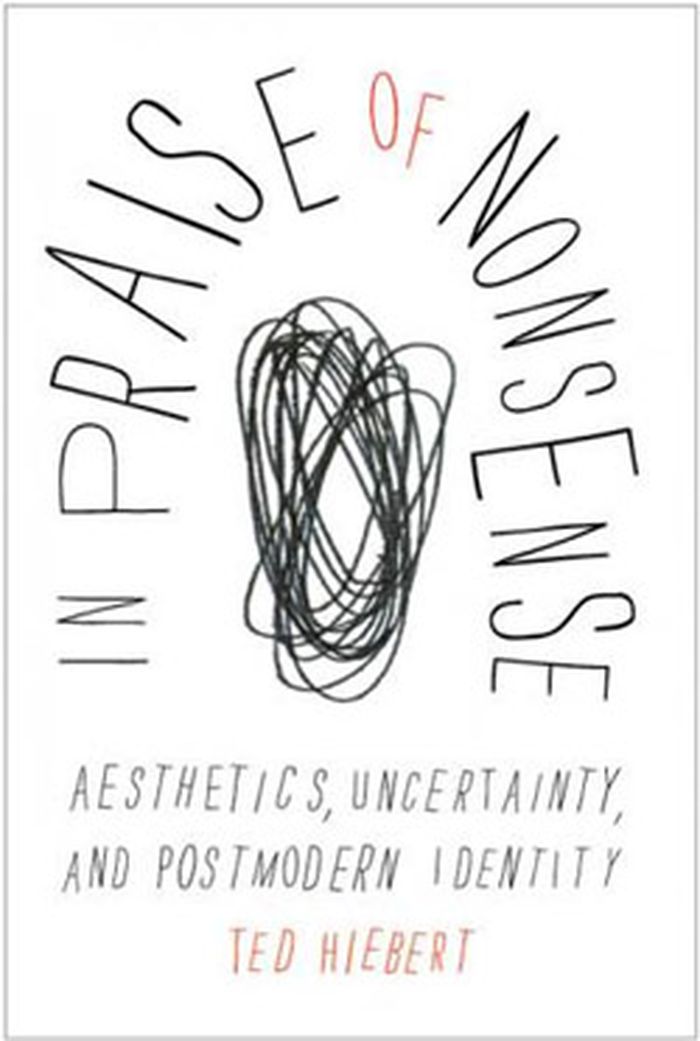
What is truth in the postmodern age? The artistic generation of the twentieth century has grown up immersed in the delirious imagination of postmodern thought, which insists upon the ultimate uncertainty of meaning and that there is no self-evident truth. In Praise of Nonsense explores the possibilities and parameters of a postmodern imagination freed from the philosophical responsibilities of fiction, fact, and replication of lived experience. Mobilizing scholars and contemporary artists, this study examines postmodern thinking through the lenses of identity and visual culture. It focuses on theories of disappearance, irony, and nonsense, where the pleasures of the imaginary give rise to artistic inspiration. When truth is unhinged, so is falsity, and all artistic thinking is called into question. Ted Hiebert takes on the ambitious project of holding postmodernism accountable for its own conclusions while also considering how those conclusions might still be given philosophical and artistic form.
In praise of nonesense : aesthetics, uncertainty, and postmodern identity
Actions:
Prix:
$34.95
(disponible sur commande)
Résumé:
What is truth in the postmodern age? The artistic generation of the twentieth century has grown up immersed in the delirious imagination of postmodern thought, which insists upon the ultimate uncertainty of meaning and that there is no self-evident truth. In Praise of Nonsense explores the possibilities and parameters of a postmodern imagination freed from the philosophical responsibilities of fiction, fact, and replication of lived experience. Mobilizing scholars and contemporary artists, this study examines postmodern thinking through the lenses of identity and visual culture. It focuses on theories of disappearance, irony, and nonsense, where the pleasures of the imaginary give rise to artistic inspiration. When truth is unhinged, so is falsity, and all artistic thinking is called into question. Ted Hiebert takes on the ambitious project of holding postmodernism accountable for its own conclusions while also considering how those conclusions might still be given philosophical and artistic form.
Classification:
livres
livres
Publication:
avril 2012
avril 2012
Sujet:
Théorie/ philosophie
Théorie/ philosophie
Classification:
livres
livres

Actions:
Prix:
$50.00
(disponible sur commande)
Résumé:
Infra, Richard Mosse’s first book, offers a radical rethinking of how to depict a conflict as complex and intractable as that of the ongoing war in the Democratic Republic of Congo. Mosse photographs both the rich topography, inscribed with the traces of conflicting interests, as well as rebel groups of constantly shifting allegiances at war with the Congolese national(...)
$50.00
(disponible sur commande)
Résumé:
Infra, Richard Mosse’s first book, offers a radical rethinking of how to depict a conflict as complex and intractable as that of the ongoing war in the Democratic Republic of Congo. Mosse photographs both the rich topography, inscribed with the traces of conflicting interests, as well as rebel groups of constantly shifting allegiances at war with the Congolese national(...)
Titre:
Infra: photographs by Richard Mosse
Actions:
Prix:
$50.00
(disponible sur commande)
Résumé:
Infra, Richard Mosse’s first book, offers a radical rethinking of how to depict a conflict as complex and intractable as that of the ongoing war in the Democratic Republic of Congo. Mosse photographs both the rich topography, inscribed with the traces of conflicting interests, as well as rebel groups of constantly shifting allegiances at war with the Congolese national army (itself a patchwork of recently integrated warlords and their militias). For centuries, the Congo has repeatedly compelled and defied the western imagination. Mosse brings to this subject the use of a discontinued aerial surveillance film, a type of color infrared film called Kodak Aerochrome. The film, originally developed for military reconnaissance, registers an invisible spectrum of infrared light, rendering the green landscape in vivid hues of lavender, crimson and hot pink. The results offer a fevered inflation of the traditional reportage document, underlining the growing tension between art, fiction and photojournalism.
Infra: photographs by Richard Mosse
Actions:
Prix:
$50.00
(disponible sur commande)
Résumé:
Infra, Richard Mosse’s first book, offers a radical rethinking of how to depict a conflict as complex and intractable as that of the ongoing war in the Democratic Republic of Congo. Mosse photographs both the rich topography, inscribed with the traces of conflicting interests, as well as rebel groups of constantly shifting allegiances at war with the Congolese national army (itself a patchwork of recently integrated warlords and their militias). For centuries, the Congo has repeatedly compelled and defied the western imagination. Mosse brings to this subject the use of a discontinued aerial surveillance film, a type of color infrared film called Kodak Aerochrome. The film, originally developed for military reconnaissance, registers an invisible spectrum of infrared light, rendering the green landscape in vivid hues of lavender, crimson and hot pink. The results offer a fevered inflation of the traditional reportage document, underlining the growing tension between art, fiction and photojournalism.
Classification:
livres
livres
Publication:
février 2012
février 2012
Sujet:
Monographies photo
Monographies photo
Classification:
livres
livres
Actions:
Prix:
$35.00
(disponible en magasin)
Résumé:
The work of the recently deceased Bay-area photographer, Henry Wessel, is renowned for its fragmentary and compelling nature, each image urging imaginative leaps towards the fatalism and moral ambiguity of noir film and fiction. Every Wessel photograph is a gateway to a wild array of extraordinary storylines. This project, 'A Dark Thread', takes this semblance of an(...)
$35.00
(disponible en magasin)
Résumé:
The work of the recently deceased Bay-area photographer, Henry Wessel, is renowned for its fragmentary and compelling nature, each image urging imaginative leaps towards the fatalism and moral ambiguity of noir film and fiction. Every Wessel photograph is a gateway to a wild array of extraordinary storylines. This project, 'A Dark Thread', takes this semblance of an(...)
Titre:
Henry Wessel: A dark thread (français)
Actions:
Prix:
$35.00
(disponible en magasin)
Résumé:
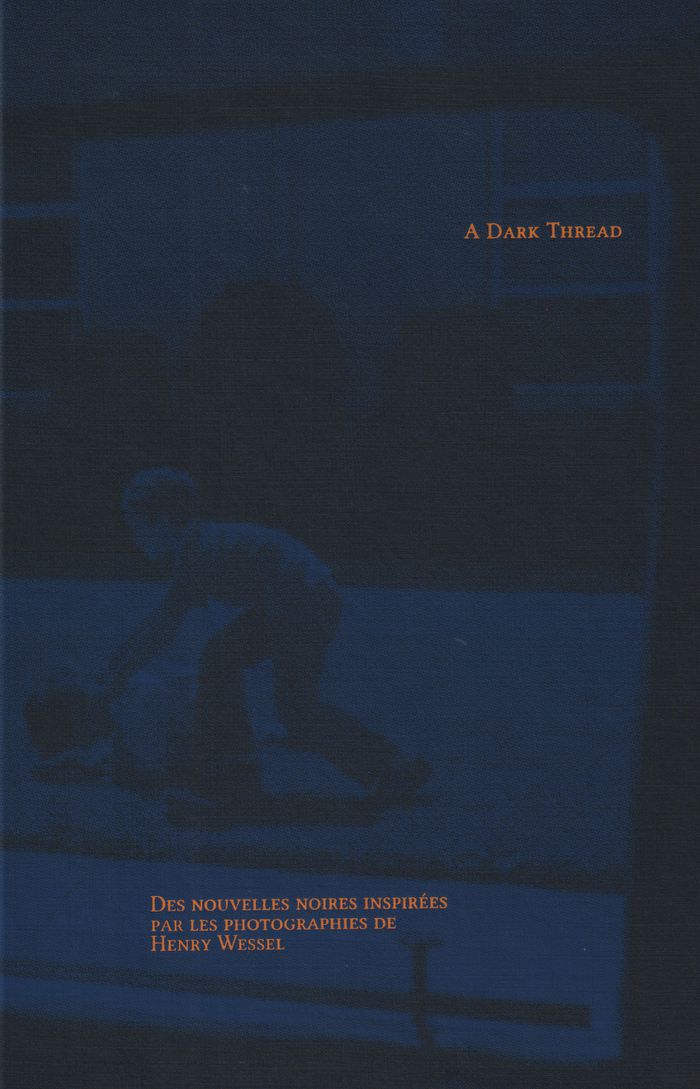
The work of the recently deceased Bay-area photographer, Henry Wessel, is renowned for its fragmentary and compelling nature, each image urging imaginative leaps towards the fatalism and moral ambiguity of noir film and fiction. Every Wessel photograph is a gateway to a wild array of extraordinary storylines. This project, 'A Dark Thread', takes this semblance of an idea further by commissioning over a dozen renowned noir writers to produce a short story in response to one or more of Wessel’s black and white photographs. This first version of the project brings together French translations of stories by Art Taylor, Ivy Pochoda, and Alexander MacLeod, together with the photographs that inspired them. Straddling the space between literary publishing and photobook, this slim volume offers a new and original means of understanding Henry Wessel’s photography and accompanies a retrospective of his work at the Maison de la Photograhie in Paris (June 2019).
Henry Wessel: A dark thread (français)
Actions:
Prix:
$35.00
(disponible en magasin)
Résumé:
The work of the recently deceased Bay-area photographer, Henry Wessel, is renowned for its fragmentary and compelling nature, each image urging imaginative leaps towards the fatalism and moral ambiguity of noir film and fiction. Every Wessel photograph is a gateway to a wild array of extraordinary storylines. This project, 'A Dark Thread', takes this semblance of an idea further by commissioning over a dozen renowned noir writers to produce a short story in response to one or more of Wessel’s black and white photographs. This first version of the project brings together French translations of stories by Art Taylor, Ivy Pochoda, and Alexander MacLeod, together with the photographs that inspired them. Straddling the space between literary publishing and photobook, this slim volume offers a new and original means of understanding Henry Wessel’s photography and accompanies a retrospective of his work at the Maison de la Photograhie in Paris (June 2019).
Classification:
livres
livres
Publication:
juin 2019
juin 2019
Sujet:
Monographies photo
Monographies photo
Classification:
livres
livres
Titre:
The reservoir
The reservoir
Actions:
Prix:
$30.00
(disponible sur commande)
Résumé:
''What does it mean to build a life in common at the end of the world? The crises in which we find ourselves living – constant, and newly surprising – require us to be present for each other in all kinds of ways. And yet the system in which we live wants to keep us distracted, plugged-in, doom-scrolling, and separate. Woodbine, a physical space in Ridgewood, Queens from(...)
$30.00
(disponible sur commande)
Résumé:
''What does it mean to build a life in common at the end of the world? The crises in which we find ourselves living – constant, and newly surprising – require us to be present for each other in all kinds of ways. And yet the system in which we live wants to keep us distracted, plugged-in, doom-scrolling, and separate. Woodbine, a physical space in Ridgewood, Queens from(...)
Titre:
The reservoir
Actions:
Prix:
$30.00
(disponible sur commande)
Résumé:
''What does it mean to build a life in common at the end of the world? The crises in which we find ourselves living – constant, and newly surprising – require us to be present for each other in all kinds of ways. And yet the system in which we live wants to keep us distracted, plugged-in, doom-scrolling, and separate. Woodbine, a physical space in Ridgewood, Queens from which this publication was born, was founded, in part, as a means to create that presence... '' ''The reservoir'' is a new journal from Woodbine, an experimental hub for developing the practices, skills, and tools needed to build autonomy. ''The reservoir'' features new and previously unavailable texts by Silvia Federici, Fred Moten, Franco “Bifo” Berardi, Ben Morea, and P.M., as well as fiction, poetry, interviews, photography, essays, illustrations, and archival material from more than 20 contributors, with design by Kevin McCaughey.
The reservoir
Actions:
Prix:
$30.00
(disponible sur commande)
Résumé:
''What does it mean to build a life in common at the end of the world? The crises in which we find ourselves living – constant, and newly surprising – require us to be present for each other in all kinds of ways. And yet the system in which we live wants to keep us distracted, plugged-in, doom-scrolling, and separate. Woodbine, a physical space in Ridgewood, Queens from which this publication was born, was founded, in part, as a means to create that presence... '' ''The reservoir'' is a new journal from Woodbine, an experimental hub for developing the practices, skills, and tools needed to build autonomy. ''The reservoir'' features new and previously unavailable texts by Silvia Federici, Fred Moten, Franco “Bifo” Berardi, Ben Morea, and P.M., as well as fiction, poetry, interviews, photography, essays, illustrations, and archival material from more than 20 contributors, with design by Kevin McCaughey.
Classification:
livres
livres
Publication:
décembre 2022
décembre 2022
Sujet:
Social
Social
Classification:
livres
livres
Titre:
Utopies et utopistes
Utopies et utopistes
Actions:
Prix:
$15.50
(disponible sur commande)
Résumé:
C’est avec la publication de « L’Utopie » de Thomas More en 1516 que le mot se répand et que naît un genre littéraire associant critique sociale et description d’une « société heureuse ». L’utopie n’est pas une anticipation, mais un présent qui mise sur le bonheur, l’équité, l’abondance et le respect de chacun. Thierry Paquot explore diverses utopies écrites ou(...)
$15.50
(disponible sur commande)
Résumé:
C’est avec la publication de « L’Utopie » de Thomas More en 1516 que le mot se répand et que naît un genre littéraire associant critique sociale et description d’une « société heureuse ». L’utopie n’est pas une anticipation, mais un présent qui mise sur le bonheur, l’équité, l’abondance et le respect de chacun. Thierry Paquot explore diverses utopies écrites ou(...)
Titre:
Utopies et utopistes
Actions:
Prix:
$15.50
(disponible sur commande)
Résumé:
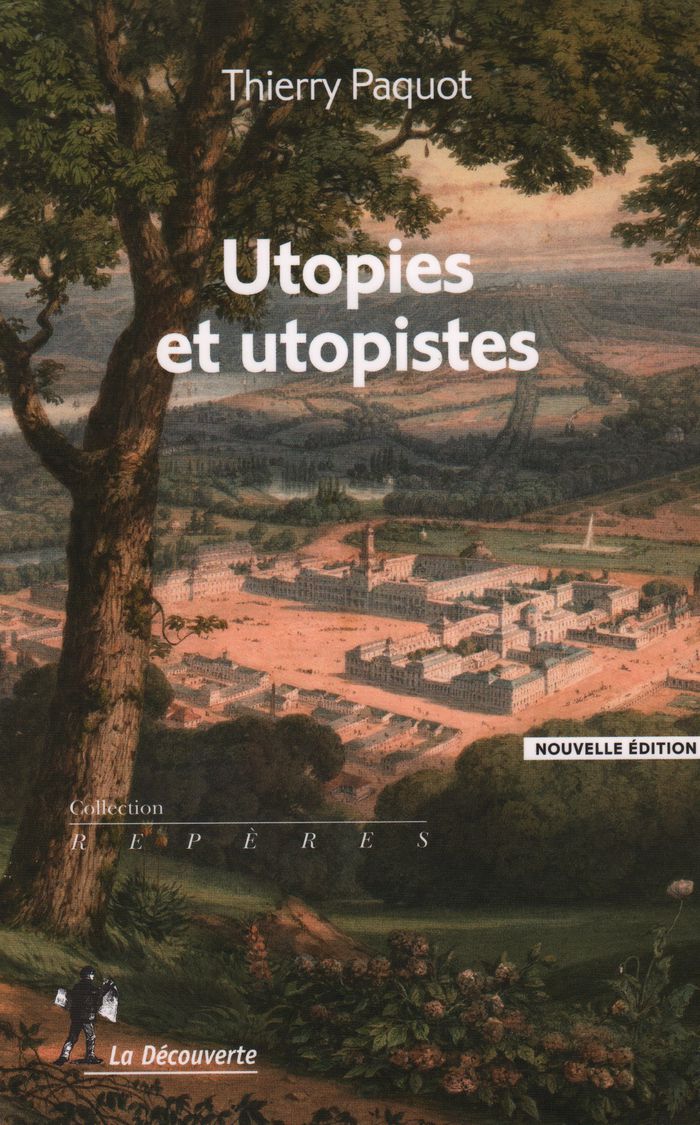
C’est avec la publication de « L’Utopie » de Thomas More en 1516 que le mot se répand et que naît un genre littéraire associant critique sociale et description d’une « société heureuse ». L’utopie n’est pas une anticipation, mais un présent qui mise sur le bonheur, l’équité, l’abondance et le respect de chacun. Thierry Paquot explore diverses utopies écrites ou expérimentées qui se sont succédées depuis le XVIe siècle, en privilégiant certains thèmes : le travail et les loisirs, l’éducation, la famille et les relations amoureuses, la ville et l’architecture. L’utopie s’enrichit au XIXe siècle de l’uchronie, puis de la science-fiction, pour proposer de nouvelles alternatives à la « société de consommation ». L’utopie contient le pire et le meilleur, elle se révèle parfois autoritaire, totalitaire, culpabilisatrice, triste et uniformisante, tout comme elle peut favoriser le déploiement des désirs, démultiplier les plaisirs, répondre joyeusement aux attentes de ses membres.
Utopies et utopistes
Actions:
Prix:
$15.50
(disponible sur commande)
Résumé:
C’est avec la publication de « L’Utopie » de Thomas More en 1516 que le mot se répand et que naît un genre littéraire associant critique sociale et description d’une « société heureuse ». L’utopie n’est pas une anticipation, mais un présent qui mise sur le bonheur, l’équité, l’abondance et le respect de chacun. Thierry Paquot explore diverses utopies écrites ou expérimentées qui se sont succédées depuis le XVIe siècle, en privilégiant certains thèmes : le travail et les loisirs, l’éducation, la famille et les relations amoureuses, la ville et l’architecture. L’utopie s’enrichit au XIXe siècle de l’uchronie, puis de la science-fiction, pour proposer de nouvelles alternatives à la « société de consommation ». L’utopie contient le pire et le meilleur, elle se révèle parfois autoritaire, totalitaire, culpabilisatrice, triste et uniformisante, tout comme elle peut favoriser le déploiement des désirs, démultiplier les plaisirs, répondre joyeusement aux attentes de ses membres.
Classification:
livres
livres
Publication:
mars 2018
mars 2018
Sujet:
Théorie de l’urbanisme
Théorie de l’urbanisme
Classification:
livres
livres
Actions:
Prix:
$56.95
(disponible sur commande)
Résumé:
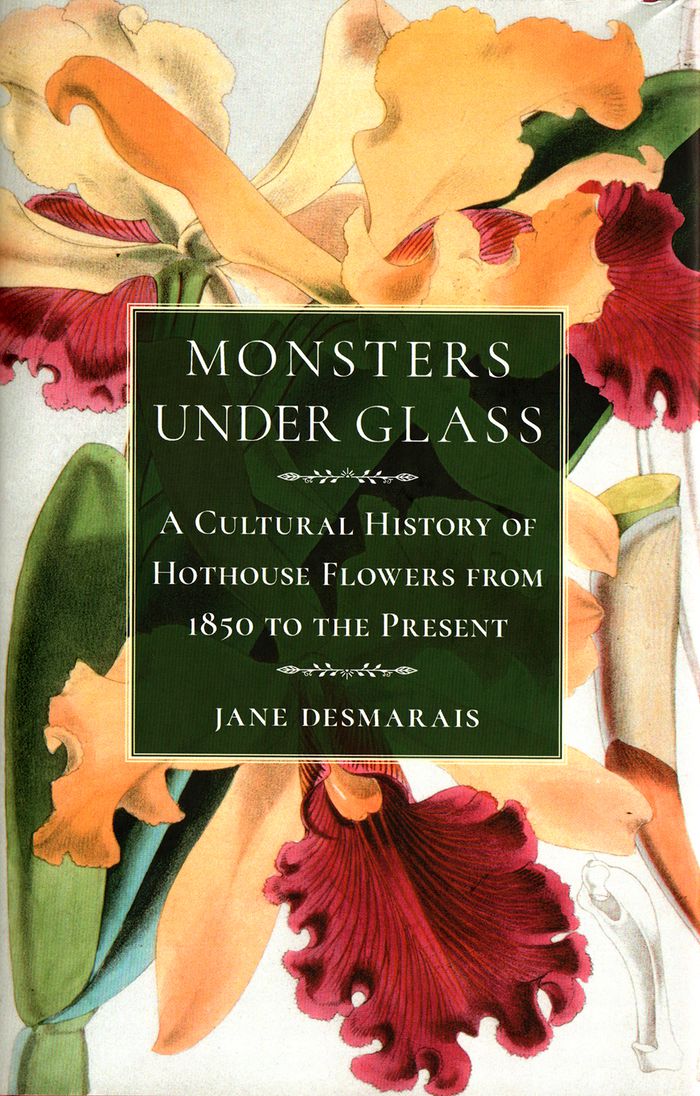
"Monsters under Glass" explores our enduring fascination with hothouses and exotic blooms, from their rise in ancient times, through the Victorian vogue for plant collecting, to the vegetable monsters of twentieth-century science fiction and the movies, comics, and video games of the present day. Our interest in hothouses can be traced back to the Roman emperor Tiberius,(...)
$56.95
(disponible sur commande)
Résumé:
"Monsters under Glass" explores our enduring fascination with hothouses and exotic blooms, from their rise in ancient times, through the Victorian vogue for plant collecting, to the vegetable monsters of twentieth-century science fiction and the movies, comics, and video games of the present day. Our interest in hothouses can be traced back to the Roman emperor Tiberius,(...)
Titre:
Monsters under glass: a cultural history of hothouse flowers from 1850 to the present
Actions:
Prix:
$56.95
(disponible sur commande)
Résumé:
"Monsters under Glass" explores our enduring fascination with hothouses and exotic blooms, from their rise in ancient times, through the Victorian vogue for plant collecting, to the vegetable monsters of twentieth-century science fiction and the movies, comics, and video games of the present day. Our interest in hothouses can be traced back to the Roman emperor Tiberius, but it was only in the early nineteenth century that a boom in exotic plant collecting and new glasshouse technologies stimulated the imagination of novelists, poets, and artists, and the hothouse entered the creative language in a highly charged way. Decadent writers in England and Europe—including Charles Baudelaire and Oscar Wilde—transformed the hothouse from a functional object to a powerful metaphor of metropolitan life, sexuality, and being replete with a dark underside of decay and death; and of consciousness itself, nurtured and dissected under glass.
Monsters under glass: a cultural history of hothouse flowers from 1850 to the present
Actions:
Prix:
$56.95
(disponible sur commande)
Résumé:
"Monsters under Glass" explores our enduring fascination with hothouses and exotic blooms, from their rise in ancient times, through the Victorian vogue for plant collecting, to the vegetable monsters of twentieth-century science fiction and the movies, comics, and video games of the present day. Our interest in hothouses can be traced back to the Roman emperor Tiberius, but it was only in the early nineteenth century that a boom in exotic plant collecting and new glasshouse technologies stimulated the imagination of novelists, poets, and artists, and the hothouse entered the creative language in a highly charged way. Decadent writers in England and Europe—including Charles Baudelaire and Oscar Wilde—transformed the hothouse from a functional object to a powerful metaphor of metropolitan life, sexuality, and being replete with a dark underside of decay and death; and of consciousness itself, nurtured and dissected under glass.
Classification:
livres
livres
Publication:
août 2018
août 2018
Sujet:
Théorie du paysage
Théorie du paysage
Classification:
livres
livres
Titre:
Loving Frank
Loving Frank
Actions:
Prix:
$17.00
(disponible sur commande)
Résumé:
I have been standing on the side of life, watching it float by. I want to swim in the river. I want to feel the current So writes Mamah Borthwick Cheney in her diary as she struggles to justify her clandestine love affair with Frank Lloyd Wright. Four years earlier, in 1903, Mamah and her husband, Edwin, had commissioned the renowned architect to design a new home for(...)
$17.00
(disponible sur commande)
Résumé:
I have been standing on the side of life, watching it float by. I want to swim in the river. I want to feel the current So writes Mamah Borthwick Cheney in her diary as she struggles to justify her clandestine love affair with Frank Lloyd Wright. Four years earlier, in 1903, Mamah and her husband, Edwin, had commissioned the renowned architect to design a new home for(...)
Titre:
Loving Frank
Actions:
Prix:
$17.00
(disponible sur commande)
Résumé:
I have been standing on the side of life, watching it float by. I want to swim in the river. I want to feel the current So writes Mamah Borthwick Cheney in her diary as she struggles to justify her clandestine love affair with Frank Lloyd Wright. Four years earlier, in 1903, Mamah and her husband, Edwin, had commissioned the renowned architect to design a new home for them. During the construction of the house, a powerful attraction developed between Mamah and Frank, and in time the lovers, each married with children, embarked on a course that would shock Chicago society and forever change their lives. In this novel, fact and fiction blend together brilliantly. While scholars have largely relegated Mamah to a footnote in the life of America’s greatest architect, author Nancy Horan gives full weight to their dramatic love story and illuminates Cheney’s profound influence on Wright.
Loving Frank
Actions:
Prix:
$17.00
(disponible sur commande)
Résumé:
I have been standing on the side of life, watching it float by. I want to swim in the river. I want to feel the current So writes Mamah Borthwick Cheney in her diary as she struggles to justify her clandestine love affair with Frank Lloyd Wright. Four years earlier, in 1903, Mamah and her husband, Edwin, had commissioned the renowned architect to design a new home for them. During the construction of the house, a powerful attraction developed between Mamah and Frank, and in time the lovers, each married with children, embarked on a course that would shock Chicago society and forever change their lives. In this novel, fact and fiction blend together brilliantly. While scholars have largely relegated Mamah to a footnote in the life of America’s greatest architect, author Nancy Horan gives full weight to their dramatic love story and illuminates Cheney’s profound influence on Wright.
Classification:
livres
livres
Publication:
avril 2008
avril 2008
Sujet:
Architecture, monographies
Architecture, monographies
Classification:
livres
livres
Actions:
Prix:
$17.95
(disponible sur commande)
Résumé:
Penseur aussi provocant que controversé, Jean Baudrillard a accordé une interview à artpress en 1985 à l'occasion de la sortie de son livre la Gauche divine dans lequel il développe une critique de la gauche béate,«extatique», qu'est le socialisme arrivé au pouvoir. Un an plus tard paraît America à propos duquel il précise que ses propos ne doivent pas être lus de façon(...)
$17.95
(disponible sur commande)
Résumé:
Penseur aussi provocant que controversé, Jean Baudrillard a accordé une interview à artpress en 1985 à l'occasion de la sortie de son livre la Gauche divine dans lequel il développe une critique de la gauche béate,«extatique», qu'est le socialisme arrivé au pouvoir. Un an plus tard paraît America à propos duquel il précise que ses propos ne doivent pas être lus de façon(...)
Titre:
Les grands entretiens d'artpress: Jean Baudrillard
Actions:
Prix:
$17.95
(disponible sur commande)
Résumé:
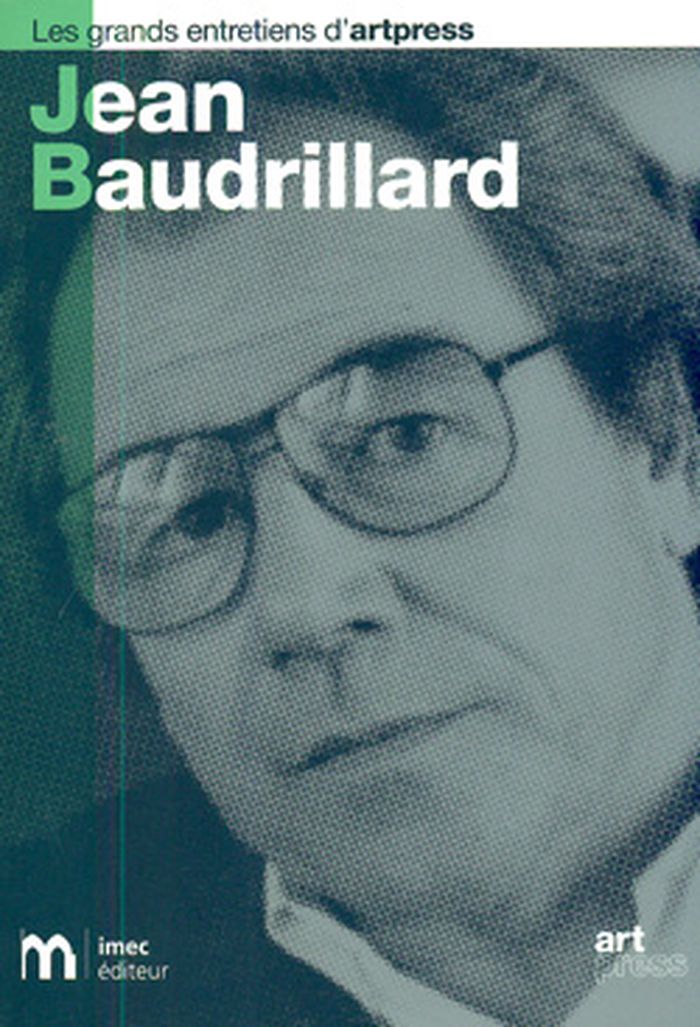
Penseur aussi provocant que controversé, Jean Baudrillard a accordé une interview à artpress en 1985 à l'occasion de la sortie de son livre la Gauche divine dans lequel il développe une critique de la gauche béate,«extatique», qu'est le socialisme arrivé au pouvoir. Un an plus tard paraît America à propos duquel il précise que ses propos ne doivent pas être lus de façon réaliste, l'Amérique étant pour lui une fiction. En 1996, il est à nouveau interrogé par Catherine Francblin suite à la parution dans Libération d'une tribune intitulée «Le complot de l'art» dans laquelle il attaque violemment l'art contemporain. Revenant sur sa critique générale de la culture élaborée de livre en livre, il met en cause la consommation de l'art en tant que signe et la disparition de l'objet dans sa forme concrète derrière les «discours autour ou les regards accumulés» qui créent une aura artificielle.
Les grands entretiens d'artpress: Jean Baudrillard
Actions:
Prix:
$17.95
(disponible sur commande)
Résumé:
Penseur aussi provocant que controversé, Jean Baudrillard a accordé une interview à artpress en 1985 à l'occasion de la sortie de son livre la Gauche divine dans lequel il développe une critique de la gauche béate,«extatique», qu'est le socialisme arrivé au pouvoir. Un an plus tard paraît America à propos duquel il précise que ses propos ne doivent pas être lus de façon réaliste, l'Amérique étant pour lui une fiction. En 1996, il est à nouveau interrogé par Catherine Francblin suite à la parution dans Libération d'une tribune intitulée «Le complot de l'art» dans laquelle il attaque violemment l'art contemporain. Revenant sur sa critique générale de la culture élaborée de livre en livre, il met en cause la consommation de l'art en tant que signe et la disparition de l'objet dans sa forme concrète derrière les «discours autour ou les regards accumulés» qui créent une aura artificielle.
Classification:
livres
livres
Publication:
septembre 2014
septembre 2014
Sujet:
Théorie de l’art
Théorie de l’art


