


9271 Résultats
Classification:
archives
Niveau de description archivistique:
Fonds
archives
Niveau de description archivistique:
Fonds
Titre:
Fonds Bijoy Jain
Fonds Bijoy Jain
Numéro de référence:
AP182
Résumé:
The Bijoy Jain fonds documents eight projects by Bijoy Jain and the firm Studio Mumbai carried out between 2009 and 2015. Represented work includes courtyard houses in Maharashtra, Ahmedabad, and Chennai, live-work complexes in Mumbai and Dehradun, as well as two research-based projects, one for migrant housing and another an investigation of building demolition. The fonds consists of reproduced and original drawings, photographs, models, material samples, and several video recordings.
AP182
Résumé:
The Bijoy Jain fonds documents eight projects by Bijoy Jain and the firm Studio Mumbai carried out between 2009 and 2015. Represented work includes courtyard houses in Maharashtra, Ahmedabad, and Chennai, live-work complexes in Mumbai and Dehradun, as well as two research-based projects, one for migrant housing and another an investigation of building demolition. The fonds consists of reproduced and original drawings, photographs, models, material samples, and several video recordings.
Personnes et institutions:
Date:
2008-2015
2008-2015
Titre:
Fonds Bijoy Jain
Actions:
AP182
Résumé:
The Bijoy Jain fonds documents eight projects by Bijoy Jain and the firm Studio Mumbai carried out between 2009 and 2015. Represented work includes courtyard houses in Maharashtra, Ahmedabad, and Chennai, live-work complexes in Mumbai and Dehradun, as well as two research-based projects, one for migrant housing and another an investigation of building demolition. The fonds consists of reproduced and original drawings, photographs, models, material samples, and several video recordings.
Fonds Bijoy Jain
Actions:
AP182
Résumé:
The Bijoy Jain fonds documents eight projects by Bijoy Jain and the firm Studio Mumbai carried out between 2009 and 2015. Represented work includes courtyard houses in Maharashtra, Ahmedabad, and Chennai, live-work complexes in Mumbai and Dehradun, as well as two research-based projects, one for migrant housing and another an investigation of building demolition. The fonds consists of reproduced and original drawings, photographs, models, material samples, and several video recordings.
Classification:
archives
Niveau de description archivistique:
Fonds
archives
Niveau de description archivistique:
Fonds
Date:
2008-2015
2008-2015
Personnes et institutions:
Classification:
photographies
photographies
Numéro de référence:
ARCH261979
ARCH261979
Personnes et institutions:
Date:
1967?
1967?
Classification:
photographies
photographies
Date:
1967?
1967?
Personnes et institutions:
Classification:
photographies
photographies
Numéro de référence:
ARCH261980
ARCH261980
Personnes et institutions:
Date:
1967?
1967?
Classification:
photographies
photographies
Date:
1967?
1967?
Personnes et institutions:
Classification:
photographies
photographies
Numéro de référence:
ARCH261981
ARCH261981
Personnes et institutions:
Date:
1967?
1967?
Classification:
photographies
photographies
Date:
1967?
1967?
Personnes et institutions:
Classification:
photographies
photographies
Numéro de référence:
ARCH255762
Description:
"The 40 ft. high Union Flag feature in position at the top of the tower of Britain's Pavilion at Expo '67. / The 3-dimensional flag designed by F.H.K. Henrion will be illuminated at might to provide a gay and attractive feature on the Expo skyline. / December 1966."--Description.
ARCH255762
Description:
"The 40 ft. high Union Flag feature in position at the top of the tower of Britain's Pavilion at Expo '67. / The 3-dimensional flag designed by F.H.K. Henrion will be illuminated at might to provide a gay and attractive feature on the Expo skyline. / December 1966."--Description.
Personnes et institutions:
Date:
1966-1967
1966-1967
Titre:
View of the Great Britain Pavilion, Expo 67, Montréal, Québec
Actions:
ARCH255762
Description:
"The 40 ft. high Union Flag feature in position at the top of the tower of Britain's Pavilion at Expo '67. / The 3-dimensional flag designed by F.H.K. Henrion will be illuminated at might to provide a gay and attractive feature on the Expo skyline. / December 1966."--Description.
View of the Great Britain Pavilion, Expo 67, Montréal, Québec
Actions:
ARCH255762
Description:
"The 40 ft. high Union Flag feature in position at the top of the tower of Britain's Pavilion at Expo '67. / The 3-dimensional flag designed by F.H.K. Henrion will be illuminated at might to provide a gay and attractive feature on the Expo skyline. / December 1966."--Description.
Classification:
photographies
photographies
Date:
1966-1967
1966-1967
Personnes et institutions:
Classification:
dessins, documents textuels, photographies
dessins, documents textuels, photographies
Numéro de référence:
AP148.S1.1970.PR01.001.1
Description:
Original folder title: Modena tesi, with "immagini film" noted on the inside. Folder contains various sketches and notes, many of which are numbered, as well as the thesis text Poli and Gherardi submitted to Professor Savioli for their degree at the University of Florence in 1970. A draft of the text is also included. Photographs are also included, which appear to be of a model. The original folder, with a piece of wood along the edge, has been retained. Most of the notes and sketches appear to be in Poli's handwriting, except for a few pages which may be in Gherardi's handwriting.
AP148.S1.1970.PR01.001.1
Description:
Original folder title: Modena tesi, with "immagini film" noted on the inside. Folder contains various sketches and notes, many of which are numbered, as well as the thesis text Poli and Gherardi submitted to Professor Savioli for their degree at the University of Florence in 1970. A draft of the text is also included. Photographs are also included, which appear to be of a model. The original folder, with a piece of wood along the edge, has been retained. Most of the notes and sketches appear to be in Poli's handwriting, except for a few pages which may be in Gherardi's handwriting.
Personnes et institutions:
Date:
1969-1970
1969-1970
Titre:
Degree thesis text and sketches, Competition for urban park, Modena (Folder 1 of 3)
Actions:
AP148.S1.1970.PR01.001.1
Description:
Original folder title: Modena tesi, with "immagini film" noted on the inside. Folder contains various sketches and notes, many of which are numbered, as well as the thesis text Poli and Gherardi submitted to Professor Savioli for their degree at the University of Florence in 1970. A draft of the text is also included. Photographs are also included, which appear to be of a model. The original folder, with a piece of wood along the edge, has been retained. Most of the notes and sketches appear to be in Poli's handwriting, except for a few pages which may be in Gherardi's handwriting.
Degree thesis text and sketches, Competition for urban park, Modena (Folder 1 of 3)
Actions:
AP148.S1.1970.PR01.001.1
Description:
Original folder title: Modena tesi, with "immagini film" noted on the inside. Folder contains various sketches and notes, many of which are numbered, as well as the thesis text Poli and Gherardi submitted to Professor Savioli for their degree at the University of Florence in 1970. A draft of the text is also included. Photographs are also included, which appear to be of a model. The original folder, with a piece of wood along the edge, has been retained. Most of the notes and sketches appear to be in Poli's handwriting, except for a few pages which may be in Gherardi's handwriting.
Classification:
dessins, documents textuels, photographies
dessins, documents textuels, photographies
Date:
1969-1970
1969-1970
Personnes et institutions:
Classification:
archives
Niveau de description archivistique:
Fonds
archives
Niveau de description archivistique:
Fonds
Titre:
Fonds Álvaro Siza
Fonds Álvaro Siza
Numéro de référence:
AP178
Description:
The Álvaro Siza fonds documents the architectural work of Portuguese architect Álvaro Siza. Records in this fonds document Siza’s projects from 1958-2012, including built and unbuilt designs. A collaborative project was established between the Canadian Centre for Architecture (CCA), Fundação de Serralves, and Fundação Calouste Gulbenkian to allow for international research and access to the archive. The archive is shared by the three institutions with each institution holding different projects while collaborating on the descriptive work and increasing the visibility of the archive. The holdings at both the Fundação de Serralves and Fundação Calouste Gulbenkian focus on Siza’s Portuguese projects, while the portion of the archive held by the CCA mainly includes Siza’s projects abroad. All three institutions are committed to describing the archive and making it accessible for scholarly research. The processing of the Siza archive held by the CCA has been divided into four phases to allow for access to parts of the archive while still in process. For the first, second, and third phases, the processing archivist has described the projects from the fifties, sixties, and seventies, as well as projects for the IBA competition in Berlin, urban renewal projects in The Hague from the eighties, urban plans, museums, and individual houses between 1980 and 2000. The processing archivist has also described approximately 203 sketchbooks. Many of these sketchbooks include sketches related to architectural projects which were processed. The complete list of projects processed by the CCA to date can be found in series AP178.S1. The bulk of the Álvaro Siza fonds is arranged in Series AP178.S1, which contains documentation for over 200 of Siza’s architectural projects. Records in this archive are predominantly from 1970 to 2000. Series AP178.S1 mainly contains conceptual, design development, presentation, and working drawings. Also included are photographic materials, models, born digital records, and textual documentation, which include correspondence, project proposals, and notes. The architect’s creative process is captured in 282 sketchbooks arranged in Series AP178.S2. In all there are approximately 60 000 drawings, 3000 folders of textual documentation, 9.46 linear meters of photographs and negatives, 6,545 slides, 250 CD-ROMS, 101 floppy disks, and 371 models that document the architectural activities of Siza and his office. Among the drawings are sketches by Siza on various items, such as napkins, receipts, envelopes, or on the back of working drawings. The fonds contains several types of architectural projects including residential buildings, museums, universities, urban plans, offices, and city restorations. Of particular significance are the sketchbooks, comprised of sketches for architectural projects, Siza’s travels, people, and animals as well as notes and draft letters. The sketchbooks are organized in chronological order, starting in the late 1970’s to the beginning of the 2000’s. Locations, notes, and dates have also been identified on the front of each sketchbook along with the sketchbook number. The sketchbooks provide a unique perspective of Siza’s use of drawing as part of his work process.
AP178
Description:
The Álvaro Siza fonds documents the architectural work of Portuguese architect Álvaro Siza. Records in this fonds document Siza’s projects from 1958-2012, including built and unbuilt designs. A collaborative project was established between the Canadian Centre for Architecture (CCA), Fundação de Serralves, and Fundação Calouste Gulbenkian to allow for international research and access to the archive. The archive is shared by the three institutions with each institution holding different projects while collaborating on the descriptive work and increasing the visibility of the archive. The holdings at both the Fundação de Serralves and Fundação Calouste Gulbenkian focus on Siza’s Portuguese projects, while the portion of the archive held by the CCA mainly includes Siza’s projects abroad. All three institutions are committed to describing the archive and making it accessible for scholarly research. The processing of the Siza archive held by the CCA has been divided into four phases to allow for access to parts of the archive while still in process. For the first, second, and third phases, the processing archivist has described the projects from the fifties, sixties, and seventies, as well as projects for the IBA competition in Berlin, urban renewal projects in The Hague from the eighties, urban plans, museums, and individual houses between 1980 and 2000. The processing archivist has also described approximately 203 sketchbooks. Many of these sketchbooks include sketches related to architectural projects which were processed. The complete list of projects processed by the CCA to date can be found in series AP178.S1. The bulk of the Álvaro Siza fonds is arranged in Series AP178.S1, which contains documentation for over 200 of Siza’s architectural projects. Records in this archive are predominantly from 1970 to 2000. Series AP178.S1 mainly contains conceptual, design development, presentation, and working drawings. Also included are photographic materials, models, born digital records, and textual documentation, which include correspondence, project proposals, and notes. The architect’s creative process is captured in 282 sketchbooks arranged in Series AP178.S2. In all there are approximately 60 000 drawings, 3000 folders of textual documentation, 9.46 linear meters of photographs and negatives, 6,545 slides, 250 CD-ROMS, 101 floppy disks, and 371 models that document the architectural activities of Siza and his office. Among the drawings are sketches by Siza on various items, such as napkins, receipts, envelopes, or on the back of working drawings. The fonds contains several types of architectural projects including residential buildings, museums, universities, urban plans, offices, and city restorations. Of particular significance are the sketchbooks, comprised of sketches for architectural projects, Siza’s travels, people, and animals as well as notes and draft letters. The sketchbooks are organized in chronological order, starting in the late 1970’s to the beginning of the 2000’s. Locations, notes, and dates have also been identified on the front of each sketchbook along with the sketchbook number. The sketchbooks provide a unique perspective of Siza’s use of drawing as part of his work process.
Personnes et institutions:
Date:
1958-2002
1958-2002
Titre:
Fonds Álvaro Siza
Actions:
AP178
Description:
The Álvaro Siza fonds documents the architectural work of Portuguese architect Álvaro Siza. Records in this fonds document Siza’s projects from 1958-2012, including built and unbuilt designs. A collaborative project was established between the Canadian Centre for Architecture (CCA), Fundação de Serralves, and Fundação Calouste Gulbenkian to allow for international research and access to the archive. The archive is shared by the three institutions with each institution holding different projects while collaborating on the descriptive work and increasing the visibility of the archive. The holdings at both the Fundação de Serralves and Fundação Calouste Gulbenkian focus on Siza’s Portuguese projects, while the portion of the archive held by the CCA mainly includes Siza’s projects abroad. All three institutions are committed to describing the archive and making it accessible for scholarly research. The processing of the Siza archive held by the CCA has been divided into four phases to allow for access to parts of the archive while still in process. For the first, second, and third phases, the processing archivist has described the projects from the fifties, sixties, and seventies, as well as projects for the IBA competition in Berlin, urban renewal projects in The Hague from the eighties, urban plans, museums, and individual houses between 1980 and 2000. The processing archivist has also described approximately 203 sketchbooks. Many of these sketchbooks include sketches related to architectural projects which were processed. The complete list of projects processed by the CCA to date can be found in series AP178.S1. The bulk of the Álvaro Siza fonds is arranged in Series AP178.S1, which contains documentation for over 200 of Siza’s architectural projects. Records in this archive are predominantly from 1970 to 2000. Series AP178.S1 mainly contains conceptual, design development, presentation, and working drawings. Also included are photographic materials, models, born digital records, and textual documentation, which include correspondence, project proposals, and notes. The architect’s creative process is captured in 282 sketchbooks arranged in Series AP178.S2. In all there are approximately 60 000 drawings, 3000 folders of textual documentation, 9.46 linear meters of photographs and negatives, 6,545 slides, 250 CD-ROMS, 101 floppy disks, and 371 models that document the architectural activities of Siza and his office. Among the drawings are sketches by Siza on various items, such as napkins, receipts, envelopes, or on the back of working drawings. The fonds contains several types of architectural projects including residential buildings, museums, universities, urban plans, offices, and city restorations. Of particular significance are the sketchbooks, comprised of sketches for architectural projects, Siza’s travels, people, and animals as well as notes and draft letters. The sketchbooks are organized in chronological order, starting in the late 1970’s to the beginning of the 2000’s. Locations, notes, and dates have also been identified on the front of each sketchbook along with the sketchbook number. The sketchbooks provide a unique perspective of Siza’s use of drawing as part of his work process.
Fonds Álvaro Siza
Actions:
AP178
Description:
The Álvaro Siza fonds documents the architectural work of Portuguese architect Álvaro Siza. Records in this fonds document Siza’s projects from 1958-2012, including built and unbuilt designs. A collaborative project was established between the Canadian Centre for Architecture (CCA), Fundação de Serralves, and Fundação Calouste Gulbenkian to allow for international research and access to the archive. The archive is shared by the three institutions with each institution holding different projects while collaborating on the descriptive work and increasing the visibility of the archive. The holdings at both the Fundação de Serralves and Fundação Calouste Gulbenkian focus on Siza’s Portuguese projects, while the portion of the archive held by the CCA mainly includes Siza’s projects abroad. All three institutions are committed to describing the archive and making it accessible for scholarly research. The processing of the Siza archive held by the CCA has been divided into four phases to allow for access to parts of the archive while still in process. For the first, second, and third phases, the processing archivist has described the projects from the fifties, sixties, and seventies, as well as projects for the IBA competition in Berlin, urban renewal projects in The Hague from the eighties, urban plans, museums, and individual houses between 1980 and 2000. The processing archivist has also described approximately 203 sketchbooks. Many of these sketchbooks include sketches related to architectural projects which were processed. The complete list of projects processed by the CCA to date can be found in series AP178.S1. The bulk of the Álvaro Siza fonds is arranged in Series AP178.S1, which contains documentation for over 200 of Siza’s architectural projects. Records in this archive are predominantly from 1970 to 2000. Series AP178.S1 mainly contains conceptual, design development, presentation, and working drawings. Also included are photographic materials, models, born digital records, and textual documentation, which include correspondence, project proposals, and notes. The architect’s creative process is captured in 282 sketchbooks arranged in Series AP178.S2. In all there are approximately 60 000 drawings, 3000 folders of textual documentation, 9.46 linear meters of photographs and negatives, 6,545 slides, 250 CD-ROMS, 101 floppy disks, and 371 models that document the architectural activities of Siza and his office. Among the drawings are sketches by Siza on various items, such as napkins, receipts, envelopes, or on the back of working drawings. The fonds contains several types of architectural projects including residential buildings, museums, universities, urban plans, offices, and city restorations. Of particular significance are the sketchbooks, comprised of sketches for architectural projects, Siza’s travels, people, and animals as well as notes and draft letters. The sketchbooks are organized in chronological order, starting in the late 1970’s to the beginning of the 2000’s. Locations, notes, and dates have also been identified on the front of each sketchbook along with the sketchbook number. The sketchbooks provide a unique perspective of Siza’s use of drawing as part of his work process.
Classification:
archives
Niveau de description archivistique:
Fonds
archives
Niveau de description archivistique:
Fonds
Date:
1958-2002
1958-2002
Personnes et institutions:
Classification:
photographies
photographies
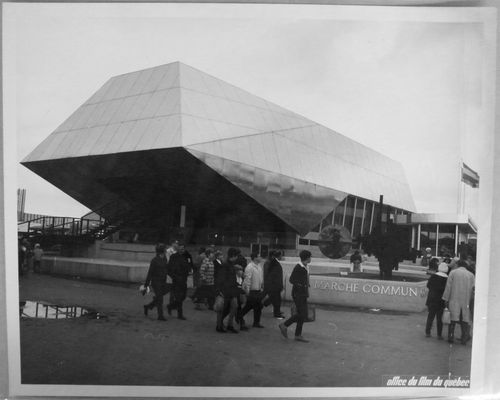
Numéro de référence:
ARCH256269
ARCH256269
Personnes et institutions:
Date:
1967
1967
Classification:
photographies
photographies
Date:
1967
1967
Personnes et institutions:
Classification:
photographies
photographies
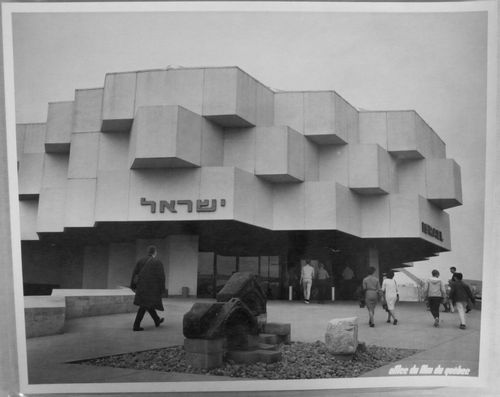
Numéro de référence:
ARCH256298
ARCH256298
Personnes et institutions:
Date:
1967
1967
Classification:
photographies
photographies
Date:
1967
1967
Personnes et institutions:
Classification:
photographies
photographies
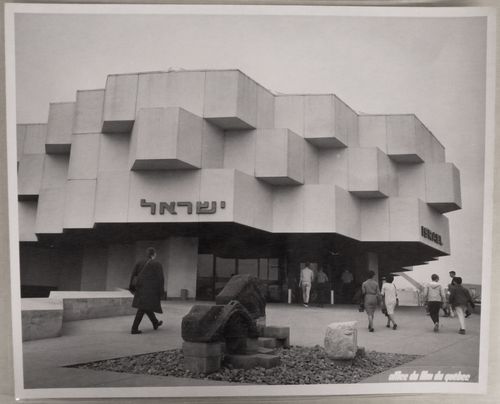
Numéro de référence:
ARCH256309
ARCH256309
Personnes et institutions:
Date:
1967
1967
Classification:
photographies
photographies
Date:
1967
1967
Personnes et institutions:


