


expositions

Au cours de la Seconde Guerre mondiale, expositions et publications ont joué un rôle de premier plan dans l’effort de guerre. Elles ont été organisées et diffusées partout dans le monde comme des moments de réflexion et de propagande, des productions d’une approche disciplinaire de l’architecture et de l’urbanisme. Le choix des objets exposés découle des recherches de(...)
Vitrines
13 avril 2011 au 18 septembre 2011
Une guerre de papier: Images et mots, 1939-1945
Actions:
Description:
Au cours de la Seconde Guerre mondiale, expositions et publications ont joué un rôle de premier plan dans l’effort de guerre. Elles ont été organisées et diffusées partout dans le monde comme des moments de réflexion et de propagande, des productions d’une approche disciplinaire de l’architecture et de l’urbanisme. Le choix des objets exposés découle des recherches de(...)
expositions
13 avril 2011 au
18 septembre 2011
Vitrines
expositions
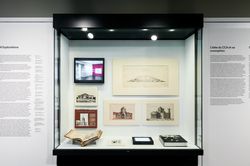
À l’occasion des 90 ans de Phyllis Lambert, cette exposition offre un aperçu autobiographique de l’évolution des idées de la fondatrice du CCA et de son travail architectural, éditorial, curatorial et d’activisme. L’exposition met en lumière l’engagement résolu de Phyllis Lambert envers la ville et la recherche intellectuelle, en présentant des documents de la collection(...)
Vitrines
18 janvier 2017 au 11 juin 2017
Phyllis Lambert : 75 ans au travail
Actions:
Description:
À l’occasion des 90 ans de Phyllis Lambert, cette exposition offre un aperçu autobiographique de l’évolution des idées de la fondatrice du CCA et de son travail architectural, éditorial, curatorial et d’activisme. L’exposition met en lumière l’engagement résolu de Phyllis Lambert envers la ville et la recherche intellectuelle, en présentant des documents de la collection(...)
expositions
18 janvier 2017 au
11 juin 2017
Vitrines
recherche
Subventions de recherche Groupe Banque TD dans la collection du CCA Maria Elisa Navarro Morales (McGill University); Imen Ben Jemia (Université de Montréal); Lori Riva (McGill University); Maureen Mahoney (Carleton University); Nadia Kurd (McGill University) Julie Boivin (University of Toronto); Horea Avram (McGill University); Thomas Strickland (McGill University);(...)
février 2009 au novembre 2009
Programme pour les doctorants 2009
Actions:
Description:
Subventions de recherche Groupe Banque TD dans la collection du CCA Maria Elisa Navarro Morales (McGill University); Imen Ben Jemia (Université de Montréal); Lori Riva (McGill University); Maureen Mahoney (Carleton University); Nadia Kurd (McGill University) Julie Boivin (University of Toronto); Horea Avram (McGill University); Thomas Strickland (McGill University);(...)
recherche
février 2009 au
novembre 2009
événements
La veille du jour de l’An 1987, 4000 tonnes de cendres toxiques sont livrées aux habitants des Gonaïves, une ville portuaire démunie sur la côte occidentale d’Haïti. Dans un contexte politique instable, des fonctionnaires haïtiens ont autorisé l’importation de déchets toxiques des États-Unis, catégorisés comme des «fertilisants». Dans ce cas, la cendre provient de(...)
16 mars 2017
C’est toxique ici, mais pas là-bas
Actions:
Description:
La veille du jour de l’An 1987, 4000 tonnes de cendres toxiques sont livrées aux habitants des Gonaïves, une ville portuaire démunie sur la côte occidentale d’Haïti. Dans un contexte politique instable, des fonctionnaires haïtiens ont autorisé l’importation de déchets toxiques des États-Unis, catégorisés comme des «fertilisants». Dans ce cas, la cendre provient de(...)
événements
16 mars 2017
Série(s)
AP175.S1
Description:
Series 1, Erasmus Bridge, Rotterdam, Netherlands, 1990-1996, documents the design, conception and construction of a third bridge for Rotterdam over the Nieuwe Maas River. The bridge connects the Kop van Zuid neighborhood, located on the south side of the river, to Willemsplein, located on the north side. The bridge is considered as a landmark in Rotterdam’s landscape. The Erasmus Bridge was a formative project in the thinking of UNStudio. It was originally supposed to be designed by architect Maarten Struijs who was the city of Rotterdam principal architect and who is responsible for the concept of the neighboring Willem Bridge. Ben van Berkel came later into the project and was hired as a designing consultant along with architect Wim Quist. Ben van Berkel proposed design was selected allowing him and his firm, which was called Van Berkel & Bos Architectuurbureau at that time, to supervise the conception and construction of the project, from the original concept to piers design to the selection of every item of bridge furniture such as traffic lights, bridge camera and handrails. The bridge was designed to fit the distinct character and industrial past of Rotterdam. The construction of this landmark was one component of a larger redevelopment project, coinciding with other major developments in the city of Rotterdam. The goal was to develop a dense urban intervention on the southern shore of the Nieuwe Maas, in the Kop van Zuid neighborhood. This explains the implication of UNStudio in the planning of urban configuration of the neighborhoods on both sides of the river and their work for Spido, a ferry company operating on the Nieuwe Maas, work spaces and parking garage. This commercial building was designed by the firm and also hosts The Grand Café and Jazz Café. This commercial building is integrated to one of the bridge pillar on the north shore of the river. For the design the firm used AutoCAD to work along with engineers and to conceptualize 3D models. They also used the software to evaluate the circulation flow of drivers, pedestrians and streetcars, measuring its impact on the structure and the urban configuration of the neighborhoods on both sides of the river. The records contain sketches for bridge and pier design, plans and sections for pier, Spido and bridge, architectural and construction details created by engineering companies for every component of the bridge, from drawbridge, to cable car system, to bridge furnitures such as traffic light, handrails and cameras and photographs documenting the research for precedent and the original configuration of the neighborhoods on both sides of the river. The record contains AutoCAD plans, details and sections for both the bridge and Spido parking garage. The records also contain one physical model: a small scale plastic, glass and metal model of the bridge.
1990-1996
Erasmus Bridge, Rotterdam, Netherlands, 1990-1996
Actions:
AP175.S1
Description:
Series 1, Erasmus Bridge, Rotterdam, Netherlands, 1990-1996, documents the design, conception and construction of a third bridge for Rotterdam over the Nieuwe Maas River. The bridge connects the Kop van Zuid neighborhood, located on the south side of the river, to Willemsplein, located on the north side. The bridge is considered as a landmark in Rotterdam’s landscape. The Erasmus Bridge was a formative project in the thinking of UNStudio. It was originally supposed to be designed by architect Maarten Struijs who was the city of Rotterdam principal architect and who is responsible for the concept of the neighboring Willem Bridge. Ben van Berkel came later into the project and was hired as a designing consultant along with architect Wim Quist. Ben van Berkel proposed design was selected allowing him and his firm, which was called Van Berkel & Bos Architectuurbureau at that time, to supervise the conception and construction of the project, from the original concept to piers design to the selection of every item of bridge furniture such as traffic lights, bridge camera and handrails. The bridge was designed to fit the distinct character and industrial past of Rotterdam. The construction of this landmark was one component of a larger redevelopment project, coinciding with other major developments in the city of Rotterdam. The goal was to develop a dense urban intervention on the southern shore of the Nieuwe Maas, in the Kop van Zuid neighborhood. This explains the implication of UNStudio in the planning of urban configuration of the neighborhoods on both sides of the river and their work for Spido, a ferry company operating on the Nieuwe Maas, work spaces and parking garage. This commercial building was designed by the firm and also hosts The Grand Café and Jazz Café. This commercial building is integrated to one of the bridge pillar on the north shore of the river. For the design the firm used AutoCAD to work along with engineers and to conceptualize 3D models. They also used the software to evaluate the circulation flow of drivers, pedestrians and streetcars, measuring its impact on the structure and the urban configuration of the neighborhoods on both sides of the river. The records contain sketches for bridge and pier design, plans and sections for pier, Spido and bridge, architectural and construction details created by engineering companies for every component of the bridge, from drawbridge, to cable car system, to bridge furnitures such as traffic light, handrails and cameras and photographs documenting the research for precedent and the original configuration of the neighborhoods on both sides of the river. The record contains AutoCAD plans, details and sections for both the bridge and Spido parking garage. The records also contain one physical model: a small scale plastic, glass and metal model of the bridge.
Series
1990-1996
recherche
Subventions de recherche Groupe Banque TD dans la collection du CCA : Esther Choi (Princeton University, Graduate School of Architecture); Meredith Gaglio (Columbia University, Graduate School of Architecture, Planning and Preservation); Lori Gibbs (University of Pennsylvania, PennDesign); Matthew Gin (Harvard University, Graduate School of Design); Elizabeth Knazook(...)
juin 2015 au septembre 2015
Programme pour les doctorants 2015
Actions:
Description:
Subventions de recherche Groupe Banque TD dans la collection du CCA : Esther Choi (Princeton University, Graduate School of Architecture); Meredith Gaglio (Columbia University, Graduate School of Architecture, Planning and Preservation); Lori Gibbs (University of Pennsylvania, PennDesign); Matthew Gin (Harvard University, Graduate School of Design); Elizabeth Knazook(...)
recherche
juin 2015 au
septembre 2015
pages web
Avec le programme de stages curatoriaux, le Centre Canadien d’Architecture souhaite partager son expertise avec des étudiants ou des jeunes diplômés dans les domaines de l’architecture, du design, des arts et des sciences humaines intéressés à explorer les aspects éditoriaux et curatoriaux de l’architecture. Les candidats sélectionnés seront invités à se familiariser avec l’approche curatoriale du CCA - en particulier ses activités liées à sa Collection, ses expositions, ses projets éditoriaux et ses programmes de recherche - au cours d’un stage de neuf mois à Montréal.
Programme de stages curatoriaux
Actions:
Résumé:
Avec le programme de stages curatoriaux, le Centre Canadien d’Architecture souhaite partager son expertise avec des étudiants ou des jeunes diplômés dans les domaines de l’architecture, du design, des arts et des sciences humaines intéressés à explorer les aspects éditoriaux et curatoriaux de l’architecture. Les candidats sélectionnés seront invités à se familiariser avec l’approche curatoriale du CCA - en particulier ses activités liées à sa Collection, ses expositions, ses projets éditoriaux et ses programmes de recherche - au cours d’un stage de neuf mois à Montréal.
pages web
événements
Histoires de l’environnement
Pour débuter « Architecture et/pour l’environnement », le troisième Projet de Recherche Multidisciplinaire du CCA financé par la Andrew W. Mellon Foundation, Daniel Abramson et Imre Szeman présenteront deux concepts clés pour reconcevoir l’environnement dans l’histoire de l’architecture. Daniel Abramson, historien de l’architecture, discutera de « l’obsolescence » comme(...)
Théâtre Paul-Demarais
15 décembre 2016, 18h
Histoires de l’environnement
Actions:
Description:
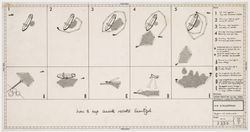
Pour débuter « Architecture et/pour l’environnement », le troisième Projet de Recherche Multidisciplinaire du CCA financé par la Andrew W. Mellon Foundation, Daniel Abramson et Imre Szeman présenteront deux concepts clés pour reconcevoir l’environnement dans l’histoire de l’architecture. Daniel Abramson, historien de l’architecture, discutera de « l’obsolescence » comme(...)
événements
15 décembre 2016
18h
Théâtre Paul-Demarais
événements
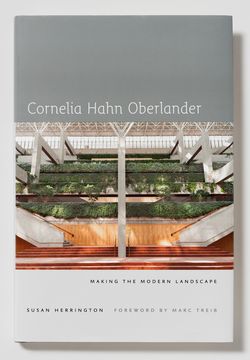
Première biographie de l’une des architectes de paysage les plus influentes du XXe siècle, Cornelia Hahn Oberlander: Making the Modern Landscape s’appuie sur des recherches archivistiques, des analyses de sites et de nombreuses entrevues avec Cornelia Oberlander et ses collaborateurs. L’auteure Susan Herrington rencontre Oberlander pour une conversation sur son œuvre et(...)
14 septembre 2014 , 15h
Cornelia Oberlander et Susan Herrington veulent vous parler
Actions:
Description:
Première biographie de l’une des architectes de paysage les plus influentes du XXe siècle, Cornelia Hahn Oberlander: Making the Modern Landscape s’appuie sur des recherches archivistiques, des analyses de sites et de nombreuses entrevues avec Cornelia Oberlander et ses collaborateurs. L’auteure Susan Herrington rencontre Oberlander pour une conversation sur son œuvre et(...)
événements
14 septembre 2014
15h
événements
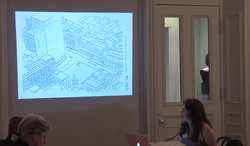
Michela Rosso, allocataire d’une bourse d’appui en 2013, présente sa recherche dans les archives de Peter Carter sur le schéma du manoir carré (1962-1985) et montre les différentes facettes de la controverse entourant la tour non construite de Mies van der Rohe, au cœur de Londres. Michela Rosso a obtenu un doctorat de l’École polytechnique de Turin, où elle est depuis(...)
Maison Shaughnessy
30 mai 2013, 18h
« Friends and Enemies of Mies’s Mansion House Square »
Actions:
Description:
Michela Rosso, allocataire d’une bourse d’appui en 2013, présente sa recherche dans les archives de Peter Carter sur le schéma du manoir carré (1962-1985) et montre les différentes facettes de la controverse entourant la tour non construite de Mies van der Rohe, au cœur de Londres. Michela Rosso a obtenu un doctorat de l’École polytechnique de Turin, où elle est depuis(...)
événements
30 mai 2013
18h
Maison Shaughnessy


