


1615 Résultats
Classification:
livres
livres
Actions:
Prix:
$31.50
(disponible sur commande)
Résumé:
In this long-awaited work, Dalibor Vesely proposes an alternative to the narrow vision of contemporary architecture as a discipline that can be treated as an instrument or commodity. In doing so, he offers an account of the ontological and cultural foundations of modern architecture and, consequently, of the nature and cultural role of architecture through history.(...)
$31.50
(disponible sur commande)
Résumé:
In this long-awaited work, Dalibor Vesely proposes an alternative to the narrow vision of contemporary architecture as a discipline that can be treated as an instrument or commodity. In doing so, he offers an account of the ontological and cultural foundations of modern architecture and, consequently, of the nature and cultural role of architecture through history.(...)
Sujet:
Théorie de l’architecture
Théorie de l’architecture
Publication:
octobre 2006, Cambridge (MA), London
octobre 2006, Cambridge (MA), London
Titre:
Architecture in the age of divided representation : the question of creativity in the shadow of production
Actions:
Prix:
$31.50
(disponible sur commande)
Résumé:
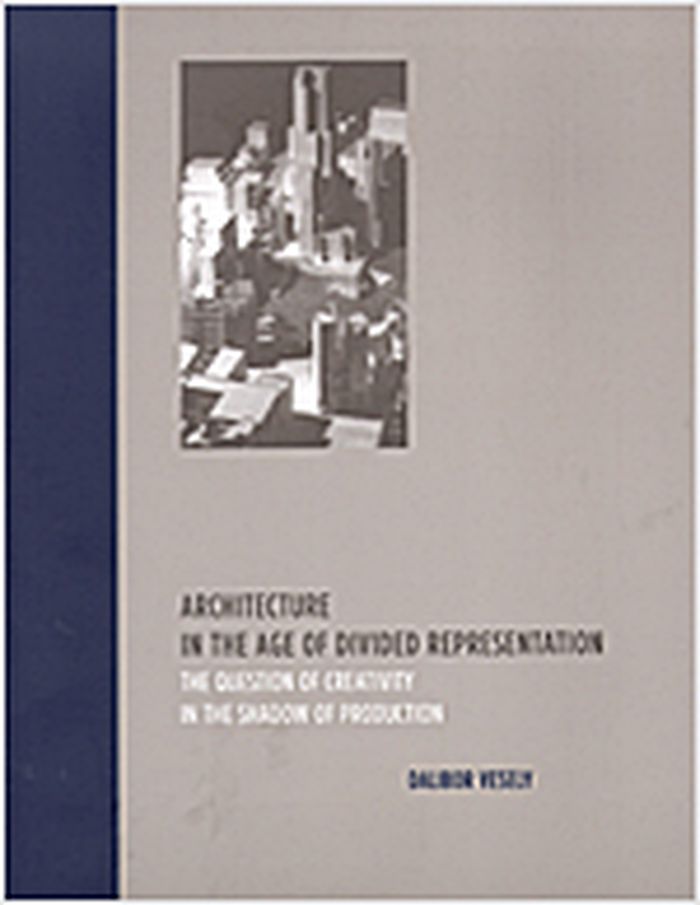
In this long-awaited work, Dalibor Vesely proposes an alternative to the narrow vision of contemporary architecture as a discipline that can be treated as an instrument or commodity. In doing so, he offers an account of the ontological and cultural foundations of modern architecture and, consequently, of the nature and cultural role of architecture through history. Vesely's argument, structured as a critical dialogue, discovers the first plausible anticipation of modernity in the formation of Renaissance perspective. Understanding this notion of perspective against the background of the medieval philosophy of light, he argues, leads to an understanding of architectural space as formed by typical human situations and by light before it is structured geometrically. The central part of the book addresses the question of divided representation - the tension between the instrumental and the communicative roles of architecture - in the period of the baroque, when architectural thinking was seriously challenged by the emergence of modern science. Vesely argues that to resolve the dilemma of modernity - reconciling the inventions and achievements of modern technology with the human condition and the natural world - we can turn to architecture and its latent capacity to reconcile different levels of reality, its ability to relate abstract ideas and conceptual structures to the concrete situations of everyday life. Vesely sees the restoration of this communicative role of architecture as the key to the restoration of architecture as the topological and corporeal foundation of culture; what the book is to our literacy, he argues, architecture is to culture as a whole. He concludes by proposing a new poetics of architecture that will serve as a framework for the restoration of the humanistic role of architecture in the age of technology.
Architecture in the age of divided representation : the question of creativity in the shadow of production
Actions:
Prix:
$31.50
(disponible sur commande)
Résumé:
In this long-awaited work, Dalibor Vesely proposes an alternative to the narrow vision of contemporary architecture as a discipline that can be treated as an instrument or commodity. In doing so, he offers an account of the ontological and cultural foundations of modern architecture and, consequently, of the nature and cultural role of architecture through history. Vesely's argument, structured as a critical dialogue, discovers the first plausible anticipation of modernity in the formation of Renaissance perspective. Understanding this notion of perspective against the background of the medieval philosophy of light, he argues, leads to an understanding of architectural space as formed by typical human situations and by light before it is structured geometrically. The central part of the book addresses the question of divided representation - the tension between the instrumental and the communicative roles of architecture - in the period of the baroque, when architectural thinking was seriously challenged by the emergence of modern science. Vesely argues that to resolve the dilemma of modernity - reconciling the inventions and achievements of modern technology with the human condition and the natural world - we can turn to architecture and its latent capacity to reconcile different levels of reality, its ability to relate abstract ideas and conceptual structures to the concrete situations of everyday life. Vesely sees the restoration of this communicative role of architecture as the key to the restoration of architecture as the topological and corporeal foundation of culture; what the book is to our literacy, he argues, architecture is to culture as a whole. He concludes by proposing a new poetics of architecture that will serve as a framework for the restoration of the humanistic role of architecture in the age of technology.
Classification:
livres
livres
Publication:
octobre 2006, Cambridge (MA), London
octobre 2006, Cambridge (MA), London
Sujet:
Théorie de l’architecture
Théorie de l’architecture
Classification:
livres
livres
Prix:
$19.95
(disponible sur commande)
Résumé:
Depuis plusieurs années, il ne se passe guère de mois sans qu’un étudiant ou une étudiante ne vienne à la Fabrique pour nous poser des questions sur l’édition indépendante, « engagée » comme ils disent. Ils sont en fin de licence ou en maîtrise, souvent dans la filière « métiers du livre » ou bien en science politique ou en histoire. Le projet de ce livre, c’est d’elles(...)
$19.95
(disponible sur commande)
Résumé:
Depuis plusieurs années, il ne se passe guère de mois sans qu’un étudiant ou une étudiante ne vienne à la Fabrique pour nous poser des questions sur l’édition indépendante, « engagée » comme ils disent. Ils sont en fin de licence ou en maîtrise, souvent dans la filière « métiers du livre » ou bien en science politique ou en histoire. Le projet de ce livre, c’est d’elles(...)
Titre:
Pour aboutir à un livre : la fabrique d’une maison d’édition
Actions:
Prix:
$19.95
(disponible sur commande)
Résumé:
Depuis plusieurs années, il ne se passe guère de mois sans qu’un étudiant ou une étudiante ne vienne à la Fabrique pour nous poser des questions sur l’édition indépendante, « engagée » comme ils disent. Ils sont en fin de licence ou en maîtrise, souvent dans la filière « métiers du livre » ou bien en science politique ou en histoire. Le projet de ce livre, c’est d’elles et eux qu’il vient, de leur intérêt, leur questionnement et leurs doutes.– Comment fonder une maison d’édition à partir de rien – combien d’argent faut-il, dans quel local, avec quel imprimeur, quel banquier, quel distributeur ?– Ensuite, comment s’y prendre pour ébaucher un catalogue, pour le développer, quelle relation avec quels auteurs, quel travail sur les textes ?– Sans négliger les questions matérielles : établir le budget des livres, tenir un plan de trésorerie, un budget annuel… L’éditeur doit marcher sur ses deux jambes, mener de front la partie intellectuelle et la partie matérielle du métier, qui se complètent et se renforcent mutuellement.– Les livres une fois imprimés, il faut les faire connaître – à la fois aux médias, aux libraires, dont le soutien est décisif, et pour finir aux lecteurs, en utilisant les moyens les plus traditionnels (contact direct et par les représentants) et les autres (site internet, newsletters, etc.). Et puis il faut les vendre ! Ce livre est mené sous forme d’un dialogue avec Ernest Moret, étudiant en philosophie qui connaît bien la Fabrique où il a été stagiaire. Cette forme a permis de mêler des notions d’ordre général et des idées et des anecdotes tirées de l’expérience personnelle d’Eric Hazan, dans l’édition d’art puis à la Fabrique. Sans compter les suggestions et critiques issues de l’équipe même de la Fabrique – car ce qui ressort clairement de ce livre, c’est que l’édition est avant tout un travail collectif.
Pour aboutir à un livre : la fabrique d’une maison d’édition
Actions:
Prix:
$19.95
(disponible sur commande)
Résumé:
Depuis plusieurs années, il ne se passe guère de mois sans qu’un étudiant ou une étudiante ne vienne à la Fabrique pour nous poser des questions sur l’édition indépendante, « engagée » comme ils disent. Ils sont en fin de licence ou en maîtrise, souvent dans la filière « métiers du livre » ou bien en science politique ou en histoire. Le projet de ce livre, c’est d’elles et eux qu’il vient, de leur intérêt, leur questionnement et leurs doutes.– Comment fonder une maison d’édition à partir de rien – combien d’argent faut-il, dans quel local, avec quel imprimeur, quel banquier, quel distributeur ?– Ensuite, comment s’y prendre pour ébaucher un catalogue, pour le développer, quelle relation avec quels auteurs, quel travail sur les textes ?– Sans négliger les questions matérielles : établir le budget des livres, tenir un plan de trésorerie, un budget annuel… L’éditeur doit marcher sur ses deux jambes, mener de front la partie intellectuelle et la partie matérielle du métier, qui se complètent et se renforcent mutuellement.– Les livres une fois imprimés, il faut les faire connaître – à la fois aux médias, aux libraires, dont le soutien est décisif, et pour finir aux lecteurs, en utilisant les moyens les plus traditionnels (contact direct et par les représentants) et les autres (site internet, newsletters, etc.). Et puis il faut les vendre ! Ce livre est mené sous forme d’un dialogue avec Ernest Moret, étudiant en philosophie qui connaît bien la Fabrique où il a été stagiaire. Cette forme a permis de mêler des notions d’ordre général et des idées et des anecdotes tirées de l’expérience personnelle d’Eric Hazan, dans l’édition d’art puis à la Fabrique. Sans compter les suggestions et critiques issues de l’équipe même de la Fabrique – car ce qui ressort clairement de ce livre, c’est que l’édition est avant tout un travail collectif.
Classification:
livres
livres
Publication:
octobre 2016
octobre 2016
Classification:
livres
livres
Actions:
Prix:
$39.95
(disponible sur commande)
Résumé:
In "The Geography of Nowhere", James Howard Kunstler declared suburbia "a tragic landscape of cartoon architecture, junked cities, and ravaged countryside" and put himself at the heart of a fierce debate over how we will live in twenty-first century America. Now, Kunstler turns his eye on urban life both in America and across the world. From classical Rome to the(...)
$39.95
(disponible sur commande)
Résumé:
In "The Geography of Nowhere", James Howard Kunstler declared suburbia "a tragic landscape of cartoon architecture, junked cities, and ravaged countryside" and put himself at the heart of a fierce debate over how we will live in twenty-first century America. Now, Kunstler turns his eye on urban life both in America and across the world. From classical Rome to the(...)
Titre:
The city in mind : notes on the urban condition
Actions:
Prix:
$39.95
(disponible sur commande)
Résumé:
In "The Geography of Nowhere", James Howard Kunstler declared suburbia "a tragic landscape of cartoon architecture, junked cities, and ravaged countryside" and put himself at the heart of a fierce debate over how we will live in twenty-first century America. Now, Kunstler turns his eye on urban life both in America and across the world. From classical Rome to the "gigantic hairball" of contemporary Atlanta, he offers a far-reaching discourse on the history and current state of urban life. "The City in Mind" tells the story of urban design and how the architectural makeup of a city directly influences its culture as well as its success. From the ingenious architectural design of Louis-Napoleon's renovation of Paris to the bloody collision of cultures that occurred when Cortés conquered the Aztec capital Tenochtitlan, from the grandiose architectural schemes of Hitler and Albert Speer to the meanings behind the ludicrous spectacle of Las Vegas, Kunstler opens up a new dialogue on the development and effects of urban construction. In his investigations, he discovers American communities in the Sunbelt and Southwest alienated from each other and themselves, Northeastern cities caught between their initial civic construction and our current car-obsessed society, and a disparate Europe with its mix of pre-industrial creativity, and war-marked reminders of the twentieth century. Expanding on ideas first discussed in Jane Jacobs' seminal work, "The Death and Life of Great American Cities", Kunstler looks to Europe to discover what is constant and enduring in cities at their greatest, and at the same time, how a city's design can be directly linked to its decline. In these excursions he finds the reasons that America got lost in its suburban wilderness and locates the pathways in culture that might lead to a civic revival here. Kunstler's examination of these cities is at once a concise history of their urban lives and a detailed criticism of how those histories have either aided or hindered the social and civil progress of the cities' occupants. By turns dramatic and comic, and always authoritative, "The City in Mind", is an exceptional glimpse into the urban condition.
The city in mind : notes on the urban condition
Actions:
Prix:
$39.95
(disponible sur commande)
Résumé:
In "The Geography of Nowhere", James Howard Kunstler declared suburbia "a tragic landscape of cartoon architecture, junked cities, and ravaged countryside" and put himself at the heart of a fierce debate over how we will live in twenty-first century America. Now, Kunstler turns his eye on urban life both in America and across the world. From classical Rome to the "gigantic hairball" of contemporary Atlanta, he offers a far-reaching discourse on the history and current state of urban life. "The City in Mind" tells the story of urban design and how the architectural makeup of a city directly influences its culture as well as its success. From the ingenious architectural design of Louis-Napoleon's renovation of Paris to the bloody collision of cultures that occurred when Cortés conquered the Aztec capital Tenochtitlan, from the grandiose architectural schemes of Hitler and Albert Speer to the meanings behind the ludicrous spectacle of Las Vegas, Kunstler opens up a new dialogue on the development and effects of urban construction. In his investigations, he discovers American communities in the Sunbelt and Southwest alienated from each other and themselves, Northeastern cities caught between their initial civic construction and our current car-obsessed society, and a disparate Europe with its mix of pre-industrial creativity, and war-marked reminders of the twentieth century. Expanding on ideas first discussed in Jane Jacobs' seminal work, "The Death and Life of Great American Cities", Kunstler looks to Europe to discover what is constant and enduring in cities at their greatest, and at the same time, how a city's design can be directly linked to its decline. In these excursions he finds the reasons that America got lost in its suburban wilderness and locates the pathways in culture that might lead to a civic revival here. Kunstler's examination of these cities is at once a concise history of their urban lives and a detailed criticism of how those histories have either aided or hindered the social and civil progress of the cities' occupants. By turns dramatic and comic, and always authoritative, "The City in Mind", is an exceptional glimpse into the urban condition.
Classification:
livres
livres
Publication:
janvier 2002, New York
janvier 2002, New York
Sujet:
Théorie de l’urbanisme
Théorie de l’urbanisme
Classification:
livres
livres
Actions:
Prix:
$69.00
(disponible sur commande)
Résumé:
Gabriel Orozco visited the old guest apartments of Prince and Princess de Broglie (the last private owners of Château de Chaumont-sur-Loire) for but a few moments when his gaze was drawn straight to the torn wallpaper remains—so discreet that they were no longer noticed. These faded impressions, modest vestiges, extremely fragile traces of a past now behind us,(...)
$69.00
(disponible sur commande)
Résumé:
Gabriel Orozco visited the old guest apartments of Prince and Princess de Broglie (the last private owners of Château de Chaumont-sur-Loire) for but a few moments when his gaze was drawn straight to the torn wallpaper remains—so discreet that they were no longer noticed. These faded impressions, modest vestiges, extremely fragile traces of a past now behind us,(...)
Publication:
octobre 2016
octobre 2016
Titre:
Gabriel Orozco: fleurs fantômes
Actions:
Prix:
$69.00
(disponible sur commande)
Résumé:
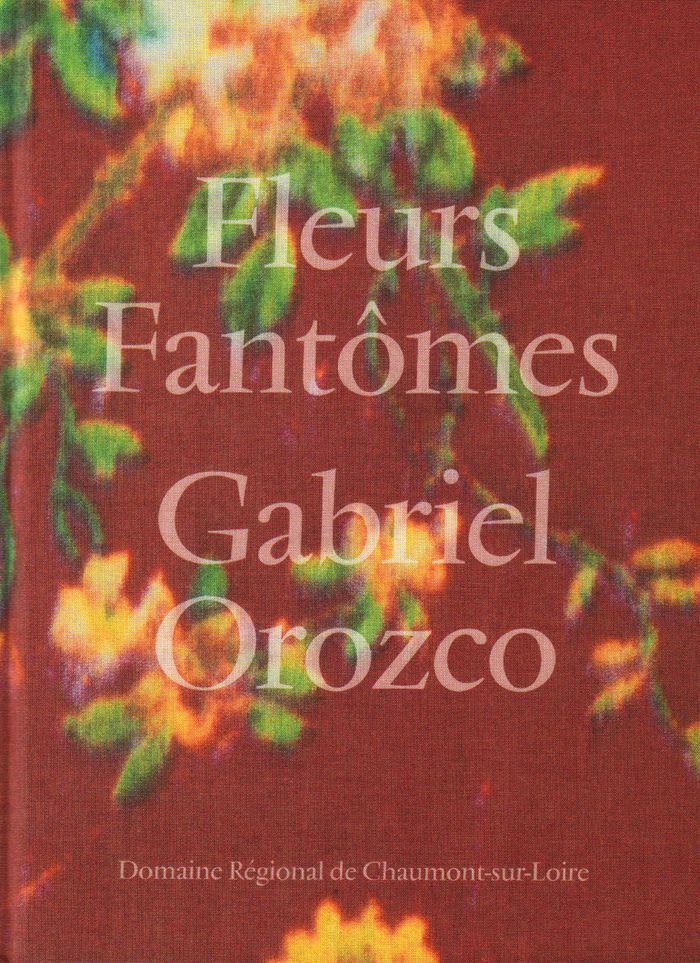
Gabriel Orozco visited the old guest apartments of Prince and Princess de Broglie (the last private owners of Château de Chaumont-sur-Loire) for but a few moments when his gaze was drawn straight to the torn wallpaper remains—so discreet that they were no longer noticed. These faded impressions, modest vestiges, extremely fragile traces of a past now behind us, immediately captured the imagination of this exceptional artist, who had been invited to “take over the château” as part of a special commission for the Centre-Loire Valley region. In his fascination with the remnants of the old tapestries that once graced the walls of these rooms—closed off and forgotten about since 1938—Orozco devoted hours to studying the palimpsest of the floral tapestries, still hanging on these old walls: photographing them over a considerable amount of time whilst listening to the echoes of ages past. For in these very rooms, now consigned to history, kings and queens from all over Europe once spent time and slept—sometimes for just a few hours—at the turn of last century, invited as guests to sumptuous parties and celebrated hunts. The artist, whose work is inspired by the quest for traces, remnants, marks left by men, has chosen an approach that looks back at the history and memory of the château at Chaumont-sur-Loire. In these fragments of old, timeworn, threadbare tapestries, Gabriel Orozco detected traces of these lives now long gone by: a matrix of a subtle meditation on space and time. The works on display in the “guest bedrooms” of the château evoke the details and the damage of the ancient wallpaper, whose elegant floral motifs have been recreated using a unique, time-consuming process of spraying oil onto canvas. The faltering impression mirrors the feeling of unease that grips visitors as they encounter these works and these blemished walls that are now in plain sight. In this way Orozco reveals not just the designs and colors that had until now faded into the background, but also the emotion suspended in the rooms. Through this poetic promenade, along the walls and complex walkways of the west and south wings of two floors of the château, Orozco invites us to partake in a dialogue with the mystery and the memory of a unique environment that is rendered omnipresent.
Gabriel Orozco: fleurs fantômes
Actions:
Prix:
$69.00
(disponible sur commande)
Résumé:
Gabriel Orozco visited the old guest apartments of Prince and Princess de Broglie (the last private owners of Château de Chaumont-sur-Loire) for but a few moments when his gaze was drawn straight to the torn wallpaper remains—so discreet that they were no longer noticed. These faded impressions, modest vestiges, extremely fragile traces of a past now behind us, immediately captured the imagination of this exceptional artist, who had been invited to “take over the château” as part of a special commission for the Centre-Loire Valley region. In his fascination with the remnants of the old tapestries that once graced the walls of these rooms—closed off and forgotten about since 1938—Orozco devoted hours to studying the palimpsest of the floral tapestries, still hanging on these old walls: photographing them over a considerable amount of time whilst listening to the echoes of ages past. For in these very rooms, now consigned to history, kings and queens from all over Europe once spent time and slept—sometimes for just a few hours—at the turn of last century, invited as guests to sumptuous parties and celebrated hunts. The artist, whose work is inspired by the quest for traces, remnants, marks left by men, has chosen an approach that looks back at the history and memory of the château at Chaumont-sur-Loire. In these fragments of old, timeworn, threadbare tapestries, Gabriel Orozco detected traces of these lives now long gone by: a matrix of a subtle meditation on space and time. The works on display in the “guest bedrooms” of the château evoke the details and the damage of the ancient wallpaper, whose elegant floral motifs have been recreated using a unique, time-consuming process of spraying oil onto canvas. The faltering impression mirrors the feeling of unease that grips visitors as they encounter these works and these blemished walls that are now in plain sight. In this way Orozco reveals not just the designs and colors that had until now faded into the background, but also the emotion suspended in the rooms. Through this poetic promenade, along the walls and complex walkways of the west and south wings of two floors of the château, Orozco invites us to partake in a dialogue with the mystery and the memory of a unique environment that is rendered omnipresent.
Classification:
livres
livres
Publication:
octobre 2016
octobre 2016
Classification:
livres
livres
Actions:
Prix:
$49.95
(disponible sur commande)
Résumé:
"The great purpose of landscape art is to make us at home in our own country" was the nationalist maxim motivating the Group of Seven's artistic project. The empty landscape paintings of the Group played a significant role in the nationalization of nature in Canada, particularly in the development of ideas about northernness, wilderness, and identity. In this book, John(...)
$49.95
(disponible sur commande)
Résumé:
"The great purpose of landscape art is to make us at home in our own country" was the nationalist maxim motivating the Group of Seven's artistic project. The empty landscape paintings of the Group played a significant role in the nationalization of nature in Canada, particularly in the development of ideas about northernness, wilderness, and identity. In this book, John(...)
Sujet:
Architecture du Canada
Architecture du Canada
Publication:
septembre 2007, Montreal Kingston
septembre 2007, Montreal Kingston
Titre:
Beyond wilderness : The group of seven, Canadian identity, and contemporary art
Actions:
Prix:
$49.95
(disponible sur commande)
Résumé:
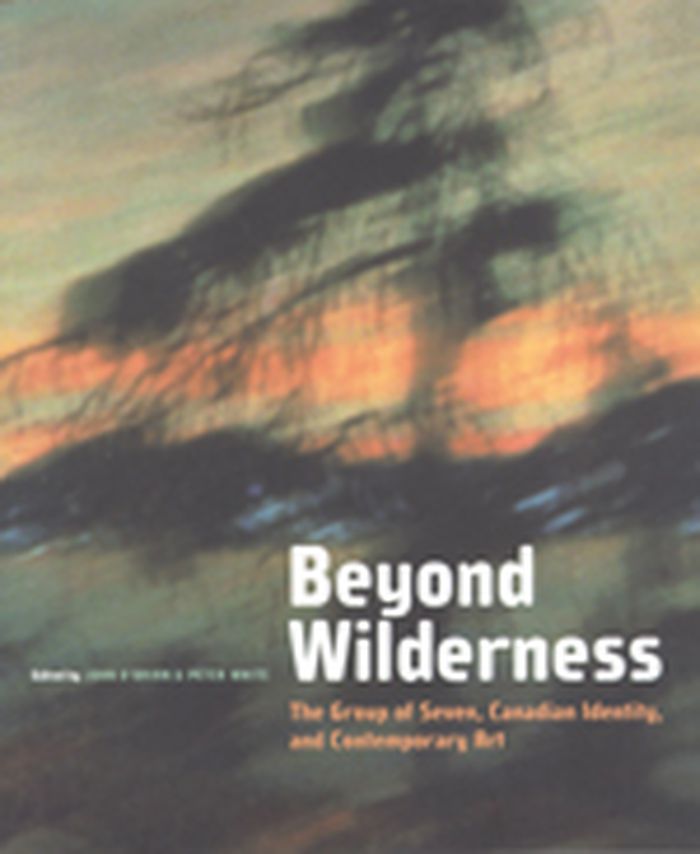
"The great purpose of landscape art is to make us at home in our own country" was the nationalist maxim motivating the Group of Seven's artistic project. The empty landscape paintings of the Group played a significant role in the nationalization of nature in Canada, particularly in the development of ideas about northernness, wilderness, and identity. In this book, John O'Brian and Peter White pick up where the Group of Seven left off. They demonstrate that since the 1960s a growing body of both art and critical writing has looked "beyond wilderness" to re-imagine landscape in a world of vastly altered political, technological, and environmental circumstances. By emphasizing social relationships, changing identity politics, and issues of colonial power and dispossession contemporary artists have produced landscape art that explores what was absent in the work of their predecessors. Beyond Wilderness expands the public understanding of Canadian landscape representation, tracing debates about the place of landscape in Canadian art and the national imagination through the twentieth century to the present. Critical writings from both contemporary and historically significant curators, historians, feminists, media theorists, and cultural critics and exactingly reproduced artworks by contemporary and historical artists are brought together in productive dialogue. Beyond Wilderness explains why landscape art in Canada had to be reinvented, and what forms the reinvention took. Contributors include Benedict Anderson (Cornell), Grant Arnold (Vancouver Art Gallery). Rebecca Belmore, Jody Berland (York), Eleanor Bond (Concordia), Jonathan Bordo (Trent), Douglas Cole, Marlene Creates, Marcia Crosby (Malaspina), Greg Curnoe, Ann Davis (Nickle Arts Museum), Leslie Dawn (Lethbridge), Shawna Dempsey, Christos Dikeakos, Peter Doig, Rosemary Donegan (OCAD), Stan Douglas, Paterson Ewen, Robert Fones, Northrop Frye, Robert Fulford, General Idea, Rodney Graham, Reesa Greenberg, Gu Xiong (British Columbia), Cole Harris (British Columbia), Richard William Hill (Middlesex), Robert Houle, Andrew Hunter (Waterloo), Lynda Jessup (Queen's), Zacharias Kunuk (Igloolik Isuma Productions), Johanne Lamoureux (Montréal), Robert Linsley (Waterloo), Barry Lord (Lord Cultural Resources), Marshall McLuhan, Mike MacDonald, Liz Magor (ECIAD), Lorri Millan, Gerta Moray (Guelph), Roald Nasgaard (Florida State), N.E. Thing Company, Carol Payne (Carleton), Edward Poitras, Dennis Reid (Art Gallery of Ontario), Michel Saulnier, Nancy Shaw (Simon Fraser), Johanne Sloan (Concordia), Michael Snow, Robert Stacey, David Thauberger, Loretta Todd, Esther Trépanier (Québec), Dot Tuer (OCAD), Christopher Varley, Jeff Wall, Paul H. Walton (McMaster), Mel Watkins (Toronto), Scott Watson (British Columbia), Anne Whitelaw (Alberta), Joyce Wieland, Jin-me Yoon (Simon Fraser), Lawrence Paul Yuxweluptun, and Joyce Zemans (York).
Beyond wilderness : The group of seven, Canadian identity, and contemporary art
Actions:
Prix:
$49.95
(disponible sur commande)
Résumé:
"The great purpose of landscape art is to make us at home in our own country" was the nationalist maxim motivating the Group of Seven's artistic project. The empty landscape paintings of the Group played a significant role in the nationalization of nature in Canada, particularly in the development of ideas about northernness, wilderness, and identity. In this book, John O'Brian and Peter White pick up where the Group of Seven left off. They demonstrate that since the 1960s a growing body of both art and critical writing has looked "beyond wilderness" to re-imagine landscape in a world of vastly altered political, technological, and environmental circumstances. By emphasizing social relationships, changing identity politics, and issues of colonial power and dispossession contemporary artists have produced landscape art that explores what was absent in the work of their predecessors. Beyond Wilderness expands the public understanding of Canadian landscape representation, tracing debates about the place of landscape in Canadian art and the national imagination through the twentieth century to the present. Critical writings from both contemporary and historically significant curators, historians, feminists, media theorists, and cultural critics and exactingly reproduced artworks by contemporary and historical artists are brought together in productive dialogue. Beyond Wilderness explains why landscape art in Canada had to be reinvented, and what forms the reinvention took. Contributors include Benedict Anderson (Cornell), Grant Arnold (Vancouver Art Gallery). Rebecca Belmore, Jody Berland (York), Eleanor Bond (Concordia), Jonathan Bordo (Trent), Douglas Cole, Marlene Creates, Marcia Crosby (Malaspina), Greg Curnoe, Ann Davis (Nickle Arts Museum), Leslie Dawn (Lethbridge), Shawna Dempsey, Christos Dikeakos, Peter Doig, Rosemary Donegan (OCAD), Stan Douglas, Paterson Ewen, Robert Fones, Northrop Frye, Robert Fulford, General Idea, Rodney Graham, Reesa Greenberg, Gu Xiong (British Columbia), Cole Harris (British Columbia), Richard William Hill (Middlesex), Robert Houle, Andrew Hunter (Waterloo), Lynda Jessup (Queen's), Zacharias Kunuk (Igloolik Isuma Productions), Johanne Lamoureux (Montréal), Robert Linsley (Waterloo), Barry Lord (Lord Cultural Resources), Marshall McLuhan, Mike MacDonald, Liz Magor (ECIAD), Lorri Millan, Gerta Moray (Guelph), Roald Nasgaard (Florida State), N.E. Thing Company, Carol Payne (Carleton), Edward Poitras, Dennis Reid (Art Gallery of Ontario), Michel Saulnier, Nancy Shaw (Simon Fraser), Johanne Sloan (Concordia), Michael Snow, Robert Stacey, David Thauberger, Loretta Todd, Esther Trépanier (Québec), Dot Tuer (OCAD), Christopher Varley, Jeff Wall, Paul H. Walton (McMaster), Mel Watkins (Toronto), Scott Watson (British Columbia), Anne Whitelaw (Alberta), Joyce Wieland, Jin-me Yoon (Simon Fraser), Lawrence Paul Yuxweluptun, and Joyce Zemans (York).
Classification:
livres
livres
Publication:
septembre 2007, Montreal Kingston
septembre 2007, Montreal Kingston
Sujet:
Architecture du Canada
Architecture du Canada


