


26977 Résultats
Classification:
dessins, documents textuels, né numérique
dessins, documents textuels, né numérique
Numéro de référence:
AP181.S1.015
Description:
Original directory name: "18_AN- Ausführende Firmen". File consists of records related to the construction, or execution, phase of the BMW Welt project. There are five high-level directories, identified with numerical codes and which element of the construction is being addressed by the records: construction signs, facade engineering, foundations, structural work, and facade steel construction. The firms include Werbetechnik Deger, Bauer, and Maurer Söhne. The bulk of the records is found under the "3060_Stahlbau_Fassade_MSG" directory, consisting of CAD drawings and 3D models for the roof support head points, the service walkways, cover panels, placement of security cameras, the internal helix, the drainage system, etc. These are CAD files, screen captures, and annotated digitisations of printed drawings, the latter two showing very specific details of the structure. There are approximately 500 plotter files in directories "3017 Fassadentechnik" (facade engineering) and "3060_Stahlbau_Fassade_MSG/I_Pläne/Ausgang", some being in archive files (.zip). Files also include some textual records, such as lists, presentations, and correspondence between stakeholders. Most common file formats: JPEG File Interchange Format, Hewlett Packard Vector Graphic Plotter File, Acrobat PDF 1.3 - Portable Document Format, AutoCAD Drawing, Acrobat PDF 1.4 - Portable Document Format
AP181.S1.015
Description:
Original directory name: "18_AN- Ausführende Firmen". File consists of records related to the construction, or execution, phase of the BMW Welt project. There are five high-level directories, identified with numerical codes and which element of the construction is being addressed by the records: construction signs, facade engineering, foundations, structural work, and facade steel construction. The firms include Werbetechnik Deger, Bauer, and Maurer Söhne. The bulk of the records is found under the "3060_Stahlbau_Fassade_MSG" directory, consisting of CAD drawings and 3D models for the roof support head points, the service walkways, cover panels, placement of security cameras, the internal helix, the drainage system, etc. These are CAD files, screen captures, and annotated digitisations of printed drawings, the latter two showing very specific details of the structure. There are approximately 500 plotter files in directories "3017 Fassadentechnik" (facade engineering) and "3060_Stahlbau_Fassade_MSG/I_Pläne/Ausgang", some being in archive files (.zip). Files also include some textual records, such as lists, presentations, and correspondence between stakeholders. Most common file formats: JPEG File Interchange Format, Hewlett Packard Vector Graphic Plotter File, Acrobat PDF 1.3 - Portable Document Format, AutoCAD Drawing, Acrobat PDF 1.4 - Portable Document Format
Personnes et institutions:
Date:
2003-2007
2003-2007
Titre:
Construction documentation, BMW Welt, Munich
Actions:
AP181.S1.015
Description:
Original directory name: "18_AN- Ausführende Firmen". File consists of records related to the construction, or execution, phase of the BMW Welt project. There are five high-level directories, identified with numerical codes and which element of the construction is being addressed by the records: construction signs, facade engineering, foundations, structural work, and facade steel construction. The firms include Werbetechnik Deger, Bauer, and Maurer Söhne. The bulk of the records is found under the "3060_Stahlbau_Fassade_MSG" directory, consisting of CAD drawings and 3D models for the roof support head points, the service walkways, cover panels, placement of security cameras, the internal helix, the drainage system, etc. These are CAD files, screen captures, and annotated digitisations of printed drawings, the latter two showing very specific details of the structure. There are approximately 500 plotter files in directories "3017 Fassadentechnik" (facade engineering) and "3060_Stahlbau_Fassade_MSG/I_Pläne/Ausgang", some being in archive files (.zip). Files also include some textual records, such as lists, presentations, and correspondence between stakeholders. Most common file formats: JPEG File Interchange Format, Hewlett Packard Vector Graphic Plotter File, Acrobat PDF 1.3 - Portable Document Format, AutoCAD Drawing, Acrobat PDF 1.4 - Portable Document Format
Construction documentation, BMW Welt, Munich
Actions:
AP181.S1.015
Description:
Original directory name: "18_AN- Ausführende Firmen". File consists of records related to the construction, or execution, phase of the BMW Welt project. There are five high-level directories, identified with numerical codes and which element of the construction is being addressed by the records: construction signs, facade engineering, foundations, structural work, and facade steel construction. The firms include Werbetechnik Deger, Bauer, and Maurer Söhne. The bulk of the records is found under the "3060_Stahlbau_Fassade_MSG" directory, consisting of CAD drawings and 3D models for the roof support head points, the service walkways, cover panels, placement of security cameras, the internal helix, the drainage system, etc. These are CAD files, screen captures, and annotated digitisations of printed drawings, the latter two showing very specific details of the structure. There are approximately 500 plotter files in directories "3017 Fassadentechnik" (facade engineering) and "3060_Stahlbau_Fassade_MSG/I_Pläne/Ausgang", some being in archive files (.zip). Files also include some textual records, such as lists, presentations, and correspondence between stakeholders. Most common file formats: JPEG File Interchange Format, Hewlett Packard Vector Graphic Plotter File, Acrobat PDF 1.3 - Portable Document Format, AutoCAD Drawing, Acrobat PDF 1.4 - Portable Document Format
Classification:
dessins, documents textuels, né numérique
dessins, documents textuels, né numérique
Date:
2003-2007
2003-2007
Personnes et institutions:
Niveau de description archivistique:
Projet
Projet
Numéro de référence:
AP178.S1.1979.PR06
Description:
The project series documents the 1979 design entry for Block 70 and 89, also known as the Fränkelufer residential complex. While the records were held in the office’s archives this project was assigned the number 55/70. The office assigned the date 1979 for this project. This project was submitted to the International Architectural Exhibition Berlin competition (International Bauaustellung, IBA, circa 1979-1987), an urban renewal strategy for West Berlin, Germany. Six months prior to submitting the design for Block 70 and 89 Siza submitted a design for the Görlitzer Bad swimming pool, which did not win the competition but received a special prize. Siza later submitted proposals to the IBA for Bonjour Tristesse (Block 121), Monument to Gestapo victims Prinz-Albrecht-Palais, Block 11-12 (Kottbusser Damm), and the Kulturforum, all of which are documented in this fonds. The IBA divided West Berlin into two parts: IBA Neubau ('new building'), led by Josef Paul Kleihues, and IBA Altbau ('old building') led by Hardt-Walherr Hämer. IBA Nuebau's focus was to build new structures while IBA Altbau's was to renovate existing buildings. The competition site for Block 70 and 89 was located on the west side of Kreuzberg, a district on the eastern edge of West Berlin. Although this project was part of the Altbau section, it nonetheless required building new housing complexes, which was generally under the purview of the Neubau section (Mota, "An archaeology of the ordinary" 299). Siza won second prize in the competition for his design of Block 70 and 89. This design proposal is said to have prepared Siza's ideas for his first international built project, Block 121 (Mathur, "The migrant's time"). The project series contains sketches and studies, which include notes. Several of the project sketches also include sketches of people. Documenting the design proposal are site plans, elevations, interior elevations, and floor plans. Photographs, negatives, contact sheets, and slides depict the project site and surrounding area as well as the model and drawings. Additionally there are panoramic photomontages of the project site. Please note that documentation for this project series is housed with documentation on Block 11-12 in file AP178.S1.1980.PR03.008, in the order it was kept by the office. Documentation for Block 70 and 89 includes an invitation to the competition, recommendations from the IBA advisory council, and other information regarding the competition.
AP178.S1.1979.PR06
Description:
The project series documents the 1979 design entry for Block 70 and 89, also known as the Fränkelufer residential complex. While the records were held in the office’s archives this project was assigned the number 55/70. The office assigned the date 1979 for this project. This project was submitted to the International Architectural Exhibition Berlin competition (International Bauaustellung, IBA, circa 1979-1987), an urban renewal strategy for West Berlin, Germany. Six months prior to submitting the design for Block 70 and 89 Siza submitted a design for the Görlitzer Bad swimming pool, which did not win the competition but received a special prize. Siza later submitted proposals to the IBA for Bonjour Tristesse (Block 121), Monument to Gestapo victims Prinz-Albrecht-Palais, Block 11-12 (Kottbusser Damm), and the Kulturforum, all of which are documented in this fonds. The IBA divided West Berlin into two parts: IBA Neubau ('new building'), led by Josef Paul Kleihues, and IBA Altbau ('old building') led by Hardt-Walherr Hämer. IBA Nuebau's focus was to build new structures while IBA Altbau's was to renovate existing buildings. The competition site for Block 70 and 89 was located on the west side of Kreuzberg, a district on the eastern edge of West Berlin. Although this project was part of the Altbau section, it nonetheless required building new housing complexes, which was generally under the purview of the Neubau section (Mota, "An archaeology of the ordinary" 299). Siza won second prize in the competition for his design of Block 70 and 89. This design proposal is said to have prepared Siza's ideas for his first international built project, Block 121 (Mathur, "The migrant's time"). The project series contains sketches and studies, which include notes. Several of the project sketches also include sketches of people. Documenting the design proposal are site plans, elevations, interior elevations, and floor plans. Photographs, negatives, contact sheets, and slides depict the project site and surrounding area as well as the model and drawings. Additionally there are panoramic photomontages of the project site. Please note that documentation for this project series is housed with documentation on Block 11-12 in file AP178.S1.1980.PR03.008, in the order it was kept by the office. Documentation for Block 70 and 89 includes an invitation to the competition, recommendations from the IBA advisory council, and other information regarding the competition.
Personnes et institutions:
Date:
1976-1982
1976-1982
Titre:
Blocke 70 und 89, Kreuzberg, Fränkelufer [Fränkelufer residential complex], Berlin, Germany (1976-1982)
Actions:
AP178.S1.1979.PR06
Description:
The project series documents the 1979 design entry for Block 70 and 89, also known as the Fränkelufer residential complex. While the records were held in the office’s archives this project was assigned the number 55/70. The office assigned the date 1979 for this project. This project was submitted to the International Architectural Exhibition Berlin competition (International Bauaustellung, IBA, circa 1979-1987), an urban renewal strategy for West Berlin, Germany. Six months prior to submitting the design for Block 70 and 89 Siza submitted a design for the Görlitzer Bad swimming pool, which did not win the competition but received a special prize. Siza later submitted proposals to the IBA for Bonjour Tristesse (Block 121), Monument to Gestapo victims Prinz-Albrecht-Palais, Block 11-12 (Kottbusser Damm), and the Kulturforum, all of which are documented in this fonds. The IBA divided West Berlin into two parts: IBA Neubau ('new building'), led by Josef Paul Kleihues, and IBA Altbau ('old building') led by Hardt-Walherr Hämer. IBA Nuebau's focus was to build new structures while IBA Altbau's was to renovate existing buildings. The competition site for Block 70 and 89 was located on the west side of Kreuzberg, a district on the eastern edge of West Berlin. Although this project was part of the Altbau section, it nonetheless required building new housing complexes, which was generally under the purview of the Neubau section (Mota, "An archaeology of the ordinary" 299). Siza won second prize in the competition for his design of Block 70 and 89. This design proposal is said to have prepared Siza's ideas for his first international built project, Block 121 (Mathur, "The migrant's time"). The project series contains sketches and studies, which include notes. Several of the project sketches also include sketches of people. Documenting the design proposal are site plans, elevations, interior elevations, and floor plans. Photographs, negatives, contact sheets, and slides depict the project site and surrounding area as well as the model and drawings. Additionally there are panoramic photomontages of the project site. Please note that documentation for this project series is housed with documentation on Block 11-12 in file AP178.S1.1980.PR03.008, in the order it was kept by the office. Documentation for Block 70 and 89 includes an invitation to the competition, recommendations from the IBA advisory council, and other information regarding the competition.
Blocke 70 und 89, Kreuzberg, Fränkelufer [Fränkelufer residential complex], Berlin, Germany (1976-1982)
Actions:
AP178.S1.1979.PR06
Description:
The project series documents the 1979 design entry for Block 70 and 89, also known as the Fränkelufer residential complex. While the records were held in the office’s archives this project was assigned the number 55/70. The office assigned the date 1979 for this project. This project was submitted to the International Architectural Exhibition Berlin competition (International Bauaustellung, IBA, circa 1979-1987), an urban renewal strategy for West Berlin, Germany. Six months prior to submitting the design for Block 70 and 89 Siza submitted a design for the Görlitzer Bad swimming pool, which did not win the competition but received a special prize. Siza later submitted proposals to the IBA for Bonjour Tristesse (Block 121), Monument to Gestapo victims Prinz-Albrecht-Palais, Block 11-12 (Kottbusser Damm), and the Kulturforum, all of which are documented in this fonds. The IBA divided West Berlin into two parts: IBA Neubau ('new building'), led by Josef Paul Kleihues, and IBA Altbau ('old building') led by Hardt-Walherr Hämer. IBA Nuebau's focus was to build new structures while IBA Altbau's was to renovate existing buildings. The competition site for Block 70 and 89 was located on the west side of Kreuzberg, a district on the eastern edge of West Berlin. Although this project was part of the Altbau section, it nonetheless required building new housing complexes, which was generally under the purview of the Neubau section (Mota, "An archaeology of the ordinary" 299). Siza won second prize in the competition for his design of Block 70 and 89. This design proposal is said to have prepared Siza's ideas for his first international built project, Block 121 (Mathur, "The migrant's time"). The project series contains sketches and studies, which include notes. Several of the project sketches also include sketches of people. Documenting the design proposal are site plans, elevations, interior elevations, and floor plans. Photographs, negatives, contact sheets, and slides depict the project site and surrounding area as well as the model and drawings. Additionally there are panoramic photomontages of the project site. Please note that documentation for this project series is housed with documentation on Block 11-12 in file AP178.S1.1980.PR03.008, in the order it was kept by the office. Documentation for Block 70 and 89 includes an invitation to the competition, recommendations from the IBA advisory council, and other information regarding the competition.
Niveau de description archivistique:
Project
Project
Date:
1976-1982
1976-1982
Personnes et institutions:
Niveau de description archivistique:
Projet
Projet
Numéro de référence:
AP075.S1.2006.PR01
Description:
Project series documents Cornelia Hahn Oberlander's landscape project for the restauration of the Evergreen Building, a ten-story office tower on West Pender Street, in Vancouver, British Columbia. The building was previously known as the Laxton Building. The project consisted in renovations work to the building, design by architect Arthur Erickson in the 1980. Oberlander herself worked with Erickson at the time. After helping to save the building from demolition in the early 2000s, Oberlander worked as a landscape consultant for Omicron Architecture Engineering Construction Co. in 2006-2007. She was consulted for the restoration of the landscaping at the street level and the replanting of the planted balconies she had created while working with Erickson. As the building facade consisted in a stepped facade with an alternance of zigzag floor plates and straight floor plates, Oberlander chose cascading plants for the zigzag floors and upright planting for the straight floors. "Since the plants were brought to the structure's edges, the geometries of the building were dramatically amplified." [1] The Evergreen Building received a heritage status in the mid-2000s. This project series contains only materials related to the 2006-2007 renovations project. The project series comprises sketches, design development drawings, including site plans, plantings plans and landscape elevations, and buildings plans used as reference. The project series is also documented through corrsepondence, including correspondence with architects and contractors, specifications, plant lists, digital files of a presentation on the existing site condition, financial material, and research material for the project. Source: [1] Herrington, Susan. Cornelia Hahn Oberlander: Making the Modern Landscape, University of Virginia Press, 2014, 304 pages, p. 139.
AP075.S1.2006.PR01
Description:
Project series documents Cornelia Hahn Oberlander's landscape project for the restauration of the Evergreen Building, a ten-story office tower on West Pender Street, in Vancouver, British Columbia. The building was previously known as the Laxton Building. The project consisted in renovations work to the building, design by architect Arthur Erickson in the 1980. Oberlander herself worked with Erickson at the time. After helping to save the building from demolition in the early 2000s, Oberlander worked as a landscape consultant for Omicron Architecture Engineering Construction Co. in 2006-2007. She was consulted for the restoration of the landscaping at the street level and the replanting of the planted balconies she had created while working with Erickson. As the building facade consisted in a stepped facade with an alternance of zigzag floor plates and straight floor plates, Oberlander chose cascading plants for the zigzag floors and upright planting for the straight floors. "Since the plants were brought to the structure's edges, the geometries of the building were dramatically amplified." [1] The Evergreen Building received a heritage status in the mid-2000s. This project series contains only materials related to the 2006-2007 renovations project. The project series comprises sketches, design development drawings, including site plans, plantings plans and landscape elevations, and buildings plans used as reference. The project series is also documented through corrsepondence, including correspondence with architects and contractors, specifications, plant lists, digital files of a presentation on the existing site condition, financial material, and research material for the project. Source: [1] Herrington, Susan. Cornelia Hahn Oberlander: Making the Modern Landscape, University of Virginia Press, 2014, 304 pages, p. 139.
Personnes et institutions:
Date:
2006-2007
2006-2007
Titre:
Evergreen Building restoration, Vancouver, British Columbia (2006)
Actions:
AP075.S1.2006.PR01
Description:
Project series documents Cornelia Hahn Oberlander's landscape project for the restauration of the Evergreen Building, a ten-story office tower on West Pender Street, in Vancouver, British Columbia. The building was previously known as the Laxton Building. The project consisted in renovations work to the building, design by architect Arthur Erickson in the 1980. Oberlander herself worked with Erickson at the time. After helping to save the building from demolition in the early 2000s, Oberlander worked as a landscape consultant for Omicron Architecture Engineering Construction Co. in 2006-2007. She was consulted for the restoration of the landscaping at the street level and the replanting of the planted balconies she had created while working with Erickson. As the building facade consisted in a stepped facade with an alternance of zigzag floor plates and straight floor plates, Oberlander chose cascading plants for the zigzag floors and upright planting for the straight floors. "Since the plants were brought to the structure's edges, the geometries of the building were dramatically amplified." [1] The Evergreen Building received a heritage status in the mid-2000s. This project series contains only materials related to the 2006-2007 renovations project. The project series comprises sketches, design development drawings, including site plans, plantings plans and landscape elevations, and buildings plans used as reference. The project series is also documented through corrsepondence, including correspondence with architects and contractors, specifications, plant lists, digital files of a presentation on the existing site condition, financial material, and research material for the project. Source: [1] Herrington, Susan. Cornelia Hahn Oberlander: Making the Modern Landscape, University of Virginia Press, 2014, 304 pages, p. 139.
Evergreen Building restoration, Vancouver, British Columbia (2006)
Actions:
AP075.S1.2006.PR01
Description:
Project series documents Cornelia Hahn Oberlander's landscape project for the restauration of the Evergreen Building, a ten-story office tower on West Pender Street, in Vancouver, British Columbia. The building was previously known as the Laxton Building. The project consisted in renovations work to the building, design by architect Arthur Erickson in the 1980. Oberlander herself worked with Erickson at the time. After helping to save the building from demolition in the early 2000s, Oberlander worked as a landscape consultant for Omicron Architecture Engineering Construction Co. in 2006-2007. She was consulted for the restoration of the landscaping at the street level and the replanting of the planted balconies she had created while working with Erickson. As the building facade consisted in a stepped facade with an alternance of zigzag floor plates and straight floor plates, Oberlander chose cascading plants for the zigzag floors and upright planting for the straight floors. "Since the plants were brought to the structure's edges, the geometries of the building were dramatically amplified." [1] The Evergreen Building received a heritage status in the mid-2000s. This project series contains only materials related to the 2006-2007 renovations project. The project series comprises sketches, design development drawings, including site plans, plantings plans and landscape elevations, and buildings plans used as reference. The project series is also documented through corrsepondence, including correspondence with architects and contractors, specifications, plant lists, digital files of a presentation on the existing site condition, financial material, and research material for the project. Source: [1] Herrington, Susan. Cornelia Hahn Oberlander: Making the Modern Landscape, University of Virginia Press, 2014, 304 pages, p. 139.
Niveau de description archivistique:
Project
Project
Date:
2006-2007
2006-2007
Personnes et institutions:
Classification:
dessins
dessins
Numéro de référence:
DR1989:0015:072
Description:
- The inscriptions and calculations indicate that this plan may be a record of a ground level survey in relation to the floor of the original structure. - This work is part of a group of drawings and reprographic prints of drawings for St. Peter's Home, Woking, and St. Peter's Convent, Woking, from the offices of John Loughborough Pearson and Frank Loughborough Pearson (DR1989:0015:011 - DR1989:0015:085 R/V). Composed of contract and working drawings including plans, site plans, sections, and elevations dated between 1881 and 1936, these drawings were sold at auction by the convent along with those for the older institution of St. Peter's Home, Kilburn (DR1989:0015:001 - DR1989:0015:010). Both St. Peter's Home, Kilburn, and St. Peter's Home, Woking were commissioned from John Loughborough Pearson by Benjamin Lancaster. The alterations to the Home at Kilburn were commissioned on behalf of Lancaster's wife, who founded the home and a lay nursing order which ran it. The institution at Woking was founded by Lancaster as a home for incurables in 1882 and dedicated to the memory of his deceased wife (Quiney 67-68, 254-255, and 284). It was probably first known as St. Peter's Home, Woking, not becoming a convent until ca. 1934.
DR1989:0015:072
Description:
- The inscriptions and calculations indicate that this plan may be a record of a ground level survey in relation to the floor of the original structure. - This work is part of a group of drawings and reprographic prints of drawings for St. Peter's Home, Woking, and St. Peter's Convent, Woking, from the offices of John Loughborough Pearson and Frank Loughborough Pearson (DR1989:0015:011 - DR1989:0015:085 R/V). Composed of contract and working drawings including plans, site plans, sections, and elevations dated between 1881 and 1936, these drawings were sold at auction by the convent along with those for the older institution of St. Peter's Home, Kilburn (DR1989:0015:001 - DR1989:0015:010). Both St. Peter's Home, Kilburn, and St. Peter's Home, Woking were commissioned from John Loughborough Pearson by Benjamin Lancaster. The alterations to the Home at Kilburn were commissioned on behalf of Lancaster's wife, who founded the home and a lay nursing order which ran it. The institution at Woking was founded by Lancaster as a home for incurables in 1882 and dedicated to the memory of his deceased wife (Quiney 67-68, 254-255, and 284). It was probably first known as St. Peter's Home, Woking, not becoming a convent until ca. 1934.
Personnes et institutions:
Sujet:
architecture
architecture
Date:
1934
1934
Titre:
St. Peter's Convent, Woking: Site plan with ground level survey
Actions:
DR1989:0015:072
Description:
- The inscriptions and calculations indicate that this plan may be a record of a ground level survey in relation to the floor of the original structure. - This work is part of a group of drawings and reprographic prints of drawings for St. Peter's Home, Woking, and St. Peter's Convent, Woking, from the offices of John Loughborough Pearson and Frank Loughborough Pearson (DR1989:0015:011 - DR1989:0015:085 R/V). Composed of contract and working drawings including plans, site plans, sections, and elevations dated between 1881 and 1936, these drawings were sold at auction by the convent along with those for the older institution of St. Peter's Home, Kilburn (DR1989:0015:001 - DR1989:0015:010). Both St. Peter's Home, Kilburn, and St. Peter's Home, Woking were commissioned from John Loughborough Pearson by Benjamin Lancaster. The alterations to the Home at Kilburn were commissioned on behalf of Lancaster's wife, who founded the home and a lay nursing order which ran it. The institution at Woking was founded by Lancaster as a home for incurables in 1882 and dedicated to the memory of his deceased wife (Quiney 67-68, 254-255, and 284). It was probably first known as St. Peter's Home, Woking, not becoming a convent until ca. 1934.
St. Peter's Convent, Woking: Site plan with ground level survey
Actions:
DR1989:0015:072
Description:
- The inscriptions and calculations indicate that this plan may be a record of a ground level survey in relation to the floor of the original structure. - This work is part of a group of drawings and reprographic prints of drawings for St. Peter's Home, Woking, and St. Peter's Convent, Woking, from the offices of John Loughborough Pearson and Frank Loughborough Pearson (DR1989:0015:011 - DR1989:0015:085 R/V). Composed of contract and working drawings including plans, site plans, sections, and elevations dated between 1881 and 1936, these drawings were sold at auction by the convent along with those for the older institution of St. Peter's Home, Kilburn (DR1989:0015:001 - DR1989:0015:010). Both St. Peter's Home, Kilburn, and St. Peter's Home, Woking were commissioned from John Loughborough Pearson by Benjamin Lancaster. The alterations to the Home at Kilburn were commissioned on behalf of Lancaster's wife, who founded the home and a lay nursing order which ran it. The institution at Woking was founded by Lancaster as a home for incurables in 1882 and dedicated to the memory of his deceased wife (Quiney 67-68, 254-255, and 284). It was probably first known as St. Peter's Home, Woking, not becoming a convent until ca. 1934.
Classification:
dessins
dessins
Date:
1934
1934
Personnes et institutions:
Sujet:
architecture
architecture
Classification:
événements
événements
Actions:
Description:
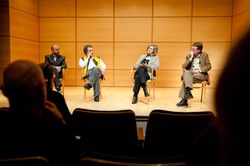
La pratique muséologique, telle qu’elle a émergé au cours du XXe siècle, est sans contredit profondément remaniée. Les changements radicaux dans le statut de l’objet, de la culture, des diverses disciplines ou de l’information et de l’éducation entraînent une inévitable transformation du rôle et des compétences du conservateur. Un intérêt renouvelé pour la pratique(...)
La pratique muséologique, telle qu’elle a émergé au cours du XXe siècle, est sans contredit profondément remaniée. Les changements radicaux dans le statut de l’objet, de la culture, des diverses disciplines ou de l’information et de l’éducation entraînent une inévitable transformation du rôle et des compétences du conservateur. Un intérêt renouvelé pour la pratique(...)
Localisation:
Théâtre Paul-Desmarais
Théâtre Paul-Desmarais
Date:
11 novembre 2010 au 13 novembre 2010
11 novembre 2010 au 13 novembre 2010
Titre:
Le CCA dans un champ muséologique en expansion
Actions:
Description:
La pratique muséologique, telle qu’elle a émergé au cours du XXe siècle, est sans contredit profondément remaniée. Les changements radicaux dans le statut de l’objet, de la culture, des diverses disciplines ou de l’information et de l’éducation entraînent une inévitable transformation du rôle et des compétences du conservateur. Un intérêt renouvelé pour la pratique(...)
Le CCA dans un champ muséologique en expansion
Actions:
Description:
La pratique muséologique, telle qu’elle a émergé au cours du XXe siècle, est sans contredit profondément remaniée. Les changements radicaux dans le statut de l’objet, de la culture, des diverses disciplines ou de l’information et de l’éducation entraînent une inévitable transformation du rôle et des compétences du conservateur. Un intérêt renouvelé pour la pratique(...)
Classification:
événements
événements
Date:
11 novembre 2010 au
13 novembre 2010
11 novembre 2010 au
13 novembre 2010
Localisation:
Théâtre Paul-Desmarais
Théâtre Paul-Desmarais
Classification:
né numérique
Quantité:
7 digital file(s)
né numérique
Quantité:
7 digital file(s)
Numéro de référence:
AP174.S2.002
Description:
Contains two Weaver MEL scripts written in 2001 for use in Alias|Wavefront Maya, annotated source code last revised in 2004, and a tutorial that explains their use. Notably, the tutorial also contains instructions for how to export woven structures from Maya into Rhinoceros and other software platforms. Original directory name: "weaver Maya script & tutorial". Most common file formats: Microsoft Word Document, Acrobat PDF 1.4 - Portable Document Format, Plain Text File
AP174.S2.002
Description:
Contains two Weaver MEL scripts written in 2001 for use in Alias|Wavefront Maya, annotated source code last revised in 2004, and a tutorial that explains their use. Notably, the tutorial also contains instructions for how to export woven structures from Maya into Rhinoceros and other software platforms. Original directory name: "weaver Maya script & tutorial". Most common file formats: Microsoft Word Document, Acrobat PDF 1.4 - Portable Document Format, Plain Text File
Personnes et institutions:
Date:
2001-2004
2001-2004
Titre:
Weaver Maya Embedded Language (MEL) script, annotated source code, and tutorial
Actions:
AP174.S2.002
Description:
Contains two Weaver MEL scripts written in 2001 for use in Alias|Wavefront Maya, annotated source code last revised in 2004, and a tutorial that explains their use. Notably, the tutorial also contains instructions for how to export woven structures from Maya into Rhinoceros and other software platforms. Original directory name: "weaver Maya script & tutorial". Most common file formats: Microsoft Word Document, Acrobat PDF 1.4 - Portable Document Format, Plain Text File
Weaver Maya Embedded Language (MEL) script, annotated source code, and tutorial
Actions:
AP174.S2.002
Description:
Contains two Weaver MEL scripts written in 2001 for use in Alias|Wavefront Maya, annotated source code last revised in 2004, and a tutorial that explains their use. Notably, the tutorial also contains instructions for how to export woven structures from Maya into Rhinoceros and other software platforms. Original directory name: "weaver Maya script & tutorial". Most common file formats: Microsoft Word Document, Acrobat PDF 1.4 - Portable Document Format, Plain Text File
Classification:
né numérique
Quantité:
7 digital file(s)
né numérique
Quantité:
7 digital file(s)
Date:
2001-2004
2001-2004
Personnes et institutions:
Classification:
dessins
dessins
Numéro de référence:
DR1998:0092:002:006
Description:
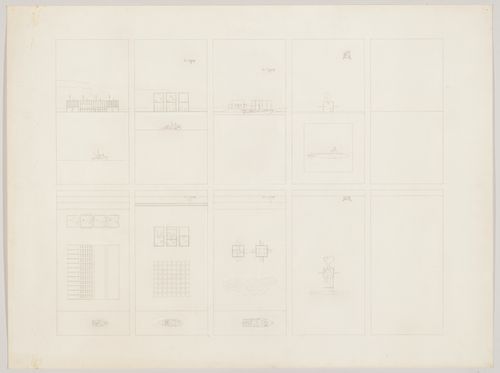
Robert Butscher was the draughtsman of this presentation drawing. The drawing, along with the drawing DR1998:0092:002:006 in this file, were done as part of a Third Year Architecture analysis project at Cooper Union School of Architecture. As part of the project, he read a great many of the novels written by the authors represented by the five sets of structures. The drawings were based on measurements taken from the presentation model. They were completed in 1980 and gifted to John Hejduk by Butscher to use in his Masque of Medusa book.
DR1998:0092:002:006
Description:
Robert Butscher was the draughtsman of this presentation drawing. The drawing, along with the drawing DR1998:0092:002:006 in this file, were done as part of a Third Year Architecture analysis project at Cooper Union School of Architecture. As part of the project, he read a great many of the novels written by the authors represented by the five sets of structures. The drawings were based on measurements taken from the presentation model. They were completed in 1980 and gifted to John Hejduk by Butscher to use in his Masque of Medusa book.
Personnes et institutions:
Date:
1974-1979
1974-1979
Titre:
Plans and elevations for The Silent Witnesses
Actions:
DR1998:0092:002:006
Description:
Robert Butscher was the draughtsman of this presentation drawing. The drawing, along with the drawing DR1998:0092:002:006 in this file, were done as part of a Third Year Architecture analysis project at Cooper Union School of Architecture. As part of the project, he read a great many of the novels written by the authors represented by the five sets of structures. The drawings were based on measurements taken from the presentation model. They were completed in 1980 and gifted to John Hejduk by Butscher to use in his Masque of Medusa book.
Plans and elevations for The Silent Witnesses
Actions:
DR1998:0092:002:006
Description:
Robert Butscher was the draughtsman of this presentation drawing. The drawing, along with the drawing DR1998:0092:002:006 in this file, were done as part of a Third Year Architecture analysis project at Cooper Union School of Architecture. As part of the project, he read a great many of the novels written by the authors represented by the five sets of structures. The drawings were based on measurements taken from the presentation model. They were completed in 1980 and gifted to John Hejduk by Butscher to use in his Masque of Medusa book.
Classification:
dessins
dessins
Date:
1974-1979
1974-1979
Personnes et institutions:
Classification:
dessins
dessins
Numéro de référence:
DR1998:0092:002:007
Description:
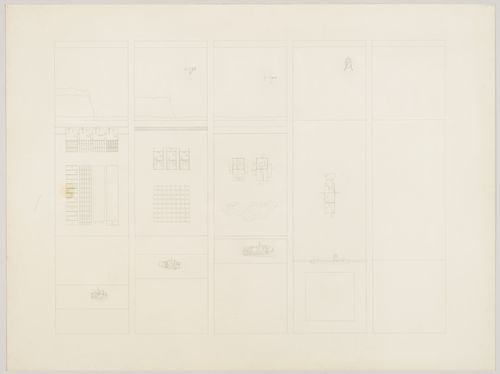
Robert Butscher was the draughtsman of this presentation drawing. The drawing, along with the drawing DR1998:0092:002:006 in this file, were done as part of a Third Year Architecture analysis project at Cooper Union School of Architecture. As part of the project, he read a great many of the novels written by the authors represented by the five sets of structures. The drawings were based on measurements taken from the presentation model. They were completed in 1980 and gifted to John Hejduk by Butscher to use in his Masque of Medusa book.
DR1998:0092:002:007
Description:
Robert Butscher was the draughtsman of this presentation drawing. The drawing, along with the drawing DR1998:0092:002:006 in this file, were done as part of a Third Year Architecture analysis project at Cooper Union School of Architecture. As part of the project, he read a great many of the novels written by the authors represented by the five sets of structures. The drawings were based on measurements taken from the presentation model. They were completed in 1980 and gifted to John Hejduk by Butscher to use in his Masque of Medusa book.
Personnes et institutions:
Date:
1974-1979
1974-1979
Titre:
Presentation drawing for The Silent Witnesses
Actions:
DR1998:0092:002:007
Description:
Robert Butscher was the draughtsman of this presentation drawing. The drawing, along with the drawing DR1998:0092:002:006 in this file, were done as part of a Third Year Architecture analysis project at Cooper Union School of Architecture. As part of the project, he read a great many of the novels written by the authors represented by the five sets of structures. The drawings were based on measurements taken from the presentation model. They were completed in 1980 and gifted to John Hejduk by Butscher to use in his Masque of Medusa book.
Presentation drawing for The Silent Witnesses
Actions:
DR1998:0092:002:007
Description:
Robert Butscher was the draughtsman of this presentation drawing. The drawing, along with the drawing DR1998:0092:002:006 in this file, were done as part of a Third Year Architecture analysis project at Cooper Union School of Architecture. As part of the project, he read a great many of the novels written by the authors represented by the five sets of structures. The drawings were based on measurements taken from the presentation model. They were completed in 1980 and gifted to John Hejduk by Butscher to use in his Masque of Medusa book.
Classification:
dessins
dessins
Date:
1974-1979
1974-1979
Personnes et institutions:
Niveau de description archivistique:
Projet
Projet
Numéro de référence:
AP148.S1.1970.PR02
Description:
The project series documents Poli's work on the Interplanetary Architecture project, which was also made into a film by Superstudio directed by Alessandro Poli (the film is not included in the fonds). The project reflects Poli's deep fascination with the moon landing in 1969. Poli uses this major media event as a catalyst for thinking about a new approach to architecture and tools for design, including the idea that film and the movie camera should become part of the toolset. The project also seems to be in some way a response to Epoch magazine's challenge for a "Primo concorso di architettura nello spazio" (the first architectural competition in space), and includes much imagery and textual references to a new road or architectural links between the earth and other planets, including an earth moon highway. In his storyboard, Poli also makes reference to his earlier Piper project, and some imagery features wheels and an amusement park. The Interplanetary Architecture project was exhibited by Superstudio in Rome in 1972 and featured in "Casabella" magazine in April 1972 (no. 364). The project was also featured in the 2010 CCA exhibition "Other Space Odysseys". In the accompanying CCA publication, Poli describes this project as "a voyage off earthbound routes in quest of architecture unfettered by the urban nightmare, by induced needs or by planning as the only tool for regulating and solving the world's problems" (Poli quoted in Borasi and Zardini, 2010, 110). Poli's work on this project is deeply tied to the Zeno project, which was also featured in this exhibition and is included in this fonds (see AP148.S1.1972.PR01). For the Zeno project, Poli envisioned a dialogue between astronaut Buzz Aldrin and an Italian peasant, Zeno of Riparbella. Poli felt that these two shared a similarity in that both their homes were isolated capsules, one that provided a lens from which to see the rest of the world and understand their place in it. The material in the series includes numerous photomontages and collages of astronauts in space, as well as drawings of plantery shapes and structures. There are also texts, some of which include calculations of distances and diameters of planets, as well as notebooks and sketchbooks, many of which Poli included in a folder he entitled "Storyboard." The series also includes an unsent letter from Poli to Adolfo Natalini which describes how, after the moon landing, everything - the planet, the moon, the stars - is architecture, and that this will necessitate the need for new design tools, such as the movie camera. Some works are signed Alessandro Poli-Superstudio. Source cited: Giovanna Borasi and Mirko Zardini, eds., Other Space Odysseys, Montreal and Baden: Canadian Centre for Architecture/Lars Müller Publishers, 2010.
AP148.S1.1970.PR02
Description:
The project series documents Poli's work on the Interplanetary Architecture project, which was also made into a film by Superstudio directed by Alessandro Poli (the film is not included in the fonds). The project reflects Poli's deep fascination with the moon landing in 1969. Poli uses this major media event as a catalyst for thinking about a new approach to architecture and tools for design, including the idea that film and the movie camera should become part of the toolset. The project also seems to be in some way a response to Epoch magazine's challenge for a "Primo concorso di architettura nello spazio" (the first architectural competition in space), and includes much imagery and textual references to a new road or architectural links between the earth and other planets, including an earth moon highway. In his storyboard, Poli also makes reference to his earlier Piper project, and some imagery features wheels and an amusement park. The Interplanetary Architecture project was exhibited by Superstudio in Rome in 1972 and featured in "Casabella" magazine in April 1972 (no. 364). The project was also featured in the 2010 CCA exhibition "Other Space Odysseys". In the accompanying CCA publication, Poli describes this project as "a voyage off earthbound routes in quest of architecture unfettered by the urban nightmare, by induced needs or by planning as the only tool for regulating and solving the world's problems" (Poli quoted in Borasi and Zardini, 2010, 110). Poli's work on this project is deeply tied to the Zeno project, which was also featured in this exhibition and is included in this fonds (see AP148.S1.1972.PR01). For the Zeno project, Poli envisioned a dialogue between astronaut Buzz Aldrin and an Italian peasant, Zeno of Riparbella. Poli felt that these two shared a similarity in that both their homes were isolated capsules, one that provided a lens from which to see the rest of the world and understand their place in it. The material in the series includes numerous photomontages and collages of astronauts in space, as well as drawings of plantery shapes and structures. There are also texts, some of which include calculations of distances and diameters of planets, as well as notebooks and sketchbooks, many of which Poli included in a folder he entitled "Storyboard." The series also includes an unsent letter from Poli to Adolfo Natalini which describes how, after the moon landing, everything - the planet, the moon, the stars - is architecture, and that this will necessitate the need for new design tools, such as the movie camera. Some works are signed Alessandro Poli-Superstudio. Source cited: Giovanna Borasi and Mirko Zardini, eds., Other Space Odysseys, Montreal and Baden: Canadian Centre for Architecture/Lars Müller Publishers, 2010.
Personnes et institutions:
Date:
1969-1971
1969-1971
Titre:
Architettura Interplanetaria [Interplanetary Architecture] (1970-1971)
Actions:
AP148.S1.1970.PR02
Description:
The project series documents Poli's work on the Interplanetary Architecture project, which was also made into a film by Superstudio directed by Alessandro Poli (the film is not included in the fonds). The project reflects Poli's deep fascination with the moon landing in 1969. Poli uses this major media event as a catalyst for thinking about a new approach to architecture and tools for design, including the idea that film and the movie camera should become part of the toolset. The project also seems to be in some way a response to Epoch magazine's challenge for a "Primo concorso di architettura nello spazio" (the first architectural competition in space), and includes much imagery and textual references to a new road or architectural links between the earth and other planets, including an earth moon highway. In his storyboard, Poli also makes reference to his earlier Piper project, and some imagery features wheels and an amusement park. The Interplanetary Architecture project was exhibited by Superstudio in Rome in 1972 and featured in "Casabella" magazine in April 1972 (no. 364). The project was also featured in the 2010 CCA exhibition "Other Space Odysseys". In the accompanying CCA publication, Poli describes this project as "a voyage off earthbound routes in quest of architecture unfettered by the urban nightmare, by induced needs or by planning as the only tool for regulating and solving the world's problems" (Poli quoted in Borasi and Zardini, 2010, 110). Poli's work on this project is deeply tied to the Zeno project, which was also featured in this exhibition and is included in this fonds (see AP148.S1.1972.PR01). For the Zeno project, Poli envisioned a dialogue between astronaut Buzz Aldrin and an Italian peasant, Zeno of Riparbella. Poli felt that these two shared a similarity in that both their homes were isolated capsules, one that provided a lens from which to see the rest of the world and understand their place in it. The material in the series includes numerous photomontages and collages of astronauts in space, as well as drawings of plantery shapes and structures. There are also texts, some of which include calculations of distances and diameters of planets, as well as notebooks and sketchbooks, many of which Poli included in a folder he entitled "Storyboard." The series also includes an unsent letter from Poli to Adolfo Natalini which describes how, after the moon landing, everything - the planet, the moon, the stars - is architecture, and that this will necessitate the need for new design tools, such as the movie camera. Some works are signed Alessandro Poli-Superstudio. Source cited: Giovanna Borasi and Mirko Zardini, eds., Other Space Odysseys, Montreal and Baden: Canadian Centre for Architecture/Lars Müller Publishers, 2010.
Architettura Interplanetaria [Interplanetary Architecture] (1970-1971)
Actions:
AP148.S1.1970.PR02
Description:
The project series documents Poli's work on the Interplanetary Architecture project, which was also made into a film by Superstudio directed by Alessandro Poli (the film is not included in the fonds). The project reflects Poli's deep fascination with the moon landing in 1969. Poli uses this major media event as a catalyst for thinking about a new approach to architecture and tools for design, including the idea that film and the movie camera should become part of the toolset. The project also seems to be in some way a response to Epoch magazine's challenge for a "Primo concorso di architettura nello spazio" (the first architectural competition in space), and includes much imagery and textual references to a new road or architectural links between the earth and other planets, including an earth moon highway. In his storyboard, Poli also makes reference to his earlier Piper project, and some imagery features wheels and an amusement park. The Interplanetary Architecture project was exhibited by Superstudio in Rome in 1972 and featured in "Casabella" magazine in April 1972 (no. 364). The project was also featured in the 2010 CCA exhibition "Other Space Odysseys". In the accompanying CCA publication, Poli describes this project as "a voyage off earthbound routes in quest of architecture unfettered by the urban nightmare, by induced needs or by planning as the only tool for regulating and solving the world's problems" (Poli quoted in Borasi and Zardini, 2010, 110). Poli's work on this project is deeply tied to the Zeno project, which was also featured in this exhibition and is included in this fonds (see AP148.S1.1972.PR01). For the Zeno project, Poli envisioned a dialogue between astronaut Buzz Aldrin and an Italian peasant, Zeno of Riparbella. Poli felt that these two shared a similarity in that both their homes were isolated capsules, one that provided a lens from which to see the rest of the world and understand their place in it. The material in the series includes numerous photomontages and collages of astronauts in space, as well as drawings of plantery shapes and structures. There are also texts, some of which include calculations of distances and diameters of planets, as well as notebooks and sketchbooks, many of which Poli included in a folder he entitled "Storyboard." The series also includes an unsent letter from Poli to Adolfo Natalini which describes how, after the moon landing, everything - the planet, the moon, the stars - is architecture, and that this will necessitate the need for new design tools, such as the movie camera. Some works are signed Alessandro Poli-Superstudio. Source cited: Giovanna Borasi and Mirko Zardini, eds., Other Space Odysseys, Montreal and Baden: Canadian Centre for Architecture/Lars Müller Publishers, 2010.
Niveau de description archivistique:
Project
Project
Date:
1969-1971
1969-1971
Personnes et institutions:
Classification:
photographies
photographies
Numéro de référence:
ARCH255963
Description:
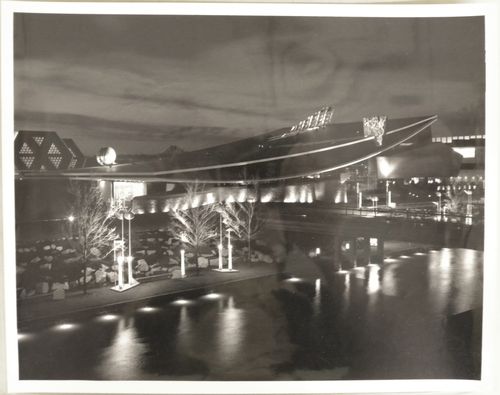
"Le Pavillon de l'Italie à l'Expo 67 ----- En terme d'architecture, le toit du pavillon est une voile couchée. Le Pavillon entier semble flotter dans l'air. Sur le toit, trois sculptures symbolisent les trois secteurs d'exposition du Pavillon: la Poésie, les Moeurs et le Progrès. / Italian pavilion at Expo....... the most outstanding architectural feature of the Italian pavilion is its sloping roof which soars independent of the underlying structures. Three symbolic sculptures which also summarize the whole interior exhibit stand in full view upton the roof."--Description.
ARCH255963
Description:
"Le Pavillon de l'Italie à l'Expo 67 ----- En terme d'architecture, le toit du pavillon est une voile couchée. Le Pavillon entier semble flotter dans l'air. Sur le toit, trois sculptures symbolisent les trois secteurs d'exposition du Pavillon: la Poésie, les Moeurs et le Progrès. / Italian pavilion at Expo....... the most outstanding architectural feature of the Italian pavilion is its sloping roof which soars independent of the underlying structures. Three symbolic sculptures which also summarize the whole interior exhibit stand in full view upton the roof."--Description.
Personnes et institutions:
Date:
1967?
1967?
Titre:
Night view of the Pavilion of Italy with its scupltures on roof, Expo 67, Montréal, Québec
Actions:
ARCH255963
Description:
"Le Pavillon de l'Italie à l'Expo 67 ----- En terme d'architecture, le toit du pavillon est une voile couchée. Le Pavillon entier semble flotter dans l'air. Sur le toit, trois sculptures symbolisent les trois secteurs d'exposition du Pavillon: la Poésie, les Moeurs et le Progrès. / Italian pavilion at Expo....... the most outstanding architectural feature of the Italian pavilion is its sloping roof which soars independent of the underlying structures. Three symbolic sculptures which also summarize the whole interior exhibit stand in full view upton the roof."--Description.
Night view of the Pavilion of Italy with its scupltures on roof, Expo 67, Montréal, Québec
Actions:
ARCH255963
Description:
"Le Pavillon de l'Italie à l'Expo 67 ----- En terme d'architecture, le toit du pavillon est une voile couchée. Le Pavillon entier semble flotter dans l'air. Sur le toit, trois sculptures symbolisent les trois secteurs d'exposition du Pavillon: la Poésie, les Moeurs et le Progrès. / Italian pavilion at Expo....... the most outstanding architectural feature of the Italian pavilion is its sloping roof which soars independent of the underlying structures. Three symbolic sculptures which also summarize the whole interior exhibit stand in full view upton the roof."--Description.
Classification:
photographies
photographies
Date:
1967?
1967?
Personnes et institutions:


