


44145 Résultats
Classification:
articles
articles
Actions:
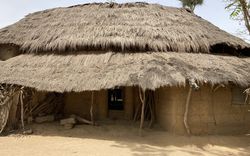
Nzinga B. Mboup discute avec Jean-Augustin Carvalho, Fodé Diop, Andrée Diop-Depret et Xavier Ricou
Publié:
24 février 2025
24 février 2025
Titre:
La valorisation du patrimoine architectural sénégalais, entre pédagogie et pratique
Nzinga B. Mboup discute avec Jean-Augustin Carvalho, Fodé Diop, Andrée Diop-Depret et Xavier Ricou
Actions:
La valorisation du patrimoine architectural sénégalais, entre pédagogie et pratique
Nzinga B. Mboup discute avec Jean-Augustin Carvalho, Fodé Diop, Andrée Diop-Depret et Xavier Ricou
Actions:
Classification:
articles
articles
Publié:
24 février 2025
24 février 2025
Niveau de description archivistique:
Projet
Projet
Numéro de référence:
AP166.S1.1991.PR2
Description:
This project series documents the project "Glass Station", a gas station constructed on an irregularly-shaped site at the entrance to the town of Oguni in Kumamoto Prefecture, Japan. The project was completed in 1993. The office, pumps, shop and work space of the service station are covered by an undulating canopy composed of asymmetrical concrete arches that form the boundaries of a lattice of pretensioned steel rods and aluminum channels into which panels of glass bonded to sheets of perforated stainless steel were inserted, sealed with polyester film, and secured with structural silicon. The project series is chiefly composed of design development drawings. It includes numbered sets of architectural drawings and structural drawings and some mechanical and electrical drawings. There is a set of unnumbered ink drawings and reproductions related to the geometry of the canopy. There are also some images of the canopy that are output from a computer file or files (wireframes and renderings). There is a small amount of textual material related to technical data and form finding for the canopy. The file also includes 2 study models. There are some graphic design documents for the name of the project and for the name "IDEX". Material in this file was created between 1990 and 1993.
AP166.S1.1991.PR2
Description:
This project series documents the project "Glass Station", a gas station constructed on an irregularly-shaped site at the entrance to the town of Oguni in Kumamoto Prefecture, Japan. The project was completed in 1993. The office, pumps, shop and work space of the service station are covered by an undulating canopy composed of asymmetrical concrete arches that form the boundaries of a lattice of pretensioned steel rods and aluminum channels into which panels of glass bonded to sheets of perforated stainless steel were inserted, sealed with polyester film, and secured with structural silicon. The project series is chiefly composed of design development drawings. It includes numbered sets of architectural drawings and structural drawings and some mechanical and electrical drawings. There is a set of unnumbered ink drawings and reproductions related to the geometry of the canopy. There are also some images of the canopy that are output from a computer file or files (wireframes and renderings). There is a small amount of textual material related to technical data and form finding for the canopy. The file also includes 2 study models. There are some graphic design documents for the name of the project and for the name "IDEX". Material in this file was created between 1990 and 1993.
Personnes et institutions:
Date:
1990-1993
1990-1993
Titre:
Glass Station, Oguni, Japan (1990-1993)
Actions:
AP166.S1.1991.PR2
Description:
This project series documents the project "Glass Station", a gas station constructed on an irregularly-shaped site at the entrance to the town of Oguni in Kumamoto Prefecture, Japan. The project was completed in 1993. The office, pumps, shop and work space of the service station are covered by an undulating canopy composed of asymmetrical concrete arches that form the boundaries of a lattice of pretensioned steel rods and aluminum channels into which panels of glass bonded to sheets of perforated stainless steel were inserted, sealed with polyester film, and secured with structural silicon. The project series is chiefly composed of design development drawings. It includes numbered sets of architectural drawings and structural drawings and some mechanical and electrical drawings. There is a set of unnumbered ink drawings and reproductions related to the geometry of the canopy. There are also some images of the canopy that are output from a computer file or files (wireframes and renderings). There is a small amount of textual material related to technical data and form finding for the canopy. The file also includes 2 study models. There are some graphic design documents for the name of the project and for the name "IDEX". Material in this file was created between 1990 and 1993.
Glass Station, Oguni, Japan (1990-1993)
Actions:
AP166.S1.1991.PR2
Description:
This project series documents the project "Glass Station", a gas station constructed on an irregularly-shaped site at the entrance to the town of Oguni in Kumamoto Prefecture, Japan. The project was completed in 1993. The office, pumps, shop and work space of the service station are covered by an undulating canopy composed of asymmetrical concrete arches that form the boundaries of a lattice of pretensioned steel rods and aluminum channels into which panels of glass bonded to sheets of perforated stainless steel were inserted, sealed with polyester film, and secured with structural silicon. The project series is chiefly composed of design development drawings. It includes numbered sets of architectural drawings and structural drawings and some mechanical and electrical drawings. There is a set of unnumbered ink drawings and reproductions related to the geometry of the canopy. There are also some images of the canopy that are output from a computer file or files (wireframes and renderings). There is a small amount of textual material related to technical data and form finding for the canopy. The file also includes 2 study models. There are some graphic design documents for the name of the project and for the name "IDEX". Material in this file was created between 1990 and 1993.
Niveau de description archivistique:
project
project
Date:
1990-1993
1990-1993
Personnes et institutions:
Classification:
photographies
photographies
Numéro de référence:
ARCH193290
Description:
Excavation, rock excavation, crushing plant, screen units, drafts tube formwork for power house, draft tubes, mucking machine in tunnel, channel, joy drill, mobile crane, batching plant, tunnel work, conduit tunnel, shaft sinking, cribwork, suspended drilling, photos of movement and placing intake form for headblock #6, headblock #6 and #7, aerial view of tailrace, bailey bridges, powerhouse, photos of flood during strike, steel liners going into powerhouse, generators shafts, turbines, lowering rotor into final position, control room, blasting the plug, general view of tailrace from powerhouse, generator start-up, tailrace at low tide, permanent equipment in powerhouse (also Gilles Leonard later mayor of Baie Comeau).
ARCH193290
Description:
Excavation, rock excavation, crushing plant, screen units, drafts tube formwork for power house, draft tubes, mucking machine in tunnel, channel, joy drill, mobile crane, batching plant, tunnel work, conduit tunnel, shaft sinking, cribwork, suspended drilling, photos of movement and placing intake form for headblock #6, headblock #6 and #7, aerial view of tailrace, bailey bridges, powerhouse, photos of flood during strike, steel liners going into powerhouse, generators shafts, turbines, lowering rotor into final position, control room, blasting the plug, general view of tailrace from powerhouse, generator start-up, tailrace at low tide, permanent equipment in powerhouse (also Gilles Leonard later mayor of Baie Comeau).
Personnes et institutions:
Date:
entre avril et novembre 1956
entre avril et novembre 1956
Titre:
Album de photographies relatives au barrage McCormick, Rivière Manicouagan, à l'ouest de Baie Comeau, Québec
Actions:
ARCH193290
Description:
Excavation, rock excavation, crushing plant, screen units, drafts tube formwork for power house, draft tubes, mucking machine in tunnel, channel, joy drill, mobile crane, batching plant, tunnel work, conduit tunnel, shaft sinking, cribwork, suspended drilling, photos of movement and placing intake form for headblock #6, headblock #6 and #7, aerial view of tailrace, bailey bridges, powerhouse, photos of flood during strike, steel liners going into powerhouse, generators shafts, turbines, lowering rotor into final position, control room, blasting the plug, general view of tailrace from powerhouse, generator start-up, tailrace at low tide, permanent equipment in powerhouse (also Gilles Leonard later mayor of Baie Comeau).
Album de photographies relatives au barrage McCormick, Rivière Manicouagan, à l'ouest de Baie Comeau, Québec
Actions:
ARCH193290
Description:
Excavation, rock excavation, crushing plant, screen units, drafts tube formwork for power house, draft tubes, mucking machine in tunnel, channel, joy drill, mobile crane, batching plant, tunnel work, conduit tunnel, shaft sinking, cribwork, suspended drilling, photos of movement and placing intake form for headblock #6, headblock #6 and #7, aerial view of tailrace, bailey bridges, powerhouse, photos of flood during strike, steel liners going into powerhouse, generators shafts, turbines, lowering rotor into final position, control room, blasting the plug, general view of tailrace from powerhouse, generator start-up, tailrace at low tide, permanent equipment in powerhouse (also Gilles Leonard later mayor of Baie Comeau).
Classification:
photographies
photographies
Date:
entre avril et novembre 1956
entre avril et novembre 1956
Personnes et institutions:
Classification:
photographies
photographies
Numéro de référence:
ARCH193291
Description:
Excavation, rock excavation, crushing plant, screen units, drafts tube formwork for power house, draft tubes, mucking machine in tunnel, channel, joy drill, mobile crane, batching plant, tunnel work, conduit tunnel, shaft sinking, cribwork, suspended drilling, photos of movement and placing intake form for headblock #6, headblock #6 and #7, aerial view of tailrace, bailey bridges, powerhouse, photos of flood during strike, steel liners going into powerhouse, generators shafts, turbines, lowering rotor into final position, control room, blasting the plug, general view of tailrace from powerhouse, generator start-up, tailrace at low tide, permanent equipment in powerhouse (also Gilles Leonard later mayor of Baie Comeau).
ARCH193291
Description:
Excavation, rock excavation, crushing plant, screen units, drafts tube formwork for power house, draft tubes, mucking machine in tunnel, channel, joy drill, mobile crane, batching plant, tunnel work, conduit tunnel, shaft sinking, cribwork, suspended drilling, photos of movement and placing intake form for headblock #6, headblock #6 and #7, aerial view of tailrace, bailey bridges, powerhouse, photos of flood during strike, steel liners going into powerhouse, generators shafts, turbines, lowering rotor into final position, control room, blasting the plug, general view of tailrace from powerhouse, generator start-up, tailrace at low tide, permanent equipment in powerhouse (also Gilles Leonard later mayor of Baie Comeau).
Personnes et institutions:
Date:
entre novembre 1956 et août 1957
entre novembre 1956 et août 1957
Titre:
Album de photographies relatives au barrage McCormick, Rivière Manicouagan, à l'ouest de Baie Comeau, Québec
Actions:
ARCH193291
Description:
Excavation, rock excavation, crushing plant, screen units, drafts tube formwork for power house, draft tubes, mucking machine in tunnel, channel, joy drill, mobile crane, batching plant, tunnel work, conduit tunnel, shaft sinking, cribwork, suspended drilling, photos of movement and placing intake form for headblock #6, headblock #6 and #7, aerial view of tailrace, bailey bridges, powerhouse, photos of flood during strike, steel liners going into powerhouse, generators shafts, turbines, lowering rotor into final position, control room, blasting the plug, general view of tailrace from powerhouse, generator start-up, tailrace at low tide, permanent equipment in powerhouse (also Gilles Leonard later mayor of Baie Comeau).
Album de photographies relatives au barrage McCormick, Rivière Manicouagan, à l'ouest de Baie Comeau, Québec
Actions:
ARCH193291
Description:
Excavation, rock excavation, crushing plant, screen units, drafts tube formwork for power house, draft tubes, mucking machine in tunnel, channel, joy drill, mobile crane, batching plant, tunnel work, conduit tunnel, shaft sinking, cribwork, suspended drilling, photos of movement and placing intake form for headblock #6, headblock #6 and #7, aerial view of tailrace, bailey bridges, powerhouse, photos of flood during strike, steel liners going into powerhouse, generators shafts, turbines, lowering rotor into final position, control room, blasting the plug, general view of tailrace from powerhouse, generator start-up, tailrace at low tide, permanent equipment in powerhouse (also Gilles Leonard later mayor of Baie Comeau).
Classification:
photographies
photographies
Date:
entre novembre 1956 et août 1957
entre novembre 1956 et août 1957
Personnes et institutions:
Classification:
photographies
photographies
Numéro de référence:
ARCH193292
Description:
Excavation, rock excavation, crushing plant, screen units, drafts tube formwork for power house, draft tubes, mucking machine in tunnel, channel, joy drill, mobile crane, batching plant, tunnel work, conduit tunnel, shaft sinking, cribwork, suspended drilling, photos of movement and placing intake form for headblock #6, headblock #6 and #7, aerial view of tailrace, bailey bridges, powerhouse, photos of flood during strike, steel liners going into powerhouse, generators shafts, turbines, lowering rotor into final position, control room, blasting the plug, general view of tailrace from powerhouse, generator start-up, tailrace at low tide, permanent equipment in powerhouse (also Gilles Leonard later mayor of Baie Comeau).
ARCH193292
Description:
Excavation, rock excavation, crushing plant, screen units, drafts tube formwork for power house, draft tubes, mucking machine in tunnel, channel, joy drill, mobile crane, batching plant, tunnel work, conduit tunnel, shaft sinking, cribwork, suspended drilling, photos of movement and placing intake form for headblock #6, headblock #6 and #7, aerial view of tailrace, bailey bridges, powerhouse, photos of flood during strike, steel liners going into powerhouse, generators shafts, turbines, lowering rotor into final position, control room, blasting the plug, general view of tailrace from powerhouse, generator start-up, tailrace at low tide, permanent equipment in powerhouse (also Gilles Leonard later mayor of Baie Comeau).
Personnes et institutions:
Date:
entre août 1957 et décembre 1957
entre août 1957 et décembre 1957
Titre:
Album de photographies relatives au barrage McCormick, Rivière Manicouagan, à l'ouest de Baie Comeau, Québec
Actions:
ARCH193292
Description:
Excavation, rock excavation, crushing plant, screen units, drafts tube formwork for power house, draft tubes, mucking machine in tunnel, channel, joy drill, mobile crane, batching plant, tunnel work, conduit tunnel, shaft sinking, cribwork, suspended drilling, photos of movement and placing intake form for headblock #6, headblock #6 and #7, aerial view of tailrace, bailey bridges, powerhouse, photos of flood during strike, steel liners going into powerhouse, generators shafts, turbines, lowering rotor into final position, control room, blasting the plug, general view of tailrace from powerhouse, generator start-up, tailrace at low tide, permanent equipment in powerhouse (also Gilles Leonard later mayor of Baie Comeau).
Album de photographies relatives au barrage McCormick, Rivière Manicouagan, à l'ouest de Baie Comeau, Québec
Actions:
ARCH193292
Description:
Excavation, rock excavation, crushing plant, screen units, drafts tube formwork for power house, draft tubes, mucking machine in tunnel, channel, joy drill, mobile crane, batching plant, tunnel work, conduit tunnel, shaft sinking, cribwork, suspended drilling, photos of movement and placing intake form for headblock #6, headblock #6 and #7, aerial view of tailrace, bailey bridges, powerhouse, photos of flood during strike, steel liners going into powerhouse, generators shafts, turbines, lowering rotor into final position, control room, blasting the plug, general view of tailrace from powerhouse, generator start-up, tailrace at low tide, permanent equipment in powerhouse (also Gilles Leonard later mayor of Baie Comeau).
Classification:
photographies
photographies
Date:
entre août 1957 et décembre 1957
entre août 1957 et décembre 1957
Personnes et institutions:
Niveau de description archivistique:
Projet
Projet
Numéro de référence:
AP207.S1.2001.PR01
Description:
The project series documents "Achipensierio" a series of installations designed by Pettena from 2001 to 2018. The installation consists of variations of a building frame either made of metal beams or trellis covered in plants or straw. The building frame is designed to change form and appears deconstructed depending on the point of view. "Described by Gianni Pettena as “a contemporary Stonehenge,” but also as “a lesson in spatial perception,” this work metaphorically reaffirms the idea that there are no longer any frontiers today, when one is referring to themes relating to physical space, between the sensibility of the architect and that of the environmental artist." [1] The "Archipensierio" installations were presented in various venues from 2001 to 2018, including: "Archipensierio 2" at the Manifesta 7 in Rovereto, in 2008; "Archipensierio 5" at the Court Carrée du Louvre, in Parigi, for FIAC 2009; and "Archipensierio 6" at the UMOCA, in Salt Lake City, in 2013. The project series contains sketches, elevations, plans, drawings and photographs of the installations. It also includes a small model for the Archipensierio I, 2001 installation. Source: [1] Gianni Pettena website, https://www.giannipettena.it/italiano/opere-1/inst-archithoughts-2001/ (last accessed 22 January 2020).
AP207.S1.2001.PR01
Description:
The project series documents "Achipensierio" a series of installations designed by Pettena from 2001 to 2018. The installation consists of variations of a building frame either made of metal beams or trellis covered in plants or straw. The building frame is designed to change form and appears deconstructed depending on the point of view. "Described by Gianni Pettena as “a contemporary Stonehenge,” but also as “a lesson in spatial perception,” this work metaphorically reaffirms the idea that there are no longer any frontiers today, when one is referring to themes relating to physical space, between the sensibility of the architect and that of the environmental artist." [1] The "Archipensierio" installations were presented in various venues from 2001 to 2018, including: "Archipensierio 2" at the Manifesta 7 in Rovereto, in 2008; "Archipensierio 5" at the Court Carrée du Louvre, in Parigi, for FIAC 2009; and "Archipensierio 6" at the UMOCA, in Salt Lake City, in 2013. The project series contains sketches, elevations, plans, drawings and photographs of the installations. It also includes a small model for the Archipensierio I, 2001 installation. Source: [1] Gianni Pettena website, https://www.giannipettena.it/italiano/opere-1/inst-archithoughts-2001/ (last accessed 22 January 2020).
Personnes et institutions:
Date:
2001-2018
2001-2018
Titre:
Archipensierio [Architoughts] 2001
Actions:
AP207.S1.2001.PR01
Description:
The project series documents "Achipensierio" a series of installations designed by Pettena from 2001 to 2018. The installation consists of variations of a building frame either made of metal beams or trellis covered in plants or straw. The building frame is designed to change form and appears deconstructed depending on the point of view. "Described by Gianni Pettena as “a contemporary Stonehenge,” but also as “a lesson in spatial perception,” this work metaphorically reaffirms the idea that there are no longer any frontiers today, when one is referring to themes relating to physical space, between the sensibility of the architect and that of the environmental artist." [1] The "Archipensierio" installations were presented in various venues from 2001 to 2018, including: "Archipensierio 2" at the Manifesta 7 in Rovereto, in 2008; "Archipensierio 5" at the Court Carrée du Louvre, in Parigi, for FIAC 2009; and "Archipensierio 6" at the UMOCA, in Salt Lake City, in 2013. The project series contains sketches, elevations, plans, drawings and photographs of the installations. It also includes a small model for the Archipensierio I, 2001 installation. Source: [1] Gianni Pettena website, https://www.giannipettena.it/italiano/opere-1/inst-archithoughts-2001/ (last accessed 22 January 2020).
Archipensierio [Architoughts] 2001
Actions:
AP207.S1.2001.PR01
Description:
The project series documents "Achipensierio" a series of installations designed by Pettena from 2001 to 2018. The installation consists of variations of a building frame either made of metal beams or trellis covered in plants or straw. The building frame is designed to change form and appears deconstructed depending on the point of view. "Described by Gianni Pettena as “a contemporary Stonehenge,” but also as “a lesson in spatial perception,” this work metaphorically reaffirms the idea that there are no longer any frontiers today, when one is referring to themes relating to physical space, between the sensibility of the architect and that of the environmental artist." [1] The "Archipensierio" installations were presented in various venues from 2001 to 2018, including: "Archipensierio 2" at the Manifesta 7 in Rovereto, in 2008; "Archipensierio 5" at the Court Carrée du Louvre, in Parigi, for FIAC 2009; and "Archipensierio 6" at the UMOCA, in Salt Lake City, in 2013. The project series contains sketches, elevations, plans, drawings and photographs of the installations. It also includes a small model for the Archipensierio I, 2001 installation. Source: [1] Gianni Pettena website, https://www.giannipettena.it/italiano/opere-1/inst-archithoughts-2001/ (last accessed 22 January 2020).
Niveau de description archivistique:
Project
Project
Date:
2001-2018
2001-2018
Personnes et institutions:
Niveau de description archivistique:
Projet
Projet
Actions:
Numéro de référence:
CI007.S1.1939.PR01
Description:
This project series documents Mies van der Rohe project for the Illinois Institute of Techology in Chicago, Illinois, United States. This series includes documents related to his project for the Illinois Institute of Technology Campus Master Plan (1936-1958), and his work on various pavilion of the campus: the Boiler Plant (1945-1946), the Field House Building, Gymnasium, Natatorium (1939-1945), the Metallurgy and Chemical Engineering Building (Perlstein Hall) (1944-1947), the Minerals and Metals Research Building (1942-1943), and the Robert F. Carr Memorial Chapel of Saint Savior (1949-1952). The material in this series was produced between 1939 and 1958, with a bulk of material from 1930 to 1946. The series contains drawings and sketches by Mies van der Rohe, predominantly related to the the Metallurgy and Chemical Engineering Building (Perlstein Hall), the Field House Building, Gymnasium, Natatorium, and the Minerals and Metals Research Building, and also photographs of some of the drawings and exterior views of the Boiler Plant photographed by Hedrich-Blessing. The series also includes a few textual records of notes and calculations for the Field House Building, Gymnasium, Natatorium.
CI007.S1.1939.PR01
Description:
This project series documents Mies van der Rohe project for the Illinois Institute of Techology in Chicago, Illinois, United States. This series includes documents related to his project for the Illinois Institute of Technology Campus Master Plan (1936-1958), and his work on various pavilion of the campus: the Boiler Plant (1945-1946), the Field House Building, Gymnasium, Natatorium (1939-1945), the Metallurgy and Chemical Engineering Building (Perlstein Hall) (1944-1947), the Minerals and Metals Research Building (1942-1943), and the Robert F. Carr Memorial Chapel of Saint Savior (1949-1952). The material in this series was produced between 1939 and 1958, with a bulk of material from 1930 to 1946. The series contains drawings and sketches by Mies van der Rohe, predominantly related to the the Metallurgy and Chemical Engineering Building (Perlstein Hall), the Field House Building, Gymnasium, Natatorium, and the Minerals and Metals Research Building, and also photographs of some of the drawings and exterior views of the Boiler Plant photographed by Hedrich-Blessing. The series also includes a few textual records of notes and calculations for the Field House Building, Gymnasium, Natatorium.
Personnes et institutions:
Date:
1936-1958
1936-1958
Titre:
Illinois Institute of Technology, Chicago, Illinois, United States (1939-1958)
Actions:
CI007.S1.1939.PR01
Description:
This project series documents Mies van der Rohe project for the Illinois Institute of Techology in Chicago, Illinois, United States. This series includes documents related to his project for the Illinois Institute of Technology Campus Master Plan (1936-1958), and his work on various pavilion of the campus: the Boiler Plant (1945-1946), the Field House Building, Gymnasium, Natatorium (1939-1945), the Metallurgy and Chemical Engineering Building (Perlstein Hall) (1944-1947), the Minerals and Metals Research Building (1942-1943), and the Robert F. Carr Memorial Chapel of Saint Savior (1949-1952). The material in this series was produced between 1939 and 1958, with a bulk of material from 1930 to 1946. The series contains drawings and sketches by Mies van der Rohe, predominantly related to the the Metallurgy and Chemical Engineering Building (Perlstein Hall), the Field House Building, Gymnasium, Natatorium, and the Minerals and Metals Research Building, and also photographs of some of the drawings and exterior views of the Boiler Plant photographed by Hedrich-Blessing. The series also includes a few textual records of notes and calculations for the Field House Building, Gymnasium, Natatorium.
Illinois Institute of Technology, Chicago, Illinois, United States (1939-1958)
Actions:
CI007.S1.1939.PR01
Description:
This project series documents Mies van der Rohe project for the Illinois Institute of Techology in Chicago, Illinois, United States. This series includes documents related to his project for the Illinois Institute of Technology Campus Master Plan (1936-1958), and his work on various pavilion of the campus: the Boiler Plant (1945-1946), the Field House Building, Gymnasium, Natatorium (1939-1945), the Metallurgy and Chemical Engineering Building (Perlstein Hall) (1944-1947), the Minerals and Metals Research Building (1942-1943), and the Robert F. Carr Memorial Chapel of Saint Savior (1949-1952). The material in this series was produced between 1939 and 1958, with a bulk of material from 1930 to 1946. The series contains drawings and sketches by Mies van der Rohe, predominantly related to the the Metallurgy and Chemical Engineering Building (Perlstein Hall), the Field House Building, Gymnasium, Natatorium, and the Minerals and Metals Research Building, and also photographs of some of the drawings and exterior views of the Boiler Plant photographed by Hedrich-Blessing. The series also includes a few textual records of notes and calculations for the Field House Building, Gymnasium, Natatorium.
Niveau de description archivistique:
project
project
Date:
1936-1958
1936-1958
Personnes et institutions:
Classification:
photographies
photographies
Actions:
Numéro de référence:
PH2018:0005:010
Description:
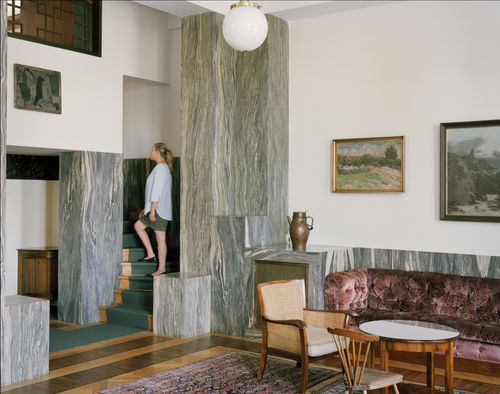
Photograph by Stefano Graziani of the following work: Adolf Loos, Villa Muller (Maria Szadkowska, Curatrice di Villa Muller), 1928, The City of Prague Museum Questioning Pictures is a 36 photograph project commissioned by Fondazione Prada, Milan. Artist Stefano Graziani investigates archival and conservation systems in a number of museums. Through photographing museum objects, Graziani, focusing on the relationship between photographs, the museum objects and the power structures at play within institutions. The museums include the Canadian Centre for Architecture (CCA) in Montréal, Canada; Sir John Soane’s Museum in London, UK; the Kunstmuseum Basel, Switzerland; Museum Insel Hombroich in Neuss, Germany; the Museo di Castelvecchio in Verona, Italy; and the Plaster Cast Gallery at Museo Canova in Possagno, Italy.
PH2018:0005:010
Description:
Photograph by Stefano Graziani of the following work: Adolf Loos, Villa Muller (Maria Szadkowska, Curatrice di Villa Muller), 1928, The City of Prague Museum Questioning Pictures is a 36 photograph project commissioned by Fondazione Prada, Milan. Artist Stefano Graziani investigates archival and conservation systems in a number of museums. Through photographing museum objects, Graziani, focusing on the relationship between photographs, the museum objects and the power structures at play within institutions. The museums include the Canadian Centre for Architecture (CCA) in Montréal, Canada; Sir John Soane’s Museum in London, UK; the Kunstmuseum Basel, Switzerland; Museum Insel Hombroich in Neuss, Germany; the Museo di Castelvecchio in Verona, Italy; and the Plaster Cast Gallery at Museo Canova in Possagno, Italy.
Personnes et institutions:
Date:
2017
2017
Titre:
Questioning Pictures: Photograph of Villa Muller (Maria Szadkowska, Curatrice di Villa Muller), inkjet print by Adolf Loos, 1928
Actions:
PH2018:0005:010
Description:
Photograph by Stefano Graziani of the following work: Adolf Loos, Villa Muller (Maria Szadkowska, Curatrice di Villa Muller), 1928, The City of Prague Museum Questioning Pictures is a 36 photograph project commissioned by Fondazione Prada, Milan. Artist Stefano Graziani investigates archival and conservation systems in a number of museums. Through photographing museum objects, Graziani, focusing on the relationship between photographs, the museum objects and the power structures at play within institutions. The museums include the Canadian Centre for Architecture (CCA) in Montréal, Canada; Sir John Soane’s Museum in London, UK; the Kunstmuseum Basel, Switzerland; Museum Insel Hombroich in Neuss, Germany; the Museo di Castelvecchio in Verona, Italy; and the Plaster Cast Gallery at Museo Canova in Possagno, Italy.
Questioning Pictures: Photograph of Villa Muller (Maria Szadkowska, Curatrice di Villa Muller), inkjet print by Adolf Loos, 1928
Actions:
PH2018:0005:010
Description:
Photograph by Stefano Graziani of the following work: Adolf Loos, Villa Muller (Maria Szadkowska, Curatrice di Villa Muller), 1928, The City of Prague Museum Questioning Pictures is a 36 photograph project commissioned by Fondazione Prada, Milan. Artist Stefano Graziani investigates archival and conservation systems in a number of museums. Through photographing museum objects, Graziani, focusing on the relationship between photographs, the museum objects and the power structures at play within institutions. The museums include the Canadian Centre for Architecture (CCA) in Montréal, Canada; Sir John Soane’s Museum in London, UK; the Kunstmuseum Basel, Switzerland; Museum Insel Hombroich in Neuss, Germany; the Museo di Castelvecchio in Verona, Italy; and the Plaster Cast Gallery at Museo Canova in Possagno, Italy.
Classification:
photographies
photographies
Date:
2017
2017
Personnes et institutions:
Classification:
photographies
photographies
Actions:
Numéro de référence:
PH2018:0005:013
Description:
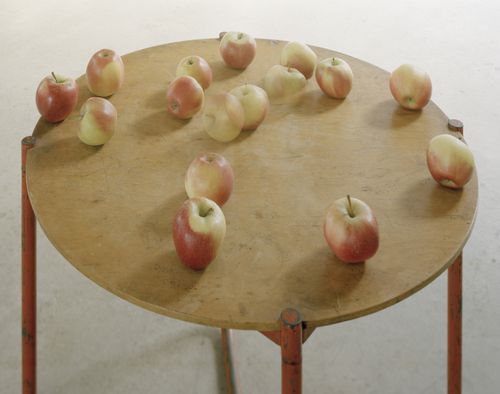
Photograph by Stefano Graziani of the following work: Nature morte, MR Table, Thonet, Ludwig Mies van der Rohe, 1935, Stiftung Insel Hombroich, Neuss Questioning Pictures is a 36 photograph project commissioned by Fondazione Prada, Milan. Artist Stefano Graziani investigates archival and conservation systems in a number of museums. Through photographing museum objects, Graziani, focusing on the relationship between photographs, the museum objects and the power structures at play within institutions. The museums include the Canadian Centre for Architecture (CCA) in Montréal, Canada; Sir John Soane’s Museum in London, UK; the Kunstmuseum Basel, Switzerland; Museum Insel Hombroich in Neuss, Germany; the Museo di Castelvecchio in Verona, Italy; and the Plaster Cast Gallery at Museo Canova in Possagno, Italy.
PH2018:0005:013
Description:
Photograph by Stefano Graziani of the following work: Nature morte, MR Table, Thonet, Ludwig Mies van der Rohe, 1935, Stiftung Insel Hombroich, Neuss Questioning Pictures is a 36 photograph project commissioned by Fondazione Prada, Milan. Artist Stefano Graziani investigates archival and conservation systems in a number of museums. Through photographing museum objects, Graziani, focusing on the relationship between photographs, the museum objects and the power structures at play within institutions. The museums include the Canadian Centre for Architecture (CCA) in Montréal, Canada; Sir John Soane’s Museum in London, UK; the Kunstmuseum Basel, Switzerland; Museum Insel Hombroich in Neuss, Germany; the Museo di Castelvecchio in Verona, Italy; and the Plaster Cast Gallery at Museo Canova in Possagno, Italy.
Personnes et institutions:
Date:
2017
2017
Titre:
Questioning Pictures: Photograph of Nature Morta and MR Table by Ludwig Mies van der Rohe for Thonet, 1935
Actions:
PH2018:0005:013
Description:
Photograph by Stefano Graziani of the following work: Nature morte, MR Table, Thonet, Ludwig Mies van der Rohe, 1935, Stiftung Insel Hombroich, Neuss Questioning Pictures is a 36 photograph project commissioned by Fondazione Prada, Milan. Artist Stefano Graziani investigates archival and conservation systems in a number of museums. Through photographing museum objects, Graziani, focusing on the relationship between photographs, the museum objects and the power structures at play within institutions. The museums include the Canadian Centre for Architecture (CCA) in Montréal, Canada; Sir John Soane’s Museum in London, UK; the Kunstmuseum Basel, Switzerland; Museum Insel Hombroich in Neuss, Germany; the Museo di Castelvecchio in Verona, Italy; and the Plaster Cast Gallery at Museo Canova in Possagno, Italy.
Questioning Pictures: Photograph of Nature Morta and MR Table by Ludwig Mies van der Rohe for Thonet, 1935
Actions:
PH2018:0005:013
Description:
Photograph by Stefano Graziani of the following work: Nature morte, MR Table, Thonet, Ludwig Mies van der Rohe, 1935, Stiftung Insel Hombroich, Neuss Questioning Pictures is a 36 photograph project commissioned by Fondazione Prada, Milan. Artist Stefano Graziani investigates archival and conservation systems in a number of museums. Through photographing museum objects, Graziani, focusing on the relationship between photographs, the museum objects and the power structures at play within institutions. The museums include the Canadian Centre for Architecture (CCA) in Montréal, Canada; Sir John Soane’s Museum in London, UK; the Kunstmuseum Basel, Switzerland; Museum Insel Hombroich in Neuss, Germany; the Museo di Castelvecchio in Verona, Italy; and the Plaster Cast Gallery at Museo Canova in Possagno, Italy.
Classification:
photographies
photographies
Date:
2017
2017
Personnes et institutions:
Classification:
photographies
photographies
Actions:
Numéro de référence:
PH2018:0005:021
Description:
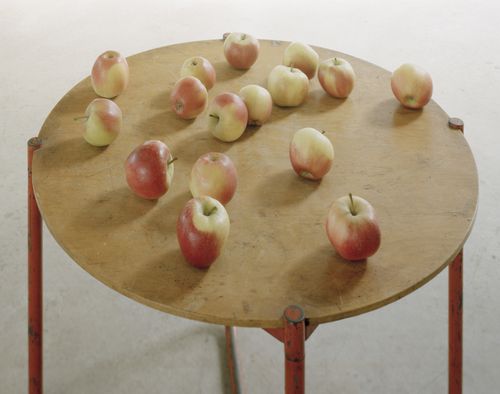
Photograph by Stefano Graziani of the following work: Natura morta, MR Table, Thonet, Ludwig Mies van der Rohe, 1935, Stiftung Insel Hombroich, Neuss Questioning Pictures is a 36 photograph project commissioned by Fondazione Prada, Milan. Artist Stefano Graziani investigates archival and conservation systems in a number of museums. Through photographing museum objects, Graziani, focusing on the relationship between photographs, the museum objects and the power structures at play within institutions. The museums include the Canadian Centre for Architecture (CCA) in Montréal, Canada; Sir John Soane’s Museum in London, UK; the Kunstmuseum Basel, Switzerland; Museum Insel Hombroich in Neuss, Germany; the Museo di Castelvecchio in Verona, Italy; and the Plaster Cast Gallery at Museo Canova in Possagno, Italy.
PH2018:0005:021
Description:
Photograph by Stefano Graziani of the following work: Natura morta, MR Table, Thonet, Ludwig Mies van der Rohe, 1935, Stiftung Insel Hombroich, Neuss Questioning Pictures is a 36 photograph project commissioned by Fondazione Prada, Milan. Artist Stefano Graziani investigates archival and conservation systems in a number of museums. Through photographing museum objects, Graziani, focusing on the relationship between photographs, the museum objects and the power structures at play within institutions. The museums include the Canadian Centre for Architecture (CCA) in Montréal, Canada; Sir John Soane’s Museum in London, UK; the Kunstmuseum Basel, Switzerland; Museum Insel Hombroich in Neuss, Germany; the Museo di Castelvecchio in Verona, Italy; and the Plaster Cast Gallery at Museo Canova in Possagno, Italy.
Personnes et institutions:
Date:
2016
2016
Titre:
Questioning Pictures: Photograph of Nature Morta and MR Table by Ludwig Mies van der Rohe for Thonet, 1935
Actions:
PH2018:0005:021
Description:
Photograph by Stefano Graziani of the following work: Natura morta, MR Table, Thonet, Ludwig Mies van der Rohe, 1935, Stiftung Insel Hombroich, Neuss Questioning Pictures is a 36 photograph project commissioned by Fondazione Prada, Milan. Artist Stefano Graziani investigates archival and conservation systems in a number of museums. Through photographing museum objects, Graziani, focusing on the relationship between photographs, the museum objects and the power structures at play within institutions. The museums include the Canadian Centre for Architecture (CCA) in Montréal, Canada; Sir John Soane’s Museum in London, UK; the Kunstmuseum Basel, Switzerland; Museum Insel Hombroich in Neuss, Germany; the Museo di Castelvecchio in Verona, Italy; and the Plaster Cast Gallery at Museo Canova in Possagno, Italy.
Questioning Pictures: Photograph of Nature Morta and MR Table by Ludwig Mies van der Rohe for Thonet, 1935
Actions:
PH2018:0005:021
Description:
Photograph by Stefano Graziani of the following work: Natura morta, MR Table, Thonet, Ludwig Mies van der Rohe, 1935, Stiftung Insel Hombroich, Neuss Questioning Pictures is a 36 photograph project commissioned by Fondazione Prada, Milan. Artist Stefano Graziani investigates archival and conservation systems in a number of museums. Through photographing museum objects, Graziani, focusing on the relationship between photographs, the museum objects and the power structures at play within institutions. The museums include the Canadian Centre for Architecture (CCA) in Montréal, Canada; Sir John Soane’s Museum in London, UK; the Kunstmuseum Basel, Switzerland; Museum Insel Hombroich in Neuss, Germany; the Museo di Castelvecchio in Verona, Italy; and the Plaster Cast Gallery at Museo Canova in Possagno, Italy.
Classification:
photographies
photographies
Date:
2016
2016
Personnes et institutions:


