


1699 Résultats
Classification:
livres
livres
Actions:
Prix:
$40.00
(disponible sur commande)
Résumé:
In ''Street Archives and City Life'', Emily Callaci maps a new terrain of political and cultural production in mid- to late twentieth-century Tanzanian urban landscapes. While the postcolonial Tanzanian ruling party (TANU) adopted a policy of rural socialism known as Ujamaa between 1967 and 1985, an influx of youth migrants to the city of Dar es Salaam generated(...)
$40.00
(disponible sur commande)
Résumé:
In ''Street Archives and City Life'', Emily Callaci maps a new terrain of political and cultural production in mid- to late twentieth-century Tanzanian urban landscapes. While the postcolonial Tanzanian ruling party (TANU) adopted a policy of rural socialism known as Ujamaa between 1967 and 1985, an influx of youth migrants to the city of Dar es Salaam generated(...)
Titre:
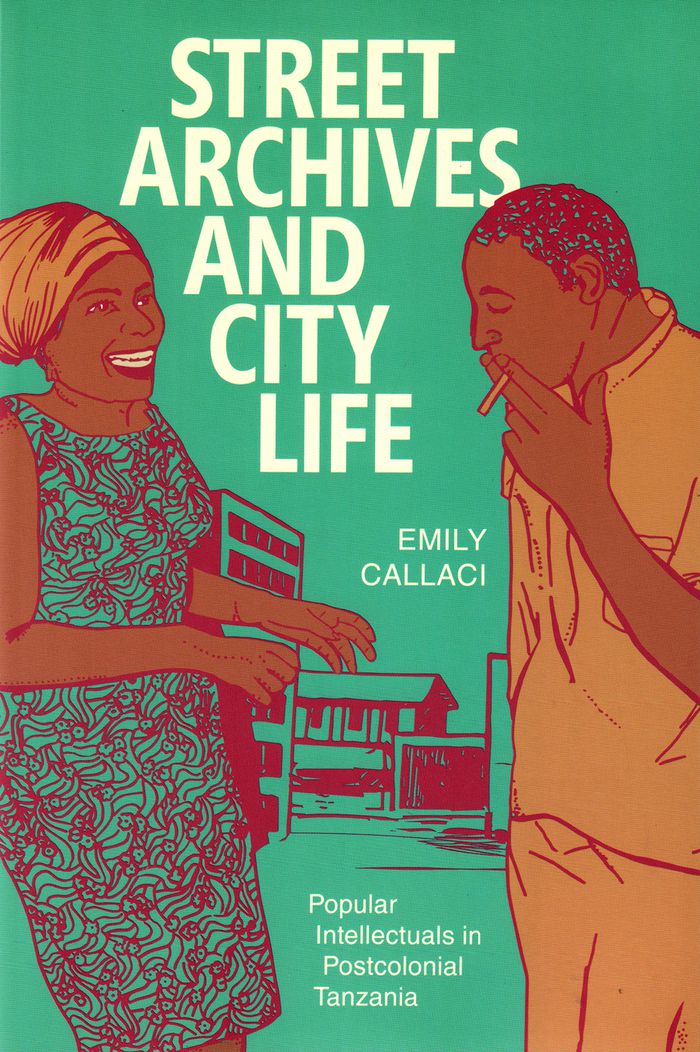
Street archives and city life: popular intellectuals in postcolonial Tanzania
Actions:
Prix:
$40.00
(disponible sur commande)
Résumé:
In ''Street Archives and City Life'', Emily Callaci maps a new terrain of political and cultural production in mid- to late twentieth-century Tanzanian urban landscapes. While the postcolonial Tanzanian ruling party (TANU) adopted a policy of rural socialism known as Ujamaa between 1967 and 1985, an influx of youth migrants to the city of Dar es Salaam generated innovative forms of urbanism through the production and circulation of what Callaci calls street archives. These urban intellectuals neither supported nor contested the ruling party's anti-city philosophy; rather, they navigated the complexities of inhabiting unplanned African cities during economic crisis and social transformation through various forms of popular texts that included women's Christian advice literature, newspaper columns, self-published pulp fiction novellas, and song lyrics. Through these textual networks, Callaci shows how youth migrants and urban intellectuals in Dar es Salaam fashioned a collective ethos of postcolonial African citizenship. This spirit ushered in a revolution rooted in the city and its networks—an urban revolution that arose in spite of the nation-state's pro-rural ideology.
Street archives and city life: popular intellectuals in postcolonial Tanzania
Actions:
Prix:
$40.00
(disponible sur commande)
Résumé:
In ''Street Archives and City Life'', Emily Callaci maps a new terrain of political and cultural production in mid- to late twentieth-century Tanzanian urban landscapes. While the postcolonial Tanzanian ruling party (TANU) adopted a policy of rural socialism known as Ujamaa between 1967 and 1985, an influx of youth migrants to the city of Dar es Salaam generated innovative forms of urbanism through the production and circulation of what Callaci calls street archives. These urban intellectuals neither supported nor contested the ruling party's anti-city philosophy; rather, they navigated the complexities of inhabiting unplanned African cities during economic crisis and social transformation through various forms of popular texts that included women's Christian advice literature, newspaper columns, self-published pulp fiction novellas, and song lyrics. Through these textual networks, Callaci shows how youth migrants and urban intellectuals in Dar es Salaam fashioned a collective ethos of postcolonial African citizenship. This spirit ushered in a revolution rooted in the city and its networks—an urban revolution that arose in spite of the nation-state's pro-rural ideology.
Classification:
livres
livres
Publication:
novembre 2017
novembre 2017
Classification:
livres
livres
Actions:
Prix:
$26.95
(disponible sur commande)
Résumé:
The history of listening must be constructed from narratives of myth and fiction, silent arts such as painting, the resonance of architecture, auditory artefacts and nature. In such contexts, sound often functions as a metaphor for mystical revelation, instability, forbidden desires, disorder, formlessness, the unknown, unconscious and extra-human, a representation of(...)
$26.95
(disponible sur commande)
Résumé:
The history of listening must be constructed from narratives of myth and fiction, silent arts such as painting, the resonance of architecture, auditory artefacts and nature. In such contexts, sound often functions as a metaphor for mystical revelation, instability, forbidden desires, disorder, formlessness, the unknown, unconscious and extra-human, a representation of(...)
Titre:
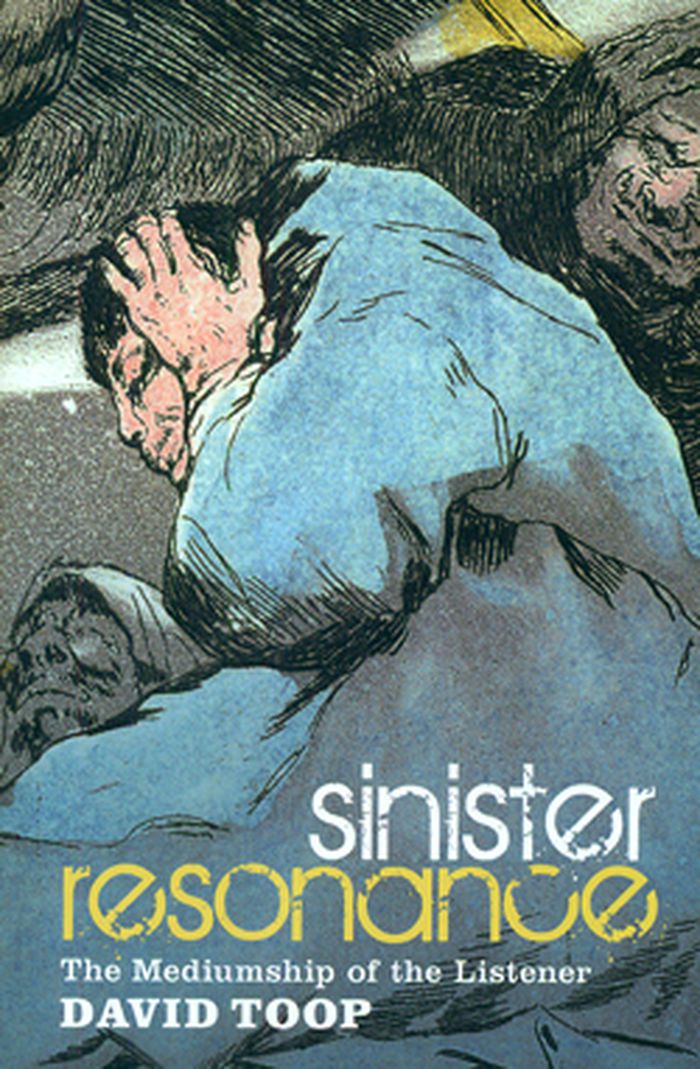
Sinister resonance: The mediumship of the listener
Actions:
Prix:
$26.95
(disponible sur commande)
Résumé:
The history of listening must be constructed from narratives of myth and fiction, silent arts such as painting, the resonance of architecture, auditory artefacts and nature. In such contexts, sound often functions as a metaphor for mystical revelation, instability, forbidden desires, disorder, formlessness, the unknown, unconscious and extra-human, a representation of immaterial worlds. As if reading a map of hitherto unexplored territory, Sinister Resonance deciphers sounds and silences buried within the ghostly horrors of Arthur Machen, Shirley Jackson, Charles Dickens, Algernon Blackwood, M.R. James and Edgar Allen Poe, seventeenth century Dutch genre painting from Rembrandt to Vermeer, artists as diverse as Francis Bacon and Juan Munoz, Ad Reinhardt and Piero Della Francesca, and the writing of many modernist authors, including Virginia Woolf, Samuel Beckett, James Joyce and William Faulkner. Threaded through the book is Marcel Duchamp's curious observation "One can look at seeing but one can't hear hearing" and his concept of the infra-thin, those human experiences so fugitive that they exist only in the imaginative absences of perception.
Sinister resonance: The mediumship of the listener
Actions:
Prix:
$26.95
(disponible sur commande)
Résumé:
The history of listening must be constructed from narratives of myth and fiction, silent arts such as painting, the resonance of architecture, auditory artefacts and nature. In such contexts, sound often functions as a metaphor for mystical revelation, instability, forbidden desires, disorder, formlessness, the unknown, unconscious and extra-human, a representation of immaterial worlds. As if reading a map of hitherto unexplored territory, Sinister Resonance deciphers sounds and silences buried within the ghostly horrors of Arthur Machen, Shirley Jackson, Charles Dickens, Algernon Blackwood, M.R. James and Edgar Allen Poe, seventeenth century Dutch genre painting from Rembrandt to Vermeer, artists as diverse as Francis Bacon and Juan Munoz, Ad Reinhardt and Piero Della Francesca, and the writing of many modernist authors, including Virginia Woolf, Samuel Beckett, James Joyce and William Faulkner. Threaded through the book is Marcel Duchamp's curious observation "One can look at seeing but one can't hear hearing" and his concept of the infra-thin, those human experiences so fugitive that they exist only in the imaginative absences of perception.
Classification:
livres
livres
Publication:
mai 2010
mai 2010
Sujet:
Acoustique
Acoustique
Classification:
livres
livres

Actions:
Prix:
$44.95
(disponible sur commande)
Résumé:
Danielle Aubert's Library of The Dispossessed examines the lived experience of one hundred used copies of "The Dispossessed", a 1974 science fiction novel by Ursula Le Guin. It takes the form of polyphonic group readings (during which each reader is reading from a different copy of the Library), a book of readers' marks, and an instrumental interpretation of the markings,(...)
$44.95
(disponible sur commande)
Résumé:
Danielle Aubert's Library of The Dispossessed examines the lived experience of one hundred used copies of "The Dispossessed", a 1974 science fiction novel by Ursula Le Guin. It takes the form of polyphonic group readings (during which each reader is reading from a different copy of the Library), a book of readers' marks, and an instrumental interpretation of the markings,(...)
Titre:
Danielle Aubert: Marking the dispossessed
Actions:
Prix:
$44.95
(disponible sur commande)
Résumé:
Danielle Aubert's Library of The Dispossessed examines the lived experience of one hundred used copies of "The Dispossessed", a 1974 science fiction novel by Ursula Le Guin. It takes the form of polyphonic group readings (during which each reader is reading from a different copy of the Library), a book of readers' marks, and an instrumental interpretation of the markings, composed by Jason Treuting of So Percussion and Mobius Percussion. The used, mass market paperback has little value. This particular volume — "The Dispossessed" — is available cheaply or for free as an e-book (Amazon), audio book (Audible), PDF or TeX file (Anarchist Library). Most of the books collected for The Library of the Dispossessed were purchased from online resellers. They are marked by previous owners (New Tecumseth Public Library, Kate Wilkins, Lee W. Smith); bear messages from past readers (“good move!,” “I’m going to vomit,” “don’t ever let yourself be owned”); and carry miscellaneous scraps of paper (a boarding pass, a reminder to pick up Jess at 9:00).
Danielle Aubert: Marking the dispossessed
Actions:
Prix:
$44.95
(disponible sur commande)
Résumé:
Danielle Aubert's Library of The Dispossessed examines the lived experience of one hundred used copies of "The Dispossessed", a 1974 science fiction novel by Ursula Le Guin. It takes the form of polyphonic group readings (during which each reader is reading from a different copy of the Library), a book of readers' marks, and an instrumental interpretation of the markings, composed by Jason Treuting of So Percussion and Mobius Percussion. The used, mass market paperback has little value. This particular volume — "The Dispossessed" — is available cheaply or for free as an e-book (Amazon), audio book (Audible), PDF or TeX file (Anarchist Library). Most of the books collected for The Library of the Dispossessed were purchased from online resellers. They are marked by previous owners (New Tecumseth Public Library, Kate Wilkins, Lee W. Smith); bear messages from past readers (“good move!,” “I’m going to vomit,” “don’t ever let yourself be owned”); and carry miscellaneous scraps of paper (a boarding pass, a reminder to pick up Jess at 9:00).
Classification:
livres
livres
Publication:
juillet 2015
juillet 2015
Classification:
livres
livres
Titre:
Philippe Parreno: C.H.Z.
Philippe Parreno: C.H.Z.
Actions:
Prix:
$50.00
(disponible sur commande)
Résumé:
Renowned for his sophisticated ruminations on nature and artifice, character and its construction, and the transformative lens of history and nostalgia, Philippe Parreno (born 1964) created C.H.Z. in a zone between science and fiction. According to NASA, any planet hospitable to life will most likely orbit a pair of dwarf stars in a Continuously Habitable Zone. The effect(...)
$50.00
(disponible sur commande)
Résumé:
Renowned for his sophisticated ruminations on nature and artifice, character and its construction, and the transformative lens of history and nostalgia, Philippe Parreno (born 1964) created C.H.Z. in a zone between science and fiction. According to NASA, any planet hospitable to life will most likely orbit a pair of dwarf stars in a Continuously Habitable Zone. The effect(...)
Publication:
septembre 2012
septembre 2012
Titre:
Philippe Parreno: C.H.Z.
Actions:
Prix:
$50.00
(disponible sur commande)
Résumé:
Renowned for his sophisticated ruminations on nature and artifice, character and its construction, and the transformative lens of history and nostalgia, Philippe Parreno (born 1964) created C.H.Z. in a zone between science and fiction. According to NASA, any planet hospitable to life will most likely orbit a pair of dwarf stars in a Continuously Habitable Zone. The effect of multiple stars is black vegetation. Working with landscape architect Bas Smets, the artist painstakingly constructed a garden of black plants on the side of a mountain in Portugal, where the garden continues to flourish outside the framework of an art object; Parreno then shot a poetic, abstract film in that alien landscape, rendering the territory inescapably cinematic. C.H.Z. features the artist’s dark, impasto ink drawings, which functioned as a storyboard for the cinematographer Darius Khondji, as well as sequences of stills of the seven stages of the film. Parreno’s reflections and commentary are featured alongside the images and paired with comprehensive essay by Nancy Spector, deputy director and chief curator of the Guggenheim Museum, New York.
Philippe Parreno: C.H.Z.
Actions:
Prix:
$50.00
(disponible sur commande)
Résumé:
Renowned for his sophisticated ruminations on nature and artifice, character and its construction, and the transformative lens of history and nostalgia, Philippe Parreno (born 1964) created C.H.Z. in a zone between science and fiction. According to NASA, any planet hospitable to life will most likely orbit a pair of dwarf stars in a Continuously Habitable Zone. The effect of multiple stars is black vegetation. Working with landscape architect Bas Smets, the artist painstakingly constructed a garden of black plants on the side of a mountain in Portugal, where the garden continues to flourish outside the framework of an art object; Parreno then shot a poetic, abstract film in that alien landscape, rendering the territory inescapably cinematic. C.H.Z. features the artist’s dark, impasto ink drawings, which functioned as a storyboard for the cinematographer Darius Khondji, as well as sequences of stills of the seven stages of the film. Parreno’s reflections and commentary are featured alongside the images and paired with comprehensive essay by Nancy Spector, deputy director and chief curator of the Guggenheim Museum, New York.
Classification:
livres
livres
Publication:
septembre 2012
septembre 2012
Classification:
livres
livres
Actions:
Prix:
$48.95
(disponible sur commande)
Résumé:
What does it mean to design experiences? Traditional design practices invite us to design things, and to use those things to solve problems. But experience is not a problem; it is life. Experience designers engage with unpredictability and the unknown, partnering with their audiences to generate possibility and relationality. Experience designers create worlds, craft(...)
$48.95
(disponible sur commande)
Résumé:
What does it mean to design experiences? Traditional design practices invite us to design things, and to use those things to solve problems. But experience is not a problem; it is life. Experience designers engage with unpredictability and the unknown, partnering with their audiences to generate possibility and relationality. Experience designers create worlds, craft(...)
Sujet:
Théorie du design
Théorie du design
Publication:
novembre 2023
novembre 2023
Titre:
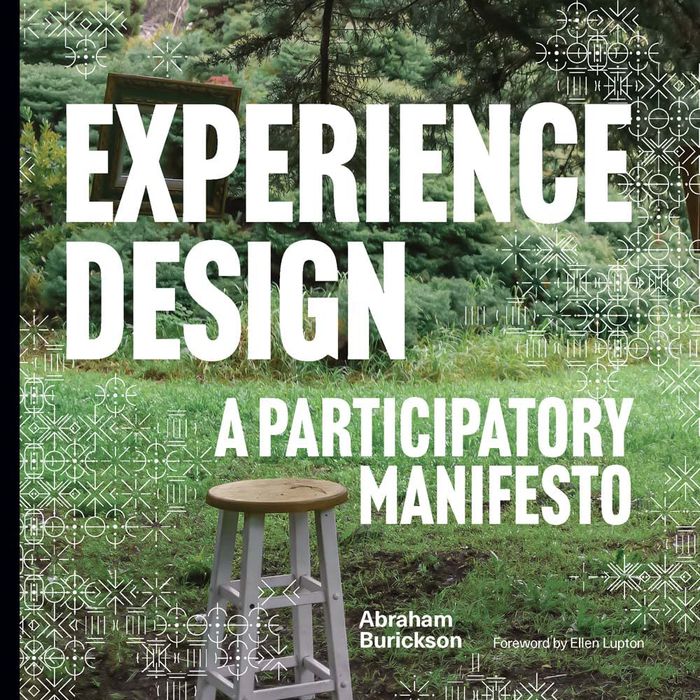
Experience design: A participatory manifesto
Actions:
Prix:
$48.95
(disponible sur commande)
Résumé:
What does it mean to design experiences? Traditional design practices invite us to design things, and to use those things to solve problems. But experience is not a problem; it is life. Experience designers engage with unpredictability and the unknown, partnering with their audiences to generate possibility and relationality. Experience designers create worlds, craft narratives that leave the page and enter people’s lives, and structure transformation. In this book, Burickson lays out ten basic principles for this emerging practice. "Experience design: a participatory manifesto" invites the reader to stop making things and, instead, to craft the minutes and hours of human life. Rigorous and philosophical, the book guides the reader through the processes of empathic research; constructing worlds not just for fantasy fiction but in schools, communities, homes; and mastering the tools necessary to work coherently across disciplines to create new experiences. Whether you are a maker of immersive theater, an architect, a graphic designer, a community organizer, or just someone hoping to give a better gift, this book offers a vision of creating that is both new and as old as civilization.
Experience design: A participatory manifesto
Actions:
Prix:
$48.95
(disponible sur commande)
Résumé:
What does it mean to design experiences? Traditional design practices invite us to design things, and to use those things to solve problems. But experience is not a problem; it is life. Experience designers engage with unpredictability and the unknown, partnering with their audiences to generate possibility and relationality. Experience designers create worlds, craft narratives that leave the page and enter people’s lives, and structure transformation. In this book, Burickson lays out ten basic principles for this emerging practice. "Experience design: a participatory manifesto" invites the reader to stop making things and, instead, to craft the minutes and hours of human life. Rigorous and philosophical, the book guides the reader through the processes of empathic research; constructing worlds not just for fantasy fiction but in schools, communities, homes; and mastering the tools necessary to work coherently across disciplines to create new experiences. Whether you are a maker of immersive theater, an architect, a graphic designer, a community organizer, or just someone hoping to give a better gift, this book offers a vision of creating that is both new and as old as civilization.
Classification:
livres
livres
Publication:
novembre 2023
novembre 2023
Sujet:
Théorie du design
Théorie du design
Classification:
livres
livres
Titre:
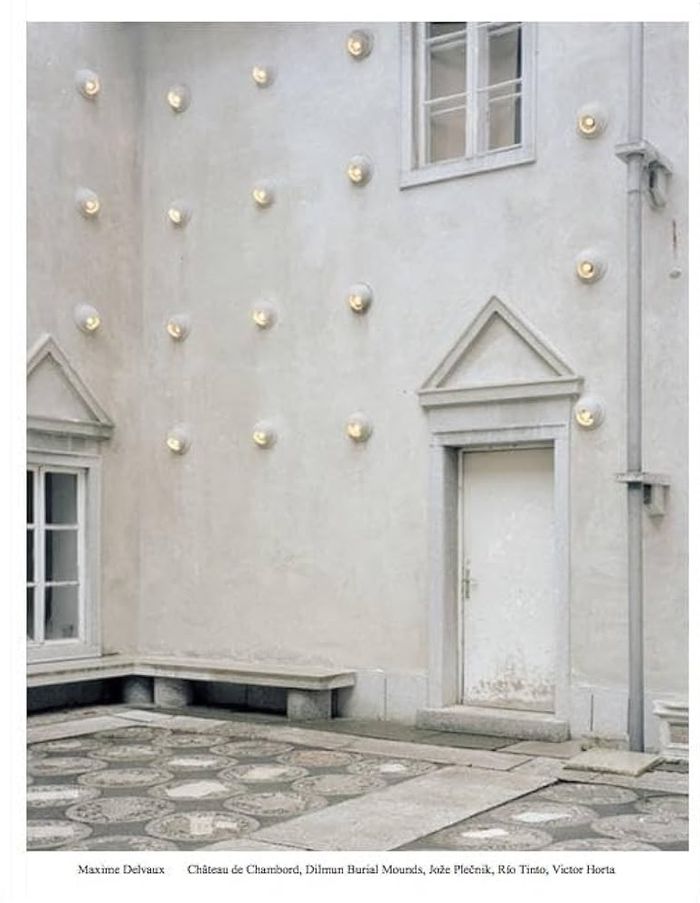
Maxime Delvaux: Châteai de Chambord, Dilmun burial Mounds, Joze Plecnik, Rio Tinto, Victora Horta
Maxime Delvaux: Châteai de Chambord, Dilmun burial Mounds, Joze Plecnik, Rio Tinto, Victora Horta
Actions:
Prix:
$60.00
(disponible en magasin)
Résumé:
The story of this book was built over time, through the many exchanges that took place between a photographer, the editors, graphic designers and authors. The publication is structured around five photographic series, each devoted to a particular building, site or architect: Château de Chambord in France, Dilmun Burial Mounds in Bahrain, Joze Plecnik’s buildings in and(...)
$60.00
(disponible en magasin)
Résumé:
The story of this book was built over time, through the many exchanges that took place between a photographer, the editors, graphic designers and authors. The publication is structured around five photographic series, each devoted to a particular building, site or architect: Château de Chambord in France, Dilmun Burial Mounds in Bahrain, Joze Plecnik’s buildings in and(...)
Sujet:
Monographies photo
Monographies photo
Publication:
juillet 2023
juillet 2023
Titre:
Maxime Delvaux: Châteai de Chambord, Dilmun burial Mounds, Joze Plecnik, Rio Tinto, Victora Horta
Actions:
Prix:
$60.00
(disponible en magasin)
Résumé:
The story of this book was built over time, through the many exchanges that took place between a photographer, the editors, graphic designers and authors. The publication is structured around five photographic series, each devoted to a particular building, site or architect: Château de Chambord in France, Dilmun Burial Mounds in Bahrain, Joze Plecnik’s buildings in and around Ljubljana, Rio Tinto in Spain, and Victor Horta’s Centre for Fine Arts in Brussels. It is, especially, a book of (hi)stories in which the series by Maxime Delvaux are accompanied by texts. For these, various authors have been invited to react to the images with the idea of experimenting with the text: fiction, historical essay, round-table discussion, scientific text and photonovel. Graphic designers played with text and images to give them form. The reader is in turn invited to create possible alliances between images and texts. Like Maxime Delvaux’s photographic approach, these texts and their articulation with the photographs are specific to each subject, illustrating five ways of showing and telling about places near and far.
Maxime Delvaux: Châteai de Chambord, Dilmun burial Mounds, Joze Plecnik, Rio Tinto, Victora Horta
Actions:
Prix:
$60.00
(disponible en magasin)
Résumé:
The story of this book was built over time, through the many exchanges that took place between a photographer, the editors, graphic designers and authors. The publication is structured around five photographic series, each devoted to a particular building, site or architect: Château de Chambord in France, Dilmun Burial Mounds in Bahrain, Joze Plecnik’s buildings in and around Ljubljana, Rio Tinto in Spain, and Victor Horta’s Centre for Fine Arts in Brussels. It is, especially, a book of (hi)stories in which the series by Maxime Delvaux are accompanied by texts. For these, various authors have been invited to react to the images with the idea of experimenting with the text: fiction, historical essay, round-table discussion, scientific text and photonovel. Graphic designers played with text and images to give them form. The reader is in turn invited to create possible alliances between images and texts. Like Maxime Delvaux’s photographic approach, these texts and their articulation with the photographs are specific to each subject, illustrating five ways of showing and telling about places near and far.
Classification:
livres
livres
Publication:
juillet 2023
juillet 2023
Sujet:
Monographies photo
Monographies photo
Classification:
livres
livres

Prix:
$45.00
(disponible sur commande)
Résumé:
It is impossible to overstate the importance of Lincoln Kirstein (1907-1996) to the arts in America. One of the rare talents who touched the entire artistic field of his time – ballet, film, literature, theater, painting, sculpture, photography, architecture – he is perhaps best known for bringing the choreographer George Balanchine to the United States, and for founding(...)
$45.00
(disponible sur commande)
Résumé:
It is impossible to overstate the importance of Lincoln Kirstein (1907-1996) to the arts in America. One of the rare talents who touched the entire artistic field of his time – ballet, film, literature, theater, painting, sculpture, photography, architecture – he is perhaps best known for bringing the choreographer George Balanchine to the United States, and for founding(...)
Titre:
Lincoln Kirstein bibliography of published writings 1922-1996
Actions:
Prix:
$45.00
(disponible sur commande)
Résumé:
It is impossible to overstate the importance of Lincoln Kirstein (1907-1996) to the arts in America. One of the rare talents who touched the entire artistic field of his time – ballet, film, literature, theater, painting, sculpture, photography, architecture – he is perhaps best known for bringing the choreographer George Balanchine to the United States, and for founding with him the supremely influential School of American Ballet and the New York City Ballet. Kirstein was also a persuasive and lucid writer who published over 500 books, articles and monographs. Now, in honor of the centennial of Kirstein’s birth, Eakins Press presents the most comprehensive bibliography ever of his huge literary output, annotated, indexed and categorized into Fiction; Poetry; Drama and Ballet Libretti; On Dance; On Drawing, Painting, Sculpture and Architecture; On Photography; On Film; On Literature, History, Politics and other Subjects; and Memoir. This impressive work includes selected excerpts and a chronology of a life which, as Hilton Kramer wrote in the New York Times, “has helped to shape some of the most valuable parts of our culture.”
Lincoln Kirstein bibliography of published writings 1922-1996
Actions:
Prix:
$45.00
(disponible sur commande)
Résumé:
It is impossible to overstate the importance of Lincoln Kirstein (1907-1996) to the arts in America. One of the rare talents who touched the entire artistic field of his time – ballet, film, literature, theater, painting, sculpture, photography, architecture – he is perhaps best known for bringing the choreographer George Balanchine to the United States, and for founding with him the supremely influential School of American Ballet and the New York City Ballet. Kirstein was also a persuasive and lucid writer who published over 500 books, articles and monographs. Now, in honor of the centennial of Kirstein’s birth, Eakins Press presents the most comprehensive bibliography ever of his huge literary output, annotated, indexed and categorized into Fiction; Poetry; Drama and Ballet Libretti; On Dance; On Drawing, Painting, Sculpture and Architecture; On Photography; On Film; On Literature, History, Politics and other Subjects; and Memoir. This impressive work includes selected excerpts and a chronology of a life which, as Hilton Kramer wrote in the New York Times, “has helped to shape some of the most valuable parts of our culture.”
Classification:
livres
livres
Publication:
juin 2007, New York
juin 2007, New York
Classification:
livres
livres
Titre:
Ellen Kooi above Rotterdam: One Glass Tower by Wiel Arets and Nine Situations by Katrien van den Bra
Ellen Kooi above Rotterdam: One Glass Tower by Wiel Arets and Nine Situations by Katrien van den Bra
Actions:
Prix:
$59.95
(disponible sur commande)
Résumé:
High above the streets of Rotterdam, on cold winter nights, during early spring evenings, and dusky autumn days; five situations were staged and captured by artist Ellen Kooi, inside the B' Tower in Rotterdam, by architect Wiel Arets. Nearly each apartment is identical, which lends a receded repetition to the 'stage sets' Kooi created, in the tradition of her renowned(...)
$59.95
(disponible sur commande)
Résumé:
High above the streets of Rotterdam, on cold winter nights, during early spring evenings, and dusky autumn days; five situations were staged and captured by artist Ellen Kooi, inside the B' Tower in Rotterdam, by architect Wiel Arets. Nearly each apartment is identical, which lends a receded repetition to the 'stage sets' Kooi created, in the tradition of her renowned(...)
Titre:
Ellen Kooi above Rotterdam: One Glass Tower by Wiel Arets and Nine Situations by Katrien van den Bra
Actions:
Prix:
$59.95
(disponible sur commande)
Résumé:
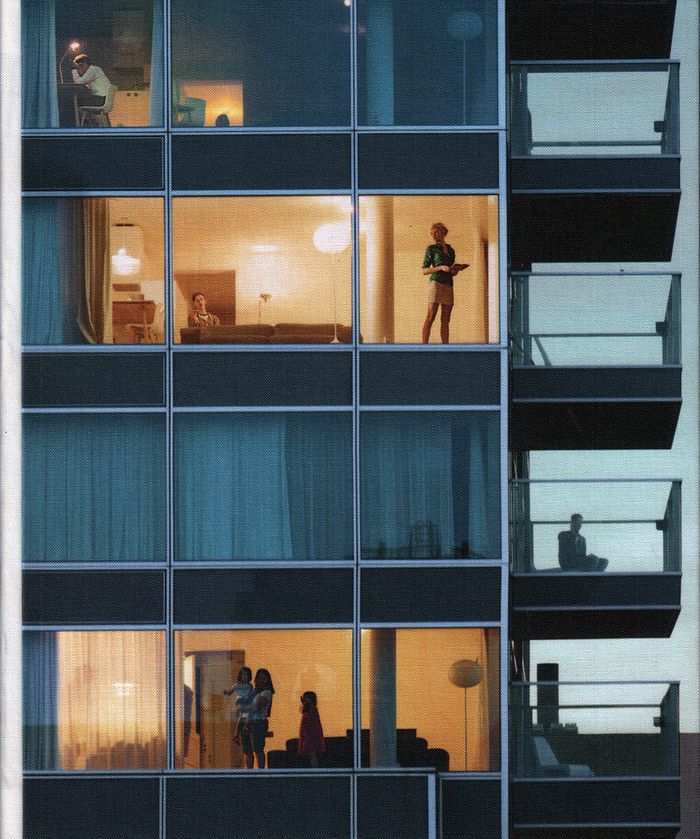
High above the streets of Rotterdam, on cold winter nights, during early spring evenings, and dusky autumn days; five situations were staged and captured by artist Ellen Kooi, inside the B' Tower in Rotterdam, by architect Wiel Arets. Nearly each apartment is identical, which lends a receded repetition to the 'stage sets' Kooi created, in the tradition of her renowned landscape photography. In Kooi's 'sets', a sleeping young girl cuddles with whimsical Weimaraners; a lonely business man digitally pines for his distant love; a young couple saunters and seduces one another, inside and out; an informal dinner gathering morphs into an impromptu musical; a mother creates a dream world for her and her children, high above Rotterdam's streets. Interspersed throughout Kooi's sets of imagery are separately created scenes of poetry and prose, by artist Katrien Van den Brande, which alternate with Kooi's narratives-all graphically woven together by a design from Mainstudio. This publication is a two-dimensional immersion into a parallel urban reality, that's at once fantasy and fiction-yet remarkably familiar.
Ellen Kooi above Rotterdam: One Glass Tower by Wiel Arets and Nine Situations by Katrien van den Bra
Actions:
Prix:
$59.95
(disponible sur commande)
Résumé:
High above the streets of Rotterdam, on cold winter nights, during early spring evenings, and dusky autumn days; five situations were staged and captured by artist Ellen Kooi, inside the B' Tower in Rotterdam, by architect Wiel Arets. Nearly each apartment is identical, which lends a receded repetition to the 'stage sets' Kooi created, in the tradition of her renowned landscape photography. In Kooi's 'sets', a sleeping young girl cuddles with whimsical Weimaraners; a lonely business man digitally pines for his distant love; a young couple saunters and seduces one another, inside and out; an informal dinner gathering morphs into an impromptu musical; a mother creates a dream world for her and her children, high above Rotterdam's streets. Interspersed throughout Kooi's sets of imagery are separately created scenes of poetry and prose, by artist Katrien Van den Brande, which alternate with Kooi's narratives-all graphically woven together by a design from Mainstudio. This publication is a two-dimensional immersion into a parallel urban reality, that's at once fantasy and fiction-yet remarkably familiar.
Classification:
livres
livres
Publication:
juillet 2017
juillet 2017
Classification:
livres
livres
Titre:
La ligne
La ligne
Actions:
Prix:
$50.95
(disponible en magasin)
Résumé:
Le terrier est un objet de fantasme car on n’en connaît généralement que la silhouette ou le seuil ; le reste est laissé à l’imagination. Sur un plan symbolique, il en va de même pour la ligne Maginot : tout le monde en a entendu parler mais peu sont capables de la décrire. Son nom résonne comme un réceptacle à fantasmes. Les formes de ses bunkers répondent à cette(...)
$50.95
(disponible en magasin)
Résumé:
Le terrier est un objet de fantasme car on n’en connaît généralement que la silhouette ou le seuil ; le reste est laissé à l’imagination. Sur un plan symbolique, il en va de même pour la ligne Maginot : tout le monde en a entendu parler mais peu sont capables de la décrire. Son nom résonne comme un réceptacle à fantasmes. Les formes de ses bunkers répondent à cette(...)
Titre:
La ligne
Actions:
Prix:
$50.95
(disponible en magasin)
Résumé:
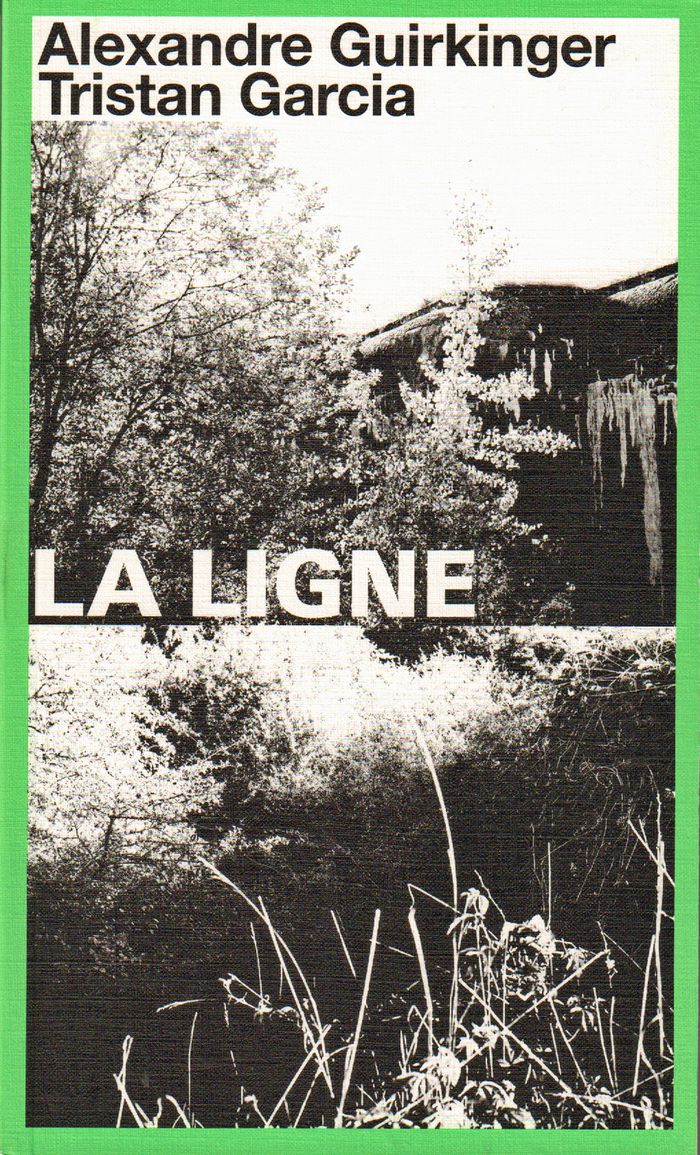
Le terrier est un objet de fantasme car on n’en connaît généralement que la silhouette ou le seuil ; le reste est laissé à l’imagination. Sur un plan symbolique, il en va de même pour la ligne Maginot : tout le monde en a entendu parler mais peu sont capables de la décrire. Son nom résonne comme un réceptacle à fantasmes. Les formes de ses bunkers répondent à cette dimension symbolique. À travers ses images, Alexandre Guirkinger a voulu partager sa fascination pour cette extraordinaire relique d’une modernité déjà ancienne. Les bunkers choisis et photographiés sont ceux dont la forme, la situation ou la silhouette entraînent l’image vers autre chose que l’enregistrement matériel d’une frontière : une sorte de décor de science-fiction, une trace de land art, une architecture moderniste, un géoglyphe contemporain. L’écart entre l’abondance des reliques de la ligne et le peu de représentations contemporaines dont elle fait l’objet offre un terrain de jeu excitant pour interroger notre rapport au paysage, à la frontière, à la limite. C’est là le point de départ de la nouvelle de Tristan Gracia.
La ligne
Actions:
Prix:
$50.95
(disponible en magasin)
Résumé:
Le terrier est un objet de fantasme car on n’en connaît généralement que la silhouette ou le seuil ; le reste est laissé à l’imagination. Sur un plan symbolique, il en va de même pour la ligne Maginot : tout le monde en a entendu parler mais peu sont capables de la décrire. Son nom résonne comme un réceptacle à fantasmes. Les formes de ses bunkers répondent à cette dimension symbolique. À travers ses images, Alexandre Guirkinger a voulu partager sa fascination pour cette extraordinaire relique d’une modernité déjà ancienne. Les bunkers choisis et photographiés sont ceux dont la forme, la situation ou la silhouette entraînent l’image vers autre chose que l’enregistrement matériel d’une frontière : une sorte de décor de science-fiction, une trace de land art, une architecture moderniste, un géoglyphe contemporain. L’écart entre l’abondance des reliques de la ligne et le peu de représentations contemporaines dont elle fait l’objet offre un terrain de jeu excitant pour interroger notre rapport au paysage, à la frontière, à la limite. C’est là le point de départ de la nouvelle de Tristan Gracia.
Classification:
livres
livres
Publication:
juillet 2016
juillet 2016
Sujet:
Théorie du paysage
Théorie du paysage
Classification:
livres
livres
Titre:
Deborah Berke
Deborah Berke
Actions:
Prix:
$65.00
(disponible sur commande)
Résumé:
This book is the first to explore Berke’s remarkable career as an architect, designer, teacher, and writer who has forged a strong and evolving aesthetic. As examined in a series of engaging essays, Berke’s architecture blends tectonic coherence, a keen sensitivity to the intrinsic qualities of materials, and meticulous attention to detail. While all of her work possesses(...)
$65.00
(disponible sur commande)
Résumé:
This book is the first to explore Berke’s remarkable career as an architect, designer, teacher, and writer who has forged a strong and evolving aesthetic. As examined in a series of engaging essays, Berke’s architecture blends tectonic coherence, a keen sensitivity to the intrinsic qualities of materials, and meticulous attention to detail. While all of her work possesses(...)
Titre:
Deborah Berke
Actions:
Prix:
$65.00
(disponible sur commande)
Résumé:
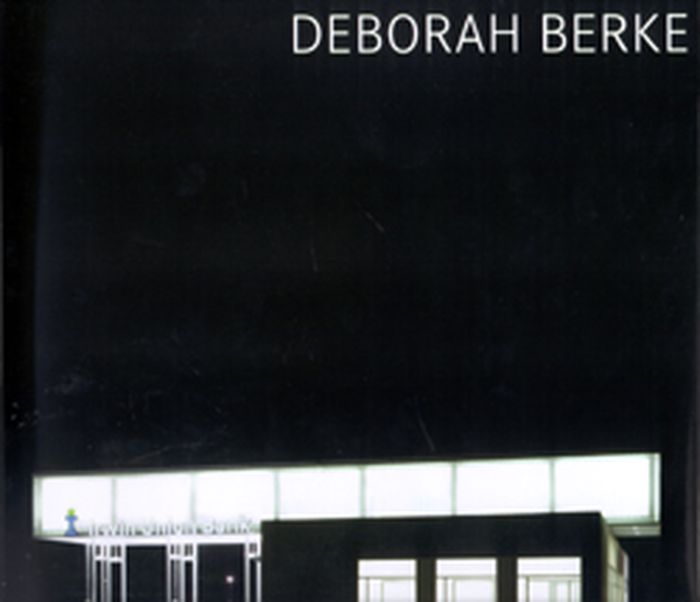
This book is the first to explore Berke’s remarkable career as an architect, designer, teacher, and writer who has forged a strong and evolving aesthetic. As examined in a series of engaging essays, Berke’s architecture blends tectonic coherence, a keen sensitivity to the intrinsic qualities of materials, and meticulous attention to detail. While all of her work possesses these distinctive attributes, each project is subtly rooted in its context and ennobles the uses specific to that space. Through newly commissioned photographs, twenty-one of Berke’s thought-provoking projects appear here, including the Irwin Union Bank, Yale School of Art, 21c Museum Hotel, and Marianne Boesky Gallery. Also featured are Berke’s reflections on her growing interest in the “here and now”—an approach to architecture intended to counteract the banal placelessness of much of our environment by designing buildings that are intensely bound to and grounded in their sites. Tracy Myers is curator at the Heinz Architectural Center of the Carnegie Museum of Art, Pittsburgh. Amy Hempel is a fiction writer whose publications include Tumble Home (1997) and The Dog of the Marriage (2005).
Deborah Berke
Actions:
Prix:
$65.00
(disponible sur commande)
Résumé:
This book is the first to explore Berke’s remarkable career as an architect, designer, teacher, and writer who has forged a strong and evolving aesthetic. As examined in a series of engaging essays, Berke’s architecture blends tectonic coherence, a keen sensitivity to the intrinsic qualities of materials, and meticulous attention to detail. While all of her work possesses these distinctive attributes, each project is subtly rooted in its context and ennobles the uses specific to that space. Through newly commissioned photographs, twenty-one of Berke’s thought-provoking projects appear here, including the Irwin Union Bank, Yale School of Art, 21c Museum Hotel, and Marianne Boesky Gallery. Also featured are Berke’s reflections on her growing interest in the “here and now”—an approach to architecture intended to counteract the banal placelessness of much of our environment by designing buildings that are intensely bound to and grounded in their sites. Tracy Myers is curator at the Heinz Architectural Center of the Carnegie Museum of Art, Pittsburgh. Amy Hempel is a fiction writer whose publications include Tumble Home (1997) and The Dog of the Marriage (2005).
Classification:
livres
livres
Publication:
novembre 2008, New Haven, London
novembre 2008, New Haven, London
Sujet:
Architecture, monographies
Architecture, monographies


