


44145 Résultats
Niveau de description archivistique:
Projet
Projet
Numéro de référence:
AP180.S1.2000.PR03
Description:
This project series documents Umberto Riva's built proposal for the competition to replan the area of Sant'agostino in the commune of Gubbio, Italy. Riva possibly worked on this project in 1989. The project consisted of a study of a system of car parks and pedestrian zones for the commune. The proposal was done in collaboration with Francesca Riva and Giovanni Drugman. The project is recorded through site plans, elevations, sections, and plans.
AP180.S1.2000.PR03
Description:
This project series documents Umberto Riva's built proposal for the competition to replan the area of Sant'agostino in the commune of Gubbio, Italy. Riva possibly worked on this project in 1989. The project consisted of a study of a system of car parks and pedestrian zones for the commune. The proposal was done in collaboration with Francesca Riva and Giovanni Drugman. The project is recorded through site plans, elevations, sections, and plans.
Personnes et institutions:
Date:
2000s
2000s
Titre:
Comuni di Gubbio, Italy (2000s)
Actions:
AP180.S1.2000.PR03
Description:
This project series documents Umberto Riva's built proposal for the competition to replan the area of Sant'agostino in the commune of Gubbio, Italy. Riva possibly worked on this project in 1989. The project consisted of a study of a system of car parks and pedestrian zones for the commune. The proposal was done in collaboration with Francesca Riva and Giovanni Drugman. The project is recorded through site plans, elevations, sections, and plans.
Comuni di Gubbio, Italy (2000s)
Actions:
AP180.S1.2000.PR03
Description:
This project series documents Umberto Riva's built proposal for the competition to replan the area of Sant'agostino in the commune of Gubbio, Italy. Riva possibly worked on this project in 1989. The project consisted of a study of a system of car parks and pedestrian zones for the commune. The proposal was done in collaboration with Francesca Riva and Giovanni Drugman. The project is recorded through site plans, elevations, sections, and plans.
Niveau de description archivistique:
Project
Project
Date:
2000s
2000s
Personnes et institutions:
Classification:
expositions
expositions
Description:
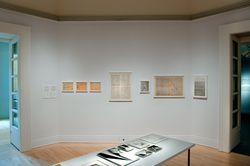
L’exposition Iannis Xenakis : compositeur, architecte, visionnaire explore le rôle fondamental que joue le dessin dans l’œuvre de Iannis Xenakis. Compositeur avant-gardiste parmi les plus marquants de la scène musicale de la fin du XXe siècle, il est également connu pour son travail novateur dans la conception de La Tourette et du Pavillon Philips de Le(...)
L’exposition Iannis Xenakis : compositeur, architecte, visionnaire explore le rôle fondamental que joue le dessin dans l’œuvre de Iannis Xenakis. Compositeur avant-gardiste parmi les plus marquants de la scène musicale de la fin du XXe siècle, il est également connu pour son travail novateur dans la conception de La Tourette et du Pavillon Philips de Le(...)
Localisation:
Salle octogonale
Salle octogonale
Date:
17 juin 2010 au 17 octobre 2010
17 juin 2010 au 17 octobre 2010
Titre:
Iannis Xenakis : compositeur, architecte, visionnaire
Actions:
Description:
L’exposition Iannis Xenakis : compositeur, architecte, visionnaire explore le rôle fondamental que joue le dessin dans l’œuvre de Iannis Xenakis. Compositeur avant-gardiste parmi les plus marquants de la scène musicale de la fin du XXe siècle, il est également connu pour son travail novateur dans la conception de La Tourette et du Pavillon Philips de Le(...)
Iannis Xenakis : compositeur, architecte, visionnaire
Actions:
Description:
L’exposition Iannis Xenakis : compositeur, architecte, visionnaire explore le rôle fondamental que joue le dessin dans l’œuvre de Iannis Xenakis. Compositeur avant-gardiste parmi les plus marquants de la scène musicale de la fin du XXe siècle, il est également connu pour son travail novateur dans la conception de La Tourette et du Pavillon Philips de Le(...)
Classification:
expositions
expositions
Date:
17 juin 2010 au
17 octobre 2010
17 juin 2010 au
17 octobre 2010
Localisation:
Salle octogonale
Salle octogonale
Niveau de description archivistique:
Projet
Projet
Numéro de référence:
AP178.S1.1961.PR02
Description:
This project series documents the Piscina de Marés in Leça da Palmeira, Matosinhos, Portugal. While the records were held in the office’s archives this project was assigned the number 9/60. The office assigned the date 1961. Piscina de Marés was built between 1961 and 1966. The project included two salt water pools, one for adults and another for children, and changing rooms. A restaurant was later added in 1965. The pools were embedded in rock formations situated on the northern coastline of the Atlantic Ocean in Matosinhos. Siza used concrete to build the pools and walls while preserving some of the rock formation. There was also restoration work done for both the pools and the restaurant in the mid 1990s. The project series includes sketches, elevations, plans, and details, as well as correspondence and project documentation. Photographic materials document the project site, the built project, the model, and drawings. Also included are panoramas of the built project and aerial views of the project site. Note that photographic materials related to the 1995 renovation are also found among these materials, however the rest of the materials related to the renovations are in subseries Recuperação da Piscina de Marés (AP178.S1.1995.PR01).
AP178.S1.1961.PR02
Description:
This project series documents the Piscina de Marés in Leça da Palmeira, Matosinhos, Portugal. While the records were held in the office’s archives this project was assigned the number 9/60. The office assigned the date 1961. Piscina de Marés was built between 1961 and 1966. The project included two salt water pools, one for adults and another for children, and changing rooms. A restaurant was later added in 1965. The pools were embedded in rock formations situated on the northern coastline of the Atlantic Ocean in Matosinhos. Siza used concrete to build the pools and walls while preserving some of the rock formation. There was also restoration work done for both the pools and the restaurant in the mid 1990s. The project series includes sketches, elevations, plans, and details, as well as correspondence and project documentation. Photographic materials document the project site, the built project, the model, and drawings. Also included are panoramas of the built project and aerial views of the project site. Note that photographic materials related to the 1995 renovation are also found among these materials, however the rest of the materials related to the renovations are in subseries Recuperação da Piscina de Marés (AP178.S1.1995.PR01).
Personnes et institutions:
Date:
1961-1995
1961-1995
Titre:
Piscina de Marés [Ocean swimming pool], Leça da Palmeira, Matosinhos, Portugal (1961-1966)
Actions:
AP178.S1.1961.PR02
Description:
This project series documents the Piscina de Marés in Leça da Palmeira, Matosinhos, Portugal. While the records were held in the office’s archives this project was assigned the number 9/60. The office assigned the date 1961. Piscina de Marés was built between 1961 and 1966. The project included two salt water pools, one for adults and another for children, and changing rooms. A restaurant was later added in 1965. The pools were embedded in rock formations situated on the northern coastline of the Atlantic Ocean in Matosinhos. Siza used concrete to build the pools and walls while preserving some of the rock formation. There was also restoration work done for both the pools and the restaurant in the mid 1990s. The project series includes sketches, elevations, plans, and details, as well as correspondence and project documentation. Photographic materials document the project site, the built project, the model, and drawings. Also included are panoramas of the built project and aerial views of the project site. Note that photographic materials related to the 1995 renovation are also found among these materials, however the rest of the materials related to the renovations are in subseries Recuperação da Piscina de Marés (AP178.S1.1995.PR01).
Piscina de Marés [Ocean swimming pool], Leça da Palmeira, Matosinhos, Portugal (1961-1966)
Actions:
AP178.S1.1961.PR02
Description:
This project series documents the Piscina de Marés in Leça da Palmeira, Matosinhos, Portugal. While the records were held in the office’s archives this project was assigned the number 9/60. The office assigned the date 1961. Piscina de Marés was built between 1961 and 1966. The project included two salt water pools, one for adults and another for children, and changing rooms. A restaurant was later added in 1965. The pools were embedded in rock formations situated on the northern coastline of the Atlantic Ocean in Matosinhos. Siza used concrete to build the pools and walls while preserving some of the rock formation. There was also restoration work done for both the pools and the restaurant in the mid 1990s. The project series includes sketches, elevations, plans, and details, as well as correspondence and project documentation. Photographic materials document the project site, the built project, the model, and drawings. Also included are panoramas of the built project and aerial views of the project site. Note that photographic materials related to the 1995 renovation are also found among these materials, however the rest of the materials related to the renovations are in subseries Recuperação da Piscina de Marés (AP178.S1.1995.PR01).
Niveau de description archivistique:
Project
Project
Date:
1961-1995
1961-1995
Personnes et institutions:
Classification:
photographies
photographies
Actions:
Numéro de référence:
PH2018:0005:032
Description:
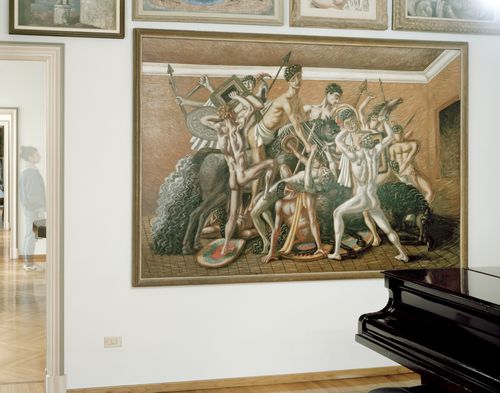
Photograph by Stefano Graziani of the following work: Giorgio de Chirico, The School of Gladiators: the Fight, 1928, Living room, Casa Museo Boschi Di Stefano, Milan Questioning Pictures is a 36 photograph project commissioned by Fondazione Prada, Milan. Artist Stefano Graziani investigates archival and conservation systems in a number of museums. Through photographing museum objects, Graziani, focusing on the relationship between photographs, the museum objects and the power structures at play within institutions. The museums include the Canadian Centre for Architecture (CCA) in Montréal, Canada; Sir John Soane’s Museum in London, UK; the Kunstmuseum Basel, Switzerland; Museum Insel Hombroich in Neuss, Germany; the Museo di Castelvecchio in Verona, Italy; and the Plaster Cast Gallery at Museo Canova in Possagno, Italy.
PH2018:0005:032
Description:
Photograph by Stefano Graziani of the following work: Giorgio de Chirico, The School of Gladiators: the Fight, 1928, Living room, Casa Museo Boschi Di Stefano, Milan Questioning Pictures is a 36 photograph project commissioned by Fondazione Prada, Milan. Artist Stefano Graziani investigates archival and conservation systems in a number of museums. Through photographing museum objects, Graziani, focusing on the relationship between photographs, the museum objects and the power structures at play within institutions. The museums include the Canadian Centre for Architecture (CCA) in Montréal, Canada; Sir John Soane’s Museum in London, UK; the Kunstmuseum Basel, Switzerland; Museum Insel Hombroich in Neuss, Germany; the Museo di Castelvecchio in Verona, Italy; and the Plaster Cast Gallery at Museo Canova in Possagno, Italy.
Personnes et institutions:
Date:
2017
2017
Titre:
Questioning Pictures: Photograph of the School of Gladiators: the Fight, painting by Giorgio de Chirico, 1928
Actions:
PH2018:0005:032
Description:
Photograph by Stefano Graziani of the following work: Giorgio de Chirico, The School of Gladiators: the Fight, 1928, Living room, Casa Museo Boschi Di Stefano, Milan Questioning Pictures is a 36 photograph project commissioned by Fondazione Prada, Milan. Artist Stefano Graziani investigates archival and conservation systems in a number of museums. Through photographing museum objects, Graziani, focusing on the relationship between photographs, the museum objects and the power structures at play within institutions. The museums include the Canadian Centre for Architecture (CCA) in Montréal, Canada; Sir John Soane’s Museum in London, UK; the Kunstmuseum Basel, Switzerland; Museum Insel Hombroich in Neuss, Germany; the Museo di Castelvecchio in Verona, Italy; and the Plaster Cast Gallery at Museo Canova in Possagno, Italy.
Questioning Pictures: Photograph of the School of Gladiators: the Fight, painting by Giorgio de Chirico, 1928
Actions:
PH2018:0005:032
Description:
Photograph by Stefano Graziani of the following work: Giorgio de Chirico, The School of Gladiators: the Fight, 1928, Living room, Casa Museo Boschi Di Stefano, Milan Questioning Pictures is a 36 photograph project commissioned by Fondazione Prada, Milan. Artist Stefano Graziani investigates archival and conservation systems in a number of museums. Through photographing museum objects, Graziani, focusing on the relationship between photographs, the museum objects and the power structures at play within institutions. The museums include the Canadian Centre for Architecture (CCA) in Montréal, Canada; Sir John Soane’s Museum in London, UK; the Kunstmuseum Basel, Switzerland; Museum Insel Hombroich in Neuss, Germany; the Museo di Castelvecchio in Verona, Italy; and the Plaster Cast Gallery at Museo Canova in Possagno, Italy.
Classification:
photographies
photographies
Date:
2017
2017
Personnes et institutions:
Niveau de description archivistique:
Projet
Projet
Numéro de référence:
AP075.S1.1979.PR02
Description:
Project series documents Cornelia Hahn Oberlander's landscape project for Victoria General Hospital in Victoria. Oberlander worked in this project between 1979 and 1982. The architectural firm Beinhaker Irwin / Russell Vandiver Architects worked on the project, while Oberlander was in charge of the landscape for the whole hospital site. The intention for the landscape design was to preserve the site major natural features, such as the woodland and meadow, to create an outdoor recreational area for staff and patients and provide views and privacy for some of the hospital units. Oberlander's design included a play area and a treed parking lot to reduce the impact of the parking areas on the rest of the site. The project series contains concept design reports by architectural firm with Oberlander's annotations, design development drawings and working drawings, including grading plans, landscape plans and planting plans. The project is also documented through correspondence, research material, schematic design, specifications for the landscape and the building construction, contract and financial documents.
AP075.S1.1979.PR02
Description:
Project series documents Cornelia Hahn Oberlander's landscape project for Victoria General Hospital in Victoria. Oberlander worked in this project between 1979 and 1982. The architectural firm Beinhaker Irwin / Russell Vandiver Architects worked on the project, while Oberlander was in charge of the landscape for the whole hospital site. The intention for the landscape design was to preserve the site major natural features, such as the woodland and meadow, to create an outdoor recreational area for staff and patients and provide views and privacy for some of the hospital units. Oberlander's design included a play area and a treed parking lot to reduce the impact of the parking areas on the rest of the site. The project series contains concept design reports by architectural firm with Oberlander's annotations, design development drawings and working drawings, including grading plans, landscape plans and planting plans. The project is also documented through correspondence, research material, schematic design, specifications for the landscape and the building construction, contract and financial documents.
Personnes et institutions:
Date:
1977-1984
1977-1984
Titre:
Victoria General Hospital, Victoria, British Columbia (1979-1882)
Actions:
AP075.S1.1979.PR02
Description:
Project series documents Cornelia Hahn Oberlander's landscape project for Victoria General Hospital in Victoria. Oberlander worked in this project between 1979 and 1982. The architectural firm Beinhaker Irwin / Russell Vandiver Architects worked on the project, while Oberlander was in charge of the landscape for the whole hospital site. The intention for the landscape design was to preserve the site major natural features, such as the woodland and meadow, to create an outdoor recreational area for staff and patients and provide views and privacy for some of the hospital units. Oberlander's design included a play area and a treed parking lot to reduce the impact of the parking areas on the rest of the site. The project series contains concept design reports by architectural firm with Oberlander's annotations, design development drawings and working drawings, including grading plans, landscape plans and planting plans. The project is also documented through correspondence, research material, schematic design, specifications for the landscape and the building construction, contract and financial documents.
Victoria General Hospital, Victoria, British Columbia (1979-1882)
Actions:
AP075.S1.1979.PR02
Description:
Project series documents Cornelia Hahn Oberlander's landscape project for Victoria General Hospital in Victoria. Oberlander worked in this project between 1979 and 1982. The architectural firm Beinhaker Irwin / Russell Vandiver Architects worked on the project, while Oberlander was in charge of the landscape for the whole hospital site. The intention for the landscape design was to preserve the site major natural features, such as the woodland and meadow, to create an outdoor recreational area for staff and patients and provide views and privacy for some of the hospital units. Oberlander's design included a play area and a treed parking lot to reduce the impact of the parking areas on the rest of the site. The project series contains concept design reports by architectural firm with Oberlander's annotations, design development drawings and working drawings, including grading plans, landscape plans and planting plans. The project is also documented through correspondence, research material, schematic design, specifications for the landscape and the building construction, contract and financial documents.
Niveau de description archivistique:
Project
Project
Date:
1977-1984
1977-1984
Personnes et institutions:
Niveau de description archivistique:
Projet
Projet
Numéro de référence:
AP056.S1.2000.PR05
Description:
This project series documents the James Stewart Centre for Mathematics at McMaster University in Hamilton, Ontario from 2000-2003. The office identified the project number as 2000-22. This project consisted of the complete interior renovation of Hamilton Hall, originally built in 1929, for use as a mathematics school at the University. An insulated envelope was added to the historic building in order to preserve its gothic exteriors, which were juxtaposed against new modern and abstract interior spaces. Transparent blue glass was used throughout the four-storey building for walls, ceilings and railings to draw sunlight deep into its interiors. A mix of enclosed rooms and open, interactive spaces were created and slate chalkboards were added throughout the building to inspire spontaneous thought and collaborative work.[1] This project was awarded a Governor General's Medal in Architecture in 2004. The project is recorded through drawings dating from around 2000 to around 2002, which include sketches, plans, elevations, sections, perspectives, details, presentation drawings and digital renderings. A large part of the sketches are drawings for custom furniture. [1]"James Stewart Centre for Mathematics, McMaster University." KPMB. Accessed April 12, 2019. http://www.kpmb.com/project/james-stewart-centre-for-mathematics/
AP056.S1.2000.PR05
Description:
This project series documents the James Stewart Centre for Mathematics at McMaster University in Hamilton, Ontario from 2000-2003. The office identified the project number as 2000-22. This project consisted of the complete interior renovation of Hamilton Hall, originally built in 1929, for use as a mathematics school at the University. An insulated envelope was added to the historic building in order to preserve its gothic exteriors, which were juxtaposed against new modern and abstract interior spaces. Transparent blue glass was used throughout the four-storey building for walls, ceilings and railings to draw sunlight deep into its interiors. A mix of enclosed rooms and open, interactive spaces were created and slate chalkboards were added throughout the building to inspire spontaneous thought and collaborative work.[1] This project was awarded a Governor General's Medal in Architecture in 2004. The project is recorded through drawings dating from around 2000 to around 2002, which include sketches, plans, elevations, sections, perspectives, details, presentation drawings and digital renderings. A large part of the sketches are drawings for custom furniture. [1]"James Stewart Centre for Mathematics, McMaster University." KPMB. Accessed April 12, 2019. http://www.kpmb.com/project/james-stewart-centre-for-mathematics/
Personnes et institutions:
Date:
circa 2000-2002
circa 2000-2002
Titre:
James Stewart Centre for Mathematics, McMaster University, Hamilton, Ontario (2000-2003)
Actions:
AP056.S1.2000.PR05
Description:
This project series documents the James Stewart Centre for Mathematics at McMaster University in Hamilton, Ontario from 2000-2003. The office identified the project number as 2000-22. This project consisted of the complete interior renovation of Hamilton Hall, originally built in 1929, for use as a mathematics school at the University. An insulated envelope was added to the historic building in order to preserve its gothic exteriors, which were juxtaposed against new modern and abstract interior spaces. Transparent blue glass was used throughout the four-storey building for walls, ceilings and railings to draw sunlight deep into its interiors. A mix of enclosed rooms and open, interactive spaces were created and slate chalkboards were added throughout the building to inspire spontaneous thought and collaborative work.[1] This project was awarded a Governor General's Medal in Architecture in 2004. The project is recorded through drawings dating from around 2000 to around 2002, which include sketches, plans, elevations, sections, perspectives, details, presentation drawings and digital renderings. A large part of the sketches are drawings for custom furniture. [1]"James Stewart Centre for Mathematics, McMaster University." KPMB. Accessed April 12, 2019. http://www.kpmb.com/project/james-stewart-centre-for-mathematics/
James Stewart Centre for Mathematics, McMaster University, Hamilton, Ontario (2000-2003)
Actions:
AP056.S1.2000.PR05
Description:
This project series documents the James Stewart Centre for Mathematics at McMaster University in Hamilton, Ontario from 2000-2003. The office identified the project number as 2000-22. This project consisted of the complete interior renovation of Hamilton Hall, originally built in 1929, for use as a mathematics school at the University. An insulated envelope was added to the historic building in order to preserve its gothic exteriors, which were juxtaposed against new modern and abstract interior spaces. Transparent blue glass was used throughout the four-storey building for walls, ceilings and railings to draw sunlight deep into its interiors. A mix of enclosed rooms and open, interactive spaces were created and slate chalkboards were added throughout the building to inspire spontaneous thought and collaborative work.[1] This project was awarded a Governor General's Medal in Architecture in 2004. The project is recorded through drawings dating from around 2000 to around 2002, which include sketches, plans, elevations, sections, perspectives, details, presentation drawings and digital renderings. A large part of the sketches are drawings for custom furniture. [1]"James Stewart Centre for Mathematics, McMaster University." KPMB. Accessed April 12, 2019. http://www.kpmb.com/project/james-stewart-centre-for-mathematics/
Niveau de description archivistique:
project
project
Date:
circa 2000-2002
circa 2000-2002
Personnes et institutions:
Niveau de description archivistique:
Sous-série
Sous-série
Titre:
Drawings and scripts
Drawings and scripts
Numéro de référence:
AP165.S7.SS1
Description:
The Drawings and scripts sub-series, 1980 – 2000, consists of 2538 digital files (2 GB) that document Hoberman’s work in AutoCAD to create his patented transformable designs. The majority of records are AutoCAD drawing files and AutoLISP scripts, dating from the mid to late 1990s. Drawings in the sub-series comprise a variety of Hoberman’s expanding installations, toy products and architectural structures, as well as a series of industrial patents and production drawings that detail the manufacturing and assembly of parts. AutoLISP scripts included in the sub-series were written and used by Hoberman for customized command within the AutoCAD environment as the in-program language. These scripts allowed Hoberman to solve the complex mathematical and geometrical calculations necessary to control the design and engineering of each component of his structures. Notable projects include: Iris Dome at Expo 2000 World's Fair, Hanover (2000); Expanding Hypar at California Science Center, Los Angeles (1998); Expanding Helicoid at Inventor's Hall of Fame, Akron (1998); Expanding Fabric Dome at Centre Georges Pompidou, Paris (1997); Iris Dome at Museum of Modern Art, New York (1994); Geodesic Sphere at Technorama der Shweiz, Winterthur (1993); and Expanding Sphere at Liberty Science Center, Jersey City (1991).
AP165.S7.SS1
Description:
The Drawings and scripts sub-series, 1980 – 2000, consists of 2538 digital files (2 GB) that document Hoberman’s work in AutoCAD to create his patented transformable designs. The majority of records are AutoCAD drawing files and AutoLISP scripts, dating from the mid to late 1990s. Drawings in the sub-series comprise a variety of Hoberman’s expanding installations, toy products and architectural structures, as well as a series of industrial patents and production drawings that detail the manufacturing and assembly of parts. AutoLISP scripts included in the sub-series were written and used by Hoberman for customized command within the AutoCAD environment as the in-program language. These scripts allowed Hoberman to solve the complex mathematical and geometrical calculations necessary to control the design and engineering of each component of his structures. Notable projects include: Iris Dome at Expo 2000 World's Fair, Hanover (2000); Expanding Hypar at California Science Center, Los Angeles (1998); Expanding Helicoid at Inventor's Hall of Fame, Akron (1998); Expanding Fabric Dome at Centre Georges Pompidou, Paris (1997); Iris Dome at Museum of Modern Art, New York (1994); Geodesic Sphere at Technorama der Shweiz, Winterthur (1993); and Expanding Sphere at Liberty Science Center, Jersey City (1991).
Personnes et institutions:
Date:
1980 - 2000
1980 - 2000
Titre:
Drawings and scripts
Actions:
AP165.S7.SS1
Description:
The Drawings and scripts sub-series, 1980 – 2000, consists of 2538 digital files (2 GB) that document Hoberman’s work in AutoCAD to create his patented transformable designs. The majority of records are AutoCAD drawing files and AutoLISP scripts, dating from the mid to late 1990s. Drawings in the sub-series comprise a variety of Hoberman’s expanding installations, toy products and architectural structures, as well as a series of industrial patents and production drawings that detail the manufacturing and assembly of parts. AutoLISP scripts included in the sub-series were written and used by Hoberman for customized command within the AutoCAD environment as the in-program language. These scripts allowed Hoberman to solve the complex mathematical and geometrical calculations necessary to control the design and engineering of each component of his structures. Notable projects include: Iris Dome at Expo 2000 World's Fair, Hanover (2000); Expanding Hypar at California Science Center, Los Angeles (1998); Expanding Helicoid at Inventor's Hall of Fame, Akron (1998); Expanding Fabric Dome at Centre Georges Pompidou, Paris (1997); Iris Dome at Museum of Modern Art, New York (1994); Geodesic Sphere at Technorama der Shweiz, Winterthur (1993); and Expanding Sphere at Liberty Science Center, Jersey City (1991).
Drawings and scripts
Actions:
AP165.S7.SS1
Description:
The Drawings and scripts sub-series, 1980 – 2000, consists of 2538 digital files (2 GB) that document Hoberman’s work in AutoCAD to create his patented transformable designs. The majority of records are AutoCAD drawing files and AutoLISP scripts, dating from the mid to late 1990s. Drawings in the sub-series comprise a variety of Hoberman’s expanding installations, toy products and architectural structures, as well as a series of industrial patents and production drawings that detail the manufacturing and assembly of parts. AutoLISP scripts included in the sub-series were written and used by Hoberman for customized command within the AutoCAD environment as the in-program language. These scripts allowed Hoberman to solve the complex mathematical and geometrical calculations necessary to control the design and engineering of each component of his structures. Notable projects include: Iris Dome at Expo 2000 World's Fair, Hanover (2000); Expanding Hypar at California Science Center, Los Angeles (1998); Expanding Helicoid at Inventor's Hall of Fame, Akron (1998); Expanding Fabric Dome at Centre Georges Pompidou, Paris (1997); Iris Dome at Museum of Modern Art, New York (1994); Geodesic Sphere at Technorama der Shweiz, Winterthur (1993); and Expanding Sphere at Liberty Science Center, Jersey City (1991).
Niveau de description archivistique:
Sub-series 1
Sub-series 1
Date:
1980 - 2000
1980 - 2000
Personnes et institutions:
Niveau de description archivistique:
Projet
Projet
Numéro de référence:
AP166.S1.1990.PR1
Description:
This file documents the design and construction of the Galaxy Toyama Gymnasium in Imizu, Toyama, Japan. The project was developed as a theme pavilion for the 1st Japan Expo Toyama in 1992. The roof of the gymnasium is an undulating space frame structure with ball joints. Computers were used to find an optimum form for the roof and to calculate the dimensions of each component. The file contains approximately 200 design development drawings. There are also working drawings, including 72 numbered architectural drawings and 44 structural drawings. Digital material includes a 3-dimensional model of the roof and sections from a photoelasticity experiment. The remainder of the digital files consist of digital images of the built work and scans of drawings.There are a number of images printed out from computer files, including photoelasticity models and 3-D perspectives of the roof and of the building interior. There is a series of images from computer simulations of the roof dating from 1996. A set of 12 presentation panels contain wireframe images of the roof. There is a small amount of textual material, including proposal documents, graphics for the name of the building, publications and facsimile transmissions. Material in this file was created between 1990 and 2012, but predominantly between 1990 and 1992.
AP166.S1.1990.PR1
Description:
This file documents the design and construction of the Galaxy Toyama Gymnasium in Imizu, Toyama, Japan. The project was developed as a theme pavilion for the 1st Japan Expo Toyama in 1992. The roof of the gymnasium is an undulating space frame structure with ball joints. Computers were used to find an optimum form for the roof and to calculate the dimensions of each component. The file contains approximately 200 design development drawings. There are also working drawings, including 72 numbered architectural drawings and 44 structural drawings. Digital material includes a 3-dimensional model of the roof and sections from a photoelasticity experiment. The remainder of the digital files consist of digital images of the built work and scans of drawings.There are a number of images printed out from computer files, including photoelasticity models and 3-D perspectives of the roof and of the building interior. There is a series of images from computer simulations of the roof dating from 1996. A set of 12 presentation panels contain wireframe images of the roof. There is a small amount of textual material, including proposal documents, graphics for the name of the building, publications and facsimile transmissions. Material in this file was created between 1990 and 2012, but predominantly between 1990 and 1992.
Personnes et institutions:
Date:
1990-1996, 2012
1990-1996, 2012
Titre:
Galaxy Toyama Gymnasium, Imizu, Japan (1990-1992)
Actions:
AP166.S1.1990.PR1
Description:
This file documents the design and construction of the Galaxy Toyama Gymnasium in Imizu, Toyama, Japan. The project was developed as a theme pavilion for the 1st Japan Expo Toyama in 1992. The roof of the gymnasium is an undulating space frame structure with ball joints. Computers were used to find an optimum form for the roof and to calculate the dimensions of each component. The file contains approximately 200 design development drawings. There are also working drawings, including 72 numbered architectural drawings and 44 structural drawings. Digital material includes a 3-dimensional model of the roof and sections from a photoelasticity experiment. The remainder of the digital files consist of digital images of the built work and scans of drawings.There are a number of images printed out from computer files, including photoelasticity models and 3-D perspectives of the roof and of the building interior. There is a series of images from computer simulations of the roof dating from 1996. A set of 12 presentation panels contain wireframe images of the roof. There is a small amount of textual material, including proposal documents, graphics for the name of the building, publications and facsimile transmissions. Material in this file was created between 1990 and 2012, but predominantly between 1990 and 1992.
Galaxy Toyama Gymnasium, Imizu, Japan (1990-1992)
Actions:
AP166.S1.1990.PR1
Description:
This file documents the design and construction of the Galaxy Toyama Gymnasium in Imizu, Toyama, Japan. The project was developed as a theme pavilion for the 1st Japan Expo Toyama in 1992. The roof of the gymnasium is an undulating space frame structure with ball joints. Computers were used to find an optimum form for the roof and to calculate the dimensions of each component. The file contains approximately 200 design development drawings. There are also working drawings, including 72 numbered architectural drawings and 44 structural drawings. Digital material includes a 3-dimensional model of the roof and sections from a photoelasticity experiment. The remainder of the digital files consist of digital images of the built work and scans of drawings.There are a number of images printed out from computer files, including photoelasticity models and 3-D perspectives of the roof and of the building interior. There is a series of images from computer simulations of the roof dating from 1996. A set of 12 presentation panels contain wireframe images of the roof. There is a small amount of textual material, including proposal documents, graphics for the name of the building, publications and facsimile transmissions. Material in this file was created between 1990 and 2012, but predominantly between 1990 and 1992.
Niveau de description archivistique:
project
project
Date:
1990-1996, 2012
1990-1996, 2012
Personnes et institutions:
Classification:
archives
Niveau de description archivistique:
Fonds
archives
Niveau de description archivistique:
Fonds
Titre:
Fonds Van Ginkel Associates
Fonds Van Ginkel Associates
Numéro de référence:
AP027
Résumé:
The Van Ginkel Associates fonds is comprised of documents concerning van Ginkel Associates, van Ginkel Associates Ltd., Ecos Ltd., van Ginkel Partners, Ginkelvan Ltd, van Ginkel Associates Ltd. (1977), the styles under which H.P. van Ginkel and Blanche Lemco van Ginkel practiced as a multidisciplinary planning, management and architecture firm. Much of the van Ginkels' work was done in the Montréal area and nation-wide. The fonds contains approximately 1 985 drawings (1 420 originals plus 565 reproductions), 41 boards, 3 photographs, 2 collages, 2 typescripts, 1 model, 1 sketchbook and approximately 12.23 meters of textual documents. The documents were primarily produced between 1955 and 1980.
AP027
Résumé:
The Van Ginkel Associates fonds is comprised of documents concerning van Ginkel Associates, van Ginkel Associates Ltd., Ecos Ltd., van Ginkel Partners, Ginkelvan Ltd, van Ginkel Associates Ltd. (1977), the styles under which H.P. van Ginkel and Blanche Lemco van Ginkel practiced as a multidisciplinary planning, management and architecture firm. Much of the van Ginkels' work was done in the Montréal area and nation-wide. The fonds contains approximately 1 985 drawings (1 420 originals plus 565 reproductions), 41 boards, 3 photographs, 2 collages, 2 typescripts, 1 model, 1 sketchbook and approximately 12.23 meters of textual documents. The documents were primarily produced between 1955 and 1980.
Personnes et institutions:
Date:
1944-1992
1944-1992
Titre:
Fonds Van Ginkel Associates
Actions:
AP027
Résumé:
The Van Ginkel Associates fonds is comprised of documents concerning van Ginkel Associates, van Ginkel Associates Ltd., Ecos Ltd., van Ginkel Partners, Ginkelvan Ltd, van Ginkel Associates Ltd. (1977), the styles under which H.P. van Ginkel and Blanche Lemco van Ginkel practiced as a multidisciplinary planning, management and architecture firm. Much of the van Ginkels' work was done in the Montréal area and nation-wide. The fonds contains approximately 1 985 drawings (1 420 originals plus 565 reproductions), 41 boards, 3 photographs, 2 collages, 2 typescripts, 1 model, 1 sketchbook and approximately 12.23 meters of textual documents. The documents were primarily produced between 1955 and 1980.
Fonds Van Ginkel Associates
Actions:
AP027
Résumé:
The Van Ginkel Associates fonds is comprised of documents concerning van Ginkel Associates, van Ginkel Associates Ltd., Ecos Ltd., van Ginkel Partners, Ginkelvan Ltd, van Ginkel Associates Ltd. (1977), the styles under which H.P. van Ginkel and Blanche Lemco van Ginkel practiced as a multidisciplinary planning, management and architecture firm. Much of the van Ginkels' work was done in the Montréal area and nation-wide. The fonds contains approximately 1 985 drawings (1 420 originals plus 565 reproductions), 41 boards, 3 photographs, 2 collages, 2 typescripts, 1 model, 1 sketchbook and approximately 12.23 meters of textual documents. The documents were primarily produced between 1955 and 1980.
Classification:
archives
Niveau de description archivistique:
Fonds
archives
Niveau de description archivistique:
Fonds
Date:
1944-1992
1944-1992
Personnes et institutions:
Niveau de description archivistique:
Projet
Projet
Numéro de référence:
AP164.S1.2001.D3
Description:
The project series documents the design and construction for Marina Collazo López and Alejandro Gómez Lavilla's house, a single family home in the city of Las Rozas de Madrid, Spain. The firm identified the project as number 138. Abalos & Herreros and Renata Sentkiewicz worked with Clara Murado, Ángel Jaramillo, Juan Gómez and José Torras. Documenting the project are working drawings and a project description.
AP164.S1.2001.D3
Description:
The project series documents the design and construction for Marina Collazo López and Alejandro Gómez Lavilla's house, a single family home in the city of Las Rozas de Madrid, Spain. The firm identified the project as number 138. Abalos & Herreros and Renata Sentkiewicz worked with Clara Murado, Ángel Jaramillo, Juan Gómez and José Torras. Documenting the project are working drawings and a project description.
Personnes et institutions:
Date:
2002
2002
Titre:
Casa Marina Collazo, Las Rozas de Madrid, Spain (2001)
Actions:
AP164.S1.2001.D3
Description:
The project series documents the design and construction for Marina Collazo López and Alejandro Gómez Lavilla's house, a single family home in the city of Las Rozas de Madrid, Spain. The firm identified the project as number 138. Abalos & Herreros and Renata Sentkiewicz worked with Clara Murado, Ángel Jaramillo, Juan Gómez and José Torras. Documenting the project are working drawings and a project description.
Casa Marina Collazo, Las Rozas de Madrid, Spain (2001)
Actions:
AP164.S1.2001.D3
Description:
The project series documents the design and construction for Marina Collazo López and Alejandro Gómez Lavilla's house, a single family home in the city of Las Rozas de Madrid, Spain. The firm identified the project as number 138. Abalos & Herreros and Renata Sentkiewicz worked with Clara Murado, Ángel Jaramillo, Juan Gómez and José Torras. Documenting the project are working drawings and a project description.
Niveau de description archivistique:
Project
Project
Date:
2002
2002
Personnes et institutions:


