


1664 Résultats
Classification:
livres
livres
Titre:
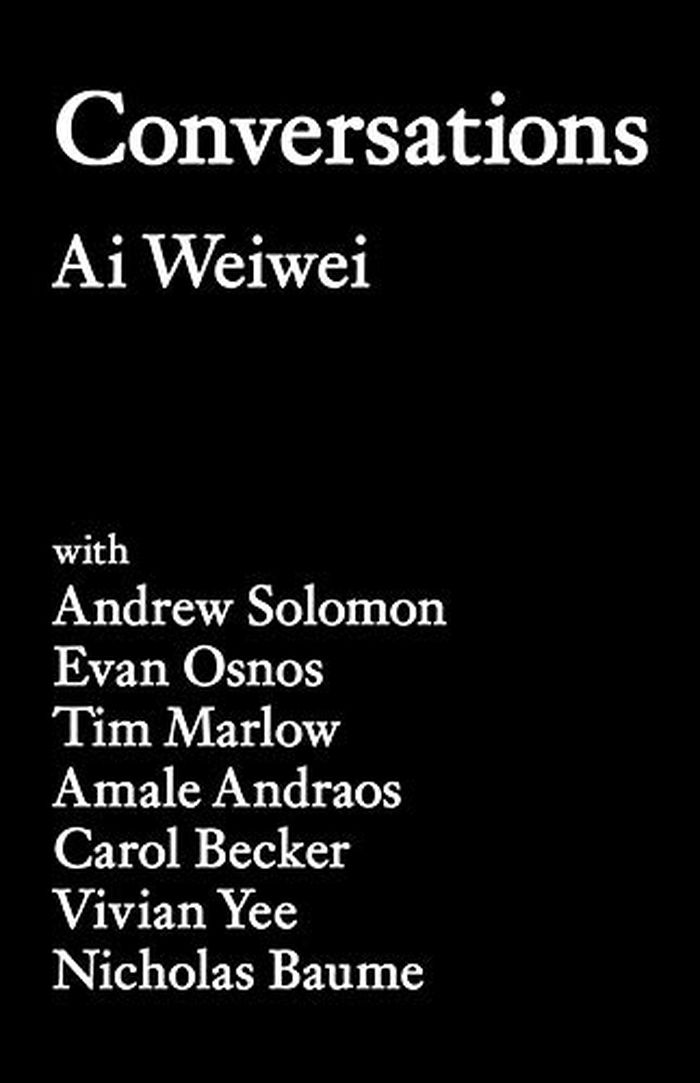
Conversations
Conversations
Actions:
Prix:
$25.95
(disponible sur commande)
Résumé:
Ai Weiwei is one of the world’s most acclaimed artists and dissidents. This book presents him in conversation with theorists, critics, journalists, and curators about key moments in his life and career. These wide-ranging conversations flow between topics such as his relationship with China, the meaning of citizenship, moving his studio to Lesbos to be on the front lines(...)
$25.95
(disponible sur commande)
Résumé:
Ai Weiwei is one of the world’s most acclaimed artists and dissidents. This book presents him in conversation with theorists, critics, journalists, and curators about key moments in his life and career. These wide-ranging conversations flow between topics such as his relationship with China, the meaning of citizenship, moving his studio to Lesbos to be on the front lines(...)
Titre:
Conversations
Actions:
Prix:
$25.95
(disponible sur commande)
Résumé:
Ai Weiwei is one of the world’s most acclaimed artists and dissidents. This book presents him in conversation with theorists, critics, journalists, and curators about key moments in his life and career. These wide-ranging conversations flow between topics such as his relationship with China, the meaning of citizenship, moving his studio to Lesbos to be on the front lines of the migrant crisis, how to make art, and technology as a tool for freedom or oppression. Ai opens up about his relationship to his father as a poet and as a dissident forced into hard labor in a small village after the Cultural Revolution. He shares his thoughts on formal education and the importance of finding your own way as an artist. New York- both the city and its people- were formative for Ai Weiwei, and he speaks eloquently about how these experiences continue to influence him. Ai conjures up scenes from his long relationship with the city: dropping out of Parsons School of Design because he couldn’t afford tuition, making portraits in Washington Square Park as an undocumented immigrant in the 1980s, taking photos for the New York Times at demonstrations in Tompkins Square Park, and returning to set up the ''Good Fences Make Good Neighbors'' project across the city. These candid, spontaneous conversations reveal why Ai Weiwei has become such a major force in contemporary art and political life.
Conversations
Actions:
Prix:
$25.95
(disponible sur commande)
Résumé:
Ai Weiwei is one of the world’s most acclaimed artists and dissidents. This book presents him in conversation with theorists, critics, journalists, and curators about key moments in his life and career. These wide-ranging conversations flow between topics such as his relationship with China, the meaning of citizenship, moving his studio to Lesbos to be on the front lines of the migrant crisis, how to make art, and technology as a tool for freedom or oppression. Ai opens up about his relationship to his father as a poet and as a dissident forced into hard labor in a small village after the Cultural Revolution. He shares his thoughts on formal education and the importance of finding your own way as an artist. New York- both the city and its people- were formative for Ai Weiwei, and he speaks eloquently about how these experiences continue to influence him. Ai conjures up scenes from his long relationship with the city: dropping out of Parsons School of Design because he couldn’t afford tuition, making portraits in Washington Square Park as an undocumented immigrant in the 1980s, taking photos for the New York Times at demonstrations in Tompkins Square Park, and returning to set up the ''Good Fences Make Good Neighbors'' project across the city. These candid, spontaneous conversations reveal why Ai Weiwei has become such a major force in contemporary art and political life.
Classification:
livres
livres
Publication:
février 2021
février 2021
Classification:
livres
livres
Actions:
Prix:
$23.95
(disponible sur commande)
Résumé:
At the dawn of the twenty-first century, architecture is in a state of crisis. Numbed by an ugly and shoddily constructed built environment and outraged by the cost of high-profile design projects, the public has become disinterested in and contemptuous of architecture as both a profession and an art. At the same time, some of our most creative designers have isolated(...)
$23.95
(disponible sur commande)
Résumé:
At the dawn of the twenty-first century, architecture is in a state of crisis. Numbed by an ugly and shoddily constructed built environment and outraged by the cost of high-profile design projects, the public has become disinterested in and contemptuous of architecture as both a profession and an art. At the same time, some of our most creative designers have isolated(...)
Titre:
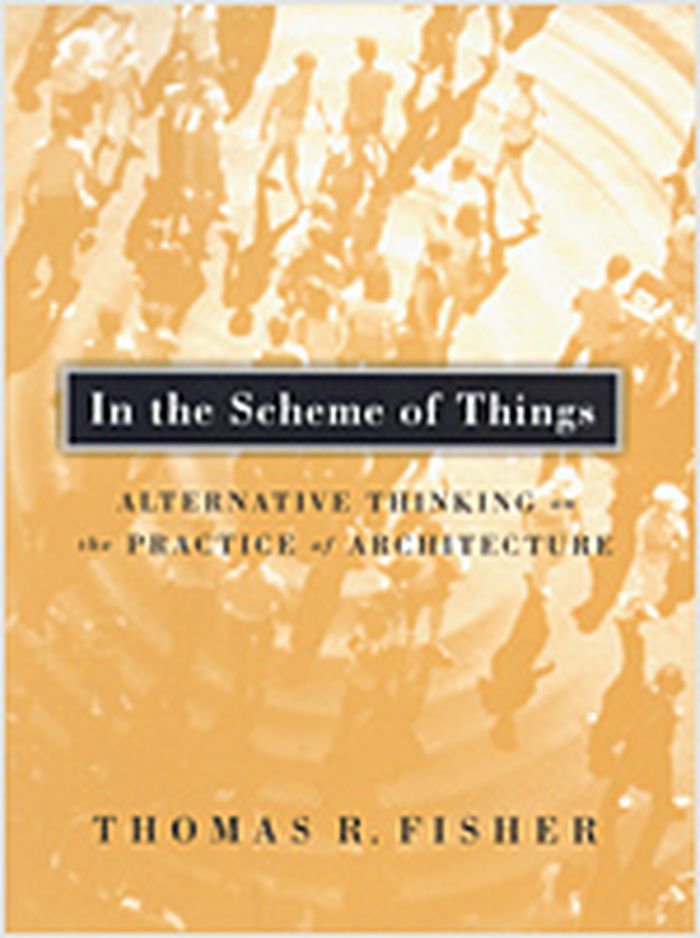
In the scheme of things : alternative thinking on the practice of architecture
Actions:
Prix:
$23.95
(disponible sur commande)
Résumé:
At the dawn of the twenty-first century, architecture is in a state of crisis. Numbed by an ugly and shoddily constructed built environment and outraged by the cost of high-profile design projects, the public has become disinterested in and contemptuous of architecture as both a profession and an art. At the same time, some of our most creative designers have isolated themselves from the tastes and needs of mainstream society, reflecting a similar malaise found in design and architecture schools around the country. In this troubling climate, Thomas R. Fisher contends that the purpose and prospects of architectural practice must be reconsidered and reenergized. "In the Scheme of Things" looks at architecture's need to respond creatively and meaningfully to the extraordinary changes affecting the profession now, changes that include the global economy, the advent of computer-aided design, and the growing disconnection between design schools, architectural practice, and the public. In each of the twelve essays that comprise this timely volume, Fisher addresses issues of vital concern to architects and students, offering hard-hitting criticism and proposing innovative and practical ideas for reform at the level of both the individual practitioner and the profession as a whole. Through his thoughtful and nuanced consideration of architecture's ideological foundations and its relationship to ecology, politics, and technology, as well as his subtle understanding of the architect's interior life, Fisher challenges the demoralized design community to recapture its historical role as steward and visionary of the public realm.
In the scheme of things : alternative thinking on the practice of architecture
Actions:
Prix:
$23.95
(disponible sur commande)
Résumé:
At the dawn of the twenty-first century, architecture is in a state of crisis. Numbed by an ugly and shoddily constructed built environment and outraged by the cost of high-profile design projects, the public has become disinterested in and contemptuous of architecture as both a profession and an art. At the same time, some of our most creative designers have isolated themselves from the tastes and needs of mainstream society, reflecting a similar malaise found in design and architecture schools around the country. In this troubling climate, Thomas R. Fisher contends that the purpose and prospects of architectural practice must be reconsidered and reenergized. "In the Scheme of Things" looks at architecture's need to respond creatively and meaningfully to the extraordinary changes affecting the profession now, changes that include the global economy, the advent of computer-aided design, and the growing disconnection between design schools, architectural practice, and the public. In each of the twelve essays that comprise this timely volume, Fisher addresses issues of vital concern to architects and students, offering hard-hitting criticism and proposing innovative and practical ideas for reform at the level of both the individual practitioner and the profession as a whole. Through his thoughtful and nuanced consideration of architecture's ideological foundations and its relationship to ecology, politics, and technology, as well as his subtle understanding of the architect's interior life, Fisher challenges the demoralized design community to recapture its historical role as steward and visionary of the public realm.
Classification:
livres
livres
Publication:
février 2006, Minneapolis
février 2006, Minneapolis
Sujet:
Théorie de l’architecture
Théorie de l’architecture
Classification:
livres
livres
Titre:
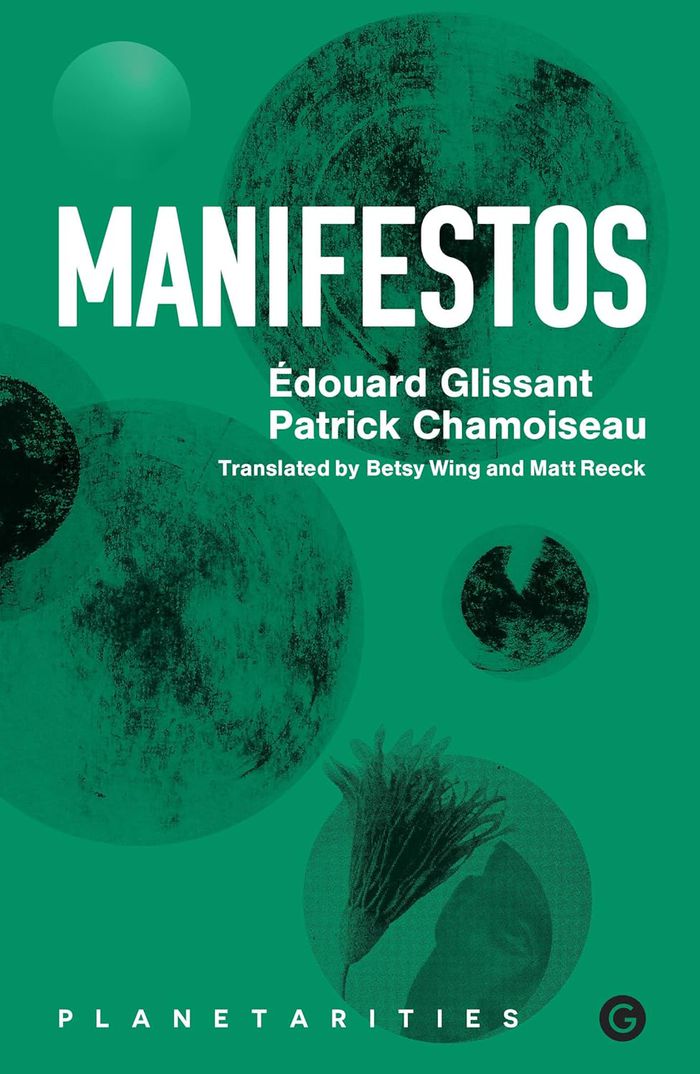
Manifestos
Manifestos
Actions:
Prix:
$39.95
(disponible sur commande)
Résumé:
"Manifestos" brings together for the first time in English the manifestos written by Édouard Glissant and Patrick Chamoiseau between 2000 and 2009. Composed in part in the aftermath of Barack Obama’s election in 2008, the texts resonate with the current context of divided identities and criticisms of multiculturalism. The individual texts grapple with concrete historical(...)
$39.95
(disponible sur commande)
Résumé:
"Manifestos" brings together for the first time in English the manifestos written by Édouard Glissant and Patrick Chamoiseau between 2000 and 2009. Composed in part in the aftermath of Barack Obama’s election in 2008, the texts resonate with the current context of divided identities and criticisms of multiculturalism. The individual texts grapple with concrete historical(...)
Publication:
septembre 2022
septembre 2022
Titre:
Manifestos
Actions:
Prix:
$39.95
(disponible sur commande)
Résumé:
"Manifestos" brings together for the first time in English the manifestos written by Édouard Glissant and Patrick Chamoiseau between 2000 and 2009. Composed in part in the aftermath of Barack Obama’s election in 2008, the texts resonate with the current context of divided identities and criticisms of multiculturalism. The individual texts grapple with concrete historical and political moments in France, the Caribbean, and North America. Across the manifestos, as well as two collectively signed op-eds, the authors engage with socio-political aspects of climate catastrophe, resource extraction, toxicity, and neocolonialism. Throughout the collection, Glissant and Chamoiseau engage with key themes articulated through their poetic vocabulary, including Relation, globalization, globality (mondialité), anti-universalism, métissage, the tout-monde ("whole-world") and the tout-vivant ("all-living," including the relationship of humans to each other and "nature"), créolité and the creolization of the world, and the liberation from community assignations in response to individualism and neoliberal societies. Translated as the first volume in the Planetarities series with Goldsmiths Press, the themes of "Manifestos" resonate with the planetary as they work in response to contemporary forms of (economic) globalization, western capitalism, identity politics, and urban, digital and cosmic ecosystems, as well as the role of the poet-writer. A distinguishing feature of this publication is its interventional aspect, which prioritizes engaged scholarship and practice while demonstrating the relevance of the poetic in response to the urgencies of planetary crisis.
Manifestos
Actions:
Prix:
$39.95
(disponible sur commande)
Résumé:
"Manifestos" brings together for the first time in English the manifestos written by Édouard Glissant and Patrick Chamoiseau between 2000 and 2009. Composed in part in the aftermath of Barack Obama’s election in 2008, the texts resonate with the current context of divided identities and criticisms of multiculturalism. The individual texts grapple with concrete historical and political moments in France, the Caribbean, and North America. Across the manifestos, as well as two collectively signed op-eds, the authors engage with socio-political aspects of climate catastrophe, resource extraction, toxicity, and neocolonialism. Throughout the collection, Glissant and Chamoiseau engage with key themes articulated through their poetic vocabulary, including Relation, globalization, globality (mondialité), anti-universalism, métissage, the tout-monde ("whole-world") and the tout-vivant ("all-living," including the relationship of humans to each other and "nature"), créolité and the creolization of the world, and the liberation from community assignations in response to individualism and neoliberal societies. Translated as the first volume in the Planetarities series with Goldsmiths Press, the themes of "Manifestos" resonate with the planetary as they work in response to contemporary forms of (economic) globalization, western capitalism, identity politics, and urban, digital and cosmic ecosystems, as well as the role of the poet-writer. A distinguishing feature of this publication is its interventional aspect, which prioritizes engaged scholarship and practice while demonstrating the relevance of the poetic in response to the urgencies of planetary crisis.
Classification:
livres
livres
Publication:
septembre 2022
septembre 2022
Classification:
livres
livres

Actions:
Prix:
$31.95
(disponible sur commande)
Résumé:
The underground has been a dominant image of modern life since the late eighteenth century. A site of crisis, fascination, and hidden truth, the underground is a space at once more immediate and more threatening than the ordinary world above. In Subterranean Cities, David L. Pike explores the representation of underground space in the nineteenth and early twentieth(...)
$31.95
(disponible sur commande)
Résumé:
The underground has been a dominant image of modern life since the late eighteenth century. A site of crisis, fascination, and hidden truth, the underground is a space at once more immediate and more threatening than the ordinary world above. In Subterranean Cities, David L. Pike explores the representation of underground space in the nineteenth and early twentieth(...)
Titre:
subterranean cities : the world beneath Paris and London, 1800-1945
Actions:
Prix:
$31.95
(disponible sur commande)
Résumé:
The underground has been a dominant image of modern life since the late eighteenth century. A site of crisis, fascination, and hidden truth, the underground is a space at once more immediate and more threatening than the ordinary world above. In Subterranean Cities, David L. Pike explores the representation of underground space in the nineteenth and early twentieth centuries, a period during which technology and heavy industry transformed urban life. The metropolis had long been considered a moral underworld of iniquity and dissolution. As the complex drainage systems, underground railways, utility tunnels, and storage vaults of the modern cityscape superseded the countryside of caverns and mines as the principal location of actual subterranean spaces, ancient and modern converged in a mythic space that was nevertheless rooted in the everyday life of the contemporary city. Writers and artists from Felix Nadar and Charles Baudelaire to Charles Dickens and Alice Meynell, Gustave Doré and Victor Hugo, George Gissing and Emile Zola, and Jules Verne and H. G. Wells integrated images of the urban underworld into their portrayals of the anatomy of modern society. Illustrated with photographs, movie stills, prints, engravings, paintings, cartoons, maps, and drawings of actual and imagined urban spaces, Subterranean Cities documents the emergence of a novel space in the subterranean obsessions and anxieties within nineteenth-century urban culture. Chapters on the subways, sewers, and cemeteries of Paris and London provide a detailed analysis of these competing centers of urban modernity. A concluding chapter considers the enduring influence of these spaces on urban culture at the turn of the twenty-first century.
subterranean cities : the world beneath Paris and London, 1800-1945
Actions:
Prix:
$31.95
(disponible sur commande)
Résumé:
The underground has been a dominant image of modern life since the late eighteenth century. A site of crisis, fascination, and hidden truth, the underground is a space at once more immediate and more threatening than the ordinary world above. In Subterranean Cities, David L. Pike explores the representation of underground space in the nineteenth and early twentieth centuries, a period during which technology and heavy industry transformed urban life. The metropolis had long been considered a moral underworld of iniquity and dissolution. As the complex drainage systems, underground railways, utility tunnels, and storage vaults of the modern cityscape superseded the countryside of caverns and mines as the principal location of actual subterranean spaces, ancient and modern converged in a mythic space that was nevertheless rooted in the everyday life of the contemporary city. Writers and artists from Felix Nadar and Charles Baudelaire to Charles Dickens and Alice Meynell, Gustave Doré and Victor Hugo, George Gissing and Emile Zola, and Jules Verne and H. G. Wells integrated images of the urban underworld into their portrayals of the anatomy of modern society. Illustrated with photographs, movie stills, prints, engravings, paintings, cartoons, maps, and drawings of actual and imagined urban spaces, Subterranean Cities documents the emergence of a novel space in the subterranean obsessions and anxieties within nineteenth-century urban culture. Chapters on the subways, sewers, and cemeteries of Paris and London provide a detailed analysis of these competing centers of urban modernity. A concluding chapter considers the enduring influence of these spaces on urban culture at the turn of the twenty-first century.
Classification:
livres
livres
Publication:
septembre 2005, Ithaca / London
septembre 2005, Ithaca / London
Sujet:
Théorie de l’urbanisme
Théorie de l’urbanisme
Classification:
livres
livres
Titre:
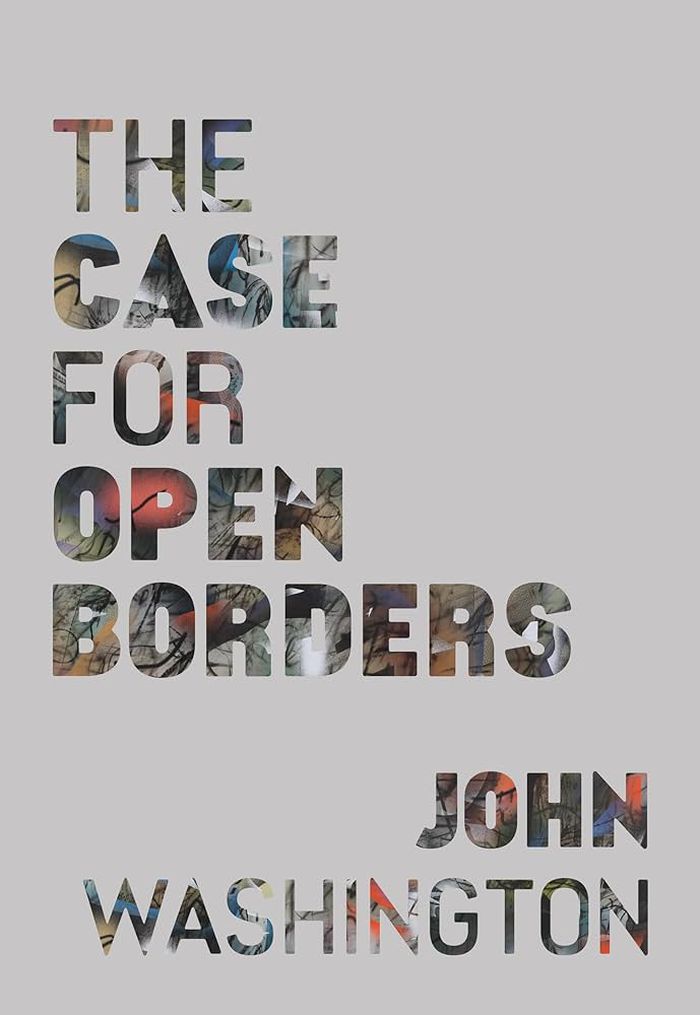
The case for open borders
The case for open borders
Actions:
Prix:
$30.95
(disponible sur commande)
Résumé:
Because of restrictive borders, human beings suffer and die. Closed borders force migrants seeking safety and dignity to journey across seas, trudge through deserts, and clamber over barbed wire. In the last five years alone, at least 60,000 people have died or gone missing while attempting to cross a border. As we deny, cast out, and crack down, we have stripped borders(...)
$30.95
(disponible sur commande)
Résumé:
Because of restrictive borders, human beings suffer and die. Closed borders force migrants seeking safety and dignity to journey across seas, trudge through deserts, and clamber over barbed wire. In the last five years alone, at least 60,000 people have died or gone missing while attempting to cross a border. As we deny, cast out, and crack down, we have stripped borders(...)
Titre:
The case for open borders
Actions:
Prix:
$30.95
(disponible sur commande)
Résumé:
Because of restrictive borders, human beings suffer and die. Closed borders force migrants seeking safety and dignity to journey across seas, trudge through deserts, and clamber over barbed wire. In the last five years alone, at least 60,000 people have died or gone missing while attempting to cross a border. As we deny, cast out, and crack down, we have stripped borders of their creative potential — as lines of contact, catalyst, and blend — turning our thresholds into barricades. Brilliant and provocative, ''The Case for Open Borders'' deflates the mythology of national security through border lockdowns by revisiting their historical origins; it counters the conspiracies of immigration’s economic consequences; it urgently considers the challenges of climate change beyond the boundaries of narrow national identities. This book grounds its argument in the experiences and thinking of those on the frontlines of the crisis, spanning the world to do so. In each chapter, through detailed reporting, journalist and translator John Washington profiles a character impacted by borders. He adds to those portraits provocative analyses of the economics and ethics of bordering, concluding that if we are to seek justice or sustainability we must fight for open borders. In recent years, important thinkers have begun to urge a profoundly different approach to migration, but no book has made the argument as accessible or as compelling. Washington’s case shines with the multitudinous voices of people on the move, a portrait in miniature of what a world with open borders will give to our common future.
The case for open borders
Actions:
Prix:
$30.95
(disponible sur commande)
Résumé:
Because of restrictive borders, human beings suffer and die. Closed borders force migrants seeking safety and dignity to journey across seas, trudge through deserts, and clamber over barbed wire. In the last five years alone, at least 60,000 people have died or gone missing while attempting to cross a border. As we deny, cast out, and crack down, we have stripped borders of their creative potential — as lines of contact, catalyst, and blend — turning our thresholds into barricades. Brilliant and provocative, ''The Case for Open Borders'' deflates the mythology of national security through border lockdowns by revisiting their historical origins; it counters the conspiracies of immigration’s economic consequences; it urgently considers the challenges of climate change beyond the boundaries of narrow national identities. This book grounds its argument in the experiences and thinking of those on the frontlines of the crisis, spanning the world to do so. In each chapter, through detailed reporting, journalist and translator John Washington profiles a character impacted by borders. He adds to those portraits provocative analyses of the economics and ethics of bordering, concluding that if we are to seek justice or sustainability we must fight for open borders. In recent years, important thinkers have begun to urge a profoundly different approach to migration, but no book has made the argument as accessible or as compelling. Washington’s case shines with the multitudinous voices of people on the move, a portrait in miniature of what a world with open borders will give to our common future.
Classification:
livres
livres
Publication:
février 2024
février 2024
Sujet:
Social
Social
Classification:
livres
livres
Actions:
Prix:
$59.95
(disponible sur commande)
Résumé:
"Suspensions of Perception" is a major historical study of human attention and its volatile role in modern Western culture. It argues that the ways in which we intently look at or listen to anything result from crucial changes in the nature of perception that can be traced back to(...)
$59.95
(disponible sur commande)
Résumé:
"Suspensions of Perception" is a major historical study of human attention and its volatile role in modern Western culture. It argues that the ways in which we intently look at or listen to anything result from crucial changes in the nature of perception that can be traced back to(...)
Titre:
Suspensions of perception : attention, spectacle, and modern culture
Actions:
Prix:
$59.95
(disponible sur commande)
Résumé:
"Suspensions of Perception" is a major historical study of human attention and its volatile role in modern Western culture. It argues that the ways in which we intently look at or listen to anything result from crucial changes in the nature of perception that can be traced back to the second half of the nineteenth century. Focusing on the period from about 1880 to 1905, Jonathan Crary examines the connections between the modernization of subjectivity and the dramatic expansion and industrialization of visual/auditory culture. At the core of his project is the paradoxical nature of modern attention, which was both a fundamental condition of individual freedom, creativity, and experience and a central element in the efficient functioning of economic and disciplinary institutions as well as the emerging spaces of mass consumption and spectacle. Crary approaches these issues through multiple analyses of single works by three key modernist painters--Manet, Seurat, and Cézanne--who each engaged in a singular confrontation with the disruptions, vacancies, and rifts within a perceptual field. Each in his own way discovered that sustained attentiveness, rather than fixing or securing the world, led to perceptual disintegration and loss of presence, and each used this discovery as the basis for a reinvention of representational practices. Suspensions of Perception decisively relocates the problem of aesthetic contemplation within a broader collective encounter with the unstable nature of perception--in psychology, philosophy, neurology, early cinema, and photography. In doing so, it provides a historical framework for understanding the current social crisis of attention amid the accelerating metamorphoses of our contemporary technological culture.
Suspensions of perception : attention, spectacle, and modern culture
Actions:
Prix:
$59.95
(disponible sur commande)
Résumé:
"Suspensions of Perception" is a major historical study of human attention and its volatile role in modern Western culture. It argues that the ways in which we intently look at or listen to anything result from crucial changes in the nature of perception that can be traced back to the second half of the nineteenth century. Focusing on the period from about 1880 to 1905, Jonathan Crary examines the connections between the modernization of subjectivity and the dramatic expansion and industrialization of visual/auditory culture. At the core of his project is the paradoxical nature of modern attention, which was both a fundamental condition of individual freedom, creativity, and experience and a central element in the efficient functioning of economic and disciplinary institutions as well as the emerging spaces of mass consumption and spectacle. Crary approaches these issues through multiple analyses of single works by three key modernist painters--Manet, Seurat, and Cézanne--who each engaged in a singular confrontation with the disruptions, vacancies, and rifts within a perceptual field. Each in his own way discovered that sustained attentiveness, rather than fixing or securing the world, led to perceptual disintegration and loss of presence, and each used this discovery as the basis for a reinvention of representational practices. Suspensions of Perception decisively relocates the problem of aesthetic contemplation within a broader collective encounter with the unstable nature of perception--in psychology, philosophy, neurology, early cinema, and photography. In doing so, it provides a historical framework for understanding the current social crisis of attention amid the accelerating metamorphoses of our contemporary technological culture.
Classification:
livres
livres
Publication:
octobre 1999, Cambridge
octobre 1999, Cambridge
Sujet:
Théorie de l’architecture
Théorie de l’architecture
Classification:
livres
livres
Actions:
Prix:
$49.95
(disponible sur commande)
Résumé:
"Suspensions of Perception" is a major historical study of human attention and its volatile role in modern Western culture. It argues that the ways in which we intently look at or listen to anything result from crucial changes in the nature of perception that can be traced back to(...)
$49.95
(disponible sur commande)
Résumé:
"Suspensions of Perception" is a major historical study of human attention and its volatile role in modern Western culture. It argues that the ways in which we intently look at or listen to anything result from crucial changes in the nature of perception that can be traced back to(...)
Titre:
Suspensions of perception: attention, spectacle, and modern culture
Actions:
Prix:
$49.95
(disponible sur commande)
Résumé:
"Suspensions of Perception" is a major historical study of human attention and its volatile role in modern Western culture. It argues that the ways in which we intently look at or listen to anything result from crucial changes in the nature of perception that can be traced back to the second half of the nineteenth century. Focusing on the period from about 1880 to 1905, Jonathan Crary examines the connections between the modernization of subjectivity and the dramatic expansion and industrialization of visual/auditory culture. At the core of his project is the paradoxical nature of modern attention, which was both a fundamental condition of individual freedom, creativity, and experience and a central element in the efficient functioning of economic and disciplinary institutions as well as the emerging spaces of mass consumption and spectacle. Crary approaches these issues through multiple analyses of single works by three key modernist painters--Manet, Seurat, and Cézanne--who each engaged in a singular confrontation with the disruptions, vacancies, and rifts within a perceptual field. Each in his own way discovered that sustained attentiveness, rather than fixing or securing the world, led to perceptual disintegration and loss of presence, and each used this discovery as the basis for a reinvention of representational practices. Suspensions of Perception decisively relocates the problem of aesthetic contemplation within a broader collective encounter with the unstable nature of perception--in psychology, philosophy, neurology, early cinema, and photography. In doing so, it provides a historical framework for understanding the current social crisis of attention amid the accelerating metamorphoses of our contemporary technological culture.
Suspensions of perception: attention, spectacle, and modern culture
Actions:
Prix:
$49.95
(disponible sur commande)
Résumé:
"Suspensions of Perception" is a major historical study of human attention and its volatile role in modern Western culture. It argues that the ways in which we intently look at or listen to anything result from crucial changes in the nature of perception that can be traced back to the second half of the nineteenth century. Focusing on the period from about 1880 to 1905, Jonathan Crary examines the connections between the modernization of subjectivity and the dramatic expansion and industrialization of visual/auditory culture. At the core of his project is the paradoxical nature of modern attention, which was both a fundamental condition of individual freedom, creativity, and experience and a central element in the efficient functioning of economic and disciplinary institutions as well as the emerging spaces of mass consumption and spectacle. Crary approaches these issues through multiple analyses of single works by three key modernist painters--Manet, Seurat, and Cézanne--who each engaged in a singular confrontation with the disruptions, vacancies, and rifts within a perceptual field. Each in his own way discovered that sustained attentiveness, rather than fixing or securing the world, led to perceptual disintegration and loss of presence, and each used this discovery as the basis for a reinvention of representational practices. Suspensions of Perception decisively relocates the problem of aesthetic contemplation within a broader collective encounter with the unstable nature of perception--in psychology, philosophy, neurology, early cinema, and photography. In doing so, it provides a historical framework for understanding the current social crisis of attention amid the accelerating metamorphoses of our contemporary technological culture.
Classification:
livres
livres
Publication:
août 2001, Cambridge
août 2001, Cambridge
Sujet:
Théorie de l’architecture
Théorie de l’architecture
Classification:
livres
livres
Actions:
Prix:
$94.00
(disponible sur commande)
Résumé:
On the occasion of the exhibition "Archilab 2006" dedicated to the Japenese architecture and entitled "Nested in the city", Hyx publish the catalog of the exhibition in french and english version. They present all the projects of thirty invited architects and a set of critical texts which put in perspective the stakes and the subjects of the exhibition. More than any(...)
$94.00
(disponible sur commande)
Résumé:
On the occasion of the exhibition "Archilab 2006" dedicated to the Japenese architecture and entitled "Nested in the city", Hyx publish the catalog of the exhibition in french and english version. They present all the projects of thirty invited architects and a set of critical texts which put in perspective the stakes and the subjects of the exhibition. More than any(...)
Publication:
octobre 2006, Orléans
octobre 2006, Orléans
Titre:
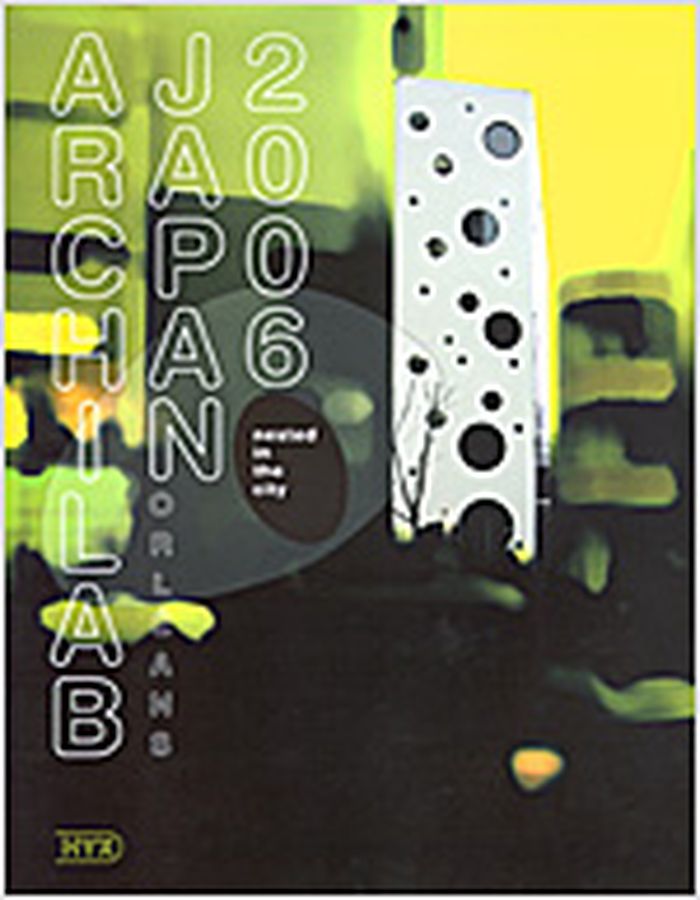
Archilab Japan, Orléans 2006 : nested in the city
Actions:
Prix:
$94.00
(disponible sur commande)
Résumé:
On the occasion of the exhibition "Archilab 2006" dedicated to the Japenese architecture and entitled "Nested in the city", Hyx publish the catalog of the exhibition in french and english version. They present all the projects of thirty invited architects and a set of critical texts which put in perspective the stakes and the subjects of the exhibition. More than any other country, Japan was interested at home, the space domesticates being perceived as a space privileging the thought. Hundred of projects presented in the catalog are built for the greater part. Selected by both curators (Akira Suzuki and Mariko Terada), they offer us a panorama of this architects' new generation which began in the 1990s. The most famous in France are doubtless Shigeru Ban presented to Archilab in 1999 and which was the first one to make approve tubes cardboard as support of his houses and also Kasujo Sejima who saw confiding with Ryue Nishizawa the construction of the Museum of the Louvre to Lens. Symbolic Bow Wow workshop is the Leader of this new generation. After the economic crisis of the end of the 90s, the construction of public establishments of average dimension and the competitions of architecture rarefied. The house thus becomes the space of creation privileged for these architects. That's why, in Tokyo, Jun Aoki, Kazuyo Sejima, Ryue Nishizawa, Takaharu and Yui Tezuka, Mitsuhiko Sato, Taira Nishizawa, Masao Koizumi, Yasuhiro Yamashita, Mikio Tai, Yuki Ishiguro, conceive small houses which embody the way of life of their inhabitants and maybe our future today.
Archilab Japan, Orléans 2006 : nested in the city
Actions:
Prix:
$94.00
(disponible sur commande)
Résumé:
On the occasion of the exhibition "Archilab 2006" dedicated to the Japenese architecture and entitled "Nested in the city", Hyx publish the catalog of the exhibition in french and english version. They present all the projects of thirty invited architects and a set of critical texts which put in perspective the stakes and the subjects of the exhibition. More than any other country, Japan was interested at home, the space domesticates being perceived as a space privileging the thought. Hundred of projects presented in the catalog are built for the greater part. Selected by both curators (Akira Suzuki and Mariko Terada), they offer us a panorama of this architects' new generation which began in the 1990s. The most famous in France are doubtless Shigeru Ban presented to Archilab in 1999 and which was the first one to make approve tubes cardboard as support of his houses and also Kasujo Sejima who saw confiding with Ryue Nishizawa the construction of the Museum of the Louvre to Lens. Symbolic Bow Wow workshop is the Leader of this new generation. After the economic crisis of the end of the 90s, the construction of public establishments of average dimension and the competitions of architecture rarefied. The house thus becomes the space of creation privileged for these architects. That's why, in Tokyo, Jun Aoki, Kazuyo Sejima, Ryue Nishizawa, Takaharu and Yui Tezuka, Mitsuhiko Sato, Taira Nishizawa, Masao Koizumi, Yasuhiro Yamashita, Mikio Tai, Yuki Ishiguro, conceive small houses which embody the way of life of their inhabitants and maybe our future today.
Classification:
livres
livres
Publication:
octobre 2006, Orléans
octobre 2006, Orléans
Classification:
livres
livres
Titre:
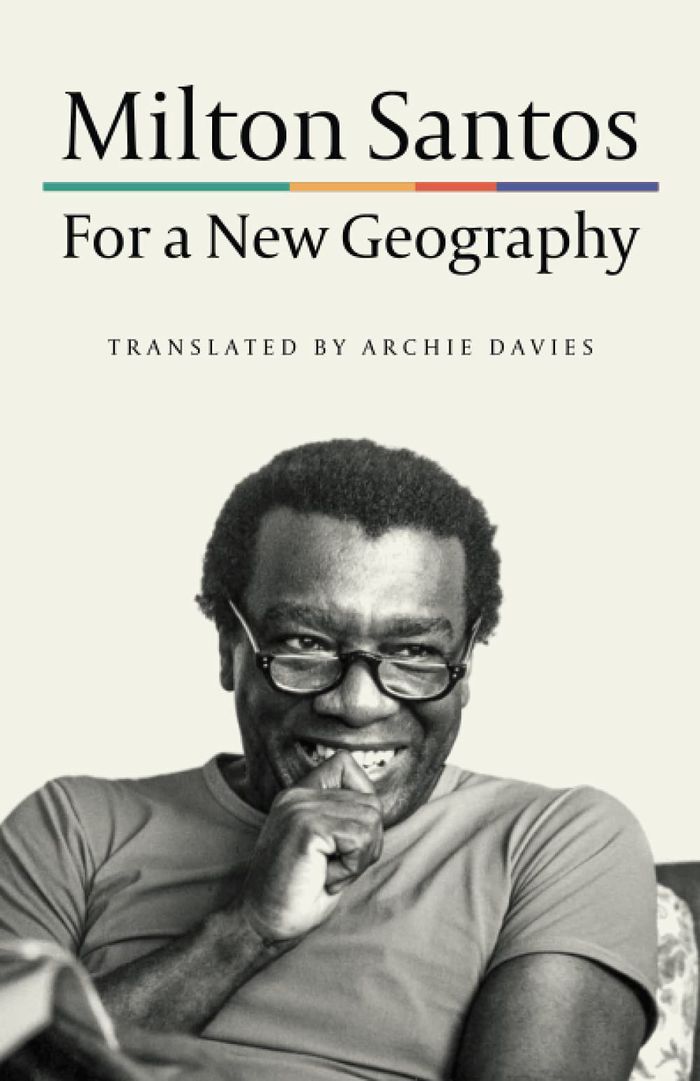
For a new georgraphy
For a new georgraphy
Actions:
Prix:
$38.99
(disponible sur commande)
Résumé:
Originally published in 1978 in Portuguese, ''For a new geography'' is a milestone in the history of critical geography, and it marked the emergence of its author, Milton Santos (1926-2001), as a major interpreter of geographical thought, a prominent Afro-Brazilian public intellectual, and one of the foremost global theorists of space. Published in the midst of a(...)
$38.99
(disponible sur commande)
Résumé:
Originally published in 1978 in Portuguese, ''For a new geography'' is a milestone in the history of critical geography, and it marked the emergence of its author, Milton Santos (1926-2001), as a major interpreter of geographical thought, a prominent Afro-Brazilian public intellectual, and one of the foremost global theorists of space. Published in the midst of a(...)
Titre:
For a new georgraphy
Actions:
Prix:
$38.99
(disponible sur commande)
Résumé:
Originally published in 1978 in Portuguese, ''For a new geography'' is a milestone in the history of critical geography, and it marked the emergence of its author, Milton Santos (1926-2001), as a major interpreter of geographical thought, a prominent Afro-Brazilian public intellectual, and one of the foremost global theorists of space. Published in the midst of a crisis in geographical thought, ''For a new geography'' functioned as a bridge between geography's past and its future. In advancing his vision of a geography of action and liberation, Santos begins by turning to the roots of modern geography and its colonial legacies. Moving from a critique of the shortcomings of geography from the field's foundations as a modern science to the outline of a new field of critical geography, he sets forth both an ontology of space and a methodology for geography. In so doing, he introduces novel theoretical categories to the analysis of space. It is, in short, both a critique of the Northern, Anglo-centric discipline from within and a systematic critique of its flaws and assumptions from outside. Critical geography has developed in the past four decades into a heterogenous and creative field of enquiry. Though accruing a set of theoretical touchstones in the process, it has become detached from a longer and broader history of geographical thought. ''For a new geography'' reconciles these divergent histories. Arriving in English at a time of renewed interest in alternative geographical traditions and the history of radical geography, it takes its place in the canonical works of critical geography.
For a new georgraphy
Actions:
Prix:
$38.99
(disponible sur commande)
Résumé:
Originally published in 1978 in Portuguese, ''For a new geography'' is a milestone in the history of critical geography, and it marked the emergence of its author, Milton Santos (1926-2001), as a major interpreter of geographical thought, a prominent Afro-Brazilian public intellectual, and one of the foremost global theorists of space. Published in the midst of a crisis in geographical thought, ''For a new geography'' functioned as a bridge between geography's past and its future. In advancing his vision of a geography of action and liberation, Santos begins by turning to the roots of modern geography and its colonial legacies. Moving from a critique of the shortcomings of geography from the field's foundations as a modern science to the outline of a new field of critical geography, he sets forth both an ontology of space and a methodology for geography. In so doing, he introduces novel theoretical categories to the analysis of space. It is, in short, both a critique of the Northern, Anglo-centric discipline from within and a systematic critique of its flaws and assumptions from outside. Critical geography has developed in the past four decades into a heterogenous and creative field of enquiry. Though accruing a set of theoretical touchstones in the process, it has become detached from a longer and broader history of geographical thought. ''For a new geography'' reconciles these divergent histories. Arriving in English at a time of renewed interest in alternative geographical traditions and the history of radical geography, it takes its place in the canonical works of critical geography.
Classification:
livres
livres
Publication:
novembre 2021
novembre 2021
Sujet:
Social
Social
Classification:
périodiques
périodiques
Prix:
$38.00
(disponible sur commande)
Résumé:
At a moment when the word “design” has come to refer to everything and thus nothing, this issue examines the hidden mechanics and visible output of design practice in order to track the shifting role of designers in society and to gauge the capacity of designers to effect change in a world of mounting crises. The issue’s title, ''Instruments of Service'', carries a(...)
$38.00
(disponible sur commande)
Résumé:
At a moment when the word “design” has come to refer to everything and thus nothing, this issue examines the hidden mechanics and visible output of design practice in order to track the shifting role of designers in society and to gauge the capacity of designers to effect change in a world of mounting crises. The issue’s title, ''Instruments of Service'', carries a(...)
Titre:
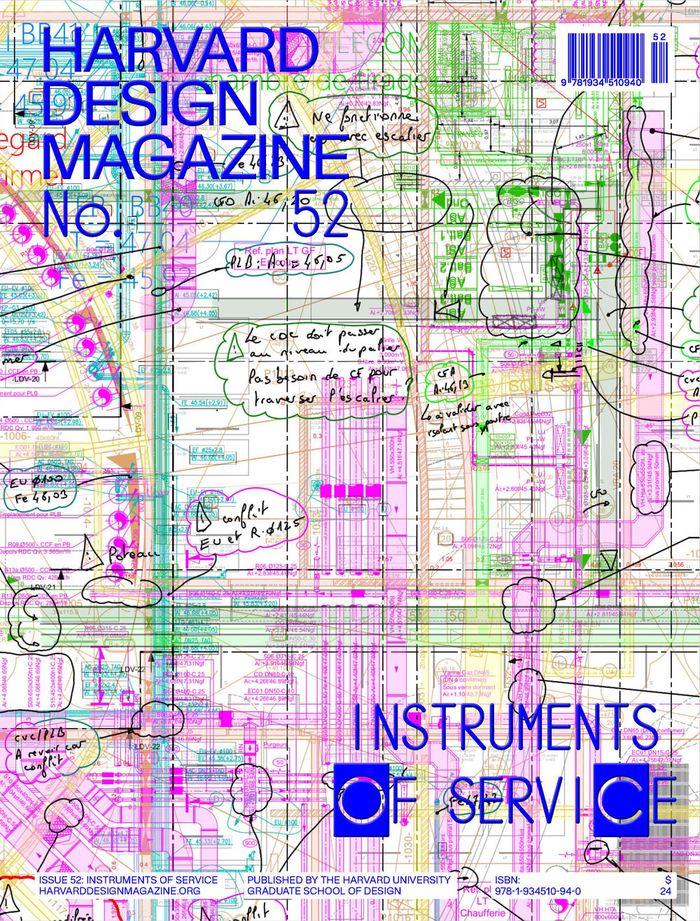
Harvard Design Magazine no. 52 : Instruments of service
Actions:
Prix:
$38.00
(disponible sur commande)
Résumé:
At a moment when the word “design” has come to refer to everything and thus nothing, this issue examines the hidden mechanics and visible output of design practice in order to track the shifting role of designers in society and to gauge the capacity of designers to effect change in a world of mounting crises. The issue’s title, ''Instruments of Service'', carries a double meaning. As defined in standard American Institute of Architects contracts, “Instruments of Service are representations, in any medium of expression now known or later developed, of the tangible and intangible creative work performed by the Architect and the Architect’s consultants under their respective professional services agreements. Instruments of Service may include, without limitation, studies, surveys, models, sketches, drawings, specifications, and other similar materials.” Instruments of service are the instruction manuals that architects—and other designers—make so that others can make something. They define the architect’s relationships with labor, construction, clients, and society. And these relationships—along with the agency of architectural practice—are changing as a growing number of external pressures force instruments of service to change. Architects and designers can also be seen as instruments of service to society, responsible to a continually shifting set of values. At a fundamental level, the designer’s job is to imagine and articulate a better future. In a time of crisis and competing value systems—market returns, cultural relevance, environmental response, social equity, automation—the role of the designer in society is ever more important and increasingly accountable to divergent interests that call into question the raison d’être of design practice itself.
Harvard Design Magazine no. 52 : Instruments of service
Actions:
Prix:
$38.00
(disponible sur commande)
Résumé:
At a moment when the word “design” has come to refer to everything and thus nothing, this issue examines the hidden mechanics and visible output of design practice in order to track the shifting role of designers in society and to gauge the capacity of designers to effect change in a world of mounting crises. The issue’s title, ''Instruments of Service'', carries a double meaning. As defined in standard American Institute of Architects contracts, “Instruments of Service are representations, in any medium of expression now known or later developed, of the tangible and intangible creative work performed by the Architect and the Architect’s consultants under their respective professional services agreements. Instruments of Service may include, without limitation, studies, surveys, models, sketches, drawings, specifications, and other similar materials.” Instruments of service are the instruction manuals that architects—and other designers—make so that others can make something. They define the architect’s relationships with labor, construction, clients, and society. And these relationships—along with the agency of architectural practice—are changing as a growing number of external pressures force instruments of service to change. Architects and designers can also be seen as instruments of service to society, responsible to a continually shifting set of values. At a fundamental level, the designer’s job is to imagine and articulate a better future. In a time of crisis and competing value systems—market returns, cultural relevance, environmental response, social equity, automation—the role of the designer in society is ever more important and increasingly accountable to divergent interests that call into question the raison d’être of design practice itself.
Classification:
périodiques
périodiques
Publication:
février 2025
février 2025
Sujet:
Revues
Revues


