


1699 Résultats
Classification:
livres
livres
Titre:
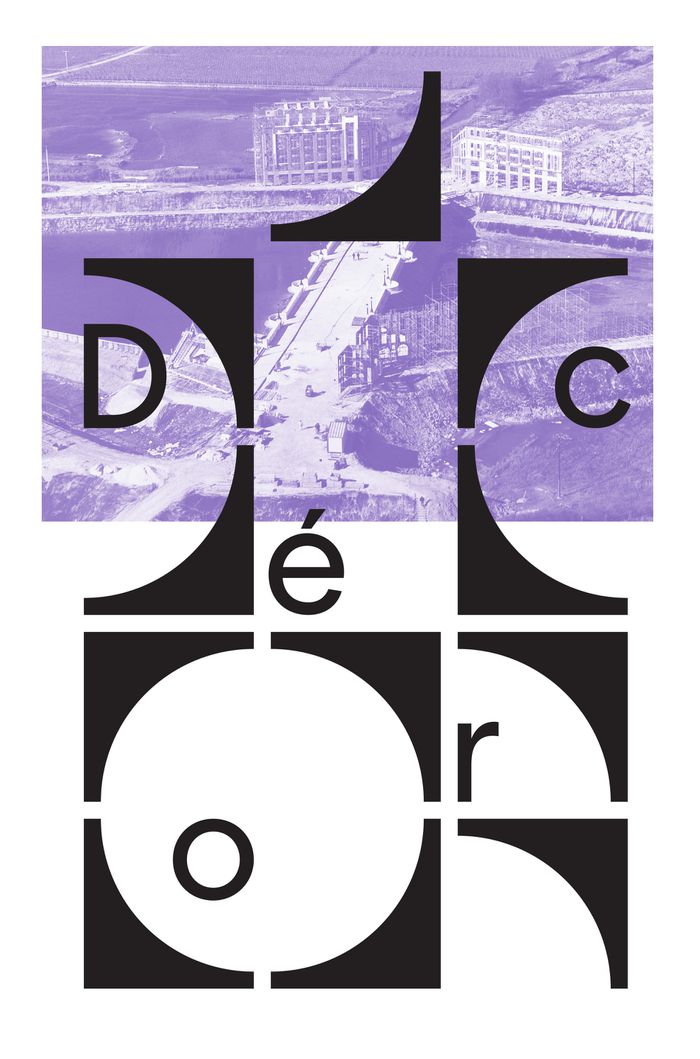
DÉCOR n° 01
DÉCOR n° 01
Actions:
Prix:
$54.95
(disponible en magasin)
Résumé:
Premier numéro de la grande revue annuelle de l'École des arts décoratifs de Paris, consacrée aux enjeux du décor contemporain. Traiter la notion de « décor » implique au moins deux présupposés : d'une part que la critique moderne de l'ornementation et du décoratif n'a pas eu raison du décor ; et d'autre part que la réhabilitation ludique et parfois cynique du décoratif(...)
$54.95
(disponible en magasin)
Résumé:
Premier numéro de la grande revue annuelle de l'École des arts décoratifs de Paris, consacrée aux enjeux du décor contemporain. Traiter la notion de « décor » implique au moins deux présupposés : d'une part que la critique moderne de l'ornementation et du décoratif n'a pas eu raison du décor ; et d'autre part que la réhabilitation ludique et parfois cynique du décoratif(...)
Publication:
juin 2021
juin 2021
Titre:
DÉCOR n° 01
Actions:
Prix:
$54.95
(disponible en magasin)
Résumé:
Premier numéro de la grande revue annuelle de l'École des arts décoratifs de Paris, consacrée aux enjeux du décor contemporain. Traiter la notion de « décor » implique au moins deux présupposés : d'une part que la critique moderne de l'ornementation et du décoratif n'a pas eu raison du décor ; et d'autre part que la réhabilitation ludique et parfois cynique du décoratif dans le postmoderne ne suffit pas à rendre compte du décor contemporain. Le décor reste à l'œuvre, autant quand on prétend le dépasser que lorsque l'on le recouvre par l'emphase décorative. Il s'agit donc de réfléchir à la pratique actuelle des décorateur.ice.s, que ce soit au théâtre, au cinéma, dans les jeux vidéo ou la réalité augmentée, ainsi qu'aux propositions artistiques qui incorporent cette dimension. Mais plus largement, il s'agit de comprendre cette notion en un sens qui déborde celui du décor de fiction pour étendre sa désignation à l'ensemble de l'environnement quotidien et montrer à quel point le décor touche à l'organisation même du réel dans sa dimension esthétique, sociale et politique.
DÉCOR n° 01
Actions:
Prix:
$54.95
(disponible en magasin)
Résumé:
Premier numéro de la grande revue annuelle de l'École des arts décoratifs de Paris, consacrée aux enjeux du décor contemporain. Traiter la notion de « décor » implique au moins deux présupposés : d'une part que la critique moderne de l'ornementation et du décoratif n'a pas eu raison du décor ; et d'autre part que la réhabilitation ludique et parfois cynique du décoratif dans le postmoderne ne suffit pas à rendre compte du décor contemporain. Le décor reste à l'œuvre, autant quand on prétend le dépasser que lorsque l'on le recouvre par l'emphase décorative. Il s'agit donc de réfléchir à la pratique actuelle des décorateur.ice.s, que ce soit au théâtre, au cinéma, dans les jeux vidéo ou la réalité augmentée, ainsi qu'aux propositions artistiques qui incorporent cette dimension. Mais plus largement, il s'agit de comprendre cette notion en un sens qui déborde celui du décor de fiction pour étendre sa désignation à l'ensemble de l'environnement quotidien et montrer à quel point le décor touche à l'organisation même du réel dans sa dimension esthétique, sociale et politique.
Classification:
livres
livres
Publication:
juin 2021
juin 2021
Classification:
livres
livres

Actions:
Prix:
$36.95
(disponible sur commande)
Résumé:
What does it mean to say that Native peoples exist in the present? In ''Beyond settler time'' Mark Rifkin investigates the dangers of seeking to include Indigenous peoples within settler temporal frameworks. Claims that Native peoples should be recognized as coeval with Euro-Americans, Rifkin argues, implicitly treat dominant non-native ideologies and institutions as the(...)
$36.95
(disponible sur commande)
Résumé:
What does it mean to say that Native peoples exist in the present? In ''Beyond settler time'' Mark Rifkin investigates the dangers of seeking to include Indigenous peoples within settler temporal frameworks. Claims that Native peoples should be recognized as coeval with Euro-Americans, Rifkin argues, implicitly treat dominant non-native ideologies and institutions as the(...)
Titre:
Beyond settler time: temporal sovereignty and indigenous self-determination
Actions:
Prix:
$36.95
(disponible sur commande)
Résumé:
What does it mean to say that Native peoples exist in the present? In ''Beyond settler time'' Mark Rifkin investigates the dangers of seeking to include Indigenous peoples within settler temporal frameworks. Claims that Native peoples should be recognized as coeval with Euro-Americans, Rifkin argues, implicitly treat dominant non-native ideologies and institutions as the basis for defining time itself. How, though, can Native peoples be understood as dynamic and changing while also not assuming that they belong to a present inherently shared with non-natives? Drawing on physics, phenomenology, queer studies, and postcolonial theory, Rifkin develops the concept of "settler time" to address how Native peoples are both consigned to the past and inserted into the present in ways that normalize non-native histories, geographies, and expectations. Through analysis of various kinds of texts, including government documents, film, fiction, and autobiography, he explores how Native experiences of time exceed and defy such settler impositions. In underscoring the existence of multiple temporalities, Rifkin illustrates how time plays a crucial role in Indigenous peoples' expressions of sovereignty and struggles for self-determination.
Beyond settler time: temporal sovereignty and indigenous self-determination
Actions:
Prix:
$36.95
(disponible sur commande)
Résumé:
What does it mean to say that Native peoples exist in the present? In ''Beyond settler time'' Mark Rifkin investigates the dangers of seeking to include Indigenous peoples within settler temporal frameworks. Claims that Native peoples should be recognized as coeval with Euro-Americans, Rifkin argues, implicitly treat dominant non-native ideologies and institutions as the basis for defining time itself. How, though, can Native peoples be understood as dynamic and changing while also not assuming that they belong to a present inherently shared with non-natives? Drawing on physics, phenomenology, queer studies, and postcolonial theory, Rifkin develops the concept of "settler time" to address how Native peoples are both consigned to the past and inserted into the present in ways that normalize non-native histories, geographies, and expectations. Through analysis of various kinds of texts, including government documents, film, fiction, and autobiography, he explores how Native experiences of time exceed and defy such settler impositions. In underscoring the existence of multiple temporalities, Rifkin illustrates how time plays a crucial role in Indigenous peoples' expressions of sovereignty and struggles for self-determination.
Classification:
livres
livres
Publication:
février 2017
février 2017
Classification:
livres
livres
Actions:
Prix:
$36.95
(disponible sur commande)
Résumé:
The term 'geoengineering' refers to technologies that counteract the effects of anthropogenic climate change by deliberately intervening in Earth systems. In the midst of a climate crisis, and with disparate views on whether planetary-scale design is the appropriate response at all, 'The Planet After Geoengineering' employs a speculative fiction approach to think with and(...)
$36.95
(disponible sur commande)
Résumé:
The term 'geoengineering' refers to technologies that counteract the effects of anthropogenic climate change by deliberately intervening in Earth systems. In the midst of a climate crisis, and with disparate views on whether planetary-scale design is the appropriate response at all, 'The Planet After Geoengineering' employs a speculative fiction approach to think with and(...)
Publication:
juillet 2021
juillet 2021
Titre:
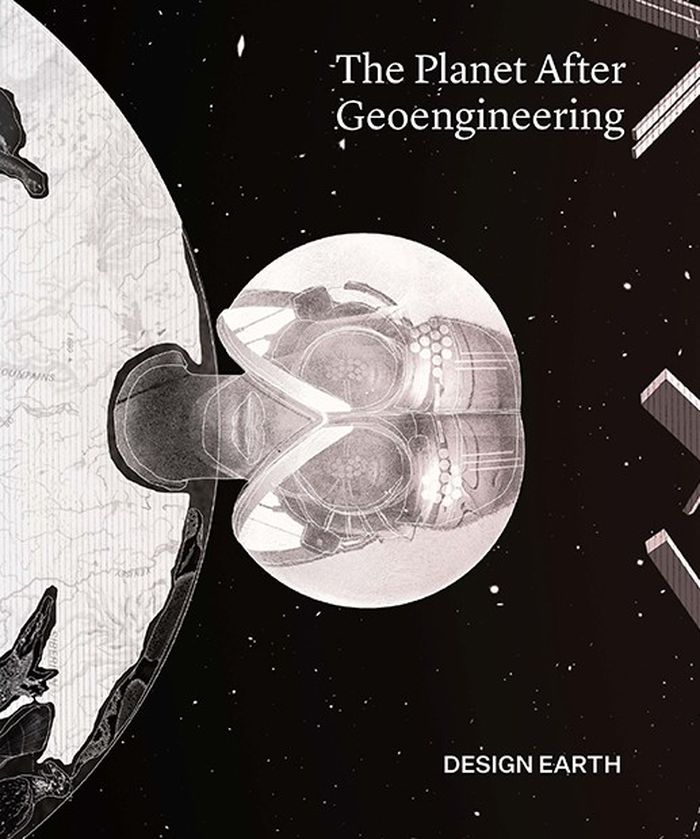
The planet after geoengineering
Actions:
Prix:
$36.95
(disponible sur commande)
Résumé:
The term 'geoengineering' refers to technologies that counteract the effects of anthropogenic climate change by deliberately intervening in Earth systems. In the midst of a climate crisis, and with disparate views on whether planetary-scale design is the appropriate response at all, 'The Planet After Geoengineering' employs a speculative fiction approach to think with and against geoengineering as a form of planetary management. The graphic novel makes climate engineering and its controversies visible in a series of five stories that are collectively assembled into a planetary section from the deep underground to outer space. Each geostory - Petrified Carbon, Arctic Albedo, Sky River, Sulfur Storm, and Dust Cloud - depicts possible future Earths that we come to inhabit on the heels of a geoengineering intervention all while situating such promisory visions within a genealogy of climate-control projects from nineteenth-century rainmaking machines and volcanic eruptions to Cold War military plans. Such fabrications of an engineerable earth open a space to forge a new geo-politics that includes the actual Earth - its dimensions, processes, and lifeforms - as constitutive of design and the planet.
The planet after geoengineering
Actions:
Prix:
$36.95
(disponible sur commande)
Résumé:
The term 'geoengineering' refers to technologies that counteract the effects of anthropogenic climate change by deliberately intervening in Earth systems. In the midst of a climate crisis, and with disparate views on whether planetary-scale design is the appropriate response at all, 'The Planet After Geoengineering' employs a speculative fiction approach to think with and against geoengineering as a form of planetary management. The graphic novel makes climate engineering and its controversies visible in a series of five stories that are collectively assembled into a planetary section from the deep underground to outer space. Each geostory - Petrified Carbon, Arctic Albedo, Sky River, Sulfur Storm, and Dust Cloud - depicts possible future Earths that we come to inhabit on the heels of a geoengineering intervention all while situating such promisory visions within a genealogy of climate-control projects from nineteenth-century rainmaking machines and volcanic eruptions to Cold War military plans. Such fabrications of an engineerable earth open a space to forge a new geo-politics that includes the actual Earth - its dimensions, processes, and lifeforms - as constitutive of design and the planet.
Classification:
livres
livres
Publication:
juillet 2021
juillet 2021
Classification:
livres
livres
Titre:
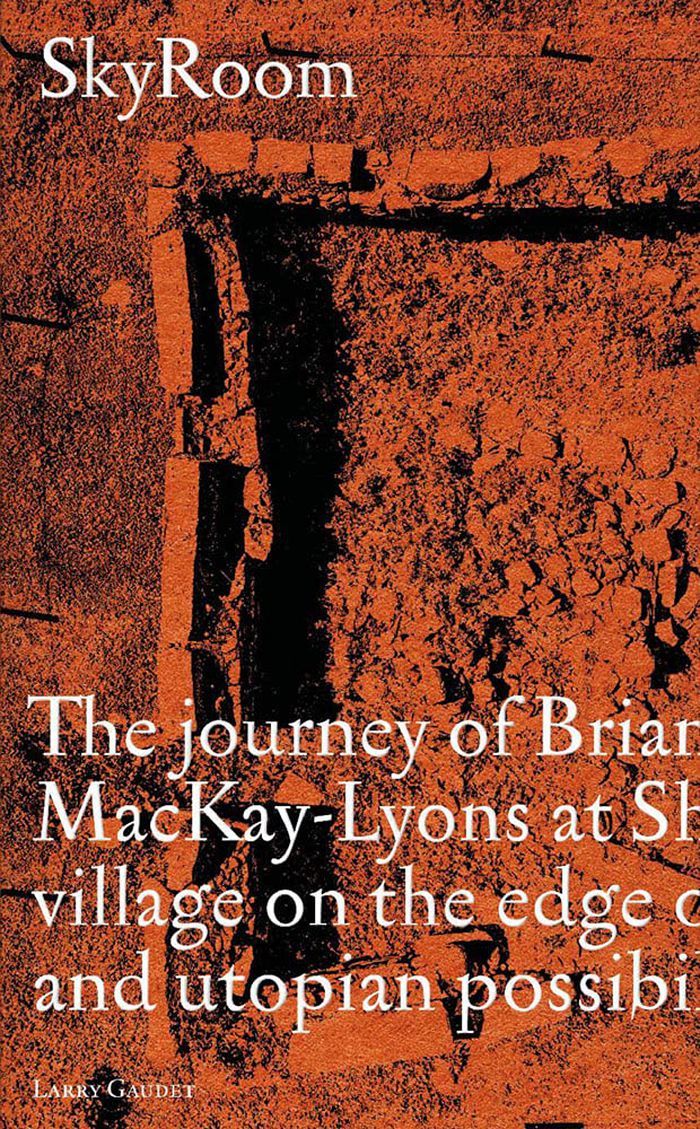
Skyroom: the journey of Brian and Marilyn MacKay-Lyons at Shobac, seaside village on the edge
Skyroom: the journey of Brian and Marilyn MacKay-Lyons at Shobac, seaside village on the edge
Actions:
Prix:
$39.95
(disponible sur commande)
Résumé:
In partnership with his wife Marilyn Mackay-Lyons and their family, architect Brian Mackay-Lyons has built a unique community over the granite ruins of a historic settlement on the fogbound coast of Nova Scotia. Among the structures at Shobac are homes, barns, studios, cottages, fishing shacks, a boathouse, even a schoolhouse, all designed in Mackay-Lyons's compelling(...)
$39.95
(disponible sur commande)
Résumé:
In partnership with his wife Marilyn Mackay-Lyons and their family, architect Brian Mackay-Lyons has built a unique community over the granite ruins of a historic settlement on the fogbound coast of Nova Scotia. Among the structures at Shobac are homes, barns, studios, cottages, fishing shacks, a boathouse, even a schoolhouse, all designed in Mackay-Lyons's compelling(...)
Titre:
Skyroom: the journey of Brian and Marilyn MacKay-Lyons at Shobac, seaside village on the edge
Actions:
Prix:
$39.95
(disponible sur commande)
Résumé:
In partnership with his wife Marilyn Mackay-Lyons and their family, architect Brian Mackay-Lyons has built a unique community over the granite ruins of a historic settlement on the fogbound coast of Nova Scotia. Among the structures at Shobac are homes, barns, studios, cottages, fishing shacks, a boathouse, even a schoolhouse, all designed in Mackay-Lyons's compelling architectural language that fuses contemporary Modernism with Nova Scotia building traditions. SkyRoom is written in a new genre that Gaudet calls magic architectural realism, blending fact with historical fiction in presenting the lives of early inhabitants and visitors to the Shobac area, including Samuel de Champlain, a Mi'kmaq mystic, an Acadian carpenter and other lively characters whose ghostly presence swirl in the untold myths of this coastal Shangri-La. More provocatively, Gaudet orchestrates imaginary conversations between Mackay-Lyons and legendary figures in architecture - Frank Lloyd Wright, Mies Van Der Rohe, Louis Kahn, Charles Moore and others - all towards providing a novel perspective on what goes into building communities and homes worth living in.
Skyroom: the journey of Brian and Marilyn MacKay-Lyons at Shobac, seaside village on the edge
Actions:
Prix:
$39.95
(disponible sur commande)
Résumé:
In partnership with his wife Marilyn Mackay-Lyons and their family, architect Brian Mackay-Lyons has built a unique community over the granite ruins of a historic settlement on the fogbound coast of Nova Scotia. Among the structures at Shobac are homes, barns, studios, cottages, fishing shacks, a boathouse, even a schoolhouse, all designed in Mackay-Lyons's compelling architectural language that fuses contemporary Modernism with Nova Scotia building traditions. SkyRoom is written in a new genre that Gaudet calls magic architectural realism, blending fact with historical fiction in presenting the lives of early inhabitants and visitors to the Shobac area, including Samuel de Champlain, a Mi'kmaq mystic, an Acadian carpenter and other lively characters whose ghostly presence swirl in the untold myths of this coastal Shangri-La. More provocatively, Gaudet orchestrates imaginary conversations between Mackay-Lyons and legendary figures in architecture - Frank Lloyd Wright, Mies Van Der Rohe, Louis Kahn, Charles Moore and others - all towards providing a novel perspective on what goes into building communities and homes worth living in.
Classification:
livres
livres
Publication:
décembre 2021
décembre 2021
Sujet:
Architectes canadiens
Architectes canadiens
Classification:
livres
livres
Actions:
Exemplaires:
Description:
1813 pages ; 18 cm
Description:
1813 pages ; 18 cm
Auteur:
Sujet:
Publication:
[Paris] : Gallimard, 1957.
[Paris] : Gallimard, 1957.
Titre:
Œuvres historiques / Voltaire ; texte établi, annoté et présenté par René Pomeau.
Actions:
Exemplaires:
Description:
1813 pages ; 18 cm
Œuvres historiques / Voltaire ; texte établi, annoté et présenté par René Pomeau.
Actions:
Exemplaires:
Description:
1813 pages ; 18 cm
Classification:
livres
livres
Publication:
[Paris] : Gallimard, 1957.
[Paris] : Gallimard, 1957.
Auteur:
Sujet:
Classification:
livres
livres

Prix:
$45.00
(disponible sur commande)
Résumé:
General Idea was founded in Toronto in 1969 by Felix Partz, Jorge Zontal and AA Bronson as a generic identity to free the artists "from the tyranny of individual genius." Under the leadership of their fictitious muse Miss General Idea, and inspired by William Burroughs' conception of the "image virus," the collective interrogated media image culture through now legendary(...)
$45.00
(disponible sur commande)
Résumé:
General Idea was founded in Toronto in 1969 by Felix Partz, Jorge Zontal and AA Bronson as a generic identity to free the artists "from the tyranny of individual genius." Under the leadership of their fictitious muse Miss General Idea, and inspired by William Burroughs' conception of the "image virus," the collective interrogated media image culture through now legendary(...)
Titre:
General idea: haute culture, a retrospective, 1969-1994
Actions:
Prix:
$45.00
(disponible sur commande)
Résumé:
General Idea was founded in Toronto in 1969 by Felix Partz, Jorge Zontal and AA Bronson as a generic identity to free the artists "from the tyranny of individual genius." Under the leadership of their fictitious muse Miss General Idea, and inspired by William Burroughs' conception of the "image virus," the collective interrogated media image culture through now legendary projects like File magazine, as well as paintings, installations, sculptures, mail art, photographs, videos, ephemera, TV programs and even a beauty pageant. General Idea came to an end in 1994, when Partz and Zontal died of AIDS. Today General Idea can be seen to anticipate the later art collectives of the 1970s as well as aspects of Relational Aesthetics in the 1990s. This volume presents an overview of the Canadian collective''s bold mingling of reality and fiction and their frequently transgressive, parodic incursions upon both art and society. Including newly commissioned essays and reprinted texts, this volume is richly illustrated with documents and reproductions of the most significant projects realized by General Idea between 1969 and 1994. Exhibited at ARC/Musée d'art moderne de la Ville de Paris and the Art Gallery of Ontario, Toronto in 2011.
General idea: haute culture, a retrospective, 1969-1994
Actions:
Prix:
$45.00
(disponible sur commande)
Résumé:
General Idea was founded in Toronto in 1969 by Felix Partz, Jorge Zontal and AA Bronson as a generic identity to free the artists "from the tyranny of individual genius." Under the leadership of their fictitious muse Miss General Idea, and inspired by William Burroughs' conception of the "image virus," the collective interrogated media image culture through now legendary projects like File magazine, as well as paintings, installations, sculptures, mail art, photographs, videos, ephemera, TV programs and even a beauty pageant. General Idea came to an end in 1994, when Partz and Zontal died of AIDS. Today General Idea can be seen to anticipate the later art collectives of the 1970s as well as aspects of Relational Aesthetics in the 1990s. This volume presents an overview of the Canadian collective''s bold mingling of reality and fiction and their frequently transgressive, parodic incursions upon both art and society. Including newly commissioned essays and reprinted texts, this volume is richly illustrated with documents and reproductions of the most significant projects realized by General Idea between 1969 and 1994. Exhibited at ARC/Musée d'art moderne de la Ville de Paris and the Art Gallery of Ontario, Toronto in 2011.
Classification:
livres
livres
Publication:
janvier 2011
janvier 2011
Classification:
livres
livres

Prix:
$25.00
(disponible sur commande)
Résumé:
Sound can be deployed to produce discomfort, express a threat, or create an ambience of fear or dread - to produce a bad vibe. Sonic weapons of this sort include the “psychoacoustic correction” aimed at Panama strongman Manuel Noriega by the U.S. Army and at the Branch Davidians in Waco by the FBI, sonic booms (or “sound bombs”) over the Gaza Strip, and high-frequency rat(...)
$25.00
(disponible sur commande)
Résumé:
Sound can be deployed to produce discomfort, express a threat, or create an ambience of fear or dread - to produce a bad vibe. Sonic weapons of this sort include the “psychoacoustic correction” aimed at Panama strongman Manuel Noriega by the U.S. Army and at the Branch Davidians in Waco by the FBI, sonic booms (or “sound bombs”) over the Gaza Strip, and high-frequency rat(...)
Titre:
Sonic warfare : sound, affect, and the ecology of fear
Actions:
Prix:
$25.00
(disponible sur commande)
Résumé:
Sound can be deployed to produce discomfort, express a threat, or create an ambience of fear or dread - to produce a bad vibe. Sonic weapons of this sort include the “psychoacoustic correction” aimed at Panama strongman Manuel Noriega by the U.S. Army and at the Branch Davidians in Waco by the FBI, sonic booms (or “sound bombs”) over the Gaza Strip, and high-frequency rat repellants used against teenagers in malls. At the same time, artists and musicians generate intense frequencies in the search for new aesthetic experiences and new ways of mobilizing bodies in rhythm. In Sonic Warfare, Steve Goodman explores these uses of acoustic force and how they affect populations. Traversing philosophy, science, fiction, aesthetics, and popular culture, he maps a (dis)continuum of vibrational force, encompassing police and military research into acoustic means of crowd control, the corporate deployment of sonic branding, and the intense sonic encounters of sound art and music culture. Goodman concludes with speculations on the not yet heard - the concept of unsound, which relates to both the peripheries of auditory perception and the unactualized nexus of rhythms and frequencies within audible bandwidths
Sonic warfare : sound, affect, and the ecology of fear
Actions:
Prix:
$25.00
(disponible sur commande)
Résumé:
Sound can be deployed to produce discomfort, express a threat, or create an ambience of fear or dread - to produce a bad vibe. Sonic weapons of this sort include the “psychoacoustic correction” aimed at Panama strongman Manuel Noriega by the U.S. Army and at the Branch Davidians in Waco by the FBI, sonic booms (or “sound bombs”) over the Gaza Strip, and high-frequency rat repellants used against teenagers in malls. At the same time, artists and musicians generate intense frequencies in the search for new aesthetic experiences and new ways of mobilizing bodies in rhythm. In Sonic Warfare, Steve Goodman explores these uses of acoustic force and how they affect populations. Traversing philosophy, science, fiction, aesthetics, and popular culture, he maps a (dis)continuum of vibrational force, encompassing police and military research into acoustic means of crowd control, the corporate deployment of sonic branding, and the intense sonic encounters of sound art and music culture. Goodman concludes with speculations on the not yet heard - the concept of unsound, which relates to both the peripheries of auditory perception and the unactualized nexus of rhythms and frequencies within audible bandwidths
Classification:
livres
livres
Publication:
octobre 2012
octobre 2012
Sujet:
Acoustique
Acoustique
Classification:
livres
livres
Titre:
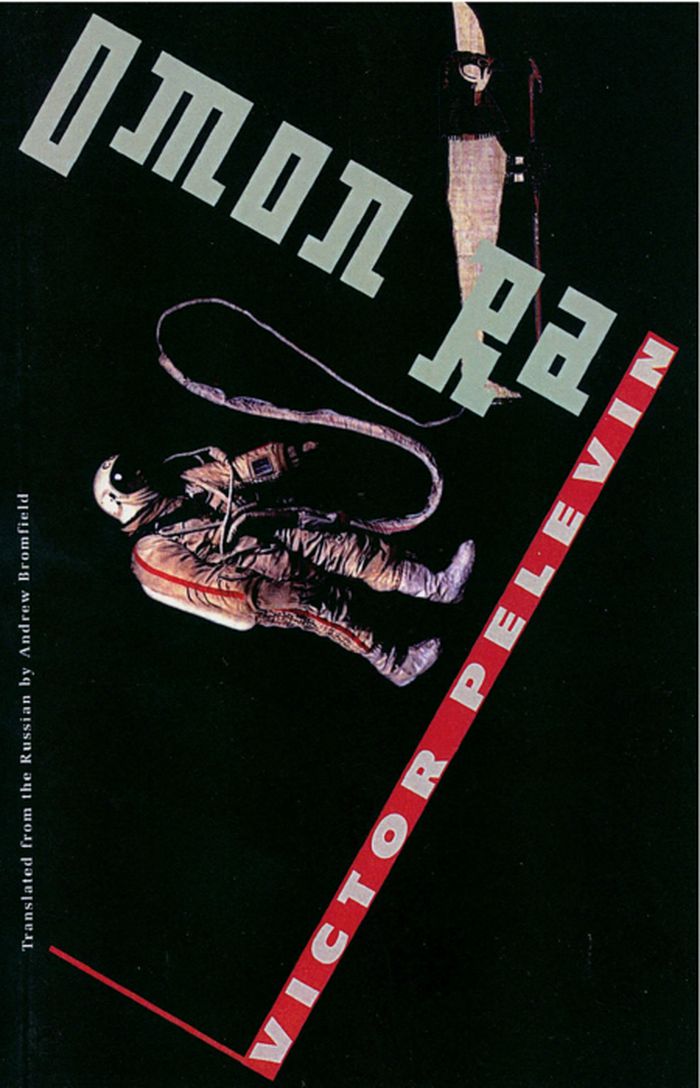
Omon Ra
Omon Ra
Actions:
Prix:
$15.00
(disponible sur commande)
Résumé:
A rising star in the Russian literary firmament Pelevin, winner of the 1993 Russian Booker Prize for short stories, has written a parody of life under Communism refracted through the prism of the Soviet space program. This clever parable about a young cosmonaut ordered to make the ultimate sacrifice? Killing himself after secretly piloting a supposedly unmanned lunar(...)
$15.00
(disponible sur commande)
Résumé:
A rising star in the Russian literary firmament Pelevin, winner of the 1993 Russian Booker Prize for short stories, has written a parody of life under Communism refracted through the prism of the Soviet space program. This clever parable about a young cosmonaut ordered to make the ultimate sacrifice? Killing himself after secretly piloting a supposedly unmanned lunar(...)
Titre:
Omon Ra
Actions:
Prix:
$15.00
(disponible sur commande)
Résumé:
A rising star in the Russian literary firmament Pelevin, winner of the 1993 Russian Booker Prize for short stories, has written a parody of life under Communism refracted through the prism of the Soviet space program. This clever parable about a young cosmonaut ordered to make the ultimate sacrifice? Killing himself after secretly piloting a supposedly unmanned lunar expedition? is sprinkled with throwaway gags, absurdist humor and wickedly ironic touches, as well as with the eerie beauty of space exploration. Obsessed with space travel since early childhood, Omon Krivomazov identifies with Ra, the ancient Egyptian falcon-headed sun god, a fixation that reflects his desire to escape the gray conformity of Soviet life and his yearning for a soul. Omon learns that more than 100 of his fellow cosmonauts have already been sacrificed as guinea pigs after taking part in supposedly automated, manless launches. Pelevin portrays the Russian space program as a vast propaganda enterprise, a distraction to paper over the tawdriness and fear of everyday life. Many allusions will be lost on American readers. And, in light of the truth-is-stranger-than-fiction state of contemporary Russian society, some of the Soviet-era satire seems oddly tame.
Omon Ra
Actions:
Prix:
$15.00
(disponible sur commande)
Résumé:
A rising star in the Russian literary firmament Pelevin, winner of the 1993 Russian Booker Prize for short stories, has written a parody of life under Communism refracted through the prism of the Soviet space program. This clever parable about a young cosmonaut ordered to make the ultimate sacrifice? Killing himself after secretly piloting a supposedly unmanned lunar expedition? is sprinkled with throwaway gags, absurdist humor and wickedly ironic touches, as well as with the eerie beauty of space exploration. Obsessed with space travel since early childhood, Omon Krivomazov identifies with Ra, the ancient Egyptian falcon-headed sun god, a fixation that reflects his desire to escape the gray conformity of Soviet life and his yearning for a soul. Omon learns that more than 100 of his fellow cosmonauts have already been sacrificed as guinea pigs after taking part in supposedly automated, manless launches. Pelevin portrays the Russian space program as a vast propaganda enterprise, a distraction to paper over the tawdriness and fear of everyday life. Many allusions will be lost on American readers. And, in light of the truth-is-stranger-than-fiction state of contemporary Russian society, some of the Soviet-era satire seems oddly tame.
Classification:
livres
livres
Publication:
février 1998
février 1998
Sujet:
Architecture et l'imaginaire
Architecture et l'imaginaire
Classification:
livres
livres
Actions:
Prix:
$24.50
(disponible sur commande)
Résumé:
Set in the long-lost City of Victoria (a fictional world similar to Hong Kong), Atlas is written from the unified perspective of future archaeologists struggling to rebuild a thrilling metropolis. Divided into four sections — “Theory,” “The City,” “Streets,” and “Signs” — the novel reimagines Victoria through maps and other historical documents and artifacts, mixing(...)
$24.50
(disponible sur commande)
Résumé:
Set in the long-lost City of Victoria (a fictional world similar to Hong Kong), Atlas is written from the unified perspective of future archaeologists struggling to rebuild a thrilling metropolis. Divided into four sections — “Theory,” “The City,” “Streets,” and “Signs” — the novel reimagines Victoria through maps and other historical documents and artifacts, mixing(...)
Titre:
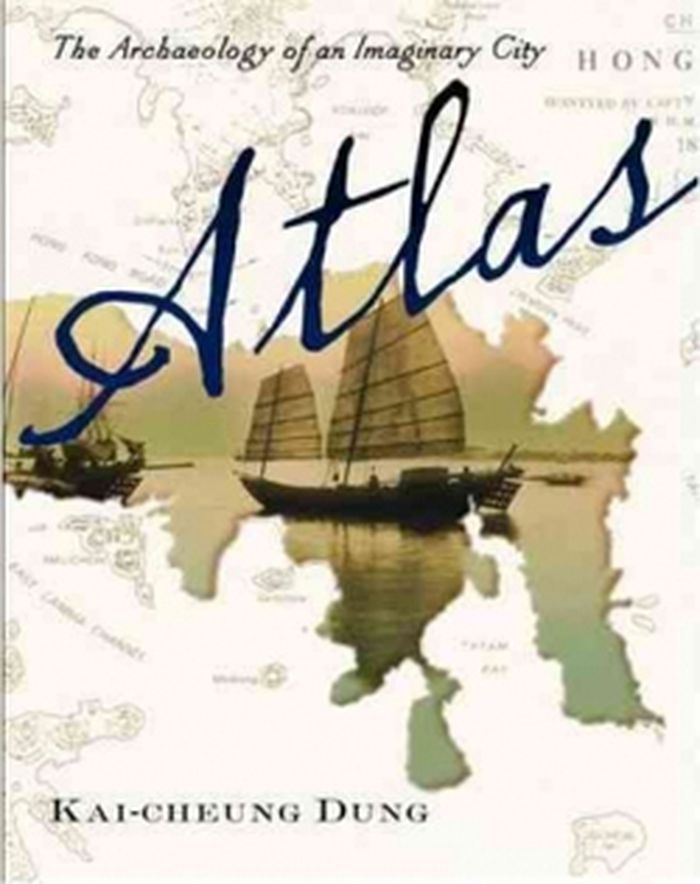
Atlas : the archaeology of an imaginary city
Actions:
Prix:
$24.50
(disponible sur commande)
Résumé:
Set in the long-lost City of Victoria (a fictional world similar to Hong Kong), Atlas is written from the unified perspective of future archaeologists struggling to rebuild a thrilling metropolis. Divided into four sections — “Theory,” “The City,” “Streets,” and “Signs” — the novel reimagines Victoria through maps and other historical documents and artifacts, mixing real-world scenarios with purely imaginary people and events while incorporating anecdotes and actual and fictional social commentary and critique. Much like the quasi-fictional adventures in map-reading and remapping explored by Paul Auster, Jorge Luis Borges, and Italo Calvino, Dung Kai-cheung’s novel challenges the representation of place and history and the limits of technical and scientific media in reconstructing a history. It best exemplifies the author’s versatility and experimentation, along with China’s rapidly evolving literary culture, by blending fiction, nonfiction, and poetry in a story about succeeding and failing to recapture the things we lose. Playing with a variety of styles and subjects, Dung Kai-cheung inventively engages with the fate of Hong Kong since its British “handover” in 1997, which officially marked the end of colonial rule and the beginning of an uncharted future.
Atlas : the archaeology of an imaginary city
Actions:
Prix:
$24.50
(disponible sur commande)
Résumé:
Set in the long-lost City of Victoria (a fictional world similar to Hong Kong), Atlas is written from the unified perspective of future archaeologists struggling to rebuild a thrilling metropolis. Divided into four sections — “Theory,” “The City,” “Streets,” and “Signs” — the novel reimagines Victoria through maps and other historical documents and artifacts, mixing real-world scenarios with purely imaginary people and events while incorporating anecdotes and actual and fictional social commentary and critique. Much like the quasi-fictional adventures in map-reading and remapping explored by Paul Auster, Jorge Luis Borges, and Italo Calvino, Dung Kai-cheung’s novel challenges the representation of place and history and the limits of technical and scientific media in reconstructing a history. It best exemplifies the author’s versatility and experimentation, along with China’s rapidly evolving literary culture, by blending fiction, nonfiction, and poetry in a story about succeeding and failing to recapture the things we lose. Playing with a variety of styles and subjects, Dung Kai-cheung inventively engages with the fate of Hong Kong since its British “handover” in 1997, which officially marked the end of colonial rule and the beginning of an uncharted future.
Classification:
livres
livres
Publication:
novembre 2012
novembre 2012
Sujet:
Théorie de l’architecture
Théorie de l’architecture
Classification:
livres
livres
Prix:
$46.95
(disponible sur commande)
Résumé:
L’écocritique concerne l’étude des rapports entre l’être humain et son environnement dans la littérature. Elle vise à définir une écologie littéraire, c’est-à-dire à offrir une contribution spécifiquement littéraire à la pensée environnementale contemporaine. En se fondant sur l’écologie, l’écocritique se trouve confrontée à la crise environnementale et à une conscience(...)
$46.95
(disponible sur commande)
Résumé:
L’écocritique concerne l’étude des rapports entre l’être humain et son environnement dans la littérature. Elle vise à définir une écologie littéraire, c’est-à-dire à offrir une contribution spécifiquement littéraire à la pensée environnementale contemporaine. En se fondant sur l’écologie, l’écocritique se trouve confrontée à la crise environnementale et à une conscience(...)
Titre:
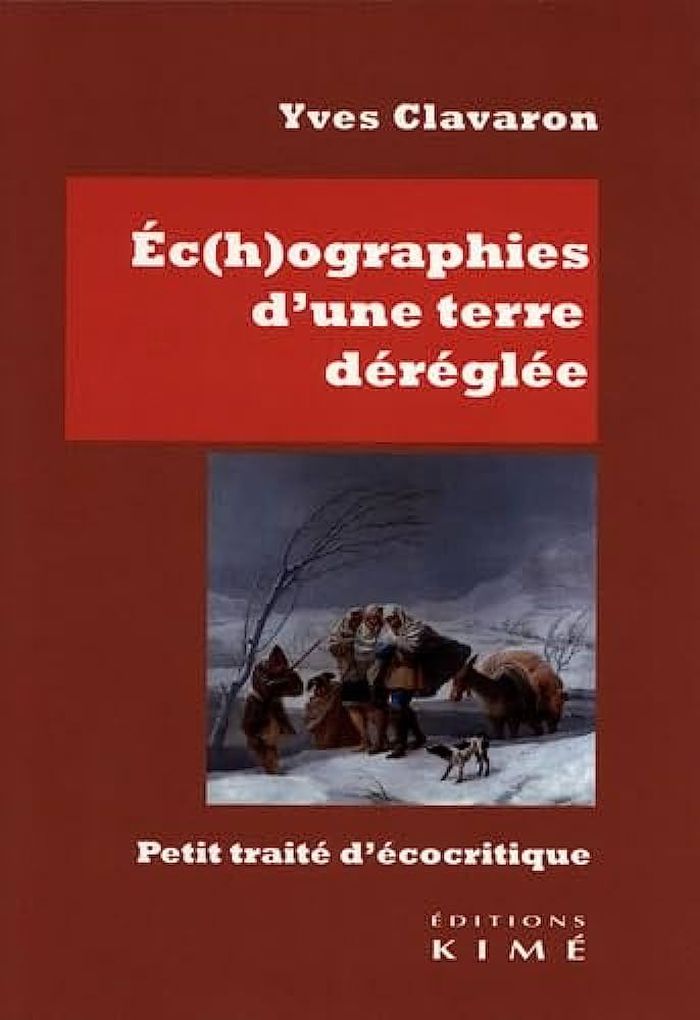
Éc(h)ographies d'une terre déréglée : petit traité d'écocritique
Actions:
Prix:
$46.95
(disponible sur commande)
Résumé:
L’écocritique concerne l’étude des rapports entre l’être humain et son environnement dans la littérature. Elle vise à définir une écologie littéraire, c’est-à-dire à offrir une contribution spécifiquement littéraire à la pensée environnementale contemporaine. En se fondant sur l’écologie, l’écocritique se trouve confrontée à la crise environnementale et à une conscience des menaces qui pèsent sur la biosphère. L’objet de l’ouvrage est d’offrir un traité sur l’écocritique et les principales questions qui y sont reliées, sur les relations entre littérature et écologie, dans une situation de péril pour la Terre. Il s’agira d’observer comment la planète est « éc(h)ographiée » par la littérature à travers divers procédés d’écriture et de réécriture afin de représenter le dérèglement du monde dans sa composante environnementale. Tout en explorant les approches théoriques liées à l’écocritique (études postcoloniales, études animales, études de l’Anthropocène, waste studies…), l’ouvrage se propose de réfléchir sur la puissance d’agir de la littérature, sa capacité à se renouveler (fictions climatiques, fossile-fiction, thriller écologique…) et à apporter une réponse, sinon un remède, à la crise environnementale, afin d’éviter de désespérer d’habiter la planète Terre menacée de sa propre fin.
Éc(h)ographies d'une terre déréglée : petit traité d'écocritique
Actions:
Prix:
$46.95
(disponible sur commande)
Résumé:
L’écocritique concerne l’étude des rapports entre l’être humain et son environnement dans la littérature. Elle vise à définir une écologie littéraire, c’est-à-dire à offrir une contribution spécifiquement littéraire à la pensée environnementale contemporaine. En se fondant sur l’écologie, l’écocritique se trouve confrontée à la crise environnementale et à une conscience des menaces qui pèsent sur la biosphère. L’objet de l’ouvrage est d’offrir un traité sur l’écocritique et les principales questions qui y sont reliées, sur les relations entre littérature et écologie, dans une situation de péril pour la Terre. Il s’agira d’observer comment la planète est « éc(h)ographiée » par la littérature à travers divers procédés d’écriture et de réécriture afin de représenter le dérèglement du monde dans sa composante environnementale. Tout en explorant les approches théoriques liées à l’écocritique (études postcoloniales, études animales, études de l’Anthropocène, waste studies…), l’ouvrage se propose de réfléchir sur la puissance d’agir de la littérature, sa capacité à se renouveler (fictions climatiques, fossile-fiction, thriller écologique…) et à apporter une réponse, sinon un remède, à la crise environnementale, afin d’éviter de désespérer d’habiter la planète Terre menacée de sa propre fin.
Classification:
livres
livres
Publication:
juin 2023
juin 2023


