


9148 Résultats
Classification:
événements
événements
Titre:
Gilles Clément
Gilles Clément
Actions:
Description:
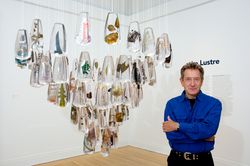
Dans le cadre de l’exposition Environnement : manières d’agir pour demain (2006), l’ingénieur horticole et paysagiste français Gilles Clément présente ses projets et ses théories. L’exposition propose un changement de perspective où l’environnement devient le point de départ d’une réflexion et non nos exigences d’humains envers ce dernier. Gilles Clément a réalisé de(...)
Dans le cadre de l’exposition Environnement : manières d’agir pour demain (2006), l’ingénieur horticole et paysagiste français Gilles Clément présente ses projets et ses théories. L’exposition propose un changement de perspective où l’environnement devient le point de départ d’une réflexion et non nos exigences d’humains envers ce dernier. Gilles Clément a réalisé de(...)
Localisation:
Théâtre Paul-Desmarais
Théâtre Paul-Desmarais
Date:
19 octobre 2006
19 octobre 2006
Titre:
Gilles Clément
Actions:
Description:
Dans le cadre de l’exposition Environnement : manières d’agir pour demain (2006), l’ingénieur horticole et paysagiste français Gilles Clément présente ses projets et ses théories. L’exposition propose un changement de perspective où l’environnement devient le point de départ d’une réflexion et non nos exigences d’humains envers ce dernier. Gilles Clément a réalisé de(...)
Gilles Clément
Actions:
Description:
Dans le cadre de l’exposition Environnement : manières d’agir pour demain (2006), l’ingénieur horticole et paysagiste français Gilles Clément présente ses projets et ses théories. L’exposition propose un changement de perspective où l’environnement devient le point de départ d’une réflexion et non nos exigences d’humains envers ce dernier. Gilles Clément a réalisé de(...)
Classification:
événements
événements
Date:
19 octobre 2006
19 octobre 2006
Localisation:
Théâtre Paul-Desmarais
Théâtre Paul-Desmarais
Classification:
photographies
Quantité:
74 File
photographies
Quantité:
74 File
Numéro de référence:
ARCH273537
Description:
Miscellaneous personal photographs, including photographs of a garden, possibly taken at Arthur Erickson's home, Vancouver, British Columbia, and digital prints of Erickson with friends. Also includes handwritten notes, primarily telephone messages.
ARCH273537
Description:
Miscellaneous personal photographs, including photographs of a garden, possibly taken at Arthur Erickson's home, Vancouver, British Columbia, and digital prints of Erickson with friends. Also includes handwritten notes, primarily telephone messages.
Personnes et institutions:
Date:
after 1993
after 1993
Titre:
Personal photographs and notes
Actions:
ARCH273537
Description:
Miscellaneous personal photographs, including photographs of a garden, possibly taken at Arthur Erickson's home, Vancouver, British Columbia, and digital prints of Erickson with friends. Also includes handwritten notes, primarily telephone messages.
Personal photographs and notes
Actions:
ARCH273537
Description:
Miscellaneous personal photographs, including photographs of a garden, possibly taken at Arthur Erickson's home, Vancouver, British Columbia, and digital prints of Erickson with friends. Also includes handwritten notes, primarily telephone messages.
Classification:
photographies
Quantité:
74 File
photographies
Quantité:
74 File
Date:
after 1993
after 1993
Personnes et institutions:
Classification:
oeuvres d'art
oeuvres d'art
Actions:
Numéro de référence:
DR1987:0106:006
Description:
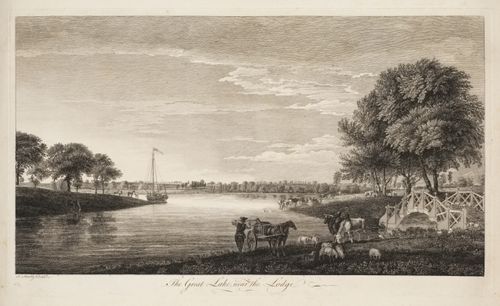
- A view of the artificial lake known as Virginia Water in Windsor Great Park, with a small wooden bridge in the foreground right and a garden temple on the far shore in the background centre.
DR1987:0106:006
Description:
- A view of the artificial lake known as Virginia Water in Windsor Great Park, with a small wooden bridge in the foreground right and a garden temple on the far shore in the background centre.
Personnes et institutions:
Sujet:
architecture, architecture de paysage, topographique
architecture, architecture de paysage, topographique
Date:
1754 or 1755
1754 or 1755
Titre:
View of the Lake near the Great Lodge
Actions:
DR1987:0106:006
Description:
- A view of the artificial lake known as Virginia Water in Windsor Great Park, with a small wooden bridge in the foreground right and a garden temple on the far shore in the background centre.
View of the Lake near the Great Lodge
Actions:
DR1987:0106:006
Description:
- A view of the artificial lake known as Virginia Water in Windsor Great Park, with a small wooden bridge in the foreground right and a garden temple on the far shore in the background centre.
Classification:
oeuvres d'art
oeuvres d'art
Date:
1754 or 1755
1754 or 1755
Personnes et institutions:
Sujet:
architecture, architecture de paysage, topographique
architecture, architecture de paysage, topographique
Niveau de description archivistique:
Projet
Projet
Numéro de référence:
AP143.S4.D182
Description:
File documents miscellaneous unidentified architectural projects, including drawings, mostly conceptual sketches by Eisenman, for an unidentified large scale project, possibly housing, a public square and a skyscraper and also documents relating to potential projects that never advanced, including: Rutgers Baseball Stadiums, New Brunswick, New Jersey (2005) (#50507), a design proposal to help the university raise funds; OBBC, New York Botanical Garden; VW Artwagen (2005) (5200501 BBC), a request to design a Volkswagon; Police Bldg., the proposed conversion of the building into a residential apartment; Tulsa Arena (2004), preparation for the interview for a project that did not advance.
AP143.S4.D182
Description:
File documents miscellaneous unidentified architectural projects, including drawings, mostly conceptual sketches by Eisenman, for an unidentified large scale project, possibly housing, a public square and a skyscraper and also documents relating to potential projects that never advanced, including: Rutgers Baseball Stadiums, New Brunswick, New Jersey (2005) (#50507), a design proposal to help the university raise funds; OBBC, New York Botanical Garden; VW Artwagen (2005) (5200501 BBC), a request to design a Volkswagon; Police Bldg., the proposed conversion of the building into a residential apartment; Tulsa Arena (2004), preparation for the interview for a project that did not advance.
Personnes et institutions:
Date:
1951-1978
1951-1978
Titre:
Miscellaneous and Unidentified Documents
Actions:
AP143.S4.D182
Description:
File documents miscellaneous unidentified architectural projects, including drawings, mostly conceptual sketches by Eisenman, for an unidentified large scale project, possibly housing, a public square and a skyscraper and also documents relating to potential projects that never advanced, including: Rutgers Baseball Stadiums, New Brunswick, New Jersey (2005) (#50507), a design proposal to help the university raise funds; OBBC, New York Botanical Garden; VW Artwagen (2005) (5200501 BBC), a request to design a Volkswagon; Police Bldg., the proposed conversion of the building into a residential apartment; Tulsa Arena (2004), preparation for the interview for a project that did not advance.
Miscellaneous and Unidentified Documents
Actions:
AP143.S4.D182
Description:
File documents miscellaneous unidentified architectural projects, including drawings, mostly conceptual sketches by Eisenman, for an unidentified large scale project, possibly housing, a public square and a skyscraper and also documents relating to potential projects that never advanced, including: Rutgers Baseball Stadiums, New Brunswick, New Jersey (2005) (#50507), a design proposal to help the university raise funds; OBBC, New York Botanical Garden; VW Artwagen (2005) (5200501 BBC), a request to design a Volkswagon; Police Bldg., the proposed conversion of the building into a residential apartment; Tulsa Arena (2004), preparation for the interview for a project that did not advance.
Niveau de description archivistique:
File 182
File 182
Date:
1951-1978
1951-1978
Personnes et institutions:
Niveau de description archivistique:
Projet
Projet
Actions:
Numéro de référence:
CI005.S1.1911.PR1
Description:
The Vooruit Working Men's Club was one of many cooperative clubs for working men in the Netherlands. The building, consisting of four dwellings and a club building, was erected in 1911 and occupied by 1912. Oud was responsible for designing the housing block and main (Vooruit) building, which included a meeting hall and two frescos by J. Jongert. The main building also included latticed windows for the living room door that opened to the garden (Taverne et al. 2001, 82-83). The project series includes drawings of Vooruit and adjacent buildings as well as building photographs, including one of a metal grille.
CI005.S1.1911.PR1
Description:
The Vooruit Working Men's Club was one of many cooperative clubs for working men in the Netherlands. The building, consisting of four dwellings and a club building, was erected in 1911 and occupied by 1912. Oud was responsible for designing the housing block and main (Vooruit) building, which included a meeting hall and two frescos by J. Jongert. The main building also included latticed windows for the living room door that opened to the garden (Taverne et al. 2001, 82-83). The project series includes drawings of Vooruit and adjacent buildings as well as building photographs, including one of a metal grille.
Personnes et institutions:
Date:
1911
1911
Titre:
Building Complex for the Vooruit Working Men's Club, Purmerend, Netherlands (1911-1912)
Actions:
CI005.S1.1911.PR1
Description:
The Vooruit Working Men's Club was one of many cooperative clubs for working men in the Netherlands. The building, consisting of four dwellings and a club building, was erected in 1911 and occupied by 1912. Oud was responsible for designing the housing block and main (Vooruit) building, which included a meeting hall and two frescos by J. Jongert. The main building also included latticed windows for the living room door that opened to the garden (Taverne et al. 2001, 82-83). The project series includes drawings of Vooruit and adjacent buildings as well as building photographs, including one of a metal grille.
Building Complex for the Vooruit Working Men's Club, Purmerend, Netherlands (1911-1912)
Actions:
CI005.S1.1911.PR1
Description:
The Vooruit Working Men's Club was one of many cooperative clubs for working men in the Netherlands. The building, consisting of four dwellings and a club building, was erected in 1911 and occupied by 1912. Oud was responsible for designing the housing block and main (Vooruit) building, which included a meeting hall and two frescos by J. Jongert. The main building also included latticed windows for the living room door that opened to the garden (Taverne et al. 2001, 82-83). The project series includes drawings of Vooruit and adjacent buildings as well as building photographs, including one of a metal grille.
Niveau de description archivistique:
project
project
Date:
1911
1911
Personnes et institutions:
Classification:
oeuvres d'art
oeuvres d'art
Numéro de référence:
DR1988:0437:021
Description:
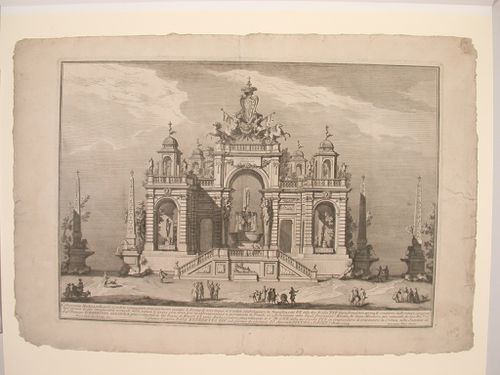
- This etching for a fireworks construction or macchina is in the form of a garden pavilion, including a large central and two side fountains with running water. The pavilion is set off by four obelisks.
DR1988:0437:021
Description:
- This etching for a fireworks construction or macchina is in the form of a garden pavilion, including a large central and two side fountains with running water. The pavilion is set off by four obelisks.
Personnes et institutions:
Sujet:
architecture temporaire
architecture temporaire
Date:
printed 1754
printed 1754
Titre:
Etching of Posi's design for the "seconda macchina" of 1754
Actions:
DR1988:0437:021
Description:
- This etching for a fireworks construction or macchina is in the form of a garden pavilion, including a large central and two side fountains with running water. The pavilion is set off by four obelisks.
Etching of Posi's design for the "seconda macchina" of 1754
Actions:
DR1988:0437:021
Description:
- This etching for a fireworks construction or macchina is in the form of a garden pavilion, including a large central and two side fountains with running water. The pavilion is set off by four obelisks.
Classification:
oeuvres d'art
oeuvres d'art
Date:
printed 1754
printed 1754
Personnes et institutions:
Sujet:
architecture temporaire
architecture temporaire
Classification:
photographies
Quantité:
367 transparency(ies)
photographies
Quantité:
367 transparency(ies)
Numéro de référence:
ARCH196810
Description:
Exterior and interior views of the Newporter Resort Hotel and its surroundings, including the lobby area, golf course, pool area, Court Building fountain, terrace pool, the garden, the back bay, terrace court, Lido Village and Pavilion, lobby, gift shop and registration, court typical room, court suite, the Wine Cellar restaurant, Plaza Ballroom, Terrace Building, Court Room, Patio and Garden Room. Approximately 292 of the 367 transparencies are smaller formats (approximately 6,5 x 6,5 cm.).
ARCH196810
Description:
Exterior and interior views of the Newporter Resort Hotel and its surroundings, including the lobby area, golf course, pool area, Court Building fountain, terrace pool, the garden, the back bay, terrace court, Lido Village and Pavilion, lobby, gift shop and registration, court typical room, court suite, the Wine Cellar restaurant, Plaza Ballroom, Terrace Building, Court Room, Patio and Garden Room. Approximately 292 of the 367 transparencies are smaller formats (approximately 6,5 x 6,5 cm.).
Personnes et institutions:
Titre:
Exterior and interior views of the Newporter Resort Hotel and its surroundings
Actions:
ARCH196810
Description:
Exterior and interior views of the Newporter Resort Hotel and its surroundings, including the lobby area, golf course, pool area, Court Building fountain, terrace pool, the garden, the back bay, terrace court, Lido Village and Pavilion, lobby, gift shop and registration, court typical room, court suite, the Wine Cellar restaurant, Plaza Ballroom, Terrace Building, Court Room, Patio and Garden Room. Approximately 292 of the 367 transparencies are smaller formats (approximately 6,5 x 6,5 cm.).
Exterior and interior views of the Newporter Resort Hotel and its surroundings
Actions:
ARCH196810
Description:
Exterior and interior views of the Newporter Resort Hotel and its surroundings, including the lobby area, golf course, pool area, Court Building fountain, terrace pool, the garden, the back bay, terrace court, Lido Village and Pavilion, lobby, gift shop and registration, court typical room, court suite, the Wine Cellar restaurant, Plaza Ballroom, Terrace Building, Court Room, Patio and Garden Room. Approximately 292 of the 367 transparencies are smaller formats (approximately 6,5 x 6,5 cm.).
Classification:
photographies
Quantité:
367 transparency(ies)
photographies
Quantité:
367 transparency(ies)
Personnes et institutions:
Niveau de description archivistique:
Sous-série
Sous-série
Titre:
Domestic Commissions
Domestic Commissions
Numéro de référence:
CI001.S1.D2
Description:
Hubert and Charles Rohault de Fleury received domestic commissions for both urban housing -hôtel particuliers and apartment houses- and rural dwellings -châteaux, country houses and estates. Hubert also executed designs for furniture and garden pavilions. Hubert' work is characterized by restrained classical exteriors and luxurious Empire style interiors; both Charles' exteriors and interiors, especially those for Hôtels Sauvage and Soltykoff, reflect the exuberance of the Second Empire. The CCA albums include drawings from all stages of the design process but with an emphasis on design development drawings. Hubert's albums contain cost calculations and estimates, notes and letters. In general, the drawings by Charles are from a more developed phase of design than Hubert's; Hubert's commissions are more varied than Charles'. The austere classicism of Hubert's domestic work reflects the prevailing taste of the day and reveals the strong influence of his teacher, Jean Nicholas Louis Durand. The compostional effect of the houses' façades relies on the shape and rhythm of the fenestration and the geometric division by string courses and occasionally, pilasters. Columns are used infrequently as is decorative stonework. The plans are symmetrical and modular. This approach to design is especially evident in the series of proposals for a country house for comte Treilhard (DR1974:0002:034:001-082) and in a group of unidentified designs for houses (DR1974:0002:035:001-034), all of which illustrate an emphasis on plan in the design process and a distinct approach to the composition of the elevations, both derived from Durand. Hubert's domestic work was also influenced by Palladio (see especially DR1974:0002:038:001-029). The interiors and furniture designed by Hubert are typical of the Empire style (1). The drawings in the CCA collection illustrate the materials, palette and ornamental motifs of the period. The garden structures in Hubert's albums are more fanciful than his houses and are either Rustic, Chinoiserie or classical in style (2). His garden designs follow the contemporary French trend for "jardins anglais" with winding paths and naturalistic placement of the vegetation, sometimes in combination with more formal French gardens (3). One of the most comprehensively documented domestic project by Hubert is the Rohault de Fleury House (12-14 rue d'Aguesseau; 1824). The CCA collection contains an interesting series of preliminary drawings for alternate proposals for this house, a number of highly finished wash drawings (including the interior decorative scheme) for the final scheme (DR1974:0002:011:001-08) and several earlier (ca. 1806) proposals (DR1974:0002:035:001-034). The Domaine de la Vallée album (DR1974:0002:025:001-059) is notable for the range of subject matter included as well as for the insights into the character of a working country estate in the nineteenth century. The proposed modifications encompassed both functional (a bridge, a levee, granaries and stables) and aesthetic improvements, such as ornamental garden temples. The renovation of the house also exhibits both functional and aesthetic improvements. (1) Examples of Hubert's interiors and furniture can be found in albums, DR1974:0002:007:001-068, DR1974:0002:011:001-089, DR1974:0002:025:001-059, DR1974:0002:030:001-065 and DR1974:0002:035:001-034. (2) The best examples of his pavilions are found in album, DR1974:0002:038:001-029 with other examples in albums, DR1974:0002:025:001-059, DR1974:0002:030:001-065 and DR1974:0002:035:001-034. (3) Examples are found in albums, DR1974:0002:035:001-034 and DR1974:0002 :025:001-059. Also of note are drawings, DR1974:0002:007:007 and DR1974:0002:007:068.
CI001.S1.D2
Description:
Hubert and Charles Rohault de Fleury received domestic commissions for both urban housing -hôtel particuliers and apartment houses- and rural dwellings -châteaux, country houses and estates. Hubert also executed designs for furniture and garden pavilions. Hubert' work is characterized by restrained classical exteriors and luxurious Empire style interiors; both Charles' exteriors and interiors, especially those for Hôtels Sauvage and Soltykoff, reflect the exuberance of the Second Empire. The CCA albums include drawings from all stages of the design process but with an emphasis on design development drawings. Hubert's albums contain cost calculations and estimates, notes and letters. In general, the drawings by Charles are from a more developed phase of design than Hubert's; Hubert's commissions are more varied than Charles'. The austere classicism of Hubert's domestic work reflects the prevailing taste of the day and reveals the strong influence of his teacher, Jean Nicholas Louis Durand. The compostional effect of the houses' façades relies on the shape and rhythm of the fenestration and the geometric division by string courses and occasionally, pilasters. Columns are used infrequently as is decorative stonework. The plans are symmetrical and modular. This approach to design is especially evident in the series of proposals for a country house for comte Treilhard (DR1974:0002:034:001-082) and in a group of unidentified designs for houses (DR1974:0002:035:001-034), all of which illustrate an emphasis on plan in the design process and a distinct approach to the composition of the elevations, both derived from Durand. Hubert's domestic work was also influenced by Palladio (see especially DR1974:0002:038:001-029). The interiors and furniture designed by Hubert are typical of the Empire style (1). The drawings in the CCA collection illustrate the materials, palette and ornamental motifs of the period. The garden structures in Hubert's albums are more fanciful than his houses and are either Rustic, Chinoiserie or classical in style (2). His garden designs follow the contemporary French trend for "jardins anglais" with winding paths and naturalistic placement of the vegetation, sometimes in combination with more formal French gardens (3). One of the most comprehensively documented domestic project by Hubert is the Rohault de Fleury House (12-14 rue d'Aguesseau; 1824). The CCA collection contains an interesting series of preliminary drawings for alternate proposals for this house, a number of highly finished wash drawings (including the interior decorative scheme) for the final scheme (DR1974:0002:011:001-08) and several earlier (ca. 1806) proposals (DR1974:0002:035:001-034). The Domaine de la Vallée album (DR1974:0002:025:001-059) is notable for the range of subject matter included as well as for the insights into the character of a working country estate in the nineteenth century. The proposed modifications encompassed both functional (a bridge, a levee, granaries and stables) and aesthetic improvements, such as ornamental garden temples. The renovation of the house also exhibits both functional and aesthetic improvements. (1) Examples of Hubert's interiors and furniture can be found in albums, DR1974:0002:007:001-068, DR1974:0002:011:001-089, DR1974:0002:025:001-059, DR1974:0002:030:001-065 and DR1974:0002:035:001-034. (2) The best examples of his pavilions are found in album, DR1974:0002:038:001-029 with other examples in albums, DR1974:0002:025:001-059, DR1974:0002:030:001-065 and DR1974:0002:035:001-034. (3) Examples are found in albums, DR1974:0002:035:001-034 and DR1974:0002 :025:001-059. Also of note are drawings, DR1974:0002:007:007 and DR1974:0002:007:068.
Personnes et institutions:
Date:
1802-[1840]
1802-[1840]
Titre:
Domestic Commissions
CI001.S1.D2
Description:
Hubert and Charles Rohault de Fleury received domestic commissions for both urban housing -hôtel particuliers and apartment houses- and rural dwellings -châteaux, country houses and estates. Hubert also executed designs for furniture and garden pavilions. Hubert' work is characterized by restrained classical exteriors and luxurious Empire style interiors; both Charles' exteriors and interiors, especially those for Hôtels Sauvage and Soltykoff, reflect the exuberance of the Second Empire. The CCA albums include drawings from all stages of the design process but with an emphasis on design development drawings. Hubert's albums contain cost calculations and estimates, notes and letters. In general, the drawings by Charles are from a more developed phase of design than Hubert's; Hubert's commissions are more varied than Charles'. The austere classicism of Hubert's domestic work reflects the prevailing taste of the day and reveals the strong influence of his teacher, Jean Nicholas Louis Durand. The compostional effect of the houses' façades relies on the shape and rhythm of the fenestration and the geometric division by string courses and occasionally, pilasters. Columns are used infrequently as is decorative stonework. The plans are symmetrical and modular. This approach to design is especially evident in the series of proposals for a country house for comte Treilhard (DR1974:0002:034:001-082) and in a group of unidentified designs for houses (DR1974:0002:035:001-034), all of which illustrate an emphasis on plan in the design process and a distinct approach to the composition of the elevations, both derived from Durand. Hubert's domestic work was also influenced by Palladio (see especially DR1974:0002:038:001-029). The interiors and furniture designed by Hubert are typical of the Empire style (1). The drawings in the CCA collection illustrate the materials, palette and ornamental motifs of the period. The garden structures in Hubert's albums are more fanciful than his houses and are either Rustic, Chinoiserie or classical in style (2). His garden designs follow the contemporary French trend for "jardins anglais" with winding paths and naturalistic placement of the vegetation, sometimes in combination with more formal French gardens (3). One of the most comprehensively documented domestic project by Hubert is the Rohault de Fleury House (12-14 rue d'Aguesseau; 1824). The CCA collection contains an interesting series of preliminary drawings for alternate proposals for this house, a number of highly finished wash drawings (including the interior decorative scheme) for the final scheme (DR1974:0002:011:001-08) and several earlier (ca. 1806) proposals (DR1974:0002:035:001-034). The Domaine de la Vallée album (DR1974:0002:025:001-059) is notable for the range of subject matter included as well as for the insights into the character of a working country estate in the nineteenth century. The proposed modifications encompassed both functional (a bridge, a levee, granaries and stables) and aesthetic improvements, such as ornamental garden temples. The renovation of the house also exhibits both functional and aesthetic improvements. (1) Examples of Hubert's interiors and furniture can be found in albums, DR1974:0002:007:001-068, DR1974:0002:011:001-089, DR1974:0002:025:001-059, DR1974:0002:030:001-065 and DR1974:0002:035:001-034. (2) The best examples of his pavilions are found in album, DR1974:0002:038:001-029 with other examples in albums, DR1974:0002:025:001-059, DR1974:0002:030:001-065 and DR1974:0002:035:001-034. (3) Examples are found in albums, DR1974:0002:035:001-034 and DR1974:0002 :025:001-059. Also of note are drawings, DR1974:0002:007:007 and DR1974:0002:007:068.
Domestic Commissions
CI001.S1.D2
Description:
Hubert and Charles Rohault de Fleury received domestic commissions for both urban housing -hôtel particuliers and apartment houses- and rural dwellings -châteaux, country houses and estates. Hubert also executed designs for furniture and garden pavilions. Hubert' work is characterized by restrained classical exteriors and luxurious Empire style interiors; both Charles' exteriors and interiors, especially those for Hôtels Sauvage and Soltykoff, reflect the exuberance of the Second Empire. The CCA albums include drawings from all stages of the design process but with an emphasis on design development drawings. Hubert's albums contain cost calculations and estimates, notes and letters. In general, the drawings by Charles are from a more developed phase of design than Hubert's; Hubert's commissions are more varied than Charles'. The austere classicism of Hubert's domestic work reflects the prevailing taste of the day and reveals the strong influence of his teacher, Jean Nicholas Louis Durand. The compostional effect of the houses' façades relies on the shape and rhythm of the fenestration and the geometric division by string courses and occasionally, pilasters. Columns are used infrequently as is decorative stonework. The plans are symmetrical and modular. This approach to design is especially evident in the series of proposals for a country house for comte Treilhard (DR1974:0002:034:001-082) and in a group of unidentified designs for houses (DR1974:0002:035:001-034), all of which illustrate an emphasis on plan in the design process and a distinct approach to the composition of the elevations, both derived from Durand. Hubert's domestic work was also influenced by Palladio (see especially DR1974:0002:038:001-029). The interiors and furniture designed by Hubert are typical of the Empire style (1). The drawings in the CCA collection illustrate the materials, palette and ornamental motifs of the period. The garden structures in Hubert's albums are more fanciful than his houses and are either Rustic, Chinoiserie or classical in style (2). His garden designs follow the contemporary French trend for "jardins anglais" with winding paths and naturalistic placement of the vegetation, sometimes in combination with more formal French gardens (3). One of the most comprehensively documented domestic project by Hubert is the Rohault de Fleury House (12-14 rue d'Aguesseau; 1824). The CCA collection contains an interesting series of preliminary drawings for alternate proposals for this house, a number of highly finished wash drawings (including the interior decorative scheme) for the final scheme (DR1974:0002:011:001-08) and several earlier (ca. 1806) proposals (DR1974:0002:035:001-034). The Domaine de la Vallée album (DR1974:0002:025:001-059) is notable for the range of subject matter included as well as for the insights into the character of a working country estate in the nineteenth century. The proposed modifications encompassed both functional (a bridge, a levee, granaries and stables) and aesthetic improvements, such as ornamental garden temples. The renovation of the house also exhibits both functional and aesthetic improvements. (1) Examples of Hubert's interiors and furniture can be found in albums, DR1974:0002:007:001-068, DR1974:0002:011:001-089, DR1974:0002:025:001-059, DR1974:0002:030:001-065 and DR1974:0002:035:001-034. (2) The best examples of his pavilions are found in album, DR1974:0002:038:001-029 with other examples in albums, DR1974:0002:025:001-059, DR1974:0002:030:001-065 and DR1974:0002:035:001-034. (3) Examples are found in albums, DR1974:0002:035:001-034 and DR1974:0002 :025:001-059. Also of note are drawings, DR1974:0002:007:007 and DR1974:0002:007:068.
Niveau de description archivistique:
File 2
File 2
Date:
1802-[1840]
1802-[1840]
Personnes et institutions:
Niveau de description archivistique:
Projet
Projet
Titre:
Kew
Kew
Numéro de référence:
AP144.S2.D115
Description:
File documents an unsuccessful entry to an architectural competition for a new building for the Royal Botanical Gardens, Kew in Richmond upon Thames, Greater London, England. The building's primary purpose was to house the Reference Collection, with a seconday purpose of providing exhibition space. Material in this file was produced between 1981 and 1982. File contains textual records.
AP144.S2.D115
Description:
File documents an unsuccessful entry to an architectural competition for a new building for the Royal Botanical Gardens, Kew in Richmond upon Thames, Greater London, England. The building's primary purpose was to house the Reference Collection, with a seconday purpose of providing exhibition space. Material in this file was produced between 1981 and 1982. File contains textual records.
Personnes et institutions:
Date:
1981-1982
1981-1982
Titre:
Kew
Actions:
AP144.S2.D115
Description:
File documents an unsuccessful entry to an architectural competition for a new building for the Royal Botanical Gardens, Kew in Richmond upon Thames, Greater London, England. The building's primary purpose was to house the Reference Collection, with a seconday purpose of providing exhibition space. Material in this file was produced between 1981 and 1982. File contains textual records.
Kew
Actions:
AP144.S2.D115
Description:
File documents an unsuccessful entry to an architectural competition for a new building for the Royal Botanical Gardens, Kew in Richmond upon Thames, Greater London, England. The building's primary purpose was to house the Reference Collection, with a seconday purpose of providing exhibition space. Material in this file was produced between 1981 and 1982. File contains textual records.
Niveau de description archivistique:
File 115
File 115
Date:
1981-1982
1981-1982
Personnes et institutions:
Classification:
documents textuels
documents textuels
Numéro de référence:
ARCH276902
Description:
13 files - office records related to Arthur Erickson Architectural Corporation, Arthur Erickson House and Garden Foundation and Nick Milkovich Architects. Includes correspondence (some personal), travel information, printed plans and other working documents.
ARCH276902
Description:
13 files - office records related to Arthur Erickson Architectural Corporation, Arthur Erickson House and Garden Foundation and Nick Milkovich Architects. Includes correspondence (some personal), travel information, printed plans and other working documents.
Personnes et institutions:
Date:
2005-2007
2005-2007
Titre:
Correspondence, travel information, printed plans and other working documents
Actions:
ARCH276902
Description:
13 files - office records related to Arthur Erickson Architectural Corporation, Arthur Erickson House and Garden Foundation and Nick Milkovich Architects. Includes correspondence (some personal), travel information, printed plans and other working documents.
Correspondence, travel information, printed plans and other working documents
Actions:
ARCH276902
Description:
13 files - office records related to Arthur Erickson Architectural Corporation, Arthur Erickson House and Garden Foundation and Nick Milkovich Architects. Includes correspondence (some personal), travel information, printed plans and other working documents.
Classification:
documents textuels
documents textuels
Date:
2005-2007
2005-2007
Personnes et institutions:


