


1734 Résultats
Classification:
livres
livres
Prix:
$75.00
(disponible sur commande)
Résumé:
Seamlessly interweaving the new with the historic, the renovation by Selldorf Architects preserves The Frick Collection’s Gilded Age grandeur and sense of tranquillity while making more of the museum accessible and adding important new amenities. A museum of memorable rooms and superb Old Master holdings, The Frick Collection, the former home of industrialist Henry Clay(...)
$75.00
(disponible sur commande)
Résumé:
Seamlessly interweaving the new with the historic, the renovation by Selldorf Architects preserves The Frick Collection’s Gilded Age grandeur and sense of tranquillity while making more of the museum accessible and adding important new amenities. A museum of memorable rooms and superb Old Master holdings, The Frick Collection, the former home of industrialist Henry Clay(...)
Publication:
janvier 2026
janvier 2026
Titre:
A Design for Continuity and Change: The Frick Collection
Actions:
Prix:
$75.00
(disponible sur commande)
Résumé:
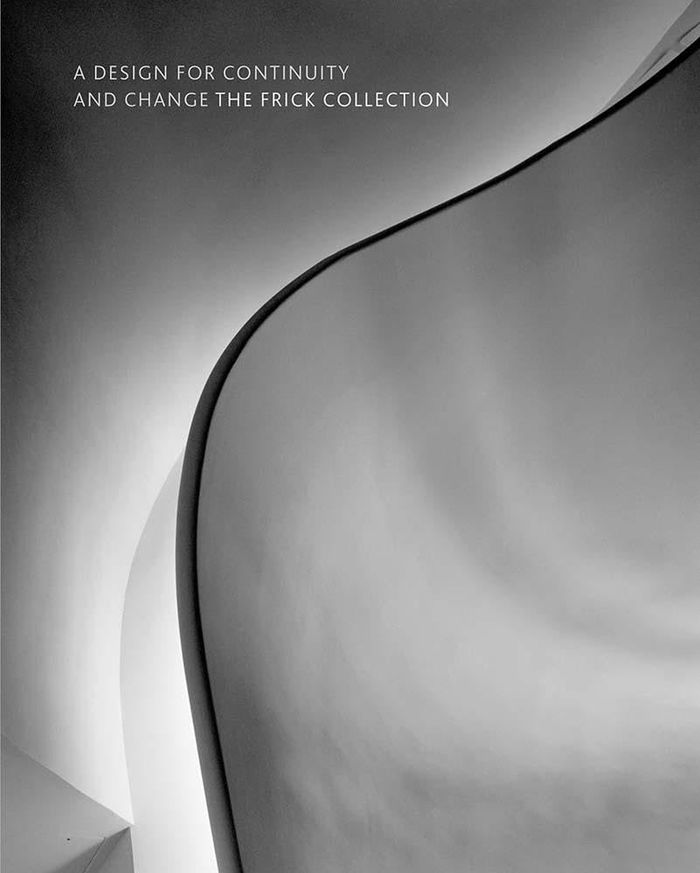
Seamlessly interweaving the new with the historic, the renovation by Selldorf Architects preserves The Frick Collection’s Gilded Age grandeur and sense of tranquillity while making more of the museum accessible and adding important new amenities. A museum of memorable rooms and superb Old Master holdings, The Frick Collection, the former home of industrialist Henry Clay Frick, is one of New York City’s most beloved art institutions. Designed by Thomas Hastings of the New York firm of Carrère and Hastings, the original Fifth Avenue mansion was completed in 1914 and served the Frick family until 1931. With John Russell Pope’s expansion of the mansion in 1935, which included the addition of a library (today’s esteemed Frick Art Research Library), the residence was converted into a public museum. The goal of the renovation was to honor the architectural legacy and unique contemplative atmosphere of the Frick while adding new space and critical infrastructure updates. Visitors will enjoy the enhanced functionality of the institution, and its improved climate controls will ensure the preservation of the collection and the house for generations to come.
A Design for Continuity and Change: The Frick Collection
Actions:
Prix:
$75.00
(disponible sur commande)
Résumé:
Seamlessly interweaving the new with the historic, the renovation by Selldorf Architects preserves The Frick Collection’s Gilded Age grandeur and sense of tranquillity while making more of the museum accessible and adding important new amenities. A museum of memorable rooms and superb Old Master holdings, The Frick Collection, the former home of industrialist Henry Clay Frick, is one of New York City’s most beloved art institutions. Designed by Thomas Hastings of the New York firm of Carrère and Hastings, the original Fifth Avenue mansion was completed in 1914 and served the Frick family until 1931. With John Russell Pope’s expansion of the mansion in 1935, which included the addition of a library (today’s esteemed Frick Art Research Library), the residence was converted into a public museum. The goal of the renovation was to honor the architectural legacy and unique contemplative atmosphere of the Frick while adding new space and critical infrastructure updates. Visitors will enjoy the enhanced functionality of the institution, and its improved climate controls will ensure the preservation of the collection and the house for generations to come.
Classification:
livres
livres
Publication:
janvier 2026
janvier 2026
Classification:
livres
livres
Prix:
$22.95
(disponible sur commande)
Résumé:
The dominant architectures in our culture of development consist of generic protocols for building offices, airports, houses, and highways. For Keller Easterling these organizational formats are not merely the context of design efforts. They are the design. Bridging the gap between architecture and infrastructure, Easterling views architecture as part of an ecology of(...)
$22.95
(disponible sur commande)
Résumé:
The dominant architectures in our culture of development consist of generic protocols for building offices, airports, houses, and highways. For Keller Easterling these organizational formats are not merely the context of design efforts. They are the design. Bridging the gap between architecture and infrastructure, Easterling views architecture as part of an ecology of(...)
Titre:
Organization space : landscapes, highways, and houses in America
Actions:
Prix:
$22.95
(disponible sur commande)
Résumé:
The dominant architectures in our culture of development consist of generic protocols for building offices, airports, houses, and highways. For Keller Easterling these organizational formats are not merely the context of design efforts. They are the design. Bridging the gap between architecture and infrastructure, Easterling views architecture as part of an ecology of interrelationships and linkages, and she treats the expression of organizational character as part of the architectural endeavor. Easterling also makes the case that these organizational formats are improvisational and responsive to circumstantial change, to mistakes, anomalies, and seemingly illogical market forces. By treating these irregularities opportunistically, she offers architects working within the customary development protocols new sites for making and altering space. By showing the reciprocal relations between systems of thinking and modes of designing, Easterling establishes unexpected congruencies between natural and built environments, virtual and physical systems, highway and communication networks, and corporate and spatial organizations. She frames her unconventional notion of site not in terms of singular entities, but in terms of relationships between multiple sites that are both individually and collectively adjustable.
Organization space : landscapes, highways, and houses in America
Actions:
Prix:
$22.95
(disponible sur commande)
Résumé:
The dominant architectures in our culture of development consist of generic protocols for building offices, airports, houses, and highways. For Keller Easterling these organizational formats are not merely the context of design efforts. They are the design. Bridging the gap between architecture and infrastructure, Easterling views architecture as part of an ecology of interrelationships and linkages, and she treats the expression of organizational character as part of the architectural endeavor. Easterling also makes the case that these organizational formats are improvisational and responsive to circumstantial change, to mistakes, anomalies, and seemingly illogical market forces. By treating these irregularities opportunistically, she offers architects working within the customary development protocols new sites for making and altering space. By showing the reciprocal relations between systems of thinking and modes of designing, Easterling establishes unexpected congruencies between natural and built environments, virtual and physical systems, highway and communication networks, and corporate and spatial organizations. She frames her unconventional notion of site not in terms of singular entities, but in terms of relationships between multiple sites that are both individually and collectively adjustable.
Classification:
livres
livres
Publication:
octobre 2001, Cambridge, Mass.
octobre 2001, Cambridge, Mass.
Sujet:
Théorie de l’urbanisme
Théorie de l’urbanisme
Classification:
livres
livres
Prix:
$48.99
(disponible sur commande)
Résumé:
For almost seven years after World War II, a small group of architects took on an exciting task: to imagine the spaces of global governance for a new political organization called the United Nations (UN). To create the iconic headquarters of the UN in New York City, these architects experimented with room layouts, media technologies, and design in tribunal courtrooms,(...)
$48.99
(disponible sur commande)
Résumé:
For almost seven years after World War II, a small group of architects took on an exciting task: to imagine the spaces of global governance for a new political organization called the United Nations (UN). To create the iconic headquarters of the UN in New York City, these architects experimented with room layouts, media technologies, and design in tribunal courtrooms,(...)
Titre:
Assembly by design: The United Nations and its global interior
Actions:
Prix:
$48.99
(disponible sur commande)
Résumé:
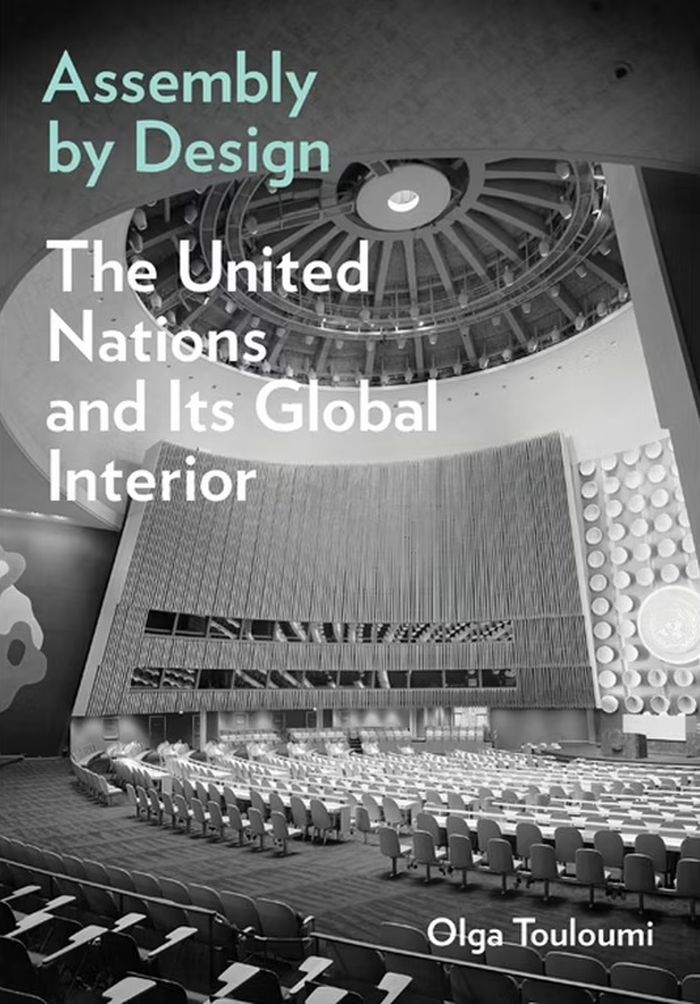
For almost seven years after World War II, a small group of architects took on an exciting task: to imagine the spaces of global governance for a new political organization called the United Nations (UN). To create the iconic headquarters of the UN in New York City, these architects experimented with room layouts, media technologies, and design in tribunal courtrooms, assembly halls, and council chambers. The result was the creation of a new type of public space, the global interior. "Assembly by design" shows how this space leveraged media to help the UN communicate with the world. With its media infrastructure, symbols, acoustic design, and architecture, the global interior defined political assembly both inside and outside the UN headquarters, serving as the architectural medium to organize multilateral encounters of international publics around the globe. Demonstrating how aesthetics have long held sway over political work, Olga Touloumi posits that the building framed diplomacy on the ground amid a changing political landscape that brought the United States to the forefront of international politics, destabilizing old and establishing new geopolitical alliances.
Assembly by design: The United Nations and its global interior
Actions:
Prix:
$48.99
(disponible sur commande)
Résumé:
For almost seven years after World War II, a small group of architects took on an exciting task: to imagine the spaces of global governance for a new political organization called the United Nations (UN). To create the iconic headquarters of the UN in New York City, these architects experimented with room layouts, media technologies, and design in tribunal courtrooms, assembly halls, and council chambers. The result was the creation of a new type of public space, the global interior. "Assembly by design" shows how this space leveraged media to help the UN communicate with the world. With its media infrastructure, symbols, acoustic design, and architecture, the global interior defined political assembly both inside and outside the UN headquarters, serving as the architectural medium to organize multilateral encounters of international publics around the globe. Demonstrating how aesthetics have long held sway over political work, Olga Touloumi posits that the building framed diplomacy on the ground amid a changing political landscape that brought the United States to the forefront of international politics, destabilizing old and establishing new geopolitical alliances.
Classification:
livres
livres
Publication:
octobre 2024
octobre 2024
Sujet:
Théorie de l’architecture
Théorie de l’architecture
Classification:
livres
livres
Prix:
$45.00
(disponible sur commande)
Résumé:
"Against the grain" features the work of three studios of the Louis I. Kahn Visiting Assistant Professors at Yale. Marcelo Spina and Georgina Huljich in "Brutal beauty: piles, monoliths and the incongruous whole" explored ways to make mute icons through monolithic form so that the buildings were foreign to their context and difficult to read formally for a film center in(...)
$45.00
(disponible sur commande)
Résumé:
"Against the grain" features the work of three studios of the Louis I. Kahn Visiting Assistant Professors at Yale. Marcelo Spina and Georgina Huljich in "Brutal beauty: piles, monoliths and the incongruous whole" explored ways to make mute icons through monolithic form so that the buildings were foreign to their context and difficult to read formally for a film center in(...)
Titre:
Against the grain: Louis I. Kahn visiting assistant professorship
Actions:
Prix:
$45.00
(disponible sur commande)
Résumé:
"Against the grain" features the work of three studios of the Louis I. Kahn Visiting Assistant Professors at Yale. Marcelo Spina and Georgina Huljich in "Brutal beauty: piles, monoliths and the incongruous whole" explored ways to make mute icons through monolithic form so that the buildings were foreign to their context and difficult to read formally for a film center in Los Angeles. Dan Wood in "Boulevard Triumphant: ecological infrastructure, architecture, modernization, and the image of the city" a studio for a civic center in Gabon that challenged the architectural language in Africa beyond the clichés and nostalgia to create an architecture that embodied a new ambition. Lisa Gray and Alan Organschi in "Timber innovation district: new timber technologies and contemporary high performance wood architecture" researched wood as a material for larger-scale projects for a site on New Haven’s working waterfront, with projects ranging from bridges to manufacturing facilities and multi-family housing. Edited by Jackie Kow and Nina Rappaport the book is designed by MGMT.design and is distributed by Actar D.
Against the grain: Louis I. Kahn visiting assistant professorship
Actions:
Prix:
$45.00
(disponible sur commande)
Résumé:
"Against the grain" features the work of three studios of the Louis I. Kahn Visiting Assistant Professors at Yale. Marcelo Spina and Georgina Huljich in "Brutal beauty: piles, monoliths and the incongruous whole" explored ways to make mute icons through monolithic form so that the buildings were foreign to their context and difficult to read formally for a film center in Los Angeles. Dan Wood in "Boulevard Triumphant: ecological infrastructure, architecture, modernization, and the image of the city" a studio for a civic center in Gabon that challenged the architectural language in Africa beyond the clichés and nostalgia to create an architecture that embodied a new ambition. Lisa Gray and Alan Organschi in "Timber innovation district: new timber technologies and contemporary high performance wood architecture" researched wood as a material for larger-scale projects for a site on New Haven’s working waterfront, with projects ranging from bridges to manufacturing facilities and multi-family housing. Edited by Jackie Kow and Nina Rappaport the book is designed by MGMT.design and is distributed by Actar D.
Classification:
livres
livres
Publication:
août 2016
août 2016
Sujet:
Architecture contemporaine
Architecture contemporaine
Classification:
livres
livres
Actions:
Prix:
$58.95
(disponible sur commande)
Résumé:
"Recycled theory" is a multidisciplinary dictionary made of entries in form of texts, drawings and quotes, which explore the concept of “recycling” in design cultures and in the theories that nurture them. Usually we recycle things, objects, spaces but more often we return on principles and approaches to rearrange them, put them back into circulation, and override them.(...)
$58.95
(disponible sur commande)
Résumé:
"Recycled theory" is a multidisciplinary dictionary made of entries in form of texts, drawings and quotes, which explore the concept of “recycling” in design cultures and in the theories that nurture them. Usually we recycle things, objects, spaces but more often we return on principles and approaches to rearrange them, put them back into circulation, and override them.(...)
Titre:
Recycled theory: illustrated dictionary
Actions:
Prix:
$58.95
(disponible sur commande)
Résumé:
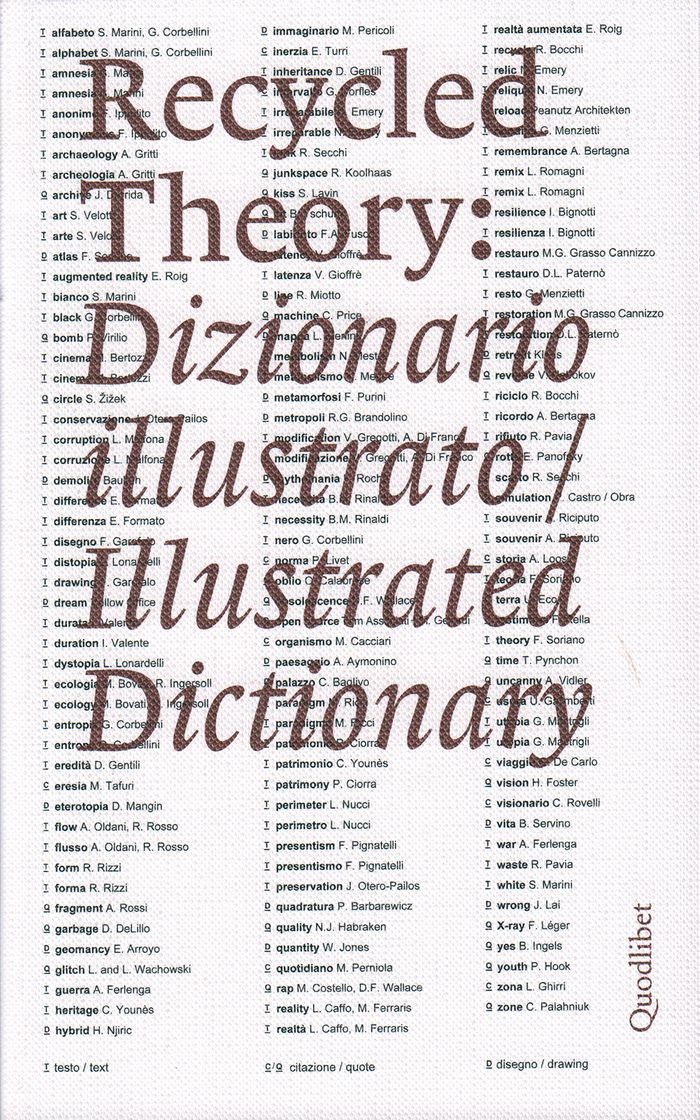
"Recycled theory" is a multidisciplinary dictionary made of entries in form of texts, drawings and quotes, which explore the concept of “recycling” in design cultures and in the theories that nurture them. Usually we recycle things, objects, spaces but more often we return on principles and approaches to rearrange them, put them back into circulation, and override them. The practice of recycling is therefore placed in an area of negotiation between memory and amnesia, it brings out the unexpected self-regeneration potential of what exists, our ability to preserve and reinvent it, even through its partial breakdown. The words here collected (from “amnesia” to “zone”) identify materials, procedures, ambiguities, deviations, and potential nexus of recycling, recording terms that tell the different processes of production and sense of city and landscape after recent socio-economic upheavals and the widening of preservation as the prevalent scenario for the project. Recycled Theory comes out of the collaboration of eleven Italian universities engaged in the research “Re-cycle Italy: New Life Cycles for Architecture and Infrastructure of City and Landscape.”
Recycled theory: illustrated dictionary
Actions:
Prix:
$58.95
(disponible sur commande)
Résumé:
"Recycled theory" is a multidisciplinary dictionary made of entries in form of texts, drawings and quotes, which explore the concept of “recycling” in design cultures and in the theories that nurture them. Usually we recycle things, objects, spaces but more often we return on principles and approaches to rearrange them, put them back into circulation, and override them. The practice of recycling is therefore placed in an area of negotiation between memory and amnesia, it brings out the unexpected self-regeneration potential of what exists, our ability to preserve and reinvent it, even through its partial breakdown. The words here collected (from “amnesia” to “zone”) identify materials, procedures, ambiguities, deviations, and potential nexus of recycling, recording terms that tell the different processes of production and sense of city and landscape after recent socio-economic upheavals and the widening of preservation as the prevalent scenario for the project. Recycled Theory comes out of the collaboration of eleven Italian universities engaged in the research “Re-cycle Italy: New Life Cycles for Architecture and Infrastructure of City and Landscape.”
Classification:
livres
livres
Publication:
novembre 2016
novembre 2016
Sujet:
Architecture écologique
Architecture écologique
Classification:
livres
livres
Actions:
Prix:
$33.00
(disponible sur commande)
Résumé:
Urbanization is a system of power and knowledge, and today’s city functions through the expansive material infrastructures of the urban order. In The Urban Apparatus, Reinhold Martin analyzes urbanization and the contemporary city in aesthetic, socioeconomic, and mediapolitical terms. He argues that understanding the city as infrastructure reveals urbanization to be a way(...)
$33.00
(disponible sur commande)
Résumé:
Urbanization is a system of power and knowledge, and today’s city functions through the expansive material infrastructures of the urban order. In The Urban Apparatus, Reinhold Martin analyzes urbanization and the contemporary city in aesthetic, socioeconomic, and mediapolitical terms. He argues that understanding the city as infrastructure reveals urbanization to be a way(...)
Titre:
The urban apparatus: mediapolitics and the city
Actions:
Prix:
$33.00
(disponible sur commande)
Résumé:
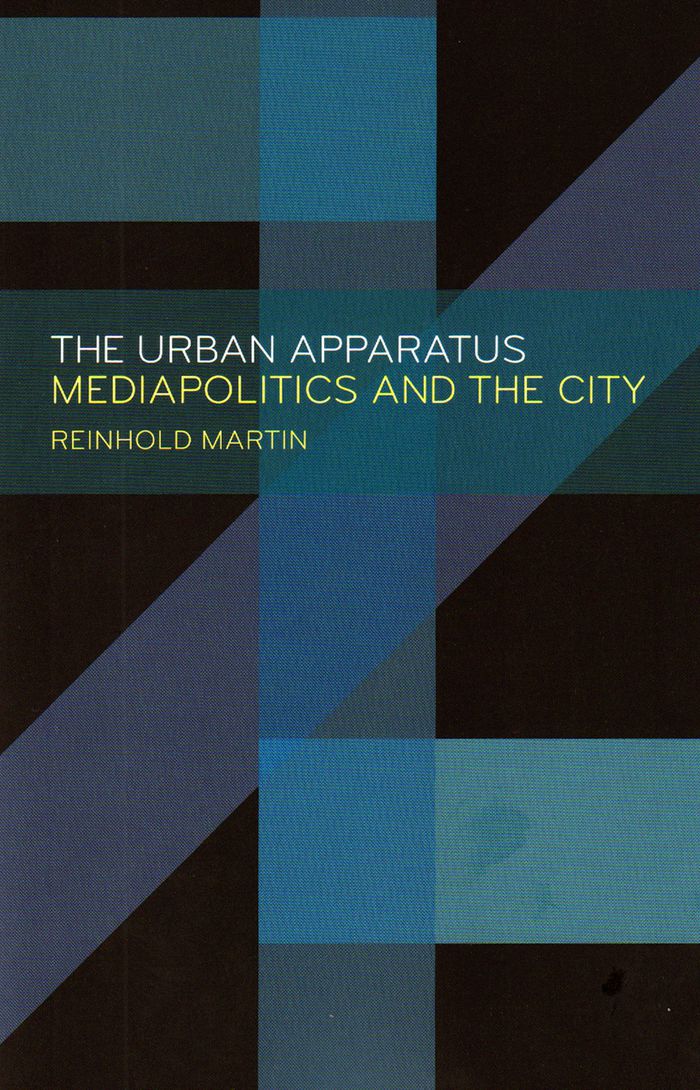
Urbanization is a system of power and knowledge, and today’s city functions through the expansive material infrastructures of the urban order. In The Urban Apparatus, Reinhold Martin analyzes urbanization and the contemporary city in aesthetic, socioeconomic, and mediapolitical terms. He argues that understanding the city as infrastructure reveals urbanization to be a way of imparting functional, aesthetic, and cognitive order to a contradictory, doubly bound neoliberal regime. Blending critical philosophy, political theory, and media theory, The Urban Apparatus explores how the aesthetics of cities and their political economies overlap. In a series of ten essays, with a detailed theoretical introduction, Martin explores questions related to urban life, drawn from a wide range of global topics—from the fiscal crisis in Detroit to speculative development in Mumbai to the landscape of Mars, from discussions of race and the environment to housing and economic inequality. Each essay proposes a particular “mediator” (or a material complex) that is shaped by imaginative practices, each answering the question “What is a city, today?”
The urban apparatus: mediapolitics and the city
Actions:
Prix:
$33.00
(disponible sur commande)
Résumé:
Urbanization is a system of power and knowledge, and today’s city functions through the expansive material infrastructures of the urban order. In The Urban Apparatus, Reinhold Martin analyzes urbanization and the contemporary city in aesthetic, socioeconomic, and mediapolitical terms. He argues that understanding the city as infrastructure reveals urbanization to be a way of imparting functional, aesthetic, and cognitive order to a contradictory, doubly bound neoliberal regime. Blending critical philosophy, political theory, and media theory, The Urban Apparatus explores how the aesthetics of cities and their political economies overlap. In a series of ten essays, with a detailed theoretical introduction, Martin explores questions related to urban life, drawn from a wide range of global topics—from the fiscal crisis in Detroit to speculative development in Mumbai to the landscape of Mars, from discussions of race and the environment to housing and economic inequality. Each essay proposes a particular “mediator” (or a material complex) that is shaped by imaginative practices, each answering the question “What is a city, today?”
Classification:
livres
livres
Publication:
octobre 2016
octobre 2016
Sujet:
Théorie de l’urbanisme
Théorie de l’urbanisme
Classification:
livres
livres
Actions:
Prix:
$103.00
(disponible sur commande)
Résumé:
Current design of apartment buildings is facing challenges of philosophy and form. Past approaches no longer sustain new demands and require innovative thinking. The need for a new outlook is propelled by fundamental changes that touch upon environmental, economic, cultural and social aspects that led to the writing of this book. The depletion of non-renewable natural(...)
$103.00
(disponible sur commande)
Résumé:
Current design of apartment buildings is facing challenges of philosophy and form. Past approaches no longer sustain new demands and require innovative thinking. The need for a new outlook is propelled by fundamental changes that touch upon environmental, economic, cultural and social aspects that led to the writing of this book. The depletion of non-renewable natural(...)
Titre:
Innovative apartment buildings. New directions in sustainable design
Actions:
Prix:
$103.00
(disponible sur commande)
Résumé:
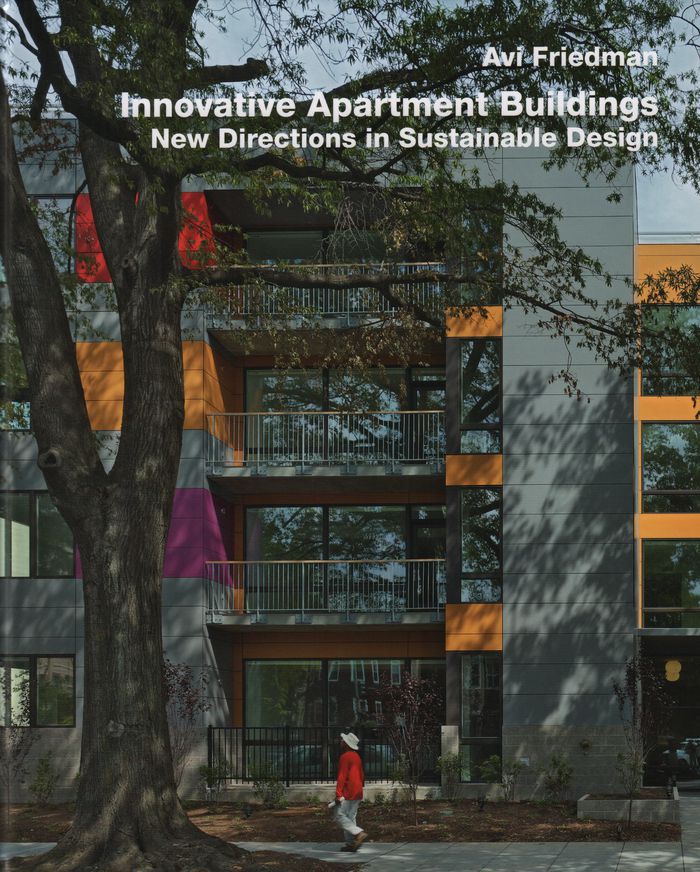
Current design of apartment buildings is facing challenges of philosophy and form. Past approaches no longer sustain new demands and require innovative thinking. The need for a new outlook is propelled by fundamental changes that touch upon environmental, economic, cultural and social aspects that led to the writing of this book. The depletion of non-renewable natural resources and climate change are a few of the environmental challenges that prompted designers to reconsider conceptual approaches in favour of ones that promote a better suitability between buildings and their environments. Concepts that minimize the building?s carbon footprint, passive solar gain, net-zero structures and water harvesting system are some of the contemporary strategies that architects and builders are integrating into their thought processes and design. Increasing costs of material, labour, land and infrastructure have posed economic challenges with affordability being paramount among them. The need to do with less brings about concepts that include adaptable dwellings, and smaller-sized yet quality-designed housing. Social challenges are also drawing attention.
Innovative apartment buildings. New directions in sustainable design
Actions:
Prix:
$103.00
(disponible sur commande)
Résumé:
Current design of apartment buildings is facing challenges of philosophy and form. Past approaches no longer sustain new demands and require innovative thinking. The need for a new outlook is propelled by fundamental changes that touch upon environmental, economic, cultural and social aspects that led to the writing of this book. The depletion of non-renewable natural resources and climate change are a few of the environmental challenges that prompted designers to reconsider conceptual approaches in favour of ones that promote a better suitability between buildings and their environments. Concepts that minimize the building?s carbon footprint, passive solar gain, net-zero structures and water harvesting system are some of the contemporary strategies that architects and builders are integrating into their thought processes and design. Increasing costs of material, labour, land and infrastructure have posed economic challenges with affordability being paramount among them. The need to do with less brings about concepts that include adaptable dwellings, and smaller-sized yet quality-designed housing. Social challenges are also drawing attention.
Classification:
livres
livres
Publication:
avril 2017
avril 2017
Sujet:
Logements collectifs
Logements collectifs
Classification:
livres
livres
Titre:
Suburban ark
Suburban ark
Actions:
Prix:
$38.95
(disponible sur commande)
Résumé:
This publication deals with a number of major topical issues brought together on an installation called the "Suburban ark". The theme of this installation was "The flood", which was also the theme for the 2nd international architecture biennal held in Rotterdam from May 26 through June 26, 2005. In a series of lectures, excursions, and workshops taking place during the(...)
$38.95
(disponible sur commande)
Résumé:
This publication deals with a number of major topical issues brought together on an installation called the "Suburban ark". The theme of this installation was "The flood", which was also the theme for the 2nd international architecture biennal held in Rotterdam from May 26 through June 26, 2005. In a series of lectures, excursions, and workshops taking place during the(...)
Sujet:
Théorie de l’urbanisme
Théorie de l’urbanisme
Publication:
janvier 2006, Rotterdam
janvier 2006, Rotterdam
Titre:
Suburban ark
Actions:
Prix:
$38.95
(disponible sur commande)
Résumé:
This publication deals with a number of major topical issues brought together on an installation called the "Suburban ark". The theme of this installation was "The flood", which was also the theme for the 2nd international architecture biennal held in Rotterdam from May 26 through June 26, 2005. In a series of lectures, excursions, and workshops taking place during the Biennal, innovative possibilities were developed for the supply of energy and water. The Suburban ank functioned as a floating lab with test rigs for wind energy, freshwater-saltwater energy, and energy from digestion. The Suburban ark opposes the fact that house building on water is subject to comfort-focused facilities of house building on land, and investigates new parcelization typologies for water dwellings. The Suburban ark objects to the relentless consequences of parcelization brought about by the installation of the infrastructure. To point out the direction in which to look for solutions, a number of items of furniture have been developed that are self-contained and capable of operating without the use of existing energy sources, pipes and cables.
Suburban ark
Actions:
Prix:
$38.95
(disponible sur commande)
Résumé:
This publication deals with a number of major topical issues brought together on an installation called the "Suburban ark". The theme of this installation was "The flood", which was also the theme for the 2nd international architecture biennal held in Rotterdam from May 26 through June 26, 2005. In a series of lectures, excursions, and workshops taking place during the Biennal, innovative possibilities were developed for the supply of energy and water. The Suburban ank functioned as a floating lab with test rigs for wind energy, freshwater-saltwater energy, and energy from digestion. The Suburban ark opposes the fact that house building on water is subject to comfort-focused facilities of house building on land, and investigates new parcelization typologies for water dwellings. The Suburban ark objects to the relentless consequences of parcelization brought about by the installation of the infrastructure. To point out the direction in which to look for solutions, a number of items of furniture have been developed that are self-contained and capable of operating without the use of existing energy sources, pipes and cables.
Classification:
livres
livres
Publication:
janvier 2006, Rotterdam
janvier 2006, Rotterdam
Sujet:
Théorie de l’urbanisme
Théorie de l’urbanisme
Classification:
livres
livres
Prix:
$52.50
(disponible sur commande)
Résumé:
The dominant architectures in our culture of development consist of generic protocols for building offices, airports, houses, and highways. For Keller Easterling these organizational formats are not merely the context of design efforts. They are the design. Bridging the gap between architecture and infrastructure, Easterling views architecture as part of an ecology of(...)
$52.50
(disponible sur commande)
Résumé:
The dominant architectures in our culture of development consist of generic protocols for building offices, airports, houses, and highways. For Keller Easterling these organizational formats are not merely the context of design efforts. They are the design. Bridging the gap between architecture and infrastructure, Easterling views architecture as part of an ecology of(...)
Titre:
Organization space : landscapes, highways, and houses in America
Actions:
Prix:
$52.50
(disponible sur commande)
Résumé:
The dominant architectures in our culture of development consist of generic protocols for building offices, airports, houses, and highways. For Keller Easterling these organizational formats are not merely the context of design efforts. They are the design. Bridging the gap between architecture and infrastructure, Easterling views architecture as part of an ecology of interrelationships and linkages, and she treats the expression of organizational character as part of the architectural endeavor. Easterling also makes the case that these organizational formats are improvisational and responsive to circumstantial change, to mistakes, anomalies, and seemingly illogical market forces. By treating these irregularities opportunistically, she offers architects working within the customary development protocols new sites for making and altering space. By showing the reciprocal relations between systems of thinking and modes of designing, Easterling establishes unexpected congruencies between natural and built environments, virtual and physical systems, highway and communication networks, and corporate and spatial organizations. She frames her unconventional notion of site not in terms of singular entities, but in terms of relationships between multiple sites that are both individually and collectively adjustable.
Organization space : landscapes, highways, and houses in America
Actions:
Prix:
$52.50
(disponible sur commande)
Résumé:
The dominant architectures in our culture of development consist of generic protocols for building offices, airports, houses, and highways. For Keller Easterling these organizational formats are not merely the context of design efforts. They are the design. Bridging the gap between architecture and infrastructure, Easterling views architecture as part of an ecology of interrelationships and linkages, and she treats the expression of organizational character as part of the architectural endeavor. Easterling also makes the case that these organizational formats are improvisational and responsive to circumstantial change, to mistakes, anomalies, and seemingly illogical market forces. By treating these irregularities opportunistically, she offers architects working within the customary development protocols new sites for making and altering space. By showing the reciprocal relations between systems of thinking and modes of designing, Easterling establishes unexpected congruencies between natural and built environments, virtual and physical systems, highway and communication networks, and corporate and spatial organizations. She frames her unconventional notion of site not in terms of singular entities, but in terms of relationships between multiple sites that are both individually and collectively adjustable.
Classification:
livres
livres
Publication:
novembre 1999, Cambridge
novembre 1999, Cambridge
Sujet:
Théorie de l’architecture
Théorie de l’architecture
Classification:
livres
livres
Actions:
Prix:
$42.95
(disponible sur commande)
Résumé:
A unique documentation of how ideology translated into colonialism, settlement, urbanization, infrastructure, and mechanized agriculture radically reshaped the environment of Palestine-Israel. The biblical metaphor of a ''Land of Milk and Honey'' has denoted for millennia a prophecy and promise for plenitude. This book, published in conjunction with the Israeli(...)
$42.95
(disponible sur commande)
Résumé:
A unique documentation of how ideology translated into colonialism, settlement, urbanization, infrastructure, and mechanized agriculture radically reshaped the environment of Palestine-Israel. The biblical metaphor of a ''Land of Milk and Honey'' has denoted for millennia a prophecy and promise for plenitude. This book, published in conjunction with the Israeli(...)
Publication:
octobre 2021
octobre 2021
Titre:
Land. Milk. Honey. Animal stories in imagined landscapes. 17th Venice Biennale
Actions:
Prix:
$42.95
(disponible sur commande)
Résumé:
A unique documentation of how ideology translated into colonialism, settlement, urbanization, infrastructure, and mechanized agriculture radically reshaped the environment of Palestine-Israel. The biblical metaphor of a ''Land of Milk and Honey'' has denoted for millennia a prophecy and promise for plenitude. This book, published in conjunction with the Israeli Pavilion at the seventeenth International Architecture Exhibition of the Venice Biennale, examines the reciprocal relations between humans, animals, and the environment within the context of modern Palestine-Israel, and demonstrates how this promise has become an action-plan over the course of the twentieth century. ''Land. Milk. Honey'' investigates how colonialism, urbanization, and mechanized agriculture radically reshaped the environment and altered human-animal relationships. It shows how the celebrated metamorphosis of the region into a prosperous agricultural landscape was entangled with irreparable damage to the environment, as well as the disruption of human communities. And it highlights the predicaments that both the environment and its inhabitants are facing after the territory has, over a century, been the testbed of modernist aspirations for plenitude.
Land. Milk. Honey. Animal stories in imagined landscapes. 17th Venice Biennale
Actions:
Prix:
$42.95
(disponible sur commande)
Résumé:
A unique documentation of how ideology translated into colonialism, settlement, urbanization, infrastructure, and mechanized agriculture radically reshaped the environment of Palestine-Israel. The biblical metaphor of a ''Land of Milk and Honey'' has denoted for millennia a prophecy and promise for plenitude. This book, published in conjunction with the Israeli Pavilion at the seventeenth International Architecture Exhibition of the Venice Biennale, examines the reciprocal relations between humans, animals, and the environment within the context of modern Palestine-Israel, and demonstrates how this promise has become an action-plan over the course of the twentieth century. ''Land. Milk. Honey'' investigates how colonialism, urbanization, and mechanized agriculture radically reshaped the environment and altered human-animal relationships. It shows how the celebrated metamorphosis of the region into a prosperous agricultural landscape was entangled with irreparable damage to the environment, as well as the disruption of human communities. And it highlights the predicaments that both the environment and its inhabitants are facing after the territory has, over a century, been the testbed of modernist aspirations for plenitude.
Classification:
livres
livres
Publication:
octobre 2021
octobre 2021


