


1734 Résultats
Classification:
livres
livres
Prix:
$43.95
(disponible sur commande)
Résumé:
Le Corbusier famously said, ''A house is a machine for living in.'' We now confront the litany of environmental challenges associated with the legacy of the architectural machine: a changing climate, massive species die-off, diminished air and water quality, and resource scarcities. Brook Muller offers an alternative: water-centric urban design that fosters(...)
$43.95
(disponible sur commande)
Résumé:
Le Corbusier famously said, ''A house is a machine for living in.'' We now confront the litany of environmental challenges associated with the legacy of the architectural machine: a changing climate, massive species die-off, diminished air and water quality, and resource scarcities. Brook Muller offers an alternative: water-centric urban design that fosters(...)
Titre:
Blue architecture: Water, design, and environmental futures
Actions:
Prix:
$43.95
(disponible sur commande)
Résumé:
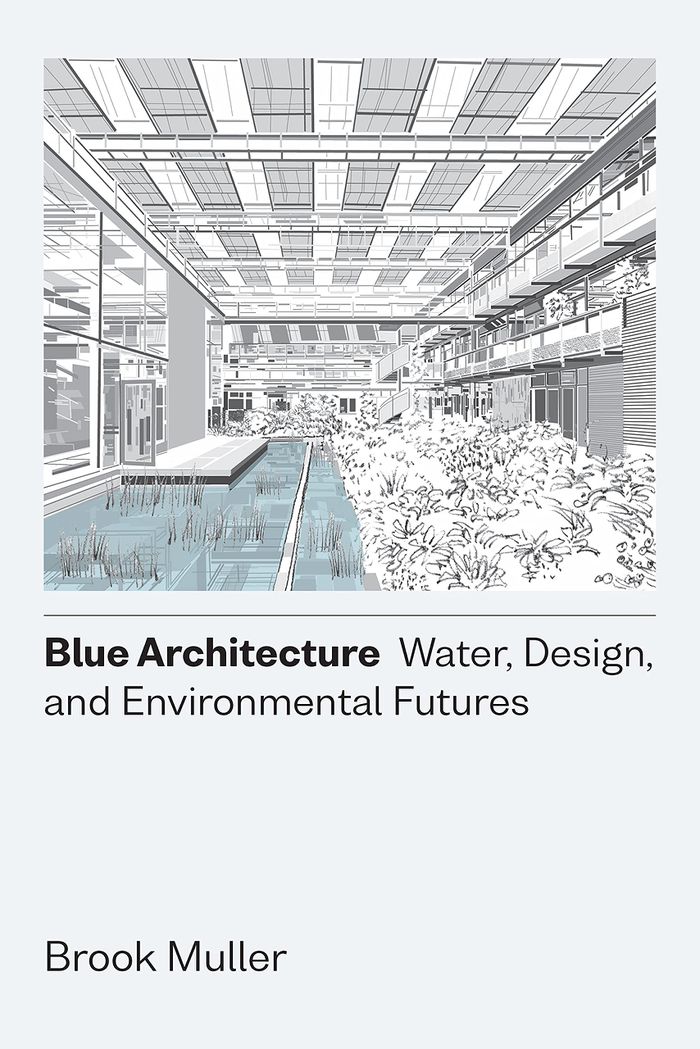
Le Corbusier famously said, ''A house is a machine for living in.'' We now confront the litany of environmental challenges associated with the legacy of the architectural machine: a changing climate, massive species die-off, diminished air and water quality, and resource scarcities. Brook Muller offers an alternative: water-centric urban design that fosters sustainability, equity, and architectural creativity. Inspired by the vernacular, such as the levadas of Madeira Island and both the arid and drenched places of the American West, Muller articulates a ''hydro-logical'' philosophy in which architects and planners begin by conceptualizing interactions between existing waterways and the spaces they intend to develop. From these interactions—and the new technologies and approaches enabling them—aesthetic, spatial, and experiential opportunities follow. Not content merely to work around sensitive ecology, Muller argues for genuinely climate-adapted urban landscapes in which buildings act as ecological infrastructure that actually improve watersheds while delivering functionality and beauty for diverse communities. Rich in images and practical examples, ''Blue architecture'' will change the way we think about our designed world.
Blue architecture: Water, design, and environmental futures
Actions:
Prix:
$43.95
(disponible sur commande)
Résumé:
Le Corbusier famously said, ''A house is a machine for living in.'' We now confront the litany of environmental challenges associated with the legacy of the architectural machine: a changing climate, massive species die-off, diminished air and water quality, and resource scarcities. Brook Muller offers an alternative: water-centric urban design that fosters sustainability, equity, and architectural creativity. Inspired by the vernacular, such as the levadas of Madeira Island and both the arid and drenched places of the American West, Muller articulates a ''hydro-logical'' philosophy in which architects and planners begin by conceptualizing interactions between existing waterways and the spaces they intend to develop. From these interactions—and the new technologies and approaches enabling them—aesthetic, spatial, and experiential opportunities follow. Not content merely to work around sensitive ecology, Muller argues for genuinely climate-adapted urban landscapes in which buildings act as ecological infrastructure that actually improve watersheds while delivering functionality and beauty for diverse communities. Rich in images and practical examples, ''Blue architecture'' will change the way we think about our designed world.
Classification:
livres
livres
Publication:
mai 2022
mai 2022
Sujet:
Architecture écologique
Architecture écologique
Classification:
livres
livres
Actions:
Exemplaires:
Description:
ix, 309 pages : illustrations, maps ; 26 cm
Description:
ix, 309 pages : illustrations, maps ; 26 cm
Auteur:
Sujet:
Publication:
London ; New York : Routledge in association with the Open University, 1999.
London ; New York : Routledge in association with the Open University, 1999.
Titre:
The American cities and technology reader : wilderness to wired city / edited by Gerrylynn K. Roberts.
Actions:
Exemplaires:
Description:
ix, 309 pages : illustrations, maps ; 26 cm
The American cities and technology reader : wilderness to wired city / edited by Gerrylynn K. Roberts.
Actions:
Exemplaires:
Description:
ix, 309 pages : illustrations, maps ; 26 cm
Classification:
livres
livres
Publication:
London ; New York : Routledge in association with the Open University, 1999.
London ; New York : Routledge in association with the Open University, 1999.
Auteur:
Sujet:
Classification:
livres
livres
Actions:
Exemplaires:
Description:
201 pages ; 22 cm.
Description:
201 pages ; 22 cm.
Auteur:
Sujet:
Publication:
Montréal : Les Presses de L'Université de Montréal, [2016], ©2016
Montréal : Les Presses de L'Université de Montréal, [2016], ©2016
Titre:
L'âge de plastique : lire la ville contemporaine au Québec / Daniel Laforest.
Actions:
Exemplaires:
Description:
201 pages ; 22 cm.
L'âge de plastique : lire la ville contemporaine au Québec / Daniel Laforest.
Actions:
Exemplaires:
Description:
201 pages ; 22 cm.
Classification:
livres
livres
Publication:
Montréal : Les Presses de L'Université de Montréal, [2016], ©2016
Montréal : Les Presses de L'Université de Montréal, [2016], ©2016
Auteur:
Sujet:
Classification:
livres
livres
Titre:
The lives of documents
The lives of documents
Actions:
Prix:
$45.00
(disponible en magasin)
Résumé:
How do photographers select, order, and display their images to make visual arguments about built and natural environments? Conceived as part of a long-term project at the CCA to examine the contemporary role of photography in the study and practice of architecture, The Lives of Documents — Photography as Project prompts reflections on the idea of the documentary as an(...)
$45.00
(disponible en magasin)
Résumé:
How do photographers select, order, and display their images to make visual arguments about built and natural environments? Conceived as part of a long-term project at the CCA to examine the contemporary role of photography in the study and practice of architecture, The Lives of Documents — Photography as Project prompts reflections on the idea of the documentary as an(...)
Titre:
The lives of documents
Actions:
Prix:
$45.00
(disponible en magasin)
Résumé:
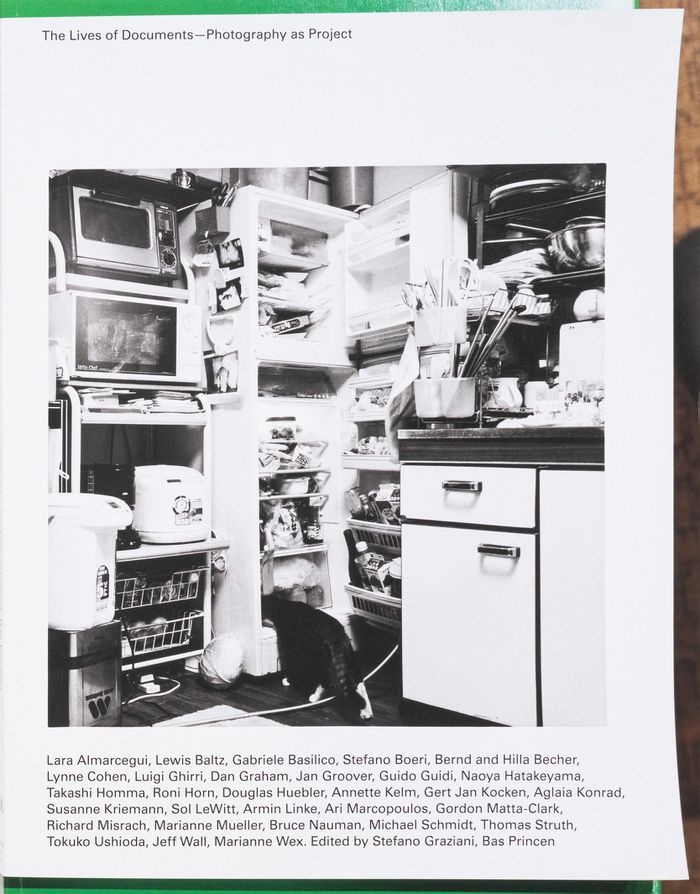
How do photographers select, order, and display their images to make visual arguments about built and natural environments? Conceived as part of a long-term project at the CCA to examine the contemporary role of photography in the study and practice of architecture, The Lives of Documents — Photography as Project prompts reflections on the idea of the documentary as an embedded quality of photography. Tracing the research materials, archiving practices, and production processes of diverse authors, photographers Bas Princen and Stefano Graziani highlight a selection of photographic projects that model our visible world by investigating notions of landscape and its destruction, global infrastructure, intimacy and interiority, and conditions of urban and domestic space and life. This publication follows Princen and Graziani’s travels to understand how artists use photography as a tool for their artistic research and how they conceive of their projects as evolving and expanding explorations. Bringing together studio visit images, artist interviews, and Princen and Graziani’s own reproduction of photographic projects, it emphasizes how photography reveals and expresses lived and built realities in ways that traditional architectural tools fail to represent or communicate.
The lives of documents
Actions:
Prix:
$45.00
(disponible en magasin)
Résumé:
How do photographers select, order, and display their images to make visual arguments about built and natural environments? Conceived as part of a long-term project at the CCA to examine the contemporary role of photography in the study and practice of architecture, The Lives of Documents — Photography as Project prompts reflections on the idea of the documentary as an embedded quality of photography. Tracing the research materials, archiving practices, and production processes of diverse authors, photographers Bas Princen and Stefano Graziani highlight a selection of photographic projects that model our visible world by investigating notions of landscape and its destruction, global infrastructure, intimacy and interiority, and conditions of urban and domestic space and life. This publication follows Princen and Graziani’s travels to understand how artists use photography as a tool for their artistic research and how they conceive of their projects as evolving and expanding explorations. Bringing together studio visit images, artist interviews, and Princen and Graziani’s own reproduction of photographic projects, it emphasizes how photography reveals and expresses lived and built realities in ways that traditional architectural tools fail to represent or communicate.
Classification:
livres
livres
Publication:
juin 2023
juin 2023
Sujet:
Publications du CCA
Publications du CCA
Classification:
livres
livres
Actions:
Prix:
$59.50
(disponible sur commande)
Résumé:
From the targeted demolition of Mostar's Stari-Most Bridge in 1993 to the physical and social havoc caused by the 2004 Boxing Day Tsunami, the history of cities is often a history of destruction and reconstruction. But what political and aesthetic criteria should guide us in the rebuilding of cities devastated by war and natural calamities? This publication points to(...)
$59.50
(disponible sur commande)
Résumé:
From the targeted demolition of Mostar's Stari-Most Bridge in 1993 to the physical and social havoc caused by the 2004 Boxing Day Tsunami, the history of cities is often a history of destruction and reconstruction. But what political and aesthetic criteria should guide us in the rebuilding of cities devastated by war and natural calamities? This publication points to(...)
Titre:
Architects without frontiers: war, reconstruction and design responsibility
Actions:
Prix:
$59.50
(disponible sur commande)
Résumé:
From the targeted demolition of Mostar's Stari-Most Bridge in 1993 to the physical and social havoc caused by the 2004 Boxing Day Tsunami, the history of cities is often a history of destruction and reconstruction. But what political and aesthetic criteria should guide us in the rebuilding of cities devastated by war and natural calamities? This publication points to the potential for architects to play important roles in post-war relief and reconstruction. Charlesworth suggests that architects and design professionals have a significant opportunity to assist peace-making and reconstruction efforts in the period immediately after conflict or disaster, when much of the housing, hospital, educational, transport, civic and business infrastructure has been destroyed or badly damaged. Through selected case studies, Charlesworth examines the role of architects, planners, urban designers and landscape architects in three cities following conflict - Beirut, Nicosia and Mostar - three cities where the mental and physical scars of violent conflict still remain. This book expands the traditional role of the architect from 'hero' to 'peacemaker' and discusses how design educators can stretch their wings to encompass the proliferating agendas and sites of civil unrest.
Architects without frontiers: war, reconstruction and design responsibility
Actions:
Prix:
$59.50
(disponible sur commande)
Résumé:
From the targeted demolition of Mostar's Stari-Most Bridge in 1993 to the physical and social havoc caused by the 2004 Boxing Day Tsunami, the history of cities is often a history of destruction and reconstruction. But what political and aesthetic criteria should guide us in the rebuilding of cities devastated by war and natural calamities? This publication points to the potential for architects to play important roles in post-war relief and reconstruction. Charlesworth suggests that architects and design professionals have a significant opportunity to assist peace-making and reconstruction efforts in the period immediately after conflict or disaster, when much of the housing, hospital, educational, transport, civic and business infrastructure has been destroyed or badly damaged. Through selected case studies, Charlesworth examines the role of architects, planners, urban designers and landscape architects in three cities following conflict - Beirut, Nicosia and Mostar - three cities where the mental and physical scars of violent conflict still remain. This book expands the traditional role of the architect from 'hero' to 'peacemaker' and discusses how design educators can stretch their wings to encompass the proliferating agendas and sites of civil unrest.
Classification:
livres
livres
Publication:
avril 2006
avril 2006
Sujet:
Théorie de l’architecture
Théorie de l’architecture
Classification:
livres
livres
Titre:
Buildings that feel good
Buildings that feel good
Actions:
Prix:
$53.95
(disponible sur commande)
Résumé:
What makes a building good? This central challenge facing architects and clients can only be answered by looking at what works well for those who know the buildings most intimately – the building's users. This book includes case studies of recent buildings that feel good. It is rooted in the physical but mediated by human experience, and may only be judged after the(...)
$53.95
(disponible sur commande)
Résumé:
What makes a building good? This central challenge facing architects and clients can only be answered by looking at what works well for those who know the buildings most intimately – the building's users. This book includes case studies of recent buildings that feel good. It is rooted in the physical but mediated by human experience, and may only be judged after the(...)
Publication:
octobre 2008
octobre 2008
Titre:
Buildings that feel good
Actions:
Prix:
$53.95
(disponible sur commande)
Résumé:
What makes a building good? This central challenge facing architects and clients can only be answered by looking at what works well for those who know the buildings most intimately – the building's users. This book includes case studies of recent buildings that feel good. It is rooted in the physical but mediated by human experience, and may only be judged after the building has been ‘lived in' and stood the test of time. The trick is to identify the relevant characteristics that will inform new buildings before they are built. Written by a briefing and design evaluation expert who specialises in optimising the experience of building users, Buildings that Feel Good distils a set of hard-won lessons synthesised from years of empirical research. It argues that a powerful key to designing good buildings is to decipher consistent principles from users' positive experience of existing buildings. The case studies include many recent highly-rated projects that cover a wide range of building types – offices, retail, industrial, infrastructure, sport and education. The lessons extracted are universal and provide valuable generic insights into the critically important briefing process.
Buildings that feel good
Actions:
Prix:
$53.95
(disponible sur commande)
Résumé:
What makes a building good? This central challenge facing architects and clients can only be answered by looking at what works well for those who know the buildings most intimately – the building's users. This book includes case studies of recent buildings that feel good. It is rooted in the physical but mediated by human experience, and may only be judged after the building has been ‘lived in' and stood the test of time. The trick is to identify the relevant characteristics that will inform new buildings before they are built. Written by a briefing and design evaluation expert who specialises in optimising the experience of building users, Buildings that Feel Good distils a set of hard-won lessons synthesised from years of empirical research. It argues that a powerful key to designing good buildings is to decipher consistent principles from users' positive experience of existing buildings. The case studies include many recent highly-rated projects that cover a wide range of building types – offices, retail, industrial, infrastructure, sport and education. The lessons extracted are universal and provide valuable generic insights into the critically important briefing process.
Classification:
livres
livres
Publication:
octobre 2008
octobre 2008
Classification:
livres
livres
Prix:
$27.95
(disponible en magasin)
Résumé:
As London emerged from the devastation of the Second World War, planners and policymakers sought to rebuild the city in ways that would reshape the behavior of its citizens as much as it would its buildings and infrastructure—a program defined by a strong emphasis on civic order and conservative values of national community. One of the groups most significantly affected(...)
$27.95
(disponible en magasin)
Résumé:
As London emerged from the devastation of the Second World War, planners and policymakers sought to rebuild the city in ways that would reshape the behavior of its citizens as much as it would its buildings and infrastructure—a program defined by a strong emphasis on civic order and conservative values of national community. One of the groups most significantly affected(...)
Titre:
The spiv and the architect: unruly life in postwar London
Actions:
Prix:
$27.95
(disponible en magasin)
Résumé:
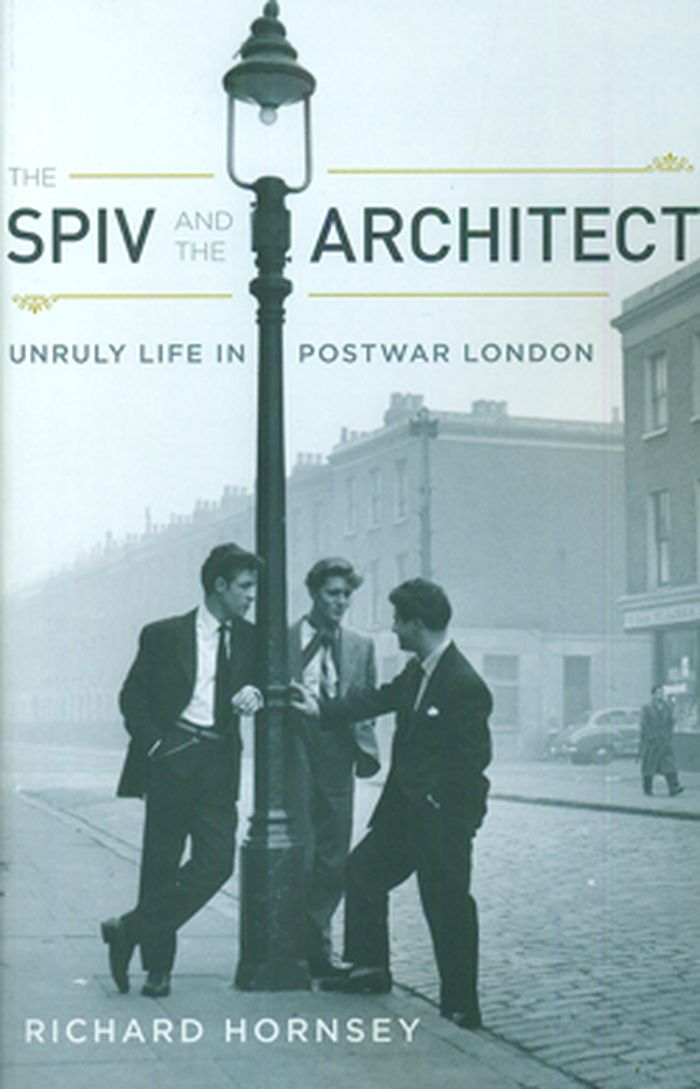
As London emerged from the devastation of the Second World War, planners and policymakers sought to rebuild the city in ways that would reshape the behavior of its citizens as much as it would its buildings and infrastructure—a program defined by a strong emphasis on civic order and conservative values of national community. One of the groups most significantly affected by this new, moralistic climate of reformation and renewal was queer men, whom the police, the media, and lawmakers targeted as an urgent urban problem by marking their lives and desires as criminal and deviant. Richard Hornsey examines how queer men legitimized, resisted, and reinvented this ambitious reconstruction program, which extended from the design of basic public spaces and municipal libraries to private living rooms and home decor. From their association with the urban stereotype of the spiv (slang for a young petty criminal who lived by his wits and shirked legitimate work) and vilification in the tabloids as perverts to the assimilated homosexuals within reformist psychology, Hornsey details how these efforts to transform London fundamentally restructured the experiences and identities of gay men in the city and throughout the country.
The spiv and the architect: unruly life in postwar London
Actions:
Prix:
$27.95
(disponible en magasin)
Résumé:
As London emerged from the devastation of the Second World War, planners and policymakers sought to rebuild the city in ways that would reshape the behavior of its citizens as much as it would its buildings and infrastructure—a program defined by a strong emphasis on civic order and conservative values of national community. One of the groups most significantly affected by this new, moralistic climate of reformation and renewal was queer men, whom the police, the media, and lawmakers targeted as an urgent urban problem by marking their lives and desires as criminal and deviant. Richard Hornsey examines how queer men legitimized, resisted, and reinvented this ambitious reconstruction program, which extended from the design of basic public spaces and municipal libraries to private living rooms and home decor. From their association with the urban stereotype of the spiv (slang for a young petty criminal who lived by his wits and shirked legitimate work) and vilification in the tabloids as perverts to the assimilated homosexuals within reformist psychology, Hornsey details how these efforts to transform London fundamentally restructured the experiences and identities of gay men in the city and throughout the country.
Classification:
livres
livres
Publication:
avril 2010
avril 2010
Classification:
livres
livres
Actions:
Prix:
$39.95
(disponible sur commande)
Résumé:
Architecture has a powerful role in nation building and identity formation. Buildings and monuments not only constitute the built fabric of society, they reflect the intersection of culture, politics, economics, and aesthetics as these forces are played out in distinct social settings and distinct times. This extraordinary anthology traces the interaction between(...)
$39.95
(disponible sur commande)
Résumé:
Architecture has a powerful role in nation building and identity formation. Buildings and monuments not only constitute the built fabric of society, they reflect the intersection of culture, politics, economics, and aesthetics as these forces are played out in distinct social settings and distinct times. This extraordinary anthology traces the interaction between(...)
Titre:
Architecture and the Canadian fabric
Actions:
Prix:
$39.95
(disponible sur commande)
Résumé:
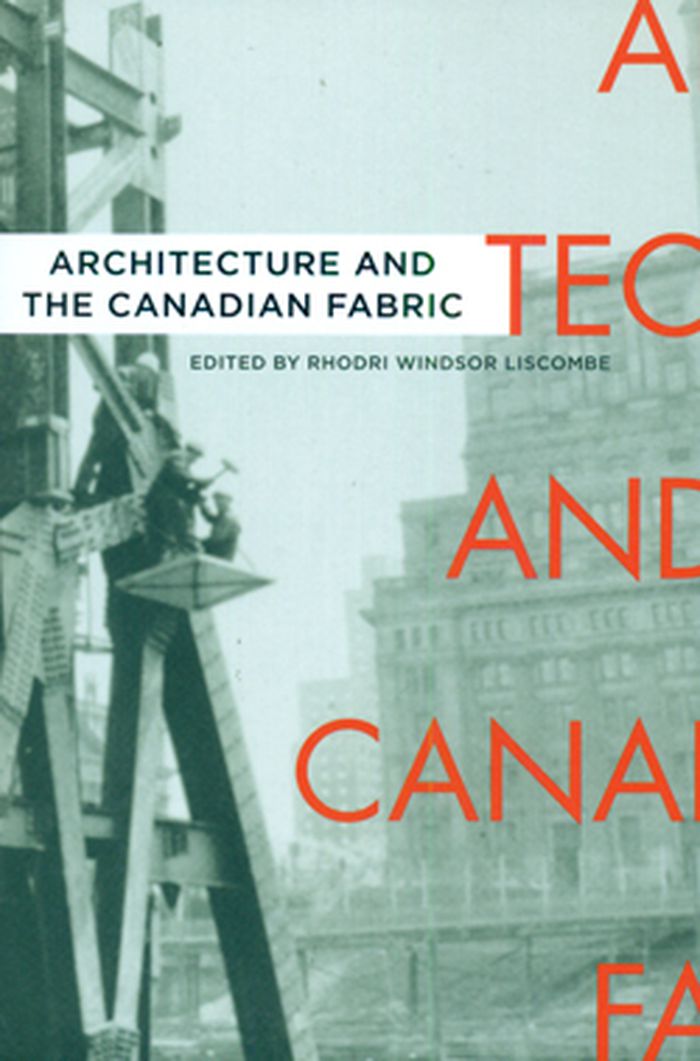
Architecture has a powerful role in nation building and identity formation. Buildings and monuments not only constitute the built fabric of society, they reflect the intersection of culture, politics, economics, and aesthetics as these forces are played out in distinct social settings and distinct times. This extraordinary anthology traces the interaction between culture and politics as reflected in Canadian architecture and the infrastructure of ordinary life, from the first contacts between indigenous peoples and European missionaries to the construction of big-box shopping centres in postmodern cities. Whether focusing on Jesuit perceptions of New France, the construction of Toronto’s St. James Cathedral or Canada’s first Parliament, Brutalism in Canadian architecture, or the ideas of Marshall McLuhan and Arthur Erickson, these essays showcase ways of thinking about the built environment that extend beyond considerations of authorship and style to address the influence of cultural politics and insights from race and gender studies and from postcolonial and spatial theory. By coupling a national focus with a wide historical scope, Architecture and the Canadian Fabric transforms how we see the role of architecture and in doing so radically questions how we continue to live in, interact with, and interpret the fabricated world.
Architecture and the Canadian fabric
Actions:
Prix:
$39.95
(disponible sur commande)
Résumé:
Architecture has a powerful role in nation building and identity formation. Buildings and monuments not only constitute the built fabric of society, they reflect the intersection of culture, politics, economics, and aesthetics as these forces are played out in distinct social settings and distinct times. This extraordinary anthology traces the interaction between culture and politics as reflected in Canadian architecture and the infrastructure of ordinary life, from the first contacts between indigenous peoples and European missionaries to the construction of big-box shopping centres in postmodern cities. Whether focusing on Jesuit perceptions of New France, the construction of Toronto’s St. James Cathedral or Canada’s first Parliament, Brutalism in Canadian architecture, or the ideas of Marshall McLuhan and Arthur Erickson, these essays showcase ways of thinking about the built environment that extend beyond considerations of authorship and style to address the influence of cultural politics and insights from race and gender studies and from postcolonial and spatial theory. By coupling a national focus with a wide historical scope, Architecture and the Canadian Fabric transforms how we see the role of architecture and in doing so radically questions how we continue to live in, interact with, and interpret the fabricated world.
Classification:
livres
livres
Publication:
novembre 2012
novembre 2012
Sujet:
Architecture du Canada
Architecture du Canada
Classification:
livres
livres
Actions:
Prix:
$29.95
(disponible sur commande)
Résumé:
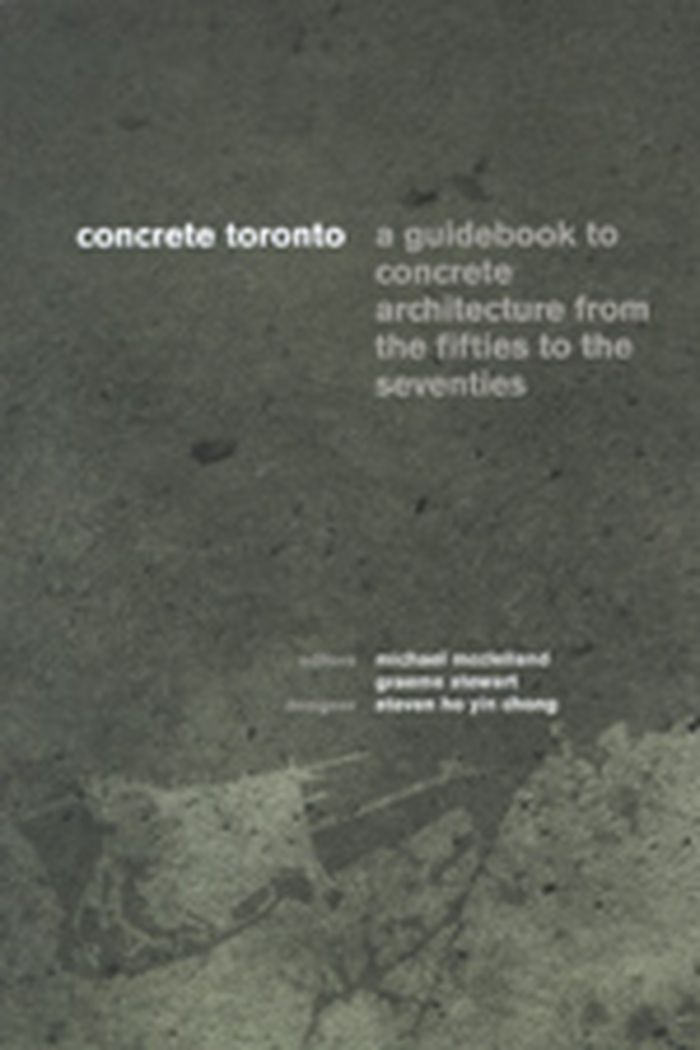
After World War II, concrete became increasingly popular as a building medium around the world. Brutalism, the fashion for plain, heavy design, reigned. Toronto was particularly affected. The city has concrete buildings of all stripes – international landmarks, metropolitan infrastructure and even the single family home. Hundreds of these structures were built,(...)
$29.95
(disponible sur commande)
Résumé:
After World War II, concrete became increasingly popular as a building medium around the world. Brutalism, the fashion for plain, heavy design, reigned. Toronto was particularly affected. The city has concrete buildings of all stripes – international landmarks, metropolitan infrastructure and even the single family home. Hundreds of these structures were built,(...)
Sujet:
Architecture du Canada
Architecture du Canada
Publication:
novembre 2007, Toronto
novembre 2007, Toronto
Titre:
Concrete Toronto : a guidebook to concrete architecture from the fifties to the seventies
Actions:
Prix:
$29.95
(disponible sur commande)
Résumé:
After World War II, concrete became increasingly popular as a building medium around the world. Brutalism, the fashion for plain, heavy design, reigned. Toronto was particularly affected. The city has concrete buildings of all stripes – international landmarks, metropolitan infrastructure and even the single family home. Hundreds of these structures were built, including Viljo Revell’s groundbreaking New City Hall, John Andrew’s seminal Scarborough College and the record-smashing CN Tower. Toronto is a city cast in concrete. However, as architectural fashion has shifted from postmodernism to the glass-and-steel neomodernism of today, these concrete structures have been ignored, misunderstood and, in some cases, demolished. Concrete Toronto acts as a guide to the city’s extensive concrete heritage. A diverse group of experts has been assembled to re-examine the uniqueness and value of these buildings. Included are the insights of many of the original concrete architects, university faculty, local practitioners, journalists and industry experts. Together they explore the past and future of Toronto’s concrete buildings. Included is a wealth of new and archival photos, drawings, interviews, articles, as well as case studies of Toronto’s major concrete architecture.
Concrete Toronto : a guidebook to concrete architecture from the fifties to the seventies
Actions:
Prix:
$29.95
(disponible sur commande)
Résumé:
After World War II, concrete became increasingly popular as a building medium around the world. Brutalism, the fashion for plain, heavy design, reigned. Toronto was particularly affected. The city has concrete buildings of all stripes – international landmarks, metropolitan infrastructure and even the single family home. Hundreds of these structures were built, including Viljo Revell’s groundbreaking New City Hall, John Andrew’s seminal Scarborough College and the record-smashing CN Tower. Toronto is a city cast in concrete. However, as architectural fashion has shifted from postmodernism to the glass-and-steel neomodernism of today, these concrete structures have been ignored, misunderstood and, in some cases, demolished. Concrete Toronto acts as a guide to the city’s extensive concrete heritage. A diverse group of experts has been assembled to re-examine the uniqueness and value of these buildings. Included are the insights of many of the original concrete architects, university faculty, local practitioners, journalists and industry experts. Together they explore the past and future of Toronto’s concrete buildings. Included is a wealth of new and archival photos, drawings, interviews, articles, as well as case studies of Toronto’s major concrete architecture.
Classification:
livres
livres
Publication:
novembre 2007, Toronto
novembre 2007, Toronto
Sujet:
Architecture du Canada
Architecture du Canada
Classification:
livres
livres
Titre:
Inhuman resources
Inhuman resources
Actions:
Prix:
$34.95
(disponible en magasin)
Résumé:
What gets stranded outside the borders of the political? ''Inhuman Resources'' develops an account of sabotage, insubordination, and the invisible activities that undermine the ideas of accountability and identi?cation on which representative politics rely. Drawing from histories of labor, disability, infrastructure, writing, and war, Williams offers genealogies of the(...)
$34.95
(disponible en magasin)
Résumé:
What gets stranded outside the borders of the political? ''Inhuman Resources'' develops an account of sabotage, insubordination, and the invisible activities that undermine the ideas of accountability and identi?cation on which representative politics rely. Drawing from histories of labor, disability, infrastructure, writing, and war, Williams offers genealogies of the(...)
Titre:
Inhuman resources
Actions:
Prix:
$34.95
(disponible en magasin)
Résumé:
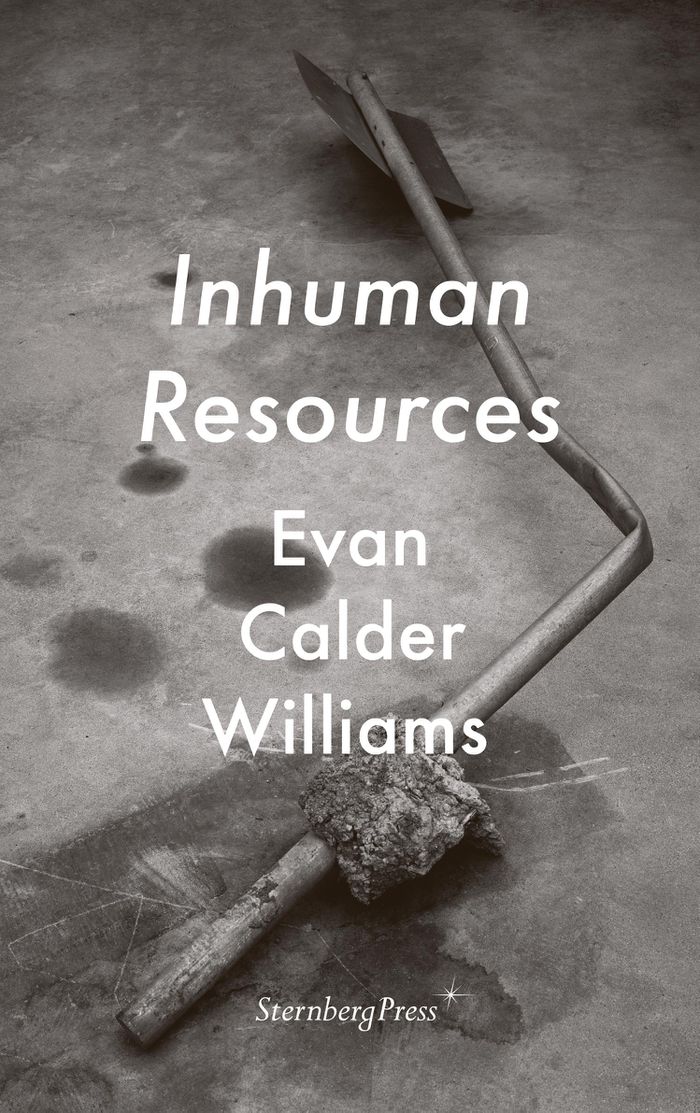
What gets stranded outside the borders of the political? ''Inhuman Resources'' develops an account of sabotage, insubordination, and the invisible activities that undermine the ideas of accountability and identi?cation on which representative politics rely. Drawing from histories of labor, disability, infrastructure, writing, and war, Williams offers genealogies of the tropes of paralysis and sabotage, which leave behind notions of public citizenship to reveal an “inhuman” agency that hinges on the unexpected friction between humans, materials, machinery, and other non-human life. Yet to detect this and move away from fantasies of clarity and visibility, we need to take cues from political and artistic practices that evade such legibility, and are attuned to what happens off-screen and without recognition. Spanning an ambitious range of subjects—from prison architecture to digital animation, legal history to self-help books, and electrical blackouts to silkworms saturated with toxic dye— ''Inhuman Resources'' gathers materials for thinking differently about insurgent activity. This is a theory that does not privilege exodus, pride, or autonomy but instead takes shape inside the very processes, architectures, appearances, and systems it seeks to ruin.
Inhuman resources
Actions:
Prix:
$34.95
(disponible en magasin)
Résumé:
What gets stranded outside the borders of the political? ''Inhuman Resources'' develops an account of sabotage, insubordination, and the invisible activities that undermine the ideas of accountability and identi?cation on which representative politics rely. Drawing from histories of labor, disability, infrastructure, writing, and war, Williams offers genealogies of the tropes of paralysis and sabotage, which leave behind notions of public citizenship to reveal an “inhuman” agency that hinges on the unexpected friction between humans, materials, machinery, and other non-human life. Yet to detect this and move away from fantasies of clarity and visibility, we need to take cues from political and artistic practices that evade such legibility, and are attuned to what happens off-screen and without recognition. Spanning an ambitious range of subjects—from prison architecture to digital animation, legal history to self-help books, and electrical blackouts to silkworms saturated with toxic dye— ''Inhuman Resources'' gathers materials for thinking differently about insurgent activity. This is a theory that does not privilege exodus, pride, or autonomy but instead takes shape inside the very processes, architectures, appearances, and systems it seeks to ruin.
Classification:
livres
livres
Publication:
mars 2026
mars 2026
Sujet:
Théorie/ philosophie
Théorie/ philosophie


