


9271 Résultats
Classification:
expositions
expositions
Actions:
Description:
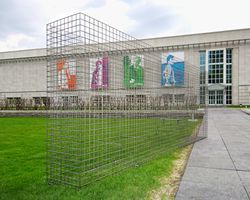
Mur absent : Évocation du Garbage Wall (1970) de Gordon Matta-Clark, une installation dans Parc Baile, est une structure symbolique qui évoque l’intérêt porté par Matta-Clark au recyclage, aux espaces abandonnés et à une vision différente de la conception architecturale. À l’occasion du premier Jour de la Terre, Gordon Matta-Clark (1943-78) organise un événement à(...)
Mur absent : Évocation du Garbage Wall (1970) de Gordon Matta-Clark, une installation dans Parc Baile, est une structure symbolique qui évoque l’intérêt porté par Matta-Clark au recyclage, aux espaces abandonnés et à une vision différente de la conception architecturale. À l’occasion du premier Jour de la Terre, Gordon Matta-Clark (1943-78) organise un événement à(...)
Localisation:
Parc Baile
Parc Baile
Date:
6 mai 2004 au 6 septembre 2004
6 mai 2004 au 6 septembre 2004
Titre:
Mur absent : évocation du Garbage Wall (1970) de Gordon Matta-Clark
Actions:
Description:
Mur absent : Évocation du Garbage Wall (1970) de Gordon Matta-Clark, une installation dans Parc Baile, est une structure symbolique qui évoque l’intérêt porté par Matta-Clark au recyclage, aux espaces abandonnés et à une vision différente de la conception architecturale. À l’occasion du premier Jour de la Terre, Gordon Matta-Clark (1943-78) organise un événement à(...)
Mur absent : évocation du Garbage Wall (1970) de Gordon Matta-Clark
Actions:
Description:
Mur absent : Évocation du Garbage Wall (1970) de Gordon Matta-Clark, une installation dans Parc Baile, est une structure symbolique qui évoque l’intérêt porté par Matta-Clark au recyclage, aux espaces abandonnés et à une vision différente de la conception architecturale. À l’occasion du premier Jour de la Terre, Gordon Matta-Clark (1943-78) organise un événement à(...)
Classification:
expositions
expositions
Date:
6 mai 2004 au
6 septembre 2004
6 mai 2004 au
6 septembre 2004
Localisation:
Parc Baile
Parc Baile
Niveau de description archivistique:
Sous-série
Sous-série
Numéro de référence:
AP197.S1.SS9
Description:
This subseries is comprised of notes, drafts, research, and photographic materials that were organized by topic. Unlike Kenneth Frampton’s research files which are arranged in Series AP197.S2, these files were compiled for book projects, articles, book reviews, lectures, interviews, conference addresses, and keynote speeches, and document over 300 of Frampton's published or unpublished texts. The materials include notes, contracts, drafts, correspondence, final copies of texts, photographic materials, and research materials. This subseries also includes Frampton’s curriculum vitaes, notebooks, and covers he designed for the journal Architectural Design (1962-1964). The files are organized alphabetically by the topic explored, namely architects. Some of these architects include: Alvar Aalto; Tadao Ando; Georges Baines; Luis Barragan; H.P. Berlage; Mario Botta; Alberto Campo Baeza; David Chipperfield; Alvaro Siza; Michael Kagan; Louis Kahn; Rem Koolhaas; Kengo Kuma; Kisho Kurakawa; Adolf Loos; Le Corbusier; Raphael Moneo; Carlo Scarpa; O.M. Ungers; Raj Rewal; Rogelio Salmona; Frank Lloyd Wright; and Monica Pidgeon. Subjects explored in these texts include: photography; the predicament of environmental design; reciprocal regionalism; the British Library; China's sacred sites; reflections on the oppositions of architecture and building; reflections on Perspecta; and the role of education. Large portions of these boxes document the publications "World Architecture 1900-2000: a Critical Mosaic" (1999), "Le Corbusier" (1997 and 2002), "American Masterworks: the Twentieth Century House" (1995), and "American Masterworks" (2008). Some folders may include coloured tabs with the note "copied." These tabs were used to identify whether the particular writing/project in question had been added to Frampton's curriculum vitae.
AP197.S1.SS9
Description:
This subseries is comprised of notes, drafts, research, and photographic materials that were organized by topic. Unlike Kenneth Frampton’s research files which are arranged in Series AP197.S2, these files were compiled for book projects, articles, book reviews, lectures, interviews, conference addresses, and keynote speeches, and document over 300 of Frampton's published or unpublished texts. The materials include notes, contracts, drafts, correspondence, final copies of texts, photographic materials, and research materials. This subseries also includes Frampton’s curriculum vitaes, notebooks, and covers he designed for the journal Architectural Design (1962-1964). The files are organized alphabetically by the topic explored, namely architects. Some of these architects include: Alvar Aalto; Tadao Ando; Georges Baines; Luis Barragan; H.P. Berlage; Mario Botta; Alberto Campo Baeza; David Chipperfield; Alvaro Siza; Michael Kagan; Louis Kahn; Rem Koolhaas; Kengo Kuma; Kisho Kurakawa; Adolf Loos; Le Corbusier; Raphael Moneo; Carlo Scarpa; O.M. Ungers; Raj Rewal; Rogelio Salmona; Frank Lloyd Wright; and Monica Pidgeon. Subjects explored in these texts include: photography; the predicament of environmental design; reciprocal regionalism; the British Library; China's sacred sites; reflections on the oppositions of architecture and building; reflections on Perspecta; and the role of education. Large portions of these boxes document the publications "World Architecture 1900-2000: a Critical Mosaic" (1999), "Le Corbusier" (1997 and 2002), "American Masterworks: the Twentieth Century House" (1995), and "American Masterworks" (2008). Some folders may include coloured tabs with the note "copied." These tabs were used to identify whether the particular writing/project in question had been added to Frampton's curriculum vitae.
Personnes et institutions:
Date:
circa 1952 -2016
circa 1952 -2016
Titre:
Books, articles, reviews, lectures, and juries
Actions:
AP197.S1.SS9
Description:
This subseries is comprised of notes, drafts, research, and photographic materials that were organized by topic. Unlike Kenneth Frampton’s research files which are arranged in Series AP197.S2, these files were compiled for book projects, articles, book reviews, lectures, interviews, conference addresses, and keynote speeches, and document over 300 of Frampton's published or unpublished texts. The materials include notes, contracts, drafts, correspondence, final copies of texts, photographic materials, and research materials. This subseries also includes Frampton’s curriculum vitaes, notebooks, and covers he designed for the journal Architectural Design (1962-1964). The files are organized alphabetically by the topic explored, namely architects. Some of these architects include: Alvar Aalto; Tadao Ando; Georges Baines; Luis Barragan; H.P. Berlage; Mario Botta; Alberto Campo Baeza; David Chipperfield; Alvaro Siza; Michael Kagan; Louis Kahn; Rem Koolhaas; Kengo Kuma; Kisho Kurakawa; Adolf Loos; Le Corbusier; Raphael Moneo; Carlo Scarpa; O.M. Ungers; Raj Rewal; Rogelio Salmona; Frank Lloyd Wright; and Monica Pidgeon. Subjects explored in these texts include: photography; the predicament of environmental design; reciprocal regionalism; the British Library; China's sacred sites; reflections on the oppositions of architecture and building; reflections on Perspecta; and the role of education. Large portions of these boxes document the publications "World Architecture 1900-2000: a Critical Mosaic" (1999), "Le Corbusier" (1997 and 2002), "American Masterworks: the Twentieth Century House" (1995), and "American Masterworks" (2008). Some folders may include coloured tabs with the note "copied." These tabs were used to identify whether the particular writing/project in question had been added to Frampton's curriculum vitae.
Books, articles, reviews, lectures, and juries
Actions:
AP197.S1.SS9
Description:
This subseries is comprised of notes, drafts, research, and photographic materials that were organized by topic. Unlike Kenneth Frampton’s research files which are arranged in Series AP197.S2, these files were compiled for book projects, articles, book reviews, lectures, interviews, conference addresses, and keynote speeches, and document over 300 of Frampton's published or unpublished texts. The materials include notes, contracts, drafts, correspondence, final copies of texts, photographic materials, and research materials. This subseries also includes Frampton’s curriculum vitaes, notebooks, and covers he designed for the journal Architectural Design (1962-1964). The files are organized alphabetically by the topic explored, namely architects. Some of these architects include: Alvar Aalto; Tadao Ando; Georges Baines; Luis Barragan; H.P. Berlage; Mario Botta; Alberto Campo Baeza; David Chipperfield; Alvaro Siza; Michael Kagan; Louis Kahn; Rem Koolhaas; Kengo Kuma; Kisho Kurakawa; Adolf Loos; Le Corbusier; Raphael Moneo; Carlo Scarpa; O.M. Ungers; Raj Rewal; Rogelio Salmona; Frank Lloyd Wright; and Monica Pidgeon. Subjects explored in these texts include: photography; the predicament of environmental design; reciprocal regionalism; the British Library; China's sacred sites; reflections on the oppositions of architecture and building; reflections on Perspecta; and the role of education. Large portions of these boxes document the publications "World Architecture 1900-2000: a Critical Mosaic" (1999), "Le Corbusier" (1997 and 2002), "American Masterworks: the Twentieth Century House" (1995), and "American Masterworks" (2008). Some folders may include coloured tabs with the note "copied." These tabs were used to identify whether the particular writing/project in question had been added to Frampton's curriculum vitae.
Niveau de description archivistique:
Subseries
Subseries
Date:
circa 1952 -2016
circa 1952 -2016
Personnes et institutions:
Classification:
photographies
photographies
Numéro de référence:
ARCH255962
ARCH255962
Personnes et institutions:
Date:
1967
1967
Classification:
photographies
photographies
Date:
1967
1967
Personnes et institutions:
Classification:
dessins
dessins
Numéro de référence:
DR1995:0179:001-008
Description:
- This group of drawings are for a "truck transportable week-end house to be located on a beach in North Wales, UK" ('Architectural Design', 511). Accordion-shaped extendible boxes with cross bracing are designed to be pulled out by car from a fixed central core onto structural rail sections leveled on jacks. The fixed central core consists of living, dining, kitchen and bathroom facilities. Four extendible boxes house additional sleeping quarters along with a carport and a dock which is shown extended out into the water. Two sketches have apparently been redrawn from originals by Cedric Price in order to clarify ideas for publication in 'Architectural Design', (May 1970) (DR1995:0179:007 - DR1995:0179:008).
DR1995:0179:001-008
Description:
- This group of drawings are for a "truck transportable week-end house to be located on a beach in North Wales, UK" ('Architectural Design', 511). Accordion-shaped extendible boxes with cross bracing are designed to be pulled out by car from a fixed central core onto structural rail sections leveled on jacks. The fixed central core consists of living, dining, kitchen and bathroom facilities. Four extendible boxes house additional sleeping quarters along with a carport and a dock which is shown extended out into the water. Two sketches have apparently been redrawn from originals by Cedric Price in order to clarify ideas for publication in 'Architectural Design', (May 1970) (DR1995:0179:007 - DR1995:0179:008).
Personnes et institutions:
Date:
1960
1960
Titre:
Hague Hole extendable portable beach house: Conceptual drawings, annotated sketches and diagrams
Actions:
DR1995:0179:001-008
Description:
- This group of drawings are for a "truck transportable week-end house to be located on a beach in North Wales, UK" ('Architectural Design', 511). Accordion-shaped extendible boxes with cross bracing are designed to be pulled out by car from a fixed central core onto structural rail sections leveled on jacks. The fixed central core consists of living, dining, kitchen and bathroom facilities. Four extendible boxes house additional sleeping quarters along with a carport and a dock which is shown extended out into the water. Two sketches have apparently been redrawn from originals by Cedric Price in order to clarify ideas for publication in 'Architectural Design', (May 1970) (DR1995:0179:007 - DR1995:0179:008).
Hague Hole extendable portable beach house: Conceptual drawings, annotated sketches and diagrams
Actions:
DR1995:0179:001-008
Description:
- This group of drawings are for a "truck transportable week-end house to be located on a beach in North Wales, UK" ('Architectural Design', 511). Accordion-shaped extendible boxes with cross bracing are designed to be pulled out by car from a fixed central core onto structural rail sections leveled on jacks. The fixed central core consists of living, dining, kitchen and bathroom facilities. Four extendible boxes house additional sleeping quarters along with a carport and a dock which is shown extended out into the water. Two sketches have apparently been redrawn from originals by Cedric Price in order to clarify ideas for publication in 'Architectural Design', (May 1970) (DR1995:0179:007 - DR1995:0179:008).
Classification:
dessins
dessins
Date:
1960
1960
Personnes et institutions:
Classification:
dessins
dessins
Actions:
Numéro de référence:
DR1967:0010:001
Description:
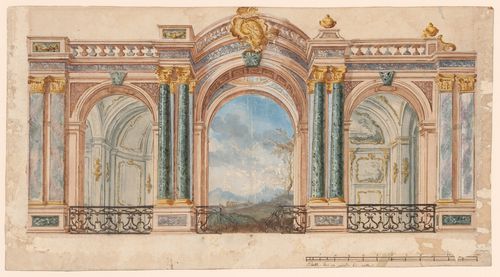
- The two halves of this drawing show alternate stage sets from which the patron could make his choice. It is unclear whether this design was for a painted trompe-l'oeil stage backdrop and/or a constructed stage set. The deep unified space of the architectural interior and low vanishing point of the central landscape indicates that this part of the drawing is probably intended to be a painted trompe-l'oeil, however, the inscribed scale suggests that some of the architectural elements may have been constructed (Fuhring, 161 and 570). The prickings indicate that the overall design was intended to be executed. A crown above the central cartouche in drawing DR1967:0010:002 which is probably by the same hand, indicates a possible royal connection.
DR1967:0010:001
Description:
- The two halves of this drawing show alternate stage sets from which the patron could make his choice. It is unclear whether this design was for a painted trompe-l'oeil stage backdrop and/or a constructed stage set. The deep unified space of the architectural interior and low vanishing point of the central landscape indicates that this part of the drawing is probably intended to be a painted trompe-l'oeil, however, the inscribed scale suggests that some of the architectural elements may have been constructed (Fuhring, 161 and 570). The prickings indicate that the overall design was intended to be executed. A crown above the central cartouche in drawing DR1967:0010:002 which is probably by the same hand, indicates a possible royal connection.
Personnes et institutions:
Sujet:
design de théâtre, design d'intérieur
design de théâtre, design d'intérieur
Date:
probably between 1745-1775
probably between 1745-1775
Titre:
Presentation drawing for a stage set with a central trompe-l'oeil landscape
Actions:
DR1967:0010:001
Description:
- The two halves of this drawing show alternate stage sets from which the patron could make his choice. It is unclear whether this design was for a painted trompe-l'oeil stage backdrop and/or a constructed stage set. The deep unified space of the architectural interior and low vanishing point of the central landscape indicates that this part of the drawing is probably intended to be a painted trompe-l'oeil, however, the inscribed scale suggests that some of the architectural elements may have been constructed (Fuhring, 161 and 570). The prickings indicate that the overall design was intended to be executed. A crown above the central cartouche in drawing DR1967:0010:002 which is probably by the same hand, indicates a possible royal connection.
Presentation drawing for a stage set with a central trompe-l'oeil landscape
Actions:
DR1967:0010:001
Description:
- The two halves of this drawing show alternate stage sets from which the patron could make his choice. It is unclear whether this design was for a painted trompe-l'oeil stage backdrop and/or a constructed stage set. The deep unified space of the architectural interior and low vanishing point of the central landscape indicates that this part of the drawing is probably intended to be a painted trompe-l'oeil, however, the inscribed scale suggests that some of the architectural elements may have been constructed (Fuhring, 161 and 570). The prickings indicate that the overall design was intended to be executed. A crown above the central cartouche in drawing DR1967:0010:002 which is probably by the same hand, indicates a possible royal connection.
Classification:
dessins
dessins
Date:
probably between 1745-1775
probably between 1745-1775
Personnes et institutions:
Sujet:
design de théâtre, design d'intérieur
design de théâtre, design d'intérieur
Classification:
expositions
expositions
Actions:
Description:
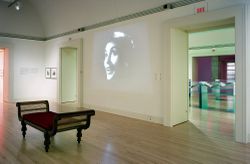
Empreintes de l’Inde démontre le rôle social, politique et anthropologique que de telles images peuvent jouer, en décrivant comment les éléments représentés ont jeté les fondements historiques – réels ou souhaités – sur lesquels un empire, plutôt qu’un assemblage de comptoirs coloniaux, a pu être bâti. Articulée autour de six thèmes, l’exposition explore des plus grands(...)
Empreintes de l’Inde démontre le rôle social, politique et anthropologique que de telles images peuvent jouer, en décrivant comment les éléments représentés ont jeté les fondements historiques – réels ou souhaités – sur lesquels un empire, plutôt qu’un assemblage de comptoirs coloniaux, a pu être bâti. Articulée autour de six thèmes, l’exposition explore des plus grands(...)
Localisation:
Salles principales
Salles principales
Date:
15 mai 2003 au 14 septembre 2003
15 mai 2003 au 14 septembre 2003
Titre:
Empreintes de l’Inde : photographie, architecture et politiques de la représentation
Actions:
Description:
Empreintes de l’Inde démontre le rôle social, politique et anthropologique que de telles images peuvent jouer, en décrivant comment les éléments représentés ont jeté les fondements historiques – réels ou souhaités – sur lesquels un empire, plutôt qu’un assemblage de comptoirs coloniaux, a pu être bâti. Articulée autour de six thèmes, l’exposition explore des plus grands(...)
Empreintes de l’Inde : photographie, architecture et politiques de la représentation
Actions:
Description:
Empreintes de l’Inde démontre le rôle social, politique et anthropologique que de telles images peuvent jouer, en décrivant comment les éléments représentés ont jeté les fondements historiques – réels ou souhaités – sur lesquels un empire, plutôt qu’un assemblage de comptoirs coloniaux, a pu être bâti. Articulée autour de six thèmes, l’exposition explore des plus grands(...)
Classification:
expositions
expositions
Date:
15 mai 2003 au
14 septembre 2003
15 mai 2003 au
14 septembre 2003
Localisation:
Salles principales
Salles principales
Classification:
photographies
photographies
Numéro de référence:
ARCH256301
ARCH256301
Personnes et institutions:
Date:
1967?
1967?
Classification:
photographies
photographies
Date:
1967?
1967?
Personnes et institutions:
Classification:
photographies
photographies
Numéro de référence:
ARCH255963
Description:
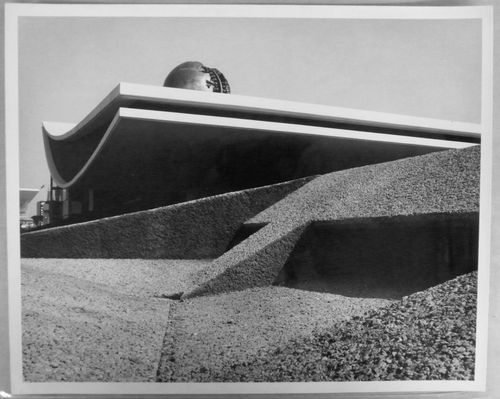
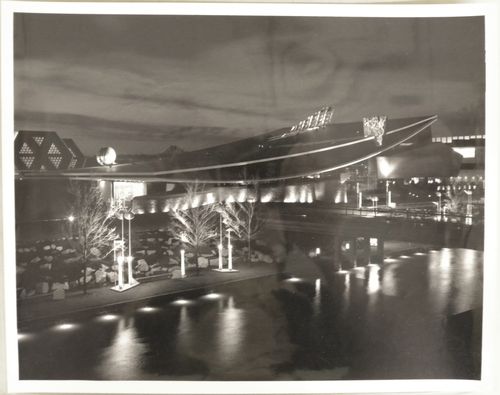
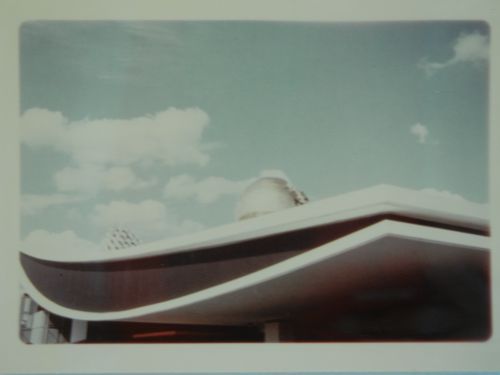
"Le Pavillon de l'Italie à l'Expo 67 ----- En terme d'architecture, le toit du pavillon est une voile couchée. Le Pavillon entier semble flotter dans l'air. Sur le toit, trois sculptures symbolisent les trois secteurs d'exposition du Pavillon: la Poésie, les Moeurs et le Progrès. / Italian pavilion at Expo....... the most outstanding architectural feature of the Italian pavilion is its sloping roof which soars independent of the underlying structures. Three symbolic sculptures which also summarize the whole interior exhibit stand in full view upton the roof."--Description.
ARCH255963
Description:
"Le Pavillon de l'Italie à l'Expo 67 ----- En terme d'architecture, le toit du pavillon est une voile couchée. Le Pavillon entier semble flotter dans l'air. Sur le toit, trois sculptures symbolisent les trois secteurs d'exposition du Pavillon: la Poésie, les Moeurs et le Progrès. / Italian pavilion at Expo....... the most outstanding architectural feature of the Italian pavilion is its sloping roof which soars independent of the underlying structures. Three symbolic sculptures which also summarize the whole interior exhibit stand in full view upton the roof."--Description.
Personnes et institutions:
Date:
1967?
1967?
Titre:
Night view of the Pavilion of Italy with its scupltures on roof, Expo 67, Montréal, Québec
Actions:
ARCH255963
Description:
"Le Pavillon de l'Italie à l'Expo 67 ----- En terme d'architecture, le toit du pavillon est une voile couchée. Le Pavillon entier semble flotter dans l'air. Sur le toit, trois sculptures symbolisent les trois secteurs d'exposition du Pavillon: la Poésie, les Moeurs et le Progrès. / Italian pavilion at Expo....... the most outstanding architectural feature of the Italian pavilion is its sloping roof which soars independent of the underlying structures. Three symbolic sculptures which also summarize the whole interior exhibit stand in full view upton the roof."--Description.
Night view of the Pavilion of Italy with its scupltures on roof, Expo 67, Montréal, Québec
Actions:
ARCH255963
Description:
"Le Pavillon de l'Italie à l'Expo 67 ----- En terme d'architecture, le toit du pavillon est une voile couchée. Le Pavillon entier semble flotter dans l'air. Sur le toit, trois sculptures symbolisent les trois secteurs d'exposition du Pavillon: la Poésie, les Moeurs et le Progrès. / Italian pavilion at Expo....... the most outstanding architectural feature of the Italian pavilion is its sloping roof which soars independent of the underlying structures. Three symbolic sculptures which also summarize the whole interior exhibit stand in full view upton the roof."--Description.
Classification:
photographies
photographies
Date:
1967?
1967?
Personnes et institutions:
Classification:
photographies
photographies
Numéro de référence:
ARCH255974
ARCH255974
Personnes et institutions:
Date:
1967
1967
Classification:
photographies
photographies
Date:
1967
1967
Personnes et institutions:
Classification:
photographies
photographies
Numéro de référence:
ARCH261601
ARCH261601
Personnes et institutions:
Date:
1967?
1967?
Classification:
photographies
photographies
Date:
1967?
1967?
Personnes et institutions:


