


21490 Résultats
Numéro de référence:
ARCH264143
Description:
La lettre est relative au problème particulier de Chandigarh en terme d'architecture et d'urbanisme.
ARCH264143
Description:
La lettre est relative au problème particulier de Chandigarh en terme d'architecture et d'urbanisme.
Personnes et institutions:
Date:
8 mai 1961
8 mai 1961
Titre:
Lettre de Le Corbusier à Pierre Jeanneret relative à Chandigarh, Inde
Actions:
ARCH264143
Description:
La lettre est relative au problème particulier de Chandigarh en terme d'architecture et d'urbanisme.
Lettre de Le Corbusier à Pierre Jeanneret relative à Chandigarh, Inde
Actions:
ARCH264143
Description:
La lettre est relative au problème particulier de Chandigarh en terme d'architecture et d'urbanisme.
Date:
8 mai 1961
8 mai 1961
Personnes et institutions:
Numéro de référence:
ARCH264142
Description:
La lettre est relative au problème particulier de Chandigarh en terme d'architecture et d'urbanisme.
ARCH264142
Description:
La lettre est relative au problème particulier de Chandigarh en terme d'architecture et d'urbanisme.
Personnes et institutions:
Date:
8 mai 1961
8 mai 1961
Titre:
Transcription d'une lettre de Le Corbusier à Pierre Jeanneret relative à Chandigarh, Inde
Actions:
ARCH264142
Description:
La lettre est relative au problème particulier de Chandigarh en terme d'architecture et d'urbanisme.
Transcription d'une lettre de Le Corbusier à Pierre Jeanneret relative à Chandigarh, Inde
Actions:
ARCH264142
Description:
La lettre est relative au problème particulier de Chandigarh en terme d'architecture et d'urbanisme.
Date:
8 mai 1961
8 mai 1961
Personnes et institutions:
Niveau de description archivistique:
Projet
Projet
Numéro de référence:
AP148.S1.1969.PR01
Description:
This project series features drawings and text, as well as collages on photographs, for a project entitled "Breve racconto di Architettura" by Poli. An inventory provided by Poli was used to identify the dates of these materials. The drawings and text seem to feature a journey on a highway (autostrada), or by plane, as all of the collaged images seem to be views taken from an airplane. These collages feature images of food and structures glued onto images of both rural and urban landscapes. References are made in the text to the Parco urbano Modena, possibly related to Poli's thesis project (see AP148.S1.1970.PR01), as well as to Roland Barthes, and "architettura invisibile".
AP148.S1.1969.PR01
Description:
This project series features drawings and text, as well as collages on photographs, for a project entitled "Breve racconto di Architettura" by Poli. An inventory provided by Poli was used to identify the dates of these materials. The drawings and text seem to feature a journey on a highway (autostrada), or by plane, as all of the collaged images seem to be views taken from an airplane. These collages feature images of food and structures glued onto images of both rural and urban landscapes. References are made in the text to the Parco urbano Modena, possibly related to Poli's thesis project (see AP148.S1.1970.PR01), as well as to Roland Barthes, and "architettura invisibile".
Personnes et institutions:
Date:
ca. 1969-1970
ca. 1969-1970
Titre:
Breve racconto di Architettura [Brief tale of architecture] (1969-1970)
Actions:
AP148.S1.1969.PR01
Description:
This project series features drawings and text, as well as collages on photographs, for a project entitled "Breve racconto di Architettura" by Poli. An inventory provided by Poli was used to identify the dates of these materials. The drawings and text seem to feature a journey on a highway (autostrada), or by plane, as all of the collaged images seem to be views taken from an airplane. These collages feature images of food and structures glued onto images of both rural and urban landscapes. References are made in the text to the Parco urbano Modena, possibly related to Poli's thesis project (see AP148.S1.1970.PR01), as well as to Roland Barthes, and "architettura invisibile".
Breve racconto di Architettura [Brief tale of architecture] (1969-1970)
Actions:
AP148.S1.1969.PR01
Description:
This project series features drawings and text, as well as collages on photographs, for a project entitled "Breve racconto di Architettura" by Poli. An inventory provided by Poli was used to identify the dates of these materials. The drawings and text seem to feature a journey on a highway (autostrada), or by plane, as all of the collaged images seem to be views taken from an airplane. These collages feature images of food and structures glued onto images of both rural and urban landscapes. References are made in the text to the Parco urbano Modena, possibly related to Poli's thesis project (see AP148.S1.1970.PR01), as well as to Roland Barthes, and "architettura invisibile".
Niveau de description archivistique:
Project
Project
Date:
ca. 1969-1970
ca. 1969-1970
Personnes et institutions:
Niveau de description archivistique:
Projet
Projet
Numéro de référence:
AP066.S2.D36
Description:
Le dossier documente le projet de la Coop d'habitation Ville-Marie, une construction d'habitation coopérative de 22 logements situé sur la rue Ontario, à Montréal, Québec. Le dossier contient des documents textuels et des dessins. L'architecte décrit le projet comme: "An efficient and inventive planning approach to a tough urban site, one that will foster a system of mini-communities through each courtyard entry." Sturgess, "La Coopérative d'Habitation Ville-Marie", Canadian Architect, décembre 1993, p. 20.
AP066.S2.D36
Description:
Le dossier documente le projet de la Coop d'habitation Ville-Marie, une construction d'habitation coopérative de 22 logements situé sur la rue Ontario, à Montréal, Québec. Le dossier contient des documents textuels et des dessins. L'architecte décrit le projet comme: "An efficient and inventive planning approach to a tough urban site, one that will foster a system of mini-communities through each courtyard entry." Sturgess, "La Coopérative d'Habitation Ville-Marie", Canadian Architect, décembre 1993, p. 20.
Personnes et institutions:
Date:
1993-1994
1993-1994
Titre:
Coop d'habitation Ville-Marie
Actions:
AP066.S2.D36
Description:
Le dossier documente le projet de la Coop d'habitation Ville-Marie, une construction d'habitation coopérative de 22 logements situé sur la rue Ontario, à Montréal, Québec. Le dossier contient des documents textuels et des dessins. L'architecte décrit le projet comme: "An efficient and inventive planning approach to a tough urban site, one that will foster a system of mini-communities through each courtyard entry." Sturgess, "La Coopérative d'Habitation Ville-Marie", Canadian Architect, décembre 1993, p. 20.
Coop d'habitation Ville-Marie
Actions:
AP066.S2.D36
Description:
Le dossier documente le projet de la Coop d'habitation Ville-Marie, une construction d'habitation coopérative de 22 logements situé sur la rue Ontario, à Montréal, Québec. Le dossier contient des documents textuels et des dessins. L'architecte décrit le projet comme: "An efficient and inventive planning approach to a tough urban site, one that will foster a system of mini-communities through each courtyard entry." Sturgess, "La Coopérative d'Habitation Ville-Marie", Canadian Architect, décembre 1993, p. 20.
Niveau de description archivistique:
Projet
Projet
Date:
1993-1994
1993-1994
Personnes et institutions:
Classification:
événements
événements
Actions:
Description:
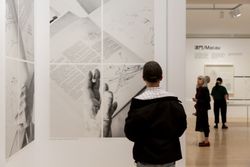
L’exposition L’atout de la ville c’est qu’elle n’a jamais été parfaite interroge ces enjeux à travers l’approche urbaine d’Álvaro Siza, marquée par le respect et la compréhension du lieu, de sa forme, de son histoire et de son existence
L’exposition L’atout de la ville c’est qu’elle n’a jamais été parfaite interroge ces enjeux à travers l’approche urbaine d’Álvaro Siza, marquée par le respect et la compréhension du lieu, de sa forme, de son histoire et de son existence
Localisation:
les salles principales
les salles principales
Date:
25 août 2026, 18h à 20h
25 août 2026, 18h à 20h
Titre:
Visite guidée pour les Amis du CCA
Actions:
Description:
L’exposition L’atout de la ville c’est qu’elle n’a jamais été parfaite interroge ces enjeux à travers l’approche urbaine d’Álvaro Siza, marquée par le respect et la compréhension du lieu, de sa forme, de son histoire et de son existence
Visite guidée pour les Amis du CCA
Actions:
Description:
L’exposition L’atout de la ville c’est qu’elle n’a jamais été parfaite interroge ces enjeux à travers l’approche urbaine d’Álvaro Siza, marquée par le respect et la compréhension du lieu, de sa forme, de son histoire et de son existence
Classification:
événements
événements
Date:
25 août 2026
18h à 20h
25 août 2026
18h à 20h
Localisation:
les salles principales
les salles principales
Classification:
documents textuels
documents textuels
Numéro de référence:
ARCH153721
Description:
correspondence relating to an essay entitled "The Divine Proportions in Islamic Architecture" by A. A. Sultan rejected for publication by editorial board of Oppositions magazine; had already been published in English
ARCH153721
Description:
correspondence relating to an essay entitled "The Divine Proportions in Islamic Architecture" by A. A. Sultan rejected for publication by editorial board of Oppositions magazine; had already been published in English
Personnes et institutions:
Date:
1980
1980
Titre:
Correspondence relating to an essay entitled "The Divine Proportions in Islamic Architecture"
Actions:
ARCH153721
Description:
correspondence relating to an essay entitled "The Divine Proportions in Islamic Architecture" by A. A. Sultan rejected for publication by editorial board of Oppositions magazine; had already been published in English
Correspondence relating to an essay entitled "The Divine Proportions in Islamic Architecture"
Actions:
ARCH153721
Description:
correspondence relating to an essay entitled "The Divine Proportions in Islamic Architecture" by A. A. Sultan rejected for publication by editorial board of Oppositions magazine; had already been published in English
Classification:
documents textuels
documents textuels
Date:
1980
1980
Personnes et institutions:
Classification:
documents textuels
documents textuels
Numéro de référence:
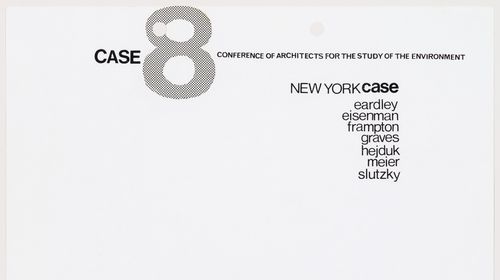
ARCH278610
ARCH278610
Personnes et institutions:
Date:
1971
1971
Classification:
documents textuels
documents textuels
Date:
1971
1971
Personnes et institutions:
Niveau de description archivistique:
Série(s)
Série(s)
Titre:
Une architecture des humeurs
Une architecture des humeurs
Numéro de référence:
AP193.S4
Description:
Series 4, Une architecture des humeurs, 2008-2011, documents the conception and the presentation of exhibition and project Une architecture des humeurs. Presented at Le laboratoire art gallery in Paris between January and May 2010, Une architecture des humeurs is a conceptual, unbuilt, residential urban structure based on a potential future in which contemporary science reads human physiology and chemical balance. The idea is to acquire a chemistry of the “humors”, or the moods and temperament, of future purchasers. Taken as input, the information generates a diversity of habitable morphologies and relationships between them. With this process, the project attempts to make palpable and graspable, through technologies, the emotions of the participants captured via the chemistry of their body. The goal is to gather information on their capacity of adaptation, their level of sympathy and empathy while confronted to a situation or an environment. This information is then analyzed by computational, mathematical, and machinist procedures. This leads to the design and production of an urban structure submitted to the improbable and uncertain protocols produced by emotions, also creating aggregations and layouts that rearticulate the links between the individual and the collective. These structures are calculated following simultaneously incremental and recursive structural optimization protocols resulting in the physicality and morphology of architecture. The layout of the residential units and the structural trajectories are conceived and developed as posterior to the constructs supporting social life and not as an a priori. The structure of each components of the urban structure is generated by a secretion and weaving machine called Viab02. The machine is the second prototype of VIAB which was developed with Robotics Research Lab of the University of Southern California and takes its name from the terms viability and variability. With a process similar to contour crafting, the machine produces bio-cement, a mix between cement and bio-resin, giving form to the adapted residential structures. The records consist largely of images detailing the creative process of the firm, photographs of the exhibition, and 3D models. It also contains animated renderings representing the machine in action and sequences of the construction of the building or the structure. The records include a video orienting the project into François Roche theoretical stance, research as speculation, that can be summarize as the use of technological tools to take a critical and political position through esthetic in order to open new lines of thoughts. AP193.S2 contains updated previous version of the VIAB machine
AP193.S4
Description:
Series 4, Une architecture des humeurs, 2008-2011, documents the conception and the presentation of exhibition and project Une architecture des humeurs. Presented at Le laboratoire art gallery in Paris between January and May 2010, Une architecture des humeurs is a conceptual, unbuilt, residential urban structure based on a potential future in which contemporary science reads human physiology and chemical balance. The idea is to acquire a chemistry of the “humors”, or the moods and temperament, of future purchasers. Taken as input, the information generates a diversity of habitable morphologies and relationships between them. With this process, the project attempts to make palpable and graspable, through technologies, the emotions of the participants captured via the chemistry of their body. The goal is to gather information on their capacity of adaptation, their level of sympathy and empathy while confronted to a situation or an environment. This information is then analyzed by computational, mathematical, and machinist procedures. This leads to the design and production of an urban structure submitted to the improbable and uncertain protocols produced by emotions, also creating aggregations and layouts that rearticulate the links between the individual and the collective. These structures are calculated following simultaneously incremental and recursive structural optimization protocols resulting in the physicality and morphology of architecture. The layout of the residential units and the structural trajectories are conceived and developed as posterior to the constructs supporting social life and not as an a priori. The structure of each components of the urban structure is generated by a secretion and weaving machine called Viab02. The machine is the second prototype of VIAB which was developed with Robotics Research Lab of the University of Southern California and takes its name from the terms viability and variability. With a process similar to contour crafting, the machine produces bio-cement, a mix between cement and bio-resin, giving form to the adapted residential structures. The records consist largely of images detailing the creative process of the firm, photographs of the exhibition, and 3D models. It also contains animated renderings representing the machine in action and sequences of the construction of the building or the structure. The records include a video orienting the project into François Roche theoretical stance, research as speculation, that can be summarize as the use of technological tools to take a critical and political position through esthetic in order to open new lines of thoughts. AP193.S2 contains updated previous version of the VIAB machine
Personnes et institutions:
Date:
2008-2011
2008-2011
Titre:
Une architecture des humeurs
Actions:
AP193.S4
Description:
Series 4, Une architecture des humeurs, 2008-2011, documents the conception and the presentation of exhibition and project Une architecture des humeurs. Presented at Le laboratoire art gallery in Paris between January and May 2010, Une architecture des humeurs is a conceptual, unbuilt, residential urban structure based on a potential future in which contemporary science reads human physiology and chemical balance. The idea is to acquire a chemistry of the “humors”, or the moods and temperament, of future purchasers. Taken as input, the information generates a diversity of habitable morphologies and relationships between them. With this process, the project attempts to make palpable and graspable, through technologies, the emotions of the participants captured via the chemistry of their body. The goal is to gather information on their capacity of adaptation, their level of sympathy and empathy while confronted to a situation or an environment. This information is then analyzed by computational, mathematical, and machinist procedures. This leads to the design and production of an urban structure submitted to the improbable and uncertain protocols produced by emotions, also creating aggregations and layouts that rearticulate the links between the individual and the collective. These structures are calculated following simultaneously incremental and recursive structural optimization protocols resulting in the physicality and morphology of architecture. The layout of the residential units and the structural trajectories are conceived and developed as posterior to the constructs supporting social life and not as an a priori. The structure of each components of the urban structure is generated by a secretion and weaving machine called Viab02. The machine is the second prototype of VIAB which was developed with Robotics Research Lab of the University of Southern California and takes its name from the terms viability and variability. With a process similar to contour crafting, the machine produces bio-cement, a mix between cement and bio-resin, giving form to the adapted residential structures. The records consist largely of images detailing the creative process of the firm, photographs of the exhibition, and 3D models. It also contains animated renderings representing the machine in action and sequences of the construction of the building or the structure. The records include a video orienting the project into François Roche theoretical stance, research as speculation, that can be summarize as the use of technological tools to take a critical and political position through esthetic in order to open new lines of thoughts. AP193.S2 contains updated previous version of the VIAB machine
Une architecture des humeurs
Actions:
AP193.S4
Description:
Series 4, Une architecture des humeurs, 2008-2011, documents the conception and the presentation of exhibition and project Une architecture des humeurs. Presented at Le laboratoire art gallery in Paris between January and May 2010, Une architecture des humeurs is a conceptual, unbuilt, residential urban structure based on a potential future in which contemporary science reads human physiology and chemical balance. The idea is to acquire a chemistry of the “humors”, or the moods and temperament, of future purchasers. Taken as input, the information generates a diversity of habitable morphologies and relationships between them. With this process, the project attempts to make palpable and graspable, through technologies, the emotions of the participants captured via the chemistry of their body. The goal is to gather information on their capacity of adaptation, their level of sympathy and empathy while confronted to a situation or an environment. This information is then analyzed by computational, mathematical, and machinist procedures. This leads to the design and production of an urban structure submitted to the improbable and uncertain protocols produced by emotions, also creating aggregations and layouts that rearticulate the links between the individual and the collective. These structures are calculated following simultaneously incremental and recursive structural optimization protocols resulting in the physicality and morphology of architecture. The layout of the residential units and the structural trajectories are conceived and developed as posterior to the constructs supporting social life and not as an a priori. The structure of each components of the urban structure is generated by a secretion and weaving machine called Viab02. The machine is the second prototype of VIAB which was developed with Robotics Research Lab of the University of Southern California and takes its name from the terms viability and variability. With a process similar to contour crafting, the machine produces bio-cement, a mix between cement and bio-resin, giving form to the adapted residential structures. The records consist largely of images detailing the creative process of the firm, photographs of the exhibition, and 3D models. It also contains animated renderings representing the machine in action and sequences of the construction of the building or the structure. The records include a video orienting the project into François Roche theoretical stance, research as speculation, that can be summarize as the use of technological tools to take a critical and political position through esthetic in order to open new lines of thoughts. AP193.S2 contains updated previous version of the VIAB machine
Niveau de description archivistique:
Series
Series
Date:
2008-2011
2008-2011
Personnes et institutions:
Classification:
expositions
expositions
Actions:
Description:
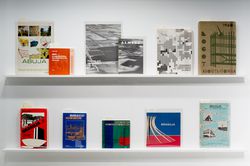
À la suite de la Seconde Guerre mondiale, le besoin urgent de reconstruire les villes, ainsi que la croissance soudaine de la population, conduit les instances publiques à assumer un rôle de plus en plus important dans la conception et la construction de l’environnement urbain. Sous différents régimes politiques, de grands aménagements urbains et même des villes entières(...)
À la suite de la Seconde Guerre mondiale, le besoin urgent de reconstruire les villes, ainsi que la croissance soudaine de la population, conduit les instances publiques à assumer un rôle de plus en plus important dans la conception et la construction de l’environnement urbain. Sous différents régimes politiques, de grands aménagements urbains et même des villes entières(...)
Localisation:
Vitrines
Vitrines
Date:
12 décembre 2013 au 15 juin 2014
12 décembre 2013 au 15 juin 2014
Titre:
Vieux livres nouvelles villes
Actions:
Description:
À la suite de la Seconde Guerre mondiale, le besoin urgent de reconstruire les villes, ainsi que la croissance soudaine de la population, conduit les instances publiques à assumer un rôle de plus en plus important dans la conception et la construction de l’environnement urbain. Sous différents régimes politiques, de grands aménagements urbains et même des villes entières(...)
Vieux livres nouvelles villes
Actions:
Description:
À la suite de la Seconde Guerre mondiale, le besoin urgent de reconstruire les villes, ainsi que la croissance soudaine de la population, conduit les instances publiques à assumer un rôle de plus en plus important dans la conception et la construction de l’environnement urbain. Sous différents régimes politiques, de grands aménagements urbains et même des villes entières(...)
Classification:
expositions
expositions
Date:
12 décembre 2013 au
15 juin 2014
12 décembre 2013 au
15 juin 2014
Localisation:
Vitrines
Vitrines
Classification:
documents textuels
documents textuels
Numéro de référence:
AP197.S3.002
Description:
This box is comprised of personal and professional correspondence, organized in chronological order, from 1984-1990. The box documents Frampton’s career as Ware professor at the Graduate School of Architecture, Planning and Preservation at Columbia University and his related professional activities. Correspondence in this box includes: various offers of teaching positions; requests to write articles, reviews, books and recommendation letters; invitations to teach, attend or present at lectures/symposiums/conferences; and requests to serve on juries such as the American Academy in Rome. Throughout this period, Frampton corresponded with architects, professors, publishers, and editors of various publications such as: Ignasi de Sola-Morales Rubio; Tadao Ando; Rafael Moneo; James Stirling; Marco Frascari; Alvaro Siza; Arata Isozaki; the Casabella; the Progressive Architecture; and Architecture and Urbanism. This correspondence includes Frampton’s invitation to be the Craig Francis Cullinan Visiting Lecturer at the School of Architecture, Rice University; correspondence with Rizzoli International Publications about the Tadao Ando book; correspondence with MIT Press for the Studies in Tectonic Culture publication; and correspondence about critical regionalism.
AP197.S3.002
Description:
This box is comprised of personal and professional correspondence, organized in chronological order, from 1984-1990. The box documents Frampton’s career as Ware professor at the Graduate School of Architecture, Planning and Preservation at Columbia University and his related professional activities. Correspondence in this box includes: various offers of teaching positions; requests to write articles, reviews, books and recommendation letters; invitations to teach, attend or present at lectures/symposiums/conferences; and requests to serve on juries such as the American Academy in Rome. Throughout this period, Frampton corresponded with architects, professors, publishers, and editors of various publications such as: Ignasi de Sola-Morales Rubio; Tadao Ando; Rafael Moneo; James Stirling; Marco Frascari; Alvaro Siza; Arata Isozaki; the Casabella; the Progressive Architecture; and Architecture and Urbanism. This correspondence includes Frampton’s invitation to be the Craig Francis Cullinan Visiting Lecturer at the School of Architecture, Rice University; correspondence with Rizzoli International Publications about the Tadao Ando book; correspondence with MIT Press for the Studies in Tectonic Culture publication; and correspondence about critical regionalism.
Personnes et institutions:
Date:
1984-1990
1984-1990
Titre:
Personal and professional correspondence from 1984-1990
Actions:
AP197.S3.002
Description:
This box is comprised of personal and professional correspondence, organized in chronological order, from 1984-1990. The box documents Frampton’s career as Ware professor at the Graduate School of Architecture, Planning and Preservation at Columbia University and his related professional activities. Correspondence in this box includes: various offers of teaching positions; requests to write articles, reviews, books and recommendation letters; invitations to teach, attend or present at lectures/symposiums/conferences; and requests to serve on juries such as the American Academy in Rome. Throughout this period, Frampton corresponded with architects, professors, publishers, and editors of various publications such as: Ignasi de Sola-Morales Rubio; Tadao Ando; Rafael Moneo; James Stirling; Marco Frascari; Alvaro Siza; Arata Isozaki; the Casabella; the Progressive Architecture; and Architecture and Urbanism. This correspondence includes Frampton’s invitation to be the Craig Francis Cullinan Visiting Lecturer at the School of Architecture, Rice University; correspondence with Rizzoli International Publications about the Tadao Ando book; correspondence with MIT Press for the Studies in Tectonic Culture publication; and correspondence about critical regionalism.
Personal and professional correspondence from 1984-1990
Actions:
AP197.S3.002
Description:
This box is comprised of personal and professional correspondence, organized in chronological order, from 1984-1990. The box documents Frampton’s career as Ware professor at the Graduate School of Architecture, Planning and Preservation at Columbia University and his related professional activities. Correspondence in this box includes: various offers of teaching positions; requests to write articles, reviews, books and recommendation letters; invitations to teach, attend or present at lectures/symposiums/conferences; and requests to serve on juries such as the American Academy in Rome. Throughout this period, Frampton corresponded with architects, professors, publishers, and editors of various publications such as: Ignasi de Sola-Morales Rubio; Tadao Ando; Rafael Moneo; James Stirling; Marco Frascari; Alvaro Siza; Arata Isozaki; the Casabella; the Progressive Architecture; and Architecture and Urbanism. This correspondence includes Frampton’s invitation to be the Craig Francis Cullinan Visiting Lecturer at the School of Architecture, Rice University; correspondence with Rizzoli International Publications about the Tadao Ando book; correspondence with MIT Press for the Studies in Tectonic Culture publication; and correspondence about critical regionalism.
Classification:
documents textuels
documents textuels
Date:
1984-1990
1984-1990
Personnes et institutions:


