


179 Résultats
Classification:
livres
livres
Actions:
Prix:
$54.95
(disponible sur commande)
Résumé:
What form of housing will emerge in Dubai, where the majority of the population are non-citizens and average length of stay three days? How will depopulating cities reclaim vacant space, reorganize infrastructure and redefine their economic identity? What type of architecture results from the prevalence of airborne contaminants? What kind of urbanism does Google Earth(...)
$54.95
(disponible sur commande)
Résumé:
What form of housing will emerge in Dubai, where the majority of the population are non-citizens and average length of stay three days? How will depopulating cities reclaim vacant space, reorganize infrastructure and redefine their economic identity? What type of architecture results from the prevalence of airborne contaminants? What kind of urbanism does Google Earth(...)
Titre:
Distributed urbanism : cities after Google Earth
Actions:
Prix:
$54.95
(disponible sur commande)
Résumé:
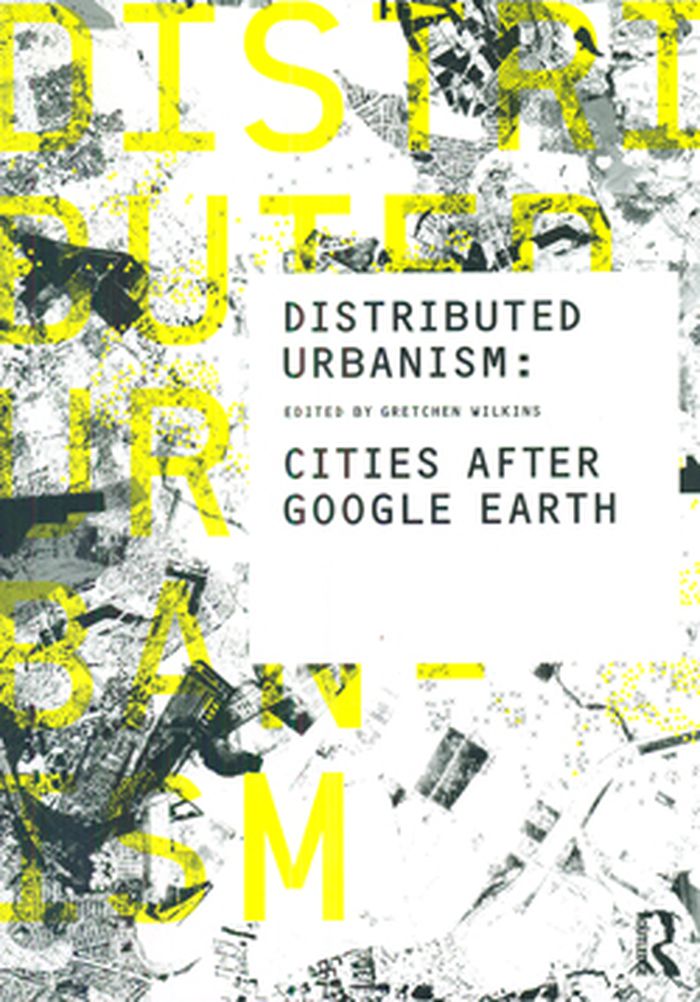
What form of housing will emerge in Dubai, where the majority of the population are non-citizens and average length of stay three days? How will depopulating cities reclaim vacant space, reorganize infrastructure and redefine their economic identity? What type of architecture results from the prevalence of airborne contaminants? What kind of urbanism does Google Earth produce? Exploring the increasingly decentralized systems through which cities are organized and produced, this publication highlights the architectural practices that are emerging in response. Unlike early models of urbanism, in which centralized models of production, communication and governance were sited within a central business district, contemporary urbanism is shaped by remote, distributed mechanisms such as information technologies, (i.e. SatNav, Google Earth, E-trade, Photosynth or RSS web feeds) cooperative economic models and environmental networks, many of which are physically remote from the cities they shape. Consisting of a collection of case studies on global cities including Rotterdam, Tokyo, Barcelona, Detroit, Hong Kong, Dubai, Beijing and Mumbai, the authors draw on these cities in relation to current events, urban schemes and demographic data.
Distributed urbanism : cities after Google Earth
Actions:
Prix:
$54.95
(disponible sur commande)
Résumé:
What form of housing will emerge in Dubai, where the majority of the population are non-citizens and average length of stay three days? How will depopulating cities reclaim vacant space, reorganize infrastructure and redefine their economic identity? What type of architecture results from the prevalence of airborne contaminants? What kind of urbanism does Google Earth produce? Exploring the increasingly decentralized systems through which cities are organized and produced, this publication highlights the architectural practices that are emerging in response. Unlike early models of urbanism, in which centralized models of production, communication and governance were sited within a central business district, contemporary urbanism is shaped by remote, distributed mechanisms such as information technologies, (i.e. SatNav, Google Earth, E-trade, Photosynth or RSS web feeds) cooperative economic models and environmental networks, many of which are physically remote from the cities they shape. Consisting of a collection of case studies on global cities including Rotterdam, Tokyo, Barcelona, Detroit, Hong Kong, Dubai, Beijing and Mumbai, the authors draw on these cities in relation to current events, urban schemes and demographic data.
Classification:
livres
livres
Publication:
juillet 2010
juillet 2010
Sujet:
Théorie de l’urbanisme
Théorie de l’urbanisme
Classification:
livres
livres
Actions:
Prix:
$34.95
(disponible sur commande)
Résumé:
It is said that the history of modern architecture can be observed through the evolution of the single-family home. Over generations, each has hoped to improve on the last, rethinking and reinventing this seemingly simple building type. At certain historic moments in the discourse, new ideas about domesticity have given form to radically different configurations of home(...)
$34.95
(disponible sur commande)
Résumé:
It is said that the history of modern architecture can be observed through the evolution of the single-family home. Over generations, each has hoped to improve on the last, rethinking and reinventing this seemingly simple building type. At certain historic moments in the discourse, new ideas about domesticity have given form to radically different configurations of home(...)
Titre:
From the gournd up : innovative green homes
Actions:
Prix:
$34.95
(disponible sur commande)
Résumé:
It is said that the history of modern architecture can be observed through the evolution of the single-family home. Over generations, each has hoped to improve on the last, rethinking and reinventing this seemingly simple building type. At certain historic moments in the discourse, new ideas about domesticity have given form to radically different configurations of home and community. Current emphasis on sustainability presents a unique opportunity to design affordable houses that respond to specific economic, social, and environmental challenges. In From the Ground Up, editor Peggy Tully presents the results of an international competition to create new models for affordable high-performance green homes in urban residential neighborhoods. Developed for a vacant infill site in Syracuse's Near Westside, these ambitious projects offer an array of innovative designs that provide a new vision for once-vital urban residential neighborhoods and well-designed energy-efficient homes throughout the United States. From the Ground Up includes topical essays by series editor Mark Robbins, architect Michael Sorkin, and architectural historianSusan Henderson.
From the gournd up : innovative green homes
Actions:
Prix:
$34.95
(disponible sur commande)
Résumé:
It is said that the history of modern architecture can be observed through the evolution of the single-family home. Over generations, each has hoped to improve on the last, rethinking and reinventing this seemingly simple building type. At certain historic moments in the discourse, new ideas about domesticity have given form to radically different configurations of home and community. Current emphasis on sustainability presents a unique opportunity to design affordable houses that respond to specific economic, social, and environmental challenges. In From the Ground Up, editor Peggy Tully presents the results of an international competition to create new models for affordable high-performance green homes in urban residential neighborhoods. Developed for a vacant infill site in Syracuse's Near Westside, these ambitious projects offer an array of innovative designs that provide a new vision for once-vital urban residential neighborhoods and well-designed energy-efficient homes throughout the United States. From the Ground Up includes topical essays by series editor Mark Robbins, architect Michael Sorkin, and architectural historianSusan Henderson.
Classification:
livres
livres
Publication:
août 2012
août 2012
Sujet:
Architecture écologique
Architecture écologique
Classification:
livres
livres
Actions:
Prix:
$39.95
(disponible sur commande)
Résumé:
What do you do if your alley is strewn with garbage after the sanitation truck comes through? Or if you’re tired of the rowdy teenagers next door keeping you up all night? Is there a vacant lot on your block accumulating weeds, needles, and litter? For a century, Chicagoans have joined block clubs to address problems like these that make daily life in the city a(...)
$39.95
(disponible sur commande)
Résumé:
What do you do if your alley is strewn with garbage after the sanitation truck comes through? Or if you’re tired of the rowdy teenagers next door keeping you up all night? Is there a vacant lot on your block accumulating weeds, needles, and litter? For a century, Chicagoans have joined block clubs to address problems like these that make daily life in the city a(...)
Titre:
Chicago's block clubs: how neighbors shape the city
Actions:
Prix:
$39.95
(disponible sur commande)
Résumé:
What do you do if your alley is strewn with garbage after the sanitation truck comes through? Or if you’re tired of the rowdy teenagers next door keeping you up all night? Is there a vacant lot on your block accumulating weeds, needles, and litter? For a century, Chicagoans have joined block clubs to address problems like these that make daily life in the city a nuisance. When neighbors work together in block clubs, playgrounds get built, local crime is monitored, streets are cleaned up, and every summer is marked by the festivities of day-long block parties. In Chicago’s Block Clubs, Amanda I. Seligman uncovers the history of the block club in Chicago—from its origins in the Urban League in the early 1900s through to the Chicago Police Department’s twenty-first-century community policing program. Recognizing that many neighborhood problems are too big for one resident to handle—but too small for the city to keep up with—city residents have for more than a century created clubs to establish and maintain their neighborhood’s particular social dynamics, quality of life, and appearance.
Chicago's block clubs: how neighbors shape the city
Actions:
Prix:
$39.95
(disponible sur commande)
Résumé:
What do you do if your alley is strewn with garbage after the sanitation truck comes through? Or if you’re tired of the rowdy teenagers next door keeping you up all night? Is there a vacant lot on your block accumulating weeds, needles, and litter? For a century, Chicagoans have joined block clubs to address problems like these that make daily life in the city a nuisance. When neighbors work together in block clubs, playgrounds get built, local crime is monitored, streets are cleaned up, and every summer is marked by the festivities of day-long block parties. In Chicago’s Block Clubs, Amanda I. Seligman uncovers the history of the block club in Chicago—from its origins in the Urban League in the early 1900s through to the Chicago Police Department’s twenty-first-century community policing program. Recognizing that many neighborhood problems are too big for one resident to handle—but too small for the city to keep up with—city residents have for more than a century created clubs to establish and maintain their neighborhood’s particular social dynamics, quality of life, and appearance.
Classification:
livres
livres
Publication:
septembre 2016
septembre 2016
Sujet:
Théorie de l’urbanisme
Théorie de l’urbanisme
Classification:
livres
livres
Titre:
Todd Hido: witness number 7
Todd Hido: witness number 7
Actions:
Prix:
$52.95
(disponible sur commande)
Résumé:
As guest editor of Witness Number 7, Todd Hido creates a relationship between his own photographs of vacant interiors of foreclosed homes - the first time this series has been published as a group - with portraits made by Leon Borensztein during the 1980s. Hido's images contain traces and impressions of lives previously having been lived in the now-empty homes. His potent(...)
$52.95
(disponible sur commande)
Résumé:
As guest editor of Witness Number 7, Todd Hido creates a relationship between his own photographs of vacant interiors of foreclosed homes - the first time this series has been published as a group - with portraits made by Leon Borensztein during the 1980s. Hido's images contain traces and impressions of lives previously having been lived in the now-empty homes. His potent(...)
Titre:
Todd Hido: witness number 7
Actions:
Prix:
$52.95
(disponible sur commande)
Résumé:
As guest editor of Witness Number 7, Todd Hido creates a relationship between his own photographs of vacant interiors of foreclosed homes - the first time this series has been published as a group - with portraits made by Leon Borensztein during the 1980s. Hido's images contain traces and impressions of lives previously having been lived in the now-empty homes. His potent and surreal photographs of empty spaces evoke a longing for the time when things were better in those homes. What went wrong? Who used to lived there? Borensztein, an immigrant from Poland, visited homes and businesses in the suburbs of Stockton, Fresno and Bakersfield, photographing his subjects in front of a generic backdrop to create a rich sociological document. In Witness Number 7, Borensztein's subjects stand in metaphorically for the families evicted from Hido's foreclosed homes. The book closes with what Hido describes as a slowly cooked stew of books a 40-page run of images documented off the pages of certain books in his library that have influenced Hido's work during the past 20 years, curated into a narrative of echos and inspirations.
Todd Hido: witness number 7
Actions:
Prix:
$52.95
(disponible sur commande)
Résumé:
As guest editor of Witness Number 7, Todd Hido creates a relationship between his own photographs of vacant interiors of foreclosed homes - the first time this series has been published as a group - with portraits made by Leon Borensztein during the 1980s. Hido's images contain traces and impressions of lives previously having been lived in the now-empty homes. His potent and surreal photographs of empty spaces evoke a longing for the time when things were better in those homes. What went wrong? Who used to lived there? Borensztein, an immigrant from Poland, visited homes and businesses in the suburbs of Stockton, Fresno and Bakersfield, photographing his subjects in front of a generic backdrop to create a rich sociological document. In Witness Number 7, Borensztein's subjects stand in metaphorically for the families evicted from Hido's foreclosed homes. The book closes with what Hido describes as a slowly cooked stew of books a 40-page run of images documented off the pages of certain books in his library that have influenced Hido's work during the past 20 years, curated into a narrative of echos and inspirations.
Classification:
livres
livres
Publication:
janvier 2009
janvier 2009
Sujet:
Monographies photo
Monographies photo
Classification:
livres
livres
Actions:
Prix:
$57.00
(disponible sur commande)
Résumé:
With three billion more humans projected to be living in cities by 2050, all design is increasingly urban design. And with as much data now produced every day as was produced in all of human history to the year 2007, all architecture is increasingly information architecture. Praised in the NewYork Times for its "intelligent enquiry and actionable theorizing," Local Code(...)
$57.00
(disponible sur commande)
Résumé:
With three billion more humans projected to be living in cities by 2050, all design is increasingly urban design. And with as much data now produced every day as was produced in all of human history to the year 2007, all architecture is increasingly information architecture. Praised in the NewYork Times for its "intelligent enquiry and actionable theorizing," Local Code(...)
Titre:
Local code: 3659 proposals about data, design, and the nature of cities
Actions:
Prix:
$57.00
(disponible sur commande)
Résumé:
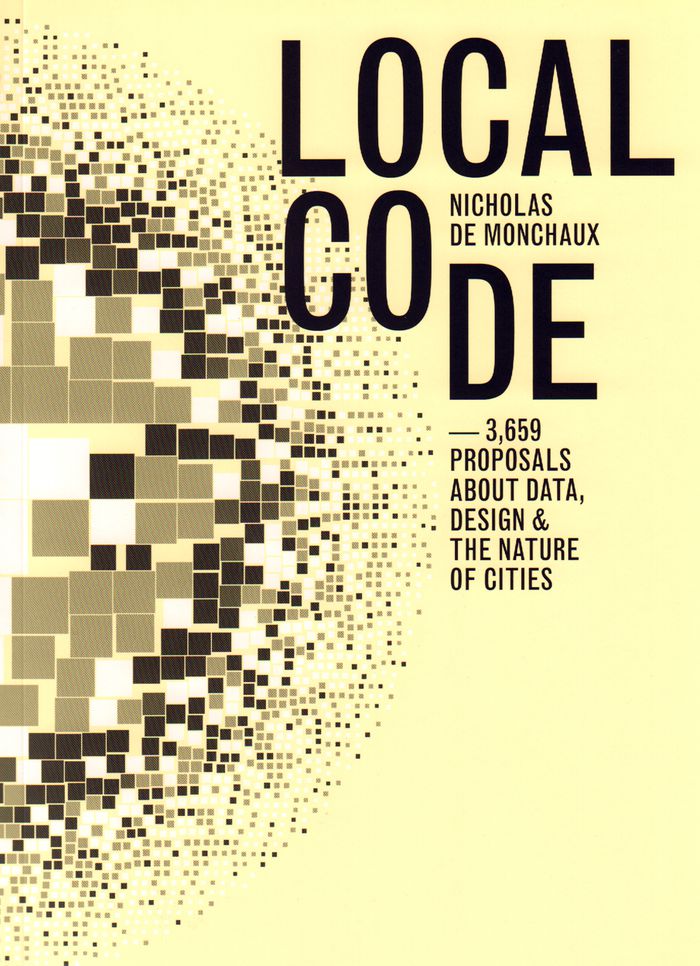
With three billion more humans projected to be living in cities by 2050, all design is increasingly urban design. And with as much data now produced every day as was produced in all of human history to the year 2007, all architecture is increasingly information architecture. Praised in the NewYork Times for its "intelligent enquiry and actionable theorizing," Local Code is a collection of data-driven tools and design prototypes for understanding and transforming the physical, social, and ecological resilience of cities.'the book's data-driven layout arranges drawings of 3,659 digitally-tailored interventions for vacant public land in San Francisco, Los Angeles, New York City, and Venice, Italy. Between these illustrated case studies, critical essays present surprising and essential links between such designs and the seminal work of urbanist Jane Jacobs, artist Gordon Matta-Clark, and digital mapping pioneer Howard Fisher, along with the developing science of urban nature and complexity. In text and image, Local Code presents'a digitally prolific, open-ended approach to urban resilience and social and environmental justice; At once analytic and visionary, it pioneers a new field of enquiry and action at the meeting of big data and the expanding city.
Local code: 3659 proposals about data, design, and the nature of cities
Actions:
Prix:
$57.00
(disponible sur commande)
Résumé:
With three billion more humans projected to be living in cities by 2050, all design is increasingly urban design. And with as much data now produced every day as was produced in all of human history to the year 2007, all architecture is increasingly information architecture. Praised in the NewYork Times for its "intelligent enquiry and actionable theorizing," Local Code is a collection of data-driven tools and design prototypes for understanding and transforming the physical, social, and ecological resilience of cities.'the book's data-driven layout arranges drawings of 3,659 digitally-tailored interventions for vacant public land in San Francisco, Los Angeles, New York City, and Venice, Italy. Between these illustrated case studies, critical essays present surprising and essential links between such designs and the seminal work of urbanist Jane Jacobs, artist Gordon Matta-Clark, and digital mapping pioneer Howard Fisher, along with the developing science of urban nature and complexity. In text and image, Local Code presents'a digitally prolific, open-ended approach to urban resilience and social and environmental justice; At once analytic and visionary, it pioneers a new field of enquiry and action at the meeting of big data and the expanding city.
Classification:
livres
livres
Publication:
octobre 2016
octobre 2016
Sujet:
Théorie de l’urbanisme
Théorie de l’urbanisme
Classification:
livres
livres

Actions:
Prix:
$50.00
(disponible sur commande)
Résumé:
With "Edens lost & found", filmmakers Harry Wiland and Dale Bell herald a sea change in the relationship between ordinary citizens, environmental groups, and government. From across America they gather evidence of a new spirit of cooperation among neighbors, planners, architects and builders, city officials, and government agencies. Indeed, as urban issues have become(...)
$50.00
(disponible sur commande)
Résumé:
With "Edens lost & found", filmmakers Harry Wiland and Dale Bell herald a sea change in the relationship between ordinary citizens, environmental groups, and government. From across America they gather evidence of a new spirit of cooperation among neighbors, planners, architects and builders, city officials, and government agencies. Indeed, as urban issues have become(...)
Sujet:
Paysages urbains
Paysages urbains
Publication:
mai 2006, White River Junction
mai 2006, White River Junction
Titre:
Edens lost and found : how ordinary citizens are restoring our great American cities
Actions:
Prix:
$50.00
(disponible sur commande)
Résumé:
With "Edens lost & found", filmmakers Harry Wiland and Dale Bell herald a sea change in the relationship between ordinary citizens, environmental groups, and government. From across America they gather evidence of a new spirit of cooperation among neighbors, planners, architects and builders, city officials, and government agencies. Indeed, as urban issues have become undeniably urgent problems that demand answers, people from disparate backgrounds and political leanings are joining forces to recast life in American cities. As citizens take action where government has failed, they are finding support, encouragement, and help from their neighbors. Conversely, as progressive-minded government agencies and organizations explore nontraditional solutions, an energized community rallies to the cause. Neither exclusively top-down, nor grass roots, we are in the midst of an unprecedented movement that unites efforts from every quarter in a common cause. Focusing on Chicago, Los Angeles, Philadelphia, and Seattle-four cities that face vastly different challenges-"Edens lost & found" highlights the remarkable power of hope, pride, ingenuity, and chutzpah that characterize this era of collaboration. Bioengineering concepts-now increasingly understood by many to offer the most effective, cost-efficient solutions-are playing a central role. Working with-rather than in opposition to-nature is leading to such innovations as rooftop and urban gardens, restored parks, transformed vacant lots, the re-greening of city streets, and eco-friendly watershed management. Edens Lost & Found shows how working to reshape the land also transforms the relationships people have to one another.
Edens lost and found : how ordinary citizens are restoring our great American cities
Actions:
Prix:
$50.00
(disponible sur commande)
Résumé:
With "Edens lost & found", filmmakers Harry Wiland and Dale Bell herald a sea change in the relationship between ordinary citizens, environmental groups, and government. From across America they gather evidence of a new spirit of cooperation among neighbors, planners, architects and builders, city officials, and government agencies. Indeed, as urban issues have become undeniably urgent problems that demand answers, people from disparate backgrounds and political leanings are joining forces to recast life in American cities. As citizens take action where government has failed, they are finding support, encouragement, and help from their neighbors. Conversely, as progressive-minded government agencies and organizations explore nontraditional solutions, an energized community rallies to the cause. Neither exclusively top-down, nor grass roots, we are in the midst of an unprecedented movement that unites efforts from every quarter in a common cause. Focusing on Chicago, Los Angeles, Philadelphia, and Seattle-four cities that face vastly different challenges-"Edens lost & found" highlights the remarkable power of hope, pride, ingenuity, and chutzpah that characterize this era of collaboration. Bioengineering concepts-now increasingly understood by many to offer the most effective, cost-efficient solutions-are playing a central role. Working with-rather than in opposition to-nature is leading to such innovations as rooftop and urban gardens, restored parks, transformed vacant lots, the re-greening of city streets, and eco-friendly watershed management. Edens Lost & Found shows how working to reshape the land also transforms the relationships people have to one another.
Classification:
livres
livres
Publication:
mai 2006, White River Junction
mai 2006, White River Junction
Sujet:
Paysages urbains
Paysages urbains
Classification:
livres
livres
Actions:
Prix:
$52.95
(disponible sur commande)
Résumé:
When recession-plagued New York City abandoned its industrial base in the 1970s, performance artists, photographers, and filmmakers found their own mixed uses for the city's run-down lofts, abandoned piers, vacant lots, and deserted streets. Gordon Matta-Clark turned a sanitation pier into the celebrated work Day's End and Betsy Sussler filmed its making; the photographic(...)
$52.95
(disponible sur commande)
Résumé:
When recession-plagued New York City abandoned its industrial base in the 1970s, performance artists, photographers, and filmmakers found their own mixed uses for the city's run-down lofts, abandoned piers, vacant lots, and deserted streets. Gordon Matta-Clark turned a sanitation pier into the celebrated work Day's End and Betsy Sussler filmed its making; the photographic(...)
Titre:
Mixed use, Manhattan : photography and related practices, 1970 to the present
Actions:
Prix:
$52.95
(disponible sur commande)
Résumé:
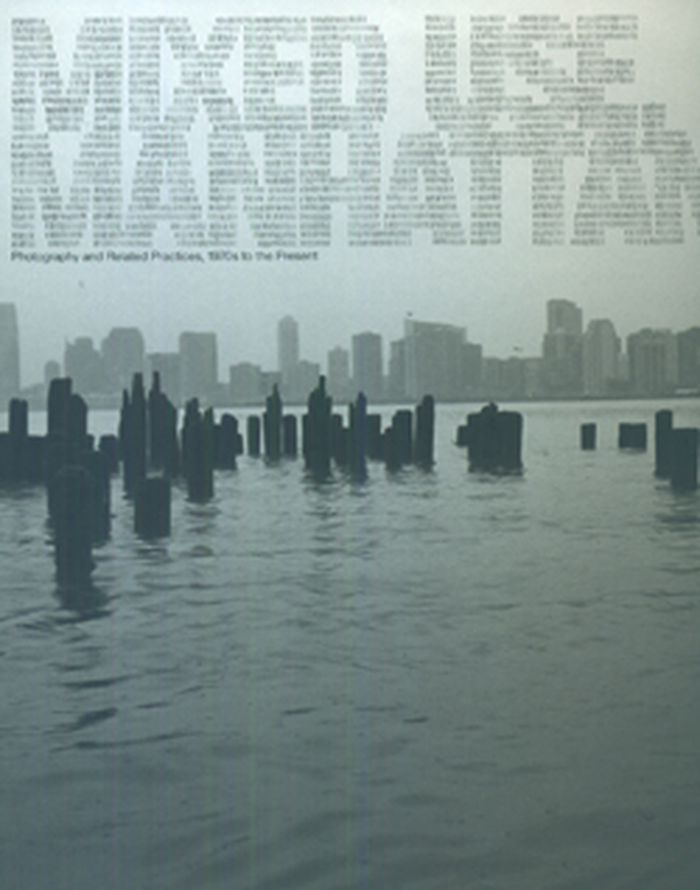
When recession-plagued New York City abandoned its industrial base in the 1970s, performance artists, photographers, and filmmakers found their own mixed uses for the city's run-down lofts, abandoned piers, vacant lots, and deserted streets. Gordon Matta-Clark turned a sanitation pier into the celebrated work Day's End and Betsy Sussler filmed its making; the photographic team Shunk-Kender shot a vast series of images of Willoughby Sharp's Projects: Pier 18 (which included work by Vito Acconci, Mel Bochner, Dan Graham, Matta-Clark, and William Wegman, among others); and Cindy Sherman staged some of her Untitled Film Stills on the streets of Lower Manhattan. This publication documents and illustrates these projects as well as more recent work by artists who continue to engage with the city's public, underground, and improvised spaces. The book (which accompanies a major exhibition) focuses on several important photographic series: Peter Hujar's 1976 nighttime photographs of Manhattan's West Side; Alvin Baltrop's Hudson River pier photographs from 1975-1985, most of which have never before been shown or published; David Wojnarowicz's Rimbaud in New York (1978-1979), the first of Wojnarowicz's works to be published; and several of Zoe Leonard's photographic projects from the late 1990s on. The book includes 70 color and 130 black-and-white images, a chronology of the policy decisions and developments that altered the face of New York City from 1950 to the present; an autobiographical story by David Wojnarowicz; and essays by Johanna Burton, Lytle Shaw, Juan Suarez, and the exhibition's curators, Lynne Cooke and Douglas Crimp.
Mixed use, Manhattan : photography and related practices, 1970 to the present
Actions:
Prix:
$52.95
(disponible sur commande)
Résumé:
When recession-plagued New York City abandoned its industrial base in the 1970s, performance artists, photographers, and filmmakers found their own mixed uses for the city's run-down lofts, abandoned piers, vacant lots, and deserted streets. Gordon Matta-Clark turned a sanitation pier into the celebrated work Day's End and Betsy Sussler filmed its making; the photographic team Shunk-Kender shot a vast series of images of Willoughby Sharp's Projects: Pier 18 (which included work by Vito Acconci, Mel Bochner, Dan Graham, Matta-Clark, and William Wegman, among others); and Cindy Sherman staged some of her Untitled Film Stills on the streets of Lower Manhattan. This publication documents and illustrates these projects as well as more recent work by artists who continue to engage with the city's public, underground, and improvised spaces. The book (which accompanies a major exhibition) focuses on several important photographic series: Peter Hujar's 1976 nighttime photographs of Manhattan's West Side; Alvin Baltrop's Hudson River pier photographs from 1975-1985, most of which have never before been shown or published; David Wojnarowicz's Rimbaud in New York (1978-1979), the first of Wojnarowicz's works to be published; and several of Zoe Leonard's photographic projects from the late 1990s on. The book includes 70 color and 130 black-and-white images, a chronology of the policy decisions and developments that altered the face of New York City from 1950 to the present; an autobiographical story by David Wojnarowicz; and essays by Johanna Burton, Lytle Shaw, Juan Suarez, and the exhibition's curators, Lynne Cooke and Douglas Crimp.
Classification:
livres
livres
Publication:
septembre 2010
septembre 2010
Sujet:
Espaces Public
Espaces Public
Classification:
livres
livres
Actions:
Prix:
$40.00
(disponible sur commande)
Résumé:
Wim Wenders (born 1945) started taking photographs at the age of 7. By the age of 12 he had equipped himself with his own darkroom, and by 17 he had acquired his first Leica. A few years later he was to emerge as a leading light in the New German Cinema movement of the late 1960s, making his feature-length directorial debut with Summer in the City (1970). Throughout his(...)
$40.00
(disponible sur commande)
Résumé:
Wim Wenders (born 1945) started taking photographs at the age of 7. By the age of 12 he had equipped himself with his own darkroom, and by 17 he had acquired his first Leica. A few years later he was to emerge as a leading light in the New German Cinema movement of the late 1960s, making his feature-length directorial debut with Summer in the City (1970). Throughout his(...)
Titre:
Wim Wenders : places, strange and quiet
Actions:
Prix:
$40.00
(disponible sur commande)
Résumé:
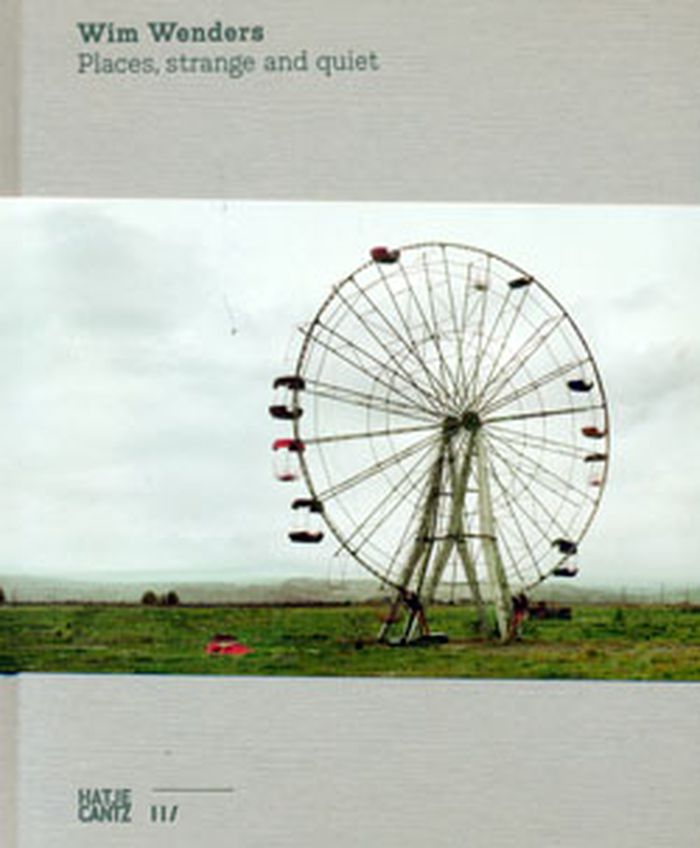
Wim Wenders (born 1945) started taking photographs at the age of 7. By the age of 12 he had equipped himself with his own darkroom, and by 17 he had acquired his first Leica. A few years later he was to emerge as a leading light in the New German Cinema movement of the late 1960s, making his feature-length directorial debut with Summer in the City (1970). Throughout his subsequent global acclaim as a director, Wenders has doggedly maintained his life as a photographer. In fact, the two careers have served each other well, as many of his photographs are created while location-scouting for films. His image repertoire of neglected industrial buildings, vacant lots, cemeteries, dilapidated urban niches and courtyards express a mixture of bemusement, melancholy and dislocation. “When you travel a lot, and when you love to just wander around and get lost, you can end up in the strangest spots,” Wenders says. “It must be some sort of built-in radar that often directs me to places that are strangely quiet, or quietly strange.” These strange and quiet color photographs are accompanied by poetical captions, some of which elucidate what is depicted, others of which lightly supplement with an anecdote (one characteristically deadpan caption accompanies an image of a cowboy clown standing at a rodeo: “It is amazing how many different ideas of 'fun' co-exist in this world” ). This publication gathers photographs from 1983 to 2011 in a full panorama of Wenders' photography to date.
Wim Wenders : places, strange and quiet
Actions:
Prix:
$40.00
(disponible sur commande)
Résumé:
Wim Wenders (born 1945) started taking photographs at the age of 7. By the age of 12 he had equipped himself with his own darkroom, and by 17 he had acquired his first Leica. A few years later he was to emerge as a leading light in the New German Cinema movement of the late 1960s, making his feature-length directorial debut with Summer in the City (1970). Throughout his subsequent global acclaim as a director, Wenders has doggedly maintained his life as a photographer. In fact, the two careers have served each other well, as many of his photographs are created while location-scouting for films. His image repertoire of neglected industrial buildings, vacant lots, cemeteries, dilapidated urban niches and courtyards express a mixture of bemusement, melancholy and dislocation. “When you travel a lot, and when you love to just wander around and get lost, you can end up in the strangest spots,” Wenders says. “It must be some sort of built-in radar that often directs me to places that are strangely quiet, or quietly strange.” These strange and quiet color photographs are accompanied by poetical captions, some of which elucidate what is depicted, others of which lightly supplement with an anecdote (one characteristically deadpan caption accompanies an image of a cowboy clown standing at a rodeo: “It is amazing how many different ideas of 'fun' co-exist in this world” ). This publication gathers photographs from 1983 to 2011 in a full panorama of Wenders' photography to date.
Classification:
livres
livres
Publication:
juillet 2011
juillet 2011
Sujet:
Monographies photo
Monographies photo
Classification:
livres
livres
Actions:
Prix:
$56.50
(disponible sur commande)
Résumé:
The single-screen movie theaters that punctuated small-town America's main streets and city neighborhoods since the 1920s are all but gone. The well-dressed throng of moviegoers has vanished; the facades are boarded. In "Silent Screens", photographer Michael Putnam captures these once(...)
$56.50
(disponible sur commande)
Résumé:
The single-screen movie theaters that punctuated small-town America's main streets and city neighborhoods since the 1920s are all but gone. The well-dressed throng of moviegoers has vanished; the facades are boarded. In "Silent Screens", photographer Michael Putnam captures these once(...)
Publication:
juin 2000, Baltimore
juin 2000, Baltimore
Titre:
Silent screens : the decline and transformation of the American movie theater
Actions:
Prix:
$56.50
(disponible sur commande)
Résumé:
The single-screen movie theaters that punctuated small-town America's main streets and city neighborhoods since the 1920s are all but gone. The well-dressed throng of moviegoers has vanished; the facades are boarded. In "Silent Screens", photographer Michael Putnam captures these once prominent cinemas in decline and transformation. His photographs of abandoned movie houses and forlorn marquees are an elegy to this disappearing cultural icon. In the early 1980s, Putnam began photographing closed theaters, theaters that had been converted to other uses (a church, a swimming pool), theaters on the verge of collapse, theaters being demolished, and even vacant lots where theaters once stood. The result is an archive of images, large in quantity and geographically diffuse. Here is what has become of the Odeons, Strands, and Arcadias that existed as velvet and marble outposts of Hollywood drama next to barbershops, hardware stores, and five-and-dimes. Introduced by Robert Sklar, the starkly beautiful photographs are accompanied by original reminiscences on moviegoing by Peter Bogdanovich, Molly Haskell, Andrew Sarris, and Chester H. Liebs as well as excerpts from the works of poet John Hollander and writers Larry McMurtry and John Updike. Sklar begins by mapping the rise and fall of the local movie house, tracing the demise of small-town theaters to their role as bit players in the grand spectacle of Hollywood film distribution. "Under standard distribution practice," he writes, "a new film took from six months to a year to wend its way from picture palace to Podunk (the prints getting more and more frayed and scratched along the route). Even though the small-town theaters and their urban neighborhood counterparts made up the majority of the nation's movie houses, their significance, in terms of revenue returned to the major motion-picture companies that produced and distributed films, was paltry." In his essay, "Old Dreams," Last Picture Show director Peter Bogdanovich recalls the closing of New York City's great movie palaces -- the mammoth Roxy, the old Paramount near Times Square, the Capitol, and the Mayfair -- and the more innocent time in which they existed "when a quarter often bought you two features, a newsreel, a comedy short, a travelogue, a cartoon, a serial, and coming attractions." While the images in Putnam's book can be read as a metaphor for the death of many downtowns in America, "Silent Screens" goes beyond mere nostalgia to tell the important story of the disappearance of the single-screen theater, illuminating the layers of cultural and economic significance that still surround it.
Silent screens : the decline and transformation of the American movie theater
Actions:
Prix:
$56.50
(disponible sur commande)
Résumé:
The single-screen movie theaters that punctuated small-town America's main streets and city neighborhoods since the 1920s are all but gone. The well-dressed throng of moviegoers has vanished; the facades are boarded. In "Silent Screens", photographer Michael Putnam captures these once prominent cinemas in decline and transformation. His photographs of abandoned movie houses and forlorn marquees are an elegy to this disappearing cultural icon. In the early 1980s, Putnam began photographing closed theaters, theaters that had been converted to other uses (a church, a swimming pool), theaters on the verge of collapse, theaters being demolished, and even vacant lots where theaters once stood. The result is an archive of images, large in quantity and geographically diffuse. Here is what has become of the Odeons, Strands, and Arcadias that existed as velvet and marble outposts of Hollywood drama next to barbershops, hardware stores, and five-and-dimes. Introduced by Robert Sklar, the starkly beautiful photographs are accompanied by original reminiscences on moviegoing by Peter Bogdanovich, Molly Haskell, Andrew Sarris, and Chester H. Liebs as well as excerpts from the works of poet John Hollander and writers Larry McMurtry and John Updike. Sklar begins by mapping the rise and fall of the local movie house, tracing the demise of small-town theaters to their role as bit players in the grand spectacle of Hollywood film distribution. "Under standard distribution practice," he writes, "a new film took from six months to a year to wend its way from picture palace to Podunk (the prints getting more and more frayed and scratched along the route). Even though the small-town theaters and their urban neighborhood counterparts made up the majority of the nation's movie houses, their significance, in terms of revenue returned to the major motion-picture companies that produced and distributed films, was paltry." In his essay, "Old Dreams," Last Picture Show director Peter Bogdanovich recalls the closing of New York City's great movie palaces -- the mammoth Roxy, the old Paramount near Times Square, the Capitol, and the Mayfair -- and the more innocent time in which they existed "when a quarter often bought you two features, a newsreel, a comedy short, a travelogue, a cartoon, a serial, and coming attractions." While the images in Putnam's book can be read as a metaphor for the death of many downtowns in America, "Silent Screens" goes beyond mere nostalgia to tell the important story of the disappearance of the single-screen theater, illuminating the layers of cultural and economic significance that still surround it.
Classification:
livres
livres
Publication:
juin 2000, Baltimore
juin 2000, Baltimore


