


21490 Résultats
Niveau de description archivistique:
Projet
Projet
Numéro de référence:
AP164.S1.1986.D3
Description:
This project series documents the urban plan for the Plaza del Marques de Mamblas, Sevilla la Nueva, Community of Madrid, Spain. Abalos & Herreros, with project architect director Pablo Tarrago Hernandez, designed the project for the Comunidad Autonoma de Madrid, Consejeria de gobernacion, Direccion general de cooperacion local, Servicio de proyectos y obras. The project was build by another firm. Abalos & Herreros identified this project as number 37. The design for this plaza and the Plaza Mayor, Villamantilla (AP164.S1.1986.D2) were presented at the same time. Documenting the project are design development drawings and photographic materials.
AP164.S1.1986.D3
Description:
This project series documents the urban plan for the Plaza del Marques de Mamblas, Sevilla la Nueva, Community of Madrid, Spain. Abalos & Herreros, with project architect director Pablo Tarrago Hernandez, designed the project for the Comunidad Autonoma de Madrid, Consejeria de gobernacion, Direccion general de cooperacion local, Servicio de proyectos y obras. The project was build by another firm. Abalos & Herreros identified this project as number 37. The design for this plaza and the Plaza Mayor, Villamantilla (AP164.S1.1986.D2) were presented at the same time. Documenting the project are design development drawings and photographic materials.
Personnes et institutions:
Date:
1986
1986
Titre:
Ordenación de la Plaza del Marqués de Mamblas, Sevilla la Nueva, Spain (1986)
Actions:
AP164.S1.1986.D3
Description:
This project series documents the urban plan for the Plaza del Marques de Mamblas, Sevilla la Nueva, Community of Madrid, Spain. Abalos & Herreros, with project architect director Pablo Tarrago Hernandez, designed the project for the Comunidad Autonoma de Madrid, Consejeria de gobernacion, Direccion general de cooperacion local, Servicio de proyectos y obras. The project was build by another firm. Abalos & Herreros identified this project as number 37. The design for this plaza and the Plaza Mayor, Villamantilla (AP164.S1.1986.D2) were presented at the same time. Documenting the project are design development drawings and photographic materials.
Ordenación de la Plaza del Marqués de Mamblas, Sevilla la Nueva, Spain (1986)
Actions:
AP164.S1.1986.D3
Description:
This project series documents the urban plan for the Plaza del Marques de Mamblas, Sevilla la Nueva, Community of Madrid, Spain. Abalos & Herreros, with project architect director Pablo Tarrago Hernandez, designed the project for the Comunidad Autonoma de Madrid, Consejeria de gobernacion, Direccion general de cooperacion local, Servicio de proyectos y obras. The project was build by another firm. Abalos & Herreros identified this project as number 37. The design for this plaza and the Plaza Mayor, Villamantilla (AP164.S1.1986.D2) were presented at the same time. Documenting the project are design development drawings and photographic materials.
Niveau de description archivistique:
Project
Project
Date:
1986
1986
Personnes et institutions:
Niveau de description archivistique:
Projet
Projet
Numéro de référence:
AP207.S1.1968.PR07
Description:
The project series documents "Citta Futura", a series of architectural drawings made by Pettena as part of his graduation thesis at University of Florence in 1968. Pettena's thesis was on the urban requalification of the Santa Croce area in Florence damaged by a flood in 1966. For this project Pettena was "influcenced by the many visionary proposals of 'cities of the future' of the early '60s" [1] The project series contains project descriptions in English and in Italian, and scanned copies of drawings by Pettena for his thesis at the end of the 1960s. Source: [1] Gianni Pettena website, https://www.giannipettena.it/italiano/opere-1/arch-cities-of-the-future-1968/ (last accessed 12 November 2019).
AP207.S1.1968.PR07
Description:
The project series documents "Citta Futura", a series of architectural drawings made by Pettena as part of his graduation thesis at University of Florence in 1968. Pettena's thesis was on the urban requalification of the Santa Croce area in Florence damaged by a flood in 1966. For this project Pettena was "influcenced by the many visionary proposals of 'cities of the future' of the early '60s" [1] The project series contains project descriptions in English and in Italian, and scanned copies of drawings by Pettena for his thesis at the end of the 1960s. Source: [1] Gianni Pettena website, https://www.giannipettena.it/italiano/opere-1/arch-cities-of-the-future-1968/ (last accessed 12 November 2019).
Personnes et institutions:
Date:
2011-2015
2011-2015
Titre:
Citta Futura [Citites of the Future] (1968)
Actions:
AP207.S1.1968.PR07
Description:
The project series documents "Citta Futura", a series of architectural drawings made by Pettena as part of his graduation thesis at University of Florence in 1968. Pettena's thesis was on the urban requalification of the Santa Croce area in Florence damaged by a flood in 1966. For this project Pettena was "influcenced by the many visionary proposals of 'cities of the future' of the early '60s" [1] The project series contains project descriptions in English and in Italian, and scanned copies of drawings by Pettena for his thesis at the end of the 1960s. Source: [1] Gianni Pettena website, https://www.giannipettena.it/italiano/opere-1/arch-cities-of-the-future-1968/ (last accessed 12 November 2019).
Citta Futura [Citites of the Future] (1968)
Actions:
AP207.S1.1968.PR07
Description:
The project series documents "Citta Futura", a series of architectural drawings made by Pettena as part of his graduation thesis at University of Florence in 1968. Pettena's thesis was on the urban requalification of the Santa Croce area in Florence damaged by a flood in 1966. For this project Pettena was "influcenced by the many visionary proposals of 'cities of the future' of the early '60s" [1] The project series contains project descriptions in English and in Italian, and scanned copies of drawings by Pettena for his thesis at the end of the 1960s. Source: [1] Gianni Pettena website, https://www.giannipettena.it/italiano/opere-1/arch-cities-of-the-future-1968/ (last accessed 12 November 2019).
Niveau de description archivistique:
Project
Project
Date:
2011-2015
2011-2015
Personnes et institutions:
Niveau de description archivistique:
Projet
Projet
Numéro de référence:
AP180.S1.1986.PR01
Description:
This project series documents the Casa sul Lungomare, an unrealized project for the restauration of a historic three-storey house on Lungamore in Otranto, Italy. This project was undertaken in the context of the Piano di recupero di Otranto, an urban renewal scheme for the north-east sector of the historic centre of Otranto. Riva worked on this project from 1986-1987. The project series contains studies for the historic building and design development drawings, including exterior elevations, floor plans, and sections. It also contains presentation drawings showing the proposed scheme, including site plans, elevations, and plans of the existing buildings in the Piano di recupero di Otranto.
AP180.S1.1986.PR01
Description:
This project series documents the Casa sul Lungomare, an unrealized project for the restauration of a historic three-storey house on Lungamore in Otranto, Italy. This project was undertaken in the context of the Piano di recupero di Otranto, an urban renewal scheme for the north-east sector of the historic centre of Otranto. Riva worked on this project from 1986-1987. The project series contains studies for the historic building and design development drawings, including exterior elevations, floor plans, and sections. It also contains presentation drawings showing the proposed scheme, including site plans, elevations, and plans of the existing buildings in the Piano di recupero di Otranto.
Personnes et institutions:
Date:
1986
1986
Titre:
Casa sul Lungomare [House on Lungamore], Otranto, Italy (1986-1987)
Actions:
AP180.S1.1986.PR01
Description:
This project series documents the Casa sul Lungomare, an unrealized project for the restauration of a historic three-storey house on Lungamore in Otranto, Italy. This project was undertaken in the context of the Piano di recupero di Otranto, an urban renewal scheme for the north-east sector of the historic centre of Otranto. Riva worked on this project from 1986-1987. The project series contains studies for the historic building and design development drawings, including exterior elevations, floor plans, and sections. It also contains presentation drawings showing the proposed scheme, including site plans, elevations, and plans of the existing buildings in the Piano di recupero di Otranto.
Casa sul Lungomare [House on Lungamore], Otranto, Italy (1986-1987)
Actions:
AP180.S1.1986.PR01
Description:
This project series documents the Casa sul Lungomare, an unrealized project for the restauration of a historic three-storey house on Lungamore in Otranto, Italy. This project was undertaken in the context of the Piano di recupero di Otranto, an urban renewal scheme for the north-east sector of the historic centre of Otranto. Riva worked on this project from 1986-1987. The project series contains studies for the historic building and design development drawings, including exterior elevations, floor plans, and sections. It also contains presentation drawings showing the proposed scheme, including site plans, elevations, and plans of the existing buildings in the Piano di recupero di Otranto.
Niveau de description archivistique:
Project
Project
Date:
1986
1986
Personnes et institutions:
Niveau de description archivistique:
Série(s)
Série(s)
Numéro de référence:
AP156.S3
Description:
La série documente les projets d'architectures en Europe et en Inde de Pierre Jeanneret et autres architectes entre la fin des années 1930 et la moitié des années 1970s. La série inclute des projets comme le Centre d'apprentissage de Béziers, en France, ainsi que plusieurs des projets d'architecture ou d'urbanisme réalisés pour la nouvelle ville de Chandigarh et Talwara, en Inde, avec Le Corbusier. Le matériel dans la série a été produit entre 1932 et 1975. La série contient des dessins et des reprographies de dessins conceptuel, de dessin de développement du design, de dessins d'exécution et de dessins de présentation. La série contient aussi quelques documents textuels et des photographies reliées à certains des projets. Series documents the architectural projects in Europe and India of Pierre Jeanneret and other architects between the end of the 1930s to the middle of the 1970s. The series includes projects like the Centre d'apprentissage de Béziers, in France, and also many projects of architectural and urban planning completed for the new city of Chandigarh and Talwara, in India, with Le Corbusier. The material in the series was produced between 1932 and 1975. The series contains drawings and reprograhic copies of conceptual drawings, design developement drawings, working drawings and presentation drawings. The series contains also some textual records and photographs related to some of the projects.
AP156.S3
Description:
La série documente les projets d'architectures en Europe et en Inde de Pierre Jeanneret et autres architectes entre la fin des années 1930 et la moitié des années 1970s. La série inclute des projets comme le Centre d'apprentissage de Béziers, en France, ainsi que plusieurs des projets d'architecture ou d'urbanisme réalisés pour la nouvelle ville de Chandigarh et Talwara, en Inde, avec Le Corbusier. Le matériel dans la série a été produit entre 1932 et 1975. La série contient des dessins et des reprographies de dessins conceptuel, de dessin de développement du design, de dessins d'exécution et de dessins de présentation. La série contient aussi quelques documents textuels et des photographies reliées à certains des projets. Series documents the architectural projects in Europe and India of Pierre Jeanneret and other architects between the end of the 1930s to the middle of the 1970s. The series includes projects like the Centre d'apprentissage de Béziers, in France, and also many projects of architectural and urban planning completed for the new city of Chandigarh and Talwara, in India, with Le Corbusier. The material in the series was produced between 1932 and 1975. The series contains drawings and reprograhic copies of conceptual drawings, design developement drawings, working drawings and presentation drawings. The series contains also some textual records and photographs related to some of the projects.
Personnes et institutions:
Date:
1932-1975
1932-1975
Titre:
Projets d'architecture = Architectural projects
Actions:
AP156.S3
Description:
La série documente les projets d'architectures en Europe et en Inde de Pierre Jeanneret et autres architectes entre la fin des années 1930 et la moitié des années 1970s. La série inclute des projets comme le Centre d'apprentissage de Béziers, en France, ainsi que plusieurs des projets d'architecture ou d'urbanisme réalisés pour la nouvelle ville de Chandigarh et Talwara, en Inde, avec Le Corbusier. Le matériel dans la série a été produit entre 1932 et 1975. La série contient des dessins et des reprographies de dessins conceptuel, de dessin de développement du design, de dessins d'exécution et de dessins de présentation. La série contient aussi quelques documents textuels et des photographies reliées à certains des projets. Series documents the architectural projects in Europe and India of Pierre Jeanneret and other architects between the end of the 1930s to the middle of the 1970s. The series includes projects like the Centre d'apprentissage de Béziers, in France, and also many projects of architectural and urban planning completed for the new city of Chandigarh and Talwara, in India, with Le Corbusier. The material in the series was produced between 1932 and 1975. The series contains drawings and reprograhic copies of conceptual drawings, design developement drawings, working drawings and presentation drawings. The series contains also some textual records and photographs related to some of the projects.
Projets d'architecture = Architectural projects
Actions:
AP156.S3
Description:
La série documente les projets d'architectures en Europe et en Inde de Pierre Jeanneret et autres architectes entre la fin des années 1930 et la moitié des années 1970s. La série inclute des projets comme le Centre d'apprentissage de Béziers, en France, ainsi que plusieurs des projets d'architecture ou d'urbanisme réalisés pour la nouvelle ville de Chandigarh et Talwara, en Inde, avec Le Corbusier. Le matériel dans la série a été produit entre 1932 et 1975. La série contient des dessins et des reprographies de dessins conceptuel, de dessin de développement du design, de dessins d'exécution et de dessins de présentation. La série contient aussi quelques documents textuels et des photographies reliées à certains des projets. Series documents the architectural projects in Europe and India of Pierre Jeanneret and other architects between the end of the 1930s to the middle of the 1970s. The series includes projects like the Centre d'apprentissage de Béziers, in France, and also many projects of architectural and urban planning completed for the new city of Chandigarh and Talwara, in India, with Le Corbusier. The material in the series was produced between 1932 and 1975. The series contains drawings and reprograhic copies of conceptual drawings, design developement drawings, working drawings and presentation drawings. The series contains also some textual records and photographs related to some of the projects.
Niveau de description archivistique:
Série 3
Série 3
Date:
1932-1975
1932-1975
Personnes et institutions:
Classification:
expositions
expositions
Titre:
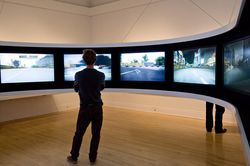
La vitesse et ses limites
La vitesse et ses limites
Actions:
Description:
La vitesse et ses limite traite de la place prépondérante qu’occupe la vitesse dans la vie moderne, dans les domaines de l’art, l’architecture, l’urbanisme, en passant par celui des arts graphiques, de l’économie et de la culture matérielle de l’ère industrielle et de celle de l’information. Elle souligne le centième anniversaire du futurisme italien, mouvement à qui l’on(...)
La vitesse et ses limite traite de la place prépondérante qu’occupe la vitesse dans la vie moderne, dans les domaines de l’art, l’architecture, l’urbanisme, en passant par celui des arts graphiques, de l’économie et de la culture matérielle de l’ère industrielle et de celle de l’information. Elle souligne le centième anniversaire du futurisme italien, mouvement à qui l’on(...)
Localisation:
Salles principales
Salles principales
Date:
20 mai 2009 au 8 novembre 2009
20 mai 2009 au 8 novembre 2009
Titre:
La vitesse et ses limites
Actions:
Description:
La vitesse et ses limite traite de la place prépondérante qu’occupe la vitesse dans la vie moderne, dans les domaines de l’art, l’architecture, l’urbanisme, en passant par celui des arts graphiques, de l’économie et de la culture matérielle de l’ère industrielle et de celle de l’information. Elle souligne le centième anniversaire du futurisme italien, mouvement à qui l’on(...)
La vitesse et ses limites
Actions:
Description:
La vitesse et ses limite traite de la place prépondérante qu’occupe la vitesse dans la vie moderne, dans les domaines de l’art, l’architecture, l’urbanisme, en passant par celui des arts graphiques, de l’économie et de la culture matérielle de l’ère industrielle et de celle de l’information. Elle souligne le centième anniversaire du futurisme italien, mouvement à qui l’on(...)
Classification:
expositions
expositions
Date:
20 mai 2009 au
8 novembre 2009
20 mai 2009 au
8 novembre 2009
Localisation:
Salles principales
Salles principales
Classification:
archives
Niveau de description archivistique:
Fonds
archives
Niveau de description archivistique:
Fonds
Titre:
Jean-Louis Cohen fonds
Jean-Louis Cohen fonds
Numéro de référence:
AP210
Résumé:
The Jean-Louis Cohen fonds, 1968 – 2023, documents the projects and activities of historian, curator, professor, and architect Jean-Louis Cohen (1949 – 2023). Cohen’s research focus was largely modern architecture and transnational architectural exchange, particularly between and among the United States, Europe, and the former Soviet Union in the 20th century. Through physical and digital records, this fonds documents his academic, publishing, and curatorial work along with his professional activities within architectural research and heritage organizations, as well as his architectural practice.
AP210
Résumé:
The Jean-Louis Cohen fonds, 1968 – 2023, documents the projects and activities of historian, curator, professor, and architect Jean-Louis Cohen (1949 – 2023). Cohen’s research focus was largely modern architecture and transnational architectural exchange, particularly between and among the United States, Europe, and the former Soviet Union in the 20th century. Through physical and digital records, this fonds documents his academic, publishing, and curatorial work along with his professional activities within architectural research and heritage organizations, as well as his architectural practice.
Personnes et institutions:
Date:
1968 - 2023
1968 - 2023
Titre:
Jean-Louis Cohen fonds
Actions:
AP210
Résumé:
The Jean-Louis Cohen fonds, 1968 – 2023, documents the projects and activities of historian, curator, professor, and architect Jean-Louis Cohen (1949 – 2023). Cohen’s research focus was largely modern architecture and transnational architectural exchange, particularly between and among the United States, Europe, and the former Soviet Union in the 20th century. Through physical and digital records, this fonds documents his academic, publishing, and curatorial work along with his professional activities within architectural research and heritage organizations, as well as his architectural practice.
Jean-Louis Cohen fonds
Actions:
AP210
Résumé:
The Jean-Louis Cohen fonds, 1968 – 2023, documents the projects and activities of historian, curator, professor, and architect Jean-Louis Cohen (1949 – 2023). Cohen’s research focus was largely modern architecture and transnational architectural exchange, particularly between and among the United States, Europe, and the former Soviet Union in the 20th century. Through physical and digital records, this fonds documents his academic, publishing, and curatorial work along with his professional activities within architectural research and heritage organizations, as well as his architectural practice.
Classification:
archives
Niveau de description archivistique:
Fonds
archives
Niveau de description archivistique:
Fonds
Date:
1968 - 2023
1968 - 2023
Personnes et institutions:
Classification:
événements
événements

Titre:
L’enseignement de… Bombay
L’enseignement de… Bombay
Actions:
Description:
Rahul Mehrotra livre son interprétation de la situation propre à la ville de Bombay et de son statut de symbole de la culture urbaine émergente en Inde. La conférence fait le point sur Bombay, mégalopole de plus de13 millions d’habitants et s’attarde sur les deux entités distinctes occupant le même espace physique qui la caractérisent : d’une part, la ville dans ce(...)
Rahul Mehrotra livre son interprétation de la situation propre à la ville de Bombay et de son statut de symbole de la culture urbaine émergente en Inde. La conférence fait le point sur Bombay, mégalopole de plus de13 millions d’habitants et s’attarde sur les deux entités distinctes occupant le même espace physique qui la caractérisent : d’une part, la ville dans ce(...)
Localisation:
Théâtre Paul-Desmarais
Théâtre Paul-Desmarais
Date:
9 avril 2009
9 avril 2009
Titre:
L’enseignement de… Bombay
Actions:
Description:
Rahul Mehrotra livre son interprétation de la situation propre à la ville de Bombay et de son statut de symbole de la culture urbaine émergente en Inde. La conférence fait le point sur Bombay, mégalopole de plus de13 millions d’habitants et s’attarde sur les deux entités distinctes occupant le même espace physique qui la caractérisent : d’une part, la ville dans ce(...)
L’enseignement de… Bombay
Actions:
Description:
Rahul Mehrotra livre son interprétation de la situation propre à la ville de Bombay et de son statut de symbole de la culture urbaine émergente en Inde. La conférence fait le point sur Bombay, mégalopole de plus de13 millions d’habitants et s’attarde sur les deux entités distinctes occupant le même espace physique qui la caractérisent : d’une part, la ville dans ce(...)
Classification:
événements
événements
Date:
9 avril 2009
9 avril 2009
Localisation:
Théâtre Paul-Desmarais
Théâtre Paul-Desmarais
Niveau de description archivistique:
Projet
Projet
Actions:
Numéro de référence:
CI005.S1.1919.PR3
Description:
The post-First World War shortage of affordable housing led the city of Rotterdam to initiate low income dwelling developments to alleviate the crisis in housing for working class residents. Oud's involvement with the Rotterdam Housing Authority -- the Rotterdam Woningdienst -- allowed him to use public housing projects as a platform for his ideas about urban development, including this design for a semi-detached dwelling in reinforced concrete. Oud's plans were never realized as Rotterdam only experimented with concrete building projects later, in 1921 (Taverne et al. 2001,191, 210-212). The project series includes Oud's drawings of plans for the Double Worker's Dwelling in Reinforced Concrete.
CI005.S1.1919.PR3
Description:
The post-First World War shortage of affordable housing led the city of Rotterdam to initiate low income dwelling developments to alleviate the crisis in housing for working class residents. Oud's involvement with the Rotterdam Housing Authority -- the Rotterdam Woningdienst -- allowed him to use public housing projects as a platform for his ideas about urban development, including this design for a semi-detached dwelling in reinforced concrete. Oud's plans were never realized as Rotterdam only experimented with concrete building projects later, in 1921 (Taverne et al. 2001,191, 210-212). The project series includes Oud's drawings of plans for the Double Worker's Dwelling in Reinforced Concrete.
Personnes et institutions:
Date:
1918
1918
Titre:
Double Worker's Dwelling in Reinforced Concrete, Rotterdam, Netherlands (1919)
Actions:
CI005.S1.1919.PR3
Description:
The post-First World War shortage of affordable housing led the city of Rotterdam to initiate low income dwelling developments to alleviate the crisis in housing for working class residents. Oud's involvement with the Rotterdam Housing Authority -- the Rotterdam Woningdienst -- allowed him to use public housing projects as a platform for his ideas about urban development, including this design for a semi-detached dwelling in reinforced concrete. Oud's plans were never realized as Rotterdam only experimented with concrete building projects later, in 1921 (Taverne et al. 2001,191, 210-212). The project series includes Oud's drawings of plans for the Double Worker's Dwelling in Reinforced Concrete.
Double Worker's Dwelling in Reinforced Concrete, Rotterdam, Netherlands (1919)
Actions:
CI005.S1.1919.PR3
Description:
The post-First World War shortage of affordable housing led the city of Rotterdam to initiate low income dwelling developments to alleviate the crisis in housing for working class residents. Oud's involvement with the Rotterdam Housing Authority -- the Rotterdam Woningdienst -- allowed him to use public housing projects as a platform for his ideas about urban development, including this design for a semi-detached dwelling in reinforced concrete. Oud's plans were never realized as Rotterdam only experimented with concrete building projects later, in 1921 (Taverne et al. 2001,191, 210-212). The project series includes Oud's drawings of plans for the Double Worker's Dwelling in Reinforced Concrete.
Niveau de description archivistique:
project
project
Date:
1918
1918
Personnes et institutions:
Niveau de description archivistique:
Sous-série
Sous-série
Numéro de référence:
AP058.S2.SS2
Description:
This subseries documents Blanche Lemco van Ginkel’s involvement, participation, and attendance in various conferences and lectures, like the XIII World Congress of International Union of Architects in Mexico City, Mexico (1978), the National Endowment for the Arts, an urban design educators retreat in San Juan, Porto Rico (1981), the Colloquy on Rural Development and Design, in Washington, D.C. (1987), and the Construct Canada Conference, in Toronto, Ontario (1988). The subseries contains correspondence, brochures, agendas, reports, lists of participants, papers, programmes and scheduled activities, and notes, dating from 1977 to 1990. Among the papers, there are draughts and final versions of text entitled ‘An Education in architecture’ and ‘To Critical Risk-Quality Care’.
AP058.S2.SS2
Description:
This subseries documents Blanche Lemco van Ginkel’s involvement, participation, and attendance in various conferences and lectures, like the XIII World Congress of International Union of Architects in Mexico City, Mexico (1978), the National Endowment for the Arts, an urban design educators retreat in San Juan, Porto Rico (1981), the Colloquy on Rural Development and Design, in Washington, D.C. (1987), and the Construct Canada Conference, in Toronto, Ontario (1988). The subseries contains correspondence, brochures, agendas, reports, lists of participants, papers, programmes and scheduled activities, and notes, dating from 1977 to 1990. Among the papers, there are draughts and final versions of text entitled ‘An Education in architecture’ and ‘To Critical Risk-Quality Care’.
Personnes et institutions:
Date:
1977-1990
1977-1990
Titre:
Other conferences and lectures
Actions:
AP058.S2.SS2
Description:
This subseries documents Blanche Lemco van Ginkel’s involvement, participation, and attendance in various conferences and lectures, like the XIII World Congress of International Union of Architects in Mexico City, Mexico (1978), the National Endowment for the Arts, an urban design educators retreat in San Juan, Porto Rico (1981), the Colloquy on Rural Development and Design, in Washington, D.C. (1987), and the Construct Canada Conference, in Toronto, Ontario (1988). The subseries contains correspondence, brochures, agendas, reports, lists of participants, papers, programmes and scheduled activities, and notes, dating from 1977 to 1990. Among the papers, there are draughts and final versions of text entitled ‘An Education in architecture’ and ‘To Critical Risk-Quality Care’.
Other conferences and lectures
Actions:
AP058.S2.SS2
Description:
This subseries documents Blanche Lemco van Ginkel’s involvement, participation, and attendance in various conferences and lectures, like the XIII World Congress of International Union of Architects in Mexico City, Mexico (1978), the National Endowment for the Arts, an urban design educators retreat in San Juan, Porto Rico (1981), the Colloquy on Rural Development and Design, in Washington, D.C. (1987), and the Construct Canada Conference, in Toronto, Ontario (1988). The subseries contains correspondence, brochures, agendas, reports, lists of participants, papers, programmes and scheduled activities, and notes, dating from 1977 to 1990. Among the papers, there are draughts and final versions of text entitled ‘An Education in architecture’ and ‘To Critical Risk-Quality Care’.
Niveau de description archivistique:
Subseries
Subseries
Date:
1977-1990
1977-1990
Personnes et institutions:
Niveau de description archivistique:
Série(s)
Série(s)
Numéro de référence:
AP133.S4
Description:
This series documents some of Pierre du Prey's professional activities as an architectural historian and author. It contains documents related to his involvement in congresses and conferences, such as correspondence, draft texts and ephemeras for his lecture at the Centre Jacques Cartier in Lyon, in 1994, and event planning documents, correspondence, reports and proceedings related to his attendance at the international congress of the PEN Club, a worldwide association of writers, in Abidjan, in 1967. The series also contains sound recordings of a panel at the "The Citizen, Architecture and the Urban Environment" seminar in 1991. The series is also comprised of general correspondence, du Prey’s agendas from 1981 to 1984, and correspondence, press clippings and invitations from or about the Canadian Centre for Architecture.
AP133.S4
Description:
This series documents some of Pierre du Prey's professional activities as an architectural historian and author. It contains documents related to his involvement in congresses and conferences, such as correspondence, draft texts and ephemeras for his lecture at the Centre Jacques Cartier in Lyon, in 1994, and event planning documents, correspondence, reports and proceedings related to his attendance at the international congress of the PEN Club, a worldwide association of writers, in Abidjan, in 1967. The series also contains sound recordings of a panel at the "The Citizen, Architecture and the Urban Environment" seminar in 1991. The series is also comprised of general correspondence, du Prey’s agendas from 1981 to 1984, and correspondence, press clippings and invitations from or about the Canadian Centre for Architecture.
Personnes et institutions:
Date:
1967-2001
1967-2001
Titre:
Correspondence, lectures, conferences, and agendas
Actions:
AP133.S4
Description:
This series documents some of Pierre du Prey's professional activities as an architectural historian and author. It contains documents related to his involvement in congresses and conferences, such as correspondence, draft texts and ephemeras for his lecture at the Centre Jacques Cartier in Lyon, in 1994, and event planning documents, correspondence, reports and proceedings related to his attendance at the international congress of the PEN Club, a worldwide association of writers, in Abidjan, in 1967. The series also contains sound recordings of a panel at the "The Citizen, Architecture and the Urban Environment" seminar in 1991. The series is also comprised of general correspondence, du Prey’s agendas from 1981 to 1984, and correspondence, press clippings and invitations from or about the Canadian Centre for Architecture.
Correspondence, lectures, conferences, and agendas
Actions:
AP133.S4
Description:
This series documents some of Pierre du Prey's professional activities as an architectural historian and author. It contains documents related to his involvement in congresses and conferences, such as correspondence, draft texts and ephemeras for his lecture at the Centre Jacques Cartier in Lyon, in 1994, and event planning documents, correspondence, reports and proceedings related to his attendance at the international congress of the PEN Club, a worldwide association of writers, in Abidjan, in 1967. The series also contains sound recordings of a panel at the "The Citizen, Architecture and the Urban Environment" seminar in 1991. The series is also comprised of general correspondence, du Prey’s agendas from 1981 to 1984, and correspondence, press clippings and invitations from or about the Canadian Centre for Architecture.
Niveau de description archivistique:
Series
Series
Date:
1967-2001
1967-2001
Personnes et institutions:


