


1778 Résultats
Classification:
livres
livres
Actions:
Exemplaires:
Description:
127 pages : illustrations (some color), charts (some color), maps (some color), plans (some color), portrait ; 31 cm
Description:
127 pages : illustrations (some color), charts (some color), maps (some color), plans (some color), portrait ; 31 cm
Auteur:
Sujet:
Publication:
Berlin : Jovis Verlag GmbH, ©2014.
Berlin : Jovis Verlag GmbH, ©2014.
Titre:
Kuppelsaaltraum : eine Philharmonie für Hannover / Hg., Jörg Friedrich, Annett Mickel-Lorenz, Christoph Borchers.
Actions:
Exemplaires:
Description:
127 pages : illustrations (some color), charts (some color), maps (some color), plans (some color), portrait ; 31 cm
Kuppelsaaltraum : eine Philharmonie für Hannover / Hg., Jörg Friedrich, Annett Mickel-Lorenz, Christoph Borchers.
Actions:
Exemplaires:
Description:
127 pages : illustrations (some color), charts (some color), maps (some color), plans (some color), portrait ; 31 cm
Classification:
livres
livres
Publication:
Berlin : Jovis Verlag GmbH, ©2014.
Berlin : Jovis Verlag GmbH, ©2014.
Auteur:
Sujet:
Classification:
livres
livres
Actions:
Exemplaires:
Description:
327 pages : illustrations (some color), plans, facsimiles ; 23 cm.
Description:
327 pages : illustrations (some color), plans, facsimiles ; 23 cm.
Auteur:
Sujet:
Publication:
Wavre : Mardaga, ©2012.
Wavre : Mardaga, ©2012.
Titre:
L'invention du vieux Paris : naissance d'une conscience patrimoniale dans la capitale / Ruth Fiori ; [préface de Dominique Poulot].
Actions:
Exemplaires:
Description:
327 pages : illustrations (some color), plans, facsimiles ; 23 cm.
L'invention du vieux Paris : naissance d'une conscience patrimoniale dans la capitale / Ruth Fiori ; [préface de Dominique Poulot].
Actions:
Exemplaires:
Description:
327 pages : illustrations (some color), plans, facsimiles ; 23 cm.
Classification:
livres
livres
Publication:
Wavre : Mardaga, ©2012.
Wavre : Mardaga, ©2012.
Auteur:
Sujet:
Classification:
livres
livres
Actions:
Exemplaires:
Description:
301 pages ; 23 cm
Description:
301 pages ; 23 cm
Auteur:
Sujet:
Publication:
Paris : L'Archipel, ©2010.
Paris : L'Archipel, ©2010.
Titre:
La longue, lente, périlleuse (et poilue) fabrique du rêve : mémoires / Roland Castro.
Actions:
Exemplaires:
Description:
301 pages ; 23 cm
La longue, lente, périlleuse (et poilue) fabrique du rêve : mémoires / Roland Castro.
Actions:
Exemplaires:
Description:
301 pages ; 23 cm
Classification:
livres
livres
Publication:
Paris : L'Archipel, ©2010.
Paris : L'Archipel, ©2010.
Auteur:
Sujet:
Classification:
livres
livres
Actions:
Prix:
$56.95
(disponible sur commande)
Résumé:
Film noir remains one of the most enduring legacies of 1940's and 1950's Hollywood. Populated by double-crossing, unsavory characters, this pioneering film style explored a shadow side of American life during a period of tremendous prosperity and optimism. Edward Dimendberg compellingly demonstrates how film noir is preoccupied with modernity, particularly the urban(...)
$56.95
(disponible sur commande)
Résumé:
Film noir remains one of the most enduring legacies of 1940's and 1950's Hollywood. Populated by double-crossing, unsavory characters, this pioneering film style explored a shadow side of American life during a period of tremendous prosperity and optimism. Edward Dimendberg compellingly demonstrates how film noir is preoccupied with modernity, particularly the urban(...)
Publication:
avril 2004, Cambridge, Mass.
avril 2004, Cambridge, Mass.
Titre:
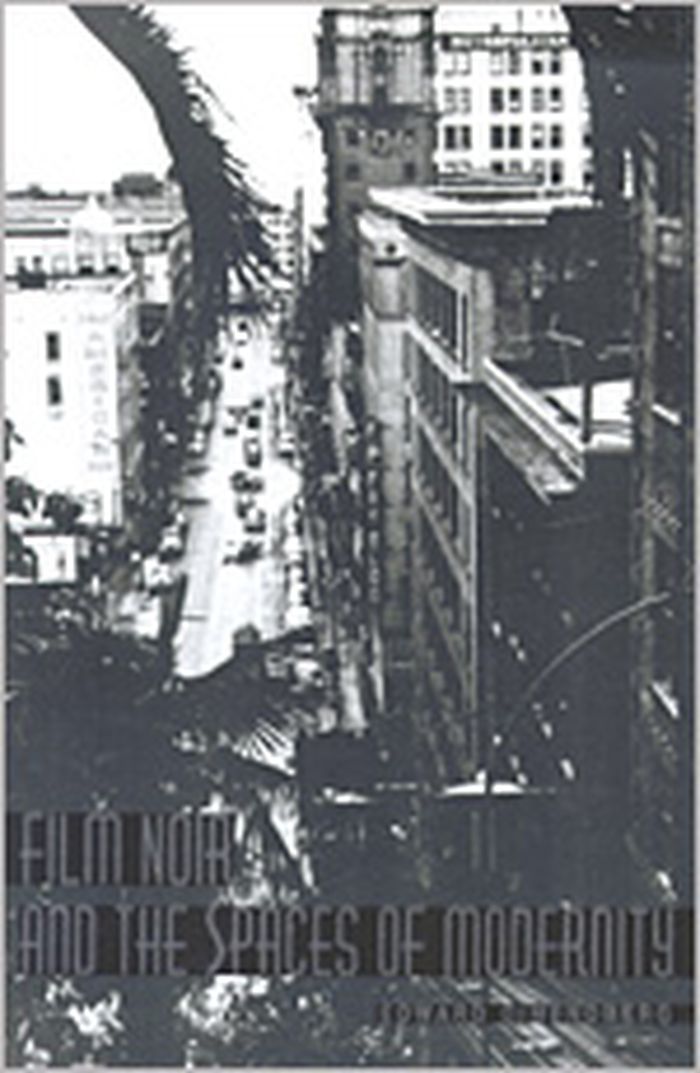
Film noir and the spaces of modernity
Actions:
Prix:
$56.95
(disponible sur commande)
Résumé:
Film noir remains one of the most enduring legacies of 1940's and 1950's Hollywood. Populated by double-crossing, unsavory characters, this pioneering film style explored a shadow side of American life during a period of tremendous prosperity and optimism. Edward Dimendberg compellingly demonstrates how film noir is preoccupied with modernity, particularly the urban landscape. The originality of Dimendberg's approach lies in his examining these films in tandem with historical developments in architecture, city planning, and modern communications systems. He confirms that noir is not simply a reflection of modernity but a virtual continuation of the spaces of the metropolis. He convincingly shows that Hollywood's dark thrillers of the postwar decades were determined by the same forces that shaped the city itself. Exploring classic examples of film noir such as "The Asphalt Jungle", "Double Indemnity", "Kiss Me Deadly", and "The Naked City" alongside many lesser-known works, Dimendberg masterfully interweaves film history and urban history while perceptively analyzing works by Raymond Chandler, Edward Hopper, Siegfried Kracauer, and Henri Lefebvre. A bold intervention in cultural studies and a major contribution to film history, Film Noir and the Spaces of Modernity will provoke debate by cinema scholars, urban historians, and students of modern culture - and will captivate admirers of a vital period in American cinema.
Film noir and the spaces of modernity
Actions:
Prix:
$56.95
(disponible sur commande)
Résumé:
Film noir remains one of the most enduring legacies of 1940's and 1950's Hollywood. Populated by double-crossing, unsavory characters, this pioneering film style explored a shadow side of American life during a period of tremendous prosperity and optimism. Edward Dimendberg compellingly demonstrates how film noir is preoccupied with modernity, particularly the urban landscape. The originality of Dimendberg's approach lies in his examining these films in tandem with historical developments in architecture, city planning, and modern communications systems. He confirms that noir is not simply a reflection of modernity but a virtual continuation of the spaces of the metropolis. He convincingly shows that Hollywood's dark thrillers of the postwar decades were determined by the same forces that shaped the city itself. Exploring classic examples of film noir such as "The Asphalt Jungle", "Double Indemnity", "Kiss Me Deadly", and "The Naked City" alongside many lesser-known works, Dimendberg masterfully interweaves film history and urban history while perceptively analyzing works by Raymond Chandler, Edward Hopper, Siegfried Kracauer, and Henri Lefebvre. A bold intervention in cultural studies and a major contribution to film history, Film Noir and the Spaces of Modernity will provoke debate by cinema scholars, urban historians, and students of modern culture - and will captivate admirers of a vital period in American cinema.
Classification:
livres
livres
Publication:
avril 2004, Cambridge, Mass.
avril 2004, Cambridge, Mass.
Classification:
livres
livres
Actions:
Prix:
$84.50
(disponible sur commande)
Résumé:
In 1856, the English photographer Francis Frith set out on the first of three tours of Egypt and the Holy Lands. Traveling up the Nile and then on to the Sinai, Palestine, Syria, and Lebanon, Frith systematically crafted exquisite pictures of ruins, landscapes, and legendary sites. He then published his views in England and America in a variety of formats, becoming(...)
$84.50
(disponible sur commande)
Résumé:
In 1856, the English photographer Francis Frith set out on the first of three tours of Egypt and the Holy Lands. Traveling up the Nile and then on to the Sinai, Palestine, Syria, and Lebanon, Frith systematically crafted exquisite pictures of ruins, landscapes, and legendary sites. He then published his views in England and America in a variety of formats, becoming(...)
Publication:
janvier 2004, Princeton
janvier 2004, Princeton
Titre:
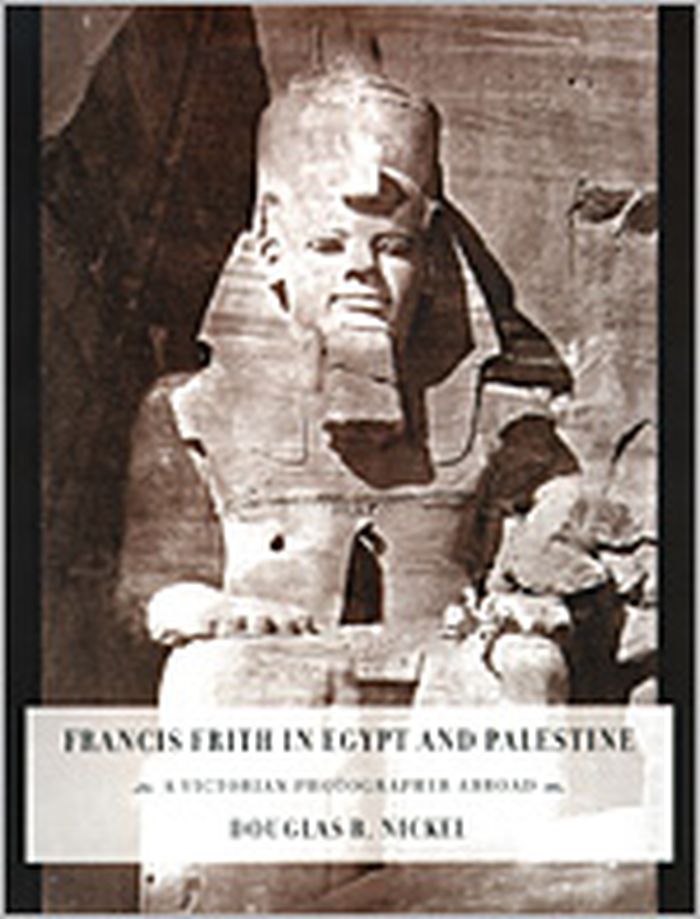
Francis Frith in Egypt and Palestine : a Victorian photographer abroad
Actions:
Prix:
$84.50
(disponible sur commande)
Résumé:
In 1856, the English photographer Francis Frith set out on the first of three tours of Egypt and the Holy Lands. Traveling up the Nile and then on to the Sinai, Palestine, Syria, and Lebanon, Frith systematically crafted exquisite pictures of ruins, landscapes, and legendary sites. He then published his views in England and America in a variety of formats, becoming something of a celebrity in photographic circles. This book, the first to place Frith's Egyptian and Levantine images in cultural context, reveals the distinct meanings these ostensibly "topographic" pictures held for the photographer and his Victorian audience. A Quaker by birth and an entrepreneur by nature, Frith brought to his photographic projects a sense of mission: to revive and confirm the stories of the Bible, while offering the region to armchair travelers as a seamless Oriental milieu of Romantic reverie. Francis Frith in Egypt and Palestine narrates the political, intellectual, and social concerns that make Frith representative of England's encounter with the East in the nineteenth century. Historian of photography Douglas R. Nickel brings a sophisticated interdisciplinary approach to bear on the subject in order to expose the complexity of Frith's image-making, setting the photographs against a Victorian backdrop of religious debate, imperialist thought, Romantic philosophy, and Pre-Raphaelite aesthetics.
Francis Frith in Egypt and Palestine : a Victorian photographer abroad
Actions:
Prix:
$84.50
(disponible sur commande)
Résumé:
In 1856, the English photographer Francis Frith set out on the first of three tours of Egypt and the Holy Lands. Traveling up the Nile and then on to the Sinai, Palestine, Syria, and Lebanon, Frith systematically crafted exquisite pictures of ruins, landscapes, and legendary sites. He then published his views in England and America in a variety of formats, becoming something of a celebrity in photographic circles. This book, the first to place Frith's Egyptian and Levantine images in cultural context, reveals the distinct meanings these ostensibly "topographic" pictures held for the photographer and his Victorian audience. A Quaker by birth and an entrepreneur by nature, Frith brought to his photographic projects a sense of mission: to revive and confirm the stories of the Bible, while offering the region to armchair travelers as a seamless Oriental milieu of Romantic reverie. Francis Frith in Egypt and Palestine narrates the political, intellectual, and social concerns that make Frith representative of England's encounter with the East in the nineteenth century. Historian of photography Douglas R. Nickel brings a sophisticated interdisciplinary approach to bear on the subject in order to expose the complexity of Frith's image-making, setting the photographs against a Victorian backdrop of religious debate, imperialist thought, Romantic philosophy, and Pre-Raphaelite aesthetics.
Classification:
livres
livres
Publication:
janvier 2004, Princeton
janvier 2004, Princeton
Classification:
livres
livres
Actions:
Prix:
$37.95
(disponible sur commande)
Résumé:
Contemporary life is founded on oil - a cheap, accessible, and rich source of energy that has shaped cities and manufacturing economies at the same time that it has increased mobility, global trade, and environmental devastation. Despite oil’s essential role, full recognition of its social and cultural significance has only become a prominent feature of everyday debate(...)
$37.95
(disponible sur commande)
Résumé:
Contemporary life is founded on oil - a cheap, accessible, and rich source of energy that has shaped cities and manufacturing economies at the same time that it has increased mobility, global trade, and environmental devastation. Despite oil’s essential role, full recognition of its social and cultural significance has only become a prominent feature of everyday debate(...)
Publication:
juin 2017
juin 2017
Titre:
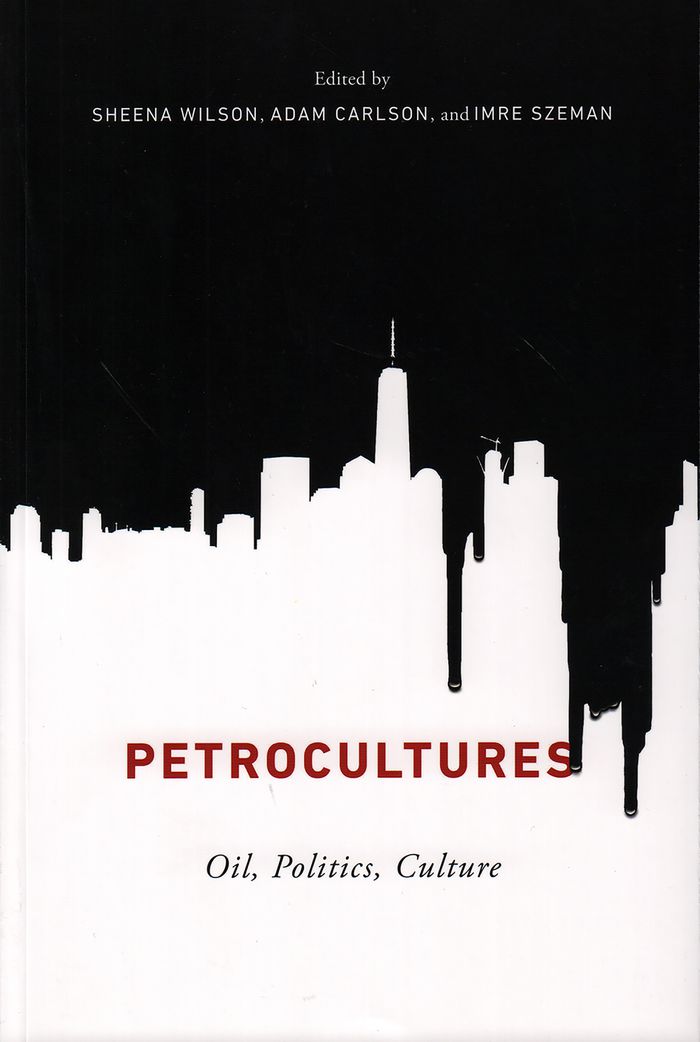
Petrocultures: oil, energy, culture
Actions:
Prix:
$37.95
(disponible sur commande)
Résumé:
Contemporary life is founded on oil - a cheap, accessible, and rich source of energy that has shaped cities and manufacturing economies at the same time that it has increased mobility, global trade, and environmental devastation. Despite oil’s essential role, full recognition of its social and cultural significance has only become a prominent feature of everyday debate and discussion in the early twenty-first century. Presenting a multifaceted analysis of the cultural, social, and political claims and assumptions that guide how we think and talk about oil, Petrocultures maps the complex and often contradictory ways in which oil has influenced the public’s imagination around the world. This collection of essays shows that oil’s vast network of social and historical narratives and the processes that enable its extraction are what characterize its importance, and that its circulation through this immense web of relations forms worldwide experiences and expectations. Contributors’ essays investigate the discourses surrounding oil in contemporary culture while advancing and configuring new ways to discuss the cultural ecosystem that it has created. A window into the social role of oil, Petrocultures also contemplates what it would mean if human life were no longer deeply shaped by the consumption of fossil fuels.
Petrocultures: oil, energy, culture
Actions:
Prix:
$37.95
(disponible sur commande)
Résumé:
Contemporary life is founded on oil - a cheap, accessible, and rich source of energy that has shaped cities and manufacturing economies at the same time that it has increased mobility, global trade, and environmental devastation. Despite oil’s essential role, full recognition of its social and cultural significance has only become a prominent feature of everyday debate and discussion in the early twenty-first century. Presenting a multifaceted analysis of the cultural, social, and political claims and assumptions that guide how we think and talk about oil, Petrocultures maps the complex and often contradictory ways in which oil has influenced the public’s imagination around the world. This collection of essays shows that oil’s vast network of social and historical narratives and the processes that enable its extraction are what characterize its importance, and that its circulation through this immense web of relations forms worldwide experiences and expectations. Contributors’ essays investigate the discourses surrounding oil in contemporary culture while advancing and configuring new ways to discuss the cultural ecosystem that it has created. A window into the social role of oil, Petrocultures also contemplates what it would mean if human life were no longer deeply shaped by the consumption of fossil fuels.
Classification:
livres
livres
Publication:
juin 2017
juin 2017
Classification:
livres
livres
Actions:
Prix:
$37.95
(disponible sur commande)
Résumé:
Accelerationism is the name of a contemporary political heresy: the insistence that the only radical political response to capitalism is not to protest, disrupt, critique, or détourne it, but to accelerate and exacerbate its uprooting, alienating, decoding, abstractive tendencies. "#Accelerate" presents a genealogy of accelerationism, tracking the impulse through 90s UK(...)
$37.95
(disponible sur commande)
Résumé:
Accelerationism is the name of a contemporary political heresy: the insistence that the only radical political response to capitalism is not to protest, disrupt, critique, or détourne it, but to accelerate and exacerbate its uprooting, alienating, decoding, abstractive tendencies. "#Accelerate" presents a genealogy of accelerationism, tracking the impulse through 90s UK(...)
Titre:
#Accelerate: the accelerationist reader
Actions:
Prix:
$37.95
(disponible sur commande)
Résumé:
Accelerationism is the name of a contemporary political heresy: the insistence that the only radical political response to capitalism is not to protest, disrupt, critique, or détourne it, but to accelerate and exacerbate its uprooting, alienating, decoding, abstractive tendencies. "#Accelerate" presents a genealogy of accelerationism, tracking the impulse through 90s UK darkside cyberculture and the theory-fictions of Nick Land, Sadie Plant, Iain Grant, and CCRU, across the cultural underground of the 80s (rave, acid house, SF cinema) and back to its sources in delirious post-68 ferment, in texts whose searing nihilistic jouissance would later be disavowed by their authors and the marxist and academic establishment alike. On either side of this central sequence, the book includes texts by Marx that call attention to his own ‘Prometheanism’, and key works from recent years document the recent extraordinary emergence of new accelerationisms steeled against the onslaughts of neoliberal capitalist realism, and retooled for the twenty-first century. At the forefront of the energetic contemporary debate around this disputed, problematic term, "#Accelerate" activates a historical conversation about futurality, technology, politics, enjoyment and capital. This is a legacy shot through with contradictions, yet urgently galvanized today by the poverty of ‘reasonable’ contemporary political alternatives.
#Accelerate: the accelerationist reader
Actions:
Prix:
$37.95
(disponible sur commande)
Résumé:
Accelerationism is the name of a contemporary political heresy: the insistence that the only radical political response to capitalism is not to protest, disrupt, critique, or détourne it, but to accelerate and exacerbate its uprooting, alienating, decoding, abstractive tendencies. "#Accelerate" presents a genealogy of accelerationism, tracking the impulse through 90s UK darkside cyberculture and the theory-fictions of Nick Land, Sadie Plant, Iain Grant, and CCRU, across the cultural underground of the 80s (rave, acid house, SF cinema) and back to its sources in delirious post-68 ferment, in texts whose searing nihilistic jouissance would later be disavowed by their authors and the marxist and academic establishment alike. On either side of this central sequence, the book includes texts by Marx that call attention to his own ‘Prometheanism’, and key works from recent years document the recent extraordinary emergence of new accelerationisms steeled against the onslaughts of neoliberal capitalist realism, and retooled for the twenty-first century. At the forefront of the energetic contemporary debate around this disputed, problematic term, "#Accelerate" activates a historical conversation about futurality, technology, politics, enjoyment and capital. This is a legacy shot through with contradictions, yet urgently galvanized today by the poverty of ‘reasonable’ contemporary political alternatives.
Classification:
livres
livres
Publication:
mai 2014
mai 2014
Sujet:
Théorie/ philosophie
Théorie/ philosophie
Classification:
périodiques
périodiques

Titre:
Cabinet 21 : electricity
Cabinet 21 : electricity
Actions:
Prix:
$12.00
(disponible sur commande)
Résumé:
Electricity manifests itself in every facet of our lives--from the tiny shock received by touching a doorknob to the explosive power of a lightning strike, from the modest Hoover dustbuster to the industrial grandeur of the Hoover Dam. As a force that has given human beings seemingly unlimited power over nature and refashioned our understanding of day and night, and as a(...)
$12.00
(disponible sur commande)
Résumé:
Electricity manifests itself in every facet of our lives--from the tiny shock received by touching a doorknob to the explosive power of a lightning strike, from the modest Hoover dustbuster to the industrial grandeur of the Hoover Dam. As a force that has given human beings seemingly unlimited power over nature and refashioned our understanding of day and night, and as a(...)
Titre:
Cabinet 21 : electricity
Actions:
Prix:
$12.00
(disponible sur commande)
Résumé:
Electricity manifests itself in every facet of our lives--from the tiny shock received by touching a doorknob to the explosive power of a lightning strike, from the modest Hoover dustbuster to the industrial grandeur of the Hoover Dam. As a force that has given human beings seemingly unlimited power over nature and refashioned our understanding of day and night, and as a metaphor for the social currents flowing among individuals and communities, electricity has been our invisible yet ubiquitous ally in the creation of a contemporary "technological sublime." Cabinet No. 21 includes an interview with Sharon Beder on electricity and modernity in America; Margaret Wertheim on Lichtenberg figures, frozen lightning captured in acrylic blocks; Michael Sanchez on Francisco Salva's shocking proposal for an eighteenth-century human telegraphy system; an interview with Marcello Pera on how a frog triggered a decisive scientific debate between Enlightenment "electricians" Galvani and Volta; an essay on Benjamin Franklin's promotion of Ebenezer Kinnersley's electrified "magical picture"; and a firsthand account by a survivor of multiple lightning strikes. Also Tom Vanderbilt on Stasi scent samples; an interview with Sam Chwat, the foremost accent elimination coach in the United States; and artist projects by Andrea Geyer and Rachel Watson.
Cabinet 21 : electricity
Actions:
Prix:
$12.00
(disponible sur commande)
Résumé:
Electricity manifests itself in every facet of our lives--from the tiny shock received by touching a doorknob to the explosive power of a lightning strike, from the modest Hoover dustbuster to the industrial grandeur of the Hoover Dam. As a force that has given human beings seemingly unlimited power over nature and refashioned our understanding of day and night, and as a metaphor for the social currents flowing among individuals and communities, electricity has been our invisible yet ubiquitous ally in the creation of a contemporary "technological sublime." Cabinet No. 21 includes an interview with Sharon Beder on electricity and modernity in America; Margaret Wertheim on Lichtenberg figures, frozen lightning captured in acrylic blocks; Michael Sanchez on Francisco Salva's shocking proposal for an eighteenth-century human telegraphy system; an interview with Marcello Pera on how a frog triggered a decisive scientific debate between Enlightenment "electricians" Galvani and Volta; an essay on Benjamin Franklin's promotion of Ebenezer Kinnersley's electrified "magical picture"; and a firsthand account by a survivor of multiple lightning strikes. Also Tom Vanderbilt on Stasi scent samples; an interview with Sam Chwat, the foremost accent elimination coach in the United States; and artist projects by Andrea Geyer and Rachel Watson.
Classification:
périodiques
périodiques
Publication:
avril 2006, New York
avril 2006, New York
Sujet:
Revues
Revues
Classification:
livres
livres
Actions:
Prix:
$46.99
(disponible sur commande)
Résumé:
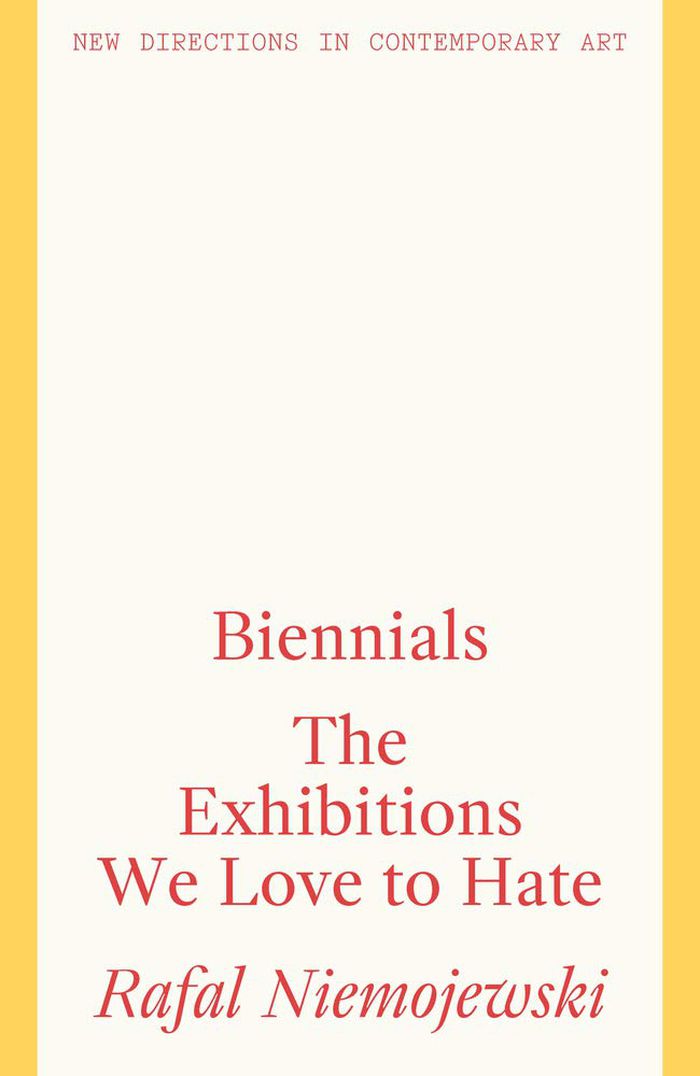
"Biennials: The exhibitions we love to hate" examines one of the most significant recent transitions in the contemporary art world: the proliferation of large-scale international recurrent survey shows of contemporary art, commonly referred to as contemporary biennials. Since the mid-1980s biennials have been instrumental in shaping curating as an autonomous practice.(...)
$46.99
(disponible sur commande)
Résumé:
"Biennials: The exhibitions we love to hate" examines one of the most significant recent transitions in the contemporary art world: the proliferation of large-scale international recurrent survey shows of contemporary art, commonly referred to as contemporary biennials. Since the mid-1980s biennials have been instrumental in shaping curating as an autonomous practice.(...)
Titre:
Biennials: The exhibitions we love to hate
Actions:
Prix:
$46.99
(disponible sur commande)
Résumé:
"Biennials: The exhibitions we love to hate" examines one of the most significant recent transitions in the contemporary art world: the proliferation of large-scale international recurrent survey shows of contemporary art, commonly referred to as contemporary biennials. Since the mid-1980s biennials have been instrumental in shaping curating as an autonomous practice. These exhibitions are also said to have provided increased visibility for certain types of new art practices, notably those that are socially and politically committed, research-based and site-specific, and to have undermined some of the more traditional art media, such as painting, drawing or sculpture. They have been responsible for substantially reshaping the contemporary art world and disrupting the existing value chain of the art market, which now relies on biennials as much as it does on major museums’ acquisitions and exhibitions. Rafal Niemojewski, Director of the Biennial Foundation, deftly unpicks the critical discussion and controversy surrounding contemporary biennials. Branded by some critics as showcases of neo-liberalism run amok, in which culture has become synonymous with the dollar-generating leisure industry, biennials have also been associated with the production of monumental artworks which are both highly consumable and photogenic (Instagrammable). The exhibitions we love to hate? This engaging publication makes an essential contribution to a fascinating cultural debate.
Biennials: The exhibitions we love to hate
Actions:
Prix:
$46.99
(disponible sur commande)
Résumé:
"Biennials: The exhibitions we love to hate" examines one of the most significant recent transitions in the contemporary art world: the proliferation of large-scale international recurrent survey shows of contemporary art, commonly referred to as contemporary biennials. Since the mid-1980s biennials have been instrumental in shaping curating as an autonomous practice. These exhibitions are also said to have provided increased visibility for certain types of new art practices, notably those that are socially and politically committed, research-based and site-specific, and to have undermined some of the more traditional art media, such as painting, drawing or sculpture. They have been responsible for substantially reshaping the contemporary art world and disrupting the existing value chain of the art market, which now relies on biennials as much as it does on major museums’ acquisitions and exhibitions. Rafal Niemojewski, Director of the Biennial Foundation, deftly unpicks the critical discussion and controversy surrounding contemporary biennials. Branded by some critics as showcases of neo-liberalism run amok, in which culture has become synonymous with the dollar-generating leisure industry, biennials have also been associated with the production of monumental artworks which are both highly consumable and photogenic (Instagrammable). The exhibitions we love to hate? This engaging publication makes an essential contribution to a fascinating cultural debate.
Classification:
livres
livres
Publication:
mai 2021
mai 2021
Sujet:
Muséologie
Muséologie
Classification:
livres
livres
Prix:
$58.50
(disponible sur commande)
Résumé:
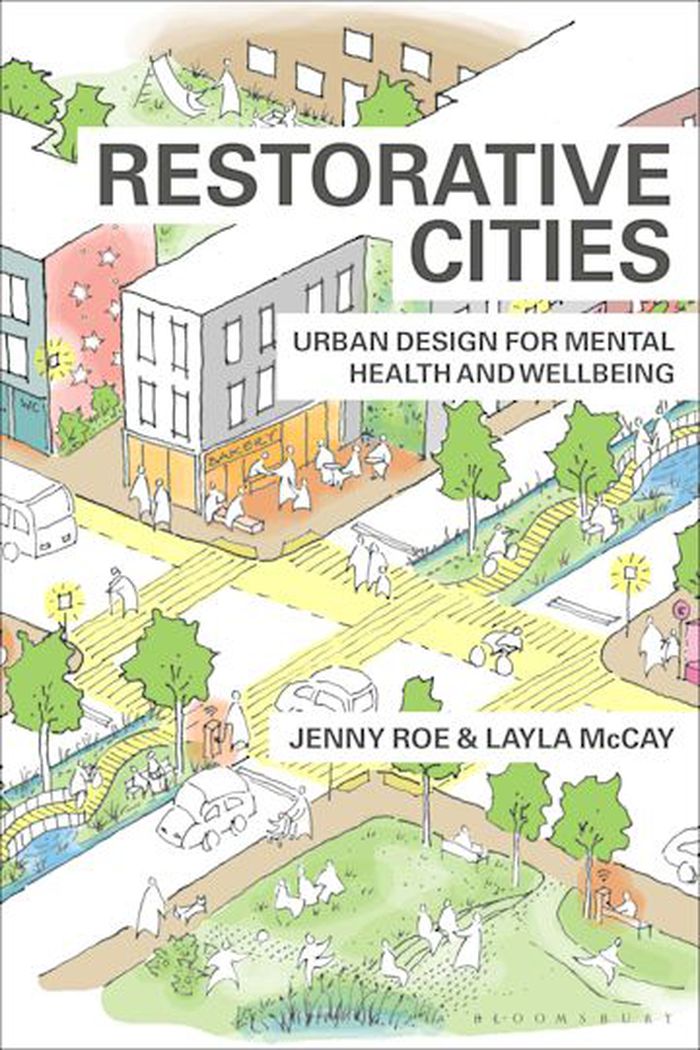
Overcrowding, noise and air pollution, long commutes and lack of daylight can take a huge toll on the mental well-being of city-dwellers. With mental healthcare services under increasing pressure, could a better approach to urban design and planning provide a solution? The restrictions faced by city residents around the world during the COVID-19 pandemic has brought home(...)
$58.50
(disponible sur commande)
Résumé:
Overcrowding, noise and air pollution, long commutes and lack of daylight can take a huge toll on the mental well-being of city-dwellers. With mental healthcare services under increasing pressure, could a better approach to urban design and planning provide a solution? The restrictions faced by city residents around the world during the COVID-19 pandemic has brought home(...)
Titre:
Restorative cities: urban design for mental health and wellbeing
Actions:
Prix:
$58.50
(disponible sur commande)
Résumé:
Overcrowding, noise and air pollution, long commutes and lack of daylight can take a huge toll on the mental well-being of city-dwellers. With mental healthcare services under increasing pressure, could a better approach to urban design and planning provide a solution? The restrictions faced by city residents around the world during the COVID-19 pandemic has brought home just how much urban design can affect our mental health – and created an imperative to seize this opportunity. ''Restorative cities'' explores a new way of designing cities, one which places mental health and wellness at the forefront. Establishing a blueprint for urban design for mental health, it examines a range of strategies – from sensory architecture to place-making for creativity and community – and brings a genuinely evidence-based approach that will appeal to designers and planners, health practitioners and researchers alike - and provide compelling insights for anyone who cares about how our surroundings affect us. Written by a psychiatrist and public health specialist, and an environmental psychologist with extensive experience of architectural practice, this much-needed work will prompt debate and inspire built environment students and professionals to think more about the positive potential of their designs for mental well-being.
Restorative cities: urban design for mental health and wellbeing
Actions:
Prix:
$58.50
(disponible sur commande)
Résumé:
Overcrowding, noise and air pollution, long commutes and lack of daylight can take a huge toll on the mental well-being of city-dwellers. With mental healthcare services under increasing pressure, could a better approach to urban design and planning provide a solution? The restrictions faced by city residents around the world during the COVID-19 pandemic has brought home just how much urban design can affect our mental health – and created an imperative to seize this opportunity. ''Restorative cities'' explores a new way of designing cities, one which places mental health and wellness at the forefront. Establishing a blueprint for urban design for mental health, it examines a range of strategies – from sensory architecture to place-making for creativity and community – and brings a genuinely evidence-based approach that will appeal to designers and planners, health practitioners and researchers alike - and provide compelling insights for anyone who cares about how our surroundings affect us. Written by a psychiatrist and public health specialist, and an environmental psychologist with extensive experience of architectural practice, this much-needed work will prompt debate and inspire built environment students and professionals to think more about the positive potential of their designs for mental well-being.
Classification:
livres
livres
Publication:
août 2021
août 2021
Sujet:
L'humain et la ville
L'humain et la ville


