


119212 Résultats
Niveau de description archivistique:
Série(s)
Série(s)
Titre:
Architectural projects
Architectural projects
Numéro de référence:
AP206.S1
Description:
The Architectural projects series, 1957-2007, records 82 architectural projects of Aditya Prakash throughout his career as an architect in Chandigarh, India. Most of these projects were completed with his daughter, Chetna Prakash, through his private practice, Arcon Architects, from 1982-2007. These projects include private residences, housing complexes, university campuses, schools, factories, theatres, sport and yoga centres, offices and furniture, among others. The projects include built work, competition entries and proposals, though it is not always clear which projects were realized. While many projects were located in Chandigarh, the series documents projects across northern India, particularly in Jammu and Kashmir, Punjab, Haryana, Himachal Pradesh and Uttar Pradesh. The projects in this series were identified based on their unique locations and dates. Some projects, located at the same site, consisted of multiple buildings and were designed and/or constructed over long periods of time. The materials for projects like this are described together in one project series, instead of being separated out by building or time period. These projects are recorded largely through original drawings, which include sketches, plans, elevations, sections, perspectives, details, axonometric views and working drawings. However, materials for each project are sparse, often consisting of only 1-10 drawings. Textual records and photographs are also included in the materials for a few projects. The photographs show completed work, while the textual records primarily consist of client correspondence.
AP206.S1
Description:
The Architectural projects series, 1957-2007, records 82 architectural projects of Aditya Prakash throughout his career as an architect in Chandigarh, India. Most of these projects were completed with his daughter, Chetna Prakash, through his private practice, Arcon Architects, from 1982-2007. These projects include private residences, housing complexes, university campuses, schools, factories, theatres, sport and yoga centres, offices and furniture, among others. The projects include built work, competition entries and proposals, though it is not always clear which projects were realized. While many projects were located in Chandigarh, the series documents projects across northern India, particularly in Jammu and Kashmir, Punjab, Haryana, Himachal Pradesh and Uttar Pradesh. The projects in this series were identified based on their unique locations and dates. Some projects, located at the same site, consisted of multiple buildings and were designed and/or constructed over long periods of time. The materials for projects like this are described together in one project series, instead of being separated out by building or time period. These projects are recorded largely through original drawings, which include sketches, plans, elevations, sections, perspectives, details, axonometric views and working drawings. However, materials for each project are sparse, often consisting of only 1-10 drawings. Textual records and photographs are also included in the materials for a few projects. The photographs show completed work, while the textual records primarily consist of client correspondence.
Personnes et institutions:
Date:
1957-2007
1957-2007
Titre:
Architectural projects
Actions:
AP206.S1
Description:
The Architectural projects series, 1957-2007, records 82 architectural projects of Aditya Prakash throughout his career as an architect in Chandigarh, India. Most of these projects were completed with his daughter, Chetna Prakash, through his private practice, Arcon Architects, from 1982-2007. These projects include private residences, housing complexes, university campuses, schools, factories, theatres, sport and yoga centres, offices and furniture, among others. The projects include built work, competition entries and proposals, though it is not always clear which projects were realized. While many projects were located in Chandigarh, the series documents projects across northern India, particularly in Jammu and Kashmir, Punjab, Haryana, Himachal Pradesh and Uttar Pradesh. The projects in this series were identified based on their unique locations and dates. Some projects, located at the same site, consisted of multiple buildings and were designed and/or constructed over long periods of time. The materials for projects like this are described together in one project series, instead of being separated out by building or time period. These projects are recorded largely through original drawings, which include sketches, plans, elevations, sections, perspectives, details, axonometric views and working drawings. However, materials for each project are sparse, often consisting of only 1-10 drawings. Textual records and photographs are also included in the materials for a few projects. The photographs show completed work, while the textual records primarily consist of client correspondence.
Architectural projects
Actions:
AP206.S1
Description:
The Architectural projects series, 1957-2007, records 82 architectural projects of Aditya Prakash throughout his career as an architect in Chandigarh, India. Most of these projects were completed with his daughter, Chetna Prakash, through his private practice, Arcon Architects, from 1982-2007. These projects include private residences, housing complexes, university campuses, schools, factories, theatres, sport and yoga centres, offices and furniture, among others. The projects include built work, competition entries and proposals, though it is not always clear which projects were realized. While many projects were located in Chandigarh, the series documents projects across northern India, particularly in Jammu and Kashmir, Punjab, Haryana, Himachal Pradesh and Uttar Pradesh. The projects in this series were identified based on their unique locations and dates. Some projects, located at the same site, consisted of multiple buildings and were designed and/or constructed over long periods of time. The materials for projects like this are described together in one project series, instead of being separated out by building or time period. These projects are recorded largely through original drawings, which include sketches, plans, elevations, sections, perspectives, details, axonometric views and working drawings. However, materials for each project are sparse, often consisting of only 1-10 drawings. Textual records and photographs are also included in the materials for a few projects. The photographs show completed work, while the textual records primarily consist of client correspondence.
Niveau de description archivistique:
Series
Series
Date:
1957-2007
1957-2007
Personnes et institutions:
Niveau de description archivistique:
Série(s)
Série(s)
Titre:
Architectural projects
Architectural projects
Numéro de référence:
AP056.S1
Description:
The Architectural Projects series, 1984-2003, records 125 architectural projects from Canada, the United States, Germany and Switzerland. These projects include university buildings and campuses, public spaces, civic buildings, offices, interior and industrial design, residences, museums, theatres and concert halls, a winery, and retail stores. The projects include built work, proposals and competition entries. Projects were identified and separated based on distinct project numbers assigned by the creating office, along with the project dates and titles when further clarification was necessary. The project numbering scheme used by the office was not consistent, but most of the numbers are four digits and begin with last two digits of the project start year. These projects are recorded primarily through drawings, but some photographs, paintings, textual records, periodicals, and models are also included in this series. The majority of drawings for each project are originals and a large part of reprographic copies have annotations. The drawings for each project typically consist of surveys, sketches, plans, sections, elevations, axonometric drawings, details, perspectives, and drawings issued for construction. Some of the drawings are mounted for presentation purposes. A large number of furnishing drawings are also included for interior design projects. Photographs in this series show finished work completed by the firm, the project models, and reproductions of drawings and paintings. The paintings in this series are mostly watercolours used for presentation. The textual records are very sparse in this series and consist of rough notes used to supplement drawings. The periodicals are magazines that highlight the completed projects. The amount of materials for each project vary greatly, with built projects having the most complete records and project proposals having the least.
AP056.S1
Description:
The Architectural Projects series, 1984-2003, records 125 architectural projects from Canada, the United States, Germany and Switzerland. These projects include university buildings and campuses, public spaces, civic buildings, offices, interior and industrial design, residences, museums, theatres and concert halls, a winery, and retail stores. The projects include built work, proposals and competition entries. Projects were identified and separated based on distinct project numbers assigned by the creating office, along with the project dates and titles when further clarification was necessary. The project numbering scheme used by the office was not consistent, but most of the numbers are four digits and begin with last two digits of the project start year. These projects are recorded primarily through drawings, but some photographs, paintings, textual records, periodicals, and models are also included in this series. The majority of drawings for each project are originals and a large part of reprographic copies have annotations. The drawings for each project typically consist of surveys, sketches, plans, sections, elevations, axonometric drawings, details, perspectives, and drawings issued for construction. Some of the drawings are mounted for presentation purposes. A large number of furnishing drawings are also included for interior design projects. Photographs in this series show finished work completed by the firm, the project models, and reproductions of drawings and paintings. The paintings in this series are mostly watercolours used for presentation. The textual records are very sparse in this series and consist of rough notes used to supplement drawings. The periodicals are magazines that highlight the completed projects. The amount of materials for each project vary greatly, with built projects having the most complete records and project proposals having the least.
Personnes et institutions:
Date:
1984-2003
1984-2003
Titre:
Architectural projects
Actions:
AP056.S1
Description:
The Architectural Projects series, 1984-2003, records 125 architectural projects from Canada, the United States, Germany and Switzerland. These projects include university buildings and campuses, public spaces, civic buildings, offices, interior and industrial design, residences, museums, theatres and concert halls, a winery, and retail stores. The projects include built work, proposals and competition entries. Projects were identified and separated based on distinct project numbers assigned by the creating office, along with the project dates and titles when further clarification was necessary. The project numbering scheme used by the office was not consistent, but most of the numbers are four digits and begin with last two digits of the project start year. These projects are recorded primarily through drawings, but some photographs, paintings, textual records, periodicals, and models are also included in this series. The majority of drawings for each project are originals and a large part of reprographic copies have annotations. The drawings for each project typically consist of surveys, sketches, plans, sections, elevations, axonometric drawings, details, perspectives, and drawings issued for construction. Some of the drawings are mounted for presentation purposes. A large number of furnishing drawings are also included for interior design projects. Photographs in this series show finished work completed by the firm, the project models, and reproductions of drawings and paintings. The paintings in this series are mostly watercolours used for presentation. The textual records are very sparse in this series and consist of rough notes used to supplement drawings. The periodicals are magazines that highlight the completed projects. The amount of materials for each project vary greatly, with built projects having the most complete records and project proposals having the least.
Architectural projects
Actions:
AP056.S1
Description:
The Architectural Projects series, 1984-2003, records 125 architectural projects from Canada, the United States, Germany and Switzerland. These projects include university buildings and campuses, public spaces, civic buildings, offices, interior and industrial design, residences, museums, theatres and concert halls, a winery, and retail stores. The projects include built work, proposals and competition entries. Projects were identified and separated based on distinct project numbers assigned by the creating office, along with the project dates and titles when further clarification was necessary. The project numbering scheme used by the office was not consistent, but most of the numbers are four digits and begin with last two digits of the project start year. These projects are recorded primarily through drawings, but some photographs, paintings, textual records, periodicals, and models are also included in this series. The majority of drawings for each project are originals and a large part of reprographic copies have annotations. The drawings for each project typically consist of surveys, sketches, plans, sections, elevations, axonometric drawings, details, perspectives, and drawings issued for construction. Some of the drawings are mounted for presentation purposes. A large number of furnishing drawings are also included for interior design projects. Photographs in this series show finished work completed by the firm, the project models, and reproductions of drawings and paintings. The paintings in this series are mostly watercolours used for presentation. The textual records are very sparse in this series and consist of rough notes used to supplement drawings. The periodicals are magazines that highlight the completed projects. The amount of materials for each project vary greatly, with built projects having the most complete records and project proposals having the least.
Niveau de description archivistique:
Series
Series
Date:
1984-2003
1984-2003
Personnes et institutions:
Classification:
documents textuels
documents textuels
Numéro de référence:
ARCH289512
ARCH289512
Personnes et institutions:
Date:
April 30 1966
April 30 1966
Classification:
documents textuels
documents textuels
Date:
April 30 1966
April 30 1966
Personnes et institutions:
Niveau de description archivistique:
Série(s)
Série(s)
Titre:
Architectural projects
Architectural projects
Numéro de référence:
AP166.S1
Description:
Series 1, Architectural Projects (1990-2012, predominant 1990-1996) contains files for seven projects developed by Shoei Yoh and the firm Shoei Yoh + Architects. Six of these projects were developed during the period 1990-1996 in Japan. The Galaxy Toyama Gymnasium in Imizu, Toyama Prefecture, Japan, is the most voluminous project file and is related to two other projects in the series—the Odawara Municipal Sports Complex and the Prospecta Toyama ’92 Observatory Tower. The Odawara Municipal Sports Complex and the Galaxy Toyama Gymnasium were developed at approximately the same time, and, for both projects, digital technology was used to calculate the dimensions of elements in a space frame roof structure. The Galaxy Toyama Gymnasium and the Prospecta Toyama ’92 Observatory Tower were both designed by Shoei Yoh for the 1st Japan Expo Toyama ’92 (JET ‘92) and each of the two project files contains some material related to the other. The Galaxy Toyama Gymnasium project contains CAD files related to the roof design, printouts from computer simulations of the roof, design drawings, presentation material, architectural and structural working drawings, models and textual records. The project file for the Odawara Municipal Sports Complex contains some design drawings--including printouts from computer simulations of the roof, proposal documents and some photographs of the site. The other built projects—the Prospecta Toyama ’92 Observatory Tower, the Glass Station, the Naiju Community Center and Nursery School, and the Uchino Community Center for Seniors and Children—are documented through drawings, models, and photographic material. The final project file in the series--a project for a tower in Taichung, Taiwan—is composed of a few presentation documents. Drawings in the series include hand drawings and printouts or photocopies of images created using digital design software. Apart from the CAD files related to the roof design for the Galaxy Toyama Gymnasium, digital material in the series is composed of still images in .jpg format related to the projects for the Odawara Municipal Sports Complex and the Galaxy Toyama Gymnasium. Some of the documents in .jpg format are duplicates of paper documents in the series.
AP166.S1
Description:
Series 1, Architectural Projects (1990-2012, predominant 1990-1996) contains files for seven projects developed by Shoei Yoh and the firm Shoei Yoh + Architects. Six of these projects were developed during the period 1990-1996 in Japan. The Galaxy Toyama Gymnasium in Imizu, Toyama Prefecture, Japan, is the most voluminous project file and is related to two other projects in the series—the Odawara Municipal Sports Complex and the Prospecta Toyama ’92 Observatory Tower. The Odawara Municipal Sports Complex and the Galaxy Toyama Gymnasium were developed at approximately the same time, and, for both projects, digital technology was used to calculate the dimensions of elements in a space frame roof structure. The Galaxy Toyama Gymnasium and the Prospecta Toyama ’92 Observatory Tower were both designed by Shoei Yoh for the 1st Japan Expo Toyama ’92 (JET ‘92) and each of the two project files contains some material related to the other. The Galaxy Toyama Gymnasium project contains CAD files related to the roof design, printouts from computer simulations of the roof, design drawings, presentation material, architectural and structural working drawings, models and textual records. The project file for the Odawara Municipal Sports Complex contains some design drawings--including printouts from computer simulations of the roof, proposal documents and some photographs of the site. The other built projects—the Prospecta Toyama ’92 Observatory Tower, the Glass Station, the Naiju Community Center and Nursery School, and the Uchino Community Center for Seniors and Children—are documented through drawings, models, and photographic material. The final project file in the series--a project for a tower in Taichung, Taiwan—is composed of a few presentation documents. Drawings in the series include hand drawings and printouts or photocopies of images created using digital design software. Apart from the CAD files related to the roof design for the Galaxy Toyama Gymnasium, digital material in the series is composed of still images in .jpg format related to the projects for the Odawara Municipal Sports Complex and the Galaxy Toyama Gymnasium. Some of the documents in .jpg format are duplicates of paper documents in the series.
Personnes et institutions:
Date:
1990-2012, predominant 1990-1996
1990-2012, predominant 1990-1996
Titre:
Architectural projects
Actions:
AP166.S1
Description:
Series 1, Architectural Projects (1990-2012, predominant 1990-1996) contains files for seven projects developed by Shoei Yoh and the firm Shoei Yoh + Architects. Six of these projects were developed during the period 1990-1996 in Japan. The Galaxy Toyama Gymnasium in Imizu, Toyama Prefecture, Japan, is the most voluminous project file and is related to two other projects in the series—the Odawara Municipal Sports Complex and the Prospecta Toyama ’92 Observatory Tower. The Odawara Municipal Sports Complex and the Galaxy Toyama Gymnasium were developed at approximately the same time, and, for both projects, digital technology was used to calculate the dimensions of elements in a space frame roof structure. The Galaxy Toyama Gymnasium and the Prospecta Toyama ’92 Observatory Tower were both designed by Shoei Yoh for the 1st Japan Expo Toyama ’92 (JET ‘92) and each of the two project files contains some material related to the other. The Galaxy Toyama Gymnasium project contains CAD files related to the roof design, printouts from computer simulations of the roof, design drawings, presentation material, architectural and structural working drawings, models and textual records. The project file for the Odawara Municipal Sports Complex contains some design drawings--including printouts from computer simulations of the roof, proposal documents and some photographs of the site. The other built projects—the Prospecta Toyama ’92 Observatory Tower, the Glass Station, the Naiju Community Center and Nursery School, and the Uchino Community Center for Seniors and Children—are documented through drawings, models, and photographic material. The final project file in the series--a project for a tower in Taichung, Taiwan—is composed of a few presentation documents. Drawings in the series include hand drawings and printouts or photocopies of images created using digital design software. Apart from the CAD files related to the roof design for the Galaxy Toyama Gymnasium, digital material in the series is composed of still images in .jpg format related to the projects for the Odawara Municipal Sports Complex and the Galaxy Toyama Gymnasium. Some of the documents in .jpg format are duplicates of paper documents in the series.
Architectural projects
Actions:
AP166.S1
Description:
Series 1, Architectural Projects (1990-2012, predominant 1990-1996) contains files for seven projects developed by Shoei Yoh and the firm Shoei Yoh + Architects. Six of these projects were developed during the period 1990-1996 in Japan. The Galaxy Toyama Gymnasium in Imizu, Toyama Prefecture, Japan, is the most voluminous project file and is related to two other projects in the series—the Odawara Municipal Sports Complex and the Prospecta Toyama ’92 Observatory Tower. The Odawara Municipal Sports Complex and the Galaxy Toyama Gymnasium were developed at approximately the same time, and, for both projects, digital technology was used to calculate the dimensions of elements in a space frame roof structure. The Galaxy Toyama Gymnasium and the Prospecta Toyama ’92 Observatory Tower were both designed by Shoei Yoh for the 1st Japan Expo Toyama ’92 (JET ‘92) and each of the two project files contains some material related to the other. The Galaxy Toyama Gymnasium project contains CAD files related to the roof design, printouts from computer simulations of the roof, design drawings, presentation material, architectural and structural working drawings, models and textual records. The project file for the Odawara Municipal Sports Complex contains some design drawings--including printouts from computer simulations of the roof, proposal documents and some photographs of the site. The other built projects—the Prospecta Toyama ’92 Observatory Tower, the Glass Station, the Naiju Community Center and Nursery School, and the Uchino Community Center for Seniors and Children—are documented through drawings, models, and photographic material. The final project file in the series--a project for a tower in Taichung, Taiwan—is composed of a few presentation documents. Drawings in the series include hand drawings and printouts or photocopies of images created using digital design software. Apart from the CAD files related to the roof design for the Galaxy Toyama Gymnasium, digital material in the series is composed of still images in .jpg format related to the projects for the Odawara Municipal Sports Complex and the Galaxy Toyama Gymnasium. Some of the documents in .jpg format are duplicates of paper documents in the series.
Niveau de description archivistique:
series
series
Date:
1990-2012, predominant 1990-1996
1990-2012, predominant 1990-1996
Personnes et institutions:
Numéro de référence:
ARCH275745
Description:
Architectural seals, includes 7 crests and 7 stamps.
ARCH275745
Description:
Architectural seals, includes 7 crests and 7 stamps.
Personnes et institutions:
Titre:
Architectural seals
Actions:
ARCH275745
Description:
Architectural seals, includes 7 crests and 7 stamps.
Architectural seals
Actions:
ARCH275745
Description:
Architectural seals, includes 7 crests and 7 stamps.
Personnes et institutions:
Classification:
dessins
dessins
Titre:
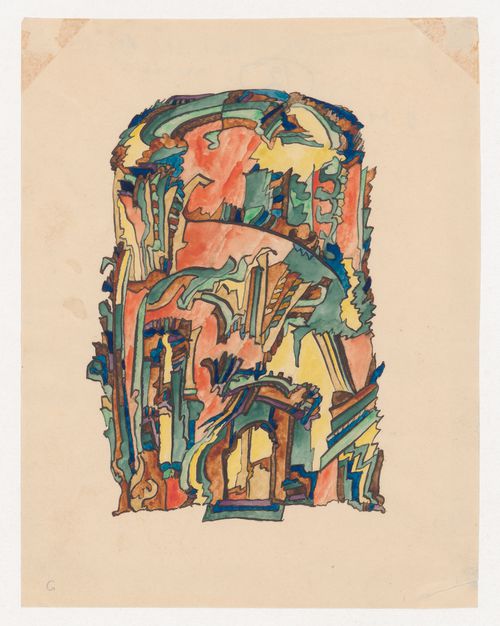
Architectural fantasy
Architectural fantasy
Actions:
Numéro de référence:
DR1988:0244
Description:
- An abstract composition which includes some recognizable architectural forms, such as doors.
DR1988:0244
Description:
- An abstract composition which includes some recognizable architectural forms, such as doors.
Personnes et institutions:
Sujet:
architecture
architecture
Date:
19 March 1921 ?
19 March 1921 ?
Titre:
Architectural fantasy
Actions:
DR1988:0244
Description:
- An abstract composition which includes some recognizable architectural forms, such as doors.
Architectural fantasy
Actions:
DR1988:0244
Description:
- An abstract composition which includes some recognizable architectural forms, such as doors.
Classification:
dessins
dessins
Date:
19 March 1921 ?
19 March 1921 ?
Personnes et institutions:
Sujet:
architecture
architecture
Niveau de description archivistique:
Série(s)
Série(s)
Titre:
Architectural projects
Architectural projects
Numéro de référence:
AP004.S1
Description:
The Architectural projects series documents 33 projects that reflect A.D. Thacker's work as an architect. The series primarily consist of drawings depicting structures that Thacker designed after beginning his own practice in 1926 until his death in 1938, but also includes some work from 1913. However, many of the drawings and documentation within the series are not dated. The drawings include elevation, perspective and plan proposals and occasionally occaisionally studies. In addition to the drawings, the series also contains documentation of the drawings - including reprographic copies, photographs, and some textual material. The projects are largely situated in Quebec and include locations such as Hampstead, Westmount, Kanawá:ke, Dundee, Valois, Morin Heights, Chambly, and Halifax, Nova Scotia. *CONTENT WARNING* The united church project in Kanawá:ke (AP004.S1.D4) was associated with the Federal Indian Day School system established by the Canadian government with the aid of various religious organizations. See the project series for additional information. Please take care in consulting these records and seek help when needed.
AP004.S1
Description:
The Architectural projects series documents 33 projects that reflect A.D. Thacker's work as an architect. The series primarily consist of drawings depicting structures that Thacker designed after beginning his own practice in 1926 until his death in 1938, but also includes some work from 1913. However, many of the drawings and documentation within the series are not dated. The drawings include elevation, perspective and plan proposals and occasionally occaisionally studies. In addition to the drawings, the series also contains documentation of the drawings - including reprographic copies, photographs, and some textual material. The projects are largely situated in Quebec and include locations such as Hampstead, Westmount, Kanawá:ke, Dundee, Valois, Morin Heights, Chambly, and Halifax, Nova Scotia. *CONTENT WARNING* The united church project in Kanawá:ke (AP004.S1.D4) was associated with the Federal Indian Day School system established by the Canadian government with the aid of various religious organizations. See the project series for additional information. Please take care in consulting these records and seek help when needed.
Personnes et institutions:
Date:
1913-1944
1913-1944
Titre:
Architectural projects
Actions:
AP004.S1
Description:
The Architectural projects series documents 33 projects that reflect A.D. Thacker's work as an architect. The series primarily consist of drawings depicting structures that Thacker designed after beginning his own practice in 1926 until his death in 1938, but also includes some work from 1913. However, many of the drawings and documentation within the series are not dated. The drawings include elevation, perspective and plan proposals and occasionally occaisionally studies. In addition to the drawings, the series also contains documentation of the drawings - including reprographic copies, photographs, and some textual material. The projects are largely situated in Quebec and include locations such as Hampstead, Westmount, Kanawá:ke, Dundee, Valois, Morin Heights, Chambly, and Halifax, Nova Scotia. *CONTENT WARNING* The united church project in Kanawá:ke (AP004.S1.D4) was associated with the Federal Indian Day School system established by the Canadian government with the aid of various religious organizations. See the project series for additional information. Please take care in consulting these records and seek help when needed.
Architectural projects
Actions:
AP004.S1
Description:
The Architectural projects series documents 33 projects that reflect A.D. Thacker's work as an architect. The series primarily consist of drawings depicting structures that Thacker designed after beginning his own practice in 1926 until his death in 1938, but also includes some work from 1913. However, many of the drawings and documentation within the series are not dated. The drawings include elevation, perspective and plan proposals and occasionally occaisionally studies. In addition to the drawings, the series also contains documentation of the drawings - including reprographic copies, photographs, and some textual material. The projects are largely situated in Quebec and include locations such as Hampstead, Westmount, Kanawá:ke, Dundee, Valois, Morin Heights, Chambly, and Halifax, Nova Scotia. *CONTENT WARNING* The united church project in Kanawá:ke (AP004.S1.D4) was associated with the Federal Indian Day School system established by the Canadian government with the aid of various religious organizations. See the project series for additional information. Please take care in consulting these records and seek help when needed.
Niveau de description archivistique:
Series
Series
Date:
1913-1944
1913-1944
Personnes et institutions:
Niveau de description archivistique:
Série(s)
Série(s)
Titre:
Architectural projects
Architectural projects
Numéro de référence:
AP180.S1
Description:
This series documents the architectural projects of Umberto Riva from the 1960s to the mid-2000s. Most of these projects were undertaken for sites in Italy, with the exception of Apartment Mieli (1994) in the United States and a project for a new settlement in the Oued Touil valley, Algeria (1980). The series contains original drawings and some reprographic copies for various private residences, such as Casa Frea (1983) and Casa Insinga (1987) in Milan. Riva's projects for industrial buildings are also represented, for example his work for the thermoelectric power plant Centrale Edison in Torviscosa, Italy (2003). Also documented are Riva's designs for public spaces, such as his work for the Piazza San Nazaro (1989) in Milan and proposals for the redevelopment of historical neighbourhoods in Otranto (1987) and in Binago (1988), as well as designs for shops and private entreprises. Furthermore, this series contains materials related to redesigns for gallery spaces, such as redesigns for the Centro Palladio in Vicenza (1999) and the Palazzo dell'Arte in Milan (1995). Projects for exhibition installations by Riva are arranged in series AP180.S3.
AP180.S1
Description:
This series documents the architectural projects of Umberto Riva from the 1960s to the mid-2000s. Most of these projects were undertaken for sites in Italy, with the exception of Apartment Mieli (1994) in the United States and a project for a new settlement in the Oued Touil valley, Algeria (1980). The series contains original drawings and some reprographic copies for various private residences, such as Casa Frea (1983) and Casa Insinga (1987) in Milan. Riva's projects for industrial buildings are also represented, for example his work for the thermoelectric power plant Centrale Edison in Torviscosa, Italy (2003). Also documented are Riva's designs for public spaces, such as his work for the Piazza San Nazaro (1989) in Milan and proposals for the redevelopment of historical neighbourhoods in Otranto (1987) and in Binago (1988), as well as designs for shops and private entreprises. Furthermore, this series contains materials related to redesigns for gallery spaces, such as redesigns for the Centro Palladio in Vicenza (1999) and the Palazzo dell'Arte in Milan (1995). Projects for exhibition installations by Riva are arranged in series AP180.S3.
Personnes et institutions:
Date:
1960-2007
1960-2007
Titre:
Architectural projects
Actions:
AP180.S1
Description:
This series documents the architectural projects of Umberto Riva from the 1960s to the mid-2000s. Most of these projects were undertaken for sites in Italy, with the exception of Apartment Mieli (1994) in the United States and a project for a new settlement in the Oued Touil valley, Algeria (1980). The series contains original drawings and some reprographic copies for various private residences, such as Casa Frea (1983) and Casa Insinga (1987) in Milan. Riva's projects for industrial buildings are also represented, for example his work for the thermoelectric power plant Centrale Edison in Torviscosa, Italy (2003). Also documented are Riva's designs for public spaces, such as his work for the Piazza San Nazaro (1989) in Milan and proposals for the redevelopment of historical neighbourhoods in Otranto (1987) and in Binago (1988), as well as designs for shops and private entreprises. Furthermore, this series contains materials related to redesigns for gallery spaces, such as redesigns for the Centro Palladio in Vicenza (1999) and the Palazzo dell'Arte in Milan (1995). Projects for exhibition installations by Riva are arranged in series AP180.S3.
Architectural projects
Actions:
AP180.S1
Description:
This series documents the architectural projects of Umberto Riva from the 1960s to the mid-2000s. Most of these projects were undertaken for sites in Italy, with the exception of Apartment Mieli (1994) in the United States and a project for a new settlement in the Oued Touil valley, Algeria (1980). The series contains original drawings and some reprographic copies for various private residences, such as Casa Frea (1983) and Casa Insinga (1987) in Milan. Riva's projects for industrial buildings are also represented, for example his work for the thermoelectric power plant Centrale Edison in Torviscosa, Italy (2003). Also documented are Riva's designs for public spaces, such as his work for the Piazza San Nazaro (1989) in Milan and proposals for the redevelopment of historical neighbourhoods in Otranto (1987) and in Binago (1988), as well as designs for shops and private entreprises. Furthermore, this series contains materials related to redesigns for gallery spaces, such as redesigns for the Centro Palladio in Vicenza (1999) and the Palazzo dell'Arte in Milan (1995). Projects for exhibition installations by Riva are arranged in series AP180.S3.
Niveau de description archivistique:
Series
Series
Date:
1960-2007
1960-2007
Personnes et institutions:
Classification:
photographies
photographies
Actions:
Numéro de référence:
PH1991:0060:001-030
PH1991:0060:001-030
Personnes et institutions:
Sujet:
architecture, ingénierie, peinture, sculpture
architecture, ingénierie, peinture, sculpture
Date:
ca. 1855
ca. 1855
Classification:
photographies
photographies
Date:
ca. 1855
ca. 1855
Personnes et institutions:
Sujet:
architecture, ingénierie, peinture, sculpture
architecture, ingénierie, peinture, sculpture
Classification:
documents textuels
documents textuels
Numéro de référence:
AP197.S1.SS6.079
AP197.S1.SS6.079
Personnes et institutions:
Date:
1995
1995
Classification:
documents textuels
documents textuels
Date:
1995
1995
Personnes et institutions:


