


1778 Résultats
Classification:
livres
livres
Prix:
$40.95
(disponible sur commande)
Résumé:
Vast interior spaces have become ubiquitous in the contemporary city. The soaring atriums and concourses of mega-hotels, shopping malls and transport interchanges define an increasingly normal experience of being 'inside' in a city. Yet such spaces are also subject to intense criticism and claims that they can destroy the quality of a city's authentic life 'on the(...)
$40.95
(disponible sur commande)
Résumé:
Vast interior spaces have become ubiquitous in the contemporary city. The soaring atriums and concourses of mega-hotels, shopping malls and transport interchanges define an increasingly normal experience of being 'inside' in a city. Yet such spaces are also subject to intense criticism and claims that they can destroy the quality of a city's authentic life 'on the(...)
Titre:
Interior urbanism: architecture, John Portman and downtown America
Actions:
Prix:
$40.95
(disponible sur commande)
Résumé:
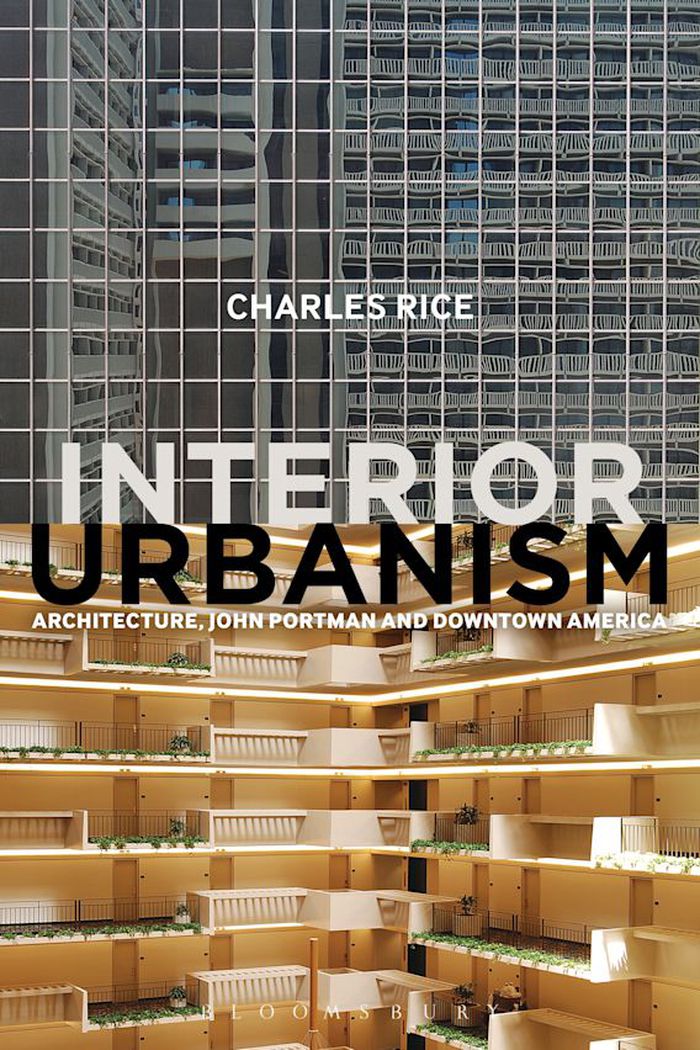
Vast interior spaces have become ubiquitous in the contemporary city. The soaring atriums and concourses of mega-hotels, shopping malls and transport interchanges define an increasingly normal experience of being 'inside' in a city. Yet such spaces are also subject to intense criticism and claims that they can destroy the quality of a city's authentic life 'on the outside'. ''Interior Urbanism'' explores the roots of this contemporary tension between inside and outside, identifying and analysing the concept of interior urbanism and tracing its history back to the works of John Portman and Associates in 1960s and 70s America. Portman – increasingly recognised as an influential yet understudied figure – was responsible for projects such as Peachtree Center in Atlanta and the Los Angeles Bonaventure Hotel, developments that employed vast internal atriums to define a world of possibilities not just for hotels and commercial spaces, but for the future of the American downtown amid the upheavals of the 1960s and 70s. The book analyses Portman's architecture in order to reconsider major contexts of debate in architecture and urbanism in this period, including the massive expansion of a commercial imperative in architecture, shifts in the governance and development of cities amid social and economic instability, the rise of postmodernism and critical urban studies, and the defence of the street and public space amid the continual upheavals of urban development. In this way the book reconsiders the American city at a crucial time in its development, identifying lessons for how we consider the forces at work, and the spaces produced, in cities in the present.
Interior urbanism: architecture, John Portman and downtown America
Actions:
Prix:
$40.95
(disponible sur commande)
Résumé:
Vast interior spaces have become ubiquitous in the contemporary city. The soaring atriums and concourses of mega-hotels, shopping malls and transport interchanges define an increasingly normal experience of being 'inside' in a city. Yet such spaces are also subject to intense criticism and claims that they can destroy the quality of a city's authentic life 'on the outside'. ''Interior Urbanism'' explores the roots of this contemporary tension between inside and outside, identifying and analysing the concept of interior urbanism and tracing its history back to the works of John Portman and Associates in 1960s and 70s America. Portman – increasingly recognised as an influential yet understudied figure – was responsible for projects such as Peachtree Center in Atlanta and the Los Angeles Bonaventure Hotel, developments that employed vast internal atriums to define a world of possibilities not just for hotels and commercial spaces, but for the future of the American downtown amid the upheavals of the 1960s and 70s. The book analyses Portman's architecture in order to reconsider major contexts of debate in architecture and urbanism in this period, including the massive expansion of a commercial imperative in architecture, shifts in the governance and development of cities amid social and economic instability, the rise of postmodernism and critical urban studies, and the defence of the street and public space amid the continual upheavals of urban development. In this way the book reconsiders the American city at a crucial time in its development, identifying lessons for how we consider the forces at work, and the spaces produced, in cities in the present.
Classification:
livres
livres
Publication:
août 2016
août 2016
Sujet:
Théorie de l’architecture
Théorie de l’architecture
Classification:
livres
livres
Prix:
$73.95
(disponible sur commande)
Résumé:
Cities have contributed for centuries to the promotion of some of humanity’s greatest ideas, we must now urgently include them as among the principal players in the environmental debate and at the forefront of any policy tackling and countering – possibly reversing - climate change. Nevertheless, even today one of the most significant technologies capable of absorbing CO2(...)
$73.95
(disponible sur commande)
Résumé:
Cities have contributed for centuries to the promotion of some of humanity’s greatest ideas, we must now urgently include them as among the principal players in the environmental debate and at the forefront of any policy tackling and countering – possibly reversing - climate change. Nevertheless, even today one of the most significant technologies capable of absorbing CO2(...)
Sujet:
Architecture, monographies
Architecture, monographies
Publication:
avril 2022
avril 2022
Titre:
Green obsession: trees towards cities, humans towards forests
Actions:
Prix:
$73.95
(disponible sur commande)
Résumé:
Cities have contributed for centuries to the promotion of some of humanity’s greatest ideas, we must now urgently include them as among the principal players in the environmental debate and at the forefront of any policy tackling and countering – possibly reversing - climate change. Nevertheless, even today one of the most significant technologies capable of absorbing CO2 and restoring our environment is photosynthesis. Planting trees, in addition to protecting existing natural areas and biodiversity, together with de-carbonization, renewable energies, digitalization, smart mobility and the circular economy could be the set of strategies necessary to tackle climate change. Today the effects of the Anthropocene age are ever more visible, changing our environment and affecting every species that lives within it. ''Green obsession'' offers a path to be taken, a hard but still necessary paradigm shift – even for architecture and urbanism – that aims to give a voice to this much needed ecological transition. This book aims to unveil the processes and the complexity involved in the search for a new kind of urbanism, while raising questions and opening old wounds related to the relationship between the human species and Nature and finally putting these fragments together to create a portrait of our era. We need to conceive cities as new green catalysts. Now more than ever, it is essential to act together as separate individuals and professionals, joining the cause as members of the global community with a shared environmental strategy. We all have to open the era of a new alliance between Nature and City.
Green obsession: trees towards cities, humans towards forests
Actions:
Prix:
$73.95
(disponible sur commande)
Résumé:
Cities have contributed for centuries to the promotion of some of humanity’s greatest ideas, we must now urgently include them as among the principal players in the environmental debate and at the forefront of any policy tackling and countering – possibly reversing - climate change. Nevertheless, even today one of the most significant technologies capable of absorbing CO2 and restoring our environment is photosynthesis. Planting trees, in addition to protecting existing natural areas and biodiversity, together with de-carbonization, renewable energies, digitalization, smart mobility and the circular economy could be the set of strategies necessary to tackle climate change. Today the effects of the Anthropocene age are ever more visible, changing our environment and affecting every species that lives within it. ''Green obsession'' offers a path to be taken, a hard but still necessary paradigm shift – even for architecture and urbanism – that aims to give a voice to this much needed ecological transition. This book aims to unveil the processes and the complexity involved in the search for a new kind of urbanism, while raising questions and opening old wounds related to the relationship between the human species and Nature and finally putting these fragments together to create a portrait of our era. We need to conceive cities as new green catalysts. Now more than ever, it is essential to act together as separate individuals and professionals, joining the cause as members of the global community with a shared environmental strategy. We all have to open the era of a new alliance between Nature and City.
Classification:
livres
livres
Publication:
avril 2022
avril 2022
Sujet:
Architecture, monographies
Architecture, monographies
Classification:
livres
livres
Actions:
Exemplaires:
Description:
223 pages ; 21 cm.
Description:
223 pages ; 21 cm.
Sujet:
Publication:
Vincennes (Val-de-Marne) : Éditions Terre urbaine, [2023]
Vincennes (Val-de-Marne) : Éditions Terre urbaine, [2023]
Titre:
Territoires submergés : quelles adaptations aux risques côtiers ? / Alexandre K. Magnan, Margot Liebel, Catherine Meur-Ferec, Anne-Solange Muis, Antoine Petitjean, Laurent Pinon.
Actions:
Exemplaires:
Description:
223 pages ; 21 cm.
Territoires submergés : quelles adaptations aux risques côtiers ? / Alexandre K. Magnan, Margot Liebel, Catherine Meur-Ferec, Anne-Solange Muis, Antoine Petitjean, Laurent Pinon.
Actions:
Exemplaires:
Description:
223 pages ; 21 cm.
Classification:
livres
livres
Publication:
Vincennes (Val-de-Marne) : Éditions Terre urbaine, [2023]
Vincennes (Val-de-Marne) : Éditions Terre urbaine, [2023]
Sujet:
Classification:
livres
livres
Titre:
La ressemblance informe ou Le gai savoir visuel selon Georges Bataille / Georges Didi-Huberman.
La ressemblance informe ou Le gai savoir visuel selon Georges Bataille / Georges Didi-Huberman.
Actions:
Exemplaires:
Description:
500 pages : illustrations ; 24 cm
Description:
500 pages : illustrations ; 24 cm
Auteur:
Sujet:
Publication:
Paris : Macula, [2019], ©2019
Paris : Macula, [2019], ©2019
Titre:
La ressemblance informe ou Le gai savoir visuel selon Georges Bataille / Georges Didi-Huberman.
Actions:
Exemplaires:
Description:
500 pages : illustrations ; 24 cm
La ressemblance informe ou Le gai savoir visuel selon Georges Bataille / Georges Didi-Huberman.
Actions:
Exemplaires:
Description:
500 pages : illustrations ; 24 cm
Classification:
livres
livres
Publication:
Paris : Macula, [2019], ©2019
Paris : Macula, [2019], ©2019
Auteur:
Sujet:
Classification:
livres
livres
Actions:
Exemplaires:
Description:
255 pages : illustrations (some color), facsimiles, map, portraits ; 26 cm
Description:
255 pages : illustrations (some color), facsimiles, map, portraits ; 26 cm
Auteur:
Sujet:
Publication:
Paris : Les Productions du Effa, ©2018.
Paris : Les Productions du Effa, ©2018.
Titre:
PhotoPaysage : débattre du projet de paysage par la photographie / sous la direction de Frédéric Pousin ; [traduction de l'anglais, Jean-Marc Delugeau].
Actions:
Exemplaires:
Description:
255 pages : illustrations (some color), facsimiles, map, portraits ; 26 cm
PhotoPaysage : débattre du projet de paysage par la photographie / sous la direction de Frédéric Pousin ; [traduction de l'anglais, Jean-Marc Delugeau].
Actions:
Exemplaires:
Description:
255 pages : illustrations (some color), facsimiles, map, portraits ; 26 cm
Classification:
livres
livres
Publication:
Paris : Les Productions du Effa, ©2018.
Paris : Les Productions du Effa, ©2018.
Auteur:
Sujet:
Classification:
livres
livres
Titre:
Power at ground zero : politics, money, and the remaking of lower Manhattan / Lynne B. Sagalyn.
Power at ground zero : politics, money, and the remaking of lower Manhattan / Lynne B. Sagalyn.
Actions:
Exemplaires:
Description:
xviii, 901 pages : illustrations, maps ; 27 cm
Description:
xviii, 901 pages : illustrations, maps ; 27 cm
Auteur:
Sujet:
Publication:
New York : Oxford University Press, 2016.
New York : Oxford University Press, 2016.
Titre:
Power at ground zero : politics, money, and the remaking of lower Manhattan / Lynne B. Sagalyn.
Actions:
Exemplaires:
Description:
xviii, 901 pages : illustrations, maps ; 27 cm
Power at ground zero : politics, money, and the remaking of lower Manhattan / Lynne B. Sagalyn.
Actions:
Exemplaires:
Description:
xviii, 901 pages : illustrations, maps ; 27 cm
Classification:
livres
livres
Publication:
New York : Oxford University Press, 2016.
New York : Oxford University Press, 2016.
Auteur:
Sujet:
Classification:
livres
livres
Actions:
Exemplaires:
Description:
473 pages : illustrations, maps ; 18 cm.
Description:
473 pages : illustrations, maps ; 18 cm.
Auteur:
Sujet:
Publication:
Gollion : Infolio, ©2012.
Gollion : Infolio, ©2012.
Titre:
L'étude pratique des plans de villes : introduction à l'art de dessiner les plans d'aménagement et d'extension / Raymond Unwin ; introduction de Pierre Chabard.
Actions:
Exemplaires:
Description:
473 pages : illustrations, maps ; 18 cm.
L'étude pratique des plans de villes : introduction à l'art de dessiner les plans d'aménagement et d'extension / Raymond Unwin ; introduction de Pierre Chabard.
Actions:
Exemplaires:
Description:
473 pages : illustrations, maps ; 18 cm.
Classification:
livres
livres
Publication:
Gollion : Infolio, ©2012.
Gollion : Infolio, ©2012.
Auteur:
Sujet:
Classification:
livres
livres
Titre:
The Charnley house : Louis Sullivan, Frank Lloyd Wright, and the making of Chicago's Gold Coast
The Charnley house : Louis Sullivan, Frank Lloyd Wright, and the making of Chicago's Gold Coast
Actions:
Prix:
$71.95
(disponible sur commande)
Résumé:
Situated in Chicago's famed Gold Coast, just north of the Magnificent Mile, the Charnley house is one of the finest dwellings in the city and considered worldwide to be a stunning example of avant-garde architecture. Now the headquarters of the Society of Architectural Historians and designated a National Historic Landmark in 1998, the house was built in 1892 at a(...)
$71.95
(disponible sur commande)
Résumé:
Situated in Chicago's famed Gold Coast, just north of the Magnificent Mile, the Charnley house is one of the finest dwellings in the city and considered worldwide to be a stunning example of avant-garde architecture. Now the headquarters of the Society of Architectural Historians and designated a National Historic Landmark in 1998, the house was built in 1892 at a(...)
Titre:
The Charnley house : Louis Sullivan, Frank Lloyd Wright, and the making of Chicago's Gold Coast
Actions:
Prix:
$71.95
(disponible sur commande)
Résumé:
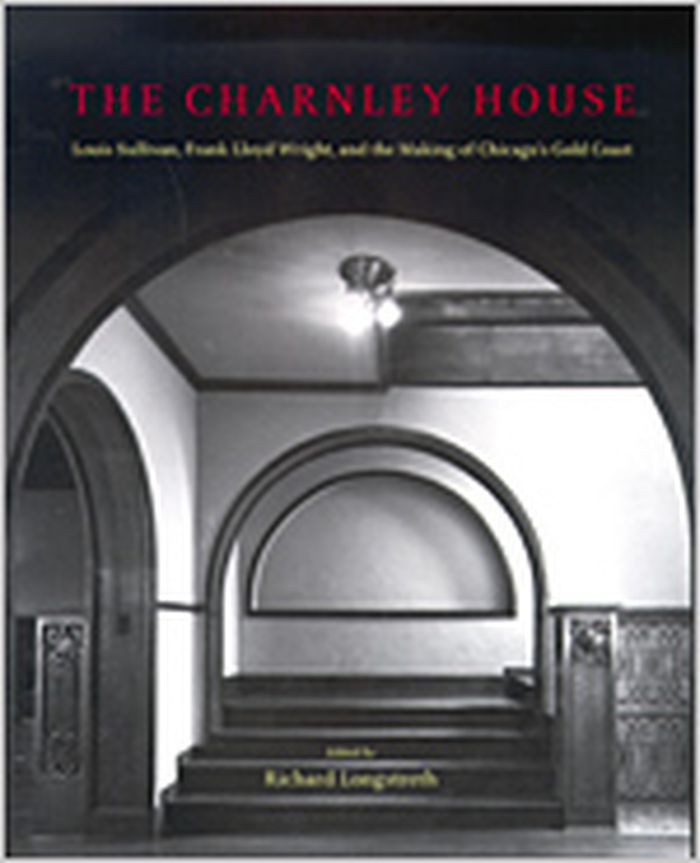
Situated in Chicago's famed Gold Coast, just north of the Magnificent Mile, the Charnley house is one of the finest dwellings in the city and considered worldwide to be a stunning example of avant-garde architecture. Now the headquarters of the Society of Architectural Historians and designated a National Historic Landmark in 1998, the house was built in 1892 at a critical moment in urban and architectural history. "The Charnley House" is the first authoritative publication on the building, which has long been discussed in surveys but never before examined in detail. In this collection of original essays, six well-known architectural historians illuminate various aspects of the house, both inside and out, as they consider its remarkable formal and spatial qualities, its historical significance in the development of Chicago's elite residential neighborhood, and its place in the context of American domestic architecture. Equally important, the contributors tackle the knotty, decades-old issue concerning the building's designer. While many have ascribed the scheme to Frank Lloyd Wright, Louis Sullivan's chief assistant at the time, this book sheds new light on how the house relates significantly to the work of both master and apprentice. The continuing debate over the house's "authorship" highlights the importance of the Charnley house in the history of modern architecture as the seminal work of residential design in the United States. These thoroughly researched interpretations, supplemented by an abundance of never before published illustrations, analyze this house of distinction with the care and detail it deserves. Beautifully restored in late 1980s, the Charnley house now has a book worthy of it.
The Charnley house : Louis Sullivan, Frank Lloyd Wright, and the making of Chicago's Gold Coast
Actions:
Prix:
$71.95
(disponible sur commande)
Résumé:
Situated in Chicago's famed Gold Coast, just north of the Magnificent Mile, the Charnley house is one of the finest dwellings in the city and considered worldwide to be a stunning example of avant-garde architecture. Now the headquarters of the Society of Architectural Historians and designated a National Historic Landmark in 1998, the house was built in 1892 at a critical moment in urban and architectural history. "The Charnley House" is the first authoritative publication on the building, which has long been discussed in surveys but never before examined in detail. In this collection of original essays, six well-known architectural historians illuminate various aspects of the house, both inside and out, as they consider its remarkable formal and spatial qualities, its historical significance in the development of Chicago's elite residential neighborhood, and its place in the context of American domestic architecture. Equally important, the contributors tackle the knotty, decades-old issue concerning the building's designer. While many have ascribed the scheme to Frank Lloyd Wright, Louis Sullivan's chief assistant at the time, this book sheds new light on how the house relates significantly to the work of both master and apprentice. The continuing debate over the house's "authorship" highlights the importance of the Charnley house in the history of modern architecture as the seminal work of residential design in the United States. These thoroughly researched interpretations, supplemented by an abundance of never before published illustrations, analyze this house of distinction with the care and detail it deserves. Beautifully restored in late 1980s, the Charnley house now has a book worthy of it.
Classification:
livres
livres
Publication:
mai 2004, Chicago
mai 2004, Chicago
Sujet:
Architecture, monographies
Architecture, monographies
Classification:
livres
livres
Prix:
$75.95
(disponible sur commande)
Résumé:
More than one hundred exhibitions of Frank Lloyd Wright's work were mounted between 1894 and his death in 1959. Wright organized the majority of these exhibitions himself and viewed them as crucial to his self-presentation as his extensive writings. He used them to promote his designs, appeal to new viewers, and persuade his detractors. Wright on Exhibit presents the(...)
$75.95
(disponible sur commande)
Résumé:
More than one hundred exhibitions of Frank Lloyd Wright's work were mounted between 1894 and his death in 1959. Wright organized the majority of these exhibitions himself and viewed them as crucial to his self-presentation as his extensive writings. He used them to promote his designs, appeal to new viewers, and persuade his detractors. Wright on Exhibit presents the(...)
Titre:
Wright on exhibit: Frank Lloyd Wright's architectural exhibitions
Actions:
Prix:
$75.95
(disponible sur commande)
Résumé:
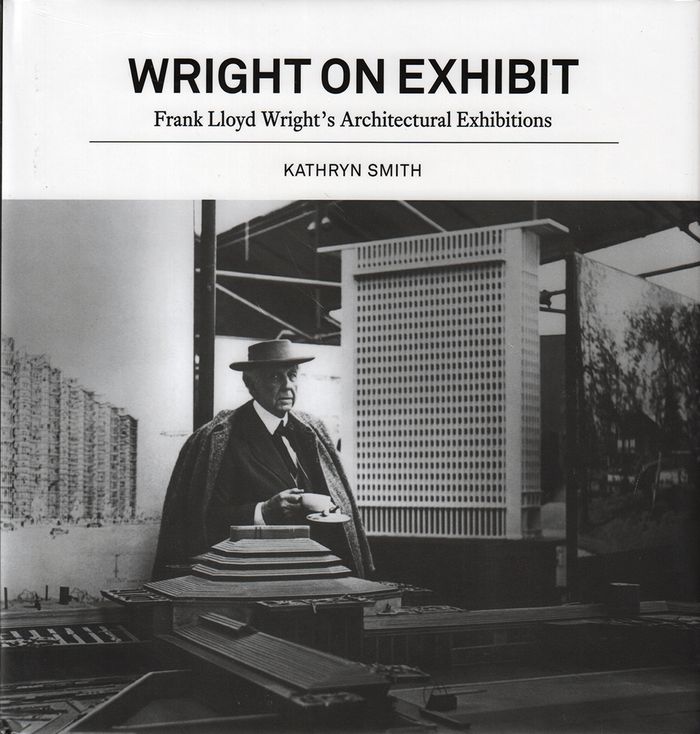
More than one hundred exhibitions of Frank Lloyd Wright's work were mounted between 1894 and his death in 1959. Wright organized the majority of these exhibitions himself and viewed them as crucial to his self-presentation as his extensive writings. He used them to promote his designs, appeal to new viewers, and persuade his detractors. Wright on Exhibit presents the first history of this neglected aspect of the architect’s influential career. Drawing extensively from Wright’s unpublished correspondence, Kathryn Smith challenges the preconceived notion of Wright as a self-promoter who displayed his work in search of money, clients, and fame. She shows how he was an artist-architect projecting an avant-garde program, an innovator who expanded the palette of installation design as technology evolved, and a social activist driven to revolutionize society through design. While Wright’s earliest exhibitions were largely for other architects, by the 1930s he was creating public installations intended to inspire debate and change public perceptions about architecture. The nature of his exhibitions expanded with the times beyond models, drawings, and photographs to include more immersive tools such as slides, film, and even a full-scale structure built especially for his 1953 retrospective at the Guggenheim Museum. Placing Wright’s exhibitions side by side with his writings, Smith shows how integral these exhibitions were to his vision and sheds light on the broader discourse concerning architecture and modernism during the first half of the twentieth century. Wright on Exhibit features color renderings, photos, and plans, as well as a checklist of exhibitions and an illustrated catalog of extant and lost models made under Wright’s supervision.
Wright on exhibit: Frank Lloyd Wright's architectural exhibitions
Actions:
Prix:
$75.95
(disponible sur commande)
Résumé:
More than one hundred exhibitions of Frank Lloyd Wright's work were mounted between 1894 and his death in 1959. Wright organized the majority of these exhibitions himself and viewed them as crucial to his self-presentation as his extensive writings. He used them to promote his designs, appeal to new viewers, and persuade his detractors. Wright on Exhibit presents the first history of this neglected aspect of the architect’s influential career. Drawing extensively from Wright’s unpublished correspondence, Kathryn Smith challenges the preconceived notion of Wright as a self-promoter who displayed his work in search of money, clients, and fame. She shows how he was an artist-architect projecting an avant-garde program, an innovator who expanded the palette of installation design as technology evolved, and a social activist driven to revolutionize society through design. While Wright’s earliest exhibitions were largely for other architects, by the 1930s he was creating public installations intended to inspire debate and change public perceptions about architecture. The nature of his exhibitions expanded with the times beyond models, drawings, and photographs to include more immersive tools such as slides, film, and even a full-scale structure built especially for his 1953 retrospective at the Guggenheim Museum. Placing Wright’s exhibitions side by side with his writings, Smith shows how integral these exhibitions were to his vision and sheds light on the broader discourse concerning architecture and modernism during the first half of the twentieth century. Wright on Exhibit features color renderings, photos, and plans, as well as a checklist of exhibitions and an illustrated catalog of extant and lost models made under Wright’s supervision.
Classification:
livres
livres
Publication:
mai 2017
mai 2017
Sujet:
Architecture, monographies
Architecture, monographies
Classification:
livres
livres
Prix:
$43.95
(disponible sur commande)
Résumé:
City planning initiatives and redesign of urban structures often become mired in debate and delay. Despite the fact that cities are considered to be dynamic and flexible spaces- never finished but always under construction- it is very difficult to change existing urban structures; they become fixed, obdurate, securely anchored in their own histories as well as in the(...)
$43.95
(disponible sur commande)
Résumé:
City planning initiatives and redesign of urban structures often become mired in debate and delay. Despite the fact that cities are considered to be dynamic and flexible spaces- never finished but always under construction- it is very difficult to change existing urban structures; they become fixed, obdurate, securely anchored in their own histories as well as in the(...)
Titre:
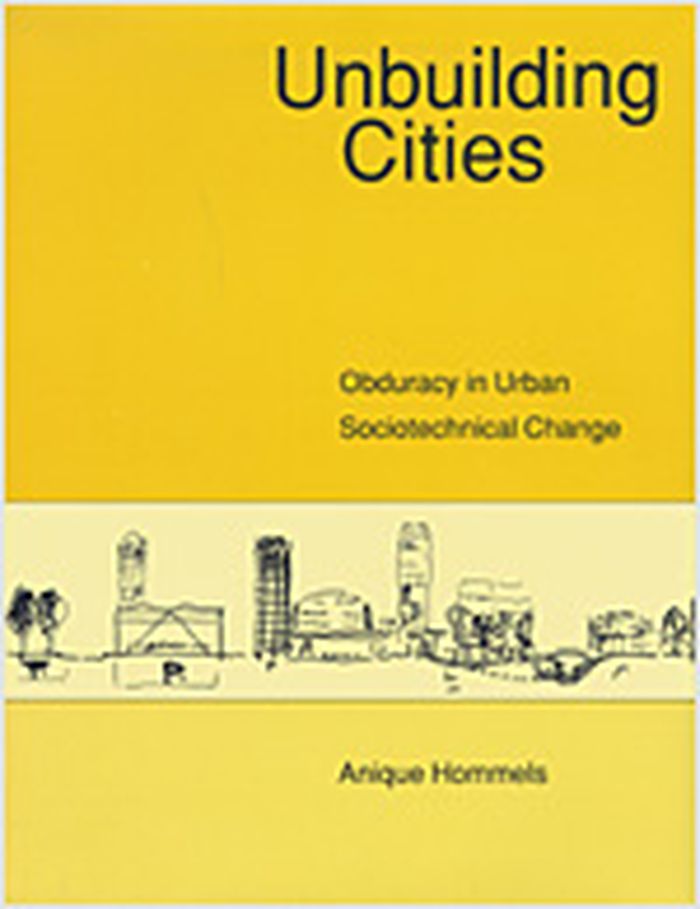
Unbuilding cities : obduracy in urban sociotechnical change
Actions:
Prix:
$43.95
(disponible sur commande)
Résumé:
City planning initiatives and redesign of urban structures often become mired in debate and delay. Despite the fact that cities are considered to be dynamic and flexible spaces- never finished but always under construction- it is very difficult to change existing urban structures; they become fixed, obdurate, securely anchored in their own histories as well as in the histories of their surroundings. In "Unbuilding cities", Anique Hommels looks at the tension between the malleability of urban space and its obduracy, focusing on sites and structures that have been subjected to "unbuilding"-redesign or reconfiguration. She brings the concepts of science and technology studies (STS) to bear on the study of cities. Viewing the city as a large sociotechnological artifact, she demonstrates the usefulness of STS tools that were developed to analyze other technological artifacts and explores in detail the role of obduracy in sociotechnical change. Her analysis distinguishes three concepts of obduracy: interactionist, in which actors with diverging views are constrained by fixed ways of thinking and interacting; relational, in which change is difficult because of technology's embeddedness in sociotechnical networks; and enduring, in which persistent traditions influence the development of technology over time. Hommels examines the tensions between obduracy and change in three urban redesign projects in the Netherlands: a renovated city center that fell into drabness and disrepair; a highway system that runs through a densely populated urban area; and a high-rise housing project, designed according to modernist precepts and built for middle-class families, that became a haven for unemployment and crime. "Unbuilding cities" contributes to a productive fusion of STS and urban studies.
Unbuilding cities : obduracy in urban sociotechnical change
Actions:
Prix:
$43.95
(disponible sur commande)
Résumé:
City planning initiatives and redesign of urban structures often become mired in debate and delay. Despite the fact that cities are considered to be dynamic and flexible spaces- never finished but always under construction- it is very difficult to change existing urban structures; they become fixed, obdurate, securely anchored in their own histories as well as in the histories of their surroundings. In "Unbuilding cities", Anique Hommels looks at the tension between the malleability of urban space and its obduracy, focusing on sites and structures that have been subjected to "unbuilding"-redesign or reconfiguration. She brings the concepts of science and technology studies (STS) to bear on the study of cities. Viewing the city as a large sociotechnological artifact, she demonstrates the usefulness of STS tools that were developed to analyze other technological artifacts and explores in detail the role of obduracy in sociotechnical change. Her analysis distinguishes three concepts of obduracy: interactionist, in which actors with diverging views are constrained by fixed ways of thinking and interacting; relational, in which change is difficult because of technology's embeddedness in sociotechnical networks; and enduring, in which persistent traditions influence the development of technology over time. Hommels examines the tensions between obduracy and change in three urban redesign projects in the Netherlands: a renovated city center that fell into drabness and disrepair; a highway system that runs through a densely populated urban area; and a high-rise housing project, designed according to modernist precepts and built for middle-class families, that became a haven for unemployment and crime. "Unbuilding cities" contributes to a productive fusion of STS and urban studies.
Classification:
livres
livres
Publication:
novembre 2005, Cambridge, Mass.
novembre 2005, Cambridge, Mass.
Sujet:
Théorie de l’urbanisme
Théorie de l’urbanisme


