


44145 Résultats
Classification:
photographies
photographies
Actions:
Numéro de référence:
PH2018:0005:031
Description:
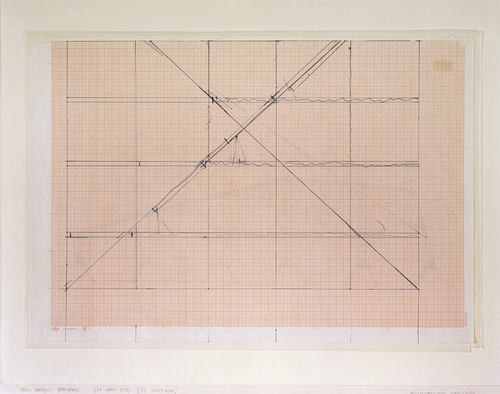
Photograph by Stefano Graziani of the following work: Gordon Matta-Clark, floor plan for Office Baroque, 1977, blue ballpoint pen on graph paper, 42 x 59.5 cm, PHCON2002:0016:059, Gordon Matta-Clark collection, Canadian Centre of Architecture, Gift of Estate of Gordon Matta-Clark, © Estate of Gordon Matta-Clark Questioning Pictures is a 36 photograph project commissioned by Fondazione Prada, Milan. Artist Stefano Graziani investigates archival and conservation systems in a number of museums. Through photographing museum objects, Graziani, focusing on the relationship between photographs, the museum objects and the power structures at play within institutions. The museums include the Canadian Centre for Architecture (CCA) in Montréal, Canada; Sir John Soane’s Museum in London, UK; the Kunstmuseum Basel, Switzerland; Museum Insel Hombroich in Neuss, Germany; the Museo di Castelvecchio in Verona, Italy; and the Plaster Cast Gallery at Museo Canova in Possagno, Italy.
PH2018:0005:031
Description:
Photograph by Stefano Graziani of the following work: Gordon Matta-Clark, floor plan for Office Baroque, 1977, blue ballpoint pen on graph paper, 42 x 59.5 cm, PHCON2002:0016:059, Gordon Matta-Clark collection, Canadian Centre of Architecture, Gift of Estate of Gordon Matta-Clark, © Estate of Gordon Matta-Clark Questioning Pictures is a 36 photograph project commissioned by Fondazione Prada, Milan. Artist Stefano Graziani investigates archival and conservation systems in a number of museums. Through photographing museum objects, Graziani, focusing on the relationship between photographs, the museum objects and the power structures at play within institutions. The museums include the Canadian Centre for Architecture (CCA) in Montréal, Canada; Sir John Soane’s Museum in London, UK; the Kunstmuseum Basel, Switzerland; Museum Insel Hombroich in Neuss, Germany; the Museo di Castelvecchio in Verona, Italy; and the Plaster Cast Gallery at Museo Canova in Possagno, Italy.
Personnes et institutions:
Date:
2017
2017
Titre:
Questioning Pictures: Photograph of floor plan for Office Baroque, blue pen on graph paper by Gordon Matta-Clark, 1977
Actions:
PH2018:0005:031
Description:
Photograph by Stefano Graziani of the following work: Gordon Matta-Clark, floor plan for Office Baroque, 1977, blue ballpoint pen on graph paper, 42 x 59.5 cm, PHCON2002:0016:059, Gordon Matta-Clark collection, Canadian Centre of Architecture, Gift of Estate of Gordon Matta-Clark, © Estate of Gordon Matta-Clark Questioning Pictures is a 36 photograph project commissioned by Fondazione Prada, Milan. Artist Stefano Graziani investigates archival and conservation systems in a number of museums. Through photographing museum objects, Graziani, focusing on the relationship between photographs, the museum objects and the power structures at play within institutions. The museums include the Canadian Centre for Architecture (CCA) in Montréal, Canada; Sir John Soane’s Museum in London, UK; the Kunstmuseum Basel, Switzerland; Museum Insel Hombroich in Neuss, Germany; the Museo di Castelvecchio in Verona, Italy; and the Plaster Cast Gallery at Museo Canova in Possagno, Italy.
Questioning Pictures: Photograph of floor plan for Office Baroque, blue pen on graph paper by Gordon Matta-Clark, 1977
Actions:
PH2018:0005:031
Description:
Photograph by Stefano Graziani of the following work: Gordon Matta-Clark, floor plan for Office Baroque, 1977, blue ballpoint pen on graph paper, 42 x 59.5 cm, PHCON2002:0016:059, Gordon Matta-Clark collection, Canadian Centre of Architecture, Gift of Estate of Gordon Matta-Clark, © Estate of Gordon Matta-Clark Questioning Pictures is a 36 photograph project commissioned by Fondazione Prada, Milan. Artist Stefano Graziani investigates archival and conservation systems in a number of museums. Through photographing museum objects, Graziani, focusing on the relationship between photographs, the museum objects and the power structures at play within institutions. The museums include the Canadian Centre for Architecture (CCA) in Montréal, Canada; Sir John Soane’s Museum in London, UK; the Kunstmuseum Basel, Switzerland; Museum Insel Hombroich in Neuss, Germany; the Museo di Castelvecchio in Verona, Italy; and the Plaster Cast Gallery at Museo Canova in Possagno, Italy.
Classification:
photographies
photographies
Date:
2017
2017
Personnes et institutions:
Classification:
photographies
photographies
Actions:
Numéro de référence:
PH2018:0005:033
Description:
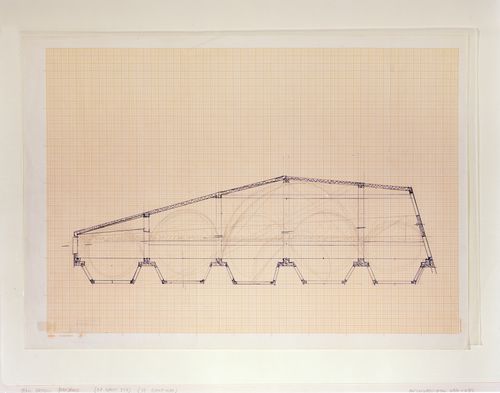
Photograph by Stefano Graziani of the following work: Gordon Matta-Clark, floor plan for Office Baroque, 1977, blue ballpoint pen on graph paper, 42 x 59.5 cm, PHCON2002:0016:058, Gordon Matta-Clark collection, Canadian Centre of Architecture, Gift of Estate of Gordon Matta-Clark, © Estate of Gordon Matta-Clark Questioning Pictures is a 36 photograph project commissioned by Fondazione Prada, Milan. Artist Stefano Graziani investigates archival and conservation systems in a number of museums. Through photographing museum objects, Graziani, focusing on the relationship between photographs, the museum objects and the power structures at play within institutions. The museums include the Canadian Centre for Architecture (CCA) in Montréal, Canada; Sir John Soane’s Museum in London, UK; the Kunstmuseum Basel, Switzerland; Museum Insel Hombroich in Neuss, Germany; the Museo di Castelvecchio in Verona, Italy; and the Plaster Cast Gallery at Museo Canova in Possagno, Italy.
PH2018:0005:033
Description:
Photograph by Stefano Graziani of the following work: Gordon Matta-Clark, floor plan for Office Baroque, 1977, blue ballpoint pen on graph paper, 42 x 59.5 cm, PHCON2002:0016:058, Gordon Matta-Clark collection, Canadian Centre of Architecture, Gift of Estate of Gordon Matta-Clark, © Estate of Gordon Matta-Clark Questioning Pictures is a 36 photograph project commissioned by Fondazione Prada, Milan. Artist Stefano Graziani investigates archival and conservation systems in a number of museums. Through photographing museum objects, Graziani, focusing on the relationship between photographs, the museum objects and the power structures at play within institutions. The museums include the Canadian Centre for Architecture (CCA) in Montréal, Canada; Sir John Soane’s Museum in London, UK; the Kunstmuseum Basel, Switzerland; Museum Insel Hombroich in Neuss, Germany; the Museo di Castelvecchio in Verona, Italy; and the Plaster Cast Gallery at Museo Canova in Possagno, Italy.
Personnes et institutions:
Date:
2017
2017
Titre:
Questioning Pictures: Photograph of floor plan for office Baroque, blue pen on graph paper by Gordon Matta-Clark, 1977
Actions:
PH2018:0005:033
Description:
Photograph by Stefano Graziani of the following work: Gordon Matta-Clark, floor plan for Office Baroque, 1977, blue ballpoint pen on graph paper, 42 x 59.5 cm, PHCON2002:0016:058, Gordon Matta-Clark collection, Canadian Centre of Architecture, Gift of Estate of Gordon Matta-Clark, © Estate of Gordon Matta-Clark Questioning Pictures is a 36 photograph project commissioned by Fondazione Prada, Milan. Artist Stefano Graziani investigates archival and conservation systems in a number of museums. Through photographing museum objects, Graziani, focusing on the relationship between photographs, the museum objects and the power structures at play within institutions. The museums include the Canadian Centre for Architecture (CCA) in Montréal, Canada; Sir John Soane’s Museum in London, UK; the Kunstmuseum Basel, Switzerland; Museum Insel Hombroich in Neuss, Germany; the Museo di Castelvecchio in Verona, Italy; and the Plaster Cast Gallery at Museo Canova in Possagno, Italy.
Questioning Pictures: Photograph of floor plan for office Baroque, blue pen on graph paper by Gordon Matta-Clark, 1977
Actions:
PH2018:0005:033
Description:
Photograph by Stefano Graziani of the following work: Gordon Matta-Clark, floor plan for Office Baroque, 1977, blue ballpoint pen on graph paper, 42 x 59.5 cm, PHCON2002:0016:058, Gordon Matta-Clark collection, Canadian Centre of Architecture, Gift of Estate of Gordon Matta-Clark, © Estate of Gordon Matta-Clark Questioning Pictures is a 36 photograph project commissioned by Fondazione Prada, Milan. Artist Stefano Graziani investigates archival and conservation systems in a number of museums. Through photographing museum objects, Graziani, focusing on the relationship between photographs, the museum objects and the power structures at play within institutions. The museums include the Canadian Centre for Architecture (CCA) in Montréal, Canada; Sir John Soane’s Museum in London, UK; the Kunstmuseum Basel, Switzerland; Museum Insel Hombroich in Neuss, Germany; the Museo di Castelvecchio in Verona, Italy; and the Plaster Cast Gallery at Museo Canova in Possagno, Italy.
Classification:
photographies
photographies
Date:
2017
2017
Personnes et institutions:
Classification:
événements
événements
Actions:
Description:
Johannes Kuehn et Simona Malvezzi présentent le travail récent de leur agence, comprenant le projet lauréat pour l’Insectarium de Montréal. Présentée dans le cadre de Larchitecture présentée, une série du CCA qui porte sur la relation entre architecture et espaces de présentation.
Johannes Kuehn et Simona Malvezzi présentent le travail récent de leur agence, comprenant le projet lauréat pour l’Insectarium de Montréal. Présentée dans le cadre de Larchitecture présentée, une série du CCA qui porte sur la relation entre architecture et espaces de présentation.
Date:
8 octobre 2015 , 18h
8 octobre 2015 , 18h
Titre:
L'architecture présentée : Kuehn Malvezzi
Actions:
Description:
Johannes Kuehn et Simona Malvezzi présentent le travail récent de leur agence, comprenant le projet lauréat pour l’Insectarium de Montréal. Présentée dans le cadre de Larchitecture présentée, une série du CCA qui porte sur la relation entre architecture et espaces de présentation.
L'architecture présentée : Kuehn Malvezzi
Actions:
Description:
Johannes Kuehn et Simona Malvezzi présentent le travail récent de leur agence, comprenant le projet lauréat pour l’Insectarium de Montréal. Présentée dans le cadre de Larchitecture présentée, une série du CCA qui porte sur la relation entre architecture et espaces de présentation.
Classification:
événements
événements
Date:
8 octobre 2015
18h
8 octobre 2015
18h
Classification:
événements
événements
Localisation:
Théâtre Paul-Desmarais
Théâtre Paul-Desmarais
Date:
27 septembre 2007
27 septembre 2007
Classification:
événements
événements
Date:
27 septembre 2007
27 septembre 2007
Localisation:
Théâtre Paul-Desmarais
Théâtre Paul-Desmarais
Niveau de description archivistique:
Projet
Projet
Numéro de référence:
AP178.S1.1980.PR03
Description:
The project series documents the 1980 design entry for Block 11-12 (Kottbusser Damm). While the records were held in the office’s archives this project was assigned the number 3/80. The office assigned the date 1980 for this project. This project was submitted to the International Architectural Exhibition Berlin competition (International Bauaustellung, IBA, circa 1979-1987), an urban renewal strategy for West Berlin, Germany. Siza had previously submitted three other projects to this competition: the Görtlitzer Bad swimming pool, Block 70 and 89 (Fränkelufer residential complex), and Block 121 (Bonjour Tristesse), which was his first built international project. He would later submit design proposals for two other projects: Monument to Gestapo victims Prinz-Albrecht-Palais and the Kulturforum. The design proposal for Block 11-12 was for a residential building on Kottbusserstrasse in Kreuzberg. Documenting the design proposal are drawings, photographs, negatives, slides, and textual documentation. Among the drawings are sketches, studies, elevations, floor plans, and site plans. Photographs and negatives depict the project site and surrounding area; additionally there are slides of drawings and the model. Also included is a work contract from the IBA signed by Siza and IBA official Hardt-Waltherr Hämer, as well as several notes and calculations. Note that textual documentation in this project series includes materials on Block 70 and 89, see AP178.S1.1980.PR03.008. Sketches in this project series may also include sketches related to other Berlin projects, such as Block 70 and 89.
AP178.S1.1980.PR03
Description:
The project series documents the 1980 design entry for Block 11-12 (Kottbusser Damm). While the records were held in the office’s archives this project was assigned the number 3/80. The office assigned the date 1980 for this project. This project was submitted to the International Architectural Exhibition Berlin competition (International Bauaustellung, IBA, circa 1979-1987), an urban renewal strategy for West Berlin, Germany. Siza had previously submitted three other projects to this competition: the Görtlitzer Bad swimming pool, Block 70 and 89 (Fränkelufer residential complex), and Block 121 (Bonjour Tristesse), which was his first built international project. He would later submit design proposals for two other projects: Monument to Gestapo victims Prinz-Albrecht-Palais and the Kulturforum. The design proposal for Block 11-12 was for a residential building on Kottbusserstrasse in Kreuzberg. Documenting the design proposal are drawings, photographs, negatives, slides, and textual documentation. Among the drawings are sketches, studies, elevations, floor plans, and site plans. Photographs and negatives depict the project site and surrounding area; additionally there are slides of drawings and the model. Also included is a work contract from the IBA signed by Siza and IBA official Hardt-Waltherr Hämer, as well as several notes and calculations. Note that textual documentation in this project series includes materials on Block 70 and 89, see AP178.S1.1980.PR03.008. Sketches in this project series may also include sketches related to other Berlin projects, such as Block 70 and 89.
Personnes et institutions:
Date:
circa 1979-1981
circa 1979-1981
Titre:
Block 11 e 12, Kottbusser Damm [11-12 Kottbusser Damm], Berlin, Germany (1979-1981)
Actions:
AP178.S1.1980.PR03
Description:
The project series documents the 1980 design entry for Block 11-12 (Kottbusser Damm). While the records were held in the office’s archives this project was assigned the number 3/80. The office assigned the date 1980 for this project. This project was submitted to the International Architectural Exhibition Berlin competition (International Bauaustellung, IBA, circa 1979-1987), an urban renewal strategy for West Berlin, Germany. Siza had previously submitted three other projects to this competition: the Görtlitzer Bad swimming pool, Block 70 and 89 (Fränkelufer residential complex), and Block 121 (Bonjour Tristesse), which was his first built international project. He would later submit design proposals for two other projects: Monument to Gestapo victims Prinz-Albrecht-Palais and the Kulturforum. The design proposal for Block 11-12 was for a residential building on Kottbusserstrasse in Kreuzberg. Documenting the design proposal are drawings, photographs, negatives, slides, and textual documentation. Among the drawings are sketches, studies, elevations, floor plans, and site plans. Photographs and negatives depict the project site and surrounding area; additionally there are slides of drawings and the model. Also included is a work contract from the IBA signed by Siza and IBA official Hardt-Waltherr Hämer, as well as several notes and calculations. Note that textual documentation in this project series includes materials on Block 70 and 89, see AP178.S1.1980.PR03.008. Sketches in this project series may also include sketches related to other Berlin projects, such as Block 70 and 89.
Block 11 e 12, Kottbusser Damm [11-12 Kottbusser Damm], Berlin, Germany (1979-1981)
Actions:
AP178.S1.1980.PR03
Description:
The project series documents the 1980 design entry for Block 11-12 (Kottbusser Damm). While the records were held in the office’s archives this project was assigned the number 3/80. The office assigned the date 1980 for this project. This project was submitted to the International Architectural Exhibition Berlin competition (International Bauaustellung, IBA, circa 1979-1987), an urban renewal strategy for West Berlin, Germany. Siza had previously submitted three other projects to this competition: the Görtlitzer Bad swimming pool, Block 70 and 89 (Fränkelufer residential complex), and Block 121 (Bonjour Tristesse), which was his first built international project. He would later submit design proposals for two other projects: Monument to Gestapo victims Prinz-Albrecht-Palais and the Kulturforum. The design proposal for Block 11-12 was for a residential building on Kottbusserstrasse in Kreuzberg. Documenting the design proposal are drawings, photographs, negatives, slides, and textual documentation. Among the drawings are sketches, studies, elevations, floor plans, and site plans. Photographs and negatives depict the project site and surrounding area; additionally there are slides of drawings and the model. Also included is a work contract from the IBA signed by Siza and IBA official Hardt-Waltherr Hämer, as well as several notes and calculations. Note that textual documentation in this project series includes materials on Block 70 and 89, see AP178.S1.1980.PR03.008. Sketches in this project series may also include sketches related to other Berlin projects, such as Block 70 and 89.
Niveau de description archivistique:
Project
Project
Date:
circa 1979-1981
circa 1979-1981
Personnes et institutions:
Classification:
événements
événements

Actions:
Description:
Le séminaire Outils d’aujourdhui est une partie intégrale du Programme du CCA pour les doctorants. Nous invitons des chercheurs à ouvrir leurs boîtes à outils, à partager des approches et des défis méthodologiques, et à discuter de concepts clés dans les débats contemporains en architecture et disciplines connexes.
Le séminaire Outils d’aujourdhui est une partie intégrale du Programme du CCA pour les doctorants. Nous invitons des chercheurs à ouvrir leurs boîtes à outils, à partager des approches et des défis méthodologiques, et à discuter de concepts clés dans les débats contemporains en architecture et disciplines connexes.
Date:
8 juillet 2013 au 18 juillet 2013
8 juillet 2013 au 18 juillet 2013
Titre:
Outils d’aujourd’hui : L’archéologie du numérique
Actions:
Description:
Le séminaire Outils d’aujourdhui est une partie intégrale du Programme du CCA pour les doctorants. Nous invitons des chercheurs à ouvrir leurs boîtes à outils, à partager des approches et des défis méthodologiques, et à discuter de concepts clés dans les débats contemporains en architecture et disciplines connexes.
Outils d’aujourd’hui : L’archéologie du numérique
Actions:
Description:
Le séminaire Outils d’aujourdhui est une partie intégrale du Programme du CCA pour les doctorants. Nous invitons des chercheurs à ouvrir leurs boîtes à outils, à partager des approches et des défis méthodologiques, et à discuter de concepts clés dans les débats contemporains en architecture et disciplines connexes.
Classification:
événements
événements
Date:
8 juillet 2013 au
18 juillet 2013
8 juillet 2013 au
18 juillet 2013
Classification:
documents textuels
documents textuels
Numéro de référence:
ARCH153544
Description:
Documentation concerning the project of a Journal for Discussion, and Criticism of Architecture, Planning and Urban Design, to be edited by Stanford Anderson and Anthony Vidler : with lists of proposed writers and topics for first issues; budget data Photocopy of Denise Levertov : "Some Notes on Organic Form", Poetry, vol. 106, no 6, September 1965 Schedule and introductory text by H.-R. Hitchcock for the "3rd Modern Architecture Symposium", Columbia University, May 13-15, 1966 CASE editorial Board Meeting, May 9 1965 Schedule of Seminar on Constructivism, A.A. 24/6/65 "A Work Study Program" Correspondence between PDE and Anthony Vidler Letter from Stuart Cohen [Statements of the editors about] Re:Form Editorial Statement (CASE/Problems in Architecture) Statement of the Editorial Board New York May 9, 1965; Colin Rowe, Peter Eisenman, Stanford Anderson, Kenneth Frampton, Henry Millon
ARCH153544
Description:
Documentation concerning the project of a Journal for Discussion, and Criticism of Architecture, Planning and Urban Design, to be edited by Stanford Anderson and Anthony Vidler : with lists of proposed writers and topics for first issues; budget data Photocopy of Denise Levertov : "Some Notes on Organic Form", Poetry, vol. 106, no 6, September 1965 Schedule and introductory text by H.-R. Hitchcock for the "3rd Modern Architecture Symposium", Columbia University, May 13-15, 1966 CASE editorial Board Meeting, May 9 1965 Schedule of Seminar on Constructivism, A.A. 24/6/65 "A Work Study Program" Correspondence between PDE and Anthony Vidler Letter from Stuart Cohen [Statements of the editors about] Re:Form Editorial Statement (CASE/Problems in Architecture) Statement of the Editorial Board New York May 9, 1965; Colin Rowe, Peter Eisenman, Stanford Anderson, Kenneth Frampton, Henry Millon
Personnes et institutions:
Date:
1965-1971
1965-1971
Titre:
PDE IAUS, 1971: D Projects - 2 IAUS magazine: CASE Mag. 1965-1971
Actions:
ARCH153544
Description:
Documentation concerning the project of a Journal for Discussion, and Criticism of Architecture, Planning and Urban Design, to be edited by Stanford Anderson and Anthony Vidler : with lists of proposed writers and topics for first issues; budget data Photocopy of Denise Levertov : "Some Notes on Organic Form", Poetry, vol. 106, no 6, September 1965 Schedule and introductory text by H.-R. Hitchcock for the "3rd Modern Architecture Symposium", Columbia University, May 13-15, 1966 CASE editorial Board Meeting, May 9 1965 Schedule of Seminar on Constructivism, A.A. 24/6/65 "A Work Study Program" Correspondence between PDE and Anthony Vidler Letter from Stuart Cohen [Statements of the editors about] Re:Form Editorial Statement (CASE/Problems in Architecture) Statement of the Editorial Board New York May 9, 1965; Colin Rowe, Peter Eisenman, Stanford Anderson, Kenneth Frampton, Henry Millon
PDE IAUS, 1971: D Projects - 2 IAUS magazine: CASE Mag. 1965-1971
Actions:
ARCH153544
Description:
Documentation concerning the project of a Journal for Discussion, and Criticism of Architecture, Planning and Urban Design, to be edited by Stanford Anderson and Anthony Vidler : with lists of proposed writers and topics for first issues; budget data Photocopy of Denise Levertov : "Some Notes on Organic Form", Poetry, vol. 106, no 6, September 1965 Schedule and introductory text by H.-R. Hitchcock for the "3rd Modern Architecture Symposium", Columbia University, May 13-15, 1966 CASE editorial Board Meeting, May 9 1965 Schedule of Seminar on Constructivism, A.A. 24/6/65 "A Work Study Program" Correspondence between PDE and Anthony Vidler Letter from Stuart Cohen [Statements of the editors about] Re:Form Editorial Statement (CASE/Problems in Architecture) Statement of the Editorial Board New York May 9, 1965; Colin Rowe, Peter Eisenman, Stanford Anderson, Kenneth Frampton, Henry Millon
Classification:
documents textuels
documents textuels
Date:
1965-1971
1965-1971
Personnes et institutions:
Niveau de description archivistique:
Projet
Projet
Numéro de référence:
AP075.S1.1999.PR05
Description:
Project series documents Cornelia Hahn Oberlander's landscape project for the garden of Linda Yorke and Gordon Forbes in Vancouver, British Columbia. Oberlander worked on this project in the second half of the 1990s. She worked with architect André Rowland who was in charge of designing an addition to the residence designed in the late 1940s by Ned Pratt from architectural firm Sharp, Thompson, Berwick and & Pratt. The project consisted in redesigning the entire yard and adding a play area for children. Oberlander included terraces next to the addition to the house, planting beds and planters. The play area included a tower house accessible by a rope bridge, a two levels playhouse with wooden porch, a slide, a fireman pole and a ladder, and a small water canal with stone edges and activated by a hand pump. The project series contains landscape sketches, design development drawings, including a landscape concept plan, details, sections and elevations for play area and play structures, and building plans used as reference. The project is also documented through correspondence, including with clients, suppliers and consultants, concept notes by Oberlander, plant lists, financial material, research material, and photographs of the landscaping. Source: Herrington, Susan. Cornelia Hahn Oberlander: Making the Modern Landscape, University of Virginia Press, 2014, 304 pages.
AP075.S1.1999.PR05
Description:
Project series documents Cornelia Hahn Oberlander's landscape project for the garden of Linda Yorke and Gordon Forbes in Vancouver, British Columbia. Oberlander worked on this project in the second half of the 1990s. She worked with architect André Rowland who was in charge of designing an addition to the residence designed in the late 1940s by Ned Pratt from architectural firm Sharp, Thompson, Berwick and & Pratt. The project consisted in redesigning the entire yard and adding a play area for children. Oberlander included terraces next to the addition to the house, planting beds and planters. The play area included a tower house accessible by a rope bridge, a two levels playhouse with wooden porch, a slide, a fireman pole and a ladder, and a small water canal with stone edges and activated by a hand pump. The project series contains landscape sketches, design development drawings, including a landscape concept plan, details, sections and elevations for play area and play structures, and building plans used as reference. The project is also documented through correspondence, including with clients, suppliers and consultants, concept notes by Oberlander, plant lists, financial material, research material, and photographs of the landscaping. Source: Herrington, Susan. Cornelia Hahn Oberlander: Making the Modern Landscape, University of Virginia Press, 2014, 304 pages.
Personnes et institutions:
Date:
1947-2006
1947-2006
Titre:
Yorke-Forbes Residence, Vancouver, British Columbia (1999)
Actions:
AP075.S1.1999.PR05
Description:
Project series documents Cornelia Hahn Oberlander's landscape project for the garden of Linda Yorke and Gordon Forbes in Vancouver, British Columbia. Oberlander worked on this project in the second half of the 1990s. She worked with architect André Rowland who was in charge of designing an addition to the residence designed in the late 1940s by Ned Pratt from architectural firm Sharp, Thompson, Berwick and & Pratt. The project consisted in redesigning the entire yard and adding a play area for children. Oberlander included terraces next to the addition to the house, planting beds and planters. The play area included a tower house accessible by a rope bridge, a two levels playhouse with wooden porch, a slide, a fireman pole and a ladder, and a small water canal with stone edges and activated by a hand pump. The project series contains landscape sketches, design development drawings, including a landscape concept plan, details, sections and elevations for play area and play structures, and building plans used as reference. The project is also documented through correspondence, including with clients, suppliers and consultants, concept notes by Oberlander, plant lists, financial material, research material, and photographs of the landscaping. Source: Herrington, Susan. Cornelia Hahn Oberlander: Making the Modern Landscape, University of Virginia Press, 2014, 304 pages.
Yorke-Forbes Residence, Vancouver, British Columbia (1999)
Actions:
AP075.S1.1999.PR05
Description:
Project series documents Cornelia Hahn Oberlander's landscape project for the garden of Linda Yorke and Gordon Forbes in Vancouver, British Columbia. Oberlander worked on this project in the second half of the 1990s. She worked with architect André Rowland who was in charge of designing an addition to the residence designed in the late 1940s by Ned Pratt from architectural firm Sharp, Thompson, Berwick and & Pratt. The project consisted in redesigning the entire yard and adding a play area for children. Oberlander included terraces next to the addition to the house, planting beds and planters. The play area included a tower house accessible by a rope bridge, a two levels playhouse with wooden porch, a slide, a fireman pole and a ladder, and a small water canal with stone edges and activated by a hand pump. The project series contains landscape sketches, design development drawings, including a landscape concept plan, details, sections and elevations for play area and play structures, and building plans used as reference. The project is also documented through correspondence, including with clients, suppliers and consultants, concept notes by Oberlander, plant lists, financial material, research material, and photographs of the landscaping. Source: Herrington, Susan. Cornelia Hahn Oberlander: Making the Modern Landscape, University of Virginia Press, 2014, 304 pages.
Niveau de description archivistique:
Project
Project
Date:
1947-2006
1947-2006
Personnes et institutions:
Niveau de description archivistique:
Projet
Projet
Titre:
Puerto Málaga, Spain (1992)
Puerto Málaga, Spain (1992)
Numéro de référence:
AP164.S1.1992.D1
Description:
The project series documents a competition entry for a national competition organised by the Málaga City Council. The competition was held to plan the seafront promenade and park between the Guadalmedina river and the fuel storage facilities of the Compañía Arrendataria del Monopolio del Petróleo, S.A. (CAMPSA), in Málaga, Spain. The firm identified this project as number 75. Abalos & Herreros worked with Javier Fresneda, Martin Marciano, and Javier Peña. Documenting the project are conceptual, design development and presentation drawings, cartographic, graphic, photographic and reference materials, competition documents, clippings, correspondence, and notes.
AP164.S1.1992.D1
Description:
The project series documents a competition entry for a national competition organised by the Málaga City Council. The competition was held to plan the seafront promenade and park between the Guadalmedina river and the fuel storage facilities of the Compañía Arrendataria del Monopolio del Petróleo, S.A. (CAMPSA), in Málaga, Spain. The firm identified this project as number 75. Abalos & Herreros worked with Javier Fresneda, Martin Marciano, and Javier Peña. Documenting the project are conceptual, design development and presentation drawings, cartographic, graphic, photographic and reference materials, competition documents, clippings, correspondence, and notes.
Personnes et institutions:
Date:
circa 1991-1993
circa 1991-1993
Titre:
Puerto Málaga, Spain (1992)
Actions:
AP164.S1.1992.D1
Description:
The project series documents a competition entry for a national competition organised by the Málaga City Council. The competition was held to plan the seafront promenade and park between the Guadalmedina river and the fuel storage facilities of the Compañía Arrendataria del Monopolio del Petróleo, S.A. (CAMPSA), in Málaga, Spain. The firm identified this project as number 75. Abalos & Herreros worked with Javier Fresneda, Martin Marciano, and Javier Peña. Documenting the project are conceptual, design development and presentation drawings, cartographic, graphic, photographic and reference materials, competition documents, clippings, correspondence, and notes.
Puerto Málaga, Spain (1992)
Actions:
AP164.S1.1992.D1
Description:
The project series documents a competition entry for a national competition organised by the Málaga City Council. The competition was held to plan the seafront promenade and park between the Guadalmedina river and the fuel storage facilities of the Compañía Arrendataria del Monopolio del Petróleo, S.A. (CAMPSA), in Málaga, Spain. The firm identified this project as number 75. Abalos & Herreros worked with Javier Fresneda, Martin Marciano, and Javier Peña. Documenting the project are conceptual, design development and presentation drawings, cartographic, graphic, photographic and reference materials, competition documents, clippings, correspondence, and notes.
Niveau de description archivistique:
Project
Project
Date:
circa 1991-1993
circa 1991-1993
Personnes et institutions:
Niveau de description archivistique:
Projet
Projet
Numéro de référence:
AP180.S1.1987.PR01
Description:
This project series documents the unrealized design proposal for the Sperone del Guasco, in Ancona. Riva worked on this project in 1987. The project was commissioned in the context of the exhibition "Nine project projects for nine Cities" organized by the Milan Triennale. It consisted of a walled pathway climbing the Guasco hill to the San Ciriaco cathedral. Riva's proposal was later presented in the exhibition "Umberto Riva, sistemazioni urbane" in 1993, at the Pinacoteca civica Francesco Podesti in Ancona. The project series contains studies and design development drawings, including elevations, sections, and plans. It also includes a project description.
AP180.S1.1987.PR01
Description:
This project series documents the unrealized design proposal for the Sperone del Guasco, in Ancona. Riva worked on this project in 1987. The project was commissioned in the context of the exhibition "Nine project projects for nine Cities" organized by the Milan Triennale. It consisted of a walled pathway climbing the Guasco hill to the San Ciriaco cathedral. Riva's proposal was later presented in the exhibition "Umberto Riva, sistemazioni urbane" in 1993, at the Pinacoteca civica Francesco Podesti in Ancona. The project series contains studies and design development drawings, including elevations, sections, and plans. It also includes a project description.
Personnes et institutions:
Date:
ca. 1987
ca. 1987
Titre:
Progetto di sistemazione, Sperone del Guasco [Urban development project, Sperone del Guasco], Ancona, Italy (1987)
Actions:
AP180.S1.1987.PR01
Description:
This project series documents the unrealized design proposal for the Sperone del Guasco, in Ancona. Riva worked on this project in 1987. The project was commissioned in the context of the exhibition "Nine project projects for nine Cities" organized by the Milan Triennale. It consisted of a walled pathway climbing the Guasco hill to the San Ciriaco cathedral. Riva's proposal was later presented in the exhibition "Umberto Riva, sistemazioni urbane" in 1993, at the Pinacoteca civica Francesco Podesti in Ancona. The project series contains studies and design development drawings, including elevations, sections, and plans. It also includes a project description.
Progetto di sistemazione, Sperone del Guasco [Urban development project, Sperone del Guasco], Ancona, Italy (1987)
Actions:
AP180.S1.1987.PR01
Description:
This project series documents the unrealized design proposal for the Sperone del Guasco, in Ancona. Riva worked on this project in 1987. The project was commissioned in the context of the exhibition "Nine project projects for nine Cities" organized by the Milan Triennale. It consisted of a walled pathway climbing the Guasco hill to the San Ciriaco cathedral. Riva's proposal was later presented in the exhibition "Umberto Riva, sistemazioni urbane" in 1993, at the Pinacoteca civica Francesco Podesti in Ancona. The project series contains studies and design development drawings, including elevations, sections, and plans. It also includes a project description.
Niveau de description archivistique:
Project
Project
Date:
ca. 1987
ca. 1987
Personnes et institutions:


