


1804 Résultats
Classification:
livres
livres
Actions:
Prix:
$43.95
(disponible sur commande)
Résumé:
Every city has at least one, and great cities often have more. From the Louvre to the Bilbao Guggenheim, the museum has had a long-standing relationship with the city. This ground-breaking volume examines the meaning of museum architecture in the urban environment, considering important issues such as forms of civic representation, urban regeneration, cultural tourism and(...)
$43.95
(disponible sur commande)
Résumé:
Every city has at least one, and great cities often have more. From the Louvre to the Bilbao Guggenheim, the museum has had a long-standing relationship with the city. This ground-breaking volume examines the meaning of museum architecture in the urban environment, considering important issues such as forms of civic representation, urban regeneration, cultural tourism and(...)
Titre:
The architecture of the museum : symbolic structures, urban contexts
Actions:
Prix:
$43.95
(disponible sur commande)
Résumé:
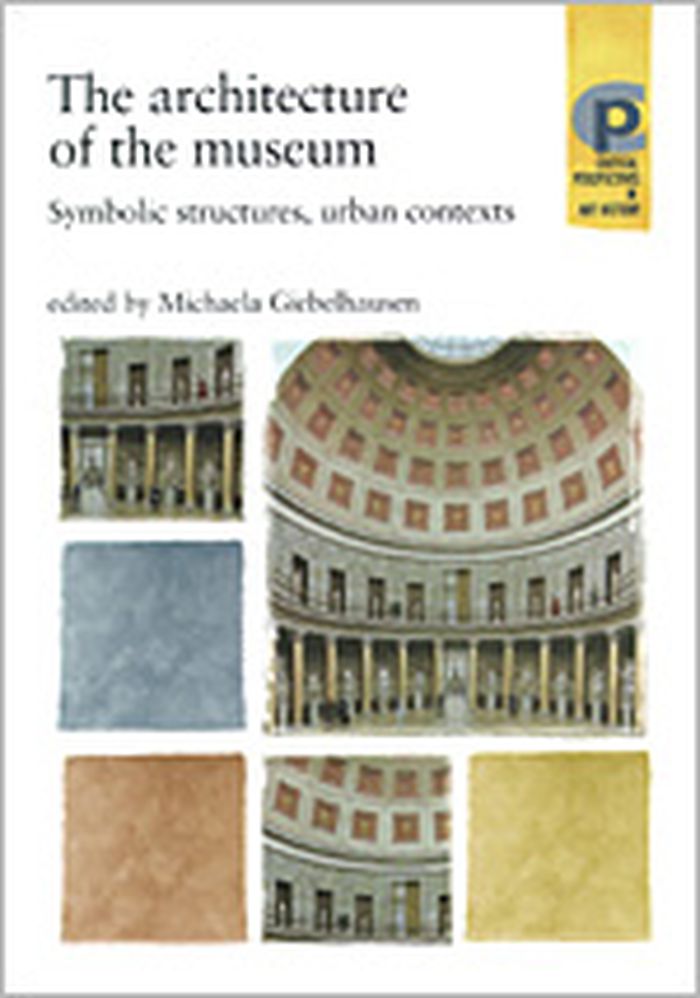
Every city has at least one, and great cities often have more. From the Louvre to the Bilbao Guggenheim, the museum has had a long-standing relationship with the city. This ground-breaking volume examines the meaning of museum architecture in the urban environment, considering important issues such as forms of civic representation, urban regeneration, cultural tourism and the museumification of the city itself. Bringing together an international group of distinguished scholars from a range of disciplines, this volume bridges the gap between museum studies and traditional architectural history. The contributors explore the conceptual architectural frameworks that govern the museum's diverse symbolic structures and focus attention on the complex ways in which museums function in the city. Ranging from the 17th century to the present day, the detailed and thoroughly researched case studies are drawn from Great Britain, continental Europe, South America and Australia.
The architecture of the museum : symbolic structures, urban contexts
Actions:
Prix:
$43.95
(disponible sur commande)
Résumé:
Every city has at least one, and great cities often have more. From the Louvre to the Bilbao Guggenheim, the museum has had a long-standing relationship with the city. This ground-breaking volume examines the meaning of museum architecture in the urban environment, considering important issues such as forms of civic representation, urban regeneration, cultural tourism and the museumification of the city itself. Bringing together an international group of distinguished scholars from a range of disciplines, this volume bridges the gap between museum studies and traditional architectural history. The contributors explore the conceptual architectural frameworks that govern the museum's diverse symbolic structures and focus attention on the complex ways in which museums function in the city. Ranging from the 17th century to the present day, the detailed and thoroughly researched case studies are drawn from Great Britain, continental Europe, South America and Australia.
Classification:
livres
livres
Publication:
novembre 2000, Manchester
novembre 2000, Manchester
Sujet:
Muséologie
Muséologie
Classification:
livres
livres
Actions:
Prix:
$49.95
(disponible sur commande)
Résumé:
Versailles and the Mechanics of Power explores the significance of the palace and gardens of Versailles. Graafland's exercise consists of superimposing the choreography for the 'Balet Comique de la Royne' of Balthasar de Beaujoyeulx upon the somewhat later gardens of Le Nôtre and the French Sun King. Avoiding a merely visual logic the author analyses the geometric(...)
$49.95
(disponible sur commande)
Résumé:
Versailles and the Mechanics of Power explores the significance of the palace and gardens of Versailles. Graafland's exercise consists of superimposing the choreography for the 'Balet Comique de la Royne' of Balthasar de Beaujoyeulx upon the somewhat later gardens of Le Nôtre and the French Sun King. Avoiding a merely visual logic the author analyses the geometric(...)
Titre:
Versailles and the mechanics of power : the subjugation of Circe, an essay
Actions:
Prix:
$49.95
(disponible sur commande)
Résumé:
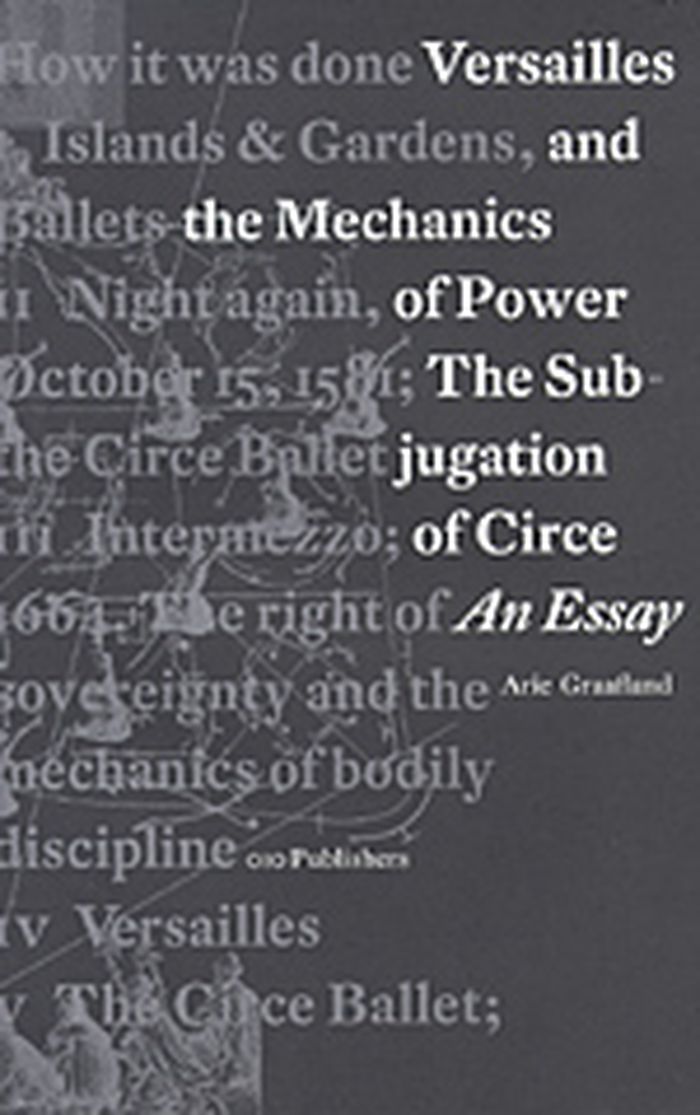
Versailles and the Mechanics of Power explores the significance of the palace and gardens of Versailles. Graafland's exercise consists of superimposing the choreography for the 'Balet Comique de la Royne' of Balthasar de Beaujoyeulx upon the somewhat later gardens of Le Nôtre and the French Sun King. Avoiding a merely visual logic the author analyses the geometric character of the human body in that ballet and compares layout and ballet as a mechanics of power in an early symbolic state. Drawing on the many books and essays on Versailles, the author has added the ballet structure, a framework that tells us about the sometimes hidden but mostly very explicit desires of this period. These in turn tell us not only about the gardens and ballet but even more about French society at that time. Completing the book is a set of analytical drawings which give us both the layout of Versailles and the choreography of the 'Balet', explaining the mechanics of bodily discipline in the 17th century.
Versailles and the mechanics of power : the subjugation of Circe, an essay
Actions:
Prix:
$49.95
(disponible sur commande)
Résumé:
Versailles and the Mechanics of Power explores the significance of the palace and gardens of Versailles. Graafland's exercise consists of superimposing the choreography for the 'Balet Comique de la Royne' of Balthasar de Beaujoyeulx upon the somewhat later gardens of Le Nôtre and the French Sun King. Avoiding a merely visual logic the author analyses the geometric character of the human body in that ballet and compares layout and ballet as a mechanics of power in an early symbolic state. Drawing on the many books and essays on Versailles, the author has added the ballet structure, a framework that tells us about the sometimes hidden but mostly very explicit desires of this period. These in turn tell us not only about the gardens and ballet but even more about French society at that time. Completing the book is a set of analytical drawings which give us both the layout of Versailles and the choreography of the 'Balet', explaining the mechanics of bodily discipline in the 17th century.
Classification:
livres
livres
Publication:
janvier 2002, Rotterdam
janvier 2002, Rotterdam
Sujet:
Théorie du paysage
Théorie du paysage
Classification:
livres
livres
Actions:
Prix:
$149.95
(disponible en magasin)
Résumé:
The first of a unique series of translations of Scamozzi's L'Idea della Architettura Universale. The northern Italian architect, Vincenzo Scamozzi, (1548-1616) designed a number of important palaces, villas and churches in and around Vicenza, Padua and Venice. In addition, he completed a comprehensive study of ancient classical architecture. including the possibilities(...)
$149.95
(disponible en magasin)
Résumé:
The first of a unique series of translations of Scamozzi's L'Idea della Architettura Universale. The northern Italian architect, Vincenzo Scamozzi, (1548-1616) designed a number of important palaces, villas and churches in and around Vicenza, Padua and Venice. In addition, he completed a comprehensive study of ancient classical architecture. including the possibilities(...)
Sujet:
Architecture, monographies
Architecture, monographies
Publication:
janvier 2003, Amsterdam
janvier 2003, Amsterdam
Titre:
Vincenzo Scamozzi, Venetian architect book III : the idea of a universal architecture, villas and country estates
Actions:
Prix:
$149.95
(disponible en magasin)
Résumé:
The first of a unique series of translations of Scamozzi's L'Idea della Architettura Universale. The northern Italian architect, Vincenzo Scamozzi, (1548-1616) designed a number of important palaces, villas and churches in and around Vicenza, Padua and Venice. In addition, he completed a comprehensive study of ancient classical architecture. including the possibilities for its application in a modern context. The first edition of the book was published in 1615. Scamozzi distinguishes himself from his predecessors Vitruvius and Palladio by the scientific approach he follows in his treatise, in which his own designs appear as examples. The clear and detailed account of the historical and geographical background to the principles of classical architecture led to the book's wide popularity in the Northern Netherlands throughout the 17th century. Scamozzi's text was regarded as the most suitable manual for mastering the rules of building, and his theories had a considerable impact upon classical architecture in the Dutch Golden Age.
Vincenzo Scamozzi, Venetian architect book III : the idea of a universal architecture, villas and country estates
Actions:
Prix:
$149.95
(disponible en magasin)
Résumé:
The first of a unique series of translations of Scamozzi's L'Idea della Architettura Universale. The northern Italian architect, Vincenzo Scamozzi, (1548-1616) designed a number of important palaces, villas and churches in and around Vicenza, Padua and Venice. In addition, he completed a comprehensive study of ancient classical architecture. including the possibilities for its application in a modern context. The first edition of the book was published in 1615. Scamozzi distinguishes himself from his predecessors Vitruvius and Palladio by the scientific approach he follows in his treatise, in which his own designs appear as examples. The clear and detailed account of the historical and geographical background to the principles of classical architecture led to the book's wide popularity in the Northern Netherlands throughout the 17th century. Scamozzi's text was regarded as the most suitable manual for mastering the rules of building, and his theories had a considerable impact upon classical architecture in the Dutch Golden Age.
Classification:
livres
livres
Publication:
janvier 2003, Amsterdam
janvier 2003, Amsterdam
Sujet:
Architecture, monographies
Architecture, monographies
Classification:
périodiques
périodiques
Actions:
Prix:
$11.00
(disponible sur commande)
Résumé:
Cabinet is an award-winning quarterly magazine of art and culture that confounds expectations of what is typically meant by the words "art," "culture," and sometimes even "magazine." Like the 17th-century cabinet of curiosities to which its name alludes, Cabinet is as interested in the margins of culture as its center. Presenting wide-ranging, multi-disciplinary content(...)
$11.00
(disponible sur commande)
Résumé:
Cabinet is an award-winning quarterly magazine of art and culture that confounds expectations of what is typically meant by the words "art," "culture," and sometimes even "magazine." Like the 17th-century cabinet of curiosities to which its name alludes, Cabinet is as interested in the margins of culture as its center. Presenting wide-ranging, multi-disciplinary content(...)
Titre:
Cabinet 18 : fictional states, 2005
Actions:
Prix:
$11.00
(disponible sur commande)
Résumé:
Cabinet is an award-winning quarterly magazine of art and culture that confounds expectations of what is typically meant by the words "art," "culture," and sometimes even "magazine." Like the 17th-century cabinet of curiosities to which its name alludes, Cabinet is as interested in the margins of culture as its center. Presenting wide-ranging, multi-disciplinary content in each issue through the varied formats of regular columns, essays, interviews, and special artist projects, Cabinet's hybrid sensibility merges the popular appeal of an arts periodical, the visually engaging style of a design magazine, and the in-depth exploration of a scholarly journal. Playful and serious, exuberant and committed, Cabinet's omnivorous appetite for understanding the world makes each of its issues a valuable sourcebook of ideas for a wide range of readers, from artists and designers to scientists and historians. In an age of increasing specialization, Cabinet looks to previous models of the well-rounded thinker to forge a new type of magazine for the intellectually curious reader of the future.
Cabinet 18 : fictional states, 2005
Actions:
Prix:
$11.00
(disponible sur commande)
Résumé:
Cabinet is an award-winning quarterly magazine of art and culture that confounds expectations of what is typically meant by the words "art," "culture," and sometimes even "magazine." Like the 17th-century cabinet of curiosities to which its name alludes, Cabinet is as interested in the margins of culture as its center. Presenting wide-ranging, multi-disciplinary content in each issue through the varied formats of regular columns, essays, interviews, and special artist projects, Cabinet's hybrid sensibility merges the popular appeal of an arts periodical, the visually engaging style of a design magazine, and the in-depth exploration of a scholarly journal. Playful and serious, exuberant and committed, Cabinet's omnivorous appetite for understanding the world makes each of its issues a valuable sourcebook of ideas for a wide range of readers, from artists and designers to scientists and historians. In an age of increasing specialization, Cabinet looks to previous models of the well-rounded thinker to forge a new type of magazine for the intellectually curious reader of the future.
Classification:
périodiques
périodiques
Publication:
octobre 2005, New York
octobre 2005, New York
Sujet:
Revues
Revues
Classification:
périodiques
périodiques
Actions:
Prix:
$12.00
(disponible sur commande)
Résumé:
Cabinet is an award-winning quarterly magazine of art and culture that confounds expectations of what is typically meant by the words "art," "culture," and sometimes even "magazine." Like the 17th-century cabinet of curiosities to which its name alludes, Cabinet is as interested in the margins of culture as its center. Presenting wide-ranging, multi-disciplinary content(...)
$12.00
(disponible sur commande)
Résumé:
Cabinet is an award-winning quarterly magazine of art and culture that confounds expectations of what is typically meant by the words "art," "culture," and sometimes even "magazine." Like the 17th-century cabinet of curiosities to which its name alludes, Cabinet is as interested in the margins of culture as its center. Presenting wide-ranging, multi-disciplinary content(...)
Titre:
Cabinet 15: the average, fall 2004
Actions:
Prix:
$12.00
(disponible sur commande)
Résumé:
Cabinet is an award-winning quarterly magazine of art and culture that confounds expectations of what is typically meant by the words "art," "culture," and sometimes even "magazine." Like the 17th-century cabinet of curiosities to which its name alludes, Cabinet is as interested in the margins of culture as its center. Presenting wide-ranging, multi-disciplinary content in each issue through the varied formats of regular columns, essays, interviews, and special artist projects, Cabinet's hybrid sensibility merges the popular appeal of an arts periodical, the visually engaging style of a design magazine, and the in-depth exploration of a scholarly journal. Playful and serious, exuberant and committed, Cabinet's omnivorous appetite for understanding the world makes each of its issues a valuable sourcebook of ideas for a wide range of readers, from artists and designers to scientists and historians. In an age of increasing specialization, Cabinet looks to previous models of the well-rounded thinker to forge a new type of magazine for the intellectually curious reader of the future.
Cabinet 15: the average, fall 2004
Actions:
Prix:
$12.00
(disponible sur commande)
Résumé:
Cabinet is an award-winning quarterly magazine of art and culture that confounds expectations of what is typically meant by the words "art," "culture," and sometimes even "magazine." Like the 17th-century cabinet of curiosities to which its name alludes, Cabinet is as interested in the margins of culture as its center. Presenting wide-ranging, multi-disciplinary content in each issue through the varied formats of regular columns, essays, interviews, and special artist projects, Cabinet's hybrid sensibility merges the popular appeal of an arts periodical, the visually engaging style of a design magazine, and the in-depth exploration of a scholarly journal. Playful and serious, exuberant and committed, Cabinet's omnivorous appetite for understanding the world makes each of its issues a valuable sourcebook of ideas for a wide range of readers, from artists and designers to scientists and historians. In an age of increasing specialization, Cabinet looks to previous models of the well-rounded thinker to forge a new type of magazine for the intellectually curious reader of the future.
Classification:
périodiques
périodiques
Publication:
février 2004, New York
février 2004, New York
Sujet:
Revues
Revues
Classification:
périodiques
périodiques
Actions:
Prix:
$12.00
(disponible sur commande)
Résumé:
Cabinet is an award-winning quarterly magazine of art and culture that confounds expectations of what is typically meant by the words "art," "culture," and sometimes even "magazine." Like the 17th-century cabinet of curiosities to which its name alludes, Cabinet is as interested in the margins of culture as its center. Presenting wide-ranging, multi-disciplinary content(...)
$12.00
(disponible sur commande)
Résumé:
Cabinet is an award-winning quarterly magazine of art and culture that confounds expectations of what is typically meant by the words "art," "culture," and sometimes even "magazine." Like the 17th-century cabinet of curiosities to which its name alludes, Cabinet is as interested in the margins of culture as its center. Presenting wide-ranging, multi-disciplinary content(...)
Titre:
Cabinet 12: the enemy, fall 2003 - winter 2004
Actions:
Prix:
$12.00
(disponible sur commande)
Résumé:
Cabinet is an award-winning quarterly magazine of art and culture that confounds expectations of what is typically meant by the words "art," "culture," and sometimes even "magazine." Like the 17th-century cabinet of curiosities to which its name alludes, Cabinet is as interested in the margins of culture as its center. Presenting wide-ranging, multi-disciplinary content in each issue through the varied formats of regular columns, essays, interviews, and special artist projects, Cabinet's hybrid sensibility merges the popular appeal of an arts periodical, the visually engaging style of a design magazine, and the in-depth exploration of a scholarly journal. Playful and serious, exuberant and committed, Cabinet's omnivorous appetite for understanding the world makes each of its issues a valuable sourcebook of ideas for a wide range of readers, from artists and designers to scientists and historians. In an age of increasing specialization, Cabinet looks to previous models of the well-rounded thinker to forge a new type of magazine for the intellectually curious reader of the future.
Cabinet 12: the enemy, fall 2003 - winter 2004
Actions:
Prix:
$12.00
(disponible sur commande)
Résumé:
Cabinet is an award-winning quarterly magazine of art and culture that confounds expectations of what is typically meant by the words "art," "culture," and sometimes even "magazine." Like the 17th-century cabinet of curiosities to which its name alludes, Cabinet is as interested in the margins of culture as its center. Presenting wide-ranging, multi-disciplinary content in each issue through the varied formats of regular columns, essays, interviews, and special artist projects, Cabinet's hybrid sensibility merges the popular appeal of an arts periodical, the visually engaging style of a design magazine, and the in-depth exploration of a scholarly journal. Playful and serious, exuberant and committed, Cabinet's omnivorous appetite for understanding the world makes each of its issues a valuable sourcebook of ideas for a wide range of readers, from artists and designers to scientists and historians. In an age of increasing specialization, Cabinet looks to previous models of the well-rounded thinker to forge a new type of magazine for the intellectually curious reader of the future.
Classification:
périodiques
périodiques
Publication:
février 2004, New York
février 2004, New York
Sujet:
Revues
Revues
Classification:
périodiques
périodiques
Titre:
Cabinet 23: fruits
Cabinet 23: fruits
Actions:
Prix:
$11.00
(disponible en magasin)
Résumé:
Cabinet is an award-winning quarterly magazine of art and culture that confounds expectations of what is typically meant by the words "art," "culture," and sometimes even "magazine." Like the 17th-century cabinet of curiosities to which its name alludes, Cabinet is as interested in the margins of culture as its center. Presenting wide-ranging, multi-disciplinary content(...)
$11.00
(disponible en magasin)
Résumé:
Cabinet is an award-winning quarterly magazine of art and culture that confounds expectations of what is typically meant by the words "art," "culture," and sometimes even "magazine." Like the 17th-century cabinet of curiosities to which its name alludes, Cabinet is as interested in the margins of culture as its center. Presenting wide-ranging, multi-disciplinary content(...)
Titre:
Cabinet 23: fruits
Actions:
Prix:
$11.00
(disponible en magasin)
Résumé:
Cabinet is an award-winning quarterly magazine of art and culture that confounds expectations of what is typically meant by the words "art," "culture," and sometimes even "magazine." Like the 17th-century cabinet of curiosities to which its name alludes, Cabinet is as interested in the margins of culture as its center. Presenting wide-ranging, multi-disciplinary content in each issue through the varied formats of regular columns, essays, interviews, and special artist projects, Cabinet's hybrid sensibility merges the popular appeal of an arts periodical, the visually engaging style of a design magazine, and the in-depth exploration of a scholarly journal. Playful and serious, exuberant and committed, Cabinet's omnivorous appetite for understanding the world makes each of its issues a valuable sourcebook of ideas for a wide range of readers, from artists and designers to scientists and historians. In an age of increasing specialization, Cabinet looks to previous models of the well-rounded thinker to forge a new type of magazine for the intellectually curious reader of the future.
Cabinet 23: fruits
Actions:
Prix:
$11.00
(disponible en magasin)
Résumé:
Cabinet is an award-winning quarterly magazine of art and culture that confounds expectations of what is typically meant by the words "art," "culture," and sometimes even "magazine." Like the 17th-century cabinet of curiosities to which its name alludes, Cabinet is as interested in the margins of culture as its center. Presenting wide-ranging, multi-disciplinary content in each issue through the varied formats of regular columns, essays, interviews, and special artist projects, Cabinet's hybrid sensibility merges the popular appeal of an arts periodical, the visually engaging style of a design magazine, and the in-depth exploration of a scholarly journal. Playful and serious, exuberant and committed, Cabinet's omnivorous appetite for understanding the world makes each of its issues a valuable sourcebook of ideas for a wide range of readers, from artists and designers to scientists and historians. In an age of increasing specialization, Cabinet looks to previous models of the well-rounded thinker to forge a new type of magazine for the intellectually curious reader of the future.
Classification:
périodiques
périodiques
Publication:
novembre 2006, New York
novembre 2006, New York
Sujet:
Revues
Revues
Classification:
périodiques
périodiques
Actions:
Prix:
$12.00
(disponible sur commande)
Résumé:
Cabinet is an award-winning quarterly magazine of art and culture that confounds expectations of what is typically meant by the words "art," "culture," and sometimes even "magazine." Like the 17th-century cabinet of curiosities to which its name alludes, Cabinet is as interested in the margins of culture as its center. Presenting wide-ranging, multi-disciplinary content(...)
$12.00
(disponible sur commande)
Résumé:
Cabinet is an award-winning quarterly magazine of art and culture that confounds expectations of what is typically meant by the words "art," "culture," and sometimes even "magazine." Like the 17th-century cabinet of curiosities to which its name alludes, Cabinet is as interested in the margins of culture as its center. Presenting wide-ranging, multi-disciplinary content(...)
Titre:
Cabinet 19: chance, fall 2005
Actions:
Prix:
$12.00
(disponible sur commande)
Résumé:
Cabinet is an award-winning quarterly magazine of art and culture that confounds expectations of what is typically meant by the words "art," "culture," and sometimes even "magazine." Like the 17th-century cabinet of curiosities to which its name alludes, Cabinet is as interested in the margins of culture as its center. Presenting wide-ranging, multi-disciplinary content in each issue through the varied formats of regular columns, essays, interviews, and special artist projects, Cabinet's hybrid sensibility merges the popular appeal of an arts periodical, the visually engaging style of a design magazine, and the in-depth exploration of a scholarly journal. Playful and serious, exuberant and committed, Cabinet's omnivorous appetite for understanding the world makes each of its issues a valuable sourcebook of ideas for a wide range of readers, from artists and designers to scientists and historians. In an age of increasing specialization, Cabinet looks to previous models of the well-rounded thinker to forge a new type of magazine for the intellectually curious reader of the future.
Cabinet 19: chance, fall 2005
Actions:
Prix:
$12.00
(disponible sur commande)
Résumé:
Cabinet is an award-winning quarterly magazine of art and culture that confounds expectations of what is typically meant by the words "art," "culture," and sometimes even "magazine." Like the 17th-century cabinet of curiosities to which its name alludes, Cabinet is as interested in the margins of culture as its center. Presenting wide-ranging, multi-disciplinary content in each issue through the varied formats of regular columns, essays, interviews, and special artist projects, Cabinet's hybrid sensibility merges the popular appeal of an arts periodical, the visually engaging style of a design magazine, and the in-depth exploration of a scholarly journal. Playful and serious, exuberant and committed, Cabinet's omnivorous appetite for understanding the world makes each of its issues a valuable sourcebook of ideas for a wide range of readers, from artists and designers to scientists and historians. In an age of increasing specialization, Cabinet looks to previous models of the well-rounded thinker to forge a new type of magazine for the intellectually curious reader of the future.
Classification:
périodiques
périodiques
Publication:
janvier 2006, New York
janvier 2006, New York
Sujet:
Revues
Revues
Classification:
périodiques
périodiques
Actions:
Prix:
$11.00
(disponible sur commande)
Résumé:
Cabinet is an award-winning quarterly magazine of art and culture that confounds expectations of what is typically meant by the words "art," "culture," and sometimes even "magazine." Like the 17th-century cabinet of curiosities to which its name alludes, Cabinet is as interested in the margins of culture as its center. Presenting wide-ranging, multi-disciplinary content(...)
$11.00
(disponible sur commande)
Résumé:
Cabinet is an award-winning quarterly magazine of art and culture that confounds expectations of what is typically meant by the words "art," "culture," and sometimes even "magazine." Like the 17th-century cabinet of curiosities to which its name alludes, Cabinet is as interested in the margins of culture as its center. Presenting wide-ranging, multi-disciplinary content(...)
Titre:
Cabinet 17: laughter, spring 2005
Actions:
Prix:
$11.00
(disponible sur commande)
Résumé:
Cabinet is an award-winning quarterly magazine of art and culture that confounds expectations of what is typically meant by the words "art," "culture," and sometimes even "magazine." Like the 17th-century cabinet of curiosities to which its name alludes, Cabinet is as interested in the margins of culture as its center. Presenting wide-ranging, multi-disciplinary content in each issue through the varied formats of regular columns, essays, interviews, and special artist projects, Cabinet's hybrid sensibility merges the popular appeal of an arts periodical, the visually engaging style of a design magazine, and the in-depth exploration of a scholarly journal. Playful and serious, exuberant and committed, Cabinet's omnivorous appetite for understanding the world makes each of its issues a valuable sourcebook of ideas for a wide range of readers, from artists and designers to scientists and historians. In an age of increasing specialization, Cabinet looks to previous models of the well-rounded thinker to forge a new type of magazine for the intellectually curious reader of the future.
Cabinet 17: laughter, spring 2005
Actions:
Prix:
$11.00
(disponible sur commande)
Résumé:
Cabinet is an award-winning quarterly magazine of art and culture that confounds expectations of what is typically meant by the words "art," "culture," and sometimes even "magazine." Like the 17th-century cabinet of curiosities to which its name alludes, Cabinet is as interested in the margins of culture as its center. Presenting wide-ranging, multi-disciplinary content in each issue through the varied formats of regular columns, essays, interviews, and special artist projects, Cabinet's hybrid sensibility merges the popular appeal of an arts periodical, the visually engaging style of a design magazine, and the in-depth exploration of a scholarly journal. Playful and serious, exuberant and committed, Cabinet's omnivorous appetite for understanding the world makes each of its issues a valuable sourcebook of ideas for a wide range of readers, from artists and designers to scientists and historians. In an age of increasing specialization, Cabinet looks to previous models of the well-rounded thinker to forge a new type of magazine for the intellectually curious reader of the future.
Classification:
périodiques
périodiques
Publication:
avril 2005, New York
avril 2005, New York
Sujet:
Revues
Revues
Classification:
périodiques
périodiques
Actions:
Prix:
$11.00
(disponible sur commande)
Résumé:
Cabinet is an award-winning quarterly magazine of art and culture that confounds expectations of what is typically meant by the words "art," "culture," and sometimes even "magazine." Like the 17th-century cabinet of curiosities to which its name alludes, Cabinet is as interested in the margins of culture as its center. Presenting wide-ranging, multi-disciplinary content(...)
$11.00
(disponible sur commande)
Résumé:
Cabinet is an award-winning quarterly magazine of art and culture that confounds expectations of what is typically meant by the words "art," "culture," and sometimes even "magazine." Like the 17th-century cabinet of curiosities to which its name alludes, Cabinet is as interested in the margins of culture as its center. Presenting wide-ranging, multi-disciplinary content(...)
Titre:
Cabinet 16: the sea, winter 2005
Actions:
Prix:
$11.00
(disponible sur commande)
Résumé:
Cabinet is an award-winning quarterly magazine of art and culture that confounds expectations of what is typically meant by the words "art," "culture," and sometimes even "magazine." Like the 17th-century cabinet of curiosities to which its name alludes, Cabinet is as interested in the margins of culture as its center. Presenting wide-ranging, multi-disciplinary content in each issue through the varied formats of regular columns, essays, interviews, and special artist projects, Cabinet's hybrid sensibility merges the popular appeal of an arts periodical, the visually engaging style of a design magazine, and the in-depth exploration of a scholarly journal. Playful and serious, exuberant and committed, Cabinet's omnivorous appetite for understanding the world makes each of its issues a valuable sourcebook of ideas for a wide range of readers, from artists and designers to scientists and historians. In an age of increasing specialization, Cabinet looks to previous models of the well-rounded thinker to forge a new type of magazine for the intellectually curious reader of the future.
Cabinet 16: the sea, winter 2005
Actions:
Prix:
$11.00
(disponible sur commande)
Résumé:
Cabinet is an award-winning quarterly magazine of art and culture that confounds expectations of what is typically meant by the words "art," "culture," and sometimes even "magazine." Like the 17th-century cabinet of curiosities to which its name alludes, Cabinet is as interested in the margins of culture as its center. Presenting wide-ranging, multi-disciplinary content in each issue through the varied formats of regular columns, essays, interviews, and special artist projects, Cabinet's hybrid sensibility merges the popular appeal of an arts periodical, the visually engaging style of a design magazine, and the in-depth exploration of a scholarly journal. Playful and serious, exuberant and committed, Cabinet's omnivorous appetite for understanding the world makes each of its issues a valuable sourcebook of ideas for a wide range of readers, from artists and designers to scientists and historians. In an age of increasing specialization, Cabinet looks to previous models of the well-rounded thinker to forge a new type of magazine for the intellectually curious reader of the future.
Classification:
périodiques
périodiques
Publication:
janvier 2005, New York
janvier 2005, New York
Sujet:
Revues
Revues


