


44145 Résultats
Niveau de description archivistique:
Projet
Projet
Numéro de référence:
AP075.S1.1954.PR02
Description:
This project series documents Cornelia Hahn Oberlander's project for the landscaping of Powell River Mill, a pulp mill and paper mill located in the town of Powell River, British Columbia. Cornelia Hahn Oberlander worked on this project in 1954. The project consisted of a landscape design for the whole site of the Powell River Company which included the addition of lawn, paved areas, and planting deciduous trees allong pathways to connect the buildings and the docks. The project series contains three general landscape plans with a list of plants, a plant layout and grading plan, and a plan for the parking area.
AP075.S1.1954.PR02
Description:
This project series documents Cornelia Hahn Oberlander's project for the landscaping of Powell River Mill, a pulp mill and paper mill located in the town of Powell River, British Columbia. Cornelia Hahn Oberlander worked on this project in 1954. The project consisted of a landscape design for the whole site of the Powell River Company which included the addition of lawn, paved areas, and planting deciduous trees allong pathways to connect the buildings and the docks. The project series contains three general landscape plans with a list of plants, a plant layout and grading plan, and a plan for the parking area.
Personnes et institutions:
Date:
1954
1954
Titre:
Powell River Mill, Power River, British Columbia (1954)
Actions:
AP075.S1.1954.PR02
Description:
This project series documents Cornelia Hahn Oberlander's project for the landscaping of Powell River Mill, a pulp mill and paper mill located in the town of Powell River, British Columbia. Cornelia Hahn Oberlander worked on this project in 1954. The project consisted of a landscape design for the whole site of the Powell River Company which included the addition of lawn, paved areas, and planting deciduous trees allong pathways to connect the buildings and the docks. The project series contains three general landscape plans with a list of plants, a plant layout and grading plan, and a plan for the parking area.
Powell River Mill, Power River, British Columbia (1954)
Actions:
AP075.S1.1954.PR02
Description:
This project series documents Cornelia Hahn Oberlander's project for the landscaping of Powell River Mill, a pulp mill and paper mill located in the town of Powell River, British Columbia. Cornelia Hahn Oberlander worked on this project in 1954. The project consisted of a landscape design for the whole site of the Powell River Company which included the addition of lawn, paved areas, and planting deciduous trees allong pathways to connect the buildings and the docks. The project series contains three general landscape plans with a list of plants, a plant layout and grading plan, and a plan for the parking area.
Niveau de description archivistique:
Project
Project
Date:
1954
1954
Personnes et institutions:
Classification:
pages web
pages web
Titre:
Territoires vivants
Territoires vivants
Actions:
Résumé:
Des engagements et projets à long terme qui ont comme objectifs de fournir un soutien et des ressources aux communautés et aux chercheurs autochtones pour étudier l’environnement bâti, et de remodeler notre propre compréhension du travail que nous faisons en tant qu’institution coloniale cherchant à repousser les limites de la pensée architecturale.
Titre:
Territoires vivants
Actions:
Résumé:
Territoires vivants
Actions:
Résumé:
Des engagements et projets à long terme qui ont comme objectifs de fournir un soutien et des ressources aux communautés et aux chercheurs autochtones pour étudier l’environnement bâti, et de remodeler notre propre compréhension du travail que nous faisons en tant qu’institution coloniale cherchant à repousser les limites de la pensée architecturale.
Classification:
pages web
pages web
Classification:
événements
événements
Titre:
E pour École
E pour École
Actions:
Description:
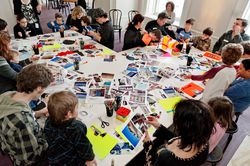
À quoi pourrait ressembler une école montréalaise? Pendant la semaine de relâche, venez explorer en famille comment le design de l’espace scolaire peut créer un sentiment d’appartenance à son école et vous inspirer pour apprendre. Travaillez ensemble sur une maquette d’école qui traduit vos rêves en réalité.
À quoi pourrait ressembler une école montréalaise? Pendant la semaine de relâche, venez explorer en famille comment le design de l’espace scolaire peut créer un sentiment d’appartenance à son école et vous inspirer pour apprendre. Travaillez ensemble sur une maquette d’école qui traduit vos rêves en réalité.
Date:
8 mars 2013
8 mars 2013
Titre:
E pour École
Actions:
Description:
À quoi pourrait ressembler une école montréalaise? Pendant la semaine de relâche, venez explorer en famille comment le design de l’espace scolaire peut créer un sentiment d’appartenance à son école et vous inspirer pour apprendre. Travaillez ensemble sur une maquette d’école qui traduit vos rêves en réalité.
E pour École
Actions:
Description:
À quoi pourrait ressembler une école montréalaise? Pendant la semaine de relâche, venez explorer en famille comment le design de l’espace scolaire peut créer un sentiment d’appartenance à son école et vous inspirer pour apprendre. Travaillez ensemble sur une maquette d’école qui traduit vos rêves en réalité.
Classification:
événements
événements
Date:
8 mars 2013
8 mars 2013
Classification:
documents textuels, photographies
documents textuels, photographies
Numéro de référence:
DR2012:0012:106:006
Description:
File containing documents in English (predominant) and French, including printouts, sketches, photographs, a slide, inventories of Melvin Charney's work, invoices, and notes related to the following projects: - Une oeuvre d'art publique à l'intersection de la rue Centre et de l'avenue Atwater dans le quartier Pointe St-Charles; - Usines, poteaux, maisons, drapeaux: célébration d'un quartier populaire ... Château d'eau d'usine dénoué; - In flight series ... TACA, Guatamala City, 1993; - In flight series ... an airbus on the ground at Warsaw Airport; - In flight series ... Libyan aircraft smolders at Entebbé; - In flight series ... Dienbienphu, May 7, 1954; - Rough cuts ... 4 studies; - Canada Memorial, Green Park, London ... study no. 8; - Toronto construction; - Floating houses ... Fabreville no. 2; - Floating houses ... Fabreville no. 3; - Floating houses ... Fabreville no. 4; - Floating houses ... Fabreville no. 5; - Floating houses ... Tree-House. Original folder inscribed in graphite: MC ARTWORK-CAT ENTRY NOTES
DR2012:0012:106:006
Description:
File containing documents in English (predominant) and French, including printouts, sketches, photographs, a slide, inventories of Melvin Charney's work, invoices, and notes related to the following projects: - Une oeuvre d'art publique à l'intersection de la rue Centre et de l'avenue Atwater dans le quartier Pointe St-Charles; - Usines, poteaux, maisons, drapeaux: célébration d'un quartier populaire ... Château d'eau d'usine dénoué; - In flight series ... TACA, Guatamala City, 1993; - In flight series ... an airbus on the ground at Warsaw Airport; - In flight series ... Libyan aircraft smolders at Entebbé; - In flight series ... Dienbienphu, May 7, 1954; - Rough cuts ... 4 studies; - Canada Memorial, Green Park, London ... study no. 8; - Toronto construction; - Floating houses ... Fabreville no. 2; - Floating houses ... Fabreville no. 3; - Floating houses ... Fabreville no. 4; - Floating houses ... Fabreville no. 5; - Floating houses ... Tree-House. Original folder inscribed in graphite: MC ARTWORK-CAT ENTRY NOTES
Personnes et institutions:
Date:
2009-2011
2009-2011
Titre:
Projects lists and invoices, notes, sketches and photographs related to various projects
Actions:
DR2012:0012:106:006
Description:
File containing documents in English (predominant) and French, including printouts, sketches, photographs, a slide, inventories of Melvin Charney's work, invoices, and notes related to the following projects: - Une oeuvre d'art publique à l'intersection de la rue Centre et de l'avenue Atwater dans le quartier Pointe St-Charles; - Usines, poteaux, maisons, drapeaux: célébration d'un quartier populaire ... Château d'eau d'usine dénoué; - In flight series ... TACA, Guatamala City, 1993; - In flight series ... an airbus on the ground at Warsaw Airport; - In flight series ... Libyan aircraft smolders at Entebbé; - In flight series ... Dienbienphu, May 7, 1954; - Rough cuts ... 4 studies; - Canada Memorial, Green Park, London ... study no. 8; - Toronto construction; - Floating houses ... Fabreville no. 2; - Floating houses ... Fabreville no. 3; - Floating houses ... Fabreville no. 4; - Floating houses ... Fabreville no. 5; - Floating houses ... Tree-House. Original folder inscribed in graphite: MC ARTWORK-CAT ENTRY NOTES
Projects lists and invoices, notes, sketches and photographs related to various projects
Actions:
DR2012:0012:106:006
Description:
File containing documents in English (predominant) and French, including printouts, sketches, photographs, a slide, inventories of Melvin Charney's work, invoices, and notes related to the following projects: - Une oeuvre d'art publique à l'intersection de la rue Centre et de l'avenue Atwater dans le quartier Pointe St-Charles; - Usines, poteaux, maisons, drapeaux: célébration d'un quartier populaire ... Château d'eau d'usine dénoué; - In flight series ... TACA, Guatamala City, 1993; - In flight series ... an airbus on the ground at Warsaw Airport; - In flight series ... Libyan aircraft smolders at Entebbé; - In flight series ... Dienbienphu, May 7, 1954; - Rough cuts ... 4 studies; - Canada Memorial, Green Park, London ... study no. 8; - Toronto construction; - Floating houses ... Fabreville no. 2; - Floating houses ... Fabreville no. 3; - Floating houses ... Fabreville no. 4; - Floating houses ... Fabreville no. 5; - Floating houses ... Tree-House. Original folder inscribed in graphite: MC ARTWORK-CAT ENTRY NOTES
Classification:
documents textuels, photographies
documents textuels, photographies
Date:
2009-2011
2009-2011
Personnes et institutions:
Niveau de description archivistique:
Projet
Projet
Numéro de référence:
AP018.S1.1977.PR08
Description:
This project series documents the design and construction of the Bank of Montreal Central Computer Complex Two in Scarborough, Ontario from 1977-1982. The office identified the project number as 7709. The Central Computer Complex Two was built to be used by the Bank of Montreal as a data processing centre with offices for staff on site. The complex consisted of three octagonal buildings joined by tunnels and skywalks. The first building, Central Computer Complex Two (CCC2), was a three-storey data processing equipment building. The second building, Central Facilities Building (CUB), was a three-storey building devoted to shipping and receiving and employee spaces such as a library, exercise room, cafeteria and lounge, and a medical exam area. The third building, Staff Support Offices, was a four-storey building that contained employee offices. In addition, each building had a penthouse that contained mechanical and electrical equipment. A large part of the project was administered through John C. Parkin’s engineering firm, Parkin Engineers limited, with Paul Keenan acting as president. The project is recorded through drawings, photographs, presentation boards and textual records dating from 1977-1982. The majority of reprographic copies are drawings used in the construction phase of the project. The photographs show the construction of the building. The textual records include design planning notes, client and contractor correspondence, site reports, change orders, supplementary instructions, specifications, detail drawings, meeting minutes, schedules, and invoices for work completed. Box AP018.S1.1977.PR08.074 contains an index to the textual records, which was created by the office.
AP018.S1.1977.PR08
Description:
This project series documents the design and construction of the Bank of Montreal Central Computer Complex Two in Scarborough, Ontario from 1977-1982. The office identified the project number as 7709. The Central Computer Complex Two was built to be used by the Bank of Montreal as a data processing centre with offices for staff on site. The complex consisted of three octagonal buildings joined by tunnels and skywalks. The first building, Central Computer Complex Two (CCC2), was a three-storey data processing equipment building. The second building, Central Facilities Building (CUB), was a three-storey building devoted to shipping and receiving and employee spaces such as a library, exercise room, cafeteria and lounge, and a medical exam area. The third building, Staff Support Offices, was a four-storey building that contained employee offices. In addition, each building had a penthouse that contained mechanical and electrical equipment. A large part of the project was administered through John C. Parkin’s engineering firm, Parkin Engineers limited, with Paul Keenan acting as president. The project is recorded through drawings, photographs, presentation boards and textual records dating from 1977-1982. The majority of reprographic copies are drawings used in the construction phase of the project. The photographs show the construction of the building. The textual records include design planning notes, client and contractor correspondence, site reports, change orders, supplementary instructions, specifications, detail drawings, meeting minutes, schedules, and invoices for work completed. Box AP018.S1.1977.PR08.074 contains an index to the textual records, which was created by the office.
Personnes et institutions:
Date:
1977-1982
1977-1982
Titre:
Bank of Montreal Central Computer Complex Two, Scarborough, Ontario (1977-1982)
Actions:
AP018.S1.1977.PR08
Description:
This project series documents the design and construction of the Bank of Montreal Central Computer Complex Two in Scarborough, Ontario from 1977-1982. The office identified the project number as 7709. The Central Computer Complex Two was built to be used by the Bank of Montreal as a data processing centre with offices for staff on site. The complex consisted of three octagonal buildings joined by tunnels and skywalks. The first building, Central Computer Complex Two (CCC2), was a three-storey data processing equipment building. The second building, Central Facilities Building (CUB), was a three-storey building devoted to shipping and receiving and employee spaces such as a library, exercise room, cafeteria and lounge, and a medical exam area. The third building, Staff Support Offices, was a four-storey building that contained employee offices. In addition, each building had a penthouse that contained mechanical and electrical equipment. A large part of the project was administered through John C. Parkin’s engineering firm, Parkin Engineers limited, with Paul Keenan acting as president. The project is recorded through drawings, photographs, presentation boards and textual records dating from 1977-1982. The majority of reprographic copies are drawings used in the construction phase of the project. The photographs show the construction of the building. The textual records include design planning notes, client and contractor correspondence, site reports, change orders, supplementary instructions, specifications, detail drawings, meeting minutes, schedules, and invoices for work completed. Box AP018.S1.1977.PR08.074 contains an index to the textual records, which was created by the office.
Bank of Montreal Central Computer Complex Two, Scarborough, Ontario (1977-1982)
Actions:
AP018.S1.1977.PR08
Description:
This project series documents the design and construction of the Bank of Montreal Central Computer Complex Two in Scarborough, Ontario from 1977-1982. The office identified the project number as 7709. The Central Computer Complex Two was built to be used by the Bank of Montreal as a data processing centre with offices for staff on site. The complex consisted of three octagonal buildings joined by tunnels and skywalks. The first building, Central Computer Complex Two (CCC2), was a three-storey data processing equipment building. The second building, Central Facilities Building (CUB), was a three-storey building devoted to shipping and receiving and employee spaces such as a library, exercise room, cafeteria and lounge, and a medical exam area. The third building, Staff Support Offices, was a four-storey building that contained employee offices. In addition, each building had a penthouse that contained mechanical and electrical equipment. A large part of the project was administered through John C. Parkin’s engineering firm, Parkin Engineers limited, with Paul Keenan acting as president. The project is recorded through drawings, photographs, presentation boards and textual records dating from 1977-1982. The majority of reprographic copies are drawings used in the construction phase of the project. The photographs show the construction of the building. The textual records include design planning notes, client and contractor correspondence, site reports, change orders, supplementary instructions, specifications, detail drawings, meeting minutes, schedules, and invoices for work completed. Box AP018.S1.1977.PR08.074 contains an index to the textual records, which was created by the office.
Niveau de description archivistique:
Project
Project
Date:
1977-1982
1977-1982
Personnes et institutions:
Niveau de description archivistique:
Sous-série
Sous-série
Numéro de référence:
AP075.S3.SS1
Description:
This sub-series documents Cornelia Hahn Oberlander's involvement in professionnal associations or other professionnal engagements related to architecture, urban planning, environment or art and design from the early 1950s to the end of the 2010s. It related to Oberlander's membership to associations and committees, like the National Capital Commission or the Smith College Botanic Garden Committee. It also comprises Oberlander involvement in various jury selections, including for design competitions, such as the Nathan Phillips Square Revitalization design competition in the mid-2000s. Sub-series also documents Oberlander attendance to conferences or seminars, such as landscape architects associations or conferences on sustainable development. The sub-series also contains records of conferences and talks Oberlander gave, either about her projects, on landscape architecture, on play and play environments, or on sustainable architecture. It also includes Oberlander's research and writings for her own publications or articles she wrote. The sub-series contains documents related to associations and committees, such as correspondence, Oberlander's notes and minutes of meetings. It contains documents related to her for jury selection work, such as invitation to participate to a jury selection, correspondence, and documents related to the selection process. The sub-series also comprises Oberlander's documents from her attendance to conferences and seminars, such as correspondence, event planning, travel organization, and conferences proceedings. Documents related to talks and conferences given by Oberlander comprises research material, Oberlander's notes, draft and final versions of texts, and a few photographs or sound and video recording of the events. Finally, the sub-series contains Oberlander's writtings, such as her research, draft versions of her writings and correspondence.
AP075.S3.SS1
Description:
This sub-series documents Cornelia Hahn Oberlander's involvement in professionnal associations or other professionnal engagements related to architecture, urban planning, environment or art and design from the early 1950s to the end of the 2010s. It related to Oberlander's membership to associations and committees, like the National Capital Commission or the Smith College Botanic Garden Committee. It also comprises Oberlander involvement in various jury selections, including for design competitions, such as the Nathan Phillips Square Revitalization design competition in the mid-2000s. Sub-series also documents Oberlander attendance to conferences or seminars, such as landscape architects associations or conferences on sustainable development. The sub-series also contains records of conferences and talks Oberlander gave, either about her projects, on landscape architecture, on play and play environments, or on sustainable architecture. It also includes Oberlander's research and writings for her own publications or articles she wrote. The sub-series contains documents related to associations and committees, such as correspondence, Oberlander's notes and minutes of meetings. It contains documents related to her for jury selection work, such as invitation to participate to a jury selection, correspondence, and documents related to the selection process. The sub-series also comprises Oberlander's documents from her attendance to conferences and seminars, such as correspondence, event planning, travel organization, and conferences proceedings. Documents related to talks and conferences given by Oberlander comprises research material, Oberlander's notes, draft and final versions of texts, and a few photographs or sound and video recording of the events. Finally, the sub-series contains Oberlander's writtings, such as her research, draft versions of her writings and correspondence.
Personnes et institutions:
Date:
1949-2019
1949-2019
Titre:
Professional associations and engagements
Actions:
AP075.S3.SS1
Description:
This sub-series documents Cornelia Hahn Oberlander's involvement in professionnal associations or other professionnal engagements related to architecture, urban planning, environment or art and design from the early 1950s to the end of the 2010s. It related to Oberlander's membership to associations and committees, like the National Capital Commission or the Smith College Botanic Garden Committee. It also comprises Oberlander involvement in various jury selections, including for design competitions, such as the Nathan Phillips Square Revitalization design competition in the mid-2000s. Sub-series also documents Oberlander attendance to conferences or seminars, such as landscape architects associations or conferences on sustainable development. The sub-series also contains records of conferences and talks Oberlander gave, either about her projects, on landscape architecture, on play and play environments, or on sustainable architecture. It also includes Oberlander's research and writings for her own publications or articles she wrote. The sub-series contains documents related to associations and committees, such as correspondence, Oberlander's notes and minutes of meetings. It contains documents related to her for jury selection work, such as invitation to participate to a jury selection, correspondence, and documents related to the selection process. The sub-series also comprises Oberlander's documents from her attendance to conferences and seminars, such as correspondence, event planning, travel organization, and conferences proceedings. Documents related to talks and conferences given by Oberlander comprises research material, Oberlander's notes, draft and final versions of texts, and a few photographs or sound and video recording of the events. Finally, the sub-series contains Oberlander's writtings, such as her research, draft versions of her writings and correspondence.
Professional associations and engagements
Actions:
AP075.S3.SS1
Description:
This sub-series documents Cornelia Hahn Oberlander's involvement in professionnal associations or other professionnal engagements related to architecture, urban planning, environment or art and design from the early 1950s to the end of the 2010s. It related to Oberlander's membership to associations and committees, like the National Capital Commission or the Smith College Botanic Garden Committee. It also comprises Oberlander involvement in various jury selections, including for design competitions, such as the Nathan Phillips Square Revitalization design competition in the mid-2000s. Sub-series also documents Oberlander attendance to conferences or seminars, such as landscape architects associations or conferences on sustainable development. The sub-series also contains records of conferences and talks Oberlander gave, either about her projects, on landscape architecture, on play and play environments, or on sustainable architecture. It also includes Oberlander's research and writings for her own publications or articles she wrote. The sub-series contains documents related to associations and committees, such as correspondence, Oberlander's notes and minutes of meetings. It contains documents related to her for jury selection work, such as invitation to participate to a jury selection, correspondence, and documents related to the selection process. The sub-series also comprises Oberlander's documents from her attendance to conferences and seminars, such as correspondence, event planning, travel organization, and conferences proceedings. Documents related to talks and conferences given by Oberlander comprises research material, Oberlander's notes, draft and final versions of texts, and a few photographs or sound and video recording of the events. Finally, the sub-series contains Oberlander's writtings, such as her research, draft versions of her writings and correspondence.
Niveau de description archivistique:
Sub-series
Sub-series
Date:
1949-2019
1949-2019
Personnes et institutions:
Classification:
événements
événements
Actions:
Description:
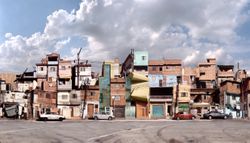
Ce jeudi au CCA, en collaboration avec le Cities Programme of the London School of Economics, Gerald Frug, conférencier James Stirling Memorial sur la ville 2010-2011, parle de la conception des systèmes de gouvernance urbaine et de ses répercussions sur le travail des urbanistes et des architectes. Cliquez ici pour l’événement Facebook.
Ce jeudi au CCA, en collaboration avec le Cities Programme of the London School of Economics, Gerald Frug, conférencier James Stirling Memorial sur la ville 2010-2011, parle de la conception des systèmes de gouvernance urbaine et de ses répercussions sur le travail des urbanistes et des architectes. Cliquez ici pour l’événement Facebook.
Date:
21 octobre 2010
21 octobre 2010
Titre:
Gerald Frug : L’architecture de la gouvernance
Actions:
Description:
Ce jeudi au CCA, en collaboration avec le Cities Programme of the London School of Economics, Gerald Frug, conférencier James Stirling Memorial sur la ville 2010-2011, parle de la conception des systèmes de gouvernance urbaine et de ses répercussions sur le travail des urbanistes et des architectes. Cliquez ici pour l’événement Facebook.
Gerald Frug : L’architecture de la gouvernance
Actions:
Description:
Ce jeudi au CCA, en collaboration avec le Cities Programme of the London School of Economics, Gerald Frug, conférencier James Stirling Memorial sur la ville 2010-2011, parle de la conception des systèmes de gouvernance urbaine et de ses répercussions sur le travail des urbanistes et des architectes. Cliquez ici pour l’événement Facebook.
Classification:
événements
événements
Date:
21 octobre 2010
21 octobre 2010
Niveau de description archivistique:
Série(s)
Série(s)
Numéro de référence:
AP162.S9
Description:
Series documents the contribution of architect Max Taut to the correspondence circle of Die gläserne Kette, with Max Taut writing under the pseudonym Kein Name. Born in 1884 in Königsberg, Germany, Max Taut trained in carpentry and building before working in an architectural firm in Karlsruhe, Germany. In 1911, he worked independently, and later shared a practice with his brother Bruno Taut and Franz Hoffman (who joined them after 1914). His first architectural projects consisted primarily of schools. After his military service from 1914 to 1918, Max Taut joined the Arbeisrat für Kunst and the Novembersgruppe. After the First World War, he undertook several architectural projects, both private and public commissions such as housing and office buildings (mainly in Berlin), and also worked on projects for exhibitions. Unable to pratice during the Nazi Regime and the Second World War, Max Taut return to his architectural practice after the war and taught as a professor of architecture at the Hochschule für bildende Kunst in Berlin from 1945 to 1954. He undertook mainly housing development projects during this period. He died in Berlin in 1967. (Source: Ian Boyd Whyte, Bruno Taut and the Architecture of Activism. Cambridge: Cambridge University Press, 1982) The series comprises part of the correspondence of Max Taut to the Die gläserne Kette circle and related drawings. The series also includes photographic materials of some of his architectural projects.
AP162.S9
Description:
Series documents the contribution of architect Max Taut to the correspondence circle of Die gläserne Kette, with Max Taut writing under the pseudonym Kein Name. Born in 1884 in Königsberg, Germany, Max Taut trained in carpentry and building before working in an architectural firm in Karlsruhe, Germany. In 1911, he worked independently, and later shared a practice with his brother Bruno Taut and Franz Hoffman (who joined them after 1914). His first architectural projects consisted primarily of schools. After his military service from 1914 to 1918, Max Taut joined the Arbeisrat für Kunst and the Novembersgruppe. After the First World War, he undertook several architectural projects, both private and public commissions such as housing and office buildings (mainly in Berlin), and also worked on projects for exhibitions. Unable to pratice during the Nazi Regime and the Second World War, Max Taut return to his architectural practice after the war and taught as a professor of architecture at the Hochschule für bildende Kunst in Berlin from 1945 to 1954. He undertook mainly housing development projects during this period. He died in Berlin in 1967. (Source: Ian Boyd Whyte, Bruno Taut and the Architecture of Activism. Cambridge: Cambridge University Press, 1982) The series comprises part of the correspondence of Max Taut to the Die gläserne Kette circle and related drawings. The series also includes photographic materials of some of his architectural projects.
Personnes et institutions:
Date:
circa 1919 -1920
circa 1919 -1920
Titre:
Max Taut
Actions:
AP162.S9
Description:
Series documents the contribution of architect Max Taut to the correspondence circle of Die gläserne Kette, with Max Taut writing under the pseudonym Kein Name. Born in 1884 in Königsberg, Germany, Max Taut trained in carpentry and building before working in an architectural firm in Karlsruhe, Germany. In 1911, he worked independently, and later shared a practice with his brother Bruno Taut and Franz Hoffman (who joined them after 1914). His first architectural projects consisted primarily of schools. After his military service from 1914 to 1918, Max Taut joined the Arbeisrat für Kunst and the Novembersgruppe. After the First World War, he undertook several architectural projects, both private and public commissions such as housing and office buildings (mainly in Berlin), and also worked on projects for exhibitions. Unable to pratice during the Nazi Regime and the Second World War, Max Taut return to his architectural practice after the war and taught as a professor of architecture at the Hochschule für bildende Kunst in Berlin from 1945 to 1954. He undertook mainly housing development projects during this period. He died in Berlin in 1967. (Source: Ian Boyd Whyte, Bruno Taut and the Architecture of Activism. Cambridge: Cambridge University Press, 1982) The series comprises part of the correspondence of Max Taut to the Die gläserne Kette circle and related drawings. The series also includes photographic materials of some of his architectural projects.
Max Taut
Actions:
AP162.S9
Description:
Series documents the contribution of architect Max Taut to the correspondence circle of Die gläserne Kette, with Max Taut writing under the pseudonym Kein Name. Born in 1884 in Königsberg, Germany, Max Taut trained in carpentry and building before working in an architectural firm in Karlsruhe, Germany. In 1911, he worked independently, and later shared a practice with his brother Bruno Taut and Franz Hoffman (who joined them after 1914). His first architectural projects consisted primarily of schools. After his military service from 1914 to 1918, Max Taut joined the Arbeisrat für Kunst and the Novembersgruppe. After the First World War, he undertook several architectural projects, both private and public commissions such as housing and office buildings (mainly in Berlin), and also worked on projects for exhibitions. Unable to pratice during the Nazi Regime and the Second World War, Max Taut return to his architectural practice after the war and taught as a professor of architecture at the Hochschule für bildende Kunst in Berlin from 1945 to 1954. He undertook mainly housing development projects during this period. He died in Berlin in 1967. (Source: Ian Boyd Whyte, Bruno Taut and the Architecture of Activism. Cambridge: Cambridge University Press, 1982) The series comprises part of the correspondence of Max Taut to the Die gläserne Kette circle and related drawings. The series also includes photographic materials of some of his architectural projects.
Niveau de description archivistique:
series
series
Date:
circa 1919 -1920
circa 1919 -1920
Personnes et institutions:
Classification:
événements
événements
Description:
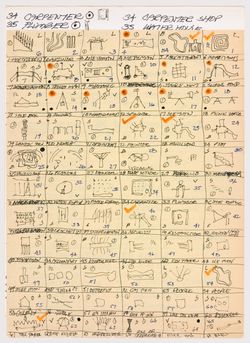
Mark Lee examine l’influence qu’a eu le projet « Victims » (1984) de John Hejduk sur les travaux de sa firme, Johnston Marklee. La série 1:1 (1 architecte, 1 édifice) présente un regard approfondi sur un édifice à travers le point de vue d’un architecte contemporain. Reporté du 22 avril 2016.
Mark Lee examine l’influence qu’a eu le projet « Victims » (1984) de John Hejduk sur les travaux de sa firme, Johnston Marklee. La série 1:1 (1 architecte, 1 édifice) présente un regard approfondi sur un édifice à travers le point de vue d’un architecte contemporain. Reporté du 22 avril 2016.
Localisation:
Théâtre Paul-Desmarais
Théâtre Paul-Desmarais
Date:
8 septembre 2016, 18h
8 septembre 2016, 18h
Titre:
1:1 : Mark Lee sur John Hejduk
Actions:
Description:
Mark Lee examine l’influence qu’a eu le projet « Victims » (1984) de John Hejduk sur les travaux de sa firme, Johnston Marklee. La série 1:1 (1 architecte, 1 édifice) présente un regard approfondi sur un édifice à travers le point de vue d’un architecte contemporain. Reporté du 22 avril 2016.
1:1 : Mark Lee sur John Hejduk
Actions:
Description:
Mark Lee examine l’influence qu’a eu le projet « Victims » (1984) de John Hejduk sur les travaux de sa firme, Johnston Marklee. La série 1:1 (1 architecte, 1 édifice) présente un regard approfondi sur un édifice à travers le point de vue d’un architecte contemporain. Reporté du 22 avril 2016.
Classification:
événements
événements
Date:
8 septembre 2016
18h
8 septembre 2016
18h
Localisation:
Théâtre Paul-Desmarais
Théâtre Paul-Desmarais
Classification:
expositions
expositions
Description:
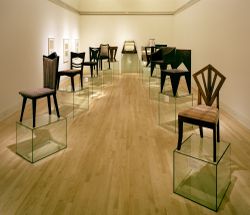
Enthousiasmés par les vues radicalement nouvelles de l’art cubiste, et animés par le désir d’introduire une esthétique entièrement différente et de manifester leur présence sur la scène politique, les cubistes tchèques ont créé non seulement des œuvres remarquables et visionnaires, mais ils sont passés de la théorie à la pratique. Le cubisme tchèque : architecture et(...)
Enthousiasmés par les vues radicalement nouvelles de l’art cubiste, et animés par le désir d’introduire une esthétique entièrement différente et de manifester leur présence sur la scène politique, les cubistes tchèques ont créé non seulement des œuvres remarquables et visionnaires, mais ils sont passés de la théorie à la pratique. Le cubisme tchèque : architecture et(...)
Localisation:
Salles principales
Salles principales
Date:
10 juin 1992 au 2 août 1992
10 juin 1992 au 2 août 1992
Titre:
Le cubisme tchèque : architecture et design, 1910-1925
Actions:
Description:
Enthousiasmés par les vues radicalement nouvelles de l’art cubiste, et animés par le désir d’introduire une esthétique entièrement différente et de manifester leur présence sur la scène politique, les cubistes tchèques ont créé non seulement des œuvres remarquables et visionnaires, mais ils sont passés de la théorie à la pratique. Le cubisme tchèque : architecture et(...)
Le cubisme tchèque : architecture et design, 1910-1925
Actions:
Description:
Enthousiasmés par les vues radicalement nouvelles de l’art cubiste, et animés par le désir d’introduire une esthétique entièrement différente et de manifester leur présence sur la scène politique, les cubistes tchèques ont créé non seulement des œuvres remarquables et visionnaires, mais ils sont passés de la théorie à la pratique. Le cubisme tchèque : architecture et(...)
Classification:
expositions
expositions
Date:
10 juin 1992 au
2 août 1992
10 juin 1992 au
2 août 1992
Localisation:
Salles principales
Salles principales


