


1810 Résultats
Classification:
livres
livres

Titre:
Temple and teahouse in Japan
Temple and teahouse in Japan
Actions:
Prix:
$65.95
(disponible en magasin)
Résumé:
After a trip to Japan in 1953, Werner Bläser published his landmark book on Classical Japanese architecture. His studies of 17th-18th-century wooden buildings document minimalist, grid-based structures using stark black-and-white photographs, some color photographs and numerous line drawings. His book, highly prized in terms of design and content, contributed(...)
$65.95
(disponible en magasin)
Résumé:
After a trip to Japan in 1953, Werner Bläser published his landmark book on Classical Japanese architecture. His studies of 17th-18th-century wooden buildings document minimalist, grid-based structures using stark black-and-white photographs, some color photographs and numerous line drawings. His book, highly prized in terms of design and content, contributed(...)
Titre:
Temple and teahouse in Japan
Actions:
Prix:
$65.95
(disponible en magasin)
Résumé:
After a trip to Japan in 1953, Werner Bläser published his landmark book on Classical Japanese architecture. His studies of 17th-18th-century wooden buildings document minimalist, grid-based structures using stark black-and-white photographs, some color photographs and numerous line drawings. His book, highly prized in terms of design and content, contributed significantly to introducing Japanese aesthetics to Western architecture, art and graphics. Mies van der Rohe, for example, gave it to many of his friends. The reprint is enriched by a text on the history of the book by Christian Blaser, Werner Blaser's son, a contribution by Inge Andritz on Mies van der Rohe and Japanese architecture, and a personal afterword by Tadao Ando.
Temple and teahouse in Japan
Actions:
Prix:
$65.95
(disponible en magasin)
Résumé:
After a trip to Japan in 1953, Werner Bläser published his landmark book on Classical Japanese architecture. His studies of 17th-18th-century wooden buildings document minimalist, grid-based structures using stark black-and-white photographs, some color photographs and numerous line drawings. His book, highly prized in terms of design and content, contributed significantly to introducing Japanese aesthetics to Western architecture, art and graphics. Mies van der Rohe, for example, gave it to many of his friends. The reprint is enriched by a text on the history of the book by Christian Blaser, Werner Blaser's son, a contribution by Inge Andritz on Mies van der Rohe and Japanese architecture, and a personal afterword by Tadao Ando.
Classification:
livres
livres
Publication:
novembre 2021
novembre 2021
Sujet:
Histoire jusqu'à 1900, Asie
Histoire jusqu'à 1900, Asie
Classification:
livres
livres
Actions:
Prix:
$28.00
(disponible sur commande)
Résumé:
Gastronomy meets art in a new series, On the Table, edited by the provocative, genre-straddling Swedish writer Charlotte Birnbaum. The first publication is a new translation of a 17th-century text describing three spectacular banquets that greeted Queen Christina of Sweden when she visited Rome in 1668. Antonio degli Effetti was on the scene, and described all three(...)
$28.00
(disponible sur commande)
Résumé:
Gastronomy meets art in a new series, On the Table, edited by the provocative, genre-straddling Swedish writer Charlotte Birnbaum. The first publication is a new translation of a 17th-century text describing three spectacular banquets that greeted Queen Christina of Sweden when she visited Rome in 1668. Antonio degli Effetti was on the scene, and described all three(...)
Titre:
On the table : three banquets for a queen
Actions:
Prix:
$28.00
(disponible sur commande)
Résumé:
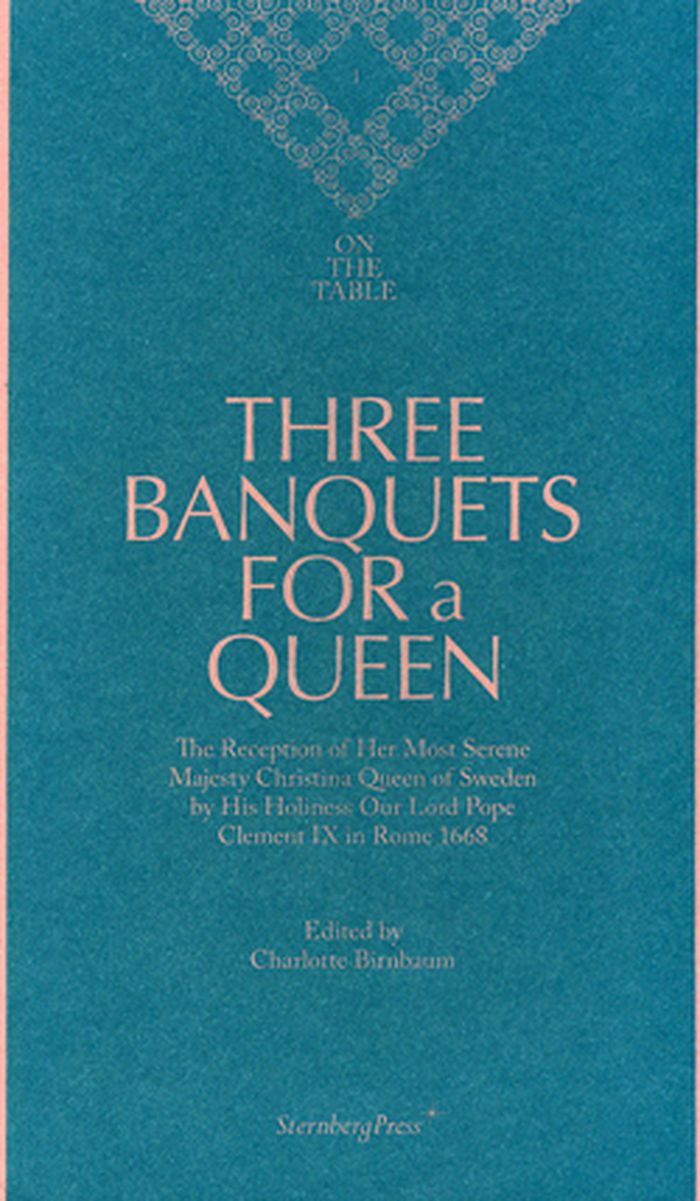
Gastronomy meets art in a new series, On the Table, edited by the provocative, genre-straddling Swedish writer Charlotte Birnbaum. The first publication is a new translation of a 17th-century text describing three spectacular banquets that greeted Queen Christina of Sweden when she visited Rome in 1668. Antonio degli Effetti was on the scene, and described all three feasts in their sumptuous glory, detailing the lavish preparations for the celebrations and the dining experience itself, designed by Bernini, no less! The original text, dotted with quotations from Ovid's Metamorphoses and Virgil's Aeneid, is placed in today's context by a foreword and two essays by Birnbaum. Was it dinner or was it 300-year-old performance art?
On the table : three banquets for a queen
Actions:
Prix:
$28.00
(disponible sur commande)
Résumé:
Gastronomy meets art in a new series, On the Table, edited by the provocative, genre-straddling Swedish writer Charlotte Birnbaum. The first publication is a new translation of a 17th-century text describing three spectacular banquets that greeted Queen Christina of Sweden when she visited Rome in 1668. Antonio degli Effetti was on the scene, and described all three feasts in their sumptuous glory, detailing the lavish preparations for the celebrations and the dining experience itself, designed by Bernini, no less! The original text, dotted with quotations from Ovid's Metamorphoses and Virgil's Aeneid, is placed in today's context by a foreword and two essays by Birnbaum. Was it dinner or was it 300-year-old performance art?
Classification:
livres
livres
Publication:
octobre 2011
octobre 2011
Sujet:
Théorie de l’art
Théorie de l’art
Classification:
livres
livres
Actions:
Prix:
$76.95
(disponible en magasin)
Résumé:
Danish-Norwegian artist Karen Bit Vejle uses scissors as her brush to create intricate and awe-inspiring works of art with cut paper. The art of psaligraphy hit Europe with the wave of Eastern influence in the 17th century, and famed Danish author Hans Christian Anderson was among its practitioners. The tradition of paper-cutting is particularly strong in Scandinavia,(...)
$76.95
(disponible en magasin)
Résumé:
Danish-Norwegian artist Karen Bit Vejle uses scissors as her brush to create intricate and awe-inspiring works of art with cut paper. The art of psaligraphy hit Europe with the wave of Eastern influence in the 17th century, and famed Danish author Hans Christian Anderson was among its practitioners. The tradition of paper-cutting is particularly strong in Scandinavia,(...)
Publication:
avril 2014
avril 2014
Titre:
Karen Bit Vejle: master of paper-cut
Actions:
Prix:
$76.95
(disponible en magasin)
Résumé:
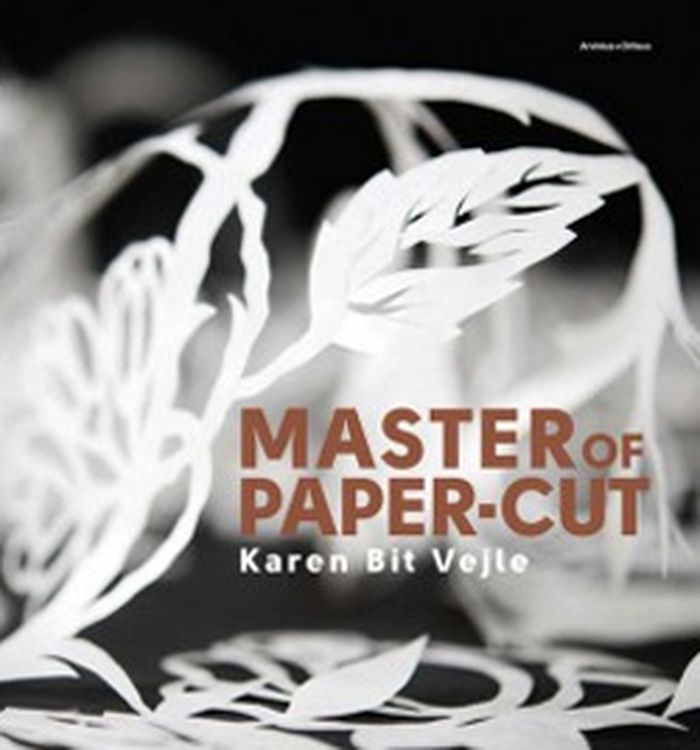
Danish-Norwegian artist Karen Bit Vejle uses scissors as her brush to create intricate and awe-inspiring works of art with cut paper. The art of psaligraphy hit Europe with the wave of Eastern influence in the 17th century, and famed Danish author Hans Christian Anderson was among its practitioners. The tradition of paper-cutting is particularly strong in Scandinavia, where gaekkebrev, cards with cut-paper snowflakes, are still exchanged by sweethearts each spring, and Bit Vejle has worked to master the medium since she was a young girl. The past couple of years have seen her work grow in scale and sophistication, creating both abstracted floral patterns and enormous narrative tableaux as delicate as lace.
Karen Bit Vejle: master of paper-cut
Actions:
Prix:
$76.95
(disponible en magasin)
Résumé:
Danish-Norwegian artist Karen Bit Vejle uses scissors as her brush to create intricate and awe-inspiring works of art with cut paper. The art of psaligraphy hit Europe with the wave of Eastern influence in the 17th century, and famed Danish author Hans Christian Anderson was among its practitioners. The tradition of paper-cutting is particularly strong in Scandinavia, where gaekkebrev, cards with cut-paper snowflakes, are still exchanged by sweethearts each spring, and Bit Vejle has worked to master the medium since she was a young girl. The past couple of years have seen her work grow in scale and sophistication, creating both abstracted floral patterns and enormous narrative tableaux as delicate as lace.
Classification:
livres
livres
Publication:
avril 2014
avril 2014
Classification:
livres
livres
Titre:
The curator's handbook
The curator's handbook
Actions:
Prix:
$34.95
(disponible sur commande)
Résumé:
The Curators Handbook is the practical handbook for curators and curatorial students, mapping out every stage of the exhibition-making process from initial idea to final installation. In his introduction, Adrian George traces the history of curating back to its origins in the 17th century and outlines the multifarious roles of the curator today, including as custodian,(...)
$34.95
(disponible sur commande)
Résumé:
The Curators Handbook is the practical handbook for curators and curatorial students, mapping out every stage of the exhibition-making process from initial idea to final installation. In his introduction, Adrian George traces the history of curating back to its origins in the 17th century and outlines the multifarious roles of the curator today, including as custodian,(...)
Titre:
The curator's handbook
Actions:
Prix:
$34.95
(disponible sur commande)
Résumé:
The Curators Handbook is the practical handbook for curators and curatorial students, mapping out every stage of the exhibition-making process from initial idea to final installation. In his introduction, Adrian George traces the history of curating back to its origins in the 17th century and outlines the multifarious roles of the curator today, including as custodian, interpreter, educator, facilitator and organizer. Twelve chapters then chart the various stages of the exhibition process in invaluable detail and clear, informative language from initial concept to writing contracts and loan requests, putting together budgets and schedules, producing exhibition catalogues and interpretation materials, designing gallery spaces, working with artists, lenders and art handlers, organizing private views, and documenting and evaluating a show.
The curator's handbook
Actions:
Prix:
$34.95
(disponible sur commande)
Résumé:
The Curators Handbook is the practical handbook for curators and curatorial students, mapping out every stage of the exhibition-making process from initial idea to final installation. In his introduction, Adrian George traces the history of curating back to its origins in the 17th century and outlines the multifarious roles of the curator today, including as custodian, interpreter, educator, facilitator and organizer. Twelve chapters then chart the various stages of the exhibition process in invaluable detail and clear, informative language from initial concept to writing contracts and loan requests, putting together budgets and schedules, producing exhibition catalogues and interpretation materials, designing gallery spaces, working with artists, lenders and art handlers, organizing private views, and documenting and evaluating a show.
Classification:
livres
livres
Publication:
août 2015
août 2015
Sujet:
Muséologie
Muséologie
Classification:
livres
livres
Prix:
$92.00
(disponible sur commande)
Résumé:
This publication offers the first comprehensive study in English of Baldassare Longhena (1598–1682), the indispensable architect of the Venetian Baroque. While Longhena's legacy is most visible in his iconic Madonna della Salute, the 17th-century basilica devoted to the Virgin Mary in gratitude for Venice's deliverance from the plague, and in the Pesaro and Rezzonico(...)
$92.00
(disponible sur commande)
Résumé:
This publication offers the first comprehensive study in English of Baldassare Longhena (1598–1682), the indispensable architect of the Venetian Baroque. While Longhena's legacy is most visible in his iconic Madonna della Salute, the 17th-century basilica devoted to the Virgin Mary in gratitude for Venice's deliverance from the plague, and in the Pesaro and Rezzonico(...)
Titre:
Baldessare Longhena and Venetian Baroque architecture
Actions:
Prix:
$92.00
(disponible sur commande)
Résumé:
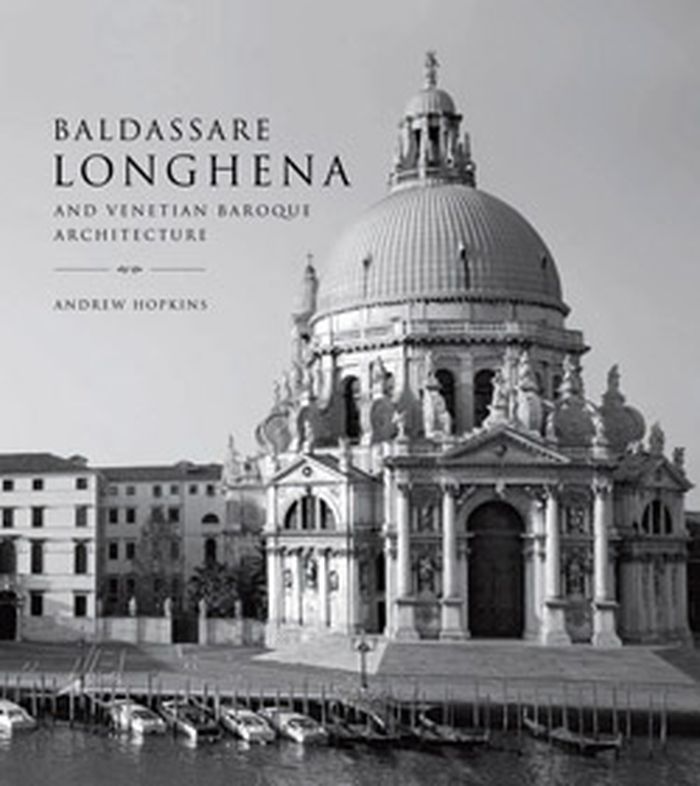
This publication offers the first comprehensive study in English of Baldassare Longhena (1598–1682), the indispensable architect of the Venetian Baroque. While Longhena's legacy is most visible in his iconic Madonna della Salute, the 17th-century basilica devoted to the Virgin Mary in gratitude for Venice's deliverance from the plague, and in the Pesaro and Rezzonico palaces along the Grand Canal, he created a plethora of other works over the course of a career that spanned half a century. Andrew Hopkins's thought-provoking text considers the full span of Longhena's illustrious career, from his monumental staircases and libraries to the palaces commissioned by private patrons and his projects for Venice's Greek and Jewish communities. This lively account is accompanied by more than sixty color and 300 black-and-white photographs commissioned especially for the book. A complete list of Longhena's work is included in an appendix.
Baldessare Longhena and Venetian Baroque architecture
Actions:
Prix:
$92.00
(disponible sur commande)
Résumé:
This publication offers the first comprehensive study in English of Baldassare Longhena (1598–1682), the indispensable architect of the Venetian Baroque. While Longhena's legacy is most visible in his iconic Madonna della Salute, the 17th-century basilica devoted to the Virgin Mary in gratitude for Venice's deliverance from the plague, and in the Pesaro and Rezzonico palaces along the Grand Canal, he created a plethora of other works over the course of a career that spanned half a century. Andrew Hopkins's thought-provoking text considers the full span of Longhena's illustrious career, from his monumental staircases and libraries to the palaces commissioned by private patrons and his projects for Venice's Greek and Jewish communities. This lively account is accompanied by more than sixty color and 300 black-and-white photographs commissioned especially for the book. A complete list of Longhena's work is included in an appendix.
Classification:
livres
livres
Publication:
août 2012
août 2012
Classification:
livres
livres
Prix:
$57.50
(disponible sur commande)
Résumé:
This book documents a unique collaboration between the artist Louise Bourgeois (1911–2010) and the architect Peter Zumthor (born 1973). The Steilneset Memorial, opened in 2011, is a monument in Vardø, Norway, commemorating the 17th-century trial and execution of 91 women for witchcraft. The brainchild of the National Tourist Routes project in Norway (a(...)
$57.50
(disponible sur commande)
Résumé:
This book documents a unique collaboration between the artist Louise Bourgeois (1911–2010) and the architect Peter Zumthor (born 1973). The Steilneset Memorial, opened in 2011, is a monument in Vardø, Norway, commemorating the 17th-century trial and execution of 91 women for witchcraft. The brainchild of the National Tourist Routes project in Norway (a(...)
Titre:
Louise Bourgeois and Peter Zumthor: Steilneset Memorial
Actions:
Prix:
$57.50
(disponible sur commande)
Résumé:
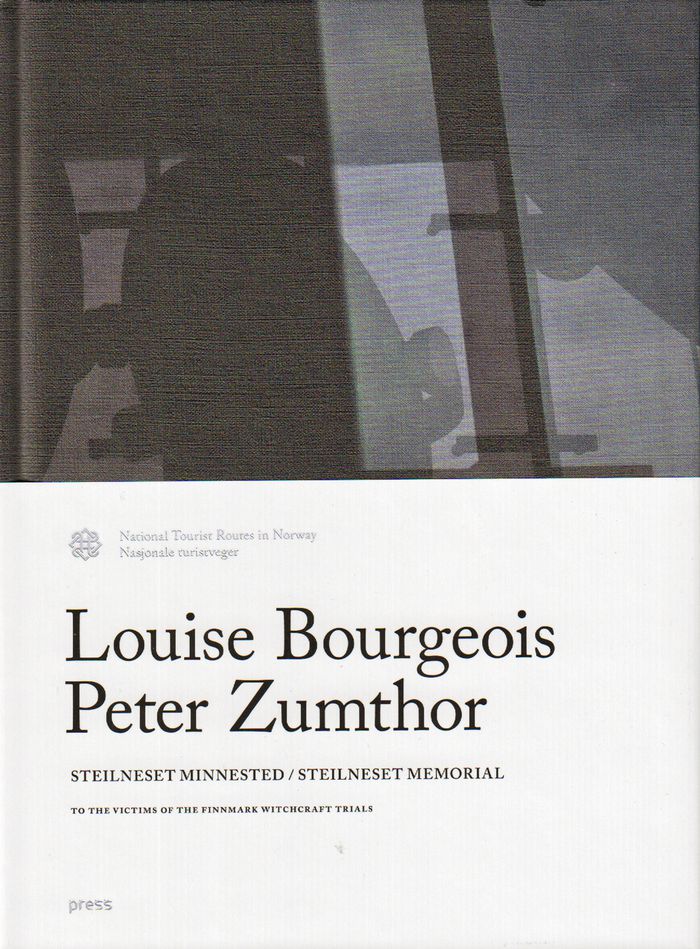
This book documents a unique collaboration between the artist Louise Bourgeois (1911–2010) and the architect Peter Zumthor (born 1973). The Steilneset Memorial, opened in 2011, is a monument in Vardø, Norway, commemorating the 17th-century trial and execution of 91 women for witchcraft. The brainchild of the National Tourist Routes project in Norway (a government-sponsored initiative which aims to attract visitors to remote but exceptionally beautiful locations), the Steilneset Memorial started out as a modest monument to honor the victims of the witchcraft trials, to be built on the site where the burnings originally took place. But the project, which would be Bourgeois’ last major work, grew in the hands of Zumthor and Bourgeois into two distinct, haunting structures.
Louise Bourgeois and Peter Zumthor: Steilneset Memorial
Actions:
Prix:
$57.50
(disponible sur commande)
Résumé:
This book documents a unique collaboration between the artist Louise Bourgeois (1911–2010) and the architect Peter Zumthor (born 1973). The Steilneset Memorial, opened in 2011, is a monument in Vardø, Norway, commemorating the 17th-century trial and execution of 91 women for witchcraft. The brainchild of the National Tourist Routes project in Norway (a government-sponsored initiative which aims to attract visitors to remote but exceptionally beautiful locations), the Steilneset Memorial started out as a modest monument to honor the victims of the witchcraft trials, to be built on the site where the burnings originally took place. But the project, which would be Bourgeois’ last major work, grew in the hands of Zumthor and Bourgeois into two distinct, haunting structures.
Classification:
livres
livres
Publication:
décembre 2016
décembre 2016
Sujet:
Architecture, monographies
Architecture, monographies
Classification:
livres
livres
Actions:
Prix:
$43.95
(disponible sur commande)
Résumé:
Every city has at least one, and great cities often have more. From the Louvre to the Bilbao Guggenheim, the museum has had a long-standing relationship with the city. This ground-breaking volume examines the meaning of museum architecture in the urban environment, considering important issues such as forms of civic representation, urban regeneration, cultural tourism and(...)
$43.95
(disponible sur commande)
Résumé:
Every city has at least one, and great cities often have more. From the Louvre to the Bilbao Guggenheim, the museum has had a long-standing relationship with the city. This ground-breaking volume examines the meaning of museum architecture in the urban environment, considering important issues such as forms of civic representation, urban regeneration, cultural tourism and(...)
Titre:
The architecture of the museum : symbolic structures, urban contexts
Actions:
Prix:
$43.95
(disponible sur commande)
Résumé:
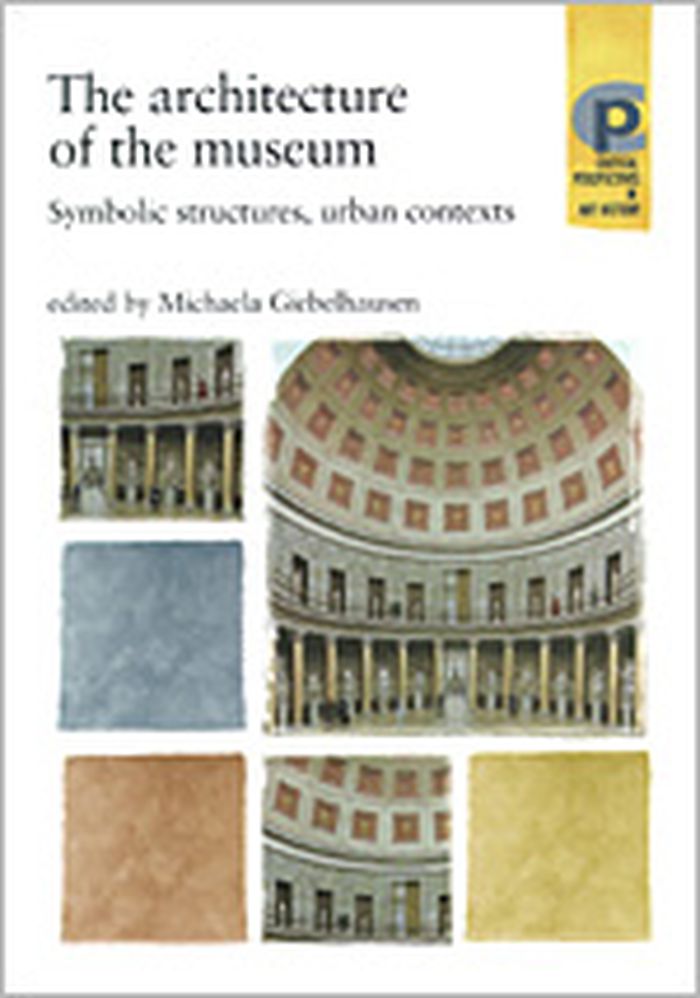
Every city has at least one, and great cities often have more. From the Louvre to the Bilbao Guggenheim, the museum has had a long-standing relationship with the city. This ground-breaking volume examines the meaning of museum architecture in the urban environment, considering important issues such as forms of civic representation, urban regeneration, cultural tourism and the museumification of the city itself. Bringing together an international group of distinguished scholars from a range of disciplines, this volume bridges the gap between museum studies and traditional architectural history. The contributors explore the conceptual architectural frameworks that govern the museum's diverse symbolic structures and focus attention on the complex ways in which museums function in the city. Ranging from the 17th century to the present day, the detailed and thoroughly researched case studies are drawn from Great Britain, continental Europe, South America and Australia.
The architecture of the museum : symbolic structures, urban contexts
Actions:
Prix:
$43.95
(disponible sur commande)
Résumé:
Every city has at least one, and great cities often have more. From the Louvre to the Bilbao Guggenheim, the museum has had a long-standing relationship with the city. This ground-breaking volume examines the meaning of museum architecture in the urban environment, considering important issues such as forms of civic representation, urban regeneration, cultural tourism and the museumification of the city itself. Bringing together an international group of distinguished scholars from a range of disciplines, this volume bridges the gap between museum studies and traditional architectural history. The contributors explore the conceptual architectural frameworks that govern the museum's diverse symbolic structures and focus attention on the complex ways in which museums function in the city. Ranging from the 17th century to the present day, the detailed and thoroughly researched case studies are drawn from Great Britain, continental Europe, South America and Australia.
Classification:
livres
livres
Publication:
novembre 2000, Manchester
novembre 2000, Manchester
Sujet:
Muséologie
Muséologie
Classification:
livres
livres
Actions:
Prix:
$49.95
(disponible sur commande)
Résumé:
Versailles and the Mechanics of Power explores the significance of the palace and gardens of Versailles. Graafland's exercise consists of superimposing the choreography for the 'Balet Comique de la Royne' of Balthasar de Beaujoyeulx upon the somewhat later gardens of Le Nôtre and the French Sun King. Avoiding a merely visual logic the author analyses the geometric(...)
$49.95
(disponible sur commande)
Résumé:
Versailles and the Mechanics of Power explores the significance of the palace and gardens of Versailles. Graafland's exercise consists of superimposing the choreography for the 'Balet Comique de la Royne' of Balthasar de Beaujoyeulx upon the somewhat later gardens of Le Nôtre and the French Sun King. Avoiding a merely visual logic the author analyses the geometric(...)
Titre:
Versailles and the mechanics of power : the subjugation of Circe, an essay
Actions:
Prix:
$49.95
(disponible sur commande)
Résumé:
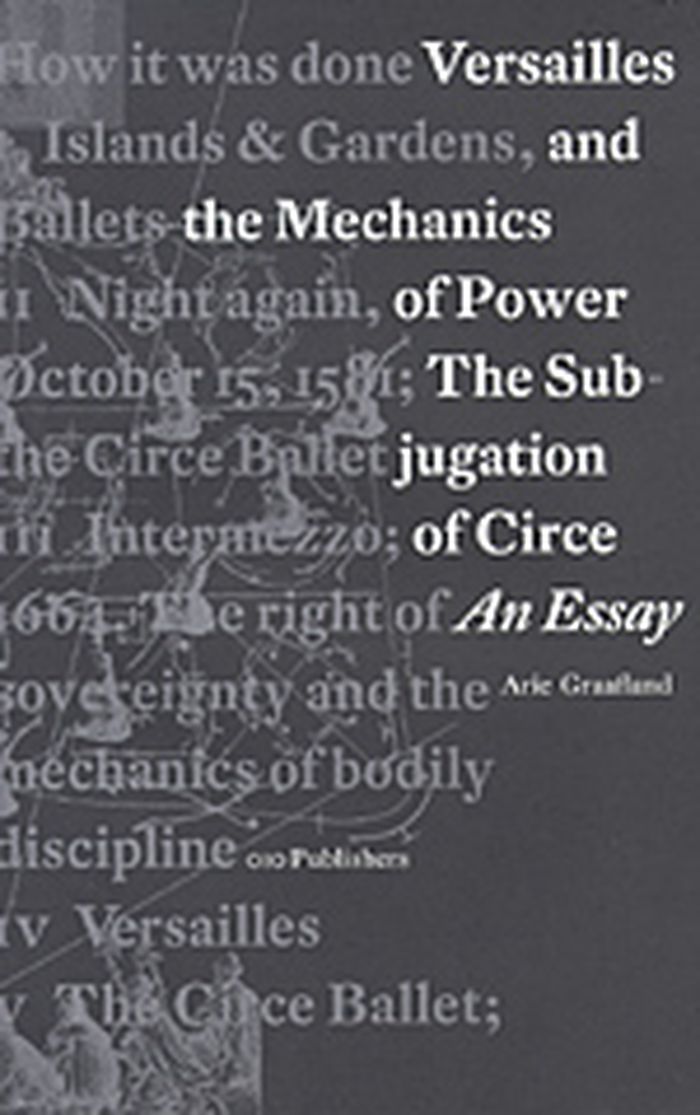
Versailles and the Mechanics of Power explores the significance of the palace and gardens of Versailles. Graafland's exercise consists of superimposing the choreography for the 'Balet Comique de la Royne' of Balthasar de Beaujoyeulx upon the somewhat later gardens of Le Nôtre and the French Sun King. Avoiding a merely visual logic the author analyses the geometric character of the human body in that ballet and compares layout and ballet as a mechanics of power in an early symbolic state. Drawing on the many books and essays on Versailles, the author has added the ballet structure, a framework that tells us about the sometimes hidden but mostly very explicit desires of this period. These in turn tell us not only about the gardens and ballet but even more about French society at that time. Completing the book is a set of analytical drawings which give us both the layout of Versailles and the choreography of the 'Balet', explaining the mechanics of bodily discipline in the 17th century.
Versailles and the mechanics of power : the subjugation of Circe, an essay
Actions:
Prix:
$49.95
(disponible sur commande)
Résumé:
Versailles and the Mechanics of Power explores the significance of the palace and gardens of Versailles. Graafland's exercise consists of superimposing the choreography for the 'Balet Comique de la Royne' of Balthasar de Beaujoyeulx upon the somewhat later gardens of Le Nôtre and the French Sun King. Avoiding a merely visual logic the author analyses the geometric character of the human body in that ballet and compares layout and ballet as a mechanics of power in an early symbolic state. Drawing on the many books and essays on Versailles, the author has added the ballet structure, a framework that tells us about the sometimes hidden but mostly very explicit desires of this period. These in turn tell us not only about the gardens and ballet but even more about French society at that time. Completing the book is a set of analytical drawings which give us both the layout of Versailles and the choreography of the 'Balet', explaining the mechanics of bodily discipline in the 17th century.
Classification:
livres
livres
Publication:
janvier 2002, Rotterdam
janvier 2002, Rotterdam
Sujet:
Théorie du paysage
Théorie du paysage
Classification:
livres
livres
Actions:
Prix:
$149.95
(disponible en magasin)
Résumé:
The first of a unique series of translations of Scamozzi's L'Idea della Architettura Universale. The northern Italian architect, Vincenzo Scamozzi, (1548-1616) designed a number of important palaces, villas and churches in and around Vicenza, Padua and Venice. In addition, he completed a comprehensive study of ancient classical architecture. including the possibilities(...)
$149.95
(disponible en magasin)
Résumé:
The first of a unique series of translations of Scamozzi's L'Idea della Architettura Universale. The northern Italian architect, Vincenzo Scamozzi, (1548-1616) designed a number of important palaces, villas and churches in and around Vicenza, Padua and Venice. In addition, he completed a comprehensive study of ancient classical architecture. including the possibilities(...)
Sujet:
Architecture, monographies
Architecture, monographies
Publication:
janvier 2003, Amsterdam
janvier 2003, Amsterdam
Titre:
Vincenzo Scamozzi, Venetian architect book III : the idea of a universal architecture, villas and country estates
Actions:
Prix:
$149.95
(disponible en magasin)
Résumé:
The first of a unique series of translations of Scamozzi's L'Idea della Architettura Universale. The northern Italian architect, Vincenzo Scamozzi, (1548-1616) designed a number of important palaces, villas and churches in and around Vicenza, Padua and Venice. In addition, he completed a comprehensive study of ancient classical architecture. including the possibilities for its application in a modern context. The first edition of the book was published in 1615. Scamozzi distinguishes himself from his predecessors Vitruvius and Palladio by the scientific approach he follows in his treatise, in which his own designs appear as examples. The clear and detailed account of the historical and geographical background to the principles of classical architecture led to the book's wide popularity in the Northern Netherlands throughout the 17th century. Scamozzi's text was regarded as the most suitable manual for mastering the rules of building, and his theories had a considerable impact upon classical architecture in the Dutch Golden Age.
Vincenzo Scamozzi, Venetian architect book III : the idea of a universal architecture, villas and country estates
Actions:
Prix:
$149.95
(disponible en magasin)
Résumé:
The first of a unique series of translations of Scamozzi's L'Idea della Architettura Universale. The northern Italian architect, Vincenzo Scamozzi, (1548-1616) designed a number of important palaces, villas and churches in and around Vicenza, Padua and Venice. In addition, he completed a comprehensive study of ancient classical architecture. including the possibilities for its application in a modern context. The first edition of the book was published in 1615. Scamozzi distinguishes himself from his predecessors Vitruvius and Palladio by the scientific approach he follows in his treatise, in which his own designs appear as examples. The clear and detailed account of the historical and geographical background to the principles of classical architecture led to the book's wide popularity in the Northern Netherlands throughout the 17th century. Scamozzi's text was regarded as the most suitable manual for mastering the rules of building, and his theories had a considerable impact upon classical architecture in the Dutch Golden Age.
Classification:
livres
livres
Publication:
janvier 2003, Amsterdam
janvier 2003, Amsterdam
Sujet:
Architecture, monographies
Architecture, monographies
Classification:
périodiques
périodiques
Actions:
Prix:
$11.00
(disponible sur commande)
Résumé:
Cabinet is an award-winning quarterly magazine of art and culture that confounds expectations of what is typically meant by the words "art," "culture," and sometimes even "magazine." Like the 17th-century cabinet of curiosities to which its name alludes, Cabinet is as interested in the margins of culture as its center. Presenting wide-ranging, multi-disciplinary content(...)
$11.00
(disponible sur commande)
Résumé:
Cabinet is an award-winning quarterly magazine of art and culture that confounds expectations of what is typically meant by the words "art," "culture," and sometimes even "magazine." Like the 17th-century cabinet of curiosities to which its name alludes, Cabinet is as interested in the margins of culture as its center. Presenting wide-ranging, multi-disciplinary content(...)
Titre:
Cabinet 18 : fictional states, 2005
Actions:
Prix:
$11.00
(disponible sur commande)
Résumé:
Cabinet is an award-winning quarterly magazine of art and culture that confounds expectations of what is typically meant by the words "art," "culture," and sometimes even "magazine." Like the 17th-century cabinet of curiosities to which its name alludes, Cabinet is as interested in the margins of culture as its center. Presenting wide-ranging, multi-disciplinary content in each issue through the varied formats of regular columns, essays, interviews, and special artist projects, Cabinet's hybrid sensibility merges the popular appeal of an arts periodical, the visually engaging style of a design magazine, and the in-depth exploration of a scholarly journal. Playful and serious, exuberant and committed, Cabinet's omnivorous appetite for understanding the world makes each of its issues a valuable sourcebook of ideas for a wide range of readers, from artists and designers to scientists and historians. In an age of increasing specialization, Cabinet looks to previous models of the well-rounded thinker to forge a new type of magazine for the intellectually curious reader of the future.
Cabinet 18 : fictional states, 2005
Actions:
Prix:
$11.00
(disponible sur commande)
Résumé:
Cabinet is an award-winning quarterly magazine of art and culture that confounds expectations of what is typically meant by the words "art," "culture," and sometimes even "magazine." Like the 17th-century cabinet of curiosities to which its name alludes, Cabinet is as interested in the margins of culture as its center. Presenting wide-ranging, multi-disciplinary content in each issue through the varied formats of regular columns, essays, interviews, and special artist projects, Cabinet's hybrid sensibility merges the popular appeal of an arts periodical, the visually engaging style of a design magazine, and the in-depth exploration of a scholarly journal. Playful and serious, exuberant and committed, Cabinet's omnivorous appetite for understanding the world makes each of its issues a valuable sourcebook of ideas for a wide range of readers, from artists and designers to scientists and historians. In an age of increasing specialization, Cabinet looks to previous models of the well-rounded thinker to forge a new type of magazine for the intellectually curious reader of the future.
Classification:
périodiques
périodiques
Publication:
octobre 2005, New York
octobre 2005, New York
Sujet:
Revues
Revues


