


192 Résultats
Classification:
livres
livres
Actions:
Exemplaires:
Description:
237 pages ; 21 cm.
Description:
237 pages ; 21 cm.
Auteur:
Sujet:
Publication:
London : Whitechapel Gallery ; Cambridge, MA : The MIT Press, [2016]
London : Whitechapel Gallery ; Cambridge, MA : The MIT Press, [2016]
Classification:
livres
livres
Publication:
London : Whitechapel Gallery ; Cambridge, MA : The MIT Press, [2016]
London : Whitechapel Gallery ; Cambridge, MA : The MIT Press, [2016]
Auteur:
Sujet:
Classification:
livres
livres
Actions:
Prix:
$37.95
(disponible sur commande)
Résumé:
'Lessons' begins with Risselada's and Tupker's own student years, in which the famous Forum-group dominated the architectural debate with the illustrous Dick Apon, Jaap Bakema, Aldo van Eyck, Joop Hardy and Herman Hertzberger. International influences discussed in 'Lessons' come from designers like Charles and Ray Eames, Alison and Peter Smithson, John Hejduk, Peter(...)
$37.95
(disponible sur commande)
Résumé:
'Lessons' begins with Risselada's and Tupker's own student years, in which the famous Forum-group dominated the architectural debate with the illustrous Dick Apon, Jaap Bakema, Aldo van Eyck, Joop Hardy and Herman Hertzberger. International influences discussed in 'Lessons' come from designers like Charles and Ray Eames, Alison and Peter Smithson, John Hejduk, Peter(...)
Sujet:
Théorie de l’architecture
Théorie de l’architecture
Publication:
avril 2005, amsterdam
avril 2005, amsterdam
Titre:
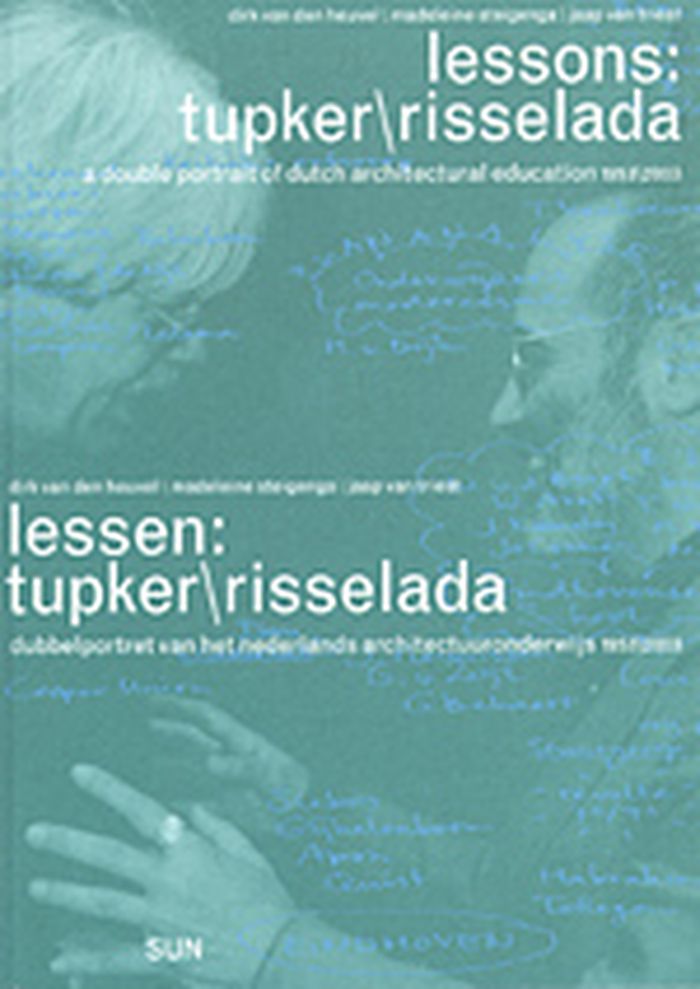
Lessons : Tupker\Risselada : a double portrait of dutch architectural education, 1953\2003
Actions:
Prix:
$37.95
(disponible sur commande)
Résumé:
'Lessons' begins with Risselada's and Tupker's own student years, in which the famous Forum-group dominated the architectural debate with the illustrous Dick Apon, Jaap Bakema, Aldo van Eyck, Joop Hardy and Herman Hertzberger. International influences discussed in 'Lessons' come from designers like Charles and Ray Eames, Alison and Peter Smithson, John Hejduk, Peter Eisenman and Tadao Ando, and from the historians Emil Kaufmann, Colin Rowe, Charles Jencks and Beatriz Colomina. 'Lessons' also gives an account of the work by students of Risselada and Tupker.
Lessons : Tupker\Risselada : a double portrait of dutch architectural education, 1953\2003
Actions:
Prix:
$37.95
(disponible sur commande)
Résumé:
'Lessons' begins with Risselada's and Tupker's own student years, in which the famous Forum-group dominated the architectural debate with the illustrous Dick Apon, Jaap Bakema, Aldo van Eyck, Joop Hardy and Herman Hertzberger. International influences discussed in 'Lessons' come from designers like Charles and Ray Eames, Alison and Peter Smithson, John Hejduk, Peter Eisenman and Tadao Ando, and from the historians Emil Kaufmann, Colin Rowe, Charles Jencks and Beatriz Colomina. 'Lessons' also gives an account of the work by students of Risselada and Tupker.
Classification:
livres
livres
Publication:
avril 2005, amsterdam
avril 2005, amsterdam
Sujet:
Théorie de l’architecture
Théorie de l’architecture
Classification:
livres
livres

Actions:
Prix:
$55.95
(disponible sur commande)
Résumé:
Experiments with Life Itself investigates five projects of domestic radical architecture, built between the end of the Thirties and the end of the Fifties by architects and artists -- relegated to the margins of civil reality by war, exile and disenchantment -- in which they are also the object of their own experimentation. Through intimate analysis and personal(...)
$55.95
(disponible sur commande)
Résumé:
Experiments with Life Itself investigates five projects of domestic radical architecture, built between the end of the Thirties and the end of the Fifties by architects and artists -- relegated to the margins of civil reality by war, exile and disenchantment -- in which they are also the object of their own experimentation. Through intimate analysis and personal(...)
Publication:
septembre 2011
septembre 2011
Titre:
Experiments with life itself: radical domestic architectures between 1937 and 1959
Actions:
Prix:
$55.95
(disponible sur commande)
Résumé:
Experiments with Life Itself investigates five projects of domestic radical architecture, built between the end of the Thirties and the end of the Fifties by architects and artists -- relegated to the margins of civil reality by war, exile and disenchantment -- in which they are also the object of their own experimentation. Through intimate analysis and personal photographs, this publication offers a unique insight into projects by Charles and Ray Eames, Ralph Erskine, Alison and Peter Smithson, German Rodriguez Arias and Pablo Neruda, and Juan O'Gorman.
Experiments with life itself: radical domestic architectures between 1937 and 1959
Actions:
Prix:
$55.95
(disponible sur commande)
Résumé:
Experiments with Life Itself investigates five projects of domestic radical architecture, built between the end of the Thirties and the end of the Fifties by architects and artists -- relegated to the margins of civil reality by war, exile and disenchantment -- in which they are also the object of their own experimentation. Through intimate analysis and personal photographs, this publication offers a unique insight into projects by Charles and Ray Eames, Ralph Erskine, Alison and Peter Smithson, German Rodriguez Arias and Pablo Neruda, and Juan O'Gorman.
Classification:
livres
livres
Publication:
septembre 2011
septembre 2011
Classification:
livres
livres
Actions:
Prix:
$73.95
(disponible sur commande)
Résumé:
Taking as a guide Banham’s habit of structuring his writings around dialectical tensions, Todd Gannon sheds new light on Banham’s early engagement with the New Brutalism of Alison and Peter Smithson, his measured enthusiasm for the ''clip-on'' approach developed by Cedric Price and the Archigram group, his advocacy of ''well-tempered environments'' fostered by integrated(...)
$73.95
(disponible sur commande)
Résumé:
Taking as a guide Banham’s habit of structuring his writings around dialectical tensions, Todd Gannon sheds new light on Banham’s early engagement with the New Brutalism of Alison and Peter Smithson, his measured enthusiasm for the ''clip-on'' approach developed by Cedric Price and the Archigram group, his advocacy of ''well-tempered environments'' fostered by integrated(...)
Titre:
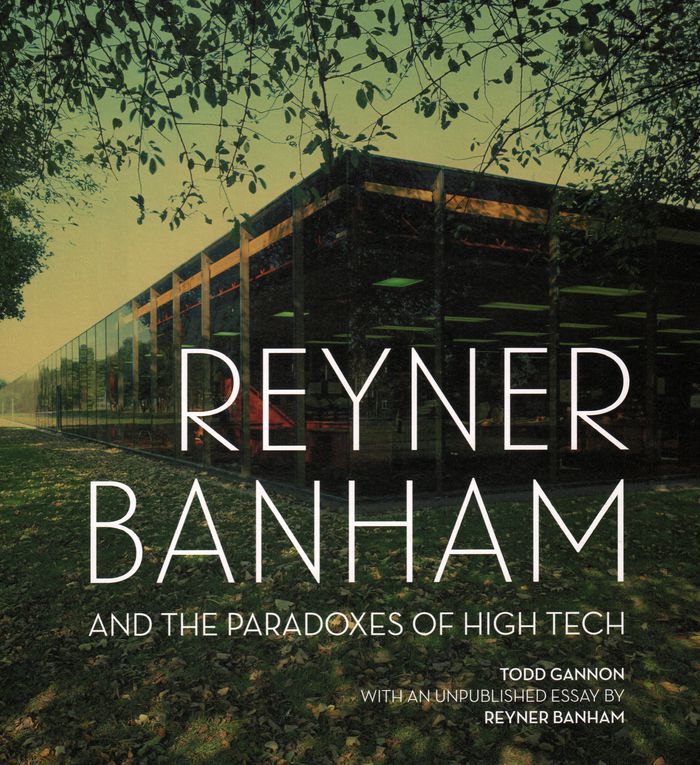
Reyner Banham and the paradoxes of high tech
Actions:
Prix:
$73.95
(disponible sur commande)
Résumé:
Taking as a guide Banham’s habit of structuring his writings around dialectical tensions, Todd Gannon sheds new light on Banham’s early engagement with the New Brutalism of Alison and Peter Smithson, his measured enthusiasm for the ''clip-on'' approach developed by Cedric Price and the Archigram group, his advocacy of ''well-tempered environments'' fostered by integrated mechanical and electrical systems, and his late-career assessments of High Tech practitioners such as Norman Foster, Richard Rogers, and Renzo Piano. Gannon devotes significant attention to Banham’s late work, including fresh archival materials related to 'Making Architecture: The Paradoxes of High Tech', the manuscript he left unfinished at his death in 1988. For the first time, readers will have access to Banham’s previously unpublished draft introduction to that book.
Reyner Banham and the paradoxes of high tech
Actions:
Prix:
$73.95
(disponible sur commande)
Résumé:
Taking as a guide Banham’s habit of structuring his writings around dialectical tensions, Todd Gannon sheds new light on Banham’s early engagement with the New Brutalism of Alison and Peter Smithson, his measured enthusiasm for the ''clip-on'' approach developed by Cedric Price and the Archigram group, his advocacy of ''well-tempered environments'' fostered by integrated mechanical and electrical systems, and his late-career assessments of High Tech practitioners such as Norman Foster, Richard Rogers, and Renzo Piano. Gannon devotes significant attention to Banham’s late work, including fresh archival materials related to 'Making Architecture: The Paradoxes of High Tech', the manuscript he left unfinished at his death in 1988. For the first time, readers will have access to Banham’s previously unpublished draft introduction to that book.
Classification:
livres
livres
Publication:
janvier 2017
janvier 2017
Sujet:
Théorie de l’architecture
Théorie de l’architecture
Classification:
livres
livres
Actions:
Prix:
$69.95
(disponible en magasin)
Résumé:
In "That’s Brutal, What’s Modern?: The Smithsons," Banham, and the Mies-Image, Mark D. Linder offers an original understanding of New Brutalism as a consequential and generative episode in the history of post-photographic imaging practices. This episode exemplifies and anticipates the kinds of cognition and intelligence that dominate architectural imagination today.(...)
$69.95
(disponible en magasin)
Résumé:
In "That’s Brutal, What’s Modern?: The Smithsons," Banham, and the Mies-Image, Mark D. Linder offers an original understanding of New Brutalism as a consequential and generative episode in the history of post-photographic imaging practices. This episode exemplifies and anticipates the kinds of cognition and intelligence that dominate architectural imagination today.(...)
Titre:
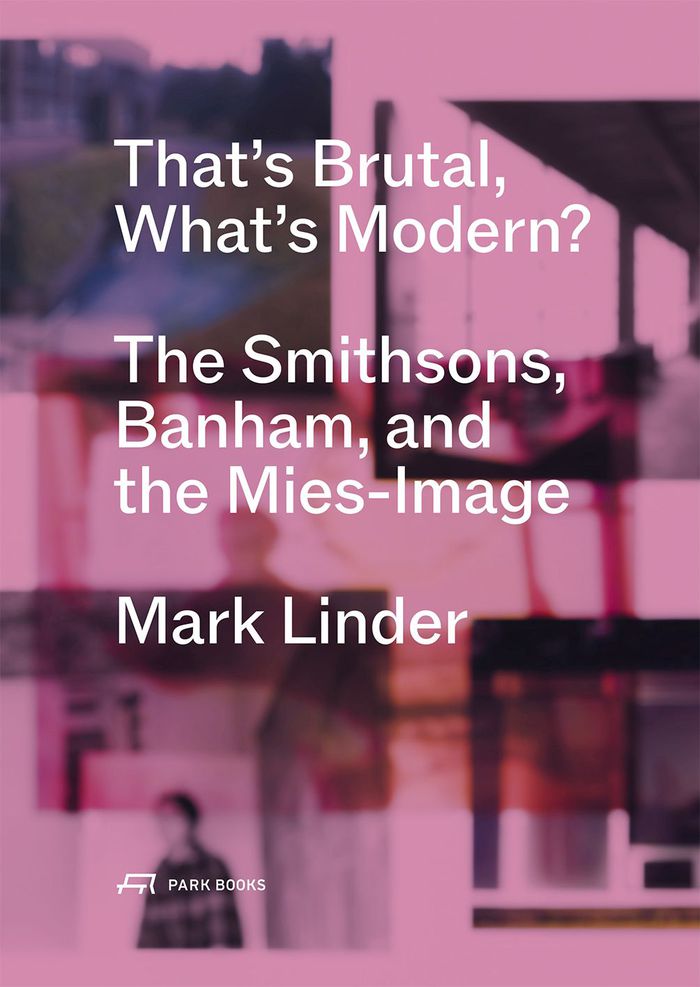
That’s Brutal, What’s Modern?: The Smithsons, Banham, and the Mies-Image
Actions:
Prix:
$69.95
(disponible en magasin)
Résumé:
In "That’s Brutal, What’s Modern?: The Smithsons," Banham, and the Mies-Image, Mark D. Linder offers an original understanding of New Brutalism as a consequential and generative episode in the history of post-photographic imaging practices. This episode exemplifies and anticipates the kinds of cognition and intelligence that dominate architectural imagination today. Linder aims to recover a specific and integral, yet overlooked, aspect of the peculiar novelty of New Brutalism by reconsidering the entirety of Alison and Peter Smithson’s work as a fitful and evolving fifty-year fascination with the imaging potential they found in the architecture of Mies van der Rohe. In six chapters and some forty arrays of images, the book progresses from historical research to theoretical speculations on the historical legacy and contemporary potential of the Smithsons’ pursuit of the "Mies-Image."
That’s Brutal, What’s Modern?: The Smithsons, Banham, and the Mies-Image
Actions:
Prix:
$69.95
(disponible en magasin)
Résumé:
In "That’s Brutal, What’s Modern?: The Smithsons," Banham, and the Mies-Image, Mark D. Linder offers an original understanding of New Brutalism as a consequential and generative episode in the history of post-photographic imaging practices. This episode exemplifies and anticipates the kinds of cognition and intelligence that dominate architectural imagination today. Linder aims to recover a specific and integral, yet overlooked, aspect of the peculiar novelty of New Brutalism by reconsidering the entirety of Alison and Peter Smithson’s work as a fitful and evolving fifty-year fascination with the imaging potential they found in the architecture of Mies van der Rohe. In six chapters and some forty arrays of images, the book progresses from historical research to theoretical speculations on the historical legacy and contemporary potential of the Smithsons’ pursuit of the "Mies-Image."
Classification:
livres
livres
Publication:
décembre 2025
décembre 2025
Sujet:
Modernisme
Modernisme
Classification:
livres
livres
Prix:
$49.95
(disponible sur commande)
Résumé:
The Robin Hood Gardens public-housing estate in East London, completed in 1972, was designed by Alison and Peter Smithson as an ethical and aesthetic encounter with the flux and crises of the social world. Now demolished by the forces of speculative development, this Brutalist estate has been the subject of much dispute. But the clichéd terms of debate—a "concrete(...)
$49.95
(disponible sur commande)
Résumé:
The Robin Hood Gardens public-housing estate in East London, completed in 1972, was designed by Alison and Peter Smithson as an ethical and aesthetic encounter with the flux and crises of the social world. Now demolished by the forces of speculative development, this Brutalist estate has been the subject of much dispute. But the clichéd terms of debate—a "concrete(...)
Titre:
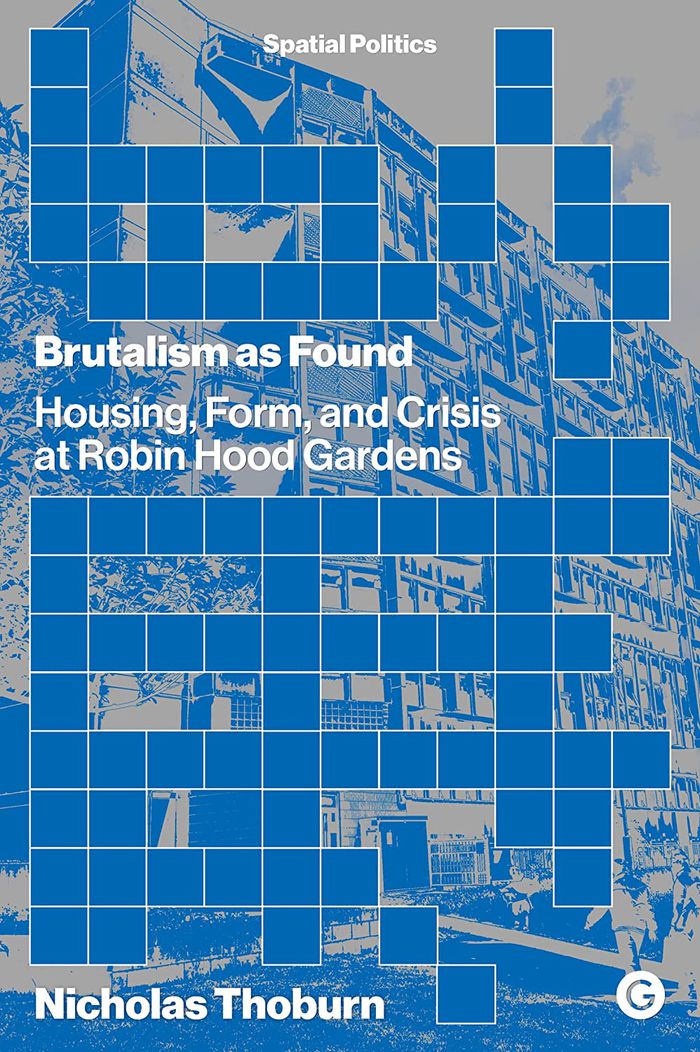
Brutalism as found: Housing, form and crisis at Robin Hood Gardens
Actions:
Prix:
$49.95
(disponible sur commande)
Résumé:
The Robin Hood Gardens public-housing estate in East London, completed in 1972, was designed by Alison and Peter Smithson as an ethical and aesthetic encounter with the flux and crises of the social world. Now demolished by the forces of speculative development, this Brutalist estate has been the subject of much dispute. But the clichéd terms of debate—a "concrete monstrosity" or a "modernist masterpiece"—have marginalized the estate's residents and obscured its architectural originality. Recovering the social in the architectural, this book centers the estate's lived experience of a multiracial working class, not to displace the architecture's sensory qualities of matter and form, but to radicalize them for our present. Immersed in the materials, atmospheres, social forms and afterlives of this experimental estate, Robin Hood Gardens is reconstructed here as a socio-architectural expression of our times out of joint.
Brutalism as found: Housing, form and crisis at Robin Hood Gardens
Actions:
Prix:
$49.95
(disponible sur commande)
Résumé:
The Robin Hood Gardens public-housing estate in East London, completed in 1972, was designed by Alison and Peter Smithson as an ethical and aesthetic encounter with the flux and crises of the social world. Now demolished by the forces of speculative development, this Brutalist estate has been the subject of much dispute. But the clichéd terms of debate—a "concrete monstrosity" or a "modernist masterpiece"—have marginalized the estate's residents and obscured its architectural originality. Recovering the social in the architectural, this book centers the estate's lived experience of a multiracial working class, not to displace the architecture's sensory qualities of matter and form, but to radicalize them for our present. Immersed in the materials, atmospheres, social forms and afterlives of this experimental estate, Robin Hood Gardens is reconstructed here as a socio-architectural expression of our times out of joint.
Classification:
livres
livres
Publication:
novembre 2022
novembre 2022
Sujet:
Théorie de l’architecture
Théorie de l’architecture
Classification:
livres
livres
Actions:
Prix:
$74.95
(disponible sur commande)
Résumé:
Public space is changing. Where in earlier times people met each other on a public square it seems that now a hotel lobby is the desired designation. This change in the notion of what the public area exactly is forms one of the most crucial themes in current architectural debate – Where are shared spaces presently to be found where people can meet each other and develop(...)
$74.95
(disponible sur commande)
Résumé:
Public space is changing. Where in earlier times people met each other on a public square it seems that now a hotel lobby is the desired designation. This change in the notion of what the public area exactly is forms one of the most crucial themes in current architectural debate – Where are shared spaces presently to be found where people can meet each other and develop(...)
Titre:
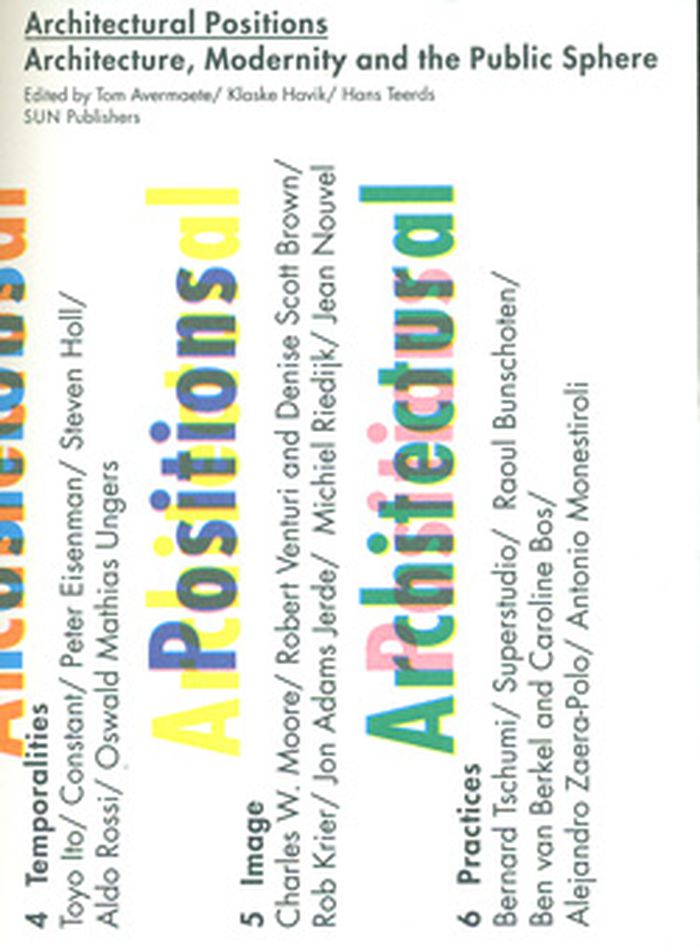
Architectural positions: architecture, modernity and the public sphere
Actions:
Prix:
$74.95
(disponible sur commande)
Résumé:
Public space is changing. Where in earlier times people met each other on a public square it seems that now a hotel lobby is the desired designation. This change in the notion of what the public area exactly is forms one of the most crucial themes in current architectural debate – Where are shared spaces presently to be found where people can meet each other and develop and share a public meaning? This illustrated anthology brings together an impressive collection of writings by 36 leading architects, who have over the last fifty years presented different positions in relation to the debate over the idea and limits of what the public is, or should be. Contributors include: Aldo Rossi, Rem Koolhaas, Matthias Ungers, Daniel Libeskind, Peter Zumthor, Alison and Peter Smithson, Rob Krier, Ben van Berkel and Caroline Bos and Jean Nouvel.
Architectural positions: architecture, modernity and the public sphere
Actions:
Prix:
$74.95
(disponible sur commande)
Résumé:
Public space is changing. Where in earlier times people met each other on a public square it seems that now a hotel lobby is the desired designation. This change in the notion of what the public area exactly is forms one of the most crucial themes in current architectural debate – Where are shared spaces presently to be found where people can meet each other and develop and share a public meaning? This illustrated anthology brings together an impressive collection of writings by 36 leading architects, who have over the last fifty years presented different positions in relation to the debate over the idea and limits of what the public is, or should be. Contributors include: Aldo Rossi, Rem Koolhaas, Matthias Ungers, Daniel Libeskind, Peter Zumthor, Alison and Peter Smithson, Rob Krier, Ben van Berkel and Caroline Bos and Jean Nouvel.
Classification:
livres
livres
Publication:
juillet 2009
juillet 2009
Sujet:
Théorie de l’architecture
Théorie de l’architecture
Classification:
livres
livres
Actions:
Prix:
$27.95
(disponible sur commande)
Résumé:
Artists surveyed include: Chantal Akerman, Francis Alÿs, Vladimir Arkhipov, Ian Breakwell, Stanley Brouwn, Sophie Calle, Marcel Duchamp, Fischli & Weiss, Nan Goldin, Dan Graham, Mona Hatoum, Susan Hiller, Ilya and Emilia Kabakov, Mary Kelly, Lettrist International, Jonas Mekas, Annette Messager, Aleksandra Mir, Roman Ondák, Yoko Ono, Gabriel Orozco, Martha Rosler, Allen(...)
$27.95
(disponible sur commande)
Résumé:
Artists surveyed include: Chantal Akerman, Francis Alÿs, Vladimir Arkhipov, Ian Breakwell, Stanley Brouwn, Sophie Calle, Marcel Duchamp, Fischli & Weiss, Nan Goldin, Dan Graham, Mona Hatoum, Susan Hiller, Ilya and Emilia Kabakov, Mary Kelly, Lettrist International, Jonas Mekas, Annette Messager, Aleksandra Mir, Roman Ondák, Yoko Ono, Gabriel Orozco, Martha Rosler, Allen(...)
Publication:
mars 2008, London/Massachusetts
mars 2008, London/Massachusetts
Titre:
The everyday: Documents on contemporary art
Actions:
Prix:
$27.95
(disponible sur commande)
Résumé:
Artists surveyed include: Chantal Akerman, Francis Alÿs, Vladimir Arkhipov, Ian Breakwell, Stanley Brouwn, Sophie Calle, Marcel Duchamp, Fischli & Weiss, Nan Goldin, Dan Graham, Mona Hatoum, Susan Hiller, Ilya and Emilia Kabakov, Mary Kelly, Lettrist International, Jonas Mekas, Annette Messager, Aleksandra Mir, Roman Ondák, Yoko Ono, Gabriel Orozco, Martha Rosler, Allen Ruppersberg, Daniel Spoerri, Wolfgang Tillmans, Mierle Laderman Ukeles, Andy Warhol, Richard Wentworth, Stephen Willats. Writers include: Paul Auster, Maurice Blanchot, Geoff Dyer, Hal Foster, Suzy Gablik, Ben Highmore, Henri Lefebvre, Lucy R. Lippard, Michel Maffesoli, Helen Molesworth, Nikos Papastergiadis, Georges Perec, John Roberts, David Ross, Nicholas Serota, Michael Sheringham, Alison and Peter Smithson, Abigail Solomon-Godeau, Jeff Wall, Jonathan Watkins. About the Editor: Stephen Johnstone is a London-based artist and filmmaker and a Senior Lecturer in the Department of Art at Goldsmiths College, London. Since 1993, he has worked collaboratively with Graham Ellard, and their film and video work has been exhibited in museums and galleries including the Centre Pompidou, the Tate Liverpool, the Museum of Modern Art, Sydney, and the National Film Theatre, London.
The everyday: Documents on contemporary art
Actions:
Prix:
$27.95
(disponible sur commande)
Résumé:
Artists surveyed include: Chantal Akerman, Francis Alÿs, Vladimir Arkhipov, Ian Breakwell, Stanley Brouwn, Sophie Calle, Marcel Duchamp, Fischli & Weiss, Nan Goldin, Dan Graham, Mona Hatoum, Susan Hiller, Ilya and Emilia Kabakov, Mary Kelly, Lettrist International, Jonas Mekas, Annette Messager, Aleksandra Mir, Roman Ondák, Yoko Ono, Gabriel Orozco, Martha Rosler, Allen Ruppersberg, Daniel Spoerri, Wolfgang Tillmans, Mierle Laderman Ukeles, Andy Warhol, Richard Wentworth, Stephen Willats. Writers include: Paul Auster, Maurice Blanchot, Geoff Dyer, Hal Foster, Suzy Gablik, Ben Highmore, Henri Lefebvre, Lucy R. Lippard, Michel Maffesoli, Helen Molesworth, Nikos Papastergiadis, Georges Perec, John Roberts, David Ross, Nicholas Serota, Michael Sheringham, Alison and Peter Smithson, Abigail Solomon-Godeau, Jeff Wall, Jonathan Watkins. About the Editor: Stephen Johnstone is a London-based artist and filmmaker and a Senior Lecturer in the Department of Art at Goldsmiths College, London. Since 1993, he has worked collaboratively with Graham Ellard, and their film and video work has been exhibited in museums and galleries including the Centre Pompidou, the Tate Liverpool, the Museum of Modern Art, Sydney, and the National Film Theatre, London.
Classification:
livres
livres
Publication:
mars 2008, London/Massachusetts
mars 2008, London/Massachusetts
Classification:
livres
livres
Actions:
Prix:
$69.95
(disponible sur commande)
Résumé:
The world's growing vulnerability to planet-sized risks invites action on a global scale. The World as an Architectural Project shows how for more than a century architects have imagined the future of the planet through world-scale projects. With fifty speculative projects by Patrick Geddes, Alison and Peter Smithson, Kiyonori Kikutake, Saverio Muratori, Takis Zenetos,(...)
$69.95
(disponible sur commande)
Résumé:
The world's growing vulnerability to planet-sized risks invites action on a global scale. The World as an Architectural Project shows how for more than a century architects have imagined the future of the planet through world-scale projects. With fifty speculative projects by Patrick Geddes, Alison and Peter Smithson, Kiyonori Kikutake, Saverio Muratori, Takis Zenetos,(...)
Titre:
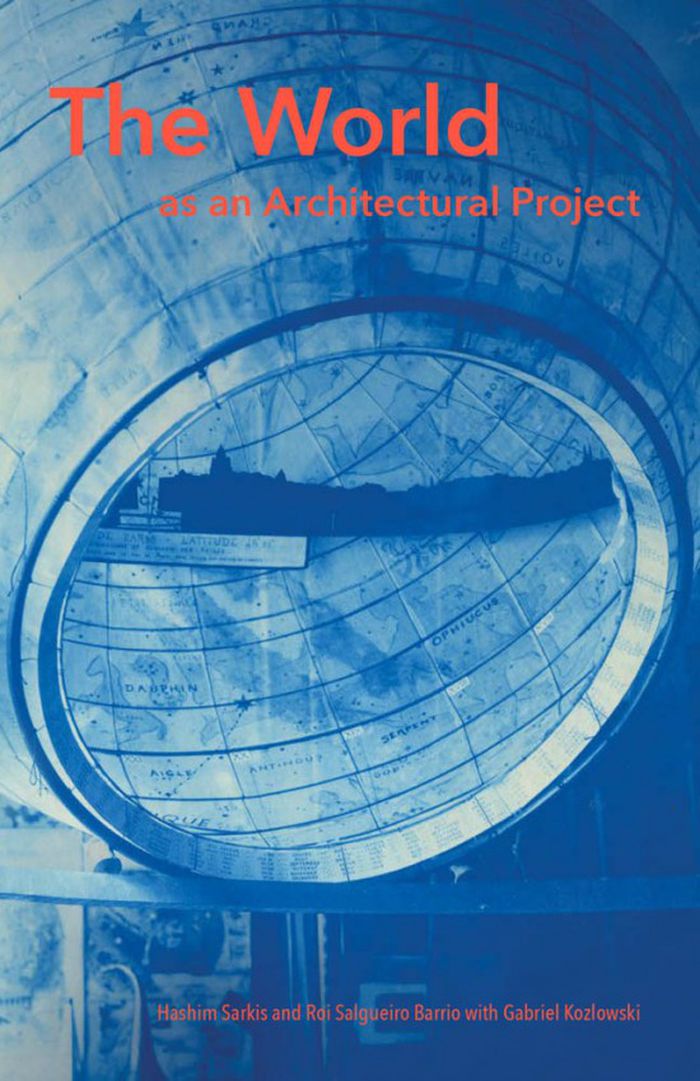
The world as an architectural project
Actions:
Prix:
$69.95
(disponible sur commande)
Résumé:
The world's growing vulnerability to planet-sized risks invites action on a global scale. The World as an Architectural Project shows how for more than a century architects have imagined the future of the planet through world-scale projects. With fifty speculative projects by Patrick Geddes, Alison and Peter Smithson, Kiyonori Kikutake, Saverio Muratori, Takis Zenetos, Sergio Bernardes, Juan Navarro Baldeweg, Luc Deleu, and many others, documented in text and images, this ambitious and wide-ranging book is the first compilation of its kind. Interestingly, architects begin to address the world as a project long before the advent of contemporary globalism and its assorted anxieties. The Spanish urban theorist and entrepreneur Arturo Soria y Mata, for example, in 1882 envisions a system that connects the entire planet in a linear urban network. In 1927, Buckminster Fuller's “World Town Plan—4D Tower” proposes to solve global housing problems with mobile structures delivered and installed by a Zeppelin. And Joyce Hsiang and Bimal Mendis visualize the conditions of a worldwide “City of Seven Billion” in a 2015–2019 project. Rather than indulging the cliché of the megalomaniac architect, this volume presents a discipline reflecting on its own responsibilities.
The world as an architectural project
Actions:
Prix:
$69.95
(disponible sur commande)
Résumé:
The world's growing vulnerability to planet-sized risks invites action on a global scale. The World as an Architectural Project shows how for more than a century architects have imagined the future of the planet through world-scale projects. With fifty speculative projects by Patrick Geddes, Alison and Peter Smithson, Kiyonori Kikutake, Saverio Muratori, Takis Zenetos, Sergio Bernardes, Juan Navarro Baldeweg, Luc Deleu, and many others, documented in text and images, this ambitious and wide-ranging book is the first compilation of its kind. Interestingly, architects begin to address the world as a project long before the advent of contemporary globalism and its assorted anxieties. The Spanish urban theorist and entrepreneur Arturo Soria y Mata, for example, in 1882 envisions a system that connects the entire planet in a linear urban network. In 1927, Buckminster Fuller's “World Town Plan—4D Tower” proposes to solve global housing problems with mobile structures delivered and installed by a Zeppelin. And Joyce Hsiang and Bimal Mendis visualize the conditions of a worldwide “City of Seven Billion” in a 2015–2019 project. Rather than indulging the cliché of the megalomaniac architect, this volume presents a discipline reflecting on its own responsibilities.
Classification:
livres
livres
Publication:
avril 2020
avril 2020
Sujet:
Théorie de l’architecture
Théorie de l’architecture
Classification:
livres
livres
Titre:
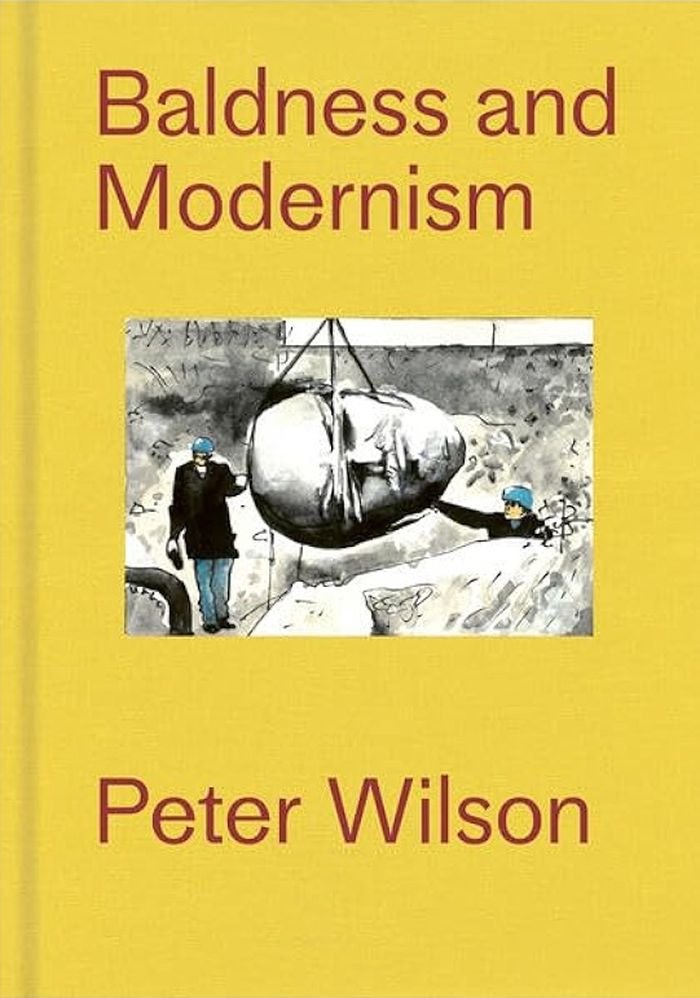
Baldness and modernism
Baldness and modernism
Actions:
Prix:
$63.00
(disponible en magasin)
Résumé:
The original bald and unconvincing narrative that triggered this book is that put about by Alison and Peter Smithson in their 1981 Heroic Period of Modern Architecture, limiting modernism to 1915–1929. This fiction is re-contextualized with studies of iconic Bauhaus bald heads – Schlemmer, Itten, etc., such Literal Baldness is the subject of Part 1. Part 2 of Phenomenal(...)
$63.00
(disponible en magasin)
Résumé:
The original bald and unconvincing narrative that triggered this book is that put about by Alison and Peter Smithson in their 1981 Heroic Period of Modern Architecture, limiting modernism to 1915–1929. This fiction is re-contextualized with studies of iconic Bauhaus bald heads – Schlemmer, Itten, etc., such Literal Baldness is the subject of Part 1. Part 2 of Phenomenal(...)
Titre:
Baldness and modernism
Actions:
Prix:
$63.00
(disponible en magasin)
Résumé:
The original bald and unconvincing narrative that triggered this book is that put about by Alison and Peter Smithson in their 1981 Heroic Period of Modern Architecture, limiting modernism to 1915–1929. This fiction is re-contextualized with studies of iconic Bauhaus bald heads – Schlemmer, Itten, etc., such Literal Baldness is the subject of Part 1. Part 2 of Phenomenal Baldness unwinds the Bauhaus narrative put about by Walter Gropius, one that has held water for 100 years. Spin doctor Gropius manipulated his Bauhaus successes into a cornerstone of post WW2 modernism. Cracks in this story are now emerging along with the fact that Gropius was in hindsight, not a very good architect. Attacks on the Bauhaus like those by Rudolph Schwartz or Tom Wolf as well as a comprehensive list of Gropius hand-holders, and those edited out of his narrative are here explored. To conclude Gropius is compared to his contemporary Bruno Taut, a far more interesting and talented architect. This book like Peter Wilson’s previous "Bedtime Stories for Architects" or "Some Reasons for Traveling to Italy" is written in his unique anecdotal style, savoring Shandyisms and the quirks of history.
Baldness and modernism
Actions:
Prix:
$63.00
(disponible en magasin)
Résumé:
The original bald and unconvincing narrative that triggered this book is that put about by Alison and Peter Smithson in their 1981 Heroic Period of Modern Architecture, limiting modernism to 1915–1929. This fiction is re-contextualized with studies of iconic Bauhaus bald heads – Schlemmer, Itten, etc., such Literal Baldness is the subject of Part 1. Part 2 of Phenomenal Baldness unwinds the Bauhaus narrative put about by Walter Gropius, one that has held water for 100 years. Spin doctor Gropius manipulated his Bauhaus successes into a cornerstone of post WW2 modernism. Cracks in this story are now emerging along with the fact that Gropius was in hindsight, not a very good architect. Attacks on the Bauhaus like those by Rudolph Schwartz or Tom Wolf as well as a comprehensive list of Gropius hand-holders, and those edited out of his narrative are here explored. To conclude Gropius is compared to his contemporary Bruno Taut, a far more interesting and talented architect. This book like Peter Wilson’s previous "Bedtime Stories for Architects" or "Some Reasons for Traveling to Italy" is written in his unique anecdotal style, savoring Shandyisms and the quirks of history.
Classification:
livres
livres
Publication:
juin 2025
juin 2025
Sujet:
Théorie de l’architecture
Théorie de l’architecture


