


44145 Résultats
Classification:
expositions
expositions
Actions:
Description:
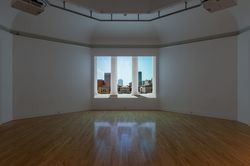
L’exposition Found in Translation : Palladio – Jefferson présente l’œuvre récente de Filippo Romano, photographe documentaire et de l’architecture, portant sur les villas conçues par Andrea Palladio (1508-1580) dans la région de la Vénétie, et sur les bâtiments réalisés par l’architecte et président américain, Thomas Jefferson (1743-1826). Commissaire : Guido Beltramini,(...)
L’exposition Found in Translation : Palladio – Jefferson présente l’œuvre récente de Filippo Romano, photographe documentaire et de l’architecture, portant sur les villas conçues par Andrea Palladio (1508-1580) dans la région de la Vénétie, et sur les bâtiments réalisés par l’architecte et président américain, Thomas Jefferson (1743-1826). Commissaire : Guido Beltramini,(...)
Localisation:
Salle octogonale
Salle octogonale
Date:
8 octobre 2014 au 15 février 2015
8 octobre 2014 au 15 février 2015
Titre:
« Found in Translation » : Palladio – Jefferson
Actions:
Description:
L’exposition Found in Translation : Palladio – Jefferson présente l’œuvre récente de Filippo Romano, photographe documentaire et de l’architecture, portant sur les villas conçues par Andrea Palladio (1508-1580) dans la région de la Vénétie, et sur les bâtiments réalisés par l’architecte et président américain, Thomas Jefferson (1743-1826). Commissaire : Guido Beltramini,(...)
« Found in Translation » : Palladio – Jefferson
Actions:
Description:
L’exposition Found in Translation : Palladio – Jefferson présente l’œuvre récente de Filippo Romano, photographe documentaire et de l’architecture, portant sur les villas conçues par Andrea Palladio (1508-1580) dans la région de la Vénétie, et sur les bâtiments réalisés par l’architecte et président américain, Thomas Jefferson (1743-1826). Commissaire : Guido Beltramini,(...)
Classification:
expositions
expositions
Date:
8 octobre 2014 au
15 février 2015
8 octobre 2014 au
15 février 2015
Localisation:
Salle octogonale
Salle octogonale
Niveau de description archivistique:
Projet
Projet
Numéro de référence:
AP120.S1.D2
Description:
This file documents the 2000-2002 expansion of the Palais des Congrès de Montréal. In the late 1990s the Québec government agreed to invest $240 million to finance the expansion of the existing Palais des Congrès de Montréal, designed by Victor Prus and opened in 1983. A competition was held in 1999, and an architectural consortium led by Mario Saia was awarded the commission to design the expansion. Hal Ingberg worked as an independent architectural consultant on the project, notably contributing the design of the building's new transparent multicouloured glass-paneled façade. Construction took place from 2000-2002 and the new facility was opened in December 2002.
AP120.S1.D2
Description:
This file documents the 2000-2002 expansion of the Palais des Congrès de Montréal. In the late 1990s the Québec government agreed to invest $240 million to finance the expansion of the existing Palais des Congrès de Montréal, designed by Victor Prus and opened in 1983. A competition was held in 1999, and an architectural consortium led by Mario Saia was awarded the commission to design the expansion. Hal Ingberg worked as an independent architectural consultant on the project, notably contributing the design of the building's new transparent multicouloured glass-paneled façade. Construction took place from 2000-2002 and the new facility was opened in December 2002.
Personnes et institutions:
Date:
1999-2000?
1999-2000?
Titre:
Palais des Congrès de Montréal
Actions:
AP120.S1.D2
Description:
This file documents the 2000-2002 expansion of the Palais des Congrès de Montréal. In the late 1990s the Québec government agreed to invest $240 million to finance the expansion of the existing Palais des Congrès de Montréal, designed by Victor Prus and opened in 1983. A competition was held in 1999, and an architectural consortium led by Mario Saia was awarded the commission to design the expansion. Hal Ingberg worked as an independent architectural consultant on the project, notably contributing the design of the building's new transparent multicouloured glass-paneled façade. Construction took place from 2000-2002 and the new facility was opened in December 2002.
Palais des Congrès de Montréal
Actions:
AP120.S1.D2
Description:
This file documents the 2000-2002 expansion of the Palais des Congrès de Montréal. In the late 1990s the Québec government agreed to invest $240 million to finance the expansion of the existing Palais des Congrès de Montréal, designed by Victor Prus and opened in 1983. A competition was held in 1999, and an architectural consortium led by Mario Saia was awarded the commission to design the expansion. Hal Ingberg worked as an independent architectural consultant on the project, notably contributing the design of the building's new transparent multicouloured glass-paneled façade. Construction took place from 2000-2002 and the new facility was opened in December 2002.
Niveau de description archivistique:
Dossier 2
Dossier 2
Date:
1999-2000?
1999-2000?
Personnes et institutions:
Niveau de description archivistique:
Projet
Projet
Numéro de référence:
AP075.S1.2005.PR02
Description:
Project series documents Cornelia Hahn Oberlander's landscape project for the Braun Residence roof deck in Vancouver. The project consists in designing a roof terrace on the 17th floor of the Shawn Tower on West Cordova Street. The design includes a deck paved area with concrete planters, and landscaped area. Oberlander worked on this project in 2004 with the firm James K.M. Cheng Architects Inc. The project series contains correspondence, including with architect, consultants, contractors and client, specifications, financial documents, notes and sketches, and documentation. The project series also includes floor plans and sections of the apartment and plans of the roof deck with landscaping.
AP075.S1.2005.PR02
Description:
Project series documents Cornelia Hahn Oberlander's landscape project for the Braun Residence roof deck in Vancouver. The project consists in designing a roof terrace on the 17th floor of the Shawn Tower on West Cordova Street. The design includes a deck paved area with concrete planters, and landscaped area. Oberlander worked on this project in 2004 with the firm James K.M. Cheng Architects Inc. The project series contains correspondence, including with architect, consultants, contractors and client, specifications, financial documents, notes and sketches, and documentation. The project series also includes floor plans and sections of the apartment and plans of the roof deck with landscaping.
Personnes et institutions:
Date:
2005-2009
2005-2009
Titre:
Braun Residence rooftop garden, Vancouver, British Columbia (2005)
Actions:
AP075.S1.2005.PR02
Description:
Project series documents Cornelia Hahn Oberlander's landscape project for the Braun Residence roof deck in Vancouver. The project consists in designing a roof terrace on the 17th floor of the Shawn Tower on West Cordova Street. The design includes a deck paved area with concrete planters, and landscaped area. Oberlander worked on this project in 2004 with the firm James K.M. Cheng Architects Inc. The project series contains correspondence, including with architect, consultants, contractors and client, specifications, financial documents, notes and sketches, and documentation. The project series also includes floor plans and sections of the apartment and plans of the roof deck with landscaping.
Braun Residence rooftop garden, Vancouver, British Columbia (2005)
Actions:
AP075.S1.2005.PR02
Description:
Project series documents Cornelia Hahn Oberlander's landscape project for the Braun Residence roof deck in Vancouver. The project consists in designing a roof terrace on the 17th floor of the Shawn Tower on West Cordova Street. The design includes a deck paved area with concrete planters, and landscaped area. Oberlander worked on this project in 2004 with the firm James K.M. Cheng Architects Inc. The project series contains correspondence, including with architect, consultants, contractors and client, specifications, financial documents, notes and sketches, and documentation. The project series also includes floor plans and sections of the apartment and plans of the roof deck with landscaping.
Niveau de description archivistique:
Project
Project
Date:
2005-2009
2005-2009
Personnes et institutions:
Niveau de description archivistique:
Projet
Projet
Numéro de référence:
AP164.S1.1991.D3
Description:
The project series documents urban development research for the south of Madrid. The research was done for the Madrid City Council. The office identified this project as number 73. For the project redaction, Abalos & Herreros worked with Sara de la Mata, Javier Herreros, Javier Fresnada, Juan Manuel Fernandez, Serafin Sardina, Fernando Gutierrez, Javier Peña and Alberto Sotodosos. In 1991, they won the prize for architecture and urban planning from the Madrid City Council for this project. Documenting this project are conceptual, presentation and working drawings; cartographic, graphic, photographic and reference materials; and clippings, notes, project descriptions and collages.
AP164.S1.1991.D3
Description:
The project series documents urban development research for the south of Madrid. The research was done for the Madrid City Council. The office identified this project as number 73. For the project redaction, Abalos & Herreros worked with Sara de la Mata, Javier Herreros, Javier Fresnada, Juan Manuel Fernandez, Serafin Sardina, Fernando Gutierrez, Javier Peña and Alberto Sotodosos. In 1991, they won the prize for architecture and urban planning from the Madrid City Council for this project. Documenting this project are conceptual, presentation and working drawings; cartographic, graphic, photographic and reference materials; and clippings, notes, project descriptions and collages.
Personnes et institutions:
Date:
1990-1996
1990-1996
Titre:
Madrid Sur, Spain (1991)
Actions:
AP164.S1.1991.D3
Description:
The project series documents urban development research for the south of Madrid. The research was done for the Madrid City Council. The office identified this project as number 73. For the project redaction, Abalos & Herreros worked with Sara de la Mata, Javier Herreros, Javier Fresnada, Juan Manuel Fernandez, Serafin Sardina, Fernando Gutierrez, Javier Peña and Alberto Sotodosos. In 1991, they won the prize for architecture and urban planning from the Madrid City Council for this project. Documenting this project are conceptual, presentation and working drawings; cartographic, graphic, photographic and reference materials; and clippings, notes, project descriptions and collages.
Madrid Sur, Spain (1991)
Actions:
AP164.S1.1991.D3
Description:
The project series documents urban development research for the south of Madrid. The research was done for the Madrid City Council. The office identified this project as number 73. For the project redaction, Abalos & Herreros worked with Sara de la Mata, Javier Herreros, Javier Fresnada, Juan Manuel Fernandez, Serafin Sardina, Fernando Gutierrez, Javier Peña and Alberto Sotodosos. In 1991, they won the prize for architecture and urban planning from the Madrid City Council for this project. Documenting this project are conceptual, presentation and working drawings; cartographic, graphic, photographic and reference materials; and clippings, notes, project descriptions and collages.
Niveau de description archivistique:
Project
Project
Date:
1990-1996
1990-1996
Personnes et institutions:
Niveau de description archivistique:
Projet
Projet
Numéro de référence:
AP180.S1.1983.PR01
Description:
This project series documents the Casa Frea, a built two-storey single-family house in Milan. The private house is situated in a renovated building "inserted into a block made up of rows of houses dating from the beginning of the century." [1] Riva worked on this project in 1983. The project series contains early sketches of interior sections, interior elevations, and floor plans. It also contains execution drawings, including sections, floor plans, elevations, and furnishing details, including plans for an armchair. Sources: [1] Album di disegni / Album of drawings, Electra, Milano, 1989, 131 p., page 124.
AP180.S1.1983.PR01
Description:
This project series documents the Casa Frea, a built two-storey single-family house in Milan. The private house is situated in a renovated building "inserted into a block made up of rows of houses dating from the beginning of the century." [1] Riva worked on this project in 1983. The project series contains early sketches of interior sections, interior elevations, and floor plans. It also contains execution drawings, including sections, floor plans, elevations, and furnishing details, including plans for an armchair. Sources: [1] Album di disegni / Album of drawings, Electra, Milano, 1989, 131 p., page 124.
Personnes et institutions:
Date:
1972-1984
1972-1984
Titre:
Casa Frea [Frea house], Milan, Italy (1983)
Actions:
AP180.S1.1983.PR01
Description:
This project series documents the Casa Frea, a built two-storey single-family house in Milan. The private house is situated in a renovated building "inserted into a block made up of rows of houses dating from the beginning of the century." [1] Riva worked on this project in 1983. The project series contains early sketches of interior sections, interior elevations, and floor plans. It also contains execution drawings, including sections, floor plans, elevations, and furnishing details, including plans for an armchair. Sources: [1] Album di disegni / Album of drawings, Electra, Milano, 1989, 131 p., page 124.
Casa Frea [Frea house], Milan, Italy (1983)
Actions:
AP180.S1.1983.PR01
Description:
This project series documents the Casa Frea, a built two-storey single-family house in Milan. The private house is situated in a renovated building "inserted into a block made up of rows of houses dating from the beginning of the century." [1] Riva worked on this project in 1983. The project series contains early sketches of interior sections, interior elevations, and floor plans. It also contains execution drawings, including sections, floor plans, elevations, and furnishing details, including plans for an armchair. Sources: [1] Album di disegni / Album of drawings, Electra, Milano, 1989, 131 p., page 124.
Niveau de description archivistique:
Project
Project
Date:
1972-1984
1972-1984
Personnes et institutions:
Niveau de description archivistique:
Projet
Projet
Numéro de référence:
AP075.S1.1956.PR07
Description:
This project series documents Cornelia Hahn Oberlander’s landscape project for a small play area on Little Mountain, a 127 metres high mountain in the central part of Vancouver, British Columbia. Oberlander worked on this project in 1956. The park is now known as Queen Elizabeth Park. Oberlander’s landscape design for the play area consists of rectangular-shaped playground covered in asphalt surrounded by a retaining wall lined with crabapple trees on one side and creosoted woodstrips on the other. The play area includes with a sand box and swings. The project series contains only the orginal and the reprographic copy of a plan of the play area.
AP075.S1.1956.PR07
Description:
This project series documents Cornelia Hahn Oberlander’s landscape project for a small play area on Little Mountain, a 127 metres high mountain in the central part of Vancouver, British Columbia. Oberlander worked on this project in 1956. The park is now known as Queen Elizabeth Park. Oberlander’s landscape design for the play area consists of rectangular-shaped playground covered in asphalt surrounded by a retaining wall lined with crabapple trees on one side and creosoted woodstrips on the other. The play area includes with a sand box and swings. The project series contains only the orginal and the reprographic copy of a plan of the play area.
Personnes et institutions:
Date:
1956
1956
Titre:
Little Mountain Play Area, Vancouver, British Columbia (1956)
Actions:
AP075.S1.1956.PR07
Description:
This project series documents Cornelia Hahn Oberlander’s landscape project for a small play area on Little Mountain, a 127 metres high mountain in the central part of Vancouver, British Columbia. Oberlander worked on this project in 1956. The park is now known as Queen Elizabeth Park. Oberlander’s landscape design for the play area consists of rectangular-shaped playground covered in asphalt surrounded by a retaining wall lined with crabapple trees on one side and creosoted woodstrips on the other. The play area includes with a sand box and swings. The project series contains only the orginal and the reprographic copy of a plan of the play area.
Little Mountain Play Area, Vancouver, British Columbia (1956)
Actions:
AP075.S1.1956.PR07
Description:
This project series documents Cornelia Hahn Oberlander’s landscape project for a small play area on Little Mountain, a 127 metres high mountain in the central part of Vancouver, British Columbia. Oberlander worked on this project in 1956. The park is now known as Queen Elizabeth Park. Oberlander’s landscape design for the play area consists of rectangular-shaped playground covered in asphalt surrounded by a retaining wall lined with crabapple trees on one side and creosoted woodstrips on the other. The play area includes with a sand box and swings. The project series contains only the orginal and the reprographic copy of a plan of the play area.
Niveau de description archivistique:
Project
Project
Date:
1956
1956
Personnes et institutions:
Niveau de description archivistique:
Projet
Projet
Numéro de référence:
AP075.S1.1973.PR01
Description:
Project series documents Cornelia Hahn Oberlander's project for a proposed playground at the corner of West 38th Street and Hudson Street in Vancouver, British Columbia. Oberlander worked in this project from 1973-1975. This project was not realized. Oberlander's landscape design consisted in a central mound covered in grass, surrounded by tree logs, with swings on top, and two lower grass mounds on the Southeast corner of the playground with other play installations for creative play. The project series contains four sketches, including two digitatized layout sketches, two presentation drawings, a preliminary site plan, a site plan, a topographic survey.
AP075.S1.1973.PR01
Description:
Project series documents Cornelia Hahn Oberlander's project for a proposed playground at the corner of West 38th Street and Hudson Street in Vancouver, British Columbia. Oberlander worked in this project from 1973-1975. This project was not realized. Oberlander's landscape design consisted in a central mound covered in grass, surrounded by tree logs, with swings on top, and two lower grass mounds on the Southeast corner of the playground with other play installations for creative play. The project series contains four sketches, including two digitatized layout sketches, two presentation drawings, a preliminary site plan, a site plan, a topographic survey.
Personnes et institutions:
Date:
1973-2005
1973-2005
Titre:
Playground, 38th and Hudson Streets, Vancouver, British Columbia (1973)
Actions:
AP075.S1.1973.PR01
Description:
Project series documents Cornelia Hahn Oberlander's project for a proposed playground at the corner of West 38th Street and Hudson Street in Vancouver, British Columbia. Oberlander worked in this project from 1973-1975. This project was not realized. Oberlander's landscape design consisted in a central mound covered in grass, surrounded by tree logs, with swings on top, and two lower grass mounds on the Southeast corner of the playground with other play installations for creative play. The project series contains four sketches, including two digitatized layout sketches, two presentation drawings, a preliminary site plan, a site plan, a topographic survey.
Playground, 38th and Hudson Streets, Vancouver, British Columbia (1973)
Actions:
AP075.S1.1973.PR01
Description:
Project series documents Cornelia Hahn Oberlander's project for a proposed playground at the corner of West 38th Street and Hudson Street in Vancouver, British Columbia. Oberlander worked in this project from 1973-1975. This project was not realized. Oberlander's landscape design consisted in a central mound covered in grass, surrounded by tree logs, with swings on top, and two lower grass mounds on the Southeast corner of the playground with other play installations for creative play. The project series contains four sketches, including two digitatized layout sketches, two presentation drawings, a preliminary site plan, a site plan, a topographic survey.
Niveau de description archivistique:
Project
Project
Date:
1973-2005
1973-2005
Personnes et institutions:
Niveau de description archivistique:
Projet
Projet
Numéro de référence:
AP075.S1.2001.PR04
Description:
Project series documents Cornelia Hahn Oberlander's landscape project for the Sourkes Lewin Residence on Wells Hill Avenue, in Toronto. Oberlander worked on this project in 2001. Oberlander's landscape design included the addition of an enclosed courtyard with cobbles paving at the northwest side of the property, and adding planting of bulbs, groundcover and trees in front of the house and on the southeast side of the property. The project series contains sketches and design development drawings, such as a landscape plan with plant list, planting plans, and site plans. The project is also documented through correspondence with client, financial documents, plant lists, and photographs of the existing landscaping.
AP075.S1.2001.PR04
Description:
Project series documents Cornelia Hahn Oberlander's landscape project for the Sourkes Lewin Residence on Wells Hill Avenue, in Toronto. Oberlander worked on this project in 2001. Oberlander's landscape design included the addition of an enclosed courtyard with cobbles paving at the northwest side of the property, and adding planting of bulbs, groundcover and trees in front of the house and on the southeast side of the property. The project series contains sketches and design development drawings, such as a landscape plan with plant list, planting plans, and site plans. The project is also documented through correspondence with client, financial documents, plant lists, and photographs of the existing landscaping.
Personnes et institutions:
Date:
2001
2001
Titre:
Sourkes Lewin Residence, Toronto, Ontario (2001)
Actions:
AP075.S1.2001.PR04
Description:
Project series documents Cornelia Hahn Oberlander's landscape project for the Sourkes Lewin Residence on Wells Hill Avenue, in Toronto. Oberlander worked on this project in 2001. Oberlander's landscape design included the addition of an enclosed courtyard with cobbles paving at the northwest side of the property, and adding planting of bulbs, groundcover and trees in front of the house and on the southeast side of the property. The project series contains sketches and design development drawings, such as a landscape plan with plant list, planting plans, and site plans. The project is also documented through correspondence with client, financial documents, plant lists, and photographs of the existing landscaping.
Sourkes Lewin Residence, Toronto, Ontario (2001)
Actions:
AP075.S1.2001.PR04
Description:
Project series documents Cornelia Hahn Oberlander's landscape project for the Sourkes Lewin Residence on Wells Hill Avenue, in Toronto. Oberlander worked on this project in 2001. Oberlander's landscape design included the addition of an enclosed courtyard with cobbles paving at the northwest side of the property, and adding planting of bulbs, groundcover and trees in front of the house and on the southeast side of the property. The project series contains sketches and design development drawings, such as a landscape plan with plant list, planting plans, and site plans. The project is also documented through correspondence with client, financial documents, plant lists, and photographs of the existing landscaping.
Niveau de description archivistique:
Project
Project
Date:
2001
2001
Personnes et institutions:
Classification:
photographies
Quantité:
22 photograph(s)
photographies
Quantité:
22 photograph(s)
Numéro de référence:
ARCH265118
Description:
The group consist chiefly of views of monuments and statues in Québec, including the statue of de Maisonneuve at the Place d'Armes in Montréal and the Madeleine de Verchères monument in Verchères. There are also several views of monuments in Ottawa and one view of Grand Pré Park in Nova Scotia. Several of the subjects are the work of artist Louis-Philippe Hébert. There is one photograph of the tablet erected at Sainte-Sophie d'Halifax by the Department of Mines and Resources to commemorate the birthplace of Louis-Philippe Hébert (accompanied by a letter from the Lands, Parks and Forests Branch of the Department of Mines and Resources). There is one photograph of the painting by Robert Harris of O.R. Jacobi, accompanied by a letter on letterhead of the National Gallery of Canada. The group includes a memo from the Can.Govt. Motion Picture Bureau dated Feb. 22, 1938. There are stamps and/or inscriptions on several of the photographs.
ARCH265118
Description:
The group consist chiefly of views of monuments and statues in Québec, including the statue of de Maisonneuve at the Place d'Armes in Montréal and the Madeleine de Verchères monument in Verchères. There are also several views of monuments in Ottawa and one view of Grand Pré Park in Nova Scotia. Several of the subjects are the work of artist Louis-Philippe Hébert. There is one photograph of the tablet erected at Sainte-Sophie d'Halifax by the Department of Mines and Resources to commemorate the birthplace of Louis-Philippe Hébert (accompanied by a letter from the Lands, Parks and Forests Branch of the Department of Mines and Resources). There is one photograph of the painting by Robert Harris of O.R. Jacobi, accompanied by a letter on letterhead of the National Gallery of Canada. The group includes a memo from the Can.Govt. Motion Picture Bureau dated Feb. 22, 1938. There are stamps and/or inscriptions on several of the photographs.
Personnes et institutions:
Date:
circa 1927-1946
circa 1927-1946
Titre:
Views of monuments and statues in Québec
Actions:
ARCH265118
Description:
The group consist chiefly of views of monuments and statues in Québec, including the statue of de Maisonneuve at the Place d'Armes in Montréal and the Madeleine de Verchères monument in Verchères. There are also several views of monuments in Ottawa and one view of Grand Pré Park in Nova Scotia. Several of the subjects are the work of artist Louis-Philippe Hébert. There is one photograph of the tablet erected at Sainte-Sophie d'Halifax by the Department of Mines and Resources to commemorate the birthplace of Louis-Philippe Hébert (accompanied by a letter from the Lands, Parks and Forests Branch of the Department of Mines and Resources). There is one photograph of the painting by Robert Harris of O.R. Jacobi, accompanied by a letter on letterhead of the National Gallery of Canada. The group includes a memo from the Can.Govt. Motion Picture Bureau dated Feb. 22, 1938. There are stamps and/or inscriptions on several of the photographs.
Views of monuments and statues in Québec
Actions:
ARCH265118
Description:
The group consist chiefly of views of monuments and statues in Québec, including the statue of de Maisonneuve at the Place d'Armes in Montréal and the Madeleine de Verchères monument in Verchères. There are also several views of monuments in Ottawa and one view of Grand Pré Park in Nova Scotia. Several of the subjects are the work of artist Louis-Philippe Hébert. There is one photograph of the tablet erected at Sainte-Sophie d'Halifax by the Department of Mines and Resources to commemorate the birthplace of Louis-Philippe Hébert (accompanied by a letter from the Lands, Parks and Forests Branch of the Department of Mines and Resources). There is one photograph of the painting by Robert Harris of O.R. Jacobi, accompanied by a letter on letterhead of the National Gallery of Canada. The group includes a memo from the Can.Govt. Motion Picture Bureau dated Feb. 22, 1938. There are stamps and/or inscriptions on several of the photographs.
Classification:
photographies
Quantité:
22 photograph(s)
photographies
Quantité:
22 photograph(s)
Date:
circa 1927-1946
circa 1927-1946
Personnes et institutions:
Classification:
expositions
expositions
Titre:
Miroirs / Mirrors
Miroirs / Mirrors
Actions:
Description:
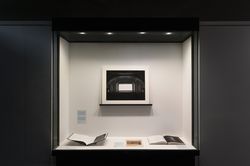
Miroirs/ Mirrors prend forme à travers un dialogue indirect avec l’exposition L’histoire, par ailleurs: Go Hasegawa, Kersten Geers, David Van Severen, qui prend racine dans les références et les résonnances partagées entre les travaux de deux pratiques contemporaines mises en présence de l’histoire. Alors que L’histoire, par ailleurs se fonde sur limpression que lon a du(...)
Miroirs/ Mirrors prend forme à travers un dialogue indirect avec l’exposition L’histoire, par ailleurs: Go Hasegawa, Kersten Geers, David Van Severen, qui prend racine dans les références et les résonnances partagées entre les travaux de deux pratiques contemporaines mises en présence de l’histoire. Alors que L’histoire, par ailleurs se fonde sur limpression que lon a du(...)
Localisation:
Vitrines
Vitrines
Date:
22 juin 2017 au 14 janvier 2018
22 juin 2017 au 14 janvier 2018
Titre:
Miroirs / Mirrors
Actions:
Description:
Miroirs/ Mirrors prend forme à travers un dialogue indirect avec l’exposition L’histoire, par ailleurs: Go Hasegawa, Kersten Geers, David Van Severen, qui prend racine dans les références et les résonnances partagées entre les travaux de deux pratiques contemporaines mises en présence de l’histoire. Alors que L’histoire, par ailleurs se fonde sur limpression que lon a du(...)
Miroirs / Mirrors
Actions:
Description:
Miroirs/ Mirrors prend forme à travers un dialogue indirect avec l’exposition L’histoire, par ailleurs: Go Hasegawa, Kersten Geers, David Van Severen, qui prend racine dans les références et les résonnances partagées entre les travaux de deux pratiques contemporaines mises en présence de l’histoire. Alors que L’histoire, par ailleurs se fonde sur limpression que lon a du(...)
Classification:
expositions
expositions
Date:
22 juin 2017 au
14 janvier 2018
22 juin 2017 au
14 janvier 2018
Localisation:
Vitrines
Vitrines


